

As the demand for sustainable, efficient, and visually appealing packaging grows, rigid plastic food containers are becoming a staple in the beverage industry. Catering to a diverse clientele—from bubble tea shops to corporate procurement teams—these versatile containers offer unmatched benefits in terms of functionality and branding potential. In this article, we’ll delve into the market growth of rigid plastic food containers, the materials that define them, the manufacturing processes behind their creation, and the challenges faced as they compete against alternative packaging solutions. Each chapter will unpack essential insights tailored for industry professionals, guiding them in making informed decisions for their businesses.
Rising Tide: The Expanding Market for Rigid Plastic Food Containers in Modern Packaging

The market for rigid plastic food containers is riding a long, steady current that gathers momentum from a combination of practical advantages and evolving consumer expectations. In recent analyses, the overall container market is highlighted by a robust value trajectory, with estimates placing global sales in the tens of billions of dollars and a clear path to higher figures as food brands seek durable, hygienic, and brandable packaging options. Rigid plastics, prized for their lightweight yet sturdy form, are at the heart of this expansion. Their ability to resist crushing and shattering, along with the flexibility to craft complex shapes and vivid graphics, makes them a natural fit for a wide range of products from dairy to fresh produce and beyond. As industry watchers note, demand is not a single-issue phenomenon but a mosaic of category needs, regional dynamics, and shifting consumer rituals around food storage, transport, and at-home consumption. Within this mosaic, the dairy sector—especially for yogurt and drinkable formats—emerges as a leading consumer of rigid plastic containers, while fresh produce increasingly relies on plastic clamshells to protect delicate items from farm to table. This shift is not simply about replacing one packaging form with another; it is about balancing visibility, protection, and convenience in ways that support shelf appeal and consumer trust. Consumers want to see the product clearly, appreciate the seal’s reliability, and rely on the container to maintain freshness during distribution and in home storage. The very optics of rigidity—transparent or semi transparent walls that reveal color, texture, and date codes—become marketing cues as much as functional barriers against moisture, odors, and contamination. It is here that the material science of PP and PET becomes more than a matter of chemistry; it is a determinant of brand voice. Polypropylene and PET are widely chosen because they offer clarity, moisture resistance, and chemical stability, properties that help keep dairy textures smooth, berries plump, herbs fragrant, and sauces stable. The advantages extend into manufacturing as well. Injection molding, a staple in rigid container production, yields strong, seamless bodies with consistent tolerances, enabling high-speed production lines and predictable performance across batches. The design flexibility that this process affords is a major driver of market expansion. Creators can embed ergonomic shapes, stackable profiles, and branding-rich graphics that remain legible under a range of lighting conditions. Even as the industry celebrates these strengths, it also confronts a complex sustainability dialogue. Some manufacturers are turning to recycled plastic sheets and post consumer resin to meet rising expectations for circular economy practices while maintaining the integrity of performance. The challenge lies in balancing material recovery and purity with the demand for transparent clarity and structural reliability. In some markets, rigid plastic packaging has faced intensified scrutiny over end-of-life outcomes, prompting investments in recycling infrastructure and innovations in materials such as next generation recyclates. The result is a packaging ecosystem in which rigidity carries not just physical strength, but an evolving mandate to be more sustainable, more circular, and more adaptable to evolving regulatory frameworks. This dual trajectory—strength and sustainability—shapes the way brands discuss and justify their choice of rigid plastic. In dialogues with manufacturers and retailers, the rationale often centers on performance metrics: leak resistance, stackability, and a secure seal with screw-on lids that preserve liquids and semi solids. These features underpin the reliability needed for shelves in supermarkets and in home storage drawers. They also support logistical efficiency, an increasingly important consideration as retailers and distributors seek to minimize damage and returns in a landscape of growing e commerce and direct-to-consumer channels. The market data reinforces what practitioners feel in the field. Global assessments have placed the value of plastic food containers in the tens of billions, with projections of continued expansion through the decade. Forecasts from reputable market researchers indicate a compound annual growth rate that hovers around mid single digits across multiple time horizons, reflecting steady demand across regions and product segments even as other packaging formats claim opportunities in consumer convenience and sustainability. The magnitude of the growth, while consistent with historical momentum, sits on a broader trend toward packaging that marries durability with design versatility. In practice, this means more complex lid geometries, improved moisture barriers, and enhanced optical quality for product visibility. It also means packaging that can be tailored to very specific product formats—from compact yogurts to family size sauces and from single-serve portions to multipack configurations. The market is increasingly characterized by a tiered ecosystem in which consumer-facing features and back end efficiencies converge. For producers, the appeal lies in capacity to differentiate through shape, on-package messaging, and ease of branding. A container can be engineered to accommodate a wide range of graphics, fonts, and color schemes without sacrificing clarity or stiffness. The effect is a packaging canvas that travels from factory floor to cooling rack to kitchen drawer while maintaining a consistent brand presentation. Yet alongside this dynamic growth, observers note the competitive pressure posed by alternative packaging formats, particularly flexible solutions such as pouches. These formats excel in source reduction and convenience, offering lighter weight and strong consumer appeal in certain use cases. Rigid plastics must continually justify their role by emphasizing advantages beyond weight and materials cost—especially in contexts where reusability, resealability, and multi use are prized. The narrative around reuse and durability helps explain why rigid plastic containers remain a preferred choice for leak-proof solutions, for instance in sauces, soups, and ready-to-eat meals that travel long distances or require long shelf lives. In the dairy sector, the capacity to present products with clear visibility and a premium feel supports premium pricing and consumer trust, reinforcing the role of rigid plastics as not only functional but also strategic branding tools. The fresh produce segment’s adoption of plastic clamshells signals a practical adaptation to the realities of modern retail, where delicate items must endure handling during transport and display. This shift also underlines a broader transformation in product presentation; users increasingly value packaging that protects quality without compromising access or freshness indicators. In parallel, the supply chain’s push toward efficiency and waste reduction elevates the relevance of rigid plastics. Lightweight yet tough containers contribute to lower breakage rates, reduced spoilage, and more reliable inventory control. For grocers and distributors, these attributes translate into tangible benefits: fewer damaged units, lower return rates, and better on-shelf performance. Industry studies repeatedly emphasize that the appeal of rigid plastic packaging lies in its versatility—an ability to house a broad array of products while offering consistent performance across temperatures, moisture conditions, and mechanical stresses encountered along the distribution route. The design and material choices that enable this versatility—PP and PET, compatibility with printing and labeling technologies, and the potential for postindustrial and postconsumer recycled content—signal a packaging sector that is both technically sophisticated and increasingly conscious of its environmental footprint. The market’s growth also reflects a global mosaic of regional dynamics. In mature markets, the emphasis often centers on performance, regulatory compliance, and sustainability, while emerging markets expand throughput and embrace standard packaging formats that unlock shelf space and consumer familiarity. Across regions, the ability to tailor container geometry, sealing mechanisms, and size variants remains a core driver of success. The convergence of material innovation, manufacturing efficiency, and consumer demand suggests that the rigid plastic container will continue to occupy a central, if sometimes contested, position in the packaging mix. For stakeholders who aim to align growth with responsible practices, the path forward involves continued exploration of recycled content, improved end-of-life strategies, and investment in processes that minimize waste while preserving the integrity of product protection. This is not a simple race toward lighter or cheaper packaging; it is a strategic pursuit of performance, branding, and sustainability. In this sense, the market story is less about a single material triumph and more about adaptable systems that deliver consistent protection, clear communication, and practical convenience to shoppers in a rapidly changing retail and consumer environment. To those shaping the future of food packaging, rigid plastic containers offer a reliable foundation upon which to build differentiated, durable, and market-ready solutions. For readers who want to explore related packaging options and case studies that illustrate how this growth translates into real-world applications, one can look to the broader ecosystem of packaging suppliers and retailers that emphasize sustainable and efficient takeout and retail packaging options. As the dialogue around packaging evolves, the role of rigid plastics remains anchored in their combination of strength, clarity, and design flexibility, a triad that continues to drive their market growth in the years ahead. For a deeper dive into market sizing and regional trends, see the Global Plastic Food Containers Market Report 2026-2032. In practice, brands are increasingly pairing these containers with smart shelf-ready designs and lightweight yet resilient forms that optimize both customer experience and supply chain performance. This chapter, then, is less a snapshot of a single trend and more a narrative about how material choices, manufacturing capabilities, and consumer expectations together propel a resilient category forward. The trajectory suggests continued expansion, with value creation anchored in reliable protection, transparent presentation, and the opportunity to reinforce brand storytelling at the point of sale and in households around the world. To further explore related insights on packaging options and sustainable design, consider visiting eco-friendly takeout boxes for food packaging, a resource that bridges practical packaging decisions with broader sustainability goals. External resources provide a complementary perspective, while ongoing research keeps pace with the rapid evolution of materials science and consumer behavior in the packaging landscape: https://www.globalinforesearch.com.cn/reports/2915921/plastic-food-containers
Polymers Under the Lid: How Material Choices Shape Rigid Plastic Food Containers
Materials and performance woven together
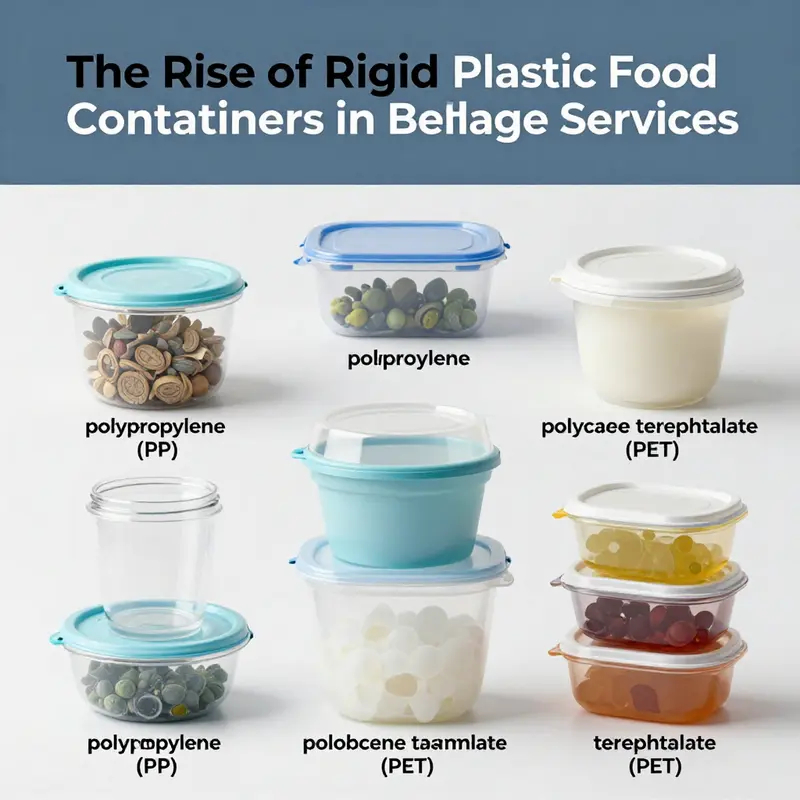
The functional identity of a rigid plastic food container lives in its polymer. Choice of polymer determines clarity, strength, temperature tolerance, chemical resistance, and recyclability. It also defines how a package is manufactured, how it behaves on shelves, and how it performs after use. For manufacturers and brand teams, the material is a set of trade-offs. For engineers and food-safety specialists, it is a matrix of physical properties and regulatory boundaries. For sustainability strategists, it is a lever to improve circularity. This chapter explains the common thermoplastics used in rigid food containers, highlights the performance that makes each one useful, and explores the practical consequences of blending, additives, and production methods.
Polyethylene terephthalate (PET) is best known for its blend of clarity and toughness. It yields bright, transparent containers that put product visibility at the forefront. That transparency helps sell fresh produce and ready-to-eat items. PET is lightweight and resists shattering, which makes it ideal for retail distribution. Its limits show up in high-temperature situations. PET softens at moderate heat and is generally not microwave-safe unless specially formulated. PET also responds well to mass manufacturing techniques like thermoforming and injection stretch molding, enabling thin-walled, uniform parts. From a sustainability angle, PET is fully recyclable and widely collected, but recycling rates vary by region. Where recycling systems are strong, PET can be reclaimed into food-grade flakes and sheets. Where systems are weak, clarity and single-use design can become liabilities.
High-density polyethylene (HDPE) emphasizes toughness and chemical resistance over optical clarity. It offers excellent impact resistance, making it a go-to for bulk containers and products that require rough handling. HDPE is a good moisture barrier and resists many common chemicals and solvents. This makes it suitable for dairy jugs, large tubs, and containers that store oily or alkaline foods. Its stiffness helps maintain shape under load. HDPE’s weakness lies in UV sensitivity and permeability to gases like oxygen. Without UV stabilizers, long-term sun exposure can degrade mechanical properties and appearance. HDPE is also highly recyclable; its Recycling Code #2 is well recognized. Design for recycling favors mono-material HDPE packages with minimal colorants and labels that are easy to remove.
Low-density polyethylene (LDPE) appears more often in flexible packaging, but it has a place in rigid containers too. LDPE brings flexibility and good impact resistance. Where living hinges or slightly pliant lids are needed, LDPE or LDPE blends can help. It shares HDPE’s chemical resistance to many household substances and can be processed in ways that create thin-walled, resilient parts. LDPE is less stiff than HDPE, so designers must balance form with function.
Polypropylene (PP) occupies an important niche because of its high melting point and fatigue resistance. PP withstands higher temperatures than PET and many polyethylene grades. That thermal stability enables microwave-safe and dishwasher-safe containers, as well as autoclave-resistant medical packaging. PP also has excellent chemical resistance and very good fatigue resistance, which is why it is used for living hinges and repeated open-and-close lids. Its lightweight nature keeps shipping costs low. PP can be injection molded into complex geometries with tight tolerances, and it accepts printing and labeling well. Like other polymers, the presence of fillers, colorants, or multi-layer constructions influences recyclability.
Beyond single polymers, blends and multi-layer constructions extend performance. Barrier films or layers, such as those incorporating EVOH or metallized coatings, block oxygen and maintain product shelf life. These layers can be crucial for modified atmosphere packaging or for products sensitive to oxidation. The trade-off is that multi-layer structures complicate recycling. When different polymers are fused together, separation during recycling becomes difficult. The same is true for plastic laminates bonded to non-plastic materials. Designers aiming for circularity now favor mono-material constructions or barrier coatings that are compatible with recycling streams.
Additives modify base polymer performance in meaningful ways. UV stabilizers prevent photo-degradation. Anti-fog agents maintain clarity in chilled displays for produce. Slip and anti-block additives improve processing and stackability. Antioxidants and heat stabilizers extend material life during processing. However, additives also affect recycling and regulatory compliance. Certain additives can migrate into food, so formulation must follow food-contact regulations. Food safety protocols require migration testing and validation of any recycled content used in food-contact applications.
Recycled content is increasingly common in rigid containers, driven by corporate commitments and legislative targets. Recycled polyethylene and recycled PET sheets allow manufacturers to achieve post-consumer recycled (PCR) content without sacrificing structural integrity. Sheet-based thermoforming from recycled material is a practical route for clamshells and tubs. Yet recycled resins can vary in color and performance, and they may contain trace contaminants. For any recycled content intended for food contact, suppliers rely on processes that recondition and purify material to food-grade standards. Regulatory frameworks differ by country. Some jurisdictions permit limited percentages of PCR in direct food contact packaging under controlled conditions. Others require more stringent verification.
Manufacturing method influences material selection. Injection molding delivers tight tolerances and is used for complex shapes and threaded closures. It suits PP and HDPE well. Thermoforming from extruded sheets works for PET and APET clamshells, giving thin, clear parts at scale. Blow molding creates seamless bottles and jars, often using PET or HDPE. Each technique imposes thickness, draft, and geometry constraints that affect material performance. Injection molding can produce living hinges in PP with precise wall thicknesses. Thermoforming excels at producing deep-draw containers with consistent wall gauges. When recycled sheets are used, thermoforming can lock in sustainability gains without changing production lines dramatically.
Food-safety and regulatory concerns influence material selection more than aesthetics. Polymers used in food packaging must pass migration testing and comply with specific food-contact lists. Some polymers accept direct food contact more easily because their additive packages are well characterized. Others require post-processing or barrier layers to meet safety needs. The compatibility of cleaning and sterilization methods also matters. For example, the ability to withstand hot-fill, pasteurization, or sterilization processes determines whether a polymer is practical for a given food product. Cold-chain performance is another consideration; some plastics become brittle at low temperatures, while others retain toughness in cold storage.
Design for recycling is an essential modern constraint. Mono-material containers with compatible lids and minimal colorants yield the highest recovery value. Clear polymers are generally more valuable in recycling markets because they can be reprocessed into a wider range of products, including clear sheets and bottles. Opaque and heavily pigmented materials limit end-use. Labels, adhesives, and multi-material closures should be chosen to allow easy separation. Where barrier properties are required, consider compatible barrier layers or recyclable co-extrusions rather than metallization or disparate laminates.
Sealing performance and closure systems bring material choice down to small details. Screw-top lids, snap-fit closures, and tamper-evident features require polymers with predictable creep and fatigue properties. PP and HDPE often perform well in these applications. Lids that must form a leak-resistant seal for liquids may use polymer blends or overmolding to combine stiffness and sealing capability. The choice affects torque, user experience, and long-term reusability.
The material conversation cannot ignore the market dynamics that drive adoption. Dairy and fresh produce sectors favor materials that combine clarity and protection. PET and clear APET clamshells have become standard for berries and ready salads. HDPE remains common in yogurts and milks where opacity is acceptable and chemical resistance matters. PP grows where reheating and reuse are selling points. These decisions are informed by cost, consumer expectations, manufacturing capability, and regulatory context. They also respond to pressure from flexible packaging, which competes on source reduction. Rigid plastics hold advantage for stackability, durability, and reusability. The right polymer choice can therefore unlock value across logistics, retail display, and end-user convenience.
Material choice in rigid plastic food containers balances performance, safety, and circularity. No single polymer is perfect for all uses. PET brings clarity; HDPE delivers toughness; LDPE supplies flexibility; PP tolerates heat and repeated use. Blends and barriers extend functionality but challenge recyclability. Additives and recycled content alter both performance and regulatory compliance. Designers who treat polymers as system-level decisions secure packaging that protects food, supports brand messaging, and aligns with evolving sustainability requirements. For a market-level view on how these material choices influence demand, consult industry research such as the Freedonia study referenced here: https://www.freedonia.com/research/food-containers-in-the-us-11th-edition
For an example of clear, small condiment and sauce containers that illustrate many of the trade-offs discussed, see this reference on clear plastic sauce jars with lids: clear plastic sauce jars.
From Melt to Market: How Injection Molding, Thermoforming, and Blow Molding Shape Rigid Plastic Food Containers
Key manufacturing pathways and how they determine form, function, and cost
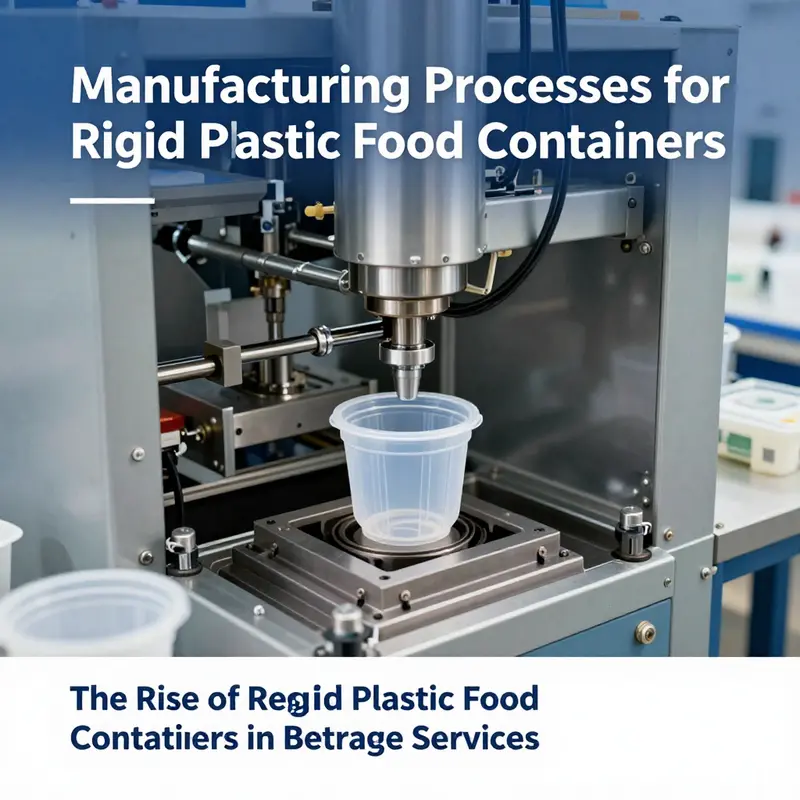
Rigid plastic food containers begin life as resin, yet the path from pellet to packaged product determines everything from strength to clarity. Choosing the right manufacturing route is a design decision with commercial consequences. Injection molding, thermoforming, and blow molding each bring distinct strengths and limits. Their differences affect tooling cost, cycle time, material choice, secondary operations, and the container’s end-use performance. Understanding these trade-offs helps designers, brand managers, and procurement teams align packaging choices with product needs and business goals.
Injection molding sits at the center when precision matters. This process forces molten polymer into a steel mold under high pressure. Once cooled, the part is ejected with tight dimensional accuracy and a fine surface finish. Injection molding excels with thin-walled cups, snap-fit lids, and parts that need structural ribs or complex geometry. It supports a broad set of food-safe polymers, including polypropylene for heat tolerance and polyethylene terephthalate for clarity. The process yields consistent wall thickness and permits fine graphic detail where texture or molded logos are required. Cycle times are short, which drives down unit cost at scale. The trade-off comes at the mold: tooling is expensive and time-consuming to make. That investment pays off only when volumes justify the amortized cost.
Thermoforming takes a different approach geared to open shapes and large footprints. Sheets of plastic are heated until pliable and then drawn over a mold by vacuum or pressure. Once cooled, the formed sheet is trimmed into trays, clamshells, and multi-compartment meal containers. Thermoforming shines when tooling must be cheaper and turnaround faster. It is ideal for transparent lids and wide, shallow trays where visual presentation and ease of stacking matter. Materials like PET and certain polypropylenes deliver clarity and stiffness for shelf appeal. Because thermoforming starts from sheet, it can be more forgiving for prototyping. However, it typically results in less geometric complexity than injection molding and can require thicker walls to achieve similar strength. For many fresh-produce clamshells and takeout bowls, thermoforming provides an excellent balance of cost, aesthetics, and manufacturing speed.
Blow molding creates hollow, seamless forms. It begins with a parison or preform that is expanded by air into a mold cavity. Blow molding is the standard for bottles, jugs, and other liquid-tight vessels. Its ability to produce thin, uniform walls over large volumes makes it economical for beverages, dressings, and sauces. Materials commonly used include polyethylene and PET. Blow-molded containers are lightweight and robust under handling stresses, and they can include threaded necks for screw caps or pump fittings without secondary assembly. While it lacks the surface detail and structural ribs achievable with injection molding, blow molding delivers continuity of wall and excellent leak resistance—essential for many liquid foods.
Selecting the right polymer is inseparable from the chosen process. Polypropylene offers heat resistance and chemical inertia, suiting hot-fill and microwaveable containers made by injection molding or thermoforming. PET provides glass-like clarity and strong barrier properties, often used in thermoformed clamshells and blow-molded bottles. High-density polyethylene gives toughness and impact resistance for durable storage tubs. For applications that require moisture and oxygen barriers, EVOH or multi-layer constructions may be introduced. Such barrier layers often appear as co-extruded sheets for thermoforming or as lamination in pre-formed film. The manufacturing route constrains how these layers are implemented, and each option alters recyclability and cost.
Tooling and production economics determine the sweet spot for each process. Injection molds demand high upfront capital but provide the lowest per-part costs at high volumes. Thermoforming dies are less costly, with shorter lead times and lower risk for design changes. Blow molding tooling sits between the two, with moderate costs and high throughput for beverage-scale production. Designers must weigh anticipated production runs against time-to-market. A short-run product or seasonal SKU often favors thermoforming or even hybrid approaches. A perennial SKU with stable demand usually justifies injection-molded tooling.
Quality control and food safety are non-negotiable across all methods. Processes must minimize contamination and meet regulatory requirements for food contact. That begins with certified resins and includes clean production lines, validated cleaning cycles, and traceability of batches. Dimensional control in injection molding reduces leakage and ensures lid fit. Thermoforming requires careful control of sheet heating and trimming to avoid flash or weak points. Blow molding demands precise parison control to maintain wall uniformity. Inline inspection systems—vision checks, leak testing, and weight verification—help identify defects before packaging reaches the supply chain.
Secondary operations and finishing are where functionality and brand meet. Threading and sealing features may be molded in or added afterward. Heat-sealing flanges, ultrasonic welding, and adhesive bonding join lids, inserts, or barrier films. Decorative finishes—textured surfaces, embossing, and metallized films—raise visual appeal. High-quality graphic printing often occurs on labels or film lids rather than on the rigid substrate itself. For clear visibility of product, thermoformed or PET containers leave the product exposed to the consumer’s eye, enhancing trust and purchase conversion. For long shelf life, laminated lids or barrier lids can be added to thermoformed trays.
Sustainability considerations are reshaping choices. Recycled resin can reduce carbon footprint and align packaging with circularity goals. Thermoforming adapts well to recycled sheet, and injection molds can accept higher recycled-content resins if formulations meet mechanical and food-safety requirements. However, incorporating barrier layers or multi-material constructions complicates recycling. Single-material designs that retain performance are preferred for easier recycling streams. Lightweighting is another lever: optimizing wall thickness can cut material use while preserving strength. Yet designers must avoid over-thinning, which compromises stacking performance and increases the risk of damage during distribution.
Practical design rules emerge from manufacturing realities. For injection molding, maintain uniform wall thickness to prevent sink marks and warping. Incorporate ribs to strengthen thin walls without adding bulk. Avoid sharp internal corners that concentrate stress. For thermoforming, design draft angles and generous radii to ensure consistent forming and easy part ejection. For blow molding, control neck finish dimensions carefully to maintain sealing integrity. These rules reduce scrap and speed up supplier approval.
Scalability and supply chain resilience matter as much as the process itself. High-volume injection molding benefits from stable resin supply and reliable mold maintenance. Thermoforming lines can be rapidly scaled with additional sheet extruders and forming stations. Blow molding systems are modular, allowing production cells to be added. But each expansion demands qualified operators, spare tooling, and predictable raw-material logistics. Contingency planning for resin shortages or price spikes can protect operations and avoid costly SKU interruptions.
Prototype and testing cycles influence final choices. Rapid prototyping helps validate fit and function before full tooling investment. 3D-printed masters or soft tooling can test dimensions and consumer interaction. For thermoformed designs, prototype sheets let teams assess clarity and thermoformability. For injection molded parts, short-run aluminum molds or prototype tooling can reveal critical tolerances. Rigorous lab testing—drop tests, lid torque evaluation, barrier performance—reduces launch risk and ensures the packaging performs across retail, transport, and consumer use.
Regulatory compliance threads through every decision. Materials must meet food-contact regulations in the target markets. Manufacturing plants should follow Good Manufacturing Practices and maintain documentation for audits. Migration testing confirms that no harmful substances transfer to food under expected storage conditions. For hot-filled or microwaveable products, thermal performance testing is essential. Choosing a process that reliably meets these standards eases market access and reduces liability.
The manufacturing choice ultimately serves the product’s story. A clear clamshell that showcases ripe berries benefits from thermoforming clarity and gentle geometry. A yogurt cup that must be stacked and resealed might favor injection molding for precise lid fit and thin-walled economy. A dressing bottle that must remain leak-free in transit will often be blow molded for its seamless strength. Each route offers trade-offs in appearance, protection, and cost. Skilled designers will align those trade-offs with the product promise.
Supply chain, sustainability, and performance pressures continue to push innovation. Manufacturers are improving process efficiency to lower energy use and to accept higher recycled resin loads. Advances in multi-layer sheet technology let thermoformed trays approach the barrier performance once exclusive to rigid multi-component systems. Injection molding tooling is benefiting from faster machining and more predictable thermal management. Blow molding controls are shortening cycle times while preserving wall uniformity. These incremental improvements shift the balance of cost and capability, enabling new packaging formats.
Choosing between injection molding, thermoforming, and blow molding requires a systems view. Consider material properties, part geometry, expected volumes, tooling lead times, and end-of-life plans. Match process strengths to functional needs. When done well, manufacturing becomes a strategic enabler, turning polymer and tooling into packaging that protects food, communicates brand, and fits circularity goals. For practical examples of small clear containers commonly used with sauces and condiments, see this product page for plastic sauce jars with lids: https://ecocupbowl.com/product/plastic-sauce-jars-with-lids-plastic-clear-food-small-sauce-container-box-with-lids-kitchen-organizer-disposable-sauce-pot/.
Further reading on the technical principles behind injection molding can clarify process variables and their effects: https://en.wikipedia.org/wiki/Injection_molding
Facing the Tide: Challenges, Rivals, and the Future of Rigid Plastic Food Containers
Facing the Tide: Challenges, Rivals, and the Future of Rigid Plastic Food Containers
Rigid plastic food containers occupy a central role in modern packaging. Their light weight, low cost, and design versatility make them ideal for many food categories. Yet they now face a complex array of technical, environmental, and market challenges. These pressures come from shifting consumer expectations, changing regulations, new materials, and competitors that promise improved sustainability or performance. Understanding these forces, and how manufacturers respond, is essential for anyone involved in food packaging design, procurement, or product strategy.
Concerns about safety and chemistry are among the most visible challenges. Scientific and regulatory scrutiny has focused on the potential for chemicals to migrate from polymer containers into food. Heat, fatty foods, and acidic formulations can accelerate migration. This issue is not limited to any single polymer. While many modern food-grade plastics are formulated to minimize migration, consumers remain wary of legacy compounds and unknown additives. Clear, consistent communication about material composition and compliance with food-safety standards is now a baseline expectation. Labels that explain microwave safety, temperature limits, and appropriate use can reduce consumer anxiety and misuse.
Hygiene and wear are practical problems that affect both perception and function. Rigid plastics scratch under forks, utensils, and abrasive washing. Scratches provide niches for microbial build-up and trap food residues. Over time, repeated use and dishwasher cycles can cloud surfaces and weaken seals. Lids are often the first components to fail. Variability in lid geometry, sealing rings, and hinge designs causes many functional failures during everyday use. A once-tight container can become unreliable, undermining trust and pushing consumers toward alternatives that maintain performance longer without visible wear.
Thermal and mechanical durability also constrain applications. Some plastics warp or soften when exposed to heat. This limits their use for hot-fill applications or frequent microwave use. Containers that crack after repeated freezing and thawing reduce reuse potential. These limits have direct implications for supply chains and retail: package failures increase food waste and return rates. Manufacturers attempt to mitigate these issues by selecting polymers suited to specific use-cases, but trade-offs remain between clarity, toughness, and thermal resistance.
Environmental concerns are the most powerful force reshaping the market. Recycling rates for rigid plastics vary widely by polymer, region, and local infrastructure. Transparent PET containers are widely recyclable in many systems, while other resins face lower recovery rates. Mixed-material constructions, barrier layers, and chemically incompatible additives complicate recycling streams. Consumers and policymakers are increasingly demanding circularity, either through higher recycled content or improved end-of-life management. In response, some producers incorporate post-consumer recycled (PCR) content and design containers as mono-materials to simplify recycling. Yet adding recycled content can affect optical clarity and mechanical properties, forcing design compromises.
Competing materials amplify the pressure on rigid plastics. Glass offers chemical inertness and perceived purity. It resists scratching and does not leach, which attracts health-conscious buyers and premium brands. Metal containers provide durability and excellent thermal properties. They are reusable and recyclable in established streams. Paperboard and molded fiber provide renewable raw materials and a compostable promise for some applications. Flexible films and pouches use less material overall, reducing transportation and waste by weight. Each alternative brings advantages and trade-offs. Glass is heavy and fragile. Metal lacks transparency, limiting product visibility. Paper-based solutions can struggle with grease resistance and barrier requirements.
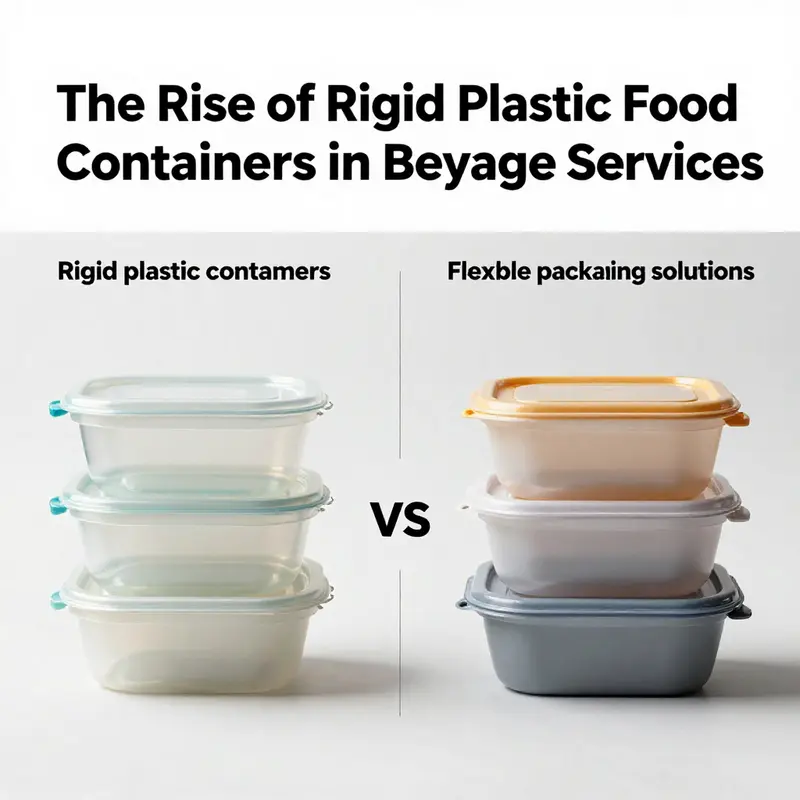
Flexible packaging is a particularly strong competitor. Pouches, sachets, and stand-up bags offer source reduction and shipping efficiencies. They present a low-cost, low-weight option that many brands favor for single-serve and shelf-stable items. However, flexible formats often sacrifice resealability and stackability. Rigid containers remain preferred where structural integrity, leak resistance, or reusability matters. For products that need to be stacked on shelves or in shipping cartons, rigid forms reduce damage and preserve presentation.
The competitive landscape is not only material-based. A growing market of alternative rigid containers made from bio-based polymers or compostable blends seeks to combine the performance of plastic with better end-of-life claims. Some options meet industrial composting standards but fail in home composters or curbside systems. Certification and clear user guidance are critical to prevent greenwashing and confusion. Retailers and brands must balance sustainability claims with realistic waste-management pathways.
Market responses have become multifaceted. One strategy is design-for-recycling. By using single-resin designs and avoiding incompatible coatings, manufacturers improve post-consumer processing. Another approach is lightweighting: reducing wall thickness and optimizing geometry to use less material while preserving strength. Lightweighting yields cost savings and lower transport emissions but can affect perceived quality and thermal performance.
Material innovation plays a key role. Advances in polymer science create blends that offer improved barrier properties, higher clarity, and better toughness. Coextrusion techniques and improved sealing technologies enable thinner yet more reliable lids. Manufacturers also explore surface treatments that resist scratching or reduce bacterial adhesion. Some producers use recycled plastic sheets as feedstock for thermoforming processes, enabling a circular input stream while maintaining product clarity for certain grades.
Supply chain and economic realities limit rapid transformation. Shifting from established polymers to new materials requires retooling tooling, validating food-contact compliance, and often higher raw material costs. Retail packers face the complexity of SKU proliferation if multiple packaging formats are tested. For many brands, an incremental approach—pilot tests and gradual rollouts—balances risk and innovation. Partnerships with converters, recyclers, and waste-management firms can de-risk pilots and create closed-loop pilots in specific markets.
Consumer behavior also dictates winners and losers. Convenience, cost, and performance still drive most purchases. A package that preserves freshness, seals reliably, and looks attractive on shelves will maintain an edge. At the same time, an informed segment of consumers will pay premiums for containers they perceive as safer or more sustainable. Brands that clearly communicate measurable sustainability metrics, such as percentage of PCR content or verified recyclability, tend to win trust. Retailers can accelerate change by giving shelf space to sustainable alternatives and by communicating collection options for used containers.
Regulatory trends are tightening. Authorities in many regions are updating rules about recycled content, chemical limits, and labeling claims. Packaging that cannot demonstrate compliance faces restrictions or negative publicity. Proactive compliance, material traceability, and third-party testing are now standard practices among responsible manufacturers.
Ultimately, the path forward for rigid plastic food containers lies in adaptation, not replacement. Their structural benefits are hard to replicate across all use-cases. But to stay relevant, manufacturers must innovate across materials, design, and end-of-life planning. Investments in mono-material systems, PCR integration, and clearer labeling will keep rigid containers competitive. Collaboration with recycling infrastructure providers and commitments to transparency will reduce friction with consumers and regulators.
For brands and retailers exploring alternatives, it helps to evaluate options case by case. Some applications can shift to paper-based or flexible packs without sacrificing function. Others need the leak resistance, stackability, and reusability uniquely offered by rigid containers. For takeaway and prepared-food segments, eco-friendly paperboard solutions are increasingly viable and may be worth pilot testing; see an example of eco-friendly takeout boxes for food packaging for inspiration.
As market dynamics continue to change, the most successful players will be those who treat packaging as part of a system. This means designing for function, for the realities of recycling systems, and for consumer expectations. It also means accepting that competition pushes innovation. Rigid plastic containers will not disappear; rather, they will evolve. They will do so by embracing better materials, smarter designs, and clearer sustainability pathways. External perspectives and data help guide these changes, and industry resources that compare market leaders and technologies provide valuable benchmarks.
External resource: https://www.packagingdigest.com/articles/32461-top-rigid-food-containers-companies-how-to-compare-them
Final thoughts
Rigid plastic food containers have firmly established themselves as a vital component within the food service industry, particularly for beverage brands and catering services. Their market growth reflects ongoing consumer demand for durable and aesthetically pleasing packaging, reinforced by their advantages in material composition and manufacturing processes. However, awareness of emerging competitors in the landscape is essential for making strategic packaging choices. By understanding these factors, businesses can better navigate the complexities of food packaging and ensure they remain ahead of trends while meeting customer expectations.