
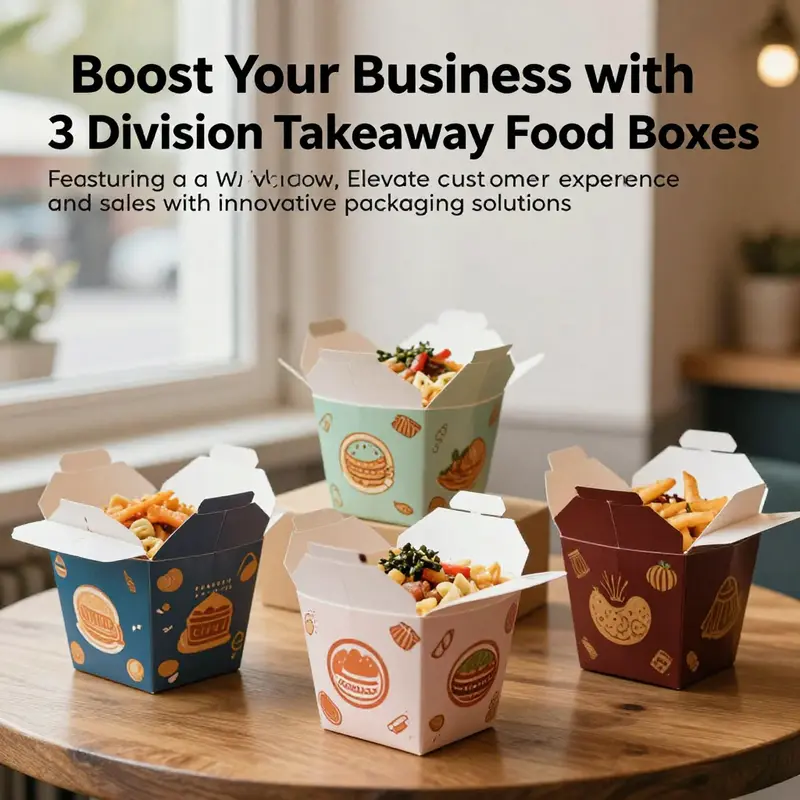
In an era where food delivery and takeout options are surging, the packaging you choose can set your business apart. The 3-division takeaway food box with a window is not just a container; it’s a marketing tool that enhances customer satisfaction and showcases your culinary delights. From bubble tea shops to catering services, understanding the importance of this innovative packaging can significantly impact your sales strategy. In the following chapters, we will explore the importance of sales, manufacturing insights, effective marketing strategies, sustainability trends impacting the marketplace, and the future prospects of the 3-division takeaway food box with a window. Each chapter contributes a vital piece to understanding how this packaging solution can bolster your brand and drive your sales forward.
Seeing Through the Seal: Sales Dynamics of Windowed, Three-Compartment Takeaway Boxes
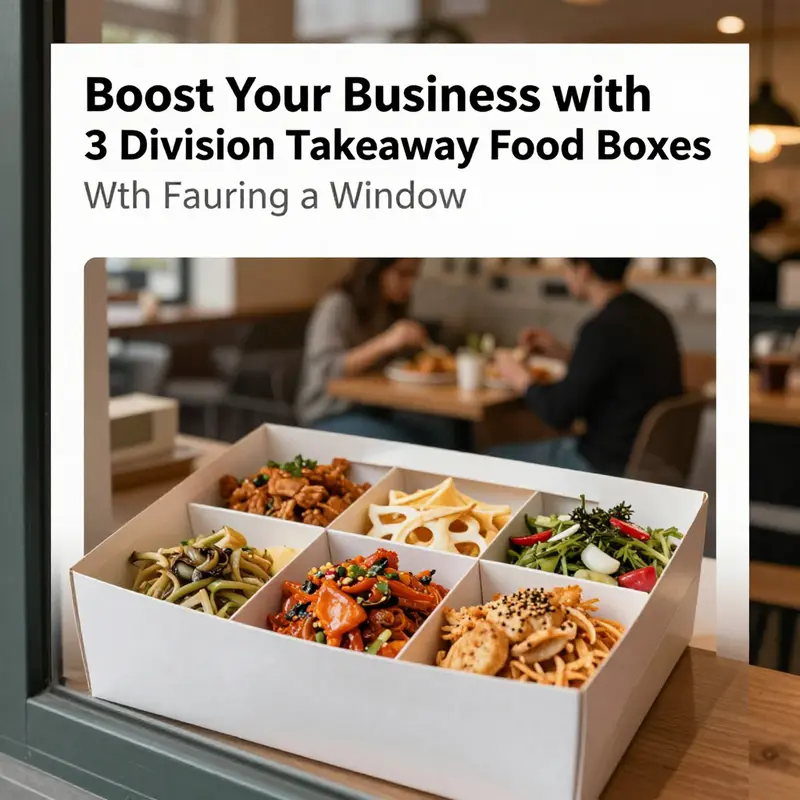
Every package that leaves a kitchen carries more than its contents. It carries the restaurant’s promise, its standards, and its readiness to delight. The three-compartment takeaway box with a window, designed to hold main, side, and sauce components in a single, orderly form, translates that promise into a visible story. When a customer chooses a meal, they are not just selecting food; they are selecting trust, perceived value, and a brand experience. In this context, sales success hinges on how well a box communicates quality at first glance, how efficiently it supports the kitchen and delivery workflow, and how effectively it acts as a mobile advertisement that travels with the customer from the restaurant to the doorstep. The window feature is not a cosmetic flourish. It is a strategic tool that shapes decision-making in real time and, when executed with care, lifts overall sales performance.
The transparent window serves as a visual menu with a built-in safety net. Consumers often decide within seconds, and the eye is drawn to freshness, color, and composition. For multi-component offerings—think a protein with a grain, a vegetable side, and a dipping sauce—the window allows the observer to glance at the arrangement, color harmony, and portion balance. This visibility reduces perceived risk. When a sushi-adjacent or salad-forward meal is presented in a well-lit window, the product becomes more than a description on a menu; it becomes an appetizing impression that can justify premium pricing. The effect is especially pronounced for items where presentation matters most; vivid greens, glossy sauces, and precise layering can look irresistible through the clear panel. In fast-casual formats where efficiency rules, this quick visual cue can shorten the consumer’s decision journey and push a higher conversion rate.
Beyond appetite appeal, the window acts as a canvas for brand storytelling. Custom printing on the box’s exterior creates a tangible extension of the brand’s identity—logos, color schemes, and messaging that reinforce recognition and trust. A cohesive, high-quality exterior communicates reliability, which is essential in a market where many options compete on price alone. Branded, windowed packaging can influence repeat purchasing, as brands that pay attention to the total consumer experience tend to build stronger relationships with their audience. Recent sourcing insights suggest that brands adopting windowed packaging in multi-compartment formats can see meaningful improvements in repeat engagement, driven by enhanced visibility and perceived quality during every unboxing moment. The combination of glass-like transparency and branded design elevates the packaging from a logistical necessity to a strategic marketing medium.
From a procurement perspective, the concerns extend beyond aesthetics. A reliable supplier network that offers consistent materials, tight tolerances, and scalable runs underpins sales momentum. The three-compartment design, when paired with a durable window, requires careful material selection to ensure food safety, moisture resistance, and leak mitigation while maintaining an attractive presentation. Materials like food-safe board and transparent polymer windows require compatible printing and finishing processes. The ability to print vibrant brand colors on the exterior, while preserving the integrity of the window area, is crucial for long-term brand consistency. Speed to market matters too. In a highly dynamic takeout landscape, the capacity to pivot to seasonal packaging, color changes, or new sizes without sacrificing lead times is a competitive advantage. Regions with integrated supply chains and proximity to key logistics hubs can deliver faster turnarounds, enabling brands to test campaigns, roll out limited-time promotions, and rapidly scale production in response to demand spikes.
Sustainability is no longer a niche concern; it is a baseline expectation that shapes purchase decisions and loyalty. Consumers increasingly favor packaging that is recyclable, compostable, or derived from sustainable fibers. The three-compartment window box can be adapted to use eco-friendly substrates without compromising performance. A thoughtful design might incorporate a recyclable corrugated or kraft exterior with a clear PET or bio-based window, paired with lids and seals that minimize leakage. Brands that foreground sustainability in their packaging are not only reducing environmental impact but also signaling alignment with customer values. This alignment enhances brand perception, which in turn strengthens sales velocity, as customers become more likely to choose a product from a company that shares their commitments.
Operationally, the windowed box supports efficiency across the supply chain. The three compartments keep components separate, preserving texture, temperature, and taste. This separation reduces the risk of sogginess, mixing, or cross-dressing flavors—common complaints that can undermine satisfaction and future orders. A streamlined, leak-resistant design reduces waste during transit and lowers costs associated with refunds or replacements. In the kitchen, an integrated box system can improve packing speed and consistency, since crews follow a standardized format for portioning and assembly. The window’s visibility also aids quality control at the point of packing; staff can verify color, volume, and meal composition without opening each package, saving time and protecting the integrity of the food during delivery. The downstream effect is a smoother customer experience, fewer complaints, and higher retention rates, all of which feed into top-line growth.
The customer journey itself is reshaped by windowed packaging. When a customer receives a multi-component meal, the first physical impression is formed by the packaging. If the box looks premium, feels sturdy, and showcases a well-arranged meal, the perceived value increases. This perception contributes to higher willingness to pay and can elevate average order value. A windowed, three-compartment design offers practical benefits too: it accommodates sauces and sides that would otherwise require separate containers, reducing clutter and cost for the consumer. A clean, integrated packaging solution minimizes the chance of leakage or mis-sealed lids, which, in turn, lowers the risk of negative online reviews tied to packaging disappointments. In an era where social proof matters, a positive packaging experience can become a differentiator that drives word-of-mouth referrals and repeat purchases.
The strategic design choices around a windowed box have to harmonize with the broader business model. Customization options—from imprinting logos to selecting color schemes and adjusting sizes—enable brands to align packaging with seasonal campaigns, menu changes, and new product introductions. Leaders who plan packaging as part of the marketing calendar recognize that packaging can carry value far beyond its functional role. It becomes a billboard, a dining room ambassador, and a touchpoint that reinforces the brand narrative with every delivery. When the packaging works as intended, it supports faster decision-making at the point of sale, reduces post-purchase friction, and amplifies the likelihood that customers will return for more.
For teams responsible for sourcing and procurement, the challenge is to balance cost with quality, sustainability, and scalability. Guangdong-based manufacturers and their ecosystems often offer the fastest routes to scalable production with robust printing capabilities and efficient logistics. The proximity to major ports supports leaner lead times and more predictable replenishment cycles. This agility translates into stronger sales performance, because brands can respond quickly to demand fluctuations, launch new menus with minimal delay, and maintain consistent packaging quality across large, diversified product lines. The result is a packaging solution that not only protects and showcases food but also drives brand perception, customer trust, and repeat business.
In sum, the sales vitality of a windowed, three-compartment takeaway box rests on a triad of appeal, clarity, and reliability. The window invites the eye, the compartmentalization preserves the meal’s integrity, and the branding elevates perception. When these elements come together, packaging ceases to be a mere carrier and becomes a core driver of consumer choice and financial performance. The right combination of materials, customization, speed, and sustainability empowers brands to convert visual trust into tangible sales growth, while maintaining the operational efficiency that keeps profits on track. This is how thoughtful packaging becomes a cornerstone of modern food retail success, shaping every bite customers take and every future order they place.
For reference on broader packaging options that align with these principles, see foldable cake boxes with a window. This example shows how windowed design can elevate presentation across different product categories while keeping the focus on quality and user experience. External research on container material options and production timelines also informs practical sourcing decisions, including the benefits of recyclable or compostable options and how lead times influence stock availability during peak periods. External resource: https://www.alibaba.com/product-detail/Disposable-Kraft-Paper-Take-Away-Food-Box-with_1601048479592.html?spm=a2700.13902399.0.0.1b2c3a1dXwZoHl
Behind the Window: The Manufacturing Craft of 3-Compartment Takeaway Boxes with a Viewable Window
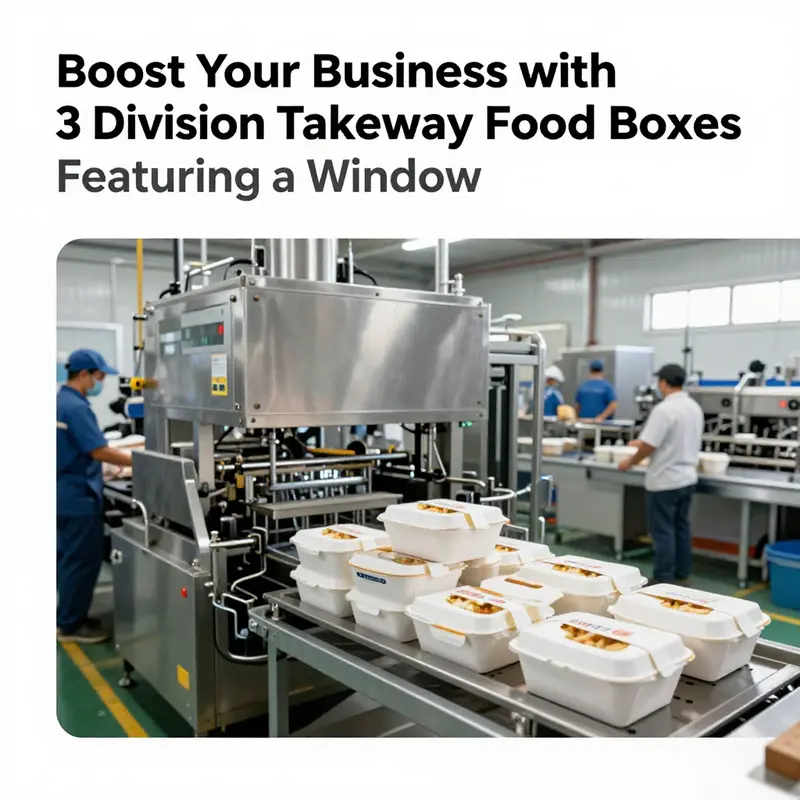
The three-compartment takeaway box with a window is more than a container; it is a carefully tuned instrument designed to protect, present, and pace a meal from kitchen to customer. The design centers on three distinct compartments that keep main courses, sides, and sauces separated yet coordinated within a single, transport-friendly package. The transparent window serves as a stage, inviting customers to preview the meal’s appeal without opening the box, a feature that elevates brand perception and reduces the friction of the first bite by signaling freshness and quality before the lid is lifted. In practice, this packaging doesn’t merely hold food. It frames the dining experience, influences perceived value, and supports a brand’s promise of reliability and care at every touchpoint in the delivery chain. The manufacturing story behind this box knits together material science, precision engineering, and agile supply networks that have become especially vital in the competitive world of fast-casual and takeout.
The materials at the heart of this box combine a sturdy, food-safe paperboard with a clear window that showcases the contents while preserving integrity during transit. The body of the box is typically crafted from kraft paper or recycled cardboard, chosen for its rigidity, printability, and environmental credentials. The window is formed from transparent films, most often PET or PP, which offer a clear view of the meal and resist moisture and grease for the journey from kitchen to doorstep. The balance between board thickness and window durability is critical. In production terms, the paperboard thickness generally falls within a range of 250 to 400 gsm, a spectrum that provides sufficient stiffness to hold the three compartments in shape while keeping the total weight manageable. The window film, though thin, must resist tearing and delamination under heat and moisture exposure, which is why manufacturers closely monitor lamination and sealing processes.
Geography matters as much as material. The global ecosystem for these boxes is tightly clustered around high-volume manufacturing hubs, with China operating as the dominant engine for disposable food packaging. Within China, Guangdong Province is the epicenter, where a dense network of suppliers, converters, and printers coalesces around the city clusters of Shenzhen, Dongguan, and Guangzhou. The proximity to ports such as Shenzhen Yantian and Guangzhou Nansha translates into shorter lead times and smoother logistics, enabling fast, scalable production for brands that demand rapid response to marketing campaigns or seasonal peaks. This ecosystem supports sophisticated workflows: advanced offset and digital printing capabilities to carry logos and brand colors, automated folding and gluing lines that translate a flat sheet into a precise three-compartment form, and specialized equipment for applying the window with heat sealing or adhesive bonding that preserves seal integrity throughout distribution.
The production process itself is a choreography of accuracy and consistency. It begins with the die-cutting and scoring of the paperboard to create the three compartments and their partitions. The panels are then creased and folded in sequence to form the structural backbone of the box. Gluing or heat-sealing joins ensure the joints stay intact under the weight of different food components and during stacking in delivery fleets. The window requires careful alignment and lamination; the transparent film is typically bonded to an inner liner or directly laminated to the panel with a food-safe adhesive. The result must resist penetration by moisture, oils, and cold or hot temperatures without fogging or peeling. Quality control is a non-negotiable step: sealing strength, window durability, and overall dimensional accuracy are tested to ensure performance holds up from warehouse to customer doorstep. In operational terms, manufacturers optimize for minimal material waste and precise cut paths to maximize yield from each sheet, a practical concern that keeps costs under control while maintaining the integrity of the three-compartment layout.
Sustainability threads through every stage of this chapter’s story. There is a steady shift toward FSC-certified paperboard and more eco-friendly films, with an eye toward compostable or biodegradable liners and windows where feasible. Brands increasingly expect suppliers to provide transparency about material origins, recyclability, and end-of-life options. For procurement teams, this means asking for certifications, life-cycle data, and compliance with regional regulations such as food-contact safety standards. The emphasis on sustainability does not simply reflect a preference for greener materials; it aligns with the broader consumer expectation that packaging used in takeout meals should be responsibly designed to minimize environmental impact while still delivering on performance. The window, once thought of as purely aesthetic, now also represents a material challenge: maintaining clarity and integrity over multiple uses and in the face of grease and moisture without compromising recyclability.
From a sourcing perspective, the path to a reliable supplier is built on a balance of quality, customization, and scalability. In practice, procurement professionals search for partners who can provide full customization—logo printing, color matching, and size adjustments—without sacrificing the precision required to align three compartments and a window within a single, foldable enclosure. They weigh lead times and manufacturing scalability, recognizing that Guangdong-based producers typically offer shorter turnaround times due to their integrated supply chains and proximity to raw materials and ports. Material thickness, window durability, and sealing strength become the core performance metrics. Compliance with food-safety standards—whether FDA, EU, or local regulations—emerges as a baseline criterion, ensuring that the packaging not only looks good but also protects the meal and the consumer.
For those navigating supplier markets, platforms dedicated to OEM and ODM services offer a practical route to get this production off the ground. Such platforms enable suppliers to present customizable options, including different board grammage, window film choices, and even alternative closures for added spill resistance. A practical, counts-as-a-banner consideration is the capacity to produce large batches—some manufacturers can exceed 50,000 units—while also accommodating smaller minimum orders for prototyping. This flexibility supports rapid iteration when a brand tests new menu formats or seasonal items. The supplier selection is also a matter of logistics clarity: transparent communication about lead times, production slots, and shipping arrangements helps brands plan promotions and menu cycles with confidence. Within this landscape, it becomes clear that the windowed three-compartment box is not a static object but a dynamic platform that grows with a brand’s design language and delivery ambitions. To explore more on sustainable and adaptable packaging options, see this resource on eco-friendly takeout boxes for food packaging, which highlights design considerations that echo the values of this chapter: eco-friendly takeout boxes for food packaging.
The procurement journey is also informed by practical data points. Material thicknesses in the 250–400 gsm range provide a reliable baseline for stiffness without excessive bulk. Window durability is critical; customers may inspect the contents before opening, and the window must withstand handling and transport without fogging, tearing, or detaching. Sealing strength is central to maintaining the integrity of the three-compartment structure, especially when sauces are involved or when hot foods are packed alongside crisp items. Adherence to food safety standards remains non-negotiable, ensuring that the packaging materials do not contribute contaminants to the meal. In this context, platforms that verify supplier qualifications and offer sample-testing options become valuable tools for procurement managers who must validate performance before committing to large orders.
The broader narrative of the windowed three-compartment box is illuminated by the realities of global manufacturing and the specifics of regional strengths. The design leverages the strengths of a mature packaging ecosystem: scalable production lines, sophisticated printing, reliable adhesives, and robust logistics that together shorten the tempo from factory floor to customer doorstep. The synergy of material science and process engineering creates a product that can present a premium meal without requiring customers to compromise on convenience. In many ways, the three-compartment windowed box embodies the convergence of form and function—the aesthetic clarity of a viewable window and the practical clarity of well-separated components—so brands can deliver both an appetizing image and a dependable delivery experience.
External resource: https://www.made-in-china.com/products/1071968234/Custom-Kraft-Paper-Food-Boxes-with-Window.html
null

null
The Clear Path to Growth: Sustainability Trends Driving Demand for Windowed 3-Compartment Takeout Boxes
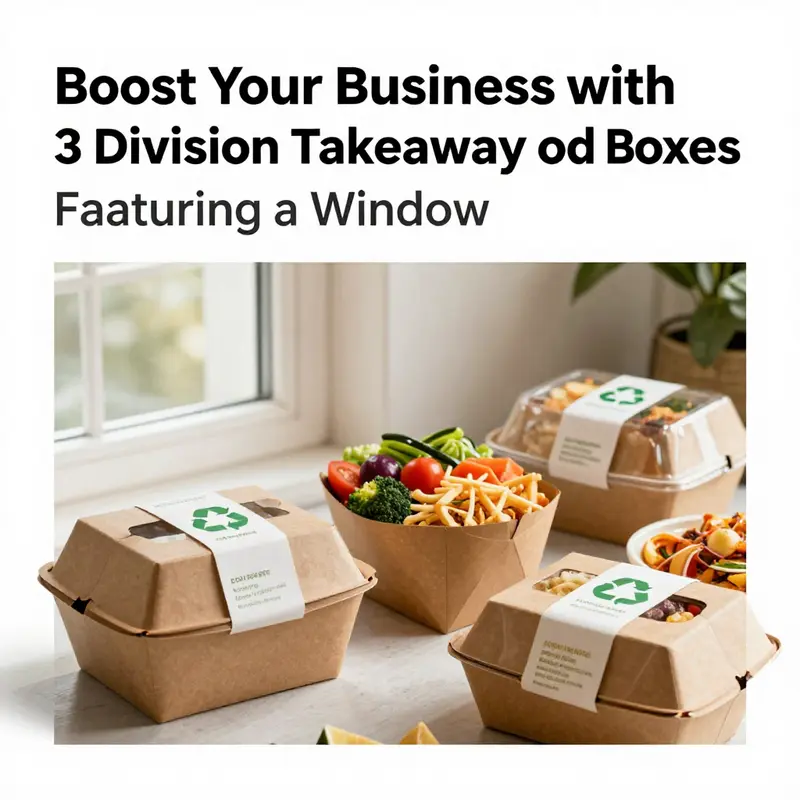
The windowed, three-compartment takeout box sits at an intriguing crossroads of practicality, aesthetics, and responsibility. It promises to keep components separated—main dish, side, and sauce—while offering a visual window that invites trust by revealing the meal inside. Yet as consumers become more vigilant about waste, this packaging must do more than perform; it must align with a broader sustainability narrative. The current market trend suggests that the most successful boxes are not merely recyclable; they are designed with renewable, compostable materials in a manner that preserves performance, preserves flavor, and preserves brand reputation.
Global momentum against plastic waste has reached the point where frequent buyers want packaging that matches their values. Even when polypropylene has been the stalwart material for many box lines, its life cycle profile — including greenhouse gas emissions, resource depletion, and end-of-life challenges — has become a focal point for both buyers and regulators. The shift is pushing manufacturers toward alternatives such as bamboo fibers, bagasse from sugarcane, wheat straw composites, and post-consumer recycled papers. Not every business will pay a premium, but increasing numbers are willing to accept higher unit costs for packaging that can be certified compostable and certified within food safety norms. This dual emphasis on safety and sustainability is reframing what a windowed three-compartment box can be.
Regulatory developments are accelerating this shift. In the European Union, restrictions on single-use plastics are tightening. Similar measures are appearing in U.S. states and other regions with ambitious waste-reduction targets. The regulatory environment creates a commercial imperative: if a chain wants to participate in or expand a delivery program in markets with stringent rules, the packaging must meet defined standards for recyclability, compostability, or biodegradability. In practice, this means window films must be traceable to certified compostable polymers or to recycled content that maintains barrier properties without compromising safety. It also means that the window and the box as a system must pass end-of-life sorting and composting tests. Brands that preempt these requirements by selecting compliant materials can minimize disruption from potential bans and avoid costly product substitutions after market entry.
Beyond compliance, sustainability is becoming a strategic marketing lever. A neutral, clear window can showcase the vibrancy of a well-plated meal, reinforcing the expectation of quality. Yet customers increasingly interpret eco-conscious packaging as a signal of broader brand ethics. When a box communicates, through its form and materials, that a restaurant takes responsibility seriously, it can enhance perceived value, encourage repeat purchases, and even justify an experience premium. In a crowded market, where many menus resemble one another, packaging can be a differentiator. The window serves not simply as a visual aid but as a communication channel that frames the food in a sustainable light.
Material choices are central to this narrative, and makers in high-volume hubs—from coastal urban corridors to manufacturing clusters in large provinces—are adapting quickly. The Guangdong ecosystem, already known for its integrated supply chains and digital printing capabilities, is embracing this transition. Local manufacturers are expanding capabilities to offer not only customized graphics and brand colorways but also a spectrum of sustainable materials and films that align with compostability claims. They are aligning with food safety standards while ensuring that the window does not compromise grease resistance or leak prevention. In practice, this requires close collaboration among designers, converters, and end-users to balance the mechanical performance of the three-compartment structure with the increasingly important end-of-life story.
Sales outcomes in this evolved context hinge on several intertwined dynamics. First, there is the matter of cost. Eco-friendly options typically carry a premium, yet many buyers view this as a small price for regulatory peace of mind and brand equity. Second, scalability matters. Guangdong’s proximity to raw materials, ports, and logistics corridors often enables faster ramp-ups as demand grows, a factor that can translate into lower per-unit incremental costs at scale. Third, the perception of transparency through the window aligns well with consumer wants for open, honest representations of what they are purchasing. The box becomes a brand touchpoint beyond the meal, a tangible artifact that communicates stewardship.
For businesses evaluating suppliers, the decision framework remains anchored in quality, customization, and sustainability. A robust supplier will not only provide a windowed three-compartment solution but will also offer a spectrum of materials that meet both safety specifications and environmental claims. The ability to customize logos, color schemes, and sizes remains important, but the sustainability attributes—certifications for compostability, recyclability, or post-consumer content—are increasingly decisive. Lead times and the ability to scale are also essential, particularly for brands pursuing rapid market entry or responding to surges in demand driven by promotions or seasonal menus.
To illustrate, consider how the design conversation shifts when sustainability becomes a primary criterion. The window film might be replaced with a bio-based or compostable alternative that maintains clarity while reducing fossil carbon impact. The carton body might transition from conventional coated paperboard to a liner that uses recycled fibers with a certified composition. Sealing and glue systems are chosen to support recyclability, and adhesives are vetted to avoid contamination in recycling streams. In the context of a three-compartment layout, the barrier properties must still withstand moisture and grease from fried items, sauces, and dips, so the material science challenge becomes one of optimizing both performance and end-of-life friendliness.
The consumer experience remains at the heart of this evolution. A well-executed box with a window that opens to reveal generous color, crisp typography, and a sense of alignment with sustainability values communicates directly with the buyer. The takeaway moment—seeing the meal matched with responsible packaging—reinforces memory and preference. It is this alignment of aesthetic appeal with environmental integrity that translates into repeat orders and better brand recall. The sales takeaway, then, is clear: windows can amplify appetite when the packaging is not only attractive but accountable. The trend is not about fashionable appearances alone; it is about delivering on promises across production, packaging, and post-consumption realities.
For those seeking a practical entry point, suppliers now offer turnkey options that combine branding flexibility with eco-conscious credentials. A practical step is to evaluate options based on three pillars: material safety and certification, clarity and barrier performance of the window, and the lifecycle narrative the packaging enables. A bold visual identity can coexist with credible environmental claims, provided the claims are verifiable and traceable. In your procurement dialogue, ask for life-cycle assessments, third-party test results, and clear statements about compostability or recyclability. This approach ensures that the box supports both a compelling consumer experience and rigorous sustainability standards.
The broader implication for the takeout and delivery ecosystem is that sustainability and visual transparency are not mutually exclusive. They converge to form a more resilient packaging solution that supports consumer trust, brand differentiation, and regulatory compliance. When a three-compartment windowed box is designed with a sustainability-first mindset, it becomes a platform for storytelling as much as for food service. This is the core reason sales in this category are trending upward: customers are increasingly prepared to reward brands that demonstrate responsible practice without compromising convenience.
To explore a practical example of the kind of packaging solution that combines ecological intent with visual clarity, you can examine a representative option in the eco-friendly segment here: eco-friendly disposable 3-compartment packaging box for fast food. This link highlights how a single product family can deliver multiple SKUs with consistent branding while offering a choice of materials aligned with compostability claims, illustrating how the supply chain is evolving in tandem with consumer expectations.
For a deeper, more technical look at how different container materials influence the environmental footprint, see the external resource on life-cycle assessment of takeaway containers: https://www.mdpi.com/2071-1052/15/8/6194
The narrative around windowed, three-compartment boxes is still developing, but the trajectory is clear. Sustainability is no longer an optional attribute; it is a fundamental driver of product design, procurement strategy, and, ultimately, sales performance. The window remains a gateway—both to the meal and to the values that shape how people choose where to eat. As brands continue to weave environmental responsibility into every layer of packaging, the three-compartment windowed box stands as a potent, visible symbol of a company’s commitment to a cleaner, more transparent food economy.
Seeing Value in Clear Windows: The Sales Momentum of 3-Compartment Takeaway Boxes with a Window
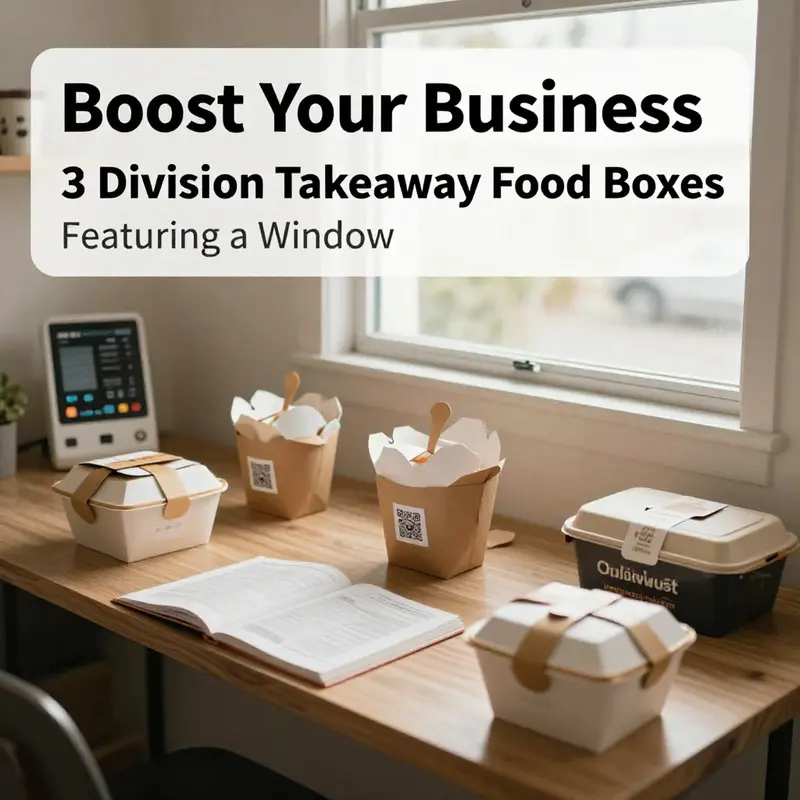
A window can do more than reveal what’s inside. In the crowded field of takeout and delivery, a windowed 3-compartment box turns packaging into a first salesperson. It offers a tangible glimpse of color, texture, and portioning before the meal ever reaches the customer. The 3-compartment design itself solves practical logistics: a main dish, a side or two, and sauces or dips can travel without mingling, while the window preserves freshness and visibility. As consumer expectations shift toward both convenience and experience, this packaging combination becomes a decisive factor in the buyer’s decision. Buyers weigh not only cost and reliability but also how packaging communicates quality. A well-executed windowed box acts like a storefront in a cupboard, inviting the customer to place trust in the product before tasting it. The sales potential, then, rests not just on utility but on perception—how the container frames the meal as premium, organized, and thoughtfully prepared. In markets where visual merchandising matters, the window becomes a silent advocate for brand storytelling, offering a preview of color, layering, and texture that can differentiate a brand in a feed-driven, order-accelerated economy. The shift toward windowed designs aligns with a broader trend: packaging as a transparent contract with the consumer, promising that what is seen is what is delivered. This transparency, in turn, reduces doubt at the moment of purchase and supports fewer returns or disputes about portion integrity. When a meal looks as good at the moment of delivery as it did on the screen, customers are likelier to repeat, to tip, and to share their experience with others. The business case blends aesthetics with practicality, because the window-marketability is inseparable from durability. A visually appealing box must still resist grease, moisture, and leakage, especially when sauces travel across long urban routes or during peak hours of demand. Modern windowed boxes achieve this balance through carefully engineered substrates and coatings that are food-safe, recyclable, and resilient. In effect, the window is a promise and a shield at once: it invites trust in presentation while protecting the contents from the hazards of delivery. The market signals support this dual function. A growing segment of operators—gourmet takeouts, bakeries, sandwich shops, and dessert parlors—are leveraging window designs to showcase artistry in plating and texture contrast. For them, the window acts as a window to quality, a taste-enabled billboard that can differentiate a product in a digital marketplace where photos are the primary point of comparison. Industry observers note that windowed packaging pairs exceptionally with multi-component meals, where customers expect clarity about portion boundaries and freshness. In such contexts, the three compartments are not merely practical divisions; they are part of a curated experience that encourages higher price perception and more elaborate branding. Sustainability remains a central axis around which future sales will pivot. The push toward recycled and responsibly sourced materials is intensifying, as stakeholders seek packaging that is both functional and aligned with environmental standards. Recycled kraft paper with clear windows, for instance, demonstrates that durability and visibility can coexist with ecological responsibility. Manufacturers have begun to integrate windowed designs with compostable or recyclable liners and certified sustainable inks, reducing the life-cycle impact while preserving the integrity of the display. Recent market moves underscore this convergence. Ongoing product development emphasizes stronger seal integrity, easier seal repair in the field, and printability that supports full-color branding on the exterior without compromising recyclability. For brands evaluating suppliers, this translates into a checklist: food-safe materials, effective barrier properties, and compatibility with high-volume, fast-turnaround production cycles. It also means there is a growing emphasis on scalable customization. Companies want to imprint logos, color schemes, and even seasonal art onto boxes that still pass strict regulatory standards. The Guangdong region in China has become a central node in meeting this demand. Its ecosystem—dense with manufacturers, converters, and print houses—provides the speed and breadth needed for brands that require fast scaling. Proximity to major ports translates into shorter lead times and more predictable logistics, essential for campaigns tied to holidays or promotional events. Buyers can leverage a mature packaging network to tailor sizes, window configurations, and print effects while maintaining cost controls. In practice, this means a supplier can offer a modular approach: a standard 3-compartment layout with windows of various sizes, plus optional inner dividers and protective coatings. Such flexibility is particularly valuable for meal-prep services and ethnic cuisines that rely on multi-component meals. The market is responding with innovations that keep pace with evolving consumer preferences. One notable development is the design of a windowed rectangular box that uses recyclable materials and self-locking features to simplify handling. These innovations are not just about aesthetics; they address real-world needs like leakage prevention, stackability during transport, and compatibility with automated packaging lines. The interplay between design, material science, and logistics becomes a decisive factor in win rates with large distributors and restaurant groups. For procurement managers, the decision calculus extends beyond price. Compliance with food-safety regulations, the reliability of supply chains, and the capacity to deliver on deadline are equally critical. A supplier that can demonstrate consistent quality across high-volume orders, with transparent communication and clear packaging specifications, earns a longer-term partnership. That reliability has downstream benefits: faster onboarding of new SKUs, more stable inventory, and the ability to respond to sudden shifts in demand without sacrificing presentation. A windowed box is most effective when the brand leverages it as a storytelling vehicle. For this reason, the packaging must harmonize with labeling, branding, and a cohesive packaging family. The choice of window size, opacity of the window film, and the color palette on the exterior can be tuned to reflect a brand’s personality—premium, casual, or eco-conscious. The economy of scale makes it possible to explore seasonal variations and limited-edition designs without eroding margins. For brands seeking to explore these advantages, a practical step is to review available internal resources and supplier capabilities, including customization options that do not disrupt the supply chain. In this respect, a robust ecosystem of suppliers in the main production hubs can provide fast turnarounds, consistent print quality, and sustainable material options that align with corporate responsibility goals. The future prospects for sales of 3-compartment takeaway food boxes with windows are compelling precisely because they address both the functional needs of multi-component meals and the growing consumer emphasis on transparency and sustainability. The window is not a gimmick but a strategic asset that, when paired with reliable performance and responsible materials, reinforces brand trust and encourages higher-value purchases. As digital ordering continues to dominate, the packaging of the meal becomes part of the overall customer experience. The box’s ability to hold its shape under pressure, maintain crisp presentation, and reveal the dish in an appetizing way can contribute to higher order satisfaction and repeat business. For buyers looking to capitalize on this momentum, the path forward lies in selecting partners who can deliver not just a box but a packaged experience—one that communicates care for the customer, respect for the food, and a commitment to sustainable practice. To explore practical options and examples of how this design translates into real-world packaging choices, consider resources that focus on eco-friendly, windowed, multi-compartment packaging solutions. For more on those options, see eco-friendly 3-compartment packaging box for takeout. This kind of content highlights how brands translate concept into production, blending aesthetics with logistics in a way that supports growth and brand loyalty. External references confirm that the market is responding to both demand signals and supply-chain efficiencies, with global manufacturing hubs scaling to meet rising international orders. While challenges remain—material costs, regulatory changes, and potential disruptions—the direction is clear. Windowed, three-compartment boxes are becoming a staple not just for function but for brand storytelling and trust-building in a crowded, competitive landscape. As retailers and restaurateurs refine their menus and digital strategies, the packaging component will continue to evolve in tandem, reinforcing the link between what customers see and what they taste. External reference: https://www.alibaba.com/product-detail/3-Layer-Takeaway-Recycled-Rectangular-Takeaway_1600488893235.html
Final thoughts
Adopting the 3-division takeaway food box with a window is not just about keeping food separated; it’s about creating an enticing experience for your customers that influences their purchase decisions. As we’ve explored throughout this article, understanding the importance of sales, insights from manufacturing, and adapting effective marketing strategies will enable businesses, ranging from bubble tea shops to catering services, to thrive in a competitive market. Sustainability trends are also pivotal, as more consumers prioritize eco-friendly solutions, making it essential to consider packaging that aligns with these values. Looking ahead, the future prospects for this innovative packaging solution promise to enhance customer satisfaction and drive sales as technology integrates further into the culinary experience. Embrace this trend now to elevate your business and meet customer expectations.