

Small clear plastic tea cups are rapidly becoming essential tools for beverage businesses, from bubble tea shops to caterers. With their versatility in size and functionality, these cups facilitate the perfect presentation for teas, trial portions, and tasting events. In this exploration, we will uncover the diverse product variants available, examine their common use cases across various industries, identify market suppliers, understand pricing dynamics, and delve into material considerations that matter to modern consumers. By the end of this article, you will see how these small cups can not only add convenience to your service but also tie into broader trends in sustainability and consumer preferences.
Seeing the Brew: A Practical Guide to Small Clear Plastic Tea Cups and Their Variants
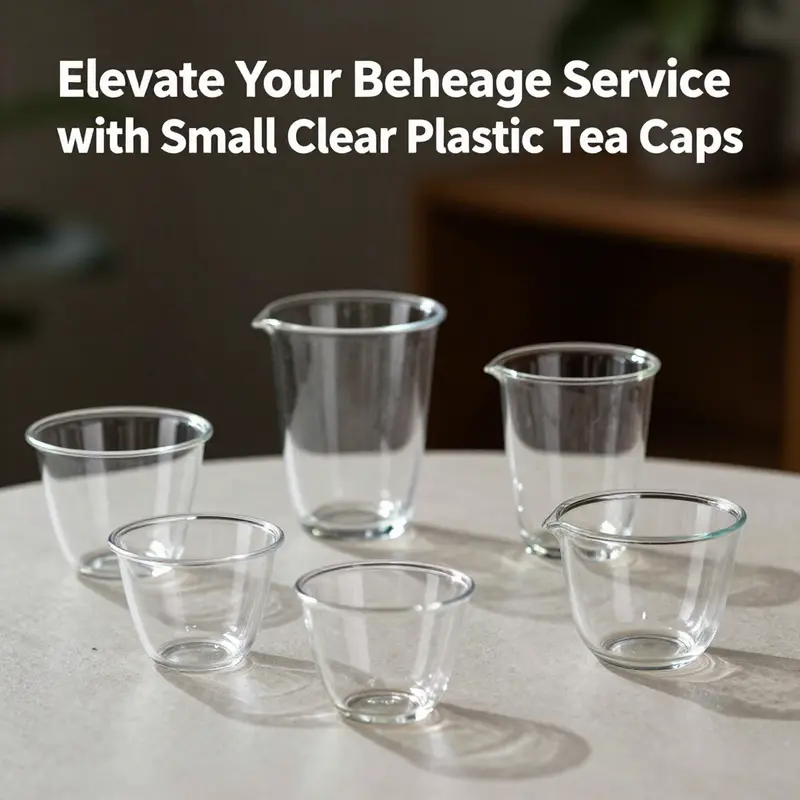
Small clear plastic tea cups are built around a single idea: show the drink while keeping service simple. Their transparency lets color, clarity, and infusions become part of the experience. This visual advantage drives their use in sampling, events, tasting counters, and quick-serve outlets. Beyond sight, these cups are designed for lightness, stackability, and low cost. That combination makes them versatile for both cold and controlled warm beverage service.
The most common materials for these cups are Polystyrene (PS), Polyethylene Terephthalate (PET), and Polypropylene (PP). Each brings distinct properties. PS offers high clarity and a crisp, glass-like look. It is rigid, inexpensive, and ideal when a sharp presentation matters. PET balances clarity with toughness. It resists impact better than PS and performs well in chilled or refrigerated displays. PP is tougher and more heat tolerant than PS. It finds use where bend resistance and moderate heat performance are needed. These plastics are generally supplied in food-grade formulations, and reputable manufacturers will provide material certifications. Recycling codes often differ: PET carries the code 1, PP code 5, and PS code 6. Knowing these helps with end-of-life handling.
Size and shape are where product variants multiply. Typical capacities range from roughly 30 milliliters up to about 240 milliliters. A 30 ml cup approximates a one-ounce sample, perfect for tasting flights. Mid-range sizes such as 50 ml and 90 ml serve trial portions or sauces. Larger small cups, around 100 to 240 ml, work as small-service beverages or dessert vessels. The familiar “aircraft” or tapered silhouette remains popular because it nests efficiently when stacked. Some designs echo a small mug with a handle, offering a more secure grip and a premium feel while keeping disposability.
Beyond basic form and volume, functional variants add utility. Lidded cups come in two general types: snap-on lids and peel-seal lids. Snap-on lids serve to reduce spills during transport and to keep contents hygienic in buffet or catering contexts. Peel-seal lids appear on prepackaged portions and desserts. They extend shelf life and support refrigeration or chilled displays. Dome lids are sometimes paired with taller clear cups when garnishes protrude above the rim. For smaller tasting cups, shallow lids add protection without obscuring the aroma.
Sealed mini-cups are common in ready-to-sell snack and dessert categories. These can include clear plastic bodies with either a transparent lid or a foil seal. Such units are engineered to preserve texture and freshness for refrigerated items like jellies or fruit cups. While not intended for hot liquids, they are excellent for cold tea samples, iced tea shots, and layered beverage tasters.
Design details also influence performance. Rim thickness affects mouthfeel and perceived quality. A thinner rim feels closer to glass, while a reinforced rim adds durability for repeated handling during events. Base design dictates stability; wider bases reduce tipping, and shallow bowls present layered drinks more effectively. Some cups are molded with subtle measurement marks to assist staff filling and portion control. Others include a slight lip for label application or a flat area for printing.
Manufacturing methods vary with cup type. Thermoforming and injection molding dominate. Thermoformed cups often have a thin, lightweight wall and excellent optical clarity. Injection-molded cups can be thicker and more rigid. Both processes support high-volume production and enable custom shapes. Bulk packaging focuses on space efficiency. Nested stacking in sleeves or boxes reduces shipping costs and speeds service at the point of use.
The intended use environment guides material choice. For chilled tastings and refrigerated displays, PET is a strong option. For short-term hot beverage service in controlled settings, a heat-rated PP may suffice. However, most small clear plastic cups are not engineered for extended contact with high temperatures. Repeated exposure to hot liquids can deform or leach additives in lower-grade plastics. Manufacturers often specify temperature limits and safe use recommendations. Always consult the supplier’s technical sheet for maximum safe temperatures before using cups with hot tea.
Practical considerations extend to regulatory and environmental factors. Food-grade certifications and compliance with local regulations are important. Suppliers typically provide documentation for material safety, migration testing, and manufacturing hygiene. Environmental concerns drive both buyers and manufacturers to consider recyclability and alternatives. Clear PET is widely recyclable through many municipal streams. PS and some PP variants are less commonly accepted. As a result, many operations pair disposable clear cups with recycling programs or seek reusable alternatives when sustainability is a priority. Reusable clear materials such as Tritan or tempered glass mimic the visual benefits of plastic while reducing waste over time.
Cost and sourcing also shape variant selection. Small clear plastic cups are widely produced in different regions, with prices tied to volume, material grade, and customization. Bulk buying can reduce unit cost significantly. Adding printed logos, special lids, or thicker walls raises price. For many operators, the trade-off between upfront cost and perceived quality determines whether a standard thin-walled cup is acceptable, or whether an upgraded, sturdier variant is worth the investment.
For visual merchandising, clear cups excel. They put color and layering on display. Tea shops and caterers use them to showcase infusions, bubble teas, and cold-brew samples. The transparency helps staff and customers evaluate strength, clarity, and inclusion levels like fruit or herbs. In tasting events, mini clear cups provide consistent, measured samplings that reduce waste compared to larger servings.
Handling and storage matter in daily use. Stackable designs reduce workspace clutter. Flat-pack lids allow compact storage. Many suppliers ship units in counts of hundreds or thousands, and good packaging speeds up service by enabling quick dispenser loading. Some variants come pre-printed for single-use promotions or instructional labels for staff.
Finally, consider the balance between convenience and responsibility. Small clear plastic tea cups deliver visibility and ease. They also raise questions about waste and product lifecycle. Choosing a material and variant should reflect service needs, presentation goals, and environmental strategy. When selection aligns with those priorities, these cups become a simple, effective tool for showcasing tea, sampling blends, and serving guests without sacrificing appearance.
For a concrete example of how small clear plastic cups are marketed and specified, see an illustrative product listing here: https://www.walmart.com/ip/Clear-Square-Disposable-Plastic-Mini-Tea-Cups-240ct/1003679527. For a supplier perspective on clear disposable cups and related packaging options, explore this product page for clear plastic drinking cups: clear disposable plastic cup product.
Practical and Creative Uses for Small Clear Plastic Tea Cups

Versatile Everyday Uses and Practical Tips
Small clear plastic tea cups are small in size but surprisingly large in utility. Their transparency, light weight, and food-safe construction make them a natural fit for many tasks beyond pouring tea. Think of them as tiny, inexpensive vessels that you can drop into daily routines. They show contents at a glance, nest for compact storage, and resist breakage. Those qualities alone drive a wide range of uses in homes, offices, events, and on the road.
On a desk, a set of cleaned small cups becomes an instant organizer. Pens, pencils, sticky notes, binder clips, and even spare keys find a tidy place in those clear walls. Because they’re transparent, you avoid rummaging. A small footprint keeps a workspace uncluttered. Grouping several cups side by side gives a modular system for sorting tools and supplies. For crafters, the same cups are ideal for holding beads, sequins, rhinestones, and small hardware. They double as single-use paint cups when working with tiny amounts of color. Use one cup per color to avoid cross-contamination and to make cleanup quick.
In the kitchen, these cups shine as portioners and micro-storage. Use them to hold measured spices for mise en place while cooking. When baking, they make simple measuring vessels for ingredients like baking powder, salt, or vanilla. Their clear sides let you judge quantities at a glance. For pantry organization, label and stack cups of dried herbs, seeds, or small baking staples. They are also useful for packing small snack portions for lunches or picnics. Because they nest, you can carry several pre-filled cups without taking much space.
Seed starting and plant propagation benefit from the cups’ size. Drill or punch a few drainage holes and they serve as tiny propagation pots. The clear sides allow observation of root growth, which is especially useful for seedlings and cuttings. Their low cost makes it acceptable to run many at once. For succulents and small herbs, these cups can be decorative mini planters too. Add a layer of pebbles for drainage, a bit of soil, and a young plant to brighten windowsills.
Where hygiene matters, small clear cups perform well. Use them in first aid kits to separate tablets, dressings, and small tools. They keep contents dry and visible while protecting them from dust. For bathrooms, a cup can hold toothbrushes, cotton swabs, or makeup applicators. They also make practical containers for travel liquids during short trips, provided the material and seals meet transport rules.
At events and tastings, these cups are often chosen for sampling. Their transparency creates a clean presentation for tea tastings, coffee samplers, or small dessert portions. Single-use eliminates cross-tasting and speeds turnover. They are light to carry and easy to dispose of. If you host a party, use them for dips, condiments, or amuse-bouche servings. They work well for dessert flights too, giving guests a taste without committing to a full portion.
Outdoor activities benefit from their shatterproof nature. When camping or picnicking, these cups reduce the risk of broken glass. They hold hot or cold liquids depending on material, and their low weight saves space in packs. For families, they are safer around children. For pet owners on the go, a small cup doubles as a travel water dish during walks.
Beyond practical reuse, these cups fuel creativity. Crafters use them as molds for resin projects or as bases for miniature dioramas. Teachers use them as hands-on tools: counting manipulatives, science experiment vessels, or stations for small group activities. At craft fairs, they serve as containers for handmade samples or as mini gift vessels filled with candies or charms.
Small cups can also help with portion control and food safety. For people tracking intake or serving small toddlers, pre-portioning snacks into individual cups prevents overeating. Label each to avoid confusion. For meal prep, they are handy for sauces and dressings. Clear cups with lids protect contents and help transport condiments without spills.
Recycling and reuse should guide how you handle these cups. Choose food-grade materials labeled for reuse if you plan to wash them. Some materials tolerate warm water and hand washing, while others degrade faster. When a cup’s clarity fades or scratches appear, recycle it according to local guidelines. Where single-use is unavoidable, pair these cups with other compostable or recyclable tableware to reduce environmental impact.
For small businesses, restaurants, and catering services, these cups are economical tools. They simplify sample distribution during promotions. They are inexpensive to stock and fast to deploy. Event planners use them for portioned hors d’oeuvres, tasting booths, and interactive stations. Because they are clear, chefs can create layered presentations that look professional even in modest formats.
Storage and stacking tips make everyday use easier. To keep cups dust-free, nest them and cover the top with a band or light wrap. For pre-filled samples, invert a clean cup over each filled one to create a temporary lid. For longer-term storage, consider sealing with small plastic film covers or lids designed for condiment cups. Labeling becomes simple with a strip of masking tape or a permanent marker on the rim.
When selecting cups, pay attention to size and material. Smaller sizes are ideal for samples and condiments. Larger small cups work better for tastings or sauces. Materials like polypropylene or Tritan offer improved durability. Check heat resistance if you plan to pour hot tea. Food-safe labeling ensures the cups are appropriate for edible use. For applications that require lids, choose models that come with secure covers.
One often-overlooked benefit is cost efficiency. The low unit cost allows creative applications that would be wasteful with pricier vessels. Use them for single-use crafts, temporary storage during projects, or disposable stations at outdoor events. The affordability also aids experimentation; try new setups without large financial commitment.
If you need a simple disposable option for outdoor gatherings, consider a basic clear plastic cup designed for picnics and parties. These offer transparency and sturdiness suited to informal settings. For a selection of disposable options for outdoor use, see this disposable clear plastic cup for outdoor use: https://ecocupbowl.com/product/disposable-clear-plastic-cup-outdoor-picnic-pet-cup-drinking-cup-for-parties-birthdays-weddings-camping-utensils/.
For reference on current market offerings and supplier details, consult the product listing for small transparent plastic cups. It provides specifications for common sizes, materials, and supplier information: https://www.alibaba.com/product-detail/Plastic-Small-Transparent-Cup_.
These cups are small, but their potential is not. They offer practical, low-cost solutions across home, work, and leisure. With a little care and creativity, they become more than single-use items. They become tools for organization, creativity, and convenience.
Tiny Clarity, Global Networks: The Market Web Behind Small Clear Plastic Tea Cups
Small clear plastic tea cups may seem as simple as a disposable sip, but they sit at the center of a quiet, highly connected market network. These cups are the kind of utility item that earns its keep through reliability, clarity, and the ease with which it fits into hurried service, tasting sessions, and bespoke events. The miniature transparent cup evokes a specific shape and purpose a tiny vessel designed to preserve the visual appeal of the liquid inside, while keeping the handling light and straightforward for servers and tasters. In practice, the market for these cups unfolds through a tight sequence of decisions about size, material, and service model that ultimately determines whether a tasting session moves smoothly or stumbles on a delivery delay or a cloudy rim after a hot drink. The most common miniature option hovers around 30 milliliters, a size that aligns with sample tastings, flight style tea experiences, and quick office breaks where a single serving is all that’s needed. Yet buyers frequently also encounter 50 milliliter, 90 milliliter and 100 milliliter variants. Each size carries its own expectations about mouthfeel, heat tolerance, and the moment when a sip becomes a story about a brand or a blend rather than a mere beverage.\n\nIn the realm of material science and food safety, these cups are usually crafted from PS or PP plastics. The choice between polystyrene and polypropylene shapes a product’s rigidity, translucence, and resilience in the face of heat. PS is prized for its crisp clarity; PP offers stronger shatter resistance and often better heat tolerance. Some suppliers describe their cups as ‘hard plastic’ or ‘hardened’ to emphasize durability, a practical note for venues that anticipate a high turnover of tastings or long days of event service. The clear, glass-like transparency is not just a visual cue; it is a functional feature that lets the liquid’s color and aroma take center stage, which matters in tea tastings where the eye and palate travel together through definitions of terroir and processing.\n\nBehind this sheen lies a well-trodden supply chain, heavily anchored in specific production hubs across southeastern and coastal China. The market’s geography matters because the scale, speed, and customization options available to buyers depend on the capabilities concentrated in these regions. Guangdong’s coastal cities, Fujian’s ports and inland hubs, Zhejiang’s dense network of small- and medium-sized manufacturers, and Jiangsu’s logistics corridors all contribute to a pattern where factories specialize in disposable tableware and single-use cups that can be sold in bulk with short lead times. The region-by-region expertise affects not only price but also the range of services, from standard catalogs to full OEM or ODM programs. OEM and ODM services are particularly consequential for tea businesses that want a distinct look—custom diameters, printing, or even unique color options that align with a tasting event’s branding. The ability to tailor a cup to a brand narrative, without sacrificing performance, is a big driver in supplier selection.\n\nPrices tell a story of scale and quality. In larger orders, the per-unit cost can be remarkably low, especially for entry-level cups. A procurement manager might see prices as low as a half yuan per unit when ordering thousands of units; the variability grows with size, material, and the presence of printing or special finishes. On the higher end, when a cup is built with more durable resin, tighter tolerances, or a premium finish for a premium tasting experience, the unit price can rise severalfold. The range reflects both the material choice PS versus PP and the manufacturing precision demanded by the buyer. Where a tasting needs a crisp rim and an uninterrupted, transparent body, buyers weigh the difference between easy-to-process, low-cost options and higher-cost variants that guarantee a longer service life in busy environments. The decision is as much about total cost of ownership as it is about the upfront price per cup.\n\nQuality control is a constant companion to these considerations. In a market where cups are consumed in rapid succession and then discarded, it is essential that each cup meets basic sanitary standards and performs predictably under heat. Some suppliers emphasize heat resistance as a feature, a sign that the cups can accommodate hot beverages without warping or leaking. In practice, buyers want a product that remains clear after a brief exposure to steam and a brief cooling period, and that can survive the rigors of quick service and transport. The ability to deliver consistent crystal-clear clarity across large lots is a trust signal that helps buyers move from sample to larger orders with confidence. In addition, the reliability of return rates on some product lines has come up in the market’s chatter. A high return rate can be a warning flag about inconsistency, while a low rate signals a well-managed production and quality-control process. For operators who rely on these cups for tasting flights or event hospitality, that reliability translates into smoother service and fewer last-minute replacements.\n\nThe procurement journey often begins online, where factories and trading companies present catalogs of small cups with a broad spectrum of sizes and finishes. The online marketplace remains a primary channel for discovery, but it is only the first step. Buyers must translate the catalog into a practical decision: which factory can deliver the required size, the colorless clarity, the appropriate lid compatibility (where needed), and the right level of customization for a given event or brand narrative? A crucial cost element is the minimum order quantity, a factor that can either match the scale of a tasting program or compel a buyer to find co-purchasers or shared packaging solutions. Lead times vary with demand, seasonality, and the producer’s production line readiness. In peak seasons, even well-established suppliers might stretch, underscoring the importance of early planning and vendor diversification. The practical realities of warehousing, packaging, and shipping add another layer: the cups must arrive unscathed, stacked without scuffing, and each box must carry the necessary labeling for inventory, safety, and compliance checks.\n\nA growing aspect of the market is the ability to customize and print. In some regions, suppliers offer design services that allow logos, color accents, or text to be applied to cups, which can transform a simple tasting into a branded experience. This capability is particularly valuable for cafes running limited-time events, brands staging a tea festival, or companies gifting samples at conferences. The boost to perceived value is tangible, turning what feels like a disposable product into a memory-bearing object that reinforces the tasting’s narrative. For buyers who want to understand the broader ecosystem, one useful approach is to explore the supplier landscape as a continuum—from no-frills mass production to highly customized, design-forward cups that carry a brand story into every sip. The trade-off, as ever, involves balancing cost, speed, and customization against the quality of the liquid’s presentation.\n\nWithin this ecosystem, the role of platforms that connect buyers with manufacturers is vital. They serve as the intermediary where specification, samples, and bulk arrangements are negotiated. The conversations that begin in a catalog can quickly move toward prototypes, testing, and then full-scale orders when a tasting program solidifies. And because these cups sit at the intersection of function and presentation, buyers often seek not just a low price but a dependable partner who can provide consistency across multiple runs, a crucial factor for retailers, cafes, and event planners who rely on steady supply streams. The market’s dynamics reward those who can translate a simple requirement—a clear 30 ml tasting cup—into a reproducible, scalable solution that aligns with health standards, branding, and the logistical realities of a busy hospitality environment.\n\nBeyond the factory floor, the cups connect to a broader conversation about material use, waste, and the circular economy. Even as disposable cups remain a staple of modern service, buyers increasingly consider the end-of-life story. Some suppliers highlight tighter tolerances for recycle-ready plastics and compatibility with existing recycling streams, while others emphasize the feasibility of repurposing or better end-of-life packaging. The commercial dimension thus folds back into environmental stewardship, shaping how buyers talk about their choices with suppliers and how suppliers position themselves in a market that must balance convenience with responsibility. In practice, the small clear plastic tea cup thus becomes a microcosm of global manufacturing: a compact object with a wide footprint that reveals the regional strengths, the technical choices, and the collaborative potential of an industry that thrives on clarity, reliability, and the simple act of sharing a cup of tea.\n\nFor readers who wish to explore practical points of reference, a direct line to the supplier landscape reveals the range of sizes, materials, and services that shape what ends up on cups at tastings, cafés, and events. The catalogs commonly show 30 ml as a core option, with secondary sizes in the 50 ml, 90 ml, and 100 ml brackets, each offering different opportunities for portion control and tasting progression. Custom design and printing services, often available in the Zhejiang and Yiwu corridors, allow brands to imprint their identity onto a cup that will be seen, held, and examined in real time during a live tasting. In this sense, the market’s vitality rests not only on the physical product but also on the capacity to translate a brand’s story into a tangible, disposable artifact that customers hold for only moments, yet remember through the color, clarity, and fit of the experience.\n\nInternal resource: for readers seeking a concrete path to related packaging ideas, see the guide on custom takeaway packaging supplies. This resource helps illustrate how a tasting program can extend beyond the cup to the broader packaging ecosystem, ensuring a cohesive consumer experience. custom-takeaway-packaging-supplies-disposable-tableware-for-theme-party.\n\nExternal reference: to glimpse a representative market listing that captures the scale and standardization of the sector, refer to a Plastic Small Transparent Cup listing on a major supplier platform. This external resource provides a snapshot of sizes, materials, and supplier capabilities that underlie the chapter’s overview. Plastic Small Transparent Cup market listing on Alibaba
Margins, Materials and Market Forces: The Economics Behind Small Clear Plastic Tea Cups
Understanding the true cost of a small clear plastic tea cup requires more than glancing at a sticker price. Price is the sum of raw materials, tooling, production, packaging, transport, and the market dynamics that sit on top. For anyone sourcing these miniature transparent cups for tea tastings, events, or retail, the breakdown below turns opaque numbers into clear decisions.
Raw material is the foundation. Small clear tea cups are most often molded from food-grade polypropylene (PP) or PET. Bulk resin prices can swing, but a working range of ¥12,000–¥18,000 per metric ton for food-grade polymer gives a useful baseline. A single miniature cup uses only a few dozen grams of plastic; at 25 grams that equates to roughly ¥0.30–0.45 per cup in raw material cost. That figure shifts if a buyer specifies thicker walls, a different polymer, or a heat-resistant grade for hot tea service.
Tooling and production dynamics create the next set of fixed and variable costs. Injection molds are a significant up-front investment—commonly ¥30,000–80,000 for a single tool. However, mold costs are amortized across production volume. Over millions of units, mold amortization adds at most ¥0.03–0.08 per cup. Production scale is where margins are unlocked. High-output factories in coastal manufacturing regions benefit from continuous runs and efficient cycle times. Processing costs can fall below ¥0.20 per unit once daily throughput hits tens of thousands of pieces. That economy of scale explains why bulk orders commonly drop unit prices substantially.
Packaging, warehousing, and logistics appear small per item but add up. Basic packaging—a polyethylene bag and corrugated outer box—adds roughly ¥0.10 per cup. Branded or custom boxes, printed sleeves, or tamper-evident sealing can push that to between ¥0.50 and ¥1.00 per cup. Short-haul transportation within the same province often costs only a few cents per item; cross-border shipping, seasonal freight spikes, or express air shipments can multiply logistics costs quickly. For regional distribution, expect a nominal shipping addition; for international transit, plan for ocean freight, customs, and lead-time buffers.
Wholesale pricing observed in the market reflects these layers. Small trial cups of around 50ml commonly trade in the ¥1.18–¥3.81 range per unit depending on order size, finish, and supplier terms. Large-volume packs, for instance 10,000+ units, can pull per-unit price down near the lower bound. Across a broader category of small clear tea cups, a typical wholesale bracket lands between ¥0.90 and ¥1.80 per cup. Retailers then apply markups—often double or triple the wholesale price—leading to wide retail ranges but predictable gross margins at distributor level.
Demand patterns and customer segments shape pricing power. Tea shops and tasting bars value transparency and the ability to show color and clarity; they may pay a premium for clarity and heat resistance. Event planners buying for weddings or corporate functions prioritize convenience and consistency; they may accept standard, lower-cost cups for high-volume service. Office or household buyers look for convenience and low per-unit cost. When customers need branded printing or color-matching, producers must set minimum order quantities (MOQs) and longer lead times, both of which push per-unit cost higher but create opportunities for stronger margins on customized runs.
Supplier geography affects cost and reliability. Manufacturers clustered in major industrial provinces have advantages: integrated supply chains, experienced labor, and optimized logistics. These hubs support fast turnarounds and large daily outputs, which translate to lower per-unit processing costs. However, regional clustering can also mean intense competition, prompting price pressure and potentially thinner margins for smaller suppliers. For buyers, assessing supplier reliability and repeat-customer rates is as important as chasing the lowest quoted price.
Profitability is straightforward on paper but nuanced in practice. A typical distributor buying at ¥0.90–¥1.80 wholesale and selling at two to three times that price can secure a 40% gross margin after accounting for selling expenses. Yet hidden costs—quality rejects, returned goods, seasonal overstock, and slower-moving customized lines—erode that margin. Volume and turnover become decisive. Higher turnover on commodity-grade cups sustains margins through steady sales; bespoke runs deliver higher per-unit revenue but demand careful inventory planning.
Environmental and regulatory trends are also reshaping pricing. Food-safety certifications, recyclable resin content, or biodegradable alternatives raise costs. Buyers who commit to eco-friendly materials may absorb a higher upfront cost or shift it downstream through premium pricing. Regulations limiting single-use plastics in certain markets can reduce demand or force substitution to heavier, costlier materials. Forward-looking buyers and sellers that incorporate sustainable choices early can control cost volatility and differentiate their offerings.
Customization drives both opportunity and complexity. Printing logos, offering colored rims, or providing heat-resistant variants all command premiums. Custom molds for modified cup shapes increase tooling expense and typically raise MOQs. On the other hand, thoughtful customization—such as offering sample kits for tastings or combining cups with compostable spoons—can increase perceived value and justify a higher retail price. For event-driven sales, pairing small clear cups with coordinated packaging or single-serve condiments creates bundles that raise average order value.
Order quantity and supply chain terms are decisive negotiators of price. Per-unit quotes often assume specific MOQs, packaging standards, and lead times. Buyers who can commit to stable, repeat orders unlock better pricing. Conversely, one-off or low-volume purchases attract higher quotes to cover fixed costs and operational friction. Payment terms—deposits, letters of credit, or net payment windows—also affect supplier pricing. Flexible payment arrangements or longer-term contracts can secure steadier pricing and priority scheduling during peak seasons.
Risk management in procurement matters. Quality control, inspection regimes, and contingency plans for material price spikes protect margins. Simple steps—insisting on batch testing, securing written tolerances for wall thickness and clarity, and setting clear defect allowances—prevent costly disputes. Buyers should also factor in lead time buffers. Fast-turn production may cost more per unit, but it mitigates stockouts and lost sales.
Practical sourcing tips emerge from the economics. First, quantify total landed cost per cup—not just factory price but packaging, shipping, inspection, and duties. Second, evaluate the trade-off between standard commodity runs and higher-margin customized orders. Third, build relationships with a primary manufacturer and a secondary supplier to balance price negotiation with supply security. Fourth, test small batches for quality before scaling. Finally, consider product bundles or value-added services that allow retail pricing to reflect convenience and branding rather than raw material cost alone.
For a real-time view of pricing and supplier options, marketplaces can be a useful starting point. They display current wholesale ranges and supplier performance metrics so buyers can compare offers and terms. For example, accessible supplier listings provide a snapshot of market rates and available cup sizes, helping to ground budgeting and negotiation strategies: https://www.alibaba.com/
Beyond unit price, success comes from aligning product specifications, order strategy, and customer expectations. When those elements match, a small clear plastic tea cup becomes not just a low-cost consumable, but a reliable margin engine and a flexible tool for service design and sampling programs. For event planners and hospitality buyers seeking sturdy, clear serviceware for outdoor or high-volume use, options tailored for parties and gatherings offer a practical balance between cost and function; one relevant example of such outdoor-oriented clear cups can be found here: disposable clear plastic cups for outdoor use.
This economic view keeps pricing realistic and actionable. The variables are many, but they fall into familiar categories. Control the specs, choose scale wisely, and plan for packaging and logistics: those levers determine whether the cup is a commodity line or a profitable branded touchpoint.
Crystal Vessels, Clear Conscience: Material Choices and Environmental Mindfulness in Small Clear Plastic Tea Cups

Clear plastic tea cups sit at the intersection of everyday utility and broader questions about materials, safety, and the environment. Their appeal rests on two simple traits: the way tea reveals its color and aroma through transparent walls, and the portability that comes from a lightweight, disposable form. Yet beneath that surface, material selection shapes everything from taste perception to waste streams. The choice between PET and Tritan™, for instance, matters not just to the cup’s performance in hot water or a tasting flight, but also to how the cup is recycled, reused, or ultimately disposed. In a landscape where customers increasingly expect both quality and responsibility, the material story of small clear cups becomes a quiet test of a brand’s commitment to sustainability without sacrificing the clarity and convenience that make these cups so popular. For beverage experiences that are precise and intimate—tea tastings, samples, or delicate demonstrations—the material must be more than a passive shell. It must preserve aroma, resist staining, and withstand the brief but repeated use that many venues rely on. The transition from simple, single-use disposables to thoughtfully chosen materials often accompanies a broader shift in how a service communicates care for the product and the environment. The result is a confluence of design, chemistry, and responsibility that extends well beyond the cup itself. In examining the material options for small clear plastic tea cups, we uncover a balance between performance and footprint, clarity and durability, and convenience and end-of-life considerations that shapes how these cups fit into modern service models.
At the core of most small clear cups are two material families: PET and Tritan™, each with distinct advantages and trade-offs. PET offers superb clarity and a light, economical form that makes the tea look as bright as its aroma promises. Its barrier properties help preserve freshness by limiting oxygen and moisture ingress, which can be important when a cup holds a tea that needs to maintain its color and aroma for a short tasting window. The clarity of PET is a practical virtue; it invites the eye to follow the steam and hue, inviting a mindful, sensory appreciation that can elevate a simple sample to a memorable moment. PET is also widely recyclable in many regions, a factor that matters to venues aiming for efficient waste management. However, recycling rates for PET are not uniform across geographies. Local infrastructure, contamination in the recycling stream, and consumer participation all influence how effectively PET cups can re-enter the circular economy. In the context of a tea service or tasting event, this means a cup that is easy on the appearance and the wallet may still face challenges at the end of its life if recycling systems are not robust in the host location. For those who want the visual appeal of a crystal cup with a clearer path to reuse, PET remains a practical option when paired with responsible disposal practices.
Tritan™ represents a different set of strengths, especially for applications that aim to extend life beyond a single service. This BPA-free copolyester is designed for durability, resisting cracking and maintaining its shape through repeated washings. In environments where cups are reused or where customers may handle the cup multiple times during a tasting, Tritan™ can deliver consistent performance without the staining or odor retention that sometimes accompanies cheaper plastics. The material’s resistance to heat makes it a viable choice for serving hot tea, a detail that matters when the cup is used for tastings that include warmed beverages or when a cup remains in service for longer sampling sessions. The long lifespan of Tritan™ cups aligns with a broader shift toward reusables in settings that can accommodate dishwashing or more frequent sanitization. In tandem with durability, Tritan™ is often presented as a healthier alternative to certain polycarbonate plastics because it does not rely on BPA-based chemistries. This combination of heat tolerance, resilience, and odor resistance supports a service model that values consistency and customer reassurance, while still offering the clean, clear presentation that tea buyers expect. The choice between PET and Tritan™ is rarely about one being universally superior; it is about the context of use. A single-use tasting flight may favor PET for cost and weight, while a venue seeking to minimize waste through reuse may lean toward Tritan™ for its durability and reusability potential.
Beyond these material definitions lies a larger conversation about end-of-life and environmental stewardship. Both PET and Tritan™ are recyclable in principle, but true recyclability depends on the strength of local programs, the quality of post-consumer streams, and consumer behavior. PET’s recyclability is well established in many regions, but efficient sorting, contamination control, and market demand for recycled resin all influence actual recovery. Tritan™, being a copolyester, can present more complex recycling challenges depending on the local facilities and accepted polymer streams. This isn’t a shortcoming of the material itself but a reminder that end-of-life outcomes hinge on how communities design and implement their recycling and waste-management systems. In response to these realities, manufacturers and retailers increasingly advocate for strategies that reduce waste and tilt the balance toward circularity. One practical approach is to incorporate recycled PET (rPET) into cup production. rPET leverages post-consumer plastics to create new cups, blurring the line between single-use convenience and resource-conscious design. For consumers, choosing cups labeled as rPET or designed for recycled material intake signals a preference for a system that values reuse of resources while maintaining the essential clarity and safety required for tea service. Some producers also promote reuse through durable, dishwasher-safe options that extend the life of the cup, aligning with the notion that a reusable cup can deliver environmental benefits when used properly and consistently.
In parallel with these material options, the industry continues to explore biodegradable or compostable alternatives. The appeal of biodegradable cup bases and compostable films is clear: a pathway to reduced long-term waste. Yet these alternatives come with performance considerations that can limit their practicality in high-clarity, hot-tea contexts. Biodegradable formulations may sacrifice some degree of clarity, barrier properties, or heat resilience, which can alter the sensory experience of tea or complicate commercial workflows. As a result, while biodegradable options exist and are evolving, they remain less common in the mainstream market for small clear cups used in tasting and hospitality settings. The ongoing tension between performance, cost, and environmental impact means that the choice of cup material often becomes a negotiation among several priorities: the need for a visually compelling presentation, the desire for durability and clean reuse, the obligation to align with local recycling infrastructure, and the ambition to minimize waste. In practice, it is not enough to select a material based on a single virtue. The best choice depends on how a venue plans to use the cup, how many cycles of reuse are feasible, and how waste streams are managed after the last pour. This is why the conversation around material selection for small clear plastic tea cups is as important as the design or price. It frames a service model in which the tea is not only how it tastes but how it travels from cup to cup within a system that respects both sensory quality and environmental nuance.
For consumers who want to translate these material insights into everyday choices, several pragmatic steps can help. First, consider recycled-content options where available. Choosing cups that explicitly advertise rPET or recycled-content can reduce the demand for virgin resin and support a circular approach. Second, evaluate reuse potential. If the venue can responsibly wash and reuse cups, a durable option like Tritan™ can pay off through repeated use, lowering per-service waste. Third, participate in proper disposal. Even when single-use is the practical reality, ensuring that cups are rinsed and placed in the correct recycling stream improves the likelihood that they’ll re-enter the material cycle rather than becoming waste. Finally, stay informed about local recycling capabilities. What is recyclable in one city may not be accepted in another. This local nuance underlines that the environmental footprint of small clear cups is not only a material property but also a function of community systems and consumer habits that shape outcomes after the tea has been enjoyed.
In sum, the material story of small clear plastic tea cups is a layered one. PET offers optical clarity and efficient barrier protection with broad recycling potential that varies by locale. Tritan™ provides durability, heat resistance, and a BPA-free profile that supports reuse and long-life performance. Both materials sit within a broader environmental framework that includes recycled-content strategies, end-of-life infrastructure, and the slow but meaningful move toward more sustainable packaging design. The most responsible path blends material choice with pragmatic operations: selecting the right cup for the right setting, encouraging reuse wherever feasible, and guiding customers toward disposal practices that maximize recovery and minimize waste. As consumers become more discerning about packaging ecosystems, the material decisions behind these small, clear vessels will continue to ripple through coffeehouses, tasting rooms, corporate events, and household routines, shaping the balance between a flawless tea experience and a cleaner, more resilient planet.
For readers seeking a deeper dive into the standards, properties, and applications that underlie clear tea packaging, a comprehensive external resource offers foundational context and current perspectives: https://www.plasticpackaging.org/understanding-clear-tea-packaging-standards-properties-and-applications/.
Internal reference for related product context: disposable clear plastic cup for events.
Final thoughts
In the evolving landscape of beverage service, small clear plastic tea cups have emerged as practical and essential tools for businesses looking to elevate their customer experience. With a variety of sizes and materials available, these cups cater to a wide range of use cases, from serving tea samples to catering events. By understanding the market landscape, pricing factors, and material considerations, businesses can make informed decisions that align with their operational needs and sustainability practices. Adopting these cups not only streamlines service but also enhances the overall beverage presentation, making them a must-have for beverage chains, restaurants, and event planners alike.