
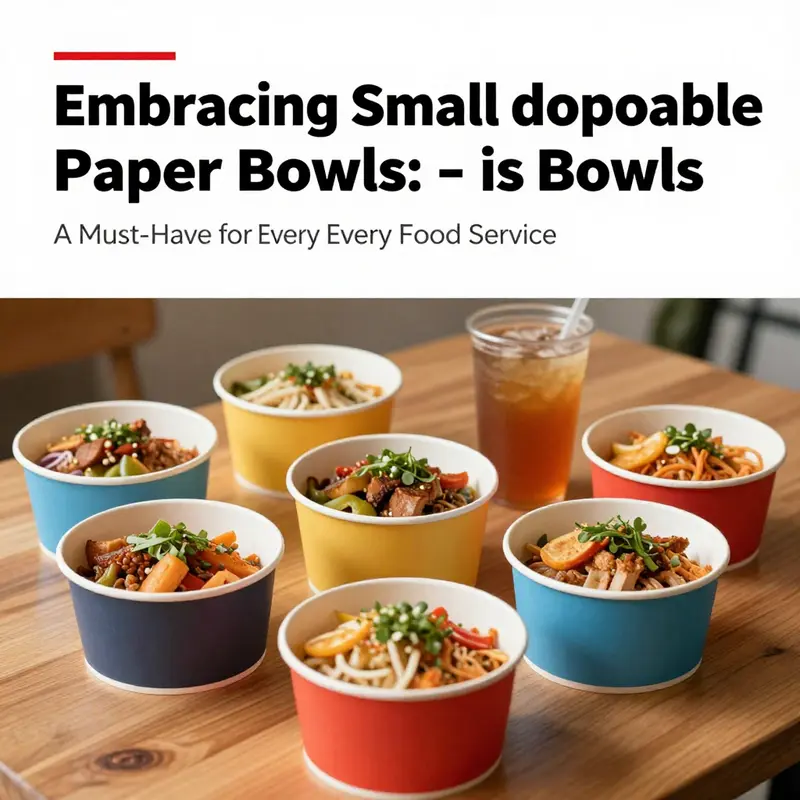
Small disposable paper bowls have become an essential component in the food and beverage industries, particularly for bubble tea shops, restaurants, catering services, food trucks, and more. Their versatility and convenience make them ideal for serving a variety of foods and beverages, from soup to desserts. As we delve deeper into the market trends, materials, customization opportunities, potential health risks, and supplier landscape of these bowls, you’ll gain a comprehensive understanding of their role and benefits. This exploration will help you make informed decisions that can contribute to your business’s success and sustainability.
Demand, Materials, and Sourcing: How Small Disposable Paper Bowls Are Shaping Foodservice Packaging
Market Trends and Sourcing Landscape
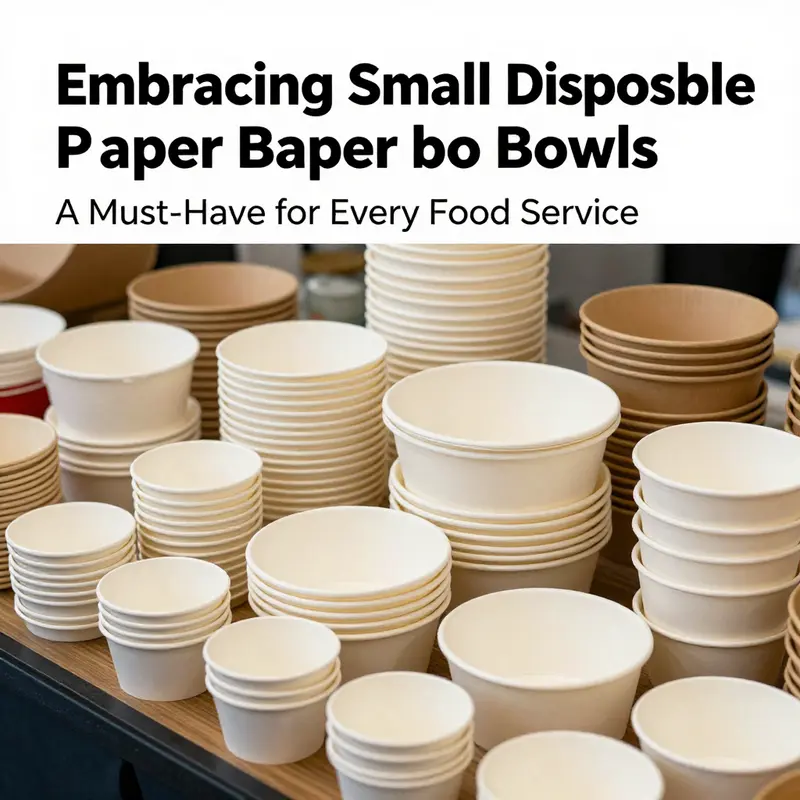
The market for small disposable paper bowls is expanding rapidly, driven by sustained demand for convenient food service packaging and a growing focus on sustainability. Buyers range from street vendors and quick-service restaurants to catering services and event planners. Each segment values bowls for their convenience, portion control, and low handling cost. Price sensitivity remains high, so suppliers compete hard on unit cost and order minimums. At the same time, buyers increasingly want reassurance that materials and coatings meet food-safety expectations and align with environmental goals.
One clear trend is the shift toward biodegradable and compostable materials. Traditional bowls remain popular because they are cost-effective and durable when lined with a moisture barrier. Many standard small bowls use chemical wood pulp paper with a thin polyethylene (PE) lining on the interior. That PE layer makes them suitable for hot soups and saucy dishes and allows short-term resistance to grease and moisture. However, an increasing number of manufacturers now offer alternatives, such as bowl bodies made from sugarcane bagasse or rice husk. These options are marketed as compostable and are gaining traction where waste regulations or corporate sustainability targets apply.
Another material-related development is the adoption of bio-based linings. Instead of conventional PE, some bowls use polylactic acid (PLA) linings derived from fermentation of plant sugars. PLA provides a water and oil barrier while supporting a compostable claim under industrial composting conditions. For buyers needing reliable performance for hot liquids, high-quality PE retains advantages. For buyers prioritizing end-of-life disposal, PLA and bagasse represent attractive trade-offs between function and environmental impact.
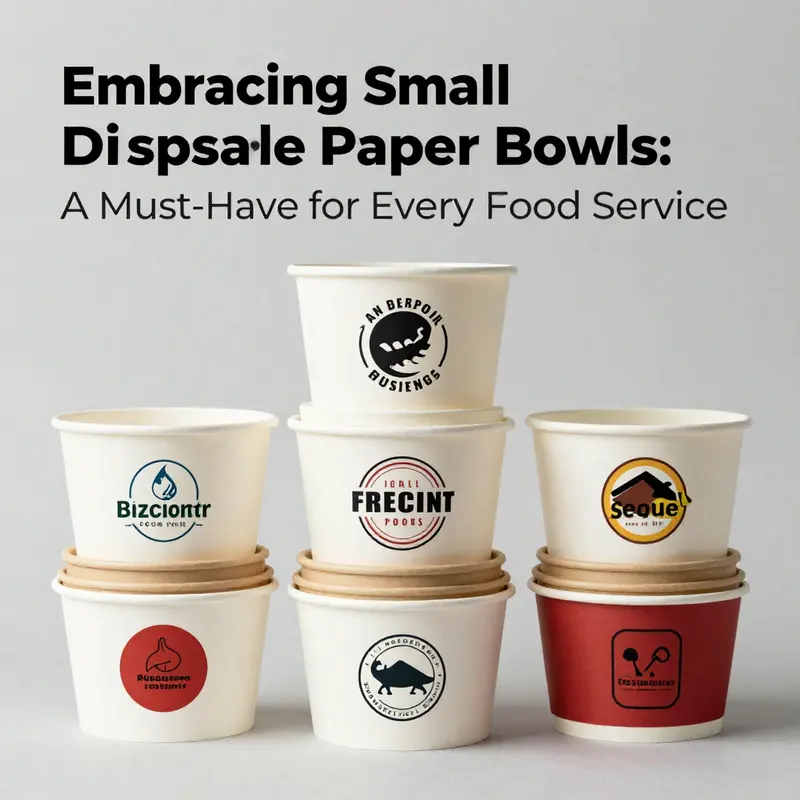
Customization and branding are also reshaping availability. Many suppliers now print logos and artwork using food-safe inks. This level of personalization helps small businesses and event hosts promote their identity while controlling presentation. Custom options range from simple one-color prints to fully wrapped designs with multiple ink layers. Customization adds cost, but it also creates value through increased perceived quality and repeat business. For buyers comparing offers, price per unit, minimum order quantity, lead time, and printing setup fees are the most common variables.
Pricing patterns reflect the spectrum of product types. Basic small bowls can sell for very low prices in large volumes, with per-piece costs declining as order quantities rise. Mid-tier offerings that include simple customization or a cover fall in a higher price bracket. Specialty or luxury bowls with premium finishes, unique shapes, or decorative features command the highest prices. Buyers should weigh unit cost against upstream and downstream savings. For example, a slightly stronger bowl may reduce spoilage during transport, lowering total cost of service despite a higher purchase price.
Availability is robust on global B2B platforms and through regional wholesalers. These channels list extensive catalogs that show sizes, materials, and volume pricing. Many suppliers support sample orders so buyers can assess finish, coating integrity, and print quality before placing bulk orders. Verified certifications and factory audits are common value signals for procurement teams. Suppliers that publish testing results for heat resistance, leakage, and compostability gain an edge in competitive tenders.
Regional manufacturing hubs supply the bulk of goods to international buyers. These hubs have mature supply chains that include converters, printing houses, and coating facilities. That density translates to fast turnaround for custom jobs and flexible minimums for repeat customers. At the same time, global logistics and rising freight costs can influence lead times and landed cost. For buyers balancing cost and reliability, ordering directly from a manufacturer versus sourcing through a local distributor demands careful calculation of shipping, tariffs, and inventory carrying costs.
Demand drivers vary by application. Quick-service restaurants favor standardized small bowls for add-ons and side dishes. Catering and events choose designs that match presentation and theme. Retail and food stalls use small bowls for samples, tasting menus, and desserts. Each use case demands different performance attributes. Sample cups and tasting bowls, for example, often prioritize lightweight form and aesthetic finish. Soup and noodle bowls require strong seals and thicker walls. Suppliers that offer a range of form factors and lids address more segments.
Quality and safety remain essential considerations. Lower-cost bowls occasionally use recycled fibers or adhesives that are not food-grade. Poorly formulated inner coatings can degrade when exposed to high temperatures, potentially releasing volatiles. Procurement teams should request certificates for food-contact compliance and, where possible, third-party lab test results. Clear labeling on compostable products matters too. Buyers should verify whether compostable claims refer to industrial or home composting standards, and whether the product meets recognized testing thresholds.
Environmental impact plays a large role in buyer decisions. Single-use items generate waste and consume resources. Compostable alternatives reduce landfill burden when properly collected and processed. Yet compostability depends on local infrastructure. In regions lacking industrial composting, biodegradable claims may not translate into better outcomes. This reality has prompted hybrid strategies: switching to compostable bowls where facilities exist, while using highly recyclable or easily compactable paper alternatives elsewhere. Packaging choices also extend to external lids and sleeves, which can be made from recyclable kraft or compostable materials, reducing overall waste footprint.
Sourcing strategies have become more sophisticated. Buyers accustomed to simple price comparisons now factor in lifecycle costs, carbon footprint, and supply chain resilience. Larger purchasers often negotiate tiered pricing and quality assurances in contracts. Smaller businesses prefer low minimum order suppliers or local distributors who can supply urgently. For many buyers, a reliable supply relationship trumps the smallest per-unit price. The benefit of continuity is fewer product changes, less quality variation, and simpler inventory management.
Practical procurement advice centers on a few clear steps. Request samples and test them with real menu items. Ask for food-contact compliance certificates and coating test reports. Clarify lead times and minimum orders in writing. Compare total landed cost, not just factory price. Evaluate disposal pathways for chosen materials in your service area. Finally, consider offering a mix of bowl types to match customer expectations across different menu items and service scenarios.
For buyers who want a quick example of retail-ready options, suppliers list kraft paper bowls with lids and other takeout containers that illustrate current design trends and pricing tiers. One such product category, disposable kraft paper bowls with lids, shows how suppliers combine sturdiness, branding potential, and eco-friendly materials into functional packages. Explore a sample listing for these kraft options to compare sizes and lid designs.
Further market analysis and up-to-date forecasting information are available through industry reports and platform analyses. For a detailed market overview and projected growth figures, see this market analysis resource: https://www.made-in-china.com/products/2026-Disposable-Bowls-Market-Analysis.html
This chapter explains how demand, materials, price, and sourcing mechanics intersect. It should help buyers match small disposable paper bowls to functional needs and sustainability goals. The evolving mix of raw materials, coatings, and supply options gives buyers more choice than ever.
What Small Disposable Paper Bowls Are Made Of — Materials, Coatings and Functional Features
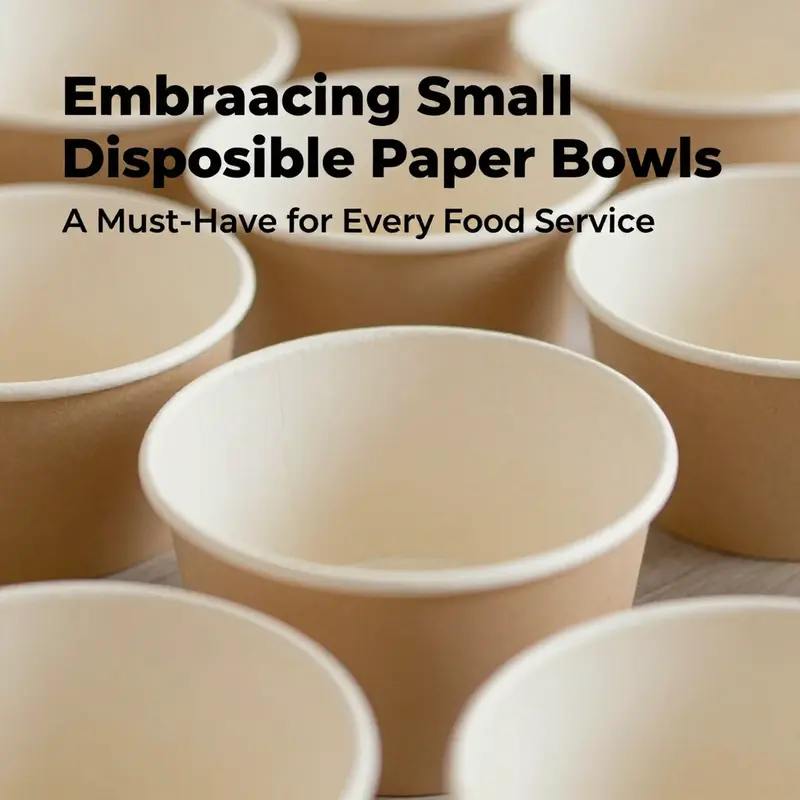
Small disposable paper bowls are simple objects with competing demands. They must be lightweight, inexpensive, and reliable for food service. At the same time they need to meet food-safety rules and, increasingly, environmental expectations. Understanding the materials and features that go into these bowls helps you choose the right option for a menu, event, or retail shelf. This chapter explains the core materials, the common coatings and treatments, and the functional trade-offs that determine performance.
Most small bowls begin with a paper-based structure. The primary substrate is food-grade paperboard made from virgin or sometimes recycled fibers. Paperboard delivers stiffness and body, so a two- or three-inch bowl can hold soups, dressings, or ice cream without collapsing. The fiber grade, thickness and manufacturing process determine how rigid the bowl feels. Thicker board supports hot or heavy servings; thinner board reduces weight and cost for cold or dry items.
A paper shell alone cannot hold liquids for long. To prevent leaks and sogginess, manufacturers add a thin inner coating. The most common coating is food-grade polyethylene (PE). PE bonds to the paper surface and creates a water- and oil-resistant layer. Properly applied, it prevents moisture from softening the board and allows the bowl to hold soups and stews for a reasonable time. Many PE-coated bowls tolerate temperatures above 90°C, which is useful for hot dishes. However, the quality of the coating and the lamination process matter. Poor bonding, inconsistent coating thickness, or substandard PE can reduce heat stability and introduce odor or off-taste when bowls carry very hot foods.
As sustainability concerns rise, plant-based coatings are becoming more common. PLA, a polylactic acid made from corn starch or sugarcane, is one such coating. PLA provides liquid resistance and has the advantage of being industrially compostable. PLA-coated bowls offer an eco-friendly marketing position. They also require industrial composting to break down effectively; home composting is often insufficient. Buyers should check local composting infrastructure before choosing PLA-coated bowls if end-of-life composting is a core requirement.
Beyond coatings, full-fiber alternatives are available. Sugarcane bagasse is one of the most popular options. Bagasse is a fibrous byproduct of sugar production that can be molded into rigid bowls without plastic lining. These bowls are inherently heat resistant and robust. They are compostable in commercial facilities and often carry biodegradable claims. Other fiber sources include bamboo pulp and rice husk blends. Bamboo pulp yields a lightweight, natural-looking bowl with good strength. Rice husk blends can add texture and additional heat resistance. These fiber-based bowls typically withstand hot foods better than lightly coated paperboard, and they carry stronger environmental credentials.
Customization and printing matter for branding and retail appeal. Food-safe inks can be flexographically printed on the outside of bowls. Simple two- or three-color prints remain economical, while more detailed prints raise costs. For businesses that serve branded takeaway items, logo printing adds perceived value. Some suppliers also offer matching lids and covers designed to lock in heat and prevent spills. Lidded combinations change how a bowl performs in delivery situations and influence stacking and storage logistics.
Leak resistance and grease protection are central functional features. Coatings—PE or PLA—address water leaks. To handle oily dressings and fried foods, manufacturers may add oil-resistant finishes or increase coating weight. Bagasse and bamboo pulp naturally resist grease better than low-grade paperboard. If the menu includes greasy sauces, choose a bowl with a tested grease-resistance rating or request a sample and run a soak test before bulk purchasing.
Heat resistance is another critical factor. High-quality PE layers and bagasse constructions hold up under heat. Some coated paper bowls advertise tolerance above 90°C, which covers most hot soups and dishes. PLA coatings and many fiber bowls also perform well with hot foods, but PLA can soften at sustained high temperatures. For hot-serve applications, validate the bowl’s temperature rating and check for any scent or film transfer when filled with hot liquids.
Food safety depends on materials and manufacturing controls. Look for food-grade certificates and compliance with regional standards. Low-cost bowls made from recycled paper without food-grade barriers can present risks. Recycled fiber may contain inks, adhesives or contaminants that are unsafe near food. Likewise, cheap adhesives or substandard coatings can break down and release volatile compounds when heated. Purchasing from suppliers who provide material declarations and testing reports reduces the risk of non-compliant batches.
Practical features affect daily operations. Stackability and nesting reduce storage footprint. Bowls designed for automated filling lines speed production. Lids that snap securely reduce spills during delivery. Lightweight bowls lower shipping costs, but extremely thin choices can fail under heavy sauces. Balance weight savings with durability needs. Consider whether bowls will be used for dine-in disposables, short-term takeaway, or delivery across longer distances.
Environmental claims deserve careful scrutiny. Words like “biodegradable” or “compostable” are useful for marketing but can mislead if end-of-life options don’t exist locally. PE-coated paperboard is technically not compostable, though it may be recyclable in facilities that separate polymer from fiber. PLA and bagasse bowls are compostable in industrial facilities. For venues under regulations that restrict single-use plastics, compostable fiber bowls are often the safer choice. If sustainability is central to your brand, confirm certifications and ask for third-party testing documentation.
Finally, cost and quality exist on a spectrum. Basic small paper bowls are widely available at low unit prices for bulk purchases. Customized or specialty options increase per-unit cost. Premium fiber bowls and bespoke printed pieces sit at the higher end. Evaluate total cost of ownership: disposal pathways, potential waste fees, and customer expectations all influence whether a higher-cost sustainable option makes sense.
For quick reference when sourcing, consider product pages that show variants like kraft constructions and lidded bowls. A useful example is a supplier page for disposable kraft paper bowls with lids, which shows sizes and lid options for takeaway packaging. This helps compare how structural designs and lids influence usability and transportability: https://ecocupbowl.com/product/disposable-kraft-paper-bowls-food-containers-with-lids-bulk-500ml-to-1000ml-rectangular-bowls-for-takeaway/.
Choosing the right small disposable paper bowl comes down to matching materials to use. Coated paperboard suits many standard takeout needs. PLA-coated and fiber-based bowls support composting goals. Bagasse and bamboo pulp offer robustness and heat resistance. Always validate food-safety documentation and test bowls with the actual menu items. Doing so reduces surprises and aligns customer experience with operational realities. For further reading on sustainable options and certifications, see this resource on biodegradable paper bowls: https://www.ecofriendlypaper.com/biodegradable-paper-bowls
Design, Materials, and Branding: How Customization Shapes Small Disposable Paper Bowls
Design, Materials, and Branding: How Customization Shapes Small Disposable Paper Bowls
Customization converts a simple single-use bowl into a strategic brand touchpoint. For businesses that serve soups, salads, desserts, or tasting portions, design choices determine functionality, safety, environmental profile, and perceived value. A thoughtful approach to printing, materials, shapes, and finishing can elevate a bowl from a commodity into an extension of a menu or event theme.
At the heart of customization lies printing. Flexographic printing is the industry standard for small disposable paper bowls. It supports multiple colors, typically up to six, and produces sharp logos and full-wrap graphics at scale. When planning artwork, consider color matching, registration, and bleed. Solid color blocks register differently on paperboard than on flexible films. Food-safe inks must be specified, and proofs should be requested. Full-wrap graphics command higher setup costs and often raise minimum order quantities. Partial prints, such as rim bands or base logos, reduce costs but limit visual impact. Simple tweaks in layout, like combining a single bold color with negative space, deliver striking results on compact bowl surfaces while keeping production practical.
Material selection directly affects both function and message. The most common substrate is food-grade paperboard with an inner polyethylene (PE) coating. This combination resists liquids and handles hot fillings above typical service temperatures. For brands aiming to reduce plastic content, alternatives include compostable PLA coatings, sugarcane bagasse pulp, and rice-husk composites. Kraft paper offers a rustic aesthetic and pairs well with minimalist or artisanal branding. Bamboo fiber variants add a premium, natural feel. Each choice changes print behavior: kraft’s absorbency mutes ink, while coated boards yield more vivid prints. Certifications such as SGS or local food inspection markings provide reassurance to buyers and can be printed or supplied with documentation for client review.
Size and shape are practical customization levers. Small disposable bowls typically span tasting cups to compact servings, but they can be tailored to specific capacities and geometries. Round bowls remain classic and efficient for liquids. Square or custom geometric shapes maximize branding real estate and stack efficiently in packaging. Deeper bowls work better for soups and noodle servings; shallow cups suit desserts and samples. Designers should balance form with function: a wide rim makes lids easier to seal and provides extra printable surface, while vertical walls increase usable volume without expanding footprint.
Lids and add-on features increase utility and brand continuity. Clear or matching lids prevent spills and maintain temperature. Printed lids create a unified look and reinforce messaging during transport. Beyond lids, consider structural options like double-wall insulation for hot servings, corrugated bands for hand comfort, or greaseproof liners for oily foods. These features may add cost, but they solve real service problems and protect brand reputation when bowls are used for delivery or outdoor events.
Customization choices strongly influence cost and minimum order requirements. Printed bowls typically carry MOQs in the tens of thousands, with common thresholds around 30,000 to 50,000 pieces. Plain bowls usually have lower MOQs. Set-up fees for printing plates, color matching, and tooling add to initial costs. Higher-quality coatings and compostable materials increase per-unit prices. Businesses should factor in storage, turnover rates, and seasonality when placing large custom runs. Smaller operations can negotiate lower MOQs by choosing spot colors or limited print areas, or by combining orders with complementary items.
Sampling and proofing are essential risk mitigators. Reputable suppliers offer samples, sometimes free when buyers cover shipping. Samples reveal print fidelity, coating quality, and structural integrity under real use. Request samples with the exact coating and lid type you plan to order. Ask for documentation on food-safe inks and adhesives, along with third-party test reports if available. Early testing prevents costly reprints and ensures that branded bowls meet both visual and safety expectations.
Sustainability is now a core design consideration. While a printed, PE-lined bowl is functional, it carries a visibility problem in green-minded markets. Compostable alternatives such as bagasse or PLA coatings align with eco-conscious branding. However, not all “eco-friendly” claims are equal. Verify certifications and local compostability standards, because industrial composting requirements vary by region. Also, understand that compostable coatings can behave differently during printing and require specific inks and drying processes. When sustainability is a selling point, integrate it into the visual design: use minimal inks, natural tones, or unbleached kraft textures to communicate intent clearly.
Health and regulatory concerns must guide every design choice. Low-grade or recycled paper sometimes contains inks, adhesives, or fillers unsuited for direct food contact. Ensure that the substrate is verified food-grade. The PE lining should be stable at intended service temperatures, and suppliers should disclose any migration test results for heated foods. Ask about ink composition, curing methods, and whether adhesives are solvent-based or water-based. These technical details affect safety, odor, and the bowl’s behavior with hot or acidic foods.
Packaging and logistics complete the customization picture. Custom-printed bowls should be packed to preserve graphics and structural integrity during shipping. Consider nested packing, protective sleeves, or dividers when shipping long distances or in humid climates. Printing on the lid can allow for smaller outer cartons, since brand visibility remains when bowls are stacked. Work with suppliers to optimize palletization to reduce freight costs and potential damage.
When planning a custom run, start with a clear brief. Define target service temperatures, food types, expected shelf life, distribution method, and desired brand impact. Include artwork in vector format, specify Pantone or approximate color targets, and request a pre-production proof. Ask about lead times for printing plates, coating procurement, and mold availability if the shape is nonstandard. Factor in an allowance for reprints and test batches.
Finally, consider how bowls fit into a broader disposable tableware ecosystem. Matching napkins, printed lids, and complementary packaging create a cohesive customer experience. For businesses seeking coordinated options, there are suppliers that offer sets of takeaway packaging, cutlery, and small containers that match in tone and finish. A single supplier relationship often simplifies ordering and ensures consistent materials and print quality across product lines. For an example of complementary takeaway containers and matching kraft options, review this resource on disposable kraft paper bowls: https://ecocupbowl.com/product/disposable-kraft-paper-bowls-food-containers-with-lids-bulk-500ml-to-1000ml-rectangular-bowls-for-takeaway/.
Thoughtful customization takes small disposable bowls beyond utility. It balances print and material choices with health, budget, and sustainability goals. Managed well, these bowls become portable brand moments—functional, safe, and aligned with a company’s values. For a concrete supplier example and production details, see a typical listing that illustrates printing, materials, and customization options: https://www.alibaba.com/product-detail/Custom-Disposable-Paper-Bowls-Flexo-Printing_1600972818752.html
Health and Environmental Considerations of Small Disposable Paper Bowls
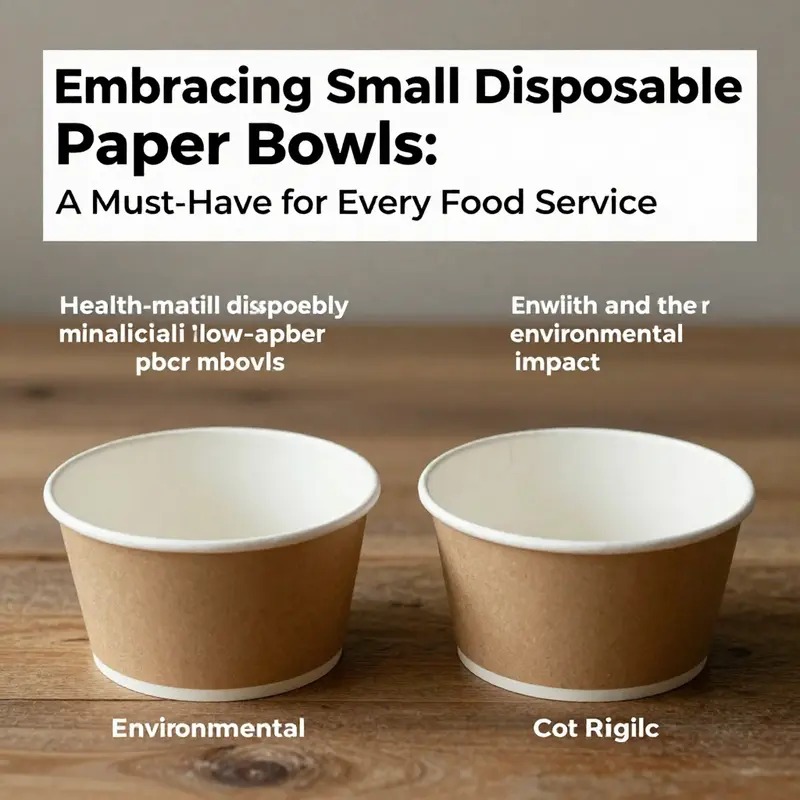
Small disposable paper bowls are common in kitchens, cafeterias, and events, valued for their light weight and low cost. They are typically made from wood pulp with a thin inner coating that makes the surface waterproof and heat resistant, enabling soups, gravies, and moist foods to be served safely. However, repeated heating or exposure to high temperatures can cause coatings to degrade and potentially migrate chemicals into food, raising concerns about consumer safety. Besides the health aspects, environmental questions arise because many bowls carry plastic linings or non-compostable coatings that complicate waste streams and recycling. Certification, material disclosures, and honest labeling are important for buyers who want to minimize risk and support true compostability and responsible end-of-life management. As a result, operators may consider alternatives with clearer environmental claims or a broader strategy that reduces single-use items while maintaining service quality.
Sourcing Small Disposable Paper Bowls: A Practical Map of Suppliers, Costs, and Confidence
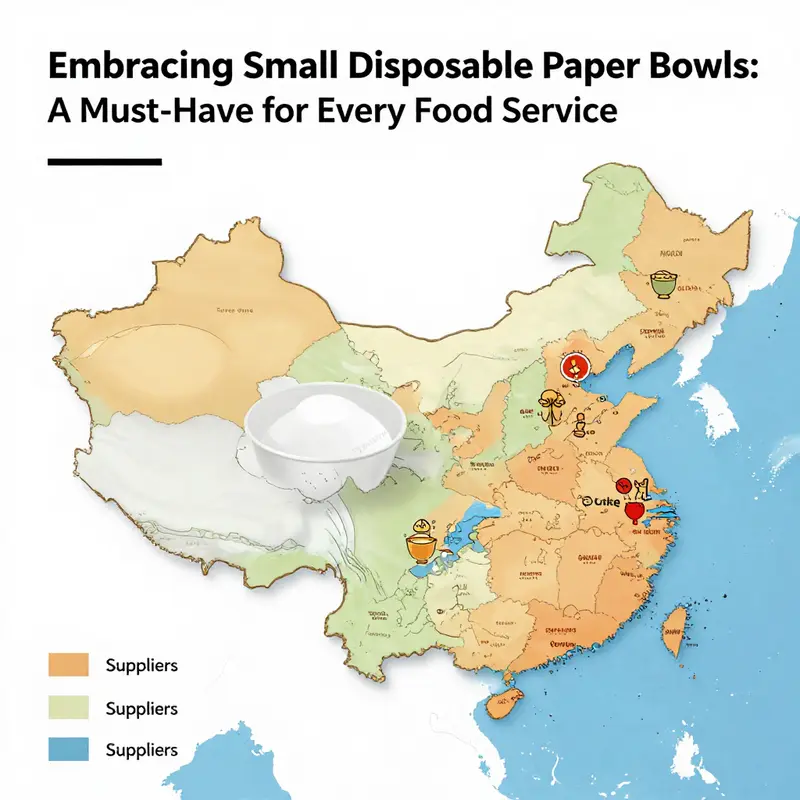
Supplier Landscape for Small Disposable Paper Bowls
The supplier landscape for small disposable paper bowls blends scale, specialization, and rapid responsiveness. China supplies the majority of global exports, supported by integrated mills, converting lines, and packaging firms. That concentration drives competitive prices and deep customization capability. Buyers encounter a mix of large industrial players and agile small-to-medium enterprises. Each supplier type brings different strengths in volume, flexibility, and lead-time control.
Regional clusters shape capability and cost. Provinces along the eastern and southern coasts host dense production networks. Guangdong, Zhejiang, and Fujian are particularly prominent. Their factories produce high volumes at low cost while offering print, coating, and packaging options. Proximity to ports and logistics hubs reduces transit time and shipment cost. Suppliers in these clusters often handle full export documentation, export packing, and consolidated shipments.
Understanding supplier types matters for procurement strategy. Large manufacturers scale easily and meet big orders reliably. They often own paper mills or stable raw-material channels. SMEs excel at short runs, fast sampling, and bespoke print jobs. Many operate flexible lines that accept minimums lower than large factories. For private-label or seasonal products, small converters can be more helpful.
Price ranges reflect order size, material choice, and added features. Bulk FOB prices can fall as low as $0.04 to $0.06 per piece for orders around 50,000 units. Very large volume contracts can lower that further. Basic commodity bowls may cost only a few tenths of a yuan per piece when purchased in mass. Custom printed bowls with lids and logos typically command higher unit prices. Specialty and premium offerings, including wedding-grade or novelty bowls, can run much higher by comparison.
Materials and finishing create meaningful quality differences. The industry standard for cheap bowls is chemical wood pulp paper with a polyethylene inner coating. That coating provides liquid resistance and heat tolerance above 90°C. Eco-focused suppliers also offer alternatives such as sugarcane bagasse and rice husk composites. These biodegradable options are marketed as compostable and food-grade. If sustainability matters to buyers, prioritize suppliers with clear claims, certification, and compostability testing.
Customization spans more than print. It includes paper weight, inner coating type, lid compatibility, and pack configuration. Many factories print logos with food-safe inks and adjust trim and depth to match menu items. For customers looking to maintain a cohesive brand, consider ordering sample runs that combine bowl, lid, and sleeve packaging. A related product family, for example, is disposable kraft paper bowls with lids, which demonstrates how bowls integrate into broader takeaway packaging systems. Such combinations simplify ordering and warehousing.
Certifications and material safety should drive supplier selection. Look for third-party marks and test reports that align with the target market. CE, FDA, and CIQ attest to compliance in many jurisdictions. SGS, Intertek, and similarly accredited labs can test for heavy metals, migration, and coating stability. A supplier that publishes up-to-date test reports and provides traceable batch numbers reduces buyer risk. Insist on food-contact certificates for any inks, adhesives, or coatings used.
Operational reliability covers production continuity and communication. Evaluate a supplier’s capacity to meet seasonal spikes and maintain quality over repeated runs. Quick communication is a proxy for responsiveness; some vendors boast response times under three hours. Ask about backup production options, contingency plans, and past performance on urgent orders. Confirm factory working hours and holiday schedules to avoid unforeseen delays.
Quality risks are real and manageable when addressed early. Lower-cost bowls sometimes use recycled fiber or substandard adhesives. That practice can create odor, staining, and potential health hazards. Low-grade PE coatings may degrade at high temperatures, releasing volatile compounds. Mitigate these risks by requesting composition certificates, heat-resistance test data, and finished-product samples. Lab-tested samples provide objective metrics before you commit to large volumes.
Logistics, scalability, and total landed cost determine the true supplier value. FOB unit price is only part of the equation. Calculate shipping, customs, port fees, insurance, and inland transport to assess overall cost. For long-term partnerships, consider supplier proximity to shipping hubs and their experience with export paperwork. Some factories offer consolidation services that reduce per-unit freight by combining multiple items into one container.
Due diligence pays dividends and need not be complicated. Start with online reputation checks and platform transaction histories. Request factory photos, production videos, and third-party audit reports. Ask for references from existing buyers and verify recent export volumes. For critical orders, arrange a factory visit or hire a local inspector for pre-shipment checks. Sample orders and staggered payment terms also limit exposure.
Negotiation and contract terms require clear expectations. Agree on specifications, tolerance levels, acceptable defects, and remedy procedures. Define lead times, quality acceptance criteria, and penalties for missed deadlines. Consider pilot orders to validate specifications, production consistency, and logistics. Where possible, lock in prices for a defined period to mitigate raw-material cost swings.
Selecting the right supplier for small disposable paper bowls means balancing price, quality, and sustainability. The market offers everything from the most economical coated pulp bowls to compostable bagasse options. Use certifications and verifiable tests to separate claims from reality. Prioritize suppliers who communicate quickly and transparently, who can scale with you, and who provide clear documentation. These choices ensure your bowls meet food safety, brand expectations, and budget targets, while reducing supplychain surprises.
For a sample product listing that illustrates typical export listings and specifications, see this example on an international sourcing platform: https://www.alibaba.com/product-detail/Disposable-Paper-Bowl-Salad-Food-Container_1600852919712.html
Final thoughts
In conclusion, small disposable paper bowls are not only a practical choice for food service providers but also present opportunities for customization, sustainability, and market adaptability. As you explore reliable sourcing options and consider the health and environmental implications of your choices, embracing these bowls can significantly enhance your business’s service efficiency and brand image. Making informed decisions about the products you use can lead to improved customer satisfaction and contribute positively to the environment.