
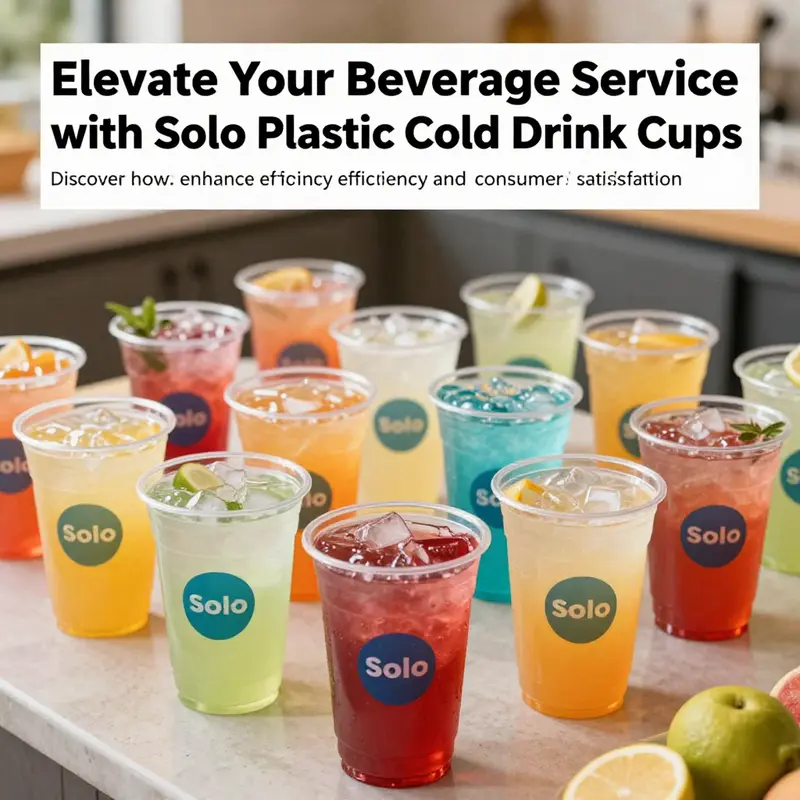
In a world where convenience meets quality, Solo plastic cold drink cups stand out as a vital asset for various beverage service industries. Catering to bubble tea shops, beverage chains, and food service providers, these cups embody functionality while meeting the demands of social gatherings and casual dining. The upcoming chapters will delve into the intricate design and materials that make Solo cups ideal for beverage service, explore market trends and consumer preferences influencing their increased use, address sustainability concerns associated with disposable products, conduct a comparative analysis with other drinkware options, and highlight innovations in the market. This comprehensive examination will illuminate why Solo plastic cold drink cups are indispensable for your business.
Between Clarity and Convenience: The Design, Material, and Social Life of Solo Plastic Cold Drink Cups
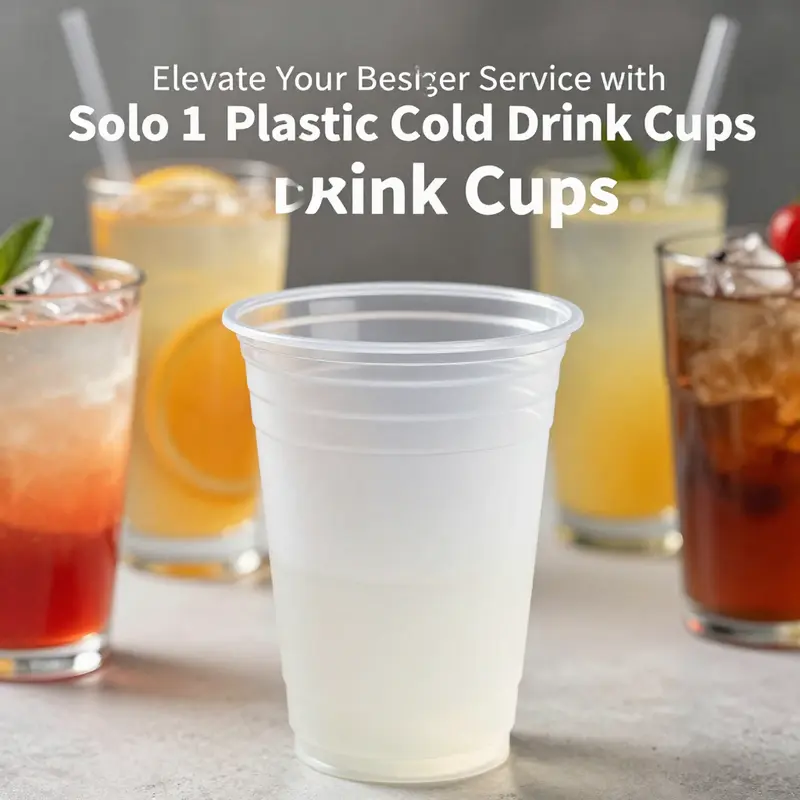
The cup often begins a story before a single sip is taken. In crowded cafeterias, food stalls, tailgate gatherings, and quick-service lines, the 16-ounce disposable plastic cup acts as a quiet facilitator of sociability, offering a practical scaffold for the moment when friends, strangers, and colleagues exchange time over a cold beverage. Its design is more than a matter of aesthetics or cost; it encodes a balance between ease of handling, visibility of content, spill resistance, and the unspoken etiquette of service speed. This is not merely a single-use item but a small, dependable instrument in the choreography of events—from the first fill to the last wipe of a counter and the swift clearance that keeps a line moving. What seems straightforward on the surface—the ability to hold a soda, a juice, or a mixed drink—depends on choices about material, structure, and production that ripple through every moment of use, from the moment the server grips the cup to the moment the consumer disposes of it. Understanding these choices helps illuminate how disposable drinkware supports contemporary dining and gathering cultures while also raising questions about environmental stewardship and material life cycles in a world that increasingly prizes both convenience and responsibility.
The primary material in many of these cups is a form of polyethylene terephthalate, or PET, a lightweight and transparent thermoplastic renowned for its clarity and sturdy barrier properties. PET’s appeal in cold beverage applications lies in its ability to remain rigid and intact at low temperatures, preserving the visual appeal of the drink inside and offering consumers a clear view of what they’re about to sip. The transparency is not only a visual cue; it is a functional feature that helps servers diagnose fill levels at a glance and helps customers gauge their drink’s appearance, eyeing color and consistency before they take a first mouthful. Recyclability is another critical facet of PET’s profile. Recognized by the familiar recycling code #1, PET is widely accepted in curbside programs and drop-off centers, a factor that can influence a venue’s waste management decisions and a consumer’s willingness to participate in recycling at events. This track record of recyclability does not erase the need for responsible handling, but it does shape the broader expectations for how a disposable cup should perform and how it should be disposed of after use.
In practice, the cup’s design emphasizes pragmatics that rise above mere aesthetics. A reinforced base helps stabilize the cup on uneven surfaces and during brief tipping episodes that occur when a drink is carried from station to table or when bags and trays jostle in crowded spaces. The exterior surface typically features a smooth, easy-grip texture that reduces the risk of accidental drops and spills, a small but meaningful detail when service is fast and demands quick handoffs. The wide mouth opening serves multiple purposes: it makes filling straightforward, accommodates a wider range of beverage types—from fizzy sodas to fruit-forward mixes—and supports easy drinking, especially for younger users or people who prefer a comfortable flow of liquid with minimal effort. These features work in concert to deliver a dependable, predictable drinking experience in high-traffic environments where speed, simplicity, and reliability are currency.
Yet the same principles that underpin everyday reliability also constrain performance. The cups are typically designed for single-use, which aligns with the realities of supply chains that must scale for peak service periods and with consumer expectations for clean, disposable options after a busy event or meal. Thin walls reduce material usage and shipping weight, which lowers production costs and enhances transport efficiency. This lean approach, however, means the cups have limited heat resistance, making them unsuitable for hot beverages or long-duration handholding in chilly environments. The trade-offs in wall thickness, rigidity, and capillary leakage resistance are calibrated to deliver a balance that suits cold drinks most of the time, even as venues explore alternatives for hot drinks or for customers with particular handling preferences. The net effect is a form of kitschy universality: a cup that can be deployed across a broad spectrum of beverages and settings, while quietly signaling that it is optimized for cold, not hot, experiences.
From a materials science perspective, the choice of PET brings a set of benefits that extend beyond clarity and recyclability. PET’s barrier properties help limit moisture and gas transfer, which supports beverage freshness and helps maintain carbonation in fizzy drinks. This barrier quality is especially important in a world where beverages arrive in large volumes and customers expect consistent taste and texture from the first sip to the last. The material’s compatibility with a range of additives and surface coatings also allows manufacturers to tailor grip, printability, and even leak-resistance features without sacrificing the essential clarity that customers expect to see through the cup. When a service line is busy and refills happen rapidly, it is the combination of these properties—clarity, barrier performance, structural integrity, and a predictable feel in the hand—that underwrites a smooth workflow between the point of sale, the drink, and the consumer.
The social role of the cup cannot be separated from the spaces in which it circulates. In casual dining and quick-serve contexts, cups become part of the choreography of hospitality, signaling readiness and efficiency as much as they signal beverage content. In party settings or informal gatherings, the cup’s lightweight character supports casual movement and easy sharing, yet its rugged base and resistant lip help reduce waste caused by spills and drips. The lightweight construction also enables quick stacking and restocking, a practical necessity when staff handle high volumes and tight timelines. These operational benefits translate into visible outcomes: shorter wait times for customers, less close-contact juggling around crowded counters, and a higher likelihood that a beverage will reach its destination—whether a high chair, a bench, or a standing crowd—without incident. The cup, in other words, is a micro-infrastructure of modern social life, a tool whose design choices enable a broader social dynamic while remaining almost invisible in its everyday presence.
The lifecycle implications of PET cups are a topic that extends beyond the moment of purchase or the act of drinking. The recycling narrative matters because the end-of-life story of a disposable cup shapes perceptions of the entire experience. When a cup is placed in the recycling stream, it signals a civic engagement with material stewardship and a preference for reuse of resources. Yet recycling systems vary by locale, and the efficiency of recovery depends on consistent consumer participation, proper sorting, and robust industrial processes that can reclaim PET for new bottles and containers. The conversation around disposables thus interweaves design practicality with environmental responsibility, prompting manufacturers and operators to consider how to optimize both performance and end-of-life outcomes. In practice, this means ongoing attention to container geometry, surface finishes that resist staining and blemishes, and compatibility with recycling streams to minimize contamination. The social expectation that a cold drink cup should be convenient, affordable, and accessible is inseparable from the imperative to reduce waste and to recover materials where possible, a balance that continues to shape product development, waste management policy, and consumer behavior alike.
For readers who want to explore the broader material science context that informs disposable food packaging, a foundational reference can be found through Plastics Europe, which outlines how disposable food packaging materials are designed to protect contents while also considering environmental and circular economy considerations. This external resource offers a wider lens on the trade-offs and opportunities inherent in PET-based, single-use containers and related packaging technologies. Plastics Europe – Disposable Food Packaging
In the day-to-day experience of service environments, a single cup can be a hinge between efficiency and satisfaction. It carries the imprint of a supply chain that must deliver clean, clear, and rigid containers at scale, the expectations of customers who demand reliable performance, and the practical constraints of waste management in busy settings. The design story—reinforced bases, smooth exteriors, wide mouths, and the transparent appeal of PET—tells a concise tale of compromise and optimization. It is a narrative that continues to unfold as operators seek to balance cost, performance, and responsibility in every beverage service. As venues evolve, and as consumer awareness about sustainability grows, the disposable cup remains a focal point where engineering decisions, environmental considerations, and social practices intersect, revealing how even the simplest object can carry a surprising depth of meaning and consequence. For users seeking a straightforward, reliable option in event planning or daily dining, the cup’s function remains clear: to support the beverage experience with dignity, simplicity, and efficiency, while inviting ongoing dialogue about how society handles single-use packaging in a world that values both convenience and care for the environment. And in this dialogue, the cup’s future will likely hinge on smarter materials, smarter recycling, and smarter service models that keep pace with evolving expectations around waste, energy, and resource use.
Internal reference for further reading: disposable clear plastic cup for parties and events
Cups of Convenience: The Global Rise and Everyday Rhythm of 16-Ounce Plastic Cold-Drink Cups
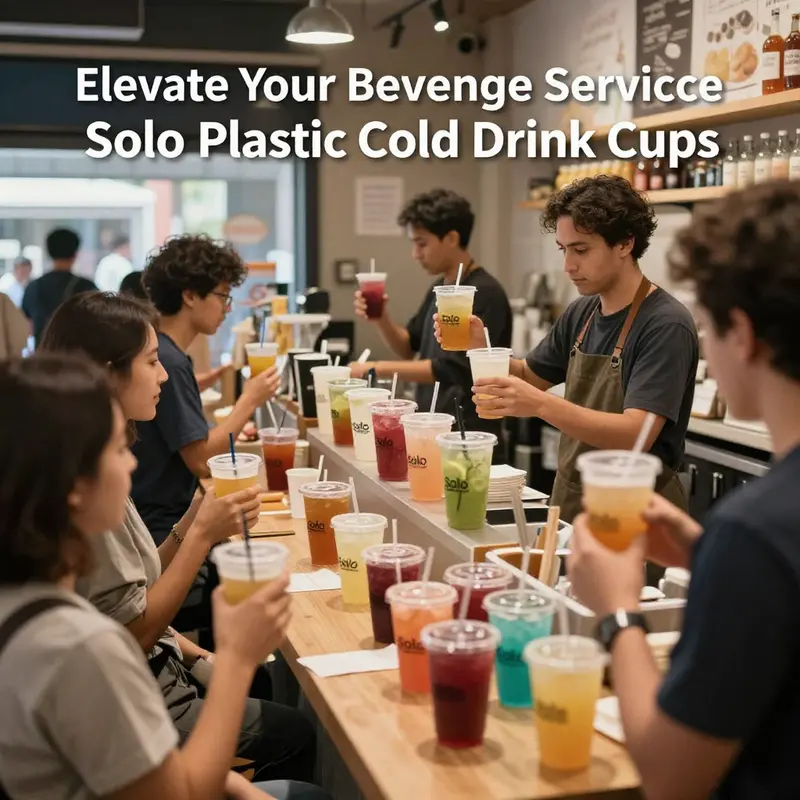
In the rush of modern meals, parties, and quick-service moments, a modest, often overlooked tool quietly underpins daily life: the disposable plastic cup. The 16-ounce cup, with its blend of capacity and practicality, has become more than a container; it is a cultural artifact of casual dining and social gatherings. Its design speaks to a core enterprise of the service economy: fast, reliable serving that preserves the moment rather than interrupting it. A multilayer construction gives this cup the stiffness to resist collapse when full of a carbonated soda or a smooth fruit juice, while its lightweight form reduces fatigue for servers and enables quick, high-volume service. The result is a reliable drinking experience that minimizes mess, spills, and waste in environments that move fast—from crowded fast-food counters to bustling party scenes. In essence, these cups function as quiet facilitators of sociability, letting the focus stay on conversation, celebration, and refreshment rather than on the logistics of consumption.
From a product-development lens, the appeal rests not only in the raw utility of holding a cold drink but in the subtle engineering that supports it. The typical 16-ounce cup balances a generous, comfortable volume with a form that can be stacked, sorted, and dispensed with minimal effort. This is crucial in busy service settings where time and accuracy translate into better customer experiences and reduced waste. Spill resistance is not merely a convenience; it is a guardrail for the daily theater of school cafeterias, sports venues, office break rooms, and roadside stops. Lightweight plastics ease handling and reduce transportation costs, enabling operators to stock more efficiently and respond to demand surges without compromising speed. Together, these attributes convert a simple cup into an essential hospitality instrument that travels easily from kitchen to table or curbside pickup, maintaining temperature and integrity across varied service contexts.
The market backdrop to this everyday object is dynamic and increasingly global. The latest research maps a robust growth trajectory: the global Plastic Cold Drink Cups Market was valued at about USD 11.14 billion in 2025, and the forecast calls for a compound annual growth rate of roughly 12 percent from 2026 through 2033. This expansion mirrors broader consumption patterns, with ready-to-serve beverages growing across retail channels, hospitality venues, and private-label brands. The regional landscape is notable, with China contributing a substantial share and a notable projected CAGR of nearly 15 percent. Such figures are not simply numbers; they reflect a shift in how people hydrate, socialize, and celebrate. Consumption habits are migrating toward convenient, on-the-go formats, and plastic cups are well-positioned to meet those needs while fitting into a diverse ecosystem of suppliers, manufacturers, and distributors who are continually refining the balance between performance, cost, and sustainability.
Two threads stand out in shaping how the market unfolds. The first is sustainability and brand differentiation. Consumers want tangible proof that a product aligns with responsible practices, even when the item is designed for single use. This has pushed the sector toward biodegradable and compostable options, and it has encouraged brands to explore innovations that reduce environmental impact without compromising reliability. The second thread is product innovation itself. Beyond mere containment, cups are being reimagined with features that expand their functionality. Color-changing designs, for example, add a layer of experiential value at events and promotional campaigns, drawing attention and signaling brand identity in a way that resembles a mobile billboard. Sip lids that handle thick beverages—think smoothies and bubble teas—have become increasingly popular, and some cups integrate straw ports and spill-proof mechanisms that address modern expectations for convenience and cleanliness in crowded venues. Such innovations help beverage programs differentiate themselves in competitive markets where all else—price, convenience, and taste—often converges.
The supplier landscape mirrors these evolving consumer and operator needs. Providers are sharpening capabilities around customization and flexible service models, offering packaging configurations that fit specific workflows, from quick-service lines to catering setups. Adherence to environmental standards and logistics efficiency remains a non-negotiable baseline, ensuring not only product quality but predictable delivery in a just-in-time service economy. The sourcing dynamics also reveal a global network of manufacturing hubs, where price, lead times, and capacity shape procurement strategies. In this context, buyers increasingly value not just the cup itself but the entire ecosystem that delivers it—from material sourcing and processing to packaging and distribution. The interplay between product performance and supply reliability becomes a focal point for brand managers and operators seeking to maintain consistency in the face of fluctuations in demand.
Cost remains a practical consideration that cannot be overlooked. Real-time insights into supply dynamics often surface on major trading platforms, where a single-layer thermoplastic cup might be offered at a per-unit price that reflects scale, material quality, and color or clarity. Such pricing signals help explain why operators gravitate toward cups that strike a balance between affordability and performance, especially when planograms, promotions, and seasonal peaks demand rapid restocking. The economics of cup use are tightly connected to the broader calculus of beverage service, including waste management, recycling programs, and the life cycle costs of accessories like lids and straw components. In this light, the 16-ounce cup is not merely a passive receptacle; it is a cost-control instrument that can influence throughput, labor efficiency, and overall customer satisfaction during peak periods.
The cultural dimension should not be overlooked. Cups of this size have become part of the social fabric of gatherings, whether in a family barbecue, a school function, or a casual after-work meetup at a cafe. They are versatile enough to hold colas, fruitades, iced teas, and sweetened beverages with equal grace, while their sturdy design minimizes the risk of accidental spills during mingling or dancing at events. The social ritual of handing someone a cold drink on a warm day is a small but meaningful moment in communal life, and the cup is the vehicle for that moment—the practical instrument that facilitates sharing, conversation, and celebration. In this sense, the cup operates at the intersection of hospitality, logistics, and sociability, functioning as a quiet enabler of human connection in everyday settings.
For practitioners and researchers alike, the implications of this seemingly simple object extend beyond immediate use. The ongoing push for sustainability invites a careful examination of material choices, end-of-life options, and consumer education about recycling and composting pathways. Meanwhile, ongoing innovations in lid design, stacking geometry, and color options deliver tangible improvements in service speed and brand engagement. The interplay between product design and consumer expectations suggests a future in which disposable cups maintain their core advantages—reliability, lightweight handling, and spill resistance—while increasingly offering environmentally preferable choices and new sensory experiences that reinforce brand narratives in a crowded marketplace. As beverage programs evolve and consumer expectations adapt to more eco-conscious standards, manufacturers and suppliers face the challenge of delivering performance at scale without compromising responsible practices.
In practice, the everyday use cases span corporate events, birthday parties, and casual picnics, where a disposable clear plastic cup is favored for its reliability and straightforward utility. For examples of disposable clear plastic cups designed for outdoor use, see Disposable Clear Plastic Cup for Parties and Outdoor Events. The cup’s role in such settings emphasizes the balance between hygiene, convenience, and social enjoyment. When a host wants to ensure rapid service without sacrificing a sense of quality, these cups offer a practical compromise that keeps lines moving and conversations flowing. They are not about novelty but about dependable performance under real-world pressures—heat, crowding, and the unpredictable rhythms of event timing.
As the market marches forward, the conversation around these cups will likely become more nuanced. Regulators, retailers, and end-users will increasingly demand transparency about materials, recyclability, and post-consumer handling. At the same time, the consumer economy’s appetite for rapid, on-the-go hydration will persist, nudging manufacturers toward innovations that preserve the core benefits of the cup while expanding its sustainability toolkit. The trajectory suggests not a replacement of disposable cups but a transformation of what they can be: more adaptable in form, more responsible in composition, and more expressive in how they convey a brand’s values at moments of shared refreshment. In this evolving landscape, the 16-ounce plastic cold drink cup remains a reliable benchmark, a tool that, in its unassuming way, helps social life flow with momentum and ease. As operators and designers navigate this path, the cup will continue to reflect broader shifts in consumption, service efficiency, and environmental stewardship, all while remaining a familiar, friendly touchpoint in everyday rituals.
External reference: For global market context and trends, see Grand View Research’s industry analysis on plastic cold drink cups: https://www.grandviewresearch.com/industry-analysis/plastic-cold-drink-cups-market
Rethinking Solo Plastic Cups: Toward a Circular Future
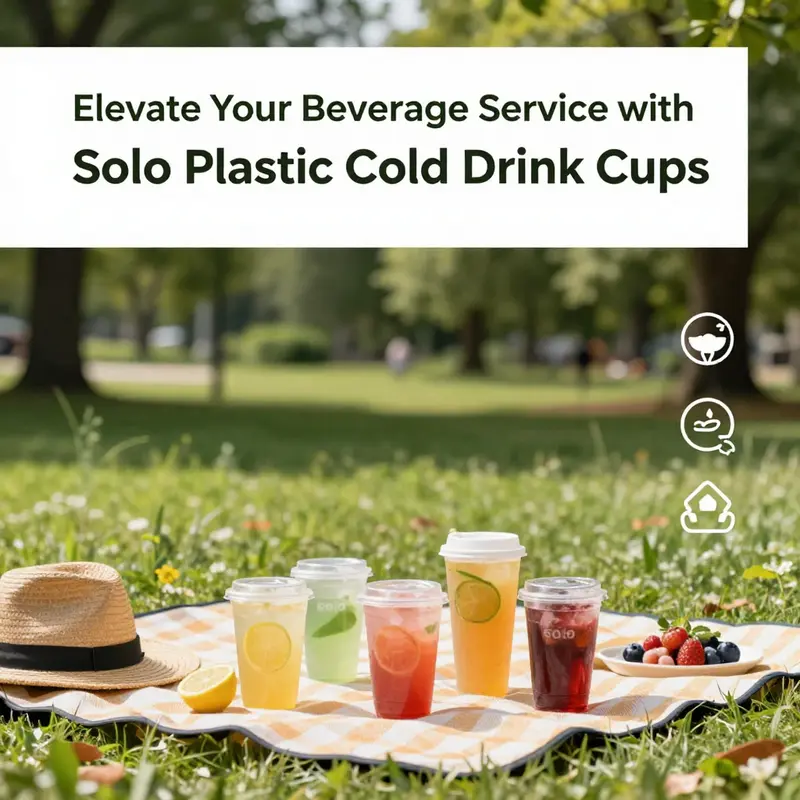
The widespread use of single-use plastic cold-drink cups illustrates a system designed for quick service and convenience, but it also leaves a measurable environmental footprint. This chapter traces the lifecycle of these cups from material extraction and manufacturing to use and end-of-life, highlighting how emissions, resource use, and waste streams accumulate when disposal is treated as an afterthought. It also discusses the challenges of recycling and the leakage of microplastics into ecosystems, underscoring why simply increasing recycling rates is not enough.
A growing body of work argues for a circular model built around reusable cups and robust return logistics. By designing for durability, establishing efficient cleaning, and creating incentives for customers to return cups, venues can reduce material demand and waste while maintaining service speed. The chapter closes with practical considerations for brands, operators, and policymakers who want to align beverage service with environmental responsibility.
null
null
Sip, Serve, Sustain: Navigating Consumer Preferences and the Next Wave of Solo Plastic Cold Drink Cups

Every cafe table, every concession stand, every backyard party relies on a basic, unglamorous tool: the plastic cold drink cup. Its value isn’t just the container; it is a modular unit of service that shapes how a beverage moves from a pitcher to a person and, crucially, how efficiently a site can operate during peak moments. The 16-ounce format sits at the center of this system, balancing generous capacity with manageability for both staff and guests. Its design is more than a matter of taste; it is a practical statement about what modern food service values most: speed, predictability, and the comfort of a familiar ritual—the simple act of lifting a cold drink to one’s lips without fuss.
Behind that plain exterior lies a careful synthesis of materials and geometry. The multilayer construction enhances rigidity, helping the cup resist collapse when full and maintain a confident profile as it travels from trolley to table. The leak-resistant geometry reduces the risk of spills during the most demanding moments, such as a crowded event or a bustling drive-thru. Lightweight but sturdy, the cups are easy to handle, stack, and store, which translates to faster turnover, less waste in awkward moments, and a more consistent guest experience. These features, taken together, explain why the 16-ounce size has become a default for a broad spectrum of beverages—from sodas and fruit drinks to mixed beverages at casual gatherings. It is large enough to hold a satisfying amount, yet compact enough to be gripped with one hand and carried with minimal effort during busy service periods.
Yet consumer expectations are not static. The appetite for convenience remains high, but the calculus of what counts as responsible consumption is shifting. Market analyses from recent years show that while disposable cups remain popular for their economy and predictable performance, there is a discernible tilt toward options that address environmental concerns. A well-known research reference from 2023 highlights a tension between insulation, condensation control, and end-of-life waste considerations. In other words, consumers want cups that keep drinks cooler and drier to the touch, but they also want to know what happens to the cup after the last sip. This is not merely a question of personal ethics; it is a practical test of whether a product line can marry the immediacy of disposable use with broader sustainability goals.
In response, designers and manufacturers are experimenting with materials that stretch the life cycle of a cup in new ways. Biodegradable alternatives, such as cups fashioned from polylactic acid (PLA), point toward renewable-resource origins and lower upfront carbon footprints. These cups can break down under industrial composting conditions, which means they rely on a waste stream with specialized facilities to realize their environmental promise. The limitations are real: in typical landfills, compostable plastics may persist, undermining the intended climate benefits. The upshot is clear—consumer trust in sustainability now rides on both the product’s claimed performance and the surrounding waste-management infrastructure. It is not enough to offer a possible future; the ecosystem surrounding the cup must be ready to accept and process it.
Beyond materials, the conversation extends to how a cup communicates with the user. The lid, a configuration common to many cup systems, has evolved from a purely utilitarian fit to a branding and ergonomic tool. A premium-looking lid can convey quality and care, signaling to guests that the drinking experience has been thoughtfully considered. This matters for spaces that position themselves as healthier, more sophisticated, or more eco-friendly. At the same time, for beverages that demand more room—such as smoothies, milkshakes, or bubble teas—designers are turning to tumblers that feature wide sipping openings or integrated straw ports. These revisions aim to ease the passage of a thick beverage while maintaining spill resistance during movement. Reusable straws and the potential for recyclable or compostable components are often part of the design dialogue, highlighting a broader shift toward systems thinking rather than single-item optimization.
In this landscape, certification schemes increasingly influence the choices made by both buyers and end-users. Cradle to Cradle, for instance, has emerged as more than a marketing badge; it signals a formal commitment to safer materials and responsible processes across the product’s life cycle. When a cup carries such certification, it provides a degree of transparency that can reassure environmental-minded consumers and business clients alike. Certifications are not magic bullets, but they do help create a shared standard by which products can be compared, and they can harden trust in a market that often prices convenience against long-term consequences.
What these shifts imply for the near future is a question of balance. The core strengths of disposable cups—affordability, reliability, and ease of use—will persist as a foundation. They serve as the everyday solution for a wide array of venues, from quick-service operations to event planners who need dependable, fast, sanitary beverage service. Yet the next generation of cups will likely blend that baseline with smarter material choices and smarter design features. Insulation that reduces condensation and keeps beverages at an ideal temperature for longer will become more commonplace, not as a premium add-on but as a standard expectation in many segments. Likewise, the integration of sensors that monitor temperature or track consumption could begin as premium offerings in higher-end concepts and then migrate toward mainstream utility as costs drop and data transparency becomes more valuable to operators seeking to optimize inventory and reduce waste.
This evolution is not in isolation from social patterns. The social fabric of gatherings—whether a casual office party, a neighborhood block party, or a family barbecue—depends on mechanisms that simplify sharing, reduce cleanup, and maintain a pleasing aesthetic. A cup is more than a container; it is an artifact that signals hospitality, organization, and care. When a cup performs consistently, it helps shape a moment of conviviality into a reliable experience. The idea of service science in food retail takes on practical form in the way cups stack, nest, and travel through a service line, and in how lids seal to minimize spillage as staff pivot between tasks. Even the way a guest perceives the cup’s appearance—its translucence, color, or branding—contributes to perceived quality and the willingness to purchase a drink in that venue again.
In this arc, the role of packaging and disposability remains under scrutiny, but it does not vanish. The same consumer who values low price and quick service also wants assurance that a product aligns with broader environmental and regulatory expectations. The thread connecting these concerns is infrastructure. Without recovery, processing, and proper disposal options, even well-made compostable cups cannot fulfill their environmental promise. The industry, therefore, faces a layered challenge: maintain the conveniences that make disposable cups indispensable for high-traffic settings while investing in materials science, certifications, and design paradigms that support a less wasteful lifecycle. This is why the conversation around disposable plastic cold drink cups is not simply about a single product or trend; it is about an ecosystem of choices, from raw materials and manufacturing methods to consumer behavior and municipal waste programs.
For readers tracing the path from the factory floor to the party table, a practical takeaway lies in recognizing the levers that influence both satisfaction and sustainability. The preferred cup is not the same for every context, but certain attributes recur across successful implementations: reliable spill resistance, ease of handling, a capacity that matches expected consumption, and a surface finish that projects a desirable brand image while accommodating labeling, temperature indicators, or subtle branding. As brands consider new materials, lids, and even sensor-enabled features, they are also revisiting the familiar, humble cup to ensure stability across a spectrum of beverages and occasions. In doing so, they are not discarding history but building on it—honoring the cups that have long supported casual dining, while embracing innovations that address today’s environmental and operational realities.
To connect this with concrete choices for planners and operators, consider the online catalog of practical packaging options that offer a balance between form and function. The disposable clear plastic cup product page demonstrates how a straightforward vessel can still be optimized for performance and value in outdoor settings where weather and handling conditions challenge a drink. Such examples help illustrate how a simple object can become a touchpoint for customer satisfaction, waste management considerations, and brand perception—an everyday intersection where design thinking meets real-world constraints. For a broader sense of how industry analyses frame these shifts, the Shelton Group report referenced earlier provides a macro view of market dynamics, consumer sentiment, and anticipated trajectories for disposable cup usage in the coming years. External resource: https://www.sheltongroup.com/reports/disposable-cups-market-size-share-industry-report-2030/
Final thoughts
In conclusion, Solo plastic cold drink cups are not only a staple in the food service industry but also a powerful tool for enhancing customer satisfaction. Through understanding their design and materials, recognizing market trends, addressing sustainability concerns, and appreciating consumer preferences, beverage service professionals can make informed decisions. As the demand for convenience and quality continues to rise, Solo cups appear as a resourceful solution, ensuring drinks are served efficiently without compromising on style or safety. Embrace the benefits of Solo plastic cold drink cups as an integral part of your beverage service strategy.