
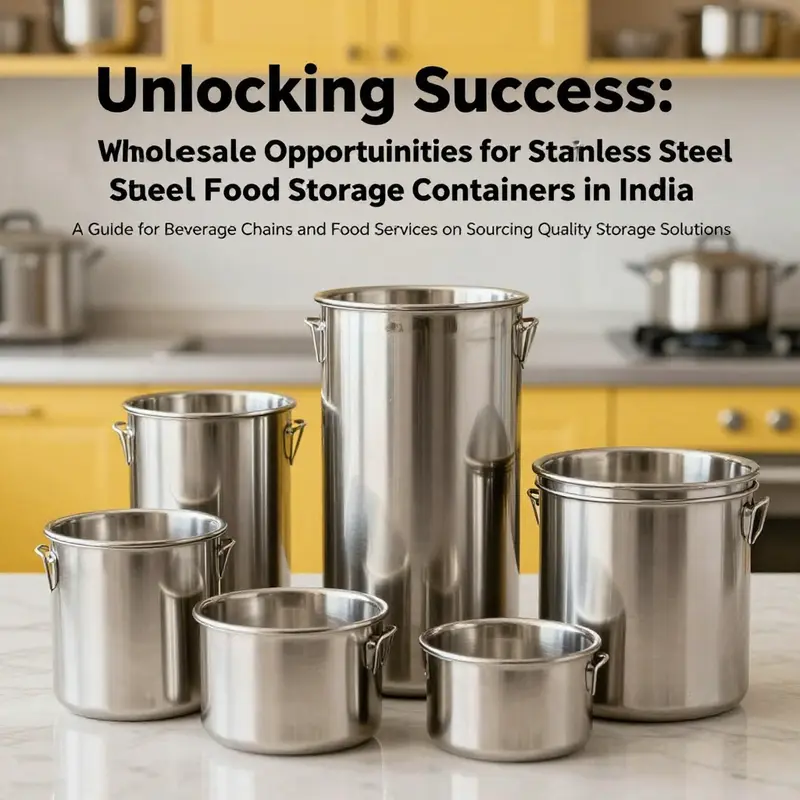
The demand for high-quality food storage solutions is on the rise in India, accentuated by the growing food service industry. Businesses like bubble tea shops, restaurants, food trucks, and catering services require durable and reliable storage options to ensure food safety and freshness. This comprehensive guide explores wholesale opportunities for stainless steel food storage containers specifically in India. The content is organized into four key chapters, starting with a market overview, followed by insights into local suppliers, an analysis of product features and benefits, and best practices for sourcing. By the end, you will be equipped with the knowledge to make informed decisions regarding your food storage needs.
From Local Mills to Global Kitchens: Charting India’s Stainless Steel Food Storage Containers Wholesale Market
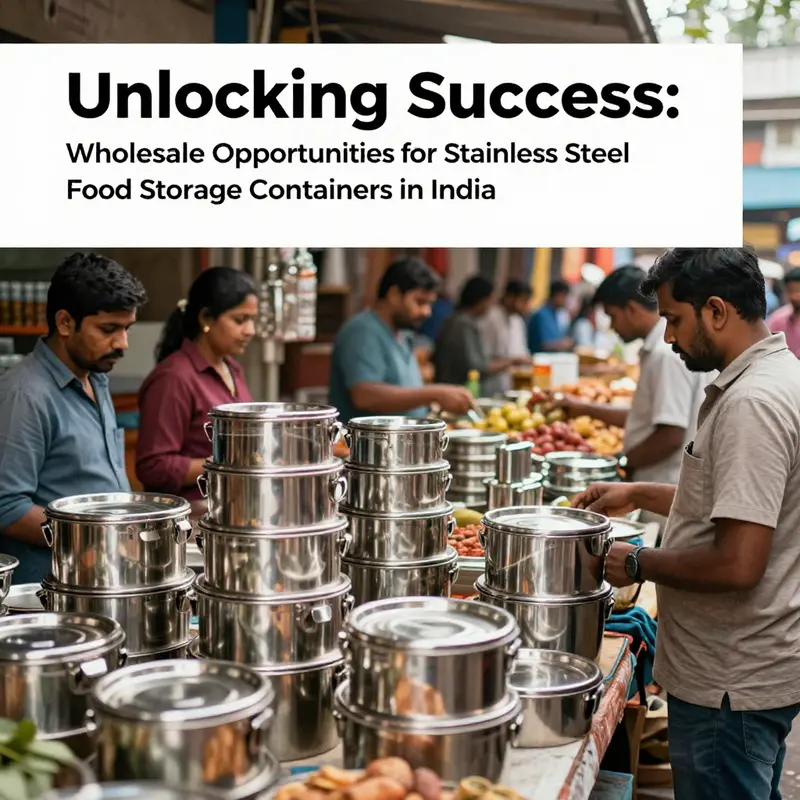
The wholesale landscape for stainless steel food storage containers in India is expanding at a steady pace, driven by a growing emphasis on health, hygiene, and sustainability. Consumers are more conscious than ever about what touches their meals, and wholesale buyers—from retailers to larger food service operations—are seeking durable, food-safe solutions that can withstand busy kitchen environments. In this context, India’s manufacturing backbone offers a coherent story: a robust supply chain, access to high-grade raw materials, and a design language that prizes practicality alongside performance. The result is a market that not only serves domestic needs but also positions India as a credible source for global buyers seeking reliable supply routes to meet strict food-safety expectations. The momentum is reinforced by a shifting tide toward reusable, long-lasting containers that reduce waste and support healthier cooking and storage habits. This convergence of consumer behavior, manufacturing capacity, and export-oriented platforms is reshaping what wholesale procurement looks like in the Indian context, where price competitiveness often collides with stringent quality standards in a way that benefits serious buyers who are ready to invest in long-term supplier relationships.
India’s manufacturing heartland for metal fabrication concentrates in states that have long supported specialized industries. Tamil Nadu, Maharashtra, and Gujarat host numerous facilities capable of producing large volumes of stainless steel containers with consistent quality. The raw material supply chain, anchored by stainless steel grades known for corrosion resistance and durability, underpins this sector’s reliability. For food storage, the most widely adopted materials emphasize safe interaction with a broad range of foods, including acidic relishes and hot meals, without risk of leaching metals. While the literature highlights specific grades for performance, the broader takeaway is straightforward: containers must meet international food-safety norms while remaining economically viable for wholesale buyers who demand dependable lead times and scalable production. In practice, manufacturers leverage their access to skilled labor and advanced fabrication processes to deliver goods that are not only sturdy but also thoughtfully designed for daily use.
Design thinking in this space has evolved beyond mere containment. Consumers and professional kitchens alike expect leak-proof and airtight seals, especially for meals prepared for takeout or long refrigeration. The demand for stackable shapes reduces storage footprint in retail environments and kitchens, while multi-compartment layouts appeal to meal-prep routines and catering needs. This emphasis on ergonomics translates into practical features: easy-grip handles, transparent lids when applicable, and robust, impact-resistant containers that can withstand frequent washing and reheating. While plastics still have a significant footprint in some markets, stainless steel offers a longer life cycle and superior durability, particularly in environments where high-temperature dishwashing and repeated use are normative. The wholesale market hence rewards suppliers who can present clear certifications and consistent documentation that align with the expectations of global buyers who scrutinize every lot for food-safety compliance and traceability.
A notable thread running through India’s wholesale narrative is the balance between price sensitivity and value. Buyers seeking bulk purchases often compare a spectrum of options, from compact, entry-level sets to larger, vacuum-sealed formats designed for rugged use in catering and institutional settings. The trade data as of early 2026 shows a vibrant ecosystem of suppliers who offer flexible MOQs and customization opportunities, underscoring the ability of Indian producers to scale up or tailor products to specific client needs. Pricing remains competitive, with smaller sets available at highly accessible unit costs and larger, feature-rich models commanding modest premiums. For example, in reported wholesale ranges, five-piece sets of durable stainless steel containers with clear, protective lids can be positioned at accessible price points, while larger, vacuum-sealed configurations—engineered to extend freshness and reduce spoilage—enter a higher tier of affordability. Such price dynamics reflect a market that prioritizes value across the spectrum, from small cafes and home kitchens to larger food-service operations.
Beyond price, the market’s appeal lies in its alignment with global standards. Indian manufacturers have increasingly adopted quality controls, certifications, and documentation that reassure buyers about safety and consistency. The sector’s export-readiness is reinforced by a growing emphasis on hygienic production practices, recyclable packaging, and a general commitment to reducing waste through durable, reusable products. In parallel, the industry has embraced features that enhance user experience. Ergonomic designs, easier cleaning, and more secure lids contribute to the overall appeal of Indian-made containers in both domestic and international markets. The result is a diversified portfolio that accommodates a wide range of storage needs—from home kitchens and office meal-prep to small-scale catering and baby food storage—without sacrificing the core attributes of safety, durability, and practicality.
Trade data from major international wholesale platforms underscores India’s rising profile. As of February 2026, there were nearly a thousand active suppliers listing stainless steel food storage containers from India, a testament to the scale and credibility of the sector. These suppliers provide a continuum of products from modest 500-milliliter snack boxes to substantial 2,400-milliliter containers suited for bulk meal distribution. What makes these offerings particularly attractive to bulk buyers are flexible minimum order quantities, competitive per-unit pricing, and options for customization that help retailers differentiate in crowded marketplaces. A typical example of price alignment shows that mid-range, five-piece sets—featuring stainless steel construction and transparent lids—can be procured within a small to moderate budget, while more advanced designs with enhanced sealing or vacuum features situate themselves in a higher, yet still competitive, range. For buyers who intend to test a new line, the availability of sample orders and transparent supplier communication—highlighted by supplier credentials, factory imagery, and customer feedback—offers a practical pathway to informed decision-making without committing to heavy initial stock.
In this evolving ecosystem, the most successful wholesale participants fuse material integrity with practical design. The stainless steel most commonly used in this market embodies corrosion resistance and food safety, qualities essential for confidence across the supply chain. While the precise chemical specification is often discussed in technical circles, the practical implication for wholesale buyers is clear: containers should perform reliably through routine dishwashing, varying meal temperatures, and repeated cycles of storage and transport. The tolerance for minor cosmetic variations is balanced by a requirement for consistent performance, especially in environments where hygiene and efficiency are non-negotiable. In response, Indian manufacturers are increasingly transparent about their production processes, offering detailed process documentation, batch traceability, and certifications that align with both domestic and international standards. This transparency, combined with a willingness to collaborate on customization, makes the Indian wholesale market a compelling choice for buyers seeking scalable, dependable solutions.
For buyers who want to see how Indian suppliers present their capabilities online, one can explore listing pages that emphasize wholesale capacity and customization options. As a practical pointer, the internal field of wholesale sourcing often features pages that highlight takeout-friendly designs and multi-use configurations. See the concept described in the linked example: Custom takeaway packaging supplies for theme parties. This reference illustrates how suppliers articulate their value proposition and respond to the needs of bulk buyers seeking flexible, well-documented sourcing options. Custom takeaway packaging supplies for theme parties.
From a procurement perspective, the journey begins with a targeted search that filters by supplier location, ensuring India-based production and shipping capabilities. Buyers should verify certifications such as ISO and any applicable local food-safety compliance marks, examine factory photographs to assess scale and capacity, and inspect recent client testimonials to gauge reliability. It is prudent to request small-volume samples to evaluate build quality, seal performance, and durability under real-world usage. Shorter lead times and transparent production calendars are equally important, particularly for retailers planning seasonal campaigns or catering partners coordinating large events. In parallel, buyers should assess post-sale support, including packaging options, warranty terms for structural integrity, and the ease of obtaining replacement parts such as lids or gaskets when necessary. The interplay between cost, lead time, and service quality ultimately determines long-term supplier viability in a market where competition is intense and consumer expectations continue to rise.
The Indian wholesale landscape thus emerges as a balanced ecosystem in which robust manufacturing capabilities, strategic geographic advantages, and a growing appetite for design-driven, durable storage solutions converge. The market’s trajectory suggests sustained expansion, driven by domestic appetite for healthy storage practices and the global demand for reliable, cost-effective packaging solutions that align with stringent safety standards. As buyers increasingly view stainless steel storage containers as a practical, sustainable choice for repeated use, India’s role as a wholesale hub is likely to strengthen further. The capacity to deliver consistent quality at scale, paired with a willingness to adapt to customization needs and evolving consumer preferences, will shape how this sector grows in the coming years.
External resource: https://www.alibaba.com/showroom/india-stainless-steel-containers.html
Chapter 2: Local Opportunities in India’s Wholesale Market for Stainless Steel Food Storage Containers

The Indian market for stainless steel food storage containers is expanding as households and foodservice operators seek durable, recyclable solutions. Wholesale channels in India are responding with locally manufactured options, reducing lead times and import dependency. Buyers can gain from customization, regional design preferences, and robust quality control across a mix of traditional metalworking units and modern facilities. Certifications such as ISO 9001 and FSSAI compliance are increasingly common, helping buyers verify reliability and hygiene. Sourcing locally can lower transport costs and currency exposure, while shorter supply chains support faster replenishment and better demand matching. Custom branding, packaging configurations, and varied sizes are increasingly available to suit institutional kitchens, hotels, and caterers. A careful supplier evaluation—covering material quality, cleanliness, testing, capacity, and sample validation—remains essential. Digital discovery, trade shows, and industry associations help buyers connect with credible manufacturers. In short, India offers a growing wholesale ecosystem where reliable local partners can deliver secure, scalable supply for stainless steel storage solutions.
Enduring Stainless Steel Storage: India’s Wholesale Market
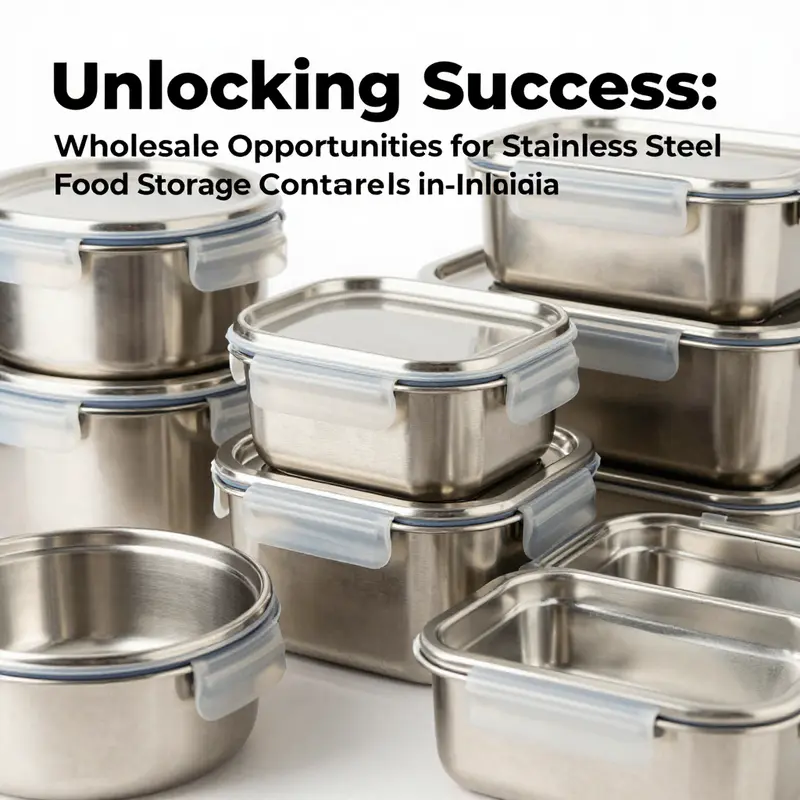
Stainless steel food storage containers sit at the quiet core of many Indian kitchens and commercial settings. They are dependable workhorses that preserve flavor, texture, and safety for dry goods, spices, pulses, rice, and prepared foods. In wholesale procurement, buyers range from small retailers to institutional kitchens, catering outfits, and large cafeterias, all seeking durable construction, standardized GN sizing, and reliable sealing. The material’s non-reactive surface and corrosion resistance help maintain food safety over repeated washing and stacking, while long service life lowers total cost of ownership.
Design and construction matter in wholesale success: leak-proof lids with reliable seals, precise alignment to prevent warping, and GN-standard depths (100 mm, 150 mm, 200 mm) that integrate with steam tables, refrigerators, and hot/cold storage. Stacking and nesting enable warehouse efficiency and predictable fulfillment.
Hygiene and sustainability are central selling points. Stainless steel is easy to sanitize, resists odors, and reduces waste through longevity. Suppliers highlight traceability, certifications (ISO, BIS), and packaging customization to meet diverse buyer needs while keeping operating costs predictable.
In the Indian market, local manufacturing, regional distribution, and logistics complexity shape procurement. Buyers value reliable lead times, clear terms, and after-sales support as much as unit price. The result is a wholesale ecosystem where durable, standards-aligned steel containers become a strategic asset for kitchens across homes, institutions, and the catering sector.
From Factory Floor to Pantry: Mastering Wholesale Sourcing of Stainless Steel Food Storage Containers in India
Sourcing stainless steel food storage containers wholesale in India is a disciplined process that blends material standards with supply chain rigor. It starts with knowing the end use, selecting the right grade, and validating it through documentation. Common food contact grades are 304, often described as 18/8, with 316 used for more aggressive environments. When sourcing wholesale, insist on certifications that verify material purity and suitability for food contact, such as ISO 9001 for quality management, FDA alignment for safety expectations, and third party test data from SGS. A robust supplier will provide batch traceability, clear MOQs, samples, and documentation that supports audits. Customization beyond basic shapes and sizes, such as branded lids or modular configurations, can help institutional buyers achieve consistency across product lines. Verify claims with samples and third party data to avoid price driven surprises.
Lead times and production capacity form the next axis of risk management. Ask for average lead times for bulk orders, minimum order quantities, and flexibility to adjust batch sizes. Indian manufacturers often cluster around regions with mature metal stamping and finishing ecosystems, which can support shorter turnarounds and reliable quality control. Map your monthly demand and test whether the supplier can ramp up or down without compromising performance. Packaging, labeling, and regulatory compliance are also crucial. Exports require compliance with destination market standards and traceability documentation. In India, BIS certification may be relevant for domestic sales, while export processes require licenses and certification. Consider supplier capabilities for logistics coordination, insurance, and origin declarations to avoid delays.
Technology and digital platforms can improve visibility and control. Look for ERP integrations, real time order tracking, and access to process certificates and test data. Where possible, request live or video factory inspections to verify controls before large orders. Align packaging decisions with usage and hygiene goals, and explore compatibility with related packaging needs to offer cohesive product lines. The ultimate framework is to start with a clear material specification, verify with samples and third party data, assess lead times and MOQs, and compare total landed costs rather than upfront price alone. As volumes grow, require traceability data from raw material batches to finished goods and consider staged ramp plans that begin with smaller trials before scaling. In short, a disciplined yet flexible approach helps buyers build a reliable wholesale program in India that meets safety, quality, and delivery expectations.
For reference, key standards and regulatory touchpoints include food contact compliance, traceability, and export documentation.
Final thoughts
As the food service industry in India continues to flourish, the need for reliable food storage solutions has never been more critical. Choosing the right stainless steel food storage containers can enhance food safety, reduce waste, and improve operational efficiency. By exploring local suppliers and understanding the product features and benefits, your business can secure the best storage options available. Utilizing best practices for sourcing will also ensure that you partner with reputable suppliers who meet your specific needs. With the insights gained from this guide, you are well-positioned to elevate your food storage strategy in a competitive market.