
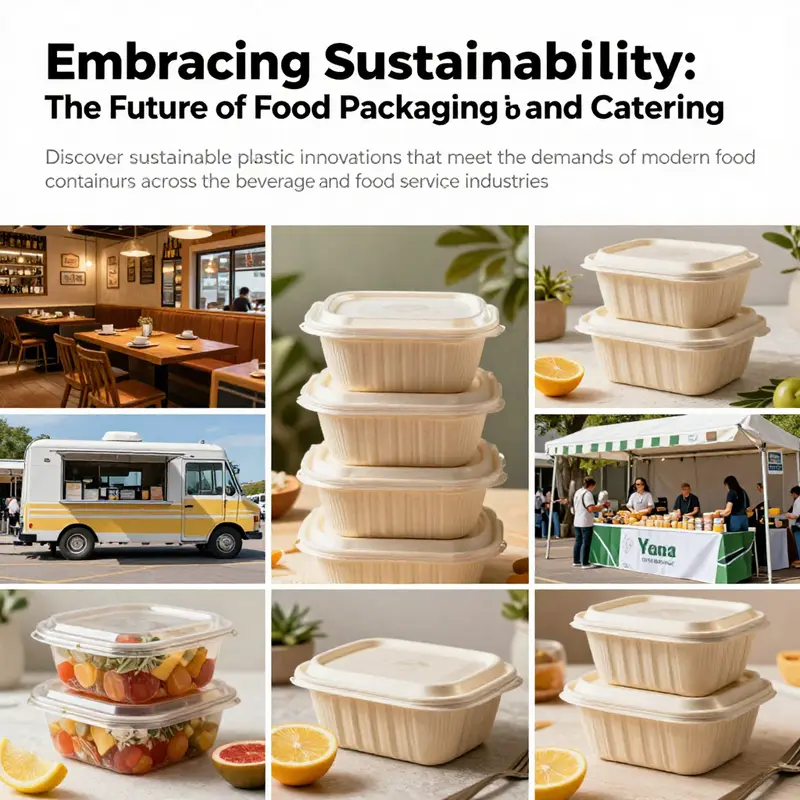
As the world increasingly shifts towards sustainable practices, food businesses are challenged with the responsibility of finding eco-friendly solutions. Sustainable plastics, particularly bioplastics derived from renewable resources, offer innovative alternatives to traditional petrochemical-based containers. These cutting-edge solutions are not only environmentally friendly but also cater to the growing consumer demand for sustainability in food and beverage packaging. Throughout this article, we will explore innovations, performance challenges, environmental benefits, market trends, and future directions in sustainable plastics for food containers. Each chapter delves deeper into the vital role these materials play in modern food service, ensuring your business can thrive while embracing eco-conscious practices.
From Crop to Container: Breakthrough Innovations in Sustainable Plastics for Food Containers
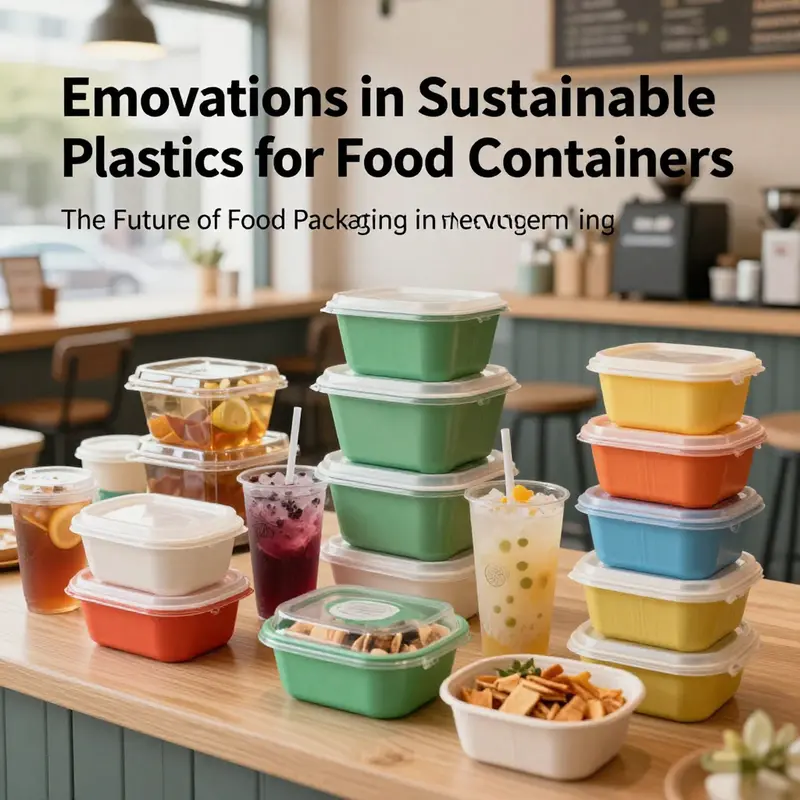
Innovations transforming food-grade sustainable plastics
The search for truly sustainable plastics for food containers has moved beyond simple substitution. Materials scientists, packaging engineers, and food technologists are converging to create systems that keep food safe, extend shelf life, and minimize environmental harm. These innovations do not treat sustainability as an add-on. Instead, they integrate renewable feedstocks, smarter molecular design, and targeted functionalization to meet the real demands of food service, retail, and home use.
Polylactic acid, or PLA, stands out as a pioneer material in this transition. Derived from fermented plant starch, PLA can be processed with conventional thermoforming and extrusion equipment. It is widely used for compostable takeout boxes and disposable cutlery where single-use is still commonplace. Yet PLA’s appeal is tempered by two practical hurdles: heat sensitivity and composting logistics. Under high temperatures, PLA can soften and deform, which limits its use in hot-food applications. Moreover, PLA often requires industrial composting to biodegrade within a reasonable timeframe. Where such facilities are absent, intended environmental benefits can be lost.
Rather than abandoning PLA, researchers are improving it through rational design. Blending PLA with natural fibers increases thermal stability and stiffness. These fibers can come from wood pulp, agricultural residues, or food processing by-products. At a molecular level, controlled copolymerization and selective additives are used to tune crystallinity and melting points. Nanomaterials, including cellulose nanocrystals and silica nanoparticles, strengthen the polymer matrix and enhance barrier properties without heavy fossil-derived additives. The result is a PLA-based material that performs more like traditional plastics while retaining a lower carbon footprint.
Valorization of food waste is another major frontier. Fruit peels, vegetable residues, and seed husks contain polysaccharides and proteins that can be transformed into films, coatings, and fillers. These biopolymers often exhibit natural barrier qualities against oxygen and water vapor. When chemically or physically modified, they can form thin films suitable for food contact. Using food waste as feedstock reduces landfill pressure and creates a closed loop. It also gives manufacturers flexibility; local agro-waste streams can become local raw materials, cutting transportation emissions and securing supply chains.
Embedding waste-derived components into packaging can also add functionality. For example, pectin from fruit peels forms gels that reduce moisture migration. Chitosan, obtained from shellfish residues, has inherent antimicrobial activity. These traits allow packaging to contribute to shelf-life extension without synthetic preservatives. The key challenge is consistency. Natural by-products vary by season, region, and processing methods. Standardization strategies rely on targeted purification steps and blending protocols that yield predictable performance.
Functionalization techniques are expanding what sustainable plastics can do. Irradiation-assisted methods alter surface chemistry and kill microbes, enabling active packaging without synthetic biocides. Low-dose irradiation can graft functional groups onto polymer surfaces, allowing controlled release of natural antimicrobials or antioxidants. This approach supports cleaner ingredient labels and aligns with consumer demand for minimal additives.
Active packaging can also incorporate sensors and indicators that monitor freshness. Printed, biodegradable indicators can change color when spoilage gases appear. Combining active and intelligent features makes packaging part of the food preservation system rather than a passive wrapper. Integrating such technologies into recyclable or compostable substrates ensures that added functionality does not compromise end-of-life options.
A practical transition requires compatibility with existing manufacturing and waste-management infrastructure. Materials that can be processed on current lines reduce capital barriers for manufacturers. That is why many innovations focus on formulations that drop into standard extrusion or thermoforming equipment with minimal changes. Similarly, designing materials to fit established recycling streams is critical. For instance, materials intended for mechanical recycling should avoid additives that complicate sorting or degrade recyclate quality. Where composting is the end-of-life route, geographic mapping of industrial composting facilities informs product design and labeling.
Lifecycle assessment is a constant guide in these developments. Lowering carbon emissions during production matters, but so do transport impacts, consumer behavior, and disposal pathways. A bioplastic that requires long-distance shipping from a single production facility may lose its advantage over a locally produced, low-impact paper-based container. To succeed, innovations must be evaluated across the entire lifecycle, from feedstock cultivation and processing to consumer use and waste treatment.
Regulation and certification provide guardrails as these technologies scale. Clear standards for compostability, food contact safety, and recyclability help prevent greenwashing. They also reassure buyers and procurement managers in food service and retail that new materials meet hygiene and durability expectations. Standards that incorporate real-world infrastructure, rather than lab-only conditions, are particularly useful. They encourage the development of materials designed for practical waste handling systems.
Adoption depends on value propositions that matter to supply chains and consumers. Cost remains a decisive factor for mass uptake. Blends that use low-cost agro-waste fillers or optimized production routes are helping close the gap with petrochemical plastics. Performance parity—matching grease resistance, clarity, and heat tolerance—is also increasingly achievable. For many food service applications, the need for single-use convenience is declining where durable, reusable models and robust recycling are available. Still, for specific single-use use-cases—like certain deli goods—compostable and bio-based plastics offer a meaningful improvement.
Some businesses are choosing hybrid strategies. Combining recyclable rigid plastics for reusable containers with compostable film liners provides a pragmatic compromise. Others integrate plant-based trays with paperboard lids to balance barrier requirements and recyclability. These hybrid systems must be clearly labeled to guide waste sorting and prevent cross-contamination of recycling streams.
Alongside material innovation, industry players are investing in circular systems. Deposit schemes, take-back programs, and partnerships with industrial composting facilities help ensure materials complete their intended end-of-life route. Manufacturers are also designing for disassembly, so components separate easily during recycling.
The future of sustainable plastics for food containers will be incremental and system-wide. Improvements in polymer chemistry, waste valorization, and targeted functionalization are progressing in parallel. Success will come from materials that meet food safety needs, fit into existing production and waste systems, and offer clear environmental gains across their lifecycle. Practical demonstration projects, pilot packaging lines, and collaborative supply-chain initiatives will accelerate adoption.
For a deeper technical review of active food packaging and the use of waste valorization with irradiation-assisted functionalization, see this research article: https://www.sciencedirect.com/science/article/pii/S266649712500037X
Practical, everyday choices also matter. For many operations, switching to well-designed, eco-conscious containers and boxes can reduce waste and simplify logistics. Retailers and food-service providers often find that combining compostable trays with sturdy, recyclable lids hits a useful balance. One such option is available as an example of eco-friendly takeout boxes for food packaging that demonstrate good performance while prioritizing sustainability: eco-friendly takeout boxes for food packaging.
Continued progress depends on coordinated efforts between researchers, manufacturers, waste managers, and policy makers. Together they can turn laboratory advances into widely adopted solutions that keep food safe and nature intact.
Performance and Cost Challenges of Sustainable Plastics for Food Containers
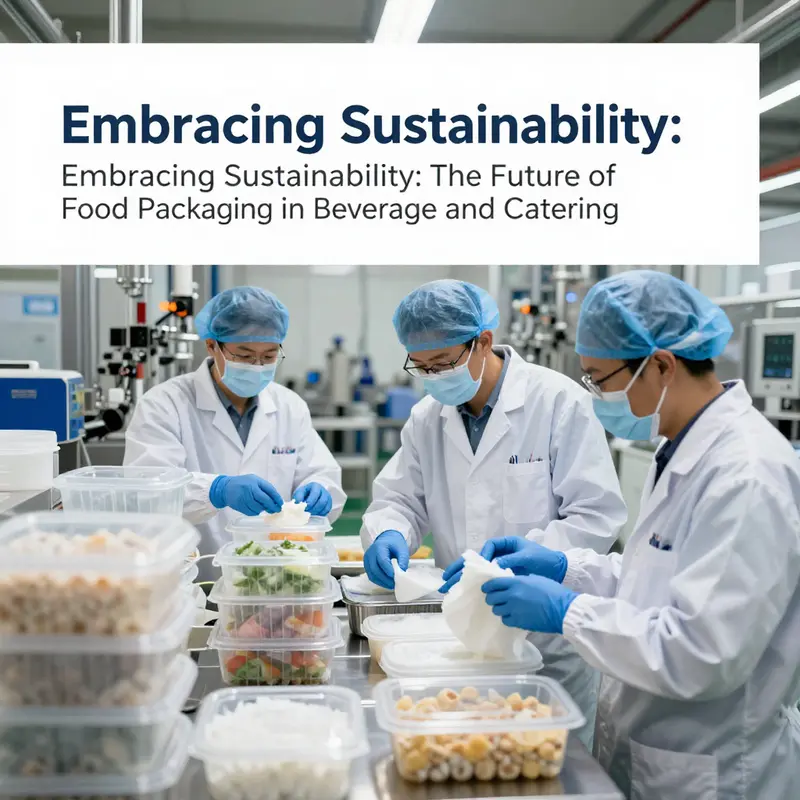
As the drive to replace petrochemical plastics with sustainable alternatives accelerates, the journey from the laboratory bench to the supermarket shelf hinges on more than a greener footprint. It rests on the stubborn, practical metrics of performance, safety, and cost. Bioplastics and other renewable-based polymers promise lower life-cycle emissions and better end-of-life options, yet their adoption in food containers demands a careful balance between what the material can do in real kitchen and industrial environments and what it costs to manufacture, transport, and dispose of. The environmental argument remains compelling, but it cannot stand alone without durability, reliable heat tolerance, and consistent barrier properties that meet the expectations of manufacturers, retailers, and consumers alike. In short, sustainability must coexist with functional parity if biobased plastics are to move from novelty to norm in everyday packaging.
Mechanical strength and barrier properties are at the core of this balancing act. Many bio-based polymers tend to be more brittle and exhibit lower heat resistance than conventional plastics. In practical terms, this limits their use in high-temperature processes like microwaving or sterilization where containers endure steam, hot oils, and repeated thermal cycles. To bridge the gap, researchers frequently turn to plasticizers or blending strategies that increase flexibility and toughness. But plasticizers can migrate into foods, particularly during extended storage or when containers are heated. This migration raises safety and sensory concerns and can undermine consumer trust. The design challenge, therefore, is to align material science with rigorous food-safety standards, ensuring improvements do not introduce new hazards while preserving or improving shelf life. The tension between performance and safety is not abstract; it shapes every formulation choice, every test, and every scale-up decision a producer must make before a sustainable solution can replace a familiar petrochemical option.
Processing and infrastructure determine whether these materials can actually reach the aisle. Even a polymer engineered to perform on paper can fail the practical test if it cannot be manufactured within existing lines or if it demands costly retooling. Some bio-based systems require new processing conditions, altered molding windows, or modified adhesives for coatings and labels. In a market where capital expenditure is scrutinized, this creates tangible risk for producers, especially small and medium-sized enterprises. Here, rational design approaches—carefully selecting renewables, tailoring molecular architectures, and choosing compatible additives—offer pathways to closer parity with conventional plastics. Blending bio-polymers with natural fibers or incorporating bio-based fillers can improve stiffness and heat tolerance without sacrificing the environmental edge. The objective is a material that fits into a circular economy pipeline, where reuse, recycling, or composting can be achieved at scale without breaking the production budget. Such flexibility is demonstrated by eco-friendly, multi-compartment packaging designed for fast-service contexts like eco-friendly disposable 3-compartment packaging box for fast food.
Cost dynamics loom large, often eclipsing even performance hurdles. Bioplastics frequently bear higher raw material costs, reflecting feedstock expenses, fermentation or extraction steps, and more artisanal-scale production. Limited economies of scale amplify the price gap, so even when a bioplastic offers a lower carbon footprint, manufacturers must weigh upfront capital, supply-chain transformation, and uncertain demand against expected environmental benefits. This cost delta can deter manufacturers, particularly those serving smaller markets, unless supported by policy incentives, regulatory pressure, or consumer willingness to pay a premium for sustainability. Yet several levers could narrow this gap: process innovations that reduce energy and water use, smarter feedstock procurement, and the creation of value via co-products that improve overall economics. As volumes rise and facilities scale, per-unit costs are likely to fall, bringing sustainable plastics closer to parity with traditional options. Still, achieving competitive pricing requires coordinated efforts across biomass supply, polymer engineering, and manufacturing logistics, not a single breakthrough in a single plant.
End-of-life and regulatory alignment add a further layer of complexity. A material may deliver stellar performance and appear cost-competitive, but if the waste system cannot handle it efficiently, the environmental promise falters. Many bio-based plastics require industrial composting facilities to degrade effectively, and not all regions have access to such infrastructure. Recycling compatibility is another hurdle; misaligned streams can contaminate traditional recycling processes if the bioplastic enters the wrong recycling bin. This reality emphasizes the need for clear labeling, standardized testing methods, and robust waste-management networks that support separation, collection, and proper treatment. Industrial composting, mechanical recycling, and energy recovery each play a role, with the optimal pathway depending on local facilities, policies, and consumer behavior. Consequently, the most effective material is not merely technically excellent but also integrable within the social and logistical fabric that governs packaging after use. The end-of-life puzzle, then, is as critical as the initial material design.
Strategic design and integration hold the most promise for overcoming persistent barriers. The research community is increasingly focused on rational design: selecting renewable feedstocks, tuning polymer matrices, and introducing compatible bio-based additives to boost performance without compromising sustainability. Blending polymers with natural fibers can improve stiffness and heat resilience, while bio-based plasticizers and compatibilizers can enhance toughness with reduced migration risk when used judiciously. The goal is a holistic life cycle advantage—lower greenhouse gas emissions, reduced reliance on non-renewable inputs, and compatibility with existing or emerging end-of-life streams. This is not a single-material fix but a design paradigm that treats packaging as part of a system rather than a disposable product. It requires that containers be reusable safely or compostable reliably, contingent on their intended use, while remaining economically viable. In practice, it means rethinking packaging as an interoperable component of a value chain that prioritizes safety, performance, and circularity in equal measure.
Market and policy dynamics pressure material choices from multiple directions. Consumer awareness of plastic waste—paired with regulatory constraints and incentives for greener manufacturing—creates a favorable climate for investment in biopolymers and other renewable options. As manufacturers explore multi-criteria optimization, they increasingly rely on modular formulations that can be tuned for different applications without rewriting entire lines. Reuse models, enhanced recycling technologies, and safer, more durable containers together support a move toward more sustainable packaging. The net effect is a narrowing of the gap between sustainable and conventional plastics, enabling broader adoption across food service and meal-prep contexts while upholding safety and consumer trust. Yet progress remains conditional on continuing breakthroughs in material science, infrastructure development, and policy alignment that rewards sustainable performance at scale.
From laboratory insight to ledgered economics, the path forward is incremental and collaborative. Success hinges on alignment among material scientists, process engineers, waste-management planners, policymakers, and retailers. The objective is not a blunt substitution of one material for another but a careful integration of sustainability into the full packaging lifecycle. When a container can perform under typical kitchen conditions, resist moisture and oils, and be collected and treated without contaminating other streams, the environmental benefit becomes tangible and scalable. The practical route combines refined formulations, targeted capital investment in processing, and governance that recognizes both the environmental imperative and the realities of production economics. In this frame, the shift to sustainable food containers becomes a process of integration, optimization, and shared responsibility rather than a binary replacement. The journey is ongoing, shaped by science, markets, and the evolving social contract around waste and resource use.
Closing the Loop: Environmental Promise and Practical Realities of Sustainable Plastics in Food Containers
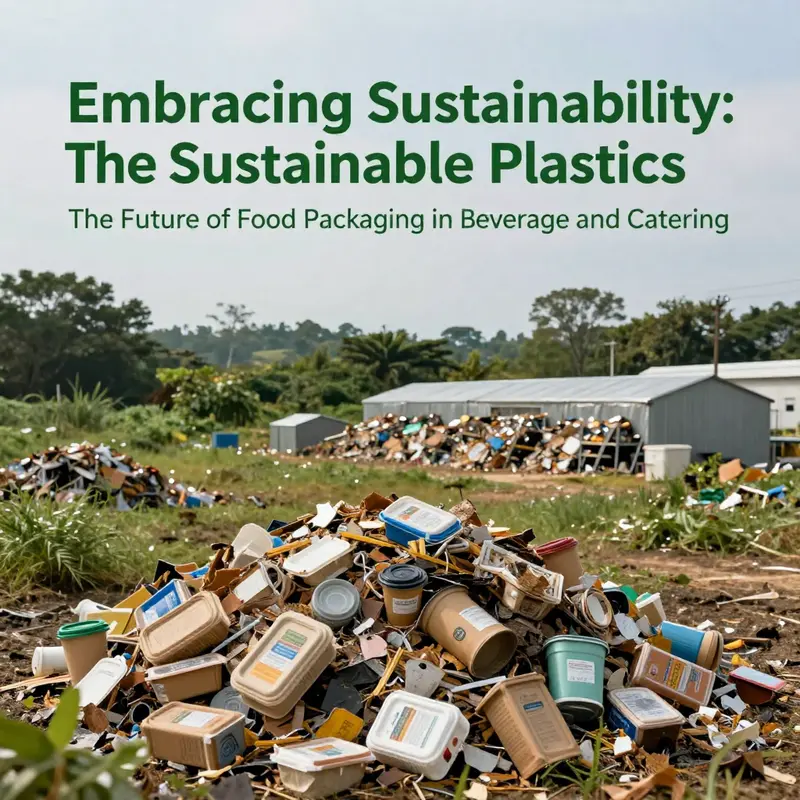
Bioplastics for food containers have emerged from the shadows of skepticism into a credible path toward a more circular packaging system. The environmental logic is straightforward: replacing a fossil-derived polymer with a renewably sourced one can cut greenhouse gas emissions over the material’s life cycle and reduce the long tail of lingering waste. Yet the story is not simply a substitution; it is a reimagining of how materials are grown, manufactured, used, and finally disposed. When we consider sustainable plastics, we must weigh feedstock choices, energy inputs, and the end-of-life options available in different regions. The overarching aim is to keep plastics out of ecosystems while preserving the safety, convenience, and performance consumers expect from modern packaging. In this light, bioplastics are not magic; they are a strategic shift that aligns product design with planetary limits.
One of the most compelling environmental benefits of sustainable plastics is their reduced persistence in the environment. Conventional petrochemical plastics are notorious for lasting centuries, accumulating as litter that fragments into microplastics with consequences for marine life and, by extension, the food chain. Bioplastics, by contrast, are designed to break down more readily under appropriate conditions, which translates to lower long-term pollution when waste streams are well managed. This does not erase the need for responsible disposal, but it reshapes risk. The statistics that a significant fraction of plastic waste ends up in nature receive a practical counterpoint: if most packaging is collected, sorted, and treated correctly, the rate at which plastics persist can be meaningfully lowered. However, the real-world impact hinges on whether composting facilities or recycling infrastructure can receive and process these materials.
Lower greenhouse gas emissions accompany many bioplastics through energy-efficient production and the use of renewable feedstocks. When crops such as corn, sugarcane, or cellulose are turned into polymers, the cradle-to-gate energy demand can be lower than that of fossil-based plastics. The degree of benefit, however, depends on farming practices, land-use choices, and the efficiency of conversion technologies. In regions where renewable electricity powers manufacturing and where waste streams are captured for energy recovery, the net benefit grows. It’s not a uniform advantage across all bioplastics, but the trajectory is clearly toward lower net emissions in many common packaging applications. This is especially meaningful for single-use containers, where the production phase often dominates the life cycle footprint by comparison with reuse.
Composting and recycling form the other two pillars of end-of-life sustainability. When compostable bioplastics are diverted into industrial composting streams, they can contribute to soil amendments and reduce the material load that would otherwise persist in landfills. Recycling bioplastics can also close the loop, though it requires compatible recycling streams and clear sorting practices. The challenge lies in the system-level coordination: collection, segregation, and processing must be accessible and economically viable in local waste management. Without that infrastructure, even materials with favorable degradation profiles may not realize their potential, and misaligned disposal can lead to contamination of recycling streams or wasted compost capacity. In practice, a blend of composting and recycling options, tailored to local ecosystems, tends to yield the best environmental outcomes.
Performance considerations sit at the heart of adoption. Bioplastics can be engineered to match durability, barrier properties, and heat resistance with careful formulation. Yet the real world often demands tradeoffs; a few polymers may be stiffer or more sensitive to moisture than conventional plastics. Designers and manufacturers respond with plasticizers, blends, and smart material design to boost performance without sacrificing sustainability. The challenge is to maintain process compatibility with existing equipment and to ensure that additives themselves do not undermine recyclability or compostability. In several cases, rational design strategies—such as targeting specific barrier requirements for liquids or fats—enable packaging that preserves food quality while still aligning with circular economy goals. The result is a spectrum of materials that can be tuned to different foods, climates, and distribution channels.
To translate environmental benefits into practical everyday use, the choice of material must align with the intended food type and the consumer pathway. Heat exposure, moisture, oils, and acidity all influence how a container behaves. Bioplastics can be formulated to resist heat or provide moisture barriers, supporting shelf life and reducing spoilage-driven waste. They can also be tailored to withstand microwaving or chilling, depending on the application. This flexibility matters because food waste remains a major environmental burden, often exceeding the footprint of the packaging itself. Moreover, the aesthetics and tactile experience of packaging influence consumer behavior; responsible design can encourage better waste practices and preparation methods that minimize unnecessary disposal. In parallel, manufacturers search for scalable, cost-effective ways to produce these materials without triggering unintended consequences in land, water, or air.
Manufacturing compatibility is a practical gatekeeper for widespread adoption. Many bioplastics can be processed on standard equipment, but performance and economics are not invariant across facilities. Transfers from pilot to mass production require careful adjustment of processing temperatures, residence times, and blending ratios. For some bioplastics, the supply chain must diversify, with renewable feedstocks sourced reliably and subjected to quality controls that prevent variability in material performance. Cost parity with traditional plastics remains a moving target, influenced by feedstock prices, energy costs, and policy incentives. In addition, lifecycle thinking invites designers to consider reuse and refill models where feasible. Reusable systems paired with durable plastics can dramatically cut single-use demand, while still leveraging the advantages of renewable feedstocks and more benign end-of-life outcomes.
Beyond the engineering and logistics, the social and regulatory environment steers momentum. Policymakers, retailers, and consumers increasingly demand transparent claims about biodegradability, recyclability, and compostability. Synchronized standards and labeling help reduce confusion and prevent greenwashing. When end-of-life systems are coherent, sustainable plastics move closer to the circular economy ideal: products that are designed with their afterlife in mind, collected through reliable channels, and transformed back into useful materials rather than wasted. In practice, this means the whole value chain—from farmers growing renewable feedstocks to processors turning them into packaging, to waste managers reclaiming materials, to shoppers returning containers—must align around clear environmental objectives. For readers seeking a concrete example of how packaging choices evolve in real markets, you can explore options such as eco-friendly takeout boxes for food packaging, which illustrate how design, materials, and disposal pathways intersect in everyday use.
Ultimately, sustainable plastics for food containers offer a broad environmental repertoire: lower emissions where energy systems are cleaner, reduced long term persistence when waste streams are well organized, and a capacity to tailor performance to protect food quality. The net effect supports not only cleaner oceans and healthier ecosystems but also resource conservation, improved waste management, and a reduced imprint from food-related spoilage. Yet progress depends on disciplined end-of-life management, investment in compatible recycling and composting infrastructure, and ongoing material science breakthroughs. When these elements converge, bioplastics can contribute meaningfully to a more resilient, circular food-packaging system. For researchers and practitioners, the path forward lies in refining feedstock choices, enhancing the recyclability and compostability of blends, and integrating life cycle thinking into every packaging decision. For further reading, see the Science Direct review of sustainable plastics for food containers: https://www.sciencedirect.com/science/article/pii/S0959652623011874.
Policy Pressure and Market Momentum: How Regulations and Demand Are Reshaping Sustainable Plastics for Food Containers
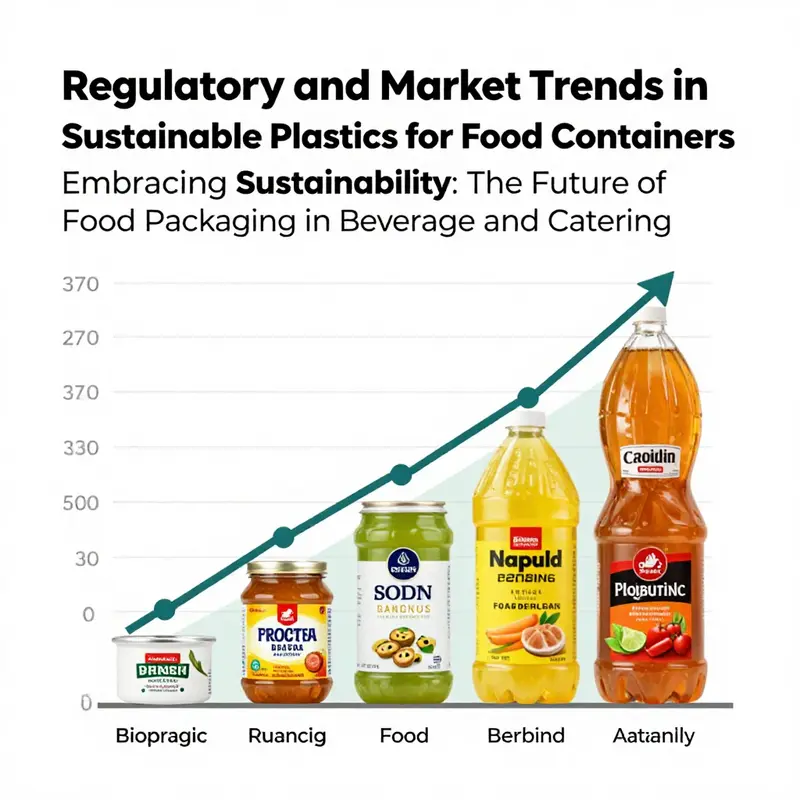
Regulation and market forces are converging to redefine how food containers are made and managed. Governments now set firm targets and bans. Consumers expect greener options. Companies must balance cost, performance, and supply chain realities. This chapter traces the regulatory signals shaping material choices, examines market responses, and outlines practical pathways that connect policy goals to on-the-ground packaging solutions.
The European regulatory agenda is among the most consequential. Measures like the Single-Use Plastics Directive have removed many common single-use items from the market. New EU rules require that all plastic packaging be recyclable or reusable by 2030. A minimum 30% recycled content mandate for plastic packaging will raise demand for quality feedstock. These rules force designers to prioritize recyclability and to avoid combinations of materials that compromise recycling streams. Similar pressure appears in North America, but in varied forms. Several U.S. states use extended producer responsibility schemes to make brand owners accountable for packaging waste. Canada and some U.S. states also set reduction targets and organize EPR systems that shift end-of-life costs back to producers. These policies incentivize innovation in both materials and systems.
Policymakers are not only banning or taxing. They are creating market signals that reward circular design. Recycled content mandates create predictable demand for secondary materials. EPR fees can be calibrated to favor reusable or easily recyclable formats. Procurement standards at municipal and corporate levels further push suppliers to supply compliant products. For food container manufacturers, this means that material selection must answer both performance needs and regulatory criteria. A container that looks sustainable but cannot be recycled under local sorting systems will become a liability.
Market growth in fresh food containers remains strong. Projections show significant expansion in the sector through 2030, driven by urbanization and convenience food trends. That growth now carries sustainability strings. Brands increasingly favor materials that either reduce fossil demand or enable repeated use. Bio-based polymers, such as those derived from sugarcane or starch, are scaling to meet demand. Advanced recycling technologies, including chemical recycling, promise to return mixed or contaminated plastics to usable feedstock. Together, these technologies aim to close loops and to stabilize supply chains affected by volatile feedstock costs.
Edible and active packaging represent a bold market response to regulatory and consumer pressures. Made from polysaccharides, proteins or lipids, edible films can either supplement traditional packaging or replace it entirely for certain use cases. Nanotechnology supports this trend. Embedded nano-scale particles or carriers can deliver antimicrobials, antioxidants, or micronutrients through the packaging. This adds value for both shelf life and nutrition, aligning product innovation with waste reduction. However, edible options face practical hurdles: scaling production, ensuring consistent food safety, and winning consumer acceptance.
Manufacturers face a matrix of trade-offs. Mechanical performance, barrier properties and heat resistance remain critical. Bioplastics can match many of these properties, but they sometimes need additives or design changes to perform reliably in real-world food operations. Adding plasticizers or blending different biopolymers can improve flexibility and withstand heat, but those tweaks must not undermine compostability or recyclability. This tension pushes research toward rational material design: targeted additives that biodegrade benignly, modular composites that separate easily for recycling, or mono-material solutions that preserve function and recyclability.
Infrastructure is the linchpin. Many compostable plastics require industrial facilities to degrade properly. Without industrial composting infrastructure, compostable containers risk contaminating recycling streams or ending up in landfill. Conversely, chemical recycling can accept mixed waste streams, but it requires investment and regulatory clarity to scale. EPR programs can catalyze infrastructure investment by pooling funds for collection and processing. Public-private partnerships are essential to build treatment capacity where private returns alone are insufficient.
Standards and labeling also matter. Clear, enforceable standards reduce greenwashing and help waste managers sort materials effectively. Certification helps retailers and food service operators select materials that meet both regulatory and operational needs. Labels must be precise about end-of-life: recyclable, industrially compostable, home-compostable, or edible. Confusing claims undermine consumer trust and increase contamination in recycling streams.
Consumer behavior will determine which innovations succeed. Convenience and cost still dominate purchase decisions. But consumers increasingly value verified sustainability credentials. Brands respond by redesigning packaging formats to be lightweight, reusable, or made from high-recycled-content materials. Retailers and food service chains are experimenting with deposit-return and reuse systems for containers. Reuse models reduce single-use demand and create predictable material returns, but they require logistics, sanitation protocols, and consumer buy-in.
Corporate strategy is adapting. Companies translate regulatory risks into business decisions. They invest in sustainable R&D, shift procurement to renewable feedstocks, and enter partnerships to secure recycled content. Some adopt phased targets tied to EPR timelines. Others pilot edible or compostable options in limited SKUs to test market acceptance. The alignment of ESG goals with regulatory compliance creates a dual incentive for faster change.
From a policy perspective, nuance matters. Broad bans can drive innovation, but they can also cause unintended consequences if alternatives lack viable waste pathways. Policymakers and industry should aim for coordinated frameworks. Clear standards, investment in collection and processing, and incentives for reuse and recycling will maximize policy effectiveness. EPR schemes designed with performance-based fees can nudge manufacturers toward designs that minimize environmental harm across a product’s life.
For practitioners, the pathway is practical. Design for recyclability first. Prefer mono-material construction where possible. Where compostable materials are chosen, ensure access to industrial composting and communicate that reality to consumers. Engage with suppliers to secure recycled feedstock that meets food-contact standards. Explore reuse pilots where logistics support them. Finally, monitor regulatory developments closely and treat them as design constraints rather than afterthoughts.
Regulatory pushes, market demand, and technological advances are aligning fast. The next decade will crystallize which materials and systems scale. Success will depend on coherent policy, targeted investment, robust standards, and pragmatic design choices. The sustainable plastics era for food containers is not about a single silver bullet. It is about assembling policy, market, and infrastructure pieces to create circular, safe, and affordable packaging solutions that meet both consumer needs and environmental goals.
For a detailed overview of current EU measures, see the European Commission’s Single-Use Plastics Directive: https://ec.europa.eu/environment/chemicals/supplastic.htm
For practical examples of compostable and paper-based food container options, view the eco-friendly takeout boxes for food packaging.
From Bio-based Beginnings to Smart, Safe Packaging: Charting a Circular Future for Food Containers
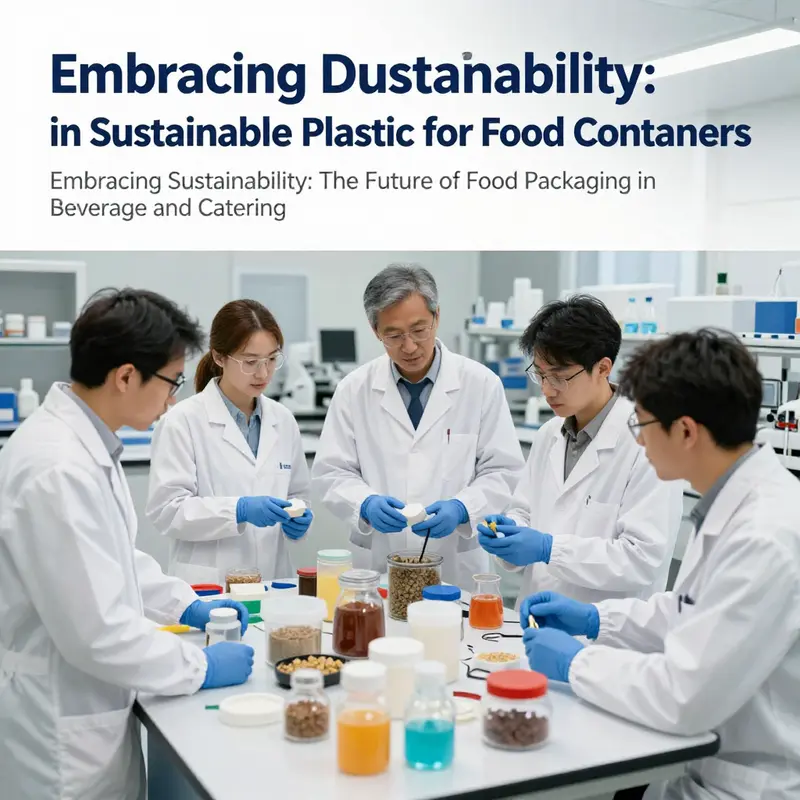
The search for sustainable plastics in food containers is no longer a niche experiment but a strategic shift that blends materials science with systems thinking. Bioplastics, sourced from renewable resources such as corn starch, sugarcane, or cellulose, promise more than a lighter footprint. They offer a tangible path to reduce carbon emissions across production, use, and end-of-life stages. When evaluated against the staggering share of plastics that end up polluting oceans and soils, bio-based options present a compelling case for reimagining how we design, manufacture, and dispose of everyday packaging. A growing body of evidence suggests that, under appropriate conditions, these materials can perform comparably to conventional plastics while enabling compostability or biodegradability. The environmental calculus improves further when industrial composting or specialized waste streams are available to take advantage of their designed end-of-life pathways. A 2023 review highlighted that bioplastics generally carry a lower carbon footprint and hold particular promise for single-use packaging where sustainability is most critical. Yet the story is not a simple substitution; it is a careful orchestration of materials, processes, and post-use infrastructure that determines real-world impact.
The practical barriers to widespread adoption are well known and require thoughtful navigation. Mechanical properties such as flexibility, heat resistance, and barrier performance can lag behind traditional polymers, especially in demanding applications like hot-fill or long storage. To bridge these gaps, researchers explore plasticizers and rational material design strategies that tailor performance without erasing sustainability benefits. The challenge is to preserve recyclability or compostability while delivering the durability consumers expect. In some cases, engineered blends or multilayer structures offer a route to improved performance, but they can complicate end-of-life sorting and recycling streams. This is why many advocates emphasize the need for compatible waste-management ecosystems that can handle bioplastics distinct from conventional plastics. Without accessible industrial composting or validated curbside programs, some bioplastics risk becoming a nuisance rather than a benefit. The implications extend beyond a single container’s life cycle; when systems fail to segregate materials properly, the advantages of bio-based formulations diminish quickly.
Fitting these materials into existing manufacturing lines is another major consideration. Producers worry about process temperatures, extrusion behavior, and adhesion with inks and coatings. The economic balance is delicate: bio-based formulations often carry higher raw material costs, which must be offset by savings in waste reduction, recyclability, or consumer willingness to pay. Yet there is reason for optimism. As the supply base grows and scale economies take hold, material costs trend downward, while performance can be tuned through additives and design choices. The broader industry is also moving toward reuse and recyclability as core design criteria rather than afterthoughts. In some contexts, containers crafted from widely used polymers such as polypropylene or PET are being redesigned for longer life cycles and easier recycling, aligning safety with circularity. The aim is to avoid the temptation to chase green labels at the expense of functionality or safety. Instead, the future lies in materials and systems that work together to minimize waste and maximize recovery, even as consumer expectations for convenience rise.
A practical illustration of this systems perspective is the integration of precise, data-driven decision-making into packaging design. Industry 4.0 technologies—Sensors, artificial intelligence, big data analytics, and digital traceability—are redefining what is possible in food packaging. The concept of Food Packaging 4.0 envisions smart packaging that can monitor freshness, detect temperature abuse, and communicate with supply chains to optimize stock and reduce waste. Such systems can also guide the amount of packaging required for a given product, preventing over-packaging and the downstream volume of returns and disposals. When AI can forecast consumption patterns, packaging designers can tailor size, weight, and material choice to actual demand, rather than anticipated demand that may never crystallize in real life. The promise is to minimize both food and plastic waste by aligning packaging precisely with consumption and storage realities. These advances are not mere gimmicks; they reflect a shift toward packaging that is adaptive, connected, and accountable throughout its life cycle.
Alongside these opportunities, a sober line of inquiry remains essential: how can we ensure that functional gains do not come with new risks, such as microplastics that can migrate into food during storage, transport, or heating? The push to innovate must be matched by rigorous safety testing and lifecycle analysis. Microplastics have emerged as a significant public health concern, reminding us that sustainability cannot be pursued in isolation from safety. The objective is to design materials whose stability and degradation products are well understood under varied conditions—recycling environments, compost facilities, and consumer use scenarios. In this sense, the future of sustainable packaging hinges on an integrated approach that foregrounds safety, performance, and environmental responsibility in equal measure. It is not enough to claim biodegradability if the material fragments into microplastics before a consumer even finishes a product. Instead, developers are pursuing materials with predictable end-of-life behavior and clear pathways to harmless recovery, whether through composting, recycling, or refill and reuse models.
The broader shift toward a circular economy intensifies the need to align innovations with infrastructure and policy. Waste-stream separation, labeling clarity, and standardized testing protocols can transform what is now a fragmented landscape into a coherent system that rewards responsible choices. Consumers increasingly expect transparency about how packaging is sourced, how it behaves during use, and how it is managed after disposal. In response, designers are adopting life-cycle thinking from the outset, selecting materials and architectures that optimize resource use and enable recovery. The convergence of bio-based materials, smart digital technologies, and robust safety standards signals a future in which packaging not only protects food but also reinforces public health and environmental integrity. The goal persists: eliminate unnecessary plastic release, reduce contamination of ecosystems, and promote practical reuse and recycling pathways that communities can implement at scale. This is why dialogue among material scientists, engineers, waste-management professionals, policymakers, and consumers is essential. Only through collaboration can we translate promising lab results into real-world reductions in pollution and exposure.
As a practical note, the journey toward this future is marked by tangible milestones that connect early material choices to downstream effects. For instance, footprint reductions are most meaningful when coupled with enhanced recyclability and accessible composting. The simplification of recycling streams benefits from mono-material designs and clear labeling, while compostability is contingent on the availability of industrial facilities that can process biopolymers under controlled conditions. The industry is learning to balance performance with end-of-life clarity, so that consumer experience remains straightforward and responsible. In the meantime, demonstrations of smart packaging capabilities—such as time-temperature sensing and supply-chain traceability—offer a compelling value proposition that can justify the transition for manufacturers and retailers alike. The journey is iterative: material science informs packaging architecture; packaging architecture influences consumer behavior and waste pathways; waste pathways, in turn, shape future material choices.
This integrated vision finds a practical articulation in a single, interconnected idea: design for recovery. A container is not just a vessel; it is a node in a network that includes production, use, disposal, and post-use processing. When each node is designed with its neighbors in mind, the entire system becomes more resilient and less wasteful. To illustrate how this principle translates into everyday choices, consider the possibility of sourcingable, compostable liners that maintain integrity during storage but breakdown when returned to an industrial facility. Or think of reusable, durable containers whose long life is complemented by modular recycling paths after many cycles of use. These approaches require aligned incentives across producers, waste managers, and regulators, as well as investment in consumer education so that people understand how to participate effectively in a circular system. The challenge is not simply to replace one material with another, but to rearchitect packaging ecosystems so that sustainability, safety, and efficiency reinforce one another rather than compete for attention.
For readers seeking a concrete example of how design and delivery converge in practice, one may explore examples of how sustainable packaging options are being positioned in the food-service sector and how materials are being redesigned to accommodate reuse and safe disposal. eco-friendly takeout boxes for food packaging illustrate the kind of system-level thinking that is increasingly expected. They embody a shift from single-use convenience toward packaging that can be recovered, reused, or properly composted with minimal environmental impact. And while such designs are not a panacea, they demonstrate a viable pathway to reduce waste and improve safety across the lifecycle.
For those seeking deeper theoretical grounding and broader evidence, the chapter aligns with ongoing research that emphasizes convergence among bio-based materials, digital technologies, and stringent safety standards to prevent microplastic release. The integration of these strands offers a credible route to a circular economy in food packaging. As researchers continue to refine material formulations and processing methods, policy-makers and industry leaders can, in turn, shape standards and reimbursement frameworks that reward true sustainability rather than partial substitutions. The takeaway is clear: sustainable plastics for food containers will succeed when they harmonize material performance, economic viability, and robust end-of-life infrastructure, all guided by data-driven decision making and a shared commitment to public health and planetary well-being. For those who wish to explore further, a comprehensive external resource provides a detailed examination of emerging directions in this field.
External resource: https://www.sciencedirect.com/science/article/pii/S266687952300001X
Final thoughts
The shift toward sustainable plastics in food containers is revolutionizing how food and beverage businesses operate in today’s eco-conscious marketplace. With growing consumer awareness and regulatory pressures, embracing bioplastics can significantly enhance your brand’s environmental standing while also meeting practical performance requirements. By staying informed about innovations, addressing performance challenges, and adapting to market trends, businesses can strategically position themselves as leaders in sustainable practices. The future of food packaging is not only bright but also green, paving the way for a healthier planet.