

In the rapidly growing food service industry, efficiency and health considerations often collide. The takeout bag backpack merges these two aspects, offering a practical solution for Bubble Tea Shops, Restaurants, Food Trucks, and Catering Services. This innovative bag not only enhances convenience in food transportation but also supports employee health and environmental efforts. Throughout this article, we will explore the unique design and functionality of the takeout bag backpack, the health implications of using it, and how it compares environmentally to traditional packaging methods. Together, these insights will illuminate why investing in a takeout bag backpack is a smart move for your business.
Rethinking Transit Meals: The Takeout Bag Backpack as a Conduit of Comfort, Hygiene, and Mobility
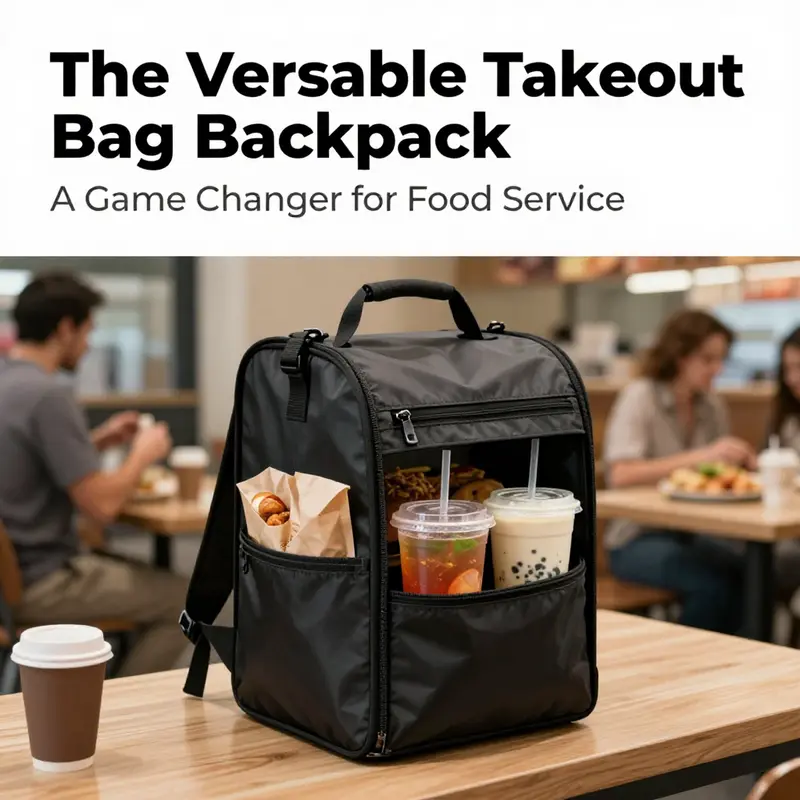
A city that moves on the clock also moves on meals. In the spaces between meetings, stations, and crowded sidewalks, people carry more than themselves; they carry food, sometimes for a single hurried lunch, sometimes for a shift that spans hours, sometimes for a day’s worth of nourishment while they move from one location to another. The takeout bag backpack emerges from this transit-driven reality as more than a clever hybrid. It is a deliberate design response to the choreography of urban life, a careful marriage of food-safety containment and ergonomic load management. Traditional bags—whether a tote slung over one shoulder or a backpack that merely parcels out weight—tend to force a choice between convenience and health. A tote can let weight ride unbalanced on one side, tugging the spine toward the bag’s mass. A plain backpack, depending on its construction, may still neglect the specific demands of carrying hot meals, utensils, napkins, drinkware, and personal items in a way that preserves both temperature and order. The takeout bag backpack, in contrast, is conceived as a single, versatile instrument for the modern eater and worker alike. It seeks to preserve a meal’s integrity while allowing the wearer to move freely and safely through long shifts, short commutes, and rapid urban travel. In its essence, the concept is pragmatic elegance: a portable, food-safe container that sits quietly on the wearer’s back, distributing weight symmetrically and shielding contents from the rhythm of the road, rain, or street dust. The result is a bag that does not merely transport food; it protects it, respects the body, and supports the performer of the daily routine—the delivery rider, the hospital volunteer, the office commuter who wants a warm, reliable noon meal without compromising posture or comfort. The design language of the takeout bag backpack invites a careful balance of materials, geometry, and usability, all tuned to a life in motion. Its core purpose is to keep meals secure, insulated, and organized while enabling the wearer to maintain mobility across shifts that can bend and stretch with weather, traffic, and demand. As a concept, it speaks to the transformation of a disposable, single-use practice into a reusable, durable solution, one that aligns with a broader push to reduce packaging waste and to treat food transport as a professional, repeatable process rather than a serendipitous effort. The practical implication is not merely convenience; it is a statement about how we pack, how we move, and how we sustain daily routines in a city that never stops asking for nourishment on the fly. The result is a product that has to do more than hold containers. It has to regulate temperature, resist leaks, and deter spillage, all while remaining comfortable to wear for hours. This is where the design discourse becomes almost choreography. A durable, food-grade compartment sits at the heart of the backpack, engineered to cradle hot takeout containers and cold packs with reliable hygiene. Materials matter here: waterproof membranes that are BPA-free and non-reactive to food, heat-resistant fabrics that tolerate steam and condensation, and seams that hold under the stress of repeated daily use. The main food delivery section, often insulated, acts like a small, portable kitchen in motion. It must accommodate varying orders—stacked boxes, wrapped trays, bowls, and occasionally beverage carriers—while maintaining an organized rhythm that makes retrieval efficient for the rider moving through a busy shift. The layout extends beyond the main chamber. A dedicated utensils and personal items compartment keeps forks, spoons, napkins, receipts, and a wallet separate from the food, reducing cross-contamination risks and cleaning complexity. Some models also include an insulated sleeve for drinks, ensuring that a beverage remains at its chosen temperature without turning the bag into a thermal labyrinth. The value of this thoughtful layout lies less in novelty than in workflow optimization. For delivery professionals, time is currency, and every second saved on finding the right item or the right container translates into more precise deliveries, steadier tips, and a more predictable day. The design conversation, then, expands from the bag’s exterior appearance to the interior logic—the way pockets are sized, the materials chosen for each layer, and the way the bag opens and closes to reveal what you need when you need it. Ergonomics interplay with this logic in meaningful, measurable ways. The backpack is equipped with padded shoulder straps that cushion the shoulders and distribute load, a back panel that maintains airflow and supports the spine, and often a stabilizing waist belt that helps transfer weight from the shoulders to the hips. The aim is not merely comfort but long-term health. Carrying heavy loads on one side, or with the weight perched high on a single shoulder, can tilt the spine, trigger muscle fatigue, and encourage postural slippage. Recent health research from the United States underscored the risk of unilateral load. While the precise figures vary by body type and posture, the consensus has become increasingly clear: a single-strap bag or tote can shift the body’s center of gravity and increase spinal curvature, sometimes by substantial margins, especially with repeated use. A well-designed takeout bag backpack, by contrast, pulls the weight toward the wearer’s center of gravity, making the load feel lighter and the posture more natural. The practical upshot is straightforward: choose a bag with sturdy dual shoulder straps, a supportive back panel, and a waist belt that works with the wearer’s ranges of motion rather than against them. The health logic dovetails with the operational one. A bag that hugs the body and distributes weight evenly reduces fatigue on long routes and late shifts, enabling a worker to maintain focus, speed, and accuracy even after hours of travel and load-bearing. The ergonomic rationale is not limited to comfort. It translates into fewer days of discomfort, fewer injuries, and more reliable performance across the workforce. In the larger context of urban dining and food service, the takeout bag backpack also embodies a shift toward sustainable practice. A reusable, durable carrier reduces reliance on disposable bags and helps the industry move away from one-time plastics. While a single bag cannot single-handedly reverse the environmental footprint of takeout culture, it becomes a component of a broader strategy to implement more sustainable workflows. The materials chosen for these backpacks reflect this philosophy. Many designs favor waterproof, BPA-free plastics or heat-resistant fabrics that can endure repeated washing and daily wear without losing structural integrity. Cleanability is crucial; the most practical models include reinforced handles, reinforced seams, and locking features that keep contents secure during transport and make cleaning straightforward after a shift. This attention to hygiene extends to the bag’s interior finish. A sealed or sealed-like inner surface helps resist spills and makes wiping away sauce or condensation simpler, a tiny but meaningful element when the same bag is used day after day with numerous orders passing through. The external aesthetics are not neglected. A takeout bag backpack should project a sense of reliability and professionalism if used in a commercial capacity, while still allowing for personal taste in color, silhouette, and finish. The goal is to harmonize the practical and the stylistic so that a delivery person feels confident with their equipment and a customer perceives quality in the product and the service alike. The industry context reinforces the sense that this is not a niche artifact but a growing category aligned with evolving gig work, platform-driven demand, and the professionalization of food delivery as a career path. Designers must balance durability and aesthetics with cost and manufacturability. A well-executed bag can serve as a branding vehicle for a business or an individual’s personal expression, offering customization options that align with corporate identity or personal style. It stands at the intersection of form, function, and responsibility: a tool for mobility, a container for nourishment, and a platform for sustainable practice. The takeaway is simple in its implication: the takeout bag backpack is more than a bag. It is a compact, portable system designed to maintain the integrity of meals, safeguard the wearer’s health, and reflect the growing seriousness of a workforce that travels with food as an essential service. To emphasize the point in everyday terms, consider the practical realities of a typical shift. The rider begins with a clean, organized interior that holds a hot entrée, a cold beverage, utensils, napkins, and a small personal item, all arranged to minimize rummaging and maximize speed. Mid-shift, as temperature and moisture shift with hour-by-hour changes in weather, the insulated sections prove their worth, keeping hot items hot and cold items cold, while the outer shell repels rain and splashes. When fatigue sets in toward the end of a long route, the waist belt and back support help prevent the classic postural slump that leads to discomfort or even injury. The rider’s eyes stay on the road and the next delivery rather than on the bag’s contents, a subtle but important difference in performance. The ergonomic, hygienic, and logistical benefits are not abstract; they translate into tangible outcomes: faster deliveries, more consistent meal quality, less physical strain, and a more sustainable approach to a system that has grown rapidly in recent years. Designers who speak the language of the gig economy recognize that the bag must accommodate a range of orders—from simple, single-dish meals to complex, multi-item packs with drinks and sides. To support this variability, the interior is deliberately modular. The main chamber is spacious enough to swallow several containers, yet partitioned in a way that keeps items from shifting. A separate, insulated sleeve for drinks shields beverages from splashes and helps preserve carbonation or temperature. Utensils and napkins have a shallow, easily accessible pocket, while personal items—wallet, keys, phone—nest in a smaller, discreet compartment to prevent interference with the food’s stability. Quick-access openings are another torque point in the design: they reduce the need to disrupt a carefully arranged interior in order to retrieve a jacket or a spare bottle when the weather turns, or to grab a receipt for proof of delivery without spilling a hot container. Reflective strips or high-visibility accents are not just cosmetic; they contribute to safety during early morning or late-night shifts when pedestrians and traffic demand heightened awareness. Custom branding options enable a business or an individual to project reliability and care for a customer’s experience. A well-branded takeout bag backpack communicates that the service prioritizes order integrity and personal convenience as much as street safety and hygiene. The design conversation that surrounds this product is not merely about clever pockets or a glossy exterior. It is about a holistic experience: a wearable system that respects the body, protects the meal, reduces waste, and supports a professional workflow. In this sense, the bag functions as an extension of the worker’s capabilities rather than a passive container. The fidelity of design matters because it signals a more human approach to a practice that has become essential for urban life. Consumers who encounter a well-made takeout bag backpack may notice the subtle cues—how the weight feels, how the opening glides, how the interior compartments respond to daily use—and these cues reinforce trust in the service behind the bag. The broader market response to hybrid bags designed for food delivery has been shaped by the converging needs of platform-based work, consumer demand for reliable takeout experiences, and environmental stewardship. As delivery options proliferate and the variety of meals expands, the potential for a single, well-conceived carrier to simplify the day-to-day routine grows. This potential is not realized by chance. It is a result of deliberate material choices, a thoughtful geometry that respects the body, and a careful calibration of insulation, moisture resistance, and easy maintenance. The ecosystem around the bag—packaging materials, food-grade compartments, and accessories—also matters. It speaks to a broader trend: the move from disposable packaging toward durable, shared-use systems that minimize waste while preserving the integrity of the food. One might imagine a future where the takeout bag backpack becomes a standard item in the toolkit of every delivery person, every commuting luncher, and every professional who wants to carry a warm meal with dignity. In such a future, the best designs will be those that deliver consistent performance across a range of climates, urban densities, and personal routines. They will be easy to clean, quick to open and close, and able to be carried with minimal effort on crowded sidewalks or stairwells. They will also be built from materials that stand up to daily exposure to moisture, heat, and the occasional spill, and they will be adaptable enough to accommodate a broad spectrum of orders while preserving the meals’ presentation. This is not a speculative exercise but a practical one. The core takeaway is that a well-conceived takeout bag backpack can do more than transport food; it can support a safe, efficient, and sustainable mode of urban living. The choice of a bag is, in many ways, a reflection of how someone prioritizes health, time, and the quality of a meal in transit. By emphasizing dual-strap support, a robust back panel, a waist belt, and a thoughtfully organized interior, designers acknowledge the realities of modern work and mobility. They acknowledge that carrying meals is not a trivial gesture but a daily ritual that deserves equipment worthy of the effort it costs. For readers and practitioners who want to explore further into related packaging and practical design considerations, a related resource highlights contemporary packaging solutions that align with this ethos. foldable cake boxes with window bakery packaging. This example underscores how packaging design can harmonize with a carrier’s function, reinforcing the idea that a successful takeout experience relies on cohesive systems rather than isolated components. If you are curious about the broader health implications of bag choice for commuting and daily transport, a concise comparative resource provides a structured overview of how backpacks and totes align with spinal health, offering a quick reference that complements the practical exploration above: https://www.verywellhealth.com/backpack-vs-tote-bag-for-commuting-4793948. In the end, the takeout bag backpack stands as a pragmatic answer to a question that has grown louder in the urban landscape: how do we keep nourishment portable, safe, and comfortable to carry when the journey itself is a daily requirement rather than a rare occasion?
Carrying With Care: Health and Ergonomics of the Takeout Bag Backpack
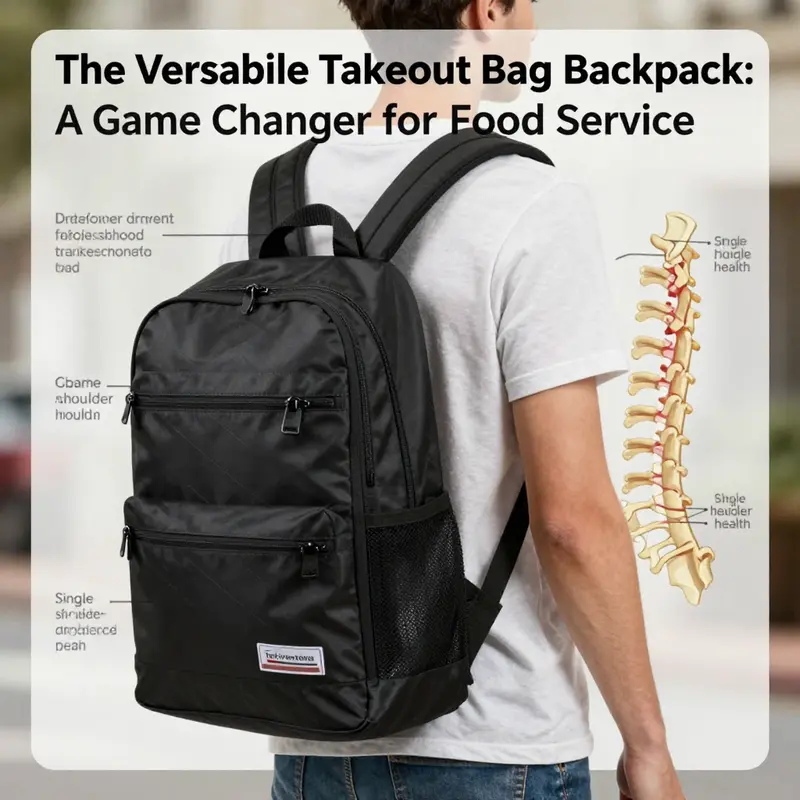
Takeout bag backpacks sit at the intersection of convenience and health. They promise portability while carrying meals close to the body, which makes posture, heat exposure, and hygiene important considerations. Proper design and use can support comfortable transport, whereas poor fit or material choice can increase strain on the spine and raise exposure to heat and contaminants.
Posture matters: uneven weight distribution on a single strap can tilt the torso and shift the center of gravity, potentially causing discomfort over time. A two-strap backpack that hugs the back helps balance load, reduce strain on the lumbar region, and support long-term mobility during daily commutes or longer shifts that include meals.
Material safety and hygiene are also key. When hot foods contact non-food-grade plastics, there is a risk of chemical migration. Using heat-tolerant, food-contact safe linings and cleaning practices minimizes this risk. Regular interior sanitation and drying prevent microbial growth that could transfer to food or hands.
Design and usage tips: opt for bags with cushioned straps, a supportive back panel, and a removable liner that is easy to clean. Avoid overpacking to keep weight within comfortable daily limits. Finally, combine reusable, food-safe containers with the bag to reduce waste and potential contaminants.
Overall, a well-chosen takeout bag backpack can support health and convenience by promoting better posture, safer contact surfaces, and easy cleaning habits.
Carrying Change: Rethinking Packaging Footprints Through Takeout Bag Backpacks
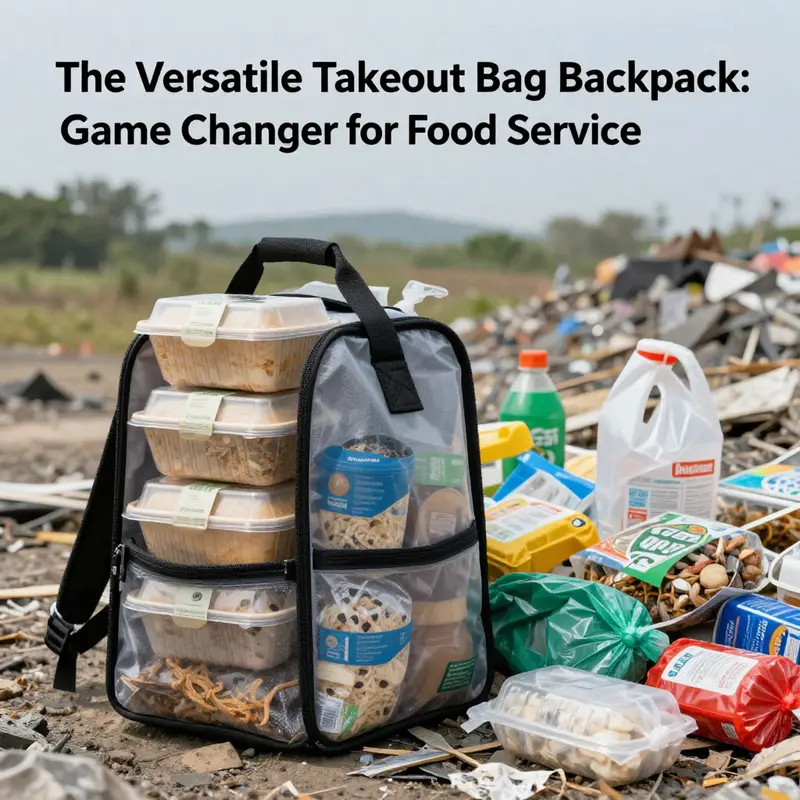
In the modern food economy, packaging waste is not merely a nuisance but a material record of consumption. Every sandwich wrapped, every noodle box tucked away, every bag crumpled and discarded adds up to a stream of waste that travels from restaurant door to landfill, incinerator, or the world’s oceans. The pace of delivery and takeaway culture has intensified the demand for practical packaging solutions. Yet as awareness grows about the environmental costs of single-use packaging—plastic production, deforestation for paper, the energy embedded in manufacturing, and the emissions associated with disposal—there is a clear imperative to tilt the balance toward reusable, durable alternatives. Takeout bag backpacks arise at this intersection of practicality and sustainability. They are not merely a clever fusion of a food carrier and a backpack; they symbolize a shift in how people think about carrying meals, groceries, and personal sustenance on the move. The environmental logic behind these designs rests on a simple, powerful principle: one reusable system can replace thousands of disposable elements over its lifetime, dramatically reducing the demand for virgin materials and the burden of waste that accompanies daily food logistics.
To understand the environmental case for takeout bag backpacks, it helps to trace the lifecycle of conventional packaging and contrast it with a reusable alternative. Traditional packaging—plastic bags, paper wrappers, foam or polystyrene containers—often travels with the meal from kitchen to curb, then to a waste stream that may end in landfills or waterways. The production of these materials requires raw inputs such as petroleum, wood pulp, and energy, releasing greenhouse gases and consuming water and land resources in the process. After a single use, much of this material is either discarded or recycled at limited rates, with recycling itself consuming energy and generating residues. In many settings, discarded packaging dominates municipal waste streams and imposes costs on communities in terms of collection, sorting, and treatment. The volume of waste scales with the frequency of orders, meal sizes, and the habit of single-use packaging that accompanies impulsive consumption. The environmental costs of such a system accumulate quickly, particularly in dense urban environments where waste management infrastructure strains under demand.
Takeout bag backpacks flip this script by combining durability, reusability, and user-friendly design in a single carrier. The core environmental advantage lies in the reusability cycle. A single takeout bag backpack—designed to carry hot or cold food, maintain temperature, and withstand daily use—can replace hundreds of disposable bags and containers over its life. This multiplicative effect matters. If one family or one courier shifts to a backpack that can be used repeatedly for months or years, the cumulative reduction in disposable packaging demand is substantial. It is not only about avoiding waste; it is about lowering the upstream pressure on raw materials—less petroleum drawn from the ground for plastics, fewer trees felled for paper, and less energy consumed in producing and transporting single-use goods. The environmental story here is one of scale and commitment. When an individual commits to a reusable system, the rewards compound with each subsequent use, as long as the bag is properly maintained and integrated into daily routines.
In practice, many takeout bag backpacks are crafted with sustainability in mind from the outset. A growing portion of such products incorporate recycled materials or responsibly sourced fabrics. Post-consumer plastic bottles, for example, can be transformed into robust, weather-resistant textiles that hold up under repeated use and cleaning. Organic cotton, recycled polyester, or other durable fabrics are selected not only for their strength and wear resistance but also for their potential to lower life-cycle impacts when compared with conventional materials. The wear-and-tear factor matters as well: a well-made backpack that distributes weight evenly and protects its contents can endure the rigors of daily commutes, on-the-go errands, and food deliveries. In this way, the environmental advantage extends beyond raw material choices to the broader questions of product longevity and end-of-life handling. A long-lasting carrier reduces the frequency of replacement purchases, thereby conserving resources and reducing the environmental footprint per unit of use.
Weight distribution and ergonomic design play a surprising but meaningful role in environmental impact as well. Health research from reputable institutions highlights the importance of ergonomic carrying systems for preventing strain and promoting sustainable behavior. When a bag is uncomfortable or impractical, users may avoid carrying it as frequently as needed, or they may overcompensate with lighter loads that prompt additional trips. Conversely, a well-balanced, comfortable backpack with a designated food compartment encourages consistent use. Carrying comfort indirectly supports environmental aims by making the reusable option more convenient and reliable, reducing the temptation to revert to disposable options when busy or on a tight schedule. This is not merely a matter of comfort; it is a behavioral lever. The easier it is to reuse, the more likely individuals are to keep a bag in rotation, repair it when needed, and advocate for sustainable practices in their circles. In short, the environmental benefits of takeout bag backpacks are amplified when design aligns with human ergonomics and everyday workflows, turning a green idea into a practical habit.
A key aspect of the environmental calculus is the end-of-life scenario. While the ideal outcome is that bags last for years and are repaired rather than discarded, reality requires that systems account for disposal. Reusable backpacks that are designed with modular components—zippers, seams, straps, linings—t support repair and refurbishment, extending their usable life and limiting landfill contributions. Some models even rely on recycled or recyclable components, allowing individual parts to be replaced or recycled at the end of their life. When we consider the broader waste stream, these design decisions matter. A backpack that can be repaired or repurposed reduces the likelihood that a consumer will prematurely discard a functional asset. Such an approach aligns with a circular economy logic, where products retain value through multiple lifecycles rather than being discarded after a single use.
This circular mindset is reinforced by public policy and environmental analyses that compare the lifecycle impacts of reusable versus disposable packaging. A comprehensive assessment framework, such as the Environmental Agency’s analysis of food packaging, offers data-driven insight into how different packaging choices perform across carbon footprint, energy use, and waste generation dimensions. While the specifics vary with materials, geography, and consumer behavior, the overarching pattern is consistent: reusable systems, when properly adopted and maintained, generally outperform single-use options in the long run. The exact figures depend on how often the bag is used, how it is cleaned, and how it is transported, but the principle holds. Reducing the production and disposal cycle for thousands of disposable units per year translates into meaningful reductions in energy demand and greenhouse gas emissions. Such analyses provide policymakers, manufacturers, and consumers with a map for prioritizing reusable solutions that actually deliver on their environmental promises over time.
To connect these ideas to concrete policy and real-world data, consider the evidence assembled in national and regional reports that compare packaging options on a lifecycle basis. The UK Environment Agency’s assessment of the environmental impact of food packaging, for instance, aggregates data on carbon footprints, energy use, and waste generation associated with various packaging materials. The report highlights how consumer and business choices—favoring durable, reusable solutions over single-use products—can lead to measurable improvements in environmental performance. While the discourse often centers on material substitution or lightweighting, the broader takeaway is about system design: the integration of reusability into everyday practice, supported by robust materials and manufacturing choices, can meaningfully reduce environmental impacts without sacrificing convenience or functionality. This perspective is not about a single product or a single moment of use; it is about a durable approach to packing and carrying that resonates with the rhythms of modern life.
In this context, one practical way to translate environmental intent into everyday action is to view the backpack itself as a small, portable infrastructure for sustainable behavior. The design invites a simple, repeatable ritual: carry the bag to work or school, load it with meals or groceries, return home, clean it, and reuse it. This ritual fosters continuity and accountability. It reduces the cognitive load of remembering to bring a container or bag, and it creates a visible reminder of one’s commitment to cutting down on disposable waste. Moreover, by keeping food warm or fresh through integrated insulation or temperature-regulating features, takeout bag backpacks help preserve the quality of meals while avoiding the need for additional packaging to protect them in transit. The cumulative effect is a more efficient, waste-conscious flow of food and goods from source to consumer, with less waste, lower emissions, and a clearer path toward a sustainable routine.
From a consumer behavior lens, the environmental benefits of takeout bag backpacks hinge on habit formation and access. When a reusable system is accessible, affordable, and resilient to daily wear, it becomes ingrained in routine rather than treated as an exception. Accessibility matters: bags that are easy to rinse, quick to dry, and designed to fit the typical load of a lunch, groceries, or a delivery order encourage regular use. Affordability matters too. If the upfront cost of a reusable backpack is reasonable and the expected lifetime is long, the economic calculus aligns with the environmental one. In many cases, the cost per use diminishes rapidly as the bag accrues more years of service, reinforcing a virtuous loop of reuse. This dynamic is especially potent for people who rely on carry-on meals or need reliable storage solutions for work, travel, or outdoor activities. The result is a cultural shift toward mindful consumption where the choice of a takeout bag backpack is not just about convenience but about a broader commitment to reducing plastic waste and conserving resources.
The environmental case for takeout bag backpacks also resonates with broader sustainability trends, including the shift toward circular materials and the design for disassembly. In practice, this means choosing bags that can be repaired rather than discarded, that use materials which can be recycled at end of life, and that minimize toxic additives that complicate recycling streams. It also means embracing a supplier ecosystem that prioritizes durability, repairability, and end-of-life stewardship. When manufacturers and retailers align product design with these principles, the environmental benefits extend beyond a single user and contribute to a more resilient packaging system. Such alignment requires collaboration across the value chain—material suppliers, designers, manufacturers, retailers, and consumers working in concert to minimize footprint and maximize reuse.
A final layer of consideration rests on the potential for a takeout bag backpack to serve as an environmental catalyst within communities. As more people adopt reusable systems, the aggregate effect alters consumer expectations and industry norms. Restaurants and delivery services may be incentivized to reduce packaging waste, not by mandating changes from above but by supporting customers who bring their own carriers. The social dimension—norms around waste reduction, public awareness of environmental footprints, and the visible demonstration of sustainable behavior—can accelerate adoption and embed waste-conscious practices into everyday life. In this sense, the backpack becomes not merely a carrier but a tangible symbol of a shared commitment to a cleaner, smarter, and more efficient way of transporting meals and goods. It is a small, portable instrument of systemic change, one that integrates design, behavior, and policy into a coherent approach to sustainability.
For readers seeking a direct pathway to supporting these environmental goals without compromising on practicality, a closer look at reusable packaging options is warranted. One practical entry point is to explore designs and implementations that emphasize durability, ease of cleaning, and modular components that extend life. In line with this, you can explore examples of eco-conscious packaging options that are documented in industry-wide resources. For a concrete reference that discusses sustainable packaging alternatives and their comparative impacts, see the broad overview linked here: eco-friendly-disposable-3-compartment-food-grade-packaging-box-for-fast-food-high-quality-takeout-boxes-for-fried-chicken-french-fries-packaging. This link provides a sense of how product designers and suppliers articulate the balance between functionality, safety, and environmental responsibility in packaging ecosystems. While individual products vary, the underlying message remains clear: durability and reusability are central to reducing waste, cutting resource use, and fostering a culture of mindful consumption that suits contemporary living.
In closing, the environmental benefits of takeout bag backpacks emerge from a combination of durability, intelligent design, and a systemic view of packaging life cycles. They offer a practical alternative to disposable solutions by enabling repeated use, reducing raw material demand, and decreasing waste generation at scale. The most compelling case is the one that recognizes how such backpacks can become everyday infrastructure for sustainable behavior—not a niche accessory but a standard, ergonomic tool that helps people carry meals while carrying forward a more responsible approach to resource use. As urban life continues to accelerate and waste management systems face ongoing pressures, embracing durable, reusable carry systems stands out as a straightforward, practical response that aligns personal convenience with planetary health. The path forward lies in steadfast commitment to quality design, clear end-of-life thinking, and a culture that prizes reuse as a reliable, everyday habit rather than a rare exception.
External resources for further reading reinforce the quantitative side of these claims. They offer essential data on how various packaging materials perform across the lifecycle and how reuse strategies influence carbon footprints, energy consumption, and waste streams. For a data-driven exploration of environmental performance across packaging types, consult the UK Environment Agency’s assessment of the environmental impact of food packaging. The report provides nuanced comparisons and a robust framework for evaluating long-term ecological benefits, helping stakeholders—from policymakers to consumers—make informed decisions about reusable systems and waste reduction. External link: https://www.gov.uk/government/publications/assessment-of-the-environmental-impact-of-food-packaging
Final thoughts
The takeout bag backpack is more than just a convenient option for transporting food; it represents a thoughtful approach to enhancing the food service industry’s efficiency and responsibility. With its ergonomic design, it promotes health and well-being among workers, while its environmental benefits highlight a commitment to sustainability. By incorporating the takeout bag backpack into your operations, you can not only elevate the service offered to customers but also contribute positively to your team’s health and the planet’s future. Consider making this smart upgrade for your business today!