

Takeout bags serve as the vital link between food establishments and their customers, carrying prepared meals in a world that increasingly prioritizes convenience. For bubble tea shops, restaurants, food trucks, and event planners, these bags aren’t just functional; they reflect brand identity and consumer values. As we delve into this essential component of food service, we’ll explore the various types of takeout bags available, investigate the pressing sustainability challenges, and examine innovative materials that reduce environmental impacts. Additionally, we will discuss economic considerations that affect procurement decisions while highlighting the evolving consumer behavior trends regarding food packaging. Together, these chapters aim to provide a comprehensive understanding of the takeout bag’s critical role in our society.
Carrying More Than a Meal: The Evolution, Design, and Sustainability of the Takeout Bag
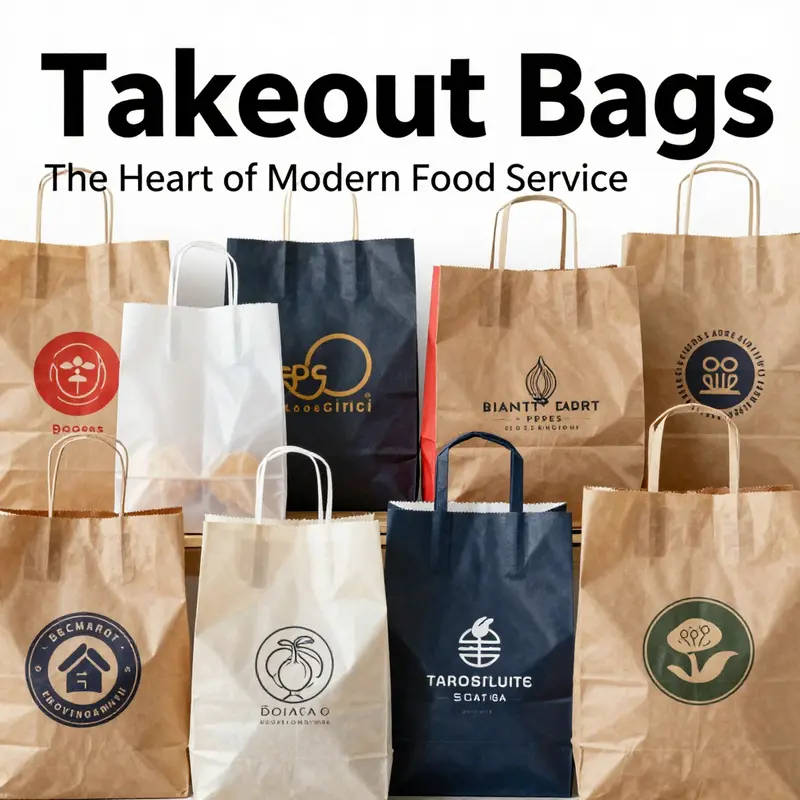
The takeout bag is more than a disposable carrier; it is a silent ambassador, a fleeting piece of brand theater, and a practical interface between a kitchen and the street. Its journey—from simple grip to a carefully engineered vessel for meals—maps the larger story of how food service has learned to travel with people, reliably and responsibly. The bag’s arc mirrors shifts in materials science, consumer values, and the growing demand for responsible packaging. Yet at its core, the bag remains a toolkit for safety, convenience, and identity, a portable extension of a restaurant’s ethos that accompanies the meal from stove to doorstep and often beyond, into the home and even the daily routines of its customers.
If we think of the takeout bag in its most basic form, it is a practical container designed to protect warmth, moisture, and integrity during transit. It must withstand a traveler’s pace, a stack of other bags in a curbside pickup lane, and the occasional impatience of a hungry customer. Over time, however, bags have become more than mere containers; they have become branding canvases and design challenges. Paper bags gained prominence for their perceived sustainability and ease of disposal, while plastic or polypropylene variants offered moisture resistance and durability. Yet both families faced scrutiny as cities and consumers pushed for better waste management and lower environmental footprints. This tension—between performance in transit and responsibility to the environment—has driven a rethinking of bag materials, structures, and end-of-life considerations.
To understand the diversity of takeout bags, it helps to consider three broad categories that no longer sit in isolation but often coexist within a single menu of options. Paper bags remain a staple for many operations due to their comfort with recycling streams, printability for branding, and versatility through gusseted expansion that stabilizes larger portions. The gusset design is more than a feature; it is a stabilizing system that reduces spills by distributing weight and volume more evenly. Then there are plastic or polypropylene bags, favored for moisture barriers and resilience against grease and liquid—crucial when handling fried items or sauces. Yet the environmental conversation surrounding plastics has sharpened the push toward alternatives, prompting innovations in barrier properties with a lighter ecological footprint.
A second path gaining momentum is the rise of reusable fabric bags. Made from cotton, canvas, or other sturdy textiles, these bags are not only durable enough for repeated use but also serve as ongoing marketing tools when branded. Their appeal lies in the shared value they communicate: a commitment to reducing single-use waste and a willingness to invest in a longer-lived packaging option. The third path—the integration of hybrid approaches and redesigned bag features—embodies the idea that sustainability is not a single material switch but a lifecycle strategy. Bags are increasingly designed with end-of-life in mind, including guidance on recycling streams, compostability where feasible, and even take-back programs in some markets. Within this evolving landscape, design decisions are never neutral; they influence how much and how quickly a bag will be repurposed or discarded.
The aesthetics of bag design matter just as much as their mechanics. Visual language—bold graphics for fast-food brands, refined typography for upscale eateries—translates brand personality into a portable message. A cohesive color scheme and legible typography reinforce recognition, turning a bag into a moving billboard that travelers see in traffic, on sidewalks, and in social posts. The bag’s design can also reduce cognitive load for the consumer. Clear labeling for contents, straightforward handling cues, and intuitive openings or closures can hasten the hand-off at pickup and minimize the chance of spills at home. In practice, these design choices are not cosmetic; they affect customer satisfaction, repeat business, and even perceptions of value.
Beyond appearance, functional features are where the bag’s everyday utility shines. Handles that twist or reinforced bottoms that resist crushing help maintain the integrity of the meal during a walk or a bus ride. Tear-resistant materials and careful seam construction prevent leaks and ensure the bag remains a reliable carrier from kitchen to kitchen. Some designs push the envelope further with built-in compartments for utensils, napkins, or condiments, offering a more complete, all-in-one experience for the diner. The goal is a smooth, predictable takeaway journey where the bag supports every step—from picking up the bag to lifting it onto a table and transferring its contents to a plate without drama.
As the takeout industry scales with food delivery platforms, the bag becomes an anchor for operational efficiency. A well-chosen bag can reduce the need for secondary packaging, cut down on waste, and simplify the handling process for staff and drivers. The selection process for bags—whether driven by cost, performance, or sustainability—often involves a lifecycle assessment: raw materials, manufacturing energy, logistics, durability, and end-of-life disposal. In a world increasingly attentive to microplastics and long-term environmental impact, the material choice matters not only for disposal but also for how a bag breaks down, whether in a municipal recycling stream, a compost system, or a landfill. Designers now weigh the trade-offs between durability and degradability, seeking solutions that do not force a choice between customer convenience and planetary health.
This balancing act is not hypothetical. It plays out in the choices restaurants make about branding versus practicality and in how customers respond to reuse programs and educational cues. Consumers may be drawn to reusable or recyclable options, yet they must understand how to dispose of or reuse bags correctly for the intended environmental benefit. End-of-life considerations become part of the bag’s value proposition. When a bag is designed with a clear path to reuse or recycling, it becomes a collaborator in a circular economy rather than a passive object destined for a landfill. This is not only about materials; it is about the behaviors we cultivate around waste and the stewardship we demonstrate in everyday tasks.
In parallel with material shifts, the supply ecosystem for takeout bags has grown more sophisticated. Businesses can access a spectrum of customizable solutions—from simple, minimal branding to intricate, color-rich prints that transform a bag into a portable advertisement. The process of sourcing—whether local or global—often involves evaluating material specifications, dimensions, and printing capabilities to align with brand identity and logistical realities. While the narrative of customization is compelling, it sits atop a pragmatic foundation: bags must reliably perform in real-world conditions and align with waste management practices in the communities they serve. A thoughtful approach to customization respects both the brand’s voice and the local infrastructure for disposal and recycling.
As we consider the current and future state of takeout bags, it is impossible to separate packaging from behavior. The most durable, most attractive bag will fail to deliver its full value if consumers do not dispose of or reuse it appropriately. This is where education becomes a partner to design. Simple prompts—reminders to reuse, clear disposal instructions, or guidance on how to separate compostable components from recyclables—can extend a bag’s life and reduce overall waste. Conversely, mismatches between packaging materials and local recycling capabilities can render even technically recyclable bags ineffective in practice. Thus, the path forward lies in materials chosen with end-of-life realities in mind, combined with consumer education that clarifies how to participate in sustainable practices.
There is also a broader design conversation about the lifecycle impact of the bag itself. A rigorous assessment weighs the carbon emissions of raw material extraction, manufacturing, and transport against the bag’s durability and its ultimate fate. The most responsible designs blend low-impact materials with robust performance, ensuring a long service life and a clear, economical end-of-life option. This is not a single solution but a continuum of decisions, from fiber sourcing to the way a bag is printed, to the moment it is discarded, donated, or repurposed. In this sense, a takeout bag becomes a small but telling indicator of how an industry negotiates convenience, branding, and stewardship in a crowded, resource-constrained world.
The conversation around sustainable takeout packaging has also sparked creative partnerships and new standards within the hospitality sector. Some operators experiment with return-and-reuse programs, while others emphasize compostable or fully recyclable formats that fit neatly into local waste streams. The ecosystem evolves as researchers, designers, and restaurateurs learn which combinations of material, form, and message work best in practice. In this sense, the bag is not an end product but a dynamic element of broader sustainability goals, contributing to a cleaner urban environment and a more thoughtful consumer culture. The ongoing challenge is to harmonize performance with responsibility—without sacrificing the immediacy and delight customers expect when they collect a meal.
For readers who want to explore the breadth of eco-friendly options and how they are presented in real-market packaging, there are examples of branded, sustainability-minded solutions available online. One accessible path is through dedicated product pages that showcase eco-friendly takeout packaging designed to balance aesthetics with practicality. These offerings illustrate how a bag can support brand storytelling while aligning with environmental targets. eco-friendly takeout boxes for food packaging.
Ultimately, the takeout bag embodies a practical technology married to cultural expectations. It travels on urban streets and in transit lanes, hosting meals and messages alike. Its design challenges—strength, moisture control, printability, and end-of-life pathways—are not merely engineering concerns; they are reflections of how a society who buys, eats, and moves through cities thinks about waste, value, and responsibility. The bag’s evolution—from simple carrier to design-forward, sustainability-minded artifact—offers a compact lens on how the food service industry negotiates need, identity, and stewardship in a world that increasingly questions what it means to package a meal. The bag’s future will likely hinge on tighter integration with circular economy principles, clearer consumer guidance, and a continual refinement of materials that respect both performance and the planet. In this ongoing dialogue, the bag remains a hinge between appetite and accountability, a small but telling piece of the puzzle that shapes urban life, one takeaway at a time.
External resource: https://www.alibaba.com/product-detail/Custom-Printed-Food-Packaging-Bags-Takeout_1600528347492.html
Carriers of Change: Reimagining the Takeout Bag for a Sustainable, Resilient Food System
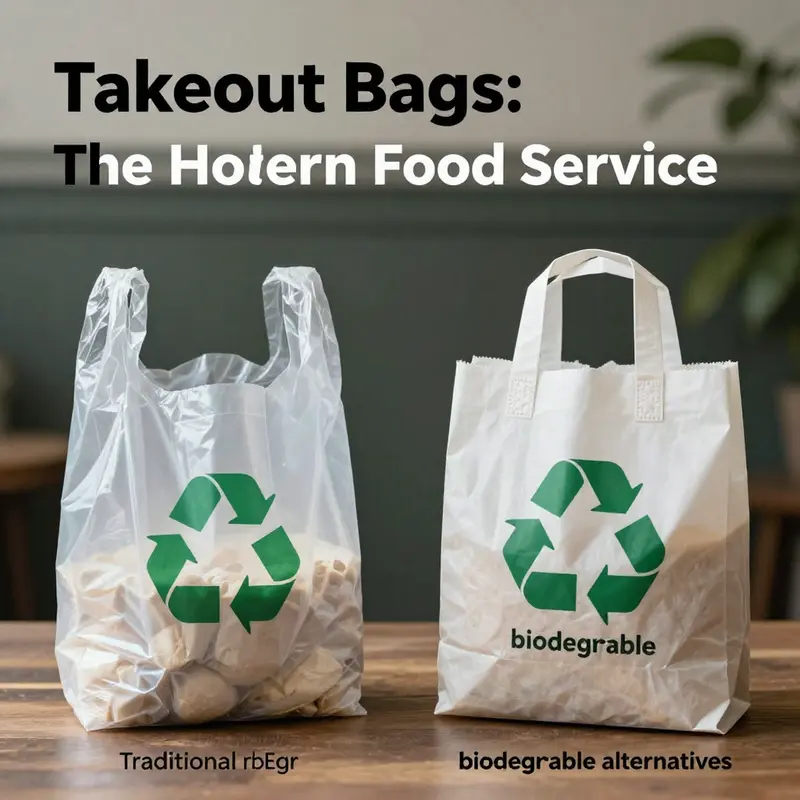
Every meal carried from kitchen to curbside becomes more than a moment of convenience; it is a thread in a larger system of materials, energy, and choice. The takeout bag, in particular, sits at the crossroads of function and responsibility. Its job is simple: protect and transport, while keeping food safe and presentable. Yet the bag is also a signal—of a brand’s values, of a consumer’s habits, and of a planet’s limits. In this light, sustainability reframes the bag from a disposable afterthought into a design problem marked by lifecycle thinking and practical constraints. Paper and plastic both have histories of promise and problem. Paper bags offer visible benefits: compostability in ideal conditions, renewability if sourced from responsibly managed forests, and a potential for vibrant customization that can educate as well as market. The appeal is tangible: a bag that degrades in time, that supports a circular economy rather than sinking into a landfill. But paper’s advantages come with caveats. Moisture, load weight, and heat transfer challenge its integrity. For many orders, a bag must hold a hot burger, a steaming noodle box, and a side without leaking or collapsing. The need for reliability means that sustainability cannot be achieved by raw material choice alone; it requires clever engineering.
Innovations in material science and design respond to this tension. Water-resistant coatings derived from plant-based sources, such as cornstarch or sugarcane, have emerged as compromises that preserve biodegradability while improving performance. The goal is not to create a barrier that outlives its usefulness but to tailor a barrier that breaks down with further treatment and time. And yet coating choices invite scrutiny of microplastic release and end-of-life fate. Here, researchers emphasize a cradle-to-cradle mindset: coatings must not create persistent residues that persist in soils or waterways. The evolving literature suggests a spectrum of options, from lighter barrier layers to multi-layered constructions that can trade off strength for weight, depending on the product’s temperature and moisture exposure.
Sustainability also hinges on supply chain resilience. The early 2020s taught many industries that dependence on a single feedstock can be a vulnerability. A 2026 analysis points toward diversified, localized sourcing as a robust strategy. The local-to-local approach reduces transportation emissions, supports regional economies, and shortens the distance to end-of-life processing. In practice, this might mean sourcing paper and inks from nearby mills and printers and producing bags closer to where they are sold. It also invites a broader material conversation about natural rubber alternatives for components that require elasticity and grip. Guayule and dandelion-derived rubbers are moving from curiosity to utility in some supply chains, offering renewable, domestically produced options that can shrink the environmental footprint while maintaining performance.
The best takeout designs extend beyond the bag wall to the way heat, moisture, and contents are managed. Insulated paper bags, once a niche, now appear more broadly as a category that preserves food quality during transit. Layering techniques create small, deliberate air gaps and reflective barriers that help keep temperatures stable without resorting to bulky foam or double packaging. The aim is to preserve temperature while limiting material usage. In tandem, structural innovations focus on durability under real-world handling—grip, zipper-like closures, gussets, and reinforced bottoms that resist sagging under a heavy, saucy order. The challenge is to achieve this without adding material mass that would compromise compostability or recyclability. The result is a family of designs that can be adapted to different meal types, from a delicate pastry box to a grease-lubricated fry bag, while staying within a sustainable envelope.
Alongside material choices, the end-of-life narrative matters. Paper-based systems can be recycled or composted in many contexts, yet recycling rates and composting infrastructure vary widely by geography. The design implication is clear: choose fibers and inks that facilitate separation and recovery at end of life. Moreover, consumer guidance matters. Packaging can include simple reminders about responsible disposal and even encourage reuse through multiple use cycles, turning the bag from a one-time container into a small, modular carrier with modest resilience. The marketing dimension matters here too. A bag that wears its sustainability on its sleeve through clear messaging and branding can educate customers by example, nudging them toward more responsible behavior without creating friction at checkout.
The practical reality is also economic. Restaurants face thin margins and high expectations for reliability and speed. A bag must perform consistently, survive a delivery fall, resist leaks, and maintain an image that aligns with a brand’s environmental promises. The tension between function and environmental responsibility is not a zero-sum game; it is a design problem with layers of trade-offs. For some operators, durability might justify a slightly heavier card stock or a reinforced seam, provided it translates into less waste over time. For others, a lighter design paired with heightened recycling and composting opportunities could be the preferred path. In all cases, the objective is a system that minimizes harm while maximizing usefulness and consumer trust.
The conversation about bags cannot ignore branding. Printed logos and messaging are more than decoration; they are instructions for behavior. A bag can advertise a commitment to sustainability—if the commitments are credible and verifiable. Customization thus becomes a two-way street: brands convey their values, and customers translate those values into daily habits. In practice, that interplay can be reinforced by design features that remind users to reuse or dispose properly, turning a routine errand into a small act of stewardship. Yet branding must not undermine performance. A bold color or a striking logo should not compromise grip, heat retention, or moisture control. The most effective designs balance aesthetics with function, using materials and finishes that can be sustainably managed at end of life—whether through compostability, recyclability, or safe biodegradation.
The chapter of innovations is not confined to new materials alone. It also encompasses smarter packaging ecosystems. When takeout packaging is conceived as part of a broader system, it aligns with the growing interest in circular economy models. This means rethinking how, where, and by whom bags are produced, who collects and processes them, and how end users are educated about disposal. A local-to-local mindset can extend to regional recycling streams and reprocessing facilities that accept fiber-based packaging. In such a system, a cafe or restaurant becomes a node in a network that reduces waste and supports local jobs. The paper bag, once considered a single-use artifact, emerges as a reusable-ready, recyclable, and even returnable component of a service model that respects its place in urban ecosystems.
To illustrate how these ideas cohere, consider the broader design principle: design for minimal material while maximizing protective function. That means using the right grade of fiber, selecting inks that won’t hinder separation, and introducing smart features like heat-insulating layers that do not rely on non-biodegradable foams. It also means acknowledging that the lifecycle is not linear but cyclical. Every bag has a use phase, a recovery phase, and a potential reuse phase. The more opportunities there are for reuse, the lower the environmental burden per transport event. In practice, that could translate into bags that are sturdier, easier to seal, and adaptable to multiple sizes, so they can serve a second life as a small storage solution in the customer’s home. Brands can support this by encouraging customers to repurpose their bags as storage containers rather than discarding them immediately.
As with any packaging discussion, the literature calls for a nuanced assessment of trade-offs. The most persuasive strategies combine low-impact materials with functional design and consumer education. A bag that minimizes carbon footprints across the entire life cycle—through sustainable fibers, locally sourced materials, efficient manufacturing, and responsible end-of-life options—offers more than a reduction in waste. It provides a narrative of stewardship, accountability, and resilience. In the end, sustainability in takeout packaging becomes a driver of innovation rather than a constraint. It pushes designers toward more resilient supply chains, more thoughtful product lifetimes, and more transparent communication with customers about how to dispose of packaging responsibly.
For readers who want to explore practical examples beyond the bag itself, the broader packaging ecosystem offers a parallel playbook. The same principles that guide the evolution of takeout bags—biodegradable or recyclable fibers, plant-based coatings, and insulation strategies—are evident in eco-friendly takeout boxes designed for food packaging. The transfer of knowledge from one packaging format to another accelerates progress, helping to align industry practice with environmental goals while preserving the conveniences customers expect. eco-friendly takeout boxes for food packaging.
Looking forward, the convergence of materials science, supply chain reform, and consumer engagement will shape how communities experience takeout. The bag will not vanish; it will be reimagined as a durable, efficient, and reusable carrier that carries more than meals. It will carry expectations—of cleanliness, reliability, and responsible stewardship. As researchers continue to map the lifecycle impacts of packaging and as operators pilot localized sourcing models, the trajectory is clear: design, deploy, learn, and adapt. The takeout bag thus stands at the threshold of a broader shift in how urban food economies operate, a shift that prizes resilience as much as convenience and that treats every packaging decision as a lever for environmental betterment.
For those seeking a deeper academic lens on these dynamics, the field’s rigorous analyses illuminate how the interplay of material choice, lifecycle assessment, and consumer behavior shapes outcomes in sustainable packaging design. The current discourse underscores that the most meaningful progress integrates low-impact materials, functional design, and consumer education. The pathway is collaborative, iterative, and anchored in real-world constraints, yet it holds the promise of a future where a simple bag supports a healthier planet rather than compromising it. https://www.sciencedirect.com/science/article/pii/S235278542500041X
Carrying the Future: The Materials Behind the Takeout Bag and Its Environmental Footprint
The takeout bag is not just a sleeve for a meal; it is a compact artifact that encodes choices about materials, energy, and responsibility. In the steady hum of restaurant kitchens and delivery lanes, these bags bear the weight of more than food. They carry the promise of convenience and branding, yet they also carry a message about how society treats resources, waste, and the long arc of a product’s life. To understand the true cost of a takeout bag, we must look beyond its surface—beyond the logo, the color, the fold—and examine the material it is made from, how that material behaves from cradle to grave, and what happens when it meets the end of its useful life. Only then can we begin to balance functional demands with environmental stewardship in a sector defined by speed, volume, and constant innovation.\n\nFrom a lifecycle perspective, the environmental profile of a takeout bag hinges on choices at several stages: raw material sourcing, manufacturing energy, the bag’s durability and lifespan, and the disposal or reuse pathways available to consumers. In recent comprehensive assessments of reusable packaging, the per-person environmental burden is quantified with striking clarity. Returnable packaging bags can achieve an aggregate environmental impact value around 1.75 × 10⁻⁵ per person equivalent, a figure that underscores how shifting from single-use to reusable patterns can markedly reduce the overall footprint. This does not erase the realities of contemporary food service, where weight, resilience, and stacking efficiency matter for logistics and cost. But it does illuminate a path where reuse, when executed with care, can outperform disposables in the long run. The takeaway is not to champion one material over all others in a vacuum; it is to recognize that the lifecycle has to inform the decision at every step—from the forest or field to the bin and beyond.\n\nStill, the practical appeal of single-use plastics remains strong in many contexts. Polypropylene and polyethylene bags, prized for their lightness, durability, and fatigue resistance, offer foldability and low transportation volume that suit fast-paced operations. When a bag can be compactly folded and stacked, more orders can ride along in a single shipment, reducing space and fuel. Yet this apparent efficiency hides a persistent problem: if these plastics are not properly recycled or disposed of, their environmental persistence can be long-lasting. They may fragment into microplastics that pervade waterways and soils, creating ecological and health concerns that are hard to reverse. The tension between immediate operational benefits and longer-term environmental costs is a defining feature of current debates about takeout packaging. It invites a nuanced consideration of where and how to intervene to secure meaningful gains without compromising service quality.\n\nTo address these trade-offs, the market is actively exploring a spectrum of sustainable alternatives driven by renewable resources and end-of-life clarity. Bio-based materials such as polylactic acid (PLA) and starch-based plastics provide a route to reduced dependence on fossil fuels and offer biodegradability under controlled industrial conditions. These materials show real promise in reducing net carbon footprints, especially when designed for optimal composting infrastructure. Alongside bio-based options, natural fiber papers—kraft papers, bamboo pulp, and bagasse from sugarcane residues—deliver flexibility, strength, and the potential for closed-loop waste management through recycling or composting. These materials can be engineered to resist puncture and tearing while maintaining the pliability needed for practical takeout bags. Importantly, their end-of-life pathways can be clearer and more aligned with circular economy goals when proper infrastructure is in place. The sugarcane bagasse example illustrates how post-industrial residues can be repurposed into functional packaging, turning a waste stream into a resource while still meeting the mechanical demands of daily use.\n\nBeyond raw materials, the conversation must also center on how these choices translate into real-world performance and consumer habits. A durable bag is one that protects food through transport, resists leaks, and remains reliable across multiple uses. The challenge is to craft packaging that is not only strong enough to endure the stresses of handling and stacking but also easy to recycle or compost in typical waste streams. This is where material science intersects with social behavior. For instance, a bag designed for reuse must withstand repeated handling and washing, which in turn shapes its material selection and thickness. A bag intended for single use, on the other hand, can prioritize ultra-lightweight structures and containment efficacy, but it must still offer clear end-of-life options. The balance among these attributes—durability, recyclability, compostability, and cost—defines the practical viability of a given material choice.\n\nA crucial aspect of this balance is recognizing that not all recycling or composting systems are equally available to consumers. Paper-based and certain bio-based materials may be recycled more readily in some locales, while others may rely primarily on landfill or mixed waste streams. The potential for microplastic pollution from conventional plastics adds another layer of complexity. In designing the next generation of takeout bags, designers must anticipate the entire system in which the bag operates, including waste management practices, consumer education, and the likelihood of recovery. The most effective solutions emerge when material selection is coupled with design features that promote reuse, straightforward disposal, and clear labeling about end-of-life options. The synergy of low-impact materials, resilient design, and consumer participation is what turns a takeout bag from a disposable convenience into a steward of resource efficiency.\n\nThe practical upshot for food service operators is to view the takeout bag as a system product rather than a standalone item. This means querying not only the material’s intrinsic properties but also the feasibility of a circular pathway: can the bag be reused several times with minimal cleaning, and is there a viable route to its recycling or composting after its lifespan ends? In some cases, that pathway might involve a hybrid approach—lightweight, recyclable film on the exterior with a compostable inner layer, or a durable outer shell that can be returned through a takeback program and replaced in a loop. These concepts align with broader sustainability strategies that link packaging choices to branding and customer expectations. A well-designed bag can communicate responsibility and reliability at the moment of purchase, reinforcing a brand narrative that resonates with increasingly environmentally conscious consumers.\n\nIn practice, this means embracing materials that support both performance and resilience, while also enabling a robust end-of-life story. The shift toward renewable, recyclable, or compostable options should be matched with transparent labeling and straightforward disposal guidance. It also calls for collaboration across the supply chain—farmers, manufacturers, waste managers, and retailers—to align incentives for reuse, recycling, and composting. When such coordination exists, the takeout bag becomes more than a container; it becomes a tangible signal of an industry moving toward circularity. As consumers, we can foster this transition by embracing reusable options when feasible, returning bags for reprocessing where programs exist, and supporting packaging innovations that make responsible disposal easier and more intuitive. In turn, restaurants and packaging producers will be empowered to invest in materials and designs that optimize both environmental outcomes and user experience.\n\nFor readers who are curious about concrete packaging options that echo these principles, exploring packaging solutions that emphasize recyclability, compostability, and reuse can be enlightening. For an example of the kind of packaging approach discussed here, readers can explore a range of eco-conscious takeout packaging options that prioritize sustainability and practicality eco-friendly takeout boxes for food packaging. This link illustrates how design decisions—from material choice to structural features—can support performance while aligning with environmental goals.\n\nAs the field evolves, ongoing research and practical experimentation will continue to refine the balance between strength, cost, and environmental impact. The 2024 evidence base on reusable packaging reinforces the potential for meaningful reductions when products are designed with end-of-life and system integration in mind. Yet it also reminds us that improvements must be grounded in the realities of waste management infrastructure and consumer behavior. The path forward is not a single material wins everything; it is a portfolio approach that blends renewable resources, durable design, and clear end-of-life pathways. In that blend lies the future of the takeout bag: a small, everyday object that embodies the possibility of a more circular, more responsible food-economy. External resource: https://www.sciencedirect.com/science/article/pii/S0956053X24000485
The Takeout Bag and the Bottom Line: Economic Realities in Modern Food Service
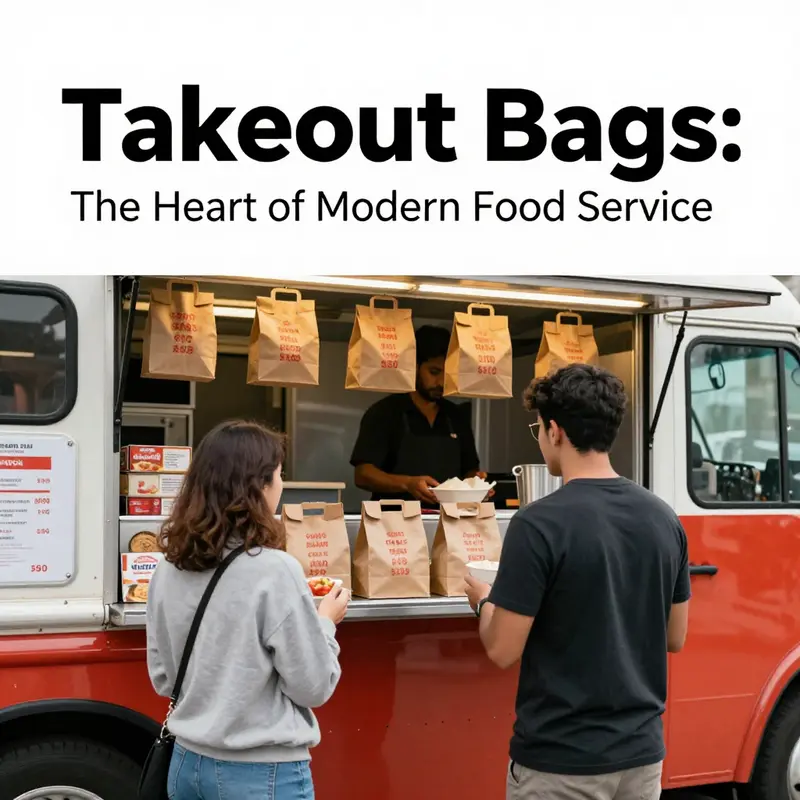
The takeout bag is more than a simple carrier. It sits at the crossroads of daily operations, brand perception, and long‑term financial strategy. In the quiet hum of back‑of‑house activity, a bag’s cost might seem a small line item, but it ripples through purchasing decisions, menu margins, and even how a customer experiences a brand. The economics of takeout packaging are rarely discussed in isolation. They are inseparable from broader questions about waste, regulation, consumer expectations, and the evolving calculus of sustainability. As restaurants and delivery services scale, the bag becomes a proxy for risk management and an indicator of how well a business translates its values into a practical, profitable practice. In short, the takeout bag matters because it is a visible, tangible interface between a food service operation and the world outside the kitchen wall, carrying not just meals but also cost, credibility, and consequence.
From a cost perspective, material choice dominates the conversation. Paper bags, compostable plastics, and reusable fabric options each bring a distinct mix of price, performance, and lifecycle considerations. Paper and plastic differ in upfront price per unit, but that comparison hides the broader economics of waste handling, recycling streams, and end‑of‑life costs. For smaller operators, the per‑bag price may seem trivial, yet when summed across thousands of daily orders, it becomes a meaningful component of overhead. The economics shift again when orders are automated or standardized across multiple locations, where supplier contracts and volume discounts begin to tilt the balance toward one family of materials over another. In such contexts, even minor shifts in unit cost or return rates can have measurable effects on daily profitability and the ability to offer consistent promotions or loyalty incentives.
But the bag is not merely about the bill of materials. It sits within a system of logistics and regulatory risk. In many jurisdictions, plastic bags carry fees or bans, and even when bags are technically reusable, the business bears the cost of their distribution, storage, and the potential for waste or litter penalties if disposal systems fail. Conversely, materials that appear more expensive at the outset may reduce future costs by extending product lifespans, reducing leakage and spill, or improving shelf life for fragile items. The decision matrix thus extends beyond purchase price to include durability, grease resistance, moisture handling, and the ease with which a packaging solution can be recycled or repurposed at the end of its useful life. The lifecycle view matters: raw material extraction, manufacturing, transport, in‑use performance, and end‑of‑life disposal all shape the true economic footprint of any given bag.
Consumer behavior feeds back into the cost narrative as well. A growing body of evidence suggests that packaging choices influence willingness to pay and overall satisfaction, particularly in the online ordering context where customers cannot inspect a product until it arrives. When a restaurant uses packaging that feels disposable or nonrecyclable, perceived risk—about the environmental impact and the integrity of the food—can undermine trust and reduce repeat purchase rates. On the other hand, sustainable packaging choices can strengthen brand perception and loyalty, potentially allowing higher price points or more forgiving margins through enhanced customer retention. In parallel, a cultural shift toward minimizing waste is increasingly visible in consumer behavior. The rise of “doggy bags” as a norm for leftovers points to a potential reduction in the need for additional packaging, when customers see value in taking home what remains. Yet if bags are perceived as a wasteful afterthought, even environmentally minded customers may question the overall value proposition. The economic message, then, is nuanced: sustainability can be an asset if paired with clear communication, functional design, and a credible plan for disposal or reuse.
Design and material science play a pivotal role in shaping both costs and outcomes. A well‑engineered takeout bag balances durability with end‑of‑life safety. It must withstand stacking, heat, moisture, and rough handling during transit, while also offering a feasible pathway for recycling or composting where those options exist. This is where the lifecycle perspective converges with practical business decisions. Biodegradable or compostable variants promise reduced long‑term waste and regulatory risk, but they often come with higher upfront costs and sometimes limited infrastructure for proper disposal. Reusable bags, made from high‑quality fibers or recycled materials, present a different economic profile: a higher initial investment but lower per‑order waste if the bags are retained by customers and reused. In markets where fines or taxes on single‑use plastics are enacted, the economic advantage of reusable strategies can become more pronounced over time. The most successful operators tend to pursue a hybrid approach: lighter, cost‑effective bags for everyday use, paired with more durable or reusable options for larger orders, premium meals, or higher‑volume weekend service. They also invest in design details that maximize performance, such as grease resistance and leak containment, which reduce the risk of spoilage or customer dissatisfaction and thereby protect margins.
The marketing dimension should not be underestimated. The takeout bag doubles as a branding canvas, a moving advertisement that travels through neighborhoods, office corridors, and homes. A bag that is visually aligned with the restaurant’s identity reinforces recognition, which can translate into higher customer recall and a stronger propensity for return visits. The branding value is real, but it must be weighed alongside functional and environmental considerations. A bag that looks premium but fails to perform—tearing, leaking, or soaking through—can erode trust and inflate costs through replacements, refunds, or dissatisfied reviews. The tension between form and function is central to the economics of takeout packaging: brands that invest in both can cultivate a premium perception while preserving margins, whereas neglecting either side risks costly iterations and customer churn.
Operationally, the takeout bag affects workflows, inventory management, and supplier relationships. For small restaurants, ordering in bulk from a single supplier can yield favorable unit costs and predictable delivery schedules, smoothing cash flow and enabling better budgeting. For chains, standardized packaging across locations reduces complexity and fosters economies of scale, yet it also raises the stakes when logistical disruptions occur. A sudden price swing for a widely used material, or a shift in regulatory expectations, can ripple through menus and promotions. In this light, procurement is not merely a purchasing function; it is a strategic lever that intersects with sustainability goals, customer expectations, and risk management. The most resilient operators reduce exposure by diversifying suppliers, maintaining flexible contracts, and investing in packaging literacy among staff so that any changes can be implemented quickly with minimal disruption to service.
What does all this mean for the takeout bag’s economic profile? It means recognizing that the bag is a cost center at the point of purchase but a potential strategic asset when viewed through the lifecycle lens. The initial expense must be weighed against downstream savings: reduced waste handling costs, lower risk of regulatory penalties, improved customer loyalty, and the reputational lift that comes with responsible packaging. The balance point will differ by concept, geography, and scale, but the fundamental principle holds: align material choice, packaging design, and consumer messaging to create value that lasts beyond a single menu cycle. In practice, this translates into an ongoing evaluation of tradeoffs—between price per bag and end‑of‑life options; between rapid turnover and durable performance; between on‑the‑spot convenience and the broader narrative of environmental stewardship.
Incorporating sustainability into the economic calculus also requires clear communication with customers and transparent operations. Offering choices—such as a standard bag and an optional upgrade to a more sustainable, reusable or compostable variant—can empower customers to participate in responsible packaging without compromising the bottom line. The packaging decision then becomes part of the service proposition rather than a hidden cost. To illustrate a practical direction without naming any specific products, several operators are exploring eco‑friendly takeout boxes for food packaging that balance durability with end‑of‑life options. These solutions are not a panacea, but they demonstrate how thoughtful material selection and design can align cost, performance, and environmental responsibility in a coherent business strategy. eco-friendly takeout boxes for food packaging.
Finally, the broader policy and environmental context cannot be ignored. Research synthesizing waste streams from takeaway packaging highlights the scale of the challenge and the need for informed decision making. Regulators, researchers, and industry stakeholders increasingly recognize that packaging choices influence resource use, emissions, and pollution at a city scale. For practitioners, this means framing the bag not as a trivial expense but as a component of a sustainable business model that respects limited resources while sustaining a competitive customer experience. The most forward‑looking operators integrate low‑impact materials, high‑quality design, and robust end‑of‑life pathways with clear consumer education about disposal or reuse. This integrated approach helps protect margins, supports compliance, and reinforces a brand narrative that resonates with a growing cohort of environmentally conscious consumers.
For readers seeking a broader reference on the ecological and policy implications of takeaway packaging waste, see the latest synthesis in the environmental impact literature. External resource: https://www.sciencedirect.com/science/article/pii/S136481522300076X
Carrying Consequences: How the Takeout Bag Reveals Society’s Shifts in Convenience, Waste, and Responsibility
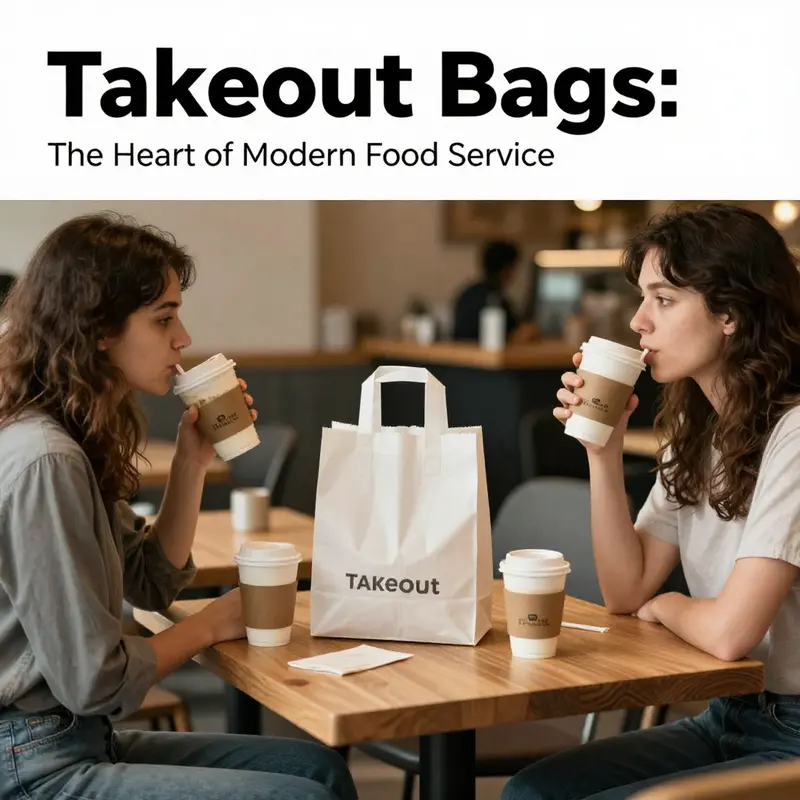
The takeout bag is more than a carrier of meals; it is a portable barometer of the times. A simple object, it travels from counter to curb, from kitchen to dorm room, from doorstep to street, silently encoding our preferences, fears, and aspirations. Its status as a ubiquitous artifact of modern dining makes it a revealing proxy for how a society negotiates convenience, branding, and responsibility. When we consider the takeout bag through a societal lens, we begin to see how consumer behavior, environmental concern, and corporate design press into one another, shaping not only what we buy but how we dispose of what we buy and how we imagine the future of our shared waste streams. In this sense, the bag becomes a lens on everyday ethics, not merely a packaging feature to be tucked away and forgotten after unwrapping a hot meal. The beauty and the burden of this object lie in its dual role as both facilitator and reminder—facilitator of instant nourishment and reminder of the costs attached to that nourishment when it becomes waste and pollution.
As consumer life has grown more digital and immediate, the perceived risks surrounding online takeout packaging have become a potent shaper of attitudes and behaviors. A 2023 study by Guo highlighted that the perceived risk associated with online takeout packaging can dampen not only individual attitudes but also the social norms and perceived behavioral control that guide action. In plain terms, if people worry that packaging is unsafe or environmentally damaging, they are less willing to embrace takeout options, even when convenience remains compelling. This insight helps explain why brands and municipalities alike have increasingly prioritized transparent communication about safety, contamination controls, and environmental stewardship. When consumers feel confident that a product is both safe and better for the planet, their choices align more closely with responsible consumption, even in high-pressure moments when hunger and time constraints collide.
Among the cohorts most influential in steering this shift are college students, who often serve as early adopters of new environmental concepts. Their scrutiny of packaging choices—beyond taste and price—signals a broader cultural transition that values not just what arrives on the plate but how it travels to the plate. This demographic tendency nudges providers toward packaging that minimizes ecological impact while preserving the integrity and appeal of the food. It also invites marketers to rebalance the narrative around convenience with stories about reuse, recycling, and end‑of‑life options. The social calculus here is not merely a matter of personal habit; it is a signal that packaging can be designed to be legible, trackable, and accountable, so that the perceived riskGuo identified becomes a catalyst for better design rather than a barrier to purchase.
A parallel trajectory emerges as people adopt practices to curb waste in daily life. The doggy bag—reusing leftovers for another meal—has gained cultural traction as part of a broader movement toward minimizing food waste. This habit reframes takeaway packaging from a disposable afterthought into a temporary container that serves a second life. It’s a small ritual with outsized environmental impact when practiced widely: it reduces not only the volume of waste but also the energy and resources expended to produce and transport additional meals. The appeal of this behavior lies in its simplicity and immediacy. It does not require complex systems or new infrastructures; it leverages a familiar routine to extend the value of food that has already been prepared. In societies that prize thrift and resourcefulness, leaving no portion behind becomes a social norm, reinforcing a cycle in which packaging becomes part of the lifecycle rather than a final souvenir of a meal.
To understand the environmental footprint of these choices in a more concrete way, life cycle assessments (LCAs) have become indispensable tools. LCAs illuminate how a packaging solution performs from cradle to grave, accounting for raw material extraction, manufacturing emissions, transport, use, and end-of-life disposal. The 2023 study by Caspers underscored a crucial insight: consumer behavior can significantly influence the overall environmental impact of packaging systems. In practical terms, even the most thoughtfully designed packaging can underperform if consumer actions do not align with its intended end-of-life path. Conversely, well-informed consumer decisions—such as choosing reusable or recyclable options and properly disposing of materials—can unlock meaningful reductions in emissions and waste. This dynamic highlights a crucial truth for designers and policymakers: sustainability is co-created by products and people. End-of-life management, therefore, must be as much a part of the packaging brief as durability or print quality.
Material choice sits at the heart of this design challenge. The contemporary debate between single-use plastics, traditional paper, and newer recycled or renewable materials is not a binary choice but a spectrum of trade-offs. Durable, high-quality bags crafted from recycled materials such as rPET or thermoplastic elastomers offer the promise of reuse and extended lifespans. Yet durability must be balanced with environmental safety, especially when considering microplastic release and downstream impacts. Papers and boards produced from sustainably sourced wood pulp or recycled fibers can provide compostable or biodegradable options, but their end-of-life performance depends on local waste infrastructure. The most effective solutions, then, are those that combine low-impact materials with functional design and clear guidance for consumers about reuse or disposal. A bag that is strong enough to carry multiple meals, easy to clean, and marked with simple, actionable disposal instructions can shift behavior toward reuse and responsible disposal rather than impulsive disposal after a single use.
Design also matters in how a bag communicates a company’s values. The branding printed on a takeout bag—logos, color schemes, and messaging—can frame consumer perceptions of a restaurant’s environmental responsibilities. A material choice that aligns with a brand’s story—whether it emphasizes compostability, recyclability, or durable reuse—can reinforce trust and loyalty. When a user experiences the bag as a product that respects the environment and is easy to part with responsibly, the perceived burden of waste softens; the act of accepting a bag becomes a decision aligned with a broader ethical stance rather than a mere transaction.
For readers seeking tangible avenues to explore greener possibilities without sacrificing practicality, consider the design space highlighted by durable, eco-friendly options that support reuse and safe disposal. Think of packaging that is not only sturdy enough to withstand transport but also easy to clean, store, and return for reuse in a closed-loop system. Such systems can be reinforced by consumer education: simple prompts on the bag about how to reuse it, how to clean it, or how to drop it at collection points can convert a temporary garment of convenience into a durable asset for the community. At the same time, clear labeling about compostability or recyclability helps reduce confusion in households with mixed recycling streams. This dual approach—improving material performance while clarifying disposal pathways—is essential for translating the best packaging concepts into real-world environmental benefits.
The practical implications extend beyond the health and environmental benefits. The societal impact of takeout and fast food is multi-faceted. On one hand, it supports convenience, economic activity, and social connectivity—quick meals for busy students, remote workers, and families juggling tight schedules. On the other hand, it contributes to waste streams and pollution if materials are not managed responsibly. In assessing this balance, researchers and practitioners must acknowledge that the bag’s story is inseparable from consumer behavior and infrastructure. Packaging cannot be judged in isolation from how people perceive risk, how they act in daily life, or how they participate in recycling and composting programs. The ultimate goal is packaging that is not only capable of transporting meals safely but also compatible with the systems that remove waste from the urban environment after use.
Thus, the conversation around the takeout bag is moving from a narrow focus on material performance to a broader inquiry about responsibility, behavior, and culture. It asks not only what a bag can do for a restaurant or a courier service but what it can do for a city, a campus, and a family. It challenges designers to craft packaging that serves the moment of delivery while inviting care and accountability long after the meal is consumed. It invites consumers to participate in a shared project: to treat leftovers with respect, to select packaging that aligns with personal and collective values, and to understand that every bag carried through a city carries with it a narrative about how a society treats its resources.
In this sense, the takeout bag becomes an emblem of modern responsibility: a portable reminder that convenience and care can coexist. For those who design the next generation of bags, the mission is to create options that reduce risk and waste while enhancing the user experience. For those who consume, the task is to make mindful choices that honor the meal, the planet, and the communities that rely on efficient, ethical packaging systems. And for researchers and policymakers, the chapter remains open: to measure, to refine, and to align industry practice with the evolving values of a society that wants both nourishment and stewardship in equal measure. The journey of the takeout bag is ongoing, and its future will be as much about how we decide to reuse and dispose as about how we print a logo or stitch a handle.
Internal link for further exploration: eco-friendly takeout boxes for food packaging.
External reference: https://www.sciencedirect.com/science/article/pii/S0959652623002874
Final thoughts
The takeout bag has evolved into a fundamental element of the food service industry, influencing both customer experience and environmental sustainability. As we’ve explored various types of bags, their design considerations, and the urgent need for sustainable practices, it becomes clear that the choices made in packaging can have significant ramifications. Moving forward, embracing innovative materials and practices not only appeals to consumers but also demonstrates a commitment to reducing our ecological footprint. Each food service provider has the opportunity to contribute positively to this trend, ensuring that their packaging reflects both quality and responsibility.