
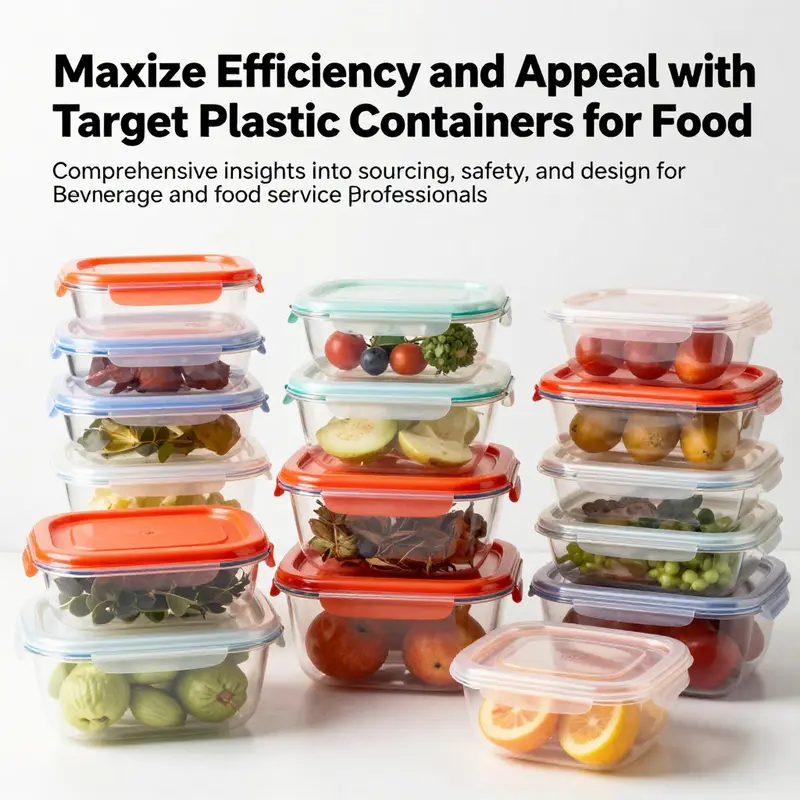
As businesses in the food and beverage industry continuously seek effective solutions for storage and service, the importance of selecting quality plastic containers cannot be overstated. Target offers a refined selection of plastic food storage containers, prized for their durability and practicality, which cater specifically to the needs of bubble tea shops, catering services, and restaurants. Ensuring food safety, embracing modern design trends, and understanding manufacturing particulars can significantly enhance operational efficiency. This article delves into three critical chapters: first, exploring the essential safety and material composition; second, analyzing design trends and consumer preferences; and finally, shedding light on the sourcing and manufacturing of these integral products. Together, these insights will empower food service professionals to make informed decisions about their packaging solutions.
null
null
Design Patterns and Shopper Desires for Target Plastic Food Storage Containers: Safety, Convenience, and a Move Toward Sustainable, Smart Storage
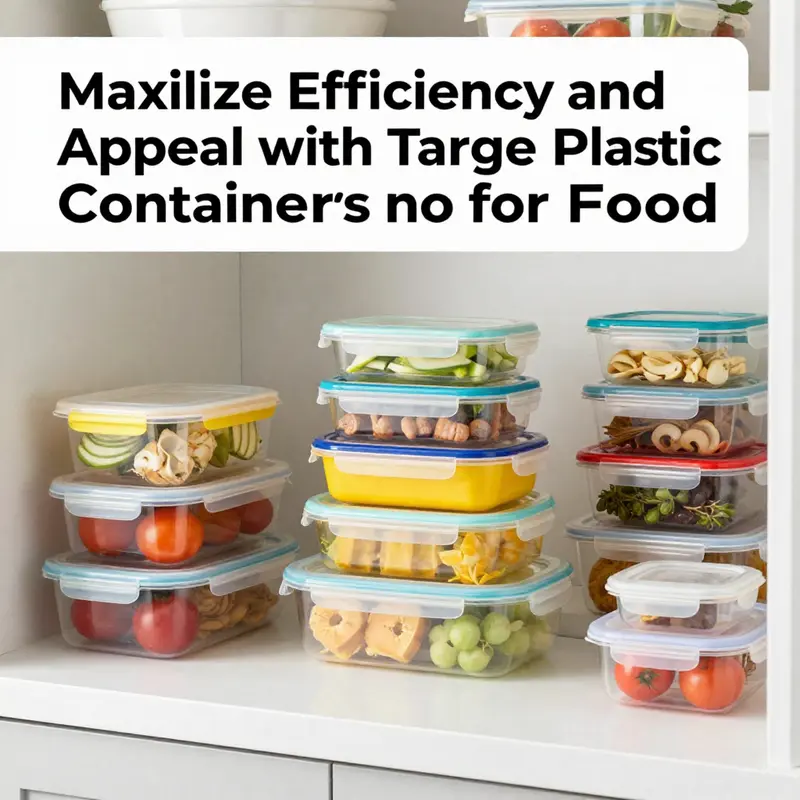
Design trends in Target’s plastic food storage containers do more than reflect a marketplace snapshot; they illuminate how everyday cooks, planners, and organizers translate concerns about nutrition, efficiency, and environmental impact into tangible products that live in the heart of the kitchen. This chapter threads together themes of safety, usability, and sustainability, showing how a major retailer’s shelf tells a broader story about how households choose, use, and re-use containers every day. The conversation begins with safety, moves through practicality and design finesse, and culminates in a future-facing appetite for smarter, more sustainable storage solutions. In doing so, it remains anchored in the reality of real-life kitchens where the container is a trusted ally that both protects and preserves the food people prepare, share, and enjoy.
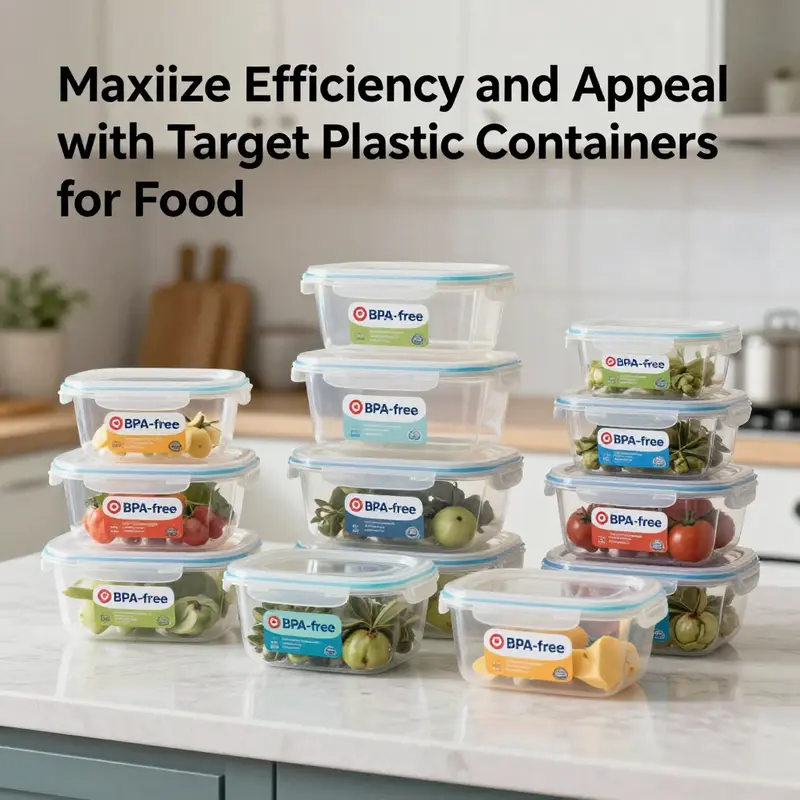
In a landscape crowded with options, consumer concern about safety sits at the core of decision making. People want containers that they can trust with the food they eat, especially when it involves leftovers, meal prepping, or children’s meals. The prevalent consumer emphasis on being BPA-free reflects a broader cautiousness about chemical transfer and the long-term health implications of everyday plastics. The conversation surrounding material choice has evolved from a simple preference for “hard plastic versus soft plastic” to a more nuanced assessment of what happens when the container comes into contact with heat, cold, and time. When a consumer encounters a container advertised as BPA-free, the claim carries with it a promise that the product has been formulated with food-grade safety in mind and that plain, everyday use won’t introduce unwanted substances into a meal. In practice, this safety ethos translates into a design that prioritizes inert materials, stable thermal behavior, and transparent labeling so the user understands at a glance whether a given unit is microwave-safe or freezer-ready. Safety isn’t merely a checkbox; it is the backbone of trust that allows households to portion meals with confidence, to reheat reheated foods with reasonable assurance, and to store ingredients without worrying about chemical migration over time.
Yet safety alone would not sustain a design’s momentum in the home. Consumers want containers that are easy to handle, reliable in operation, and economical in the long run. The practical dimension of the design is most visible in how a lid seals and how a body communicates its contents. The modern consumer’s favorite features cluster around three core attributes: an airtight seal that is genuinely leakproof, a lid that opens and closes with minimal effort, and a body that remains clear and easy to inspect without pulling away from the task at hand. In this regard, a well-executed seal is not a luxury but a necessity. A precise fit, often achieved through refined tolerances—think around a millimeter or so in critical areas—ensures that even under movement in the refrigerator or during transport, contents stay contained. The elegance of such a design lies in how it blends engineering precision with everyday convenience. A user should be able to twist a lid with a gentle torque and feel the seal engage without wrestling with a stubborn cap, all while the container maintains a smooth, splash-free exterior that’s comfortable to grip with damp hands. The transparent body is more than cosmetic; it’s a time saver that reduces the cognitive load of searching for ingredients. A quick glance tells you whether you’re looking at leftover chicken or a batch of chopped peppers, which is a small but meaningful improvement to daily routines that often involve hurried decisions.
Closely aligned with these usability concerns is a broader attention to space efficiency. The modern kitchen is a puzzle of vertical and horizontal surfaces, so containers that stack neatly, nest, or nestle within each other become a real competitive advantage in the retail environment. The ability to stack vertically in a pantry or fridge translates into tangible gains in organization. Consumers respond to the sense that their kitchen is calmer, more orderly, and easier to navigate—an intangible benefit with concrete practical value. In practice, this emphasis on stacking and nesting is often paired with modular sizing. A family that prepares meals for different days may prefer a set that offers small, medium, and large options that interlock in a way that optimizes space. The result is a sense of harmony: containers that look intentional on the shelf and behave intelligently in the home. An important corollary to this design logic is durability. Families want containers that can withstand repeated cycles—washing, reheating, and stacking—without losing their seal or becoming brittle. In a reality where households reuse containers week after week, durability becomes a kind of quiet sustainability; it reduces the need to replace and, by extension, minimizes waste.
Sustainability, however, is not a single feature but a design principle woven throughout the product life cycle. The push toward more sustainable solutions occurs on multiple fronts. First, there is a practical material choice that considers recyclability and the feasibility of a circular life cycle. Designers and buyers alike are increasingly receptive to materials that can be recycled in mainstream programs or designed to use less plastic without sacrificing performance. The emphasis is on durability as a counterbalance to disposability; consumers want items that withstand repeated use and retain their functional integrity after many cycles. In addition, there is a growing interest in reducing overall plastic mass by engineering lighter but equally robust bodies. This is not just an environmental goal but a consumer preference that translates into cost savings in shipping and storage, which retailers observe as a lever for both price stability and margin optimization.
Beyond the material and structural choices, the design vocabulary of Target’s plastic containers reflects a broader cultural shift toward clarity and minimalism. Consumers are drawn to containers that present their contents cleanly and appeal to a contemporary kitchen aesthetic. The transparency of the container is not simply practical; it communicates a sense of cleanliness and order that aligns with consumer expectations for modern kitchens. The visual simplicity—clean lines, rounded corners, and a subdued palette—protects against visual clutter in the fridge and pantry, making it easier to imagine a well-organized space even before the first lid is twisted open. Aesthetics matter because they influence behavior: when a container looks reliable and tidy, people are more likely to use it consistently, portion meals thoughtfully, and maintain a system that supports healthier eating habits and waste reduction.
The interplay between form and function also interacts with the digital and social context in which households live. Inspiration from online communities and lifestyle platforms often centers on organizing strategies, portion control, and meal-prep routines. Pinterest and similar platforms have highlighted creative uses for containers beyond their original intent—from grouping pantry staples into clearly labeled zones to assembling meal-kit ideas for efficient travel and daily routines. This cultural backdrop informs how containers are designed and marketed, reinforcing the demand for modularity and legibility. The design intent becomes more ambitious when it contemplates how containers can support the journey from raw ingredients to ready meals, from kitchen to table, while maintaining safety, quality, and appearance along the way.
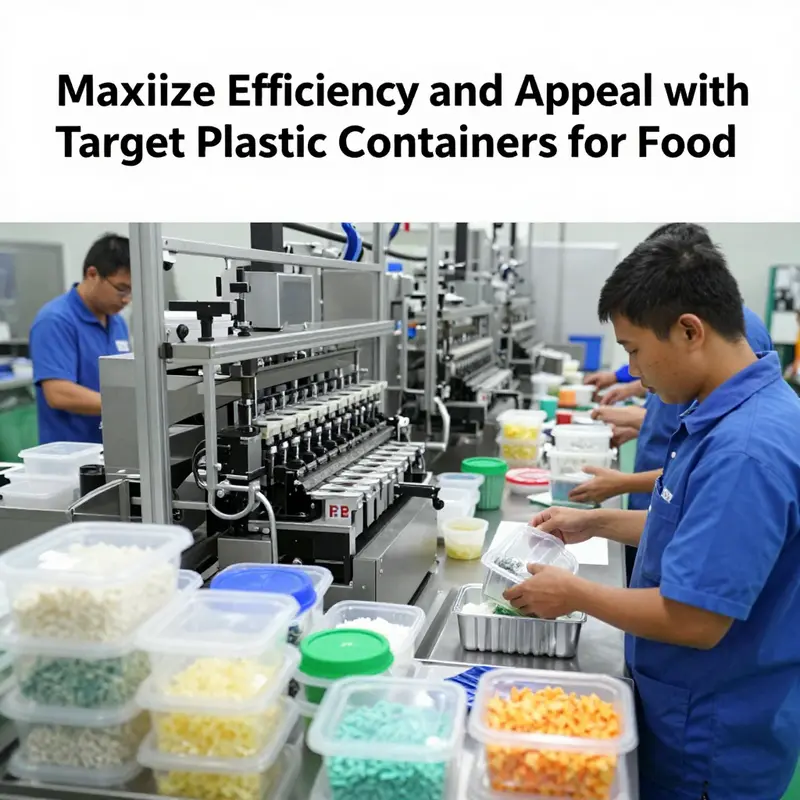
In pursuing these priorities, brand and supply-chain partners strive to balance cost considerations with performance benchmarks. The consumer’s preference for safe, easy-to-use, and sustainable containers is met by a pipeline of innovation at the manufacturing level. Factories that produce large volumes of food-grade plastic containers emphasize the importance of consistent quality and the capacity to respond to shifting demand. They cultivate a culture of continuous improvement—every month bringing new molds and possible configurations to accommodate evolving consumer expectations. This iterative process mirrors how product developers within retail brands test, refine, and scale features that matter to users. The outcome is a catalog that is not static but adapts to the daily rhythms of households, from the morning meal prep to late-night snack organization.
In practical terms, the consumer’s decision calculus when selecting a plastic container for food storage now encompasses a wider field of considerations. Safety remains foundational, because without trust in the material, other advantages lose traction. Yet the appeal of convenience is equally potent: ease of use, leak-proof performance, and the ability to quickly identify contents are valued as highly as the container’s ability to survive repeated cleaning cycles. The lens of sustainability adds another layer: consumers want products that they can feel good about using repeatedly and that integrate with recycling systems or other responsible disposal pathways. And finally, there is a growing appetite for smart or semi-smart functionality, where design anticipates and facilitates better food management. This might include features that help with portioning, labeling, or even monitoring the state of the food through simple, user-friendly indicators. While such capabilities may still be modest in today’s retail landscape, they signal a direction in which design will continue to move—toward containers that are not merely passive vessels but active participants in the goal of reducing waste, extending freshness, and simplifying daily routines.
The consumer’s voice, in short, guides the evolution of Target’s plastic food storage containers toward a fusion of safety, practicality, and responsibility. The most successful designs are not flashy novelties but reliable tools that reinforce healthy eating habits, efficient meal planning, and careful resource use. They acknowledge the realities of modern life—time pressure, family meals, and the daily choreography of cooking and leftovers—while inviting users to engage with packaging that respects their needs and values. The result is a product ecosystem that feels coherent, humane, and forward-looking, in tune with the household’s desire for a kitchen that is not only efficient but also evolving in tandem with the social and environmental context in which it operates.
One concrete thread in this evolving story is the growing prominence of multi-compartment designs and the blending of portability with portion control. The three-compartment concept, long a staple in meal-prep culture, sees fresh relevance as households seek to portion meals for the week, pack off-site lunches, and minimize mixing of flavors that might affect taste or texture. The appeal of such configurations lies in their ability to reduce waste by enabling precise portions and to simplify cleanup by consolidating several food items into a single, managed container. The design challenge is to deliver these benefits without increasing weight or compromising the robustness of the seal. It is here that material science, manufacturing precision, and user testing converge to deliver a product that feels intuitive to use and capable of standing up to the rigors of real life. The result is a container that is not just a vessel but a practical solution to the daily problem of keeping foods fresh, organized, and easily transportable.
In considering how these trends translate to the consumer experience, it is essential to remember that containers do not exist in a vacuum. They operate within a broader system of food habits, shopping routines, and home organization strategies. The design choices—how a container looks on the shelf, how it performs during microwaving, how long it remains clear after repeated washings—affect not only the user’s daily tasks but also the longer arc of household sustainability. If a container makes it easier to plan meals, store them safely, and reuse the same piece of kitchen equipment week after week, then it has begun to contribute to a healthier relationship with food and a less wasteful approach to packaging. When these factors align with a retailer’s product development vision, the result can feel like a natural extension of the home’s existing organization system rather than a separate purchase that must be managed and stored. The most enduring container choices, therefore, are those that disappear into the background of daily life, doing their job reliably and quietly while leaving room for the human actions—the chopping, the labeling, the meal-prep planning—that give meaning to storage in the first place.
To connect this broader narrative with concrete consumer behavior, consider the practical realities of everyday kitchens. People want containers that perform when they need them most: when leftovers are boxed up for the next day, when ingredients are portioned for a week of lunches, when travel or commuting requires a leak-proof solution, and when the dishwasher cycle finally finishes and the stack of containers returns to the fridge for another round. The preferred containers meet these moments with consistent performance: a dependable seal that resists leaks during transport, a lid that remains easy to operate even after several runs through the dishwasher, and a body that resists staining and helps keep contents visible and appetizing rather than dull and opaque. The consumer’s distance to the product is small, but the impact is large: fewer trips to buy duplicates, less time spent dealing with spills, and a greater sense of control over food safety in the home.
As the market continues to respond to these demands, the collaboration among retailers, manufacturers, and designers grows more intricate. The supply chain that supports a retailer’s assortment now needs rapid prototyping capabilities, frequent redesigns to meet shifting preferences, and a careful balance between cost efficiency and product integrity. Innovation becomes less about radical transformations and more about subtle improvements that accumulate over time. A small change—a tighter seal, a more comfortable lid grip, a slightly clearer body that reduces confusion during meal prep—can accumulate into a noticeable uplift in user satisfaction. In this sense, design is a constant negotiation between what users say they want, what engineers can deliver consistently, and what retailers can steward through a complicated logistics network that values both speed and reliability.
For readers who are curious about the broader landscape of container design beyond the walls of a single retailer, the industry increasingly points toward eco-conscious, multi-functional options that still honor budget considerations. The emphasis on recyclability, reduced plastic mass, and the possibility of reusability aligns with corporate and consumer priorities alike. Even as the conversation remains grounded in the practical realities of home kitchens, there is an acknowledgment that today’s container is part of a larger system. It participates in a chain that begins with raw materials and ends with consumer routines, environmental impact, and, ultimately, personal well-being. The current design language—safe materials, intuitive operation, durable construction, and space-efficient geometry—represents a pragmatic synthesis of these concerns. It is a language that speaks to busy households while inviting ongoing experimentation and adaptation as new materials, manufacturing processes, and consumer preferences emerge.
In sum, the design trends and consumer preferences shaping Target’s plastic food storage containers reveal a nuanced, deeply human approach to everyday packaging. Containers are expected to be safe enough for daily use, simple enough to handle with care, and sturdy enough to endure repeated cycles. They should help people manage food with clarity and confidence while reflecting a growing commitment to sustainability and responsible consumption. The best designs manage to be both practical and aspirational: practical in the sense of truly solving a daily problem, and aspirational in the sense that they invite households to treat storage as an act of care for themselves, their families, and the planet. This is the living story of Target’s shelves—the ongoing dialogue between human needs and the evolving capabilities of plastic containers that hold, protect, and preserve the food we rely on.
Internal link note: for readers interested in a packaging approach that prioritizes multi-compartment functionality within an eco-friendly frame, see this example of eco-friendly disposable three-compartment takeout packaging. eco-friendly disposable three-compartment packaging.
External reference: for a broader industry example highlighting BPA-free materials, airtight design, precise tolerances, and transparent visibility as core design attributes, see the LIXIN WH-16oz food container on Alibaba. LIXIN WH-16oz Food container, 16oz capacity, sustainable design
null
null
Final thoughts
In summary, Target’s plastic containers offer a robust solution for food and beverage businesses aiming to maintain safety, enhance presentation, and streamline operations. Understanding the safety and composition of these products allows businesses to make informed choices about their storage needs. Meanwhile, embracing current design trends can elevate the customer experience and improve organizational efficiency. Lastly, knowledge of sourcing and manufacturing ensures that quality is not compromised at any stage. By leveraging these insights, food service professionals can confidently select the best packaging solutions to meet their specific requirements.