
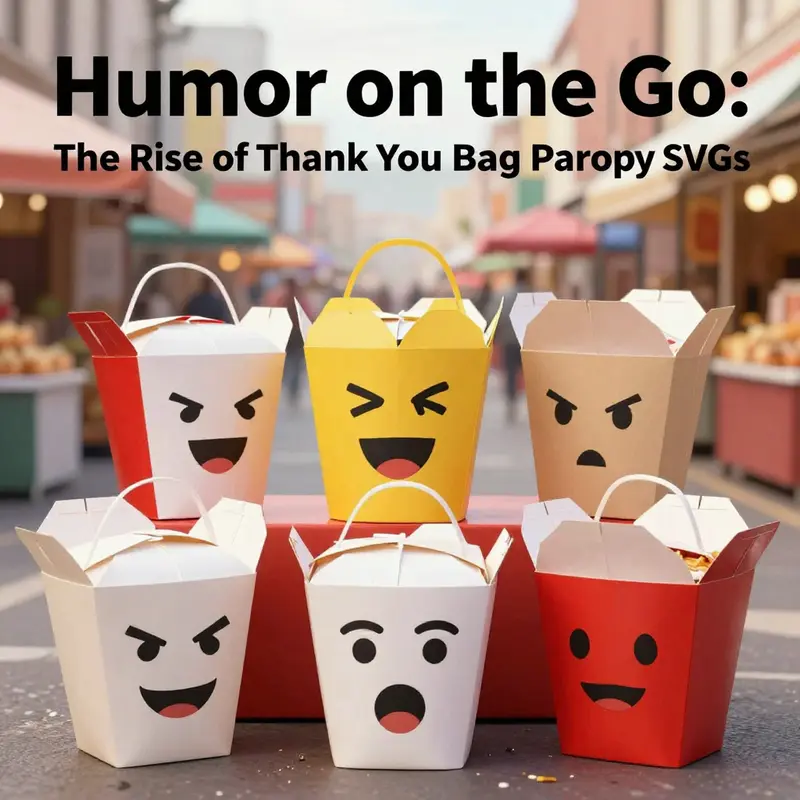
Thank you takeout bag parody SVG designs provide a perfect blend of functionality and humor, allowing food service providers to create engaging packaging that resonates with customers. As businesses like Bubble Tea shops, food trucks, and restaurants look for ways to stand out, these creative designs offer not just a visual appeal, but a unique marketing edge. This article delves into the creative aspects of takeout bag parody SVGs, examines their commercialization and market trends, and explores their cultural impact on society. Each chapter highlights how these designs not only serve as a whimsical touch but also play a crucial role in brand identity and consumer engagement.
Parodic Palettes on a Portable Canvas: The Creative Rise of Thank-You Takeout Bag SVG Parodies

The takeout bag, a mundane artifact of daily routines, has quietly become a portable canvas for wit, commentary, and cultural satire. Designers who work with vector-based formats see not a disposable carrier but a flexible surface where typography, shape, and color interact to tell a story in seconds. When a designer layers faux branding, playful labels, and clever puns onto the surface of a bag that already carries the weight of our meals and moods, the result is more than a novelty item. It is a compact artifact that comments on modern delivery culture, convenience, and the lingering tension between convenience and waste. The parodic takeout bag designs leverage the accessibility of scalable vector graphics to craft images that remain crisp when scaled up for a tote or down for a sticker. The result is a design language that travels as easily as the bag itself, from a simple tote to a garment, a poster, or a promotional giveaway. In this space, the SVG’s adaptability is not just a technical convenience; it becomes a narrative device that invites repeat viewing and shared jokes across communities that thrive on quick, visual communication.
What makes these designs particularly compelling is their ability to compress a story into a few graphic elements. The typographic choices sit beside exaggerated logos and mock packaging cues, creating a visual joke that lands in a single glance. A phrase that reads like a genuine product tagline can instantly become a punchline when paired with misdirection—an emblematic faux logo, a faux delivery interface, or an imagined “receipt” printed directly on the bag. The language itself is key: concise, punchy, and often loaded with irony. In these works, a single line can embody a critique of consumer culture or a wink at meme culture. This economy of text is matched by a deliberate visual rhythm—the careful balance between negative space and saturated color, the way a bold sans-serif firm fulfills the space where a more delicate script might otherwise falter. The result is not only legible at a glance but also highly versatile. SVG files lend themselves to a range of applications, from a customized tote for a local event to a line of reusable bags that can be turned into limited-edition merchandise. A designer can scale the image without loss of quality, apply it to different materials, and adjust colorways to suit varied aesthetics, all while maintaining the humor that gives the design its character. In practice, this means a single SVG file can be deployed across multiple products—mugs, t-shirts, posters, or even door signs for a store pop-up—without the risk of pixelation or the need to recreate the artwork for each use.
The visual vocabulary of these parodies borrows from everyday cues—the familiar shape of a takeout bag, the mock-up of a delivery app, and the coy reassurance of a “Thank You” message that feels almost too earnest to be sincere. The canvas here is not merely the bag but the cultural moment that surrounds it. Designers often incorporate faux packaging labels that mimic the texture and cadence of real-world branding, using faux nutritional panels, whimsical ingredients, and playful disclaimers. These elements, while clearly parody, are not careless jokes; they are gestures that acknowledge the performative aspect of modern food culture and the ritual of ordering in. The bag becomes a stage for a mini-drama about consumption, downtime, and the relationship between the consumer and the service that promises convenience. This dramaturgy emerges most clearly in scenes where the bag steps into the foreground as a character—being carried, read, and re-read as people pass by. The humor is not only in the text but in the misalignment between the serious look of branding and the tongue-in-cheek content within. The tension between “professional” packaging aesthetics and silly, subversive messaging is what gives these designs their energy and longevity.
At the technical level, the SVG format underpins this playful seriousness. Designers are drawn to vector files because they preserve line quality and permit clean scaling. The ability to maintain crisp vector edges when the design is reduced to a tiny decal or expanded onto a large tote ensures that the joke remains legible in real-world applications. Layered SVG files unlock additional opportunities: one layer can hold a faux logo, another the text, a third might simulate a delivery interface, and a fourth could suggest a printed receipt on the bag itself. This layering mirrors the way real packaging tells a story in a few seconds: the brand, the promise, the instruction, and the small print, all arranged in a glance-friendly composition. For crafters, the practical upside is equally compelling. A single, well-constructed SVG can be imported into cutting software used with home crafting machines, enabling enthusiasts to create customized tote bags, hats, or fabric patches. The file’s scalable nature means that makers can tailor a design to a particular bag size or material, making the concept accessible to hobbyists and small businesses alike. The democratization of these designs—thanks to the portability and reusability of SVGs—transforms a niche joke into a shared vocabulary that can travel across neighborhoods, schools, and maker spaces.
In many instances, the designs go beyond the typography to tell a more elaborate story. A popular trope is the bag depicted as a tiny spaceship labeled with a playful mission, such as “Delivery to Earth.” Another recurring visual pun features a cartoonish trash monster scavenging the bag, a humorous nod to sustainability debates that echoes in many communities where waste streams and recycling are daily concerns. These visual gags reflect a culture that uses humor as a coping mechanism for complex topics. They acknowledge the ubiquity of takeout culture while inviting viewers to pause and reconsider the ordinary object they carry every day. The bag, once merely a transit vessel, becomes a stage where satire, nostalgia, and social commentary converge. The result is a kind of portable meme—humor that can be carried, shared, and reimagined in countless forms, all while staying faithful to the original object’s function.
The distribution of these designs, though often informal, is important to understand. Independent creators frequently offer these SVGs as digital downloads, sometimes bundled with PNGs for non-cutting applications or EPS/DXF formats for broader compatibility with professional design systems. The convenience of a digital download means a shopper can acquire the files and immediately begin customizing. For many, the act of customization is itself part of the appeal: changing color schemes, swapping out text to reflect a personal joke, or reconfiguring layers to accommodate a different style of bag. The result is a democratized form of design literacy, where a plain bag becomes a canvas for personal expression, a communal joke, or a satirical critique. In this ecosystem, the ease of access amplifies the audience for these works, feeding a feedback loop where popular concepts are remixed, remapped, and re-released in new contexts and sizes.
From a craft perspective, the interplay between design and execution is central. The vector nature of the designs encourages experimentation with line weight, color contrast, and the rhythm of text. Designers often test balancing elements—the weight of the headline against the fineness of decorative flourishes, the saturation of bold colors against the urgency of black-and-white silhouettes. This careful calibration ensures that the humor translates across media: a tote used for shopping, a wall-mounted poster, or a patch on a backpack can all convey the same playful message with equal clarity. The layering strategy also supports experimentation with tactile experiences. The same SVG can be separated into print-ready layers or converted into a single silhouette for heat transfer vinyl. In practice, this flexibility invites creators to think about texture and finish as part of the joke: a glossy highlight on a faux logo can mimic the sheen of real packaging, while a matte finish on the text might emphasize humor over branding. The result is not a simple image but a small, adaptable system of visuals that can be reinterpreted as needed.
The cultural conversation around these designs is deepened by their resonance with internet culture. Memes are a language that compresses time, and parody takeout bag designs do something similar by compressing social critique into a single, portable artifact. The humor often thrives on the tension between earnestness and irony. A message framed as a thank-you note might be delivered in the most conversation-ending way possible—a bold, graphic joke about the environmental footprint of plastic bags, for instance. In other moments, the joke is more about the delivery ritual itself: the timer on a faux app interface, the mock tip line, the playful “receipt” text printed on the bag, and the tiny, almost imperceptible details that reward a second or third look. The more one looks, the more the joke reveals itself, creating a shared sense of discovery that invites repeat engagement. This dynamic mirrors how online communities tend to remix and reframe cultural objects, turning mundane items into meaningful, multi-layered stories that travel quickly through networks of makers and appreciators alike.
For those who want to begin creating in this space, several practical considerations matter. The SVG’s scalability makes it ideal for adapting to a range of bag sizes and printing methods, but color management remains essential. Designers often start with a bold, high-contrast palette that remains legible on fabric and paper finishes that vary widely in texture. They also pay attention to the orientation and folding lines of the tote, ensuring that key elements align with the natural creases and seams of the bag. When an idea features a fake app interface, designers must balance legibility with the playful illusion of a digital screen. This often means testing the design against different background colors and bag fabrics to ensure that the core joke remains legible regardless of the bag’s color or texture. The result is a robust design that can be adapted for a wide range of makers and contexts, from small-batch local markets to larger craft fairs.
In terms of sourcing and collaboration, the landscape of these designs benefits from a shared ecosystem of resources for creators. A practical starting point for designers looking to expand their toolkit is to explore resources that offer ready-to-use packaging-inspired graphics and related supplies. A useful internal resource for designers seeking to align their SVGs with themed packaging and tableware contexts can be found here: custom takeaway packaging supplies for themed events. This reference point illustrates how the ethos of the parody extends beyond the bag itself and into a broader design language that encompasses the surface world of packaging and event styling. By examining how packaging elements such as faux labels, mock interfaces, and decorative motifs can be assembled, makers gain a more holistic sense of how a single SVG can function within a larger design narrative.
What unites these creations, at heart, is a shared impulse to reclaim a trivial object and turn it into a stage for dialogue. The joke is not merely about the text or the image; it is about the moment when someone recognizes a familiar experience—perhaps the ritual of ordering takeout, the ritual of receiving a bag, the momentary guilt over waste—and sees it reframed in a way that feels fresh, clever, and humane. The designs invite viewers to pause, smile, and question the ordinary with a lightness that can be surprisingly potent. They also provide a bridge between digital design and tangible craft, showing how a vector file can morph into a physical thing that exists in the real world while still carrying the spirit of the joke in the digital realm. The outcome is a genre that feels both intimate and expansive, comfortable in a home workshop or on a vendor’s table at a local fair, ready to travel with the person who created it and the person who appreciates it.
The chapter of this design story is not closed with one exemplary image. It continues as designers remix the same concept with new typography, different bag shapes, and updated cultural references. The portability of the SVG makes it easy to reimagine the idea for changing tastes and social conversations, a quality that keeps the work relevant across seasons and trends. This is not merely decoration; it is a practice of observing daily life, translating the observation into vector form, and sharing the result as a communal joke that travels as quickly as the bags themselves. In that sense, the thank-you takeout bag parody becomes a microcosm of modern design: humble in its origin, ambitious in its reach, and elegantly simple in its execution. It reminds us that the smallest objects can inspire expansive, playful, and thoughtfully critical design conversations when given the right tools and a generous sense of curiosity.
External resources and community engagement often play a subtle but important role in how these works evolve. Makers frequently participate in a broader culture of sharing techniques, tutorials, and best practices that help others translate an idea into an accessible, high-quality vector file. The dialogue around these designs extends beyond humor into craft methodology, etiquette around image rights, and the ethics of parody in branding-inspired art. As the field develops, the emphasis remains on accessibility, adaptability, and the ability to communicate a story clearly and joyfully through a few carefully chosen visual moves. The result is a design practice that honors the everyday object while inviting a broader audience to engage with concept-driven humor, to remix ideas, and to contribute to a growing library of witty, transportable art.
External resource: https://www.etsy.com
Thank You Parodies on Takeout Bags: The Commercialization Curve of SVG Design, Sustainability, and Social Reach
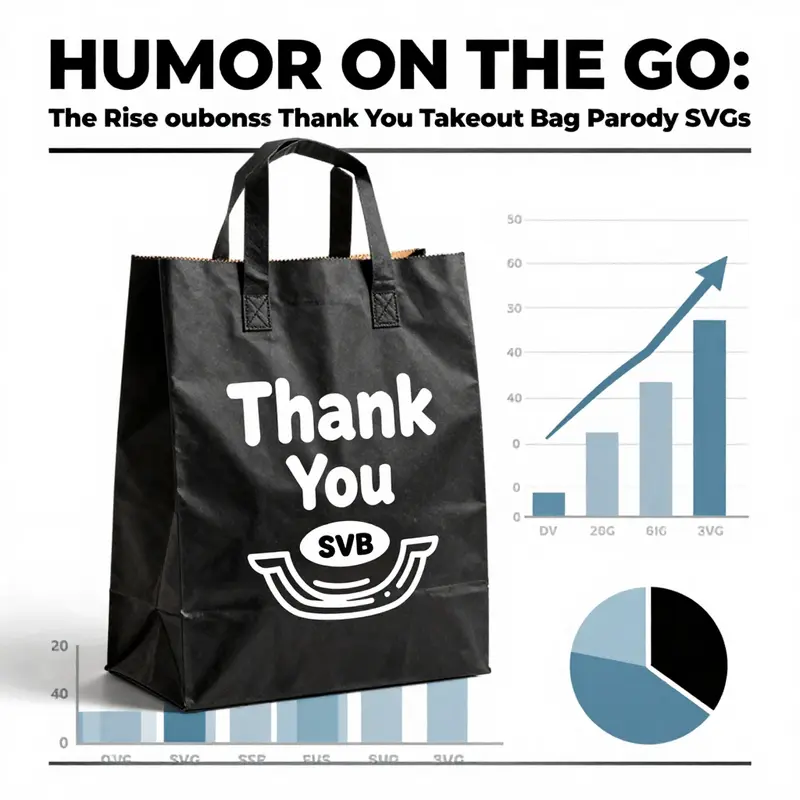
The sight of a takeout bag, once merely a disposable carrier, has migrated into a canvas for branding, gratitude, and sometimes cheeky cultural critique. In the digital era, a humble message like “Thank you” can travel far beyond the counter as soon as designers translate it into scalable vector art. The recent uptick in takeout bag parody SVGs sits at the intersection of three converging forces: a democratized design toolkit, a packaging ecosystem hungry for customization, and a social-media economy that rewards bite-sized humor and easily remixable formats. The SVG format—compact, scalable, and easily editable—functions as the lingua franca of this trend. It allows a café’s or a pop-up’s gratitude moment to be reimagined as a shareable, remixable asset that can live not only on bags but across t-shirts, stickers, and digital screens. The result is a feedback loop where designers supply templates, consumers customize, and brands, or their successors, gain a legible, transmissible story that travels through thousands of hands and screens. The humor embedded in parody designs is not a mere afterthought; it is a strategic instrument for engagement, akin to a handshake that sticks around long after the bag has left the counter.
To understand why these designs matter in a broader sense, it helps to look at the current architecture of the packaging and design economy. Customizable packaging has become a clear market demand, and producers are responding with material and print options that align with modern values. On the supplier side, the push toward environmentally conscious packaging is not incidental. Facilities can offer recyclable or reusable materials, certifications for compliance and safety, and customizable printing methods that carry a brand’s voice without sacrificing sustainability. In this context, a simple graphic—an updated take on a gratitude message—becomes a vehicle for brand storytelling and customer connection. The abstraction of a takeout bag into a print-ready SVG file allows almost any business, whether a neighborhood bistro or a micro-entrepreneur hawking artisanal treats, to localize a global trend. The design is not only decorative; it is functional, enabling efficient production workflows and rapid iteration across product families.
The market dynamics behind these SVGs extend beyond the kitchen counter. A broader trend toward personalization—matching packaging to personal or seasonal narratives—has gained momentum in the wake of mass customization. Alibaba’s documented emphasis on customizable packaging hints at a worldwide appetite for branded experiences that can be produced at scale while still feeling intimate. The idea is to blend a recognizable brand language with adaptable motifs that can be swapped in and out to reflect a new season, a special event, or a charitable cause. When a business integrates a “Thank You” expression into a takeout bag’s design, it signals an intention to foster gratitude as a lasting brand attribute, not a mere transactional prompt. The same asset can then be repurposed for campaigns that extend well beyond packaging into social posts, giveaways, or limited-time collaborations. This repurposability is a key driver of demand: users want assets that travel light, yet land with impact wherever they land.
A further layer of the story emerges as we consider the life cycle of these designs. Multi-scenario versatility has become a core selling point. A single SVG file can become a tote-ready graphic for a customer’s own craft project, a printable for inside a gift bag, or a sticker for a party favor. The central idea—takeout bag aesthetics that travel—turns packaging into a storytelling carrier. In the era of user-generated content, customers often value the ability to remix a design to reflect their own humor, values, or local culture. The parody trope thrives here, offering an outlet for commentary on branding itself. It is a way to say yes to the idea that a brand is a shared social text, not a monologue issued from a storefront window. The appeal is not limited to the laugh; it lies in the possibility of participation: a simple SVG becomes a permission slip to join a larger cultural conversation about how we say thanks and why it matters in a world of rapid consumption.
Crucially, the infrastructure that makes such design replication feasible is itself evolving. Digital design tools are increasingly accessible, lowering the barrier for non-designers to craft, edit, and remix SVGs. The total cost of ownership for creating a new parody is now more a question of taste and timing than of technical capability. This democratization has accelerated the market for parody SVGs while forcing designers and brands to consider clear ethical boundaries. The risk of replicating protected logos or misusing a brand’s identity sits alongside the opportunity to celebrate a shared cultural moment through humor. Within this space, the role of guidance, best practices, and legal awareness becomes as important as the creative impulse. It is not enough to be clever; one must navigate copyright and trademark concerns with care, lest the joke turn into a legal headache. In this tension between play and propriety, the community learns to value transparent licensing, clear attribution, and responsible parody.
From a design perspective, the practical elements of the SVG workflow deserve attention. The vector format supports crisp rendering at any size, which matters when a one-inch badge becomes a six-foot mural on a tote bag or a wall in a pop-up shop. The flexibility of SVGs enables color changes, font substitutions, and layout reflows without losing fidelity. For small operators, this means the leap from prototype to product can occur quickly, with a minimal investment in software or specialized skills. In the context of takeout branding, the ability to overlay a whimsical “Thank You” motif with seasonal color schemes or local motifs means the asset remains timely while avoiding becoming stale. The beauty of this approach is its scalability: a single design clocking in as a digital file can inform a family of packaging choices—napkins, cups, lids, windowed boxes, and more—without demanding a complete redesign every season.
Yet the economic logic behind parody SVGs is not solely about speed and customization. It rests on an ecosystem where packaging, design, and consumer culture intersect with sustainability and emotional resonance. The modern consumer seeks more than function; they crave moments of connection, identity signals, and a sense that a brand recognizes them as individuals. A cleverly parodied takeout bag that still conveys appreciation can foster a tactile memory: a customer leaves with a smile, returns because they felt seen, and shares the moment with others who recognize the joke. This social amplification—driven by the ease of sharing images and short clips—amplifies the impact of the original asset and can sustain interest over many cycles of promotions, menu changes, or seasonal shifts.
In practical terms, for businesses exploring this space, there is a straightforward path from concept to distribution. Start with a robust, editable SVG library that can support a range of sizes and surfaces. Leverage the universal language of vector graphics to ensure consistent branding across takeout bags, boxes, and ancillary items. Consider the environmental profile of the packaging itself. The market is increasingly attentive to sustainability metrics, and a brand that pairs witty typography with recyclable or responsibly sourced materials signals a commitment that resonates beyond humor. The parity between sustainable packaging and clever design creates a powerful narrative: gratitude can be expressed with materials that respect the planet, while humor invites a broader audience into the conversation about why that respect matters.
To illustrate how deeply these ideas are embedded in contemporary practice, consider how a practical supplier ecosystem supports the broader ambition. For those curious about packaging options that enable theme-driven experiences, a practical route is to explore customizable takeaway packaging supplies offered by manufacturers and distributors who emphasize both aesthetics and function. The design library you assemble can be complemented by a curated set of physical inputs—box styles, bag textures, and printing capabilities—that reinforce the visual language established by the SVG. In other words, the digital design becomes a blueprint for a tangible experience, one that customers can touch, feel, and keep if they wish. A single, well-executed parody can thus become a motif that travels across collateral and into the everyday rituals of gifting, sharing, and sampling. When executed with care, these assets help transform ordinary transactions into memorable brand moments that people want to photograph, talk about, and reproduce in their own spaces. This is how the gratitude message moves from a countercard to a cultural artifact.
Within this evolving landscape, partnerships between designers, printers, and packaging suppliers are increasingly common. The opportunity lies not only in selling a file but in providing a cohesive system—design templates, color pallets, font pairings, and production-ready files—that a business can adopt as its own. The result is not merely a revenue stream but a set of processes that reduce friction and accelerate time-to-market for new campaigns. The SVG files act as living assets, adaptable to different contexts and responsive to feedback from customers who want more personalization, more humor, or more seasonal relevance. The conversation thus shifts from a one-off product to an ongoing, collaborative design practice that keeps pace with consumer tastes and cultural commentary. In this sense, parody SVGs are less a gimmick and more a catalyst for a broader branding dialogue about how gratitude, humor, and sustainability can coexist within a modern retail experience.
As we turn a corner toward the future, there is a practical takeaway for creative teams and small businesses alike. By embracing the confluence of customization, environmental awareness, and social storytelling, the design language of the humble takeout bag can become a strategic asset. A well-crafted SVG parody, when aligned with responsible production and thoughtful licensing, can deliver consistent value across channels and touchpoints. It can also invite customers to participate in a shared humorous moment while reinforcing a brand’s values. The tension between parody and propriety becomes a collaborative space where designers and business owners negotiate scope, consent, and context. When navigated with intention, this tension yields not just clever visuals but durable emotional connections that translate into repeat business, organic promotion, and a more vibrant ecosystem of small-scale design economies. In the end, the “Thank You” on a takeout bag is more than a sign of courtesy; it becomes a point of cultural resonance—an artifact that captures a moment in a larger story about how we say thanks, how brands listen, and how design travels across material and digital worlds.
For readers who want a practical entry point into this ecosystem, consider how a single asset can bridge online and offline experiences. A versatile SVG file can power merchandise, storefront signage, and party goodies while remaining compatible with a spectrum of production workflows. The same file can be adapted for limited-edition events or seasonal menus, turning gratitude into a recurring motif that customers recognize and expect. Adding a link to a reliable supplier of customizable takeaway packaging supplies—such as those that offer theme party-ready disposables—can provide a concrete pathway from concept to implementation: custom takeaway packaging supplies. This kind of integration helps ensure that the digital design aligns with the physical world, so the choreography of the user experience remains cohesive from screen to bag. When a customer carries a bag that visually echoes a digital logo or joke, the encounter becomes a mini-narrative—one that is easily shared and remembered. This, more than anything, is how parody SVGs contribute to a broader branding grammar that treats gratitude as a public performance rather than a private sentiment.
In closing the current reflection, it is worth noting that the play between humor and responsibility will shape how these assets evolve. As parody SVGs continue to circulate, creators will sharpen their sensitivity to context and consent, while suppliers will refine their offerings to meet demands for both creativity and sustainability. The broader market is watching not just what makes people smile, but what helps them feel seen and respected in a world where every touchpoint is a potential moment of connection. The next stage of this story will likely intensify the collaboration between digital studios and packaging manufacturers, as more businesses seek to codify their gratitude into scalable, eco-conscious identities. The result will be a richer, more diverse ecosystem where a simple “Thank You” morphs into a constellation of design variants, each anchored by a common commitment to accessible creativity and shared care for the planet. External attention, meanwhile, will remind us to tread carefully with branding and parody, balancing wit with respect for rights and cultural nuance. For researchers and practitioners alike, the path forward is clear: celebrate clever, remixable SVGs while grounding them in responsible production, transparent licensing, and an enduring sense of gratitude that travels as reliably as the materials themselves.
External resource: Apple’s Trademark Guidelines.
Cartoons of Gratitude and Subversion: The Cultural Reach of Thank You Takeout Bag Parody SVGs
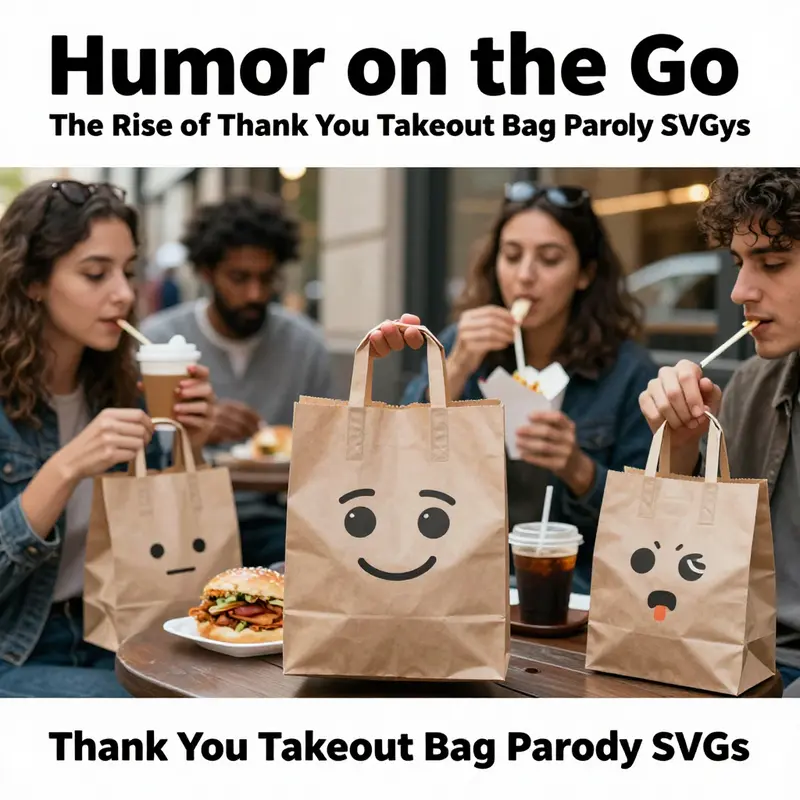
In the quicksilver world of online culture, where a joke can travel from a quiet comment to a global meme overnight, the takeout bag has found a surprisingly resonant voice. The familiar silhouette of a paper or plastic bag, stamped with glossy logos and the ritual phrase “Thank you for your order,” becomes a canvas for satire, sympathy, and social critique when rendered as a parody SVG. These vector drawings—clean, scalable, and easy to customize—are not mere jokes. They are small, shareable artifacts that capture a mood about the friction and flavor of contemporary food delivery. The appeal rests, in part, on the inherent paradox of modern consumer life: we crave immediacy and convenience, yet we are constantly negotiating the imperfect realities of service, pricing, and sustainability. The SVG medium amplifies this paradox by letting creators manipulate the iconic bag into all sorts of clever forms, from sarcastic one-liners to earnest, ironic confessions, all without sacrificing legibility or portability. Platforms that host digital goods—where a bundle might include thirty designs—make it effortless for a curious hobbiesist to print, cut, or press a image onto a tote, a shirt, or a wall print. The result is not just a collection of decorative motifs but a shared language, a vernacular of consumer life that many readers recognize without needing a lengthy explanation. These designs thus function as both entertainment and social commentary, a quiet chorus that questions the speed at which modern life moves while still being deeply embedded in everyday rituals like carrying groceries, meeting friends, or hauling a freshly printed zine from a makerspace.
To understand why the Thank You Takeout Bag parody SVG has such staying power, it helps to consider the affordances of SVG itself. Vector graphics are inherently scalable. A single file can be enlarged for a mural or shrunk for a social media avatar without losing sharpness. That versatility matters for memes that travel across devices, platforms, and formats. A design that looks crisp on a large print can also look crisp on a tiny phone screen, ensuring that the joke lands with the same punch no matter the consumption medium. The ease of editing—changing a font, swapping a color, or rearranging elements—lowers the barrier to participation. Amateur designers, students, and professional illustrators alike can take a base idea and customize it for a specific audience, event, or commentary. In this respect, SVGs democratize cultural production. They invite a broader spectrum of voices to participate in what feels like a shared cultural experiment rather than a single designer’s vision. Tutorials and workplace guides, including those that walk readers through SVG workflows in tools as accessible as Figma or more specialized suites, encourage experimentation and learning. The accessibility point matters. It means that a moment of online humor can be converted into a tangible craft project with little more than a computer, a cutting machine, and a bit of imagination.
Within the broader ecology of digital culture, the Thank You Takeout Bag parody SVG acts as a micro-essay about delivery culture itself. On the surface, a bag with a witty caption is a cheerful gift to recipients who are thankful for a hot meal and a quick handoff. Delve a layer deeper, and the motif begins to critique a system—an economy of speed and scale where the human touch can feel distant, where conversations about price hikes, service inconsistencies, or late deliveries sometimes replace the joy of a warm meal. The irony is accessible; it travels well because it taps into shared experiences: waiting for a driver who arrives with more excitement than a ready-made apology, or scanning a QR code only to realize the wait is part of the experience. The parody bag becomes a symbol of digital-age consumer sentiment—an emblem of the way people narrate their daily routines in memes, captions, and vector lines.
This cultural moment is not merely about humor. It is about how digital artifacts shape perception and memory. When a vector file can be resized for a sticker or a tote bag, when you can remix a saying to fit a party invitation or a protest poster, the boundary between online culture and offline texture blurs. The tote bag—once a mere carrier of purchases—transforms into a portable billboard for a mood, a wink at a friend, or a small act of civic commentary. The design language travels across contexts: a social feed, a classroom, a DIY workshop, or a storefront display. The portability of the SVG format supports this cross-pollination; it travels with little friction and turns any surface into a potential stage for the message. In this sense, the practice mirrors a broader social trend: digital design becoming a reflexive instrument for cultural expression, where everyday objects are reimagined to carry not only content but also attitude and value.
From a craft perspective, the rise of these designs reflects a burgeoning culture of making that thrives on repurposing the mundane. A takeout bag, which might otherwise be discarded after its single use, becomes a template for personal expression. The cut lines, color blocks, and typography are all part of a modular aesthetic that is both familiar and fresh. The result is a design language that can be learned quickly, practiced in a weekend workshop, and then shared widely. The same vector tools that help sculpt a sleek logo also enable a casual creator to assemble a witty phrase with a layout that communicates clearly at a glance. In practice, this means more people engage with design processes, whether they are plotting a DIY project for a community market or crafting a unique gift for a friend who appreciates the humor of modern logistics. The effect is a small but real democratization of visual culture, where a simple takeout bag can function as a starting point for a wider conversation about aesthetics, ethics, and everyday life.
A related dimension concerns sustainability and waste, topics that increasingly accompany discussions of packaging and delivery. The parody bag becomes a handy vehicle for sharing attitudes about environmental impact, while still preserving the light touch that makes memes approachable. It is no accident that the same designs circulate in contexts that emphasize eco-consciousness and responsible consumption. Designers who color within the lines of a faux brand palette can argue, with a smile, that our consumer rituals deserve reflection as much as they deserve convenience. The humor thus works as a conversation starter, inviting audiences to articulate their own positions on packaging waste, corporate responsibility, and the trade-offs inherent in a fast-moving food ecosystem. In this way, the Thank You Takeout Bag parody SVGs function as informal cultural pedagogy—brief, memorable, and often persuasive in their understated critique.
The social ripple effects extend into education and professional practice as well. As guides about working with SVGs proliferate, teachers and mentors reveal to students that vector art has practical, creative, and even political utility. The forms are not just decorations; they are tools for critique, advocacy, or empathy. An instructor might use a class project that asks students to remix a design to reflect a local issue, or a community workshop might pair a parody SVG with a discussion about delivery systems, labor practices, or urban life. The pedagogy here is hands-on and collaborative, a tacit invitation to remix, reflect, and respond. The broader implication is that digital design literacy becomes a form of civic literacy, a way of cultivating critical thinking through icons and captions that are immediate to understand and difficult to ignore.
Of course, the viral life of these designs depends on more than their ideas. It rests on the shared culture of online platforms that encourage remixing and rapid sharing. The phrase “Thank you for your order” is familiar across many markets, and turning it into a visual gag is a knowing nod to that familiarity. The designs thrive because they translate little moments of service into something that feels universally recognizable yet personally adaptable. A designer can take a core concept—the takeout bag’s silhouette, a playful font, a wink at delivery timelines—and tailor it to a specific audience or mood. The result is not a single artifact but a family of variants, each one carrying a spark of recognition that invites others to co-create. This is the essence of a participatory culture: a meme ecosystem where content is never finished but continually evolving through user-generated variation.
Embedded within this ecosystem are answers to practical questions about how these designs travel from screen to surface. The file formats—SVG, EPS, PNG, DXF—offer a spectrum of use cases, from digital previews to high-precision cutting for physical objects. The ability to scale without distortion is crucial when the same artwork must adorn a tote bag, a T-shirt, a wall decal, or a sticker sheet. The versatility is more than technical; it shapes how the parody is consumed: as a quick digital share or as a physical keepsake. In shops that curate design bundles, the curated mix of humor and craft invites buyers to imagine their own applications, whether as gifts, market booth items, or classroom demonstrations. The practical dimension—how a design translates across media—becomes a source of cultural meaning in its own right, demonstrating how digital artifacts influence real-world behavior and trends.
If we look at the dialogue around these artifacts, a pattern emerges: humor operates as social lubricant, but it also prompts reflection. The bag’s character becomes more empathetic when paired with a sincere caption about a service misstep, and more pointed when the caption critiques environmental waste or price inflation. The tone can be inclusive, recognizing the shared experience of ordering food in a fast-paced city, or it can be audacious, challenging the messaging of gigantically scaled brands. This duality—soft humor with a sharp edge—explains why the images persist beyond a single viral moment. They invite repeated viewing, reimagining, and commentary by different audiences across cultures and locales. The takeaway is not that we have moved beyond sincerity but that humor has become a durable channel for negotiating ordinary friction in daily life. In that sense, the parody SVG is a micro-cultural instrument that records how people feel about services, economics, and the small rituals that keep daily life moving.
From a design practice perspective, the phenomenon is a reminder that aesthetics and social commentary can coexist in ordinary objects. A takeout bag, a simple line drawing, and a clever caption can together transmit nuance and feeling more quickly than a long essay. The vector format helps preserve that speed, ensuring the message remains legible when scaled for a sticker on a coffee cup or amplified through a digital banner. The designs also prompt a broader curiosity about where our digital culture intersects with material culture. If a bag can become a canvas for critique and a badge of belonging, what other everyday objects might be reimagined as conveyors of community mood? The possibilities invite ongoing experimentation in design labs, maker spaces, and kitchen tables alike, turning mundane routines into occasions for creative dialogue.
For readers who want to connect this discussion to tangible practice, consider how packaging culture intersects with the broader design ecosystem. The conversation around takeout packaging has grown to include sustainable materials, print quality, and user experience. At the end of the day, these SVG parodies are part of a larger movement that treats everyday items as mediums for storytelling and social reflection. They encourage viewers to see ordinary objects not as passive containers but as active participants in cultural discourse. The next time a person sees a bag bearing a witty retort or a sly nod to delivery timelines, they are witnessing a tiny, portable laboratory where humor, critique, and craft converge on a single, shareable surface. It is a democratization of commentary, enabled by accessible tools and a culture that values quick, witty, and visually crisp communication—one bag at a time, and one remix at a moment in a vast online fabric of culture.
As this conversation evolves, it will likely expand to new formats, new brands, and new audiences who discover the same familiar shape and instantly recognize its potential for layered meaning. The Thank You Takeout Bag parody SVG thus stands as a small but telling artifact of our era: a reminder that even within the most routine aspects of consumption, there remains room for humor, critique, and collective imagination. Its continuing popularity signals that digital graphics can carry social weight without demanding seriousness, and that the act of creating, sharing, and reworking a simple bag design can become an act of cultural participation. In the end, these images may be remembered not merely as clever jokes about modern dining but as cues to a more reflective, more participatory way of looking at the everyday world.
For further exploration of related packaging aesthetics and to observe how design choices resonate with material realities, explore resources and examples that connect digital art with tangible goods. eco-friendly takeout boxes for food packaging.
External resource for practical SVG workflows: How to Work with SVGs in Adobe Captivate—Complete Guide. https://www.adobe.com/creativecloud/photography/tutorials/svg-in-captivate.html
Final thoughts
Thank you takeout bag parody SVGs are more than just humorous designs; they represent a cultural shift in how we perceive and interact with food packaging in the dining experience. By blending creativity with functionality, these designs enhance brand identity and engage customers in a light-hearted manner. As the market continues to evolve, the adoption of such playful packaging solutions will likely become pivotal for businesses looking to differentiate themselves. Embracing humor through design not only supports branding efforts but also fosters a memorable customer experience.