
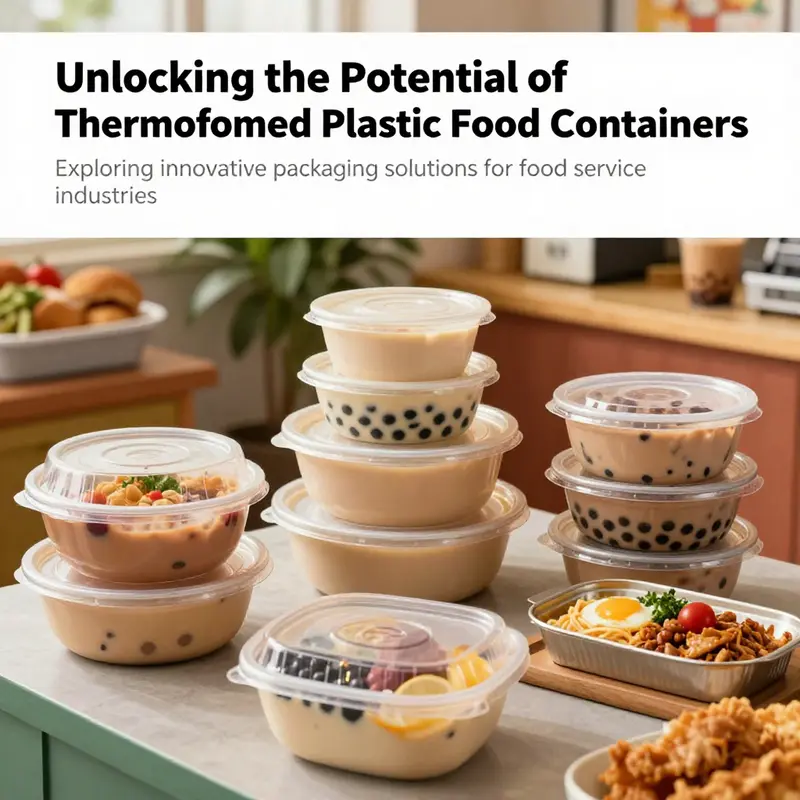
In today’s competitive food service landscape, the choice of packaging can significantly influence customer experience and operational efficiency. Thermoformed plastic food containers have emerged as a leading option, celebrated for their versatility and practicality. From bubble tea shops to catering services, these containers cater to a multitude of needs while maintaining cost-effectiveness and reliability. This article navigates through the applications and advantages of thermoformed plastic food containers, sheds light on their environmental impact and sustainability, uncovers key market trends influencing the industry, and outlines the regulatory standards that safeguard food safety. By delving into these aspects, we hope to equip businesses with the insights to make informed packaging decisions.
The Shape of Convenience: How Thermoformed Plastic Food Containers Balance Performance, Presentation, and Practicality
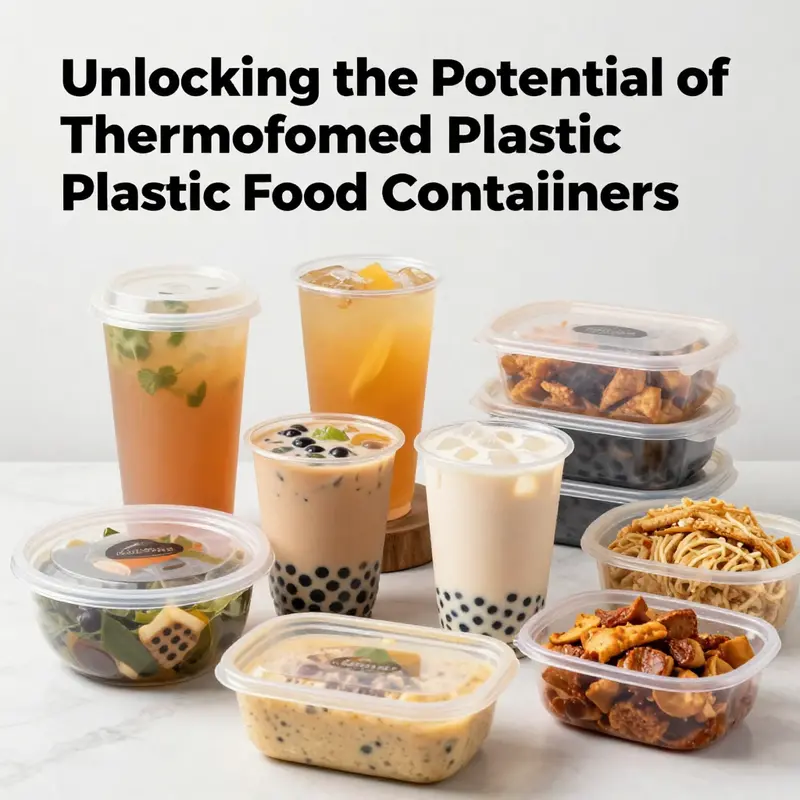
Thermoformed plastic food containers sit at a quiet crossroads of function and form. They are born from a simple idea: take a flat sheet, heat it until it becomes pliable, and then press it into a mold to create a precise, protective shell around food. The result is a family of packaging components that prioritize lightweight strength, clear visibility, and scalable production. In many ways, the thermoforming process embodies industrial practicality. It accommodates rapid changeovers, supports large runs, and yields parts with consistent tolerances. The technique also supports a wide range of shapes and features. Trays, lids, bowls, and clamshells can be engineered with tight seals, specialized hinges, and easy-open mechanisms that enhance user experience without sacrificing performance. This combination of efficiency and versatility is why thermoformed containers remain a backbone for modern food service and retail packaging.
The appeal begins with performance. Materials such as polypropylene and certain grades of PET glass-clear variants provide a balance of stiffness, toughness, and heat resistance. The chosen resin sets the expectations for the finished part: strength enough to survive transit, rigidity to protect the contents, and resilience to minor impacts that occur along a crowded fulfillment path. In many applications, the clarity of the container plays a silent but decisive role. A transparent tray or lid allows the consumer to see the product inside, which can reinforce perceived freshness and quality. The visual access reduces the need for decorative signage and lets the product speak for itself. This is especially valuable in fresh prepared foods, deli sections, and ready-to-eat meals where appearance can be a deciding factor at the point of purchase.
Beyond visibility, thermoformed packaging excels in protecting the contents. The materials used offer excellent impact resistance, so a tray can withstand rough handling in warehouses or during store transfers. The ability to create leak-resistant seals is not incidental; it is a deliberate feature designed to prevent spills and preserve the integrity of sauces, dressings, and moisture-rich foods. When paired with secure lids or interlocking designs, these containers minimize mess and contamination during transport, a critical consideration for catering, vending, or any scenario that moves meals from kitchen to consumer. The resulting confidence in containment translates into lower spoilage risk and a more consistent consumer experience, which in turn supports brand reliability and repeat purchases.
The production side of thermoformed containers is characterized by efficiency and scale. Modern thermoforming lines employ dual-action workflows that optimize cycle times. While one cavity forms a new container, another can be cooling a previously formed piece. This distribution of labor between forming and setting reduces downtime, enabling high-throughput manufacturing that meets the demands of large retailers and busy food-service venues. The modular nature of the process also supports customization. Trays can be tailored in size, shape, and feature sets to align with brand differentiation and functional needs. Features like living hinges, easy-open tabs, and resealable membranes can be integrated into the same production line with limited changes to tooling. This flexibility makes thermoformed packaging attractive not only for large-volume products but also for brands seeking distinctive packaging cues without compromising production efficiency.
A fundamental advantage of thermoformed packaging is its design freedom. The sheet can be engineered for thickness variation across a single part, enabling careful control of stiffness and weight where needed. Corners can be reinforced, walls can taper to reduce material use without sacrificing rigidity, and rims can be engineered for precise lid fit. The result is a set of containers that are sturdy in shipment, yet comfortable to handle at the consumer interface. The ability to add features such as resealability or easy-open channels at a relatively low mass production cost is a meaningful differentiator. In many cases, these design choices emerge from practical constraints: the shape must fit a standard tray or display, the lid must seal securely at typical service temperatures, and the finished product should nest efficiently for storage and shipping. Thermoforming makes such considerations feasible without requiring custom tooling that would otherwise drive up both time and expense.
Transparency is a common sight in many thermoformed packaging formats. Clear or semi-clear plastics invite inspection of the product before purchase, which can reduce the friction of the shopping decision. Consumers often equate visibility with honesty about freshness and quality. Yet transparency also demands thoughtful formulation. Even when the container is clear, the surface finish and interior texture must be tuned to minimize fogging and to resist scuffing during handling. A well-executed clear container can elevate premium items, such as gourmet sandwiches, salads, or desserts, by letting the product do the talking. The design language of such packaging speaks to a modern, convenience-driven consumer culture that expects both speed and reliability from the packaging that surrounds food.
In parallel with these functional virtues, thermoformed containers also respond to ongoing sustainability conversations. A large portion of thermoformed plastics today relies on recyclable resins, with polypropylene and PET among the most common. This recyclability supports end-of-life pathways that align with circular economy objectives. Yet recyclability is not a guarantee; it depends on the material grade, the presence of additives, and consumer participation in recycling programs. The industry has responded with ongoing innovations, including formulations that improve recyclability and feedstock recycling options that capture material value rather than consigning it to landfill. Biodegradable and compostable options are emerging as well, driven by consumer demand and policy signals. While these options may not yet replace conventional thermoformed plastics across all applications, they point toward a future where packaging can maintain performance while reducing environmental footprint.
The environmental narrative around thermoformed plastics is nuanced. On the one hand, the lightweight nature of these containers reduces material weight in the supply chain, contributing to lower transportation energy. On the other hand, plastic packaging raises questions about end-of-life disposal and ecosystem impacts. The industry’s response has been to pursue cleaner material grades, greater compatibility with recycling streams, and smarter design that prioritizes reuse or efficient recovery. In addition to material choices, manufacturers are exploring process improvements that lower waste and energy use during forming. The optimization of temperature profiles, the refinement of mold cooling paths, and the adoption of more precise gauges all contribute to less scrap and more predictable quality. These efforts reflect a pragmatic acknowledgment that performance must be matched by responsibility, especially in an era of heightened consumer awareness and stricter regulatory expectations.
Within the broader packaging ecosystem, thermoformed containers are frequently paired with compatible lids and seals that together define the user experience. The interaction between tray and lid is a delicate balance of seal strength, ease of opening, and repeatable performance across a product’s shelf life. A well-matched lid provides a confidence-preserving barrier against leakage while still offering convenient access for the consumer. The resulting combination can support oven-to-table or microwave-assisted reheating scenarios only when the container materials are selected for safe temperature tolerances. It is this careful alignment of materials, engineering, and user needs that gives thermoformed packaging its enduring relevance in fast-moving consumer goods. Even as other packaging formats evolve, the speed, clarity, and protection provided by thermoformed solutions keep them as a staple in both retail and food service.
From a consumer standpoint, the presence of a clear, well-fitting container often influences perceived freshness and trust. The ease with which a consumer can handle the packaging, the simplicity of opening and resealing, and the sense of reliability in transport all contribute to a positive brand impression. The packaging becomes a silent communicator of quality, a factor that can support premium positioning without additional marketing costs. Yet this advantage only endures when the packaging remains consistent in performance. A cracked lid, a misfit seal, or a container that fails under typical handling conditions can quickly undermine consumer confidence and erode a brand’s credibility. Consequently, manufacturers invest heavily in quality control, material specification, and durability testing to ensure that every tray or lid meets the standard expected by retailers and consumers alike.
As the conversation around packaging evolves, thermoformed containers continue to adapt without sacrificing the core strengths that define them. They offer a practical, scalable option for a broad spectrum of foods, from fresh produce to prepared meals, from bakery items to snacks. They support branding through shape, transparency, and product-friendly features, while delivering reliable performance at a cost compatible with mass-market distribution. For readers who want to explore practical examples of how such containers integrate into real-world packaging strategies, a representative case in the broader ecosystem points to the concept of adaptable, microwave-safe, leak-resistant designs that can be customized with easy-open tabs and resealable lids. This combination makes thermoformed packaging a versatile choice for many stakeholders—from producers and packagers to retailers and consumers.
For a deeper technical dive into the machinery, production process, and applications of thermoforming in plastics packaging, see an external technical resource that provides a broader technical framework and current industry guidance: https://www.plastictech.com/thermoforming-machine-guide-2026.
If you want to explore a related example of product packaging that aligns with the idea of consumer visibility and convenience, consider this internal resource that discusses eco-friendly takeout boxes for food packaging. It highlights how packaging design can balance microwave safety, leak resistance, and consumer appeal in a single package: eco-friendly takeout boxes for food packaging. While the example emphasizes paper-based options, the underlying principles—clear communication of product quality, reliable performance under transport, and ease of use—resonate with thermoformed plastics as well. The broader takeaway is that packaging must perform across the journey from production line to plate, all while respecting consumer expectations for convenience and sustainability.
Packaging the Planet: Sustainability Realities of Thermoformed Plastic Food Containers
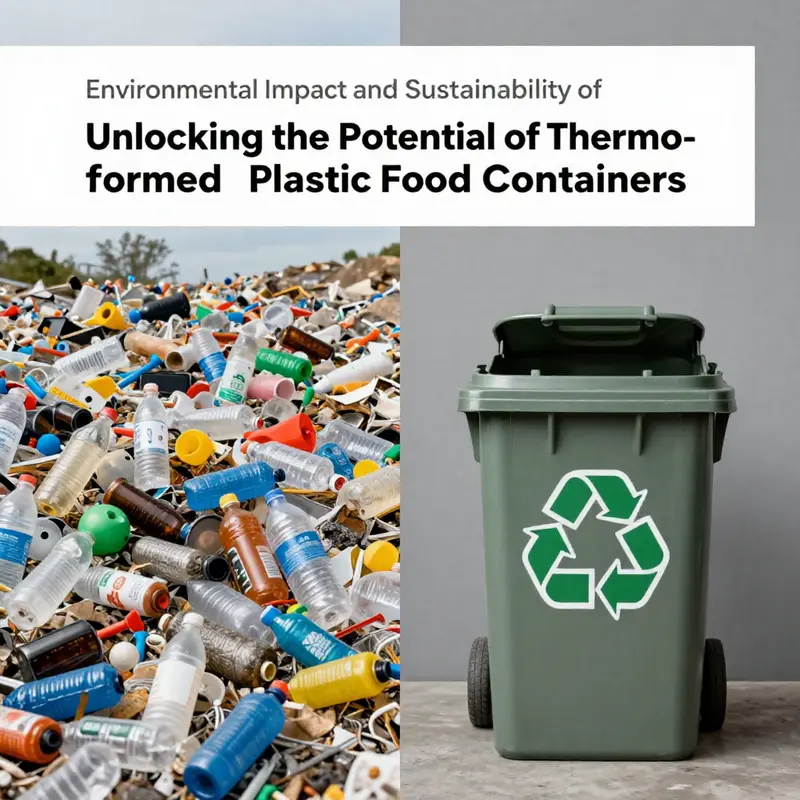
Thermoformed plastic food containers are prized for light weight, clarity, and low cost. Yet their environmental footprint raises urgent questions. This chapter examines the life cycle of these containers, how their design choices affect emissions and waste, and what realistic transitions look like for brands and foodservice operations. The aim is practical: understand trade-offs and actions that reduce harm without ignoring the performance needs of food packaging.
Thermoformed containers are usually made from petroleum-derived resins such as polystyrene (PS) and polypropylene (PP). These materials deliver transparency, rigidity, and a secure barrier for prepared foods. They are also easy to shape quickly at scale, which lowers per-unit energy during manufacturing. But the same material properties that make them useful cause long-term persistence in the environment. Conventional thermoplastics are not biodegradable. Over decades they fragment into microplastics that lodge in soils, rivers, and oceans. Microplastic contamination is now detectable in seafood and drinking water, with uncertain but worrying implications for ecosystems and health. That persistence is the single largest environmental concern with thermoformed food packaging.
Recycling, often proposed as the solution, faces technical and logistic limits. These containers are light and bulky, which increases the cost of collection and transport relative to the material value recovered. Mixed-material lids, films, or multi-layer coatings further complicate recycling streams. At the municipal level, contamination with food residue reduces recyclability. As a result, most thermoformed containers end up in landfill or are incinerated, either releasing greenhouse gases or remaining on site for centuries. Current global recycling rates for plastics remain low, which means relying solely on recycling does not solve the growing waste problem.
Energy and greenhouse gas emissions are another piece of the equation. While thermoforming is efficient compared with some molding methods, the underlying feedstock is fossil-fuel based. Extraction, refining, and resin production are carbon-intensive. Substituting lighter gauges and optimized shapes can reduce per-container emissions. So can integrating post-consumer recycled (PCR) plastic into the resin mix. However, PCR supply is limited and variable in quality. Using higher shares of recycled content slows virgin production but requires careful quality control to ensure food safety and functional performance.
Addressing sustainability requires both materials thinking and system thinking. On the materials side, alternatives such as compostable bioplastics and molded fiber have merit. Bioplastics like polylactic acid (PLA) can reduce fossil-carbon inputs when made from renewable feedstocks. Molded fiber from sugarcane bagasse or bamboo offers a naturally compostable option with good insulating properties. These materials, however, are not a universal fix. Compostable bioplastics need industrial composting to break down reliably. In landfill or mixed-waste streams, they may not degrade any faster than conventional plastics. Molded fiber can be heavier and less transparent, which impacts product visibility and transport efficiency. Barrier coatings or additives—often applied to improve grease or moisture resistance—can also negate compostability and recyclability.
Practical sustainability, therefore, is usually incremental rather than absolute. One immediate strategy is design for recyclability. That means specifying single-resin constructions, avoiding mixed materials whenever possible, and minimizing pigment and additive use that interferes with recycling processes. Labels and adhesives should be selected to peel off cleanly. Clear, mono-material designs increase the chance that a thermoformed container will be accepted at material recovery facilities. Incorporating visible instructions and standardized recycling symbols helps consumers make the right choice at disposal.
Another effective tactic is source reduction. Thinner walls, right-sized containers, and stackable geometries cut material use and transport emissions. These changes must preserve product protection, but even a small reduction in gram weight per unit multiplies across millions of units. Brands should quantify material savings and emissions reductions to make informed trade-offs between cost, performance, and impact.
Closed-loop and takeback programs show promise where infrastructure and scale exist. Foodservice chains can collect used thermoformed containers for industrial cleaning and remanufacture or for mechanical recycling into non-food applications. Extended Producer Responsibility (EPR) programs can also shift cost and incentive structures. When producers share the financial responsibility for end-of-life management, investment in recyclable design and collection systems becomes more attractive. Such policies are gaining traction globally and can materially improve diversion rates for thermoformed plastics.
Where compostable or fiber-based alternatives are used, the system context matters. Compostable packaging performs best in settings with access to industrial composting. Municipalities or organizations without that infrastructure should avoid labeling materials as compostable in a way that implies home decomposition. For businesses, partnering with composting services or on-site industrial solutions can make compostable choices meaningful. Equally important is avoiding contamination: a compostable container mixed into recycling streams can degrade the value of otherwise recyclable material.
Consumer behavior also influences outcomes. Clear labeling, simple disposal instructions, and visible cues about recyclability or compostability reduce confusion. Retailers can add collection bins for specific materials or offer incentives for returning containers. Education campaigns that explain what happens after disposal—particularly in local service contexts—help close the gap between packaging design intent and actual environmental benefit.
Lifecycle assessment (LCA) is a practical tool for comparing options. LCAs reveal that no single metric tells the whole story. A thermoformed PP tray may outperform a heavier recycled-fiber tray on transport emissions, yet the fiber tray could win on end-of-life carbon persistence. Decision-makers should weigh multiple impacts—global warming potential, resource depletion, water use, and marine litter risk—according to their priorities and local realities. Context-sensitive LCA helps avoid swapping one problem for another.
For manufacturers and buyers, a pragmatic checklist helps guide choices. Prioritize mono-material thermoforming where clarity or lightweight strength is essential. Increase PCR content where food-safety standards allow. Reduce material mass through engineering and dimensional optimization. Avoid complex barrier laminates unless strictly necessary. If selecting compostable or molded-fiber alternatives, confirm access to end-of-life infrastructure and choose coatings compatible with composting. Finally, document claims transparently and align labeling with local disposal options.
Transitioning the sector also requires investment and collaboration. Material suppliers can develop higher-quality PCR and compatible additives. Packaging designers can create styles that meet both performance and recycling requirements. Governments and waste managers can improve collection and processing capacity. When these stakeholders coordinate, thermoformed packaging can be part of a more circular system rather than a linear source of persistent waste.
There is no single answer. Thermoformed plastic containers will remain in use where clarity, low weight, and barrier properties are essential. The sustainability imperative is to reduce environmental harm through better design, improved recycling and composting infrastructure, policy levers like EPR, and informed material substitution. When brands apply systems thinking rather than one-size-fits-all solutions, the environmental performance of food packaging can improve markedly while still delivering the functionality consumers and retailers require.
For a comprehensive overview of sustainable alternatives to single-use plastic food containers, including lifecycle comparisons and infrastructure considerations, see the EPA guidance on eco-friendly alternatives: https://www.epa.gov/sustainable-management-plastics/eco-friendly-alternatives-single-use-plastic-food-containers
For businesses seeking compostable or fiber-based alternatives that align with commercial takeout and retail needs, consider options such as the eco-friendly takeout boxes for food packaging offered by suppliers that specialize in molded fiber and recyclable paperboard solutions: https://ecocupbowl.com/product/eco-friendly-takeout-boxes-for-food-packaging-stylish-food-containers-safe-microwave-craft-paper-lunch-boxes-leak-grease-resistant/
Shaping the Market: Trends, Costs, and the Economic Rhythm of Thermoformed Plastic Food Containers
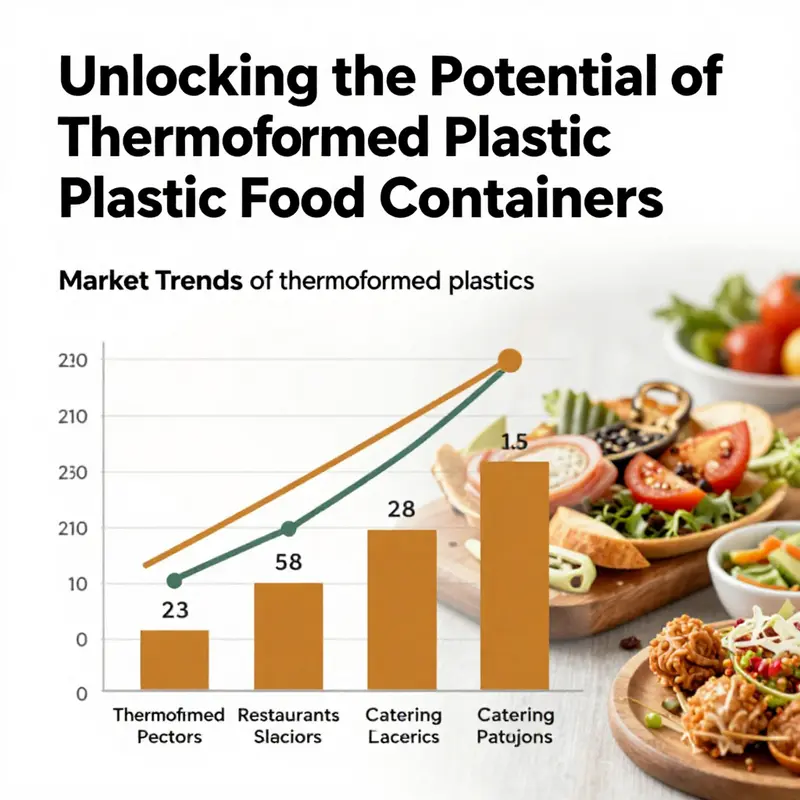
Thermoformed plastic food containers sit at a quiet crossroads of everyday convenience and large scale industry dynamics. They are the packaging workhorse that keeps meals portable, safe, and visually appealing from the moment a product is packed to the moment it reaches the consumer. Their rise in prominence is not simply a story of better plastics or clever molds; it is a narrative of market momentum, economic forces, and evolving expectations about what packaging can and should do. The latest market projections place global thermoformed containers in motion, rising from around 47.3 billion dollars in 2026 toward a projected 64.4 billion by 2033. That is a substantial expansion, driven by an enduring appetite for lightweight, durable, and recyclable packaging that aligns with sustainability goals across the food and beverage sector. The growth is not a straight line. It is a curved trajectory shaped by consumer taste, manufacturing discipline, and the shifting cost of materials and labor in a global economy that prizes efficiency as much as convenience. In this context, the thermoformed container becomes more than a container. It is a strategic asset that can enhance brand experience, support food safety, and enable streamlined operations in kitchens, distribution centers, and retail environments alike.
The appeal of thermoformed trays, lids, and bowls rests on several core properties. First is the compelling combination of light weight and strength. A sheet of plastic can be heated to the point of pliability and then formed into precise shapes that offer robust stacking stability and predictability on the shelf. This translates into cost efficiencies at scale, especially when companies pursue high-volume production runs. The next asset is visibility. Many thermoformed designs prioritize clarity or near clarity, allowing consumers to glimpse the contents without removing a lid. Visual access is not trivial; it has a direct influence on perceived freshness and product appeal. When customers can inspect the product through a transparent lid or side panel, trust increases and the likelihood of purchase rises. Alongside these design advantages lies the practical appeal of shatter resistance and ease of transport. For manufacturers and retailers, the resilience and lightness of thermoformed containers reduce breakage risk during handling and shipping, lowering damages and returns and supporting efficient logistics for fast-moving consumer goods.
Yet the narrative cannot ignore the friction points embedded in the economics of thermoforming. The same factors that create scale efficiencies can also magnify cost pressure if volumetric demand falters or input costs jump. Material selection is a primary driver. The choice of resin influences everything from barrier properties to recyclability and regulatory compliance. While many thermoformed solutions are designed to be recyclable within established recycling streams, the actual end-of-life outcomes hinge on local infrastructure and consumer participation. In markets where curbside recycling is robust and consumer awareness is high, the environmental case for thermoformed packaging strengthens. In places with weaker recycling channels, the environmental advantages can be less straightforward, and the burden of waste management may influence both brand perception and regulatory requirements. In addition, consumer expectations around safety and performance prompt careful attention to material grade and process control. Low quality or non-food grade plastics raise the risk of leaching or contamination, concerns that can undermine brand trust in a matter of minutes. The industry thus faces a dual obligation: deliver packaging that preserves product quality and safety while ensuring the materials can be reclaimed or recycled responsibly at end of life.
Economic factors extend beyond the plant floor. Global expansion, particularly across Asia-Pacific and Latin America, adds demand volatility and new competition. These regions offer growth opportunities as urbanization, rising disposable incomes, and changing eating habits increase demand for convenient meals and ready-to-eat options. At the same time, trade tensions and tariffs can unsettle supply chains, affecting material costs and the profitability of manufacturers who rely on global supply networks. When tariffs rise or logistics become more complex, lead times lengthen and inventories must be hedged, introducing additional capital tied to risk management. Currency movements further complicate budgeting, especially for producers who purchase resin in one currency and sell in another. The net effect is a market that rewards resilience and adaptability as much as it rewards scale. Companies that can adjust their supply chains, optimize production schedules, and secure reliable partners across regions tend to maintain pricing discipline and service levels even in the face of macroeconomic disruption.
A central lever in this environment is production cost. The economics of thermoforming are inherently tied to fixed and variable costs that scale nonlinearly with volume. Tooling investments are substantial, and the cost of molds, forming stations, and associated automation can dominate upfront expenditures. Once a line is up, the per-unit cost declines with volume, but only if waste is minimized and tooling is maintained. Material selection remains a critical cost driver, with resin price fluctuations cascading through to part price and finished goods margins. The shape and size of the container influence cycle times, waste rates, and the overall yield of the process. Larger or more complex geometries may demand premium tooling or additional process steps, increasing the amortized cost per unit unless production volumes justify the investment. This is the essence of economies of scale: the magic where volume begets efficiency, but the threshold to reach that efficiency is precisely calibrated to the market’s demand cadence. When demand slows or shifts, those same investments can become a financial drag, pushing manufacturers to rethink product designs, adjust line utilization, or explore alternative manufacturing routes that better align with current demand.
The interplay between consumer needs and industrial capabilities is where the case for thermoformed packaging becomes most compelling. The speed with which new flavors, meal concepts, and retail formats can be brought to market often depends on packaging agility. Thermoforming supports rapid prototyping and flexible changeovers, letting producers tailor container shapes, lid styles, and barrier properties to evolving product lines. This agility is valuable not only for product launches but for trialing seasonal or regional variants that may require different heat resistance, moisture barriers, or aesthetic treatments. In practice, manufacturers pursue packaging that accomplishes multiple roles at once: it preserves freshness, communicates product attributes, and simplifies handling for both the consumer and the supply chain. The consumer sees clarity and reliability; the retailer sees a package that travels well and resists the day-to-day rigors of a busy distribution network. The packaging itself becomes part of the value proposition, complementing product quality rather than acting as a mere container.
An emerging thread in this market is the push toward recyclable and lightweight configurations that preserve barrier performance without imposing heavy environmental penalties. The industry is moving toward materials that fit within existing recycling streams and that can withstand the temperature and mechanical stresses of transport and display. The programming challenge for designers is to balance transparency, stiffness, and resistance to moisture or oil without sacrificing recyclability. In some cases, multi-layer or coated solutions offer the needed barriers, but these must be engineered with end-of-life in mind. The design choices ripple through the supply chain: palletization, sorting, and, ultimately, the rate at which shredded material can re-enter the manufacturing loop as feedstock for new containers. These dynamics underscore a broader shift: thermoformed packaging is increasingly seen as a component of a circular economy, not merely a convenience item. The alignment of design, process, and end-of-life pathways becomes a strategic priority rather than a compliance afterthought.
From a strategic standpoint, manufacturers must also account for the long view of market evolution. As demand for convenient, safe, and aesthetically appealing packaging grows, so does competition. The field attracts not only plastics specialists but also manufacturers from adjacent packaging sectors who bring new ideas about materials, surface finishes, and recycling compatibility. The result is a spectrum of options that range from minimalist standard trays to highly bespoke formats with integrated lids, vents, and secure sealing features. Companies that excel in this space tend to invest in design for manufacturability, ensuring that new shapes and features can be produced at scale with predictable quality and minimal waste. They also invest in supplier collaboration, creating robust contingency plans for resin supply, tooling maintenance, and equipment uptime. In a market where even small disruptions can ripple into stockouts or price volatility, the value of strong supplier relationships and clear forecasting cannot be overstated.
For readers who want a concrete sense of the packaging landscape, consider how the supply chain and market dynamics translate into everyday choices on the shelf. A consumer shopping for a ready-to-eat meal will encounter a container that promises visual appeal, sturdy transport, and a sense that the product inside is fresh and safe. Behind that perception lies a chain of decisions: resin type, processing temperature, mold design, and post-processing options such as labeling and retrofitting with reusable or recyclable lids. The end result is a packaging system that does more than hold the food; it communicates quality and reliability. In practice, many producers are embracing packaging that is not only functional but also adaptable to different sales channels, including takeout, home meal replacement, and direct-to-consumer delivery. This versatility is part of the reason why thermoformed solutions remain attractive even as the packaging ecosystem evolves toward more sustainable materials and end-of-life solutions. To reflect the broader trend toward adaptable packaging, one representative example of the industry’s focus on practical design is the increasing prevalence of multi-compartment and windowed formats that enable merchandising while supporting portion control and user convenience. These design choices, when paired with scalable production, help align supply with shifting consumer preferences without sacrificing economics.
In closing, the market momentum for thermoformed plastic food containers is grounded in several converging forces. The macroeconomic backdrop—growth in emerging regions, shifting trade patterns, and currency dynamics—creates a demanding environment in which resilience and adaptability are essential. The production economics of tooling, material selection, and waste management define the cost structure that determines competitiveness in a highly segmented market. Yet the same pressures spur engineering and collaboration that push for better barrier performance, clearer presentation, and more responsible end-of-life outcomes. The result is a packaging category that is both a reflection of industrial capability and a lever for consumer experience. By balancing the demands of scale with the ambition of sustainability, thermoformed plastics can continue to evolve as a trusted, adaptable, and cost-efficient solution for a broad spectrum of food products and services. The industry is not merely responding to market trends; it is shaping them through thoughtful design, disciplined manufacturing, and an unwavering focus on the needs of modern food systems.
For a deeper exploration of broader market expectations and regional dynamics, see the external resource linked at the end of this chapter. In addition, several industry stakeholders are adopting new packaging configurations that emphasize convenience and recyclability, including options that harmonize product visibility with end-of-life recovery. As the market grows, the capacity to manage capital investments, optimize processes, and maintain supply resilience will distinguish the leaders from the rest. A practical takeaway for producers is to pursue packaging engineering that foregrounds end-to-end lifecycle thinking—from resin selection and tooling to the recycling stream and consumer education. This approach not only strengthens the economic case for thermoformed containers but also reinforces their role in a packaging ecosystem that prizes performance, responsibility, and adaptability.
Internal resource reference: eco-friendly disposable 3-compartment packaging box: https://ecocupbowl.com/product/eco-friendly-disposable-3-compartment-food-grade-packaging-box-for-fast-food-high-quality-takeout-boxes-for-fried-chicken-french-fries-packaging/
External resource: https://www.statista.com/outlook/industry/food-packaging/thermoformed-plastics-market-usa
Guardrails of Safety: Regulatory Standards for Thermoformed Plastic Food Containers
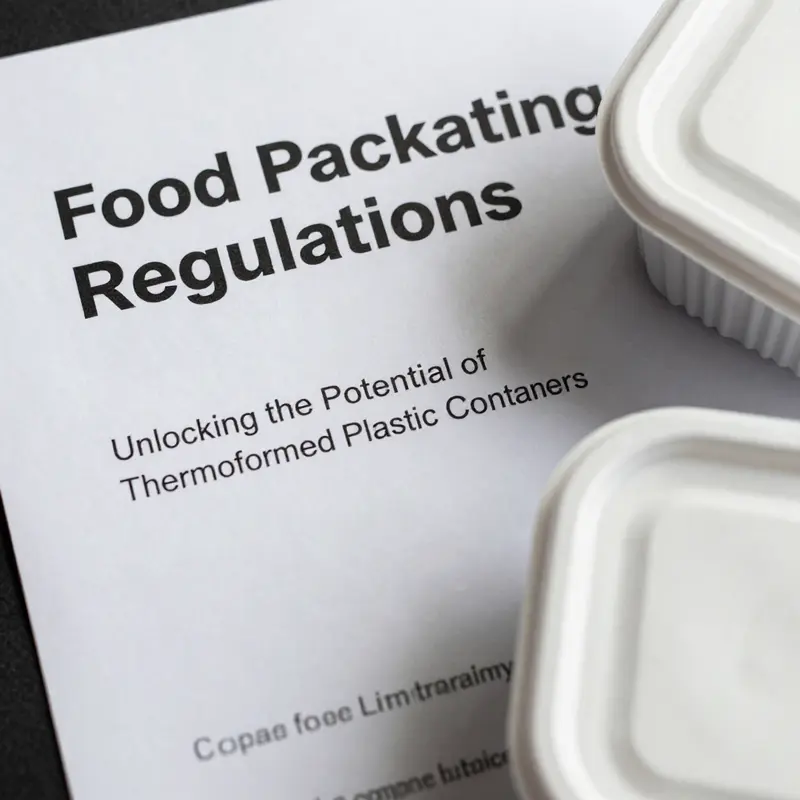
In food packaging, the container that contacts meals must safeguard safety, preserve quality, and meet consumer expectations for transparency and performance. Thermoformed plastic containers deliver lightweight durability and efficiency, but their advantage depends on a disciplined regulatory framework that governs material selection, processing, and migration into food.
In the United States, the Food and Drug Administration governs food contact materials under FDA 21 CFR parts 174 through 179. These rules specify which resins are approved, which additives may be used, and under what conditions. PET, PP, and PS are common in thermoformed packaging and are allowed for specific uses with defined processing limits. Any substance that could migrate into food must be evaluated for safety, with emphasis on heat and acidity because those factors drive migration.
In the European Union, Regulation (EC) 1935/2004 creates a general safety standard for materials in contact with food, complemented by Regulation (EU) 282/2011 with specific migration limits for certain substances. Designers must account for migration across the product life cycle, including heating and storage, and consider substances of concern such as certain monomers and additives.
International standards provide harmonized testing language. ISO 18806:2022 covers requirements for plastics intended for food contact, including hygiene and testing under realistic use. ASTM F2766 describes migration testing methodologies to simulate real use. Together, these standards support consistent lab measurement, supplier qualification, and regulatory alignment.
Compliance is a lifecycle discipline. Companies conduct migration testing, stability studies, and toxicological evaluations, while maintaining supply chain traceability and documented material provenance. Certifications such as FDA-compliant or ISO 18806 status help reassure retailers and consumers that safety and quality controls are in place throughout production.
Beyond safety, environmental considerations are shaping regulatory strategy. Regulators increasingly emphasize recyclability and end of life. Designers seek material choices and barrier technologies that minimize migration while enabling recycling and reuse, aligning safety with environmental responsibility.
The practical upshot for manufacturers is disciplined design, rigorous testing, and transparent documentation. By integrating regulatory intelligence with material science and process engineering, thermoformed packaging can meet evolving standards while delivering clarity, reliability, and value to food brands and consumers.
Final thoughts
In summary, thermoformed plastic food containers represent a practical and innovative solution for businesses in the food service industry. Their applications span from beverage chains to large-scale catering, providing numerous advantages such as transparency, durability, and ease of transport. However, awareness of their environmental impact and compliance with regulatory standards is essential for responsible use. As the market continues to evolve, staying informed about trends and opportunities will empower businesses to make strategic decisions that enhance both customer satisfaction and sustainability. The packaging you choose can not only safeguard your offerings but also strengthen your brand’s commitment to quality and responsibility.