
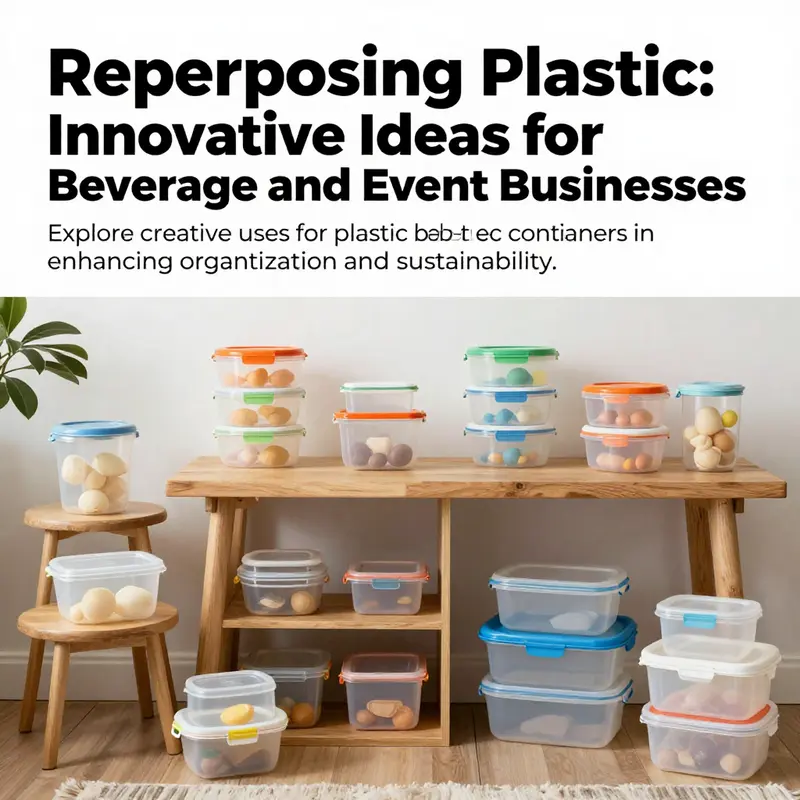
Plastic baby food containers are often overlooked as disposable items, but they offer a wealth of creative and practical applications, particularly for businesses in the beverage and event sectors. In this exploration, we uncover innovative ways these containers can serve not only organizational needs but also contribute to sustainable practices. From DIY children’s furniture that can brighten up a café space to creative storage solutions that can keep your workspace tidy, and even upcycled jewelry that speaks to your brand’s commitment to eco-friendliness, there are myriad ways to harness the potential of these containers. Join us as we delve into these chapters, each showcasing unique ideas that reinforce both creativity and sustainability in your business.
Tiny Jars, Big Safe Spaces: Crafting Children’s Furniture from Plastic Baby Food Containers
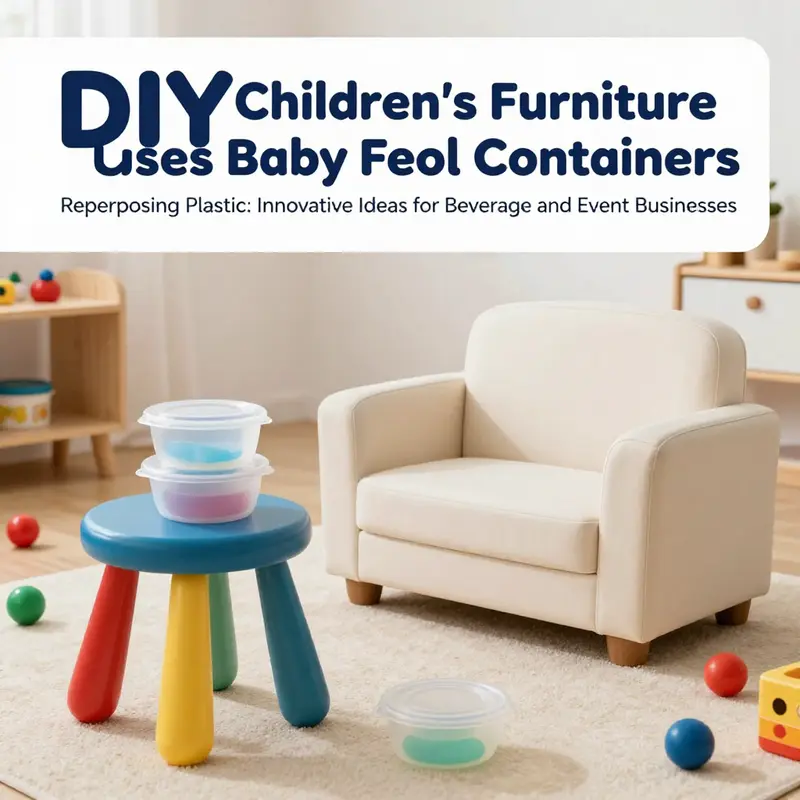
A stack of clean plastic baby food containers may appear modest, almost trivial, but when seen through the lens of sustainable design they become a surprisingly potent resource. These containers are typically made from a durable, lightweight plastic that can withstand daily handling by curious little hands. Their uniform size, smooth edges after careful preparation, and reliable snap-tight lids invite experimentation. The idea is not to disguise waste but to reintroduce it into everyday life as a material that can hold play, rest, and organization together. The narrative of turning these small jars into furniture for children begins with respect for safety, moves through playful experimentation, and ends in functional pieces that kids can grow with. The transformation is not about a single clever hack but about a mindset: see potential in what would otherwise be discarded, and design with children’s needs—comfort, safety, accessibility, and delight—front and center.
Begin with the most accessible project: homemade blocks that children can stack, roll, and topple with the confidence that comes from solid, stable play. When clean and residue-free, a Gerber-style or similar baby food container can serve as a colorful, modular unit. The trick is to ensure stability. Containers should be emptied, rinsed, and dried thoroughly so labels and glue residues don’t interfere with the surface. If you want a more tactile experience, you can fill containers partially with crumpled paper or soft cardboard to adjust weight, turning each block into a different sensory contrast. The lids can be left on for rolling blocks or converted into cosmetic toppers to introduce a ringed, toy-like feel. The result is an inexpensive, colorful set that helps children develop grasp strength, hand-eye coordination, and early spatial sense. The beauty lies in repetition and color; a row of different hues arranged across a play mat becomes a visual invitation to build structures, and the act of stacking teaches balance and problem solving without the need for any special tools.
As the blocks accumulate into a broader play system, a storage unit or toy chest emerges as the logical next step. A row of containers, secured together with a simple adhesive that coats both surfaces with a non-toxic bond, can form a compact, low-profile storage solution. The design invites experimentation—one container might be turned on its side to create a cubby, another stacked atop to form a shelf-like spine, and a third serving as a shallow drawer for crayons, marbles, or small figurines. If you want a more durable form, reinforce the assembly with wooden dowels and screws at the joints, hidden beneath a cover panel that doubles as a lid. The furniture piece remains modular: you can expand by adding rows or columns as a child’s shelf grows into a mini playroom. A Pinterest-inspired approach to such constructions demonstrates the value of aligning form with function while preserving the essential portability and lightness that make these units appealing in a child’s space. The result is a toy chest that does not resemble a toy box carved from a single block but rather a compact, adaptable system that blends storage with interactive play. The key is to keep edges smooth and corners rounded, so youngsters can explore without risk, and to ensure any adhesives or fasteners are fully child-safe.
The leap from blocks and toy chests to more integrated seating follows a natural arc: you can transform several containers into a small, kid-friendly seating module that doubles as a storage bench. Seat design begins with a sturdy base. Stack containers into a low platform and secure them to create a solid foundation that will bear a child’s weight when sitting or squirming. The top can be a single piece of foam or a cushioned panel covered with durable fabric. The cushioning acts as a soft landing for little bottoms and a comfortable perch for storytime. The fabric cover can be tailored with simple piping or a tidy seam, and it can be removed for cleaning or replacement as colors fade or stains appear. The result resembles a compact sofa, scaled for children, with hidden storage inside the cushions. You can introduce a gentle backrest by anchoring a horizontal panel, or simply lean a padded cushion against the rear row of containers. The modular nature of the base means you can rearrange the blocks to reconfigure the seating arrangement, providing a flexible piece that can adapt to rooms that change as children grow. When children tuck in with a book or a friend beside them, the bench becomes more than a seat; it becomes a little stage for pretend play, a place to charge a tablet or to stash small stuffed animals at the end of the day. The whole design emphasizes tactile comfort, thoughtful use of space, and the sense that furniture can be both functional and playful.
A more ambitious application turns the container collection into a temporary bed frame—an option particularly appealing to renters, students, or families who want a safe, low-profile sleeping surface without committing to heavy, traditional furniture. The concept here is to use containers as a foundational layer that raises a mattress off the floor while avoiding heavy hardware and hazardous materials often associated with conventional bed frames. Start with a tightly packed row of containers aligned along a stable base, ensuring the platform remains level and free of wobble. Then lay a slatted frame or a panel board across the top to distribute weight evenly and prevent point pressure on any single container. The mattress can rest directly on this platform, with a fitted sheet that secures the edges and keeps the surface neat. The safety considerations are essential: avoid sharp edges, ensure the platform is height-appropriate for a child, and check that the total weight remains within the containers’ tolerance. Use fabric skirts to soften the visual edge and to conceal the storage inside, turning the setup into a calm, cozy sleeping nook rather than a visible collection of plastic jars. It is a practical demonstration of how lightweight, modular components can answer a temporary need without sacrificing safety or aesthetics. While this solution is not a substitute for a conventional bed, it offers a creative, adaptable alternative that speaks to the values of flexibility and responsible consumption.
Beyond seating and sleeping, these containers offer a surprising range of organizational possibilities that support a child’s independence while keeping a space tidy. In the home office or study corner, containers can become desk organizers, turning a cluttered desk into a calm workstation. Each container can hold a different supply—pencils, scissors, rulers, stickers—and you can secure them in a neat row on a low shelf or inside a shallow drawer. A practical enhancement is to modify the lid by cutting a slit to hold a roll of paper towels or a roll of artwork paper. The slit should be wide enough to accommodate the diameter of the roll and tight enough to keep the roll from slipping. The result is a tidy, accessible solution that nurtures a child’s sense of responsibility, offering a simple daily routine—grab your pencil, return it to its place, and prepare for the next task—with a tangible, hands-on tool. This approach to organization dovetails with the broader goal of upcycling: protect resources, reduce clutter, and teach children how to care for their things so they last longer.
The versatility of these containers does not stop at storage and seating. They can become part of a kitchen pantry strategy as well, serving as dry-goods keepers with airtight seals and readable labels. A set of containers can help preserve snacks, grains, and cereals when cleaned and dried thoroughly. The lids, once cleaned and reassembled, provide a tight seal that keeps pantry items fresh and minimizes the risk of moisture or pests. Labeling the containers with simple handwriting or printed labels makes pantry management straightforward for a developing reader, fostering early literacy skills and independence. In this way, the containers bridge play and practical life, showing how repurposed materials can support both everyday tasks and imaginative play. The same stable base that forms a toy chest can transform into a dry-goods organizer, blurring the line between kid-centric furniture and home organization—a quiet reminder that sustainability can be woven into many corners of a home.
An often-overlooked facet of upcycling is the creative potential of interior finishes. The reflective sheen inside some containers, achieved by a foil liner or a similar material, encourages playful experiments with light and texture. A gentle, child-safe craft activity might invite kids to think about how light travels through a room and how colors shift with different angles. Adults can guide them in using the containers as small jewelry-making studios: the shiny interior can be used as a base for decorative pieces or as a surface to place beads during a craft session. The concept extends to more substantial jewelry projects if grown-ups help translate the foil into wearable accents. It is not about producing costly jewelry; it is about teaching resourcefulness, showcasing how everyday materials can carry meaning when repurposed thoughtfully. In this sense, the inner surfaces become not just functional but also a small, reflective canvas for a child’s growing creativity and story about growth.
This approach to making with plastic baby food containers resonates with broader design practice that seeks to honor both function and fun. Large-scale designers, working with post-consumer plastic waste, demonstrate how durability and beauty can emerge from reclaimed materials. Although those projects often operate on a different scale, the same core logic applies: consider the material’s strengths, respect its limits, and harness its potential through careful assembly and imaginative design. The result is not a single, finished product, but a family of possibilities—a spectrum of furniture and organizational elements that can be reconfigured as a child’s needs evolve. It is a testament to the fact that sustainable practice does not demand a new treasure trove of specialized resources; rather, it invites a shift in perspective: see value where others see waste, and use simple, accessible materials to craft spaces that nurture safety, curiosity, and play.
The practicalities of real-world use matter as much as the aesthetic imagination that fuels these projects. Cleanliness remains a non-negotiable baseline. Containers must be free of residues and odors, especially if they will be used for play or as a sleeping surface. The structural integrity of the assembled pieces should be checked regularly, with particular attention to joints and fasteners. The benefit of modular construction—whether for a storage block set, a seating bench, or a compact bed platform—is that problems are easy to diagnose and rectify. A loose joint can be tightened, a seam reinforced, or a new component added to restore stability. It is this flexibility that makes plastic baby food containers a practical starting point for a child-centered furniture system. The design ethic behind these projects is simple: maximize safety, maximize reuse, and maximize the joyful engagement of a child’s environment. When these elements align, the tiny containers become catalysts for bigger ideas, turning everyday waste into a space that invites exploration, rest, and a sense of ownership over one’s own corner of the home.
In considering the broader implications, it helps to remember the value of small-scale repurposing in the context of sustainability. The process mirrors a growing movement toward circular design, where objects are imagined as parts of continuous loops rather than as disposable inputs. The containers you repurpose today could well become the frame of a future piece of furniture in another home, or even contribute to a new, larger piece in the same living space as your child grows. This continuity matters, because it shifts the conversation from “What can I throw away?” to “What can I transform and reuse with care?” The answer is often practical, economical, and deeply satisfying. And while the projects described here are born from play and everyday improvisation, they also reflect a broader skill set: the ability to assess a material’s behavior, to plan for safety and stability, and to translate a child’s needs into tangible, enduring forms. The act of assembling, cushioning, and customizing becomes a learning journey for both child and caregiver, reinforcing stewardship, patience, and the joy of making with one’s hands.
To illustrate how these ideas can be integrated with broader material culture, consider that repurposing packaging into furniture is not an isolated practice but part of a wider conversation about design for resilience and flexibility. A practical example seen in the design community involves repurposing common packaging components into modular systems that can be reconfigured as a family grows or as space changes. This approach emphasizes the role of layout, balance, and accessibility. It also highlights how simple engineering decisions—like using a stable base, securing joints, and ensuring smooth edges—can transform a handful of containers into a cohesive living unit that serves multiple functions. The resulting pieces are not merely toys or storage—they are adaptable, living elements that encourage children to participate in the creation process, ask questions about materials, and learn how to transform an environment with intention. The narrative of reuse becomes a daily practice that grows with the child, weaving sustainability into the fabric of family life.
In closing, this chapter sketches a path from modest containers to meaningful furniture for children. It demonstrates that upcycling is not about losing quality or function; it is about preserving value by reimagining how everyday objects fit into a household. The core ideas—safety, adaptability, and play—remain constant as you move from blocks to benches to bed frames. The process invites constant iteration: test a design, watch how a child interacts with it, refine for comfort and safety, and then reframe the piece for a new use or a different room. The result is a legacy of reuse that travels with a family from one phase of childhood to the next. And as you explore these possibilities, you can reference practical examples from wider packaging reuse discussions, such as eco-friendly disposable 3-compartment packaging boxes. This link serves not as a prescription but as a reminder that the ethos of repurposing—seeing value in the ordinary and shaping it into something useful—extends far beyond a single task. The result is a home where creativity and care coexist with responsibility, where plastic baby food containers are not a symbol of waste but a starting point for safe, sustainable, and playful childhood spaces.
Smart, Sustainable Storage: Organizing Every Room with Plastic Baby Food Containers
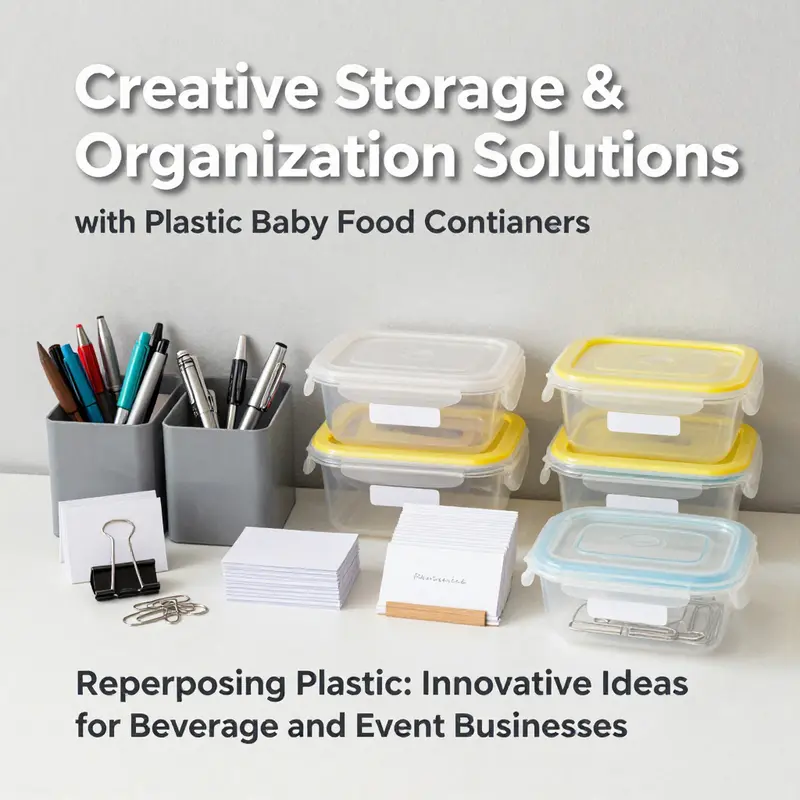
Plastic baby food containers are small, uniform, and surprisingly capable. Kept clean and dry, they transform into modular storage units that suit kitchens, craft rooms, bathrooms, and travel kits. Their translucent sides make contents visible at a glance. Their snug lids keep dust and moisture out. Their standardized size lets them stack, line drawers, and slide into cubbies. This chapter describes practical systems and clever hacks that turn a modest collection of these containers into a host of durable, elegant organization solutions.
Start by thinking in groups. One container holds a handful of items. Ten containers form a drawer system. Twenty containers become a pantry grid. That mind-shift—viewing containers as building blocks—makes planning faster. In the kitchen, they sort dry goods into manageable portions. Measure rice, beans, or pasta into labeled containers. Place frequently used spices, seeds, or baking essentials in containers on a dedicated shelf. The result is a clean, consistent visual field. Labels applied to lids or sides guide anyone who uses the kitchen. Write with a permanent marker or use removable labels for flexibility. For longer-term food storage, note the date and quantity on each container. This makes rotating staples simple and avoids wasted ingredients.
When configuring a pantry, consistency pays. Use containers of similar size for items you reach for every day. Keep bulk items in larger, heavier bins on lower shelves. Smaller baby food containers are perfect for nuts, seeds, dried fruit, and single-serve mixes. The clear plastic lets you see levels without emptying shelves. For spices or specialty grains, transfer several small portions into identical containers and label them. This solves clutter and reduces the number of open packages on the shelf.
Freezer use is another powerful application. Not all plastics freeze well, but many baby food containers are freezer-safe. Fill them with pre-portioned sauces, purees, or homemade baby food and stack them flat. Use a marker to note contents and freezing date. When thawing, transfer to a bowl and set the sealed container in warm water while monitoring the temperature. Frozen portions stay separate and are easier to thaw than a single large block in a plastic bag.
Beyond food, these small containers shine at organizing odds and ends. Office drawers become neat when paper clips, rubber bands, thumbtacks, and spare batteries live in labeled containers. Craft rooms clarify instantly: beads, sequins, googly eyes, and embroidery needles each get a home. Children’s art supplies benefit particularly. Crayons and chalk pieces can be sorted by color or size, preventing the frantic search for a lost color mid-project. Because the lids are secure, boxes travel well. Pack several containers in a small tote to create a mobile art station for car rides or visits.
Bathrooms benefit from this low-cost modularity. Place cotton swabs, hair ties, razor blades, and travel-size toiletries in single containers. Stack them in linen closets or line them along vanity shelves. For makeup brushes and small tools, keep the lids off and use the container as a holder. This maintains hygiene and reduces counter clutter.
The garage or workshop is an obvious fit. Screws, nuts, bolts, and small fittings sort neatly into containers. Label them by size and type. Place containers in a shallow tray or wooden drawer for quick removal. Larger projects call for a row of labeled containers mounted on a pegboard shelf. The containers can be secured with Velcro strips or simple wooden frames to prevent tipping during movement.
Travel and on-the-go packing become easier when you pack in small containers. Use them for condiments, medications, earplugs, phone cables, or jewelry. For long drives, snack portions for kids fit perfectly, reducing mess and waste. Because lids click closed, you won’t chase spills. Group three or four containers in a small pouch to keep them from rattling inside a bag.
Small electronics and their accessories find a tidy life inside baby food containers. Earbuds, charging adapters, memory cards, and dongles are safe and visible. When storing cables, coil them gently and tuck them into a container. Label the lid with the device name to avoid confusion. Use a dedicated container for old batteries slated for recycling, and mark it clearly.
A few simple modifications increase usefulness dramatically. Drill small holes in a lid and push a dowel through to build a clever paper-towel or ribbon dispenser. Cut a narrow slit in a lid and use it as a cord feed when you need to pass a charging cable through a closed container. Glue a strip of adhesive magnetic tape to the backside and mount the container to a fridge or metal workshop wall for instant access. Lids can be painted or covered with fabric to match décor.
For drawer systems, consider building a grid. Arrange containers in uniform rows inside deep drawers to create compartments. Trim a bit of cardboard to wedge between containers if they slide. This method works exceptionally well for kitchen utensils, cosmetics, and small toy collections. For shallow drawers, flip containers on their sides to create horizontal compartments for pens, rulers, or makeup brushes.
Labeling is critical. A clear writing system reduces time wasted searching. For pantry or freezer items, include the name, date, and quantity. For hardware or craft supplies, note the size or color on the lid. Use a label maker for a polished look, or clear masking tape with handwritten notes for more flexibility. For short-term uses, removable stickers prevent damage to containers and aid reuse.
Cleaning and safety are important. Only repurpose containers that are intact and free from cracks. Wash containers in warm, soapy water and rinse thoroughly. Air-dry completely before storing food. If plastics show any staining or lingering odors, reserve them for non-food use. Avoid microwave heating in containers not rated for microwave use. When storing baby food, always verify that lids maintain a tight seal after washing.
Stacking strategies preserve space. Place a layer of similar-sized containers on a shelf and lock lids under the base of the next layer. Use non-slip shelf liners beneath stacked towers to prevent accidental slides. When stacking in a pantry, heavier items should be lower. If you plan to store on open shelving, consider painting lids a unified color to create a cleaner aesthetic.
Children’s toys often overwhelm household storage. Small plastic toys, game pieces, and LEGO bricks are all suited to baby food containers. Use a permanent marker to outline the toy category on the lid. When playtime ends, teach children to return pieces to their labeled containers. Group several labeled containers on a low shelf within kids’ reach. The repetitive shape and small scale make it easier for children to carry a single container to different rooms.
A compact sewing kit benefits from several containers as well. Needles, thread spools, buttons, and small scissors each earn their own space. Assemble a portable kit by placing these containers into a zip pouch. This keeps supplies separated and prevents tangles.
When using containers in decorative spaces, cover or wrap them. Fabric scraps glued over lids, or decorative paper taped around sides, provide a handmade look. Use coordinating colors for a unified shelf display. For the living room, keep remotes, spare batteries, and small chargers in a decorated container on a coffee table tray. The visual continuity hides utilitarian items while keeping them close.
If you want to hang storage on walls, adapt the containers into wall pockets. Secure a simple wooden rack with cutouts sized to hold the containers, or attach a strip of adhesive hook-and-loop tape to the container’s back. This is useful for stashing artistic supplies above a desk or keeping small kitchen tools near a cooking station. When mounted, ensure the containers are easy to remove and replace.
For a workshop-style approach, create a labeled wall of parts. Screw small wooden cleats to a pegboard, then set containers into the cleats. Each container acts like a drawer. Because containers are removable, you can mix and match sizes depending on parts needed for a current project.
Repurposing extends the life of plastics and reduces waste. If reuse is no longer possible, seek local recycling centers that accept clean plastic containers. Before discarding, check community recycling rules. Some centers accept these containers only if lids are removed and plastics are rinsed.
Many people discover unique uses through play and experimentation. One family used several containers to make a travel medication kit, another made a drawer of sewing supplies, and a teacher created labeled centers for classroom manipulatives. These real-world stories illustrate a simple truth: small, consistent containers scale easily and solve many organizational problems.
A final set of practical tips ties the main ideas together. First, group items by frequency of use and place the most frequently used containers within reach. Second, maintain a labeling ritual. A quick label at the moment of storage saves time later. Third, rotate containers between food and non-food use only after deep cleaning and inspection. Fourth, mix sizes thoughtfully. Use small containers for fiddly items and reserve larger containers for bulk portions. Fifth, consider aesthetics: painting or wrapping lids elevates the look and encourages repeated use.
These containers are cheap, easy to store, and endlessly adaptable. They fit into drawers, shelves, totes, and trunks. They become parts of systems, not just single receptacles. With a modest investment of time and a few simple modifications, a cupboard, closet, or craft nook becomes orderly. That order reduces stress and saves time when you need something quickly.
To see visual ideas and community projects that use these containers, browse user-curated collections for inspiration. The Pinterest collection linked in the detailed research offers dozens of photos and step-by-step examples that spark new applications (https://www.pinterest.com/pin/creative-storage-ideas-using-plastic-baby-food-containers/).
If you want one convenient supply for specialized organizing, consider investing in small, clear jars designed for condiments and sauces. These function like baby food containers but come with features such as pour spouts or snap-lock lids. For a quick option, a vendor sells compact plastic sauce jars with lids that can be repurposed as kitchen organizers or pantry portioners. Use them where a uniform, durable container with a secure lid is needed: homemade sauces, DIY spice blends, or small hardware assortments. The combination of these jars and your existing baby food containers creates a versatile kit for organizing every room in your home.
By treating plastic baby food containers as modular tools, you unlock a broad array of storage solutions. They work well in kitchens, bathrooms, workshops, offices, and playrooms. They move with you, fit snugly into drawers, and stack with ease. With consistent labeling, a simple cleaning routine, and a few mounting or decorating tricks, these small containers deliver big organizational returns.
Tiny Containers, Big Impact: Upcycled Jewelry and Everyday Reusables from Plastic Baby Food Containers
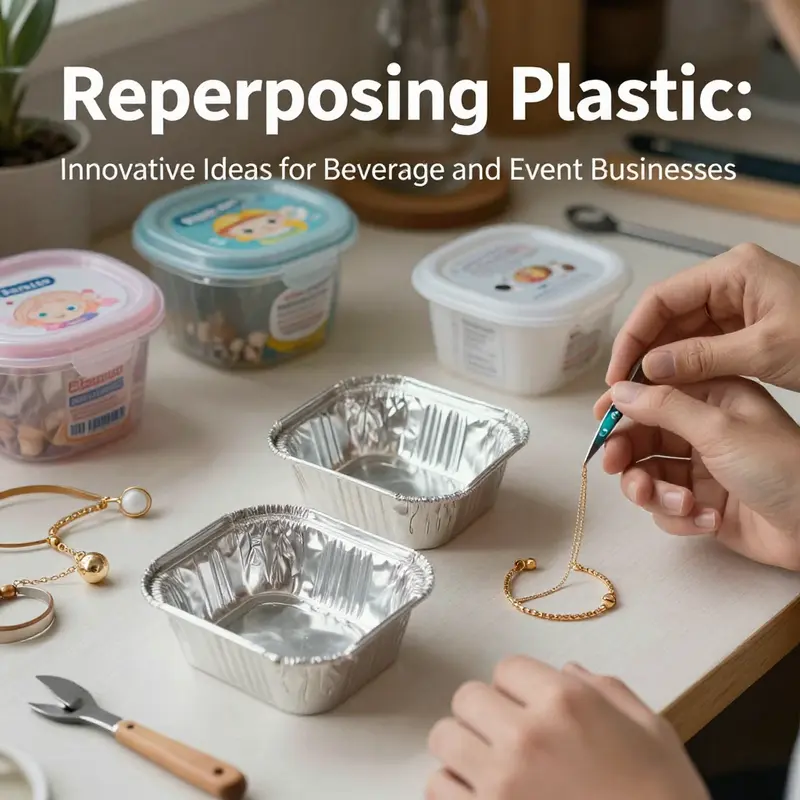
Plastic baby food containers, small in stature but surprisingly versatile, invite a form of creative ecology into the home. They arrive on the scene as convenient, lightweight housings for stage-managed portions of pureed meals, yet their shape, durability, and smooth, consistent surfaces empower a different lifecycle altogether. When we pause to reimagine their fate, these little jars reveal a spectrum of possibilities that extend far beyond storage. They become jewelry in the most unassuming sense, yes, but they also transform into everyday objects that soothe clutter, spark curiosity, and reduce the footprint of our daily rituals. The idea isn’t about making a single clever craft; it’s about recognizing a material’s second life and letting that recognition ripple through how we approach consumption, design, and play.
Among the most widely explored avenues is jewelry making. The containers, typically manufactured from polypropylene and designed for easy cleaning and consistent sizing, offer a predictable geometry that cements a sense of rhythm when arranged in lines or spirals. The process begins with a simple, almost meditative act: drilling holes in the sides of the containers. Those holes, not unlike tiny openings in a bead, become portals for thread, string, or elastic. A crafter can string through the holes to link several containers into a bracelet, a choker, or a set of bangles. The size and curvature of the container create a gentle, modular silhouette that sits lightly against skin, catching light with a quiet gleam that is less about flash and more about an organic, handmade quality. Skillful placement of color—whether by choosing containers in a rainbow sequence or mixing translucent with opaque tones—produces patterns that feel intentional and wearable. The holes also invite a blend of materials beyond thread and elastic. Fine wire can be threaded through for structure, while tiny beads or sequins can be embedded at the edges to create a textured edge. The result is jewelry that is both conversation piece and everyday accessory, signaling a commitment to reuse without sacrificing style.
A neat twist in this realm is to treat the inner liners or metallic facets of some containers as design accents. In certain designs, shiny aluminum foil liners embedded within the container walls can be repurposed as metallic inlays or reflective highlights. Flattened and trimmed with care, these foil elements can be folded into small charms or attached along the outer edges of a bracelet or pendant. The metallic shimmer, though modest, adds a fleeting glamour that still reads as environmentally conscious rather than commercially manufactured. This approach respects the material’s original intent while nudging it toward a more elevated aesthetic that resonates with craft fairs, school art rooms, and family projects alike. The emphasis remains on accessibility and safety—drilling is kept to a prudent scale, and all pieces intended to touch skin are finished with smooth edges and secure closures, so they remain comfortable through long wear and frequent handling.
The broader spectrum of reusables extends beyond adornment. These containers can quickly pivot from personal adornment to practical household items that nurture order and inspire small acts of sustainability. Consider mini candy jars that showcase a colorful assortment of treats or tiny keepsakes. Their clear, glass-like transparency makes them ideal for display on a shelf or desk, where a cluster of small, labeled jars becomes a visual reminder of what is stored and why it matters. Seed organizers—each chamber designated for a different variety or year’s planting plan—turn a kitchen drawer into a miniature greenhouse, turning gardening chores into a tactile, satisfying routine. When filled with dried seeds and labeled with a simple handwritten tag, the containers encourage a sustainable loop in which plants, rather than plastic, begin a season’s journey from balcony to bed to harvest.
Another charming application is the DIY snow globe. Paired with a small figurine, a drop of glycerin, and a pinch of glitter, the container can become a tiny, self-contained world that kids can shake and observe. The result is a small landscape inside a clear, protective shell that travels well, stores neatly, and provides a moment of whimsy without discarding a larger plastic construct. The appeal lies in the container’s transparency and uniform form, which makes the scene inside legible and delightful from every angle. Displayed on a shelf or used as a centerpiece, these snow globes invite storytelling and creative play, reinforcing a narrative of care and ingenuity rather than disposal.
Storage, of course, remains a cornerstone of practical upcycling. The same containers that host jewelry or snow globes can store dry goods in the pantry with the same airtight seals that once preserved baby food. The lids, when labeled with a clear handwriting or a simple symbol, convert into a fast, readable system for organizing grains, beans, pasta, and spices. Their cylindrical shape makes stacking intuitive, while the transparent walls enable quick visual checks for freshness. This is not merely about tidiness; it’s about a pantry that breathes with clarity. The act of labeling is itself a modest ritual—a reminder that organization, like craft, is a process built on small, repeatable actions that accumulate over time to reduce waste and improve efficiency. As a result, the kitchen table becomes a workshop of functional beauty, where everyday containers serve as both storage and reminder of the value of reuse.
The environmental imperative behind these small-scale projects is straightforward and persuasive. Upcycling these containers reduces plastic waste by extending a product’s life beyond its original use. It also lowers the demand for new packaging, nudging households toward a cyclical mindset where materials circulate rather than end up in landfills. Mindful consumption—choosing to repair, repurpose, or reinvent rather than replace—becomes a thread that runs through the home. When a family chooses to repurpose a container into a piece of jewelry or a seed organizer, they are adopting a narrative that foregrounds resourcefulness and imagination. It is not a rejection of convenience but an expansion of its meaning: a way to extract value from what would have been discarded, and to teach children to see potential in the ordinary.
To widen the circle of inspiration, it helps to look to communities that celebrate recycled materials as a medium for creativity. A curated board of projects, shared across social channels, shows how simple, readily available materials can be transformed into functional objects or wearable art. The stories behind these projects often emphasize process as much as product—measuring, shaping, and testing ideas, then refining them into durable, safe, and aesthetically satisfying results. The journey from container to jewelry or from container to seed organizer is often iterative, with trial and error guiding improvements in edge finish, hole placement, or color coordination. The joy is in the making as much as in the end result, and in the shared sense that small acts of craft can contribute to larger conversations about sustainability and design.
The practical steps to embark on these projects are simple, even for beginners. Start with a clean container and a steady drill with a fine bit. Create a few evenly spaced holes on opposite sides to enable a range of threading options. Smooth any rough edges with sandpaper or a small file to avoid snagging fabric or skin. Choose thread or elastic thick enough to hold its shape but flexible enough to bend around the wrist or neck. Join the pieces with knots or small metal rings, depending on the look you want. Color can be introduced through the containers themselves or by adding small beads, charms, or fabric accents. For the more metallic touches, foil liners can be repurposed with care—carefully trimming and flattening to avoid sharp edges, then attaching as a decorative element or using as a reflective highlight to catch the eye in natural light. The objective is to keep the process joyful and approachable while ensuring the final pieces are safe for wear or daily handling.
In considering the reuse calculus, it’s useful to reflect on the role of design in shaping user behavior. The more a material is integrated into daily routines as a practical tool—like a compact seed organizer tucked into a purse or a compact bracelet that doubles as a conversation starter—the more likely it is to remain in use. The value proposition moves from a single, disposable object to a transparent, adaptable system that evolves with a household’s changing needs. This shift is reinforced by the growing interest in “slow craft” and social-practice perspectives that see making as a form of care—care for the environment, for craft tradition, and for the people who inhabit the home. The containers become not just objects but artifacts of a learning process about resourcefulness, patience, and collaboration across generations.
For those seeking a broader context of materials reuse and sustainable packaging alternatives, the conversation often converges with discussions about takeout and everyday food packaging. One practical entry point is exploring eco-friendly takeout packaging options that prioritize reusability, recyclability, or compostability without sacrificing usability or safety. This perspective can influence how families collect, store, and repurpose containers in daily life, encouraging designers and makers to consider modular, universally compatible shapes that can transition from kitchen to craft room with ease. eco-friendly takeout packaging options provides a glimpse into how packaging can be designed with end-of-life reuse in mind, aligning consumer habits with material longevity and craft potential.
With an eye toward community and shared knowledge, it’s also valuable to connect with broader DIY ecosystems. The world of upcycling thrives when ideas circulate—through tutorials, swap groups, and online galleries where crafters post their finished pieces and the steps they took to reach them. The cultural pull of upcycled jewelry and reusable household items lies in the narrative these projects carry: a story of turning something once considered waste into something that brings joy, utility, and a sense of accomplishment. In that sense, plastic baby food containers become more than a material; they become a gateway to a mindset that honors resourcefulness, creativity, and resilience. The practice is accessible, affordable, and scalable—from a single bracelet to a small collection of home-accents that reflect a family’s unique tastes and values.
Ultimately, these repurposing paths invite a reimagining of the daily routines that have long relied on single-use plastics. They remind us that craft and care can coexist with efficiency and practicality. The containers’ small footprint is offset by the bigger footprint of the ideas they carry forward: that waste is not an endpoint but a starting point, that materials carry meaning beyond their original purpose, and that people—especially families and young makers—can contribute to a more thoughtful, sustainable cultural fabric. It’s a reminder that creativity can be a form of stewardship, a way to honor the resources we use and the communities we share them with.
For hands-on inspiration and a broader gallery of transformations, many crafters turn to curated ideas that showcase how simple, recycled plastic containers can become wearable art or practical organizers. The process is approachable, and the results are wonderfully varied—from bold, colorful bracelets to delicate, understated pieces that echo the curves and translucence of the original form. If you’re new to this, start with a small experiment: a single bracelet, a seed organizer, or a tiny snow globe. Let your curiosity guide you through trim, drill, and thread, then let the piece rest and reveal its character as it rests on your wrist or shelf. The learning curve is gentle, and the potential is generous. As more people pick up this practice, the chorus of ideas expands, and so does the chance to embed sustainable choices in everyday life.
External resource: https://www.pinterest.com/pin/1234567890123456789/
Final thoughts
Repurposing plastic baby food containers provides businesses with innovative solutions that not only enhance sustainability but also foster creativity and organization. By transforming these containers into furniture, efficient storage, and upcycled jewelry, businesses can showcase their commitment to eco-friendly practices while serving practical needs. This approach exemplifies how even the simplest items can be reimagined in ways that support a brand’s values, making a positive impression on clients and customers alike. Embracing these ideas can lead not only to a tidier space but also to a more engaging and thoughtful business environment.