
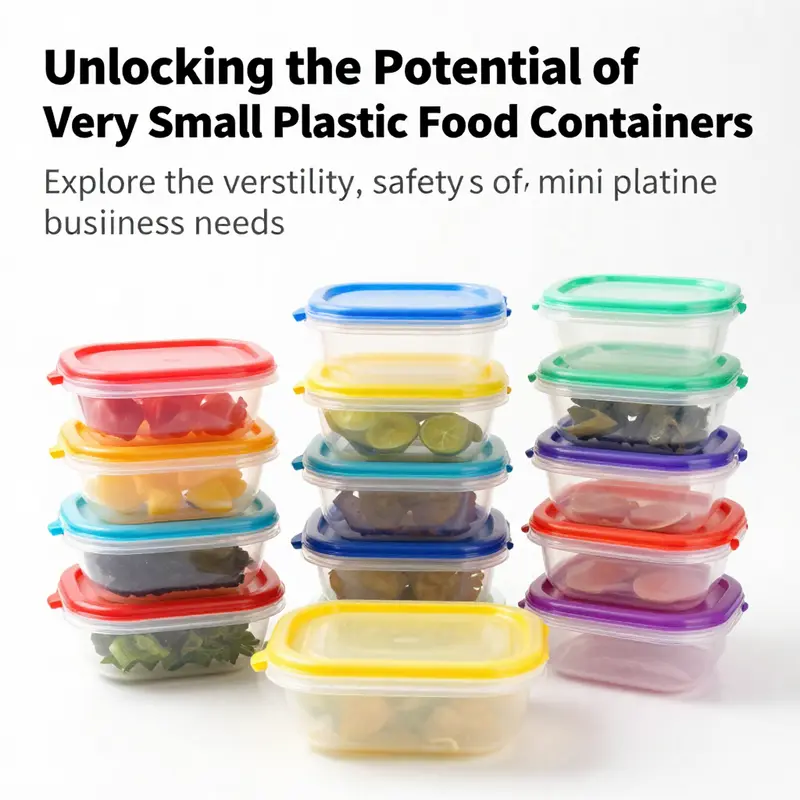
Very small plastic food containers are indispensable for a variety of businesses, providing a safe, practical, and organized solution for packaging. From bubble tea shops to catering services, these containers cater to diverse applications and needs. This article delves into the different types of very small plastic food containers and their specific uses, the materials they are made from and the safety standards governing them, advice for their safe usage, and effective purchasing options. Each chapter breaks down a critical aspect of small plastic food containers, essential for food industry professionals aiming to enhance their service and product offerings.
null
null
Tiny Yet Trustworthy: Materials, Safety Standards, and Practical Wisdom for Very Small Plastic Food Containers
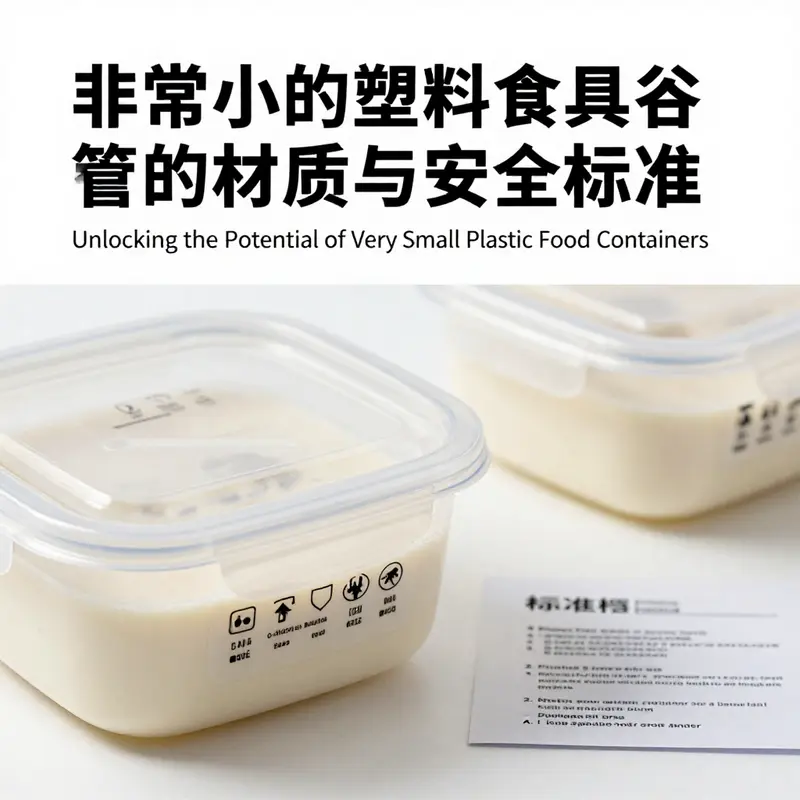
Small plastic food containers have become useful allies in kitchens, travel kits, and lunch boxes. Their tiny size makes portion control and portability easy, but it also demands careful attention to materials, safety standards, and proper use.
This chapter emphasizes that even the smallest containers should meet established food-contact regulations. In many regions, labeling like “food contact” or “food grade,” together with third-party certifications, signals compliance with migration limits and material stability. Choose PP (polypropylene) for heat tolerance and washability; PE can work for cold or non-heating uses if temperature limits are respected; PS is generally unsuitable for hot foods due to limited heat resistance; PC is best avoided for heated foods because of BPA-related concerns. When in doubt, prefer containers explicitly rated for food contact and check for microwave and dishwasher compatibility as labeled by the manufacturer.
From a practical perspective, inspect containers for cracks, clouding, or odors, and replace those showing signs of aging. Use the heat and storage specifications to guide use, and avoid prolonged contact with oils or acids if the material is not rated for such exposure. Maintain uniformity when possible by using containers from the same line to reduce surprises.
From a lifecycle view, tiny containers can reduce waste when they are durable and reusable. Replacing them only when necessary helps minimize environmental impact. Look for batch-specific testing or certifications when buying in bulk and favor suppliers who provide clear heat, storage, and migration information. Clear labeling indicating intended use (cold storage, heating, or long-term storage with oils or acids) helps prevent mismatches.
In short, the smallest vessels deserve the same discipline as larger ones: use food-grade materials, respect heat and storage guidelines, and rely on verified certifications. A well-chosen micro-container can support portion control, preserve freshness during travel, and offer reliable convenience without sacrificing safety. For further reading on regulatory frameworks and material choices, seek credible sources and manufacturer specifications.
Tiny Vessels, Safe Choices: A Pragmatic Guide to Ultra-Small Plastic Containers
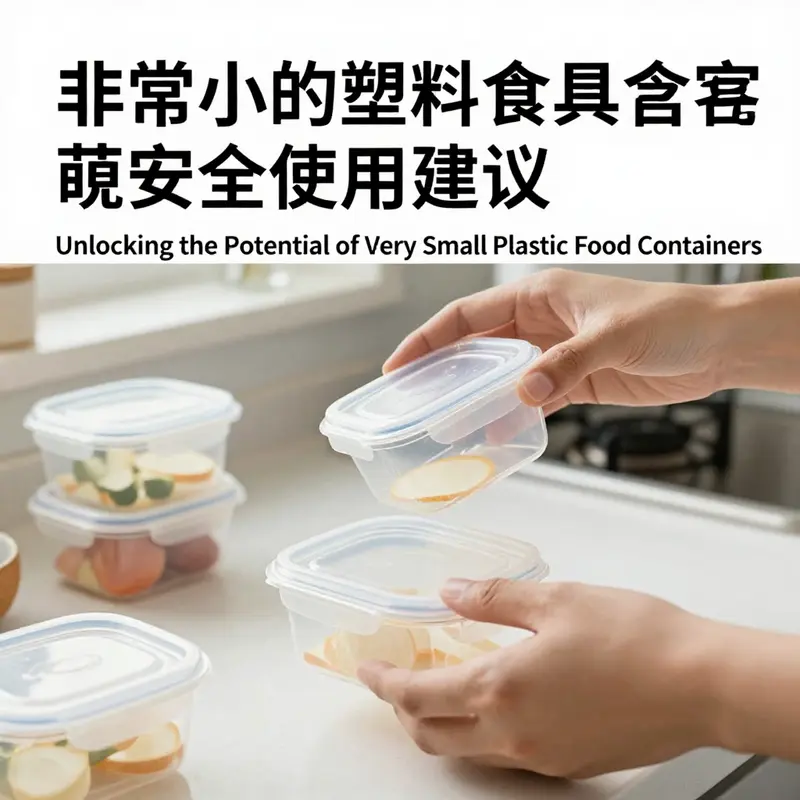
Tiny vessels have become common in kitchens and travel kits. Their small size makes them convenient for sauces, dressings, or baby portions. Yet the same small volume that helps portability can increase risk when migration from plastic occurs. This chapter outlines practical steps to minimize exposure while preserving usefulness. The guidance focuses on three levers: material choice, use patterns, and care routines. Whenever possible, favor safer alternatives like glass or stainless steel for high risk contents, and keep plastic use limited and short term. Understand the codes on containers, but do not rely on them as an absolute guarantee for every scenario. For example, PP code 5 is relatively friendly for short term storage and light heating, but even this option has limits. Avoid PVC code 3 and PS code 6 if possible, as these materials raise concerns about additives and heat stability. The catchall 7 should be treated with special caution and used only when safer options are unavailable.
A practical framework is to avoid heating in plastic, avoid long storage of fatty or acidic foods in aged containers, inspect for wear, replace damaged items, and follow the manufacturer guidelines. For everyday use, keep hot contents out of heat resistant plastics and prefer dedicated sets for cold items. When plastic must be used, choose containers with clear safety credentials and use them for short, low risk tasks only. Clean thoroughly, dry completely, and store away from direct sun or heat.
Household routines include regular replacement of aging containers, mindful washing, and avoiding abrasive cleaners that can scratch the surface. A scratched container can harbor residues and increase migration risk. The goal is to balance convenience and safety by applying a disciplined approach to storage and reuse.
Conclusion: small does not mean risk free. A cautious, practical approach keeps the benefits of portability while reducing potential exposure. By prioritizing safer materials for frequent use and employing careful handling, families can enjoy ultra small containers without compromising health.
Tiny Yet Essential: Mapping Purchase Channels and Price Signals for Very Small Plastic Food Containers
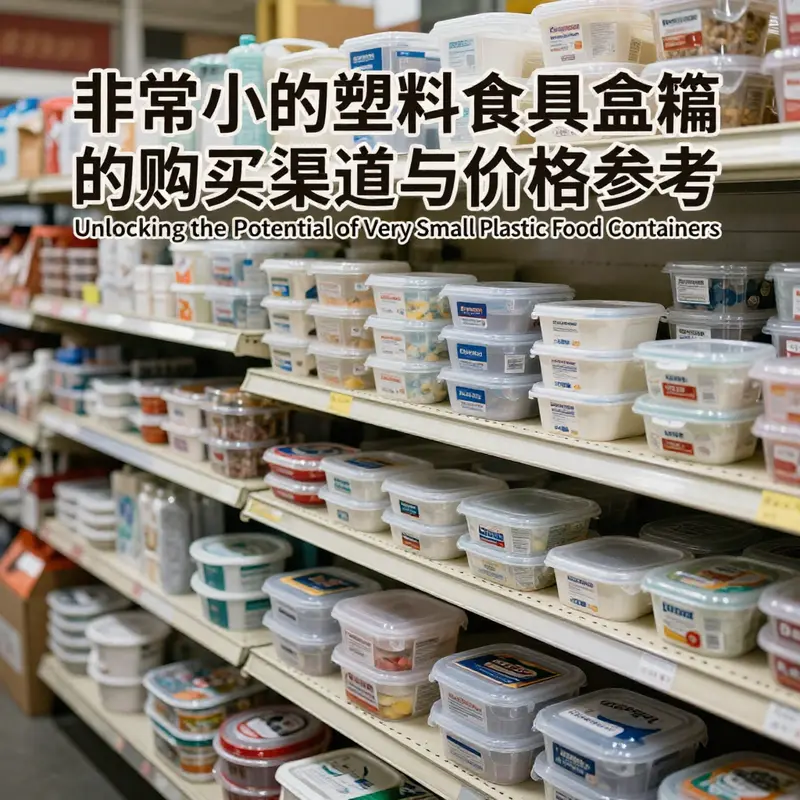
Tiny objects with outsized impact appear at the intersection of practicality and everyday logistics. They are small but they enable lunch planning, baby meals, and travel packing by reducing clutter and keeping portions tidy. This chapter traces the journey from need to purchase, showing how buyers navigate a landscape that runs from wholesale markets to retail storefronts, from domestic online shops to international suppliers. Price signals, material safety, and thoughtful design converge to shape how often and how confidently people rely on these containers. The central question is simple: where should one buy these tiny vessels, and what should one expect to pay for a batch or a few reliable units that endure repeated use? The answer depends on scale, purpose, and the balance between cost and assurance of quality.
On the wholesale side, platforms that specialize in bulk procurement are often the first stop for institutions, small businesses, and households stocking up for events or meal prep. Large marketplaces aggregate suppliers into one search experience, enabling price negotiation as order quantity climbs and allowing variations in size, lid style, and color. In the 30 to 50 milliliter range, a competitive bulk quote may hover around a few tenths of a unit of local currency per piece when ordered by the thousand. Such pricing scales with volume, and buyers can often bundle lids, seals, and even label-ready surfaces into a single purchase. Reliability and consistency—food-grade materials, leak-proof seals, and odor stability after repeated washing—are what matter most.
Domestic e-commerce platforms add convenience for individual shoppers and small offices. The allure of quick ordering, same-day shipping where offered, and user reviews can tilt choices toward specific designs or brands. Per-unit prices are typically higher than bulk wholesale, reflecting convenience, smaller orders, and post-purchase support such as warranties or easy returns. The long-term value often lies not only in upfront price but also in ongoing performance, including resistance to staining, stability under repeated use, and safe handling of different foods. When heating is involved, many experts advise avoiding microwaving these small containers and favoring glass for reheating when possible.
Materials and safety standards underpin every buying decision. The most common options are food-grade polypropylene (PP) and polyethylene terephthalate (PET). PP is favored for repeated washing, mild heat, and durability, while PET offers clear visibility of contents and suitability for short-term storage. Buyers should verify BPA-free labeling and compliance with local food-contact standards. Certifications or explicit statements such as FDA, LFGB, or SGS testing help establish trust. Given the long hours of use, some containers may face subtle changes in appearance or performance, so testing compatibility with intended foods is prudent before committing to a large order.
Design matters as much as material. A compact 30–50 ml container should tuck easily into drawers, lunch boxes, or travel kits. Clear bodies help with quick identification, and a secure screw cap or snap-on lid is essential to prevent leaks in bags or backpacks. The ability to mix and match sizes and lids, and to nest when empty, can influence overall value when choosing a supplier or retailer.
The price landscape mirrors the trade-offs between scale, quality, and convenience. Wholesale units can be cost-effective at large volumes, while retail channels deliver immediacy and service at a higher per-piece cost. Buyers should also account for hidden costs like shipping, handling, minimums, or restocking fees. The real value comes from a predictable performance over time: a container that resists staining, seals reliably, and stacks neatly saves time and reduces waste.
To navigate decisions, define the needed capacities (for example, 30 to 50 ml), weigh price against safety and durability, consider bulk versus small-batch flexibility, and inspect design and labeling for compatibility with your storage environment. Look for valid food-safe certifications and request samples when possible to test real-use performance, leakage, and durability.
For context, a representative wholesale listing shows a compact, sealable 35 ml container intended for sauces or small portions, highlighting clear material, a reliable seal, and a base shape designed for stacking. See a typical supplier profile or product page for a similar small container with lids, noting how branding, labeling, and consistency emerge across a family of products. External resources and supplier catalogs reinforce the pattern: compact design, reliable sealing, and compatibility with standard storage spaces.
In the broader supply chain, price signals reflect more than per-unit cost. They signal reliability, delivery speed, and the ease of obtaining replacements. For institutions or event planners, large, consistent orders offer confidence; for individuals, the agility of small batches supports experimentation and budgeting. The long-run value emerges where the routine depends on predictable performance, and informed buyers learn to balance cost with safety and practicality.
As you map your own purchasing decisions, watch how channels evolve. New suppliers, changing packaging standards, and shifting supply chains can alter pricing dynamics and availability. The core advice remains consistent: prioritize food-grade materials, verify safety certifications, and test containers under real-use conditions before committing to large orders. If you are selecting a first batch, start with a small mix of sizes or lid configurations to identify what best fits your needs, and aim to build a dependable toolkit that serves a variety of daily uses.
Final thoughts
Very small plastic food containers offer dynamic solutions for businesses in the food industry, from enhancing meal presentation to ensuring safe food storage. Understanding their types, material safety standards, best usage practices, and where to source them helps you make informed decisions that elevate your service offerings. Prioritizing safety and efficiency when selecting and using these containers can significantly enhance customer satisfaction and operational efficiency.