
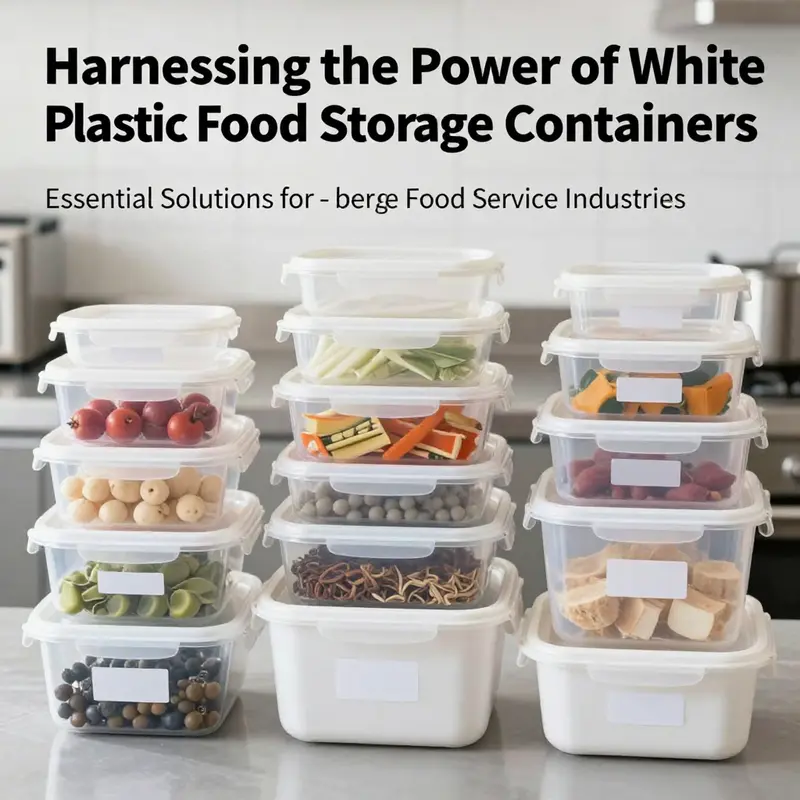
In the competitive landscape of food service and beverage industries, efficiency and practicality are paramount. White plastic food storage containers offer an affordable, versatile solution for businesses aiming to optimize their storage capabilities, enhance food presentation, and ensure safety. This article delves into the myriad applications, economic factors, technological advances, sustainability considerations, and consumer preferences surrounding these indispensable tools. By exploring these chapters, professionals in bubble tea shops, restaurants, food trucks, catering services, event planners, and corporate procurement teams will gain a holistic understanding of how white plastic food storage containers can elevate their operations.
White Plastic Food Storage Containers: Design, Use, and Impact in Modern Kitchens
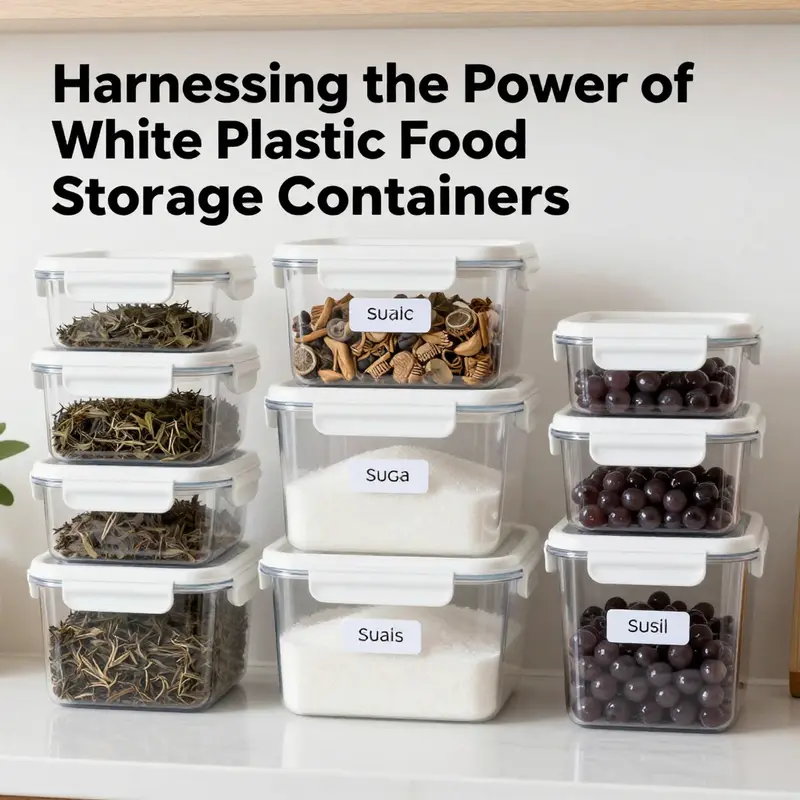
White plastic storage containers are common in kitchens and facilities for their durability and versatility. They are typically made from HDPE or PP, chosen for food safety, chemical resistance, and the ability to withstand repeated use. The interiors are smooth for easy cleaning, and lids seal well to protect contents. The designs support modular stacking to maximize space in pantries and on shelves.
For home use, they help preserve dryness and organization for staples like flour, rice, and beans, with transparent bodies and clear labeling enabling quick identification. For larger operations, they enable batch storage, transport, and HACCP-compliant cleaning cycles, with thicker walls and compatible sealing systems that minimize leaks and contamination.
However, they are not suitable for high-temperature cooking; most are intended for storage rather than heating. When heat tolerance is needed, alternatives like glass or oven-safe plastics may be considered. The choice of container is a balance among cost, durability, safety, and the specific workflow requirements of the kitchen or facility.
null
null
From Pantry Order to Everyday Safeguards: The Evolution of White Plastic Food Storage Containers

The modern kitchen is a workshop where efficiency, safety, and predictability converge in everyday practice. White plastic food storage containers sit at the heart of this convergence, venerable in their utility yet quietly shaped by evolving science and changing consumer expectations. The arc of their development—a shift from simple, reusable receptacles to carefully engineered systems—mirrors a broader maturation in how households and food operations think about storage, safety, and sustainability. What began as practical packaging soon became a framework for managing freshness, reducing waste, and navigating regulatory landscapes. Today, that framework is defined by deliberate material choices, smarter designs, and an expanding sense of environmental accountability, all while remaining anchored in the essential advantages that make white plastic containers so prevalent: affordability, versatility, and a universal compatibility with the appliances and routines of modern life.
Material improvements have driven much of this evolution. Early containers satisfied basic needs: a durable, lightweight vessel to shield dry goods from moisture and pests. Over time, manufacturers refined the polymers themselves, pushing for better heat tolerance and chemical resistance without sacrificing translucence or clarity. The result is a family of plastics engineered to endure the rigors of home microwaving, dishwasher cycles, and freezer storage. This means foods can be portioned, reheated, and stored with fewer transfers and less handling, a boon for meal-prep rhythms and batch cooking. The practical effect is not merely convenience; it is a meaningful reduction in handling that lowers the risk of spoilage and contamination between steps in a daily or weekly cooking routine.
Alongside performance, safety has become a defining feature. Consumer concern about chemical contact with food has propelled a relentless push toward safer formulations. BPA-free materials, in particular, have become the standard expectation rather than a niche reassurance. The science behind these materials emphasizes stable, inert interactions with food contents across common temperature ranges. Advances also extend to migration testing and clear labeling, so users can make informed choices that align with dietary preferences or sensitivities. In practice, this means containers that perform under heat but do not degrade or leach substances, even after repeated cycles in a microwave or dishwasher. The shift toward safer plastics is not merely a marketing tale; it reflects a disciplined approach to materials science that prioritizes consumer health while preserving the flexibility and reuse that drive cost savings and waste reduction.
Sustainability, too, has moved from a peripheral concern to a central criterion. The latest white plastic storage options increasingly emphasize recyclability and the use of recyclable feedstocks. This is not just about end-of-life disposal; it also shapes how containers are designed in the first place. If a product can be efficiently recycled and re-integrated into new products, the entire lifecycle becomes more sustainable. That perspective feeds decisions about surface finishes, color choices, and closures, ensuring that design and disposal considerations inform each other rather than collide later in a waste stream. In this sense, the white plastic storage container is evolving from a simple vessel to a modular, recyclable component within a broader system of household logistics and urban waste management.
Design innovations accompany these material and safety improvements, underscoring a shift toward more purposeful use. Airtight seals have become a hallmark of contemporary designs, extending the shelf life of contents and enhancing confidence during transport. For households that portion meals for lunches or quick dinners, an airtight seal minimizes the risk of leaks and odors, a practical feature when containers travel in bags, lunchboxes, or briefcases. Stackability follows closely behind, addressing the age-old problem of clutter in crowded cabinets and pantries. By interlocking with minimal footprint, these containers help create predictable, modular storage schemes that simplify rotation of dry goods, snacks, and leftovers. The interplay between airtightness and stackability reflects a broader trend: storage products that do not just hold food, but actively contribute to the organization, speed, and hygiene of kitchen workflows.
The narrative of these advances is not just about better boxes; it is about how households relate to food preparation itself. A well-designed storage system supports healthier routines by enabling more predictable planning and reuse. When a batch of ingredients is portioned into sealable, microwave-safe containers, it becomes easier to reheat without extra steps or dishware, and easier to portion meals with clarity and discipline. The dishwasher-safe feature extends a container’s life by allowing easy sanitization after use, a factor that resonates with families seeking minimal fuss and maximum hygiene. Yet, while the story celebrates these capabilities, it also carries clear boundaries. The vast majority of white plastic containers are not intended for oven or broiler use. Exposure to high heat can warp or degrade the material, potentially compromising safety and the integrity of the seal. Consumers are advised to check label specifications and to reserve these containers for reheating, freezing, or cold storage rather than for high-temperature baking tasks. This caveat is not a limitation to be lamented but a guardrail that reinforces best practices for safe kitchen operation.
Within this evolving landscape, the role of packaging design extends beyond the kitchen. The same advances that improve home storage also inform commercial and institutional contexts. In food service and grocery operations, clear, durable containers help staff identify contents quickly, reducing cross-contamination risks and improving inventory control. The transparency that makes these white plastics popular in homes is equally valuable in professional settings where speed and accuracy matter. The compatibility with common appliances and cleaning processes translates into streamlined workflows, fewer product changes, and less downtime between batches. In short, the design language of contemporary white plastic containers—clarity, reliability, and resilience—aligns with a growing demand for efficient, scalable food management across diverse environments.
The chapter’s thread with the broader article topic—the ubiquity and practicality of white plastic storage—also touches on the choices consumers make at the point of purchase. Today’s marketplaces teem with options that promise safety, durability, and value. Transparent clarity helps in quick content recognition without opening a lid, a small but meaningful ergonomic advantage in busy kitchens. Many sets offer airtight, leakproof lids that protect perishables during transport and storage, a feature that resonates with families who plan for school lunches, commute meals, and weekend picnics. Yet the conversation remains grounded in the realities of everyday use. For those seeking to minimize heat exposure risks, glass alternatives still exist, offering different strengths and trade-offs. Glass containers may boast higher heat resistance and a longer life in some contexts, but they tend to be heavier and more fragile, challenging for households that prioritize convenience and resilience. The plastic option thus occupies a durable middle ground, balancing ease of use with reliability and safety while maintaining a lower upfront cost, multiple sizes, and broad appliance compatibility.
The practical upshot of these developments is a more intelligent, adaptable storage ecosystem. Consumers can curate a set that covers everything from sealed dry goods in the pantry to preportioned meals in the fridge, while remaining mindful of heat limitations and labeling for safe use. A well-considered assortment helps households avoid duplicate purchases, reduce food waste, and maintain a tidy, navigable kitchen landscape. The long-term savings are not merely monetary; they accrue as time saved, less wasted food, and a calmer culinary routine. When shopping, readers encounter a familiar calculus: weigh heat tolerance against reusability, weigh safety against convenience, and weigh the environmental implications of circularity against the need for sturdy, dependable containers that stand up to daily life. The best outcomes emerge when design, material science, and consumer behavior converge toward a practical, sustainable, and safe storage practice.
For those exploring related packaging ecosystems and broader sustainability trends, the conversation extends beyond the kitchen and into product categories that share the same technological and design logic. A relevant touchpoint is the ongoing development of takeout and delivery packaging, where durability, safety, and ease of disposal intersect with consumer expectations for microwave reheating and leak-resistance. A useful starting point for this broader thread is an internal resource that highlights eco-friendly takeout boxes for food packaging, which reflects the same design principles—leak resistance, microwave compatibility, and thoughtful materials selection—found in household storage solutions. You can learn more about that approach here: eco-friendly takeout boxes for food packaging.
The story closes with a nod to the abundance of real-world options and the assurance that, despite rapid material and design advances, the core reasons people choose white plastic storage containers remain intact: they are affordable, versatile, and dependable in organizing both the pantry and the fridge. The ongoing innovations in heat resistance, chemical stability, and airtight sealing reaffirm that these containers can be trusted to preserve freshness, reduce waste, and simplify daily routines. They are, in effect, the unsung scaffolding of contemporary home cooking and professional food management—a stable, scalable platform on which families and businesses alike can build orderly, efficient, and safer food practices.
External resource for further reading: For more on modern meal-prep container designs and practical usage considerations, see the external resource here: https://www.amazon.com/HOMEE-Meal-Prep-Containers-Pack/dp/B0BZJ2WY5T
Balancing Convenience and Footprint: A Focused Look at White Plastic Food Storage Containers

White plastic food storage containers, commonly made from polypropylene, offer convenience through lightweight design, clear visibility, and affordable replacement. Yet their lifecycle raises environmental questions that matter to households and organizations alike. The material choice supports durable, microwave- and dishwasher-friendly use, but production relies on fossil fuels and energy-intensive processes, contributing to climate impact even before the containers enter kitchens. Although many PP containers are marketed as recyclable, real-world recycling is variable and complicated by contamination, sorting challenges, and local infrastructure limits, which can lead to lower recovery rates and end-of-life waste. Over time, repeated use can cause wear: clouding, scratches, warped lids, and odors that resist cleaning, potentially compromising safety and performance. Microplastics concerns add another layer of consideration when plastics degrade or are subjected to heat, underscoring the importance of proper maintenance and end-of-life planning. Practical pathways to reduce impact include choosing higher-quality, durable sets to reduce replacement frequency, following manufacturer cleaning guidelines to preserve clarity, and rinsing before recycling to minimize contamination. When feasible, replacing or supplementing with glass or silicone for certain uses can lower environmental footprint while preserving safety and function. Finally, informed purchasing decisions—favoring products with clear material disclosures, durable design, and end-of-life guidance—help align daily convenience with broader sustainability goals, highlighting the value of a considered, hybrid approach to plastic storage that minimizes waste without sacrificing practicality.
Clear, Convenient, and Cautious: The Evolving Landscape of White Plastic Food Storage Containers
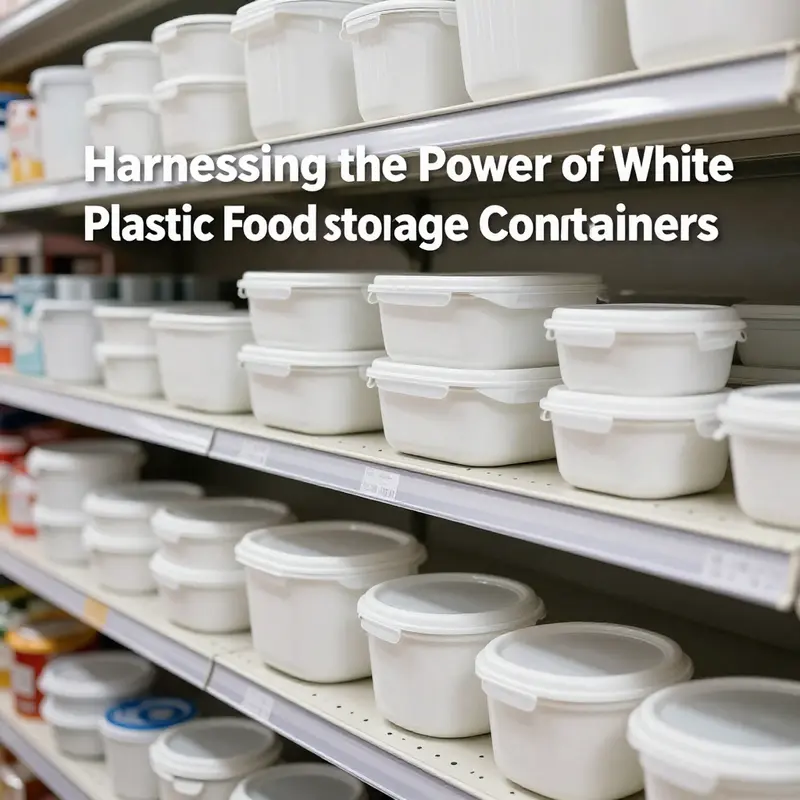
Across kitchens and food service operations, white plastic storage containers have long stood as a quiet backbone of organization. They are not flashy, but they are dependable: lightweight enough to move from pantry to fridge, transparent enough to reveal their contents at a glance, and durable enough to withstand frequent use in meal prep, portioning, and transport. Yet the story of these containers is not static. It is being rewritten by a growing chorus of consumers who want practical efficiency without compromising safety or environmental responsibility. In this moment, the market remains firmly anchored by the practical advantages that have defined plastic storage for years—clarity, stackability, and compatibility with everyday appliances—while the language around use, safety, and sustainability is becoming more nuanced. A recent look at consumer preferences in a specific urban context illustrates both the persistence of demand and the pressure to reimagine what storage means in a world scrutinizing plastic waste and chemical exposure. In Honolulu, for example, researchers observed that while plastic containers continue to hold a sizable market share, a notable segment of shoppers expresses a willingness to pay more for non plastic alternatives when possible. This tilt is not a rejection of convenience; it is a clarification of priorities. Consumers want containers that keep food fresh and reducing waste simple, but they also want to align everyday choices with a broader commitment to environmental stewardship. The implications of this tension ripple through design decisions, retail patterns, and the education that accompanies product labeling, reminding us that function and form are increasingly tethered to values that guide purchase decisions.
In practical terms, white plastic storage remains popular because it delivers a suite of features that support everyday routines. The containers are light enough to lift with one hand, sturdy enough to resist accidental drops, and transparent enough—at least in many configurations—to identify contents without prying open a seal. This combination supports pantry efficiency in both home and commercial contexts. When space is tight, the ability to stack similar shapes and sizes is more than a matter of convenience; it is a basic design principle that translates to less clutter and faster retrieval during busy mornings or peak service hours. For meal prep and portion control, these containers are frequently designed with airtight seals that help maintain moisture balance, which is crucial for dry staples like grains, flour, and sugar. The presence of UV protection in some lines adds another layer of resilience, guarding against subtle quality changes that light exposure can cause over longer storage periods. Together, these attributes help ensure that a firm staple remains a reliable part of a kitchen system rather than a fragile stopgap.
Yet, even as many households and institutions continue to rely on white plastic, consumer dialogue has grown louder around the health and environmental footprint of plastics. The concerns are not unfounded. Questions about chemical leaching, the potential release of microplastics, and the end-of-life fate of plastic storage containers have moved from niche discussions to mainstream considerations. From a safety standpoint, manufacturers increasingly emphasize that many products are designed to be microwave-, dishwasher-, and freezer-safe, but they also urge buyers to consult specific guidelines for temperature limits and lid seals. This careful approach reflects a broader shift toward more transparent labeling and clearer communication about what the product can and cannot endure. In response, material science has progressed toward higher quality plastics that retain their integrity under repeated use. High-density polyethylene formulations, for example, are celebrated for durability and chemical resistance, which translates to longer lifetimes and potentially less waste per use. Still, even with improvements, the oven and broiler remain off-limits for most white plastic storage solutions. High heat can warp or distort containers that were never engineered for such conditions, making it essential for consumers to distinguish between reheating, cooking, and simply storing food. This distinction matters not only for kitchen safety but also for the longevity of the containers and the integrity of any lids, gaskets, or seals.
The environmental dimension of this conversation is undeniable. Across regions, there is growing interest in alternatives that minimize single-use waste and maximize recyclability. Glass and stainless steel are increasingly perceived as credible complements or even substitutes for many storage needs, particularly among environmentally conscious consumers who weigh the full lifecycle of a product when purchasing. This is not a universal verdict, however. Glass and metal bring their own trade-offs: higher weight, greater fragility in some contexts, and different temperature performance profiles. The choice between plastic, glass, and metal thus evolves into a nuanced calculation that weighs convenience, safety, durability, and environmental impact against user habits, space constraints, and budget. As the market continues to evolve, manufacturers respond by offering hybrids and clearer claims that help shoppers navigate these choices. Improved labeling, better information about material safety, and more precise guidance on reuse and disposal are part of a broader push to empower consumers to make informed decisions without sacrificing the practical benefits that keep these containers in steady use.
From a consumer behavior perspective, the durability and clarity of white plastic storage contribute to a strong habit of reuse and repurposing. In many households, the ability to repurpose containers for snacks, ingredients, or even non-food storage reduces waste and supports organization. The same logic applies in commercial settings, where reliable sealing and consistent sizing streamline inventory management, reduce spill risk during transport, and help maintain product quality across shifts and facilities. However, the sustainability conversation also nudges buyers to consider end-of-life options. Recyclability, recyclability labeling, and local infrastructure all shape how appealing a given container remains as a long-term solution. In markets where recycling streams are robust, plastic containers with widely accepted resin codes may be favored for their relative ease of processing. In areas where recycling is less straightforward, consumers increasingly favor designs that minimize waste, extend usable life through multi-purpose functionality, and encourage responsible disposal practices.
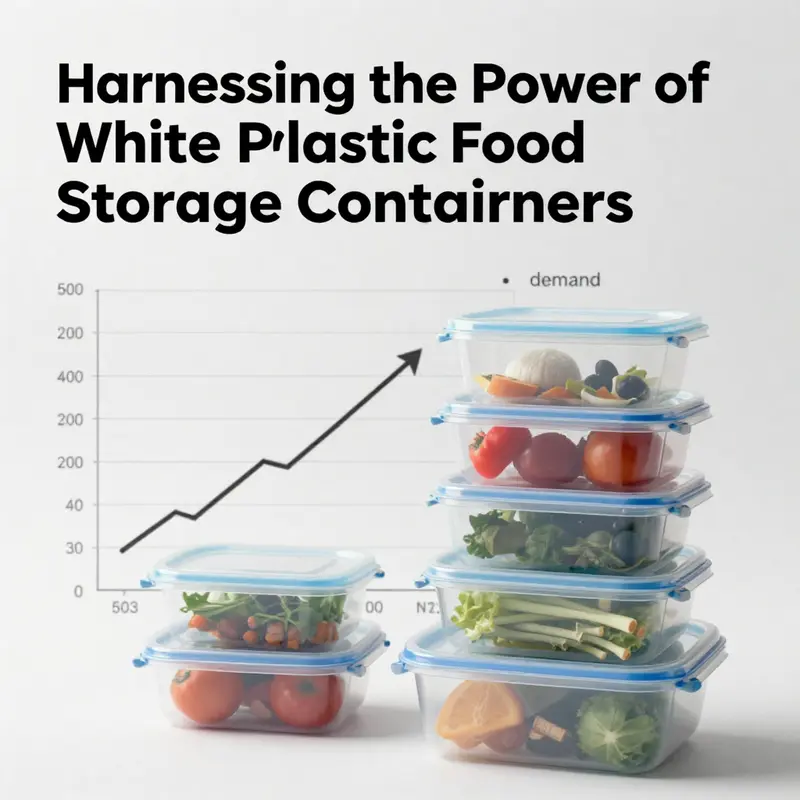
The trajectory of these preferences has clear economic implications. While plastics maintain a dominant market share—projected to hover near the high forties in terms of overall container usage in the near term—the momentum toward more sustainable materials is not a passing phase. Instead, it signals a longer arc of market evolution in which durability, safety, and recyclability become inseparable from price and convenience. This does not translate into a sudden decline for plastic storage, but it does translate into more selective purchasing, with more households and organizations seeking transparent information about material safety, heat tolerance, and lifecycle impact before committing to a purchase. For manufacturers and retailers, the challenge is to balance the enduring appeal of white plastic with the rising expectations for responsible design. That balance can drive innovations such as improved seal technologies, simplified, clearer labeling about safe use and cleaning, and more consistent recycling cues that align with municipal programs. It can also encourage the inclusion of optional inserts like labels and writing instruments that help users stay organized without compromising the seal or the contents safety.
In this sense, the appeal of white plastic containers endures precisely because they perform essential tasks with efficiency and reliability. Their role in supporting organized pantries, meal prep routines, and safe food handling remains vital even as consumer sentiment expands to consider health, safety, and the broader environmental footprint of everyday choices. The current moment invites a more deliberate approach to selection—avoiding high-heat applications, prioritizing products with clear safety information, and embracing designs that maximize reuse and minimize waste. It also invites continued attention to how market data, regional attitudes, and policy developments shape what families and institutions come to value in a storage system. As researchers document these shifts, they remind us that a small, seemingly ordinary choice about how we store our food has ripple effects that touch health, waste reduction, and a sense of everyday responsibility. For readers seeking a broader lens on how sustainability preferences are reshaping the plastic storage container market in the United States, a detailed industry analysis offers deeper context and quantitative grounding: Grand View Research – Plastic Food Storage Container Market. External Resource: https://www.grandviewresearch.com/industry-analysis/plastic-food-storage-container-market
Final thoughts
White plastic food storage containers are not just practical; they are essential tools for the modern beverage and food service industry. They provide practical applications that streamline operations, support economic efficiency, integrate advanced technologies for enhanced usability, and meet emerging sustainability expectations. As consumer preferences continue to evolve, businesses must adapt by opting for these versatile solutions. By investing in quality white plastic food storage containers, companies can maintain food quality, organization, and safety, ultimately leading to improved service and customer satisfaction.