
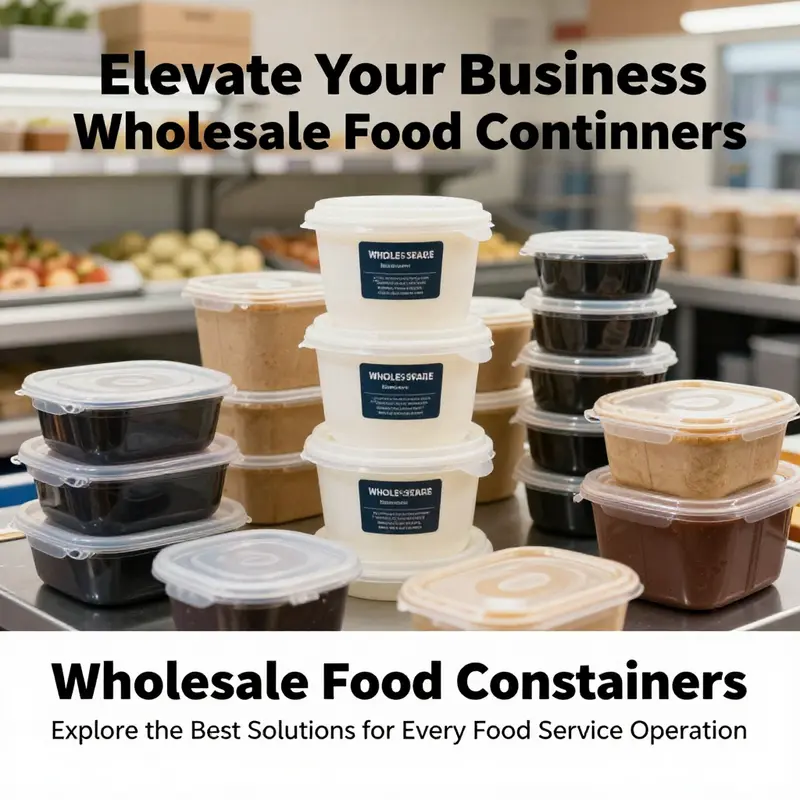
Selecting the right food containers can make a significant impact on the efficiency and presentation of your food business. From bubble tea shops to catering services, the containers you choose play an essential role in storage, transport, and customer satisfaction. In this guide, we will explore various types of wholesale food containers, beginning with the elegance and functionality of glass containers, followed by the versatile options presented by plastic containers. We’ll delve into sustainable choices like biodegradable containers, before wrapping up with an examination of the importance of lids and accessories. Each chapter is designed to provide you with the necessary knowledge to make informed decisions that align with your business goals.
Why Glass Wholesale Food Containers Raise the Bar for Safety, Brand and Sustainability
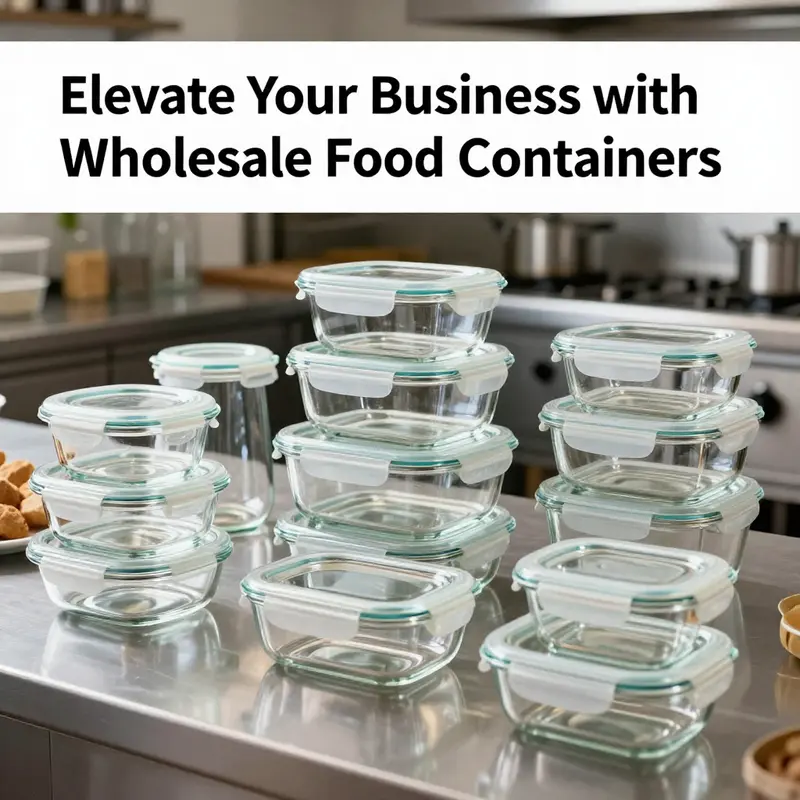
Glass wholesale food containers combine durable functionality with a premium presentation that suits a wide range of food businesses. Made primarily from borosilicate or tempered soda-lime glass, these containers resist thermal shock and stand up to repeated use. That means a single unit can be used for preparation, storage, reheating, and service. The ability to move food through the entire workflow in one vessel reduces handling, cuts cross-contamination risk, and simplifies kitchen logistics.
Glass is chemically inert. It will not leach into acidic or hot foods. That preserves flavor, texture, and the integrity of recipes. For businesses that sell prepared meals or packaged gourmet items, this is a meaningful quality difference customers notice. The transparent surface also offers a visual advantage. Clear glass shows product color and layers without artificial windows or liners. For retailers and meal delivery services, that transparency becomes a selling point and a trust signal.
Reusability and recyclability make glass an environmentally sound choice. Glass can be cleaned and returned to service dozens or hundreds of times. At end of life it is fully recyclable without downcycling, which aligns with stricter waste regulations and consumer expectations. For companies building sustainability claims, glass provides a credible foundation.
Thermal performance is another practical benefit. Borosilicate glass has low thermal expansion, allowing safe transfer from freezer to oven or microwave with little risk. Tempered soda-lime glass gains strength from a controlled cooling process. Both types support diverse operations, from batch cooking to retail display. Dishwashers are usually fine with thicker, quality glass, which lowers labor and handling costs compared with delicate alternatives.
There are trade-offs. Glass is heavier than plastic and paper. Transport and handling costs rise accordingly. Fragility is a real concern during distribution. Businesses must plan for protective inner packaging, secure palletization, and conservative shipping estimates. Upfront unit costs are higher than many disposables, which affects cashflow for first-time buyers. However, viewed as a capital investment, the lifecycle cost often favors glass when it is returned to reuse programs or replaces single-use alternatives.
Shipping and logistics shape many procurement decisions. When importing glass at scale, lead times typically reflect production schedules, kiln cycles, and finishing processes. Buyers should expect multi-week lead times for large orders, with additional time for quality inspections, customs clearance, and ocean transit. Ordering buffers for seasonal spikes helps avoid stockouts.
Manufacturing clusters in regions with established raw material sources and ceramics industries tend to offer faster scaling and predictable quality. Localized suppliers of seals, silicone gaskets, and lid components reduce coordination complexity. An integrated supply chain shortens lead times and supports higher order volumes, which benefits brands launching seasonal lines or promotional product runs.
Design and technical specifications matter. Wall thickness, rim finish, and base geometry influence performance and break-resistance. Tempering and annealing processes determine thermal and mechanical strength. Buyers should request specification sheets with thermal shock ratings, impact resistance figures, and recommended operating temperatures. Certifications for food contact safety—such as compliance with common regulatory standards—should be documented for both raw glass and any accompanying seals.
Lid systems deserve careful attention. Airtight silicone seals and mechanical locking lids protect freshness, reduce spills, and improve stackability. For multi-course meal packs, vented lids help with steam release during reheating. Metal screw caps provide a premium look, while injection-molded plastic lids deliver lighter weight and lower cost. When sourcing lids and accessories, confirm material compatibility, sealing torque, and lifespan under repeated cycles.
Packaging for distribution must prioritize shock absorption. Corrugated inserts, foam dividers, and molded pulp trays reduce collision risk on pallets. For high-value shipments, apply double-boxing and use certified packaging that meets carrier standards. Clear labeling of handling instructions and orientation arrows reduces mishandling. For returnable programs, durable outer crates and clear identification accelerate reverse logistics.
Quality control is an ongoing concern at scale. Random sample testing for thermal shock, seal integrity, and dimensional tolerances helps catch defects early. Request production photos, first article inspections, and third-party lab tests when possible. A reliable inspection protocol includes checks for micro-cracks, devitrification, and seal compression performance. Reject criteria should be agreed upon before purchase to prevent disputes.
Cost analysis should weigh upfront unit price against expected reuse cycles. Calculate a per-use cost by dividing purchase price by projected reuse cycles. Include cleaning, handling, and breakage rates. When returned or reused dozens of times, the per-use cost for glass often undercuts single-use plastic and paper options. Consider pairing glass with deposit or incentive programs to recover units from customers and extend lifecycle.
Branding and customization are powerful differentiators. Glass accepts etching, screen printing, and applied labels. Frosted or tinted finishes offer aesthetic variety while retaining recyclability. When designing custom pieces, confirm colorant and print durability through wash testing. For premium markets, a distinctive glass shape or embossed logo can increase perceived value and customer loyalty.
Operational integration requires some process changes. Storage racks must accommodate heavier loads. Handling training reduces breakage. Cleaning cycles and detergent compatibility should be validated to protect finishes and seals. Many operators find that once glass is introduced, workflows settle into predictable, efficient rhythms that offset the initial adjustment period.
Health and regulatory expectations also influence buyer choices. Glass does not retain odors or stains, which helps with allergen management and menu rotation. For businesses serving acidic or oily foods, glass prevents interaction that could alter taste. Maintain documentation for regulatory audits by keeping material safety data and supplier compliance certificates readily available.
Sustainability programs can amplify the value of glass. Implementing a return-for-refund deposit increases recovery rates. Encouraging customers to return containers at point of sale or during scheduled deliveries reduces waste and lowers the need for replacement units. Pair glass offerings with compostable or recyclable ancillary items to build a comprehensive eco-friendly system. For operations that blend disposables with reusables, offering an option such as reusable glass for core items and eco-friendly disposable boxes for single-use needs creates a balanced approach. For more on biodegradable and paper takeout options that complement reusable strategies, see this resource on eco-friendly takeout boxes for food packaging.
Sourcing strategy matters. Prioritize suppliers that demonstrate consistent technical capability and traceable materials. Ask for detailed production timelines, MOQ policies, and lead time commitments. Negotiate on packaging responsibility and damage allowances. When possible, start with a smaller pilot order to test logistics, then scale once you validate handling and demand.
Finally, measure success with clear KPIs. Track breakage rates, container recovery percentages, per-use costs, and customer feedback. Monitor how glass affects order conversion and brand perception. Over time, the data will show whether the initial investment delivers lower waste, stronger brand affinity, and a cleaner product experience.
https://www.alibaba.com/showroom/glass-food-containers.html
null

null
From Kraft to Compost: Rethinking Wholesale Paper and Biodegradable Food Containers for a Sustainable Supply Chain
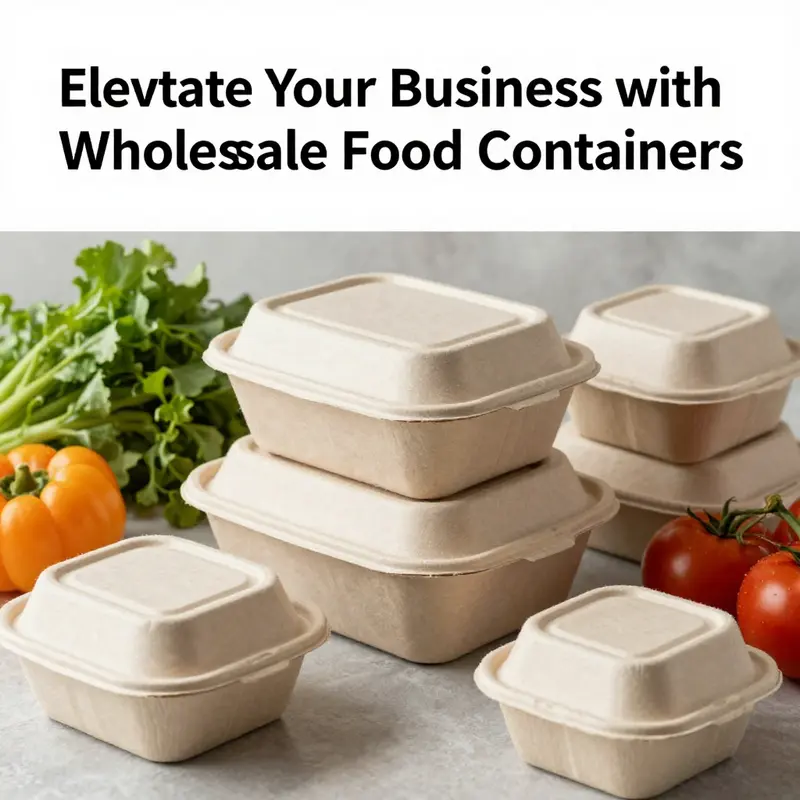
In the modern food service ecosystem, sustainability is less a trend and more a strategic requirement. For wholesalers and buyers designing packaging ecosystems, paper and biodegradable containers offer a pathway to reduce environmental impact while preserving the performance demanded by retailers, caterers, and consumers. In the United Kingdom, this shift has moved from optional choice to regulatory and market expectation, shaping how buyers evaluate materials, certify supply chains, and plan end-of-life outcomes. The conversation starts with the material most closely associated with eco-friendly packaging: kraft paper. Kraft paper boxes and bags, produced in weights that typically range from about 70 to 150 gsm, provide a natural aesthetic and solid load-bearing capability for a wide array of takeaway and in-store packaging scenarios. The material’s appeal is twofold: it leverages the strength and recyclability of cellulose while delivering a look and feel that aligns with environmentally minded brands. When sourced responsibly, kraft-based packaging can be traced to forests managed under schemes that certify responsible harvesting. The value of such credibility cannot be understated in a market where retailers, consumers, and regulators scrutinize a product’s life cycle from cradle to end of life. In practice, many sustainable packaging strategies emphasize not only the raw material but also its finish. Biodegradable coatings and water-based inks are increasingly used to ensure that kraft paper remains compatible with recycling streams and, where possible, with industrial composting programs. These coatings and inks are designed to be thin, chlorine-free, and non-toxic, supporting both recyclability and compostability while maintaining a clean print surface for branding and information. The gains here extend beyond aesthetics; they influence how retailers perceive a vendor, how waste streams are managed, and how a business can future-proof its packaging under evolving UK waste regulations. The practical implications of this approach surface in every facet of the supply chain, from procurement to distribution to store-level consumption. In procurement, a holistic evaluation framework becomes essential. Decision-makers must look past the unit price and short-term margins to consider operational transparency, technical capability, and post-sale reliability. A truly robust supplier collaboration emerges when a partner can provide full traceability of materials, from pulp to finished container, and can demonstrate adherence to recognized environmental standards. This traceability supports not only compliance reporting but also retailer audits and consumer assurance programs. It also enables a clearer understanding of how a product will behave in the field. For instance, the moisture exposure profile of a paper container—whether it is used for a greasy fry bag or a moist takeout dish—depends on the coating system and the quality of the paper beneath it. While modern biodegradable coatings have made paper packaging more versatile, there are practical limits. Paper-based containers generally offer excellent performance for many takeaway formats, especially when paired with appropriate lining or anti-leak features. However, their moisture resistance is not unlimited, and color options without printing can be somewhat constrained. These realities necessitate practical usage guidance: combining paper boxes with skin- or liner-based solutions for high-moisture items, or selecting designs with proven grease resistance for longer hold times. In other words, embracing sustainable paper packaging requires a design mindset that anticipates end-use conditions and tailors packaging to the food’s moisture profile, fat content, and expected handling. An important factor in the UK context is the regulatory environment surrounding single-use plastics. As policymakers tighten restrictions and retailers demand stronger recycling targets, brands that align early with recyclable or compostable packaging can avoid penalties and protect brand reputation. The conversation is not only about the material itself but about the end-of-life pathway it enables. Industrial composting facilities can handle certain paper-based products coated with compostable layers, but home composting or simple disposal environments may require clearer certification and consumer guidance. For this reason, the most credible papers are those that carry comprehensive certifications and transparent declarations about compostability, recyclability, and the compatibility of coatings with standard recycling streams. The narrative around sustainability thus intertwines material science with policy and consumer expectations. The challenge for wholesale buyers is to balance performance and cost with environmental responsibility. Paper containers such as kraft-based boxes and bags are commonly paired with sturdy lids or multi-component systems to maintain freshness, reveal content, and prevent leaks during transit. The dimension of customization cannot be ignored. Customers often seek packaging that communicates a brand story or aligns with event themes. Modern supplier ecosystems enable a wide range of customization options, including die-cutting, folding, and print designs, while preserving the integrity of the paper and the recyclability of the finished product. This is where supplier capability and reliability enter the frame. Buyers should insist on partners who can demonstrate not only large-scale production capacity but also robust quality control, traceability documentation, and a proven track record of on-time delivery. The aim is to reduce risk across the supply chain—risks that can arise from inconsistent raw materials, variability in coating formulations, or shifts in supplier capacity. A reliable supplier network translates into predictable costs, stable packaging performance, and fewer surprises at the distribution center. Beyond the paper itself, the ecosystem includes accessories and structural components. Lids, folding inserts, and liners contribute to the overall performance while preserving the compostable or recyclable nature of the primary container. The selection process should therefore consider the full system, not just a single component. In practice, the most sustainable wholesale packaging strategies combine kraft paper containers with a design language that emphasizes durability, minimal waste, and clear disposal instructions. For example, a well-conceived kraft paper box can be engineered to withstand frequent handling, resist grease, and be easily nested for efficient storage. When combined with printed instructions about end-of-life disposal, such packaging can help close the loop with consumers and retailers alike. To illustrate the practical dimension of these choices, consider a common packaging use case in eco-conscious markets: a compact, square kraft paper box with a simple, readable label that communicates compostability and recycling guidance. The box can be printed with water-based inks, avoiding heavy metals and solvent-based pigments. In contexts such as farmers’ markets, grocery delis, and takeout operations that emphasize sustainability, this approach reinforces a brand’s environmental commitments while meeting practical needs for shelf life, temperature resilience, and customer appeal. For businesses seeking tangible, scalable options, there is value in exploring an integrated system that combines kraft paper products with compatible, certified coatings and inks. The goal is a cohesive packaging solution that makes disposal straightforward for the end user while preserving the container’s integrity throughout the supply chain. When done well, such systems support a virtuous cycle: responsibly sourced pulp leads to durable, recyclable packaging; retailers reinforce the message through their own sustainability criteria; and consumers experience packaging that aligns with their values without sacrificing convenience. For readers looking to see real-world manifestations of these principles, a practical reference point is the realm of kraft paper sandwich boxes with transparent lids, which illustrate how a simple design can carry both function and environmental credibility. The underlying idea is straightforward: choose materials that align with the waste management framework in your market, and design packaging that communicates its disposal path clearly to consumers. By prioritizing full material traceability, robust environmental certifications, and thoughtful product design, wholesalers can build durable partnerships that withstand regulatory changes and evolving consumer expectations. This is not merely about compliance; it is about future-proofing a packaging program so that it remains relevant as retail and food service channels intensify their focus on sustainability. The wholesale scene benefits from a shift toward transparency, where suppliers disclose sourcing practices, provide performance data, and commit to continuous improvement. It also benefits from the emergence of coating technologies that support both performance and end-of-life goals. When suppliers demonstrate that their products can perform under real-world conditions—handling moisture, grease, and transport while still being recyclable or compostable—the value proposition becomes clearer for buyers who must justify packaging decisions to retailers, regulators, and customers. In sum, sustainable paper and biodegradable containers represent a mature, practical path for wholesale packaging that aligns with the UK’s regulatory environment and the expectations of eco-conscious brands. It is a path that requires careful material selection, rigorous supplier evaluation, and deliberate design choices that respect both performance needs and environmental outcomes. For those who implement it well, the payoff is not only compliance and cost efficiency but also the opportunity to differentiate through packaging that embodies responsibility, clarity, and trust. Internal links can guide readers to concrete product categories that embody these principles, such as kraft paper packaging designed for food applications, which helps illustrate how a seemingly simple container can embody a broader sustainability narrative. See for example the kraft paper sandwich box with a transparent lid for a concrete demonstration of how a well-chosen packaging format can balance visibility, protection, and end-of-life considerations: kraft paper sandwich box with transparent lid. External resources also anchor this discussion in policy realities. For further reading on how regulations shape packaging choices and corporate planning, see UK Government plastic tax guidance: https://www.gov.uk/government/publications/uk-plastic-tax-what-you-need-to-know/uk-plastic-tax-what-you-need-to-know. The interplay of material science, policy, and market demand ensures that the wholesale paper and biodegradable container sector remains dynamic, responsible, and capable of supporting a resilient and sustainable food economy.
Sealing Success: The Hidden Gear of Lids and Accessories in Wholesale Food Containers

Lids are rarely the star of wholesale food packaging narratives, yet they govern the core performance of every container system. In markets where meals move fast, orders stack high, and freshness must endure from kitchen to consumer, the lid is the quiet guardian. It is the first line of defense against air, moisture, and contaminants, and it shapes the user experience long after the purchase decision is made. A well-designed lid does more than cap a bowl or a box; it defines shelf stability, safeguards taste, and reinforces brand integrity through every ounce of food that travels through a supply chain. In this sense, lids and their associated accessories do not merely complement containers. They complete the system, turning a simple receptacle into a reliable solution for storage, transport, and service at scale.
Material compatibility and seal integrity form the backbone of lid design. In wholesale settings, where containers must withstand repeated washing, freezing, or reheating, lids are built from materials that balance rigidity, resilience, and safety. Food-grade plastics commonly appear in forms that resist deformation under cold or hot cycles, while some lids are engineered to withstand microwave exposure without warping or releasing unwanted substances. The goal is a seal that is strong enough to prevent leaks and spills yet poised for easy handling by staff rushing between prep counters, packing lines, and delivery routes. A leak-resistant design is not merely a convenience; it reduces waste, protects products, and helps maintain a clean, professional service environment. When the contents are sauces, gravies, or emulsions, even a small seam or misfit can become a costly risk over many cycles of use. In contrast, glass or metal lid systems deployed in premium lines offer a different value proposition: a market signal of durability and quality that can reinforce a brand’s positioning in higher-end food service or upscale retail packaging. These materials, while heavier and sometimes costlier to ship, can contribute to an image of longevity and sustainability that resonates with operators emphasizing long-term reuse.
Lid design is inseparable from the practical realities of handling and logistics. In bulk operations, standardized lids reduce complexity. When a restaurant or meal-prep service orders containers in large quantities, having a uniform lid profile across multiple sizes accelerates assembly, improves inventory control, and minimizes the risk of mismatched components. Snap-on and twist-lock mechanisms are common for their reliability and ease of use. Snap-on designs tend to be quick and intuitive, making them suitable for busy shifts where time matters. Twist-lock systems can offer superior resilience against heavy jostling during transport, a critical factor for deliveries that involve multiple stops or long-distance routes. For operations that emphasize sanitation and reuse, gasketed lids provide a tight, often watertight seal that stands up to dishwasher cycles. The choice between gasketed and non-gasketed designs is a strategic decision that hinges on the expected lifecycle of the product, the nature of the contents, and the environmental footprint a business is willing to accept. A thoughtful choice here translates into less waste, fewer replacement cycles, and a steadier bottom line.
Functionality extends beyond the seal itself. Accessories and lid-related features can dramatically enhance everyday workflows. Accessory ecosystems—such as lid seals, venting inserts, and tamper-evident bands—add layers of performance that matter in real-world use. A vented lid, for example, can be essential for certain hot or humid foods, allowing steam to escape in a controlled manner while keeping the container closed otherwise. This prevents pressure buildup that could compromise the packaging or the user experience during transport. Tamper-evident features, on the other hand, communicate safety and integrity to customers, a consideration that matters for takeout and retail packaging where perception is part of quality assurance. In wholesale contexts, these features must be scalable; a supplier will often offer a family of lids with compatible seals and inserts across several container sizes to streamline procurement and reduce the risk of mismatches at the packing line.
Branding and customization also flow through lids and their accessories. In a competitive market, operators seek to align every component with their identity. Custom color lids, embossed logos, and branded seals can elevate a dining experience or a retail presentation. Such OEM capabilities extend to color-matched gaskets, uniquely shaped venting ports, and even specialized locking mechanisms that distinguish a service’s packaging from standard offerings. This level of customization is not purely cosmetic. It can facilitate faster recognition by customers, reinforce consistency across outlets, and enable tighter control over the packaging experience from kitchen to consumer. At scale, the value of a branded lid system becomes part of a broader narrative about reliability, attention to detail, and the promise of uniform performance.
A broader ecosystem surrounds lids and their fittings. Accessories such as cup carriers, straw inserts, and compatible lid seals complete the packaging loop from prep to consumption. These elements support the end-to-end delivery of food and beverages, particularly in fast-paced service environments where convenience and hygiene are paramount. When paired with high-quality, leak-proof lids, these accessories help ensure a seamless experience for customers, from orderly stacked display in a deli case to tidy, mess-free takeout at the curbside. The interplay between lid and accessory is often a deciding factor in customer satisfaction. A well-integrated system minimizes the chance of leaks, reduces spillage during handling, and simplifies the tasks of packing and unpacking, all while maintaining a sanitary standard that operators can trust.
Quality assurance anchors every lid and accessory choice. Manufacturers in the wholesale space rely on rigorous testing and traceability to satisfy safety standards across regions. Certifications and robust quality-control programs reduce risk and reassure buyers that components will perform as expected under repeated cycles of washing, freezing, or heating. In practice, this means batch labeling, material declarations, and documented performance tests for seal integrity and durability. The emphasis on conformity is not merely regulatory compliance; it is a practical commitment to reliability that underpins long-term supplier relationships and protects brand reputations in markets that demand consistent, repeatable results. The most resilient lid systems are those designed with a clear understanding of the entire lifecycle: from feeding a prep line to surviving a multi-stop distribution route, to returning for reuse or recycling without compromising safety or quality.
For operators weighing the economics of wholesale packaging, lids introduce a nuanced calculus. The upfront cost of a robust lid system may be higher, but the investment can pay off in lower waste, fewer returns due to leaks, and improved logistics. The ability to reuse containers with compatible lids, the resilience of the seal in various temperatures, and the ease of cleaning all contribute to a lower total cost of ownership. In addition, the capacity to customize lids to fit specific menus or brand identities can translate into higher perceived value and customer loyalty. Where the market is moving toward sustainability, lid systems that favor durability and reusability hold particular appeal. Light-weight, single-use options have their place for certain takeout scenarios, yet even there, reliable lid design reduces grease leakage, avoids soggy packaging, and preserves the integrity of the product during short- to long-distance transport.
Among the practical lessons for buyers and suppliers alike is the importance of compatibility across the entire container system. A lid must match the lid seat, the gasket profile, and the edge curvature of its corresponding container. Mismatches create pressure points, increase the risk of leaks, and complicate cleaning. Conversely, a harmonized system—where containers, lids, and seals are designed to work together—offers predictable performance, simplifies training, and accelerates packing lines. In a wholesale operation, where orders run in bulk and timetables are tight, the difference between a compatible system and a mismatched one can be measured in minutes per shift and pounds of product saved from waste. This is the quiet arithmetic of efficiency that many teams come to value once they experience the steadiness of a well-calibrated lid system.
The metaphor of a lid as the last mile of containment is apt. It bridges the kitchen, the warehouse, and the customer’s hands. It is the point at which product integrity, operational discipline, and brand promise converge. Operators who invest in thoughtful lid design—paired with the right accessories—build a packaging continuum that supports consistent quality, efficient handling, and responsible sustainability. They recognize that every sealed edge, every snap, and every gasket contributes to the experience of food, from the moment it leaves the kitchen to the moment a customer opens it in a car, at a desk, or at a table. In that sense, lids and their ecosystem do not merely close a box; they open a pathway to reliable service, repeat business, and a reputation for care in every bite.
For readers seeking additional perspectives on how lid systems are evolving across markets, a comprehensive resource on food-container lids provides further detail on standards and practices that shape this critical facet of wholesale packaging. External resource: https://www.hktdc.com/sourcing/food-containers-with-lids.htm. And for those exploring practical shopping options that illustrate how lid ecosystems function in real-world packaging, a relevant example of a compatible, easily integrated lid and box pairing can be found here: paper sandwich box with transparent lid. The value of such integrated solutions lies not only in individual components but in the coherence of the system they create, from aisle to consumer.
The lids-and-accessories narrative, while technical, is ultimately about service quality. In wholesale food packaging, every design decision—whether it concerns a gasket material, a vent port, or a locking mechanism—cascades into the daily operations of kitchens, couriers, and retail displays. When teams prioritize compatibility, durability, and ease of use, they cultivate a packaging ecosystem that supports speed without sacrificing safety. The result is a reliable, scalable solution that can grow with a business’s needs, while preserving the sensory and safety expectations that customers bring to every meal. This is the enduring value of lids and accessories: they are the reliable choreographers behind the visible choreography of service, ensuring that every container performs its role with precision, dignity, and discernible care.
Final thoughts
In summary, selecting the right wholesale food containers is crucial for food service operations looking to improve efficiency, enhance presentation, and meet sustainability goals. Glass containers offer a premium option for long-term storage, while plastic containers provide versatility and cost-effectiveness. Sustainable paper and biodegradable containers cater to eco-conscious businesses, furthering their commitment to reducing waste. Additionally, investing in proper lids and accessories ensures that the food remains fresh and well-presented during transport or storage. By carefully considering each of these options, businesses can align their packaging choices with their operational needs and brand identity, ultimately driving greater customer satisfaction and loyalty.