
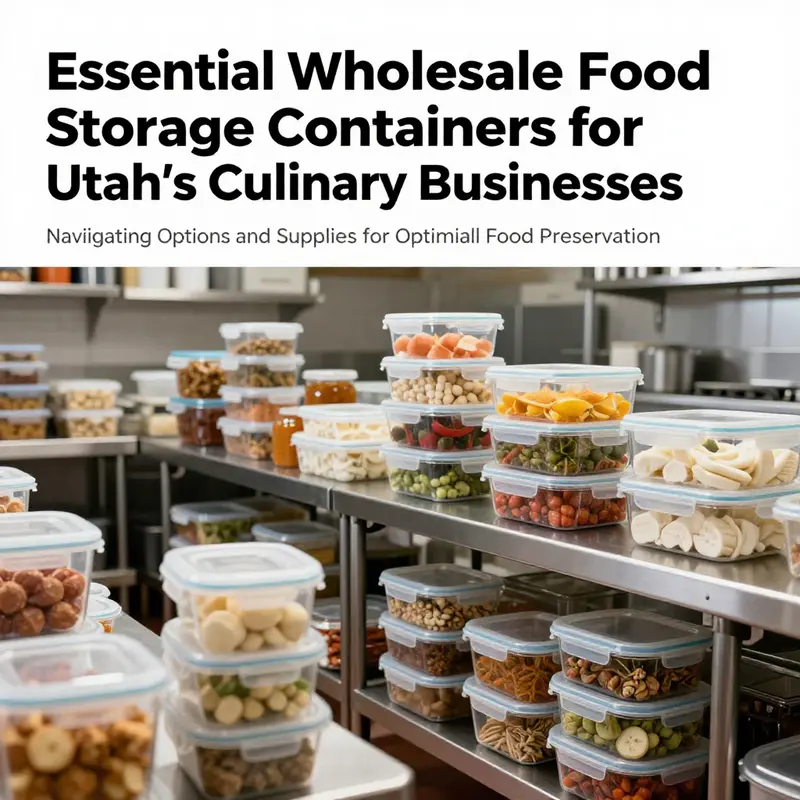
Food storage is a critical aspect for businesses in Utah’s vibrant food scene, from bubble tea shops and restaurants to catering services and corporate procurement teams. With a myriad of options available, understanding the types of food storage containers, purchasing avenues, customization possibilities, cost considerations, and reliable suppliers is vital to maintaining food quality and enhancing efficiency. We will explore these facets in detail, empowering your business to make informed decisions that not only cater to operational needs but also align with brand identity and customer satisfaction.
From Glass to Bamboo: A Thorough Journey Through Wholesale Food Storage Containers in Utah
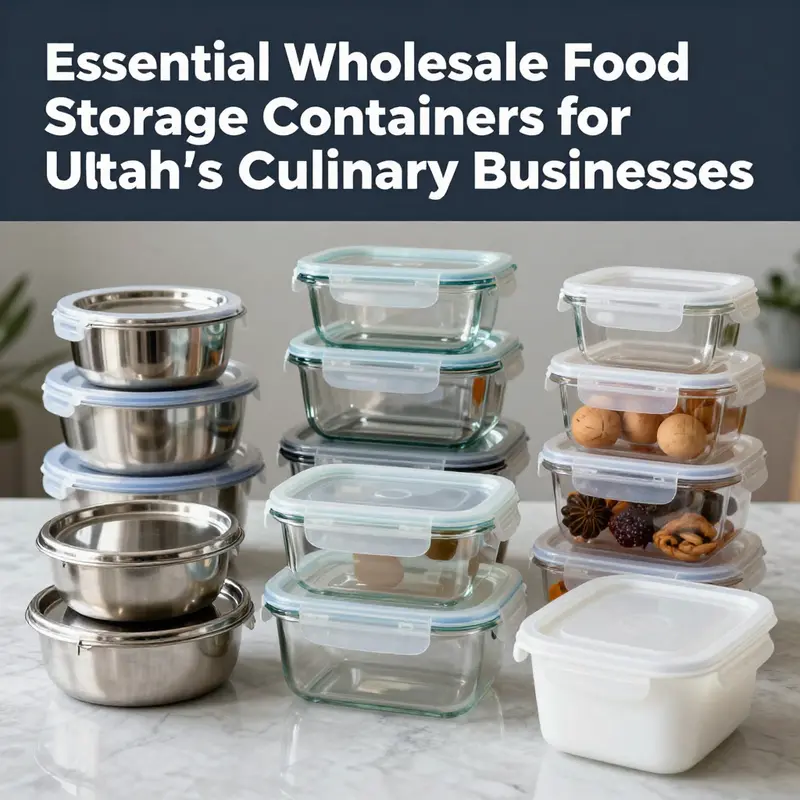
Utah’s wholesale food storage landscape blends durability, safety, and efficiency across cold storage, dry goods, and prepared foods. Buyers in Utah evaluate containers not only for price, but for performance across fluctuating humidity, temperature, and handling conditions in warehouses, distribution centers, and retail backrooms. This chapter follows a throughline: how Utah wholesalers and retailers select, deploy, and manage storage containers that preserve quality, support fast turnover, and simplify compliance with local safety expectations.
Glass storage brings visibility, purity, and long life. Glass jars and sealed canisters help show contents, reduce mislabeling, and resist staining for dry goods, spices, and premium products. Yet glass adds weight and fragility when moving goods through loading docks and crowded storerooms. In Utah, glass is favored where visibility and cleanability matter most and where appropriate handling and shelving reduce risk.
Plastic containers—lightweight, shatter-resistant, and modular—offer versatility for high-turn items, bulk snack lines, and color-coded workflows. Polypropylene and similar polymers tolerate frequent handling, stack well, and accommodate multi-compartment layouts. Tradeoffs include scratching, staining, and the need to monitor for heat or chemical interactions with sensitive ingredients. In regional markets, compostable or recycled-content plastics extend sustainability goals without sacrificing performance.
Stainless steel storage remains the workhorse for durability and temperature control. Double-wall steel containers preserve hot or cold foods during transport and service, resist breakage, and support rigorous cleaning. The main considerations are weight, cost, and the need for compatible lids and gaskets in high-volume operations such as catering fleets, school programs, and industrial kitchens.
Natural fiber options—bamboo, wheat straw, and other plant-based materials—offer earth-friendly branding and premium presentation for seasonal promotions and boutique retailers. They tend to be larger and can be moisture-sensitive, so they suit dry-storage or display contexts and require careful cleaning and food-contact compliance.
Beyond material families, modular and smart storage designs help Utah operations maximize square footage. Containers with adjustable dividers, seal types, and clear labeling support accurate portioning and quick checks during inventory cycles. For seasonal peaks, reconfigurable systems reduce waste and streamline staff training in busy shops and warehouses.
Sourcing in Utah blends local distributors with international wholesale channels. Buyers build a core set of dependable container families and layer in niche lines for special promotions, gift packaging, or limited-time products. The decision process weighs heat and moisture resistance, sealing performance, stackability, dishwasher or microwave compatibility where relevant, and compatibility with existing shelves and bins.
Safety and compliance guide the purchase decision. Food-contact materials must meet regulatory definitions and retailer expectations. Buyers verify BPA-free plastics, non-reactive metals, and finishes that hold up to repeated cleaning. Standardization across a few core designs reduces training time, labeling complexity, and lot-to-lot variability.
Procurement strategy emphasizes cost control, lead times, and total cost of ownership. Glass and steel may incur higher upfront costs but pay back through longevity; plastics often offer lower initial investments with flexible customization for branding. Ecosustainability trends push for recycled-content or biodegradable options, balanced against durability. The Utah buyer seeks a practical mix that honors product type, turnover, storage environment, and handling.
A practical takeaway for Utah wholesalers is to build a flexible sourcing strategy that blends local reliability with international breadth. Establish a core portfolio of proven container families, then expand with niche lines to cover seasonality, gift packaging, and specialty products. By prioritizing durability, cleanability, and compatibility with common storage spaces, operators reduce waste, streamline inventory, and maintain consistent quality for retailers and end customers alike. For those curious about packaging aesthetics, consider how display, labeling, and surface treatment influence perceived value in wholesale decisions about materials, finishes, and lid designs.
External resources and supplier intelligence help calibrate expectations for price, lead times, and performance. Buyers can compare unit costs, minimum orders, and warranty coverage while factoring in freight and duties. In Utah’s distributed supply networks, alignment between suppliers and customer needs accelerates procurement and supports reliable delivery during peak seasons. Keeping up-to-date with quality checks, seal testing, and supplier certifications remains essential to smooth operations.
The broader story of Utah’s wholesale food storage containers is a balance of materials, design, and practical utility. The right portfolio, not a single best material, delivers consistent performance across the full spectrum of storage tasks, from backroom to back-of-house displays. In the end, the optimal choice emerges from aligning product capabilities with operation requirements, climate realities, and customer expectations.
Bulk Solutions in the Beehive State: Navigating Utah’s Wholesale Food Storage Container Landscape
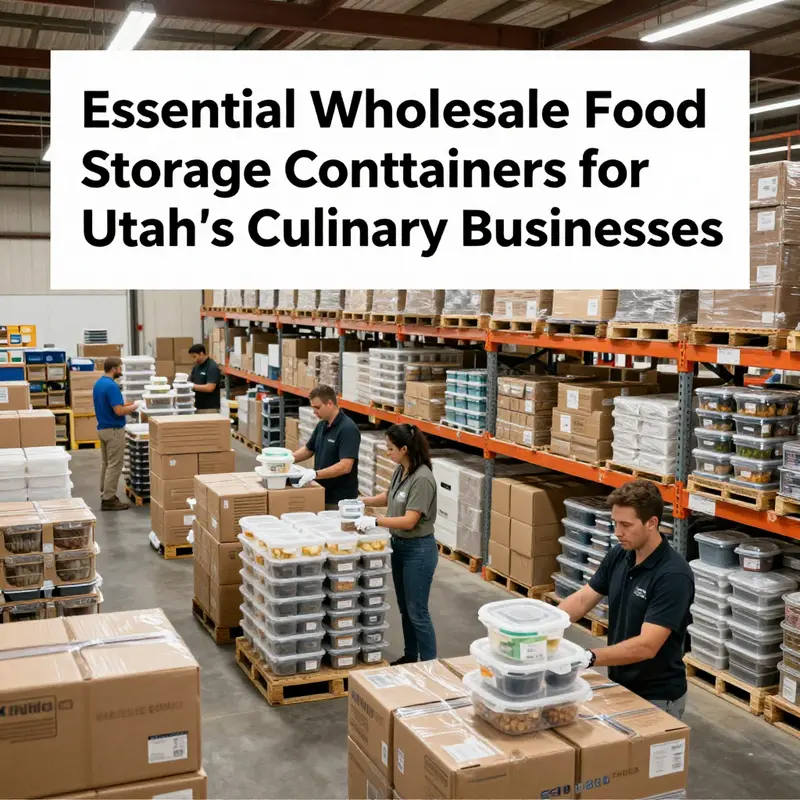
Every business that handles food at scale faces the same practical question: how to store it efficiently, safely, and cost-effectively. In Utah, that question translates into a two-pronged approach. On one hand, you can tap into local restaurant supply stores that specialize in bulk kitchen goods and food service supplies, where the pace of business is brisk and the pricing reflects steady demand. On the other hand, the same market invites a strategic expansion beyond state lines through wholesale platforms that connect Utah buyers with international manufacturers. The outcome is not a single solution but a blended sourcing strategy that balances immediacy with variety, local reliability with global options, and bulk pricing with the right quality and safety standards for every pantry, back room, or commercial kitchen.
Consider the local landscape first. Utah’s restaurant supply ecosystem includes well-established stores in key hubs such as Heber City and West Valley City. In Heber City, the largest restaurant supply store serves as a reliable hub for bulk kitchen and food storage containers. The breadth of inventory supports a fast-moving, day-to-day workflow, with wholesale pricing that matches the cadence of a busy operation. For businesses that need to stock up quickly, this location offers the advantage of in-person inspection, immediate availability, and straightforward reordering. In West Valley City, another prominent store carries a similarly broad spectrum of containers and related storage solutions. The advantage here is not merely competitive pricing but the speed at which orders can be fulfilled and shipped, a critical factor when a restaurant or a catering operation plans a seasonally intense period or a menu refresh. These stores are anchored by practical strengths: they enable buyers to assess materials and seals up close, confirm compatibility with existing stock, and navigate bulk purchase terms with staff who understand commercial needs. For anyone operating within Utah, the practical takeaway is clear: start with local supply houses to meet current demand, test a few product lines, and establish a relationship with a supplier who can handle large orders, quick turnarounds, and predictable delivery schedules.
Yet, while Utah’s local options provide reliability and speed, they do not always deliver the breadth of choice or the most aggressive unit pricing that bulk buyers seek when planning for growth or diversification. That is where the broader wholesale market—broadly accessible through international platforms—enters the conversation. The global supply web makes it possible to source stainless steel storage sets with vacuum-insulated, double-wall designs that preserve temperature and extend shelf life, or high borosilicate glass jars with transparent bodies and seal-tight lids perfect for pantry organization. The market also offers a spectrum of container styles, from square glass jars that optimize countertop real estate to multi-piece sets that include salt shakers, spice bottles, and metal canisters. The allure of these options lies not only in aesthetics or branding potential but in functional diversity: containers that are microwave-safe, freezer-compatible, and dishwasher-friendly can streamline operating routines for a café, a bistro, or a larger food-service outfit. The trade-off to consider, of course, is lead time, import logistics, and the complexity of managing a longer supply chain. For a Utah-based business with seasonal demand cycles, the right balance often means reserving space for a core set of locally available containers while tenering the flexibility to import specialized items when a project or promotion calls for it.
In practical terms, the decision often centers on three core dimensions: material, performance, and value. Stainless steel storage containers offer rugged durability and excellent heat retention, a natural fit for ice cream storage, cold beverages, or bulk dry goods that must stay cool and fresh between shifts. Their resilience makes them a staple when bulk buying without sacrificing long-term lifespan. Glass jars, particularly borosilicate variants, provide traceability of contents, an appealing clarity for inventory management, and a premium presentation that can align with a café’s branding or a specialty shop’s aesthetic. If size, weight, and breakage risk are concerns, plastic options—when labeled food-grade and BPA-free—can provide lighter, stackable choices that ease handling in fast-service environments. Each material carries its own implications for safety compliance, cleaning protocols, and durability under heavy use.
When evaluating wholesale options, it is essential to look beyond price per unit and consider the full spectrum of costs and benefits. Minimum order quantities (MOQs) can vary dramatically between suppliers. In some cases, wholesale programs exhibit aggressive pricing with MOQs as low as a couple of pieces, while other catalogs may require hundreds or thousands of units for the most cost-effective pricing. The investment calculus extends to customization possibilities, such as brand labeling, color options, or even specific lid designs. If a business intends to build a distinct pantry identity or to align jars with a particular décor—whether rustic, modern, or industrial—finding suppliers that permit modest customization without prohibitive fees is a meaningful advantage. It’s also prudent to factor in lead times, shipping costs, and the potential for delays, especially when orders rely on long-haul freight and international manufacturing cycles. A well-planned procurement strategy will blend the steady cadence and predictability of local sourcing with the expansive selection and potential price advantages offered by international wholesale channels.
Another practical dimension is how container selection aligns with the day-to-day workflow and the operational realities of Utah’s climate and use patterns. Humidity, temperature fluctuations, and the need to preserve freshness across shifting inventory cycles all push toward containers with reliable seals and robust build quality. The best options in both local and international markets emphasize airtight seals, durable gaskets, and materials that resist staining and odor absorption. For businesses handling diverse products—from grains and snacks to herbs and coffee—the ability to rotate stock with clear labeling, visible contents, and consistent portioning becomes a tangible efficiency gain. Some travelers through this procurement landscape prefer to start with a core assortment of universally compatible containers—standard 500- to 1000-milliliter bottles and medium-sized jars for dry goods—and then expand into specialty items as the business grows or as product lines evolve. The local stores can provide that initial testing ground, while international suppliers offer the chance to scale with a broader product family that accommodates branding and packaging goals.
The local and international sourcing options converge on a shared objective: securing quality containers that maintain product integrity, minimize waste, and support a coherent brand or kitchen workflow. For Utah buyers, the value proposition of the local stores rests on reliability, immediacy, and the ease of hands-on inspection. The appeal of the international route rests on breadth of choice, potential price leverage, and customization opportunities that help transform a storage system into a strategic asset for inventory control and merchandising. A prudent approach is to treat procurement as a continuum rather than a binary choice: begin with trusted local suppliers to establish baseline needs and standards, then explore international channels to fill gaps, test new formats, or fulfill larger-scale programs that require rapid expansion. It is a process of calibrating risk and reward, balancing the certainty of quick fulfillment with the opportunity to diversify the container lineup to suit evolving kitchen operations, specialty menus, or new store concepts across Utah.
In practice, a buyer might embark on a phased strategy that begins with a careful audit of current storage pain points. Are the most-used items already in a reliable, airtight design that minimizes clumping and preserves aroma? Do the bulk quantities align with the pace of the busiest shifts, or is there a bottleneck in replenishment that calls for faster reorder cycles? Are there opportunities to rebrand or streamline packaging across multiple product categories? The answers to these questions guide the mix of containers that a business should keep in stock at the local level—where inspection, speed, and service relationships matter most—and the items that deserve the attention of international procurement, where price-per-unit may drop and product ecosystems can be expanded. The goal is a cohesive storage system across the operation: one that makes inventory easier to manage, reduces waste, and leaves room for growth.
For those who want to explore bulk-procurement options beyond their immediate region, international platforms open a world of possibilities, including sets of stainless steel containers with insulated, double-walled designs and glass storage solutions that combine transparency with robust sealing. The potential for customization—branding, colors, and shapes—adds another dimension to consider, especially for businesses seeking to reinforce a consistent identity across merchandise, packaging, and customer-facing displays. While the allure of a lower price per unit is compelling, it is equally important to scrutinize the terms of sale, the supplier’s reliability, and the logistics surrounding shipping, duties, and handling. A practical path is to begin with samples to verify material performance, seals, and ease of cleaning, then scale up to larger orders with established quality checks in place. By integrating both local and global sources, Utah-based buyers can assemble a versatile, durable, and cost-effective storage ecosystem that supports everyday operations while maintaining the flexibility to adapt to future demand.
For readers seeking concrete pathways into this sourcing landscape, it helps to have a reliable starting point. The local stores described above remain credible anchors for immediate needs and quick turns, but many businesses will eventually look to a broader slate of options to optimize costs and access a wider array of designs. As one practical example of a globally connected wholesale market, suppliers on international platforms frequently offer a range of choices with scalable MOQs, ranging from single units to bulk lots. The opportunities for customization, combined with competitive unit prices, highlight why many food-service operations adopt a blended sourcing approach. In this framework, Utah’s businesses can leverage the best of both worlds: the assurance of local stock and the expansive potential of international suppliers when strategic opportunities arise. This approach not only ensures continuity of supply but also supports innovation in how foods are stored, presented, and managed across Utah.
External resources can provide deeper leverage when evaluating suppliers and negotiating terms. For those considering international procurement routes, a widely used reference is a leading wholesale platform that connects buyers to manufacturers, offering detailed product specifications, pricing, minimum orders, and customization options. This resource illustrates how container materials, capacities, and seal designs come together in real-world purchasing decisions and demonstrates how global supply networks can be navigated to support Utah-based businesses seeking bulk storage solutions. To explore an example of wholesale stainless steel storage sets and related containers, you can review the following English-language source: https://www.alibaba.com/product-detail/Wholesale-food-storage-container-set-stainless_1600389274114.html. This page showcases wholesale stainless steel food storage containers, highlighting price, minimum order quantities, and material characteristics that help frame what to expect when shopping across borders.
Designing Bulk-Ready Storage: Customization Pathways for Utah’s Wholesale Containers
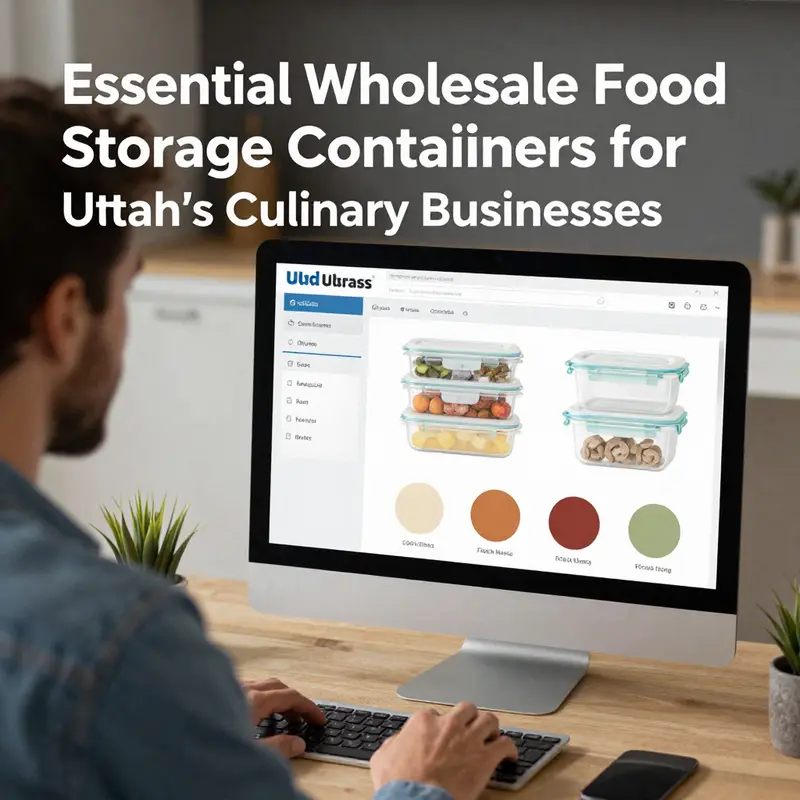
Utah’s wholesale and food-service networks demand storage solutions that are safe, scalable, and brand-ready. This chapter outlines the three pillars of customization for bulk containers: material safety and performance; adaptable dimensions and features; and branding with clear labeling and compliance. It discusses common materials (food-grade polypropylene, borosilicate glass, and stainless steel), their benefits for wholesale buyers, and how design choices such as stackability, vented lids, and private-label branding align with Utah’s distribution practices. The section also covers certifications (FDA/food-contact, BPA-free, LFGB where relevant), local logistics considerations, and the value of pilot runs and small-batch prototyping to reduce risk. By translating these principles into a practical product roadmap, wholesalers can secure reliable supply, optimize warehousing and fulfillment, and deliver consistent shelf-presenting solutions to retailers across Utah.
null
null
Bridging Utah’s Pantry: Wholesale Food Storage Containers and the Local-to-Global Supply Web
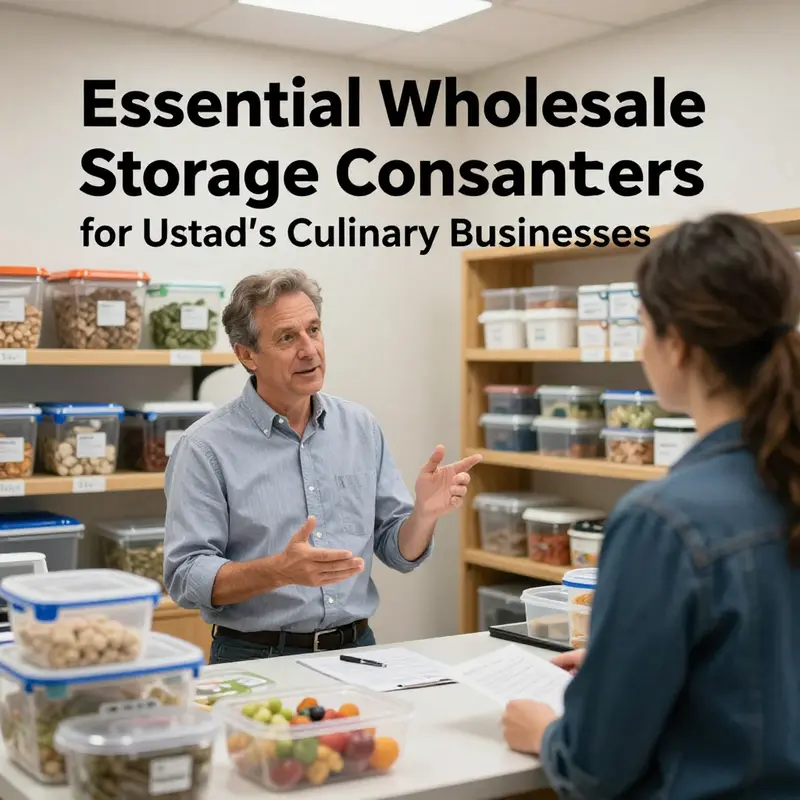
Utah’s wholesale storage container landscape blends local reliability with global breadth. Geography, weather, and logistics shape procurement choices, from material selection to lead times and post-purchase support. Materials such as stainless steel, glass, and durable plastics each offer tradeoffs in durability, weight, and seal integrity under Utah’s dry summers and cold winters. Buyers weigh total cost of ownership, including breakage, storage conditions, and replacement needs, not just upfront price. Global platforms connect buyers with manufacturers for bulk pricing and customization, but risks come from longer lead times, quality control requirements, and import documentation. Local Utah suppliers and distributors provide speed and predictable service, while international sources offer broader catalogs and scalable volumes. A hybrid strategy—local partners for urgent needs and international partners for non-urgent, high-volume orders—helps balance cash flow and resilience. Customization, such as branding, labeling, and lid configurations, adds value for restaurants, delis, and grocery chains, while sustainability considerations guide material choice and end-of-life options. Project scoping includes defining storage needs, scheduling lead times, and establishing clear service levels to ensure deliveries align with promotions and peak periods. In practice, a well-structured procurement workflow combines marketplace exploration, supplier diligence, and local relationships to create a resilient, cost-effective storage solution program for Utah’s kitchens and retailers. For readers seeking practical context, a representative local store and its wholesale practices can illustrate how speed and breadth interact in real-world procurement. External resource example: Restaurant Supply Store Heber City Utah: https://www.restaurantsupplystore.com/
Final thoughts
In conclusion, understanding the landscape of wholesale food storage containers in Utah equips food and beverage businesses with the knowledge to select the right products. By exploring the various types, purchasing processes, customization options, cost implications, and reliable suppliers, business owners can enhance their operations while preserving food quality and branding. Make informed decisions that not only streamline your operations but also elevate your service quality, fulfilling customer expectations in the competitive food industry.