

For Bubble Tea Shops, Restaurants, Food Trucks, and Catering Services, the rise of wholesale shipping container food trailers presents a unique opportunity to enter the bustling mobile food service industry. These modified, portable kitchens offer an affordable, customizable solution that allows entrepreneurs to showcase their culinary creativity while maintaining flexibility and mobility. This article delves into the essential features, market trends, economic aspects, customization options, and compliance standards of these popular food trailers, providing you with the insights needed to leverage this innovative setup for your business objectives.
From Container to Kitchen: The Defining Features of Wholesale Shipping Container Food Trailers
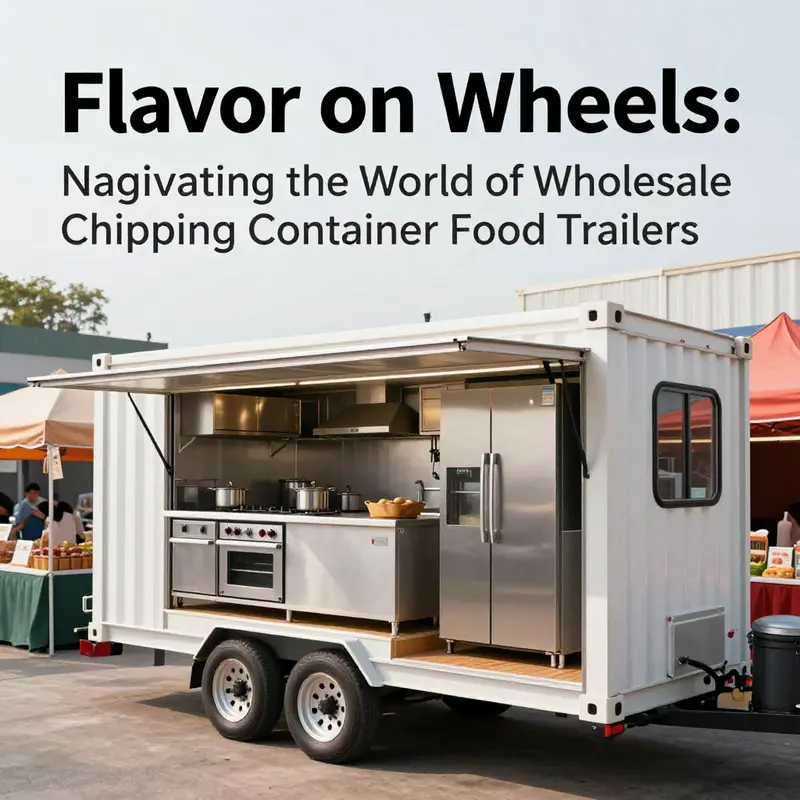
Mobile food ventures rarely find a better partner than a wholesale shipping container food trailer that has been transformed into a fully equipped kitchen. These units, usually built from 20-foot or 40-foot containers, fuse rugged industrial design with the elegance of a well-planned kitchen. The result is not merely a vehicle for selling meals; it is a compact, durable platform that can be towed to a market, a festival, or a curb-side corner and set up with minimal fuss. The appeal lies in how a single steel shell can be reimagined into a compliant, efficient work area that looks professional, performs reliably, and travels where a business plan requires.
Structural integrity and durability are foundational. The trailers leverage recycled ISO-standard shipping containers, chosen for their steel strength and long-haul resilience. They resist the jostle of road transit, weather exposure, and the constant rhythm of daily use. This backbone allows operators to focus on cooking and service rather than repeated repairs. The metal skin, reinforced corners, and fixed flooring are designed to withstand years of heavy traffic, high-temperature operations, and the occasional splash of water or oil. In practice, that means a kitchen that remains level, sanitary, and stable while the operator concentrates on speed and consistency.
Inside, the true magic happens. The interior rooms of these trailers can be redesigned almost without limits to fit a complete commercial kitchen setup. Sinks, refrigeration, grills, fryers, prep counters, and storage lockers can be arranged to suit a menu, a workflow, and a brand personality. The modular approach supports different cooking sequences, allowing a line cook to move from prep to plating with minimal motion. With a careful plan, the space becomes a single, efficient circuit: cold storage near the prep zone, hot stations aligned to service flow, and waste streams guided to a disposer or bin, all tucked into a footprint that remains legal and comfortable for the staff.
Beyond raw space, climate control defines safety and quality. High-quality insulation keeps temperatures steady inside, reducing energy costs and keeping food out of the danger zone. Some configurations pair insulated walls, floors, and roofs with dedicated HVAC systems, while others opt for refrigerated modules that cradle perishables. The result is year-round reliability: a summer service in a heatwave or a winter night at a fair will not force the team to improvise improvised cooling or heated accommodation. When the kitchen stays within safe temperatures, it also reduces equipment strain and extends the life of sensitive appliances.
Compliance matters as soon as the trailer leaves the yard. Reputable suppliers design their units to align with local health department expectations and fire codes, with many models boasting CE certification to indicate European safety, health, and environmental standards. The presence of these certifications signals a readiness to operate across a range of regulatory environments, even as operators navigate the particulars of local health inspections and food handling rules. The goal is not merely to satisfy inspectors but to embed a culture of safety that travels with the trailer, ensuring that a pop-up in a new city can open with confidence rather than delay. The practical effect is a smoother startup and less friction when expanding into new markets.
Mobility is the other half of the equation. The trailers are designed as towable cargo units, with robust axles, wheels, and a hitch that work with standard trucks or vans. A business owner can relocate between events, respond to weather-driven demand, or reposition for seasonal markets without hiring a large logistics network. This flexibility translates into more opportunities to sell and a shorter path from concept to cash flow. It also means fewer lease commitments for a permanent storefront, which speaks to the lean startup mindset that characterizes many successful mobile ventures.
Inside, the materials matter as much as the layout. Food-grade stainless steel surfaces, sealed joints, and non-toxic coatings ensure that cleaning is straightforward and sanitation is straightforward. The choice of materials matters for safety, compliance, and durability. Surfaces that resist corrosion, staining, and bacteria buildup contribute to a menu that remains consistent whether the volume is high or low. The practical effect is easier training, shorter sanitation cycles, and fewer risk moments during service, letting cooks focus on quality and speed rather than maintenance.
Every square foot counts in a container kitchen. Designers optimize space through modular fixtures, fold-down counters, and tall, narrow storage solutions that keep ingredients, packaging, and utensils within arm’s reach. Vertical racks and wall-mounted shelving help free floor space for movement while still providing robust access to essential tools. The result is a workflow that minimizes back-and-forth trips, reduces time-between-stages, and maintains a clear line of sight across the kitchen so the lead chef can oversee plating in a crowded line.
Beyond the kitchen work zone, there is room for more. Ample storage for dry goods, packaging, and equipment sits behind doors and under counters, ready for a busy service. The sturdy build supports different installations—from a coffee service to a dessert counter, from savory bites to niche snacks—without requiring a complete rebuild. The modular concept invites experimentation: a trailer can morph with the menu or the venue, stepping into hospitality venues that would be impractical for a traditional storefront. This versatility is a core reason why buyers consider wholesale container trailers as scalable platforms rather than fixed, one-menu solutions.
Purchasing a container trailer is a decision about risk, return, and reliability. Many buyers are drawn by a relatively low initial investment compared to brick-and-mortar spaces, but they still want predictable, scalable performance. Some suppliers offer a minimal order quantity of one piece, making entry feasible for solo operators or small stand businesses. After-sales support—such as video guides, maintenance checklists, and limited warranties—helps teams get to market quickly and keep service consistent. When a trader looks at a model, they should weigh interior flexibility, insulation efficiency, and the ease of staying compliant as the business grows. A trailer that travels well and cooks cleanly under pressure is more than a mere vehicle; it becomes a mobile base for a brand’s identity.
To imagine practical packaging alongside a compact kitchen, consider packaging choices that travel with a brand’s menu. For example, eco-friendly eco-friendly disposable 3-compartment packaging boxes for fast food offer a straightforward way to pair a trailer’s service style with responsible, easy-to-clean packaging. This synergy between kitchen design and packaging complements the broader logistics of a mobile food business, making it easier to standardize orders, manage waste, and present a consistent customer experience.
Overall, wholesale shipping container food trailers deliver a durable, adaptable, and compliant platform that fits the needs of modern mobile food service. They offer a credible alternative to traditional storefronts while preserving flexibility for growth, seasonal demand, and brand storytelling. The ability to tailor a kitchen layout, equip it with reliable climate control, and move it on a moment’s notice makes these trailers particularly appealing to entrepreneurs who value speed, setup simplicity, and long-term durability.
External resource: https://www.smartbuy.com.au/learn/how-to-choose-a-shipping-container-food-trailer
From Street Corners to Global Markets: The Evolving Market Trends of Wholesale Shipping Container Food Trailers
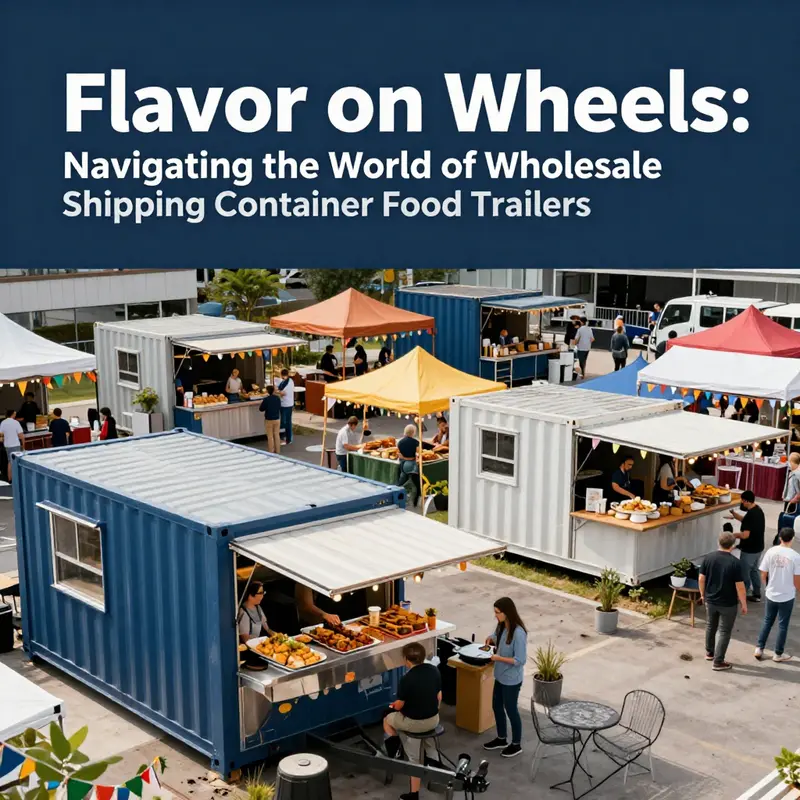
Across busy avenues and seasonal markets, a quiet shift has remade the landscape of mobile food. Wholesale shipping container food trailers, once a niche novelty, have moved into the mainstream as a practical, scalable platform for entrepreneurs. These repurposed 20-foot or 40-foot containers, converted into fully functional kitchens and mounted on towable frames, offer a durable, weather-ready, and relatively affordable route into the mobile dining space. They empower vendors to start small, upgrade later, and relocate with the rhythm of demand. In dense urban cores and at outdoor events, the combination of portability, customizability, and a compact footprint makes container trailers a compelling choice for new and growing brands alike. The business case often hinges on speed to market, modular expansions, and the ability to serve high-traffic windows—like commuter lunches, festival evenings, or campus incentives—without tying up substantial capital in fixed facilities. In cold weather or heat waves, the trailer’s built-in insulation and weatherproof design help maintain consistent kitchen temperatures, protecting both food quality and regulatory compliance.
Market dynamics are shifting in ways that amplify this appeal. The mobility of a trailer kitchen aligns with consumers’ appetite for varied, high-quality foods served quickly. It also aligns with operators’ need to minimize upfront risk while testing menus in different neighborhoods or events. As a result, many buyers treat a container trailer as a launch vehicle for a brand, not merely a temporary kitchen. The market is increasingly driven by the ability to fully outfit the unit with a complete commercial kitchen, including grills or fryers, reach-in refrigeration, sinks, and ventilation. The robustness of the base structure, combined with tailored interiors, gives vendors a reliable operating base that travels to where customers gather. Vendors can also stage seasonal rotations—switching from breakfast to lunch to dinner configurations within days—to align with event schedules or school calendars. The modular nature of the units means upgrades for energy efficiency or capacity can be implemented without starting from scratch, preserving a valuable asset while the business learns what works in different contexts.
Regulatory alignment has become a central determinant of value. A rising share of buyers seek CE-certified trailers to meet international food safety, health, and environmental standards. This is especially crucial for operators who plan cross-border activity or multi-city deployments. Suppliers now offer configurations that accommodate full kitchen lines while maintaining compliance with ventilation, fire suppression, and sanitation requirements. The trend toward certified units reduces the friction of expansion into new markets and helps ensure uniform performance across different sites. In parallel, modular designs are becoming more flexible, so a unit can be reconfigured as menus evolve, preserving the investment over time. For buyers, the ability to demonstrate compliance through documentation simplifies audits at events and reduces delays in getting permits. In addition, some buyers consider the environmental footprint of their operation, seeking energy-efficient appliances, better insulation, and water-saving fixtures as part of a broader sustainability plan.
Customization remains a powerful differentiator. Exterior color options let brands stand out at events and streetscapes, while interior layouts optimize the flow from raw ingredients to plated dishes. Buyers increasingly expect not just a working kitchen but a brand-aligned experience. Beyond aesthetics, the push toward energy efficiency matters. Solar options, water recycling, and smart controls that monitor temperature, humidity, and equipment status are becoming standard features in mid-to-high-end builds. These capabilities reduce utility costs and simplify daily operations, especially when the trailer operates in locations with variable access to electricity and water. Branding opportunities extend to signage, awnings, and window graphics, all of which can be integrated into the trailer’s exterior shell. The result is a turnkey platform that can be deployed with minimal setup time while delivering a recognizable presence in crowded markets. Operators report that a cohesive brand narrative—through color, typography, and layout—also translates into stronger customer recall and higher repeat traffic. For brand cohesion outside the kitchen, many operators pair their look with packaging that enhances the guest experience, such as custom takeaway packaging supplies for theme parties custom-takeaway-packaging-supplies-disposable-tableware-for-theme-party.
Space-conscious design is reshaping expectations. The market has embraced compact forms that maximize usable square footage without sacrificing capacity. The roughly 9.2-foot class, or about 2.8 meters in length, is gaining traction for its nimble footprint. Such trailers can house ovens, grills, cold storage, and hand washing stations while remaining easy to tow and maneuver in tight urban corridors. The upside is clear: lower upfront investment, faster deployment, and the flexibility to be repositioned to capture peak foot traffic. Operators report solid return potential when the layout supports clear workflow and high-volume service during busy hours and events. As events grow more sophisticated, the ability to retool a single trailer for dessert concepts or coffee service becomes a strategic advantage, reducing the need for multiple dedicated units. The design ethos emphasizes clean lines, accessible work zones, and sanitary surfaces that are simple to scrub between shifts, a practical consideration for seasonal vendors and cross-cultural menus.
Price remains a moving target, reflecting size, equipment, and certification level. Market data reveals a spectrum from basic shell units to fully equipped, CE-certified kitchens on wheels. Entry pricing can start in the low thousands for bare frames, but turnkey, ready-to-run configurations with professional kitchen components are typically in a higher bracket. Buyers should anticipate costs that cover not only the appliances but also the plumbing, electrical, exhaust, and safety systems. Where capacity, performance, and compliance are prioritized, the investment soon translates into repeatable service during weekends, civic celebrations, and pop-up windows at markets. Financing options, maintenance plans, and warranties further influence total cost of ownership. Smart buyers also weigh depreciation and potential tax incentives applicable to mobile food operations, helping them justify the upfront investment against the expected cash flow. In all cases, a clear bill of materials and a phased upgrade path can prevent scope creep as menus expand or seasonal demand shifts.
The supplier landscape has matured into a reliable ecosystem. Online marketplaces feature a range of manufacturers offering 20- and 40-foot options with documented specifications, warranty terms, and after-sales support. Buyers can expect video guides, on-site training resources, and remote troubleshooting as part of the package. While some buyers pursue a single trailer, others place small orders to build a fleet that can cover multiple neighborhoods or events. The common thread across the best outcomes is a clear plan for maintenance, spare parts, and scheduled sanitization, ensuring consistent performance as the business scales. Industry players increasingly provide turnkey kitchen packages that bundle equipment, plumbing, and electrical work, accompanied by site-specific service visits for commissioning. The result is a smoother path from order to operation, with fewer surprises during the first busy season. As reliability improves, buyers gain confidence to allocate capital toward growth rather than firefighting setup issues.
Beyond equipment, market resonance is animated by consumer demand for variety, speed, and reliability. The container trailer model supports quick menu changes, seasonal offerings, and collaboration with local producers. It also enables hands-on experimentation with formats such as coffee, ice cream, snacks, and ethnic specialties, letting brands tailor their concepts to the audiences they serve. The ability to move between venues is a strategic asset, not just a logistical convenience. This mobility allows operators to optimize price points, test new locations, and build relationships with event organizers, markets, and community spaces that value speed and consistency. In addition, the model fosters community engagement by enabling pop-up collaborations with local farms, breweries, or artists, giving customers a sense of place and story. The net effect is a more dynamic, resilient food scene where operators learn quickly, adapt menus, and allocate resources toward high-margin offerings during peak windows.
Looking ahead, the trajectory suggests continued growth and maturation. As urban landscapes evolve toward denser, more pedestrian-friendly footprints, durable, portable kitchens will be central to the micro-restaurant and mobile-venue playbook. Partnerships between container builders, equipment suppliers, and service networks will further streamline deployment times, reduce risk, and improve uptime. Innovations in materials, insulation, and lightweight framing will push performance without adding bulk. For brands seeking a scalable path into mobile food, container trailers offer a predictable, infinitely adjustable foundation that can align with branding, operational needs, and regulatory expectations while staying responsive to changing consumer tastes. Market observers also anticipate gradual consolidation among reputable manufacturers, with standardized configurations that balance customization and efficiency. That mix of reliability and adaptability helps smaller players compete with larger outfits and accelerates experimentation across regions, climates, and event types. As data analytics become more integrated, operators will optimize routes, scheduling, and inventory, further boosting profitability and sustainability.
External resource: For more detail about CE-certified trailers and cross-border adoption, see listing on a leading global marketplace. External resource: Shipping Container Food Trailer CE Certification on Alibaba
From Container to Cash Flow: The Economic Realities of Wholesale Shipping Container Food Trailers

Economic considerations shape every decision in the wholesale shipping container food trailer space. These mobile kitchens are not just clever shells; they are assets that must be valued, financed, and managed with an eye toward risk, opportunity, and predictable cash flow. The way a buyer plans for upfront costs, ongoing expenses, and revenue potential sets the tempo for profitability and long-term viability. A disciplined approach to capital budgeting, pricing, and teardown-and-rebuild cycles allows operators to move quickly from a startup impulse to a sustainable venture, even as market conditions swing between bustling events and quiet seasons.
The journey begins with the initial purchase and the retrofit. A standard 40-foot container, widely cited in market analyses, can be acquired for a broad range of prices depending on condition and provenance. In some cases, a newer shell may fetch a few thousand dollars, while older units can dip lower. Yet the number that really drives the financial picture is what happens after the shell arrives. Retrofitting a container into a fully functional food venue involves installing a kitchen lineup that meets safety standards, including a stove or oven, refrigeration, a sink setup, storage, and a ventilation system. These components do more than enable operation; they define throughput, reliability, and compliance. Costs here can vary dramatically—from modest, budget-conscious layouts that emphasize essential workflow to high-end, customization-heavy designs that reflect a brand’s identity and guest experience. Industry ranges suggest that fit-out expenditures may span from roughly ten thousand dollars to fifty thousand dollars or more. When environmental considerations enter the equation, the price tag can rise further as designers opt for durable, sustainable materials, energy-efficient appliances, and smart electrical configurations. Taken together, the container plus the fit-out push the startup capital toward tens of thousands of dollars, and sometimes beyond, depending on scope and branding.
Even with a favorable purchase price, the total startup capital for a wholesale container trailer must account for regulatory and certification costs. Food safety compliance, local health department permits, and vehicle- and facility-related licensing all impose ongoing and one-time fees. Insurance is another essential line item, covering vehicle liability, property, and general liability—factors that protect both the business and the lender’s confidence. The combined effect of these regulatory and risk-management costs rarely disappears after the first week; they shape the break-even timeline and the structure of monthly cash reserves. In markets where CE certification or other compliance marks are pursued to expand market reach, additional costs may be involved, though these certificates can unlock opportunities in regions with higher price points or a broader event calendar.
Operational costs, while sometimes viewed as a running tally, actually sculpt the day-to-day profitability of a trailer. Fuel expenditure, especially for diesel-powered towable rigs, is a persistent variable and is influenced by location, distance between events, and the frequency of movement. Regular maintenance, from engine checks to hydraulic systems and electrical services, keeps uptime high but also consumes funds that could otherwise go toward growth opportunities. Insurance remains a steady ongoing outlay, while licenses and permits often carry annual or semi-annual renewal costs. Labor represents a major fraction of ongoing costs, even for simple menu constructs that rely on a compact, efficient line cook and a front-of-house or mobile-setup crew. The need to secure parking or sideline access at venues adds another layer: temporary site fees, permits for street operation, and potential penalties tied to traffic or noise restrictions.
Yet the economics are not bound to costs alone. The revenue potential of a container trailer is anchored in its mobility and reach. The advantages of a portable kitchen are multifold: it enters markets with lower fixed rents than brick-and-mortar storefronts, circulates to high-footfall locations, and can align with events, campus activities, corporate functions, and neighborhood pop-ups. A practical pricing logic emerges when you balance menu simplicity with speed of service and portion control. For many operators, a popular street-food profile can command price points that range from mid to upper single digits per item, with food costs constrained by the scale and supplier arrangements. A robust gross margin—often achieved through careful menu engineering and waste management—can underpin a rapid payback. In favorable scenarios, a well-located trailer might recoup the initial investment within six to eighteen months, especially if it leverages recurring events and steady repeat customers who appreciate consistency in quality and experience. The ROI discussion shifts from a single unit to a portfolio mindset when a buyer contemplates multiple units or partnerships with event organizers and venue owners.
Procurement strategy sits at the heart of economic efficiency. The supply chain for mobile kitchens benefits from scale, proximity to ports, and the ability to source core components in markets where competition drives price discipline. In this space, a global lens often reveals a practical reality: bulk procurement from established manufacturing hubs can meaningfully reduce unit costs for both the container shell and the equipment package. Proximity to ports—where containers can be shipped, cleared, and delivered with speed—also buffers against price volatility in freight and allows for more predictable build timelines. The literature on 2025 procurement dynamics highlights how a strategic blend of domestic subcontracting for cabinetry, stainless steel work, and ventilation, coupled with offshore sourcing for bulk hardware and fittings, can create a favorable cost architecture. For operators planning scale, this approach translates into better unit economics and a more resilient supply chain in the face of disruption.
Alongside price and availability, the procurement ecosystem for a container trailer is increasingly shaped by a broader set of supplier choices, including packaging and service providers that align with a mobile food business’s value proposition. Packaging is not merely a cost line; it contributes to guest satisfaction, throughput, and sustainability. A practical example of this is the availability of eco-friendly takeout packaging that aligns with responsible branding and operational practicality. For buyers, this means more control over margins and less risk if seasonal spikes in demand occur. To explore one such option and understand how packaging choices interact with a mobile food operation, consider resources that discuss environmentally conscious takeout solutions and their compatibility with fast-paced service environments. This kind of supplier alignment—from kitchen equipment to packaging—creates a coherent platform that supports both short-term profitability and long-term brand stewardship. eco-friendly takeout boxes and packaging
Sustainability and long-term value also shape the economic equation. Modern operators increasingly view green upgrades as strategic investments rather than discretionary spend. Solar panels, energy-efficient appliances, better insulation, and recyclable materials can reduce energy usage, improve reliability, and qualify for government subsidies or tax incentives in many regions. Although the upfront costs are higher, the long-run savings compound with lower utility bills, lower maintenance stress, and a stronger appeal to customers who prioritize responsible consumption. Brand differentiation through sustainability is not merely a marketing line; it translates into pricing power, customer loyalty, and the potential to partner with venues and events that favor environmentally conscious vendors. A thoughtfully designed sustainability plan also enhances resale value, because buyers in the future will weigh environmental stewardship as a core attribute of an asset rather than a costly add-on.
Financing considerations blend into the narrative of economics as the business scales. Lenders assess the trailer as an asset that both generates revenue and carries risk tied to location, schedule, and regulatory compliance. Leasing, equipment financing, and structured repayment plans can bridge the gap between cash-on-hand and growth opportunities. A prudent approach is to build a meticulous cash flow forecast that captures seasonality, event calendars, and potential relocation costs. Sensitivity analysis—seeing how profits shift with changes in fuel price, labor costs, or event density—helps owners set aside reserves and shape contingency plans. In a market where supply chains can stretch and prices can move, the ability to adjust the operational footprint—adding a second or third unit, or rotating equipment to align with demand—offers strategic resilience.
All of these threads—initial investment, operating costs, revenue potential, supply chain discipline, and sustainability—coalesce into a practical economic framework. The key is not to chase the lowest upfront price or the flashiest design, but to construct a coherent, repeatable model that aligns with location strategy and brand positioning. A successful wholesale container trailer operation reads the numbers in a language of throughput and reliability: how many meals per hour can the kitchen produce under peak conditions? What is the margin on each item when waste, spoilage, or shrinkage are accounted for? How quickly can the business recover its capital and begin to contribute to longer-term goals such as expansion, franchising, or diversification into related service formats?
For readers seeking a broader perspective on how to optimize cost structures across global supply networks, an external resource provides context on sourcing and manufacturing dynamics in key markets. This deeper dive helps frame the economic landscape for wholesale container trailers and offers a pathway to refine procurement strategies as the business scales. The sourcing guide highlights how market forces in major production hubs influence unit costs, lead times, and the feasibility of bulk purchases. By integrating these insights with a tailored build plan and a disciplined operating model, an entrepreneur can convert the container into a predictable revenue generator rather than a volatile capital drain. External research beyond the chapter’s pages welcomes readers to examine the complexities of global production, logistics, and regulatory ecosystems as they apply to mobile food platforms.
In sum, the economics of wholesale shipping container food trailers rest on a balanced equation: smart initial and retrofit investments, prudent ongoing costs, a clear path to revenue with scalable opportunities, and a supply chain that emphasizes efficiency and resilience. When these elements align, the trailer becomes more than a mobile kitchen; it becomes a disciplined asset that can serve a growing number of venues, adapt to evolving consumer tastes, and deliver a dependable return that justifies the risk and the effort. The narrative of cash flow, location strategy, and responsible procurement thus threads through every decision, empowering operators to move from concept to consistent, repeatable profitability.
External resource: https://www.foodtrailermanufacturers.com/sourcing-guide-china-2025
Branding on Wheels: Crafting Customization for Wholesale Shipping Container Food Trailers

Customization is less a add-on and more the engine that drives a wholesale shipping container food trailer from a generic cooking bay into a recognizable, mobile brand. The choice to customize is not simply about aesthetics; it shapes the entire operation—how cooks move, how customers experience the service, and how the business scales across locations. When a buyer begins to tailor a container unit, they enter a design loop where interior layout, exterior appearance, structural features, and material quality must harmonize with the intended cuisine, the terrain of operation, and the rhythms of peak hours. The result is not a uniform box but a bespoke platform that can perform as efficiently at dawn as it does at a Saturday lunch rush, while proudly broadcasting the brand to every passerby who glances its way.
Inside, the layout is the heartbeat of any mobile kitchen. The most successful configurations start with a clear understanding of the cuisine and its workflow. A pizza-forward trailer, for instance, demands a hot zone with a capable high-heat oven, a reliable dough prep area, and a ventilation system that keeps the air comfortable for the team and compliant with safety norms. A taco or sandwich concept prioritizes a counter-service station where assembly happens in a tight sequence, paired with compact refrigeration and quick-access storage that keeps ingredients within arm’s reach. Even the orientation of sinks, handwashing stations, and prep surfaces matters because it reduces motion waste and speeds service. In the same way, a properly tuned exhaust system preserves air quality for staff and customers alike, while a durable flooring choice simplifies cleaning and withstands the stumbles and spills of a busy service window. Thoughtful interior layout extends beyond the obvious appliances; it includes the placement of power outlets for small equipment, the routing of drainage lines to simplify cleaning, and the installation of shelving that stores bulk ingredients without crowding the work zone. When these pieces align, the trailer becomes a seamless workflow rather than a collection of separate devices.
Exterior design and branding play an equally consequential role. In a crowded market, a trailer must pull customers in with immediate visual cues that communicate the cuisine, quality, and personality of the business. Exterior design often begins with color and branding elements—logos, taglines, and a color palette that echoes the brand’s identity and stands out in parking lots or street corners. Beyond color, the surface treatment matters: durable, weather-resistant finishes protect long-term viability while enabling high-impact graphics. Suppliers frequently offer graphic processing services, turning brand guidelines into wrap designs that endure the daily wear of sun, rain, and road vibration. The goal is a cohesive presentation where the exterior and interior tell the same brand story, from the counter window to the last bite. Branding should also consider the customer journey, such as how a window display communicates menu items and daily specials, or how a small canopy and lighting create a welcoming ambience after dusk. Every design decision reinforces trust: a well-branded unit signals professionalism, cleanliness, and predictability, all essential traits in the food service world.
Structural modifications expand the trailer’s versatility without sacrificing safety or reliability. Awnings extend service into shaded or rainy days, while service windows and pass-throughs facilitate smoother handoffs between kitchen and front-of-house staff. Lighting, signage, and strategically placed doors support both operations and safety, guiding staff through the space while informing customers of the current offerings. Some buyers add extra windows to improve cross-ventilation during hot shifts or to enable better communication with customers at outdoor events. The structural framework must support these enhancements without compromising the integrity of the container, and in international markets, CE certification can provide additional reassurance that the unit meets recognized standards for safety and environmental stewardship. The blend of form and function here is subtle but essential: the trailer should feel like a single, well-thought-out instrument rather than an assembly of disjointed parts.
Material and build quality underpin the trailer’s durability and long-term cost efficiency. Buyers often choose between repurposed or purpose-built steel containers, guided by considerations of insulation, corrosion resistance, and load-bearing capacity. A robust shell protects against weather and road vibration, while interior surfaces should be easy to sanitize and resistant to heat, moisture, and chemical cleaners. The floor deserves special attention: a non-slip, grease-resistant surface that endures constant foot traffic, spills, and occasional heavy equipment. Insulation is not merely about cold storage but about maintaining comfortable temperatures for staff and stable performance for kitchen equipment. A well-insulated unit also reduces energy consumption, a practical consideration for operators who may run on limited power supplies at events. The choice of materials—steel, aluminum, composites—shapes not only the trailer’s resilience but also its weight and, by extension, its towability. A lighter yet sturdy build can improve handling and fuel efficiency, while heavier constructions may offer superior durability in extreme climates. The balance between these factors frames the total cost of ownership and influences ongoing maintenance schedules.
Towability and functionality sit at the intersection of mobility and performance. A shipping container trailer is designed to be towed by standard vehicles, yet the specifics of hitch type, braking, and electrical systems determine how easily it becomes a routine part of an operator’s fleet. Weight distribution is critical; uneven loads can affect braking distances and stability, especially in windy environments or mountainous terrain. The electrical interface must accommodate both on-board equipment and any external power needs at events, with considerations for water and waste management that comply with local regulations. The ability to set up quickly at diverse sites—parking lots, fairgrounds, or urban pop-up spaces—depends on simple, intuitive connections for water, power, and waste, paired with reliable mechanical systems that withstand frequent use. In practice, operators benefit from a configuration mindset that prioritizes modularity: components that can be swapped or upgraded as the business grows, without requiring a complete rebuild of the trailer.
The customization journey often unfolds in stages, inviting buyers to test designs before committing to large orders. Some manufacturers offer on-demand customization with light design options and sample processing, giving teams a practical glimpse of how a layout or feature will perform in real operations. This iterative approach helps prevent costly misalignments between brand identity and kitchen practicality. It also supports a more rapid path from concept to launch, minimizing downtime between procurement and the first sale. Post-purchase support remains a crucial facet of the value proposition. Video guides, parts warranties, and accessible customer service reduce the friction of maintenance and repairs, encouraging operators to treat the trailer as a long-term partner rather than a one-off purchase. The objective is clear: a durable, adaptable platform that can carry a brand forward through many seasons and many locations.
Cost considerations inevitably accompany customization. A basic unit may start at a modest price, while fully customized configurations with premium equipment and elaborate branding can push well beyond practical budgets for some buyers. Yet the calculus extends beyond upfront cost. A well-designed trailer reduces labor time, minimizes energy use, and enhances customer throughput, delivering a compelling return on investment over time. Buyers must weigh the benefits of premium features—such as advanced ventilation, industrial-grade appliances, and high-visibility branding—against ongoing maintenance and potential downtime for upgrades. This balance is not merely financial; it shapes the business’s operational flexibility and its ability to adapt to shifting tastes, seasonal demand, and regulatory landscapes in different markets.
The procurement path for these trailers also comes with practical considerations about suppliers and warranties. Reputable suppliers frequently offer CE certification and the option for bulk orders or single-piece purchases, accompanied by after-sales services such as installation guidance and warranty coverage. When evaluating potential partners, buyers look for a demonstrated track record of durable builds, transparent materials specifications, and clear articulation of what is included in the customization package. The ability to request design prototypes, access to detailed drawings, and responsiveness to questions about sanitation, safety, and maintenance are all signals of a mature, customer-centered approach. As brands contemplate packaging and customer experience in tandem with kitchen performance, the emphasis on cohesive design becomes even more pronounced. A well-executed customization strategy translates into a trailer that not only cooks well but also communicates reliability, cleanliness, and culinary identity at a glance.
In practice, the branding and customization narrative is reinforced by the broader ecosystem that supports mobile food ventures. Packaging strategy, for example, can reinforce a trailer’s identity long after the customer places a napkin on the counter. Thoughtful takeaway packaging and disposable tableware options play into the overall brand story, influencing perceived quality and reinforcing consistency from kitchen to customer handbags or trays. For those curious about packaging options that align with a mobile kitchen’s aesthetic, a selection of disposable packaging lines is available to complement a branded trailer’s look. See this resource for ideas on cohesive takeaway packaging and disposable tableware that aligns with a food-service brand’s image: custom takeaway packaging and disposable tableware options. This integration of branding and packaging ensures that a trailer’s identity travels with the customer, extending the brand’s presence beyond the curb and into social feeds, event photos, and everyday memory.
For readers seeking a concrete starting point on supplier options and capabilities, a widely referenced marketplace offers CE-certified, customizable shipping container trailers with detailed specifications and configurations. While the market presents a range of options, the core takeaway remains consistent: customization is a strategic lever. It transforms a portable structure into a reliable business tool that travels with a brand’s promise, enabling operators to scale with confidence while maintaining the flexibility that mobile food service demands. External resources provide practical insights into how these units are evaluated, certified, and supported across markets, helping buyers align their design ambitions with safety, durability, and long-term value. As with any major equipment investment, the best outcomes arise when customization decisions are anchored in a clear vision of brand, workflow, and location strategy, all coordinated within a sensible budget and a pragmatic maintenance plan. The result is a wholesale shipping container food trailer that is not just a kitchen on wheels, but a deliberate, branded experience designed to resonate with customers at every stop.
Compliance as the Backbone of Mobile Culinary Reliability: Safety Standards for Wholesale Shipping Container Food Trailers
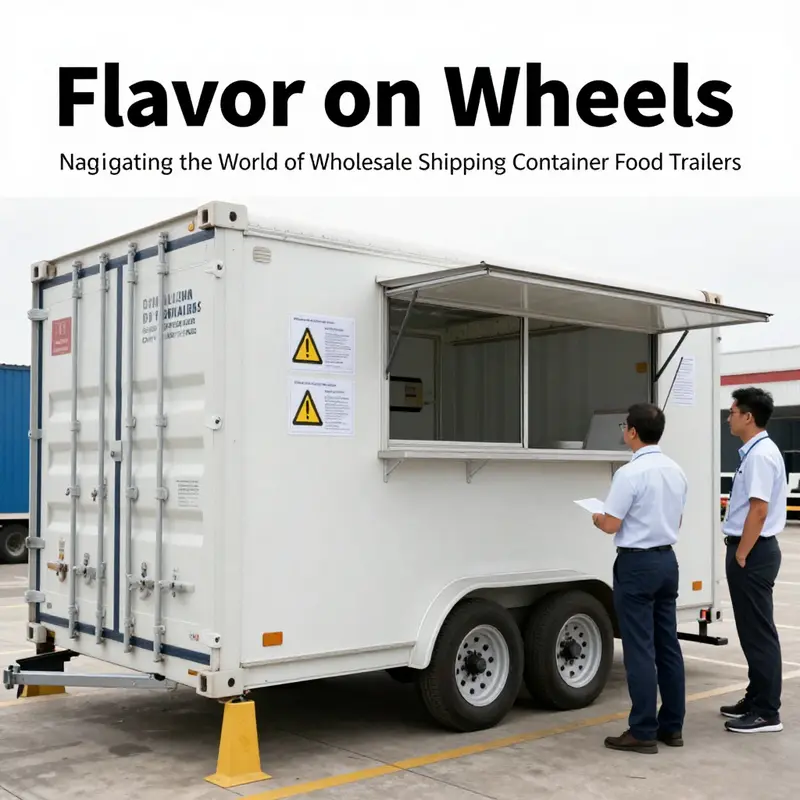
A wholesale shipping container food trailer sits at the intersection of clever engineering and regulated safety. It is a small, fully functional kitchen wrapped in steel and insulation, designed to be moved from fairgrounds to city streets with minimal setup. Yet the same efficiency that makes these units attractive—durability, portability, and rapid deployment—depends on a disciplined commitment to compliance. Compliance is not a bureaucratic hurdle; it is a framework that protects customers, operators, and the brands that rely on mobile service delivery to build trust. The most robust trailers integrate safety and regulatory considerations from the earliest design stages, weaving them into interior layouts, material choices, and the way equipment is installed and tested. When done well, compliance becomes a silent guarantee that food prepared within the trailer meets expectations for safety, quality, and environmental responsibility across markets, from local neighborhoods to international events.
A core element of this discipline is how the interior surfaces interact with food. Food contact materials must be food-grade and free from substances that could migrate into meals during normal use. Regulations across key markets converge on this principle, even if the specific standards differ in terminology. In the United States, the FDA’s guidelines guide what materials can safely come into contact with food, emphasizing migration limits and allowable substances. In Europe, the prescriptive framework is anchored in regulations such as the European Regulation on Materials and Articles Intended to Come Into Contact with Food (EC No. 1935/2004) and related member-state implementations, including LFGB in Germany. This is not abstract guidance; it translates into concrete material specs for countertops, cabinetry, seals, gaskets, and even the coatings on steel and aluminum surfaces. When a vendor talks about a “food-grade” finish, the expectation is a documented alignment with these standards, backed by migration testing and material safety data sheets (MSDS). The goal is certainty: operators should know that the surfaces in direct contact with food won’t leach metals, plasticizers, or unwanted additives into meals, even after repeated washings and exposure to heat and cold.
Thermal safety and reliability follow closely behind. A trailer that houses a refrigerator, a hot-holding unit, or a convection oven must demonstrate that it can sustain critical temperature ranges without gradual degradation. Thermal resistance testing is designed to ensure that insulation retains its performance under real-world conditions and that electrical and mechanical components function safely in the narrow, potentially harsh environments of street operations. Recognizing the importance of third-party verification, many manufacturers pursue certifications such as TÜV Austria or analogous schemes that attest to the safety and stability of refrigeration systems, heated compartments, and their control electronics. This kind of validation matters not only for health compliance but for reducing the risk of equipment failure on busy service days when timing and reliability are everything.
Beyond the kitchen itself, sustainability and environmental considerations are increasingly central to legitimate operational practice. Operators are seeking trailers built from recyclable or low-emission materials and finished with coatings that minimize volatile organic compounds (VOCs). Certifications like OK Compost or BPI, and broader RoHS compliance, help demonstrate that a unit minimizes environmental impact and avoids substances that could complicate disposal or create hazards during manufacturing, operation, or end-of-life recycling. This is more than a marketing edge; it is a practical alignment with supply chains that prize responsible sourcing and long-term viability. The trend dovetails with consumer expectations, as guests increasingly connect their dining experiences to broader ethical and environmental narratives. A trailer that can articulate its material provenance, its approaches to waste, and its compliance commitments gains a leg up in today’s crowded mobile market.
The documentation trail is the connective tissue that binds all these commitments together. Reputable suppliers should deliver complete documentation for every unit, including migration testing results, heavy metal analyses, and MSDS for all interior components and coatings. Traceability—knowing precisely where each material originated and how it was processed—facilitates audits by health departments and regulatory bodies and streamlines inspections. A well-documented trailer makes the licensing and renewal process smoother, reduces the likelihood of last-minute compliance fixes, and supports a transparent relationship with customers who demand accountability. From the perspective of a growing business, this paperwork is not a burdensome add-on; it is the backbone of a credible operation, one that can scale across jurisdictions with confidence.
The evaluation of suppliers, then, becomes a critical component of strategic planning. Prospective manufacturers and refurbishers should be assessed not only on price or speed-to-delivery but on their demonstrated pattern of compliance and support. A good supplier will offer flexibility in production—allowing interior reconfigurations, branding, insulation upgrades, or alternative materials—without sacrificing safety and regulatory alignment. They will provide ongoing after-sales support, including updated documentation when standards evolve or when traceability information needs refreshing for inspections. The most capable players in this space treat compliance as a continuous partnership rather than a one-time checkbox. This mindset is essential for operators who intend to traverse multiple markets or expand to international events, where regulatory expectations can differ markedly from one location to the next.
For operators charting their path, a disciplined approach to materials and compliance begins with a clear mapping of the standards most relevant to their target markets. In the United States, adherence to FDA guidelines for food-contact materials informs choices about countertops, seals, and coatings. In Europe, alignment with EC No. 1935/2004 ensures compatibility with a wide range of countries, while LFGB considerations in particular markets underscore the need for rigorous testing and documentation. When choosing a trailer, ask for evidence of third-party verification and a current list of supported certifications. In parallel, evaluate the payload of the unit—how much insulation exists, how efficient the HVAC system is, and how easy it is to clean and sanitize every surface. A design that prioritizes cleanability reduces microbial risk and simplifies compliance with routine health inspections. These technical requirements are not abstract standards; they translate into practical outcomes—longer service windows, fewer maintenance interruptions, and a safer, more consistent product for customers who expect both flavor and safety from a mobile kitchen.
There is also a strategic layer to compliance for those aiming to differentiate their business through responsible packaging and waste management. The packaging ecosystem surrounding a mobile kitchen is not merely a secondary concern; it is part of the overall compliance story. Suppliers increasingly offer packaging options that meet food-contact standards and align with sustainability goals. For instance, packaging shapes, coatings, and barrier properties all influence how well a trailer can maintain product quality during transport and service in variable conditions. This is where materials science and regulatory compliance converge in a practical way. Consider the available packaging solutions when planning menu items that rely on takeout or delivery; selecting items that are certified for contact with hot foods, and that decompose or recycle cleanly, helps close the loop on safety, branding, and environmental responsibility. To illustrate how this packaging dimension fits into the compliance framework, explore a representative option such as the eco-friendly disposable packaging box designed for fast food use, which aligns with food-grade standards and supports responsible disposal. eco-friendly disposable 3-compartment food-grade packaging box.
No discussion of compliance is complete without acknowledging the broader supply-chain context. Regulators, standards bodies, and industry guides increasingly advocate a holistic view of safety, environmental stewardship, and product traceability. An external reference worth consulting is a comprehensive industry guide that maps the evolving compliance landscape for bulk and fast-food packaging, offering insights into how standards are evolving, how to verify supplier claims, and how to price and plan for compliance across markets. For readers seeking a broader frame, this external resource provides a useful overview of how compliance, customization, and pricing converge in practice.
In sum, the reliability of wholesale shipping container food trailers rests on a disciplined embrace of safety and environmental standards. This requires material choices that are proven to be food-safe and stable under typical service conditions, tested systems for temperature control, and a robust documentation regime that supports audits and growth. It also means partnering with suppliers who view compliance as a long-term capability—one that enables branding consistency, reduces operational risk, and unlocks opportunities across markets. As mobile food ventures scale, the discipline of compliance becomes less about meeting a minimum requirement and more about building a durable, trusted platform for culinary creativity to flourish on the move. The trailer becomes not just a kitchen on wheels, but a certified, dependable gateway to consistent quality, safety, and customer confidence across every stop on the itineraries ahead.
Final thoughts
Wholesale shipping container food trailers represent a versatile and economical opportunity for businesses looking to enter or enhance their presence in the mobile food market. By understanding their key features, current trends, economic impacts, customization opportunities, and necessary compliance standards, you can make an informed decision to invest in this innovative solution. As the demand for unique food experiences continues to rise, these trailers not only allow you to deliver your products effectively but also to build strong connections with your clientele.