
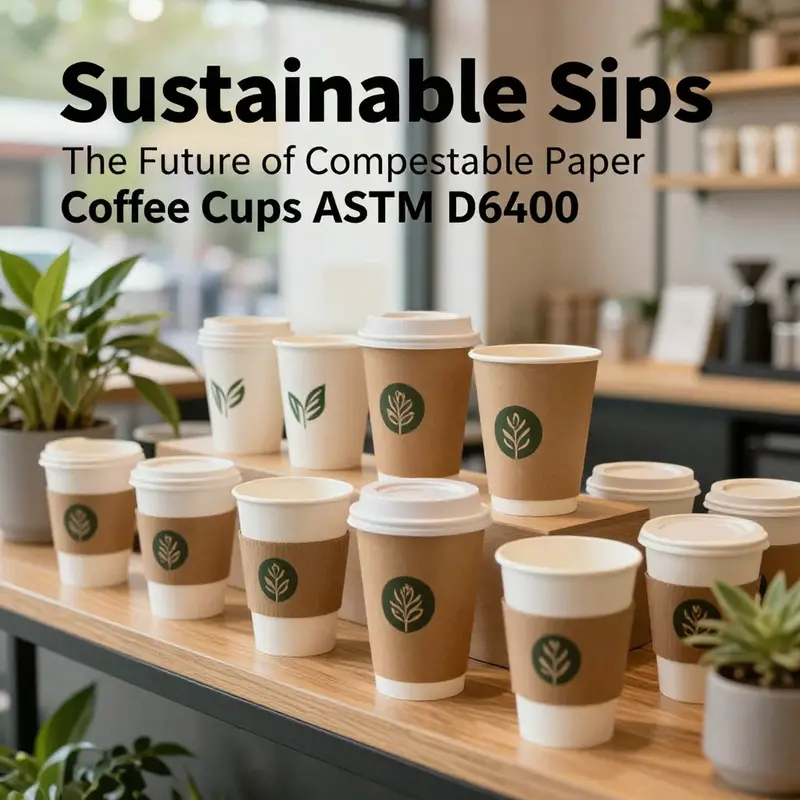
Compostable paper coffee cups certified to the ASTM D6400 standard represent a significant leap toward sustainability in the beverage industry. For bubble tea shops, beverage chains, restaurants, food trucks, catering services, event planners, and corporate procurement teams, the choice of serving ware matters more than ever. As consumer awareness about environmental issues grows, adopting compostable options becomes essential not only for compliance but also for brand reputation. This comprehensive exploration will dive into the standards behind compostable cups, the environmental benefits they offer, the materials used in their production, and the evolving market trends that indicate strong consumer acceptance and demand for these eco-friendly solutions. Each chapter contributes valuable insights, helping businesses make informed choices that align with ecological goals.
From Sip to Soil: The Science, Standards, and Certification Behind ASTM D6400 Compostable Paper Cups
A cup is more than a container for coffee; it is a material choice that signals a commitment to how a product will live after it is used. When a consumer tilts a paper cup toward their lips, they rarely see the path that cup will take after the last drip of caffeine is enjoyed. Yet the path is being defined by standards, most notably ASTM D6400, which outlines how a cup can be labeled and marketed as compostable in industrial facilities. The chapter you are about to read follows that path—through biodegradation, disintegration, ecotoxicity, and the certification processes that give legitimacy to claims of industrial compostability. It is a journey that starts with a material choice and ends with a compost that can nourish soil, rather than linger as waste in a landfill. The arc is less about one product and more about the system that governs how modern takeaway packaging should behave once it leaves the consumer’s hands.
At the core of ASTM D6400 is a promise of performance under controlled conditions in industrial composting facilities. The standard sets three critical criteria that a material marketed as compostable must meet. First, biodegradation: at least 90 percent of the material must convert to carbon dioxide, water, and biomass within 180 days. This is not a vague or approximate claim; it is a measurable return to the natural carbon cycle within a defined timeframe. The second criterion is disintegration: within 12 weeks, the material must break down into fragments smaller than 2 millimeters, ensuring that it does not persist as visually identifiable debris in the compost pile. Finally, ecotoxicity must be absent; the finished compost must not inhibit plant growth or leave behind residues that could harm soil life or crop health. Taken together, these conditions are the backbone of trust for businesses that want to position their cups as responsible end-of-life choices rather than mere substitutes for conventional plastics.
To translate these requirements into a real product, manufacturers lean on plant-based liners, known as biopolymers, such as polylactic acid (PLA), and on careful selection of adhesives, inks, and barrier layers. The lining is a critical piece of the puzzle because it interacts with composting environments differently from traditional plastic or wax coatings. A cup may be made with a PLA lining derived from renewable feedstocks, paired with an exterior paper substrate that provides strength and heat resistance. But PLA and other biopolymers bring their own set of testing demands. The material must not only degrade but do so in a way that does not leave micro-residues that could harm the compost or future crops. This is where the ecotoxicity tests come into play, evaluating whether the compost can be used to support plant growth, rather than being a source of toxic elements that could transfer into the soil.
Certification to ASTM D6400 is not granted by the producers alone. It is validated by independent third-party laboratories that run a battery of tests on the complete cup system—paper substrate, coatings, liners, inks, and any additives. Laboratories such as TÜV Austria or Intertek, among others, undertake these assessments to determine whether a product meets or exceeds the criteria set by the standard. When a cup clears this gauntlet of tests, it earns a certification mark such as OK Compost INDUSTRIAL or TÜV OK Compost, signifying that it has been tested against the D6400 criteria and is suitable for industrial composting facilities. This certification serves multiple roles: it helps retailers and food-service operators choose products with confidence, it informs waste-management facilities about what can be accepted in their streams, and it offers consumers a clear signal about what happens to a cup after use. In a landscape where misinterpreted labels and greenwashing can mislead, the certification acts as a trusted bridge between product design, waste infrastructure, and end-of-life outcomes.
The process, however, is not just a matter of meeting a test. It is a dialogue among producers, certifiers, and waste-management systems about what industrial composting actually looks like in practice. Industrial facilities vary in their equipment, feedstock inputs, temperature profiles, and residence times. A cup labeled as industrially compostable is designed to thrive in that kind of facility, not in a backyard compost pile or a municipal mixed-waste stream. The conditions in which biodegradation is measured—the temperature, moisture, microbial activity, and aeration—are tightly controlled to mimic real-world composting environments. These conditions, while standardized for testing, reflect a complex reality: compostability is a systems property. It depends not only on the material itself but also on how the facility operates, what other organic material is co-composted, and how well the stream is segregated from non-compostable waste.
The certification journey also hinges on practical labeling. A cup that carries an industrial compostability mark communicates more than a product feature; it effectively informs a waste-handler about how to treat the item after use. This is essential because home composting remains a very different environment. The D6400 standard explicitly targets industrial facilities; home-compost conditions are slower and less predictable, and many compostable polymers do not degrade at the pace or under the conditions found in a home compost bin. Therefore, even if a cup is certified as compostable under D6400, it remains critical for users to dispose of it where industrial composting is available. The presence of the certification label helps ensure that the cup will travel into the correct stream, reducing contamination and preserving the quality of the final compost.
What does this mean for the design of a cup? Beyond the basic requirement of a compostable coating, designers and engineers scrutinize each layer for compatibility with composting and with the composting facility’s workflow. In practice, this means that the paper substrate, coatings, adhesives, and printing inks must all comply with the same set of environmental and safety criteria. Any additive or colorant used to improve aesthetics or performance must be evaluated for its fate during composting. The cumulative effect is a cup that not only performs on the shop floor but also returns value to the soil as a nutrient source once it completes its lifecycle. In that sense, the cup becomes a node in a broader circular economy paradigm, where a disposable item—intended for a fleeting moment of use—transforms into a feedstock that sustains future growth.
For buyers and operators, the practical implication is straightforward: verify the certification and understand the facility where the cup is designed to be processed. Some producers may highlight a specific certification label, but a responsible procurement approach requires corroborating documentation from third-party testing labs. The ability to verify a claim reduces risk for both educators and operators who must ensure that their waste-management strategies maintain high-quality compost streams. In addition, the supply chain must align with regional waste policies, because some regions enforce, or at least encourage, certain standards and certifications. While the D6400 framework originated in one context, its relevance is global, and manufacturers occasionally face the need to reconcile it with local regulatory expectations and waste-management infrastructures. This is where the broader conversation about sustainability, policy, and industry standards intersects with day-to-day decisions in cafés and offices.
Within this context, a common thread emerges: the consistency of the cup’s performance across the full spectrum of its lifecycle. The journey begins with renewable material choices, such as a PLA-based liner, selected for renewability and barrier properties, and ends with a compost that supports soil health. But the narrative also includes the risks of misalignment. If a cup is certified as industrially compostable, but a local facility does not accept this type of material, or if the facility is not operational or properly segregated, the product may fail to achieve the intended environmental outcome. The gap between certification and real-world impact underscores the importance of transparent communication across supply chains and waste streams, so that buyers, operators, and consumers share a common understanding of what “compostable” really means in practice.
For those who want a tangible sense of how it translates on the shelf, consider the broader category of disposable cups designed for hot beverages. The design challenge is to balance performance with compostability. The cup must withstand the heat of coffee without leaking or losing rigidity, while the inner lining must not degrade prematurely in a way that would compromise the cup’s function or the integrity of the compost stream. In this balancing act, the choice of materials, the thickness of the paper, the type of coatings, and the energy and water footprints of the manufacturing process all matter. It is not enough to claim compostability; the product must be demonstrably compatible with the end-of-life path defined by D6400 and the certification process. Each decision in the design phase echoes through the waste-management chain, influencing how easily the cup can disintegrate, how quickly it biodegrades, and how safely the resulting compost can be used.
As with any standard that touches environmental claims, it is important to recognize the limits of what D6400 represents. The standard defines performance criteria under controlled conditions in industrial facilities. It does not, by itself, guarantee that every cup will be accepted in every facility, nor does it ensure that all facilities are equipped to handle compostable cups. Some regions enforce additional regulatory frameworks, such as regional waste-management policies or extended producer responsibility requirements, which can influence how compostable products are integrated into recycling and composting streams. In practice, this means that a product’s journey from production to compost is mediated by policy environments as well as by the technical specifications in the standard. Consumers can play a role by disposing of these cups in the appropriate stream, but facilities also bear responsibility for ensuring that their intake guidelines reflect the capabilities of the materials they receive.
To connect these ideas to the everyday experience of reading packaging and making purchasing choices, consider the careful balance between clear communication and technical precision. The presence of a certification mark signals that a product has been tested and verified against a rigorous standard. Yet the mark is most effective when paired with accessible consumer education—informing users about the appropriate disposal method and the benefits of choosing certified compostables. In a world where plastic-lined alternatives often dominate the takeout landscape, the commitment to D6400-based compostability signals a shift toward materials that can re-enter the soil pathway. It is a shift that involves not only the chemistry of materials but also the architecture of waste infrastructure and the behavior of end users.
From a procurement standpoint, the practical takeaway is to treat ASTM D6400 certification as a reliable indicator of industrial compostability, while remaining aware of the local realities of composting facilities. The supplier’s documentation, the third-party test reports, and the labeling together create a robust basis for decision-making. For retailers and food-service operators, this translates into a simpler policy: favor cups that carry recognized certifications and ensure that customers understand where to recycle or compost the cup after use. When customers know that their discarded cup is likely to join a composting stream, they are more inclined to participate in responsible disposal, which in turn improves the efficiency and quality of the composting process.
In this broader frame, it is useful to acknowledge the role of digital and informational tools that help connect the consumer to the end-of-life story. A well-designed packaging program may feature QR codes, labels, or brief explanations that guide customers toward appropriate disposal options. Integrated with the internal selection of materials and the external verification of standards, these tools form a practical pathway from cup to compost. They also support a more mature waste-management ecosystem in which facilities, municipalities, and producers align around shared expectations for what constitutes industrial compostability and how it should be implemented in real-world settings. As with any system-level transformation, progress accrues through continuous learning, testing, and refinement, as new materials, new processes, and new regulatory contexts emerge.
For readers seeking a formal reference to the standards that govern compostability, the official ASTM D6400 standard is available for review, and it provides the complete criteria and testing methodologies that underpin the operational claims described here. This benchmark is not merely a technical document; it is a compass for product developers, waste managers, and policymakers who are shaping the future of sustainable packaging. If you wish to explore the standard directly, you can consult the ASTM D6400 page for the most current specifications and certifications. External resource: https://www.astm.org/Standards/D6400.htm
Finally, the practical reality that underpins every discussion of compostable cups is the everyday choice of packaging by businesses and institutions. A cup designed to meet D6400 can contribute to reducing plastic pollution and conserving energy when paired with a supportive waste-management infrastructure. The story is about material science, but it is also about system design—the way suppliers, certifiers, facilities, and users interact to realize the environmental benefits envisioned by the standard. In this sense, the chapter moves beyond the lab and the certificate to the table where coffee is served, reminding us that a seemingly simple object—a cup—can be a catalyst for a more circular economy when built on clear standards, rigorous testing, and honest communication.
For readers interested in a concrete example of how this translates into a practical offering in the packaging space, consider exploring a supplier catalog that features disposable paper cups designed for hot beverages. These products illustrate how a cup can maintain performance under heat while aligning with industrial compostability standards, thereby enabling a smoother transition from use to compost. See the product category for disposable paper cups here: 20-50-200pcs disposable paper cups.
The journey from sip to soil is neither trivial nor automatic, but it is increasingly codified. ASTM D6400 provides the durable framework that makes compostability measurable and credible, even as the materials and processes evolve. As the industry continues to innovate in biopolymers, barrier layers, and sustainable printing, the standard continues to serve as a common language. It asks for performance that matters not just to a customer enjoying a cup of coffee, but to the soil that will receive the compost and to the farmers who will cultivate crops with the resulting nutrients. In this sense, a compostable paper cup is more than a product; it is a statement about the kind of material world we want to invest in, one where consumption and regeneration are not at odds but are connected through careful science, responsible certification, and practical logistics.
The True Green Promise: ASTM D6400 Compliance and the Real-World Impact of Compostable Coffee Cups
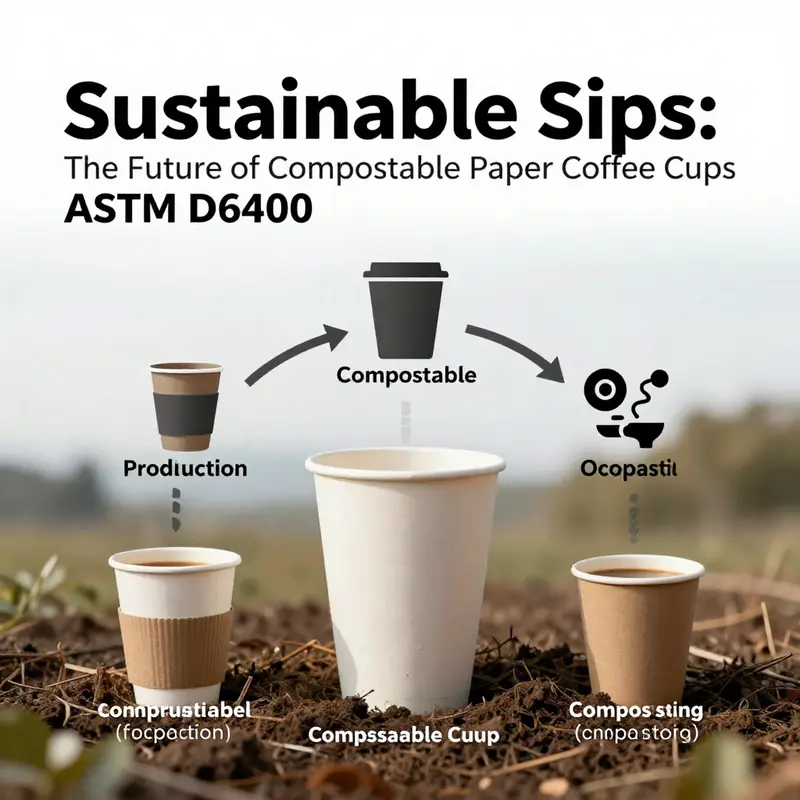
A quiet shift is underway in the world of single-use cups. Faced with the pervasiveness of plastic-lined disposables and growing waste management challenges, many manufacturers and users are turning to compostable paper cups that claim compatibility with industrial composting systems. The promise rests on a precise standard, one that defines not only whether a material breaks down, but how cleanly it does so and what remains, if anything, lingers after composting ends. At the heart of this promise lies ASTM D6400, a standard that for industrial facilities sets hard criteria for compostability. When a cup meets this standard, it has demonstrated that under controlled conditions it will degrade into water, carbon dioxide, and biomass within a defined timeframe—typically about 180 days—without leaving harmful residues. The time window is not a trivial preference; it is an operational parameter that aligns the cup with the realities of commercial composting streams, where temperature, moisture, oxygen, and microbial activity converge to drive decomposition.
To appreciate what D6400 really requires, it helps to think of compostability as a process with specific boundaries. The standard outlines the expected end state for the material and establishes the tests and certifications that prove it. It does not merely guarantee a surface breakdown; it requires a predictable, consistent, and safe disappearance of the material in an industrial composting environment. This distinction matters, because the ecological credibility of compostable cups rests on how thoroughly the materials are assimilated into the compost rather than merely how quickly a piece of packaging resembles disintegration. In practice, a cup that meets D6400 is supported by a program that ensures the entire product, including its inner lining, adhesives, and printed inks, complies with the same rigorous criteria. The result is a product that can enter a composting facility with a clearer expectation of its fate and a reduced risk of contaminating the resulting compost with plastics or toxic residues.
A common feature of many compliant cups is a plant-based lining, such as polylactic acid (PLA), rather than a petrochemical plastic. PLA originates from renewable sources like corn starch and is designed to break down when subjected to industrial composting conditions. Yet this lining is not a standalone solution; it works in concert with other materials and the overall cup design that must withstand the rigors of transport, handling, and the heat of hot beverages. The certification process itself is intentionally robust. Third-party testing laboratories verify that the product passes the criteria for disintegration and biodegradation within the specified period, while also ensuring that the material does not leave measurable amounts of contaminate in the compost. The procedural rigor behind D6400 testing is a critical reason why certifications carry weight for both suppliers and buyers seeking credible environmental performance claims.
The environmental assurance offered by D6400 compliance is not merely about the absence of microplastics or toxins. It also speaks to the broader life-cycle context of the cup. A compostable cup that breaks down cleanly in an industrial facility reduces the long-term presence of persistent plastics in landfills and in the environment. When the composting process is well-managed, it channels organic material into a medium that can enrich soils, returning nutrients rather than leaving behind non-biodegradable remnants. In this sense, the standard functions as a bridge. It connects the material science of the cup with the waste-management infrastructure needed to realize a genuine circularity. The outcome hinges on both product design and the availability of appropriate facilities capable of achieving consistent, uniform conditions that the standard prescribes.
From a practical standpoint, compliance with ASTM D6400 carries several advantages. First, it contributes to a tangible reduction in plastic pollution. When cups are designed to compost in industrial facilities, they are less likely to accumulate in landfills where plastics persist for centuries. Second, the organic breakdown of compostable materials can contribute to soil health by returning nutrients to the earth, provided the end product is properly managed and the composting stream is carefully maintained. Third, certification builds consumer and business confidence. When a product carries a reputable certification mark, it signals that the environmental claims are backed by rigorous testing rather than by marketing rhetoric. Stakeholders—from foodservice operators to end consumers—gain a shared understanding of what it means for packaging to be truly compostable, and that common standard helps to align expectations across the supply chain.
Nevertheless, the real-world impact of compostable cups depends on more than the presence of D6400 certification. A critical caveat concerns end-of-life infrastructure. Industrial composting facilities exist in many regions, but they are not universal, and some programs operate only at limited scale or with specific feedstock requirements. If cups reach ordinary landfills or traditional recycling streams, the environmental benefits may not materialize as anticipated. Even within dedicated facilities, contamination remains a risk. A cup’s ability to decompose as expected is influenced by the cleanliness of the stream, the presence of non-compostable components, and the compatibility of the entire packaging system with the facility’s operating parameters. The adhesives used to seal cups, the inks used for branding or information, and the nature of the inner lining all contribute to the overall outcome. When any element falls short of the standard, the intended ecological advantages can be diminished or negated.
This nuanced picture invites a broader reflection on how businesses approach sustainability in practice. The D6400 standard provides a rigorous framework for verifying compostability, but it does not automatically guarantee environmental benefits in every context. For instance, a cup designed to compost in a high-temperature, high-moisture industrial facility may not perform similarly in a climate-controlled but smaller municipal composting system. The product’s environmental performance thus depends on aligning product design with the local waste-management ecosystem. In other words, the standard functions as a necessary condition for credible compostability, not a sufficient guarantee of universal suitability. Companies that pursue D6400 certification often invest in transparent labeling, clear disposal guidance, and collaboration with composting partners to support users in navigating the realities of proper end-of-life handling. The result is a more reliable chain of custody from product to compost.
To illustrate how these ideas play out in everyday practice, consider the consumer-facing experience of choosing a cup for a hot beverage. A user who ends up with a compostable cup expects the product to behave according to the assurances put forward by the supplier. The installer, whether a café or a catering operation, relies on documentation and certification tests that validate the cup’s industrial compostability. The waste-handler, in turn, uses facility specifications and feedstock guidance to decide whether the cup should enter the compost stream or be diverted elsewhere. In this ecosystem, a single standard helps coordinate actions across actors who might otherwise operate on divergent assumptions about disposal and degradation. The synergy among design, certification, and infrastructure is what makes the D6400 story more than a certificate on a box; it is a practical framework that guides real-world waste reduction, derived from a rigorous blend of science and process.
In the pursuit of actionable insights, it is valuable to ground this discussion in concrete considerations for the lifecycle and the user experience. When a cup is designed for industrial composting, it is not simply about the outer shell. The entire packaging system matters: the cup, the lid if used, the sleeve, and any accessory that accompanies the beverage. If an operator promises compostability under D6400, the facility must be capable of handling the materials as a cohesive stream. The plant-based lining, if present, should be matched to the facility’s composting temperature and residence time. The printing on the cup should use inks that do not hinder disintegration and do not contaminate the compost. Each of these elements contributes to the overall reliability of the compostability claim and to the environmental performance the standard seeks to ensure.
From a business standpoint, embracing ASTM D6400 can influence procurement decisions, supplier relationships, and branding narratives. When a supplier demonstrates certified compliance, it creates a basis for transparent communication with customers who are increasingly demanding proof of sustainability. The confidence gained from a credible standard can translate into market advantages, as operators seek to differentiate themselves through responsible packaging choices. Yet, this advantage rests on faithfully implementing the end-of-life expectations. There is a growing consensus that environmental responsibility is a system-wide endeavor: material choices, manufacturing processes, waste-management partnerships, and consumer disposal habits all need to align. The D6400 framework helps to synchronize those elements by providing a common reference point for what counts as true compostability and what does not.
For readers tracing a practical thread through this narrative, consider how product design choices interact with facility capabilities. A cup that claims industrial compostability should be designed with the entire composting stream in mind. The inner lining, adhesives, and printing should all be compatible with the composting process, ensuring that nothing interferes with the decomposition pathway or leaves residues above acceptable thresholds. The clear implication is that material science and waste-management infrastructure are interdependent. A compliant cup is not a standalone invention; it is part of a coordinated system that must function across production lines, distribution channels, and municipal or private composting programs. When these connections are well managed, the environmental gains become more robust and measurable, contributing to a broader reduction in disposable packaging’s ecological footprint.
For readers seeking a direct reference to the formal standards and certification processes behind ASTM D6400, the official material is accessible through ASTM International’s website. This resource provides the technical specifics, test methods, and certification steps that underpin how a product earns the D6400 designation. The existence of this standard signals a commitment to accountability and traceability in the world of compostable packaging. It empowers buyers to differentiate products that truly perform as promised from those that rely on marketing alone. It also invites ongoing collaboration among manufacturers, waste-management providers, and regulators to ensure that compostable packaging aligns with evolving waste-stream realities and environmental goals.
As the narrative around compostable coffee cups progresses, one practical takeaway stands out. ASTM D6400 does not exist in a vacuum; it connects material composition, product design, and the availability of industrial composting infrastructure into a coherent pathway toward reduced plastic leakage and enhanced soil health. The standard asks for rigorous testing and transparent reporting. It encourages stakeholders to invest in compatibility across the packaging system and to pursue reliable end-of-life pathways that facilitate actual composting rather than landfill disposal. The outcome is a packaging solution that genuinely contributes to a more sustainable tableware ecosystem, provided the downstream infrastructure and consumer practices support it. That is the ultimate test of the D6400 framework: does the certified cup deliver its promised environmental performance when it meets real-world disposal conditions?
For a practical reference to the availability and characteristics of disposable paper cups used in hot beverage service, see the product page on disposable paper cups for hot drinks. This link offers a tangible example of the kinds of cups that are commonly offered in the market and that aim to align with compostability standards while serving everyday coffee and tea service. disposable paper cups for hot drinks
In closing this exploration of the environmental impact and regulatory framework, it is important to recognize that certifications such as ASTM D6400 are part of a larger movement toward credible, transparent sustainability claims. The standard provides a clear yardstick for evaluating whether a cup truly aligns with the goals of reducing long-term plastic pollution, enriching soils through composted organic matter, and supporting consumer confidence in sustainable choices. However, the real-world benefits depend on the presence of compatible industrial composting facilities, correct labeling and disposal guidance, and informed consumer behavior that directs used cups into appropriate streams rather than mixed or landfilled waste. When all these pieces come together, a compostable paper cup certified to D6400 can realize its intended environmental promise and help shift disposable beverage packaging toward a more sustainable practice. The ongoing challenge—and opportunity—is to expand access to suitable composting infrastructure, to refine packaging design for maximum end-of-life compatibility, and to maintain rigorous verification that keeps environmental claims honest and traceable. For full technical specifics and certification details, consult the official standard documentation at ASTM International.
External reference: https://www.astm.org/Standards/D6400.htm
From Fiber to Facility: How ASTM D6400 Shapes the Lifecycle of Compostable Paper Coffee Cups
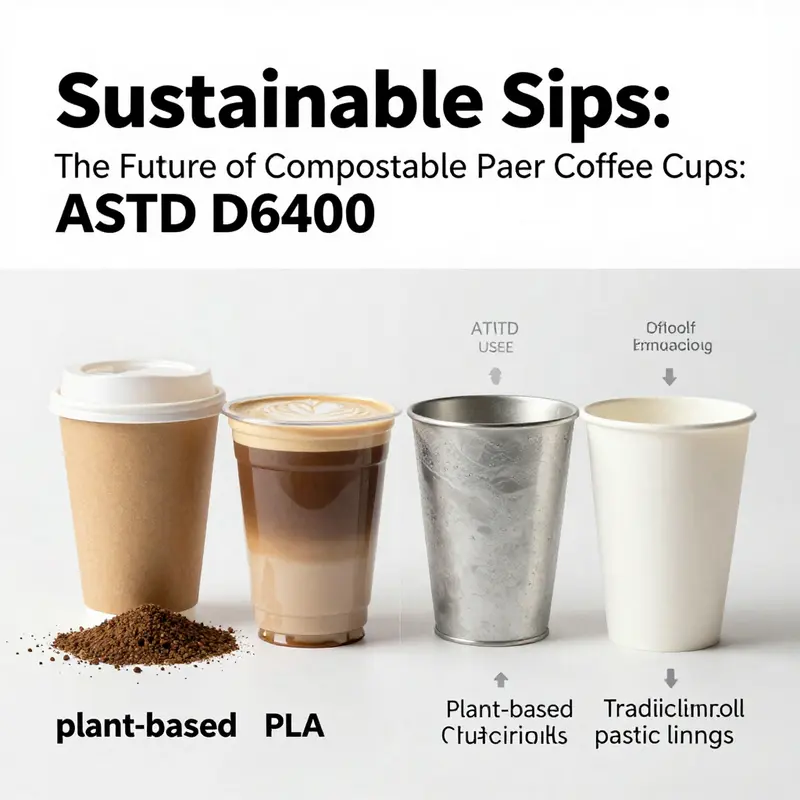
When we speak of compostable paper coffee cups, we are not simply describing a material that breaks down over time. We are describing a precisely engineered lifecycle that begins with plant fiber and ends in a controlled industrial process where the cup returns to the cycle as water, carbon dioxide, and biomass. The backbone of this lifecycle is a standard that defines what truly constitutes compostability in municipal and industrial facilities. ASTM D6400 provides the framework for verifying that a cup, including its inner lining and any adhesives or inks, will degrade within a defined timeframe and without leaving behind toxic residues. The standard typically focuses on the conditions of industrial composting—high temperature, moisture, and microbial activity—which accelerate the breakdown of bioplastics and paper materials, often achieving substantial disintegration within roughly 180 days. The significance of this standard goes beyond the technical certificate; it governs how products are designed, manufactured, tested, labeled, and ultimately handled within waste management systems that aim to recover nutrients and energy rather than simply accumulate material in landfills.
To understand the material choices, one must consider how each layer contributes to performance and compostability. The cup body is usually made from paperboard derived from recycled or responsibly sourced fibers. This provides the necessary stiffness to hold hot beverages and to maintain structural integrity during handling and transport. The more critical piece, however, is the inner lining. A compostable lining—most commonly a plant-based bioplastic such as polylactic acid (PLA)—serves as the barrier that keeps liquids from penetrating the paper. PLA is derived from renewable resources like cornstarch or sugarcane and is designed to be compatible with composting processes when paired with other components that meet D6400. The combination of a paper-based shell and a bioplastic barrier is what enables a cup to perform in real-world settings while still aligning with end-of-life goals that emphasize resource conservation and waste minimization.
Yet materials alone do not determine compostability. The adhesives that bond the liner to the paper, the inks used for branding and information, and any coatings applied to improve grease resistance or wet strength must also be compatible with the D6400 criteria. In practice, formulators favor water-based inks and compostable adhesives that do not hinder disintegration or contaminate the composting stream. The goal is a seamless integration where each component contributes to the functional requirements—strength, heat resistance, and moisture barrier—without compromising the material’s ability to fully degrade under industrial composting conditions. The overall composition is a careful balance: sufficient barrier properties to prevent leaks, adequate heat resistance to tolerate hot beverages, and an intimate relationship with composting processes that ensures the cup’s end-of-life impact remains positive.
The D6400 framework emphasizes several core outcomes. First, the product must disintegrate into water, carbon dioxide, and biomass within a specific timeline under industrial composting conditions. Second, it must do so without leaving toxic residues that could jeopardize soil health or compost quality. Third, the materials must be safe for use in commercial composting operations, meaning they should not release harmful substances that would obstruct microbial activity or contaminate the compost product. These outcomes are not abstract guarantees; they are grounded in a suite of tests and criteria that cover disintegration, biodegradation, ecotoxicity, and chemical composition. While the exact test methods are detailed in the standard, the practical implication is clear: a compostable cup is designed to perform as a part of a closed-loop system, where organic matter is recovered rather than disposed of as waste.
In practice, the lifecycle begins with responsibly sourced fibers for the cup body. Recycled content is common and desirable, reducing the demand for virgin pulp and lowering the environmental footprint of production. The liner, often PLA-based, provides the necessary barrier to liquids. The thickness and uniformity of the coating influence both barrier performance and compostability. A crucial consideration is that while PLA is drawn from renewable resources, it is still a plastic. Its compostability is conditional on being processed in an appropriate industrial facility. Home composting environments typically do not reach the temperatures or moisture regimes required for complete disintegration, which is why D6400 compliance is tied to municipal or industrial streams rather than home composting.
The role of the facility is as important as the role of the cup’s materials. Industrial composting facilities operate at elevated temperatures, humidity, and microbial activity, creating a conditions-rich environment where the cup, along with other compostable packaging, is expected to break down within the allotted window. The facility’s ability to process these materials efficiently is a function of feedstock mix, operational parameters, and organizational labeling that ensures the correct streams are sorted. When cups are labeled as compostable under D6400, they signal to the facility that the product meets established criteria for disintegration and ecotoxicity, and that it contributes to a high-quality compost output rather than detracting from it. This signaling helps facilities optimize their processing lines, reducing contamination with conventional plastics and enabling the recovery of nutrients and organic matter.
A thoughtful approach to design and manufacturing under D6400 also considers the entire supply chain. For designers and brand owners, the standard translates into concrete decisions about materials, coatings, and inks. For manufacturers, it defines a testing and certification pathway that validates, through independent verification, that the cup will perform as promised in industrial composting environments. For consumers, the standard informs expectations about end-of-life outcomes and the importance of proper disposal. The collaboration among these stakeholders—designers who select materials, manufacturers who implement processes, and facilities that manage compost streams—creates a system in which compostable cups become a reliable component of a circular economy rather than an ambiguous label.
One practical implication of D6400 relates to the balance between performance and compostability. The cup must endure the heat and moisture of hot coffee without leaking or losing integrity during ordinary handling. At the same time, the materials must break down quickly enough in industrial composting facilities to be consistent with the facility’s throughput and compost quality goals. This dual requirement often leads to a bioplastic lining that is thin but effective, and to a paperboard substrate that achieves a high level of stiffness with minimal fiber input. The interplay of these materials means that even small design choices—such as the degree of coating, the choice of adhesive, or the printing method—can influence whether the cup meets D6400 criteria. It is not enough to claim compostability; the product must prove it through standardized testing and certification processes that confirm disintegration, biodegradation, and ecotoxicity performance.
Beyond the technicalities, there is a broader narrative about sustainability. The shift toward compostable cups under D6400 reflects a commitment to reducing plastic waste and to recirculating organic matter in a controlled setting. While the mechanical performance of the cup is important, the environmental benefit hinges on how many of these cups end up in the industrial composting stream, how efficiently they break down, and how clean the resulting compost remains for agricultural or soil-improvement applications. In regions where industrial composting capacity is expanding, the visibility of D6400-compliant products grows. Facilities become more confident in accepting compostable cups, retailers can promote responsible disposal, and consumers gain a clearer understanding of the end-of-life implications of the products they purchase.
To illustrate how a cup design aligns with D6400, consider the way a typical packaging solution for hot beverages is specified. The body uses a paperboard with a high stiffness-to-weight ratio to resist deformation under a hot cup sleeve and during transport. The interior basis weight supports the cup’s form and reduces heat transfer to the user’s fingers. The inner lining, usually a PLA-based film, provides a discreet barrier that prevents liquid penetration into the fiber walls. The seam adhesives are selected to be compatible with composting streams; they do not introduce stubborn resins or pigments that would resist microbial breakdown. The inks used for branding are chosen for low ecotoxicity potential and for compatibility with the composting environment, avoiding heavy metals and persistent organic pollutants that could compromise soil safety. The net effect is a cup that functions well in daily use while delivering predictable end-of-life outcomes that align with a circular economy model.
In practical terms, the compliance with ASTM D6400 also informs how products are marketed and labeled. A cup that meets the standard carries implications for consumer education, facility cooperation, and waste management policy. Labels and certification marks, when used correctly, guide customers toward appropriate disposal, encourage facilities to process the cups in industrial composting streams, and support municipalities in meeting their own environmental objectives. The alignment between product design and certification clarifies the responsibilities of manufacturers and retailers and reinforces the integrity of the compostable packaging category. It also helps reduce the risk of contamination in compost streams, which can occur when non-compostable plastics or coated papers are mixed with compostable materials. Clear, accurate labeling backed by robust testing is essential for maintaining trust in compostable packaging as a practical, scalable solution.
For designers seeking additional practical insight, examining real-world material choices offers a window into what works under D6400 without sacrificing performance. A common configuration features a paperboard cup body that leverages recycled content and a thin, plant-based lining to provide a moisture barrier. The coating and adhesive systems are carefully chosen to be compatible with composting and to minimize the risk of residue formation. The printing inks are selected for low toxicity and for adhesion properties that do not hinder disintegration. The end result is a cup that can withstand everyday use during a hot beverage experience while remaining a candidate for composting at the facility level. The design challenge is to optimize the interplay between stiffness, barrier properties, and compostability so that neither function is sacrificed in pursuit of the other. This delicate balance is precisely what makes ASTM D6400 a practical and rigorous standard for the industry.
The consumer-facing takeaway is that compostable cups, when produced to the D6400 standard, represent more than a material choice. They embody a system-level decision to support waste diversion and resource recovery. By participating in industrial composting streams, these cups contribute to soil restoration and to the reduction of plastic waste in landfills, provided that sorting and facility capacity are aligned with product labeling. It is essential to recognize that home composting is not the target or guarantee of D6400-compliant products. The conditions inside households generally do not replicate industrial facilities, and relying on home composting can undermine the product’s environmental performance if the materials do not break down as expected. Thus, clear communication about the appropriate disposal route remains a cornerstone of responsible packaging design.
In sum, ASTM D6400 acts as a bridge between performance and responsibility. It translates the long-standing goal of less plastic waste into a concrete, verifiable standard that manufacturers can design to, facilities can test against, and consumers can trust. The materials—the paperboard body, the plant-based lining, and the compatible adhesives and inks—are not merely components; they are parts of a coordinated system that must cooperate with industrial composting processes. When this system works, compostable cups transition from everyday use to valuable input for soil and crop production, closing the loop in a circular economy that treats packaging as a resource rather than as waste. For those who want to explore the specifics of what makes a plastic that composts in industrial facilities, the standard’s formal documentation offers detailed criteria on disintegration rates, biodegradation percentages, and ecotoxicity thresholds that guide every subsequent step of the product’s life cycle.
Internal reference for a practical example of a cup product line and its accessibility to consumers can be found at this page, which features a range of disposable paper cups designed for hot beverages and packaging needs in Kraft and other paper-based formats: 20-50-200pcs disposable paper cups.
External resource for the official technical framework discussed here can be found at the ASTM International website, where the D6400 standard details the testing methods, criteria for disintegration, chemical composition, and ecotoxicity: https://www.astm.org/Standards/D6400.htm
null

null
Final thoughts
As sustainability becomes fundamental in the food and beverage industry, compostable paper coffee cups under the ASTM D6400 standard emerge as a vital solution. Understanding the certification ensures businesses can confidently choose products that align with environmental policies and consumer expectations. Furthermore, the use of responsibly sourced materials not only reduces waste but also boosts brand image and customer loyalty. The trends indicate a shift towards greener options, making it clear that investing in compostable cups is not just a trend but a necessary evolution for businesses dedicated to a sustainable future. Championing eco-friendly practices will help serve a dual purpose of meeting market demands and caring for the planet.