
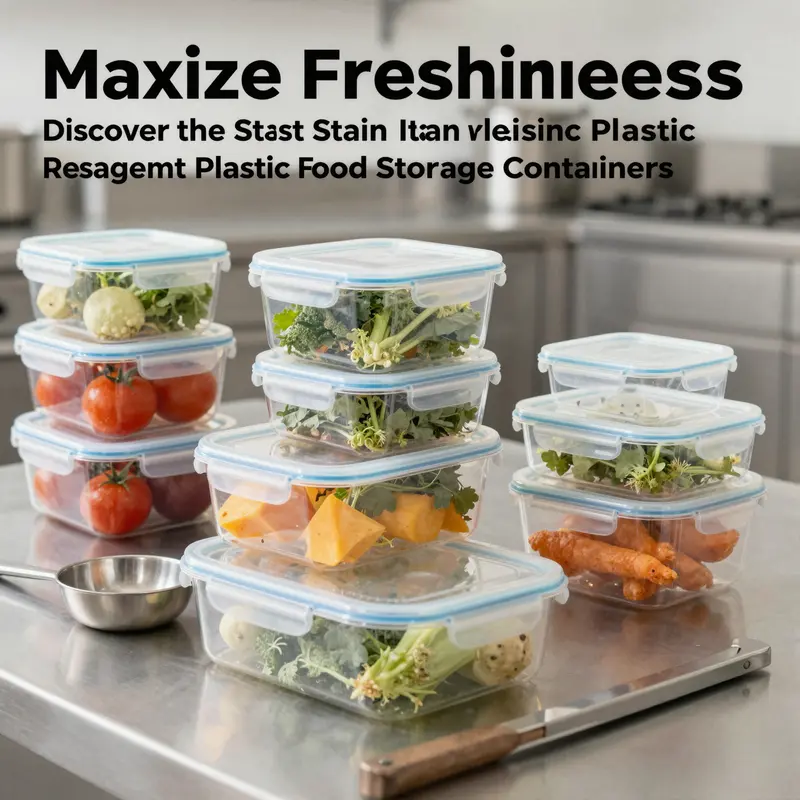
Selecting the right food storage containers is essential for beverage chains, restaurants, food trucks, and catering services. Stain resistant containers not only enhance food safety but also maintain the integrity of your offerings. High-density polyethylene (HDPE) and polypropylene (PP) are among the best materials available. This article breaks down the applications and advantages of these materials, critical factors for choosing the right containers, and some top recommended brands to help you make informed decisions for your business operations.
The Quiet Armor of PP and HDPE: How Stain Resistance Shapes Everyday Plastic Food Storage
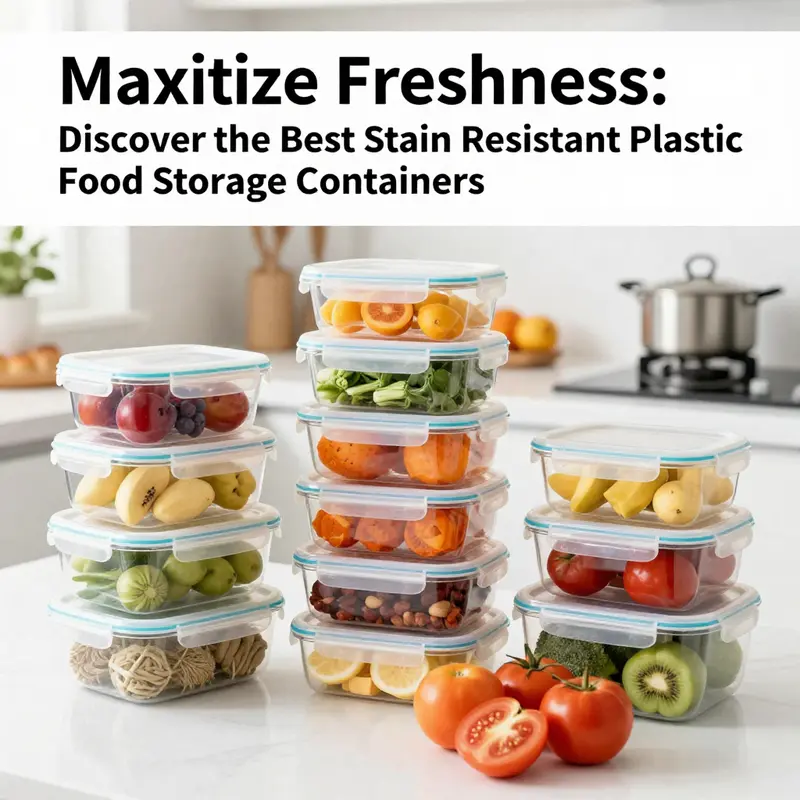
Choosing plastic for food storage often means balancing convenience with cleanliness. Glass may edge out plastic in some tests for anti-stain performance and odor resistance, but for many households the lightweight, affordable, and versatile nature of plastic containers makes them the default. If your priority is minimizing color transfer and lingering smells while still enjoying the practicality of plastic, two materials consistently rise above the rest: high-quality polypropylene (PP) and high-density polyethylene (HDPE). This chapter seeks to unfold why these two plastics stand out in real-world use, how their molecular structures translate into surface behavior that resists staining, and what that means for everyday cooks who want containers that stay bright, odor-free, and easy to clean over years of use. The discussion avoids naming specific models or brands, focusing instead on the material science and general design choices that drive performance. In the end, readers will see a practical framework for selecting containers that truly resist staining, while knowing how to care for them to extend their appearance and performance.
PP and HDPE are both non-toxic, chemically stable, and capable of withstanding common food components without reacting with acids, oils, or sugary residues. Yet they diverge in a few essential ways that influence stain resistance, heat tolerance, rigidity, and long-term durability. PP—the more heat-tolerant of the two—is a widely used workhorse for containers intended to be heated in microwaves or washed in hot water. Its crystalline structure and relatively high glass transition temperature endow it with resilience under thermal cycling. In practice, that means you can reuse PP containers repeatedly for reheating meals, steaming veggies, or soaking a bowl in hot water for sanitation without triggering warps or microcracks that invite deeper staining. The surface of a pristine PP container is typically smooth and non-porous enough to minimize dye uptake and odor absorption. Importantly, when PP is food-grade and free from additives like polycarbonate blends or unmarked “PC” components, it maintains a robust chemical inertness that reduces interactions with citrus, tomato sauces, or strong spices.
HDPE, by contrast, emphasizes barrier performance and rigidity. Its molecular packing creates a dense surface that resists absorption from oily or sugary foods and slows diffusion of moisture and volatile compounds into the plastic matrix. For many containers designed for bulk storage, family sizes, or long refrigeration cycles, HDPE’s strong resistance to deformation and its effective seal work together to keep odors from seeping in or escaping. While HDPE does not always tolerate temperatures as high as PP, it shines in cold storage, liquid containers, and heavy-duty food storage where impact resistance and surface integrity matter. The marriage of HDPE’s density with modern processing methods yields a surface that is notably easier to clean, with fewer micro-pores in which residues can linger. This is not merely theoretical; in kitchens that juggle a variety of sauces, dressings, and soy-based marinades, the difference between a smooth HDPE surface and a rougher alternative is evident after a few rounds of dishwashing.
The contrast between these two materials is not a matter of one beating the other in every scenario. It is about matching the material to the use case. If heat and microwave reheating are frequent, PP becomes the more forgiving choice. Its higher heat tolerance means fewer concerns about warping or degrading seals when you nudge the container into the microwave for a quick reheat. The chemistry of PP also tends to resist reactions with common food constituents, including many acids and bases, which helps to minimize chemical staining and color transfer from foods like bright tomato sauces or turmeric-rich curries. On the other hand, if you regularly store large quantities of food, freeze meals, or rely on sturdy, stackable containers that endure rough handling, HDPE’s stiffness, impact resistance, and tight sealing properties give it a practical edge. Its surface is typically less prone to ingrained staining from heavy oils and synthetic sauces, especially when the container is designed with a smooth, untextured interior and carefully engineered lids that minimize gaps where residues can hide.
Yet materials alone cannot guarantee stain resistance. The real-world performance of any plastic container depends on a constellation of design choices that influence how easily a surface can be cleaned, how deeply a dye or odor can penetrate, and how well the container withstands the daily grind of a busy kitchen. A smooth interior finish matters just as much as the base polymer. Stubborn textures, micro-indentations along seams, or a dull plastic surface can trap tiny food fragments, dust, or spice particles. Those micro-niches become the creeping grounds for color and smell, turning what should be an easy wipe into a longer, more stubborn cleaning job. Consequently, manufacturers aim for smooth cavities, tight seams, and flush, uniform lids that reduce the number of places where residues can cling. When a container is both smooth and well-sealed, the stain resistance that PP and HDPE offer is most effectively realized in routine use: a simple rinse, a quick wash, and a thorough dry are often enough to keep the container looking nearly new after repeated use with chromatic foods like beets, berries, or saffron-heavy dishes.
Another piece of the puzzle lies in how heat and cleaning conditions interact with the container’s chemistry. Dishwashers, for example, subject plastics to hot water and stable but sometimes aggressive detergents. PP’s higher heat tolerance translates into resistance against deformation and micro-cracking that would otherwise provide pathways for staining. This translates into a lower likelihood that repeated dishwasher cycles will open new micro-pores or micro-scratches, which are notorious for trapping pigments. HDPE, while not quite as heat-tolerant as PP, boasts excellent chemical inertness, which guards against dyes leaching into the plastic. In practice, choosing HDPE is often about trade-offs: you gain rigid, durable storage with strong odor barriers, but you may have to moderate heat exposure or rely on gentler cleaning cycles to maximize longevity. In environments where containers are frequently exposed to high heat or aggressive cleaners, both materials can perform admirably if used within their intended temperature ranges and if the interior surfaces remain smooth and unmarred.
A critical, often overlooked factor in stain resistance is what touches the container’s surface from the outside. The exterior is rarely as important to stain resistance as the interior is, but the exterior design can influence how odor and moisture migrate around the lid region and into the closure system. A well-engineered lid—whether it locks into place with a robust gasket or uses a snap-fit seal—limits air exchange and reduces the risk of surface residues migrating to the edges where they can become embedded in minor scratches or texture. The combination of a smooth interior, a dense exterior, and a reliable lid design creates a practical system for resisting stains and keeping flavors from leaking across meals and days.
In practice, the best approach for a home cook who wants stain-resilient plastic containers is to emphasize materials and surfaces that minimize porosity, avoid color-absorbing textures, and ensure robust sealing and easy cleaning. It is not enough to know that a container claims to be “PP” or “HDPE.” The true performance result comes from how the material interacts with the food matrix, how heat and detergents interact with the surface, and how the design reduces crevices where pigments can settle. For example, consider a typical scenario: a day’s worth of leftovers featuring a strong pigment like tomato, curry, turmeric, or a handful of berries. A container with a smooth PP interior in contact with the pigments will generally show less staining after washing than a textured interior. If the same container is used to store a heavy oil or an intensely colored fruit syrup, HDPE’s strong barrier properties help restrict pigment migration. Yet the reality is that even the best plastics cannot be absolutely stain-proof forever. Over time, with repeated exposure to high-starch, high-color-density foods, light color changes and subtle odors may begin to appear, especially at seams or micro-scratches. That is why care routines matter as much as material selection. Immediate washing after use, a gentle scrub with a non-abrasive sponge, and avoiding long-term storage of strongly colored foods in non-airtight or poorly sealed containers all contribute to maintaining the containers’ original appearance and taste neutrality.
Consider the practical eat-and-store cycle most households experience: cooking, packing, reheating, storing, and sometimes freezing. Each step interacts with PP and HDPE in ways that affect staining outcomes. When reheating, PP’s higher heat tolerance reduces the risk of surface distortion that can trap pigments. When storing, HDPE’s sealing ability reduces odor migration, helping the container preserve the integrity of other items in the fridge. When washing, a smooth interior helps detergents and water to lift away deposits more efficiently, mitigating the chance for residual color or scent to linger through multiple cycles. The confluence of material properties, design choices, and prudent care thus forms the backbone of durable stain resistance in modern plastic food storage.
From a consumer’s standpoint, translating these insights into a practical decision involves a few simple checks. First, inspect the material marking. Look for codes that indicate polypropylene (#5) or HDPE (#2); these are your primary indicators of the material class likely to deliver the best stain resistance in everyday use. Avoid containers labeled with unhelpful codes or vague “other” designations. Second, evaluate the surface finish. Favor containers with a smooth, uniform interior and exterior, free of pronounced textures or visible seams in the interior cavities. Third, note the lid design. A tight, well-sealing lid reduces air ingress and leakage, which translates into fewer opportunities for stains and odors to creep into the container walls. Finally, consider the cleaning compatibility. Containers labeled as microwave- or dishwasher-safe, provided that the care guidelines are followed, are likely to maintain their structural and surface integrity longer, preserving stain resistance across many cycles.
A broader perspective on material choice also benefits from a careful look at how these plastics are positioned within contemporary food packaging science. The ongoing development of polymer blends and copolymers aims to combine desirable traits—rigidity, clarity, chemical resistance, and ease of processing—without compromising safety. In some cases, manufacturers incorporate co-polymer blends or introduce non-PVC, BPA-free formulations to reduce health risks and improve performance under repeated heating. The result is a class of plastics that offers robust color and odor resistance without sacrificing safety or usability. For the consumer, this translates into a more forgiving storage option that performs more like glass in terms of cleanliness while still offering the practical advantages of plastic.
The choice between PP and HDPE, therefore, is not a single verdict but a conditional recommendation based on usage patterns. If your household routinely heats leftovers, reforms meals in the microwave, or needs containers that tolerate frequent sanitation cycles, PP emerges as the stronger ally. Its heat resistance and chemical inertness help to minimize pigment uptake and odor retention during repeated heating and washing. If your routine revolves around large volumes, cold storage, or long-term storage under moderate use, HDPE provides a resilient platform with reliable sealing and a surface that resists staining from most oils and spices. In either case, the presence of a smooth interior and a tight-sealing lid remains the most practical predictor of stain resistance in daily life.
To connect these material insights to concrete user experience, consider that the best-performing storage systems often blend both principles: a PP interior for heat tolerance and a robust HDPE exterior to maximize rigidity and barrier properties, all packaged in a design that minimizes crevices and textures. Although such hybrids exist in the market, the underlying lesson stays consistent: surface quality, sealing performance, and suitable temperature handling are the triad that determines how well a container resists staining over time. As with any kitchen tool, consistent cleaning and mindful use—such as not storing highly colored foods for extended periods in containers without proper seals—will prolong the “new container” appearance and odor-free experience. Even the most stain-resistant plastics are not magic shields; they are highly effective, well-engineered materials whose performance is maximized by thoughtful usage and care.
In the broader arc of consumer guidance, the message is clear. When you pick plastic storage, let the material’s chemistry and the design’s practical realities guide your choice. Prioritize PP for heat-tolerant needs and HDPE for storage-heavy tasks where rigid structure and strong barrier performance matter most. Favor smooth interiors, avoid rough textures, and ensure lids provide a tight seal. Resist the temptation to store deeply pigmented or strongly scented foods for prolonged periods in containers lacking robust seals. And finally, embrace a routine that respects the container’s limits: wash promptly, scrub gently, dry thoroughly, and reuse. This approach yields containers that maintain their stain resistance across months and years, preserving both appearance and flavor integrity.
For readers seeking a quick reference in the kitchen aisle, consider this practical takeaway: the most stain-resistant plastic containers tend to be those that clearly indicate polypropylene or high-density polyethylene as the primary material, use a smooth interior surface, and feature reliable, airtight lid designs. While no plastic is utterly immune to staining, PP and HDPE—when properly chosen and cared for—offer the best blend of heat tolerance, chemical stability, and surface integrity that helps foods look and taste fresher, longer. The result is a storage system that supports healthier, more organized cooking and meal planning, without the constant reminder of color and scent that sometimes accompanies plastic storage.
To connect with ongoing discussions about material choices beyond PP and HDPE, readers can explore how these plastics compare to other commonly discussed materials in food packaging research. This broader exploration highlights the nuances of what makes a container “stain resistant” in practice, rather than simply in theory. It also underscores the importance of staying informed about evolving materials and processing methods that further reduce staining, improve safety, and enhance user experience in real kitchens.
Internal link for further reading: for a broader look at packaging materials and practical container design choices, see this resource on eco-conscious takeout packaging, which discusses how modern containers balance safety, microwave compatibility, and spill resistance in everyday use. eco-friendly takeout boxes for food packaging.
External resource: for additional scientific context on the comparison of PP and HDPE in food storage, see the industry analysis discussing how these materials perform in terms of safety, stability, and application trends. https://www.plasticstoday.com/food-packaging/pp-vs-hdpe-food-storage
Choosing Stain-Resistant Plastic Food Storage: Material Truths, Design Details, and Everyday Practice
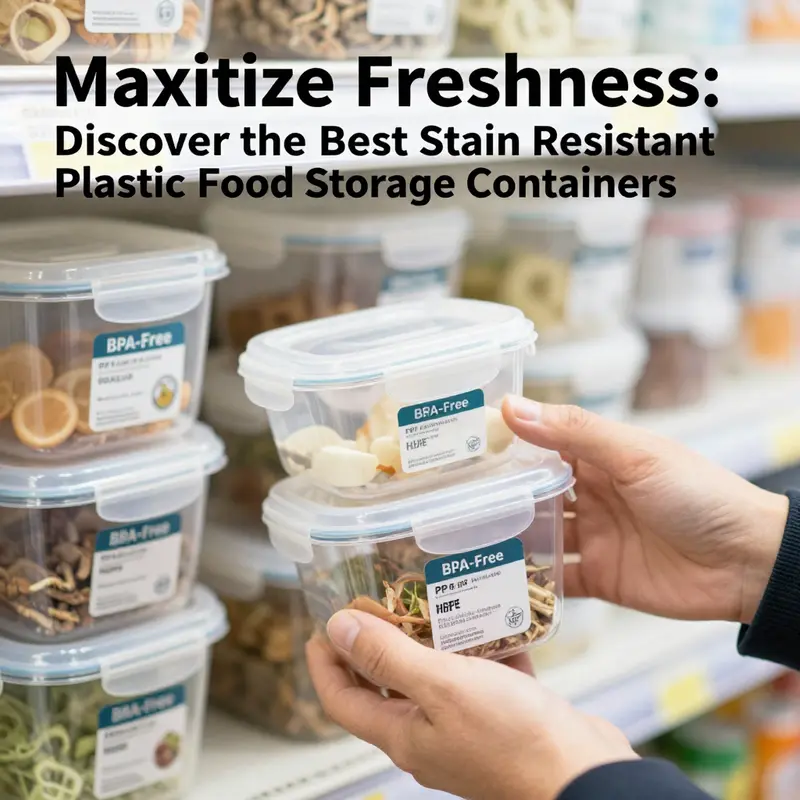
The aim of stain resistance in plastic storage is to keep foods looking and smelling clean through real-world use. The science is in the chemistry of the polymer and the surface finish, which together influence how pigments and odors penetrate and linger. The most practical choices are food-grade PP (#5) and HDPE (#2), which offer chemical inertness and smooth finishes. Tritan copolyester is also a strong option when clarity and odor resistance are priorities. To minimize staining and odor retention, prefer containers with flat, smooth walls, minimal seams, and well-sealing lids with gaskets. Proper cleaning – wash promptly after use with mild soap and warm water; use baking soda pastes for tougher stains; avoid aggressive scrubbing that can degrade seals – helps maintain resistance over time. In storage, keep containers dry and away from pigmented foods when possible, and rotate stock to prevent lingering odors. Adopting consistent habits and selecting robust designs translates material science into practical daily performance.
Stain-Resistant Plastics in Real Life: How to Choose the Best Containers Without Sacrificing Safety or Convenience
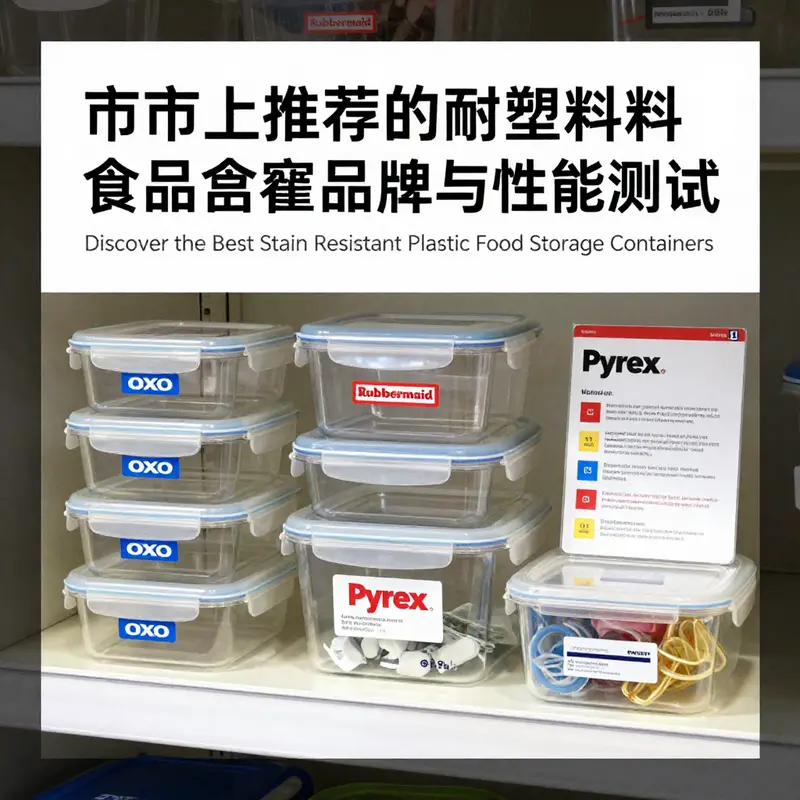
Plastics used for food storage have evolved a long way from translucent, floppy boxes to engineered materials that resist stains, odors, and the wear of daily use. Yet even the most durable plastics are not equally resistant to pigment and aroma, and they interact with food in ways that can affect taste, appearance, and long-term cleanliness. To understand what makes a plastic container genuinely stain resistant, it helps to start with the basics of material science and then trace how those basics play out in everyday kitchen routines. The core message is that while no plastic is as inert as glass, certain materials—primarily polypropylene (PP) and high-density polyethylene (HDPE)—coupled with careful design and proper use, offer a practical balance of stain resistance, safety, and convenience for most household needs. In the following exploration, we move from material properties to how you should shop, clean, and use these containers to keep your food storage both hygienic and visually appealing over time.
One of the most important distinctions among plastic storage options is the resin family from which a container is made. PP and HDPE stand out for their chemical stability and surface characteristics. Polypropylene has relatively high heat resistance, typically tolerating temperatures around 100–120°C, and it generally shows strong chemical stability with a wide range of foods, including many acidic or fatty items. When a high-quality PP container is used correctly, its resistance to colorants and odors is noticeably better than that of many other plastics. This is partly due to its semi-crystalline surface, which tends to be less porous than some other polymers. The same logic applies to HDPE, whose surface is dense and chemically inert enough to resist staining from oils, acids, and pigments to a meaningful degree. HDPE’s structure also helps minimize the absorption of volatile compounds that cause lingering odors, especially when the container’s interior is smooth and free of deep textures or micro-textures that can trap residues.
A practical takeaway, echoed by researchers in materials science, is to avoid plastics that can release potentially harmful substances under certain conditions. In particular, containers made with polycarbonate (PC) or those not explicitly labeled BPA-free should be scrutinized, especially when used with hot foods or for extended storage. The chemistry behind this warning centers on how certain additives and monomers can migrate under heat or when in contact with acidic or fatty foods. Although migration is a nuanced and context-dependent issue, choosing materials with a proven track record for safety and stability—such as PP or HDPE—reduces risk while preserving performance. The emphasis here is not fear but informed selection: the safest path for most households is to prioritize materials with chemical inertness and stable surface characteristics, along with clear labeling about heat tolerance and dishwasher safety.
When you shop, your eyes should settle on the resin identification code and the design details that influence cleanability. Containers labeled with the resin code #5 or #2 are commonly recommended for food use. These indicate PP and HDPE, respectively, and they are widely recognized for their favorable balance of safety and stain resistance. In contrast, codes that fall into the #7 category often signal “other,” a category that can include polycarbonate or blends with less predictable performance in terms of odor retention and staining. A smooth interior surface with minimal seams and a wipe-clean finish is another practical criterion. Texture, embossing, or decorative grooves can harbor pigment particles and make complete removal of stains or odors much harder, especially after storing deeply pigmented foods such as tomato-based sauces, freshly ground spices, or berries. Even the best material can lose its sheen if the interior has countless micro-crevices where residues accumulate over time.
Beyond the material itself, the design of the lid and seal plays a decisive role in stain resistance. A tight, continuous silicone or elastomer gasket that does not trap food particles inside the closure reduces the likelihood that residues will diffuse back into the container’s interior during storage. A lid design that promotes a clean seal but remains easy to clean is preferable to one with complex ridges around the rim. The best combinations minimize surface area where food can cling and ensure that the interior remains as smooth as possible after washing. In practice, this means selecting containers whose interiors are free of deeply grooved seams and whose bases have uniform, glossy finishes rather than matte or rough textures. Such surfaces are much easier to wipe clean and to rinse free of pigment residues.
The role of surface finish deserves explicit emphasis. A smooth, defect-free interior is the most effective defense against stubborn staining. Texture and micro-scratches can trap pigment and aroma molecules, particularly after repeated cycles of storage, heating, and washing. This is why many cooks and household organizers favor containers with one-piece interiors or simple welded seams, rather than multiple-lip designs or joined panels. A compact form factor that allows for easy stacking also reduces the chance that residues get squeezed into corners during dishwasher cycles. The goal is to minimize the number of places where food can cling and to ensure that any residue is readily washed away by ordinary cleaning routines.
In clinical terms, there is a recognized tension between stain resistance and heat stability. Some experts stress that the safest, most stain-free approach to food storage involves avoiding heated plastic storage altogether when possible. The logic is straightforward: exposure to heat can accelerate the migration of additives and potentially change the surface characteristics of plastic. If you must warm or reheat stored food, consider transferring the contents to a glass container or using a container whose safety data indicate compatibility with microwaving at the stated temperatures. In a domestic setting, this translates into a practical rule: when you plan to reheat leftovers, use heat-safe, non-plastic alternatives for the hot portion of the meal or ensure the plastic container is specifically rated for microwave use at the temperatures you will encounter.
Nevertheless, for the day-to-day routine of storing and refrigerating leftovers or dry goods, PP- and HDPE-based containers offer a highly workable compromise between stain resistance, durability, and cost. They typically tolerate repeated cycles of normal dishwashing without significant degradation in their surface finish. The chemical inertness of these materials also helps them resist not only colorants but a broad range of odors, which matters for the long-term habit of storage in the refrigerator or freezer. There is a recurring caveat, shared by health and safety experts: no plastic should be relied upon for indefinite, long-term storage of spicy, strongly colored, or acidic foods. Even the best plastic will show some trace of staining or odor after extended exposure to such items. The key is to minimize such exposures and to clean promptly after use to prevent stubborn residues from setting.
The chapter’s synthesis, drawn from market observations and material science logic, is that the most durable, stain-resistant plastic containers are those made from high-quality PP or HDPE, designed with a smooth interior, and paired with a reliable seal. When heat is involved, or when storing highly pigmented foods for longer periods, you should weigh the benefits of switching to glass or silicone alternatives. This is not a call to abandon plastic storage altogether, but a recommendation to tailor your choices to the task at hand. The research supports a practical approach: for everyday use, PP or HDPE containers with smooth interiors and secure lids do a commendable job at resisting stains and odors; for heating or long-term storage of strong-colored foods, consider safer substitutes for those specific situations.
In terms of shopping guidance, the literature also emphasizes the importance of verifying that the product clearly states its heat tolerance, whether it is microwave-safe, and whether it is dishwasher-safe. The more explicit the labeling, the more confidence you can have about how the container will behave after repeated cycles of use. It is common for high-quality PP or HDPE containers to be rated for typical household microwaving temperatures (around 100°C) and to be suitable for dishwasher use, which are practical markers of durability and ease of maintenance. In contrast, containers that do not offer clear information on heat and cleaning tolerance should be approached with caution, particularly if you anticipate frequent reheating or if you routinely store highly pigmented or acidic foods.
A nuanced part of the discussion is the recognition that stain resistance does not operate in isolation from safety concerns. A well-made PP container may resist stains well, but if it is produced with a formulation that includes additives whose safety under heat is questionable, you would still be taking on risk over time. Therefore, a dual lens—stain resistance plus documented safety16—becomes essential for real-world use. Consumers should look for products that provide transparent safety information and, ideally, third-party certifications that confirm non-toxic status under the conditions the container will face in daily life. This combination of performance and transparency helps ensure that the pursuit of stain resistance does not come at the expense of health.
The discussion would be incomplete without acknowledging that even the most rigorous evaluation cannot fully guarantee that every pigment will be banished from a plastic interior forever. Tomato sauces, turmeric, berries, beet juices, and certain industrial oils can leave lasting color traces. The practical response is twofold: act quickly after meals and maintain a regular cleaning routine designed to prevent staining from taking hold. A simple, effective approach is to rinse or soak promptly, wash with a mild detergent, and use a non-abrasive sponge to avoid micro-scratches. For stubborn traces, a gentle baking-soda paste or a vinegar solution can help lift pigment without compromising the surface. The idea is not to chase perfection but to keep containers looking clean and smelling fresh through repeated cycles of use.
This line of reasoning leads to a grounded procurement philosophy. If you are shopping for plastic containers primarily for stain resistance, begin with PP and HDPE options that advertise smooth, seamless interiors and robust, leak-proof seals. Second, verify that the product is clearly labeled as microwave-safe if you plan to use it for heating. Third, consider the long-term maintenance implications: containers that resist staining will also be easier to keep looking clear and new, which is a tangible daily benefit. Finally, compare these plastic options to glass or silicone alternatives when the planned use involves frequent heating or long-term storage of highly pigmented foods. You will likely find that for many households, a thoughtful mix—PP or HDPE containers for everyday refrigeration and silicone or glass for occasional reheating—delivers the optimal balance of stain resistance, safety, and cost.
For readers who want a quick practical anchor while shopping, one useful example is a line of eco-friendly takeout boxes and food packaging that aligns with these design principles. While the product family and styling vary, the core concepts remain consistent: a smooth interior, a secure seal, materials that avoid staining and odor retention, and packaging that emphasizes recyclability or reusability. If you want a concrete reference aligned with these practical attributes, you can explore eco-friendly takeout boxes for food packaging. It provides a real-world, accessible instance of how well-made containers translate to home storage, with an emphasis on durability and ease of cleaning that mirrors the best plastic storage options discussed here.
In addition to material choice and design, there is a broader health perspective worth noting. Several health experts emphasize that while avoiding BPA and related additives is wise, the best long-term strategy for reducing exposure to potentially harmful chemicals is to diversify your storage materials and use non-plastic options when heating or storing strong-flavored or highly pigmented foods. Glass containers, when used with non-toxic lids, offer a non-porous surface that does not retain odors and stains in the same way as many plastics. Silicone containers, while still a form of plastic, provide excellent heat tolerance and chemical inertness, and they can be reused many times without the same concerns about staining or odor absorption that some cheaper plastics exhibit. This broader health-oriented lens reinforces the principle that stain resistance is a valuable trait, but it should be considered alongside safety, reusability, and the intended use context.
From a consumer perspective, the aggregated knowledge points toward a practical workflow when choosing and using plastic storage. Start with PP- or HDPE-based containers whose interiors are smooth and free of deep textures. Ensure the lid design provides a reliable seal and that the container is labeled for the kinds of use you intend, especially microwaving and dishwashing. Avoid containers that either fail to provide clear heat tolerance information or present complex interior geometries that trap residues. Develop a routine that emphasizes immediate cleaning after use, especially when dealing with highly pigmented or odiferous foods. And finally, recognize that while plastic can approximate the stain resistance of glass, there are scenarios—particularly involving high heat or long-term exposure to strong colorants—where safer alternatives like glass or silicone may be the superior choice.
In sum, the landscape of stain resistance among plastic food storage containers is best understood through the lens of material science, practical design, and user behavior. PP and HDPE stand out for their chemical stability and smoother interiors, making them the most reliable plastic options for resisting staining under typical kitchen conditions. Avoiding PC and ensuring BPA-free labeling further reduces risk while preserving performance. The most durable containers simplify cleaning and minimize odor and color retention, especially when used for everyday refrigeration and short-term storage. Where heating or long-term contact with strong pigments is common, integrating glass or silicone into the storage repertoire helps maintain cleanliness, safety, and ease of use. With these principles in mind, you can curate a collection of containers that keeps odors and stains to a minimum, supports healthy storage practices, and remains dependable across the rhythms of a busy household.
For those who want a tangible reference that echoes these principles, consider exploring eco-friendly takeout boxes for food packaging, a practical example of how well-designed containers can combine durability, cleanliness, and environmental considerations in everyday use. This context helps bridge the gap between the lab-informed material properties and the home kitchen realities where stain resistance matters most. And for readers seeking deeper scientific background on the safety dimensions of plastics used in food contact materials, a detailed review of BPA-related health considerations offers additional perspective on how material choices intersect with long-term health outcomes. As always, informed choices grounded in material science and practical experience will yield storage solutions that stay cleaner, safer, and more cost-effective over time.
External resource for further reading: https://www.ncbi.nlm.nih.gov/pmc/articles/PMC6365522/
Internal link reference for procurement context: Eco-friendly takeout boxes for food packaging
Internal link: Eco-friendly takeout boxes for food packaging
Final thoughts
Investing in high-quality stain resistant plastic food storage containers like polypropylene and HDPE ensures longevity and reliability for your food storage needs. These materials excel in reducing food staining and retaining freshness, ideal for the fast-paced environment of restaurants and beverage services. By following the outlined selection criteria and exploring recommended brands, your business can enhance its food safety protocols and maintain aesthetic appeal over time.