

The rise of sustainable and convenient dining options has transformed the food industry landscape. With a growing demand for disposable tableware that doesn’t harm the environment, paper food noodle bowl making machines have emerged as an essential solution for various sectors, including bubble tea shops, restaurants, and catering services. In the subsequent chapters, we will delve into the technological advancements of these machines, their economic implications on businesses, and the societal and environmental benefits they offer, painting a comprehensive picture of their significance in contemporary dining experiences.
From Sheet to Steam: The Technological Core of High-Speed Paper Noodle Bowl Formation
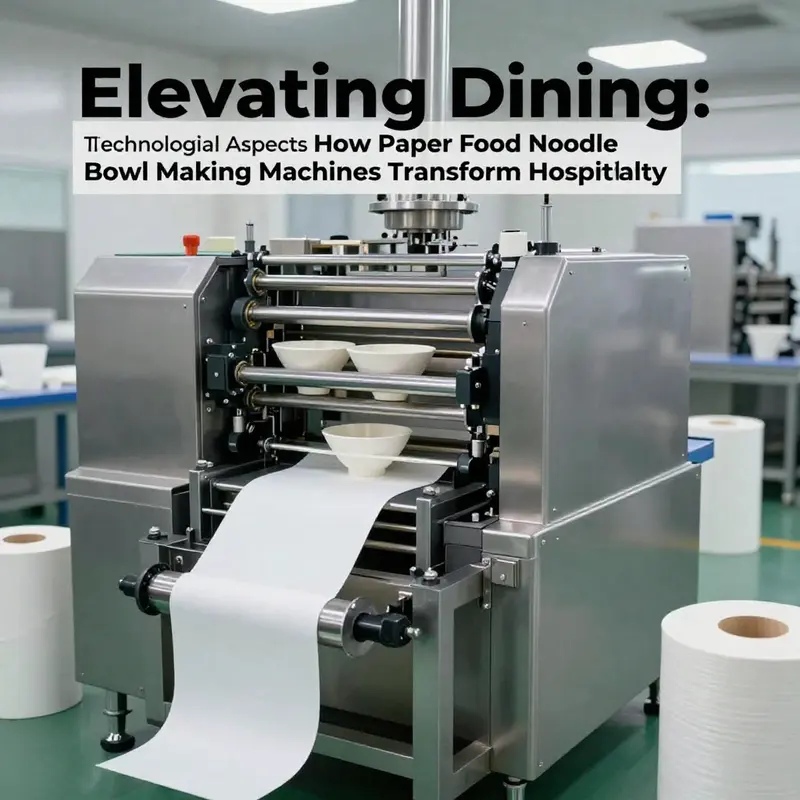
The chain of transformation from sheet stock to ready-to-serve noodle bowls is a quiet drama of precision, rhythm, and resilience. In modern food packaging, the paper noodle bowl making machine sits at the center of that drama, orchestrating a sequence of automated operations that convert bare paper into a sturdy, heat-ready vessel capable of carrying steaming broths, spicy sauces, and delicate toppings across a crowded supply chain. To understand this machinery is to glimpse the marriage of material science, control engineering, and industrial design, a fusion that makes safe, convenient, and sustainable packaging available at scale. The core philosophy guiding these machines is straightforward: maximize throughput without compromising form, hygiene, or environmental responsibility. A typical production line embodies this philosophy through speed ranges, material compatibility, and an architecture that emphasizes modularity and upkeep as a virtue rather than a burden. When the rotor hums at the heart of the machine, it is not merely fabricating bowls; it is shaping the daily experience of meals that arrive hot, intact, and ready for consumption in moments of appetite and convenience. The speed, power, and footprint of these units—capable of delivering dozens of bowls each minute while occupying substantial floor space—reflect a marketplace that values consistent quality and predictable operation just as keenly as it does price and speed. The machine discussed here is designed to handle single or double polyethylene-coated paper with a paper weight range of 150 to 350 gsm. The coating serves as the barrier that keeps moisture and grease at bay, enabling noodles, soups, and other hot or cold foods to be transported safely. Yet the coating is not the entire story; it is the careful choreography of feed, form, seal, and eject that determines success. The process begins with paper feeding, an operation that requires precise alignment, tension control, and sensor-assisted verification to ensure each sheet enters the mold in perfect condition. The paper then moves into a customizable mold system that can be swapped to accommodate different bowl sizes and shapes, from shallow round bowls for light broths to deeper profiles for heartier noodle servings. The die or mold acts as the heart of the forming stage, and modular tooling allows for quick changeovers so a plant can sprint from one product family to another without losing precious time. The ability to interchange molds is not merely a convenience; it is a strategic capability that enables manufacturers to respond to market demand, seasonal menus, and regional preferences without committing to a separate line or a long downtime. The mold design also embodies an important reliability principle: dimensional accuracy must be stable across thousands of cycles. Even tiny deviations in diameter, wall thickness, or base contour can translate into mis-sealing, poor stacking, or compromised heat retention. This is where the machine’s control architecture becomes essential. The heart of modern systems is a fully automatic control suite, typically driven by programmable logic controllers (PLCs) that align motor speeds, synchronization of feeders, and the timing of sealing and ejection. In practice, PLCs allow operators to adjust parameters like cycle time, feed rate, and pressurization with precision, and they provide diagnostic feedback that can identify misfeeds, misalignment, or wear in real time. Real-time monitoring is complemented by a suite of sensors and optoelectronic detectors that verify each bowl’s presence, dimensions, and surface integrity before it leaves the forming section. The automation is not limited to the forming stage; it often extends to the downstream steps such as sealing, bottom filling, heating, and even the knurling that strengthens the base. Ultrasonic sealing, as seen in HS-PS-35 and similar accessories, represents a significant leap in the integrity of seams. This technology enables strong, leak-proof joints without relying on adhesives or heat-activated coatings that could interact unfavorably with the paper substrate. In the context of noodle bowls, where steam and moisture are constant companions, such a seal is key to preventing leaks during transit and ensuring consumer safety. The ultrasonic seam also preserves the substrate’s surface characteristics, reducing the risk of surface cracking or delamination that could occur with mechanical or solvent-based sealing methods. It is a small detail, but in mass production, it becomes a decisive factor in yield and waste reduction. Beyond the seam, drying and curing play an equally important role. Multi-zone drying tunnels, equipped with controlled airflow and temperature settings, tailor the moisture profile to the coating and to the geometry of the bowl. The design of these drying zones considers not only the evaporation rate but also the potential for warping, brittleness, or softening of the paper when subjected to heat. A carefully calibrated drying strategy ensures that moisture-sensitive components—such as water-based laminates or coatings—achieve a stable state before further handling. The outcome is a product that maintains its structural integrity through the rigors of stacking, palletizing, and distribution, as well as during consumer use when hot noodles threaten to soften the edges of a marginally formed side. This focus on drying and curing is particularly relevant when the objective includes shelf life extension without resorting to oil frying, a practice that adds calories and alters flavor. With properly cured bowls, shelf life can extend from months to meaningful windows that support seasonal promotions and supply chain resilience, while preserving nutritional quality by avoiding extra frying steps. The result is a packaging concept that aligns with consumer expectations for healthier, more sustainable options, without sacrificing the high-speed benefits demanded by large-scale operators. In addition to the physical forming and sealing operations, the equipment stack includes automated features designed to protect quality and safeguard operators. Oil injection during sealing, if used, is managed with precision to ensure adequate lubrication without over-saturation that could compromise coating integrity. Bottom filling is performed in a controlled manner to ensure consistency of weight and balance, a factor that influences stacking efficiency, transport stability, and consumer perception of sturdiness. Heating elements—whether integrated into the process or applied in a post-forming stage—need to be harmonized with the drying profile to avoid over-drying or insufficient cohesion that would invite leakage or deformation at the seam or along the rim. The suite of sensors, including knurling pressure sensors and alignment detectors, further protect the process by catching anomalies at the earliest possible moment. When a bowl steps off the line, it has already been through a highly choreographed sequence where the tolerances are tight enough that even minor deviations could cascade into downstream defects. The operator’s role, while diminished in many respects by automation, remains critical in oversight, setup, and preventative maintenance. The machines are designed to be modular and serviceable; their most valuable assets are not just the molds or the gunmetal frame but the ability to replace a section, swap a motor, recalibrate a sensor, or adjust a feed throat without halting the entire line for extended periods. This modularity translates into a practical reality: a plant can schedule line changes, align maintenance windows with off-peak hours, and minimize the risk of unplanned downtime. The end result is a reliable throughput that can cover a broad spectrum of product variants, from standard noodle bowls to more elaborate formats that might accommodate different toppings, lids, or thermal insulations. The machine’s footprint, while substantial, is the product of careful optimization. The stated dimensions and weight reflect a balance between the rigidity needed for high-speed accuracy and the structural design required to endure continuous operation. The energy footprint—reported as a total power consumption around 8.5 kW—speaks to a broader industry trend toward energy efficiency; the aim is not merely to run faster but to do so with thermal management and motor control strategies that minimize waste heat and maximize uptime. When the line turns toward customization, the design shines in its flexibility. Operators can tailor the output to various bowl shapes—round, oval, or deeper configurations—by selecting different, readily swappable molds. In addition to size and shape, customization extends to surface finishes and coatings that meet food-contact hygiene standards and consumer expectations for appearance. The coating choice, whether single or double PE, is selected to deliver adequate moisture and grease resistance while preserving the integrity of the paper substrate during forming, sealing, and subsequent handling. The process thereby enables a broad application range: bowls for instant noodles, soups, salads, ice cream cups, and other disposable packaging needs. The combination of robust automation with adaptable tooling makes the machinery a versatile workhorse in both dedicated noodle houses and broader gastronomy supply ecosystems. The broader implications of this technology touch on sustainability and supply chain resilience. By enabling high-speed production without oil frying, these bowls reduce energy intensity and caloric load associated with fried packaging. The adhesive-free sealing processes, enabled by ultrasonic technologies, reduce the need for chemical binders that complicate recycling streams. In practice, this translates into packaging that can be more easily sorted and processed by end-of-life facilities, aligning with circular economy objectives that many manufacturers now embrace. The environmental conversation around disposable packaging has grown increasingly nuanced, balancing convenience and waste with the need for materials that are recyclable, compostable where feasible, and produced with minimal toxic byproducts. The paper-based solutions discussed here sit in a space where ongoing research and iterative engineering drive improvements in barrier performance, recyclability, and process efficiency. The equipment’s design philosophy mirrors this trajectory: keep the system modular, maintainable, and observable, so operators can optimize, troubleshoot, and innovate without overhauling entire lines. It is this balance between rigidity and flexibility that makes the technology so compelling for a broad set of customers, including food service operators, delivery platforms, and mobile catering concepts that require reliable packaging under varying temperatures and handling conditions. For anyone evaluating the health, safety, and operational performance of a noodle bowl forming system, the reference points are clear. Speed and stability must co-exist with material compatibility and seal integrity. The line must tolerate fluctuations in supply or demand without compromising product quality. The practitioners who oversee these machines speak about a disciplined approach to changeovers, where mold swaps are executed with standard operating procedures that reduce risk while preserving the cadence of production. In practice, this means a culture of preventative maintenance, standardized tooling, and data-driven monitoring that translates measured performance into actionable insights. Operators track cycle times, seal temperatures, and misfeed rates, translating small improvements into meaningful increases in uptime and yield. The data narrative here is not merely an accounting exercise; it is the backbone of continuous improvement, ensuring that bowls meet regulatory standards for food contact materials and hygiene while meeting the fast pace of modern food service. The story of the noodle bowl forming machine, then, is a story about control, materials, and method working in harmony. It captures how a sheet of coated paper can become a reliable vessel capable of containing hot liquids, accommodating toppings, and surviving the rigors of transport and consumer use. It shows how ultrasonic sealing can replace more traditional methods to create a seam that is both strong and resource-efficient. It demonstrates how a drying strategy can optimize the moisture profile and structural integrity of the bowl, supporting longer shelf life without additional processing steps. And it reveals how the use of interchangeable molds and modular components reduces downtime, enabling plants to respond to market dynamics with agility rather than rigidity. This is more than a line on a factory floor; it is a system designed to safeguard quality while expanding access to convenient meals. In this sense, the technology is not simply about making bowls faster. It is about enabling a more resilient food system that can deliver hot, safe, and affordable meals to a broad array of communities. It is about rethinking packaging as a carefully engineered interface between raw material and consumer experience. It is about shaping a future where sustainability and efficiency are not at odds but are instead integrated goals. For readers who want to explore further, one practical path is to examine the practical options available for packaging components that complement the bowls. The evolution of packaging options in this space emphasizes compatibility with high-speed forming lines, the durability required for hot-fill products, and the barrier properties needed for extended cold-chain performance. A worthwhile line of inquiry considers how different packaging configurations interact with the machine’s sealing technology, how molds can be swapped with minimal tooling downtime, and how drying strategies adapt to various laminate constructions. The overarching lesson is that the best systems are those designed with an eye toward both current productivity and future adaptability. This ensures that facilities can scale, diversify, and upgrade as demand shifts, all while maintaining consistent quality and strong food safety performance. In sum, the technological core of the paper noodle bowl forming machine rests on a finely tuned balance of automation, modularity, and material science. It is a testament to how far packaging technology has evolved, moving beyond simple containment toward a holistic solution that supports health, convenience, and sustainability in a world where meals often arrive from distant kitchens and travel through crowded urban landscapes to reach eager diners. The Bowls, once formed, must endure a lifecycle defined by heat, steam, and transit; the machine exists to ensure this lifecycle begins on a solid footing every single time. For those navigating this space, the takeaway is clear: invest in systems that offer interchangeable tooling, precise control, and transparent diagnostics, because these features translate into meaningful gains in yield, safety, and environmental stewardship. The result is not merely a container but a dependable platform for nourishing moments across a wide spectrum of culinary contexts. It is a technology built to serve the quick-serve era with sophistication while upholding the standards that modern consumers expect from packaging that touches their meals. An informed buyer will weigh the performance envelope—the speed, the energy profile, the versatility of molds, and the robustness of the sealing system—against the specific needs of their menu, their service model, and their logistics network. When this balance is achieved, the noodle bowl emerges not only as a vessel but as a reliable partner in the broader story of food, technology, and responsible production.
disposable Kraft paper soup containers with lids for noodle bowls
External reference: https://www.alibaba.com/product-detail/Full-Automatic-Disposable-Paper-Soup-Bowl-Ice-Cream_1600474897228.html
Chapter 2: Shaping Economies Through Automation: The Economic Ripple of Paper Noodle Bowl Machine Manufacturing
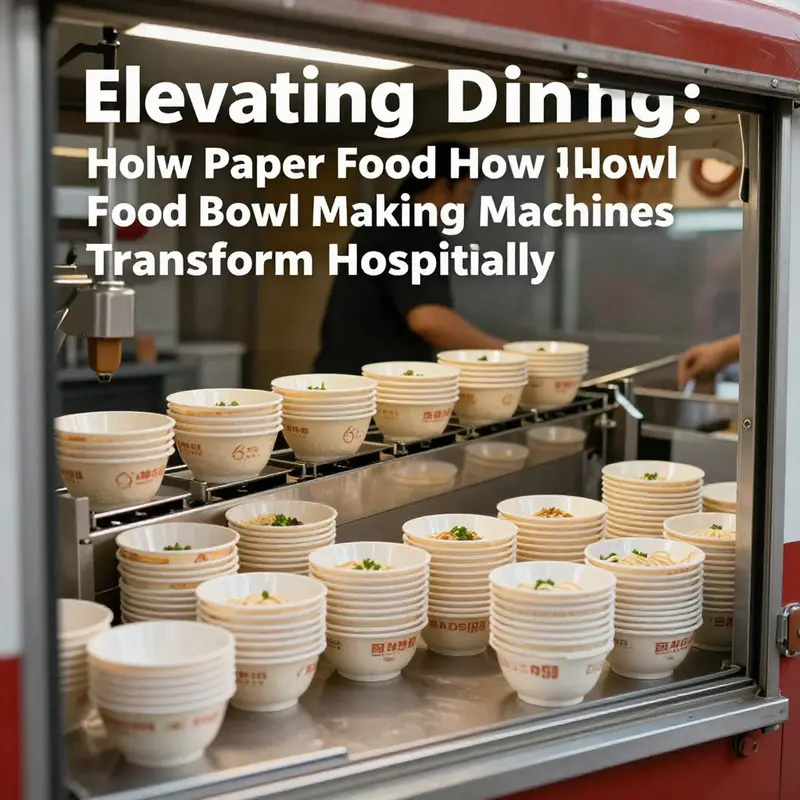
The economic story of paper food noodle bowl machinery is not a simple ledger of capital investment and output figures. It is a narrative about how a class of automated systems reweaves regional industrial cultures, creates skilled employment, and accelerates the adoption of sustainable packaging at scale. As consumer preferences tilt toward convenient, single-use containers that still respect environmental constraints, the factories that design, assemble, and service these machines become pivot points in a broader transition. The measure of their impact extends beyond the factory floor and into wages, local supplier ecosystems, training pipelines, and even the cadence of international trade. In this light, the economics of paper noodle bowl machinery deserves a closer, more nuanced look that ties labor markets, technology adoption, and environmental goals into a coherent growth story.
Direct job creation sits at the heart of this narrative. The manufacturing process itself calls for a diversified set of competencies: mechanical design, precision assembly, electrical integration, software and control systems, and rigorous quality assurance. In a typical production line for an automated cup and bowl forming system, the build and test phases rely on a team that includes engineers, machinists, technicians, and service specialists. Data from a prominent supplier operating within central Chinese manufacturing hubs indicates that each complete production line requires more than a dozen technically skilled workers during construction, calibration, and factory acceptance testing. That figure often climbs when you account for downstream after-sales capabilities, including on-site commissioning, remote diagnostics, spare-parts logistics, and long-term maintenance support. The ripple effect extends through local supplier networks: specialized toolmakers, electronics vendors, and calibration laboratories become regular participants in a regional ecosystem that grows more sophisticated with each new installation. The result is a wages landscape that reflects higher value-adding activities, improved career progression, and a clustering of technical talent that strengthens the competitiveness of the surrounding economy over time.
Beyond direct employment, the technology itself drives a broader upgrade of industrial capabilities. These machines integrate a suite of automations that raise throughput while lowering incremental labor input. They feature automatic paper feeding, sealing through oil injection, bottom filling, targeted heating, and knurling to reinforce the base. They also incorporate precision detection via optoelectronics, fault warnings, and counting mechanisms. Collectively, these features reduce reliance on manual operations that were once bottlenecks in high-volume packaging lines. The practical consequence is a step-change in production economics: more bowls per shift, with less variation in quality, and a smaller labor footprint per unit produced. For plant managers, the arithmetic translates into meaningful reductions in unit labor cost and improved predictability of output, even as product specifications change to meet different bowl sizes and coatings. The technology thus serves as a catalyst for broader process optimization, enabling plants to reallocate human resources toward higher-value tasks such as customization, quality management, and customer support.
Innovation follows closely behind adoption. In the context of these machines, innovation is not merely about speed; it is about robust, repeatable performance across a range of materials and formats. Modern automated systems are designed to handle single- and double-coated paper with a weight range of 150–350 gsm, a specification that accommodates a spectrum of thermal and mechanical requirements while still delivering a sturdy, shop-floor-ready product. The control architectures underpinning these machines are increasingly software-driven, with modular panels that can be tuned to different bowl geometries and sealing profiles. Such flexibility is essential in a market where brands seek to standardize their packaging across multiple product lines or to introduce new formats in response to fleeting consumer trends. The result is a technological maturation of the sector: equipment that is easier to configure, faster to set up for new runs, and more reliable in continuous operation. This trajectory, in turn, lowers the barrier to entry for smaller producers and accelerates the diffusion of automation across SMEs that might previously have hesitated to invest in high-speed packaging lines.
Export potential remains a central feature of the sector’s economic profile. The geographic concentration of manufacturing capability in large regional hubs—particularly in the central and coastal parts of the country—maps neatly onto the global demand for reliable, scalable packaging machinery. A combination of competitive pricing, standardized safety and quality certifications, and the ability to customize configurations for different market needs positions these machines as attractive imports in Southeast Asia, Europe, and North America. The CE certification and alignment with international safety and environmental standards help ensure market access, while the capacity to offer turnkey automation with after-sales support enhances buyer confidence. For policymakers, this export orientation reinforces the strategic value of maintaining robust design and manufacturing capabilities domestically, because the foreign exchange earnings and trade balance contributions are not just about selling a single unit; they are about sustaining a knowledge-intensive industry that can adapt to evolving regulatory regimes and customer requirements.
The accessibility of entry-level models further broadens economic opportunity. While high-end lines command substantial upfront investment, there exists a spectrum of more affordable configurations that enable small businesses, startups, and regional packaging shops to enter the market. Historical price ranges—well above a few tens of thousands for full systems but with lower-cost options available—illustrate an important point: automation does not necessarily demand an insurmountable capital outlay. In fact, the potential return on investment can be compelling when a small entrepreneur can negotiate a payback period based on accelerated throughput and reduced labor costs. This democratization of manufacturing technology supports local entrepreneurship, fosters competition, and helps diversify regional economies by enabling a broader base of players to participate in the packaging value chain. It also encourages localization of production, which can shorten supply chains, reduce inventory risk, and stabilize job creation across multiple sub-sectors that feed into the machinery ecosystem—from tooling and spare parts to software updates and training services.
The environmental dimension interlocks with economic incentives in important ways. Mass production of paper-based, often PLA- or PE-coated containers, aligns with global regulatory trends that favor lighter, recyclable, and compostable packaging solutions. This alignment creates a virtuous circle: manufacturers invest in more sustainable materials and processes, which in turn broadens the market for these products and stimulates demand for more efficient, cleaner manufacturing lines. As brands commit to reducing virgin plastic use and to improving end-of-life outcomes, packaging machinery providers that can demonstrate reliable machine performance with sustainable materials gain a reputational premium and access to longer-term contracts. The environmental performance of the equipment—precise control over heat sealing, waste minimization during forming, and the ability to process coated papers without compromising cycle times—translates into tangible cost savings for end-users. Municipalities and waste management programs also benefit from cleaner streams and improved recycling metrics, which reinforces local policy support for the industry and, by extension, the sustainability-driven investment climate.
The argument for the sector’s economic relevance becomes even more compelling when framed within regional development priorities. Regions that invest in automation for packaging not only create direct employment but also attract ancillary investment. Local suppliers scale up to meet the demands of high-volume production; training institutions expand their curricula to prepare a workforce for automated manufacturing and smart maintenance; and logistics networks become more sophisticated as they coordinate frequent shipments of raw paper stock, coated papers, and finished bowls to global markets. The network effects are palpable: improved supplier ecosystems reduce lead times for components, lower the total cost of ownership for end-users, and create an attractive environment for foreign firms considering near-shoring or regional footprints. In this sense, the paper noodle bowl machine ecosystem acts as a catalyst for regional industrial upgrading—a signal to the market that a region is capable of sustaining a mature, knowledge-intensive manufacturing sector.
A final thread in this economic tapestry concerns the broader strategic value of data, service, and resilience. Modern packaging lines increasingly rely on digital monitoring, predictive maintenance, and remote support to minimize downtime and extend equipment life. The value proposition evolves from a one-time sale to a sustained partnership that covers installation, commissioning, upgrades, and after-sales service. This shift is especially important in a world where supply chains face disruptions and demand volatility. For buyers, the reassurance that a supplier can deliver not only a machine but also ongoing technical expertise reduces operational risk and supports stable production schedules. For manufacturers, the service component creates continuous revenue streams, promotes knowledge transfer, and fosters long-term customer relationships that can cushion the business against market shocks. The economics of such partnerships thus extend beyond the immediate sale price and into a lifecycle of value creation that benefits workers, suppliers, communities, and the environment alike.
Taken together, these threads illuminate why the economic impact of paper noodle bowl machinery transcends conventional manufacturing metrics. The sector drives job creation, accelerates industrial upgrading, unlocks export potential, empowers SMEs, and aligns economic activity with environmental stewardship. It forms a coherent ecosystem in which design, fabrication, automation, and after-sales service reinforce one another. In turn, that ecosystem can attract investment, sustain skilled labor, and contribute to the resilience and competitiveness of regional economies. For policymakers and industry leaders alike, the implication is clear: sustained support for automation in packaging should foreground not only efficiency and throughput but also workforce development, supplier network growth, and environmental performance. By weaving together these strands, the sector can continue to expand its footprint while delivering tangible benefits to workers, businesses, and communities across the value chain.
For readers seeking a practical lens into how such machinery fits into real-world packaging ecosystems, consider the broader landscape of eco-conscious packaging options and how they intersect with automation. The relatively modest incremental cost of upgrading to more sustainable materials or coatings can be offset by gains in throughput, reliability, and market access. A concrete example of how packaging choices intersect with manufacturing capability can be explored through industry-focused resources that compile case studies and product lines dedicated to sustainable, takeout-ready packaging solutions. This approach helps connect the dots between machine capability, material science, and end-user demand, illustrating how investment in automated forming and sealing technologies can yield a more resilient, innovative, and sustainable packaging economy. eco-friendly takeout packaging solutions.
External resource: For a broader overview of the technical and market context that surrounds these machines, see the external industry presentation and product profile available through a major global supplier platform: https://www.alibaba.com/product-detail/Full-Automatic-High-Speed-Paper-Bowl-Forming-Machine_1600571149764.html
Between Convenience and Stewardship: Social Impacts and Environmental Realities of Paper Noodle Bowl Forming Machines
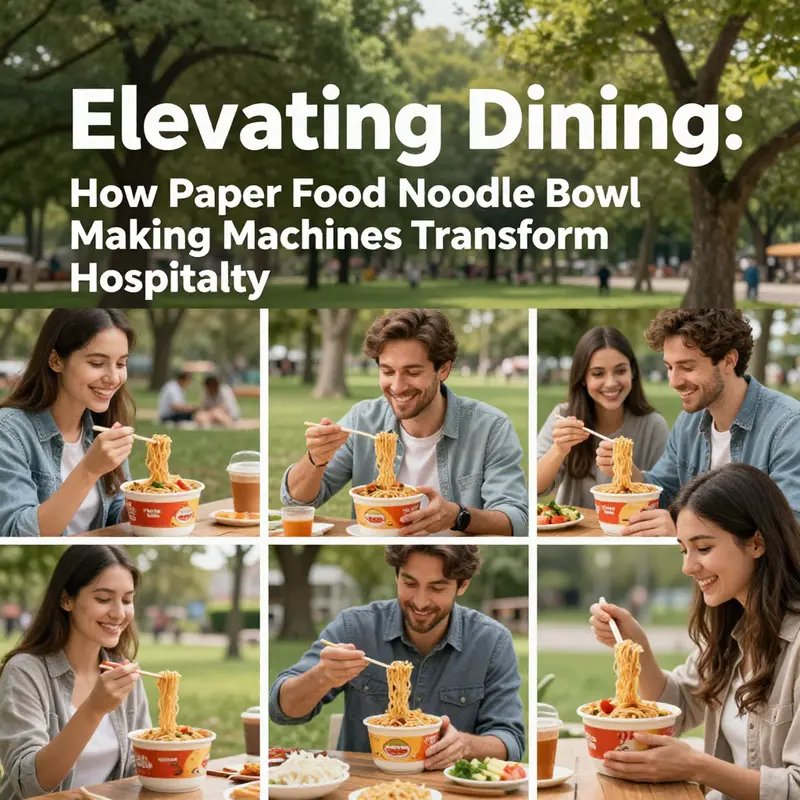
The emergence of high-speed, automated paper bowl forming systems situated at the heart of the disposable food packaging sector marks a pivotal point where urban consumption patterns meet industrial capability. The chapter that follows does not merely catalog technical specs or throughput metrics; it threads a broader narrative about how automation shapes people, markets, and ecosystems. It invites readers to consider not only what these machines can do, but how their use reverberates through communities and landscapes, especially where takeout culture is growing the fastest. In doing so, the discussion remains anchored in the realities of paper noodle bowl production while acknowledging the social and environmental responsibilities that accompany scale.
At the social level, automation in fabricating single-use food containers creates opportunities that extend beyond factory floors. The deployment of forming, sealing, and cutting operations tends to elevate safety and consistency in work, reducing exposure to repetitive, high-temperature, or physically demanding tasks for human workers. When done thoughtfully, automation can free staff from monotonous duties, enabling them to engage in more skilled roles such as process monitoring, quality control, maintenance, and programming. This shift often comes with upskilling opportunities that nurture a workforce capable of adapting to evolving manufacturing landscapes. Yet the same automation can also redistribute labor, posing challenges for workers who previously relied on routine assembly or packaging tasks. The risk of displacement is real unless companies pair technology adoption with retraining programs, transitional roles, and career ladders that bring seasoned operators into supervisory, diagnostic, and optimization positions. In regions where manufacturing is a primary livelihood, these dynamics matter just as much as the machines themselves, shaping local employment patterns and long-term community resilience.
Economic accessibility sits alongside labor dynamics in a nuanced way. Entry-level, cost-competitive automation solutions can empower small and medium-sized enterprises to enter a market that is often dominated by larger players with established production lines. In developing regions, local manufacturing of disposable paper packaging can translate into shorter supply chains, reduced import dependency, and greater responsiveness to community food services. However, affordability must be weighed against total cost of ownership, including maintenance, spare parts, energy use, and the need for skilled technicians who can keep lines productive. When firms invest in capability-building for their workforce, the economic dividends extend beyond throughput figures and into the steadiness of local employment, the diversification of small businesses, and the overall vibrancy of neighborhood economies.
From a consumer health perspective, automation reinforces hygiene and reliability in packaging that travels through takeaway channels. A stream of mechanized steps—precisely forming bowls from coated paper, injecting sealing agents, and applying knurling to reinforce the base—reduces human contact with the finished product, supporting safety standards that became salient in the wake of global health concerns. The routine, codified nature of automated operations also tends to deliver uniform product quality. Yet this benefit must be weighed against the broader lifecycle of the packaging material. For every noodle bowl produced, there is a question about the end of its life: Will the container be composted, recycled, or diverted to landfill? Social well-being includes not just safer workplaces but also a transparent, responsible conversation with communities about waste management, environmental impact, and consumer education about disposal.
The environmental dimension of these machines is inherently intertwined with material choices and end-of-life pathways. Paper bowls offer a generally more benign starting point than plastics, given that paper is, by default, more biodegradable and renewable when sourced from responsibly managed forests or recycled content. The common practice of applying polyethylene (PE) coatings to improve water resistance introduces a complex trade-off. PE-coated paper delivers performance that consumers expect in hot foods and soups, but it complicates recycling streams and compostability. In places where recycling infrastructure is developed, PE-coated bowls can hinder reuse and complicate separation processes. In other settings with limited recycling capacity, PE coatings may offer a practical, if imperfect, solution for durability and hygiene. This dichotomy illustrates a central tension: the very features that enable convenience and reliability can also impede circularity. The environmental calculus thus depends on local waste management systems, the availability of compostable or easily separable coatings, and the willingness of manufacturers to adopt coatings that harmonize performance with end-of-life options.
Material sourcing adds another layer to the environmental discussion. The raw fiber used to produce paper bowls can come from certified forests, recycled pulp, or other fibers, each bearing different ecological footprints. Responsible sourcing reduces deforestation and shifts the carbon profile of the packaging produced. Where a plant relies on certified or recycled content, the chain of custody and supplier accountability become visible indicators of commitment to sustainable practices. Equipment designed to operate with a range of weights and coatings—from 150 to 350 gsm, as noted in many high-speed systems—must also accommodate the variability in fiber quality and resin accents. The energy demands of high-throughput lines must be balanced with efficiency measures, such as optimized feed paths, energy recovery in heating stages, and smart automation that cuts idle time. In other words, sustainability in practice hinges not only on what the machine can do, but on how well the entire production ecosystem—materials, energy, and waste management—works together.
The conversation about environmental performance cannot ignore innovation in coatings and alternative materials. Advances in plant-based coatings or compostable laminates promise to decouple water resistance from non-recyclability, enabling more straightforward end-of-life processing. There is a growing interest in coatings that maintain moisture resistance while allowing recycling streams to function with less contamination. In the meantime, closed-loop and take-back initiatives—where manufacturers, users, and waste processors collaborate to reclaim packaging at the end of its life—are increasingly viewed as essential complements to automation. Such approaches align with circular economy principles by keeping materials in productive circulation, reducing virgin fiber demand, and decreasing the overall environmental footprint of the product system. The balance between performance and responsibility remains delicate, but the direction is clear: innovation must be paired with responsible stewardship if the sector is to sustain social license to operate.
Energy use in high-speed forming machines is another crucial consideration. The ability to produce hundreds of bowls per minute translates into sizable electricity draw and thermal load, especially in the sealing and heating stations. Acknowledging this, manufacturers and operators are exploring energy-efficient motor drives, optimized heating cycles, and better insulation to minimize heat loss. The potential for integrating renewable power sources or on-site generation into manufacturing facilities offers an additional route to lowering life-cycle emissions. While the machine may be rated at a specific wattage, real-world consumption often reflects a combination of duty cycles, maintenance status, and production scheduling. The broader implication is that high-throughput packaging can coexist with sustainability if energy intensity is actively managed, tracked, and reduced over time through design improvements and smarter operations.
Beyond technical efficiency, the design philosophy of these machines matters for long-term environmental performance. A modular, repair-friendly architecture extends equipment life, reducing the frequency of complete replacements and the volume of end-of-life waste. When maintenance is straightforward and components are standardized, a facility can stagger replacement cycles, incorporate spare parts, and train staff to handle common faults without outsourcing. In such setups, durability is not merely a financial metric but a contributor to resource conservation. The durability argument is strengthened when a machine’s warranty—often extended to around a year in many offerings—encourages careful upkeep and knowledge transfer. A durable, well-maintained line reduces downtime, saves energy, and minimizes waste associated with premature equipment retirement.
From a policy perspective, the societal and environmental discourse around paper noodle bowl forming machines intersects with broader governance of packaging. Regulators, industry groups, and municipalities increasingly emphasize producer responsibility, recycling infrastructure, and material transparency. Standards that encourage recyclability, avoidance of problematic coatings, and clear labeling can guide manufacturers toward more eco-friendly options without sacrificing convenience. At the same time, local authorities may need to invest in collection and sorting facilities to ensure that paper-based packaging does not derail existing recycling streams due to contamination or mixed coatings. The alignment between policy, industry practice, and consumer behavior will determine how quickly and effectively the sector shifts toward lower-impact packaging, while preserving the social benefits of safe, hygienic, and accessible food packaging.
The social equity dimension also deserves emphasis. Automation can spread opportunity when it is paired with local training, apprenticeships, and opportunities to source components regionally. This approach helps build a more inclusive value chain, where communities participate in production, maintenance, and entrepreneurship tied to packaging solutions. Yet this potential is not automatic. It requires deliberate engagement with local schools, training centers, and industry associations to ensure that workers can move into higher-skilled roles and that small businesses can scale responsibly. When communities are genuinely involved, automation supports not only or in addition to profit margins; it contributes to workforce development, participatory governance of waste, and the resilience of local economies against shocks in consumer demand.
The dialogue about environmental responsibility in this space cannot be siloed. It must connect material science, waste management, industrial design, and community values. Innovations in packaging coatings, the move toward recyclable or compostable alternatives, and the development of end-of-life infrastructure all hinge on cross-disciplinary collaboration. Material scientists, packaging engineers, policymakers, waste processors, and social planners must speak in a shared language about performance, safety, and sustainability. Only then can the industry reconcile the push for faster, cheaper, more reliable packaging with the imperative to protect soils, water, forests, and urban ecosystems. In practice, this means designing bowls that are not only fit for purpose in a busy kitchen but also compatible with the end-of-life systems that communities rely on to manage waste responsibly.
As the market for convenient meals continues to grow, the role of automated forming machines will remain significant, but their acceptance will depend on how well they integrate with broader urban systems. An important facet of this integration is the availability of packaging options that maximize hygiene and minimize environmental impact. For instance, there is a spectrum of container choices that balance functionality with end-of-life considerations—an important factor for any business aiming to serve noodle bowls, soups, or other hot foods efficiently. In the broader ecosystem of disposable packaging, options such as disposable kraft paper soup containers with lids for noodle bowls offer a practical balance between hygiene and end-of-life considerations. These solutions illustrate how a company can source compatible packaging that aligns with local recycling or composting capabilities while maintaining the reliability customers expect. disposable kraft paper soup containers with lids for noodle bowls.
Looking forward, the chapter’s caution and optimism converge on a clear principle: automation should be pursued with an explicit attention to social and environmental integrity. The ideal scenario is one where high-speed packaging lines create good jobs, support local entrepreneurship, and operate within a system that minimizes waste and maximizes material recovery. Achieving this balance will require ongoing investment in training, in the design of more sustainable materials, and in municipal capabilities to recover and reprocess packaging. It also demands transparent reporting from manufacturers about energy use, waste generation, and end-of-life performance. When such transparency exists, communities can evaluate the true costs and benefits of automation—not only in terms of throughput and profitability but in terms of health, equity, and ecological stewardship. This is not merely a theoretical exercise. It is a practical roadmap for aligning high-speed, paper-based packaging with the values that define sustainable growth in the twenty-first century.
In closing, the narrative of paper noodle bowl forming machines is richer than a tally of outputs and speeds. It is a story about how communities manage risk and opportunity, how markets respond to ethical and environmental expectations, and how designers, operators, and policymakers collaborate to build systems that endure. The chapter emphasizes that technology, when integrated with strong social programs, responsible material choices, and robust waste management, can advance both economic vitality and planetary health. The goal is not to halt automation but to guide its development so that convenience and sanitation go hand in hand with stewardship. In the next chapters, the discussion will broaden to consider how data-enabled maintenance, circular supply chains, and cross-sector partnerships further shape the trajectory of paper-based packaging in a rapidly changing world.
External reference: https://www.alibaba.com/product-detail/Advanced-Automatic-Paper-Bowl-Machine-for-Noodles-and_1600849477176.html
Final thoughts
The integration of paper food noodle bowl making machines represents a significant advancement in how food service entities can meet consumer demands while prioritizing sustainability. By embracing these technologies, businesses not only enhance their operational efficiency and economic viability but also contribute positively to environmental efforts. As the industry continues to evolve, these machines stand at the forefront, enabling companies to provide quality service without compromising the health of our planet.