
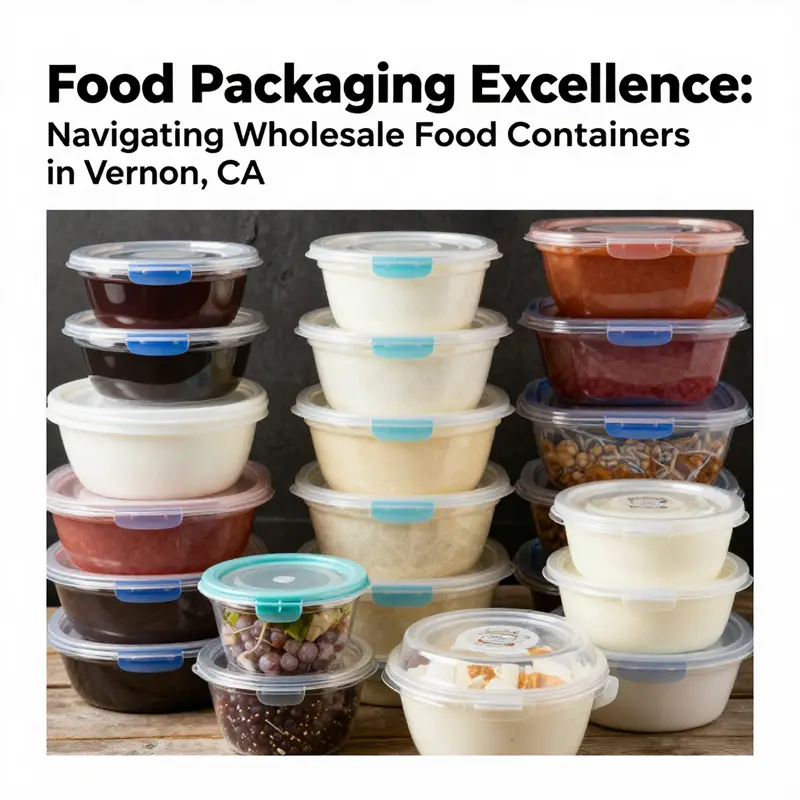
Vernon, California, stands out as a commercial hub, attracting numerous suppliers specializing in wholesale food containers. This vibrant city caters to a variety of businesses, from bubble tea shops to food trucks, all needing reliable packaging solutions that meet industry demands. Each chapter in this article dives into specific aspects of wholesale food containers in Vernon, exploring suppliers, economic impacts, technological advancements, regulatory considerations, and sustainability trends. By understanding these facets, businesses can strategically source their food containers, ensuring quality and efficiency in their operations.
Vernon CA’s Wholesale Food Containers: Mapping the Supplier Network and What It Means for Food Service
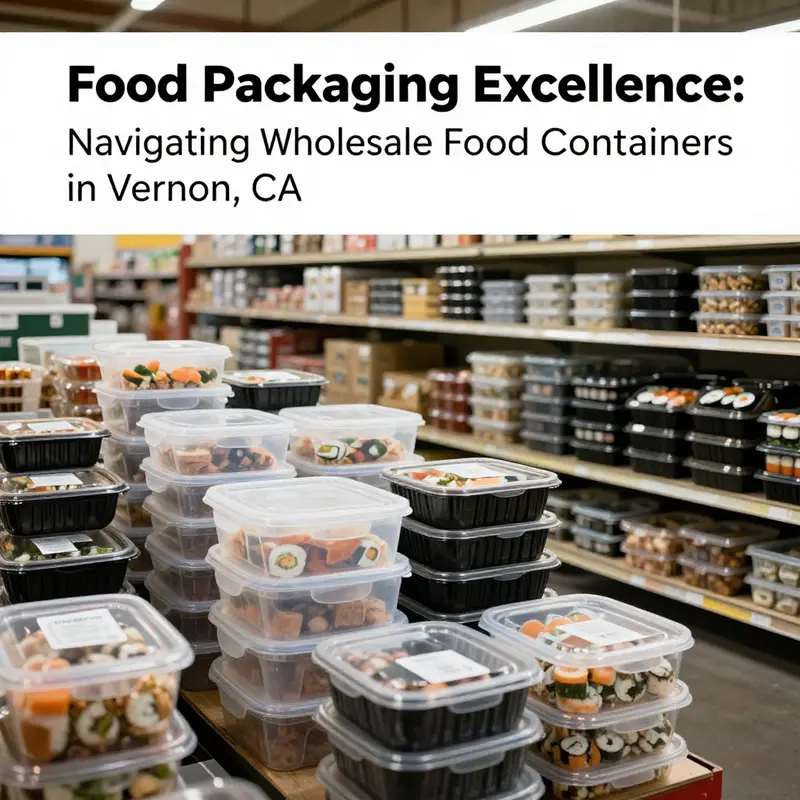
Vernon, California sits just inland from the sprawling edge of the Los Angeles metropolitan area, a quiet anchor for a dense web of wholesale suppliers that serve restaurants, caterers, and food processors across Southern California. The geography matters as much as the inventory. In a region where speed to kitchen translates into cost savings and where dining concepts evolve quickly, access to reliable, durable, and scalable food containers is a strategic requirement. The Vernon corridor functions as a hub where bulk-buying restaurateurs can source everything from commercial-grade storage solutions to takeout packaging, often with the possibility of large-quantity customization. In practice, this means less time spent coordinating multiple shipments from distant suppliers and more time focused on menu execution, kitchen throughput, and brand consistency across multiple outlets. As a result, Vernon’s wholesale landscape is less about novelty and more about the precision of supply: the right container, at the right thickness, with the right seal, in the right quantity, delivered on time and in a way that aligns with a buyers’ sustainability and budgeting goals.
The landscape of Vernon’s wholesalers is diverse, but the core logic behind the market remains consistent. Many suppliers operate as one-stop shops for commercial kitchens, offering an integrated mix of equipment, storage solutions, and food service accessories. This enables restaurants to consolidate their purchasing in one visit to a Vernon area location or through a single quote for a bundled order. The range typically includes sturdy food storage containers designed to withstand the rigors of high-volume usage, leak-resistant takeout boxes for hot and cold foods, and a spectrum of containers intended for food service prep, hold, and display. The emphasis is on durability, stackability, and ease of cleaning—factors that save labor time in busy kitchens and reduce the risk of cross-contamination or product damage during transport. In practice, operators weigh the balance between upfront cost and long-term performance, recognizing that a slightly higher unit price can translate into better shelf life, less waste, and fewer returns.
Beyond the general wholesalers, Vernon also hosts packaging specialists who focus on the subtleties that matter to brand-conscious operators. Customized solutions—ranging from branded takeout boxes to specialty containers for cakes, pastries, or sushi platters—illustrate how a container can function as a silent marketing tool. The market for customization tends to come with a tiered pricing structure and minimum order quantities that reflect the scale of bulk production. For many chains and large local brands, the ability to align packaging visuals with the store’s identity—colors, logos, and even window designs on display boxes—can reinforce brand recognition and customer experience. Yet customization is not purely cosmetic. It often includes practical enhancements such as grease resistance, temperature retention, and compatibility with microwave or oven reheating, depending on the product line. In Vernon, buyers learn to evaluate these attributes in conjunction with supplier capability, recognizing that a dependable supplier can deliver both standard stock and bespoke solutions with equal professionalism.
A practical understanding of what most Vernon-based suppliers offer starts with the basics: bulk storage containers that safeguard ingredients from spoilage, contamination, and moisture. High-volume kitchens rely on container systems that optimize space in walk-ins and on prep lines, enabling consistent rotation and FIFO (first in, first out) practices. The market’s breadth also covers portable, customer-facing packaging—takeout and delivery containers that maintain integrity under transit and during handoffs. In many cases, the containers are designed with grease resistance and heat tolerance to prevent sogginess or deformation when sauces, gravies, or fried foods travel from kitchen to customer. For operators juggling multiple shifts, the reliability of seals, lids, and snap closures translates into fewer callbacks from customers and a smoother hand-off from front of house to delivery drivers.
Scale is another critical dimension in Vernon’s wholesale ecosystem. The possibility of ordering hundreds of thousands of units for a nationwide rollout or holiday promotions is a common expectation, and many suppliers configure pricing ladders that reward volume. It is not uncommon for a supplier to accommodate bulk runs well beyond typical restaurant needs, supporting large chains or regional distributors with extended lead times, but clear, predictable timelines. Policies around shipping, refunds for damaged goods, and replacement parts further reassure buyers who must maintain a continuous supply chain across fluctuating demand cycles. In this environment, the relationship with a supplier often extends beyond a single purchase order; it becomes a working partnership built on reliability, accountability, and communication.
The Vernon market’s intrinsic strength lies in its proximity to major logistics corridors. Being part of the broader Los Angeles basin gives operators direct access to diverse freight paths, including air, sea, and truck routes, which helps minimize transit times and inventory carrying costs. This concentration of distributors also promotes a competitive pricing dynamic and accelerates the flow of new packaging formats that address evolving consumer expectations—such as sustainable materials, compostable components, and recyclability programs—without sacrificing performance. For managers who must forecast budgets with precision, Vernon’s wholesale options provide a responsive infrastructure: the ability to adjust orders in response to seasonal demand, marketing campaigns, or supply chain disruptions. In a market where every extra day of delay translates into revenue loss, the capacity to source consistently from local wholesalers reduces exposure to the fatigue of long-haul supply chains.
For teams that prioritize branding and customer experience, Vernon’s packaging options often intersect with design and sustainability goals. A growing segment of operators seeks solutions that align with environmental targets while staying cost-efficient at scale. That tension—between eco-friendly materials and the realities of bulk pricing—shapes conversations at every level, from procurement to store design. Buyers frequently assess not just the container’s physical performance but its end-of-life story. They ask about recyclability, compostability, and the supplier’s own stewardship programs. In Vernon, these conversations are common, because the market recognizes that efficient packaging is not merely a cost center; it is a lever for customer satisfaction, brand differentiation, and regulatory readiness.
As a practical pointer for readers exploring Vernon’s wholesale circuit, consider the possibility of exploring customizable options that extend beyond off-the-shelf choices. A sourcing platform highlights a path for bulk customization, showing how round sushi tray-style containers can be produced at very aggressive unit costs when orders reach hundreds of thousands. The policy environment described there includes refunds for shipping or product issues, underscoring the market’s emphasis on accountability when scale meets service. This reflects a broader truth in Vernon: the most effective supplier relationships combine competitive pricing with dependable logistics, rigorous quality control, and transparent terms. Operators who approach sourcing with a clear understanding of required performance, branding needs, and operational constraints tend to secure arrangements that reduce total cost of ownership and improve consistency across outlets.
For those who want a concrete starting point, an overview of Vernon’s wholesale landscape can be complemented by direct supplier visits or official catalogs. Visiting supplier websites or contacting representatives enables buyers to compare takeout packaging, storage containers, and display-ready solutions side by side. In practice, most buyers begin with a core set of essential items—microwave-safe containers, leak-resistant lids, and stackable storage boxes—and then layer in customization options as brands expand or as menus diversify. The capacity to pair standard solutions with tailored packaging within a single ecosystem is particularly valuable for multi-unit operators seeking to streamline vendor management while preserving brand integrity.
One practical option for operators interested in branded, theme-oriented packaging is to explore dedicated custom takeaway packaging offers. The following resource illustrates the range of customization capabilities available in bulk and demonstrates how branding can be integrated into practical packaging solutions without sacrificing efficiency or safety. custom takeaway packaging supplies
As Vernon continues to serve as a pivotal node in the Southern California supply chain, its wholesalers and packaging specialists remain responsive to the needs of a dynamic food service sector. The region’s emphasis on reliability, scalability, and brand-conscious packaging ensures that operators can align packaging choices with both financial and experiential goals. For managers evaluating suppliers, the bottom line remains straightforward: prioritize durability and service in equal measure, balance price with long-term performance, and insist on clear terms regarding lead times and returns. The result is a packaging ecosystem that supports rapid service, protects product quality, and reinforces the story a brand tells with every container that leaves the kitchen. For deeper exploration of nearby supplier options and local market expectations, readers can consult external resources that profile Vernon-area wholesale operations and their dedicated storefronts. External resource: https://www.restaurantsupplystore.com/locations/vernon-ca/
null
null
From Warehouse to Table: Vernon’s Wholesale Packaging Tech and Sustainable Efficiency
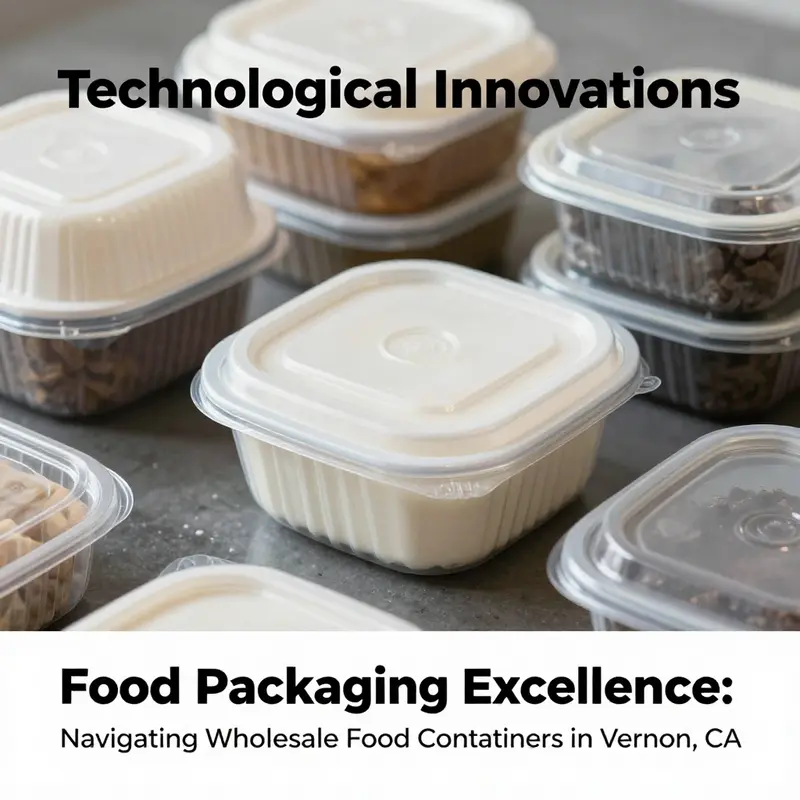
Vernon, California sits at a strategic crossroads in the greater Los Angeles food logistics network. Its cluster of wholesale distributors, kitchen equipment suppliers, and packaging firms makes it a hub for restaurants, caterers, and processors who demand reliability and speed. In this market, the wholesale container sector is a dynamic interface between cold chains, regulatory expectations, and brand experience. As warehouses turnover bulk inventory, container technology is advancing to reduce waste, improve safety, and streamline operations.
Materials science is guiding this shift toward biodegradable and recyclable plastics, lighter yet sturdy alternatives, and packaging designed for easy handling in high volume environments. Wholesalers in Vernon increasingly offer scalable options from takeout boxes to multi-compartment containers that balance performance with cost control across single store sites to multi unit networks. Custom programs often enable unit prices in the low single digits for very large orders, making brand aligned packaging feasible at scale.
Smart packaging technologies are taking hold. Temperature indicators provide assurance that perishables stay within safe ranges, while RFID and real time location data improve traceability and reduce losses. The result is a safer, more transparent supply chain that can respond quickly to disruptions and demand spikes. The broader move toward data enabled packaging helps Vernon operators optimize procurement, routing, and waste reduction, turning packaging into a strategic asset rather than a cost center.
For practitioners, the Vernon story offers a template: standardized container specs, visible lifecycle data, and practical customization that preserves brand integrity while simplifying operations. As the region adopts smarter packaging, it becomes easier to scale across markets while maintaining consistent customer experiences.
Regulatory Currents and Container Strategies: Vernon CA Wholesale Food Packaging Rules
Vernon, California sits at the edge of the Los Angeles metropolitan orbit where supply chains for foodservice and packaging converge with municipal standards and public health expectations. For businesses that move food in bulk or distribute containers for takeout and storage, the regulatory environment is a daily compass. The City of Vernon Environmental Health Department governs this landscape, translating public health goals into practical requirements for wholesale distributors, storage facilities, and fleet operators. The goal is to ensure that every container used in the food system keeps food safe from packaging to consumer and that understanding Vernons rules matters as much as any seal and lid on a box in the warehouse. Within Vernon’s framework, oversight is nuanced. Wholesale food vehicles that transport bulk foods from outside the jurisdiction are not automatically subject to Vernon’s on site inspections; they are inspected by the local health authority that has jurisdiction over their origin. Vernon does not stand down on its own expectations. The city maintains rigorous requirements for food handling and safety practices that apply to entities operating inside Vernon’s boundaries, including those involved in wholesale distribution. For any business that ships, stores, or dispenses food packaging—containers included—the health department’s expectations are explicit: containers must protect the contents, be maintained in a sanitary condition, and support safe handling throughout the supply chain. A central thread in Vernon’s regulatory tapestry is the Food Protection Program. Compliance with this program is not a one off permit hurdle; it is an ongoing discipline that touches every link in the chain, from receiving and warehousing to transportation and final service. For wholesale distributors of containers and related food service supplies, the program translates into concrete obligations: clean storage areas, proper separation of raw and ready to eat items, appropriate temperature controls where relevant, and procedures that minimize contamination risks during loading, transport, and unloading. The goal is not merely to pass an inspection but to cultivate habits that sustain food safety as products move through multiple hands and trucks before reaching a restaurant or catering operation. The emphasis on storage and transportation speaks directly to containers themselves. Even the strongest lid and the sturdiest carton can fail food safety objectives if the environment around them is not controlled, if containers are not intact, or if practices allow cross contamination to occur at any stage of handling. Another crucial piece in the Vernon puzzle is the scope of regulatory definitions. The citys interpretation of what constitutes a restaurant explicitly excludes vending machines, retail or wholesale food vehicles, food processing establishments, and food warehouses. This distinction signals that wholesale containers and their use fall under separate regulatory frameworks that address the realities of moving food in bulk and handling packaging at scale. For operators and suppliers, this means there are distinct compliance pathways to navigate depending on whether the activity is a storefront dining operation, a food processing site, or a logistics hub that ships containers and bulk packaging to a network of customers. The separation is not a bureaucratic footnote; it shapes the specific standards that apply to packaging materials, labeling, sanitation of receptacles, and the conditions under which containers can be stored and transported. For those who brew, bake, fry, or package on a wholesale scale, the practical implications of these rules are situational and procedural. It starts with a clear compliance posture: know which authority governs your activity if you operate inside Vernon, and understand that vehicles coming into Vernon from outside may be subject to different inspections. It continues with disciplined facility practices aligned with the Food Protection Program: sanitary receiving bays, organized storage that preserves container integrity, and documented procedures for cleaning and sanitizing containers that will hold food during transit or in bulk storage. Importantly, Vernon’s framework also nudges operators toward proactive collaboration with the Health Permits division. Ensuring that licensing, inspection schedules, and corrective actions are up to date reduces the risk of delays, fines, or interruptions in supply. The regulatory environment hence shapes decisions about container specifications and handling. Food-grade containers must be appropriate for the contents they hold, with materials that resist leakage, withstand temperature variations, and remain easy to clean. The transportation context adds another layer: containers or packaging used in bulk transport must withstand the physical demands of moving goods through loading docks, interchanges, and cold or ambient environments without compromising safety or quality. Because Vernon draws on a broader ecosystem of suppliers and transport partners, the rules also encourage alignment with best practices in sanitation and labeling, so that containers can travel across jurisdictions with consistent expectations about safety and hygiene. In practice, this means choosing packaging solutions that are not only cost efficient but also compatible with Vernons sanitation standards, while maintaining the flexibility needed to support a diverse customer base—from small local kitchens to large-scale distributors. For readers navigating these waters, the CITY OF VERNON Health Permits page on eCode360 serves as a repository for current licensing, inspection criteria, and application processes. It is the anchor point for operators who want to ensure their practices remain compliant as they source, store, and distribute wholesale containers. The page is not merely a bureaucratic stop; it is a practical toolkit that helps align daily routines with public health expectations. Operating with a clear view of these requirements reduces the risk of missteps and positions a business to respond swiftly to any regulatory changes or new guidance that might affect container handling, storage methodologies, or transport conditions. In this landscape, the link between regulation and procurement becomes especially tangible. Wholesale container suppliers must design and deliver products that behave well under Vernon’s protocols, enabling restaurants and food-service operators to meet safety standards with less friction. This is where the broader packaging ecosystem intersects with municipal rules: the choice of materials, the integrity of seals, and the ease of cleaning all feed into a compliant, efficient supply chain. For operators seeking bulk packaging options, it is prudent to consider not only price and capacity but also how container design supports sanitation requirements and ease of use in a high-throughput environment. A practical illustration is the growing demand for sturdy, easily sanitized takeout packaging that can be cleaned between shifts and stored without compromising quality during transit. The better the packaging aligns with Vernon’s expectations, the smoother the path from warehouse to kitchen and back again, with fewer regulatory headaches along the way. As Vernon’s regulatory framework continues to evolve, so too does the need for clear, reliable information. Operators should maintain an ongoing dialogue with the Health Permits office, review the latest amendments to the Food Protection Program, and monitor how inspections are applied to wholesale activities within the citys boundaries. This proactive stance helps ensure that container suppliers and distributors remain resilient amid changes in sanitation standards, labeling requirements, or fleet-operations guidelines. It also supports a corporate ethos of public health stewardship that resonates with clients who depend on consistent, safe packaging solutions to serve their own customers. For readers seeking tangible examples of how these ideas translate into procurement decisions, consider the landscape of bulk packaging options, including the kinds of disposable containers commonly used in takeout and bulk storage. When selecting suppliers, the emphasis on sanitation, durability, and regulatory alignment influences both the short-term costs and long-term reliability of the supply chain. A credible supplier should offer packaging solutions with clear sanitation credentials, traceable materials, and documentation that supports Vernon’s compliance expectations. This is not solely about meeting a checklist; it is about building a resilient operation that can adapt to evolving health standards while continuing to serve a broad network of foodservice customers across Vernon and the surrounding region. And as the city’s rules continue to interface with the larger regulatory ecosystem of Southern California, operators who stay informed will find that a well-chosen container strategy can reduce risk, sharpen consistency, and improve overall operational efficiency. For readers curious to explore a concrete example of packaging options, one representative category is the disposable kraft paper bowls with lids bulk, a common solution for batch takeout and bulk portions. This type of packaging is frequently highlighted for its balance of cost, practicality, and compliance suitability when used within carefully managed sanitation protocols. The link points to a supplier category that illustrates how packaging choices can be scaled to meet both demand and regulatory expectations, while still offering flexibility for branding and customization in the wholesale context. At the same time, it is essential to anchor procurement decisions in Vernon’s official guidance, which provides the authoritative framework for licensing, inspections, and compliance. Ultimately, mastering Vernon’s regulatory currents requires ongoing attention to how container choices intersect with food safety, storage, and transportation practices. It is a discipline that links procurement, operations, and public health in a single continuum. By remaining attentive to the Food Protection Program, understanding the scope and limits of Vernon’s regulatory definitions, and consulting the eCode360 permits resources, wholesalers can navigate the city’s environment with confidence. This approach supports a robust packaging strategy that meets today’s safety standards while remaining adaptable to future regulatory developments. As the next chapter turns toward the practicalities of building a compliant, scalable supply chain, the story of Vernon’s environment rooted in public health, transparent permitting, and disciplined handling provides a steady compass for wholesale food container providers and their customers alike. For those continuing the journey, the path forward is about pairing rigorous compliance with intelligent packaging design, so every shipment reflects safety, efficiency, and reliability in equal measure. Official guidance remains the best compass, and Vernon’s framework offers a clear map for turning regulatory requirements into competitive strength in the wholesale packaging market. External resource for further context: https://www.ecode360.com/CA/CITYOFVERNON/CACITYOFVERNONCHAPTER_10.50.000/
Green by Design: Sustainability Driving Vernon’s Wholesale Food Container Market
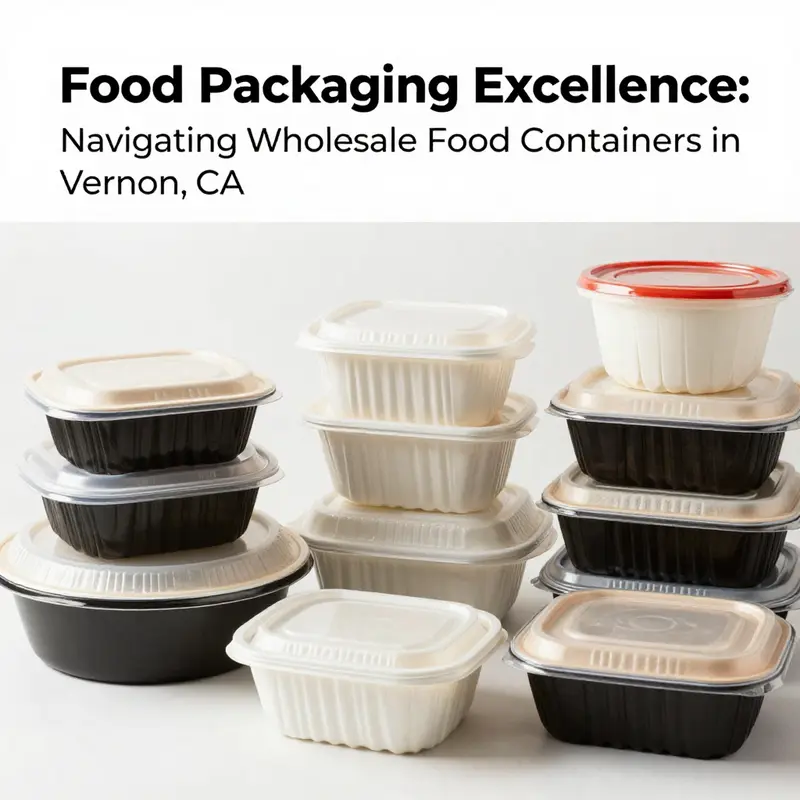
Vernon, California sits in the shadow of a vast logistics network that feeds kitchens across the region. It is not just a hub for bulk quantities of containers and serveware; it is a quiet proving ground for how sustainability can be woven into every link of the supply chain. The wholesale landscape here serves a dense ecosystem of restaurants, caterers, and food processors that depend on durable, compliant packaging. In recent years, however, the narrative has shifted from “how much can we buy” to “how responsibly can we package.” For buyers who source wholesale containers in Vernon, the turn toward sustainable packaging is less a trend and more a strategic response to evolving regulations, shifting consumer expectations, and the need for operational efficiency in high-volume operations. The result is a marketplace that increasingly prizes materials and designs that lessen environmental impact without sacrificing performance or cost efficiency. The conversation now centers on how a container can protect food, reduce waste, and still align with a brand’s commitments to a cleaner planet.
The push toward eco-friendly options begins with material choice. Plant-based alternatives such as bamboo, bagasse (sugarcane fiber), and cornstarch are expanding their footholds in Vernon’s wholesale offerings. These materials deliver a much-needed counterweight to petroleum-based plastics, which have dominated foodservice packaging for decades. Plant-based options tend to offer better end-of-life outcomes when paired with appropriate waste streams, whether through industrial composting or certified biodegradation. Suppliers in Vernon increasingly coordinate with manufacturers that hold credible certifications, ensuring that products meet recognized standards for compostability or biodegradability. This is not just about marketing language; it is about verifiable performance in real-world disposal systems. For operators, that translates into a clearer path to compliance with evolving waste reduction goals while maintaining the look and feel that customers expect from takeout and food-service packaging.
A second strand in Vernon’s sustainability thread is design optimization. Vendors are rethinking container geometry to use less material without compromising strength or usability. Thinner walls, lighter bases, and fewer layers can lower both the raw material footprint and the energy required to ship and store containers. Simpler, more standardized shapes also improve supply chain efficiency: fewer SKUs mean easier forecasting, quicker filling, and less waste from overstock or obsolescence. For businesses that handle large volumes daily, even small gains in stacking efficiency or open-pack usability can reduce parking lot space needs, fuel consumption for warehouse operations, and overall carbon footprints. A well-designed container can withstand heat and grease without flaking or leaking, while also being stackable and space-saving. These traits matter as Vernon distributors serve diverse customers—from fast-casual brands that demand rapid turnaround to full-service kitchens that value reliability during peak hours.
Regulatory momentum in California reinforces this shift. The state has long pursued waste reduction goals, and recent policy cycles have amplified incentives to replace single-use plastics with compostable or recyclable alternatives. In Vernon, as in other parts of the Los Angeles metro area, distributors and their clients are navigating a landscape of rules that push for better waste recovery rates and more responsible packaging formats. The practical effect for wholesale buyers is the need to verify that containers not only perform well on day one but also align with local composting or recycling streams. To support compliance, many Vernon suppliers partner with green manufacturers who maintain certifications and transparent lifecycle data. Such collaboration helps food-service operations evaluate total cost of ownership—not just the sticker price—by considering disposal costs, potential contamination fees, and the broader environmental impact of packaging choices.
The market dynamics in Vernon also reflect a broader consumer shift toward sustainability as a brand narrative. Even when price is a factor, diners increasingly assess a restaurant’s packaging as part of the overall experience. A takeout experience that feels thoughtful and aligned with environmental values can influence repeat business and word-of-mouth recommendations. For operators, this means that choosing a sustainable container is not merely a compliance decision; it is a component of brand strategy. The choice of materials and the visible cues of responsible packaging can communicate a restaurant’s values in a tangible way, reinforcing trust with customers who view waste reduction as part of a responsible dining experience. That alignment makes it easier for local distributors to justify the premium that sometimes accompanies plant-based or certified compostable options, because the business case now includes customer loyalty, better waste handling, and potential reductions in waste-hauling costs.
From a procurement perspective, Vernon’s market has evolved toward partnerships with certified green manufacturers. These collaborations ensure quality control, consistent certification statuses, and a supply chain that can scale to meet the demand of multiple restaurant chains or large food-service operations. In practice, this translates into predictable lead times, improved batch-to-batch consistency, and reduced risk of non-compliant shipments. For buyers, the payoff is straightforward: reliable performance that meets regulatory expectations and supports sustainability goals. In a market where a single large order can align with a company’s annual sustainability targets, the ability to forecast and secure compliant containers becomes a strategic advantage. This is especially true for takeout and foodservice packaging, where capacity to absorb high volumes during holidays, events, or promotions must be matched by packaging that can withstand heavy use and maintain integrity from kitchen to consumer.
A key aspect of Vernon’s sustainable packaging narrative is certification. The eco-friendly trajectory is backed by standards like the Biodegradable Products Institute (BPI) certification and various compostable certifications that signal end-of-life compatibility. Buyers are increasingly trained to request documentation that demonstrates third-party validation of compostability or biodegradability. This not only reduces the risk of mislabeling but also fosters trust with customers who expect evidence that packaging will behave responsibly in appropriate disposal streams. The emphasis on certification also helps suppliers differentiate themselves in a crowded market. It creates a virtuous circle: better certification invites more collaboration with green manufacturers, which in turn strengthens the supply chain’s overall resilience and credibility. The consequence for Vernon’s wholesale buyers is a more transparent marketplace where more confident, informed choices are possible even as the assortment of materials and designs expands.
In this evolving environment, an important practical consideration for buyers is total lifecycle thinking. That means weighing the environmental impact of the container from cradle to cradle, including raw material extraction, manufacturing energy, transportation, and end-of-life handling. It also involves assessing the container’s functional requirements: grease resistance, heat tolerance, microwave safety, leak prevention, and the ability to preserve food quality during transit. When a container checks these boxes while also offering compostable or recyclable pathways, it becomes a compelling option for operators who want to demonstrate responsible practices without compromising service quality. Vernon’s wholesale market responds to this complexity with a curated mix of options, ensuring restaurants can tailor packaging to their specific menu formats, service styles, and waste management capabilities. The result is a flexible, resilient supply chain that can absorb shifts in consumer expectations or regulatory demands without disrupting daily operations.
For readers who want to explore practical connections beyond the immediate Vernon context, consider how one might incorporate an example of an eco-friendly packaging category into a broader sourcing strategy. A takeout-focused option that emphasizes sustainability can serve as a cornerstone for a brand’s environmental narrative. In Vernon, such options are increasingly accessible through distributors who emphasize lifecycle performance, standardized sizing for efficiency, and strong end-of-life credentials through recognized certifications. The trend is not about a single miracle material but about a portfolio approach—using a mix of plant-based, recyclable, and durable designs that collectively move the industry toward lower waste, lower emissions, and improved operational efficiency. As the market matures, buyers will benefit from continued transparency about materials, processes, and certification status, ensuring that every container not only protects the food but also reflects the values of the kitchens and communities they serve.
To ground this exploration in a broader resource, readers can consult CalRecycle for insights into waste reduction standards and packaging guidelines that influence suppliers across California. This external reference provides context on how state-level policies shape the choices made by Vernon’s distributors and their customers, reinforcing why sustainability is now a core criterion for wholesale food containers in the region. For further reading, see https://www.calrecycle.ca.gov/.
For a concrete example of a sustainability-forward packaging option in the supply chain, consider a category that emphasizes eco-friendly takeout boxes for food packaging. These options are increasingly common in Vernon’s wholesale market and illustrate how thoughtful design, credible certification, and scalable production work together to support restaurants that want to serve great food with minimal environmental impact. eco-friendly takeout boxes for food packaging.
The Vernon experience embodies a broader industry shift: packaging that performs as well in operation as it does in its environmental promise. This is not a distant ideal but a practical reality shaping procurement, partnerships, and menus across the region. As the movement progresses, buyers will increasingly expect packaging that aligns with explicit sustainability targets, supports compliant waste streams, and delivers measurable improvements in efficiency and cost. That convergence—between green materials, intelligent design, regulatory alignment, and strategic sourcing—defines the current moment for wholesale food containers in Vernon, CA, and will continue to steer the market toward a more sustainable future.
Final thoughts
Understanding the landscape of wholesale food containers in Vernon, CA, reveals a complex interplay of suppliers, economic factors, innovations, regulations, and sustainability efforts. Businesses in the food service and beverage sectors can leverage this knowledge to make informed decisions that enhance operational efficiency and meet evolving consumer demands. As you navigate this dynamic marketplace, consider the importance of reliable suppliers and innovative materials in shaping your service quality and brand image.