
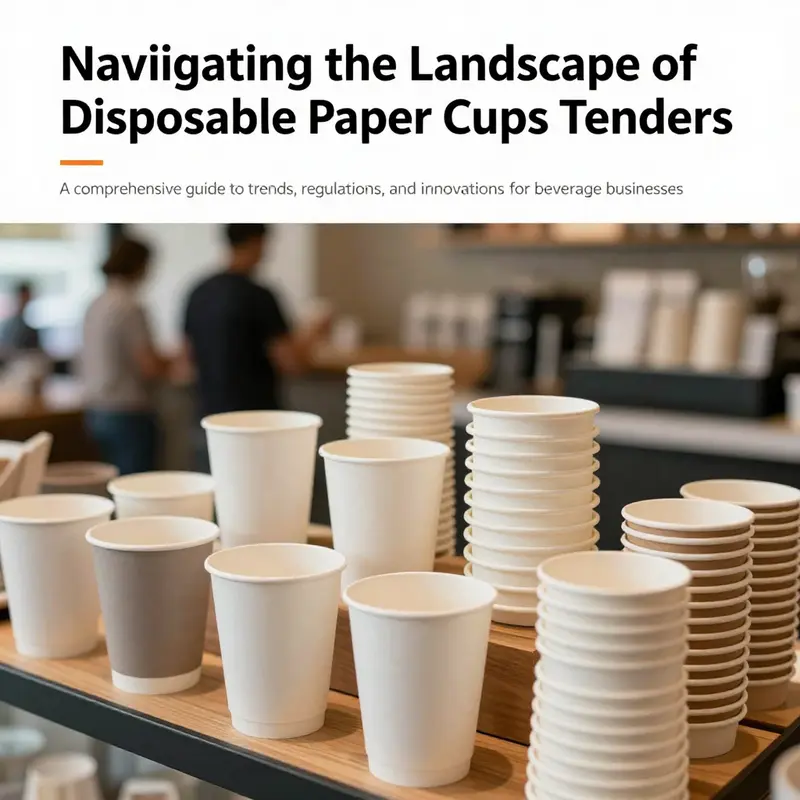
As the demand for environmentally friendly solutions grows, the market for disposable paper cups is booming. This shift presents a unique opportunity for businesses, especially bubble tea shops, beverage chains, and food trucks, to leverage tenders for disposable paper cups. Understanding current trends, relevant regulations, economic factors, and technological innovations is crucial for effective procurement. Each chapter delves into these aspects to equip procurement teams and business owners with the information needed to enhance their operations, meet sustainability goals, and navigate the competitive landscape.
Green Bids, Clear Coatings: How European Tenders Are Redefining Disposable Paper Cups in a Circular Economy

When markets begin to pivot on the backbone of procurement, the quiet mechanics of bidding become a powerful force shaping what ends up on store shelves and in coffee shops. In the European Union, tenders for disposable paper cups and related paper products are not mere price contests; they are opportunities to codify sustainability, safety, and supply reliability into the very fabric of the product. The archival record of a Stockholm tender for “disposable paper products,” classified under a procurement category akin to 33772000 and evaluated by the principle of the most economically advantageous tender, offers a telling snapshot. The procedure signals that buyers are not simply seeking the lowest bid but a balance of cost, performance, environmental attributes, and long-term risk management. The value of such tenders is frequently not disclosed publicly, complicating the signal the market receives about market appetite and willingness to invest in greener materials. Yet the underlying logic is clear: procurement channels are steering the cup-making industry toward heightened standards, tighter material controls, and a more transparent supply chain.
The EU procurement ecosystem has long leaned on centralized platforms to publish opportunities, request documents, and evaluate bids. For suppliers, this creates a predictable rhythm—call for tenders, submit documentation, demonstrate compliance with environmental and safety requirements, and align with the buyer’s preferred value framework. The process also encourages rigidity in compliance while granting flexibility in approach. In practice, bidders must present not only price and lead times but também evidence of safe materials, end-of-life plan, and traceability. In 2026, the most active tenders around disposable paper cups are increasingly explicit about sustainability criteria: PFAS-free inner coatings, compostability in industrial facilities, and the possibility of diverting used cups into a genuine circular loop rather than a single-use end-at-landfill scenario.
One of the most consequential shifts visible in 2026 is the move away from traditional waterproofing chemistries that relied on PFAS to newer, safer coatings. PFAS compounds, often dubbed forever chemicals, have drawn ongoing regulatory attention due to their persistence in the environment and potential health concerns. In response, leading manufacturers and tiered suppliers are offering PFAS-free cup options. These options typically rely on plant-based waxes such as candelilla or carnauba, starch-based coatings, or other biopolymers designed to provide water resistance without compromising the ability to compost industrially. The practical outcome for tenders is that bidders must demonstrate not only water-barrier performance but also end-of-life behavior. An industrial compostability claim, supported by credible certification like OK Compost or Cradle to Cradle, becomes a credible value driver in a tender evaluation.
The emphasis on compostability dovetails with a broader commitment to resource efficiency. A parallel trend is the increased use of recycled and recyclable content. The paper industry faces a dual incentive: reduce dependence on virgin wood pulp while ensuring that cups can be effectively recovered and converted into new products. The tender landscape rewards designs that lean toward mono-material architectures or at least clearly separable laminates. A cup that can be easily detached from a plastic lining and sent through a standard recycling stream, or one that uses post-consumer recycled (PCR) paper fibers without compromising barrier properties, becomes a strong candidate in the procurement scoring system. In practice, this means suppliers invest in paper formulations that are both strong enough for hot beverages and more readily disassembled during recycling. The end result is a cup that not only performs during use but also behaves predictably when it exits the consumer setting.
As insulation remains essential for hot drinks, the sector sees a continuum between traditional double-walled designs and deeper material science innovations. The preferred path is not merely to add more layers but to optimize the energy footprint of the cup while maintaining or improving thermal performance. Advances include incorporating micro-structured air pockets or integrating bio-based insulating layers that function without heavy petrochemical components. For cold beverages, advances focus on moisture resistance and structural integrity to prevent leaks during transit. These functional improvements are not cosmetic; they translate directly into tender criteria. Buyers increasingly demand evidence that insulation choices survive typical distribution chains, resist condensation, and maintain form under varying temperatures and pressures. When a tender runner asks for data on leak rates, heat transfer coefficients, or life-cycle energy use, suppliers must translate laboratory metrics into procurement-friendly narratives that align with the buyer’s sustainability and resilience goals.
The broader packaging and branding ecosystem is also shaping tender outcomes through what is often described as smart packaging and integrated branding. The cup becomes a vessel for more than a hot drink; it is a touchpoint for customer engagement and brand storytelling. In tender briefs, bidders may be asked to outline possibilities for on-cup branding, digital engagement via QR codes, and even temperature-sensitive inks that communicate when a beverage is too hot for immediate sipping. While these features do not by themselves determine material choice, they influence the overall perceived value of the supplier’s offering and contribute to the post-use lifecycle strategy. The more a cup can support a brand’s narrative while remaining compatible with recycling and composting streams, the more compelling the bid becomes. This convergence of product functionality and marketing value reflects a modern understanding of the cup as a portable, data-rich, consumer-facing asset rather than a simple one-use item.
Transparency and certification have become non-negotiable in the tender environment. Buyers are seeking evidence that the raw materials originate from responsibly managed sources and that the supply chain operates with verifiable integrity. Certifications such as FSC for responsible wood pulp, OK Compost for compostability, and Cradle to Cradle for material health and circularity increasingly appear in tender documentation and supplier dossiers. For bidders, this means that claims must be credible and verifiable, not merely aspirational. The procurement process rewards those who can present third-party audit trails, supplier qualification data, and robust life-cycle assessments. In a market where environmental claims are under sharp scrutiny from regulators, customers, and even insurance providers, the ability to demonstrate end-to-end traceability can be as decisive as price.
The procurement channel, with its emphasis on the most economically advantageous tender, also shapes the risk calculus that suppliers must manage. A bid that promises lower upfront cost but relies on a fragile supply chain or on a coating system with uncertain end-of-life performance is likely to be discounted. Conversely, a bid that offers a modest premium for a well-documented supply chain, verifiable compostability, and reproducible recycling outcomes may win the day, particularly when risk considerations such as supplier concentration, geographic diversification, and contingency planning are factored into the evaluation. In practical terms, this means a bidder must present not only technical data on barrier performance and insulation but also supply chain resilience metrics, lead-time guarantees, and post-purchase support for sorting and recycling infrastructure. The tender becomes a lens that magnifies how well a supplier can deliver on safety, environmental stewardship, and reliability at scale.
For readers operating in or serving the tender ecosystem, one practical implication is the imperative to align product development roadmaps with tender expectations. If bidders anticipate future tenders, they should begin to test and document PFAS-free formulations, validate compostability claims with independent laboratories, and engage early with recycling facilities to confirm that their cup designs are compatible with current infrastructure. This proactive alignment reduces the friction that can occur during bid evaluation when a buyer questions the feasibility of off-spec materials or inconsistent end-of-life outcomes. At the same time, procurement teams benefit from clear, auditable criteria that can be communicated to suppliers. When a tender calls for lifetime performance data, environmental impact assessments, and transparent supplier registries, the selection process becomes more predictable and fair for all participants.
An accessible route to understanding these dynamics is the EU’s procurement portal, TED, which aggregates tenders across member states and provides a searchable repository of documents, criteria, and outcomes. Bidders routinely use keywords such as “disposable paper cups” or “paper cup tender” to locate opportunities relevant to their capabilities. The process also highlights the regional differences within the EU: some markets push more aggressively on compostability and PFAS-free coatings, while others emphasize recycling compatibility and supply chain certification. This mosaic of preferences reflects both regulatory variation and evolving consumer expectations, and it ensures that European demand for disposable paper cups continues to push innovation rather than retreat into complacent, single-solution approaches.
For practitioners looking to connect theory with practice, it helps to consider an illustrative path from tender brief to product specification. A buyer might require a water-resistant, PFAS-free internal coating that can be industrially composted within a defined timeframe. The coating may be verified by a recognized certification scheme and paired with a recyclable, mono-material outer shell. The paper pulp could be sourced from FSC-certified forests, while the cup’s structural integrity is reinforced by a thin, bio-based lining designed to withstand typical hot-beverage temperatures without compromising recyclability. Delivery logistics would be staged to synchronize with peak service levels, and the tender would invite respondents to detail end-of-life processing steps, including the recycling or composting facilities that will process returned cups. In such a tender, a bidder’s ability to demonstrate a credible end-of-life pathway—not just a theoretical claim—can tip the balance in a crowded field.
The practical takeaway for readers is that tenders do more than allocate contracts; they codify a market’s collective expectations about what is acceptable in terms of sustainability, safety, and performance. They signal to manufacturers where to invest capital, to recyclers how to optimize processing streams, and to brand owners how to communicate responsibly with customers. A successful bid, therefore, is not merely a price item; it is a blueprint for a more resilient, more transparent, and more circular disposable cup system. As markets evolve, the rule of thumb—present a robust, verifiable end-to-end story that links material choice to lifecycle impacts—becomes increasingly indispensable.
For readers seeking a concrete touchstone that illustrates the link between product design and tender outcomes, consider exploring a practical example of disposable paper cups in the broader packaging ecosystem. disposable paper cups for hot drinks offers a window into how material choices, barrier properties, and compatibility with recycling streams translate into real-world performance. This kind of product profile helps tender committees evaluate whether a proposed cup design can meet both the functional requirements of a beverage service and the environmental criteria they have prioritized in the short and long term.
The dialogue around disposable paper cups in tenders is not happening in isolation. It sits at the intersection of manufacturing capability, waste management infrastructure, consumer expectations, and regulatory direction. Where a tender might once have rewarded the cheapest option, today’s evaluations tend to privilege the full value proposition: safety, environmental stewardship, supply chain integrity, and the capacity to scale with demand. As long as buyers continue to use procurement as a strategic lever, tenders will continue to shape the spectrum of materials and design configurations that the industry can offer. The result, over time, is a market where cups look, feel, and perform in ways that align with a circular economy, and where the economics of sustainable innovation become more accessible to a broader set of suppliers.
External resource: https://www.anhuinature.com/
Bids, Health, and Microplastics: Redesigning Regulations for Disposable Paper Cup Tenders
In the European procurement landscape, tenders for disposable paper products sit at a crossroads where environmental aims, public health concerns, and budgetary discipline collide. Public buyers seek to balance the lower environmental footprint of paper cups against the practical realities of supply chains and the real-world use of these products in hot beverages, hospitality settings, and mass events. The procurement community often relies on well-established methods to evaluate bids, with the Most Economically Advantageous Tender, or MEAT, serving as a common framework in many jurisdictions. Stockholm’s capital city, for example, has published tenders under the broad umbrella of disposable paper products, categorized in procurement systems as 33772000, with a MEAT approach that weighs both price and non-price factors. Yet the value of these tenders is frequently not disclosed, a practice that preserves bidding confidentiality while leaving observers to infer how health, sustainability, and economic efficiency are weighed in the final decision. To follow the flow of this market, procurement professionals turn to the European Union’s official procurement portal, TED, where current and historic tenders can be searched using keywords like “disposable paper cups” or “paper cup tender.” The practical challenge for buyers and suppliers alike is not merely locating tenders but understanding how evolving scientific evidence shapes the way bids are structured and evaluated over time.
The regulatory drumbeat intensifies as more is learned about the health and environmental implications of disposable paper cups. A growing body of research has highlighted a paradox: cups designed to reduce plastic waste can still become a source of microplastics, particularly when hot liquids are involved. A landmark study published in January 2024 demonstrated that disposable paper cups, when filled with hot water, can release microplastics that accumulate in critical tissues of laboratory pregnant mice, including the placenta and fetus. The study detailed a cascade of adverse effects that extend beyond overt toxicity and into metabolic disruption and reproductive harm. Notably, the researchers found that exposure levels previously considered non-hazardous could still yield systemic effects, with a consumption level as modest as around 3.3 cups per day triggering measurable damage in this animal model. The implication for real-world consumption—especially among pregnant individuals and those planning pregnancy—has provoked a rethinking among policymakers about what constitutes a safe exposure threshold and how to translate laboratory findings into practical regulatory limits. The authors proposed a conservative safe exposure window during pregnancy, roughly two to four cups per day, underscoring the urgency of refining regulatory standards in this domain.
This convergence of procurement practice and health biology places regulatory authorities at the center of a consequential redesign. Current regulatory frameworks often struggle to address the risk of microplastic shedding from disposable cups, particularly under typical use scenarios such as hot beverages. The gap is not merely academic. If tenders increasingly rely on material performance data and toxicological benchmarks, then suppliers will be asked to demonstrate, with credible evidence, that their cups shed fewer microplastics when in contact with hot liquids. In practice, this means more rigorous material disclosures, tighter controls on coatings and barrier layers, and explicit specifications around heat resistance and chemical leaching. It also means that procurement documents will need to articulate risk-based acceptance criteria, have clear testing methodologies, and incorporate supply chain accountability for the materials used. The health dimension—especially for vulnerable populations such as pregnant women—translates into tender requirements that go beyond basic food-contact safety to encompass broader consumer protection considerations. In this sense, tenders become instruments not only for cost control but also for advancing public health protections in everyday products.
For procurement professionals, this shift implies a recalibration of how tenders are drafted, evaluated, and monitored. The MEAT framework, long trusted for balancing price with quality, now invites a more explicit accounting of health risk, environmental performance, and lifecycle implications. Specifications may evolve from generic “paper cup” descriptions to material- and process-focused mandates. Buyers might require evidence of reduced microplastic shedding under representative conditions—such as contact with hot liquids at typical serving temperatures—and demand documentation that demonstrates a lower wear rate of the cup’s interior materials, coatings, and polymer additives. In turn, tenders should specify robust supplier evidence, including third-party testing, material composition disclosures, and traceability data that prove the cup’s ingredients and manufacturing processes meet harmonized safety benchmarks. The practical impact on procurement outcomes is meaningful: bids will be filtered through more discerning risk lenses, with suppliers compelled to invest in safer formulations and transparent reporting to win contracts.
One tangible facet of this shift is the expanding role of material science and toxicology in tender specifications. Regulatory bodies are increasingly receptive to adopting or adapting testing protocols that mirror those used in risk assessment studies. The benchmark dose framework used in contemporary microplastics research, for instance, is cited as a model for establishing regulatory safety thresholds and dose-response analyses. If tendering authorities embrace this approach, they will expect suppliers to furnish dose–response evidence for microplastic release under real-use conditions, such as hot beverage contact times and cup-warming practices. This is not a purely academic exercise; it has concrete procurement consequences. Tender documents may require demonstration of microplastic shedding rates across multiple drink temperatures, a minimum standard for heat resistance, and declarative material safety data sheets that clearly identify potential microplastic contributors and their concentrations. The net effect is a procurement environment where health science and product specification intersect, guiding bidders toward safer materials and more rigorous quality control.
The regulatory conversation naturally intertwines with broader environmental and social goals—reducing plastic pollution, encouraging responsible sourcing, and fostering supply chains that can verify safety claims. In the context of tenders, these aims translate into performance criteria beyond the traditional metrics of price and delivery. For example, tenders could reward cups produced with fibers sourced from responsibly managed forests, coatings that minimize microplastic shedding, and manufacturing processes that reduce chemical inputs. They could also require suppliers to maintain auditable records demonstrating compliance with environmental labeling schemes, waste management practices, and end-of-life considerations. Such expectations align with a growing consensus that sustainable procurement involves more than recycling rates; it encompasses the entire lifecycle of a product and its potential health implications for end users.
The practical implications extend to how tenders are written and how bids are evaluated. In today’s EU procurement environment, where transparency and value-for-money principles are foundational, a deterministic emphasis on price alone is increasingly insufficient. Tender documents may begin to foreground health risk indicators in their award criteria, weighting the demonstrated ability to minimize microplastic shedding and to ensure safer heat interactions as part of the overall score. Suppliers will respond by investing in better barrier technologies, safer polymer choices, and more transparent disclosure of testing results. The supplier landscape could also shift toward firms that can provide robust, independent verification of material safety and performance, rather than those that offer the lowest price or the most optimistic performance claims. In this sense, the health regulatory narrative does not merely constrain choices; it reshapes the competitive dynamics of the tender market for disposable paper products.
A concrete anchor for these ideas can be found in actual tender practice. Stockholm’s public procurement activity in the disposable paper products segment demonstrates how tendering authorities frame requirements within a precise procurement taxonomy and how the MEAT approach accommodates qualitative factors alongside price. The category code 33772000 captures a wide range of disposable paper products, including cups used for hot beverages. While the published notices often refrain from disclosing contract value, the process itself reveals how evaluators balance sustainability claims, product safety data, and supply reliability. The result is a more nuanced bidding environment in which suppliers must provide evidence of product performance beyond the price tag and must reconcile their propositions with evolving health science insights. This instance illustrates a broader shift in the EU’s tender culture—a shift toward performance-based specifications that reward demonstrated safety, environmental stewardship, and robust supply chain governance.
From a regulatory design standpoint, this transition invites several practical developments. First, there is a clear need for standardized testing protocols that can be embedded in tender requirements. If regulatory agencies formalize a testing suite for microplastic shedding from disposable cups under hot-liquid contact, tenders can reference this suite in a consistent manner across member states. Second, there is a movement toward explicit material transparency obligations. Suppliers may be asked to disclose all constituents with potential health relevance, provide third-party validation of claimable reductions in microplastic release, and demonstrate compatibility with common cleaning and sanitation processes in institutional settings. Third, tender documents could require evidence of supply chain resilience, ensuring that materials and manufacturing practices can withstand disruptions without compromising safety or performance. Collectively, these developments push the procurement process toward a more holistic evaluation of what constitutes a safe, sustainable, and reliable disposable cup.
To illustrate how procurement and policy convergences might play out in practice, consider a tender that emphasizes health and environmental performance alongside traditional cost metrics. The specification could ask for cups with interior coatings that minimize microplastic shedding, or base fibers derived from materials with verified safety profiles, and coatings with demonstrated resistance to delamination under repeated hot beverage cycles. The tender could require suppliers to present a risk assessment plan that addresses potential exposure scenarios for vulnerable populations, including pregnant individuals, and to propose corrective actions if performance thresholds are not met. Evaluation could incorporate a structured evidence package, including independent test results, lifecycle analyses, and evidence of compliance with established safety frameworks. In this scenario, the bid is judged not only on price and delivery but also on demonstrated commitment to safeguarding health and minimizing environmental impact. The overall procurement outcome would thus reflect a refined synthesis of economic efficiency, product safety, and environmental responsibility.
In the broader picture, these regulatory shifts interact with the realities of global supply chains and market competition. EU buyers operate within a mosaic of national rules, harmonized European standards, and evolving guidance on plastics and microplastics. Suppliers must navigate this terrain by cultivating transparency and credibility in their materials, manufacturing processes, and post-market performance. The tension between affordability and safety remains, but the path forward is illuminated by the recognition that everyday products—like disposable cups used for hot beverages—sit at the intersection of consumer health, environmental stewardship, and procurement excellence. In this sense, tenders become a mechanism for translating scientific insight into practical safeguards in the market, rather than a mere instrument for price competition. The result could be a healthier market that still respects budgetary constraints, while delivering cups that perform reliably under real-world conditions and with fewer health concerns associated with microplastic exposure.
For readers seeking to explore actual product enclosures that walk the line between safety and usability, an example in this category can be referenced through a product page dedicated to disposable paper cups designed for hot drinks. This page offers a concrete sense of what a supplier might present as part of a regulatory-compliant bid, including details about cup construction, materials, and intended use in hot beverage contexts. See the following link for a representative example of the domain area: 20-50-200pcs-disposable-paper-cups-kraft-paper-cups-coffee-milk-cup-paper-cup-for-hot-drinking-party-supplies-8-10-12-16oz-cups.
As these dynamics unfold, procurement professionals should stay attuned to updates from the European procurement ecosystem, including new tender notices on TED and related regulatory guidance that ties health risk evidence to material specifications and testing standards. The ongoing research into microplastics and their health implications adds moral weight to the regulatory calculus and strengthens the case for more rigorous, evidence-based tender requirements. The result will be a procurement landscape where bids are not merely about price but about the demonstrable capacity to protect health, reduce environmental harm, and maintain reliable supply—all while delivering the practical functionality expected of disposable paper cups in everyday service.
External reference: For detailed scientific findings on microplastics released from disposable cups and related dose–response considerations, see the ScienceDirect article: https://www.sciencedirect.com/science/article/pii/S004896972400157X
Margins and Mandates: The Economic Landscape of Disposable Paper Cup Tenders
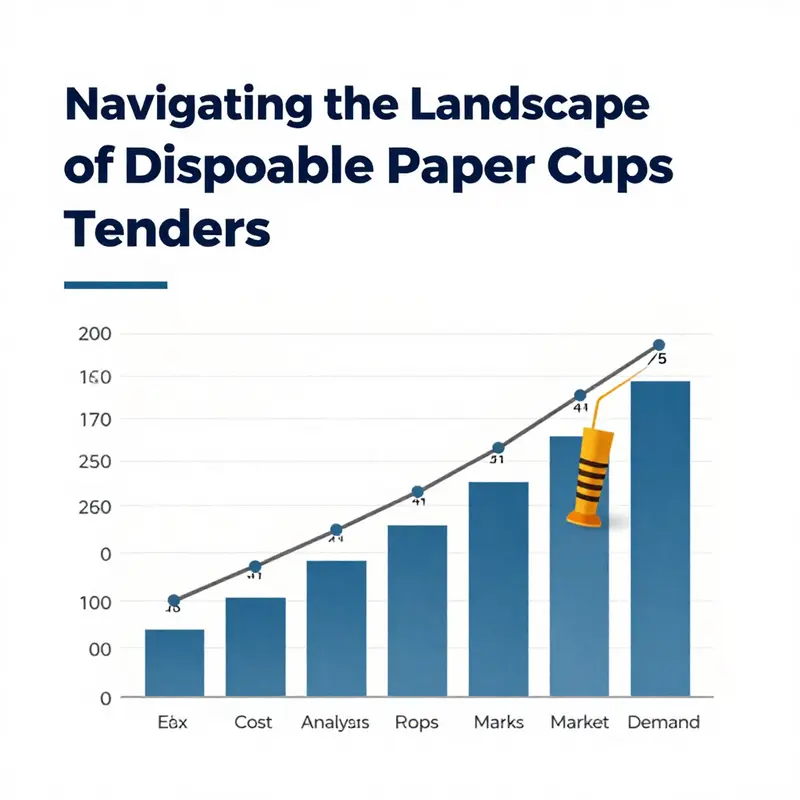
Across modern procurement landscapes, the tendering of disposable paper cups sits at the intersection of price discipline, supply chain resilience, and evolving sustainability mandates. The European market, with its intricate public and private sector purchasing regimes, provides a telling case study of how a seemingly simple commodity becomes a proxy for policy priorities, operational efficiency, and strategic supplier collaboration. In markets such as Stockholm’s public tendering of disposable paper products, the interplay between cost, quality, and compliance becomes visible in the evaluation method—often described as the most economically advantageous tender, MEAT, rather than a pure lowest bid. This distinction matters, because it encodes a broader interest: ensuring that procurement not only minimizes upfront expenditure but also delivers reliable performance, appropriate environmental attributes, and long-term cost containment through durability and efficiency. The economic logic of these tenders, therefore, extends beyond price tags and into the design of supplier relationships, contractual terms, and risk allocation that shape the entire lifecycle of the cups used in schools, government facilities, events, and large-scale corporate settings.
The cost structure of disposable paper cups is the first axis along which tender economics turns. At a glance, the material and manufacturing costs for single-wall, uninsulated cups typically come in lower than those for double-wall or insulated options. The absence of a thick inner wall reduces both resin usage and finishing costs, enabling suppliers to offer competitive unit prices when demand scales. In practice, this translates into a pricing dynamic where unit costs decrease markedly as order volumes rise. Procurement briefs frequently reflect this reality by presenting tiered pricing models: wholesale rates that begin to look attractive for bulk allocations, especially when orders cross the tens of thousands or even half a million units. Market observations suggest wholesale price levels that can, under favorable conditions, dip toward the vicinity of a few cents per cup for substantial orders. For buyers such as large institutional caterers, event organizers, and office environments that must staff ongoing consumption cycles, these bulk discounts translate into meaningful annual savings. The economics of scale also influence tender design itself. When a tender contemplates multi-year supply with volume guarantees, the contracting authority often negotiates not just unit cost but total cost of ownership, including warehousing, distribution, and even waste management considerations that can influence the true economic footprint of the procurement.
The ability to scale is complemented by the flexibility of manufacturing and supply networks. The disposability category benefits from the broad accessibility of single-wall paper cups across different geographies, with strong supply presence in regions such as North America and Southeast Asia. This geographic spread reduces supply chain friction and mitigates risks linked to single-source dependence. For tender evaluators, this translates into a more predictable delivery timeline and a lower probability of stockouts during peak demand periods, such as major conferences or holiday seasons. The procurement narrative thus shifts from simply choosing the cheapest cup to selecting a supplier capable of meeting demand with reliable lead times, consistent quality, and conformity to applicable standards and environmental requirements. The latter is increasingly central to the MEAT calculus, as environmental attributes—grease resistance, compostability, recyclability, and the use of responsibly sourced materials—become part of the tender’s evaluation rubric. Even when the primary objective is cost minimization, buyers increasingly consider the downstream implications of packaging choices, including waste diversion, end-of-life handling, and regulatory alignment.
On the pricing front, the theoretical economies of scale must be weighed against market volatility in raw materials. Paper fiber costs, energy, and chemical coatings used in cup interiors and exteriors can swing with feedstock markets and energy prices. When tenders contemplate long-term supply, contractors often embed adjustment mechanisms or price hold periods to hedge against sudden shifts in input costs. This risk-sharing approach benefits both sides: the buyer secures price stability during the contract term, while the supplier maintains a predictable margin profile. The absence of price volatility may, in practice, influence the tender’s competitiveness by enabling bidders to offer more favorable terms without exposing themselves to dramatic margins, provided the contract terms are well-balanced and the demand forecast is credible. Conversely, overly rigid contracts with fixed prices in a high-inflation environment can deter participation, particularly from smaller suppliers who rely on tighter margins to maintain liquidity.
The market dynamics extend beyond raw costs to include customization and sustainability features that increasingly shape tender outcomes. Suppliers are increasingly able to tailor offerings to meet brand requirements or environmental targets without sacrificing price discipline. The ability to imprint logos, select eco-friendly coatings, or provide compostable liners may be leveraged as value-added propositions in MEAT evaluations. These features contribute to a tender’s overall economic value by enhancing brand visibility for buyers and by aligning procurement with broader sustainability mandates that public authorities or large organizations publicly commit to. From a supplier perspective, these options create additional revenue streams and differentiation opportunities, enabling more nuanced bidding strategies. Instead of competing solely on unit price, bidders articulate a value stack that demonstrates lifecycle advantages, such as reduced waste, improved user experience, and smoother downstream handling. In practice, this leads to tender briefs that increasingly reward a combination of cost efficiency and sustainability performance, rather than price alone.
The procurement framework itself also steers tender outcomes through regulatory and policy levers. In the European context, tenders are guided by directives and national implementations that emphasize transparency, competition, and value for money. Evaluation criteria are often explicit about quality standards, supplier reliability, delivery capabilities, and after-sales support—elements that translate into tangible economic advantages in the form of reduced disruption, fewer substitution costs, and lower risk premiums. When public authorities opt for MEAT over the lowest price approach, they acknowledge that defects, late deliveries, or inconsistent product performance can impose hidden costs that erode the apparent savings of a cut-rate bid. The tender structure, therefore, becomes a tool for internal risk management as much as a means to secure favorable unit economics. In that sense, the economic landscape of disposable paper cup tenders reveals a broader trend: procurement is increasingly a strategic lever, harmonizing cost containment with resilience, sustainability, and supplier collaboration.
Yet the tender environment is not immune to segmentation and market fragmentation. Large buyers can achieve favorable pricing through aggregated demand and long-term framework agreements, but small and mid-sized institutions often compete with smaller lot sizes and shorter delivery windows that can complicate price comparisons. In practice, this means that the bid landscape is not monolithic. A single contract might attract a spectrum of bids: from lean, cost-focused offers optimized for minimal price points to more expansive packages that incorporate branding options, enhanced service levels, and guarantees on supply continuity. The resulting tender mix reflects not only the numerical value of offered discounts but also the perceived risk and reliability embedded in the supplier’s capacity, logistics network, and financial stability. For buyers, the challenge lies in crafting tender specifications that are precise enough to attract capable bidders while broad enough to avoid excluding competent players who can deliver the required performance and sustainability criteria.
A practical window into the current tendering milieu emerges when examining how buyers express demand through technical specifications, performance criteria, and packaging requirements. The tender language tends to favor standardization—uniform sizing, consistent grease resistance, and predictable compatibility with typical dispensing systems—because standardization reduces variance in quality, simplifies quality control, and lowers inspection costs. At the same time, buyers increasingly articulate expectations around environmental performance. This can include thresholds for recycled content, restrictions on fluorinated coatings, and mandates for compostable or recyclable end-of-life pathways. Meeting these mandates often requires additional supplier investments in materials research, process adjustments, or partnerships with recycling and waste management entities. When bidders can demonstrate that a cup aligns with these environmental expectations while maintaining cost efficiency, they strengthen their position in the MEAT evaluation.
The interplay between tenders and branding is another facet of the economics at work. In institutional and event contexts, visibility matters. Customization options—logos, color schemes, and messaging—offer tangible marketing value for buyers who seek to reinforce identity and experience. For suppliers, these customization capabilities come at incremental cost but also create value by enabling higher-margin add-ons within the same procurement framework. The net economic effect is not merely a matter of unit cost; it is a broader calculation of how branding and sustainability stakes contribute to perceived total value, which tender evaluators increasingly weigh as part of the MEAT equation. In this ecosystem, the tender becomes a negotiation platform where branding potential and environmental performance are priced against production efficiency and price discipline, producing outcomes that reflect a balanced calculus rather than a single-digit discount.
For readers seeking a more granular depiction of market dynamics and pricing trends, industry analyses by specialized market research firms offer data-backed insights into size, shares, and growth drivers for the disposable paper cup segment. Such reports synthesize global demand, regional growth patterns, and the evolving balance between plastic alternatives and paper-based solutions. They also discuss how consumer preferences, corporate sustainability pledges, and regulatory developments influence procurement strategies and supplier positioning. While these reports are external to daily tender operations, they illuminate the longer arc of the market and explain why tender briefs increasingly embed sustainability metrics alongside cost considerations. To explore these dynamics further, a comprehensive industry analysis can be consulted here: Grand View Research – Disposable Paper Cup Market.
The practical takeaway for procurement professionals is to design tenders that articulate a coherent value proposition to bidders. That involves more than specifying acceptable materials and dimensions. It requires clarifying how performance will be measured, what constitutes an acceptable delivery risk, and how environmental attributes will be validated and verified. It also means constructing pricing frameworks that recognize the realities of supplier costs, including raw material volatility, energy prices, and packaging logistics. In this way, tenders become instruments of economic foresight, enabling buyers to secure not only affordable cups but also stable supply, consistent quality, and alignment with longer-term sustainability objectives. The strategic implication is clear: in markets where demand is robust and supply networks are diversified, tender design that integrates price with reliability and environmental stewardship yields the greatest long-term value for both buyers and suppliers. This is especially pertinent in sectors such as food service, events, and office environments, where cups are not mere disposable items but critical components of operational flow, customer experience, and corporate responsibility.
For practitioners who want to see how these dynamics translate into real procurement formats, consider exploring a practical example of current listing formats and product options available through the supplier ecosystem. The following page provides a sense of the typical breadth of options that bidders might price against, including standard single-wall cups and related packaging adjuncts. 20-50-200pcs-disposable-paper-cups
In sum, the economics of disposable paper cup tenders hinge on a nuanced balance of cost, volume, reliability, and sustainability. While unit price remains a central signal, the tender’s ultimate value to the buyer depends on a holistic assessment that includes delivery performance, regulatory compliance, and the environmental footprint of the cup throughout its life cycle. As buyers and suppliers continue to align on these priorities, tender landscapes will increasingly reward not just the cheapest bid but the bid that best translates price into predictable performance, responsible stewardship, and resilient supply chains. For readers seeking a broader, data-driven perspective on market size and growth trajectories, the external resource cited above provides a comprehensive backdrop for understanding how market forces shape tender practices over time.
null
null
Final thoughts
In conclusion, the market for disposable paper cups is evolving rapidly, driven by changing consumer preferences and regulatory requirements. By keeping abreast of current trends, understanding regulatory frameworks, analyzing economic impacts, and embracing technology, businesses can make informed decisions regarding their procurement strategies. This proactive engagement will not only ensure compliance and sustainability but also enhance customer satisfaction and brand reputation. As the demand for quality disposable solutions grows, aligning procurement practices with market dynamics becomes essential for lasting success.