

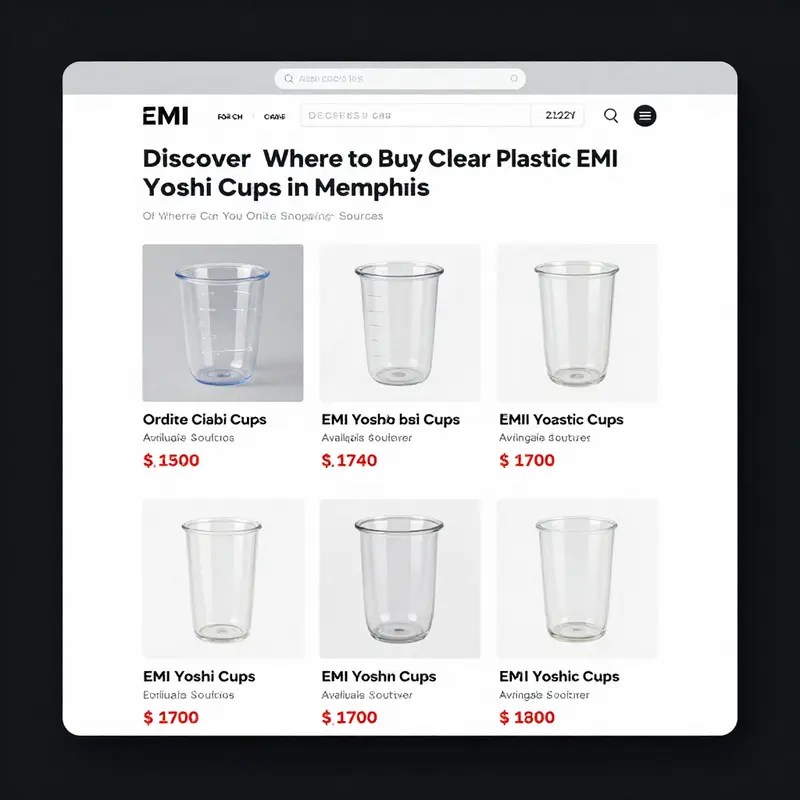
In the vibrant city of Memphis, businesses needing clear plastic EMI Yoshi cups have a multitude of options at their fingertips. These cups are not just practical for serving drinks but also add a professional touch for beverage shops, restaurants, food trucks, and caterers. This guide will explore local retail options, online shopping sources, and specialty suppliers, ensuring you can navigate your purchase with ease. Each chapter will equip you with valuable information tailored for your specific business needs, from the convenience of local shopping to shipping details from specialty suppliers.
Finding Clear Disposable Cups in Memphis: A Practical Guide for Event Planners and Caterers

Memphis event planners often need clear disposable cups for desserts, beverages, and light food service. This guide outlines a practical sourcing approach that blends in-store visits, online checks, and wholesale channels to secure cups by size, clarity, and price. Start with mainstream retailers like Walmart for quick, predictable stock and easy pickup. For niche sizes or brands, consider online marketplaces such as eBay, with attention to seller reliability and shipping times. For high-volume needs, connect with wholesale or restaurant distributors to discuss minimum orders, lead times, and tiered pricing. Confirm cup dimensions and lid compatibility, and ask vendors about food-safety compliance and BPA-free materials. When planning, request stock checks and compare transit times from regional distributors to ensure on-time delivery. By layering these routes and tracking costs, you can build a reliable Memphis supply that covers routine events and occasional surges.
null
null
Clear Cups, Clear Plans: Finding Memphis–Ready Options for Bulk and Everyday Use

When planning gatherings in Memphis, the moment you realize you need clear plastic cups often comes with a cascade of questions. How many do you need, and in what sizes? Do you want them in bulk for a caterer’s table or a small batch for a backyard picnic? Will online options arrive in time for your event, or is there a local store that can be trusted to have them in stock when you walk through the doors? The search for clear plastic cups becomes less about a single purchase and more about a practical path to reliable supply, consistent quality, and predictable delivery. In a city known for its warm hospitality and a calendar full of celebrations, getting the right cups—crisp, transparent, sturdy enough to hold a frosty beverage without sweating through the cup—is more than a convenience. It’s part of the choreography of an event that runs smoothly, from planning meetings to the last toast at the end of the night. Memphis serves as a hub with a mix of large retailers, regional distributors, and online marketplaces that ship to the area, making it possible to blend immediacy with bulk savings and long-haul reliability. The key is to approach the search as a continuum rather than a one-off decision. Start with what you know you’ll need, then layer in options that can scale up or down without rewriting your timeline or budget.
A practical frame for this search is to distinguish between the different routes to purchase. There are traditional big-box retailers whose online stores often reveal product availability that local aisles cannot. There are wholesale and professional-supply houses that cater to restaurants, cafés, and event companies, offering bulk quantities and account-based pricing. Then there are national marketplaces that connect buyers with multiple sellers, each presenting its own shipping terms, return policies, and lead times. Each route has its own rhythm, and each rhythm has a trade-off between immediacy, cost per unit, and the reliability of delivery windows. The goal in Memphis is to assemble a sourcing plan that minimizes the risk of running dry on the day of the event while keeping the process simple enough to manage, even when life gets busy.
Locating local access begins with the most familiar axis: the big-box retailer that maintains an online storefront. These platforms often extend a store-locator feature that helps you determine whether a nearby outlet can fulfill a last-minute need. In many cities, this approach translates into a store visit that feels routine, but Memphis adds a layer of complexity and opportunity because its retail landscape blends national chains with regional distributors and independent outlets that stock comparable products. The advantage of online inventory checks is clear: you can see whether an 8-ounce or a 9-ounce variant is currently available and whether you are looking at a single-pack option or a bulk item. The system returns results quickly, and you can reserve stock for pickup, or have it shipped to your chosen address. If a local store is promising, you can also compare the in-store pickup option against standard delivery timelines. The decision point often settles on whether you have time to spare for delivery versus the immediacy of walking out with cups in hand.
The wholesale channel expands the lens beyond the aisle of a general retailer to include dedicated supply houses that serve the hospitality industry, offices, event planners, and catering outfits. These sources typically present tiered pricing that rewards higher volumes. The upside is clear: when you’re organizing a conference, wedding, or multi-event schedule, the cost per cup can drop meaningfully as you move into larger quantities. The trade-off is that lead times tend to be longer than consumer retail, and establishing a business account can require background information about your organization. It’s worth noting that wholesale suppliers often provide more than just cups; they offer a cohesive line of disposable ware—plates, lids, straw products, and liners—that can help you maintain a consistent aesthetic across your event. If you’re a planner or a small catering venture in Memphis, setting up an account with a regional distributor can lead to easier reordering for future occasions and more predictable delivery windows across the year.
Online marketplaces sit at the intersection of convenience and competition. They aggregate sellers who stock clear plastic cups in a range of shapes, sizes, and price points. The advantage here is flexibility: you can compare options, read reviews, and often choose among several shipping speeds. The downside is variability. A seller’s performance can range from dependable to unpredictable, depending on stock levels and carrier reliability at the moment of fulfillment. If you decide to explore these routes, it’s wise to check seller ratings, review shipping timelines, and confirm the expected delivery date before placing an order. The marketplace model also supports a diverse set of packaging configurations—from compact packs suited for daily use to bulk bundles designed to outfit a venue’s beverage service for dozens of guests. For someone who wants the most straightforward approach, these platforms can function as a quick stopgap when time is tight or when an event’s guest count isn’t yet locked in, but it’s prudent to plan for a margin of error in delivery estimates.
For Memphis residents and event organizers, the practical approach is to map each route to a specific need. If you’re outfitting a coffee bar or a casual lounge at a wedding reception, a small to mid-size pack might be sufficient, with an eye toward a few extra sleeves in case of spill-cleaning contingencies. If you’re coordinating a larger conference, festival, or charity fundraiser, you will likely lean into bulk orders and a reliable supplier who can deliver multiple shipments on a fixed schedule. The rhythm of a Memphis event calendar often dictates the timing; months of planning can be compressed into a few weeks as deadlines approach, which makes early procurement a smart move. It’s where the practical wisdom of inventory planning comes into play: build a cushion into your order for any last-minute adjustments, and consider stocking plastic cups at a local facility if the project requires frequent, recurring restocking across several weeks.
In this landscape, one practical tip is to examine the packaging options in detail. Some cups are designed to be extra sturdy and resistant to cracking as they move from service line to serving station. Others emphasize clarity and a sleek look that makes beverages appear more vibrant. The shape can also influence throughput: straight-walled cups tend to stack more efficiently for transport and storage, while gently curved rims can enhance grip and user experience at the serving table. The dimensions matter not only for the product’s function but for the logistics of your event. A simple calculation—cups per case, cases per pallet, crates per shipment—helps you estimate how many shipments you’ll need to support a given guest count. Where a single event might require several dozen packs, a recurring program or a recurring venue contract can justify a standing order that simplifies both budgeting and delivery management.
For those who want a reliable, end-to-end solution without the guesswork, there is hybrid wisdom to consider. If you know you’ll host several gatherings in the coming months, it can be advantageous to coordinate with a supplier who can provide both a steady inventory and a consistent delivery schedule. In such arrangements, you may find a bundled option that includes not only cups but lids, straws, and other disposable tableware. This approach can help you maintain a uniform look and reduce the administrative overhead that comes with piecing together orders from multiple sources. It is also worth considering the environmental dimension of disposable wares. Depending on the event’s goals, you may want to select products that balance usability with waste reduction, such as cups that align with recycling programs or compostable overlays. Memphis organizers who think ahead about disposal logistics can streamline cleanup and minimize post-event workload, which is particularly valuable when multiple events are closer together on a calendar.
Amid all these considerations, a straightforward, practical anchor is to keep a short shopping list that you can reference quickly when you’re ready to purchase. The list should include the size range you anticipate using most often, a rough target for total units, and a preferred purchase route for each scenario. For example, you might reserve the option of bulk, wholesale procurement for large events and rely on a consumer-friendly online retailer for smaller, last-minute needs. The ability to switch between channels is what makes Memphis–area sourcing resilient. If a preferred source is temporarily out of stock, you can pivot to a secondary option without disrupting the event timeline. In practice, that flexibility translates into fewer sleepless nights and more confidence in your planning. When you are ready to start evaluating options, consider testing a small order from a couple of sources to verify fit, grip, and clarity before expanding to a larger purchase. This approach helps ensure that you are satisfied with the user experience of the cups themselves and that the supplier’s delivery performance aligns with your deadlines.
To offer a tangible sense of how this plays out, imagine you are coordinating a mid-size company gathering at a venue that requires a clean, modern presentation. The guests will be served both cold beverages and a few specialty drinks that require a stable, spill-resistant cup. You would begin by checking a local big-box site for a quick, modest delivery, while simultaneously reaching out to a Memphis-area wholesale distributor to estimate bulk pricing and lead times for a larger shipment. If timelines tighten or a podium event calls for a more formal look, you could place an additional order with a mixed assortment that includes a bulk option for the main beverage service and a smaller batch for the premium drinks. The practical payoff is straightforward: you mitigate the risk of empty shelves and you preserve the event’s visual coherence without sacrificing efficiency at the serving line. In this example, a streamlined supply chain that blends local accessibility with scalable online options becomes a reliable backbone for event execution in the city’s bustling calendar.
As you navigate these choices, you may wonder how to assess quality when you can’t physically inspect every box before purchase. A practical heuristic is to evaluate clarity, wall thickness, and rim integrity. Clear cups should resist clouding after multiple passes through the washing or stacking process, and the rims should feel sturdy to the touch, not flimsy or prone to chipping. If purchasing in bulk, you can also request a sample batch for in-person testing to confirm that the cups meet your event’s standards for appearance and performance. While some suppliers offer sample programs, others do not, so planning ahead and communicating clearly about expectations can save both time and budget across many events. In Memphis, where venues range from elegant ballrooms to casual parks, the ability to adapt a serving strategy to the venue’s constraints—whether it’s a long service counter, a cocktail bar with high-efficiency service, or an outdoor setup exposed to heat and humidity—can determine whether your cups perform as intended or require a mid-event replacement.
If you are new to sourcing such wares, one practical path is to start with a well-known, widely stocked option and then layer in alternatives as your event scale grows. Your first stop could be a major retailer’s online catalog where you can compare options side by side. A second stop could be a regional supplier that serves the hospitality industry with a straightforward ordering process and clear pricing. A third route could be a broader marketplace that aggregates multiple sellers, with a careful eye toward shipping times and seller reliability. By building a sourcing itinerary that includes these channels, you can navigate the Memphis market with confidence rather than guesswork. The city’s transportation network and proximity to national distribution centers often translate into reasonable transit times, even for bulk shipments, which helps keep projects on schedule.
To anchor this discussion with a concrete, practical path, consider this integrated approach. When you have a confirmed guest headcount, begin with a quick scan of online listings from a major retailer and a regional distributor for the most common cup size you anticipate using. If a substantial price difference arises, calculate the total cost of ownership by factoring in shipping and handling, as well as potential warehousing costs if you plan to store stock for future events. If you identify a favorable bulk option, reach out to the supplier to confirm delivery windows that align with your event timeline. If your event requires a tighter turn, opt for a local pickup if available, or select a supplier known for reliable two-day shipping. In any case, keeping your options open and your calendar coordinated is the practical foundation of a smooth procurement process in Memphis.
For readers who want a quick pointer to a reliable source of information and a reminder that clear cups are a staple of functional event design, consider this practical reminder: the availability of the right cup is not an isolated decision; it’s a component of your event’s experiential quality. A well-chosen cup contributes to the perceived value of beverages, supports easy handling for guests, and aligns with the overall aesthetic you are trying to achieve. In a city that blends Southern hospitality with a modern events landscape, the cups you select can be one of the understated but impactful details that help guests feel cared for and comfortable. The process of selecting a supplier can feel routine, but it also offers an opportunity to refine how you plan and execute events—whether you are coordinating a one-off gathering, a recurring function, or a large celebration that stretches across multiple days. This is the moment to lean into a sourcing plan that respects your timeline, your budget, and your vision for the occasion, while keeping your operations anchored in Memphis’s accessible mix of online convenience and in-person reliability.
In closing, the journey to procure clear plastic cups in Memphis is characterized by flexibility, due diligence, and proactive planning. Assess your needs in terms of size, quantity, and delivery speed. Use a blend of channels to optimize price and reliability. Keep a careful eye on lead times and stock levels, and don’t hesitate to request samples when possible. With these practices, you can secure cups that support your beverage service with clarity and confidence, so the focus remains on what truly matters: the experience you craft for your guests. To explore a representative option that aligns with the practical needs described above, you can review a source focused on disposable clear plastic cups designed for outdoor and event use. clear plastic cups for events.
External resources may offer additional guidance on shipping policies and delivery timelines as you finalize your plan. For reference on typical shipping policies, you can consult general shipping guidelines from major retailers to align expectations with your chosen source: https://www.walmart.com/help/shipping
Final thoughts
Memphis businesses looking for clear plastic EMI Yoshi cups have a wealth of accessible options. Whether through local retailers, online suppliers, or specialty vendors, there’s no shortage of places to secure the ideal cups for your beverage offerings. By understanding these sources, you can streamline your procurement process, ensuring you always have the necessary supplies to serve your customers effectively. Evaluate your needs and choose the suppliers that align with your business to enhance your service and meet the increasing demand for quality disposable tableware.