
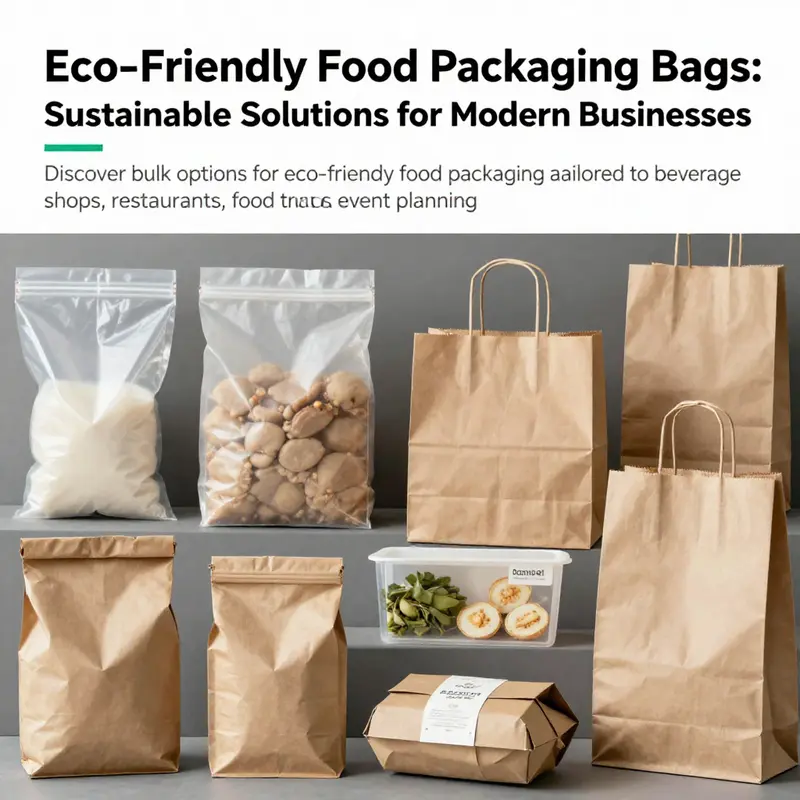
As consumer awareness of environmental issues grows, businesses in the food and beverage industry are increasingly turning to eco-friendly packaging solutions. This shift is not merely a trend but a response to the demand for sustainable practices. In this article, we will explore three essential types of eco-friendly food packaging bags available for bulk purchase: custom plastic eco-friendly sealing bags, reusable paper bags, and microwave-safe composite bags. Each chapter will delve into the unique benefits and applications of these products, providing insights for bubble tea shops, restaurants, food trucks, and catering services in their quest for sustainable packaging.
Bulk Custom Eco-Friendly Seal Bags: Practical Choices for Sustainable Food Packaging
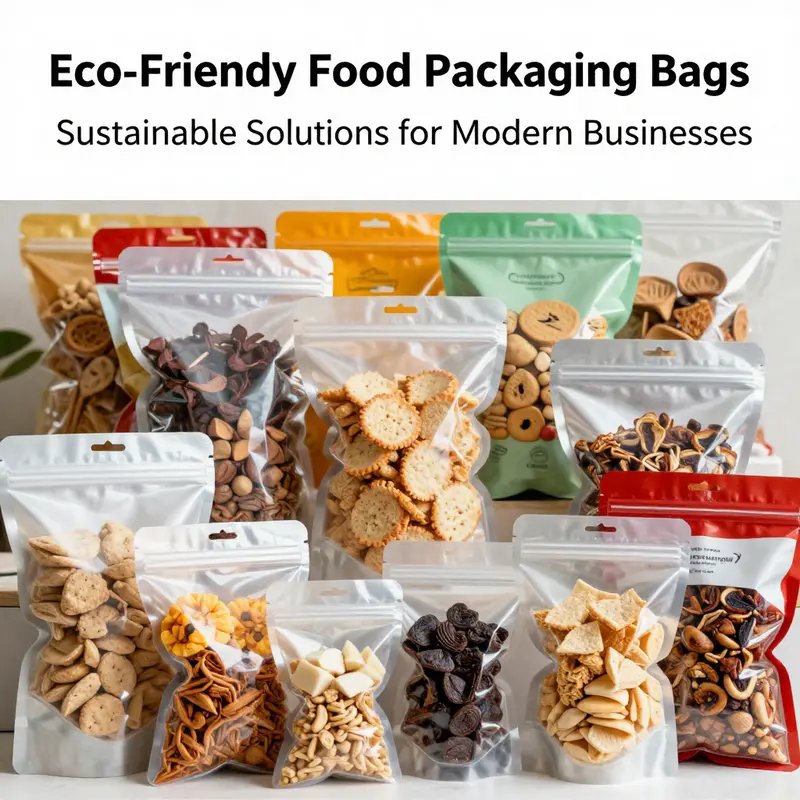
Custom eco-friendly sealing bags bought in bulk offer a practical bridge between sustainability goals and the everyday needs of food businesses. They are designed to protect product quality, extend shelf life, and carry brand messaging, while reducing reliance on conventional single-use plastics. Selecting the right material and supplier for bulk orders requires a clear view of performance, regulatory compliance, end-of-life handling, and cost structure. This chapter explains how these bags perform in real use, what materials and features matter most, and how to approach procurement to get sustainable, functional results at scale.
Food-grade performance is the primary requirement. Bags must resist moisture, oxygen, and odors to preserve freshness. Many bulk eco-friendly sealing bags achieve this by combining a thin functional polymer layer for barrier performance with an outer layer made from recycled, recyclable, or biodegradable material. The functional layer often provides heat-sealability and puncture resistance, while the outer surface accepts printing for branding and labeling. This layered approach keeps food safe without sacrificing environmental claims.
Material choices vary widely. Recyclable multilayer constructions commonly use combinations of PET and PE. These retain strong barrier and sealing properties, and they fit established recycling streams in many regions when designs avoid incompatible layers. Biodegradable or compostable films, typically made from polylactic acid (PLA) or other biopolymers, are also available. They appeal to brands seeking a lower carbon footprint. However, compostable films usually require industrial composting conditions to break down properly. That limitation must be weighed against local waste-processing realities before committing to large volumes.
Beyond base materials, many bulk eco-friendly sealing bags incorporate features that address real-world food handling. Resealable zippers allow repeated opening and closing without compromising freshness. Tear notches improve user experience when opening a sealed bag. Transparent windows enable visual inspection of contents, and zip-close options support portion control and resealing for retail bulk packs. For delicate or powdered foods, anti-static coatings and robust side seals prevent clumping and leakage during transport.
Barrier performance matters in categories like snacks, dried fruits, and specialty ingredients. Laminated constructions that include thin metalized layers or foil linings offer higher oxygen and light protection. Some hybrid designs combine kraft or paper facings for branding with internal foil or metallized films for barrier performance. For businesses shipping or storing products that require heating, microwave-safe laminates and materials designed for short-term heat exposure are available. Always verify heat ratings against the intended use, because not all eco-labeled films tolerate direct microwave heating or high-temperature sealing.
Certification and regulatory compliance form the backbone of safe food packaging. Look for materials certified for food contact by recognized authorities. Specific regulations can include national food-safety codes and regional extended producer responsibility frameworks. Certifications that reference accepted food-contact regulations provide assurance that the chosen material and inks are tested appropriately. Labels such as BPA-free and food-grade polymer designations are meaningful only when backed by test reports or declarations of conformity from the supplier.
When buying in bulk, suppliers often offer minimum order quantities and tiered pricing. Economies of scale can yield very low per-unit costs for simple heat-seal pouches. Small runs of fully customized, printed resealable bags will cost more per unit and typically require higher minimum orders. A sensible procurement strategy balances order size with expected turnover, storage capacity, and the speed at which packaging trends or recipes change. Ordering too much of a single printed design risks waste if product or format shifts occur.
A practical purchasing workflow begins with specification and sampling. Define the required barrier properties, dimensions, closure type, printing parameters, and expected environmental claim. Request physical samples to test sealing strength, barrier performance, and print quality. Samples should be tested with the actual food product or a close simulant to confirm shelf-life and compatibility. Many suppliers will provide prototype runs for a fee, enabling real-world trials before committing to bulk quantities.
Quality assurance scales with order size. For large-volume purchases, include quality checkpoints in supplier agreements. These checkpoints can cover incoming material certificates, third-party lab test results, and production-stage inspections. Random lot testing for seal integrity, oxygen transmission rate, and visual defects helps catch issues early. For repeat orders, maintaining a consistent master spec and a quality record reduces the chance of supply drift over time.
Branding and printing options affect both cost and sustainability. Full-color flexographic or rotogravure printing delivers high-impact graphics for retail presentation. Water-based or low-migration inks minimize chemical transfer risk and support food-contact safety. When sustainability is a priority, specify inks and coatings that are compatible with recycling or composting targets. Inks and adhesives that hinder recyclability can negate the environmental benefits of otherwise recyclable films.
End-of-life considerations must be part of the purchase decision. Recyclable film constructions are only as sustainable as the local recycling infrastructure allows. Multilayer laminates that cannot be separated complicate recycling efforts, even when they contain recycled or biobased content. Compostable films require access to industrial composting facilities. Before selecting a compostable option for bulk orders, confirm local composting availability and communicate appropriate disposal instructions on the packaging.
Supply chain logistics influence total cost and environmental impact. Bulk shipments reduce per-unit freight emissions, but they require adequate warehousing. Palletized packaging, grouped inner cartons, and standardized packing lists speed receiving and reduce handling damage. For international sourcing, plan lead times for production, transit, and customs processing. Buffer stock can prevent stockouts, but oversized inventory can tie up cash and risk obsolescence of printed design elements.
Procurement should also include clear sustainability claims and documentation. Suppliers should provide material declarations, certificates of analysis, and environmental claims substantiation. Chain-of-custody statements for recycled content or third-party verification of compostability strengthen marketing credibility. Transparent labeling of disposal instructions helps consumers and downstream waste managers sort packaging correctly.
Cost evaluation extends beyond unit price. Add estimated costs for freight, customs duties, warehousing, and potential take-back or recycling fees. Consider the impact of packaging choice on product weight and volume; heavier or bulkier packaging may increase shipping costs. Some businesses offset higher packaging costs by reducing product waste through better barrier performance. Frequently, a slightly higher per-unit packaging cost can produce net savings by extending shelf life and lowering return rates.
Contract terms matter for long-term relationships. Negotiate minimum order quantity flexibility, lead time guarantees, and options for color or artwork changes. Clauses for lot sampling, acceptance criteria, and remedies for nonconforming goods protect buyers. For repeated production runs, locking in color matches and plate files reduces setup costs for future orders.
Sustainability innovations keep changing the landscape. New films blend recycled polymers with bio-based additives. Improved monomaterial solutions aim to deliver high barrier properties while remaining recyclable in conventional streams. Some suppliers now offer matte or paper-like facings that look premium yet allow a monomaterial structure underneath. When assessing innovations, insist on independent test data for barrier, seal strength, and recyclability claims.
Small and medium-size brands benefit from creative packaging strategies. One approach is to use unprinted recyclable film for bulk inner packaging, and a smaller printed sleeve for brand messaging. This reduces the volume of printed material and eases recyclability. Another is to standardize on a set of core dimensions and closures for multiple SKUs to simplify inventory management and maximize purchasing leverage.
Regulatory landscapes and consumer expectations will continue to influence bulk packaging decisions. Governments are expanding extended producer responsibility programs and landfill diversion targets. Consumers increasingly expect meaningful environmental action. Meeting both regulatory and market demands requires careful material selection and clear communication about how packaging should be disposed of.
Choosing the right supplier is crucial. Evaluate potential partners on technical capability, quality systems, and sustainability transparency. Request references, audit reports, and material safety documentation. A capable supplier will provide clear lead times, sample programs, and support for shelf-life testing. They will also be open about minimum order quantities and potential price breaks for larger commitments.
Finally, packaging trials and phased rollouts reduce risk. Start with a pilot SKU or market region to verify performance and consumer response. Monitor returns, shelf-life, and consumer feedback. Use the pilot data to refine specifications before scaling to full bulk orders.
For brands and food businesses, bulk custom eco-friendly sealing bags can deliver both operational value and credible sustainability benefits. The key is choosing the right materials and partners, validating performance with real product testing, and aligning disposal claims with local infrastructure. Thoughtful procurement and clear documentation ensure that an eco-friendly choice in packaging produces measurable benefits across the supply chain.
For an example supplier listing that illustrates common options for custom stand-up pouches and resealable eco-friendly bags, see this product listing: https://www.alibaba.com/product-detail/Custom-Foil-Bag-White-Kraft-Paper-Eco-friendly_1600489333750.html?spm=a2700.100138.100001.11&src=detail&scm=1007.18223.100001.11
For related compostable and recyclable food container options, consider how a coordinated approach to packaging can simplify disposal and increase perceived value. One useful example of complementary sustainable packaging is the collection of eco-friendly takeout boxes for food packaging, useful where a multi-item meal needs compact, recyclable presentation: eco-friendly takeout boxes for food packaging.
Chapter 2 — Bulk Reusable Paper Bags: A Practical Path to Greener Fast-Food Packaging
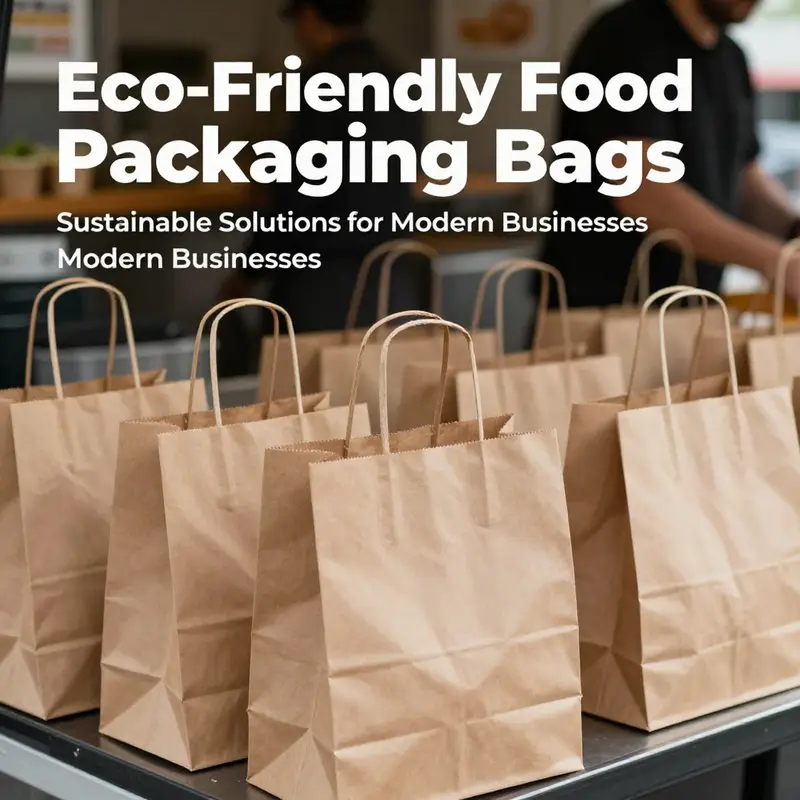
Across the fast-food landscape, a quiet but powerful shift is taking shape: bundles of reusable eco-friendly paper bags, purchased in bulk, are becoming a cornerstone for brands that want to honor both speed and sustainability. These bags sit at the intersection of practicality and principle, offering a durable, renewable alternative to single-use plastics while fitting neatly into the operational rhythms of takeout, delivery, and on-the-go dining. The core idea is simple, yet meaningful: leverage strong, renewable fiber, design for reuse, and close the loop through recycling or composting at the end of a bag’s life. In practice, this means choosing materials that balance strength with environmental responsibility, applying design features that extend usable life, and aligning procurement strategies with the realities of a bustling kitchen and a fast-moving supply chain. The result is a packaging option that not only carries meals but also carries a message—one that resonates with customers who increasingly expect brands to act as stewards of the environment while maintaining high standards of service and brand identity.
At the heart of reusable paper bags in this context is a careful material choice. The most widely embraced options are unbleached kraft paper and recycled paper, both prized for their natural tone, texture, and predictable performance under typical fast-food conditions. The ideal material specification generally lands in the 150 to 200 gsm range. This is not a random benchmark; it reflects a balance between tear resistance, load-bearing capacity, and the practical realities of everyday use. Bags in this weight range can carry hot meals, sauces, and small bundles without bending, tearing, or failing at the seam. They also maintain a respectable profile on shelves and in hand, supporting a sense of quality associated with more robust, higher-end disposable or reusable options. Printing, when used, is increasingly performed with water-based soy inks. Such inks offer vibrant branding while preserving the compostability and recyclability of the fiber itself, avoiding the chemical complications sometimes associated with solvent-based inks. In short, the material, weight, and printing approach work together to deliver a package that looks professional, behaves reliably, and aligns with a broader sustainability narrative.
The structural design of these paper bags is more sophisticated than a simple sleeve. In bulk programs, manufacturers typically supply bags with twisted or flat handles made from the same sturdy paper stock. The choice of handle type matters: twisted handles can distribute weight more evenly and feel more comfortable in long carries, while flat handles can be easier to print on and may offer flatter packing during bulk storage. Some higher-performing designs incorporate reinforced seams and even double-wall construction—concepts that borrow from the logic of corrugated carton construction. The aim is to create a bag that can withstand repeated use with multiple meal components, not just a single takeout grab. While this level of durability cannot transform every bag into a reusable tool for weeks on end, it does push the envelope beyond the limits of typical one-and-done packaging. The result is a product that feels sturdier, handles more confidently, and projects a brand promise with every lift and carry.
From the procurement side, buyers weigh a spectrum of considerations that extend beyond the raw material and the handle design. Volumes in the bulk market often translate into favorable unit pricing, with larger orders delivering economies of scale that can shorten the payback horizon of a sustainability initiative. For many suppliers, price ranges for bulk paper bags typically reflect size, material quality, and the level of customization. While exact numbers vary by region and specification, buyers commonly see competitive unit costs that make bulk bags a compelling option for brands seeking to replace plastic bags across multiple channels. The value proposition grows when bulk orders are combined with services that reduce operating friction—such as sample kits, which allow restaurants to evaluate performance in real-world conditions before committing to a full rollout. In addition, some suppliers extend confidence through guarantees related to on-time delivery or compensation for damaged goods, which lowers the risk inherent in large-scale procurement.
The practical benefits extend beyond immediate cost considerations. The lightweight nature of paper bags reduces transportation emissions relative to heavier, more complex packaging systems. When bags are designed for reuse—whether in a limited circular cycle within a brand’s own operations or through consumer-driven reuse programs—the environmental impact per meal can decline substantially over the lifetime of the packaging. This is especially true when the bags are made from renewable fibers sourced through well-managed supply chains and when the end-of-life options emphasize recycling or composting rather than disposal. The circular economy logic is not a sterile accounting exercise here; it translates into tangible outcomes—fewer plastics in landfills, lower reliance on fossil-based materials, and a packaging ecosystem that responds to consumer demand for sustainable choices without compromising speed or reliability.
Branding and consumer perception play a central role in the value proposition of bulk reusable paper bags. Printing is often kept to a restrained, tasteful level to avoid muddying the fiber’s natural appearance, but when a brand wants to amplify recognition, water-based inks on kraft stock provide a warm, fiber-forward aesthetic that resonates with eco-conscious audiences. Custom logos, color accents, and messaging can be integrated in a way that reinforces the business’s sustainability story while still preserving the bag’s structural integrity. The design language matters; it signals a commitment to responsible packaging and helps cultivate customer trust that the brand is thinking holistically about its environmental footprint. It is not just the bag that matters, but what the bag communicates about the company’s values and priorities. And in markets where customers are increasingly wary of greenwashing, the tangible experience of using a bag that holds up under heavy use—without leaking, tearing, or falling apart—becomes part of the credibility equation surrounding a brand’s environmental claims.
The real-world versatility of bulk paper bags is another key factor driving their adoption. They are well suited for a broad spectrum of fast-food contexts: casual dine-in spots that offer takeout, food trucks that must balance portability with strength, and quick-service chains that require reliable, scalable packaging for busy periods. They pair naturally with menus, signage, and cross-promotional campaigns, giving a brand a ready-made canvas for storytelling about sustainability. The lightweight profile of paper bags also contributes to lower transportation emissions—not just in delivery logistics but in the backstage movement of supplies through a kitchen, a drive-thru line, or a warehouse. When a business takes up a bulk bag program, it can align procurement, operations, marketing, and corporate social responsibility into a single, cohesive initiative.
Despite these advantages, there are important caveats that buyers should weigh. The most salient is moisture sensitivity. Paper bags are inherently breathable, which is a desirable trait for certain applications, but it also means they are more susceptible to humidity, which can compromise strength and appearance. Manufacturers mitigate this through careful material selection, internal coatings that do not impede recyclability, and careful handling guidelines for store staff. Another constraint is performance under heat and grease exposure. While the weight range of 150–200 gsm provides solid mechanical properties, certain sauces or damp heat can stress the seams or cause weakening at the fold lines if the bags are overfilled or subjected to rough handling. In response, some suppliers offer reinforced seams or limited-insulation options that can help protect contents during transit without stepping outside the paper-based design philosophy. Such features are not merely technical add-ons; they signal an evolution in packaging thinking—toward devices that meet the practical demands of fast-food logistics while staying faithful to the material’s renewable and recyclable character.
Supply chain considerations also shape the practical deployment of bulk paper bags. Sourcing fiber from responsibly managed forests, ensuring traceability, and validating supplier certifications contribute to a credible sustainability story. Buyers often request documentation that attests to fiber origin, processing practices, and third-party verification. These assurances matter because they provide a clear signal to customers and regulators that the brand is serious about environmental stewardship. In addition, the procurement process frequently includes evaluating samples for fit and performance. A well-chosen sample kit can reveal how a bag behaves with various meal configurations, how easily it can be printed on without compromising fiber integrity, and how well it stacks in storage during peak demand. The feedback loop from test runs to large-scale orders can accelerate the move from a pilot program to a fully embedded packaging standard program across multiple locations.
An important context for viewing bulk paper bags is their role alongside other eco-friendly packaging modalities. The market increasingly blends different materials to achieve composite benefits—recyclable paper for bulk takeout, compatible inner liners to manage moisture, and selective use of barrier coatings that maintain performance without sacrificing end-of-life pathways. In this sense, reusable paper bags occupy a pivotal niche: they are robust enough to carry diverse fast-food bundles, light enough to reduce transport weight, and, when designed with care, easy to recycle or compost. They also complement other high-performing options such as aluminum foil storage bags or compostable liner systems in a complete, multi-pronged sustainability strategy. The broader message is not that one material replaces all others but that a thoughtful mix of packaging solutions—each chosen for its strengths and lifecycle attributes—can collectively advance environmental goals while maintaining the operational efficiencies customers expect.
From a practical decision-making perspective, organizations contemplating a bulk introduction of reusable paper bags should consider several actionable steps. Start with a clear specification of sizes and shapes needed across stores and delivery channels. A single family of bags with a few scalable dimensions can simplify inventory management and training for staff, reducing the risk of misapplication or overstock. Then prioritize material quality within the 150–200 gsm bracket, and verify the availability of recycled content where feasible. A sustainable procurement approach may favor suppliers who can demonstrate transparent fiber sourcing, reasonable lead times, and robust quality control. It is also wise to assess potential trade-offs: stronger bags may carry more weight but could incur higher costs, while lighter options might fit a tighter budget but require stricter handling guidelines to avoid early wear. The best practice is to align the bag design with the brand’s service model—whether customers predominantly pick up in-store, through a drive-thru, or via third-party delivery—so that the packaging supports efficiency, reduces waste, and reinforces the brand message with every use.
An illustrative example of how these decisions cohere is the concept of a cohesive packaging ecosystem in which the bulk bag program sits alongside complementary packaging lines. In some instances, brands coordinate their paper bag design with related kraft-based packaging products, such as sandwich boxes or bread packaging vessels, to create a consistent, fiber-forward look across the storefront. For those curious about how kraft-based packaging solutions extend beyond bags, one relevant reference explores a range of kraft paper packaging formats, including sandwich boxes with transparent lids, which can be linked to the bag program to tell a holistic sustainability story across different touchpoints kraft paper sandwich boxes with transparent lid. This broader perspective helps buyers envision how a unified material strategy can strengthen brand identity while supporting waste reduction goals.
The broader industry context is encouraging. Market analyses increasingly describe a trajectory from single-function substitutes to multi-function, high-value products that deliver both practicality and environmental benefits. For bulk reusable paper bags, this means more resilient designs that can accommodate multiple meals, smarter printing strategies that favor branding without compromising recyclability, and improved supply chain practices that ensure reliable delivery to thousands of outlets. The emphasis is not merely on substitution but on meaningful value creation: reducing single-use plastic footprints, enabling brands to narrate a traceable sustainability story, and delivering a product experience that makes customers feel their choice matters. In this sense, the bag becomes more than a container; it is a visible expression of a company’s commitment to a circular economy, a tangible link between responsible sourcing and responsible consumption.
For readers who want a consolidated reference point on how durable, industrial-grade eco-packaging performs in real-world settings, a broader guide on types, properties, and industrial performance offers a detailed framework for evaluating packaging materials, including fiber-based options like reusable paper bags. This resource can help teams compare material properties, end-of-life options, and the trade-offs inherent in different fiber-heavy packaging systems, supporting informed decisions that balance cost, performance, and sustainability. In practice, teams should approach bulk bag procurement as a strategic collaboration—between procurement, operations, design, and sustainability teams—rather than a one-off purchasing decision. When done well, bulk reusable paper bags can become a durable, recognizable element of a brand’s environmental commitment, strengthening customer trust and reducing the environmental cost of everyday food service.
Ultimately, adopting bulk reusable paper bags for fast-food packaging is about harmonizing multiple objectives into a coherent, scalable approach. It is about choosing fibers that come from responsibly managed sources, designing bags that endure a practical range of use, and arranging procurement in a way that makes sustainability financially viable and logistically straightforward. It is also about recognizing that end-of-life pathways matter as much as the moment of use. Recycling, composting, and, where feasible, consumer education about proper disposal all contribute to realizing the full environmental benefit of a paper-based system. For brands aiming to bridge service quality with environmental stewardship, bulk reusable paper bags offer a credible, scalable, and increasingly cost-effective route. They enable faster, more responsible takeout experiences while supporting a broader shift toward packaging choices that reflect the values of today’s informed consumers. In this sense, the bag becomes not a mere container but a solvent for cultural change within the fast-food industry—an agent that helps customers recognize and participate in the shared effort to reduce waste without compromising convenience, flavor, or brand narrative.
External reference for further industry context and technical specifications can be found here: https://www.ecopackagingwholesale.com/types-properties-industrial-performance
Microwave-Safe Composite Food Bags: Scalable, Sustainable Choices for Bulk Eco-Friendly Packaging
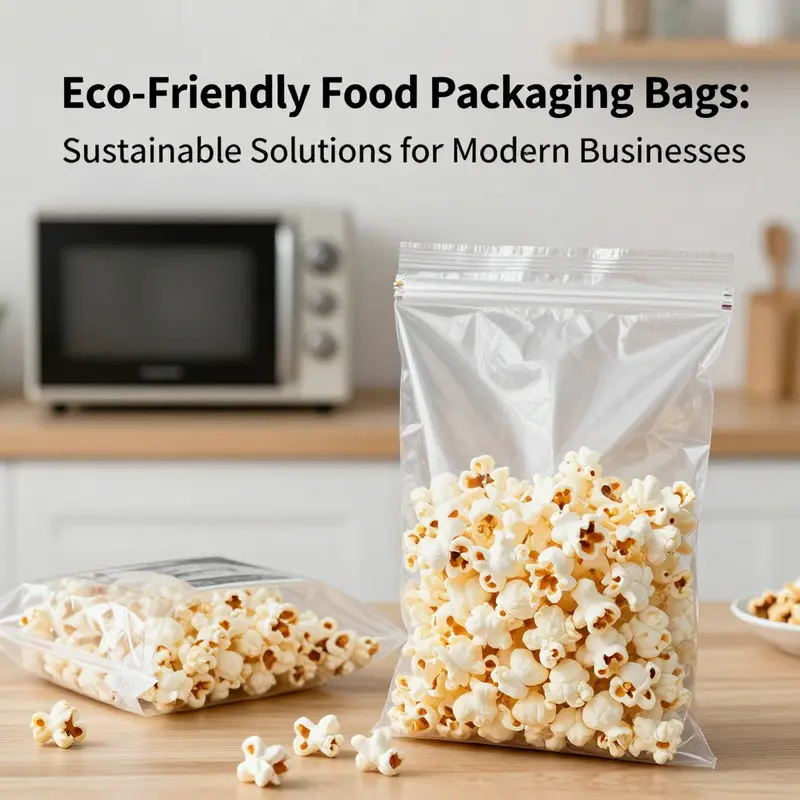
Microwave-safe composite food packaging bags have emerged as a pragmatic bridge between high performance and sustainability for buyers seeking eco friendly food packaging bags in bulk. These multi-layer structures deliver the barrier properties that food producers need—moisture resistance, grease protection, oxygen control—while offering the convenience of reheating without repackaging. For large-scale purchasers, they represent an opportunity to streamline logistics, reduce material waste in consumer use, and align product lines with tightening environmental standards.
Understanding how these composite bags perform starts with the materials and layer architecture. Common laminates combine polyester (PET), polyamide (PA, also known as nylon), and polyethylene (PE) to create a sandwich that balances strength, puncture resistance, and sealability. PET contributes printing clarity and tensile strength. PA adds puncture and tear resistance at higher temperatures. PE provides the heat-sealable surface that maintains closed seams during and after microwaving. When engineered correctly, the laminate tolerates microwave temperatures encountered during reheating, and the composite acts as a reliable barrier that preserves flavor and texture during storage.
Design features for microwaving are both simple and essential. Bags intended for direct heating often include venting features, either pre-formed steam valves or easy-tear vents, to prevent pressure buildup. Resealable zippers and tamper-evident seals improve shelf life and consumer confidence. Grease-resistant inner surfaces guard against soak-through from oily foods. Some solutions incorporate mat or matte finishes to reduce glare and allow clear branding without sacrificing recyclability messaging.
Bulk buyers should weigh three technical considerations when assessing microwave-safe composite bags: thermal stability, layer compatibility, and the presence of metalized components. Thermal stability determines whether the bag will distort, delaminate, or release residues under microwave heat. Layer compatibility affects recyclability and sealing performance. Metalized layers offer excellent oxygen barriers but are not microwave-friendly and complicate end-of-life recycling. Many modern suppliers therefore design non-metalized, microwave-safe laminates that maintain high barrier performance using polymer-based barrier layers.
The end-use variety for these bags is broad. Frozen prepared meals benefit from tight barriers that prevent freezer burn. Snacks and ready-to-eat items need grease resistance and clarity for branding. Meal prep services value resealability and microwave instructions printed right on the pack. Grocery delivery platforms appreciate lightweight, puncture-resistant options that reduce shipping cost while preserving freshness. Each use case calls for slightly different thicknesses, seal widths, and printing options, but the underlying laminate layout remains similar.
Sustainability claims and certification need careful vetting. Certifications such as CE and RoHS indicate compliance with safety and restricted substance standards, while forest stewardship labels and third-party eco-certifications can verify responsible sourcing for paper-based components. Buyers should request detailed material declarations (e.g., SDS and composition sheets), plus evidence of compliance with local food contact regulations. Claims like “compostable” or “biodegradable” require proof of certification under recognized standards and clarity on end-of-life conditions, since many compostable polymers require industrial composting environments.
Recyclability is a complex topic for composite laminates. Multi-material structures often resist conventional mechanical recycling because layers are difficult to separate. For buyers, the most responsible route is to seek mono-material or compatible multilayer designs that are recyclable in existing streams. Advances in mono-polymer laminates—layers of PE with different densities or copolymers—allow for microwave-safe performance while remaining recyclable through polyethylene streams. Where mono-material options are not feasible, procurement teams should demand transparency on recycling pathways and consider supplier take-back or chemical recycling partnerships as part of a circular strategy.
Cost and sourcing at scale shape procurement decisions. Bulk production lines have matured, allowing suppliers to quote competitive unit prices at high volumes. Typical pricing for high-volume microwave-safe composite bags can fall into ranges that reward scale. One commonly referenced production footprint indicates minimum order quantities in the millions, with unit costs reflecting thicker laminates, printing complexity, and additional features like zippers or anti-fog coatings. For buyers, negotiating volume tiers, print run sizes, and lead times can yield significant savings.
China remains a major manufacturing base for composite food packaging, with integrated supply chains clustered in manufacturing provinces. Those regions combine raw material suppliers, lamination and printing facilities, and automated sealing lines that produce high-throughput batches. For bulk buyers, that industrial concentration translates to rapid production turnaround, flexible customization, and competitive freight options through major ports. However, it also places an emphasis on stringent quality assurance, thorough sampling, and pre-shipment inspections to ensure specifications are met consistently.
Quality control and testing should be built into every bulk purchase. Ask suppliers for tensile strength data, seal integrity tests, oxygen transmission rates (OTR), and water vapor transmission rates (WVTR). Microwave performance tests should demonstrate that seals hold after repeated heating cycles, that laminates do not delaminate or soften, and that no harmful residues migrate into food at intended temperatures. Third-party labs can verify results and provide documentation suitable for regulatory audits.
Printing and branding at scale are feasible, but they add cost and complexity. Full-color printing up to ten inks is common on PET outer layers, giving vivid branding and clear consumer instructions. Buyers should balance print complexity against unit economics. Digital proofing, color guides, and pre-press samples avoid expensive reworks in large runs. Eco-friendly print options, such as water-based inks or soy-based inks where compatible, reduce solvent emissions and align with sustainable packaging goals.
Logistics and packaging for the packaging must not be overlooked. Bulk volumes require protective inner and outer packaging to prevent damage during transit. Flat-packed bags save space, but careful palletization ensures seals are not compromised. Shipping routes, transit times, and storage conditions can affect material behavior; for example, prolonged exposure to high humidity may influence bag performance. Buyers should coordinate lead times with production schedules and consider safety stock to avoid operational disruption.
Regulatory labeling and consumer instructions are integral to microwave-safe packs. Clear, concise reheating instructions prevent misuse. Symbols indicating “microwave-safe” should be backed by testing data. Waste disposal guidance—whether recyclable, compostable, or to be disposed of via local waste systems—should be printed plainly. These labels help consumers make informed end-of-life choices, which in turn supports brand sustainability claims.
Environmental trade-offs require frank assessment. Composite laminates deliver superior food protection that can reduce food waste—an important sustainability metric—but they complicate recycling. Buyers must weigh the reduced food loss against material end-of-life impacts. For some product lines, investing in higher-performing composite bags that extend shelf life will yield a better environmental outcome when lifecycle assessments show a net reduction in food waste and associated emissions.
Emerging alternatives deserve attention. Paper-based microwaveable packs with grease-resistant coatings are advancing. Some designs integrate compostable barrier coatings suitable for industrial composting. Mono-material polyethylene options, noted earlier, can be microwave-safe if engineered to manage heat while maintaining barrier performance. Each alternative requires validation against the brand’s use cases and supply chain realities.
Selecting suppliers for large orders involves a mixture of technical due diligence and supply-chain risk management. Evaluate manufacturing capacity and confirm MOQs and lead times. Assess the supplier’s quality systems, including whether they perform inline checks, maintain ISO certifications, and allow independent audits. Ask for reference customers in similar industries. Confirm export experience and knowledge of customs requirements, particularly for food-contact materials.
Cost breakdown transparency helps buyers compare offers. Unit price often reflects raw material costs, laminate complexity, printing, and finishing. Setup fees for bespoke dies or printing plates can be amortized across large runs. Also account for freight, duties, and inspection costs. Consider sample orders with different configurations to test cost versus performance. Many suppliers are willing to run pilot batches at reduced scale to validate performance before committing to full volume.
A practical checklist for bulk procurement of microwave-safe composite bags can streamline decisions:
- Define the use case: frozen, chilled, or shelf-stable; oily or dry; reheating conditions.
- Require material declarations and compliance documentation for food contact.
- Request lab test results for OTR, WVTR, seal strength, and microwave performance.
- Specify printing requirements and request pre-production proofs.
- Review recyclability or compostability claims and certify end-of-life pathways.
- Confirm MOQs, lead times, and production capacity.
- Arrange third-party inspection and pilot runs.
- Plan logistics, packaging, and storage conditions for large shipments.
- Build quality clauses into contracts and set acceptance criteria.
Operational buyers should also consider partnerships that extend beyond single purchases. Working with suppliers on design-for-recyclability, implementing take-back trials, or co-investing in mono-material innovations can unlock long-term gains. Collaborative product development reduces time-to-market for new SKUs and spreads tooling costs across forecasted volumes.
Finally, transparent communication to end consumers amplifies value. When packaging includes clear reheating instructions, disposal guidance, and a short explanation of the material choices, consumers feel informed and more likely to follow correct disposal practices. This behavioral nudge improves real-world recycling outcomes and reinforces brand trust.
Purchasing microwave-safe composite food packaging bags in bulk is a strategic choice that balances performance, cost, and environmental responsibility. By vetting materials, demanding rigorous testing, and aligning supply-chain practices with circularity goals, bulk buyers can secure packaging that protects food, enhances consumer convenience, and advances sustainability targets. Thoughtful procurement—paired with clear labeling and responsible end-of-life strategies—ensures these composite solutions deliver measurable benefits across the product lifecycle.
For brands looking at microwave-ready alternatives in other forms, consider also exploring sturdy, microwave-capable takeout containers that combine paper and specialized coatings. One relevant option for microwave-capable takeout packaging can be found here: eco-friendly takeout boxes for microwave use.
External reference for technical specifications and bulk sourcing details is available from a widely referenced supplier listing: https://www.alibaba.com/product-detail/Eco-Friendly-Microwave-Food-Packaging-Bags-for_1652398407525.html
Final thoughts
Embracing eco-friendly food packaging solutions has never been more crucial for businesses in the food and beverage sector. By choosing custom plastic sealing bags, reusable paper bags, and microwave-safe composite bags, you can significantly reduce your environmental footprint while meeting customer demands for sustainable practices. Investing in these innovative packaging options not only enhances your brand image but also aligns your business with the growing movement towards sustainability.