
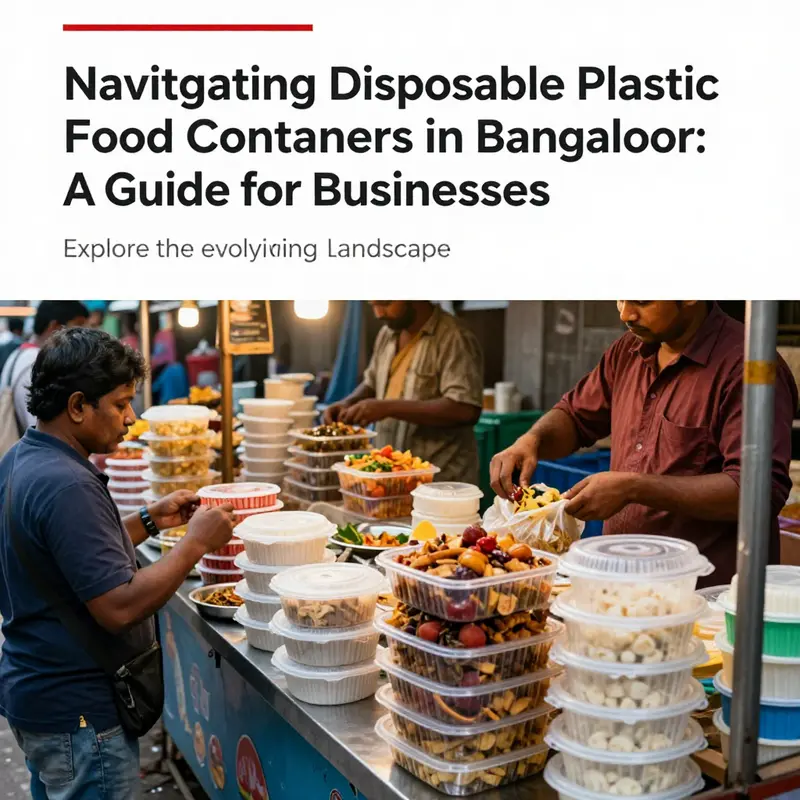
As the bustling culinary scene in Bangalore thrives, the usage of disposable plastic food containers is ever-present, especially among bubble tea shops, restaurants, food trucks, and catering services. However, as awareness of environmental concerns grows, the conversation around these materials becomes increasingly crucial. This article offers a comprehensive look into the applications and market dynamics of disposable plastic containers in Bangalore, examining the materials used and their environmental impact, navigating local regulations, and exploring sustainable alternatives that align with consumer demands. Each chapter delves deeper into the nuances that food businesses must navigate to ensure compliant, safe, and eco-conscious practices.
班加罗尔的一次性塑料食品容器:便利、监管与向可持续替代的转型
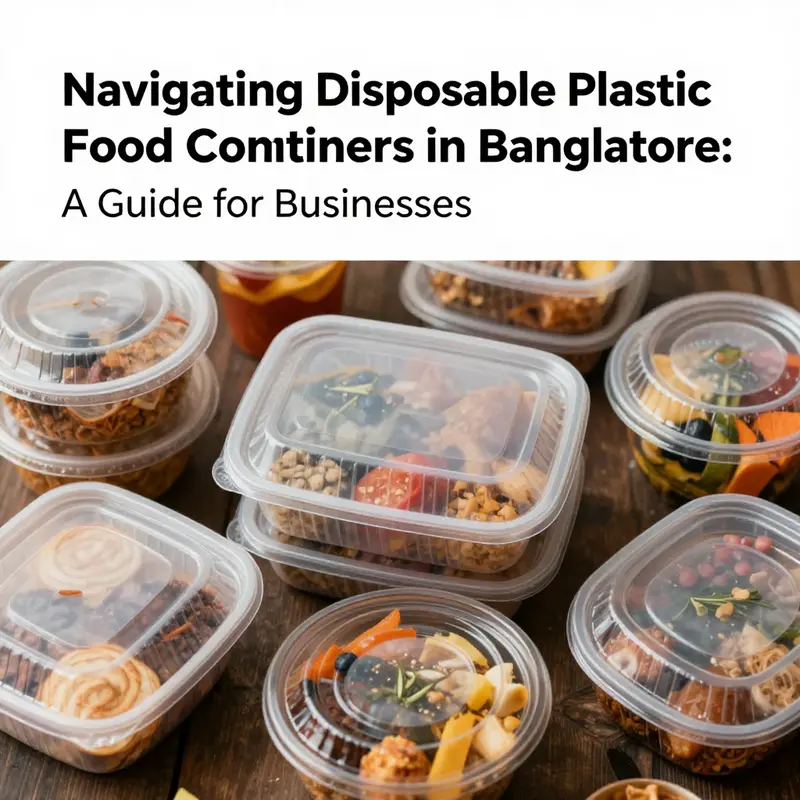
Across Bengaluru’s fast-moving food economy, disposable plastic food containers form an unseen but essential backbone for restaurants, street vendors, delivery kitchens, and small retailers. They carry the promise of convenience, the certainty of hygiene during transit, and the ability to scale service in a city whose appetite for quick meals and snack-ready options keeps growing. In many parts of the city, polypropylene and polystyrene containers are the default choice for hot meals, cold beverages, desserts, and packaged set meals. Their lightness reduces transportation costs, their leak-resistance protects customers from spills, and their durability makes them attractive to businesses that must balance speed with safety. Yet every meal carried in such packaging also travels through a complex chain of social and environmental considerations that Bengaluru’s evolving market cannot ignore. The chapter that follows threads these threads together, tracing how a city famous for its innovation in technology and cosmopolitan tastes negotiates the tension between immediate practicality and long-term responsibility when it comes to packaging.
The practical appeal of plastic food containers in Bengaluru is underscored by the city’s dense network of eateries—from cloud kitchens delivering to a wide radius to corner stalls where the night-time economy hums. Containers that can withstand both heat and moisture without deforming are highly valued. The ability to seal in aroma and protect food during hours of delivery or takeout makes PP- or PS-based packaging a rational choice for many operators. For hot meals, soups, curries, and fried foods, leak resistance and heat retention are critical. For beverages and desserts, light-weight options reduce the burden of logistics for delivery partners and encourage a smoother customer experience. In a city where traffic can complicate punctuality, packaging has to play a subtle role in ensuring food arrives ready to enjoy, not left cooling on a doorstep. In this context, the materials chosen are more than a matter of cost; they become a signal of reliability to customers and a determinant of operational flow for multiple actors in the supply chain.
Yet Bengaluru’s packaging reality cannot be told in terms of convenience alone. It sits within a developing regulatory landscape that has begun to shift the economics and feasibility of disposable plastics. India’s broader policy push toward reducing plastic waste has introduced restrictions on certain single-use plastics, including some packaging formats. While the exact scope of bans and restrictions varies by state and by product category, the overarching aim is clear: encourage safer, more sustainable packaging solutions while maintaining food safety standards. For Bengaluru’s busy hospitality sector, this translates into a demanding set of criteria. Containers must meet food-contact safety standards, minimize the risk of leaching, and support safe handling and disposal practices. They must also align with labeling and regulatory requirements so that operators can confidently demonstrate compliance to regulators and customers alike. In this environment, choosing the right packaging becomes a decision about risk management as much as about cost or convenience.
A central dimension of the Bengaluru story is the balance between safety, sustainability, and cost. Food safety authorities in India emphasize that packaging materials used in direct contact with food should not release harmful substances under normal conditions of use. This means that material suppliers and manufacturers are expected to provide evidence of food-grade quality, stability under anticipated temperatures, and compatibility with prepared foods. For many operators, this verification becomes a practical prerequisite to keep menus expanding and delivery channels thriving. At the same time, the city’s environmental narratives push for biodegradability and recyclability as routes to reduce litter, curb pollution, and lower long-term ecological footprints. The tension is not simply about which material feels better or costs less today; it is about how a packaging choice behaves across its whole life cycle—from production to disposal—and how well that life cycle integrates with Bengaluru’s waste management realities.
In Bengaluru, the move toward sustainable alternatives has gained considerable momentum, even as the city remains a work in progress in terms of recycling infrastructure and consumer awareness. Biodegradable and compostable options—derived from bagasse (the fibrous leftovers from sugar cane processing), paper, bamboo, and other natural fibers—are increasingly offered by manufacturers who see a growing demand from delivery platforms, restaurant groups, and small-scale vendors seeking to demonstrate environmental stewardship. The adoption of such alternatives is not a simple substitute; it involves rethinking nesting, stackability, and branding for takeout packaging, as well as adjusting pricing structures to remain viable in a highly competitive market. Moreover, some of these substitutes require specific disposal conditions to achieve the intended environmental benefits. In places where waste segregation and composting infrastructure are limited, the practical advantages of “green” packaging may be tempered by the realities of how waste is managed after collection.
The market dynamics in Bengaluru also reflect a broader pattern in Indian urban centers: a diverse ecosystem of local manufacturers, nearby raw-material suppliers, and a growing constellation of collectors and recyclers who operate in the informal economy. For many operators, the decision to switch to greener packaging is driven not only by policy but also by customer expectations and brand reputation. Local restaurants and cloud kitchens increasingly highlight their commitment to responsible packaging as part of a holistic customer experience. Yet the transition can be uneven. Some riders of the delivery economy still prioritize ultra-low costs and rapid turnover, while micro-entrepreneurs in markets and food lanes may face liquidity constraints that complicate the shift to more expensive biodegradable options. In this environment, the most effective packaging solutions are those that offer compatibility with existing packing workflows, reduce breakage and spill risk during transit, and present a credible pathway toward sustainability without compromising safety or rising costs beyond what the business can sustain.
Industry observers in Bengaluru note that the supply chain for packaging is also changing in interesting ways. A handful of local suppliers are actively experimenting with recyclable and compostable formats that meet food-safety standards and are compatible with fast-paced service models. They recognize that a one-size-fits-all approach is unlikely to capture the city’s nuanced needs, given the variety of food formats—from sticky street foods to delicate desserts and heavy curries. The best-performing packaging strategies are becoming those that minimize material use without sacrificing performance, optimize stacking and cooling, and enable straightforward disposal with clear consumer instructions. In some cases, operators are adopting multiple packaging streams—one for hot, greasy foods where grease resistance is critical, another for cold beverages and desserts where clarity and odor neutrality matter, and a third for sushi-like or ready-to-eat meals that require secure lids and easy branding. It is this layering of requirements that makes Bengaluru a microcosm of the broader global packaging transition: a city where practical constraints, cultural preferences, and policy signals converge to shape a constantly evolving market.
For operators who still rely on conventional disposable plastics, the path forward is not to resist change but to engage with it strategically. This means selecting materials that comply with food safety standards, evaluating the environmental claims of suppliers, and assessing the end-of-life options available within Bengaluru’s waste ecosystem. It also means recognizing the value of design considerations that can reduce waste—for example, containers that are easier to separate for recycling, or multi-compartment formats that reduce the total number of units needed per order. A sense of responsibility toward customers and the local environment can become a competitive differentiator, especially as urban consumers increasingly connect dining choices with ecological impact. In practice, this might involve communicating a clear policy on packaging, offering customers the option to reuse containers where feasible, or partnering with local waste-management initiatives to improve segregation at source and post-collection processing.
A noteworthy development in this space is the emergence of options aimed at preserving functionality while improving sustainability. Some local suppliers are turning to more sustainable options, including eco-friendly disposable 3-compartment packaging boxes for fast food. These multi-compartment designs address the needs of diverse meal formats—combining elements like mains, sides, and sauces in a single container, while potentially reducing the total number of containers per order. The emphasis on multi-use potential and better portion control speaks to a broader design philosophy: packaging that can be repurposed, recycled, or composted with minimal operational friction. The impact of such options on the Bengaluru market will hinge on several factors, including the availability of compatible waste streams, the clarity of consumer recycling guidance, and the economics of sourcing renewable or recycled-content materials. If these solutions can be scaled while preserving safety and affordability, they offer a practical path toward a more sustainable throughput for the city’s bustling food economy.
The Bengaluru case also highlights a more fundamental question about how cities balance efficiency with stewardship. In a city that values rapid service and vibrant street food culture, packaging decisions can accelerate or hinder the momentum of small businesses. Regulators are mindful that any policy framework must preserve food safety while incentivizing innovations that reduce waste. The most lasting changes are likely to come from a mix of policy nudges, market-driven product development, and consumer education. For operators, this means staying informed about regulatory updates, participating in supplier due-diligence processes, and designing packaging strategies that can adapt to shifting rules without undermining the customer experience. The literature on urban packaging transitions suggests that when businesses see tangible benefits—whether cost savings from reduced waste, improved shelf life, or enhanced brand perception—adoption becomes more widespread. Bengaluru, with its dynamic entrepreneurial energy, has the potential to demonstrate a model in which safety, affordability, and sustainability coexist.
The current story of disposable plastic food containers in Bengaluru is not a simple narrative of bans or bans avoided. It is a narrative of adaptation, where real-world constraints prompt innovation and collaboration among food businesses, packaging suppliers, and waste-management actors. It is also a reminder that policy and practice must move in tandem, ensuring that food safety remains uncompromised even as packaging evolves toward more sustainable forms. As Bengaluru continues to grow—its neighborhoods expanding, its delivery networks intensifying, and its consumers becoming more environmentally attuned—the packaging choices made today will reverberate in the city’s urban ecology for years to come. In this sense, the chapter of Bengaluru’s disposable packaging is less about choosing one material over another and more about forging a reliable, safe, and affordable path that aligns with the city’s aspirations for a cleaner, more responsible future.
Bengaluru’s Disposable Food Containers: Materials, Impacts, and Path Toward Sustainability
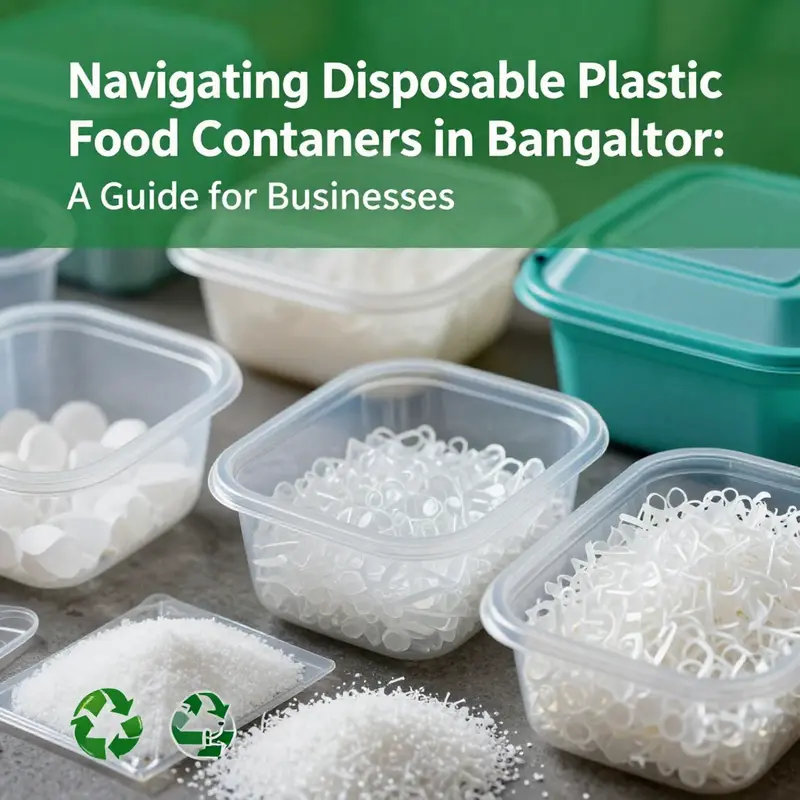
Bengaluru’s food scene relies on takeout and delivery, where disposable containers play a central role. This chapter surveys the main packaging materials, their environmental footprints, and the evolving policies shaping their use. It starts with PP and PS as common workhorses – lightweight, heat resistant, and affordable – then discusses the role of PE films and liners. It also notes emerging alternatives like bagasse and bamboo-based options that aim for better end-of-life outcomes. The environmental footprint includes resource use, waste management challenges, and the persistence of plastics in streets and waterways, compounded by contamination and limited formal recycling in the city. Food safety and regulatory compliance remain crucial, ensuring that packaging protects quality while meeting standards. Finally, the chapter considers policy signals and market responses, including the push toward compostable and recyclable solutions, the need for better pre-collection and sorting, and the economics that influence whether operators switch materials. The goal is to outline a transitional path where practical packaging choices balance performance, safety, and environmental considerations in Bengaluru’s fast-moving food ecosystem.
Bangalore’s Policy Turnaround: How the 2022 Single‑Use Plastic Ban Reshapes Disposable Food Containers
Regulatory landscape and practical implications for disposable food containers in Bangalore
Bangalore’s market for disposable food containers has been transformed by a national policy shift. The Plastic Waste Management (Amendment) Rules, 2022 came into effect on July 1, 2022. The rules prohibit manufacturing, import, sale and use of a wide range of single‑use plastic items. This includes plastic plates, cups, bowls, food packaging film, stirrers, straws and plastic containers used for ready‑to‑eat food and beverages. The ban applies across states, including Karnataka, and so directly affects the city’s restaurants, cloud kitchens and food delivery services.
Beyond the blanket ban, regulators introduced an extended producer responsibility (EPR). EPR makes manufacturers and brand owners accountable for the entire lifecycle of their packaging. They must ensure collection, recovery and processing of post‑consumer plastic. The intent is to reduce plastic leakages into the environment while encouraging safer material choices. For businesses that supply or use disposable food containers in Bangalore, the combination of the ban and EPR imposes clear legal obligations and commercial consequences.
Enforcement in Bangalore follows the national framework but adapts to local needs. Municipal authorities often issue clarifications and timelines. Inspectors monitor compliance in markets, restaurants and warehouses. Noncompliance can trigger penalties, confiscation and legal notices. For many small and medium food businesses, the immediate challenge lies in verifying that the containers they procure are legally permitted. Selling or offering banned plastic items is not an option. That constraint has altered procurement practices and product portfolios overnight.
Food safety and compliance remain central. Containers that replace banned plastics must meet food contact safety standards. Businesses continue to rely on approvals from food authorities to ensure materials do not transfer harmful substances into food. In India, compliance with national food safety norms is essential. For operators in Bangalore, due diligence means checking documentation, material certificates and supplier declarations. Choosing alternatives that combine safety, durability and compliance reduces regulatory risk.
Practical alternatives have grown in visibility. Paper, cardboard, bagasse (sugarcane pulp) and bamboo‑based containers are now common. These options can be compostable or recyclable if processed correctly. They often offer the same benefits as plastic—lightweight, spill resistance and stackability—without violating the single‑use plastic ban. Restaurants and caterers have also adopted reusable and deposit systems for dine‑in and corporate catering. Where single‑use remains necessary, compostable materials help meet both legal and consumer expectations. For businesses seeking ready solutions, consider exploring eco‑friendly takeout boxes for food packaging as part of a compliant offering.
Supply chain implications are immediate. Suppliers of banned plastics either pivoted to producing compliant alternatives or exited the market. This reorientation created short‑term supply gaps and price fluctuations. Buyers must now vet new vendors and request certifications. Contracts and ordering cycles have shortened, as kitchens test different formats for stacking, heating and transport. The logistics sector, particularly last‑mile delivery services, adjusted packaging guidelines to ensure meals remain intact without traditional plastic liners and containers.
Operational changes on the ground are practical and often granular. Kitchen staff need training on how to pack dishes in new containers to avoid leaks and soggy textures. Menu engineering can reduce reliance on separate sauce cups. Portioning and layering techniques change to suit paper or bagasse trays. Marketing departments update labels and disposable utensil offers to reflect compliance. Such changes may seem small, but they reduce the risk of fines and improve long‑term sustainability profiles.
Cost remains a critical consideration for many businesses. Initially, alternative materials commanded a price premium. Over time, increased demand and local manufacturing scale have narrowed the gap. The EPR framework also shifts some costs upstream, pushing producers to internalize waste management expenses. For food providers, a thorough cost analysis should include regulatory compliance, EPR pass‑throughs, waste handling and potential penalties for violation. In many cases, the reputational benefits of sustainable packaging offset higher unit costs through customer retention and positive brand perception.
The waste management ecosystem in Bangalore is adjusting. Municipal bodies and private recyclers expand collection networks to handle new waste streams. Composting facilities that accept food‑soiled paper and bagasse are increasingly important. Proper segregation at source remains the single most effective measure to ensure alternatives are processed correctly. For food businesses, providing clear disposal instructions on packaging helps consumers make the right choices. Collaboration with local waste aggregators can secure better end‑of‑life outcomes for packaging.
Compliance also requires clear documentation. Suppliers should provide certificates that prove materials are not banned and that they meet food contact norms. Businesses should retain invoices, supplier declarations and lab reports to demonstrate due diligence during inspections. Contracts with packaging vendors can include clauses addressing regulatory changes, product recalls and substitute supply. Records help mitigate legal exposure and demonstrate proactive compliance to authorities.
Enforcement is not only punitive. Local authorities and trade associations often provide guidance to help small businesses comply. Workshops and information campaigns explain the banned items, permissible materials and waste handling practices. Taking advantage of these resources reduces confusion and helps businesses transition more smoothly. For entrepreneurs launching new food ventures in Bangalore, early compliance planning avoids costly retrofits and reputational setbacks.
Consumer behavior is another lever. Many consumers now prefer sustainable packaging and may reward compliant businesses with loyalty. Clear communication about materials, disposal instructions and environmental impact builds trust. Combining compliant packaging with small operational adjustments—like offering reusable containers for recurring customers—can create long‑term savings and strengthen brand loyalty.
Finally, strategic planning is essential. Operators should audit packaging use, map suppliers, and evaluate alternatives for durability, cost and compliance. Pilot trials with new materials can reveal practical issues before full rollout. Engaging suppliers with transparent supply chains and verified certifications is critical. Companies should also monitor policy updates since regulations and enforcement details may evolve. Staying informed helps businesses anticipate changes and adapt early.
For authoritative context on the national ban and its start date, refer to reporting on the legislation and implementation schedule: India bans single-use plastics from July 1, 2022 – The Hindu (https://www.thehindu.com/sci-tech/energy-and-environment/india-bans-single-use-plastics-from-july-1-2022/article65432108.ece).
By integrating legal compliance with operational planning, Bangalore’s food sector can navigate the transition. The ban is both a regulatory constraint and an opportunity to redesign packaging systems around safer materials, efficient logistics and improved consumer trust.
Bengaluru’s Transition: Practical Paths from Disposable Plastic Food Containers to Sustainable Alternatives
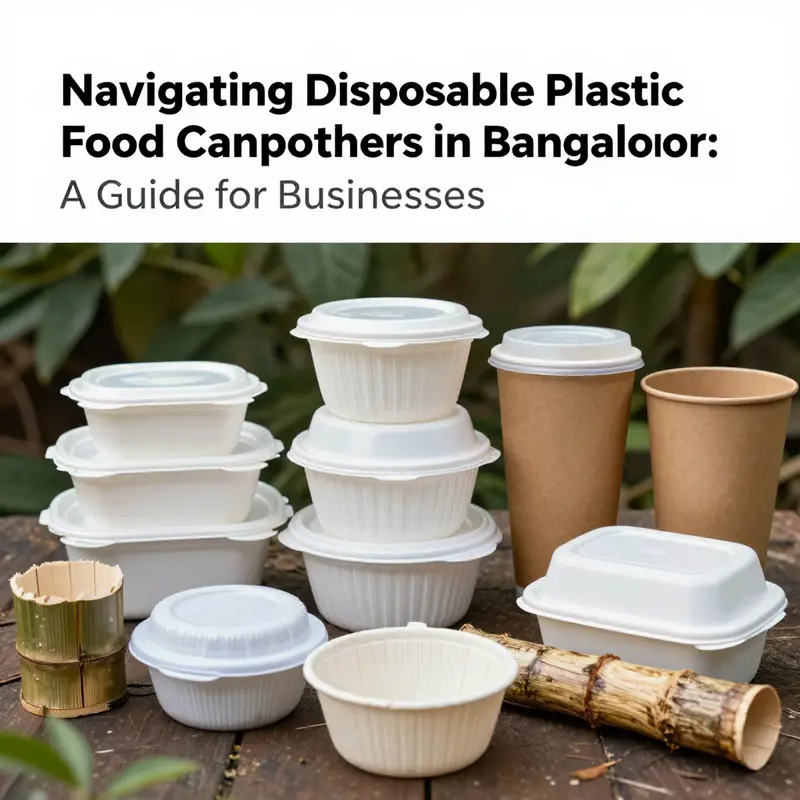
Bengaluru’s transition is not abstract policy. It plays out daily in kitchens, delivery hubs, street stalls, and corporate cafeterias. The city’s rapid growth has made convenience packaging ubiquitous. Yet rising regulation and shifting consumer values are forcing a rethink. This chapter traces practical alternatives to disposable plastic food containers, and how restaurants, caterers, and food-delivery services in Bengaluru can adopt them without sacrificing hygiene, cost control, or convenience.
Local decisions are shaped by national rules, supply options, and customer expectations. India’s plastic restrictions create clear legal boundaries. Businesses must either phase out banned items or find compliant replacements. That push favors materials that are compostable, recyclable, or reusable. Still, any viable alternative must meet three basic needs: food safety, thermal and grease resistance, and logistical practicality for delivery.
Among available options, molded bagasse containers have emerged as a leading choice. Bagasse is the fibrous residue left after sugarcane extraction. It is turned into strong, molded trays and boxes through heat and pressure. These containers resist oil and water and tolerate heat well. They also compost in industrial or well-managed municipal systems. For many fast‑casual outlets, bagasse mirrors the rigidity of foam or heavier plastics, while reducing landfill burden.
Bamboo and other plant-fiber products offer another practical route. Bamboo plates, bowls, and clamshells are light and sturdy. Bamboo grows fast and requires little fertilizer. When processed into plates and cutlery, it produces items that feel solid and carry hot meals reliably. For sit‑down establishments that offer takeout too, bamboo helps preserve brand quality while signaling environmental responsibility.
Paper pulp and kraft paperboard remain widely used and versatile. Treated properly, these materials handle wet and oily foods. Their advantage lies in cost and familiarity: many suppliers already stock paperboard boxes and cups. When choosing paper products, confirm the coatings. Wax or plastic coatings defeat compostability. Seek water‑based or PLA coatings that are biodegradable or recyclable. For bakery and deli use, sturdy paper boxes with transparent windows are effective and visually appealing.
There is also early-stage innovation worth noting. Edible films made from seaweed or starch are being trialed globally. They could one day replace small sauce pods or snack wrappers. For now, these remain niche and higher cost. They are promising for brands seeking novelty and clear environmental messaging.
Cost is the unavoidable challenge. Biodegradable or plant-based containers usually carry a price premium. Small operators feel the pinch more acutely. Practical approaches to manage cost include gradual implementation, product standardization, and strategic sourcing. Standardizing on one or two container sizes reduces inventory complexity and increases buying power. Running small pilots helps calibrate waste, breakage, and customer acceptance before a full rollout.
Supply chain reliability is equally important. Choose suppliers that can deliver consistent quality and meet food-safety certifications. Insist on documentation when required. Food-safety standards like FSSAI compliance must be verified. Look for third-party testing on leachables and heat stability. Local manufacturers in Bengaluru are scaling production, which improves lead times and reduces transport emissions.
Operational fit matters. Not all compostable containers tolerate prolonged storage in hot kitchens. Some items soften under steam. Test containers under real working conditions. Confirm they seal securely for delivery. Train staff on packing techniques that prevent leaks. For multi-item meals, compartmentalized boxes keep flavors separate. Consider tray liners or grease-resistant inserts when necessary.
Communication with customers eases transitions. Explain the change and its benefits clearly on menus and receipts. Use QR codes that link to short pages about container sourcing and disposal guidance. If customers do not have access to composting, explain how to separate components for recycling. Simple icons and brief instructions reduce contamination of recycling streams.
Reuse systems are another route. Encouraging customers to return containers for reuse reduces overall packaging needs. Implementing a deposit or loyalty-credit system can make returns practical. For dense urban neighborhoods and corporate parks, a reuse network can work well. It demands logistics for pickup, washing, and quality control. Partnering with local laundries or shared‑kitchen operators can lower the operational load.
Integration with municipal waste systems matters. Not all biodegradable items break down in landfill conditions. Work with local waste managers to map composting and collection pathways. For true compostability, require industrial composting facilities or community compost programs. If that infrastructure is absent, the environmental benefit may be limited.
Design choices influence both perception and performance. Branding printed on kraft boxes, coupled with clear compostability icons, reinforces the message. Choose colors and textures that feel premium to offset higher packaging costs. Practical design touches like snug lids and steam vents can improve delivery outcomes without adding material.
Collaboration reduces risk and cost. Restaurants can form buying consortia to achieve bulk discounts. Local suppliers and manufacturers benefit from stable demand forecasts. Working with NGOs and industry groups can also help with pilot programs and public education. These partnerships often unlock training or grants that cover transition costs.
Finally, measure outcomes. Track packaging spend, customer feedback, return rates, and waste volumes. Use these metrics to refine choices. Over time, economies of scale and improved waste infrastructure will lower costs. Early adopters gain market distinction and often recover costs through higher perceived value.
For businesses ready to source practical, compostable options now, everyday items like molded pulp takeout boxes and kraft lunch boxes remain a strong fit. For an easy starting point, consider switching hot meal packaging to sturdy, grease-resistant paper trays and cups. You can explore commercially available options such as an online range of eco-friendly takeout boxes for food packaging that balance functionality with compostability.
The path away from single‑use plastic is incremental. It blends regulation, supplier capacity, operational change, and customer education. Bengaluru’s restaurants, caterers, and delivery services can lead by choosing materials that meet daily needs. With careful testing, supplier vetting, and clear communication, they can move to alternatives that protect food and the city’s environment at the same time.
External resource: for a broader look at policy drivers and replacement options, see https://www.greenbiz.com/article/india-plastic-ban-what-replacement-options.
从便利到合规:班加罗尔一次性塑料食品容器的安全边界与绿色转型
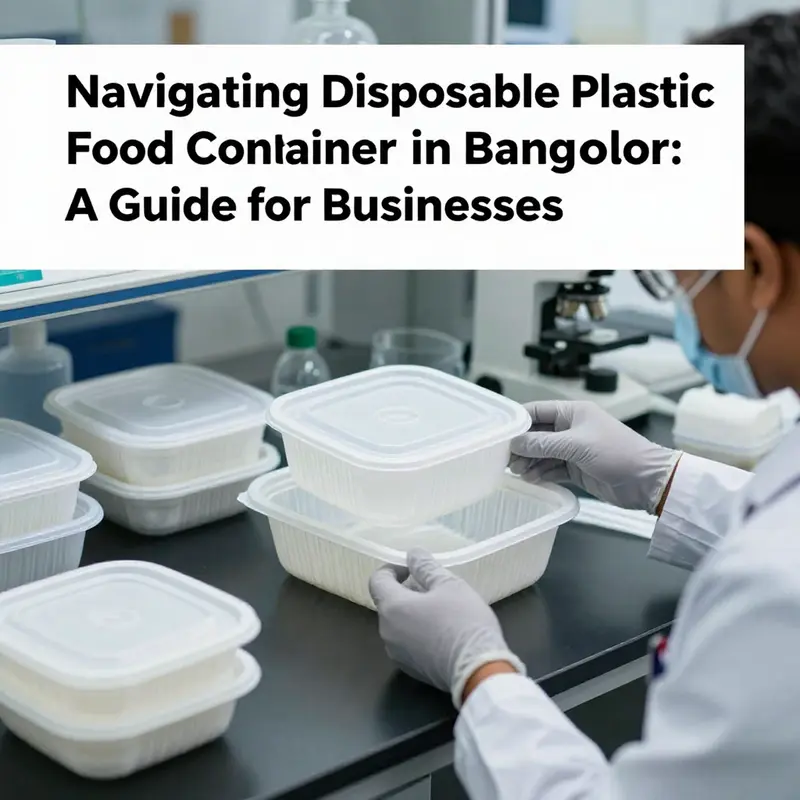
在班加罗尔的餐饮和外卖生态系统中,一次性塑料食品容器长期占据主导地位。它们以轻便、成本低、耐用和防漏等特性,迅速成为外卖平台、街头小吃摊以及小型零售环节的常见选择。这些容器大多由聚丙烯(PP)或聚苯乙烯(PS)制成,能在运输和分发环节保护食物的温度、形状和卫生状态,避免在多点转运时出现洒漏或混杂的风险。对忙碌的城市生活而言,这种实用性有时被视作商业竞争中的关键差异点。与此同时,便捷性也带来环境与健康层面的挑战,促使商家、监管者和消费者共同关注材料的安全性能与生命周期影响。没有人否认在强烈的市场需求驱动下,塑料包装短期内仍会在班加罗尔的部分场景中扮演重要角色,但理解这一现象的关键,不是仅仅停留在表象的便利,而是把安全与合规放在同等重要的位置,进而推动更可持续的包装选择和供应链改革。
尽管现有研究聚焦于中国和欧盟的法规框架,显示了全球化背景下包装材料的跨境影响与合规要求的多样性,但对于班加罗尔及更广泛的印度市场,关于食品接触材料的本地化标准资料仍显不足。这不仅是信息缺口,也是政策演进与市场实践之间的桥梁。印度的食品安全监管体系以《食品安全与标准法》(Food Safety and Standards Act, 2006)为核心,涵盖了食品接触材料的规定、标签要求、生产与经营许可等多方面内容。具体到一次性塑料容器的安全性,监管框架强调材料在食品接触过程中的迁移限值、食品安全认证、以及合规性评估的程序性要求。这些要素共同构成企业在班加罗尔及周边市场开展包装业务时必须遵循的基准,但公开的、细化的地方性规定、执行细节与监管口径往往需要向当地食品安全监管机构咨询或通过官方指南获取。当前可获得的 publicly accessible 资料,主要帮助企业理解在本地化合规之路上应关注的通用原则与国际对比,但尚未提供一手的、落地于班加罗尔市场的完整标准清单。
在缺乏区域专有标准的情况下,企业往往通过对接国家级与国际级标准来推行自律合规策略。中国的《塑料一次性餐饮具通用技术要求》(GB/T 18006.1-2025)以及《食品接触用塑料材料及制品》(GB4806.7-2023)等法规,提供了材料、制品、标签、卫生指标、检测方法等方面的详细技术要点。欧盟的《一次性塑料指南》则对食品容器、饮料瓶等产品的分类、限制和风险管理提出了系统性框架。这些标准体系在全球供应链中具有广泛影响力,促使跨国供应商在向印度市场提供包装材料时,考虑到不同地区的合规性需求与质量控制体系。对于班加罗尔的企业而言,这意味着在采购与采购管理过程中,要更严格地要求供应商提供食品安全合规证书、材料成分表、迁移测试报告以及符合当地法规的标签信息。与此同时,供应链的复杂性也要求企业在设计阶段就将“合规性友好”纳入考虑,例如选择低迁移风险的材料、使用可回收与可降解选项、以及采用更易于回收的结构设计,以便在后续的回收体系中实现更高的回收率与循环再利用率。
尽管方向性要点清晰,班加罗尔市场的实际操作仍面临若干现实性挑战。首先是法规信息的可得性与解读难度。很多商家在日常运营中需要快速获得合规确认,但区域性执行细则、检验标准和认证流程常常分散在不同机构之间,缺乏统一的监督解读。其次是供应链的透明度。进口材料与本地生产材料在成分、添加剂及染料的合规性方面可能存在差异,企业需要建立严格的供应商评估与追踪机制,以避免非食品接触材料不当使用带来的风险。再次是消费者对环保的认知与需求的变化。市场上对可降解、可回收包装的偏好日益增强,但短期成本上升、供给鏈稳定性、以及对食品安全的担忧都可能阻碍快速替代的全面落地。因此,企业在寻求合规的同时,也需要对成本、供应稳定性及消费者教育之间的权衡进行深思熟虑。
在这种背景下,一个务实的路径是通过逐步转型来平衡实用性与环保要求。这包括扩大对可回收与生物降解材料的采购,推动本地供应商提升材料等级并提供第三方认证,以及通过设计优化来降低单位包装的材料用量和提高可重复使用性。对那些仍以一次性塑料为主的商家,提升合规性更关键的一步,是确保食品接触材料的“食品级”认证与测试透明度。采购方可以要求供应商提供明确的材料成分、迁移测试结果以及在特定食品类型(如热食、油脂丰富食品、含酸性成分等)中的适用性评估。这些信息不仅有助于降低食品安全风险,也有利于增强消费者对品牌的信任。为实现这一目标,企业应建立一套与法规接轨的供应链管理体系,包括:对供应商的资质审核、在采购合同中明确合规性条款、建立材料追溯体系、以及定期进行内部培训以确保员工对合规性要求的持续关注。
在实践层面,企业的包装决策应兼顾安全性、环境影响与运营成本三者的平衡。一方面,选择对食品接触安全性有明确验证、且迁移水平低的材料,是降低潜在健康风险的直接途径。另一方面,推广可持续替代材料,如竹制、纸质或以甘蔗渣(糖渣)为原料的容器,可以有效降低对环境的长期负担,同时满足监管对可降解性与可回收性的要求。市场上对可降解与可回收包装的需求正在增长,这一趋势不仅来自消费者的环保意识提升,也来自政府对单次塑料的管控日益严格的现实压力。企业可以通过与本地制造商合作,推动材料创新与工艺改进,逐步实现从“对成本敏感的即刻选择”向“兼具安全性、可持续性与商业可持续性”的长期策略转变。对于那些希望在包装上保持一定的灵活性的商家,可考虑实现“分区式包装设计”的思路——在确保食品接触安全的前提下,采用模块化、可组合的包装结构,以便对不同食品类型和运输距离进行差异化配置,从而降低整体材料使用量并提升回收效率。若要进一步提升品牌的可持续形象,企业还可以在产品说明与标签中清晰地传达其材料选择的环境与安全考量,并将“食品安全合规性”作为品牌价值的一部分进行传播。
在这个转型过程中,信息透明度尤为关键。企业应主动与监管机构、行业协会、学术机构以及消费者沟通,分享合规性测试结果、材料供应链的改进计划以及对环境影响的评估。通过公开透明的态度,可以缓解消费者对新材料的顾虑,增强对包装安全性的信任,同时也推动整个市场形成更高标准的行业共识。需要强调的是,当前的研究与公开信息未能提供班加罗尔地区的完整地区性标准清单,因此强调企业在本地合规性方面应以权威监管机构的正式指南和许可为准,必要时进行本地化咨询。与此同时,企业应加强对供应商的尽职调查,尤其是在进口材料的合规性、检验方法、以及认证证书的真实性方面进行严格核验。要与本地监管体系保持同步,定期关注政策动态与执行口径的调整也极为重要。
展望未来,班加罗尔市场的包装合规性将不可避免地与全球标准的演进互为影响。随着监管趋严、环境要求提升以及消费者认知的持续升级,企业若想保持竞争力,必须在安全与生态之间建立稳固的平衡点。这不仅是对食品安全的负责,也是对城市环境和公共健康的长期承诺。通过持续的材料创新、供应链透明化、以及更高层级的合规管理,班加罗尔的一次性塑料食品容器将逐步从“即时便利”转变为“可持续且可追溯的包装解决方案”,以支持更健康的城市美食生态。
如需进一步探索与包装可持续性相关的行业趋势与材料选择,不妨参考以下资源:在外带包装的设计与应用方面,某些环保导向的包装选项正逐步成为市场主流,其中包含对耐用性、可回收性与微生物安全性的综合考量。相关信息可通过以下链接获取:eco-friendly takeout boxes for food packaging。此外,关于印度地区食品接触材料的监管要点,企业应定期查阅官方法规与指南,以确保在本地市场的合规性。外部参考资源: https://fssai.gov.in/ 如需了解印度食品安全与标准法及其对食品接触材料的最新规定。
Final thoughts
With the culinary landscape in Bangalore continuously evolving, understanding the dynamics of disposable plastic food containers becomes essential for any food-related business. The environmental implications, regulatory frameworks, and the shift toward sustainable alternatives present both challenges and opportunities. By embracing safer, eco-friendly practices, businesses not only align with regulatory standards but also cater to a growing consumer base that values sustainability. Ultimately, the future of disposable packaging in Bangalore hinges on the industry’s adaptability and commitment to responsible practices.