

Choosing the right disposable tableware is vital for beverage chains, restaurants, food trucks, catering services, and event planners. Amazon offers a vast array of disposable paper plates, cups, and related supplies that cater to your unique needs. From everyday essentials to luxury options for special events, the right choices can streamline your operations while enhancing customer experiences. This article explores top-rated, premium, and eco-friendly products available on Amazon, ensuring you find the perfect solutions tailored to your business.
Everyday Convenience, Ornate Occasions: Navigating Amazon’s Disposable Paper Plates, Cups, and Partyware for Modern Gatherings
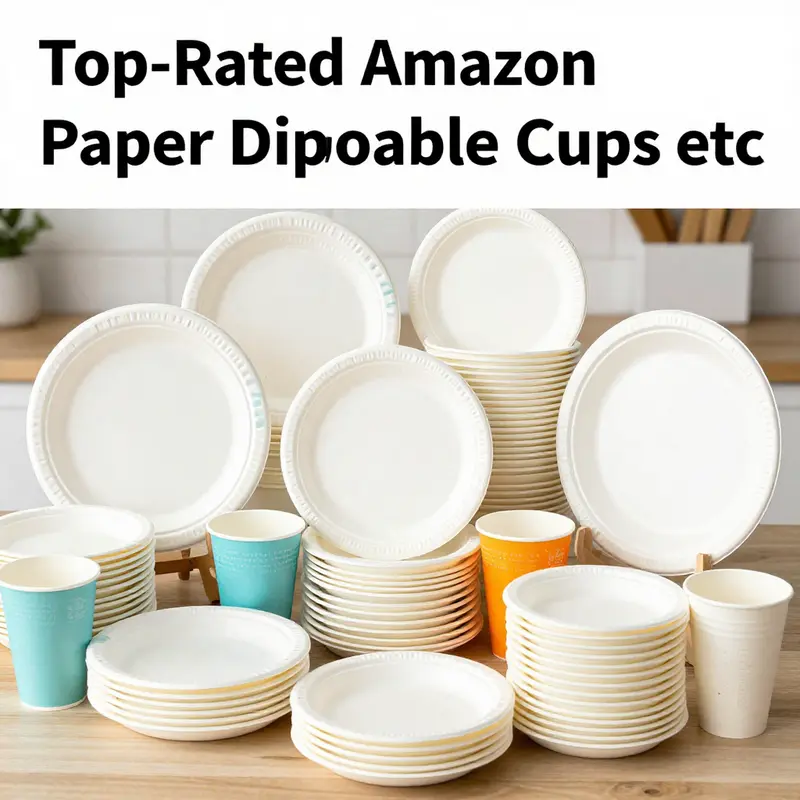
The market for disposable paper plates, cups, and related partyware has grown from a simple convenience to a carefully curated ecosystem that serves both everyday meals and the most carefully styled celebrations. In the digital age, where planning is a sequence of clicks and lists, the Amazon marketplace has become a focal point for buyers who want reliable performance, predictable pricing, and a spectrum of aesthetics that can transform a spillproof plate into part of the event’s visual story. The offerings span from straightforward, high-value essentials to premium sets designed to coordinate with specific party themes. This chapter traces how that spectrum shapes choices, expectations, and experiences for households, hosts, and planners who seek to balance practicality with a touch of design brilliance, all while navigating the logistical realities of large gatherings, last‑minute changes, and the perennial demand for less cleanup without sacrificing style.
At the core of the category lies the everyday workhorse: a durable, microwave-safe plate paired with a matching cup that can hold everyday meals, snacks, and casual beverages without splashing or soaking through. In a typical home pantry or small event kit, these items are expected to bear the weight of a hearty serving, survive a brief stint in the microwave, and resist the telltale seep of moisture so common with lighter, cheaper alternatives. The practical virtues of such products are not merely about resilience; they are about confidence. When a host faces a stack of plates and a crowd that includes children, teens, and adults, the assurance that a plate will hold together even when a second helping arrives is a quiet, essential benefit. The design focus is twofold: first, a robust core material that resists tearing, edge cracking, and softening under heat; second, a surface finish that remains smooth and food-safe, with a coating that minimizes oil seepage during a hearty serve of greasy or saucy fare. These are the attributes that repeatedly surface in high‑volume listings and customer reviews, where practicality and trust build the baseline expectation for the category.
Beyond the baseline, the marketplace reveals a second layer of choices that speak to the context of use. There is a sizable appetite for premium sets that bundle not only plates and cups but an entire suite of dining essentials designed to present a cohesive table scenario. The premium kits often come with dinner plates sized to stage main courses, dessert plates sized for sweet endings, and cups that strike a balance between sturdiness and balance in the hand. The sets commonly include napkins, cutlery, and sometimes a coordinating table cover, turning a disposable kit into a turnkey solution for events ranging from intimate family gatherings to larger celebrations. The logic here is elegant in its simplicity: when a host is orchestrating a moment, one-stop shopping reduces the friction of sourcing multiple components from different vendors or listings. The result is a smoother setup process, a consistent look, and less last‑minute scrambling for mismatched pieces. The aesthetic language of these premium configurations often leans into patterns and finishes that elevate the table’s appearance. Metallic touches, white-and-gold undertones, and refined geometric motifs are common, all designed to convey a sense of formality without the burden of washing dishes or loading a dishwasher deep enough to handle a mountain of disposables.
A separate and increasingly influential thread in the market is the thematic and decorative dimension. Themed sets are crafted to align with occasions such as milestone birthdays, seasonal parties, weddings, and baby showers. Designers experiment with patterns that range from minimalist chic to celebratory opulence, using gold foil accents, soft watercolor florals, and bold, contrasting palettes. The effect is not simply about color; it is about storytelling at the table. When a guest sits down to a coordinated plate and cup pairing, the entire dining moment feels more intentional, the photo opportunities more compelling, and the sense of occasion more palpable. These premium designs, while more expensive per piece, work for hosts who want a memorable guest experience without the commitment of non-disposable alternatives. The packaging often mirrors the tableware’s look, reinforcing the theme from the moment the kit is opened and setting expectations for what the event will feel like in its first moments and its final conclusion.
Yet another crucial dimension is the sustainability conversation that increasingly informs purchasing decisions. Eco-conscious choices have moved from niche to mainstream, as buyers weigh compostable coatings, recyclable substrates, and the overall lifecycle of disposable tableware. In practice, this means assessing whether a set uses materials that can be recycled with other paper products, whether coatings impede compostability, and how much energy and water are saved by opting for disposable options in environments where washing bulky dishware is impractical. The trend toward environmentally friendlier options also intersects with design: some sets emphasize neutral or natural palettes, the look of recycled fibers, or packaging that clearly communicates end-of-life options. The affordances of sustainability, however, must be balanced against cost and performance. A set that is waterproof, stain-resistant, and sturdy likely commands a premium, but the payoff is reduced cleanup effort and fewer worry-induced delays when a party outgrows the anticipated capacity. The broader conversation includes recalls, certifications, and third‑party testing that reassure buyers about safety and reliability, which in turn sustains trust in the category as a whole.
From a shopping dynamics perspective, the Amazon ecosystem plays a pivotal role in shaping consumer expectations. The platform enables rapid discovery, user reviews, and access to bundles that previously required shopping across multiple retailers. Review culture, in particular, informs what buyers care about. A plate or cup that earns a consistent five-star rating across hundreds or thousands of reviews generally embodies predictable performance: crisp print on the surface that remains legible despite moisture, a plate that remains rigid under heavy fillings, and a cup that resists buckling or leakage under heat or pressure. These signals matter more than novelty alone, especially when a host is planning for a crowd where reputational risk is a real consideration. The bundling aspect is equally important: many buyers are attracted to sets that deliver the full “table in a box” experience—dinner plates, dessert plates, cups, napkins, and cutlery in a single order. Such bundles create a sense of cost efficiency and planning precision, reducing the cognitive load of coordinating a cohesive look across multiple components.
The visual and tactile dimensions of design deserve attention, too. The premium and themed segments make a claim beyond function: they provide a way to create a mood. A subtle white-and-gold pair can elevate a wedding reception or anniversary dinner, while a floral watercolor motif can soften the atmosphere of a baby shower or tea party. Conversely, bold black or charcoal palettes convey sophistication for corporate events or adult milestone celebrations. In these moments, the disposable nature of the items is reframed as a design choice rather than a compromise. The goal is not to imitate formal china but to offer a convincing approximation that respects the occasion’s tone while delivering the practical benefits of disposables—speed, ease, and minimal cleanup. Host expectations shift from “Will this hold up?” to “Will this tie the look together and still be easy to manage after the event?” The answer, for many, rests on selecting a kit that harmonizes material quality, structural integrity, and the intended ambiance.
Within this landscape, the decision-making workflow often begins with event size and budget and then moves to a preference for look and feel. A large, casual gathering may privilege high‑volume, cost-efficient cups and plates that can be used for multiple meals throughout the day, with an emphasis on reliability and quick cleanups. A mid‑sized party, such as a milestone birthday or family reunion, commonly prefers a mid‑range kit that balances durability with a curated aesthetic. For weddings or formal gatherings conducted in a venue with limited space for washing, even the most modestly priced premium sets become attractive because they offer a consistent look across all components, which matters for photos and guest impressions. The role of the tableware in the overall event design cannot be overstated; it is one of the most tangible expressions of care and planning, visible in the moment guests first sit down and again when they look back at photography from the event. The packaging and label design matters as well, signaling the host’s attention to detail before a single plate has been touched. A box that communicates clear, environmentally friendly messaging can add confidence for organizers who must balance budgets with a commitment to sustainable choices.
Embedded within these broader currents is a practical truth: the disposable category has evolved into more than a backup option. It can function as a strategic tool for planning efficiency, a creative instrument for storytelling, and a way to manage complex guest logistics without sacrificing aesthetics. The interplay between price per piece and perceived value often depends on the scale of the event, the expected duration, and the level of immaterial return—the satisfaction guests express in photographs, the ease with which hosts can stage an elegant table without an invasive cleanup, and the sense of reassurance that comes from using a product that performs as promised. These considerations drive a steady flow of new designs and configurations. Designers test how different textures, finishes, and colorways interact with lighting and venue decor, while manufacturers refine the coatings and materials to deliver sturdier products that still break down responsibly after use.
A practical note for planners and everyday buyers is the power of bundles that include complementary elements. A kit that combines dinner plates with dessert plates, cups, napkins, and cutlery means one transaction can deliver a coherent table story from first glance to last bite. For hosts who want variety without fragmenting their shopping, such bundles reduce decision fatigue and help ensure that the end result—table arrangement, color harmony, and the functional fit of items—reads as deliberate rather than accidental. The broader takeaway is that the market rewards clarity: clear product descriptions that articulate size and capacity, clear packaging that demonstrates bundle contents, and clear demonstrations of how the set performs under heat, moisture, and everyday chaos. In that climate, it is not merely about owning disposables; it is about curating a reliable, stylish service that aligns with the host’s plan for the event.
To illustrate how this convergence of function, design, and convenience plays out in practice, consider a scenario where a host seeks a cohesive look for a mid‑sized celebration with a theme that leans toward warmth and elegance. The chooser would likely compare a few kit configurations: one that emphasizes cost efficiency and a neutral palette, another that offers a gold-accented motif for a refined ambiance, and a third that introduces floral watercolor patterns for a softer, more celebratory mood. The reader should recognize that the decision hinges on more than a single item’s sturdiness. It hinges on how the entire plate-and-cup ecosystem sits within the event’s lighting, table linens, and even the venue’s architectural lines. In such cases, the experience of shopping—reading reviews, comparing bundle contents, and examining the finish of the surfaces—becomes almost as important as the physical performance of the product itself. It is this synthesis of function, form, and fulfillment that explains why popular, well-reviewed sets continue to rise in visibility and why hosts keep returning to these bundles season after season.
For those looking to sample a single source that embodies this approach, a designer‑maced bundle that blends durable core plates with complementary accessories can be a useful reference. The idea is to identify a package that delivers not just plates and cups, but a coherent table narrative. A one-stop option can reduce the risk of mismatched aesthetics and unplanned extras, while still offering enough variety to adapt to last‑minute changes—an invaluable feature when weather, guest lists, or dietary needs shift in the days leading up to an event. The capacity to respond quickly to evolving circumstances is a practical kind of elegance, and the marketplace continues to reward those who design and assemble sets with this dynamic resilience in mind.
Within the broader conversation about disposable tableware, there is also room to acknowledge the tactile and sensory aspects that influence preference. The way a surface holds a napkin, the feel of the plate edge in a guest’s hand, and the sheen of a decorative motif all contribute to the impression of quality. Buyers who pay attention to these details often gravitate toward sets that promise both a sturdy core and a thoughtfully finished exterior. The most successful products in this space manage to be both reliable and attractive enough to be photographed in situ, thereby enabling hosts to capture the event’s mood with minimal additional styling. This is the practical magic of the category: the ability to deliver a consistent, polished appearance without complicating the after‑hours cleanup routine.
When considering the broader implications for event planning and household use, it is clear that the value proposition of disposable tableware rests on three pillars: performance, presentation, and practicality. Performance means the product holds up under typical serving conditions. Presentation is the degree to which the set supports a cohesive aesthetic that matches the occasion. Practicality is about the ease of sourcing, the efficiency of setup, and the simplicity of disposal. The best offerings on the market meet all three, producing a reliable, visually pleasing, and time-saving solution that resonates with everyday families and professional organizers alike. In this way, the seemingly ordinary choice of plates, cups, and napkins becomes a strategic lever in shaping guest experience, budget management, and even memory creation. The modern host, whether planning a casual family dinner or a formal gathering, discovers that the best disposables are not merely substitutes for reusable ware; they are tools for crafting a moment—one that looks deliberate, feels comfortable, and leaves a lasting impression without the heavy lift.
To connect this narrative with concrete examples in the marketplace, consider a notable internal reference that champions cohesive design and maximum usability in a single shipment. The kit presents a unified set of plates, cups, napkins, and cutlery designed to streamline event setup and ensure a harmonious look across all table elements. It is a model of how producers and retailers translate the broader design principles discussed here into tangible products that meet real-world demands. For readers who want to explore a sensory‑driven approach to disposables within a bundled framework, this kind of kit exemplifies how function and form can align to reduce planning friction and elevate the guest experience. The kit’s emphasis on balance—between weight, rigidity, and surface finish—demonstrates why certain configurations consistently satisfy a wide range of event styles and attendee expectations. The idea is not to chase novelty for novelty’s sake, but to provide a stable, scalable solution that can adapt to the unpredictable rhythms of gatherings large and small.
In closing this exploration, the thread that ties together the practical, aesthetic, and logistical dimensions of disposable paper plates, cups, and partyware is a focus on reliable, scalable simplicity. The market rewards hosts who can confidently select a setup that will perform cleanly, present well, and minimize hassle. A well-chosen kit does not merely serve food; it frames the experience, sets the mood, and frees time for moments that matter. As the landscape continues to evolve—with designers experimenting with new finishes, sustainability credentials, and combination bundles—buyers gain a richer vocabulary for choosing disposables that support both everyday meals and memorable celebrations. The result is a more confident, more efficient way to entertain—where even the final act of disposal is integrated into a thoughtful, well-executed table story.
Internal reference for further exploration: disposable-paper-plate-tableware-set-wooden-knife-fork-and-spoon-set-paper-plate-paper-bowl-zebra-pattern-tableware
External reference: https://www.amazon.com/dp/B001G3B9P4?th=1
null

null
Sustainable Tables, Everyday Choices: How Eco-Friendly Paper Plates, Cups, and More Are Shaping Amazon’s Disposable Tableware Landscape

A quiet transformation has been unfolding across the marketplace for disposable tableware, and it centers not on novelty but on responsibility. In the realm of Amazon’s vast catalog, the demand for eco-friendly paper plates, cups, and related party supplies reflects a shift in what consumers value: performance that meets the demands of busy households and events, paired with a credible commitment to the planet. The conversation today is not simply about a plate that holds a sandwich; it is about materials that honor agricultural byproducts, manufacturing choices that minimize waste, and end-of-life options that actually work in the real world. The result is a spectrum that ranges from everyday, heavy‑duty compostable plates designed for weekday dinners to premium, themed sets that aim to elevate a celebration while keeping ecological promises. This chapter traces that spectrum, unpacking what makes these products both practical and principled, and why these factors matter to a wide array of buyers—from families planning a weekend barbecue to organizers of larger gatherings who want to reduce their environmental footprint without compromising convenience or style.
At the core of the eco-friendly shift is material innovation. Traditional disposable tableware once relied almost exclusively on virgin plastics or processed papers treated with chemical whiteners and coatings. Today, the field increasingly centers on renewable, compostable inputs. Sugarcane bagasse, the fibrous residue left after extracting juice from sugarcane, has emerged as a leading raw material for plates in this space. Bagasse blends strength with lightness and can provide a natural, earthy appearance that many consumers find appealing for casual and semi-formal settings alike. Its use helps divert agricultural byproducts from waste streams and reduces reliance on wood fiber for single-use dishware. Yet the story does not stop there. For cutlery and smaller items, cornstarch-based formulations are common. Made from corn starch, these components break down more readily under appropriate composting conditions, offering a viable alternative to conventional plastics and enabling a more circular approach to serving ware. While cornstarch cutlery often presents as a substitute for typical plastics, the landscape also includes bamboo pulp and wood pulp derivatives, which can contribute additional strength and heat tolerance. The blend of these materials—bagasse for plates, cornstarch for spoons and forks, bamboo pulp for some cups or bowls—creates a family of products that can perform in a variety of environments, from backyard barbecues to catered events.
The performance profile of eco-friendly disposables is a frequent topic of buyer attention. On the functional side, these products are designed to be heavy duty enough to withstand hot foods and greasy sauces. They are engineered to resist soaking, oil seepage, and, in many cases, to hold up under microwave use for reheating, though users should check packaging notes to confirm exact capabilities. This is not merely a question of comfort; it is a matter of reliability during meals, picnics, or festive banquets where there is little time to deal with soggy plates or leaks. Size and capacity play into this equation as well. Nine-inch plates—roughly 23 centimeters in diameter—are a common standard for main courses, while 7- to 9-inch dessert and salad plates fill out the set. Cups in the 8 to 12 ounce range cover most hot and cold beverages, from coffee and tea to fruit juice and soft drinks. The compatibility of these items with hot foods, oils, and condensation becomes a practical test for households and event planners alike. The most successful eco-friendly sets often provide a coordinated package: plates, cups, and cutlery that match aesthetically and functionally, with napkins and even table covers designed to extend the same design language across the table. A simple, cohesive set reduces decision fatigue and supports consistent disposal practices after use.
From a consumer perspective, the packaging and presentation of eco-friendly disposables matter as much as their performative qualities. The packaging can signal the product’s value and its commitment to sustainability. In many instances, large multi-pack configurations—such as 125- or 250-piece assortments—offer a practical balance of convenience and waste reduction. By consolidating multiple components in one purchase, these sets decrease packaging waste per serving and simplify the logistics of party planning. For hosts seeking a specific look, premium designs combine a natural palette with refined accents. A white-and-gold or a subtle metallic motif, for instance, can elevate the perceived quality of the event while maintaining the underlying eco-friendly premise. Importantly, a growing proportion of these premium options emphasizes not merely aesthetics but the integrity of their materials. The brown, unbleached tone of many bagasse-based plates is often presented as a conscious design choice, signaling sustainability even before the consumer reads the fine print about compostability.
The certification landscape provides another layer of confidence for buyers navigating Amazon’s eco-friendly aisle. Reputable products frequently reference third-party standards that indicate end-of-life viability. Among these, certifications aligned with compostability expectations play a central role. ASTM D6400 and ISO 14855 establish criteria for industrial compostability, ensuring that products break down within controlled composting facilities. BPI (Biodegradable Products Institute) and OK Compost certifications signal adherence to recognized benchmarks for biodegradability and compostability. Consumers who can access industrial composting facilities often expect that bags, coatings, and the base materials will perform as advertised; they understand that home composting may not reliably process all materials, especially given the presence of certain coatings or additives that facilitate moisture resistance during use. The avoidance of chlorine bleaching in many lines is another mark of safety and environmental consideration, preserving natural color and reducing the introduction of bleaching byproducts into compost streams. These standards give buyers a framework for comparing products that may otherwise seem similar on a shelf or in a catalog, helping to distinguish genuinely sustainable options from marketing statements alone.
But the practical realities of disposal continue to shape consumer decisions. Even when a product is certified as industrially compostable, the pathway to responsible end-of-life depends on local infrastructure. Industrial composting facilities thrive in urban and suburban centers, but not every community offers this service at scale. As a result, shoppers increasingly ask: Will this plate actually biodegrade if it ends up in the wrong bin? Will it degrade in a backyard compost setup, if that option exists in a home garden? The best eco-friendly disposables provide clear guidance about digestion conditions, while acknowledging that consumer outcomes vary with regional capabilities. In many cases, the most responsible approach includes educational cues on the packaging and easily accessible online resources that outline which facilities accept compostable tableware and how to prepare products for composting. Some designs minimize coatings and use materials that perform well across a spectrum of disposal scenarios, while still maintaining a robust performance profile during use. This balance between use-phase performance and end-of-life feasibility is the heart of why eco-friendly disposables have grown from a niche to a mainstream option on Amazon and similar marketplaces.
Markets that anchor their decision-making in sustainability also recognize the broader life-cycle implications of these materials. Bagasse reduces pressure on forests and leverages a byproduct of sugar production, turning what might be waste into a valuable commodity for tableware. The energy and water use involved in turning bagasse into durable plates are important factors, as are the environmental trade-offs of transporting raw materials and finished goods. That said, the comparative advantage often remains favorable when stacked against conventional plastic plates or heavily bleached papers. The relative carbon footprint can improve further when manufacturers implement efficient drying processes, minimize coatings, and optimize supply chains to reduce packaging waste. The packaging itself, too, is an area of ongoing improvement. Multi-pack configurations are frequently designed to be recyclable or recyclable-worthy in many systems, and some brands pursue minimalistic, recyclable outer packaging to lower overall waste. The goal is to create a product ecosystem where the design choices in the plate, cup, and cutlery align with the broader mission of reducing plastic pollution and promoting responsible consumption.
From the consumer’s vantage point, the decision to choose eco-friendly disposables often rests on a blend of price sensitivity, convenience, and perceived environmental impact. While there is an understandable premium for high-performance, certified compostables, many shoppers view the added cost as an investment in a cleaner celebration or a more responsible household. The price delta can narrow as scaling in production increases and suppliers optimize the manufacturing process. In the Amazon ecosystem, buyers frequently compare sets that include not only plates and cups but also forks, knives, spoons, napkins, and even tablecloths within a single bundle. The convenience of a single purchase that covers the entire event reduces the cognitive load of coordinating a disposal plan after the party and makes the sustainability claim more tangible for the average consumer. It is also common to encounter themed designs and colorways that marry aesthetics with sustainable materials. A set that coordinates natural tones with tasteful patterns—subtle textures, restrained graphics, and dye-free or dye-minimized finishes—tends to evoke a sense of quality and responsibility that resonates with a broad audience.
Designers and manufacturers in this space pay attention to the tactile experience as well. The texture of bagasse plates, the slight grain that emerges from natural fibers, and the resonance of a sturdy cup with a confident grip all contribute to a sense of reliability. These aspects matter just as much as the environmental story. People do not want to sacrifice the sensory cues they associate with a well-prepared meal. They want to feel confident that the plate will hold a loaded entrée without buckling, that the cup will resist absorption and heat, and that the overall tableware set will present well in photos and on the table. When a product captures both performance and sustainability, it becomes a natural choice for families arranging weekend gatherings, school events, or community celebrations.
The path to selecting eco-friendly disposables on a platform like Amazon often begins with a few core questions: What materials are used, and what are the certifications? Will the items meet the event’s environmental goals, and can disposal be realistically managed by the guests after the meal? How will the appearance of the tableware influence the event’s mood, and does it align with the desired aesthetic—whether rustic, modern, or chic? Buyers who tackle these questions tend to gravitate toward complete sets that offer a cohesive design language and clear end-of-life messaging. They also appreciate the practicality of large packs that ensure there is enough supply for guests without constant restocking or last-minute shopping. In this sense, the eco-friendly disposables on Amazon are not merely a product category; they represent a practical toolkit for sustainable hosting that does not require extra trips to the store or complicated logistics planning.
For readers seeking a tangible example of how style and sustainability can intersect on the product page, consider a disposable paper plate tableware set that extends beyond the basics. This set illustrates how design can harmonize with eco-friendly materials: it includes plates, cups, and full cutlery in a single cohesive package, with a pattern that complements the natural aesthetic of the materials. The design choice embodies the principle that eco-consciousness does not have to look austere; it can look deliberate and tasteful, inviting hosts to choose such options without compromising mood or presentation. You can explore a specific instance of this approach through a product page that showcases a zebra-patterned set, a playful yet stylish design that demonstrates versatility across casual and more formal settings. The link provides a concrete example of how a brand might translate sustainability into a visual language that resonates with diverse audiences, while still adhering to the compostability story at the core of the product.
As the market evolves, so too does the conversation about responsibility and circularity. The eco-friendly disposable tableware space on Amazon continues to push for clearer labeling, stronger certifications, and more transparent disclosures about end-of-life outcomes. Shoppers increasingly expect not just a promise of biodegradability but a credible demonstration of how a product actually integrates into a composting stream or recycling program where applicable. This push for clarity benefits both consumers and the broader ecosystem, helping to reduce confusion and misclassification that can lead to improper disposal. It is a reminder that sustainability is not a single feature but a set of integrated choices—materials, manufacturing, packaging, and disposal—all working together to minimize the environmental footprint while preserving the practical benefits that make disposable tableware appealing in the first place.
Internal link reference:
- For a practical design example of an eco-friendly disposable set with a distinct visual language, see this disposable paper plate tableware set featuring a zebra pattern: Disposable Paper Plate Tableware Set (Zebra Pattern). This link illustrates how product designers translate sustainability into a cohesive aesthetic that can elevate everyday gatherings while signaling environmental responsibility.
External resource for broader context:
- For additional insights into real-world packaging and compostable materials, see an external reference here: https://www.alibaba.com/product-detail/000-L062801-Disposable-Plates-Tableware_1600578945722.html?src=srp
The trajectory of eco-friendly disposable tableware on platforms like Amazon suggests a durable shift in consumer behavior: people want items that perform under pressure, look good on the table, and align with a broader ecological ethic. The challenge remains in ensuring end-of-life outcomes match the promises of certification and labeling. When buyers and sellers work together to improve transparency and infrastructure, the promise of a waste-free or near-waste-free pathway becomes more achievable. In the aisles of online shopping, the conversation around compostability, sourcing, and packaging is moving from a niche concern to a standard expectation, shaping how hosts plan events and how households translate everyday consumption into practices that keep trash out of landfills and watercourses. This evolving landscape is not just about choosing a plate over a plastic alternative; it is about choosing a system that acknowledges waste as a resource to be redirected rather than a problem to be managed after the fact. The result is a marketplace that rewards thoughtful design, credible certification, and practical disposal pathways—an ecosystem where eco-friendly disposables can function as everyday choices that add up to meaningful environmental gains over time.
Final thoughts
As businesses strive to create memorable experiences for their customers, selecting the right disposable tableware becomes crucial. Amazon’s diverse offerings—from top-rated everyday plates and cups to luxurious options for special occasions and eco-friendly alternatives—enable beverage chains, restaurants, food trucks, and event planners to meet their specific needs seamlessly. By prioritizing quality and sustainability, you not only enhance your operational efficiency but also contribute positively to the environment. Your tableware choices speak volumes about your brand, so invest wisely in products that reflect your commitment to quality and service.