
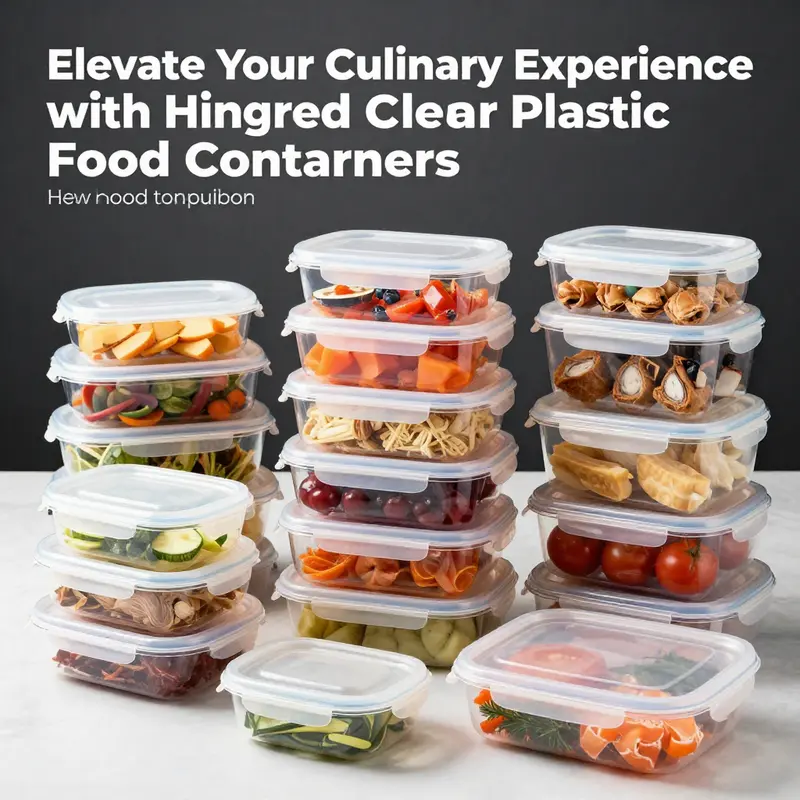
Hinged clear plastic food containers have become an essential part of the food service landscape, especially for bubble tea shops, restaurants, and catering services. They provide a perfect balance of utility and aesthetics, designed to keep food fresh and allow for easy visibility. From food presentation to hassle-free transportation, these containers cater to diverse culinary needs. This article explores the materials and design features that make these containers indispensable, examines their economic impact on the packaging industry, and evaluates their sustainability options and innovations.
Clear, Sealed, and Ready to Serve: The Engineering and Everyday Value of Hinged Clear Plastic Food Containers
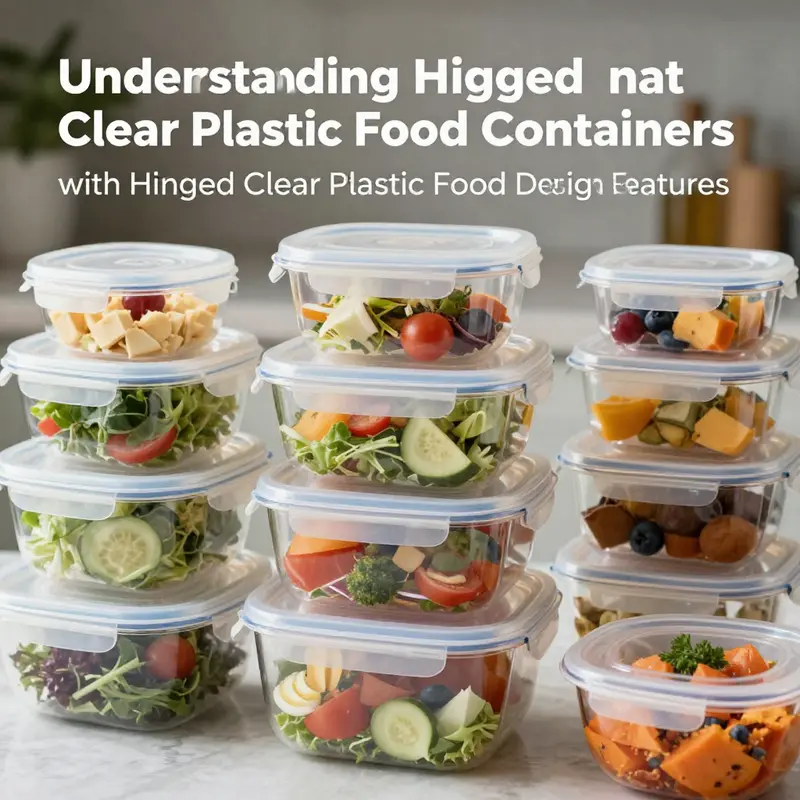
In busy kitchens, hinged clear plastic food containers stand out for clarity, reliability, and practical design. The see-through walls let staff identify contents at a glance, while a robust hinge and tight seal protect against leaks and spoilage during transport and display. Material choices—often PET, PP, or BPA-free PC—balance clarity, heat resistance, and cost, helping operations meet safety standards without sacrificing performance. Features like stackable profiles, secure snap-on lids, and microwave- or dishwasher-safe ratings translate into faster prep, easier cleaning, and more consistent portion control. Together, these containers simplify storage, handling, and presentation from prep to service to reuse.
Clear as Capital: The Economic Pulse of Hinged Clear Plastic Food Containers in Modern Packaging
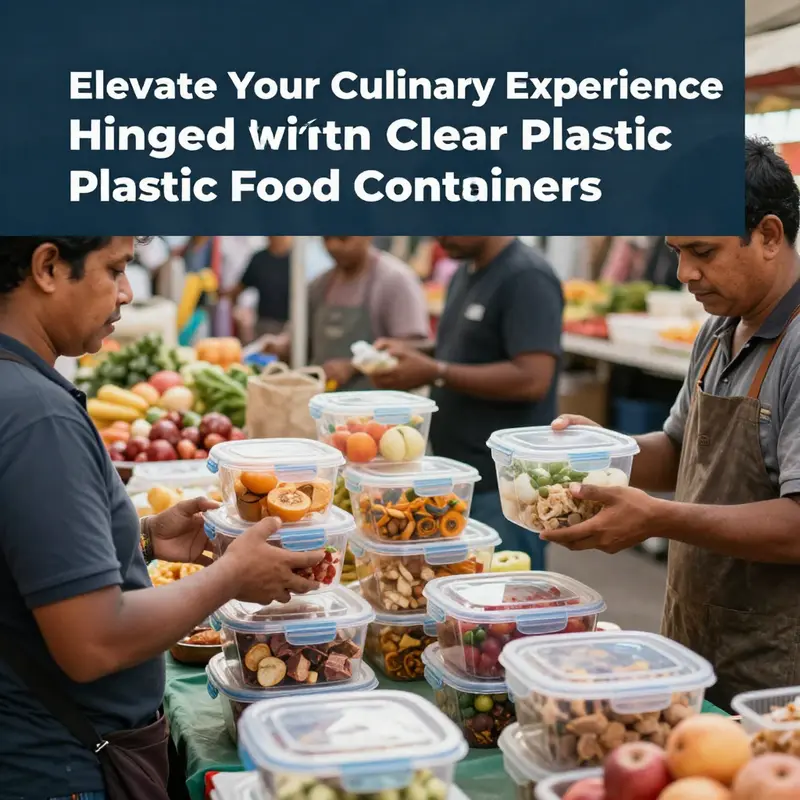
The economics of hinge-lid, clear plastic food containers unfolds like a careful balance sheet of visibility, reliability, and efficiency. In the modern food ecosystem, where the journey from kitchen to customer spans cold stores, delivery fleets, and crowded shelves, packaging that is both transparent and secure can tilt the scales of cost, waste, and consumer perception. The hinged clear plastic container is not merely a vessel for food; it is a strategic asset that affects how operators price, preserve, promote, and profit. When one considers the supply chain from resin to retail display, the economic impact becomes a story of how a single design choice can cascade through procurement, logistics, and even perception, yielding tangible savings and measurable risk reductions.
A first lens through which to view this shift is market scale. The global hinged lid food containers market reached about USD 14.43 billion in 2025 and is projected to grow at a compound annual growth rate of roughly 14.43% from 2026 through 2033. Such vigor reflects more than consumer preference for convenience. It signals a rethinking of how food businesses structure costs, inventory, and service levels. On-the-go consumption continues to rise, and with it comes higher expectations for packaging that protects product integrity during transit while presenting the contents with crystal clarity. That clarity is not cosmetic; it reduces guesswork, minimizes spoilage, and accelerates decision-making for both store staff and end customers, a combination that translates into faster turnover and lower post-purchase waste. In a system where margins are razor-thin, the incremental impact of a reliably secure lid and a transparent container can be materially significant.
Material technology is a central thread in this economic fabric. The most common materials—food-grade PET and polystyrene—are chosen for safety, clarity, and performance. PET, in particular, provides excellent transparency and a strong barrier to oils and moisture, helping to preserve freshness in refrigeration and, in many cases, enable brief microwave exposure. Such performance is not incidental; it aligns with regulatory expectations, product safety mindsets, and brand promises. FDA-certified plastics that comply with 21 CFR 177.1630 give operators a clear compliance path, reducing liability while reinforcing consumer trust. When a product is displayed in a transparent container, the brand communicates openness and quality. That perception has a price: it justifies a potentially higher unit cost by enabling premium placement, easier spoilage control, and a reduction in product returns due to damaged or compromised packaging.
The economic logic of design and operational efficiency is equally compelling. Hinged lids deliver spill resistance and one-handed access, features that matter in fast-paced kitchens and delivery workflows alike. In practice, these design attributes contribute to lower handling losses, reduced spillages during transport, and a leaner labor process. In fact, industry observations suggest that hinged clamshell designs can reduce product loss by as much as 30% when compared with loose or unsecured packaging—an outcome that directly translates into lower waste costs and higher yield for bakeries, delis, and cafeterias. Beyond the immediate savings, the ergonomic benefits of a well-engineered lid and a secure seal cut the time employees spend on opening, portioning, and repackaging, which is a meaningful input in laborCost calculations across the supply chain.
Stackability is another design feature with multiplier effects. Containers that nest neatly when empty or stacked full save precious cold-storage real estate, a resource that grows more valuable as online orders surge and cold-chain capacity tightens. For large-scale operators, the ability to reduce warehouse footprint by even a modest percentage can lower facility costs, energy consumption, and labor associated with material handling. In a sector where a single distribution center can serve dozens or hundreds of venues, the cumulative savings from efficient stacking, easier palletization, and simplified inventory management become visible in quarterly financials. Such efficiencies also ripple outward to value-based procurement strategies. When a supplier can offer a reliable, high-clarity container in bulk quantities at a predictable cost, buyers gain price clarity and predictability, enabling more accurate budgeting for seasonal campaigns, menu launches, or promotional events.
From a broader supply-chain perspective, the hinged clear plastic container market interacts with a global network of resin producers, manufacturers, and wholesalers. Regions such as Guangdong and Malaysia have emerged as production hubs, scaling capacity to meet rising demand while supporting diversification of supply. This geographic distribution matters economically because it influences lead times, freight costs, and tariff exposure. Firms that strategize around regional production—balancing proximity to major markets with cost considerations and regulatory compliance—often realize lower total landed costs and faster replenishment, which reduces the risk of stockouts during peak seasons. In parallel, the push toward recyclable and reusable variants adds another layer of economic nuance. As jurisdictions tighten environmental regulations and consumer expectations tilt toward sustainable packaging, suppliers are investing in better recyclability, easier end-of-life processing, and even reuse programs. Those investments yield long-run savings by expanding the usable life of packaging assets and by opening access to markets that reward sustainability credentials with favorable procurement terms.
The environmental dimension is not just a moral or regulatory obligation; it is a driver of market access and cost structure. Recyclability and environmental certifications help operators navigate compliance regimes and avoid penalties or delays in key markets. At the same time, consumer demand for sustainability has shifted the competitive landscape. Packaging that can be recycled or reused eventually reduces waste disposal costs for retailers and foodservice operators, creating a business case that extends beyond the initial purchase price of the container. This is particularly relevant for operators facing waste disposal fees and regulatory scrutiny around packaging waste. As the supply chain adjusts to this new normal, manufacturers are not simply selling a container; they are selling a value proposition—clarity, security, and environmental stewardship bundled into a single, efficient form factor. Such value propositions command a premium that can be justified through lifecycle cost analyses that measure not only material costs but also the broader operational savings achieved through reduced waste, improved shelf life, and smoother handling.
The economic calculus extends to the nuances of bulk purchasing and market segmentation. Containers are often sold in bulk—50-piece sets or larger—at wholesale prices that reflect economies of scale. For a bakery or deli, this means a predictable cost per unit that supports stable pricing and margins across a range of products. It also means planning certainty as menus evolve and promotions shift. Manufacturers may offer a spectrum of sizes and configurations—from compact 12-cell layouts suitable for cupcakes and desserts to larger 24-ounce options for salads and vegetables—so operators can tailor packaging to the product while preserving the advantages of the hinged, transparent format. The capacity to tailor packaging without sacrificing the benefits of the hinge and the clarity is central to keeping costs aligned with revenue in a market where the once-small expense of packaging can now be a strategic lever.
A critical, often underappreciated, element of the economic narrative is risk management. Clear, secure packaging reduces the likelihood of contamination and leakage, which can precipitate costly recalls or reputational damage. In a world where a momentary spill can derail a delivery or sour a customer experience, the hinge-lid’s reliability becomes a mitigation tool. Businesses that quantify these risk reductions can justify higher capital expenditure upfront in the form of premium packaging that stabilizes throughput and protects brand equity. The reliability of the seal also supports cold-chain integrity, enabling more predictable shelf life and reducing the need for overstocking as a buffer against spoilage. In aggregate terms, these factors contribute to stable gross margins, even as input costs fluctuate. The hinge design, once viewed as a matter of convenience, now sits squarely at the intersection of product quality assurance and bottom-line resilience.
From a consumer-facing perspective, the transparent container is a powerful marketing asset. Clarity invites trust; it allows customers to visually assess ingredients, portion size, and presentation without opening the package. This reduces the cognitive load and decision time at the point of sale, particularly in self-serve environments or quick-service formats where speed matters. For businesses that prize consistency in portion control, the combination of transparent visibility and secure lid helps ensure that what the customer sees is what they paid for. Such alignment between expectation and delivery is a driver of repeat purchases and positive word-of-mouth, which, in turn, feeds into revenue stability and growth. When packaging reinforces quality and portion fidelity, marketing and procurement align behind a shared narrative: the container as an extension of the product’s promise.
The future economics of hinged clear plastic food containers will be shaped by ongoing material science and process innovation. While PET and PS remain the backbone, advances in barrier performance, clarity, and thermal tolerance will broaden the usable temperature range and the microwave safety profile for a larger share of takeout and ready-to-eat offerings. Process improvements in injection molding and thermoforming, along with advances in automation, will continue to compress unit costs and improve consistency across batches. As manufacturers optimize cycle times and yield in production lines, the cost per container declines, amplifying the leverage of volume orders for large hospitality groups and food manufacturers. Concurrently, the environmental narrative will continue to mature. The push toward more sustainable resins, better recycling streams, and clearer guidelines for end-of-life processing will influence both the material cost and the end-market acceptance of these containers. Operators will increasingly weigh not only the immediate price per unit but the full lifecycle cost, which includes waste handling, potential returns, and the opportunity cost of slower inventory turnover.
Within this evolving landscape, one practical implication stands out for financial planning and procurement strategy. When a business commits to hinged clear plastic containers, it is committing to a standard that supports streamlined operations, consistent presentation, and scalable growth. The alignment of these benefits with the growth trajectory of the market is not coincidental. It reflects a packaging ecosystem that rewards efficiency, visibility, and responsible stewardship. The economic narrative, therefore, is not simply about a container with a lid; it is about how a single design choice can influence procurement discipline, labor efficiency, waste management, customer experience, and ultimately profitability across multiple channels—from dine-in to takeaway and long-tail e-commerce.
For operators who want to see the practical implications in one place, many are turning to packaging options that communicate sustainability and reliability, including the broader family of solutions such as eco-friendly takeout boxes for food packaging. The idea is not to replace value with virtue alone, but to harmonize value and virtue into a single, verifiable proposition. In this sense, hinge-lid, clear plastic containers become strategic assets rather than mere packaging components. They enable a more predictable cost structure, more reliable service levels, and a stronger platform for brand differentiation in a crowded market. As the industry continues to consolidate around efficient, scalable packaging solutions, the economic case for these containers strengthens: they are not just vessels for food but instruments of operational excellence and market resilience.
For readers seeking a structured market perspective, the overarching analysis from industry researchers provides a broader lens on this trajectory. A comprehensive market study offers context on demand drivers, regulatory considerations, and competitive dynamics that shape pricing, supply chains, and product development in the hinged lid segment. External insights reinforce what practitioners experience on the shop floor: efficiency, transparency, and sustainability are not competing priorities but mutually reinforcing drivers of growth. In that sense, the hinged clear plastic container is a case study in how packaging choices translate into measurable economic outcomes—from cost per unit and waste reduction to brand perception and revenue growth. It is, in effect, packaging economics in action, where design, material science, and supply chain strategy converge to redefine what a simple container can contribute to a business’s bottom line.
External resource for broader context: https://www.grandviewresearch.com/industry-analysis/hinged-lid-food-containers-market
Clear, Reusable, Responsible: Rethinking Hinged Plastic Food Containers for a Sustainable Service Future
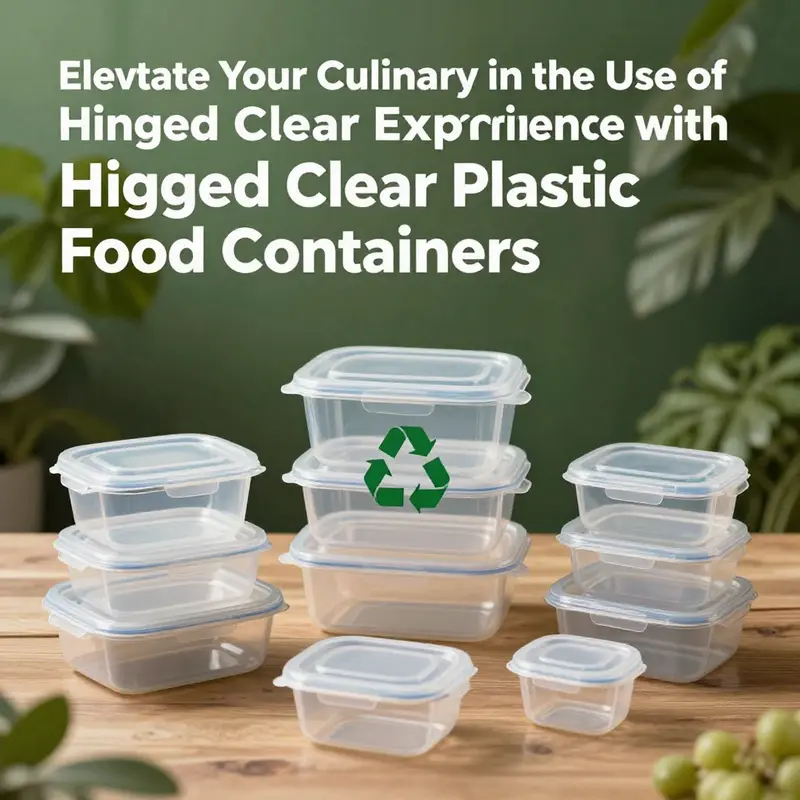
The hinged clear plastic container occupies a daily, often invisible, place in the rhythm of food service. Its transparent walls offer instant visibility, a practical advantage for kitchens, diners, and delivery staff who must assess a product at a glance. The hinged lid promises a secure seal that reduces spills during transport, supports portion control, and helps preserve texture and moisture. Yet beneath this convenience lies a pressing concern: the environmental footprint of plastic packaging, which persists long after the last bite has been eaten. In the balance between operational efficiency and ecological responsibility, the hinged container becomes a case study in how the industry can innovate without sacrificing performance. To truly understand its sustainability trajectory, it helps to weigh both the technical realities of materials and the human factors that govern disposal, reuse, and waste. The conversation is not only about what the containers are made of, but also about how they fit into a broader system that includes design, recycling infrastructures, consumer behavior, and policy signals that encourage more responsible choices at scale.
At the core of the sustainability discussion are material composition and end-of-life pathways. Most hinged containers used in commercial settings are crafted from common food-grade plastics such as polypropylene and, in some cases, polystyrene. Both materials bring virtues and vulnerabilities. Polypropylene offers a good balance of clarity, stiffness, and chemical resistance, which helps keep foods like salads and desserts fresh across refrigerated storage and short-term microwaving in some instances. Polystyrene, when used, can deliver clarity and lightness, but its recycling stream is often more fragmented, and its environmental profile—especially in terms of virgin material demand and potential for contamination—poses distinct challenges. The practical consequence is that a significant portion of these hinged designs ends up in landfills or, worse, dispersed into the environment. The recycling incompatibilities stem from factors such as multi-layer structures, coatings, and colored or opaque finishes that can complicate separation and processing. Even when the material composition is straightforward, consumer behavior and local infrastructure determine whether a given container is correctly sorted, segregated, and processed. The result is a paradox: packaging that invites reuse can, in practice, become waste if its journey from kitchen to recycler is broken by confusion, cost, or a lack of accessible facilities.
One of the most telling aspects of this paradox is the tension between durability and end-of-life clarity. The very attributes that make hinged containers appealing—resilience, resealability, and the ability to withstand repeated cold-chain exposure—also contribute to a mindset of reuse that may outpace the realities of composting or recycling infrastructure. In many markets, the emphasis on longevity can mislead users into treating the containers as indefinite assets, rather than as materials that benefit from systematic recovery. If households and small food-service operations lack clear guidance on how to dispose or return these items, the result is scattered streams of plastics that never reach the appropriate recycling steps. Education matters here, because even the best-designed container cannot fulfill its sustainability promise if users do not understand labeling, accepted materials, and the proper disposal pathways. Labels that differentiate recyclable plastics from non-recyclable composites are essential, yet they must be standardized and widely understood to be effective. The education gap is not a small hurdle; it directly influences waste volumes and the rate at which the industry can move toward circular models.
Innovations addressing these sustainability gaps fall into three interlocking categories: new materials, smarter design, and closed-loop organizational models. On the material side, manufacturers are increasingly exploring bio-based plastics derived from renewable resources such as corn starch or sugarcane. These bio-based options promise lower life-cycle carbon footprints and, in some cases, improved end-of-life outcomes under industrial composting conditions. The appeal is straightforward: reduce reliance on fossil-based feedstocks while maintaining the performance traits needed for takeout and storage. Yet the story is not without caveats. Bio-based polymers can require distinct processing conditions, and many municipal recycling streams still lack the infrastructure to handle them uniformly. Industrial composting facilities that accept these materials are not universally available, and consumer misperception can lead to improper disposal in standard recycling or waste streams. In practical terms, the shift to bio-based plastics creates a pathway toward lower embodied emissions, but it hinges on a broader network of facilities and clear, consistent labeling so that end users know how to treat the packaging at the end of its life.
Design evolution offers perhaps the most tangible route to immediate gains. Modular construction and easy disassembly are more than design aesthetics; they are practical steps toward higher recoverability. If lids, bases, and inserts can be separated with minimal effort and without resorting to specialized equipment, then recycling streams can more effectively sort and process the materials. Some designs now emphasize standardized materials across components and simplified interfaces, so that the disposal process does not require a complicated set of steps to separate a multi-material structure. In addition, efforts to reduce the presence of non-recyclable coatings or additives help ensure that the containers maintain their clarity during use while remaining friendlier to end-of-life processing. Simple, consistent labeling—indicating material type and whether the item is suitable for recycling in common local streams—transforms scattered consumer choices into coherent actions. There is also a growing recognition that climate-friendly design is inseparable from energy and water considerations in the cleaning and reconditioning phases of a potential closed-loop system. If reusability is pursued, it must be coupled with responsible washing practices that minimize water and energy use while maintaining sanitation standards.
That leads to the concept of closed-loop or circularity models, which move beyond the single-use mindset to reclaim, clean, and remanufacture containers into new products. In a mature circular approach, used containers would be collected from restaurants and retailers, routed to cleaning facilities that ensure sanitation, and then remanufactured or refurbished for continued service. This approach reduces demand for virgin plastic and can stabilize costs for high-volume operators, but it requires reliable logistics, standardized material streams, and incentives that encourage businesses to participate. The practical reality is that circular systems demand coordination across multiple players, from packaging manufacturers and waste processors to hospitality partners and municipal authorities. The infrastructure investments required—collection points, centralized cleaning processes, and certification programs for remanufactured outputs—are nontrivial. Yet the potential benefits are substantial: lower overall material use, reduced waste leakage, and a closer alignment with circular economy principles that increasingly guide policy and investor decision-making.
A realistic assessment must also acknowledge the performance and cost considerations that shape operational choices in kitchens and service lines. The cost structure of hinged containers is not merely about the purchase price. It includes the lifecycle costs associated with storage space, replacement frequency due to wear, and the energy and water consumption tied to cleaning and sanitation for reuse programs. In many environments, the perceived reliability and convenience of a solid, durable container make it a preferred option, even if that choice comes at higher end-of-life costs. Furthermore, the risk of clouding or lid degradation with repeated washing, while not universal, is nontrivial for some designs. When clouding occurs, it can compromise product visibility and perceived quality, potentially undermining consumer appeal. Thus, the decision to pursue reuse or recycling must balance visibility, seal integrity, and the practical realities of maintenance.
The consumer is not a passive participant in this equation. Knowledge and behavior influence outcomes as much as engineering and policy do. A consumer who sees a transparent container and assumes it will vanish into a recycling stream without obligation or effort is a missed opportunity for sustainable action. Clear, accessible recycling guidance at the point of purchase or use can help translate the container’s potential into actual environmental benefit. This means labeling that is legible in busy kitchen environments, easy-to-understand disposal instructions, and perhaps even incentives for returning and reusing containers within a local network of partners. The social dimension—education, convenience, and accountability—becomes as important as the technical dimension in realizing true sustainability gains. Without it, even well-designed, bio-based, or modular products may fail to achieve meaningful reductions in plastic waste.
In the broader ecosystem, policy signals and industry standards shape which innovations actually reach scale. Standards that simplify material differentiation, clarify accepted recycling streams, and support the development of dedicated facilities dramatically alter the viability of biobased or highly modular designs. Harmonization across jurisdictions, coupled with transparent reporting of environmental metrics, can accelerate adoption and investment in better packaging. The goal is not to abandon the benefits hinge containers provide but to reframe their value within a system designed to recover, reuse, and renew materials. This reframing requires collaboration among designers, manufacturers, operators, waste managers, and regulators—the stakeholders who can make a circular solution both technically sound and financially viable.
The practical path forward invites a mix of incremental and transformative steps. Incrementally, manufacturers can introduce clearer labeling, standardized material streams, and simple disassembly mechanisms that do not burden users. They can also pilot hybrid approaches that blend bio-based materials with robust recycling compatibility, ensuring that new formulations do not create dead ends in legacy recycling systems. Transformatively, the industry can move toward closed-loop models that incentivize participation from multiple partners. Such models may include take-back programs, centralized cleaning and refurbishing facilities, and the creation of remanufactured end products from returned containers. Each step increases the probability that the container’s life cycle will be extended, and that its environmental footprint will be reduced without compromising the quality and safety expected in food-service contexts. The reward for achieving this balance is substantial: a packaging system that preserves the integrity and appeal of foods while aligning with consumer demand for responsible stewardship of resources.
As a practical note, one can observe how these shifts translate into everyday choices. In larger operations, the decision to adopt a modular or bio-based variant may hinge on a combination of supplier support, customer expectations, and the availability of end-of-life infrastructure. Smaller establishments, meanwhile, often weigh the immediate cost and the reliability of supply against environmental considerations. The truth is that sustainability in hinged clear plastic containers is not a single doctrine but a spectrum of strategies that must be customized to local conditions, supply chains, and customer bases. The narrative is not that one path is best for all, but that a portfolio of approaches—where design, materials, disposal guidance, and logistics collaborate—offers the best chance to reduce waste while preserving the operational benefits customers rely on. In this sense, the hinged container remains a flexible platform for sustainable innovation, not a fixed endpoint.
For practitioners seeking concrete avenues to explore, a few guiding questions can help steer development and procurement decisions. What materials compose the container, and how compatible are they with existing local recycling streams? Do the lids and bases use uniform materials to simplify disassembly and recovery, or do they complicate material separation? Is there a credible plan for recovery, cleaning, and remanufacture within a closed-loop framework, with defined performance standards and traceability? How does the packaging interact with reuse programs in your network, and what is the energy and water cost of supporting those programs? And critically, how will you communicate disposal and recycling guidance to staff and customers in a way that empowers them rather than creating confusion? Addressing these questions truthfully can illuminate a path forward that respects both the functional value of hinged clear plastic containers and the imperative to reduce environmental impact.
As the industry continues to evolve, the arc of sustainability will increasingly hinge on system-level thinking, not just material or design breakthroughs alone. Consumers expect packaging that is not only functional but also responsible. Operators expect cost-effective solutions that deliver quality and reliability. Regulators look for transparent data and verifiable progress toward waste reduction. The most compelling future for hinged clear plastic food containers lies in an ecosystem where materials are chosen with end-of-life outcomes in mind, where designs encourage efficient recovery, and where reuse and recycling coexist in a well-supported loop. In such a world, the container’s transparency becomes more than a marketing feature; it becomes a symbol of accountability—a clear window into a packaging system that earns its keep by safeguarding both food and the planet.
For further insight into sustainable practices and innovations in this sector, refer to Plastics.org: Sustainability. This external resource provides a broader perspective on how industry, policy, and consumer behavior intersect to shape the life cycle of plastic packaging. https://www.plastics.org/sustainability
Within the realm of practical experimentation and supplier engagement, a single, applicable example of real-world relevance exists in the niche of multi-compartment packaging designed for diverse food items. These configurations demonstrate how modularity and material choice can influence end-of-life pathways, potentially enabling clearer disassembly and more straightforward separation of components for recycling. In advancing such options, case-by-case collaboration between designers, facility operators, and waste processors can reveal pathways to improve recoverability without sacrificing the advantages that visibility and sealed transport provide. Like any systemic shift, progress will be incremental, but the direction is clear: hinge containers can become more sustainable not by compromising on the traits customers value but by integrating smarter materials, smarter design, and smarter processes into a cohesive lifecycle strategy.
To readers seeking a tangible sense of the procurement landscape, consider examining the broad range of packaging solutions available for takeaway and display that emphasize cleanliness, safety, and user-friendly handling. The goal is not to suggest abandoning clear plastic hinged designs but to encourage thoughtful choices that align with a sustainability mindset. The best options will balance manufacturing practicality with end-of-life practicality, ensuring that the packaging used in busy service environments aligns with broader environmental objectives and local recycling capabilities. In doing so, the industry can move beyond trade-offs toward packaging that both protects the product and preserves the environment for future meals. The conversation is ongoing, and with continued collaboration across sectors, the hinged container can evolve into a more resilient, transparent, and responsible component of the modern food-service ecosystem. The path is not a single leap, but a series of careful steps that gradually transform how we think about, design, and dispose of the packaging that accompanies the meals we share.
Final thoughts
Hinged clear plastic food containers are not just a packaging solution; they are a pivotal element in enhancing food service quality. They blend functionality and aesthetics while addressing economic concerns and sustainability challenges. By choosing the right containers, food businesses not only elevate their brand image through superior presentation but also contribute to reducing food waste and promoting sustainable practices. The ongoing developments in container materials and design reflect the industry’s commitment to innovation, ensuring that food service operations can thrive in a competitive market.