

In today’s competitive beverage market, offering a seamless service experience often relies on the quality of your serving materials. Walmart clear plastic cups present an ideal solution for industries like bubble tea shops, restaurants, and food trucks. From budget-friendly options to premium durability, these cups cater to diverse needs. In this guide, we will explore the variety and uses of Walmart clear plastic cups, provide a comprehensive buying guide, and discuss their environmental impact, ensuring you have all the information needed to make informed choices for your business.
Crystal Clarity, Ready for Any Occasion: The Range and Uses of Walmart Clear Plastic Cups
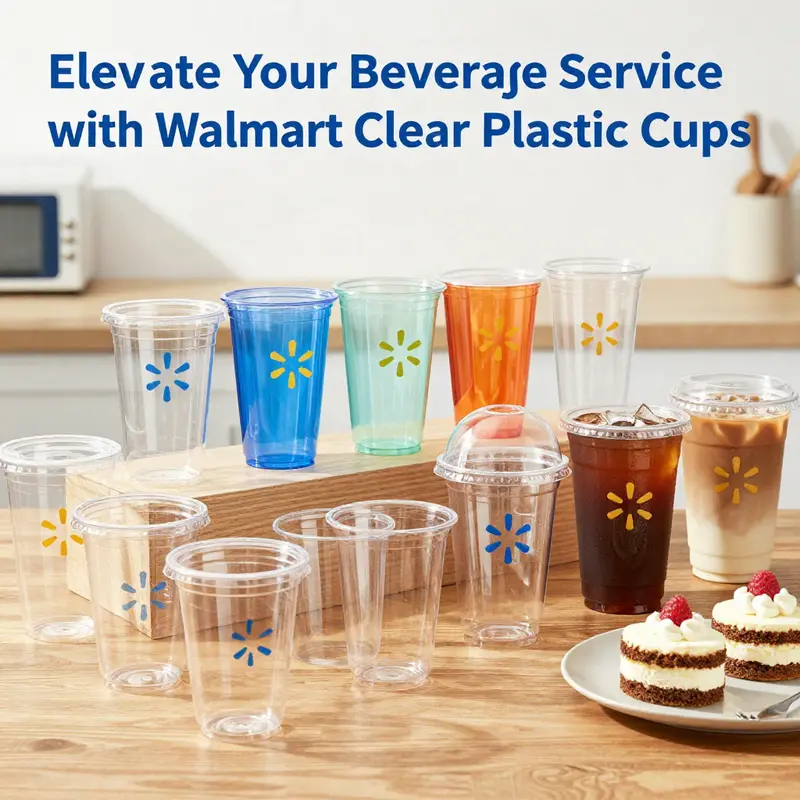
Clear plastic cups have a way of turning everyday moments into manageable, convenient experiences. They are small tools with outsized impact, especially when a retailer like Walmart makes them available in a broad, thoughtfully organized lineup. The simple decision to choose a clear cup is about more than the container itself; it is about clarity in the sense of visibility, portioning, and ease of service. For households planning weekly gatherings, for offices coordinating daily beverage stations, or caterers staging a busy event, the right cups can streamline service, reduce waste, and elevate the overall experience without drawing attention away from the drinks, the food, or the people enjoying them. In Walmart’s range, the cups are designed to meet a spectrum of needs while maintaining a consistent standard of safety, clarity, and reliability. This chapter surveys that range and dives into how different sizes, shapes, and features translate into practical uses across daily life and special occasions, all while remaining mindful of value and practicality.
At the heart of the variety is size. When a drink warrants a small, controlled serving, a seven-ounce option fits the bill. For daytime beverages like juice, tea, and milkshakes, mid-range capacities such as nine- or sixteen-ounce cups are common, offering a balance between portability and a generous serving. For larger needs—whether a smoothie, iced coffee, or a cold brew at a bustling gathering—twenty-ounce and thirty-two-ounce cups become practical workhorses. The progression from small to large is not merely about volume; it maps onto how people consume, share, and enjoy beverages. A smaller cup invites a tasting or a quick refresh during a meeting, while a larger cup enables a communal experience or a on-the-go refill without constant reloading. In everyday use, this spectrum supports everything from a quick office pick-me-up to a backyard barbecue where guests help themselves and move on to the next flavor.
The types of cups extend beyond mere disposables. Walmart’s assortment includes disposable cups that come with lids and, in some cases, compatible straws. The lids help preserve cold drinks and minimize spills, which is especially valuable in settings like schools, offices, or outdoor events where movement and activity are constant. A 32-ounce option designed for cold beverages epitomizes how form and function align in a single, practical package: large enough to satisfy a hearty thirst, sealed to reduce accidental spills, and clear enough to showcase the beverage inside. A 16-ounce variant, equally clear and sturdy, serves the needs of milkshakes, smoothies, and iced teas with a balance of durability and ease of handling. For appetizers or small desserts, there are nine-ounce cups that support portions without overcrowding the lid’s edge. The kitchen science behind these choices is simple but effective: the clear PET plastic preserves the visual appeal of the contents, while a sturdy wall and a reliable base keep the cup stable on crowded tabletops and busy catering counters.
Beyond the disposables, the range also includes practical storage solutions that complement the cups themselves. Clear plastic storage bins, made from BPA-free materials, offer a versatile option for organizing a home kitchen, a school pantry, or a catering staging area. Their transparent design makes contents easy to identify at a glance, saving time during setup and cleanup. The emphasis on BPA-free materials reflects a growing consumer preference for safer, clearer plastics that balance clarity with peace of mind. While these storage options are not beverage vessels, they play a vital role in the same ecosystem that makes Walmart’s cup lineup so user-friendly: accessibility, predictability, and simplicity in planning and execution.
Of course, not every occasion calls for a one-time-use cup. A growing number of households and organizations are embracing occasional reuse of clear plastic drinking cups, particularly for outdoor spaces or family gatherings where durability and ease of cleaning matter. Reusable cups, often marketed as dishwasher-safe, can extend the utility of Walmart’s clear plastic range beyond single-use needs. The key in any reuse strategy is mindful care: thorough washing, proper drying, and an awareness of wear over time. Reusable options complement the disposables by offering a longer-term solution for frequent hosts or office beverage stations, while still benefiting from the same level of clarity that makes the cups appealing in the first place. The broader takeaway is that Walmart’s lineup provides not only a path to immediate, single-use convenience but also an entry point into sustainable practices that respect the rhythms of everyday life.
The design features embedded in these cups matter more than their appearance might suggest. Clear plastic is chosen for its ability to reveal the beverage, increasing the perceived freshness and appeal of the contents. A well-constructed cup will hold its shape under the temperature range associated with cold drinks, resisting warping or sweating on warm surfaces. The lids, when included, create a seal that helps keep contents fresh and minimizes splashes during transport. In environments like offices, cafeterias, or events where people move between spaces, this combination of transparency and containment helps reduce mess and waste while preserving the drink’s visual allure. The presence of a lid also supports the practice of pre-portioning for events, enabling servers to stage drinks ahead of time and hand them off with confidence.
Another practical dimension is stacking and storage efficiency. The stackability of clear cups is not a luxury but a logistical advantage. In busy catering scenarios, space is at a premium, and being able to nest cups neatly reduces clutter and speeds up service. Stackable designs also ease the process of restocking, as cups can be brought out in batches without creating a mountain of separate pieces. For home use, stackability translates into a tidy cabinet or pantry, where the cups disappear into a corner until they are needed, only to reappear in a tidy, orderly stack at the moment of service. This organizational efficiency ties directly into the broader theme of Walmart’s cup lineup: a thoughtfully curated assortment that respects the realities of how people actually prepare, serve, and enjoy beverages.
The spectrum of uses stretches from everyday practicality to festive presentation. In homes, these cups are handy for family movie nights, backyard barbecues, or afternoon teatimes, providing a confident, glass-clear canvas for any drink. In offices and schools, they become a simple solution for beverage stations, snack corners, or science project celebrations where cups are needed in larger quantities and in a variety of sizes. Cafeterias and dining halls benefit from the same clarity, as guests can easily identify options and portion sizes. Event planners, in particular, appreciate the option to mix sizes for different courses or stations—drinks at a cocktail bar, smoothies at a kids’ station, water at a conference lounge—and still maintain a cohesive, visually appealing setup. The uniform transparency across sizes helps tie the whole presentation together, making the beverage service feel cohesive even as it accommodates diverse tastes and needs.
The tactile experience of using a clear cup matters as well. The slightly frosted texture of some PET cups can offer a quiet grip, reducing the chance of spills when hands are full. The weight of the plastic ensures that the cup feels substantial in the hand, which enhances the user’s perception of reliability. In situations where guests may be balancing a plate, a cup, and a phone or napkins, this combination of grip and stability is not a minor detail; it is a facilitator of smooth, confident service. The transparency of the material ensures that presentation remains central: the color and bubbles in a fruit punch, the thickness of a milkshake, or the gradient of an iced coffee all remain visually appealing, inviting guests to enjoy the drink before them.
As with any purchase decision, price and value play a role in selecting the right combination of sizes and types. Walmart’s online and in-store options empower shoppers to assemble a mix-and-match set that suits their budget and their event calendar. The ability to buy in bulk reduces the per-unit cost, which is especially important for institutions like schools and offices that service many people on a regular basis. The practical reality is that cost efficiency and convenience often go hand in hand: bulk options are not just cheaper per cup, they also streamline procurement, reducing the number of supplier touchpoints and the time spent coordinating deliveries for different event needs. In this sense, the cup lineup supports a broader workflow, from planning through execution, aligning product features with the rhythms of daily life and occasional celebration.
Choosing the right cup becomes also a matter of anticipating the moment. For a casual gathering in a living room, you might lean toward a mid-sized, lidless or lid-equipped option that accommodates a wide range of beverages and makes cleanup straightforward. For a child-friendly party or an outdoor picnic, a larger size with a secure lid can prevent spills and ensure that drinks stay within reach of energetic guests. For a tasting flight or a sampling station at a catered event, the small, clear cups provide the precision needed to assess flavors, textures, and aromas without committing to a full serving. The ability to select multiple sizes from a single retailer simplifies planning and ensures that each segment of a social gathering receives an intentional, well-mitted serving solution. The result is a cohesive, well-executed experience that respects both the guest’s enjoyment and the host’s logistical realities.
In thinking about the ecosystem that supports Walmart’s clear plastic cups, it helps to imagine a moment when you walk into a room prepared for a function. On a table with a beverage station, you see glassy clarity, organized stacks of cups, and perfectly matched lids or straws waiting in accessible compartments. The setup communicates care and control, signaling to guests that service is ready and the environment is prepared for their needs. The cups’ transparency becomes a silent partner to the beverages themselves, letting the color, texture, and even the little ice crystals catch the eye. The convenience factor emerges not only from the cups’ physical design but from the seamless way they integrate into a broader system of serving ware, food presentation, and event logistics. This integration is a reminder that even small choices—like which cups to stock—can ripple outward, shaping how people experience a gathering, how quickly staff can respond, and how waste is managed in practical terms.
The broader takeaway is that Walmart’s clear plastic cups offer more than a disposable vessel. They provide a flexible framework for serving, organizing, and presenting beverages across a wide spectrum of settings. Their range supports a practical approach to portion control, reduces the friction of service, and helps ensure that beverages look as good as they taste. The cups make it easier to plan for varied needs without overcomplicating the procurement process, and they fit naturally into the everyday routines of families, schools, offices, and caterers alike. For anyone seeking a reliable, visually appealing beverage solution that scales from small gatherings to large events, the options available through Walmart present a compelling combination of clarity, practicality, and value.
For readers who want to explore a specific usage scenario—such as planning for a party or organizing a beverage station in a busy workplace—it can be helpful to consider a tangible example. A disposable clear plastic cup designed for general serving needs can serve as a versatile centerpiece for the spread: it holds a wide range of drinks, suits a variety of event sizes, stacks neatly for storage, and pairs easily with compatible lids and straws. This flexibility is the core strength of Walmart’s clear cup lineup, allowing hosts to tailor their approach to the moment while maintaining a consistent standard of reliability and presentation. If you are curious about a practical, ready-to-order option for outdoor gatherings or larger celebrations, you can find cups designed for versatile use that align with these principles and support an effortless service flow. disposable clear plastic cup for parties.
External resource: https://www.walmart.com/ip/Large-Clear-Plastic-Disposable-Cups-with-Lids-Straws-25-count-32-oz-Clear-PET-Cup-for-Cold-Smoothie-Iced-Coffee-Boba-Bubble-Tea/1187455117
Clarity in Hand: Walmart Clear Plastic Cups for Home, Party, and Event Needs
Clear plastic cups are more than disposable vessels; they anchor everyday routines and social gatherings alike. This chapter explores Walmart’s lineup, from small samples to bulk sets, and from simple, transparent cups to those with lids and straws for on-the-go use. The goal is to match capacity, material, and design to real moments—family dinners, kids’ parties, school events, and outdoor celebrations. We’ll cover capacity ranges, material considerations, lid and straw options, packaging and price signals, and the impact of special features on presentation and usability. The framework centers on practical choices: pick a size that fits expected servings, prioritize durability for the scenario, and weigh convenience in relation to cleanup and waste. We’ll also look at how consumer reviews guide selection, how pricing scales with bulk packs, and how to balance aesthetics with function. By the end, you’ll have a clear lens for choosing the right Walmart clear cup for everyday use and occasional hosting, with a focus on reliability, value, and effortless service.
Tracing the Footprint: The Environmental Trail of Walmart’s Clear Plastic Cups

Clear plastic cups are one of those everyday objects that disappear from view the moment we lift a drink to our lips, yet their environmental footprint lingers long after a party ends. In the aisles of big-box retailers, including the retailer discussed in this volume, a spectrum of clear cups appears for a range of occasions—from daily hydration to special events. They are designed to be convenient, transparent reflections of what we drink and how we celebrate. But behind that simplicity lies a complex chain of choices, compromises, and consequences that trace a line from crude oil and cornfields to kerosene-fueled trucks, from consumer habit to recycling infrastructure, and finally to the inhospitable corners of landfills when disposal goes awry. The environmental story of clear plastic cups is not a single narrative but a tapestry woven from material science, production economics, consumer behavior, and public policy. Reading that tapestry requires attention to how these cups are made, how they are used, and what happens to them after their brief moment of usefulness has passed.
At the core of this conversation is the material itself. The familiar clear cups most people encounter are often made from PET plastic, a resin prized for clarity and strength in cold drinks. PET’s advantages are clear: it is durable enough to withstand being shuffled through catering lines and reused in many contexts, and it provides a transparent surface that invites a clean, approachable presentation of liquids. Yet even as PET supports a seamless consumer experience, it embodies a narrative of extraction, refining, and energy use. The production of plastics, even when derived from relatively abundant petrochemical feedstocks, consumes significant energy and water, and it emits greenhouse gases along the way. The lifespan of a PET cup is brief by design, and its end-of-life fate is where the story becomes especially intricate: recycling streams exist, but they are brittle, uneven, and highly dependent on local infrastructure and consumer participation. The result is a paradox: a material that is technically recyclable in many places often ends up in landfills or the litter stream due to contamination, sorting challenges, or simple lack of access to appropriate facilities.
In response, some lines of products positioned for disposal as more environmentally friendly have entered the market, introducing plant-based bioplastics such as polylactic acid (PLA). PLA is marketed as commercially compostable and derived from renewable resources, offering the promise of a kinder path for disposable cups made from plant matter rather than fossil fuels. But the reality is not so straightforward. PLA’s compostability hinges on industrial facilities that reach and sustain the high temperatures and controlled conditions necessary to break down the polymer, a process different from home composting. Even then, the fate of PLA cups depends on whether compostable streams exist in a given community and whether those streams actually collect the cups in a way that maintains the integrity of the composting process. When PLA cups instead end up in regular landfills or in environments where industrial composting is not available, they behave much like conventional plastics, taking years to degrade and contributing to the very waste management challenges that prompted their development in the first place. The promise of a material that can be composted, then, rests on a reliable disposal network that can accept it and on consumer behavior that aligns with those networks.
This is where the interplay between design, disposal, and policy becomes crucial. Walmart’s assortment includes clear cups crafted from different materials and configured for different disposal pathways. The choice of material is not just a technical decision; it is a statement about what a retailer believes is feasible for broad adoption given existing infrastructure and consumer practice. The bioplastic option, for example, is attractive in theory because it suggests a potential decrease in fossil-fuel dependence and a move toward renewable resources. In practice, the environmental advantage is conditional. If industrial composting facilities are scarce, or if they do not accept the specific PLA formulation used in a cup, the environmental benefit evaporates. Even more, the broader life cycle must be considered: the energy consumed during the plant-based plastic’s production, the land-use implications of growing the feedstock, and the transportation emissions that accompany global supply chains. A cup’s journey from cradle to grave thus becomes a lens into the broader question: can disposable tableware be reconciled with a society that aspires to lower waste and cleaner oceans, or is it inherently at odds with the scale and speed of contemporary consumption?
Within this frame, recycling emerges as both a potential solution and a source of confusion. The recycling stream for clear cups is fraught with challenges that can seem like technical friction yet are in fact practical barriers to real environmental progress. Clear cups are thin and often contaminated with beverage residues, which complicates the sorting and cleaning processes that recycling plants rely on. Labels can be ambiguous, spelling out no clear path for whether a cup should be recycled, composted, or discarded. When a cup is successfully diverted into a recycling stream, it typically enters a system designed to handle containers of similar materials. But the heterogeneity of consumer products—different plastics, different additives, and occasionally different cap materials—makes the balance delicate. Mis-sorted items can contaminate entire batches, reducing the resale value of recyclables and sometimes leading to lanes of material that cannot be processed economically. The bottom line is that even when a retailer promotes recycling programs or claims certain cups are recyclable, the actual impact is determined by local facilities and by consumer diligence. For many communities, the reality is that a reliable end-of-life pathway for clear plastic cups remains conditional rather than universal.
Policy and industry context adds another layer of complexity. In recent years, large producers and retailers have faced shifts in collective commitments to plastics reduction and circular economy goals. Notably, some industry-wide initiatives that sought to align packaging with sustainability targets have faced withdrawals or slowdowns, signaling the difficulty of coordinating large-scale plastic reduction within the existing physical and regulatory landscape. These shifts matter because they set the tempo for investment in alternative materials, recycling infrastructure, and consumer awareness campaigns. When a major retailer curtails engagement with a broad plastics pact, it creates a ripple effect through suppliers, waste management partners, and municipal programs. The upshot is not a sudden disappearance of disposable cups from circulation but a rebalancing of priorities: what can be produced more efficiently, what can be recycled or composted, and what kind of messaging and incentives can move consumer behavior toward disposal choices that align with environmental goals.
The consumer side of the equation cannot be overlooked. A cup’s environmental fate is heavily influenced by where and how it is discarded. If a cup is disposed of at a venue lacking proper waste separation, or if households struggle to locate appropriate recycling or composting streams, the cup slides toward disposal that does not align with its intended end-of-life pathway. Education, convenience, and habit all play roles. The same cup that is designed for a cold beverage during a summer picnic might find itself in a different fate when used at a large event with defined waste stations and clearer labeling. The broader lesson is that the environmental impact of clear cups is not determined solely by the material they are made from or by corporate claims; it is shaped by real-world systems that must be able to absorb, sort, and process used cups in a way that minimizes environmental harm. Without robust, accessible waste infrastructure and consistent consumer participation, even the best-designed cup has limited impact beyond the moment of use.
There is also a design conversation embedded in these realities. Materials science offers pathways to make cups that are lighter, more durable, or easier to recycle. Some approaches emphasize monomaterial designs that simplify recycling streams by reducing mixed-material barriers. Others push for compatibility with widely available recycling—an approach that prioritizes compatibility with local sorting facilities and public acceptance. There is value in aligning product design with the realities of end-of-life management: if a cup can be cleanly recovered, sorted, and transformed into new feedstock, its environmental burden is reduced. Yet design alone cannot solve the problem; it must be accompanied by transparent labeling, clear consumer guidance, and investments in infrastructure that can demonstrate real, verifiable improvements over time.
Against this backdrop, it helps to consider the broader context of what “sustainability” means for disposable tableware. Sustainability is not a single attribute but a balance among material choice, energy intensity, water use, transport emissions, and post-use fate. For clear cups, that balance hinges on whether the comparative benefits of plant-based materials are realized in practice, whether recycling and composting streams are viable in most communities, and whether the upstream and downstream costs—both environmental and economic—are justified by the end result. This is not mere academic debate. It translates into the daily decisions of households choosing what to buy for a family gathering, schools stocking lunchrooms, and event planners selecting serving ware for conferences and celebrations. Each choice adds another thread to the environmental tapestry, either strengthening a system that can handle a high throughput of single-use items with minimal waste, or underscoring the gap between aspiration and reality.
As we move through this landscape, the conversation around Walmart’s clear cups reveals a tension between convenience and responsibility. The retailer’s broad assortment signals an attempt to meet consumer needs at scale, from casual everyday use to large events and formal occasions. But scale also magnifies the consequences of disposal choices. A typical event might generate thousands of used cups in a few hours, creating demands on local waste streams and on facility capacity to sort and recycle or to process compostable material. The environmental metric, therefore, becomes not only the energy or water embedded in manufacturing but also the efficiency and effectiveness of the waste-management network that takes cups after service ends. It is here that the real-world impact of choosing one cup material over another becomes measurable—through diverted waste, through energy saved in recycling, and through fewer cups ending up in landfills.
For readers seeking concrete guidance on disposal pathways, an often-overlooked factor is how local programs classify and handle compostables and recyclables. The difference between a legally defined recyclable and a practically recyclable item matters because it determines whether a cup contributes to circularity or simply to waste. Community recycling streams differ in what they accept and in the processing steps required to turn used cups into useful material again. Similarly, the availability of industrial composting facilities varies widely by region. In some places, a cup advertised as compostable may be accepted into a municipal compost stream, while in others it may require a private composting service or may not be accepted at all. Understanding these local realities is essential for anyone who wants to make responsible use of disposable cups in daily life or during events.
With these realities in view, it is possible to imagine a future where convenience does not come at the cost of ecological health. That future might involve intensified collaboration among retailers, manufacturers, municipalities, and consumers to align product design with waste-management capabilities. It could mean clearer labeling that helps people distinguish which cups fit which end-of-life streams, or investments in recycling and composting infrastructure that expand access to accepted materials. It might also involve a shift toward reusable serving ware for large gatherings, paired with systems that make reuse easy and affordable, thus reducing the absolute volume of disposables needed. None of these changes are instantaneous, but they are all plausible steps toward a more sustainable system. The core constraint is infrastructure: the systems that orchestrate production, consumption, and end-of-life must co-evolve with the materials and designs we choose to adopt.
In the end, the environmental impact of clear plastic cups—whether sold under a familiar retail umbrella or any other brand—depends on a network of decisions and capabilities that extend far beyond the moment of purchase. It depends on material choice and manufacturing energy, on the availability and reliability of end-of-life facilities, on labeling and consumer literacy, and on the political and economic will to invest in better waste management. The story is not simple, but it is navigable. Consumers can play a role by choosing to participate in local recycling or composting programs, asking retailers about how cups are designed with end-of-life in mind, and supporting policies that expand access to appropriate disposal streams. Retailers and manufacturers, for their part, can continue to experiment with materials and designs that reduce energy intensity and improve recyclability, while also communicating clearly about how their products should be disposed of in different communities. The environmental thread runs through the entire chain—from raw materials to end-of-life—reminding us that the simplest of choices, made repeatedly, can collectively shape the health of ecosystems, oceans, and soils for years to come.
For readers looking to explore related options that reflect a similar focus on clear, versatile cups used for serving desserts and snacks at events, a practical resource covers a range of dessert packaging that emphasizes transparency and portion control. You can explore examples such as clear cake cups for weddings and parties to better understand how design decisions matter for presentation and end-of-life considerations. While these products sit in a different retail ecosystem, the underlying questions—how easily a cup can be recycled, whether it can be composted, and how its materials influence the broader waste system—are the same. They serve as a reminder that even as consumer packaging evolves, the ultimate test remains the same: can the system in which it operates absorb it without creating new problems as it scales?
External reference: For more detailed information about the specific environmental standards and disposal guidelines for certain PLA-based drinking cups, see the official product details from major retailers’ product pages and industry disclosures. External researchers and policymakers can review the official references that discuss disposal infrastructure, composting requirements, and recycling stream compatibility to better understand where real progress is being made and where gaps persist. External readers may consult the following resource for context: https://www.walmart.com/ip/Zero-Waste-20-oz-Round-Clear-PLA-Plastic-Drinking-Cup/56874197
Final thoughts
Walmart clear plastic cups offer a blend of affordability, functionality, and versatility for various beverage and food service needs. By understanding the options available and their environmental implications, bubble tea shops, restaurants, and catering services can make informed decisions that support not only their service quality but also contribute positively towards sustainability. Utilize this knowledge to enhance your operational efficiency and customer satisfaction—choosing the right cups is just as important as the beverages themselves.