
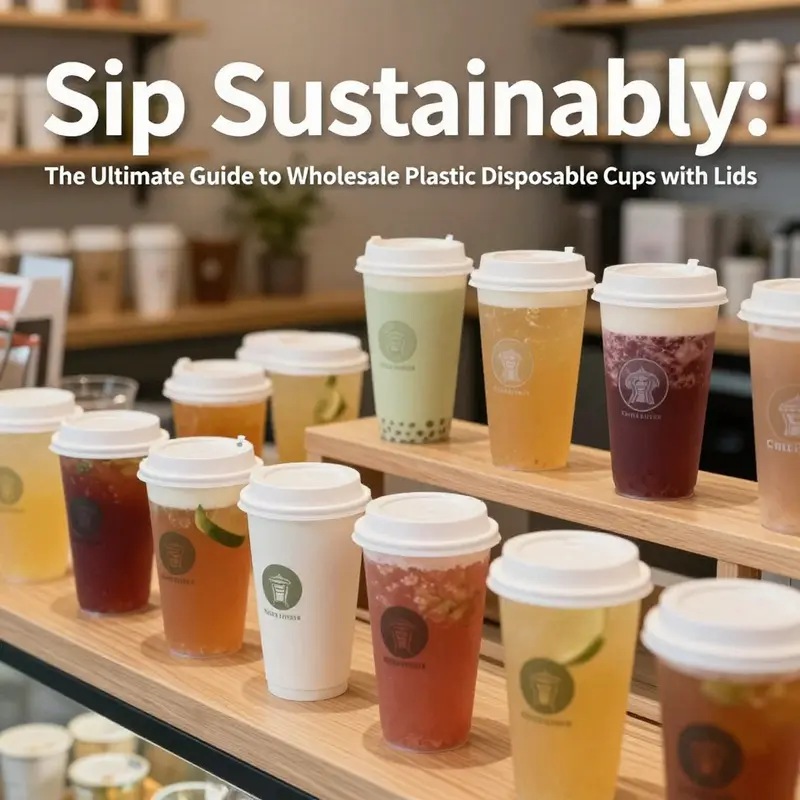
In today’s bustling beverage industry, the choice of packaging can not only influence customer experience but also reflect a brand’s commitment to sustainability. Wholesale plastic disposable cups with lids are essential for bubble tea shops, restaurants, food trucks, and event planners. These versatile products serve an array of beverages from smoothies to iced coffees, while also accommodating condiments and desserts. This guide dives into material considerations, sizing options, pricing strategies, certifications for product safety, and logistic factors that ensure seamless operations. By understanding these facets, your establishment can enhance service offerings while making informed purchasing decisions.
Material Matters: Balancing Performance and Sustainability in Wholesale Plastic Disposable Cups with Lids
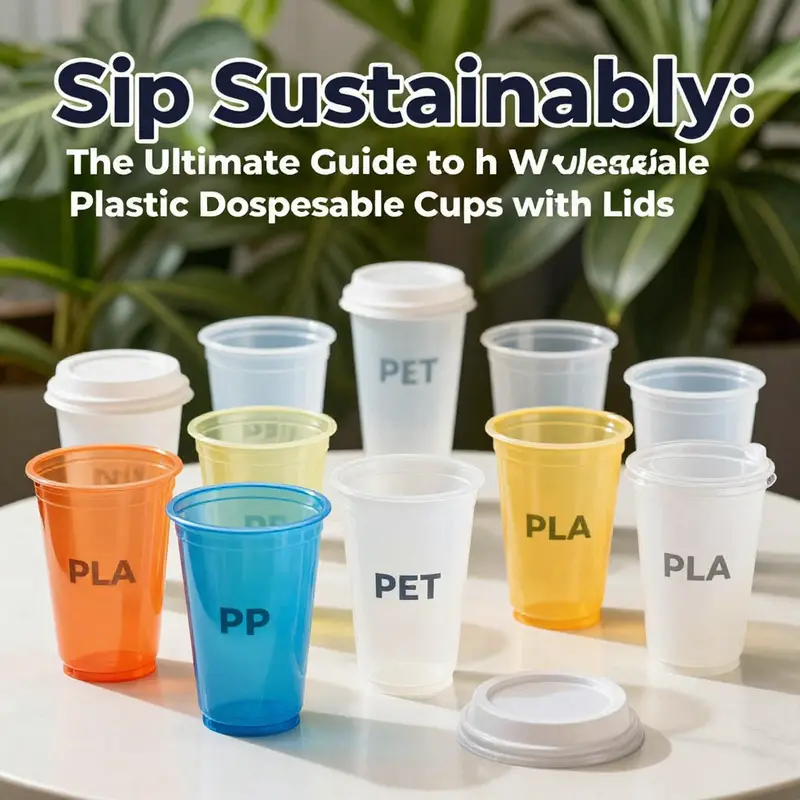
Material selection for wholesale plastic disposable cups with lids matters beyond performance; it influences cost, supply chain risk, and environmental impact. In markets that serve coffee shops, catering companies, events, and venues, the cup is the interface between product and customer. The main material families are polypropylene (PP), polylactic acid (PLA), and polyethylene terephthalate (PET). Each brings a distinct profile of strength, temperature tolerance, clarity, and end‑of‑life considerations. Understanding these profiles helps buyers balance short‑term needs—hot versus cold beverages, lid compatibility, and leak resistance—with longer‑term commitments to sustainability and regulatory compliance. A practical way to think about it is that material choice shapes how a cup behaves during use, how it is disposed of afterward, and how a brand is perceived in a marketplace increasingly attentive to responsible packaging.
PP is a versatile workhorse. Its durability and heat resistance make it suitable for hot beverages as well as cold ones, which is essential for a segment where coffee and iced drinks coexist. PP cups often strike a favorable balance between cost and functionality, enabling brands to offer reliable performance without inflating unit prices. However, the PP lifecycle requires attention to end‑of‑life options: recycling streams, labeling, and access to collection systems are pivotal to maximizing value and minimizing downcycling. In regions with robust PP recycling, a well‑designed PP cup can support high‑volume programs with predictable margins; in others, buyers may need to explore take‑back or post‑use collection partnerships to realize environmental benefits.
PLA introduces a different axis of consideration. Derived from renewable resources, PLA can reinforce a brand story around sustainability and decarbonization. Yet PLA’s temperature tolerance is typically lower than PP, so careful pairing with beverage type and serving conditions is essential. PLA shines for cold drinks or desserts where a clear, pristine appearance supports product visibility. Certification for food contact and verified environmental certifications help reassure customers about end‑of‑life outcomes. Many PLA designs are best suited for controlled composting environments rather than standard municipal landfills, so buyers should verify local infrastructure and ensure labeling communicates appropriate disposal pathways.
PET offers clarity and strength, making it a common choice for visually appealing cold beverages and desserts. PET’s rigidity supports reliable dispensing and handling, and its barrier properties help preserve product quality during short to medium transit. While PET recycling is well established in many markets, it is less associated with compostability. Clear PET cups provide a cost‑effective option where visibility and a sanitary, premium look matter, but they may not align with a sustainability narrative that emphasizes compostable alternatives.
Beyond the core materials, certifications and credible environmental claims matter. Look for third‑party verification of food contact safety and environmental attributes (for example FDA compliance and ISO 9001 quality management). Certifications such as OK compost or equivalent schemes can add credibility when end‑of‑life pathways are important to customers, but claims should be traceable and transparent, not merely platform badges. A transparent sourcing story—covering resin origin, manufacturing methods, and end‑of‑life pathways—helps buyers differentiate credible suppliers from marketing claims.
In practice, the best material choice combines function, lifecycle impact, and business priorities. Functional design features—such as integrated lids, leak‑resistant rims, and appropriate headspace—can magnify environmental benefits by reducing spill and waste. Design also matters for branding: many suppliers offer customization through OEM/ODM services and can print with food‑safe inks that meet regulatory standards.
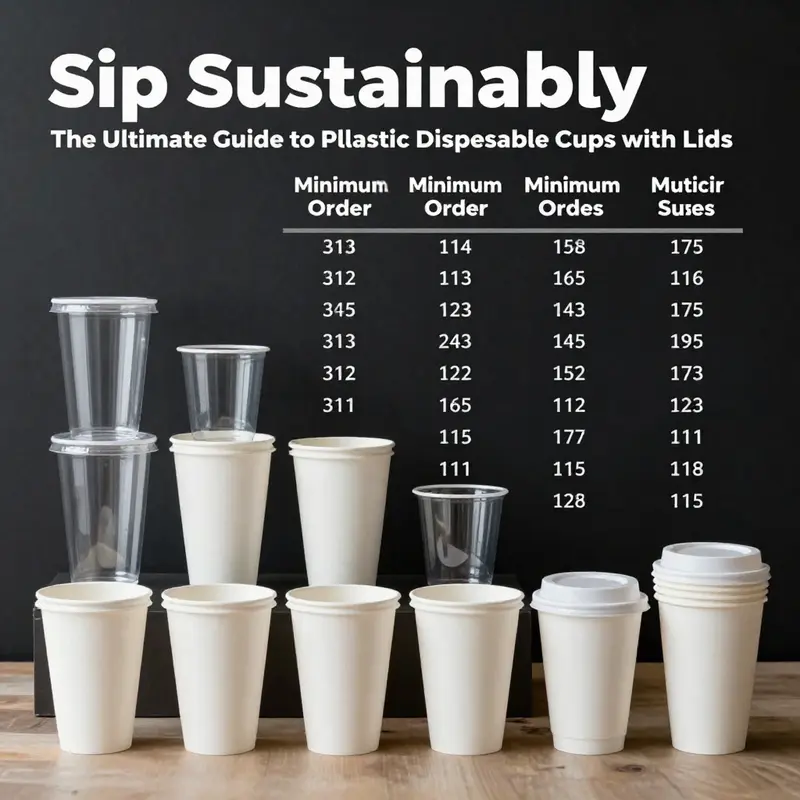
Sourcing and supply considerations come into play when planning large programs. Major manufacturing regions often provide scale and cost advantages, while lead times, minimum order quantities (MOQs), and customization levels vary. Plain cups with standard lids can have relatively low MOQs, enabling quick testing and regional rollouts; customized or high‑end designs typically require higher MOQs and longer lead times. In addition to price and capability, verify that suppliers hold credible safety and quality certifications and that their environmental claims can be independently verified.
Finally, translate these choices into action through a practical decision framework: map beverage categories and service contexts to material attributes, assess the buyer’s environmental goals, and test with samples to verify fit, performance, and compatibility with lids and dispensing systems before large commitments. For brands pursuing sustainability without compromising function or economics, the right material, combined with thoughtful design and credible certification, offers a pragmatic path forward.
null
null
null
null
Trust by the Cup: Certifications and Supplier Reliability in Wholesale Plastic Disposable Cups with Lids
Certifications and supplier reliability are more than compliance checkboxes in the world of wholesale plastic disposable cups with lids. They are the quiet guarantees that a business can count on when serving hot coffee, iced tea, or cold beverages to thousands of customers each day. The market is crowded with options that differ in material, size, design, and printing potential, but the truly dependable choices rest on two pillars: formal certifications that prove safety and quality, and demonstrable supplier reliability that translates promises into on-time, error-free deliveries. In this space, choices are not simply about cost per unit; they are about risk management, brand protection, and the ability to scale operations when demand shifts with seasons, events, or new program rollouts. As buyers navigate these decisions, they encounter a spectrum of materials—PP, PET, and PLA—and a range of certifications that indicate safety for food contact, environmental stewardship, and rigorous quality systems. The interplay between these factors shapes whether a supplier truly deserves a place in a customer’s supply chain or remains a tentative option that never fully delivers on its promises.
At the core of safe, compliant production is FDA compliance. When cups and lids are intended for food contact in the United States, adherence to standards such as 21 CFR 177.1630 provides a baseline for safety. This certification is less about aesthetics and more about traceability, materials compatibility, and the predictable performance of containers under typical conditions of use. In Europe, the equivalent emphasis on food-contact safety is reflected in EU regulations like 1935/2004, which codify how materials should behave in contact with food and how products should be tested and declared for consumer safety. A supplier that can demonstrably meet both U.S. and European requirements signals a capacity to serve multinational brands and retailers that demand consistent quality across markets. It is not a guarantee of perfection, but it is a robust signal that the supplier’s systems have been designed to prevent common failures—leaks, delamination, migratory substances, and print flaking—that can sabotage a great beverage program.
Beyond safety, the color and clarity of a product’s internal story matter. ISO 9001 certification, focused on quality management systems, speaks to a supplier’s ongoing discipline: how they document processes, how they monitor performance, and how they respond when issues arise. A factory that operates under ISO 9001 tends to maintain tighter control over mold design, material sourcing, sealing integrity, and print registration. In cases where eco-minded buyers turn to biodegradable PLA cups, additional certifications such as BPI compostability and CE markings become increasingly important. BPI signals alignment with composting standards that resonate with municipal programs and green-focused buyers, while CE marking reassures buyers in markets where safe operation and conformity assessment are valued. Taken together, these certifications create a lattice of accountability that helps buyers separate credible candidates from suppliers who offer only marketing assurances.
Still, certifications tell only part of the story. Verifying authenticity requires diligence. Buyers should request copies of certificates and test reports, and when possible, seek third-party verification from independent labs or certification bodies. Some suppliers may present certificates that look legitimate, but without corroborating data, the claim remains untested. This is why transparent documentation—traceable batch numbers, material datasheets, and clear evidence of ongoing surveillance—becomes essential. A truly credible supplier will provide you with a chain of evidence: material compliance sheets, extrusion or molding process specifications, seal integrity test results, and performance data from actual production runs. Such transparency reduces the risk of non-conforming lots reaching customers and avoids the costly disruption of recalls, returns, or brand damage.
When it comes to reliability, the geography of manufacturing matters as much as the paperwork. Leading production clusters in major Chinese provinces demonstrate how scale, specialization, and proximity to logistics hubs translate into dependable service levels. Guangdong, with its concentration of integrated plastics facilities, is renowned for rapid mold design cycles, high-precision sealing, and efficient automated labeling. In Sichuan’s manufacturing hubs, capacity to produce large volumes while maintaining cavity stability and print consistency can facilitate big campaigns and seasonal spikes. A supplier with established capabilities in these regions often offers a balanced combination of capacity and quality control, enabling full container orders to be fulfilled within a practical window after sample approval. In practice, this means a supplier can handle both standard offerings and bespoke projects, from simple, unprinted PET cups to more complex, printed PP or PLA options with multi-color branding. The ability to deliver consistently across dozens of SKUs—sizes, shapes, and lid variants—without sacrificing seal accuracy or print durability is the hallmark of a supplier who can be trusted to grow with a client.
Lead times and scalability are the practical tests of reliability. For first orders, standard timelines frequently extend to 30–45 days, allowing for sample testing, mold validation, packaging readiness, and initial production ramp-up. Once a relationship is established, subsequent orders typically move much faster, with 7–15 days from order routing to delivery, provided that all approvals are in place and materials are available. For full-container shipments, a common cadence after sample approval is 15–30 days, though this can flex with raw material markets, currency shifts, or unexpected demand surges. The numbers themselves are not guarantees, but they offer a framework buyers can use to calendar risk, budget, and inventory planning. For smaller, trial runs—say 5,000 to 10,000 units—some suppliers can execute them in as little as seven to ten days, a capability that proves invaluable when a brand is testing a new program or a co-branding effort around a high-visibility event.
Costs and minimums are the practical levers buyers pull in the early stages of supplier selection. Basic plain cups with standard lids often carry relatively low minimum order quantities, sometimes starting around a thousand pieces. Custom-printed or premium designs, with branding, multi-color logos, and specialized shapes or materials, typically require higher minimums, ranging from several thousand to tens of thousands of pieces. Price efficiency is not simply a function of unit cost. It also hinges on the stability of the supply chain, the predictability of lead times, and the supplier’s ability to keep print colors aligned across lots. A cautious buyer will weigh the total cost of ownership: the per-unit price plus the risk-adjusted costs of potential delays, rejected shipments, or redesigns due to print misregistration. In this sense, a lower unit price that accompanies frequent quality issues could raise total costs above a more stable, albeit slightly more expensive, option.
No discussion of reliability is complete without touching risk mitigation. International buyers increasingly rely on trading platforms that offer secured payment methods, clear refunds or chargeback guarantees, and supplier audits. These controls provide a safety net against misrepresented capabilities, late deliveries, or substandard batches. An additional practical safeguard is the opportunity to request free samples, typically at little or no cost, with buyers covering postage. These samples allow physical tests of material feel, seal integrity, and print durability before committing to larger orders. In the best cases, suppliers will offer a quick-turnaround trial, enabling brands to validate compatibility with their beverage lines, cup-holding times, and stacking or shipping requirements. A buyer’s supplier score—often reflected in repeat order rates and independent review signals—can serve as a barometer of ongoing reliability. High repeat buyer activity and transparent, verifiable performance histories often correlate with fewer disruptions and smoother replenishment cycles.
To facilitate informed decisions, many buyers begin by exploring standard, widely available options for a baseline. A standard clear plastic cup can be a reliable litmus test for assessing fit with lids, print compatibility, and seal quality. For readers who want to explore a typical product family in this space, a convenient starting point is the following online resource that presents a widely available, clear disposable cup suitable for diverse applications: disposable clear plastic cup disposable clear plastic cup.
This kind of test item helps buyers evaluate core performance attributes before narrowing the field to preferred suppliers. As part of the selection process, it is important to align procurement criteria with the end-use reality: the cup’s heat tolerance, its leak-proof sealing under the most demanding sipping scenarios, and its compatibility with the lid geometry already selected for a program. The customization stage, when pursued, should be tightly coupled with prototypes and print proofs. A supplier capable of handling mold design, accurate sealing, and printed labeling is particularly valuable because it reduces the risk of misalignment between cup wall geometry and lid fit, which is a common source of leaks and customer complaints.
Guided by these criteria, buyers build a shortlist that balances certifications, reliability indicators, and price. They seek evidence of environmental responsibility alongside robust safety and quality records. They insist on clear documentation for every batch that leaves the factory floor, and they expect partners who can scale up or down with demand while preserving the same level of control. They also favor suppliers who can demonstrate operational predictability—stable lead times, consistent print results, and repeatable seal technology—because these factors minimize the downstream risks associated with large event rollouts, seasonal campaigns, or multi-market launches.
In closing, the most trustworthy suppliers are the ones who merge rigorous safety certifications with proven operational performance. They maintain disciplined quality systems, can navigate the complexities of different regulatory environments, and demonstrate the capacity to deliver complex, customizable solutions without sacrificing reliability. They do not simply sell cups; they offer a pathway to consistent brand experience across markets and channels. As buyers move from certification checklists to actual supplier performance, they should also remember to leverage verification features on trusted marketplaces, request samples, and test printing and sealing across multiple lots. The result is a supply chain that supports dependable beverage service, protects brand integrity, and enables growth without the constant fear of disruption. For further reference on supplier practices and marketplace verification, see the external resource linked below.
External resource for further context: https://www.made-in-china.com/product-detail/90mm-700ml-U-Shape-Transparent-Disposable-Plastic-Cup-with-Lid_1108352752.html
From Mold to Shelf: Navigating the End-to-End Logistics of Wholesale Plastic Cups with Lids
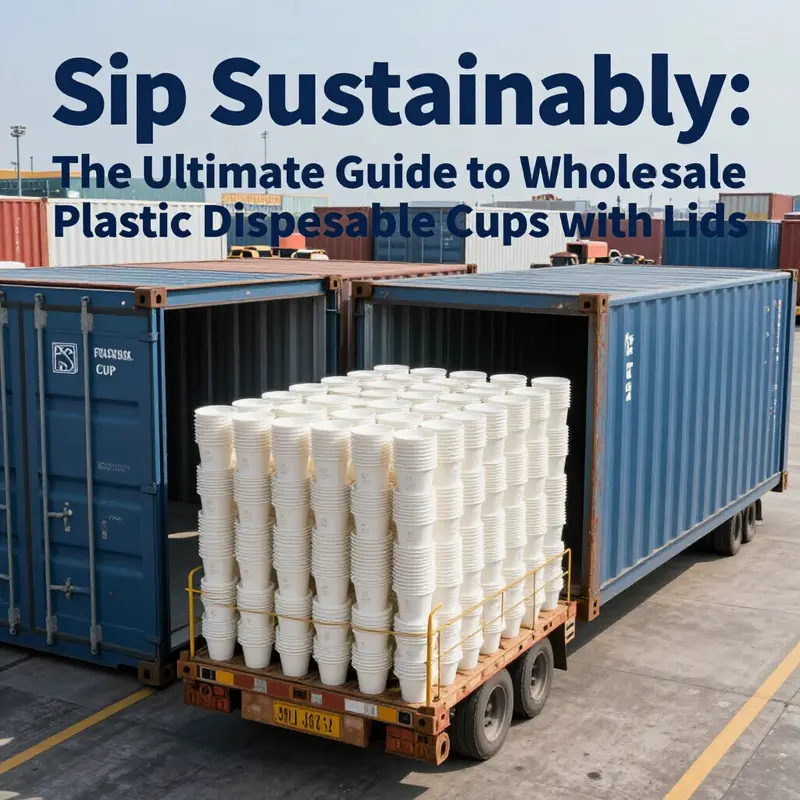
The journey of wholesale plastic disposable cups with lids from the factory floor to the store shelf is a choreography of precision, timing, and risk management. It is not a simple handoff but a tightly choreographed supply chain where every link must perform in concert. In a market driven by high volumes and time-sensitive deliveries, the path from molten resin to a customer’s counter demands clarity, reliability, and constant visibility. The factory floor in modern suppliers’ facilities is a hub of automation and throughput. Injection molding lines, automated sealing, and in-house printing capabilities converge to produce a finished product that is both uniform and brand-ready. Most leading manufacturers in this space operate with vertical integration that supports rapid scaling and fast transition from design to packaging. Orders are typically packed in standard export cartons that meet international shipping standards, a detail that may seem mundane but is essential to safeguarding product integrity during long-haul transport. In this environment, the ability to translate a design brief into a physical asset that arrives intact at the customer’s door hinges on disciplined process control and standardized packaging practices. In practical terms, this means a reliable sequence of mold setup, resin feeding, quality inspection, and final boxing. The efficiency of this sequence directly affects lead times and, ultimately, a buyer’s confidence in meeting promotional timelines or seasonal demand surges. A practical example of the complexity involved is the need to balance production speed with the risk of cosmetic defects, such as micro-scratches on translucent surfaces or slight color deviations in printed logos. These issues, though minor in isolation, can become costly when they appear across tens of thousands of units. To minimize such risks, reputable suppliers implement strict quality control checkpoints and traceability systems. Batch numbers, production dates, and material lots are logged so that any deviation can be traced quickly to its source. In tandem with QA, packaging logistics are designed to maximize protection. Standard export cartons are chosen for rigidity and stackability, while pallets are configured to withstand the rigors of ocean transport and handling at port facilities. The goal is to ensure that a bulk order remains stable from the moment it leaves the factory to the moment it lands in a regional warehouse. Within this framework the choice of material—PP, PET, or PLA—also influences shipping decisions. While PP and PET offer rugged durability for hot and cold liquids, PLA introduces an environmental dimension that buyers increasingly weigh against cost and performance. For biodegradable options, the supply chain must accommodate compostability documentation and certification, ensuring that end users can trust the environmental claim. The logistical implications of material choice extend beyond compliance into packaging economics and shipping efficiency. A supplier that can deliver a mixed shipment—some standard PP or PET cups alongside PLA-based, compostable options—must manage diverse supply streams, different resin lots, and a parallel quality track. This capability highlights how logistics teams must coordinate across manufacturing, packaging, and outbound logistics to meet client briefs without sacrificing speed or reliability. From a buyer’s perspective, the ability to access stock and custom prints in a single, coherent lead time is a critical part of procurement planning. In practice, many buyers look for suppliers that offer a spectrum of stock options while also accommodating OEM/ODM printing with limited color requirements. This combination of stock flexibility and customization helps businesses maintain brand consistency across a broad product portfolio. A useful illustration of stock options in action is the availability of a range of standard sizes—from 8 to 24 ounces—and the possibility of adding specialized lids that match shaping and sealing requirements. A close look at packaging and labeling practices further reveals how logistics shape the customer experience. For hot beverages, tight-fitting, heat-resistant lids reduce spill risk during transit. For cold drinks, dome lids with sip openings or flat lids with secure closures ensure product integrity and user convenience upon arrival. The compatibility of lids with cups is not simply a matter of aesthetics; it is a functional consideration that influences return rates, customer satisfaction, and after-sales service. The importance of documentation cannot be overstated. Before a shipment reaches destination, certificates such as FDA or ISO9001 records, along with any applicable national or regional compliance papers, must accompany the cargo. When biodegradable or compostable options are involved, additional certifications describing compostability standards—such as third-party verification of compostability—become part of the regulatory package. Buyers who plan to distribute globally must align with import regulations in their own markets. In this realm, accurate commercial invoices, packing lists, and certificates of origin help avoid delays and penalties at destination ports. The role of freight forwarders or third-party logistics providers is pivotal here. They consolidate documentation, arrange multimodal transport, and coordinate within the often complex web of port authorities, customs brokers, and inland distribution networks. Whether the shipment sails as FCL or LCL, the goal remains the same: maximize container utilization while protecting product quality. Lead times vary with order size and customization. A first order typically requires a longer window—roughly 30 to 45 days from confirmation to shipment—to allow for mold setup, production, and quality checks. For repeat orders where production lines and stock are established, lead times can shrink dramatically to about 7 to 15 days. This pattern underscores the strategic value of forecasting and supplier collaboration. It also points to a common risk in global sourcing: if demand surges or if a supplier faces a labor or raw material disruption, even well-planned schedules can shift. Price and terms are shaped accordingly. A typical arrangement might require a 30 percent upfront payment with the remaining balance due before shipment. This structure helps both sides manage risk while maintaining liquidity. The reliability signal here is stronger when suppliers hold relevant certifications indicating consistent quality control and responsible production practices. Yet certifications alone do not guarantee flawless execution. Buyers should seek independent verification of supplier credentials and, where feasible, audits of process controls. Customs clearance depends on accurate product classification, documented material use, and appropriate certifications for food contact materials. For the hot or cold beverage cups, the compatibility with safety standards across jurisdictions becomes an essential part of risk management. Documentation to support compliance may include FDA listings, LFGB or EU 10/2011 statements, and, for the biodegradable line, certifications that demonstrate compostability to recognized standards. The logistics architecture also hinges on the relationships that buyers cultivate with suppliers and their partners. Many manufacturers work with trusted 3PLs or freight forwarders who provide end-to-end support, from door-to-door delivery to container loading and discharge at the final distribution center. In practice, buyers often opt to leverage the supplier’s logistics team for coordinated handling or engage an independent forwarder to retain greater control over routing, transit times, and carrier selection. Both approaches require thorough alignment on packaging, labelling, and documentation so that there are no missteps that could trigger customs holds or port delays. Concrete planning is about more than transit time; it is about risk anticipation. A well-structured logistics plan includes contingencies for port congestion, container shortages, and weather-related slowdowns. It also accounts for packaging waste and loading optimization to minimize damage and maximize container space. The decision to standardize on a single packaging format—export cartons, pallet sizes, and labeling conventions—facilitates smoother cross-border movement. It also reduces the risk of misinterpretation by customs brokers and reduces the time spent reconciling discrepancies between buyers and suppliers. For buyers, this is a reminder that the most effective procurement strategies blend operational discipline with strategic flexibility. The ability to shift between stock and bespoke printing, adjust carton configurations, and switch carriers in response to real-time conditions is a valuable competitive edge. To illustrate how buyers can reduce friction, consider the role of a well-planned internal catalog and a straightforward ordering portal. A single point of truth for packaging options, lead times, and minimum order quantities helps teams align with production capacity while avoiding overcommitment. It is also worth noting how environmental considerations intersect with logistics. Packaging choices that emphasize protection while minimizing weight and volume translate into lower freight costs and fewer emissions per unit delivered. In this way, sustainability and efficiency become mutually reinforcing objectives rather than competing priorities. For those who seek deeper context on global shipping trends and regulatory considerations, industry analyses such as the MOFCOM report offer valuable perspectives on export logistics, port throughput, and regulatory changes affecting disposable plastic products. External resource: https://www.mofcom.gov.cn/article/industrydata/202509/2025090384122.html. Within the sourcing journey, buyers can also explore stock options and customization capabilities through catalog pages like this internal reference: disposable-clear-plastic-cup-outdoor-picnic-pet-cup-drinking-cup-for-parties-birthdays-weddings-camping-utensils. By weaving together robust supplier credentials, disciplined packaging practices, and flexible logistics partnerships, the wholesale cup with lid supply chain can deliver predictable performance even in a market characterized by volatility and evolving consumer expectations.
Final thoughts
Understanding the landscape of wholesale plastic disposable cups with lids is crucial for businesses aiming to enhance their service offerings while adhering to sustainability goals. By considering material choices, exploring size and design options, assessing pricing structures, verifying supplier certifications, and streamlining shipping logistics, companies can make well-informed decisions that benefit both their operational efficiency and environmental responsibility. This guide has equipped you with the necessary insights to navigate the market confidently, ensuring that your beverage service thrives in today’s competitive environment.