
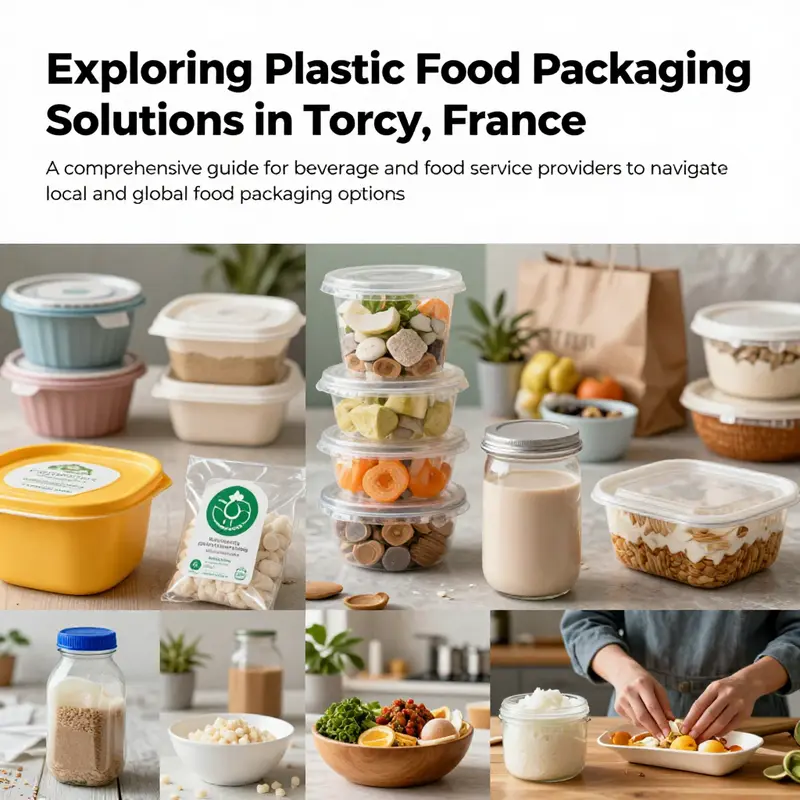
Understanding the dynamics of plastic food packaging containers in Torcy, France, is crucial for businesses ranging from bubble tea shops to catering services. With a focus on local options, global supply chains, and regulatory landscapes, this guide will help you make informed decisions for efficient and sustainable food packaging solutions. The following chapters will delve into the local market landscape, the intricacies of sourcing globally, and the regulations impacting sustainability in plastic food packaging, ensuring you have a well-rounded perspective on the challenges and opportunities in this vibrant sector.
Torcy at the Threshold: How a Suburban Hub Shapes France’s Plastic Food-Container Landscape
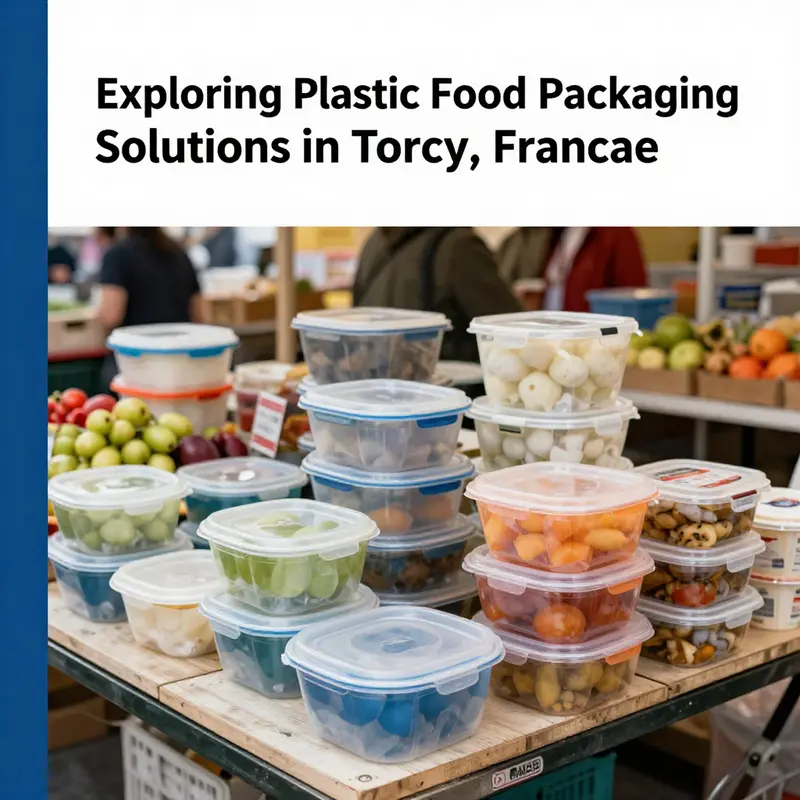
Torcy sits on the edge of a teeming metropolis, a suburban node within Île-de-France that hums with the logistics and demand patterns characteristic of greater Paris. It is not a capital of manufacturing in the conventional sense, yet it embodies a crucial truth about France’s plastic packaging sector: the real action often happens where urban consumption meets efficient distribution. The local market for plastic packaging food containers in Torcy—polypropylene (PP) and polyethylene (PE) based, widely used for takeaway, storage, and short-term meal distribution—reflects a broader national trend that is gently but inexorably shifting toward sustainability, cost efficiency, and reliability in cold-to-hot transitions. When you step back from the specifics of Torcy, you see a market that is smaller in footprint than a factory floor but larger in influence than a single vendor, because this is where regulatory aims, consumer habits, and international supply networks converge.
The latest market snapshot for France’s rigid plastic packaging suggests a country that is poised to grow from about 3.14 million metric tons in the mid-2020s to roughly 3.73 million by 2030, powered in part by the escalating demand from food and beverage sectors seeking convenient, lightweight, and durable packaging options. The projection—an annual CAGR around 3.5 percent—frames a structural shift rather than a temporary spike. In Torcy, that shift appears as a steady flow of procurement from regional distributors and national networks that optimize for speed, compliance, and food safety. The proximity to Paris and major transport corridors means Torcy benefits from a dense, mature logistics ecosystem. This environment supports quick replenishment cycles for restaurants, schools, office cafeterias, and pop-up food vendors that require reliable, microwave-safe or dishwashing-compatible containers without sacrificing performance. The local market is not a zero-sum game of price; it is a balancing act among safety standards, supply reliability, and evolving consumer expectations around sustainability.
From a supply perspective, the Torcy area reflects an emphasis on food-grade PP and PE packaging. These materials are valued for their safety profiles, chemical resistance, and versatility. They tolerate a spectrum of use cases—from everyday meal prep and school lunches to short-term storage and hot food distribution. The ability to withstand microwave, oven, freezer, and dishwasher cycles for certain container designs is less a novelty than a practical necessity in a region where households juggle busy schedules and multilingual catering options. The practical implication is straightforward: in Torcy, as in much of Île-de-France, buyers look for containers that are robust enough for transport, predictable in performance, and compatible with standard kitchen reheating practices. This reduces the friction involved in moving from purchase to plate, a friction that otherwise slows turnover for large cafeterias and neighborhood eateries across the suburbs.
A more nuanced facet of the Torcy story is the sourcing network itself. Local manufacturers of plastic packaging do exist in the broader French market, but Torcy’s strength lies in its access to a well-developed mix of traditional distributors, regional suppliers, and cross-border import channels within the European Union. The absence of a dominant local Torcy-based plastic container producer does not indicate a void; it marks a logistical reality. European and international suppliers, including those in neighboring regions, are leveraged to ensure a steady supply of containers that meet stringent European food-safety standards. The trading dynamic is reinforced by France’s integrated logistics framework, which emphasizes cross-docking, regional warehouses, and streamlined customs processes for goods moving within the EU. For Torcy-based operators, this connectivity translates into shorter lead times, more predictable stock levels, and the capacity to adjust quickly to spikes in demand—whether caused by seasonal school-year cycles, regional events, or even emergency food distribution scenarios.
In practice, Torcy’s procurement often mirrors a two-track approach. On one track, there is a steady, routine replenishment from local distributors who stock a core set of PP and PE containers designed for common applications: takeout meals, ready-to-serve portions, and compact storage solutions for households and offices. On the other track, more specialized or value-added packaging options come through longer supply chains that connect to regional centers or international suppliers with capabilities ranging from multi-compartment designs to more complex, compartmentalized formats. The efficiency of this dual-track system is supported by France’s policy environment and consumer expectations. The market recognizes that while conventional plastics offer cost advantages and proven performance, there is a growing premium on packaging that can be recycled, reused, or responsibly disposed of after use. This is not merely a social mandate; it translates into a practical procurement criterion. In Torcy, buyers increasingly factor end-of-life considerations into packaging selections, weighing recyclability and compatibility with local recycling streams as part of total cost of ownership.
A telling implication of this shift is the rising attention to sustainability within a market already denoted by low weight and durability. In France and wider Europe, the push toward recyclable and biodegradable alternatives coexists with the continuing dominance of conventional plastics when price-performance trade-offs are considered. For Torcy’s small and mid-sized operators, this means a careful calculus: while PP and PE containers remain reliable workhorses for a wide range of foodservice tasks, there is growing interest in formats that optimize recyclability without compromising barrier properties, rigidity, or thermal performance. The local market thus becomes a laboratory of sorts for the tension between affordability and environmental accountability. Packaging suppliers respond with incremental innovations—systems designed for easier disassembly during recycling, materials that circulate in the circular economy with higher recovery rates, and coatings and additives that reduce grease penetration and extend shelf-life without introducing harmful constituents. The result is a dynamic mix of steady demand for proven, cost-effective containers and a constant drumbeat of new designs that push the envelope on sustainability and convenience.
In Torcy, the urban-rurally connected logistics framework further amplifies the efficiency of the plastic container market. Proximity to Paris means ready access to ports, rail hubs, and road networks that knit together European supply chains. This geography supports fast-turnaround procurement cycles for takeout venues and schools that operate on tight timetables. A restaurant in a Torcy district can expect to reorder containers in days, not weeks, which translates into reduced stockouts and less working capital tied up in packaging inventories. The same logistics strength supports the wholesale and retail segments that sell ready-to-heat meals, meal-prep kits, or bulk foodservice packaging to schools, offices, and event organizers. The ability to mix a steady flow of everyday containers with occasional, more specialized packaging solutions keeps Torcy’s market resilient amid shifts in consumer behavior or regulatory changes.
The local ecosystem also benefits from the broader European emphasis on compliance and safety. Food-grade packaging has to meet defined standards for contact with foods, regarding purity, leachables, and permissible materials. In France, and in the European Union more broadly, regulations push packaging suppliers to demonstrate traceability, material safety, and appropriate labeling. Torcy buyers align with these expectations by demanding demonstrable compliance and documentation, while distributors provide the necessary certificates and test results. This regulatory alignment reduces risk for buyers and reinforces the reliability of supply networks. In practical terms, it means a buyer in Torcy can source containers with confidence that they support safe handling from kitchen to consumer, a factor that matters when dealing with a diverse range of foods—from ready-to-serve meals to delicate pastries and snack portions.
Another dimension of the Torcy market lies in the end-use patterns that characterize the Île-de-France region. The everyday life of residents—commuting, schooling, social and community events—fuels demand for containers that are not merely functional but also adaptable to multiple contexts. Takeout packaging remains a staple for busy families and workers who rely on convenient meals during hectic days. At the same time, the region’s schools and corporate campuses generate steady needs for storage and lunch containers that can withstand the realities of refrigeration and quick redistribution. The result is a market that prizes versatility. Containers that can function well in wine-and-dine takeout as well as in compact meal-prep routines become highly valued. Even though the local market does not rely on flashy, niche formats, it rewards products with predictable performance, clean aesthetic, and compatibility with standard reheating methods. The emphasis on compatibility is not incidental; it matters for kitchen workflows, which favor simple, reliable containers that minimize the risk of leaks and messy leftovers in the customer’s bag.
From an innovation standpoint, Torcy’s packaging landscape is shaped by specialized providers in the region who focus on food-safe materials and configurations that meet evolving customer needs. While there is no single Torcy-born megafactory, the market benefits from a tapestry of expertise across nearby locales that can deliver tailored manufacturing solutions, including custom dimensions, seal types, and multi-compartment designs. These capabilities allow local operators to pursue niche segments or school-based programs with packaging that aligns to specific meal formats and portion controls. For example, a school district might require a certain stackable, leak-resistant container that optimizes space in lunch boxes while maintaining heat retention for hot meals. Cafeterias and catering services appreciate the ability to source from a single supplier who can supply both standard containers and these customized formats within a manageable lead time. In this sense, Torcy functions as a hub of demand and coordination rather than a solitary cutting-edge producer; its strength lies in the collaborative networks that stitch together procurement, logistics, and compliance into a seamless supply chain.
The sustainability thread in Torcy’s narrative cannot be separated from the city’s broader commitment to environmental responsibility. France has been at the forefront of public dialogue on packaging waste and recycling, and this translates into business expectations at the local level. Consumers increasingly understand the life cycle of packaging—from production to post-consumer recovery—and they expect retailers, institutions, and service providers to reflect that awareness in their packaging choices. In practice, this means a growing receptivity to recyclable formats and an openness to alternative materials when feasible. The market does not depict a sudden upheaval; rather, it shows a gradual pivot toward packaging solutions that maintain performance while offering clearer pathways to recycling streams. For Torcy, this translates into a careful selection of containers that can be efficiently collected, sorted, and processed within local and national recycling infrastructures. It also means a growing willingness to experiment with more sustainable options when the total cost of ownership and performance meet the needs of the end user. The steady push toward sustainability helps drive incremental innovation across the region as suppliers seek to differentiate their offerings on recyclability, ease of sorting, and consumer education cues that accompany packaging.
All these forces—regulatory alignment, urban logistics, consumer expectations, and cross-border supply dynamics—coalesce into a remarkably coherent picture of Torcy’s plastic packaging market. The locality benefits from being part of a dense urban network that supports frequent procurement and rapid restocking, while also being integrated into European and global supply chains that can provide both scale and specialization when needed. This dual capability matters because it preserves the advantages of local responsiveness—short lead times, flexible stock levels, and nimble responses to seasonal shifts—while preserving the purchasing power and variety that come with global sourcing. In the concrete terms of business decisions, this means Torcy is well positioned to capitalize on the ongoing growth of the French rigid plastic packaging market, while also contributing to the European momentum toward safer, more sustainable packaging ecosystems.
Taken together, these dynamics help explain why a modestly scaled market in a suburban hub can exert outsized influence on national packaging strategies. The Torcy story is not the story of a single plant or a handful of suppliers; it is the story of how a well-connected community of buyers, distributors, and service providers leverages proximity to Paris, robust logistics, and a shared commitment to safety and sustainability to sustain and shape demand for plastic food containers. It is a reminder that packaging markets are not only about the containers themselves but about the systems that move those containers from factories to the dining table, with reliability, safety, and environmental responsibility as the common currency. In this sense, Torcy’s landscape offers a microcosm of the broader French market: a sector growing in size and sophistication, yet anchored in the everyday routines that define urban life and the regional networks that knit together a country’s supply chains.
For readers seeking a broader lens on the market context beyond the local and municipal scale, the France rigid plastic packaging market is part of a larger European and global conversation about how packaging supports food systems under pressure from urbanization, globalization, and sustainability mandates. The numbers tell a story of steady growth, but the real narrative lies in how cities and towns like Torcy translate policy shifts, consumer expectations, and supply chain realities into concrete, everyday choices about what sits in a lunch box, what keeps meals safe during transport, and how waste is ultimately managed. In that sense, Torcy is not merely a waypoint but a productive space where policy, industry, and daily life intersect in the ongoing evolution of plastic food packaging.
To place this local context within a wider frame, broader market analyses emphasize how regions like Île-de-France contribute disproportionately to national demand while also acting as testing grounds for more sustainable packaging solutions. The experience of Torcy, with its mix of steady demand, resilient logistics, and openness to new packaging formats, mirrors the trajectory of many other urban and peri-urban centers across France. As manufacturers and distributors continue to innovate around recyclability, multi-use formats, and optimized supply chains, Torcy will likely remain a focal point where end-user needs meet the practical constraints and opportunities of modern packaging networks. The result is a market that remains robust, adaptable, and increasingly focused on delivering safe, convenient, and responsibly sourced packaging that serves both households and institutions.
For those who want to explore practical examples of packaging concepts that might find favor in Torcy—and that illustrate how the local demand for containers can intersect with design and sustainability considerations—consider the following resource as an point of reference for flexible, environmentally mindful takeout packaging. eco-friendly-disposable-3-compartment-food-grade-packaging-box-for-fast-food-high-quality-takeout-boxes-for-fried-chicken-french-fries-packaging. This example underscores how versatility and safety can be combined with practical end-of-life planning in a market like Torcy. While it is only one among many packaging configurations, it exemplifies the types of design considerations buyers weigh when seeking to balance performance with environmental responsibility.
Looking ahead, the Torcy market will continue to benefit from the region’s logistical prowess and from France’s ongoing efforts to strengthen the circular economy around packaging. The near-term outlook remains favorable, with continued demand from the foodservice sector and from institutions that rely on reliable, safe, and recyclable packaging for daily operations. The long-term horizon will hinge on how players in Torcy and the wider Île-de-France region adapt to evolving regulatory requirements, advances in material science, and the growing appetite for packaging that can be recovered and reused with minimal environmental impact. In other words, Torcy’s plastic container market is not static; it is part of a living system that responds to both the micro-dynamics of a local economy and the macro-dynamics of European packaging policy and consumer behavior. As such, Torcy offers a compelling lens through which to view the broader arc of France’s plastic packaging story—a narrative that is at once rooted in everyday practicality and propelled by a forward-looking emphasis on sustainability and efficiency.
External link for broader context: France Rigid Plastic Packaging Market Size & Growth to 2030 – Mordor Intelligence. https://www.mordorintelligence.com/industry-reports/france-rigid-plastic-packaging-market
From Torcy to the Global Shelf: Navigating Plastic Food Containers in a Contingent World
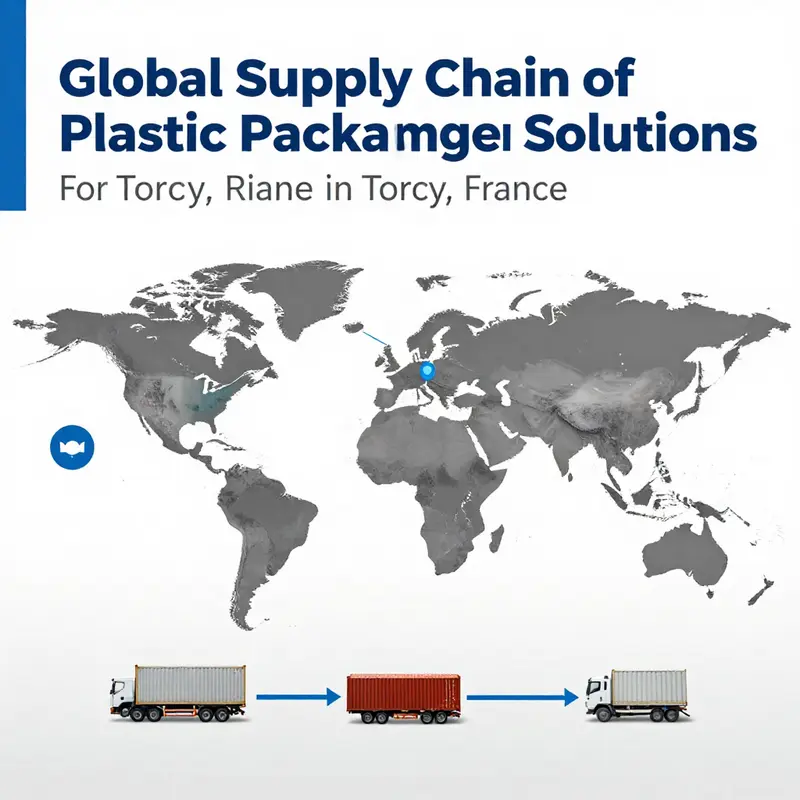
Torcy sits near Paris, a node in a global web of plastic packaging. The story is not just about containers, but about resin, extrusion, and the regulatory trails that cross borders. In European logistics corridors, the lifecycle of a disposable plastic food container begins with polymers, resin identifiers for recycling, and standards that validate shipments. The scene here is a web of decisions about cost, risk, and environmental responsibility, woven across continents. In Torcy, local distributors and transport firms translate global production into packaging that French households and kitchens rely on.
The global market for plastic food containers sits at the intersection of convenience and compliance. Market forecasts show growth to the hundreds of billions in value by 2032, driven by on-the-go consumption and e-commerce. Materials like PET and PS balance clarity, stiffness, and barrier properties, underpinning many packaging formats. The choice of material communicates product integrity and safety to consumers. Yet the path from factory to Torcy is a relay across geographies, with on-time delivery and transparent compliance as critical pillars. Regulators demand clear documentation, migration testing, and end-of-life clarity.
Standards influence procurement as much as cost. In the US and EU, FDA and EFSA set the baseline, while LFGB and RoHS sit alongside national requirements. Third-party testing reports and traceable supply chains speed up customs and reassure retailers. Pricing pressure remains real, but the best practice blends competitive cost with demonstrable safety and robust supply resilience.
Innovation continues, from edible bioplastics to smarter packaging design that reduces environmental impact while preserving functionality. The global-to-local dynamic favors partnerships that can deliver on-time performance, transparent data, and the ability to adapt to evolving migration limits and recycling infrastructures. For Torcy, the challenge is to balance scale with responsibility: to source globally, but serve locally with reliability, safety, and trust.
The future of packaging in Torcy may lie in hybrid systems that mix plastics with compostable or recoverable options, deployed where each has the strongest fit. The core message remains: a responsible, capable supplier network can deliver performance, safety, and transparency at scale in a market that values health, sustainability, and convenience. Torcy’s story is a lens on a global industry in transition, where openness, collaboration, and rigorous standards anchor everyday choices in kitchens and stores.
Policy on the Plate: EU Rules Shape Torcy’s Plastic Containers and the Move Toward Reusable Packaging
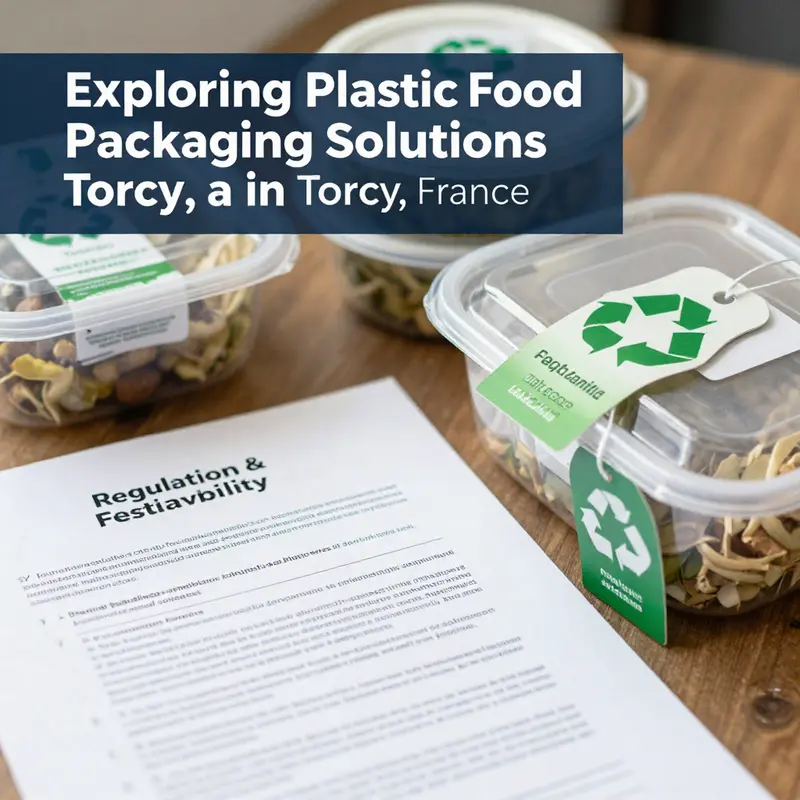
Torcy sits near Paris, a town where daily life blends with another layer of policy and practice. From cafe takeout cups to grocery-store containers, the choices people make are shaped by a continental logic that starts with the European Union and ends in the kitchen bin. The EU’s 2024 packaging framework is designed to keep packaging in the economy rather than in the environment, by requiring that packaging be designed for reuse or recycling, and by setting clear targets for reducing waste by 2030 and beyond.
At the core are the three Rs–reduce, reuse, and recycle–translated into binding requirements. A central pillar is a phased reduction of single-use plastic packaging that cannot be reused or recycled at scale. Starting January 1, 2030, items such as packaging for unprocessed fresh fruits and vegetables, takeout containers used in cafes and restaurants, and individual condiment portions are slated for prohibition. In practical terms, shops in Torcy will need to rethink procurement, portioning, and presentation, balancing food safety with the demand for durable, reusable solutions. The aim is to slow a rapid shift to disposable waste and to promote packaging that can be reused, cleaned, and eventually recovered. The prohibition of ultra-thin plastic bags under 15 microns is another strand of the policy, with the logic that thinner bags break more easily and are harder to keep out of the waste stream.
A further pillar is the restriction of certain persistent chemicals in food-contact packaging, notably PFAS, above specified thresholds. PFAS have long raised concerns about migration into food and long-term health and environmental effects. By limiting their use, the regulation pushes suppliers toward safer formulations and more transparent testing, and nudges retailers to verify compliance. It is not only about what is sold but about shaping a market where chemistry aligns with health and environmental protection. The emphasis on safety and sustainability reinforces a public expectation that convenience should not come at the expense of well-being or the environment.
The policy also anticipates a shift in consumer practice and accountability. By 2030, retailers will be required to offer customers the option to bring their own containers for beverages and takeout. In Torcy, with many residents walking or biking, this policy dovetails with everyday mobility and local purchasing patterns. The timeline also introduces a quota: retailers must provide at least 10 percent of their products in reusable packaging by 2030. This is an enforceable objective that shapes product design, stock planning, and store layouts, encouraging experimentation with returnable vessels, refillable systems, and durable containers that can be cleaned and reused across cycles.
For most packaging categories, recyclability becomes the default. The regulation requires that packaging be recyclable, with design principles that make separation feasible in standard waste streams. There are also minimum recycled-content requirements for plastic packaging, nudging the market toward higher post-consumer content and away from virgin resin dependence. A robust collection framework for beverages and metal containers is a key element, with a target to recover 90 percent of single-use containers up to three liters through deposit-return schemes or equivalents by 2029. The practical outcome is fewer bottles and cups littering streets and a more predictable revenue stream for municipalities when containers are returned.
France implements these EU rules through national law and municipal oversight. Local authorities, environmental agencies, and waste operators work together to translate targets into practice. Audits, labeling checks, and consumer-information campaigns help clarify what is recyclable, reusable, or compostable within Torcy’s waste system. The aim is a shift in the life cycle of packaging–from design and procurement to use, cleaning, and sorting–so the entire chain supports a circular economy in a town linked to Paris and the broader French context.
For Torcy and similar communes, compliance requires a practical recalibration of supply chains and retail formats. Local businesses must rethink suppliers, store layouts, and relationships with waste collection services. While larger markets trend toward sustainable options, friction exists: higher upfront costs, longer lead times for compliant materials, and the need to reorganize storage and handling. But the policy also creates incentives: reuse, clear recyclability standards, and long-term resource efficiency align with public health and environmental goals. The result is not merely compliance but an opportunity for local innovation and community engagement.
The regulation also invites attention to procurement strategies. In the absence of a Torcy-based production base for plastic containers, the town will rely on distributors that understand EU labeling, transport, and end-of-life performance. The broader European market includes suppliers who can export to Europe, with the specifics depending on availability and logistics. Sourcing in Torcy may involve local French distributors or cross-border partners, while considering lead times, certifications, and guaranteed reuse or recycling pathways. These procurement choices influence what packaging looks like on shelves and what happens to it after use.
Beyond compliance, there is room for practical packaging designed with reuse in mind. Innovative approaches include containers that are easy to wash and reuse, deposit-return mechanisms that reward customers for returning items, and clear labeling to support sorting at the end of life. Collaboration among chefs, retailers, waste managers, and municipal authorities can yield shared standards and open data about waste streams and recycling rates. This is the kind of local collaboration that can transform a policy into everyday practice–making a visible difference in how Torcy diners and shoppers experience packaging.
Consumers also play a central role. Reusable packaging must be easy to sanitize and clearly labeled for safety. Public messaging and education help residents understand end-of-life options and the environmental benefits of reuse. In practice, campaigns, in-store displays, and school programs can normalize reuse and reduce perceived inconvenience. The policy thus becomes a catalyst for a culture of care around packaging, not a top-down imposition.
Finally, the policy challenges the town’s procurement and operating models to think in longer horizons. Given no known Torcy-based production base, the ecosystem will depend on a blend of regional and cross-border suppliers who can demonstrate compliance and reliable service. The future of plastic containers in Torcy therefore depends on cooperative purchasing, shared standards, and transparent data about waste management outcomes. In this vision, Torcy could host a micro-hub for circular packaging practices, linking schools, shops, and waste services through common measures of reuse, recycling, and waste reduction.
For readers seeking additional context, the European Parliament’s 2024 briefing provides official background on the new rules to make packaging more sustainable.
Final thoughts
The exploration of plastic food packaging containers in Torcy, France, paints a comprehensive picture of a vital industry. Local suppliers offer various options suited for beverage shops, restaurants, food trucks, and catering services, while understanding global supply chains ensures access to quality products. Additionally, navigating the regulations focused on sustainability is increasingly important for businesses aiming to reduce their environmental footprint. Being aware of these dynamics strengthens decision-making and promotes responsible use of resources in the competitive food packaging market.