
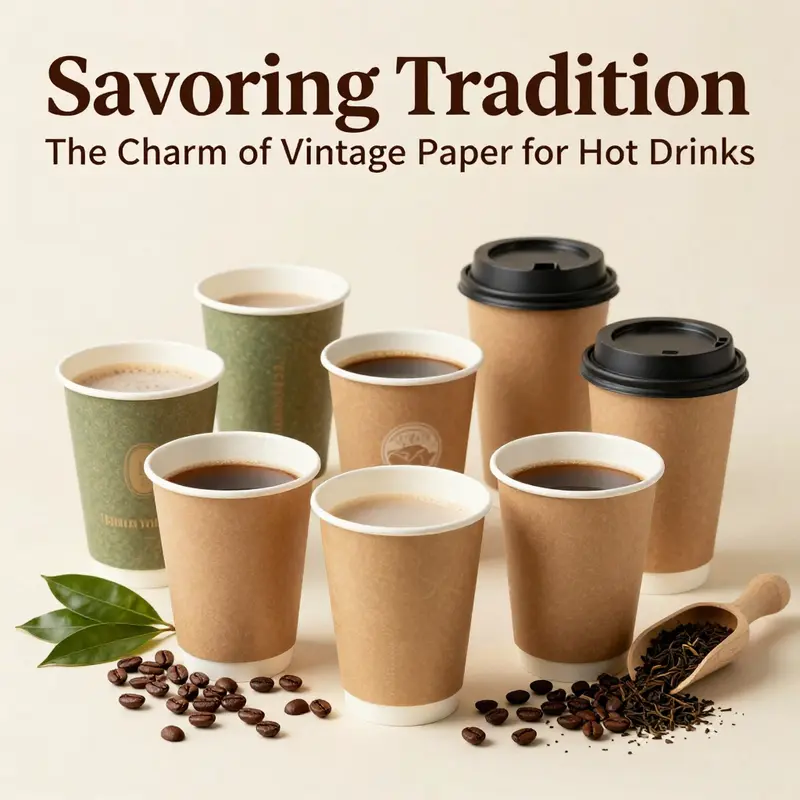
Vintage paper cups for hot drinks are more than just containers; they represent a fusion of nostalgia and practicality that appeals to modern beverage establishments. Whether it’s a bustling bubble tea shop, a fine dining restaurant, a trendy food truck, or a corporate meeting, these charming cups serve both aesthetic and functional roles. In the chapters that follow, we’ll explore innovative design features, current market trends fueling their popularity, and their cultural significance across various settings, providing insights that cater to the needs of beverage chains and event planners alike.
Crafting Comfort: Vintage-Style Hot-Drink Cups That Blend Nostalgia with Practical Design
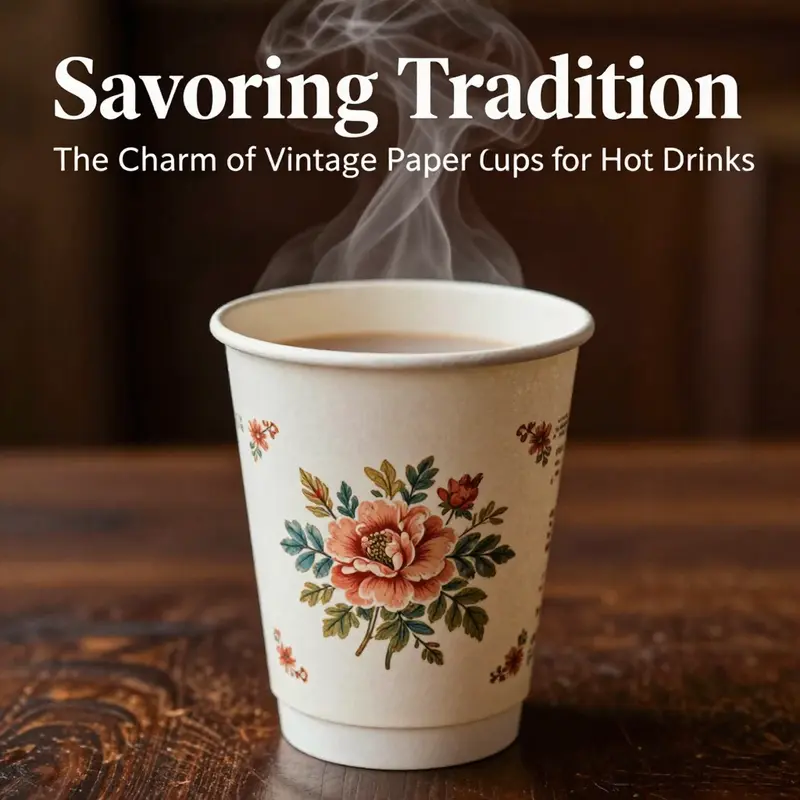
A cup is more than a vessel for a hot drink; it is a small stage where memory and practicality meet. Vintage-inspired cups built for hot beverages carry a timestamp that invites moments of pause in cafés and offices alike, while delivering reliable performance.
The surface language of these designs—hand-painted florals, restrained textures, and durable inks—creates character without sacrificing legibility or durability. The decoration endures repeated handling and the rigors of service, supported by a sturdy base and coatings that resist wear from heat and spills.
Ergonomics matter: sturdy paperboard handles provide secure grips, helping customers lift a hot drink with comfort and control, while preserving a tidy profile for storage. The interior poly-coated lining protects the paper, supports heat retention, and keeps beverages contained, reducing the risk of leaks.
Capacity often centers on nine ounces, a sweet spot that balances casual sipping with practicality in busy environments. Across variations, manufacturers work to preserve the nostalgic silhouette while enabling efficient production at scale.
Beyond aesthetics and structure, these cups prompt a broader conversation about sustainability, end-of-life pathways, and responsible manufacturing, encouraging a thoughtful approach to disposable formats we reuse daily.
In hospitality and events, vintage-style cups become more than packaging; they help establish atmosphere, cue memory, and support smooth service. By merging craft-inspired details with functional reliability, designers create a disposable product that feels premium, even as it performs the everyday task of holding a hot drink.
Nostalgia in a Cup: Navigating the Quiet Rise of Vintage Paper Cups for Hot Drinks
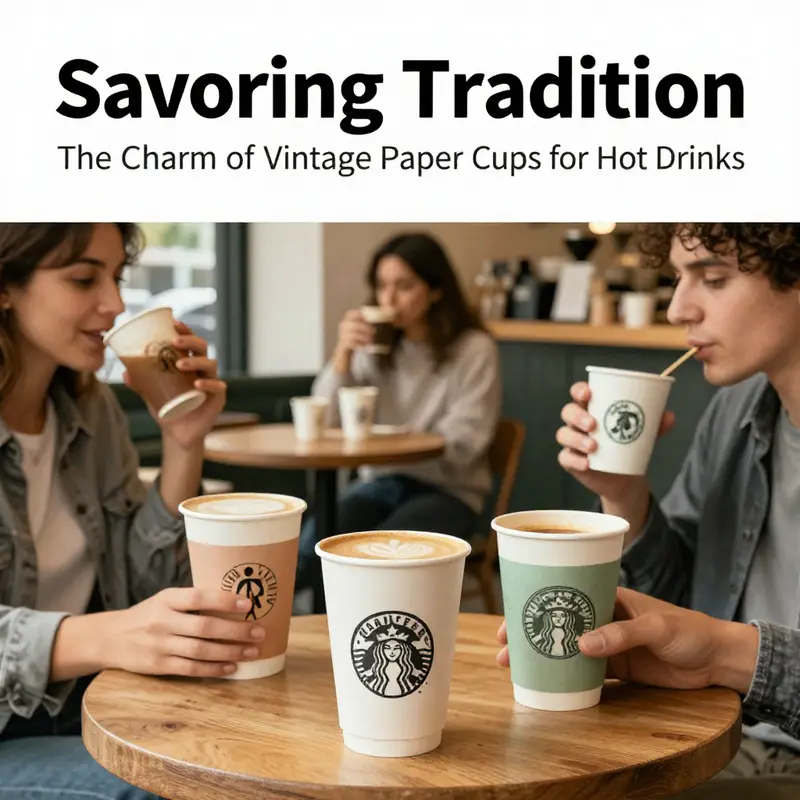
A new kind of warmth is circulating in the world of hot drinks, one measured not just by aroma and sip, but by the careful shaping of the vessel that carries it. Vintage-inspired paper cups, long associated with a bygone charm, have reappeared as a deliberate design choice within a broader packaging conversation. They are not merely throwaway items; they are read as part of a narrative about hospitality, memory, and attention to detail. The market that hosts these cups sits at a crossroads of practicality and sentiment. On the one hand, modern coffee culture demands speed, reliability, and a packaging system that travels well from cup to consumer. On the other hand, customers increasingly expect experiences that feel curated, shareable, and a little transporting. In that tension, vintage-style cups offer a way to satisfy both sides: they promise dependable heat management and handling, while enabling a mood that resonates with nostalgia and storytelling. This chapter follows that tension through market signals, consumer preferences, and the strategic choices that turn a disposable cup into a part of a broader experience economy.
From a macro perspective, the hot drinks packaging market is not static. It is expanding in lockstep with the growing demand for convenient, ready-to-conserve beverages and the ease of online shopping that has become a daily habit for many consumers. The market dynamics are clear: steady growth, driven by convenience and the continuing shift toward packaged premiumization. In quantitative terms, the global hot drinks packaging market is projected to grow at a compound annual growth rate of about 4.6 percent between 2024 and 2030, with an estimated market value near USD 12.55 billion in 2023. Those numbers are not just reflections of more cups being sold; they signal a broader willingness to invest in packaging that protects quality, supports temperature retention, and projects a particular brand or mood. Within that larger market, vintage-inspired disposables behave like a specialized sub-brand that leverages aesthetics to unlock new demand pockets while remaining anchored in core functionality.
A core driver behind the resurgence of vintage paper cups is the desire for distinctive, Instagram-worthy experiences that still feel approachable and practical. In an era where experiences are often mediated by screens, the tiny ritual of choosing a cup with a floral motif, a muted stripe, or a retro print becomes a moment of differentiation. For cafes and event spaces, these cups offer a low-cost mechanism to signal an atmospheric intention without complex setup. A floral or patterned cup, paired with well-chosen lids and sleeves, can instantly convey a theme—be it a casual garden party, a midcentury-inspired coffee corner, or a boutique café that emphasizes craft and curation. The effect is more than superficial; it shapes expectations about the drink and the service, inviting customers to linger a moment longer and to share the moment with others. This is not merely decoration. The visual language of the cup contributes to the perceived value of the beverage and to the overall experience of a visit or gathering.
Concurrently, the segment benefits from the same macro tendencies that propel many packaging innovations: convenience and eco-conscious choice. Consumers value disposables that reduce friction—easy to carry, easy to dispose of, and easy to recycle where facilities exist. They also increasingly expect packaging to reflect ethical considerations, from the materials used to the production footprint and end-of-life option. Vintage-inspired cups often meet these expectations when they pair heat-resistant linings or insulation with materials that support recyclability or compostability. While some vintage variants still rely on traditional coatings for barrier performance, there is a growing emphasis on barrier technologies and paper-based constructions that minimize plastic content while preserving heat retention. This alignment of form and function helps ensure that nostalgia does not come at the cost of modern-day sustainability standards. In practical terms, the result is packaging that keeps hot beverages hot and the cup comfortable to hold, even as the user analyzes its aesthetic appeal and potential for reuse or responsible disposal.
The design language of vintage cups matters as much as their engineering. Classic floral patterns, muted stripes, and delicate typography evoke a sense of place and time. Yet the core requirement remains simple and universal: the cup must perform under heat, resist leakage, and provide safe handling. In this regard, construction choices—such as double-wall insulation or a lining that provides a reliable barrier against heat transfer—play a decisive role. The best vintage-inspired options balance surface charm with a robust inner structure, so even a busy café line or a bustling party line can move smoothly. When a cup feels right to hold and the beverage stays at its intended temperature, the consumer gains confidence in the entire service experience. The cup becomes not just a container but a small stage prop that cues a broader narrative about care, quality, and craft.
In terms of scale, the vintage segment sits within a market that remains dominated by standard-size cups for everyday use. However, niche formats are showing particularly bright signals of growth. For instance, smaller formats around 7 ounces are expected to grow at a notably higher rate, with a projected CAGR of about 8.2 percent from 2026 to 2033. This acceleration points to a broader consumer trend toward on-the-go consumption and compact, portable experiences that still carry a sense of occasion. While many consumers continue to rely on larger sizes for longer-form beverages, the 7-ounce niche reflects a segment where the interplay of portability, speed, and a distinctive aesthetic creates a compelling value proposition. Brands and retailers eye this growth as a lever to attract new customer segments, offer seasonal or event-driven lines, and experiment with packaging that supports impulse purchases during peak moments of social sharing.
The appeal of vintage cups is not only about individual purchases. It also translates into strategic opportunities for venues and event planners that seek to curate cohesive experiences. A café that leans into a vintage motif can harmonize its cups with napkins, signage, and service rituals to amplify a memorable mood. For themed events or boutique gatherings, the cup acts as a tangible artifact that reinforces the chosen era or motif, while the drink itself remains the primary product. The effect extends beyond the event; it shapes customer recall and encourages repeat visits or future purchases when the same aesthetic language is available. In this sense, the vintage cup is a micro-asset in the brand toolkit, capable of elevating ordinary service into a thoughtfully curated moment. This strategic role is precisely why many operators view the cup as a critical point of differentiation rather than a simple commodity.
Nevertheless, the market is not purely about romance or visual appeal. The broader industry continues to prioritize reliability, safety, and sustainability. The practical constraints surrounding hot beverages—risk of scalding, leakage, and structural failure—persist as a primary design brief. As a result, producers invest in barrier layers, heat-resistant linings, and insulation that maintain a comfortable touchpoint without sacrificing recyclability or compostability. Innovations here are often incremental but meaningful: coatings that enable recycling streams, or barrier technologies that reduce the reliance on fossil-based additives while preserving performance. In the end, the most successful vintage cups satisfy a triple mandate: they look distinctive, they keep the beverage hot, and they respect the environmental realities of modern waste streams. The balance among these factors defines the long-term viability of the niche and determines whether the trend remains a trend or evolves into a durable design convention.
In practice, the purchasing decision for vintage cups sits at the convergence of taste, use case, and responsibility. For a host planning a garden party, a pop-up café, or a corporate event with a themed break area, the cup becomes a signal of intention. It communicates that the experience is carefully considered, not merely convenient. For regular consumers, the memory of a delightful cup with a charming print can shape preferences and influence future choices, nudging them toward brands and venues that consistently pair quality beverages with thoughtful packaging. As the market expands, vendors and designers are increasingly mindful of the balance between creative expression and lifecycle impact. The result is a family of products that offers flexibility for different contexts—short gatherings, longer services, or high-traffic venues—while keeping a consistent thread of vintage-inspired charm that can be scaled across different service efficiencies.
To connect these insights with practical supply choices, businesses often explore packaging options that merge theme-ready design with dependable performance. It is not enough to have a pretty cup if it fails under heat or leaks during transport. The best partnerships in this space prioritize reliable barrier performance, clear print quality, and compatibility with common lid and sleeve systems. They also recognize that a vintage look can be achieved through a deliberate combination of color palettes, textures, and print techniques that mimic traditional printmaking or typographic styles, all while using materials that support responsible disposal where possible. This alignment between aesthetics and practicality is what separates ephemeral novelty from a lasting design approach that customers come to expect as part of a brand’s character. In environments where first impressions matter—boutique cafés, seasonal markets, or catered events—the vintage cup can function as a subtle ambassador for the brand’s values and quality standards.
From a distribution standpoint, the reach of vintage-inspired cups is increasingly global, aided by the same e-commerce channels that boosted other disposable tableware categories. Small to mid-sized operators can source limited runs or themed sets without the overhead of large inventories, enabling experimentation with seasonal campaigns or limited-edition designs that coincide with a particular celebration or theme. This flexibility is a key driver of growth, especially for independent retailers and micro-venues seeking to differentiate themselves without bearing heavy upfront costs. As the consumer ecosystem shifts toward experiential retail and social media sharing, the capacity to offer a complete, visually coherent experience—drinks, cups, lids, and props—becomes more attractive. The trend toward customization, while still modest in scale, hints at a future where even disposable packaging can become a personalized asset, tailored to local markets and event contexts while retaining universal appeal.
Against this backdrop, a practical takeaway emerges for brands and venues: approach vintage cups as a coordinated element of the service proposition. When a venue commits to a vintage aesthetic, it should extend that design language across the entire customer journey from entry to departure. The cup becomes one piece of a broader, cohesive package that includes the beverage, the packaging, and the display. This is not a mere decorative choice; it is a strategic decision to heighten perceived value, support storytelling, and reinforce a position in a crowded market. In turn, customers respond with increased willingness to engage, share, and return. The cycle reinforces the viability of the vintage cup niche and sustains its market presence within the expanding hot drinks packaging landscape.
For those seeking tangible options within the supply ecosystem, the conversation often turns to suppliers who can deliver theme-ready takeaway packaging and disposable tableware that aligns with a vintage vibe. A practical path is to explore partners that offer a curated selection of takeaway packaging and tableware designed for themed events. This approach allows organizers to assemble a consistent look without compromising on performance or safety. A representative example of such a resource can be explored here: custom-takeaway-packaging-supplies-disposable-tableware-for-theme-party. This kind of option helps bridge the gap between design ambition and operational realities, supporting both casual gatherings and more formal occasions where presentation matters as much as sustenance.
In sum, the market for vintage-style paper cups for hot drinks represents a measured, design-forward response to evolving consumer expectations. It thrives not on sweeping disruption but on a disciplined blend of nostalgia, reliability, and responsibility. The trend is not about replacing the workhorse standard cup; it is about introducing a dimension of personality that complements quality beverages and efficient service. As the broader packaging landscape continues to grow, this vintage sub-trend will likely persist as a tasteful, scalable choice for venues that value atmosphere as a core component of the beverage experience. The ultimate measure of success will be whether these cups can maintain heat integrity and user comfort while contributing to a story that customers want to tell and colleagues want to replicate.
External reference: In exploring the market landscape, a broader context can be found in external market analysis, which notes a steady CAGR and the importance of design-led packaging in driving consumer engagement. See the external resource here: https://www.amazon.com/dp/B0BQZK9WJL
Between Nostalgia and Daily Ritual: The Cultural Significance of Vintage Paper Cups for Hot Drinks
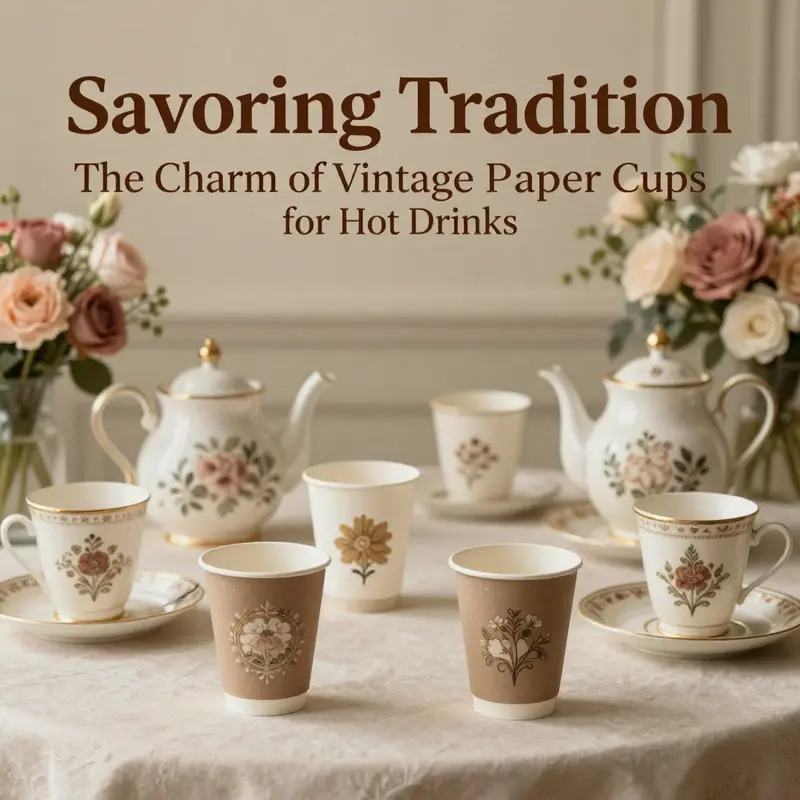
A small object, conspicuously ordinary, can carry an abundance of memory. Vintage paper cups designed for hot drinks do more than carry coffee or tea from one moment to the next. They act as vessels of cultural memory, bridging past and present through design, material, and ritual. In markets, museums, and the corners of social life, these cups offer a tangible link to eras when public spaces were carriers of shared identity. The cup surfaces, often adorned with floral patterns, stripes, or simplified logos, function as visual time stamps. They summon scenes of 1950s sunlit diners and 1970s coffeehouse conversations, where a simple cup became part of a larger tableau of sociability. Yet beneath their nostalgic charm lies a sophisticated interplay of practicality and design intent that kept them relevant as everyday objects long after their initial appearance.
Design history helps illuminate why these cups feel evocative. Mid-century advertising frequently used clean lines, friendly color palettes, and cheerful motifs to normalize the act of buying and consuming hot beverages on the go. The same cues—a friendly script, a pastoral floral, or a bold geometric motif—reappear on modern reissues and contemporary reproductions. This continuity matters because it signals a cultural preference for familiarity and continuity in a world flooded with disposable tools. The cups do not merely hold a drink; they encode a shared memory bank, inviting users to locate themselves within a narrative that stretches back to a time when the act of taking a cup in a communal space was as much about social ritual as it was about fueling the day.
What makes vintage cups resonant is the juxtaposition of nostalgia with everyday practicality. The cups are designed to withstand heat, enabling a smooth hands-on experience that aligns with the modern habit of grabbing a drink on the move. The polyethylene lining or double-wall insulation is not only a technical feature; it is a design choice that preserves a sense of comfort. A foamy insulated cup shielded by a familiar exterior creates a micro-environment: warmth in the hand, warmth in the conversation, warmth in memory. The ritual of sipping a hot drink becomes a slow, tactile experience amid a fast-paced world. In this way, a vintage cup embodies the paradox at the heart of contemporary consumer culture: a longing for authenticity secured by the convenience of mass-produced, widely available objects.
The aesthetic language of vintage cups—floral flourishes, delicate scrolls, and restrained colorways—often signals a particular social ritual. Floral motifs may conjure a quiet afternoon tea, a setting where conversation unfolds at a measured pace and hospitality is a practiced art. Striped or geometric patterns evoke urban cafés and diners, where speed meets sociability in a shared urban rhythm. These visual cues function as cultural shorthand. They say, in a glance, what kind of social moment the cup is meant to accompany: a hushed conversation between coworkers, a quick caffeine lift before a long commute, or a ceremonial tea service reimagined for a modern gathering. Even when the cup is placed in a contemporary setting, the office break room, a pop-up event, or a themed party, the surface tells a story that readers can recognize and join.
The cultural significance extends beyond their surface. They are artifacts of industrial design that reveal shifts in consumer habits and production methods. In an era of single-use proliferation, vintage cups helped standardize the experience of drinking hot beverages across diverse spaces. The sizes, most commonly 10 and 12 ounces, reflect a precise alignment with daily rituals: small enough to encourage frequent refills, large enough to satisfy a pause, and versatile enough for coffee, tea, or hot chocolate. This standardization hints at a broader system of service culture: an informal yet reliable way people interface with food and drink beyond the home. When these cups appear in cafes, offices, or social events, they reinforce a shared tempo of consumption that travels across settings and communities.
From a design perspective, vintage cups offer a window into durable, functional aesthetics. The polyethylene lining, when present, addresses a practical need—heat transfer can make handling difficult. The lining helps prevent scalding and keeps the cup comfortable to hold, while still allowing the exterior to showcase a curated look. The insulation and structure reflect a transitional moment in material technology, where protection and presentation could be married without sacrificing accessibility. This balance between form and function is a recurring theme in the evolution of everyday objects, and vintage cups sit at a telling crossroads. They demonstrate how practical concerns such as heat resistance, grip, and spill resistance could be harmonized with visual cues that signal memory and belonging.
The cultural resonance of vintage cups is reinforced by their role in social and ceremonial contexts. In events, cafes, and domestic gatherings, these cups become more than utensils; they become props in a larger social script. A themed afternoon tea, a retro styled wedding reception, or a community event with a nod to mid-century aesthetics can be anchored by the presence of vintage cups. In this way, the cup operates as a cultural signifier, marking time and space in an economy of memory where authenticity is sought as a counterweight to rapid change. Objects like these become participants in collective storytelling, inviting people to recount, share, and reimagine moments from the past within the present moment.
Collectibility and archives. Collectibility is another dimension of their cultural significance. In an age of fleeting digital experiences, tangible ephemera that withstands the test of time takes on renewed value. Vintage paper cups—whether treasured for their patterns, their materials, or their associations with particular venues or events—are frequently collected, catalogued, and displayed. They open doors to conversations about design, manufacturing, and social history. Museums and digital archives increasingly present these items not merely as curiosities but as evidence of everyday life, revealing how ordinary objects shape and reflect social practices.
In contemporary settings, vintage cups contribute to a broader movement that values heritage and authenticity. They appear in cafes that want to evoke a sense of terroir or lineage, in home interiors as nostalgic accents, and in event design as a tactile bridge to another era. The appeal lies not in longing for the past as a perfect bygone world but in recognizing how past forms can inform present aesthetics and practices. This re-engagement with vintage cup design often accompanies a larger shift toward sustainable or thoughtful consumption. While disposability remains a reality of modern life, there is a growing appetite for objects that carry meaning, that can be repurposed or displayed, and that connect moments across time. In this light, vintage cups are not relics of a past era but active participants in a evolving cultural conversation about memory, craft, and responsibility.
To deepen the sense of this cultural arc, it helps to situate these cups within a broader archive of social practice. Ephemera menus, tickets, napkins, and cups offer a mosaic view of how people lived, worked, and entertained themselves. They capture shifts in gender norms, urban life, leisure, and work culture. The history of such items reveals a gradual move toward democratizing access to warmth, sociability, and a sense of belonging. This broader lens situates the humble cup alongside other everyday artifacts as a material thread in the fabric of social life.
Final thoughts
Vintage paper cups for hot drinks embody a perfect blend of style, functionality, and cultural significance. They are not merely disposable items; they play an important role in enhancing the experience of sipping a warm beverage, whether at a casual cafe or a formal event. As the demand for unique and attractive beverage solutions continues to grow, investing in vintage-style cups offers a compelling way to cater to customer preferences while ensuring safety and satisfaction. Embrace this trend and elevate your beverage service with vintage charm.