
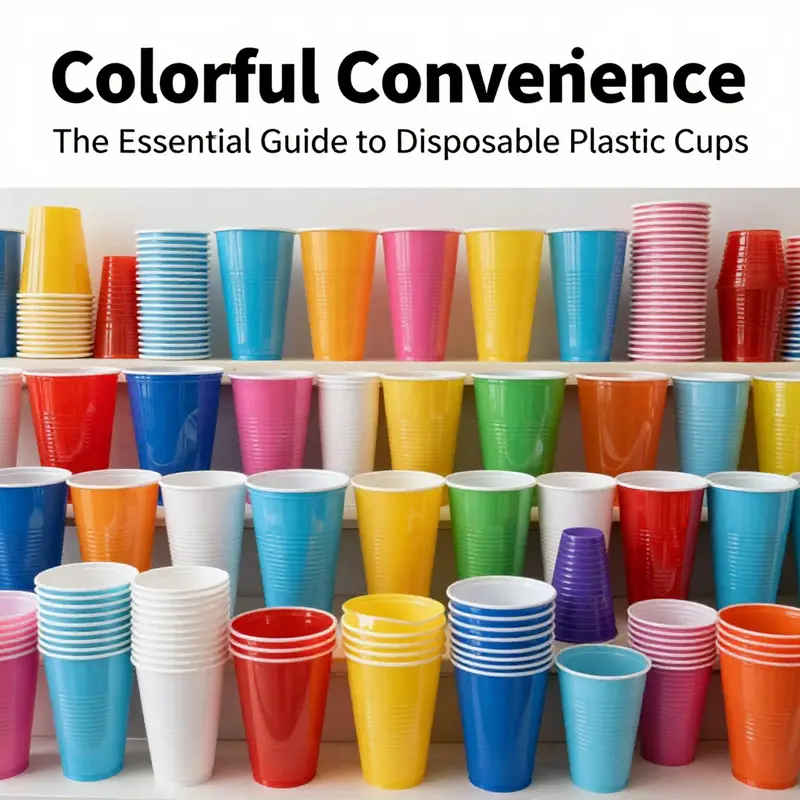
Disposable colored plastic cups have become indispensable tools in bars, restaurants, and events, providing an excellent blend of utility and aesthetic appeal. With vibrant colors and customizable features, these cups cater to a variety of needs, from bubble tea shops to catering services. Understanding market trends, environmental impacts, customization opportunities, economic viability, and consumer preferences can enhance your approach to utilizing these products effectively. Each chapter delves into these facets, offering insights into how colored plastic cups contribute to successful operations across various sectors.
Color, Convenience, and Compliance: Navigating Market Trends in Coloured Disposable Plastic Cups
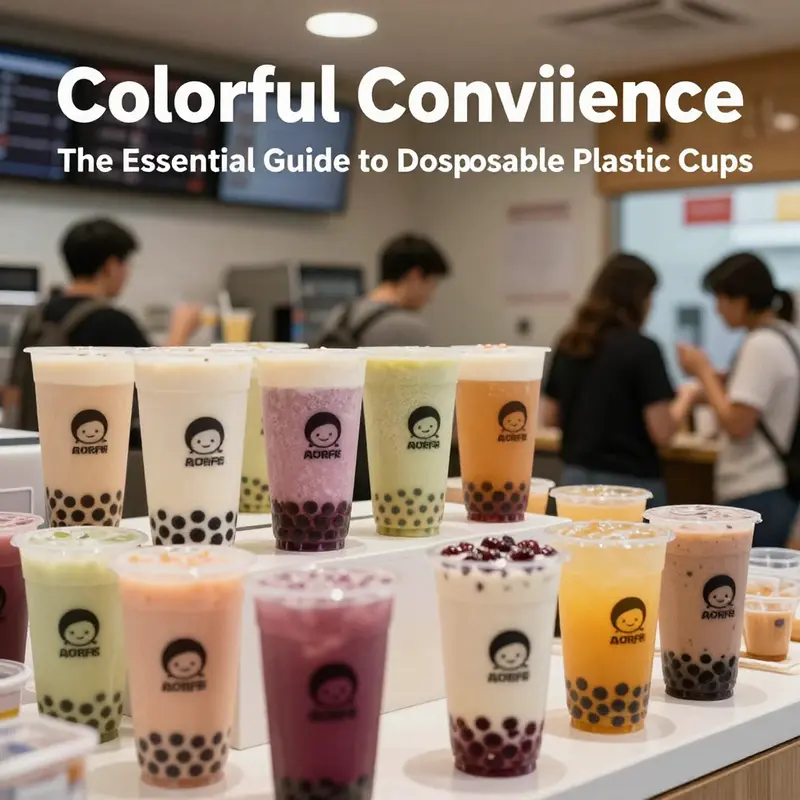
Color on the table signals more than taste or style; it signals efficiency, mood, and the business of everyday life. Coloured disposable plastic cups blend practical, low-cost utility with vivid appeal, turning simple beverages into moments of visual clarity and branding potential. They are everywhere—from bustling food stalls and street markets to weddings, corporate events, and home gatherings—serving not just drinks but an experience. In markets where speed, affordability, and presentation compete for attention, these cups offer a rare trifecta: lightweight handling, durable performance, and eye-catching hues that can harmonize with themes, logos, or promotional campaigns. The modern disposable cup, therefore, sits at the intersection of function and form, a tiny vessel that helps shape the arc of a service encounter from first glance to last sip. This is especially true in regions undergoing rapid consumption shifts, where the new tea drinks and ready-to-drink coffee categories are redefining what a single-use cup must do. In such contexts, colour becomes a branding tool as well as a practical container, turning a simple purchase into a deliberate sensory cue that resonates with the customer’s momentary preferences and memories of the event itself. The result is a market that values not only performance but also the storytelling possible through colour, print, and shape.
Across Asia, and Vietnam in particular, coloured disposable cups have emerged as staples of everyday commerce and ceremonial life. In Vietnamese markets, stalls, and social gatherings, both clear and vibrant cups are standard equipment. The colour spectrum is not merely decorative; it helps vendors attract attention in crowded stalls, differentiate products, and streamline service in high-volume settings. The appeal extends from the informal to the formally organized, with weddings, birthdays, and festivals often using specific colour palettes to carry mood and symbolism. Importantly, these cups also function as a canvas for branding through printed logos or patterns, linking the social occasion with a recognisable identity. The global demand for larger formats, notably 32 oz cups, reflects the needs of beverage brands, foodservice chains, and event organizers who prize durability and cost-efficiency alongside the opportunity to personalise. In a world where the beverage-on-the-go culture has grown into a norm, the ability to serve a large, stable cup that retains colour fidelity and print quality becomes part of the overall service proposition.
The drivers of growth in coloured disposable cups are multifaceted, but a few core forces stand out. The expansion of the new tea drink category, especially milk tea, alongside ready-to-drink coffee, relies heavily on single-use cups that balance visual appeal with practical use. These beverages often demand specialized cup shapes—skinny, tall, and narrow profiles designed to accommodate straws and yet maintain a comfortable sipping experience. The design conversation thus shifts toward not only colour and print but also insulation, heat resistance, and structural integrity. Manufacturers have responded with innovations in wall thickness, stacking reliability, and lid compatibility that preserve the cup’s colour and clarity even in transit or during hot or cold service. In tandem with shape innovation, there is ongoing emphasis on material choices that satisfy both performance and safety considerations. Polypropylene (PP) remains a workhorse for cold beverages because of its clarity, resilience, and relative heat resistance, while PET provides a transparent option with robust barrier properties for longer display and transport windows.
From a production perspective, China remains the manufacturing hub for disposable cups, with provinces such as Sichuan and Guangdong playing pivotal roles in scaling output and optimizing costs. These centers leverage integrated supply chains, high-volume production capabilities, and sophisticated process controls to deliver consistency across large orders. The resins used are typically FDA-approved and conform to food-grade safety standards, with cleanroom environments and rigorous quality checks helping to ensure that the cups meet international expectations for safety and performance. As global environmental regulations tighten, suppliers have to navigate not only price but also compliance and reliability. The shift from a price-first mindset to a broader supplier assessment that includes sustainability credentials, supply chain transparency, and product safety has become a defining trend in the sourcing of disposable tableware. In this light, the market’s evolution is as much about governance and traceability as it is about colour and convenience.
Looking ahead, the sector shows a clear pivot toward more sustainable material options, even as it continues to rely on conventional polymers such as PP and PS for performance and cost reasons. The push toward biodegradable materials—such as PLA (polylactic acid) and PBAT—reflects broader policy commitments and consumer awareness around “double carbon” goals and environmental impact. Yet, the economics of biobased or biodegradable cups remain a critical hurdle. Production costs, processing compatibility, and the performance profile of these materials under hot and cold conditions are central to adoption rates. The industry is exploring ways to improve processing efficiency, develop safer additives, and optimise barrier properties so that biodegradable cups can meet or exceed the reliability offered by traditional plastics. In this balancing act, colour remains a key differentiator; even when sustainability features are introduced, brands still crave the ability to communicate through hue, print clarity, and design precision.
The interplay between customization and scale further shapes the market. Buyers often seek a blend of minimal unit cost and maximum branding impact, which drives demand for options like printed logos or patterns using flexographic techniques with up to three colours. For those ordering at scale, minimum quantities can start around fifty thousand pieces, particularly when customization is part of the package. The economics of customization require careful cost engineering, though the payoff is clear: visible brand signals that can travel from stall to event, and a consistent aesthetic across a multi-venue campaign. Some suppliers also offer as-needed sample opportunities, enabling buyers to evaluate colour fidelity, print durability, and overall product quality before committing to large runs. When customization is involved, lead times can stretch, yet the payoff in recognition and consumer recall often justifies the planning and procurement overhead.
The conversation around cups does not end at print and color. Lids, iced beverage compatibility, and the broader packaging ecosystem contribute to the decision matrix that purchasers navigate. In many contexts, the inclusion of lids or the compatibility with straw-based serving systems can enhance convenience and on-the-go usability, aligning with the growing demand for portable beverage solutions. Across the board, the market remains rooted in the principle that practical performance, cost efficiency, and visual appeal must cohere. The cups must withstand the rigours of days of use at busy venues, maintain colour integrity through exposure to light and beverage content, and offer predictable performance under a range of temperatures. This required harmony—between pigment, polymer, structural design, and process control—defines the modern coloured disposable cup.
To illustrate how suppliers and buyers translate these trends into tangible outcomes, the supply chain narrative often points toward a growing emphasis on branding-enabled packaging options. In a world where guests are increasingly influenced by social media-worthy experiences, the ability to print a distinctive colour palette or a memorable pattern can elevate a product or an event from merely functional to shareable. For brands seeking themed packaging, the path forward can be shaped by the option to integrate customised take-away packaging and disposable tableware into a cohesive event package. See the customizable, thematically tuned offerings here: custom-takeaway-packaging-supplies-disposable-tableware-for-theme-party. This kind of alignment—between cup colour, print, and accompanying packaging—helps ensure a consistent visual narrative from the moment a guest places an order to the final toast of the celebration.
The chapter closes with a reminder that colour, while enjoyable and impactful, sits within a broader framework of sustainability, safety, and supply reliability. The coloured cup market is poised for continued evolution as designers experiment with new materials and forms while manufacturers refine processes to deliver consistent, high-quality products at scale. The ongoing tension between performance and environmental responsibility will shape decisions at every link in the chain. Policymakers, producers, and buyers are increasingly aligned around quality standards, traceability, and the responsible use of resources, all while preserving the visual language that makes these cups an unmistakable part of modern consumption. In this context, the future is not a single path but a spectrum of approaches—maintaining the charm of colour and the confidence of reliability, while steadily advancing toward more sustainable practice. External reference for broader market dynamics and regulatory considerations: https://www.researchandmarkets.com/reports/618947/disposable-cups-market-2025-2030
Chromatic Convenience, Hidden Footprint: The Environmental Cost of Disposable Coloured Plastic Cups
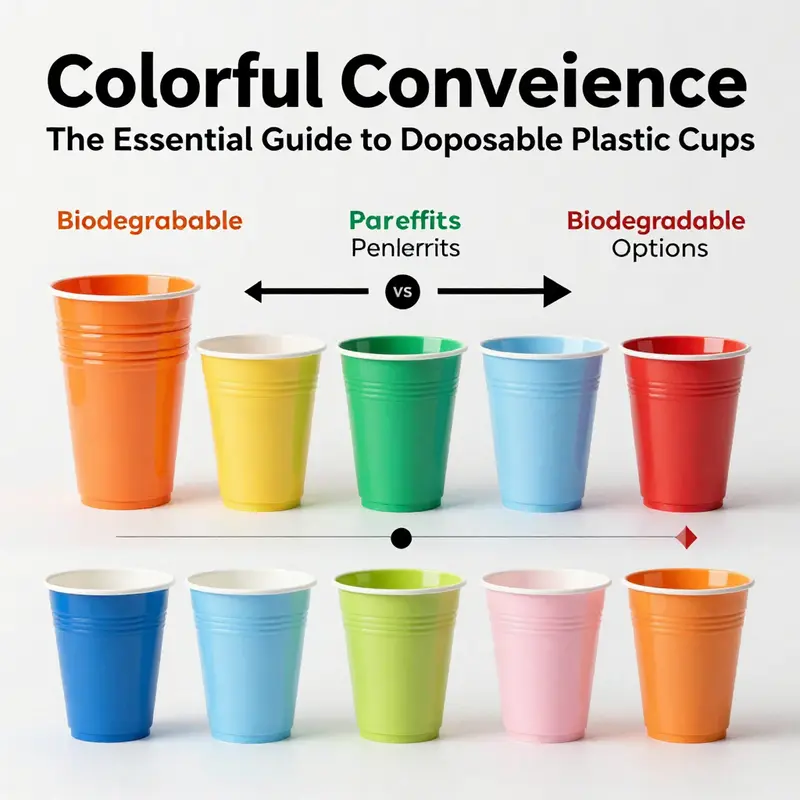
The everyday act of grabbing a bright disposable cup at a party masks a chain of impacts. Coloured plastic cups are typically made from polymers such as polypropylene or polystyrene derived from fossil fuels. The color is added through dyes or pigments during processing; this step adds resources and potential hazards to the life cycle. The aesthetics may delight, but the chemistry of these plastics shapes how they behave after use, affecting disposal and recycling outcomes.
During production energy, water, and fossil carbon are consumed. Resin synthesis, pigment addition, and shaping generate emissions and waste. The low cost and lightness of these cups come with a lifecycle price that is not visible at the moment of purchase. The color itself has no functional value for environmental performance, yet it signals a broader design choice toward disposability.
In use, these cups are typically single use. Billions are produced and discarded quickly. Recycling rates for plastics remain low, and colour can interfere with sorting and material quality. Contamination from residues or complex pigment formulations can reduce recyclability, leading to lower recovery of valuable materials. Even when recycling occurs, the pathway is often imperfect.
Environmental consequences unfold over long timescales. Polystyrene cups are rigid and clear but resist degradation, fragment into microplastics, and persist in landfills, waterways, and soils. When plastics are burned, additives and pigments can release toxic compounds that affect air quality. The longer a cup remains, the more opportunities exist for fragmentation and leaching of chemicals.
Systemic issues connect waste to climate change, biodiversity loss, and public health. Disposable design can shift burden to municipal systems and informal waste streams. The color of the cup becomes a reminder of choices that emphasize immediacy over lifecycle thinking. Color adds no guaranteed environmental benefit and may contribute to misperceptions about sustainability.
Alternatives exist but come with caveats. Reusable cups made from durable materials reduce lifetime emissions when used many times, but effective collection and washing are essential. Compostable or plant-based options may require industrial facilities to break down; without adequate infrastructure, they may behave like conventional plastics in practice.
To move forward, decisions should be grounded in lifecycle thinking rather than aesthetics. Clear information for planners and consumers about end of life, recycling realities, and resource use helps realign incentives with planetary boundaries. The color of a cup should not be mistaken for sustainability. Policy, industry, and users can together promote reuse, better sorting, and responsible design without sacrificing practicality or appeal.
Colorful Canvases: Crafting Brand-Forward Customization for Coloured Disposable Cups
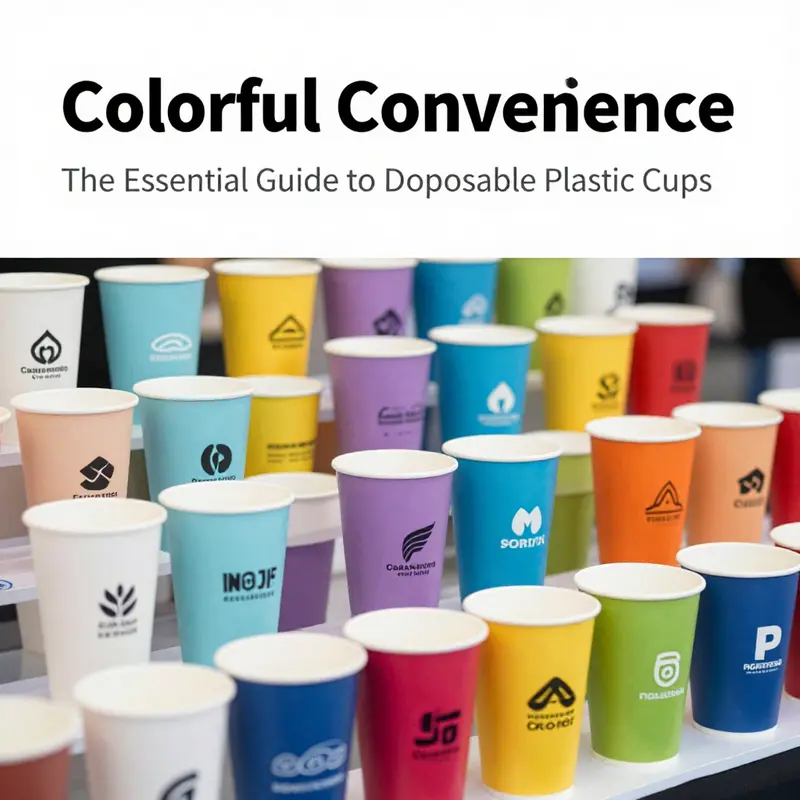
Color is more than decoration; it is a language that speaks before a word is spoken. In the world of disposable cups, the hue of a cup can set the mood, signal a theme, and quietly reinforce a brand’s personality. When a stakeholder considers a party, a festival, or a promotional push, the decision to customize coloured disposable cups is really a choice to couple function with storytelling. The cup becomes a portable billboard, a micro-signal that travels with guests from the first toast to the last leftover, and the most visible touchpoint for a brand’s message. This is why customization is not a bolt-on afterthought but an essential design decision that shapes how people experience an event and how they remember it afterward. The interplay between color, material, and print quality matters because each choice affects visibility, durability, and perceived value. A bright, well-chosen palette can unify a theme, while a misapplied color can confuse or even undermine the intended impression. In practice, customization starts with color options that range from transparent to opaque, from subtle pastels to bold primaries, and often includes multi-tone or two-tone possibilities that add depth to the cup’s surface without sacrificing legibility or safety for hot and cold beverages.
Color customization can operate on multiple planes. One path is to use fully colored cups as the base. These are not just canvases; they are statements. A solidly colored cup can act as a dominant visual element in a social feed or a classroom or trade show booth, grabbing attention from across a room. A second path leverages transparent or translucent cups that accept colored designs printed on the surface. The advantage here is clarity of branding: the ink remains crisp, the contrast can be engineered for legibility, and brand logos can appear with a clean edge against a light or dark background. For brands seeking the most accurate color reproduction, full-color digital printing offers the ability to render gradients, shading, and subtle tones, while screen printing provides rugged, high-contrast graphics that hold up under busy event environments. The choice between these methods is not merely technical; it is a strategic decision about the guest experience. A wrap-around graphic on a curved surface, for instance, can tell a story as guests move from stand to stage, while a front-facing logo keeps the signature mark visible in photos and group shots.
Material choice underpins what can be printed and how robust the final product will be in practice. The common menu of cup bases—PET, PP, and PS—each brings different strengths to the customization equation. PET cups are renowned for their clarity and strength, making them a favorite for cold drinks and visuals where the beverage itself contributes to the overall aesthetics. Printing on PET, especially when the cup remains transparent, tends to require inks with excellent color fidelity and food-safety compliance. PP cups, meanwhile, offer a higher tolerance for heat. They can be used for hot beverages or beverages kept in warmer environments, expanding the scenarios in which a branded cup can be deployed without compromising safety. PS cups, though less common for hot drinks due to heat sensitivity, can deliver a crisp, high-contrast surface ideal for bold prints on certain cold beverages. Designers must therefore align color strategy with material performance: a vivid blue on a transparent PET might look electric in a photoshoot, but if the ink lacks heat resistance it could degrade with time or exposure.
Alongside color and print technique, the position and layout of branding elements demand careful consideration. Logo placement is not a mere matter of slapping a mark on the side; it is about embracing the cup’s geometry. A logo on the front panel catches attention when the cup is held upright, while a wrap-around layout can tell a longer narrative as the cup turns in the hand or in a guest’s posture. For events that emphasize uniformity, a consistently placed logo with just the right margin from the rim can project a polished, corporate feel. For more festive environments, designers may experiment with playful motifs that complement the color field, such as pattern repeats, seasonal icons, or abstract shapes that echo the event’s theme. Importantly, the design must maintain legibility and avoid crowding. A busy scene with small text or overly fine lines can blur when reduced to cup size or when viewed from a distance in a crowded venue. Therefore, the design brief often begins with a few core elements: a bold brand mark, a concise message, and a color strategy that preserves contrast and legibility under varied lighting conditions.
Material and design flexibility extend beyond color and print to include features that improve user experience. Many customized cups are designed with functional add-ons that support branding while enhancing practicality. Lids, secure snap-on closures, and ergonomic contours help the cup perform in real-world settings—from lively outdoor festivals to fast-paced food-service lines. In event contexts, a well-sealed lid can reassure guests about spill-resistance and portability, an attribute that is especially valuable for beverages like milk tea, juice, or cocktails that accompany performances or activities. Some designs explore ergonomic shaping that makes the cup comfortable to hold for longer periods, an important consideration for guests who will be sipping through lengthy events. There are even innovations like squeezable or collapsible formats that convert portability into convenience, appealing to families at picnic spots or youth-oriented gatherings where space and weight matter. These design elements do not just carry branding forward; they actively improve usability, which in turn heightens guest perception of quality and care.
From a branding perspective, color and design carry meaning beyond aesthetics. The psychology of color can guide the selection of tones that align with the intended mood or brand value. Brighter hues may evoke energy and enthusiasm, while cooler tones convey calm and reliability. In corporate settings, a consistent color palette across event collateral—tableware, signage, and digital screens—creates a unified impression that reinforces recognition. In consumer-facing contexts, the choice of color can signal product differentiation, such as a unique color pair that makes a stand-out statement against a sea of plain cups. The potential for two-tone or gradient effects further broadens expressive opportunities, enabling a nuanced visual field that can echo a brand’s logo or a campaign’s color story. If the venue lighting or the lighting of a stage is dynamic, the ink set used for printing must stay true under shifting illumination, which is a reminder that print technology and material chemistry operate in tandem with color strategy.
The practical realities of customization also shape what is possible. Suppliers often offer color options at varying MOQs, and customization incurs costs that scale with volume and complexity. Small orders may be feasible for reveals, launches, or trials, but the economics typically change as order size grows. Programs that involve blank or lightly printed cups can deliver a quick turnaround, while fully customized runs with multiple colors, wrap-around graphics, or specialty finishes may require longer lead times and larger upfront commitments. Some buyers explore eco-friendly options, such as cups crafted from plant-based polymers, which can align with sustainability goals without sacrificing print quality or user safety. In all cases, samples are commonly available so brands can test print fidelity, color accuracy, and tactile feel before committing to a full production run. Understanding the production timeline helps planners align print approvals, packaging, and distribution, so the final cups reach venues when needed and with the expected visual impact.
Even as color and print hold center stage, the environmental dimension of customization deserves careful attention. Eco-conscious buyers weigh the trade-offs between vivid branding and compostable or biodegradable materials. PLA-based cups, derived from renewable resources, represent one avenue that supports sustainability goals while still enabling colorful branding. The decision requires a holistic view of the lifecycle: the environmental benefits of the chosen material, the end-of-life options in the event locale, and the compatibility of the chosen decor and waste streams with local recycling or composting programs. Beyond material choices, the ability to reuse or easily recycle branded cups at scale often interacts with event design, including thoughtful placement of collection points and clear labeling to guide guests. When color and customization are employed with environmental responsibility in mind, the cups contribute not just to a festive or promotional moment but to a broader narrative about stewardship and care.
Practical considerations frame how brands navigate the customization journey. First, there is the design brief: a concise set of beliefs about what the cup should communicate, who will see it, and under what conditions it will be used. A second factor is production practicality: the compatibility of chosen inks with the cup material, the durability of the print under chill or heat, and the likelihood that colors will stay vibrant over the event’s duration. A third factor is logistics: lead times, shipping, and the possibility of on-site customization or last-minute adjustments. The reality of these factors means that designers often work within a spectrum—from experiments with small proportional color blocks for quick pilots to full-scale campaigns with color-rich, multi-print wraps for large events. The result can be a cohesive, story-driven experience in which color, form, and function reinforce one another rather than competing for attention.
To integrate customization seamlessly with broader content plans, brands frequently link cup design to other packaging and promotional materials. A single design system that governs cups, napkins, signage, and digital assets helps deliver a coherent guest experience. This coherence matters because even small visual cues—such as a specific color pairing or a particular logo orientation—can reinforce recognition and recall as guests move between spaces, samples, and conversations. When a cup is part of a larger canvas, guests form associations that extend beyond the event, shaping future recall of a brand’s identity. For readers seeking more on how to align takeaway packaging with event themes, a practical resource is available that discusses custom takeaway packaging and disposable tableware for theme party. It offers guidance on designing a consistent look that harmonizes with décor, menus, and lighting while preserving the practical needs of portable, easy-to-use tableware. See: custom takeaway packaging supplies and disposable tableware for theme party.
For those who want to explore beyond the immediate design implications, it is useful to consider external perspectives on customization. A widely cited industry listing highlights how personalized color disposal cups can be produced with various printing methods to achieve professional-grade branding results. While the landscape includes a range of accessory options and production approaches, the core takeaway remains: the right combination of color, material, and print imparts clarity, emotion, and efficiency to event experiences. External readers may consult the following resource for a broader view of customized printed plastic cups: https://www.alibaba.com/product-detail/Disposable-Clear-Customized-Printed-Plastic_1600379156557.html. This reference provides context on industry capabilities, showing how color, print, and form converge in real-world manufacturing settings. In practice, the most successful customization programs emerge not from chasing the most colors or the most complex graphics, but from aligning the cup’s design with the event’s narrative, the guests’ expectations, and the brand’s longer-term story. The cup then becomes a participant in the experience rather than merely a vessel, a small but memorable touch that can elevate perception and engagement long after the final toast has been made.
Color as Commerce: The Economic Viability of Coloured Disposable Plastic Cups
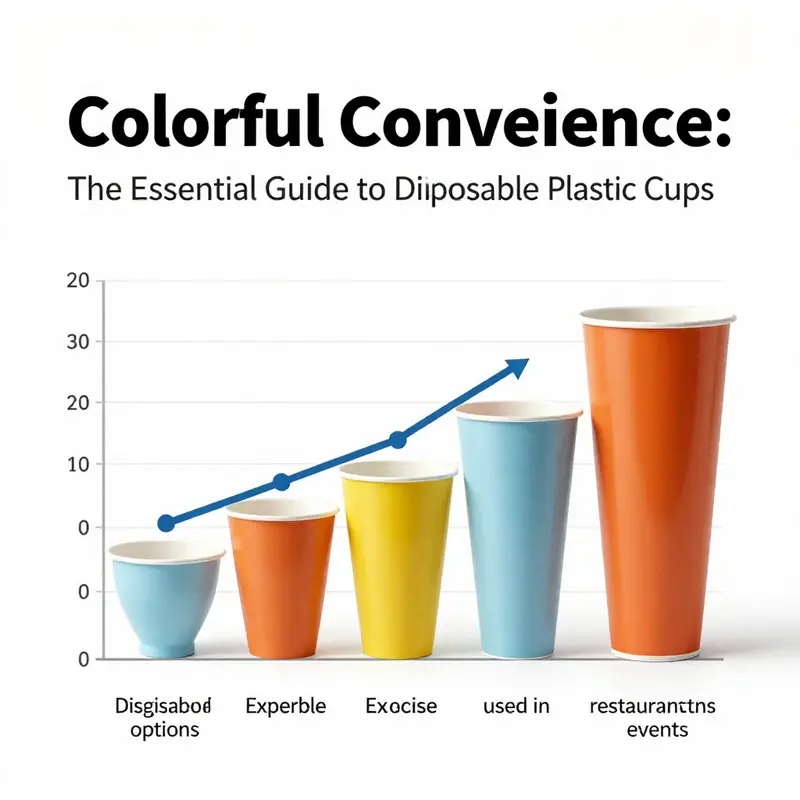
Coloured disposable plastic cups have carved out a decisive niche in modern event serving and everyday use, not only for their palette of hues but for the combination of low cost, ease, and broad appeal. Their economic appeal rests on a simple equation: cheap production, rapid turnover, and the ability to transform ordinary beverages into visually distinctive experiences. These cups are typically built from lightweight polymers such as PET or PP, materials chosen for their balance of clarity, durability, and low unit cost. In practice, that means a serving vessel that can survive a busy service period without cracking or clouding, while keeping costs low enough to justify short term use in a wide range of environments, from casual gatherings to fast paced catering settings. When color is added, the value proposition expands beyond function; color becomes a marketing tool, a mood setter, and a signal of theme or brand identity that can elevate an ordinary beverage into a moment of recognition for guests or customers alike. The color dimension is not a mere cosmetic flourish; it is a differentiator that can drive demand and, in some cases, justify a premium segment within a crowded market.
From a production standpoint, the economics hinge on scale, material choices, and the efficiency of color application. PET and PP offer a practical combination of light weight and strength, but the true cost advantage comes from standardization and mass production. In many supplier ecosystems, minimum order quantities for customized runs start at tens of thousands of pieces, with higher MOQs often observed when exacting branding is requested. In bulk scenarios, unit costs can dip to the cent range, sometimes around 0.01 per unit for large orders. That kind of pricing structure underpins the appeal to caterers, event planners, and retailers who must balance a tight per unit cost with the need for attractive presentation. The simple logic is clear: you can outfit a large crowd with colorful, branded, or thematically complementary cups at a price that feels almost incidental next to the revenue or experience they help generate.
The market outlook complements this practical logic with a robust growth narrative. Global disposable cups are projected to become a sizable market, with forecasts pointing toward substantial expansion through the mid decade period and beyond. A projected market size approaching the tens of billions of dollars is not unusual for disposable cup categories, particularly when colored variants and customization are factored in. Notably, the segment that includes themed or fancy cups with lids and straws illustrates how color can mingle with design features to create a value added product line. This is especially true in niche contexts such as events, promotions, and certain retail packaging applications where a cohesive visual identity can amplify perceived value and brand presence. The economic arithmetic favors volume, but it is not purely about price; it is also about the ability to deliver consistent quality and timely supply. In many business models, suppliers support this through broad color portfolios, flexible packaging options, and the possibility of printing in multiple colors using techniques like flexo, often with a limited color set to keep the process streamlined.
Yet the story is not one of unmitigated advantage. The same attributes that fuel demand—color variety, lightness, low cost—also illuminate the limitations. Most coloured plastic cups are not designed for hot beverages; their heat resistance and surface properties can limit performance with hot liquids. This constraint shapes usage patterns and, by extension, the economics. For businesses serving hot drinks, alternative materials or design solutions may be necessary, which can shift cost structures upward. Even when cups are suitable for cold drinks, broader environmental considerations temper the long-term arithmetic. The lifecycle costs extend beyond purchase price: disposal, recycling, and potential regulatory costs related to plastic waste management can influence total cost of ownership. In regions with stringent recycling targets or bans on certain single-use items, the relative advantage of disposables can erode as the social and regulatory environment shifts toward reuse and reduction.
From the sustainability lens, a key tension emerges. A 2026 study from a regional university underscores a paradox: disposable cups remain economically attractive in the short term due to their low upfront cost and strong disposable demand, yet their long-term financial viability can be undermined by externalities like soil and water contamination linked to improper disposal. The study highlights how external costs, such as environmental cleanup, regulatory compliance, and potential penalties, can accumulate over time, effectively raising the true cost of a disposable system. This insight aligns with broader lifecycle analyses that compare disposables to reusable solutions. A detailed, widely cited analysis in a sustainability journal offers a structured view of cost structures across the life cycle, weighing capital, operating, and disposal costs of disposable versus reusable cups. While the disposable option enjoys advantages in upfront expense and convenience, the reusable alternative often demonstrates superior environmental and total-cost performance in settings with frequent reuse, robust cleaning capabilities, and strong user adoption of reusable systems.
Taking these dynamics together, the economic viability of coloured disposable cups rests on a balance of short-run affordability and long-run prudence. In the short run, for many event-oriented or high-footfall contexts, coloured disposables deliver a cost-effective solution with immediate visual impact. They enable brands to prompt recognition, to align with event themes, and to facilitate quick service without compromising on aesthetics. The ability to customize—whether through color combinations, branded logos, or coordinated cup designs—adds a layer of value that can support higher price points or stronger consumer recall in the right settings. This value is particularly pronounced in niche markets like promotional events and branded experiences where the visual impression is part of the product proposition itself. In those scenarios, color and design are not merely decorative; they become a channel for storytelling and engagement that can translate into higher throughput and better perceived value for customers and attendees alike. The integration of premium features, such as matching lids and straws that carry brand colors or motifs, can also justify a higher price tier. The cost delta between a plain cup and a fancy, designed variant may seem modest at scale but can be meaningful for event budgets and promotional campaigns when bundled with other themed packaging or marketing materials. The practical takeaway is clear: color strategies can scale across an entire event ecosystem. On the buy side, the supply chain offers a mix of not only price and color options but also practical considerations like lead times, sampling, and quality assurances. Suppliers commonly offer free samples to prospective buyers, sometimes with modest postage costs, and provide documentation such as CIQ inspections upon request to verify compliance with relevant standards. Delivery times can vary widely based on order size and location, with initial orders occasionally taking several weeks to a month or more, while repeat orders can be fulfilled in shorter timeframes. These logistical realities influence cash flow and stock planning, especially for event-driven procurement calendars. The decision to adopt coloured disposable cups, then, is not purely a price benchmark; it requires a holistic view of how color, branding, reliability, and sustainability interact to shape long-term value.
For those seeking to harness customization to maximize impact without sacrificing efficiency, a practical path emerges. Partnering with suppliers who can handle large runs while offering a spectrum of color options and branding capabilities is essential. It is also wise to consider accessories that extend the value proposition such as packaging options and coordinated eventware that reinforce the brand narrative. The ability to integrate colored cups with related disposable tableware and packaging solutions such as themed takeaway boxes or matching dessert cups can create a seamless aesthetic that reinforces the event or brand story. See an example of this approach in a supplier’s customized takeaway packaging and disposable tableware offering for theme parties, which demonstrates how color strategies can scale across an entire event ecosystem. While the core decision often hinges on unit cost and MOQs, the downstream effects on brand visibility, guest experience, and operational efficiency can magnify the economic benefits beyond the sheet price.
Looking forward, the economic calculus will continue to respond to evolving consumer expectations and policy landscapes. The drive toward sustainability is likely to intensify the emphasis on reuse, recycling, and responsible disposal. In practice, that means coloured disposable cups may increasingly occupy a transitional role efficient for short term use now, while organizations invest in reusable systems or enhanced recycling infrastructure for the long term. For some markets, this creates a hybrid path: use coloured disposables for peak demand or low risk settings, but pair them with reusable or recyclable in core operations where long term cost savings and environmental metrics matter most. Such a strategy respects the immediate demand for affordability and aesthetic appeal while acknowledging the longer term imperative to reduce environmental externalities. This balanced approach can preserve the practical advantages of coloured disposable cups while aligning with broader sustainability goals and regulatory expectations.
External resources provide further context for this ongoing discussion. For a detailed, methodical exploration of the cost structure and lifecycle economics of disposable versus reusable cups, readers can consult a comprehensive study cited in sustainability literature. This body of work supplements the market facing perspective with rigorous analysis of total costs, energy use, and disposal implications, helping decision-makers weigh short term gains against long term responsibilities. External link: https://www.mdpi.com/2673-9715/10/1/12. As businesses weigh these factors, they will increasingly rely on integrated packaging and presentation strategies where color, branding, and convenience converge to sustain competitive advantage even as the market evolves toward more sustainable practices. The practical takeaway is clear color can amplify value, but it must be wired to a thoughtful lifecycle and supply chain strategy that respects both economics and the environment.
Vibrant Vessels and Quiet Doubts: Navigating Consumer Desires for Coloured Disposable Cups

Coloured disposable plastic cups sit at a curious crossroads. They are not just vessels for liquids; they are visual cues that shape experiences. In many settings, from busy offices to intimate gatherings, the sight of a cup—its hue, its finish, its perceived sturdiness—becomes part of the event’s storytelling. The appeal is immediate. Brilliant colors, glossy or matte textures, and even metallic glints can elevate a simple beverage into a small, shareable moment. This is not mere decoration; it is a carefully curated aesthetic that signals mood, tone, and social belonging. And because these cups are typically lightweight and inexpensive, they offer an easy path to scale color-driven ambiance for both casual get-togethers and larger occasions. In practice, many cups are made from materials like PET or PP, chosen for their light weight and resilience. They are designed to carry everything from iced coffee to fruit-infused water, and some variants are molded to tolerate the heat of hot drinks, while others are optimized for cold beverages. The breadth of sizes—from compact 250 milliliters to more generous 700 milliliters—adds another layer to consumer choice. The combination of color, size, and disposable convenience makes these cups a familiar feature in wedding reception tables, birthday parties, office break rooms, and home bars. For brands and event organizers, the allure often lies not just in the cups themselves, but in the broader packaging and branding opportunities that accompany them. Flexo printing and other methods can imprint logos or designs in up to three colors, enabling brands to create a cohesive look across disposable tableware. This capacity for customization helps transform a simple party accessory into a consistent visual identity, a factor many marketers weigh heavily when planning events or promotions. A key component of this conversation is the ease with which these cups can be procured in bulk. Suppliers frequently outline MOQs that begin at tens of thousands of pieces when customization is involved, underscoring the practicality of a large-scale event or a brand launch. Price points can feel astonishingly economical, with large-order unit costs sometimes dipping to pennies. Yet beneath the surface of affordability lies a tension that many buyers must navigate: the material composition and its implications for health and safety, the environmental footprint of disposables, and the evolving preferences of conscious consumers who demand both color and conscience in equal measure. In this sense, the chapter’s topic is not only about what people want in a cup, but what they are willing to accept when safety and sustainability come into play. A growing segment of the market acknowledges this dual appeal. Some manufacturers now offer eco-friendly alternatives, such as cups made from polylactic acid, a biodegradable material derived from renewable resources. These options respond to a rising demand for products that align with environmental values while still delivering the visual impact and convenience that color brings to an event. On the surface, this seems like a straightforward improvement, a way to reconcile aesthetics with responsibility. Yet the shift toward greener options also complicates the decision matrix. The environmental narrative around disposables has become a central concern for many consumers. A survey on eco-friendly packaging points to a notable preference for paper packaging, with about four in ten respondents selecting paper over plastic. This statistic signals a growing ecological consciousness that cannot be ignored by brands that rely on vivid color to capture attention. In parallel, the health and safety dimensions of coloured cups have moved into sharper focus. The practicality of using inexpensive cups is tempered by real concerns about chemical exposure, particularly when cups are used with hot liquids. Some widely available colored cups are manufactured from materials such as PC (polycarbonate) or other lower-grade plastics. When these materials are exposed to temperatures above about 70°C (158°F), the potential for leaching increases, raising the possibility that harmful substances like Bisphenol A (BPA) could migrate into beverages. BPA is associated with endocrine-disrupting effects, and concerns extend beyond immediate exposure to considerations about developmental health in children and long-term health implications for adults. These safety considerations are not abstract. They influence consumer psychology and choosing behavior in significant ways. The risk is not only about the initial use of a cup with hot tea or coffee, but also about patterns of reuse. A disconcerting finding in the literature is that repeatedly using single-use cups for hot drinks can amplify chemical leaching and bolster bacterial growth if cleaning is infrequent. While some higher-grade plastics, such as certain forms of PP or TRITAN, perform well under many conditions, aging signs like yellowing or cracking can appear with time. These signs do more than degrade appearance; they may herald material breakdown that could, in some circumstances, alter the safety profile of the cup. The consumer’s experience often reflects this complexity: the same cups that confer instant aesthetic appeal and convenience may also carry latent health concerns that emerge in hot-drink scenarios or with repeated use. This duality helps explain why many shoppers articulate a clear preference for safer, more sustainable options even as they are drawn to color and novelty. The market’s response to this tension has been uneven but increasingly coherent. A portion of consumers shifts toward paper-based or reusable options, not as a rejection of color, but as a desire to balance style with safety and environmental stewardship. The emergence of paper cups, in particular, is telling: a material that can preserve color-driven design while aligning more closely with recyclability or compostability expectations. The tension is not solely about materials; it also concerns the lifecycle of products. Paper cups often carry recyclability advantages, while reusable options—glass or stainless steel—offer durability and long-term value, though with different convenience trade-offs. In this sense, colored disposable cups are not simply substitutes for more expensive porcelain or glassware; they exist within a broader ecosystem of choices where aesthetics, convenience, safety, and sustainability all compete for attention. For brands that want to maintain color-driven branding without compromising safety, the argument for a themed, cohesive disposable tableware set becomes compelling. The ability to coordinate color palettes across cups, lids, straws, and related accessories supports a consistent atmosphere from entrance to farewell. And as event planners increasingly seek turnkey solutions, suppliers that offer customization—logo printing, multi-color motifs, and coordinated packaging—become indispensable. In practice, this trend is embodied by the option to print logos or designs using flexo printing techniques with up to three colors, enabling a coherent visual language across themed sets. For brands and organizers looking to extend a theme, a pragmatic avenue exists: custom takeaway packaging supplies disposable tableware for theme party. This approach makes it possible to align not just cups but the entire disposable ecosystem with a single brand voice, a subtle but powerful signal for attendees that the event is intentional and thoughtfully designed. The commercial landscape around these cups also reveals the practical calculus of supply and demand. Governmental and industry standards, sample policies, and delivery timelines all shape decision-making. For first-time buyers, sample access can be free, with postage costs sometimes applied, and lead times depending on order size and geographic location. MOQs at the higher end reflect customization realities, while standard, non-customized purchases may come with much lower minimums and faster replenishment cycles. It is in this practical whorl—design potential, safety considerations, environmental awareness, and operational logistics—that consumer preferences crystallize. People want cups that delight the eye and simplify celebration, but they also want to avoid inadvertently compromising health or undermining environmental commitments. The tension makes the space ripe for innovation: safer materials that hold color beautifully, coatings and finishes that resist wear without leaching, and reusable-plus-disposable hybrids that blur the line between convenience and responsibility. It is this evolving landscape—where color, form, and function converge with health and sustainability concerns—that shapes how consumers discuss coloured disposable cups. The consumer’s imagination is captured by the visual impression a cup creates, but their choices are increasingly guided by a broader sense of responsibility. In the end, the strongest preferences reflect a synthesis: a desire for vivid, festive presentation balanced by a practical, trustworthy approach to safety and environmental impact. The chapter’s thread is not simply about liking bright cups; it is about recognizing the implications of that appeal and seeking products that honor both style and stewardship. As the market moves forward, the conversation will likely continue to tilt toward safer materials, transparent labeling, and smarter packaging that can deliver color without compromising health or the planet. External resources and ongoing scientific discourse will remain essential in informing consumer decisions and influencing how brands frame their offerings. For readers and decision-makers, the takeaway is clear: colour is compelling, convenience is indispensable, and safety and sustainability are non-negotiable in a world increasingly attentive to what disposable means in practice. External resource: https://www.who.int/news-room/fact-sheets/detail/bpa
Final thoughts
In the evolving landscape of beverage service and event hosting, disposable colored plastic cups stand out as not only practical but also visually engaging solutions. Their adaptability across various sectors, from catering to retail, makes them a valuable asset for any business. By understanding market trends, environmental impacts, customization features, economic aspects, and consumer preferences, businesses can make informed choices that enhance their operations and customer satisfaction. These cups are not merely products; they are opportunities for branding, service improvement, and sustainability initiatives.