

Solo clear plastic cups are essential in today’s beverage industry, serving various needs from bubble tea shops to catering events. Understanding the market dynamics helps businesses make informed decisions regarding their sourcing. The increasing demand for eco-friendly options heightens the significance of choosing the right materials. This article delves into three critical aspects: the market dynamics of solo clear plastic cups in the UK, the environmental impacts and alternatives, and effective procurement strategies for suppliers. Each chapter aims to equip beverage chains, restaurants, food trucks, and event planners with the knowledge necessary to thrive in a competitive landscape.
Clear Cups, Clear Choices: Navigating the UK Market for Solo Clear Plastic Cups
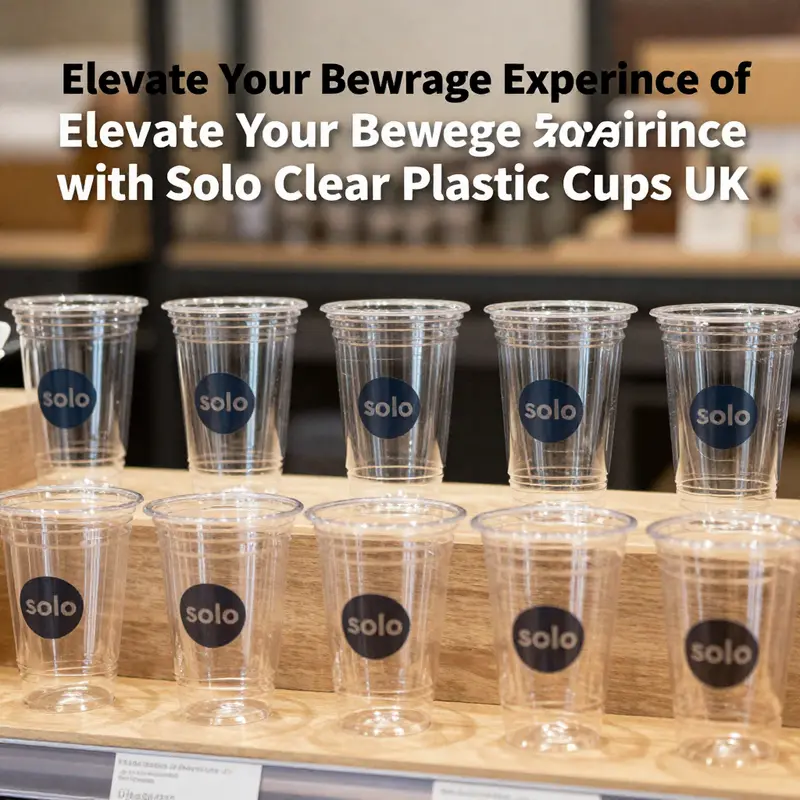
In the United Kingdom, solo clear plastic cups occupy a pragmatic space in hospitality, events, and outdoor settings. They are simple, portable, and reliable, delivering clear presentation and predictable performance across cold and hot service. Yet buyers face a balance of speed, cost, and sustainability, with decision making shaped by regulation and consumer expectations. This chapter traces how the UK market has evolved: steady demand for clear, sturdy cups, tempered by a push toward recyclability and responsible end-of-life handling.\n\nAt the heart of the market are two audiences: high-volume operators who prize strength, transparency, and through-put, and sustainability-conscious buyers who seek recyclable, compostable, or responsibly sourced options. The regulatory backdrop—environmental targets and packaging taxes—has nudged suppliers toward materials that align with waste management systems, while not compromising on performance or supply reliability. The result is a diverse mix of PET and PP cups, with growing exploration of bio-based variants and recycling-friendly designs.\n\nDesign and manufacturing advances now emphasize consistency in rims and walls, heat tolerance, and lid compatibility, as well as end-of-life considerations. Suppliers are increasingly packaging information about recyclability and lifecycle impact, helping buyers compare total cost of ownership rather than unit price alone. In practice, this means thinking through end-use streams, local recycling infrastructure, and vendor partnership terms as part of everyday procurement.\n\nThe practical takeaway for buyers is to evaluate cups not only on performance, but on how well they fit into local waste streams and corporate sustainability commitments. Bulk buying remains a major driver of price, but the smartest decisions balance throughput, end-of-life feasibility, and supply resilience. The UK market thus remains accessible to everyday operators while gradually embracing innovations that support circular economies without sacrificing service quality.
From Disposable to Circular: Reimagining Solo Clear Plastic Cups in the UK
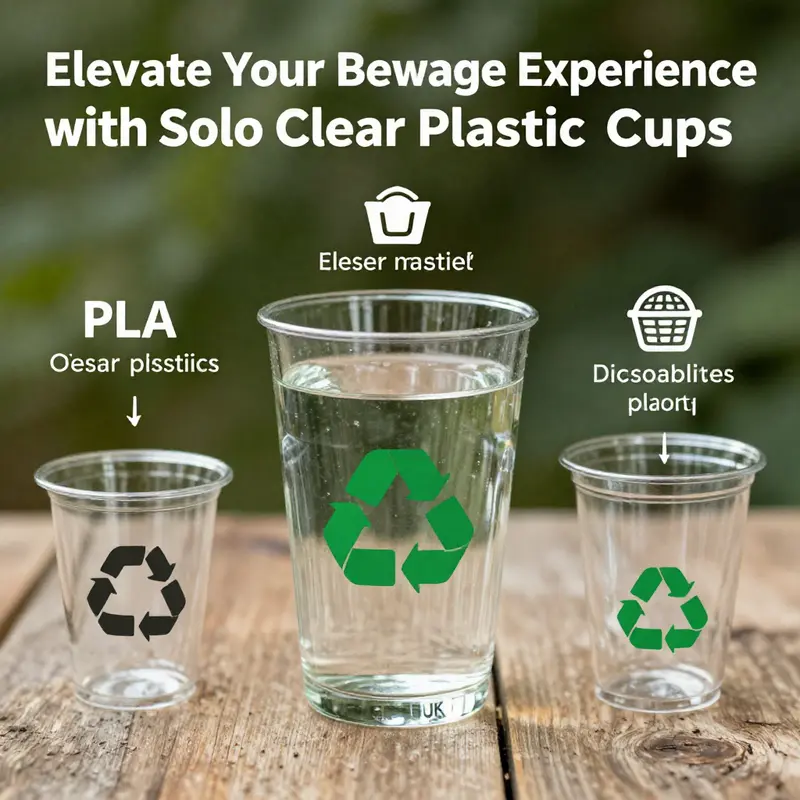
The simple act of pouring a drink into a clear cup carries more meaning than it first appears. In the United Kingdom, solo clear plastic cups have become a convenient fixture of hospitality, events, and everyday life. They are lightweight, inexpensive to produce in bulk, and adaptable to both hot and cold beverages. Yet beneath their practicality lies a complex set of trade-offs that rarely gets spoken aloud in glossy product catalogs. This chapter weds the pragmatic realities of the UK market with the stark environmental data that increasingly shapes how businesses think about packaging. It is not a manifesto of abstention from disposables, but a careful, evidence-based invitation to move from a linear model of use-and-discard toward a circular approach that aligns economic incentives with ecological limits.
The market dynamics around solo clear plastic cups in the UK emerge from a convergence of demand, supply, and policy signals. On one hand, bars, coffee shops, events, and caterers prize the low cost and reliability of disposable cups. Bulk ordering and wholesale distribution channels have helped keep unit prices down, making these cups a predictable choice for high-volume service contexts. On the other hand, the same channels are under mounting pressure from environmental regulations and shifting consumer expectations. The research landscape consistently points to a broader push for alternatives that can reduce the lifetime environmental footprint of single-use packaging. In the UK, this tension between affordability and accountability is shaping how buyers select products and how suppliers position them. The most visible outcome has been a rising curiosity about materials beyond traditional polystyrene or polypropylene and a growing interest in how a reusable, circular system might outperform a disposable solution over time.
A core finding that reappears across studies and industry discussions concerns the lifecycle emissions attached to single-use cups. A 2025 assessment published in Environmental Engineering Research quantified the global warming potential of a single-use cup at 8.12 kilograms of CO2 equivalent per functional unit. The production phase, dominated by polymer manufacture, is consistently the largest contributor to that footprint. What makes the UK context particularly significant is the gap between the life-cycle ideal and the realities of municipal recycling systems. Numerous cups reach landfill or incineration rather than a stream where they can be economically and practically recovered. Even when recycling is technically possible, the efficiency and coverage of municipal streams are uneven, leaving substantial quantities of cups outside practical end-of-life pathways. In the UK’s urban and peri-urban settings, this translates into a persistent risk of environmental leakage, whether through litter in busy nightlife zones, at music venues, or along urban transit corridors where waste management can be overwhelmed during peak periods.
Home composting is rarely a viable end-of-life option for these cups. Their polymers resist rapid decomposition in backyard conditions, and municipal composting facilities are not universally equipped to process them. This mismatch between what is convenient to use and what happens to it after disposal is a key reason why the environmental cost of single-use cups is not simply a matter of “how much we throw away,” but a complex interaction of supply chain design, consumer behavior, and public infrastructure. The implications extend beyond climate change alone. The emissions associated with production and end-of-life management are linked to resource extraction, energy use, and ecosystem toxicity, underscoring that a cup’s impact is not confined to the moment of purchase or the moment of consumption.
Against this, there is a growing chorus advocating reusable and circular alternatives. The appeal of reusable cups is straightforward: if designed for durability and repeated use, they can outpace disposables on multiple sustainability metrics after just a modest number of uses. A 2026 professional technical guide highlights materials like Tritan and BPA-free polypropylene as durable options engineered for resilience and longevity. The argument rests on a simple arithmetic: the more a cup is used, the more the embedded emissions from production are amortized over time, reducing the per-use footprint. Greenpeace East Asia’s 2023 lifecycle assessment provides a complementary perspective, showing that even a conservative minimum reuse count—20 uses for a PP reusable cup—can yield superior environmental performance across climate change, resource use, and ecological toxicity compared with a single-use cup. While these findings come from different regional contexts, the underlying logic translates well to the UK’s market conditions, where many venues operate at high turnover and where cleaning and sanitation systems can be designed to support safe, repeat use.
The idea of circular cups—cups that flow back into a system designed to reclaim, clean, and reinsert them into circulation—has moved from pilot phase to practical consideration in various settings. The Petaluma pilot in 2024, for instance, demonstrated the potential of closed-loop arrangements to produce substantial waste reductions in high-traffic environments. In scenarios such as concerts and sports events, where return rates are higher and consumer habits more predictable, a reusable PP cup can deliver better environmental outcomes than a single-use cup after only a few rotations. This is not merely an environmental win; it is an operational and economic one as well. When a venue builds the necessary infrastructure—systems for collecting, washing, and redistributing cups—and when consumers participate in DRS-like incentives, the total cost per drink can approach parity with disposables, and in some cases move lower, thanks to reduced waste interception costs and the enhanced perceived value of a sustainable service model.
In practice, this reframing has several practical implications for UK businesses. First, the economics of disposables versus reusables are not static. Bulk ordering often drives unit price down for disposable cups, but the lifecycle cost equation changes as you factor in washing, sanitization, and logistics for a reusable program. A growing segment of the market is exploring hybrid models—reusables where feasible, with careful segmentation to ensure that single-use options remain affordable for low-turnover situations or where events require extreme convenience. The UK’s policy environment is increasingly aligned with these realities. There is rising regulatory pressure on single-use packaging, and many stakeholders are advocating for incentives—such as discounts for customers who bring their own cups or reductions in waste disposal fees for venues that contribute to deposit return systems. The policy landscape is still evolving, but the trend toward incentivizing durable alternatives is clear and aligns with broader European and global moves toward extended producer responsibility and circular economy principles.
For buyers navigating this landscape, the decision calculus is multifaceted. It is not enough to compare purchase prices; one must weigh end-of-life pathways, the likelihood of achieving high return rates, the energy and water footprints of reuse and washing, and the capacity of facilities to manage a closed-loop system. In hospitality settings, the reliability of cup handling becomes a central issue. Breakages, contamination concerns, and the logistics of return and reprocessing can transform a seemingly simple shift from disposables to reusables into a complex operational challenge. Yet these challenges are addressable. With well-designed infrastructure—clear signage, staff training, robust cleaning protocols, and consumer engagement strategies—reusables can be integrated into service models without sacrificing convenience or safety. The evidence around environmental performance supports this transition, but it requires an accompanying commitment to systems thinking and continuous improvement.
The UK market’s current stage reflects a pragmatic optimism. Suppliers respond to a growing appetite for eco-friendly variants, including cups made from recycled materials or designed for easier recycling. At the same time, some customers still prioritize the lightness and cost advantages of single-use cups, particularly for events with unpredictable attendance or for smaller operators seeking simplicity. In this context, a nuanced approach makes sense: identifying settings where high reuse rates are feasible and cost-effective, while offering high-quality, responsibly sourced disposables for other circumstances. This balanced stance respects the realities of hospitality while acknowledging the imperative to reduce environmental harm. It also opens the door to a broader conversation about design for circularity. If cups are viewed not as one-off consumables but as components of a system—just as glassware is in fine-dining or institutional kitchens—the design, cleaning, and collection processes can be optimized to maximize reuse while safeguarding public health and product integrity.
There is an important nuance in how these decisions are communicated to the public. Consumers are increasingly receptive to messages about sustainability when they see tangible benefits and reliable service. Discount schemes for bringing a own cup, rewards for participating in return programs, and visible metrics about waste reductions can translate environmental commitments into everyday actions. The social licence to operate—earned through transparent reporting and consistent delivery on promises—strengthens brand trust and can even become a competitive differentiator in a crowded UK market. This is not advocacy for abandoning disposables outright, but for thinking strategically about when and where disposables are most appropriate and how reusable systems can be scaled in ways that are practical, hygienic, and financially viable.
A practical question then becomes how to assess the environmental case for a given context. The lifecycle lens suggests that the largest gains come not merely from replacing disposables with reusables, but from rethinking the entire packaging system—from material choices to end-of-life recovery. Materials like Tritan and BPA-free polypropylene offer durability without compromising safety in repeated use. These choices influence not only the cup’s resilience but also its cleaning compatibility, wash-cycle energy requirements, and potential for microplastics release during repeated use. While the empirical data on microplastics in reused cups remains a developing area, the consensus so far is that proper sanitation and maintenance reduce risks, and that the cumulative emissions savings from reuse typically outweigh the emissions associated with washing when conducted in efficient facilities.
In the UK, this logic has spurred a reexamination of procurement strategies. Buyers increasingly expect suppliers to provide not just a product but a lifecycle story—where the cup comes from, how it is made, what happens when it is no longer usable, and how it re-enters the system. This shift aligns with a broader societal emphasis on accountability and resource stewardship. It also channels investment toward infrastructures that enable circularity, such as deposit return schemes and centralized cleaning hubs. The Petaluma model cited earlier illustrates the power of well-designed return loops; in urban UK environments with dense footfall, similar infrastructure could yield outsized environmental dividends relative to the scale of investment required to establish them. Yet success hinges on collaboration among venues, waste managers, policymakers, and customers. Without broad participation, even the best-designed systems struggle to achieve meaningful waste reductions.
Inside this evolving landscape, a small but meaningful nuance concerns how brands narrate their packaging choices. A clear cup, even if technically recyclable, carries with it a message about convenience that can either catalyze or hinder adoption of a circular approach. To move beyond slogans, businesses must demonstrate measurable progress. This includes tracking return rates, validating cleaning standards, and reporting on the environmental impact of their cup programs in a transparent manner. In the UK, where consumers are increasingly attentive to packaging claims and corporate responsibility, clear, verifiable data can transform a disposable habit into a responsible choice or a compelling sustainability story.
For readers seeking practical pathways, this chapter offers a blended vision. Use disposables selectively where reuse logistics are impractical or where service reliability would otherwise suffer. Simultaneously, invest in reusable cup programs in settings where turnover is high and where cleaning infrastructure can be scaled. Embrace closed-loop thinking by collaborating with suppliers and waste managers to design systems that efficiently recover, wash, and reintroduce cups into circulation. And finally, nurture consumer participation through transparent messaging, incentives, and a consistent demonstration of real-world environmental benefits. These steps do not erase the challenges; they redefine them as solvable problems that can unlock both environmental gains and economic resilience in the UK’s dynamic hospitality and events sectors.
To readers who want a concrete touchpoint in this journey, consider this linked resource as a practical starting point for examining disposable cup options in a real-world context: disposable-clear-plastic-cup-outdoor-picnic-pet-cup-drinking-cup-for-parties-birthdays-weddings-camping-utensils. This page catalogues the kinds of disposable cups that have defined moments in UK events, helping readers think about the material and design choices that lead to either easier disposal or smoother reuse workflows. While the page itself is commercial, the broader point it helps illuminate is the importance of design for end-of-life and the feasibility of integrating such cups into an environmentally charged strategy. Of course, the chapter’s overarching message remains clear: the most sustainable outcome emerges when disposables and reusables are not viewed as mutually exclusive but as complementary tools within a well-orchestrated circular system. In this sense, the UK market is at a crossroads where thoughtful procurement, infrastructure investment, and consumer engagement collectively determine whether a cup merely serves a momentary need or becomes part of a lasting, regenerative cycle.
External resource for further reading:
Greenpeace East Asia – Life Cycle Assessment of Reusable vs. Single-Use Cups (2023). This peer-reviewed comparison underpins the lifecycle logic discussed here, highlighting the conditions under which reuse outperforms single-use packaging across multiple impact categories. https://www.greenpeace.org/asia-east/en/reports/6975/life-cycle-assessment-reusable-vs-single-use-cups/
null

null
Final thoughts
Solo clear plastic cups are not just a convenience but a vital component of delivering an enhanced beverage experience in the UK market. Understanding the underlying dynamics—including supplier options and environmental implications—empowers businesses to make strategic choices. With an ever-increasing demand for sustainability, opting for eco-friendly materials can set your brand apart. Whether you’re a bubble tea shop or an event planner, integrating quality disposable cups into your service can elevate the overall customer experience.