
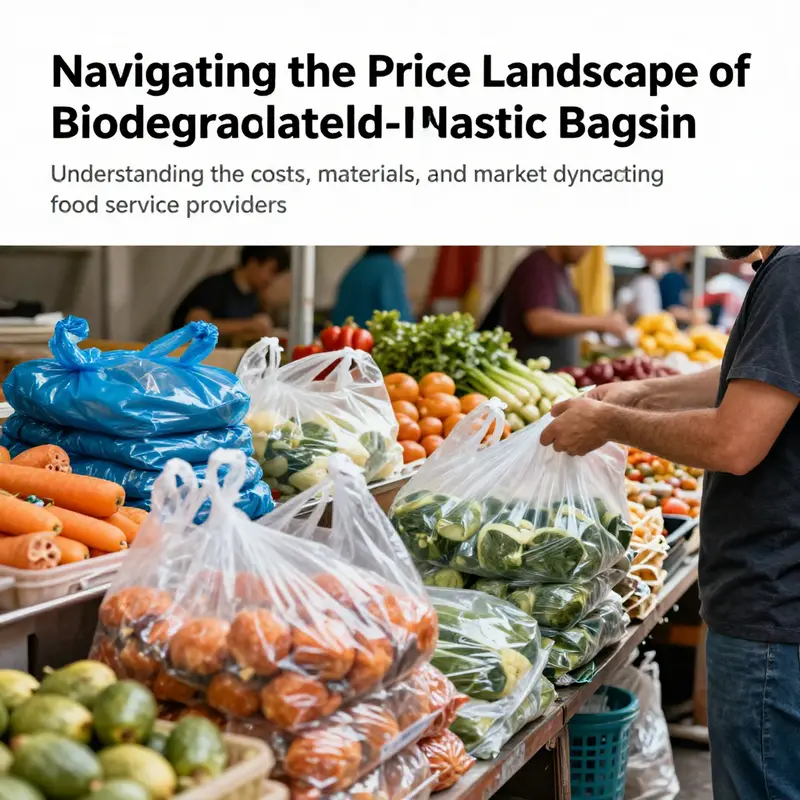
As businesses increasingly prioritize sustainability, understanding the pricing of biodegradable plastic bags for food packaging becomes vital. These eco-friendly alternatives not only align with environmental goals but also respond to consumer demand for green practices. This exploration into market pricing, material compositions, economic influences, and a comparative analysis with conventional plastic bags will equip food service operators — from bubble tea shops to catering services — with the knowledge to make informed purchasing decisions. Each chapter will delve deep into these factors, shedding light on how they interplay to shape the overall cost structure of biodegradable options.
Pricing Currents in Green Packaging: Navigating the Market for Biodegradable Bags in Food Packaging
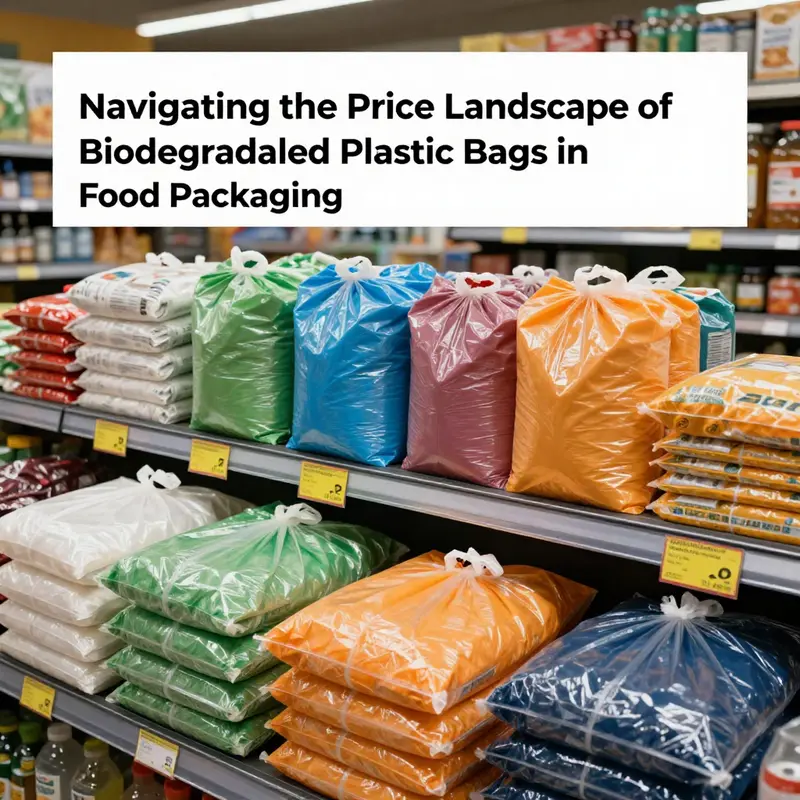
Pricing in the market for biodegradable plastic bags used in food packaging is not a fixed line but a moving current shaped by material science, production economies, order scale, and regulatory expectations. As of March 2026, buyers face a spectrum of prices that reflect the underlying choices of material and manufacturing approach, the complexity of packaging geometry, and the need to certify compostability or biobased content. The narrative across suppliers shows that small, custom runs can be very economical per kilogram or per bag for some product types, yet when precision, branding, and regulatory compliance enter the mix, the unit price can rise sharply. The broader implication is clear: cost effectiveness comes not from a single price point but from aligning material choice, production scale, and supplier capabilities with the intended use, whether it is a simple zip lock bag for kitchen storage or a robust, multi color wrap for produce, all while maintaining an environmental claim that satisfies customers and regulators alike. In this context, a chapter on pricing cannot stay abstract. It must illuminate the real-world ranges that buyers encounter and connect them to strategic decisions about scale, certification, and supplier selection. The market is thus best understood as a mosaic of price bands that relate to the material base, the structural design, and the level of production efficiency that factories achieve at volume. Two overarching truths emerge from the current data. First, the price per piece tends to converge toward a lower bound as order size rises and as manufacturers streamline processes. Second, the variability of the per unit price remains high when the product must meet specific standards, include multi color printing, or be certified as fully compostable under rigorous conditions. Each of these dimensions matters for a business planning a transition to greener packaging while keeping costs predictable and competitive. To grasp the puzzle, it helps to anchor the discussion in concrete ranges observed in the market, while also acknowledging the broader economics that push prices down over time as capacity expands and materials are refined. In practical terms, the landscape shows price bands as expansive as the market itself, from fractions of a cent to a few cents per unit, and from hundreds of dollars per ton to several thousand dollars per ton depending on material and scale. The following synthesis, derived from market data available in early 2026, offers a cohesive view, balancing the volatility of supply chains with the stabilizing forces that come from large-scale procurement and standardized certification. At the core is a simple but powerful idea: the cheapest biodegradable bags are typically those designed for limited functionality or small, simple orders, while the most cost-effective choices for enterprise buyers often arise when a large, certified, and standardized product line is purchased in bulk with careful supplier alignment. Consider, for instance, the category of starch-based or bio-based bags that derive from renewable resources and are designed to fully degrade under specific composting conditions. For small custom orders, a zip lock plastic packaging bag used for food storage can be priced in the narrow band of a few thousandths of a dollar per piece, illustrating how scale and simplicity can compress unit costs. This is not a blanket rule for all starch-based offerings, but it highlights a structural feature of the market: low unit prices can be achieved in niches where printing, branding, and heavy certification are not required. On the other hand, for more demanding applications such as retail and fresh produce packaging, the market tends to favor materials that mimic regular plastic properties while still delivering biodegradability. In such cases, more sophisticated materials and processing are employed, including bio-based polyethylene blends that incorporate renewable components. The wholesale price for these biodegradable blends often lands in the mid-range of the spectrum, roughly between $1,450 and $1,750 per ton, with a minimum order that can be modest, sometimes around two tons. Translating that into per unit economics, this tier typically equates to around 0.73 to 0.88 dollars per kilogram, or a few tenths of a cent per piece for large, simple bag formats, depending on the exact thickness, print, and bag size. High-volume buyers see a different picture still. Block bottom biodegradable bags, which combine durability with a straightforward shape, can be priced around a quarter per piece for larger orders and with modest minimums. This kind of price point illustrates how structural design and the willingness of buyers to commit to thousands or tens of thousands of units can dramatically shift unit costs upward or downward. For smaller orders, where production lines are less optimized and mold costs are amortized over fewer pieces, unit prices can rise to around 0.25 to 0.28 per bag, a reflection of setup costs, the need for precision cutting, and the limited leverage buyers have over the supplier. The economics shift decisively when orders scale beyond a few thousand units; the per piece cost drops as fixed costs per unit are spread across more units and as supply chains become more efficient. In the market, there is a well-documented tension between customization and scale. To meet branding and regulatory demands, many buyers opt for a blend of printed artwork, compostability certifications, and packaging-specific formats. Each of these choices contributes to the final price and is a lever that procurement teams pull to balance cost, sustainability, and consumer appeal. Certification appears as a meaningful differentiator. Products that secure compostability certifications or that rely on well-known biobased content claims must absorb additional testing and certification costs, and these costs ripple into final selling prices. In turn, certification can unlock access to markets in regions with stringent environmental standards, enabling premium pricing in certain channels where customers are particularly sensitive to sustainability claims. The regional dimension also cannot be ignored. Prices observed in exporting hubs in Asia are generally more competitive, reflecting scale economies, supply chain efficiencies, and broader demand for biodegradable packaging. In contrast, price levels in European and North American markets tend to be higher, a consequence of stricter regulatory regimes and a longer certification pathway that adds both cost and time to bring products to market. Importantly, substantial order quantities can still achieve cost optimization in these markets, underscoring that volume remains a critical path to cost efficiency no matter where the product is manufactured. Looking ahead, the market narrative points toward gradual downward pressure on prices as technologies mature and as producers invest in more efficient production lines. The expectation is a 10 to 15 percent price reduction for average biodegradable bag offerings over the next couple of years, assuming continued growth in demand and sustained capacity expansion. This projection rests on several assumptions: stable feedstock costs, continued improvements in processing speeds, and the absence of new shocks to global supply chains. It also presumes that manufacturers continue to pursue standardization in product specifications, allowing buyers to consolidate purchases and reduce custom production costs. The convergence of price points will not erase all variations, but it will narrow the gap between the most affordable options and those that deliver additional value through performance, branding, or certification. For buyers planning a transition to greener packaging, the takeaway is pragmatic. Adopt a two-pronged approach that emphasizes scale and certification rather than chasing the lowest possible price on a single SKU. Engaging with a supplier who can offer a certified, multi format line at scale creates a more reliable and predictable cost structure than repeatedly negotiating on a one-off bag with limited production runs. The decision calculus also benefits from a careful life cycle perspective. A lower upfront price can hide higher costs later if the chosen material or process proves less compatible with a brand’s end-of-life ecosystem or if certification requirements evolve. In this sense, the pricing story is not merely about upfront costs; it is about total cost of ownership across supply chain, production, and end-of-life management. The market data offers a practical frame for procurement teams. The broad range of observed prices, from fractions of a cent to several tenths of a dollar per piece, reflects a tiered landscape where material selection, printing, and scale dictate the final bill of materials. For those designing a packaging program, the rule of thumb is to align the product type with the desired throughput and certification strategy. If the goal is to maximize cost efficiency at scale while delivering a credible sustainability claim, the strategic play is to pursue large-volume procurement of certified products that suit the intended use, rather than chasing ultra-low prices on narrowly defined bag formats. This approach reduces the risk of quality or regulatory misalignment and improves traceability across the supply chain. For readers who want a concrete pointer to how these dynamics show up in practice, consider exploring packaging options that illustrate the broader ecosystem of sustainable alternatives. For example, a representative page outlining eco-friendly disposable packaging solutions demonstrates how modular, multi-compartment or multi-use formats can be integrated with standardized compostable materials, enabling brands to package a range of food items with consistent environmental messaging. This example, while not a direct bag comparison, highlights the sensibility of selecting packaging families that share common processing requirements and certification pathways, a strategy that tends to stabilize pricing during periods of market fluctuation. The pricing ecosystem described here helps connect the dots between micro decisions and macro outcomes. It clarifies why different buyers see different price points for similar products and why the total cost of ownership matters more than the unit price alone. In the end, the strongest move for enterprise buyers is to pursue scale and certification in tandem. That combination unlocks better per unit economics, steadier supply, and credible environmental credentials that resonate with consumers, retailers, and regulators. When evaluating supplier proposals, consider not just the per piece or per ton number, but the accompanying features: whether the material is sourced from renewable feedstocks, whether the product carries a recognized compostability qualification, how easily it integrates with existing packaging lines, and how predictable the lead times are for large orders. The market does not provide a single silver bullet; it offers a framework for making trade-offs that optimize both price and sustainability impact. For readers seeking a practical, real-world anchor, a recent pricing compilation shows that biodegradable food packaging bags generally fall within a broad corridor of approximately 0.003 to 0.28 USD per piece, with ton-based pricing in the neighborhood of 1,350 to 1,750 USD per ton depending on material class and order size. Enterprise buyers should anticipate negotiating within this corridor, always bearing in mind that scale and certified product mix are the most reliable levers to improve cost-per-unit while maintaining or enhancing environmental credence. External market commentary reinforces the logic: global demand is rising for sustainable packaging, and manufacturers are simultaneously tightening margins and expanding capacity to meet that demand. The evolving price landscape will likely continue to reflect these competing forces, with regional players who can offer robust, certified solutions at scale gaining ground against smaller, bespoke suppliers. In sum, the pricing story for biodegradable bags in food packaging is not a static ledger but a moving calculation that weighs material science, process efficiency, and life cycle promise. Buyers should treat price as one dimension among several that determine value and risk in their packaging programs. A thoughtful procurement strategy aligns material choice with throughput needs and regulatory expectations, leverages volume to drive down unit costs, and frames sustainability as a value proposition rather than a cost center. For readers who wish to see a concrete example of packaging design decision making at the supplier level, explore this practical reference to eco-friendly takeout packaging solutions, which demonstrates how suppliers structure offerings around standardized formats and environmentally favorable materials: https://ecocupbowl.com/product/eco-friendly-disposable-3-compartment-food-grade-packaging-box-for-fast-food-high-quality-takeout-boxes-for-fried-chicken-french-fries-packaging/ . This link provides a tangible illustration of how packaging ecosystems organize product families to support scale, consistency, and green claims in a way that translates into more stable pricing for buyers over time. External resource for further market context: https://www.alibaba.com/product-detail/Biodegradable-Food-Packaging-Bag-Made-of-Cornstarch_1600399839445.html. This authoritative data point showcases the live pricing and parameters from a major marketplace, updated to reflect current market conditions and supplier dynamics in corn starch–based biodegradable food bags. As markets continue to evolve, buyers with a strategy anchored in scale, certification, and supply chain resilience will find that price competitiveness follows. The chapter thus closes with a practical farewell to the idea that price alone drives decisions in biodegradable bag procurement. Instead, price is best understood as a function of material choice, manufacturing excellence, and governance around sustainability. The most effective path for organizations aiming to transition to greener packaging is to cultivate a sourcing approach that treats certifications as a standard feature of the product, not a premium add-on, and to commit to large-volume orders that unlock favorable economics without sacrificing environmental integrity.
From Molecules to Market: Material Make-Up and Price Dynamics of Biodegradable Food-Packaging Bags
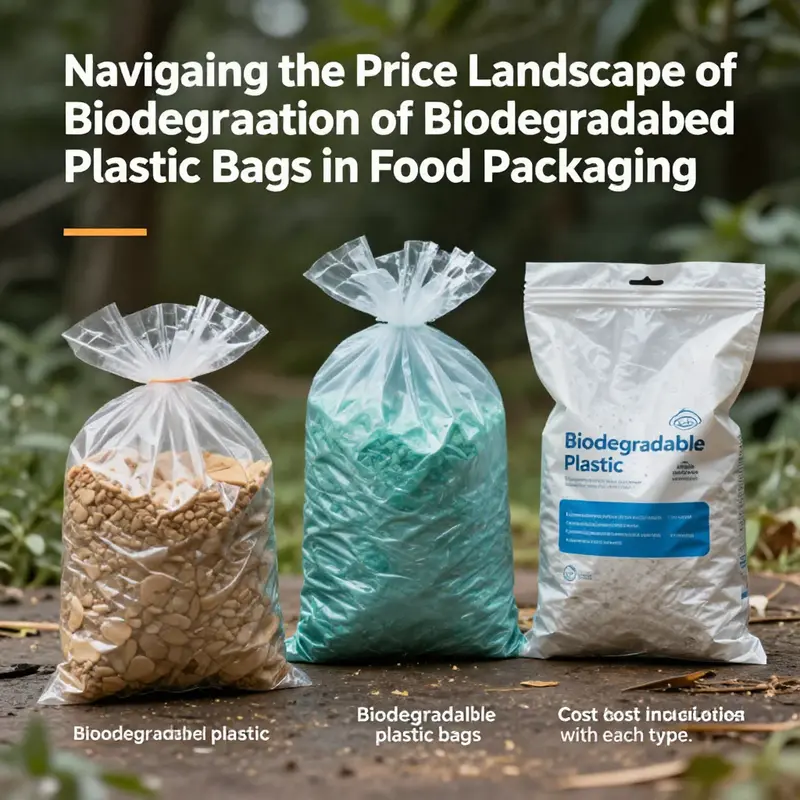
Biodegradable plastic bags designed for food packaging sit at the intersection of material science, logistics, and consumer expectations. They emerge from a family of renewably sourced polymers that aim to replace conventional plastics without sacrificing function. The most common members of this family are polylactic acid (PLA), derived from plant-based feedstocks such as corn starch or sugarcane, and a broader class that includes polyhydroxyalkanoates (PHA) and PBAT-containing formulations. These materials are engineered to break down under specific conditions, a feature that is central to their appeal and, at times, to their economic challenge. In practice, the choice of polymer—whether a PLA-based formulation, a PBAT blend, or a PHA-rich composite—shapes performance parameters such as clarity, stretch, moisture barrier, and heat resistance. Each of these attributes, in turn, informs not only how well a bag preserves freshness but also how much it costs to produce, how it interacts with existing recycling or composting streams, and how brands signal environmental stewardship to price-sensitive shoppers.
The evidence points to a price landscape that is as nuanced as the materials themselves. PLA-based customized packaging bags may be offered at relatively low per-unit prices when orders are large enough to justify high-volume production. In one reported case, customized PLA packaging bags are priced within a tight band, roughly $0.01 to $0.03 per unit, with a minimum order quantity of 50,000 units. This kind of price point reflects economies of scale, where fixed setup costs are amortized across a large run and the polymer itself—PLA—benefits from the substantial cost reductions that commercial-scale fermentation and extrusion can deliver. Yet this same price tier can vanish if the specifications require additional features, such as special printing, barrier properties, or tighter tolerances that raise processing complexity and energy use. A second PLA-based option, a transparent PLA/PBAT blend, tends to sit at a higher per-piece range, roughly $0.03 to $0.055, and this spread is sensitive to order size and tiered pricing. Whether packaging for delicate fruits or leafy greens, the material blend becomes a lever: PBAT components often improve flexibility and compostability but can push unit costs higher when applied in thinner gauges or in premium finishes.
A separate tier exists for 100% biodegradable bags, including familiar T-shirt bag formats, where wholesale pricing is presented on a per-ton basis. In this category, the reported range spans approximately $1,350 to $1,900 per ton, with variability driven by color, thickness, and any printing or branding requests. Taken together, the price structure for biodegradable and compostable bags generally settles in a broad band from about $0.01 to $0.06 per piece, with per-ton prices ranging roughly from $1,350 to $1,750 depending on the material composition and the scope of customization. Such figures reveal that the economics of these bags are not simply a function of the polymer’s intrinsic cost; they are a function of scale, processing complexity, and the degree to which manufacturers must accommodate branding, signage, or barrier layers that extend beyond the basic film.
Comparing this with conventional plastics highlights a persistent economic hurdle: biodegradable materials typically carry higher raw-material costs. On average, biodegradable plastics can cost between $2.5 and $4 per kilogram, a premium over HDPE and similar petroleum-based options that commonly run between $1.2 and $1.5 per kilogram. The cost gap matters not only for the price of the bag itself but for the overall packaging bill faced by retailers and food service operators. For small businesses and large retailers alike, the higher per-unit cost must be weighed against the value proposition of environmental responsibility, consumer demand for greener packaging, and the potential for regulatory or market-driven pressures to shift away from conventional plastics. In a market where labor, energy, and printing add-to-cost multipliers, the upfront price premium for biodegradable bags can become a meaningful portion of a total packaging expense, especially in high-volume, price-sensitive environments like supermarkets or quick-service restaurants.
Material choice, production process, and order dynamics feed into a broader cost architecture that shapes adoption. The material type—PLA versus PBAT blends versus PHA-rich formulations—interacts with printing requirements, barrier performance, and compostability standards. Printing adds another layer of expense; a bag that carries a vivid logo or embossed branding will incur higher apparatus wear and longer run times, further widening the gap between basic, unprinted films and those with multi-color, high-resolution graphics. Order volume is a critical determinant as well: larger MOQs reduce unit costs by spreading fixed expenses across more units, while smaller or irregular orders may incur premium pricing because of setup costs, inventory risk, and lower production-line utilization. Suppliers also vary in their willingness to offer color options, thickness gauges, and custom dimensions, and these variables translate into different price quotes for what may appear at first glance to be a simple bag.
An important nuance in the economics is the alignment, or misalignment, of disposal infrastructure with product design. Biodegradable bags are designed to decompose under industrial composting conditions, a pathway that presumes access to appropriate facilities. In many cases, the most sustainable outcome relies on a dedicated return or reuse system that channels used bags back into a composting stream rather than discarding them with ordinary waste. This logistical requirement adds a layer of cost that is often invisible at the point of sale. It means businesses must invest in collection, transport, and partnerships with composting facilities or specialized recycling streams, creating additional operating expenses that can dampen the appeal of biodegradable bags for volume-driven retail settings.
In practice, these complexities have nudged brands toward niche-market strategies where environmental branding and consumer alignment with sustainability values can command a premium. Luxury goods, fashion collaborations, subscription boxes, and eco-conscious retailers have found room to explain and justify higher packaging costs based on storytelling, brand identity, and perceived value rather than sheer cost savings. In such contexts, cost differentials are reframed as investments in a market position rather than as mere line-items in a procurement spreadsheet.
The pricing dynamics are not merely theoretical. They translate into tangible decision points for product developers, procurement leads, and sustainability officers. A plant-based packaging strategy may be attractive for a store seeking to differentiate itself through responsible sourcing and circularity, yet it must be paired with supplier capabilities that can reliably meet MOQs, ensure consistent film performance, and align with the intended disposal pathway of the product. The integration of composting or recycling infrastructure is not incidental; it is a core element of the sustainability value proposition and, consequently, of the business case for adopting biodegradable bags. When a retailer evaluates a switch from conventional HDPE bags to PLA or PBAT-based equivalents, it is not enough to compare per-piece costs. The evaluation must consider the entire lifecycle, including material costs, processing energy, potential yield impacts on shelf life, and the practicality of end-of-life management in the target geography.
For practitioners seeking concrete guidance, the numbers and patterns observed in the market provide both a map and a caution. The unit price bands, from roughly one cent to six cents per piece, reflect a spectrum of materials and service configurations, while the ton-based ranges underscore the scale effects and the trade-offs between composition and branding. The underlying takeaway is that there is no singular price dial a business can turn. The optimal choice depends on the product category, the store format, the logistical network, and the degree to which the brand wants to communicate environmental stewardship through packaging. In markets where consumer willingness to pay a premium for sustainability is growing, the price differential can be justified not only by the material performance but by the enhanced perception of an organization’s values. Conversely, in price-sensitive segments, the need to balance performance, cost, and disposal infrastructure may lead some firms to postpone or phase out biodegradable options in favor of more economical solutions, even as demand for greener packaging continues to rise.
From a policy and standards perspective, the story of material composition and cost is anchored in a framework that increasingly emphasizes compatibility with composting facilities and clarity in labeling. The industry is increasingly moving toward standards that codify what it means for a bag to be compostable, what conditions are required, and how end-of-life streams should be managed. In this context, the economic calculus of a biodegradable bag becomes intertwined with regulatory signals that shape consumer behavior and corporate reporting. Companies that invest early in aligning their packaging with recognized standards can reduce risk and potentially access premium segments that reward transparent sustainability claims, while those that delay alignment may face retrofit costs later as standards tighten.
For readers seeking concrete examples of packaging options that align with eco-conscious goals while illustrating the material-price dynamic, consider the broader ecosystem of takeout and pastry- or bakery-style packaging. The choices range from simple, unprinted films to sophisticated, branded cartons and windowed designs that showcase product quality. In practice, a brand contemplating transition to biodegradable bags often weighs not only the material label (PLA, PBAT, or blends) but also how the packaging will perform during storage, customer handling, and display. The performance envelope can include strength under weight, seals that resist leakage, clarity for product visibility, and heat resistance for hot foods. Each of these functional requirements carries its own price implications, and together they determine whether a given solution is economically viable at a particular scale.
The internal ecosystem of packaging suppliers provides a useful touchpoint for firms exploring options. For instance, a segment of offerings emphasizes color versatility, print capabilities, and thickness variants, all of which impact unit costs. Conversely, more basic configurations that emphasize minimal finishes and standard sizes can achieve lower unit costs but may sacrifice some branding opportunities. The decision to invest in customization versus standardization is often driven by the brand’s strategic priorities and the expected lifespan of the packaging in consumer hands. A luxury packaging strategy may justify higher prices through enhanced presentation and alignment with sustainability narratives, while a high-volume retail operation may demand a cost discipline that prioritizes consistency and reliability over bespoke aesthetics.
In sum, the material make-up of biodegradable food-packaging bags and their price implications form a tightly coupled system. The choice of PLA, PBAT, or PHA-based formulations affects not only performance but the economics of scale, branding, and end-of-life options. While the per-piece and per-ton price bands provide anchors for budgeting and supplier negotiations, they are best interpreted within a broader value game that accounts for disposal infrastructure, regulatory expectations, and consumer demand for responsible packaging. As markets evolve and composting networks expand, the economics may tighten in or relax out of certain segments, but the core tension will remain: biodegradable options promise sustainability, yet the path to wide-scale adoption hinges on orchestrating material science, manufacturing efficiency, and an end-of-life system that makes composting practical and reliable. To ground this discussion in practical resources, readers may explore packaging options that emphasize eco-friendly, takeout-ready solutions that align with a circular approach to consumption.
For an example of practical packaging options aligned with these eco-friendly goals, consider the eco-friendly takeout boxes for food packaging. This example illustrates how design choices—ranging from material composition to form factor and branding—interact with a brand’s sustainability narrative and consumer expectations. While no single option solves every challenge, a thoughtful combination of material choice, production efficiency, and end-of-life planning can make biodegradable bags a credible element of a broader, responsible packaging strategy. For a broader view of composition, standards, and applications, see the external resource on biodegradable express bags and their standards and applications, which provides a detailed context for how these materials are defined and deployed across different markets: https://www.greenpackaginginsights.com/understanding-biodegradable-express-bags/composition-standards-and-applications
Pricing Schemes at the Edge of Sustainability: How Economic Forces Shape Biodegradable Bag Costs in Food Packaging
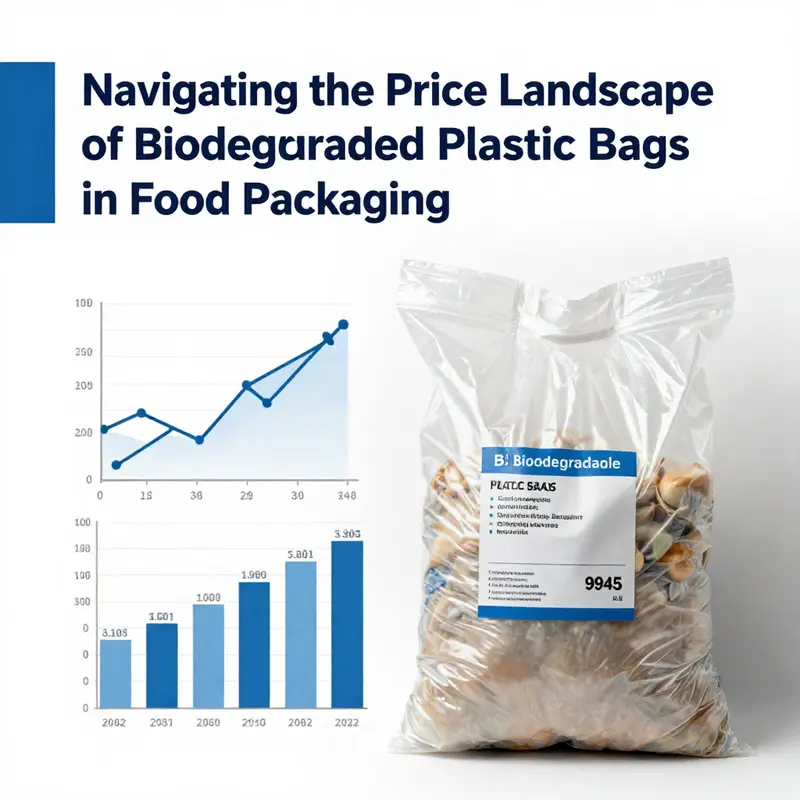
The price of biodegradable plastic bags for food packaging sits at a delicate intersection where environmental aspiration meets arithmetic. Consumers want greener options, retailers seek reliable supply, and regulators increasingly steer behavior through policy. In this space, price is not a single number but a gradient shaped by the materials used, the scale of production, and the shifting tides of demand. The most visible slice of this gradient appears in unit prices. Across different configurations, the literature and market reports point to a familiar band: roughly one cent to six tenths of a dollar per bag, with substantial variation driven by the exact material, the printing and barrier properties, and the order quantities. For customized PLA packaging bags, the price can land between about $0.01 and $0.03 per unit when a large minimum order, such as 50,000 units, is required. For biodegradable bags that blend PLA with PBAT, the unit cost stretches to roughly $0.03 to $0.055, again dependent on whether the order sits at the lower tier (50,000 to 99,999 units) or grows to 100,000 units and above. A different rhythm of pricing emerges when considering the wholesale market for 100% biodegradable bags—often sold as T-shirt bags in varied colors—where price is tracked by ton rather than per piece and can range from about $1,350 to $1,900 per ton. Put together, these figures sketch a purchasing landscape in which the average consumer-facing bag hovers near $0.01 to $0.06 per piece, with per-ton dynamics offering a separate lens for larger buyers and downstream applications. Yet, behind these headline ranges lies a network of cost drivers that refract price through multiple lenses: raw materials, manufacturing economics, and the broader demand and policy environment that shape investment incentives and production footprints.
Raw material costs loom largest in this price mosaic. Biodegradable plastics rely on renewable feedstocks such as corn starch, sugarcane, or other bio-based polymers rather than the petrochemical stream that fuels conventional plastics. Economic analyses conducted in 2025 place the typical raw material cost for biodegradable plastics between $2.5 and $4 per kilogram. That contrasts with conventional plastics, which often trade between $1.2 and $1.5 per kilogram. The premium reflects both the higher price of renewables and the more complex supply chains that can accompany bio-based inputs. The premium does not exist in a vacuum; it endures amid fluctuations in agricultural commodity markets, weather-driven crop yields, and global logistics disruptions. A drought in a key corn-growing region or a logjam in crop exports can tighten supply and push prices higher in the near term, even as producers seek ways to hedge risks with new feedstock sources, improved manufacturing resilience, or alternative bio-based formulations.
The economics of scale compounds the raw-material effect. Biodegradable plastics, particularly those built around newcomer chemistries or specialized blends, do not yet enjoy the same mature, worldwide manufacturing footprint as conventional plastics. The infrastructure to produce, process, and convert bio-based resins into packaging film and bags remains comparatively less pervasive. That relative immaturity translates into higher fixed costs per unit at small- to mid-scale production runs and yields larger per-unit cost penalties when the order quantity does not cross a threshold that unlocks more efficient operations or more favorable procurement terms for raw materials. In turn, these per-unit costs influence the price a supplier can reliably offer without inviting supply risk, especially for businesses seeking to deploy packaging across multiple SKUs or geographic regions.
Economies of scale soar or sink with market demand. When demand for biodegradable bags accelerates, equipment utilization rises, labor efficiency improves, and procurement channels diversify. More manufacturers investing in dedicated lines, faster conversion processes, or barrier-enhanced formulations can push unit costs downward, even if raw-material prices stay elevated. Conversely, if demand cools due to price sensitivity or skepticism about biodegradability claims, manufacturers may throttle investment, or slower demand growth can cause cost per unit to creep upward because the same fixed costs are spread over fewer units. The dynamic is especially pronounced in the segment of PLA- and PBAT-based products, where feedstock competition, processing complexity, and regulatory clarity all interact to shape the trajectory of unit costs over time.
Market demand dynamics also pull price in a double-edged direction. On the one hand, rising consumer concern about plastic pollution and an expanding policy toolkit—restrictions on conventional plastics, mandates for biodegradable alternatives, and subsidies or tax incentives for bio-based materials—tend to increase demand for biodegradable options. Higher demand can strain supply in the short term, elevating prices, but it also creates a powerful incentive for innovation and capital deployment that can eventually reduce costs through improved processes and larger-scale production. On the other hand, if the market perceives that the biodegradability claims are overstated or that end-of-life infrastructure is inconsistent, demand could temper as buyers opt for cheaper, potentially less environmentally rigorous packaging. The price sensitivity of some buyers in the food sector—where margins are thin and packaging costs are highly visible—adds another layer of complexity to how price adjusts with shifts in consumer sentiment and retailer expectations.
Policy and regulatory frameworks exert powerful, sometimes underappreciated, price levers. Governments deploy a mix of subsidies for bio-based materials, taxes or phase-outs on conventional plastics, and mandates that require certain packaging to be biodegradable or easily compostable. These policy instruments can compress the price differential between biodegradable and conventional options by reducing effective costs for manufacturers or by raising the cost of non-biodegradable alternatives in specific markets. In practice, policy can transform a marginally viable biodegradable packaging program into a scalable one, especially for markets that accumulate large volumes of food packaging and require consistent performance, shelf life, and disposal outcomes. The presence or absence of supportive infrastructure for composting and industrial digestion is a crucial companion to policy: without corresponding end-of-life pathways, even the most affordable biodegradable formulations can struggle to realize their environmental benefits in practice, which in turn influences retailer acceptance and price realization.
Printed features, barrier properties, and performance standards carry their own price consequences. The more a bag must resist puncture, permit extended shelf life, or display color and branding, the more complex the manufacturing steps become. Printing, lamination, and coating layers add cost, as do performance enhancements like moisture barriers or oxygen barriers necessary for certain foods. When a supplier quotes a price per piece, that figure often encapsulates a bundle of choices about film thickness, printing complexity, heat resistance, and seal integrity. The same bag type can be priced differently by different suppliers because of variations in these manufacturing choices, the specific grade of bio-based resin, or the assumed lifespan of the bag under end-of-life conditions. For buyers, this means evaluating price quotes demands a careful look at the total value proposition: not only the up-front cost, but the performance, compatibility with existing packaging lines, and the logistics of waste handling after use.
The data assembled from supplier catalogs and industry surveys also highlights a practical reality for many buyers: MOQs and order size heavily condition the unit price. Customized bags with larger MOQs tend to enjoy lower per-unit costs, reflecting the fixed costs that are amortized across a greater number of units. In the current landscape, a buyer committing to tens or hundreds of thousands of bags can often secure more favorable tiered pricing than a small retailer ordering a few thousand units. This scale effect has implications for both new entrants into the biodegradable packing space and established food brands evaluating a transition plan. A gradual ramp-up—starting with pilot programs, measuring end-user disposal, and gradually expanding volumes—can help mitigate risk while still drawing down unit costs as production pipelines mature.
Amid these price mechanisms, the total cost of ownership for a retailer or a brand extends beyond the sticker price of the bag. End-of-life considerations—whether the local waste stream supports industrial composting, the rate of biodegradation under real-world conditions, and the availability of consumer education about proper disposal—shape the perceived value of switching to biodegradable packaging. If end-of-life outcomes are mixed in a given region, retailers may encounter confusing labeling, inconsistent recycling or composting results, and potential reputational risk if consumers interpret biodegradability claims as a license to discard carelessly. These downstream costs, though harder to quantify in the short term, feed back into the price discussion because they influence supplier standards, certification requirements, and the premium customers are willing to pay for sustainability claims.
In this price-aware, policy-responsive environment, buyers often wrestle with a fundamental question: should the packaging spend be seen as a cost or as an investment in brand equity and long-term regulatory resilience? The answer depends on the business model, the product category, and the geographic footprint. In markets where consumer demand for greener packaging is strong and the composting infrastructure is robust, higher upfront costs can translate into longer-term savings, such as reduced disposal fees, lower penalties for non-compliance with waste regulations, and improved consumer loyalty. In markets where price sensitivity remains acute and composting options are underdeveloped, buyers may push for incremental, staged improvements—adopting biodegradable options for select SKUs, bundling with educational campaigns, and leveraging supplier flexibility to manage price risk while monitoring the evolution of raw material costs and supply chain reliability.
What does this imply for the future trajectory of pricing? The short answer is that prices will likely drift downward, but not in a straight line. As feedstocks become more abundant, as innovations in biopolymer processing reduce energy intensity and waste, and as the global footprint of biodegradable plastics expands, the per-unit costs should ease. The most meaningful price declines are likely to come from economies of scale, improved supply chain coordination, and policy environments that channel capital into productive capacity. Yet, price stability will require continued attention to feedstock risk, the reliability of end-of-life infrastructure, and the ability of manufacturers to maintain quality and performance across diverse application requirements. In the meantime, the practical impact on airport-style, supermarket, or restaurant packaging decisions remains clear: the price tag attached to biodegradable bags is entwined with a broader system of production discipline, consumer behavior, and policy signals that together determine how quickly green packaging becomes a normal, affordable choice rather than a niche option.
For practitioners and researchers who want to trace the current price landscape against real-world dynamics, several industry analyses offer ongoing market intelligence. These sources illustrate how price bands align with material choices, how order volume shifts pricing tiers, and how regional differences in demand and regulation reshape supplier behavior. When considering procurement strategies, it is useful to think in terms of price bands, not single figures. The bands reflect underlying variability in materials (such as PLA or PBAT), the extent of customization or printing, and the scale of the purchase. They also echo broader macroeconomic currents, including energy costs, currency fluctuations, and agricultural trends that influence feedstock availability. In practice, buyers often negotiate not just the unit price but the terms that can buffer them against volatility: longer-term supply contracts, price collars tied to commodity indices, or shared investments in processing capacity that help reduce overall landed cost over time.
Within this pricing ecosystem, consideration of alternative packaging choices remains essential. Retailers often evaluate whether to mix biodegradable options with other sustainable packaging forms, such as compostable paper-based bags or barrier-coated paper films. Each option comes with its own cost structure, performance profile, and end-of-life implications. The decision to mix or match depends on product type, shelf life requirements, and consumer expectations. To illustrate this complexity without becoming mired in product catalog details, one can think of a tiered packaging strategy: lower-oxygen, high-bulk items may align with simpler bio-based films, while sensitive, high-moisture products may require more sophisticated barrier layers that justify higher unit costs. The broader verdict remains that price is a signal of capability and system fit as much as a standalone numeric value. As suppliers and buyers navigate the evolving landscape, the emphasis shifts from chasing the lowest price to securing a resilient, well-supported packaging solution that aligns with waste-management realities and brand commitments.
From a practical standpoint, buyers can leverage this understanding by focusing on total value rather than unit price alone. When comparing quotes, it helps to track how many of the following factors are bundled into the price: material type (for example, whether a single resin or a blend drives the cost), the degree of customization and printing complexity, the required barrier properties, the minimum order quantities, and the logistics of delivery to production facilities. The most attractive offers are those that balance reasonable unit costs with predictable lead times, reliable quality, and clear documentation of end-of-life pathways. With these considerations, the price of biodegradable bags becomes not just a line item but part of a strategic decision about supply chain resilience, regulatory readiness, and the story a brand tells about its environmental goals.
For readers who want a sense of the broader market context beyond these particular price ranges, ongoing industry reports continue to chart forecasts and regional nuances. These external analyses provide a macro lens on how bioplastics, including the biodegradable bags used in food packaging, are expected to evolve in the next several years, including implications for pricing structures, investment in production capacity, and the balance between supply and demand in different regions. As the discourse around sustainable packaging matures, prices are likely to converge toward a sustainable equilibrium that reflects both environmental responsibility and economic practicality.
To connect this analysis to practical procurement options and ongoing education for packaging decisions, several real-world resources offer actionable guidance. Consider exploring materials and packaging strategies that emphasize lifecycle thinking, supplier collaboration, and transparent communication with end users about disposal and recycling pathways. A representative example of the kind of packaging options that align with sustainability goals, including multi-component packaging systems and careful attention to compostability standards, can be explored through the following internal link intended to illustrate how eco-friendly takeout packaging choices can integrate with broader sustainability objectives: eco-friendly takeout boxes for food packaging. This example underscores how packaging choices extend beyond a single bag and into an ecosystem of containers, vessels, and serviceware that together define the environmental footprint of a food program.
External perspectives also provide useful benchmarks for price expectations and potential futures. For those seeking a broader market forecast, general industry analyses offer insight into how policy, feedstock availability, and technological progress interact to shape pricing trajectories for bio-based plastics and related packaging. See for instance external market analyses from established industry research firms that track bioplastics markets and biodegradable packaging trends, which provide context for the price ranges discussed here and project how these dynamics may unfold as the market matures. These external resources complement the internal price data and help frame the trajectory of costs within a larger, forward-looking narrative about sustainable packaging.
In sum, the price of biodegradable plastic bags for food packaging is not a fixed figure but a reflection of a living system. It captures the costs of renewable feedstocks, the maturity of manufacturing capability, the exuberance or caution of demand, and the policy climates that steer both investment and consumer behavior. Although the current price bands show a meaningful premium over conventional plastics, the growth of scale, continued material innovation, and enabling policy environments hold the promise of a narrowing gap over time. The challenge for buyers is to translate this evolving price landscape into steady, reliable packaging programs that deliver on shelf life, performance, and environmental stewardship, while also respecting the financial realities of their own businesses. As this chapter has explored, price is the interface where economic realities meet ecological aspirations, and how that interface is managed will shape the pace with which biodegradable packaging becomes a routine choice for food packaging across markets.
External Resource: for a broader market perspective, see a comprehensive analysis of the bioplastics and biodegradable packaging sector at https://www.grandviewresearch.com/industry-analysis/bioplastics-market.
The Real Cost of Green Bags: Navigating Price Dynamics in Biodegradable vs Conventional Food Packaging
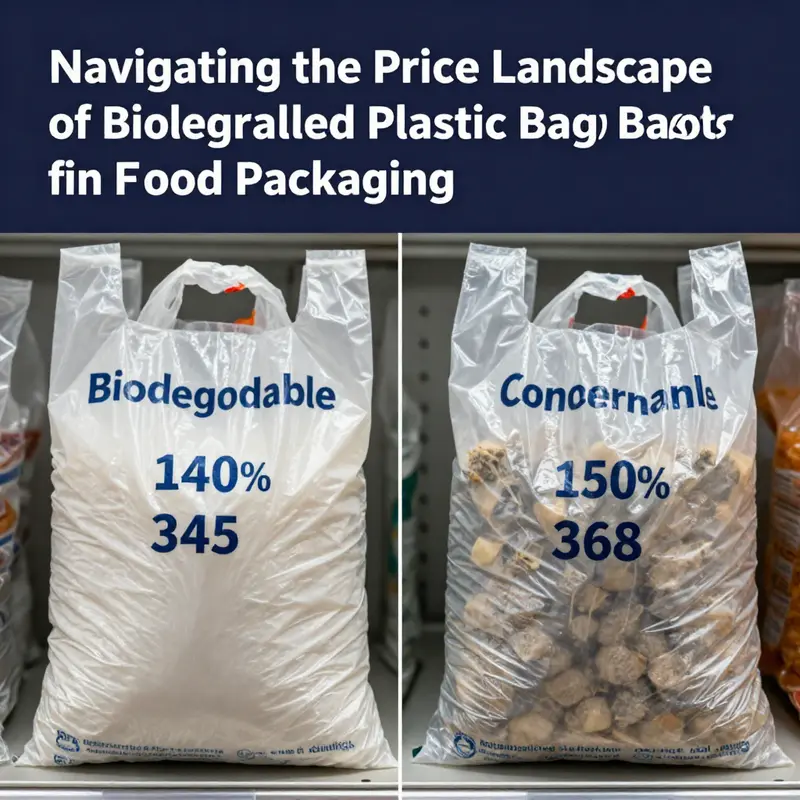
The price dynamics of biodegradable packaging for food are nuanced. Customized plant-based bags typically carry a higher per-unit cost than conventional plastics, driven by resin systems, film thickness, barrier requirements, and printing. Unit costs for customized biodegradable bags often range from about 0.01 to 0.03 USD per piece, with minimum order quantities around 50 000 units. Smaller orders raise per unit costs due to setup, testing, and traceability requirements. For transparent films used with fresh produce, unit costs can land in a similar yet slightly higher band, roughly 0.03 to 0.055 USD per piece, depending on size and branding. Beyond per-piece pricing, wholesale bands for biodegradable bags by weight provide another view: about 1200 to 1900 USD per ton for 100 percent biodegradable soft goods. Per-piece costs translate to approximately 0.01 to 0.06 USD in typical volumes, with price breaks and color/printing options shaping the final figure. Material choice is a major driver of dispersion; bio-based feedstocks may raise raw-material costs, but scale, long-term contracts, and certification amortization can reduce per-unit costs over time. Printing complexity and customization add further layers of cost, so simpler designs and fewer colors help narrow the gap with conventional bags when bought at scale. For retailers and food service, the premium can be partly offset by price breaks, bundled packaging programs, or policy incentives that reward reduced packaging waste. The premium is best understood as a range, not a fixed number, and the most effective way to manage it is through design that reduces SKUs, stable supplier partnerships, and a lifecycle-cost approach that accounts for waste handling and end-of-life outcomes. In this view, the financial argument for greener packaging strengthens when the supply chain and waste-management infrastructure support the expected environmental benefits.
Final thoughts
With a clearer understanding of the pricing landscape, material implications, and economic factors surrounding biodegradable plastic bags, food service businesses can make decisions that not only support profitability but also sustainability. Transitioning to biodegradable options may present a higher upfront cost, but the long-term benefits of appealing to environmentally conscious consumers, promoting a green brand, and complying with regulations indicate that the investment is worthwhile. By evaluating these key aspects, businesses can better adapt their purchasing strategies and enhance their contributions to a sustainable future.