

Clear plastic solo cups with lids are a pivotal component in the beverage industry, catering from casual food trucks to upscale restaurants. Their striking clarity and functionality not only enhance presentation but also cater to a myriad of beverage types, from bubble tea to iced coffees. This article explores the features and benefits of these cups, their material compositions, available market options, and the environmental considerations surrounding their use. Each chapter builds on the importance of choosing the right drinkware, ensuring you are well-informed to make the best selections for your business.
Clarity in Service: How Clear Plastic Cups with Lids Elevate Presentation, Safety, and Efficiency

Clear plastic cups with lids sit at the intersection of aesthetics and practicality in the modern beverage and food service landscape. They are more than mere vessels; they are the visible promise of cleanliness, speed, and consistent service. When a customer looks at a drink through a transparent wall, they are also witnessing the care that goes into portioning, presentation, and protection. In this sense, the value of these cups extends beyond the liquid they hold. It affects how a business communicates quality, how quickly a line moves, and how reliably a catering operation can scale from a casual coffee run to a large, on-site event. The undeniable appeal lies in their glass-like clarity, a feature not just about aesthetics but about downstream benefits in branding, merchandising, and consumer confidence.
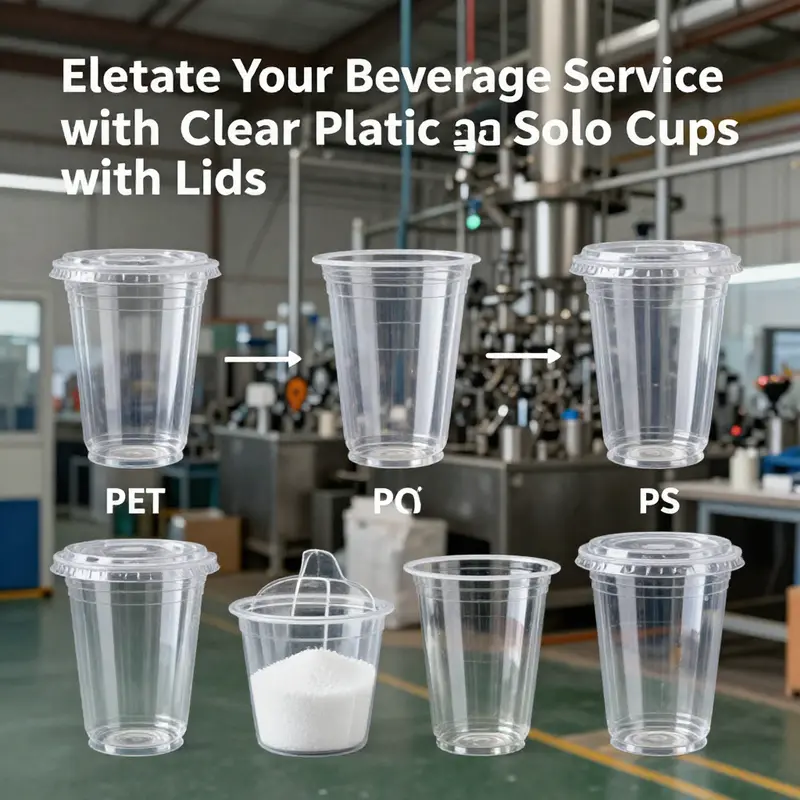
The material science behind this clarity is grounded in thermoplastics that balance visibility with strength. The most common compositions are forms of PET and PS, occasionally PP, each offering a different blend of clarity, rigidity, and temperature resistance. PET, prized for its high-grade transparency, preserves the beverage’s color and foamy tops with minimal color distortion. Polystyrene contributes a crisp, rigid feel for cold drinks, while polypropylene provides a measure of heat resistance and a lighter, more flexible option for certain applications. What matters most in practice is that the material remains transparent under typical serving conditions, enabling a consumer to view the beverage’s layers, ingredients, or garnish. The transparency does not merely showcase liquid; it communicates freshness and portion integrity. In a café lineup or a catered buffet, this visual honesty can influence guest perception, subtly guiding expectations toward quality and reliability.
Capacity matters as much as clarity. A ninth-ounce option, often used for samples, desserts, or small-density beverages, is especially valuable for tastings, promotions, or post-event giveaways where guests want a quick, attractive display without committing to a larger portion. This scale is ideal for milkshakes, iced coffee, or lemonade that arrive with just enough volume to delight without overwhelming the guest. The same cup can be paired with different lids to accommodate a spectrum of use cases. A dome lid, with its raised profile, preserves headspace for whipped cream, foamy tops, or layered toppings. This space is critical when the beverage includes delicate toppings or when presentation relies on visual contrast between layers. In contrast, a flat lid provides a sealed environment, offering maximum spill resistance for transport, outdoor events, or busy service lines where the risk of accidental spills is a constant consideration. The option to add a straw opening, pre-cut or integrated, further enhances usability in crowded spaces where guests move quickly or require one-handed sipping.
From a safety perspective, the appeal of these cups is practical and immediate. They are lightweight, yet engineered to be shatter-resistant, offering a safer alternative to glass in fast-paced service settings, on mobile food trucks, or at outdoor festivals. The reduced risk of breakage translates into fewer accidents, lower maintenance costs, and a more efficient workflow during peak periods. For staff, the single-use nature of these cups eliminates the need for washing and sanitizing in the moment, freeing up valuable time during service and enabling a focus on speed and accuracy. For managers, this translates into an operational advantage: fewer pieces to track, rotate, or inventory, and a predictable supply chain that scales with demand. The combination of clarity, durability, and light weight makes these cups particularly well-suited to the on-the-go nature of contemporary consumption, where customers expect consistent performance whether they are sipping a morning iced coffee or a mid-afternoon smoothie.
The practical benefits extend into the realm of sanitation and guest trust. A sealed environment via a lid helps protect the drink from airborne contaminants, dust, and incidental contact with surfaces in transit. In a setting where orders pass quickly from the counter to the table or to a catering guest and then into a dining area, the lid acts as a barrier that reassures guests about hygiene and handling practices. The ability to view the beverage through the cup’s clear walls also serves a hygienic purpose: it allows servers to confirm that the drink is prepared correctly, with the appropriate toppings and layering, before it ever reaches the guest. This combination of protective design and visual oversight reduces the likelihood of mispreparation and supports a smoother service experience. The result is a more confident guest and a more predictable service flow for staff.
One of the strongest assets of clear cups with lids is the way they support branding and merchandising at scale. A transparent cup is a blank canvas. It enables a business to showcase a signature color layered inside, a gradient of flavors, or a visually engaging garnish that would otherwise be lost against a colored container. The opportunity for customization extends beyond the cup itself: lids with straw holes can be printed or selected to align with event branding, seasonal promotions, or corporate colors. Even without explicit branding, the sheer clarity of the cup invites careful attention to the contents—the beverage’s hue, texture, and presentation become part of the customer’s perception of value. A well-chosen cup can elevate a simple beverage into an experiential moment that travels with the guest from counter to couch, from counter to festival lawn, and back into a social feed where the cup itself becomes a visual cue of quality.
From an operational standpoint, the cups offer a level of efficiency that is particularly attractive to busy hospitality environments. The single-use nature of the vessel means staff are liberated from the washing and sanitizing cycles that can bottleneck service during peak times. In venues that must turnover seats quickly or accommodate fluctuating crowd sizes, the ability to pre-fill and cap drinks rapidly translates into shorter wait times and higher table throughput. The stackable design of many cup models simplifies storage and restocking, reducing clutter on countertops and in take-out areas. This streamlined handling is especially valuable in venues where space is at a premium, such as compact cafe backrooms or trailer-based food trucks. The combination of quick fill, secure lid closure, and straightforward disposal supports a frictionless service model, enabling teams to focus on accuracy, speed, and customer interaction rather than on the logistics of dishware maintenance.
A broader benefit of this packaging approach is its compatibility with a wide range of beverage categories and service contexts. The same cup can hold a cold coffee, a fruit-forward lemonade, a smoothie, or a dessert in a cup—each with a different topping or ingredient profile that demanded careful presentation and secure containment. The dome lid accommodates foamy finishes and whipped toppings without crushing the top, preserving the beverage’s signature look. A flat lid shines in take-out scenarios where customers are most concerned with spill resistance during transit, perhaps in a car, on a bus, or at an outdoor festival where movement is constant. The lid’s cut-out straw aperture minimizes spillage when sipping on the go, further reducing mess and waste at the point of service and during transport. The ability to mix and match lid types with a single cup line offers a level of versatility that simple, reusable glassware cannot easily match in fast-paced, disposable contexts.
Beyond the immediate advantages for service speed and guest experience, the environmental considerations surrounding these cups are increasingly central to procurement decisions. Eco-conscious brands now offer biodegradable or recyclable variants that align with a growing demand for sustainable packaging. While consumers may appreciate the convenience of disposables, they also look for options that minimize environmental impact. In response, manufacturers and retailers are developing formulations that balance clarity and strength with recyclability and reduced ecological footprints. The choice between PET, PS, and PP sometimes hinges on a nuanced evaluation of end-of-life outcomes, local recycling capabilities, and the intended use scenario. For instance, a shop that emphasizes short, high-turnover service may prioritize a material that offers reliable transparency and strong seal integrity, while a festival operator may weigh the benefits of a compostable or recyclable solution against the need for robust lid compatibility and stacking efficiency. The ongoing evolution in materials science—alongside shifting consumer expectations—suggests that the best options will be those that deliver clear presentation, dependable performance, and responsible disposal in a balanced package.
From the perspective of procurement and supply, these cups are often delivered in bulk configurations that fit the rhythm of commercial operations. The most common formats include packs that contain a dozen, a hundred, or more units, designed to support both small neighborhood cafes and large-scale event orders. The appeal of bulk purchasing lies not only in price per unit but in the predictability of inventory levels, which reduces the risk of stockouts during peak periods and ensures consistent service across multiple channels. For a business that publishes standard menus or seasonal offerings, the standardization of cup size and lid compatibility can create a reliable backbone for promotions, loyalty programs, and promotional giveaways. The standard 9 oz capacity, while modest, also provides a reliable baseline for portion control, a key consideration for both cost management and customer experience. In practice, the choice of cup, lid, and accompanying accessories becomes part of the operational playbook that supports a smooth, repeatable service pattern across different days, events, and locations.
The value of clarity, convenience, and compatibility should be understood as a holistic effect rather than as a series of disconnected features. The clear cup communicates quality and freshness at a glance. The lid protects and preserves, enabling confident transport and reducing spill risk. The material choice influences durability, temperature tolerance, and recycling outcomes. The overall design supports efficient service, consistent presentation, and scalable operations, from a neighborhood café to a bustling event venue. When these elements align, a single disposable cup becomes more than a tool; it becomes a reliable asset in a business’s operational repertoire, contributing to faster service, happier guests, and a more streamlined route from order to enjoyment.
For teams that are mindful of their internal processes, the decision to standardize on clear cups with lids often intersects with branding and merchandising goals. Since the cup offers maximum visibility of the contents, brands can design beverage recipes and toppings with an eye toward color harmony, texture contrast, and garnish placement. The lids, whether open, sealed, or straw-equipped, provide an additional surface for messaging—seasonal graphics, event logos, or simple cues about flavor profiles and contents. In practice, this means a consistent, branded experience that remains intact from the moment a guest approaches the counter to the moment they reach their seat or vehicle. The chain of perception—from the cup’s clarity to the lid’s seal to the drink’s presentation—is a subtle but persuasive thread that can influence consumer sentiment and repeat business.
From a sourcing perspective, the supply chain for these cups must be reliable and adaptable. Vendors often emphasize the compatibility of cups and lids across a spectrum of sizes and configurations, ensuring that a restaurant or event planner can mix-and-match within a trusted system. This flexibility reduces the risk of mismatch across orders, minimizes the need for excessive stock-keeping, and supports a leaner, more predictable purchasing cycle. The end result is a packaging solution that not only meets present needs but can scale to future opportunities—whether that means expanding into new locales, introducing seasonal beverages, or supporting larger audience events. In this sense, the value proposition extends beyond the physical cup to encompass supply chain robustness, inventory efficiency, and the organizational agility necessary to respond to evolving consumer tastes and market conditions.
Internal linking example here reflects a practical approach to knowledge sharing within this broader topic. For readers who want to see a closely related product category that emphasizes disposability, outdoor use, and straightforward utility, a relevant option can be explored through a dedicated page that highlights clear disposable cups suitable for picnics and mobile events. This resource underscores how the core attributes discussed—clarity, compatibility, and convenience—translate into real-world applications, reinforcing the argument for why these cups have become a staple across venues and occasions. The content on that page complements the themes of presentation quality and service efficiency by illustrating how a simple design can meet diverse needs in varied environments.
In sum, clear plastic cups with lids embody a pragmatic, beauty-forward approach to single-use servingware. They combine glass-like clarity with durable, lightweight construction, enable a range of lid configurations to suit different use cases, and support efficient operations in fast-paced settings. They are designed to preserve the integrity of the beverage and the garnish, protect guests during transport, and present a visually appealing product that can align with brand standards or event themes. Their value lies not only in what they hold, but in how they enable service that feels polished, predictable, and professional. When managers and operators consider these cups, they are not simply choosing a container; they are choosing a system that can harmonize with menus, workflows, and guest expectations. The result is a dependable vessel that helps hospitality teams deliver consistency, speed, and satisfaction in every service moment.
External resource: https://www.walmart.com/ip/Solo-Party-Disposable-Plastic-Cups-Clear-9-oz-50-Count/1234567890
null
null
From Stock Rooms to Supply Chains: Navigating Availability and Purchasing Pathways for Solo Clear Plastic Cups with Lids
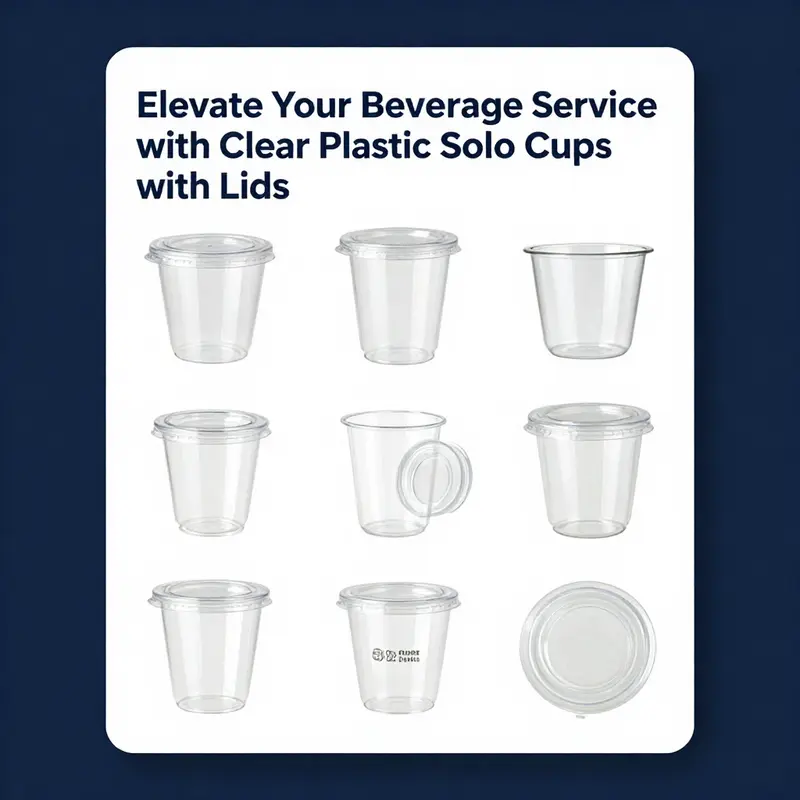
Clear plastic solo cups with lids sit at a strategic crossroads between convenience and supply chain planning. They are not just containers for beverages but assets that affect service speed, waste reduction, and guest experience. Availability and the ease of procurement shape how quickly a venue can scale from a single event to a multi day operation. The interaction of manufacturing capacity, global logistics, and supplier networks turns a concept into a usable product on a table or in a bar.
Availability for these cups is shaped by size options, fit with common lid styles, and the materials used to balance clarity with durability. Typical cold beverage cups range from about 7 to 18 ounces, with 16 to 18 ounce sizes being the workhorse for many service settings. Lids are designed to match a subset of cup diameters and headspace needs, creating practical constraints that buyers must manage through testing and supplier collaboration.
Most buyers navigate availability through two main routes. The first is direct sourcing from manufacturers or specialty distributors who focus on disposable drinkware and can offer customization in print or labeling. The second is through procurement platforms that aggregate inventories from multiple suppliers, show pricing and minimum order quantities, and provide quotes in one place. Direct sourcing tends to offer deeper collaboration and longer term terms, while platforms deliver speed, breadth, and rapid comparison.
Beyond size and lid compatibility, sustainability and regulatory compliance influence supplier choice. Materials such as PET or polystyrene bring different performance profiles, and some buyers explore recycled content or bio based options. Certifications and audits help reduce risk when sourcing across borders, and practical tests for seal integrity, leakage, and dimensional tolerances protect brand integrity during events.
Seasonal campaigns and high demand periods reward buyers who maintain a balanced supplier roster. A core partner provides stability and priority capacity, while backup suppliers offer flexibility for surges or last minute changes. The procurement journey becomes a coordination exercise across design timelines, lead times, and freight arrangements, with the goal of keeping shelves stocked and events on schedule.
In practice, the purchasing path is not one size fits all. Brands may combine direct sourcing with platform buying, layering in print capabilities and co design opportunities where needed. The end goal is a reliable, scalable supply that supports a consistent experience for guests and customers.
Clear Cups, Heavy Footprints: Rethinking the Environmental Footprint of Solo Clear Plastic Cups with Lids

The gleam of a clear plastic cup with a lid can feel almost innocent in a busy cafe or a party spread. It promises a clean surface for beverages, a quick solution for service flow, and a canvas for branding that catches the eye. Yet behind that transparency lies a complex environmental footprint that stretches from the oil fields that feed the polymers to the landfills or recycling streams where the cups end their short lives. Understanding this footprint is more than cataloging waste; it is about tracing the material life—the energy, the chemicals, the infrastructure, and the human decisions that determine whether a cup becomes a temporary convenience or a lasting concern. In this chapter, the environmental narrative of solo clear plastic cups with lids is drawn not as a wholesale indictment but as a careful accounting of choices, trade-offs, and opportunities for a shift toward more sustainable practice within a system built around disposability and speed.
At the heart of the environmental discussion is material choice. Clear solo cups are most often made from polypropylene (PP) or polystyrene (PS). Both are derived from fossil fuels and are not biodegradable in typical waste streams. Clarity is a practical virtue of PS and, to a degree, PP, but it comes with a cost that is not immediately visible in a vending window or a catering invoice. The clarity itself is a feature achieved through specific polymer formulations and processing methods that demand energy, catalysts, and processing aids. That energy use translates into greenhouse gas emissions along every link of the supply chain—from resin production to pellet formation, from extrusion to molding. And because many cups are designed to preserve a cold beverage or a foamy top, the design often prioritizes barrier properties and rigidity over end-of-life friendliness, a choice that influences recyclability and compostability in practice as much as in theory.
Time and use are another part of the equation. A cup is a snapshot, a moment of convenience that requires minimal effort to obtain and minimal effort to dispose of. In a bustling cafe or a large event, thousands of these cups pass through, each a single-use artifact. The environmental cost of this short use phase compounds when many cups cannot be diverted from the general waste stream into recycling or composting. Recycling acceptance varies by jurisdiction and plant capability, but the presence of PS or PP often makes a cup a less attractive candidate for recycling in systems designed around mixed plastics. Contamination with drink residues, adhesives, sleeve paper, and labeling further reduces the likelihood that the cup will be recycled efficiently. When a cup is not recycled, it will likely be sent to a landfill or incineration facility, where the material can persist for decades, if not centuries, slowly fragmenting into microplastics that infiltrate soils and waterways.
The environmental story becomes even more intricate once we consider the manufacturing stage. The initial literature notes that factories producing these cups discharge wastewater that can contain harmful chemicals and microplastics into nearby water bodies. The consequences ripple outward: aquatic ecosystems face direct exposure to hazardous substances, while communities downstream may experience water quality impacts and increased treatment costs. This wastewater issue is not a mere footnote; it points to the broader reality that a disposable cup is not only a single product but a link in a chain that includes water use, chemical management, and industrial ecology. The broader implication is that the environmental footprint cannot be isolated to a single lifecycle stage. It emerges from how manufacturing facilities manage energy, water, and effluents and from the regulatory and governance context that shapes those practices.
End-of-life pathways amplify or mitigate this footprint. Even when compostable or bio-based alternatives exist in theory, their real-world impact hinges on end-of-life infrastructure. A compostable lid or cup made from plant-based polymers may sound favorable, but it only delivers environmental benefits if industrial composting facilities with verified end-of-life pathways are accessible and properly utilized. Without such infrastructure, compostable materials end up in landfills, where their decomposition can release methane, a potent greenhouse gas. Similarly, while some brands promote biodegradable or compostable options, the overall sustainability of these alternatives depends on conditions that may not exist in many regions. The result is a distribution of risk and reward that is highly dependent on local waste management realities rather than universal guarantees.
To navigate this complexity, many sustainability analyses advocate for a cautious, systems-level approach. A life cycle assessment (LCA) that traces raw material extraction, resin production, conversion, distribution, use, and end-of-life reveals that a single-use cup often makes sense only within a tightly constrained context—where the benefits of rapid service, reduced contamination risk, and branding opportunities outweigh the environmental costs. In some contexts, the balance tips toward reuse. Reusable cup systems—paired with proper cleaning, sanitization, and lifecycle management—offer a route to markedly lower per-use environmental impact when scaled correctly. These systems, however, require reliable infrastructure, clear consumer guidance, and economic incentives that encourage customers to return and reuse rather than discard. In settings such as cafes or events with a strong customer-return program, the per-use burden can drop dramatically; in fast-food contexts without a robust return loop, the advantage of reusables may be muted.
Beyond reuse, there is ongoing material innovation aimed at reducing environmental harm. Bioplastics, PLA-based materials, and other plant-derived resins offer the promise of lower fossil resource dependence. Yet the sustainability of these options is not automatic. Not all bioplastics are compostable in municipal facilities, and some require industrial composting infrastructure that remains unevenly distributed. Even when composting is feasible, the decomposition process can generate methane if the material ends up in anaerobic landfill conditions rather than an active industrial composting stream. In short, the environmental benefits of bioplastics or compostable variants hinge on a reliable end-of-life route and a waste system that can separate, collect, and treat these materials correctly. Without such systems, the potential gains are lost, and the materials may merely shift the environmental burden rather than reduce it.
This reality prompts a broader consideration of design and policy. On the design side, intent matters as much as material. Cups and lids can be engineered for easier sorting, with fewer adhesives, clearer labeling about end-of-life options, and compatibility with existing recycling streams. Clear cups that resist glass-like breakage and regulate internal temperatures can still be designed with recyclability in mind. On the policy side, extended producer responsibility and mandates that encourage safer waste management, better labeling, and improved recycling rates become essential levers. When producers bear greater responsibility for the post-consumer fate of their products, there is a stronger incentive to reduce unnecessary material use, improve recyclability, and invest in take-back or buy-back schemes that channel cups back into the economy instead of to the landfill.
A practical path forward for businesses lies in a combination of actions. First, minimize material use without compromising safety or performance. This means reevaluating lid designs, wall thickness, and closure systems to achieve the same spill resistance with less resin. Second, invest in clear, verifiable end-of-life pathways. Certification marks or verified recycling programs can help customers trust that their used cups are handled properly, and clear labeling can reduce contamination in streams that do recycle. Third, expand the option set for customers to choose reusables when appropriate. Cafés and event organizers can implement deposit schemes, incentivize returns, and provide robust cleaning protocols to support reusables at scale. Fourth, educate and engage customers about proper disposal and the environmental stakes of single-use plastics. Informed choices are more likely to be paired with responsible disposal actions when the product is done being used.
In this light, sustainability in the context of solo clear plastic cups with lids is not a single virtue but a portfolio of practices. It includes material science that seeks lower-impact resins, process improvements that cut energy and water use, packaging and product designs that facilitate end-of-life sorting, and business models that align incentives with long-term planetary health. The role of the supplier cannot be separated from the role of the buyer. A café that aggressively sources the most transparent and least expensive option may still lock itself into a wasteful loop if the cups never re-enter the economy. Conversely, a buyer who prioritizes circularity, supports suppliers that offer verifiable recyclability, and designs events to promote return and reuse can shift the entire system toward a more resilient loop.
Crucially, the narrative also calls for humility about what we cannot always achieve quickly. The allure of disposable convenience remains powerful, and for many communities, practical constraints mean that disposables will coexist with reusables for some time. The question is not whether disposables will disappear, but how to make the ones that remain as environmentally responsible as possible within real-world limits. This includes choosing materials that balance performance with end-of-life viability, advocating for infrastructure upgrades where needed, and aligning consumer expectations with the realities of waste processing. In other words, sustainability is less about absolutes and more about continual, measurable improvements across the supply chain and in consumer behavior.
In the same breath, it is important to acknowledge the social dimension. Packaging choices ripple through local economies and waste management workers’ environments. The processing and handling of plastics have occupational health considerations, and the push toward better waste systems often requires investment in facilities and training. A shift toward truly circular systems demands collaboration among producers, retailers, waste management entities, policymakers, and consumers. Only through sustained collaboration can we build a system where a cup that starts as a simple, clear vessel does not end as a stubborn burden on land and sea. The path is not a single leap but a sequence of incremental, practical steps that accumulate over time, changing what is considered acceptable in everyday consumption.
To illustrate how this path can unfold in practice, consider the idea of end-of-life alignment. A forward-looking supplier might pursue packaging configurations that maximize recyclability in regions with established recycling streams, while also offering clearly labeled, industrially compostable alternatives where such facilities exist. A cafe or event organizer can pair this with a transparent communications strategy that helps customers choose the most appropriate option for their locale. In some cases, this might mean steering customers toward reusable cups for on-site service and reserving disposable options for quick, one-off needs where returns are impractical. Such alignment requires coordination and clarity, but it can yield tangible reductions in waste and a clearer signal to the market about what kind of packaging is expected to be recycled or composted.
For readers seeking concrete avenues to explore, a deeper dive into sustainable packaging ecosystems can be illuminating. A related resource explores broader packaging sustainability themes and underscores the global push to reduce plastic waste through policy, innovation, and behavior change. This external perspective complements the chapter’s focus on cups by situating them within a wider framework of materials, waste management, and planetary health.
As this discussion unfolds, the underlying message remains steady: the environmental impact of solo clear plastic cups with lids is not a fixed trait but a set of dynamic interactions among material choice, manufacturing practices, consumer use, and end-of-life pathways. The ultimate aim is to tilt those interactions toward resilience and responsibility. The path forward invites designers, manufacturers, retailers, and consumers to view a cup not merely as a disposable object but as a participant in a broader system shaped by decisions at every step from cradle to cradle. In that sense, the future of clear cups with lids lies not only in better plastics but in better systems—systems that close the loop, minimize harm, and honor the integrity of the water and ecosystems they touch.
For practitioners and researchers alike, this chapter should serve as a reminder that small, deliberate changes in packaging choices and waste practices can accumulate into meaningful environmental benefits. When companies commit to improved end-of-life pathways, invest in reuse where feasible, and communicate clearly about disposal, they help transform a ubiquitous object into a stepping-stone toward a more sustainable economy. The dialogue between clarity and responsibility is ongoing, and the cups that once symbolized rapid service can, with thoughtful stewardship, become symbols of careful stewardship as well.
Internal resource for further context on sustainable packaging systems can be explored through this related example: eco-friendly-disposable-3-compartment-food-grade-packaging-box-for-fast-food-high-quality-takeout-boxes.
External reference for broader environmental framing: https://www.worldwildlife.org/threats/plastic-pollution
Final thoughts
Clear plastic solo cups with lids not only meet the practical needs of food service businesses but also cater to the aesthetic and branding demands of modern consumerism. Understanding their features, material benefits, and environmental implications equips businesses to make informed decisions that align with both functionality and sustainability. As you consider your options, embrace the versatility and stylish presentation that these cups offer, ensuring a memorable experience for your customers.