
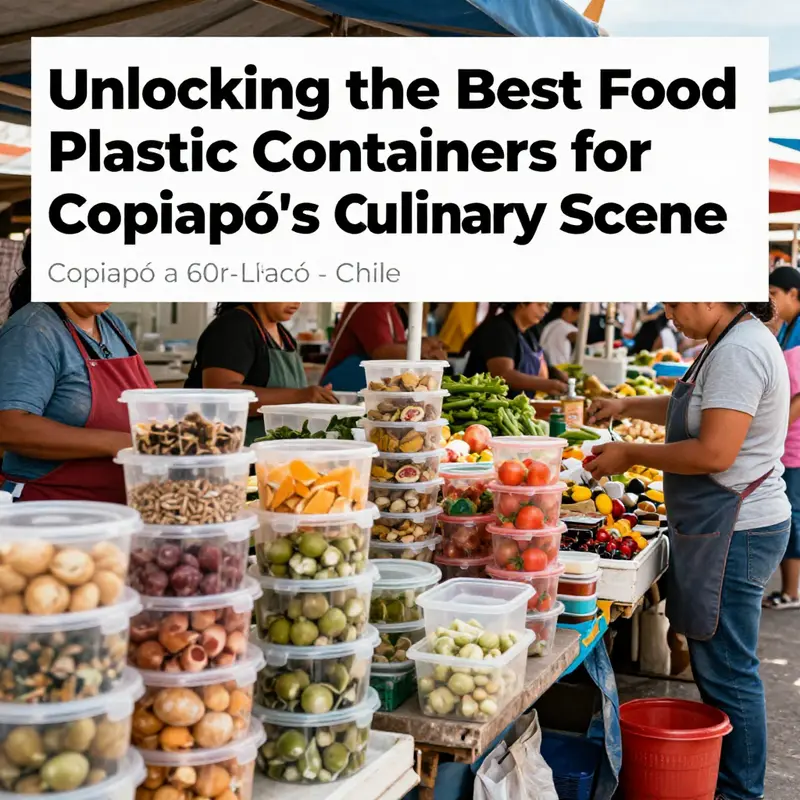
In the vibrant culinary landscape of Copiapó, the demand for high-quality plastic food containers continues to grow, driven by the exciting offerings of bubble tea shops, restaurants, food trucks, and catering services. Choosing the right plastic containers not only enhances your brand’s presentation but also plays an integral role in maintaining food safety and adhering to environmental standards. This article delves into essential avenues for sourcing these containers through online wholesale platforms, an overview of the specific types available, insights into logistics and procurement strategies, the pressing trend towards sustainability, and valuable supplier recommendations. Whether you’re part of an event planning team, a corporate procurement unit, or any food service business in Copiapó, understanding these facets could greatly benefit your operations and reputation.
null
null
Safe Plastics Under the Atacama Sun: Understanding Food-Grade Containers in Copiapó, Chile
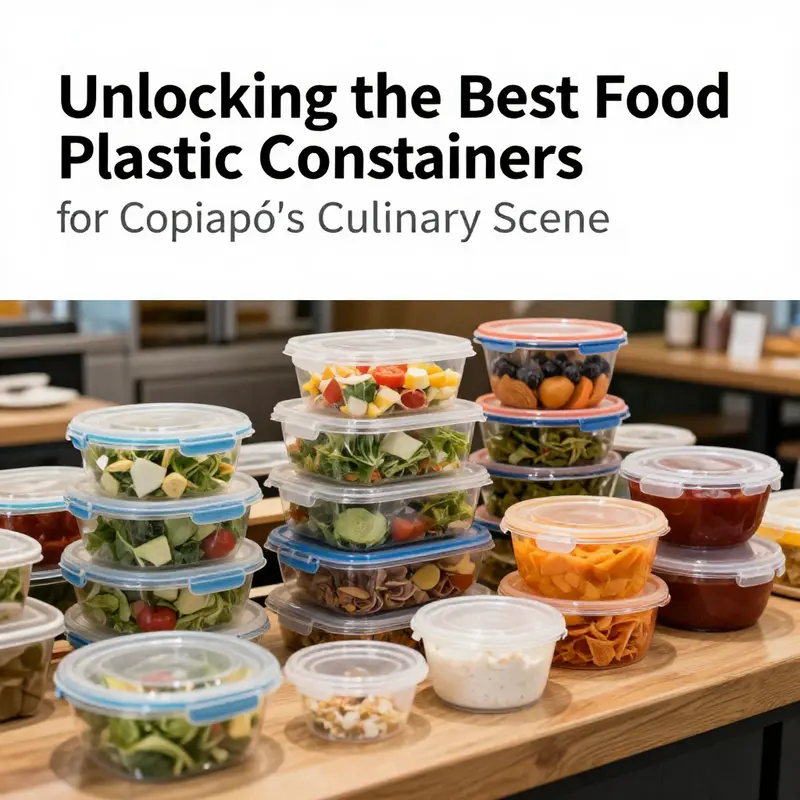
Copiapó sits at the edge of Chile’s arid wonders, where heat, dust, and the rhythms of daily life shape how people store and transport food. In such a setting, the container you choose for a meal matters as much as the ingredients themselves. Consumers and small businesses in Copiapó weigh not only cost and availability but also safety, heat tolerance, and the practical realities of a supply network that can stretch from here to distant manufacturing hubs. The landscape of plastic food containers in this region is a reflection of global materials science meeting local needs. Across the market, a spectrum of containers is visible, each type designed with a particular use in mind. What customers typically seek is a balance: a container that is safe for contact with food, durable enough for transport or storage, and able to perform under modest heat, while also aligning with regional waste systems and ongoing environmental considerations. In practice, this balance translates into choosing among several common materials that carry distinct properties, risks, and advantages. The guiding rule is straightforward: look for items labeled food grade and avoid plastics that commonly raise concerns about additives or heat safety. In Copiapó, where meals are often prepared far from homes, the ability to keep food fresh, protect flavors, and minimize leakage during transit becomes part of everyday logistics for households, street vendors, and eateries alike. The decision landscape is not about chasing novelty but about selecting materials that stand up to the local climate, the city’s recycling realities, and the expectations of customers who value reliability as much as safety.
At the heart of this landscape are the most frequently encountered resin families. PET, HDPE, PP, LDPE, and PS each occupy a niche in the local ecosystem of containers. PET, identified by its familiar clear appearance, is commonly used for single-use beverage bottles that circulate widely because of their light weight and clarity. In Copiapó, PET is easy to source and often chosen for beverages that accompany meals from markets or takeout stands. However, its heat resistance is limited, generally around 70°C, which makes it less suitable for hot liquids or repeated reheating. For household storage and some ready-to-eat products, PET’s convenience can be complemented by other materials when heat or repeated use is a factor. HDPE offers a more durable alternative. Recognized for chemical resistance and sturdiness, HDPE containers are widely used for both liquids and solids. They can tolerate more robust handling and, in many cases, are better suited to transport in a warm or sunlit environment without deforming. For families and small kitchens that want containers they can reuse a few times, HDPE provides a practical middle ground between rigidity and resilience.
Polypropylene, or PP, sits in many discussions about food safety because it combines a high heat tolerance with broad compatibility for reuse and reheating. PP’s capacity to withstand temperatures up to roughly 160°C makes it a common choice for microwave-safe bowls and reusable lunch boxes. In Copiapó, where street food and packed meals are convenient options, PP containers are often selected when there is an expectation that containers may be warmed or heated in a simple home setting. The trade-off to consider with PP involves care in cleaning and storage: while robust against heat, improper cleaning or prolonged exposure to aggressive cleaners can degrade any plastic over time. LDPE, with its more flexible, pliable character, typically appears in packaging wraps, bags, and some softer pouches. Its gentle nature can be an advantage for products that need a lighter touch, though it is less rigid than HDPE and not always the first choice for rigid containers intended to hold substantial portions. Finally, PS, or polystyrene, makes an appearance in some disposable items like cups and takeout boxes. Yet PS should be approached with caution for hot foods, as heating PS can cause the leaching of styrene, a concern that has prompted many suppliers and regulators to advise minimizing use in high-temperature scenarios. In Copiapó, these material distinctions influence choices in home kitchens, small eateries, and informal markets where the same container needs to serve multiple roles: storage, transport, and sometimes reheating. The result is a practical triage: prioritize heat resistance and durability for containers that will be heated or subjected to rough handling; favor transparency and visibility for storage where you want to see the contents; and lean toward flexibility and cost-effectiveness for packaging used for short-term meals or single-use events.
Beyond material identity, the safety framework guiding these choices matters just as much as the physics of the plastic itself. In Chile, as in many markets, containers intended for food contact should be explicitly labeled as food grade. This labeling signals that the product has met certain safety criteria and that additives or residues are within acceptable limits for contact with food. Importantly, it is wise to avoid plastics carrying markings for PVC (3) and other “7” plastics, which can obscure composition or involve additives of greater concern. For residents of Copiapó contemplating a purchase, this translates into reading packaging labels carefully and prioritizing items with clear food-grade certifications. The local regulatory environment, anchored by national authorities that oversee consumer protection and product safety, reinforces the principle that packaging must be safe for its intended use. In Chile, consult national guidance resources for the latest recommendations on food-contact materials and any evolving standards, as these can vary with new research, environmental goals, and international best practices. The overarching message remains consistent: selecting safe, food-grade containers reduces the risk of unwanted chemical exposure and supports confidence in the meals people share and carry in daily life.
The local reality in Copiapó also intersects with broader flows of goods. The city’s businesses and households routinely rely on imported containers, often sourced through global supply chains that connect distant factories with South American markets. This reality brings to the fore questions of availability, lead times, and cost, especially when demand spikes or shipments face weather-related delays. For many buyers, this means balancing the ideal material choice with practical constraints—what is readily available, what can be replenished quickly, and what fits within a given budget. In this sense, the sound packaging decision remains aligned with a pragmatic approach: select materials that meet safety standards and performance needs, then consider the economics of supply and the environmental implications of the packaging choice. As global packaging trends evolve toward sustainability, mixed practices emerge in Copiapó as well. A growing interest in compostable or bio-based alternatives—such as paper- or bagasse-derived options—appears alongside traditional plastics, promising a future in which the region can pair safety and convenience with more responsible end-of-life outcomes. While these alternatives are receding less from the core plastic story in the near term, they signal an ongoing shift that merchants and households in Copiapó should watch closely, especially as local recycling or composting infrastructure develops.
Supply chain realities bring additional nuance. The possibility of sourcing containers through international platforms or cross-border stock channels is a practical consideration for urgent restocks or seasonal demand. In this context, the landscape of available products expands beyond local shops to include global suppliers that can deliver a range of food-grade plastics with varying properties. For buyers in Copiapó, this means that while traditional, readily available options continue to serve well, there is value in understanding how material choice interacts with temperature exposure, reuse cycles, and the ultimate fate of the packaging after use. In practical terms, a thoughtful approach to selection—emphasizing food-grade labeling, appropriate heat tolerance, and durability—can reduce waste, improve food protection, and support a smoother flow of meals from provider to consumer. If a buyer seeks guidance on additional packaging considerations, there is a resource that emphasizes the importance of practical packaging selection and practical reuse strategies through a broader lens of takeout and meal-prep packaging. This resource points to the idea that packaging decisions should harmonize safety, usability, and environmental responsibility without sacrificing convenience.
For readers who want a concrete path to expanding options without losing sight of safety and practicality, consider exploring a broader set of packaging ideas through one accessible example that mirrors the kind of practical guidance discussed here. The link below leads to a collection that foregrounds customizable, takeout-compatible packaging and a flexible approach to disposable tableware, which can inspire local buyers to think about how to scale up or tailor packaging for Copiapó’s markets while keeping safety at the center of every choice. custom takeaway packaging and disposable tableware. This reference is a reminder that the packaging conversation in Copiapó is not only about the material itself but about how packaging choices fit into the rhythms of daily life, market dynamics, and the city’s evolving relationship with sustainable practices.
In sum, the range of plastic containers commonly found in Copiapó reflects a careful balancing act. The best choice depends on the intended use, heat exposure, and the consumer’s confidence in labeling and safety claims. PET remains convenient for light, quick-use scenarios; HDPE and PP offer sturdier, warmer-safe options; LDPE provides flexibility for wraps and light-duty storage; and PS remains a cautionary note for hot foods. The telling thread is safety: food-grade labeling and avoidance of certain plastics reduce risk and support confidence in everyday meals carried through the city’s dynamic life. As the region continues to engage with global packaging trends, Copiapó will likely see greater diversification toward safer, more sustainable options, all while maintaining the practical simplicity that local households and small businesses rely on to feed their communities.
External resource: https://www.sernac.cl
Moving Goods and Safeguarding Food: Logistics and Procurement of Plastic Food Containers in Copiapó, Chile
Copiapó sits in the arid heart of northern Chile, where the desert landscape meets a logistics reality shaped by distance, climate, and a steady demand for safe, reliable food packaging. In a region that serves as a conduit to northern Chile, neighboring markets, and, at times, cross-border routes into Bolivia and Peru, the question of plastic food containers extends beyond retail shelves. It becomes a strategic issue of supply continuity, product integrity, and regulatory compliance. The city’s role is less about local manufacturing and more about being a gateway: a node through which goods travel from global producers to regional kitchens, catering outfits, and institutional kitchens that rely on consistent packaging standards. The challenge is not merely to secure containers but to secure a flow of containers that meet food-safety expectations while navigating long-haul maritime lanes, border controls, and the rhythms of Chile’s highway network that connect Copiapó to ports, warehouses, and marketplaces across the Atacama Region and beyond.
In this setting, procurement starts with a clear sense of what the business needs from a plastic food container. Commercial and institutional buyers in Copiapó tend to require containers that balance durability, stackability, seal integrity, and cost. PP (polypropylene), PET (polyethylene terephthalate), and bio-based options such as certain compostable materials are typical candidates, chosen not only for performance but also for their compatibility with the local health and safety expectations. Because Copiapó is not a manufacturing hub, the most viable path to obtaining these containers is to source from established producers elsewhere and manage a careful flow of goods into northern Chile. The governing logic is supply-chain discipline: define demand accurately, choose materials that align with usage scenarios (meals, takeout, storage, portioning), and synchronize lead times with the delivery window required by restaurants, canteens, or institutions that operate on fixed planning cycles.
From a strategic perspective, the procurement model hinges on direct import channels rather than local stock alone. The strongest case for ordering from overseas rests on access to a broader range of container types, more consistent quality controls, and scalable production capabilities that numbered cities in the South China sea of manufacturing can offer. Regions in southern China, known for their concentration of molded-plastic manufacturers, serve as the primary source for bulk orders. These suppliers typically present flexible minimum order quantities, which helps Copiapó buyers tailor orders to current demand without overcommitting capital. Such scale advantages make it possible to negotiate containers that fit the varied needs of delis, school kitchens, hospital cafeterias, and event organizers who require precise portioning and reliable sealing. Yet the cost and lead times of cross-border procurement demand a disciplined plan: early confirmation of specifications, a shared understanding of quality benchmarks, and a logistics partner capable of navigating customs, port operations, and inland distribution within Chile.
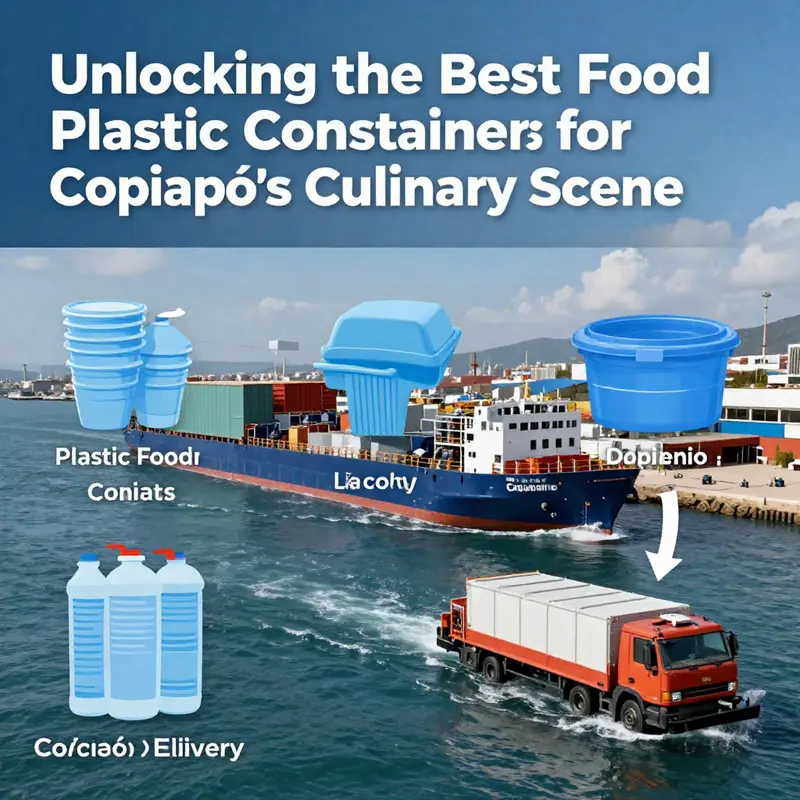
Logistics in this corridor feature a two-stage rhythm: international freight followed by domestic movement. Internationally, sea freight from manufacturing hubs in southern China to Chile’s western coast is the dominant mode for plastic food containers. The journey typically terminates at one of Chile’s major ports—San Antonio or Mejillones—before cargo is transferred to trucking routes that thread through the national highway network toward Copiapó. Transit times can span roughly five to seven weeks, influenced by vessel schedules, consolidation practices, and the pace of customs clearance. The inland leg—from port to warehouse or directly to a buyer’s facility—adds further days, contingent on the distance, availability of refrigerated or temperature-stable handling if applicable, and the efficiency of the freight forwarder chosen to shepherd the cargo through Chile’s import procedures.
To minimize disruption and preserve product integrity, buyers in Copiapó should work with experienced freight forwarders who bring a track record of handling food-safe materials. This is not merely a matter of securing space on a vessel; it involves managing documentation, confirming certifications, coordinating labeling, and aligning packaging specifications with local requirements. For any importer, the availability of samples for testing before mass production helps validate that the chosen container performs under practical conditions—standing up to stacking, transport vibrations, and potential temperature fluctuations that arise in transit or during storage in dry desert warehouses.
Quality and compliance matter at every step. Food-safety standards, labeling conventions, and traceability requirements shape what buyers can legally use in Chile. Containers intended for foods that travel through Copiapó’s markets and hospitality channels commonly need to conform to broad international expectations for food-contact safety, including clear information on materials, recyclability, and, where relevant, compostability. In the case of bio-based options like compostable sugarcane-derived packs, buyers must ensure that certifications and declarations accompany shipments, because local distributors and end-users increasingly seek not just performance but responsible packaging narratives that align with environmental goals. Chile’s regulatory environment, like many others, evolves toward heightened transparency and verification, making early alignment with suppliers who can provide robust documentation essential.
For those seeking faster or more flexible procurement arrangements, there is merit in considering a staged approach. Short term or urgent needs can sometimes be met through regional distributors who hold limited stock of standard containers in major cities such as Santiago or Antofagasta. However, customization, certification, and favorable pricing structures tied to volume are typically more accessible through direct import from overseas manufacturers. In practice, buyers in Copiapó might combine a lean core of locally sourced or regionally available stock for immediate requirements with periodic, larger shipments imported to cover longer-run demand. This blended approach smooths the supply curve, reduces stockouts, and preserves the option to switch among container types as usage patterns shift—whether a cafe expands into catering, a school district expands its meal program, or a hospital system increases patient meal throughput.
An important practical step in this landscape is the early establishment of a sourcing framework that aligns with the city’s logistical realities. Partners chosen for the import path must offer not only the right material and seal performance but also certificates that demonstrate conformity with food-safety norms and the ability to generate testing or inspection data when needed. That means evaluating suppliers on their ability to provide FDA- and EU-like compliance statements, sample testing processes, and reliable after-sales support. The procurement plan should also specify packaging configurations, such as the number of cavities per carton, the presence or absence of lids, and the compatibility of containers with standard dishwashers or microwaves if reuse is contemplated. While single-use formats dominate many markets, including parts of South America, the decision to embrace reusables or compostables depends on the end-user base, waste-management infrastructure, and the regulatory environment in Copiapó and the wider Atacama Region.
When considering sustainability, many buyers are drawn to compostable or bio-based options as a longer-term strategy. Global packaging trends show a shift toward materials derived from plant fibers, bagasse, PLA, and other compostable formulations, a move that Europe and North America have adopted more aggressively in recent years. Chilean buyers—especially those serving university campuses, hospital cafeterias, and large catering operations—are increasingly weighing the trade-offs between compostability and practicality. The market in Chile is gradually opening to these alternatives, with suppliers presenting a wider array of options that can meet both environmental targets and functional requirements. Even so, end-user acceptance hinges on clear labeling, accessible waste streams, and a reliable supply chain that guarantees that compostable materials are handled as intended from production to disposal. In practice, that means rigorous coordination with suppliers on how to label containers, how to communicate disposal instructions to customers, and how to track performance data that can inform future purchasing decisions.
For those building a sourcing plan in Copiapó, an accessible path to practical guidance exists in the broader ecosystem of packaging resources. A useful entry point for exploring sustainable, takeout-oriented packaging options is a landing page that highlights eco-friendly containers designed for food packaging, including options that balance microwave safety, grease resistance, and modern aesthetics. This resource provides an anchor point for evaluating designs that can be integrated into the local market without sacrificing performance or compliance. You can learn more about these sustainable takeout options here: eco-friendly takeout boxes for food packaging.
In planning a successful procurement journey, Copiapó buyers should also keep an eye on the regulatory and border landscape. The Chilean Customs Authority maintains up-to-date information on import procedures, duties, and documentation requirements that affect how plastic containers enter the country. Engaging a logistics partner with a local footprint and a robust understanding of customs processes helps reduce the risk of delays, duties miscalculations, or non-compliance penalties. Keeping this information in view throughout the procurement cycle supports a smoother pipeline from production floors to warehouses in Copiapó, ensuring that containers arrive in time to meet demand without compromising safety or quality. For official guidance on routes, regulations, and current processes, consult the Chilean customs portal at https://www.aduana.cl, which provides authoritative details on procedures and updates that influence every import step from origin to destination.
The procurement equation for Copiapó, then, rests on aligning supplier capabilities with the city’s logistical realities, balancing cost with reliability, and anchoring decisions in food-safety and environmental considerations. It is a disciplined process that treats containers not merely as objects of transport but as critical components of a safe, efficient, and sustainable food-service ecosystem. The best practice is to map demand precisely, secure a scalable supplier relationship abroad, and pair that with a logistics plan that reduces transit risk and accelerates customs clearance. In parallel, complementing this approach with carefully chosen local or regional stock can cushion the operation against volatility while keeping the door open to more advanced packaging formats as the market and infrastructure evolve.
Desert City, Sustainable Storage: Reimagining Plastic Food Containers in Copiapó, Chile
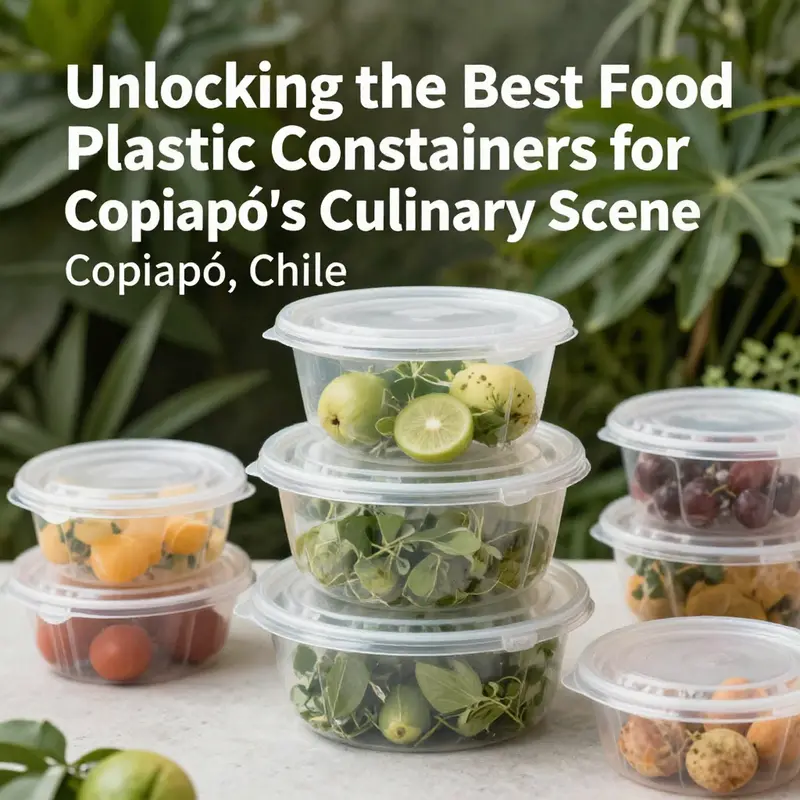
Copiapó sits in the arid embrace of northern Chile, a city shaped by sun, wind, and the rhythms of its markets, kitchens, and daily food rituals. In a place where space is precious and heat challenges containers, the choices for storing meals matter as much as the meals themselves. Global packaging trends push toward reusable and more durable options, and in Copiapó those trends meet local realities—a desert climate, growing environmental awareness, and policy nudges toward responsible choices. The result is a practical shift toward storage solutions that balance safety, convenience, and sustainability in a region where resource management is a daily habit and a strategic priority.
National and local policy in Chile has increasingly prioritized reducing disposable plastics. Regulations curb single-use bags and straws, creating a ripple effect through households and businesses. In Copiapó, this regulatory environment nudges households toward reusable storage, while retailers and restaurants explore packaging that preserves food, minimizes waste, and withstands the practical realities of takeout. The cumulative effect is a subtle but persistent shift in the kitchen: families and small operators weigh options that promise lower waste and greater reliability in heat and dust. The change is about building a system in which storage aligns with local conditions, consumer values, and broader sustainability goals.
In Copiapó’s markets and homes, the path to meaningful change rests on accessible choices. The desert climate adds a practical dimension: containers must perform well under sun, resist warping, fading, or degradation from heat, and be easy to clean. This pushes preferences toward materials known for stability and safety in contact with food. There is growing interest in materials that reduce end-of-life footprint—whether through reusability or compostable options paired with appropriate waste streams. The idea is to cultivate solutions that fit Copiapó’s economy, climate, and habits of reuse.
Sourcing and supply dynamics add complexity. Buyers seek containers that meet safety standards and sustainability goals, often through global platforms and international suppliers. Online marketplaces provide access to glass jars, stainless steel and silicone containers, and compostable options like bagasse trays. A practical approach evaluates lifecycle performance: how many cycles a container endures, how easy it is to clean, whether it withstands heat, and how it fits with local disposal practices. This is where practical practicality meets principled sustainability.
Ultimately, Copiapó’s path toward sustainable storage is about everyday, thoughtful choices. Reusable storage—glass jars, stainless steel boxes, silicone wraps—and responsibly sourced compostables offer tangible benefits: cleaner countertops, easier cleaning, and a culture of responsible consumption. It invites reflection on the role of packaging design in daily life: containers that are easy to open and reseal, provide clear visibility of contents, resist leaks, and endure the desert’s heat and dust. The story is not about perfect solutions but deliberate steps toward better materials, smarter lifecycles, and smarter consumption that honor the local climate and daily rhythms, while connecting to the global movement toward packaging that serves people without harming the earth.
For readers exploring concrete pathways, consider a spectrum of options that includes durable, reusable designs and responsibly sourced compostables for single-use occasions. Evaluate options by lifecycle: upfront cost and durability, cleaning and reuse potential, compatibility with local waste streams, and end-of-life environmental benefits. If the goal is to minimize waste while preserving food quality and safety, champion containers that are reliable for daily use and aligned with community waste realities. In addition to material choice, prioritize sealing, leak resistance, and stackability to reduce spoilage and boost kitchen efficiency.
External resources can broaden the conversation and connect local efforts with global practice. Practical guides that outline steps to reduce kitchen plastic waste and examples of eco-friendly packaging frameworks provide usable roadmaps that can be adapted to Copiapó’s climate and waste management realities. Overall, Copiapó’s story shows how a city shaped by sun can cultivate storage solutions that balance convenience with care for the environment, turning everyday choices into a sustainable act for the community and future generations. The desert city’s approach invites readers to view storage as a link in a sustainable chain—from procurement through use to disposal—that reflects who they are and the world they want to build.
External resource: https://www.epa.gov/recycle/practical-ways-reduce-plastic-waste-kitchen-starting-today
Bridging Local Demand and Global Supply: Sourcing Plastic Food Containers in Copiapó, Chile
Copiapó sits at a crossroads where regional demand for food-grade plastic containers meets the broader currents of international packaging supply. There is no city-specific supplier directory that clearly maps every local source, yet the practical reality is that buyers in Copiapó routinely assemble a sourcing plan from several layers: a base of local manufacturing capacity, regional distributors, and global producers reachable through online marketplaces and cross-border trade channels. The challenge, then, is less about finding a single perfect supplier and more about orchestrating a network that can deliver material safety, reliable lead times, and the right mix of packaging types for diverse food-service needs.
In this northern Chilean city, the economic activity surrounding food service ranges from routine takeout and catering for urban outlets to packaging solutions for larger industrial sites nearby. The local climate—dry and sunny with coastal exposure—adds nuance to packaging decisions. Lightweight, leak-resistant containers that can withstand short transit times without compromising food safety are particularly valuable for street-side kiosks, workplace cafeterias near industrial zones, and mobile food services serving remote worksites. The need isn’t merely for a generic plastic box; it is for a family of containers with clearly defined properties: food-grade materials, robust sealing, microwave stability where relevant, and compatibility with cold storage. In practice, this means evaluating containers across several typical use cases—deli-style salads, sauces and condiments in leak-proof cups, and transparent storage boxes for home kitchens or communal facilities—and matching them to the demands of Copiapó’s neighborhoods and corridors of daily life.
Locally, there is a meaningful anchor in the sense that a Copiapó-based manufacturer in the container space exists as a potential supplier. A local producer can anchor a sourcing strategy by offering shorter lead times, simpler logistics, and the potential for on-site collaboration on custom dimensions or sealing features. For buyers, the immediate action is twofold: first, to assess whether a local facility can meet core safety and quality standards; second, to explore how such a partner can scale to meet growing demand or accommodate seasonal surges in the food-service sector. Any inquiry into local capabilities should be framed around core food-safety criteria: the material must be food-grade, free from unrestricted chemical additives, and compliant with testing practices that verify migration limits and leachables under the expected use conditions. The conversations should extend to manufacturing flexibility—whether the facility can produce multiple sizes, varieties of lids or seals, and a range of transparency levels for storage boxes. While a local source offers proximity, it often requires a careful technical audit to confirm that they can deliver reliably to the standards required by both local businesses and eventual cross-border buyers.
For buyers who widen the search beyond Copiapó, the logic remains straightforward. Global sources exist that can supply a broad spectrum of container formats—deli boxes, sauce cups with lids, and various storage containers suitable for household kitchens. The key advantage of tapping into global supply is access to a wider menu of materials, finishes, and customization options. Yet to translate that advantage into a successful local outcome, a clear framework of due diligence is essential. Material safety should be non-negotiable; many reputable suppliers will provide third-party certifications, batch testing results, and documentation that confirms BPA-free status, compliance with food-contact regulations, and evidence of ISO or similar quality-management practices. Beyond safety, the procurement plan should specify regulatory compliance for the Chilean market, including labeling requirements and any import documentation that might be needed if parts of the order are fulfilled from overseas or routed through regional distribution hubs. Lead times, minimum order quantities, packaging configurations, and the availability of sample units all matter when Copiapó’s buyers weigh the risks of longer supply chains against the benefits of lower unit costs. A balanced approach is to pilot with a small, representative assortment of containers sourced from a global partner, while negotiating with a local manufacturer for complementary or replacement needs that can reduce dependency on distant suppliers during peak periods.
An emerging thread in this discourse is sustainability. Across continents, packaging buyers are increasingly curious about compostable and bio-based alternatives. In practice, this translates to sugarcane pulp, PLA-based materials, and other biobased formulations that can serve as environmentally friendlier substitutes for conventional plastics in certain applications. The trend is not merely aspirational; Europe and North America have integrated compostable options into mainstream packaging offerings, and interest is growing in South American markets, including Chile. For Copiapó, this presents a strategic avenue to differentiate offerings to end users who value responsible packaging. It also raises practical questions about performance and end-of-life options. Compostable liners or containers may require dedicated waste streams or partnerships with local composting facilities; in the absence of such infrastructure, a careful assessment of end-of-life pathways is essential to avoid greenwashing or misaligned expectations. The conversation about sustainability should harmonize with the reality of logistics and supply-chain reliability. A thoughtful plan could blend conventional high-performance containers for everyday needs with a carefully piloted line of compostable options in select segments, paired with clear consumer guidance on disposal.
To operationalize this approach, a pragmatic sourcing plan can be outlined in a few steps that keep the process efficient and adaptable. Start by mapping the most common container formats used by local eateries and collective kitchens: basic storage boxes, salad-style deli containers, sauce cups, and transparent food-storage options. Next, define the minimum specifications for each format: material safety standards, density or thickness, sealing performance, temperature tolerance, and compatibility with common cleaning methods. Then, identify a short list of potential partners—one local manufacturer in Copiapó and two or three global suppliers offering the same formats—each vetted for documentation, certification, and the capacity to fulfill small-to-medium orders with flexible lead times. The next step is to request samples for objective testing: seal integrity under simulated transport, resistance to cracking under cold conditions, and visibility of contents for consumer-facing applications. It is also wise to explore a pilot program that deploys a limited range of containers across a few trusted partners’ outlets, allowing the buyer to measure real-world performance before large-scale procurement.
Finally, the routing of information and the ease of communication often determine the success of a sourcing project in a place like Copiapó. Online wholesale platforms—designed for cross-border procurement—offer access to a broad spectrum of container designs and customization options. When engaging with distant suppliers, it is prudent to establish clear expectations around languages, payment terms, and after-sales support. At the same time, the local partner can provide on-the-ground technical know-how, local regulatory awareness, and faster responsiveness for emergency replenishments. If sustainability is a prominent objective, consider coordinating with partners who can offer a package that includes both conventional containers and compostable alternatives, along with guidance on the appropriate disposal channels in the local context. The result is a sourcing ecosystem that leverages proximity where it matters and scales globally when volume and variety demand it.
For readers exploring concrete options in this space, a representative path to expanding choices is to consider eco-friendly takeout packaging as a viable entry point. A practical resource that showcases a range of sustainable takeout packaging formats—emphasizing leak-resistance, microwave safety, and convenient handling—can be a useful reference in early discussions with suppliers. See this example of eco-friendly takeout boxes for food packaging, which illustrates how design choices translate into real-world performance and consumer appeal. eco-friendly takeout boxes for food packaging
As Copiapó’s market continues to evolve, the path forward lies in blending local accessibility with global options, guided by rigorous safety standards and a clear sustainability lens. The opportunity is not only about securing containers but about building a resilient packaging strategy that supports food-service growth, helps small and medium enterprises manage costs, and aligns with evolving consumer expectations. This requires collaborative due diligence, deliberate pilot testing, and a willingness to adapt as new materials and logistical arrangements emerge. The end result should be a supply network that keeps pace with demand in Copiapó while staying adaptable enough to respond to shifts in regulation, technology, and consumer preference. The next chapter will delve into how regional distributors and cross-border partners can further refine this strategy, translating the lessons learned here into a scalable procurement blueprint.
External context for broader trends in compostable and bio-based packaging can be further explored through industry discussions and supplier pages that emphasize sugarcane pulp and other renewables as viable alternatives to conventional plastics. For reference, see the product listing detailing compostable packaging materials and related certifications accessible through major wholesale platforms: https://www.alibaba.com/product-detail/100-Compostable-Food-Packaging-Sugarcane_1600548729181.html
Final thoughts
Navigating the procurement of plastic food containers within Copiapó requires a comprehensive understanding of available resources, the types of containers suited to your business needs, and the emerging environmental trends that influence consumer choices. By utilizing reliable online wholesale platforms, considering the diversity of container options, understanding logistics, and connecting with reputable suppliers, your food business can effectively meet the demands of your customers while maintaining a competitive edge. Stay informed and proactive in your choices to ensure your food service operations thrive in this dynamic market.