
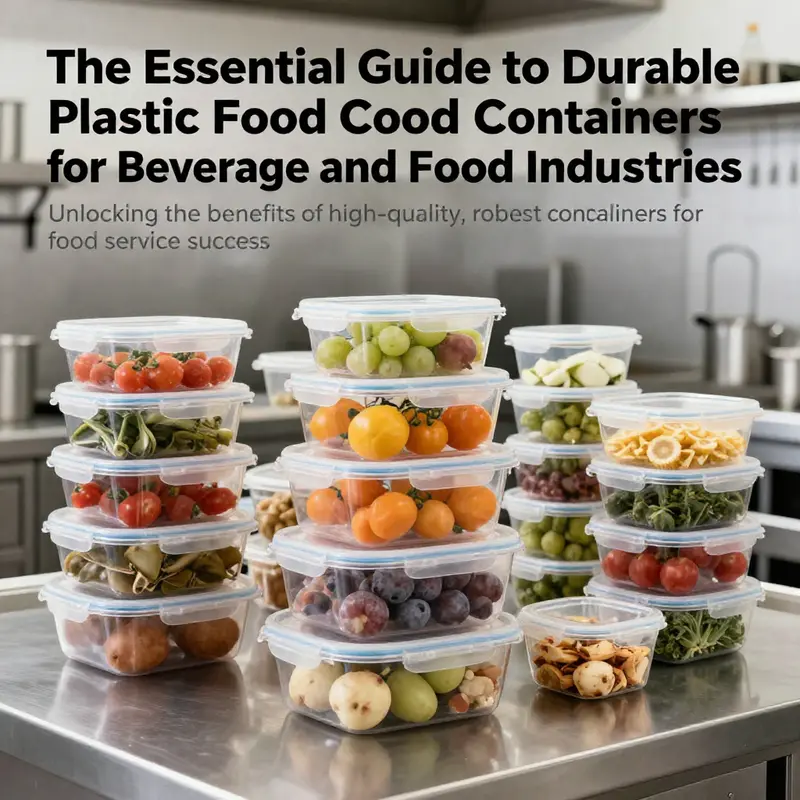
Durable plastic food containers play a crucial role in the food service and beverage industries, offering exceptional storage solutions that preserve food quality and safety. As Bubble Tea shops, Restaurants, Food Trucks, and Catering Services strive for excellence in service and efficiency, understanding the materials and designs of these containers becomes essential. From their robust construction to adherence to health standards, this guide dives deep into the various facets of durable plastic food containers, equipping your business with the knowledge to make informed choices. Chapters will cover material composition, innovative design features, health and safety standards, durability benefits, and comparisons with alternative materials, ensuring a comprehensive understanding of how these containers can elevate your service and performance.
Under the Hood of Everyday Storage: The Material Science Behind Durable Plastic Food Containers
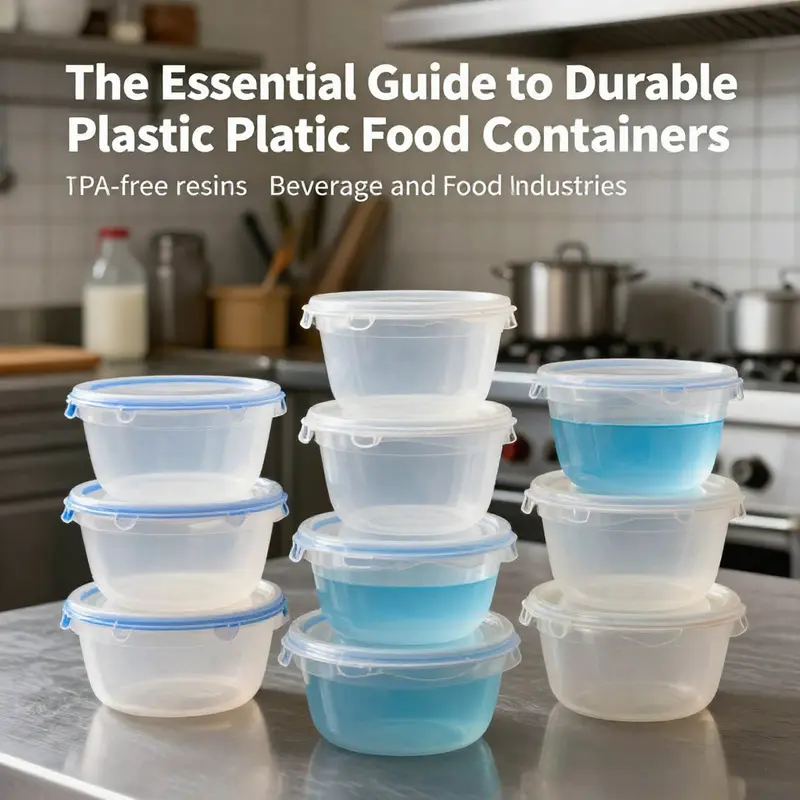
Durable plastic food containers are not just vessels; they are engineered systems designed to persist through daily use, repeated washing, and a surprising range of temperatures. At the core of many of these systems is polypropylene, a thermoplastic resin that has become the backbone of everyday food storage. PP’s heat tolerance is a defining feature, typically enduring temperatures in the range of roughly 100°C to 120°C (212°F to 248°F). That capacity matters because it enables safe transitions from refrigerator or freezer to microwave or oven, provided the product is explicitly labeled as microwave-safe. The ability to withstand heat without warping or releasing odors is inseparable from the integrity of the seal and the surface itself. In practical terms, a polypropylene container can cradle hot leftovers without surrendering its shape, while maintaining a non-porous surface that resists absorption of oils and flavors. The combination of moisture resistance, chemical stability, and a lightweight profile makes PP a versatile choice for households, schools, and workplaces where convenience and reliability must coexist. The tactile experience of lifting a PP container—its resilience under impact and its smooth, forgiving surface—reassures users that their meals are protected during transport and storage, reducing the anxiety that often accompanies bulky tupperware-like systems.
But the PP family does not tell the whole story. While polypropylene handles heat well, other polymers fill different roles within durable plastic containers. High-density polyethylene, for example, is a workhorse when toughness and resistance to cracking are the priority. Its density and crystalline structure lend it a stiffness that stabilizes heavy or awkwardly shaped containers, which helps prevent warping and deformation during stacking or rough handling. Yet HDPE often compromises the highest heat tolerance, which is why some HDPE containers are not marketed as microwave-safe. This trade-off between rigidity and heat resilience is a central consideration for designers who must tailor a container to a specific use case—whether it’s a lunch box that endures everyday carry or a storage jar that must survive a long freezer shelf life. Polycarbonate, once celebrated for its clarity and stiffness, embodies another facet of the material conversation. Its transparency makes contents instantly visible, a quality customers value for quick identification of leftovers. However, concern over bisphenol A (BPA) leaching in some PC formulations prompted a broad shift toward BPA-free options. Today, many PC-like materials used in durable, reusable containers aim to preserve clarity while eliminating BPA, though their heat resistance may lag behind polypropylene. Copolyesters, such as PETG variants, occupy a middle ground with excellent clarity and rigidity, coupled with solid chemical resistance and impact strength. They are not universally interchangeable with PP in high-heat scenarios, but they excel where visibility and a crisp, stiff feel matter. This mosaic of polymers means every container line-up is built with targeted performance in mind—whether the goal is microwave readiness, long-term freezer stability, or a clear view of the contents.
Safety and performance labels act as navigational aids through this material landscape. A container marked BPA-free signals that its ancestral BPA-containing chemistry has been replaced or reformulated to avoid that specific risk, a consideration that has become a default expectation for many consumers. FDA-compliance labeling offers reassurance that the material has been evaluated for contact with food under defined conditions, but safety is not a single stamp on a box; it is an ongoing standard that encompasses how a resin interacts with fat, sugar, salt, and heat through repeated use. Freezer-safe designations extend the life of stored meals by resisting crystallization and bubble formation that can compromise texture and seal integrity. Microwave-safe claims usually reflect a combination of material choice and lid design that can tolerate heating without stressing the seal or causing bending of the container walls. Beyond the resin itself, the hardware—the lid with its silicone gasket, the snap-fit edges, and the anchoring hinges—plays a crucial role in preventing leaks and limiting oxygen exposure. Oxygen ingress and moisture loss are silent drivers of spoilage; by curbing these forces, a well-sealed container helps maintain flavor and freshness. However, safety demands a balanced perspective: a container that is robust under a cold storage regime may not be suited for high-heat cooking in a conventional oven, and a secure seal cannot compensate for a material that has begun to show surface wear or warping from repeated heat exposure. The material choice, combined with thoughtful sealing technology, determines whether a container remains reliable year after year.
Careful attention to use and care extends the life of durable plastics as surely as the polymers’ intrinsic properties do. The PP backbone offers impressive resilience, yet heat above the specified tolerance can invite warping, clouding, or micro-scratches that erode both the look and the seal. Abrasive scrubbers and aggressive detergents can wear down the surface over time, diminishing the non-porous barrier that keeps residues from lingering and odors from building. The practical guidance is clear: avoid direct contact with stovetop surfaces or radiant heat sources, and employ non-abrasive sponges or soft cloths during cleaning. Dishwasher cycles, while convenient, pose their own risks. Repeated exposure to high water temperatures and caustic detergents can alter the surface or the integrity of the lid gasket. In many families, the routine of washing, refilling, and reheating becomes a sequence that tests the container’s ability to hold up to daily rhythms. A well-chosen container—one whose material aligns with the intended use—will resist the temptation to replace after a few weeks of heavy use, making it a more economical and sustainable option than frequently upgrading.
From a consumer perspective, the material story informs more than performance; it shapes what people expect when they pick up a container and open the lid. The signals—microwave-safe, dishwasher-safe, BPA-free—are not mere marketing fluff. They reflect testing protocols, formulation decisions, and the engineering choices that define a product’s lifecycle. A durable container must do more than seal; it must perform consistently through dozens, even hundreds, of cycles. A reliable seal minimizes leaks that could stain lids or compartments, while a stable surface resists clouding that can blur the view of the contents. The balance among weight, stacking capability, and rigidity has direct implications for everyday handling, especially for families who need containers that fit neatly into lunch bags, backpacks, or crammed shelves. Clarity, when achieved through copolyester blends, helps with quick recognition of contents, aiding organization and reducing the waste that comes from forgotten leftovers. Yet the visual appeal cannot trump durability; a container that looks pristine but loses its seal or develops a warped wall is not a sound long-term investment. The material choice, then, becomes a practical lens through which households optimize space, reduce waste, and keep meals safer and more enjoyable.
Manufacturing science underpins all these observations. The selection of resin, the stabilizers used to resist heat and UV exposure, and the design of the mold all contribute to end-user performance. Repeated heat cycling tests, immersion durability under various detergents, and drop-testing for impact resistance are standard parts of the development cycle. The layering of coatings or surface treatments may play a role in resisting scratches and maintaining transparency, while lid gasket formulations strive to sustain a tight seal across years of use. In short, the material composition of a durable plastic container is not a single ingredient but an integrated system of resin chemistry, additive packages, and engineered geometry. The result is a product that can support daily meals, keep flavors discrete, and travel through life’s routines with minimal fuss. For those who care about the full story behind what keeps leftovers safe and accessible, the material science behind these containers is a key, dependable guide.
Beyond individual use, the broader ecosystem of containers—household storage, school lunch programs, and workplace kitchens—depends on a shared understanding of material behavior. When choosing a durable plastic container, you are selecting a design that must perform under repeated cycles of opening, closing, washing, and heating. The option sets are not uniform; some containers are optimized for freezer resilience, others for everyday meals, and still others for easy stacking and transport. The material choices influence cost, weight, and the likelihood of long-term success in a busy household. If you want to explore examples of containers designed for everyday durability and reliable performance, you can browse through a variety of take-away packaging boxes that emphasize durability and safety. For authoritative safety guidance, refer to the Hong Kong Food Safety Centre’s guidance on plastic containers.
Design for Durability: How Plastic Food Containers Are Built to Last
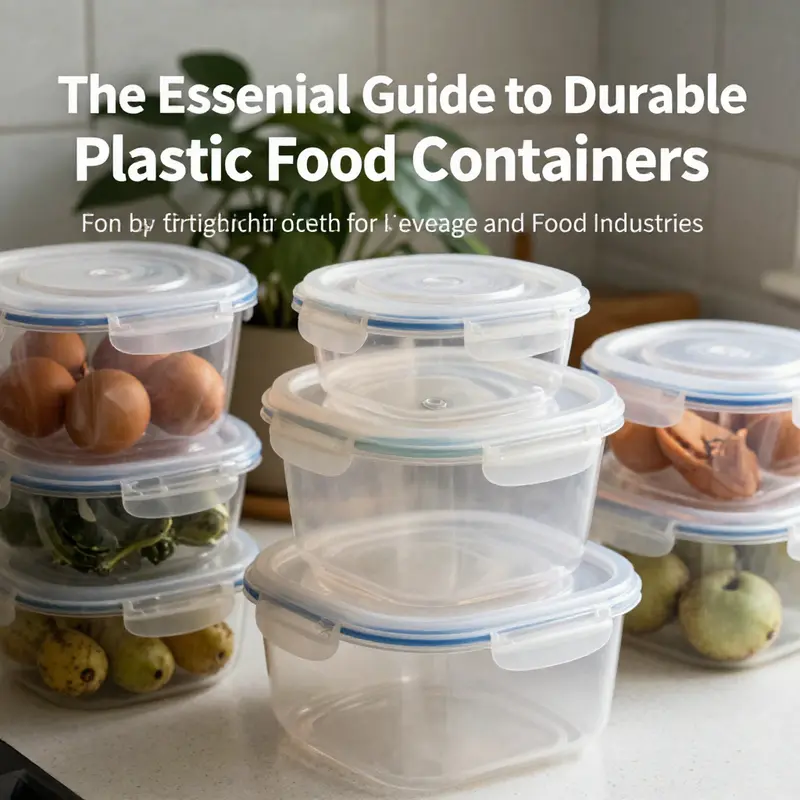
Durable plastic food containers are not just simple boxes for leftovers. They embody a set of design choices that balance safety, longevity, and everyday practicality. In strong designs, every feature reinforces the core idea: a container should protect food from spoilage, travel well, and endure regular use without compromising safety or flavor.
This starts with material selection. Most durable containers rely on high-performance plastics such as polypropylene (PP) and high-density polyethylene (HDPE), with PET or SAN sometimes used where transparency is valuable. PP offers heat resistance and chemical stability, which supports repeated washing and microwaving. It’s widely recyclable and often BPA-free, providing reassurance to health-conscious consumers. HDPE adds impact resistance and is well suited to long-term storage and transport. In clear applications, PET or SAN allows visibility of contents, aiding quick checks during meal prep or inventory management. The trade-offs among clarity, rigidity, heat tolerance, and toughness guide the choice of resin, with PP and HDPE serving as common workhorses, and PET/SAN stepping in when transparency is critical.
Beyond the resin, the sealing system is pivotal. Airtight, leak-resistant lids—often with silicone or rubber gaskets and a snap-on or press-fit closure—guard against air ingress and moisture loss. A reliable seal protects liquids and semi-solids during travel and helps minimize oxidation that degrades quality. The seal must endure repeated compression, maintain elasticity after many cycles, and resist detergents and heat without leaching. Ease of use matters too: a lid that seals securely but opens with a straightforward twist reduces spill risk during busy mornings. In well-designed systems, gasket geometry, lid geometry, and the container lip work together to preserve a tight seal across many uses.
Practical everyday use drives form and features. Stackability and nesting reduce space in crowded kitchens, while interlocking or tapered sidewalls help containers nest securely in shelves or fridges. Some models incorporate molded handles or wheels for high-volume settings. The stacking geometry should minimize exposure to ambient air during storage, helping preserve interior environment and food quality over time.
Temperature versatility is another design pillar. A container intended for fridge, microwave, and dishwasher use must resist warping, tolerate detergents, and retain structural integrity after repeated cycles. Designers often optimize a broad temperature window and reinforce high-stress zones with thicker walls or rounded edges that distribute stress more evenly. The end result is a product that performs reliably from refrigeration to reheating to cleaning.
Durability also comes from the container’s physical architecture. Reinforced corners, thicker walls in critical areas, and smooth radii reduce the likelihood of cracking under impact. Clarity remains a practical advantage: transparent sections help users identify contents at a glance, reducing the urge to open multiple containers and thus limiting unnecessary exposure to air and temperature fluctuations.
Sustainability and care complete the picture. Many durable containers use recyclable polymers and may include recycled content. They’re designed to be compatible with recycling streams, and manufacturers often communicate practical care instructions to maximize longevity. Proper handling—avoiding direct heat beyond stated limits, using non-abrasive cleaners, and following dishwasher guidelines—can dramatically extend life. In this light, durability is not just about the resin or seal; it’s about user behavior and responsible use in tandem with robust engineering.
For readers seeking a deeper technical grounding, standards bodies and industry guides offer detailed discussions of material properties, barrier performance, and lifecycle considerations. The take-home message is that durable plastic containers are a holistic system: material choice, sealing integrity, structural reinforcement, and user practices all reinforce one another to deliver safe, long-lasting performance.
Guardians of Clean Storage: How Health and Safety Standards Shape Durable Plastic Food Containers
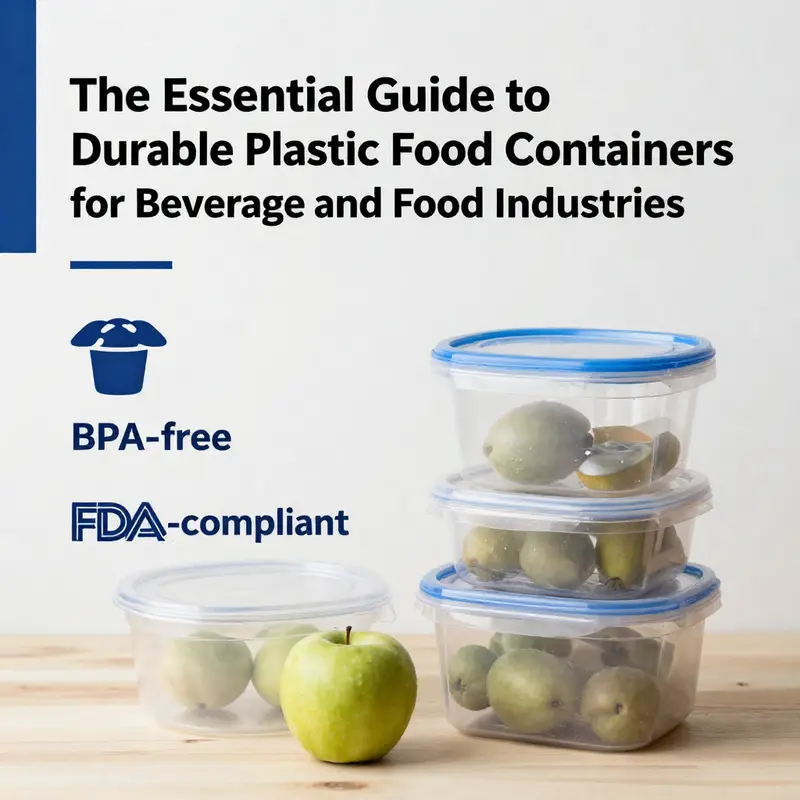
Durable plastic food containers do more than hold leftovers. They embody a complex balance between everyday practicality and measured safety. The standards that govern their manufacture and use are not abstract checklists; they are the quiet guardians that ensure what we store remains safe to eat, even after repeated use. This interplay between durability and health is what makes plastic containers reliable for families, diners, and food-service routines alike. When set against the backdrop of a busy kitchen, the weight of these standards becomes clearer. They translate into materials that resist wear, into seals that guard freshness, and into testing that reassures consumers that a container can withstand heat, cold, and the rough and tumble of daily life without compromising food integrity.
At the heart of most durable plastic containers are food-grade resins such as polypropylene and high-density polyethylene. These materials are prized for being BPA-free, lightweight, and shatter-resistant. They handle a wide range of temperatures, from cool fridge temperatures to the heat of microwaves or ovens when the product is labeled as microwave-safe. Importantly, these resins are chosen not just for performance but for chemical stability. They are formulated to minimize migration, a term that describes tiny molecules that can leach from plastic into food under certain conditions. In practice, this means that a well-made container should not impart tastes, odors, or substances into the contents, even after repeated heating and cooling cycles. The absence of BPA, in particular, has become a baseline expectation in most markets because of concerns about potential health effects from that specific chemical.
Beyond the chemistry, the lifecycle of a durable plastic container is bounded by clear regulatory expectations. The oversight landscape includes major authorities such as the U.S. Food and Drug Administration and the European Food Safety Authority. These organizations set guidelines intended to prevent harmful substances from entering food through contact materials. The resulting standards cover everything from the composition of the resin to the compatibility of colorants, coatings, and additives with food. In practice, manufacturers must demonstrate that their products meet rules for composition, purity, and safety under realistic use conditions. The aim is to ensure that if a container is used in a microwave, a freezer, or a dishwasher, the risks of leaching or degradation remain within tightly defined limits.
Because these standards are performance-based rather than merely style-based, they drive both material choice and product design. For instance, the capability to withstand extreme temperatures without warping or losing integrity is not an aesthetic nicety; it is a requirement that affects how a container performs in a crowded dishwasher rack or a hot car in summer. Similarly, chemical stability is not just about keeping food flavors pure. It is about ensuring that long-term storage, even with acidic or fatty foods, does not alter the safety profile of the container or the contents. This is why labels such as BPA-free and FDA-compliant carry weight. They signal to consumers that the product has undergone the kind of testing that aligns with standardized expectations for food contact materials.
Testing for safety is a multi-layered process. It begins with material screening to confirm the absence of hazardous additives and the use of food-grade resins. It continues with migration testing, where simulated food and real-use scenarios mimic how a container interacts with its contents across temperatures and times. Such testing assesses whether any substances migrate into food at levels that could be harmful or merely undesirable in taste or odor. The scope includes short-term and long-term contact, as well as exposure to heat from microwaving or oven heating when permitted. The results inform the labeling that helps consumers make informed choices, including whether a container is freezer-safe, microwave-safe, or dishwasher-safe. The labeling itself matters because it guides correct use, preventing scenarios that could undermine safety, such as microwaving non-microwave-safe plastics or exposing them to direct stovetop contact.
From the consumer perspective, navigating these safety features can feel straightforward yet important. A durable plastic container that is labeled BPA-free, FDA-compliant, and freezer-safe provides a practical assurance that a product has met defined safety criteria while remaining versatile for long-term storage. The ability to seal tightly with a silicone gasket or an effective snap-on lid is more than a convenience feature. It is a safety-related design element that reduces oxygen exposure, helping to slow spoilage and preserve flavor. An airtight seal also minimizes the risk of leaks in transit, which can be a concern for meal-prep routines or lunch-box packing. Yet no safety story is complete without acknowledging the limits of durability. Prolonged exposure to very high heat or abrasive cleaning tools can cause warping, clouding, or micro-scratches that may compromise seal performance. For this reason, manufacturers advocate non-abrasive scrubbers, avoidance of direct contact with hot stovetop surfaces, and careful loading in dishwashers according to label directions. Taken together, these care practices maximize lifespan while preserving safety.
The broader regulatory frame, and the confidence it provides, is inherently practical. It means that while you may choose a container for its color, lid design, or stackability, you can also expect a defined standard of safety behind the choice. Labels and certifications reflect a rigorous process that translates into everyday benefits: less worry about leaching, more reliable performance in the freezer, safe reheating in approved appliances, and cost-effectiveness from long-term durability. It is this synthesis of material science, engineering, and regulatory discipline that underpins the economic logic of durable plastic storage. Fewer broken containers, less food waste due to spoilage, and more predictable performance in busy kitchens—all are outcomes of standardized safety practices that govern how these containers are designed, produced, and used.
For shoppers who want to connect safety to daily practice, the labeling on a container is an actionable guide. Look for clear statements about BPA-free composition, explicit references to FDA compliance for the target market, and precise indications such as freezer-safe or microwave-safe. The presence of these signals often correlates with a more robust testing regime and higher overall confidence in performance across the product’s life cycle. It is equally important to consider the packaging’s materials and construction. PP and HDPE offer distinct advantages in terms of chemical resistance and impact tolerance, while additional design features like silicone gaskets, airtight lids, and reinforced corners contribute to durability without sacrificing safety or cleanliness. When in doubt, consulting the manufacturer’s documentation or a trusted retailer’s technical specifications can illuminate how a specific container aligns with standard practices and how to care for it to maintain safety and integrity over time.
To connect these standards with tangible options in the wider world of container design, many packaging solutions now emphasize safety alongside ease of use and sustainability. For readers curious about packaging choices that blend safety with practical convenience—especially for takeout scenarios and meal prep—there are examples of eco-friendly takeout boxes for food packaging that illustrate how simplicity and safety can coexist in a compact form. See the concept here: eco-friendly takeout boxes for food packaging. This kind of reference helps ground the discussion in real-world products that strive to meet safety requirements while delivering on durability and user-friendliness. While the specifics vary by region and market, the underlying principle remains consistent: durable plastic containers are most trustworthy when safety, performance, and user guidance interlock through transparent labeling and robust testing.
In the end, the chapter on health and safety standards is really about a shared commitment. It is a commitment by manufacturers to use safe materials and well-designed products; by regulators to set enforceable rules that protect food contact materials; and by consumers to read labels and follow usage directions. When these elements align, durable plastic containers fulfill their promise: reliable storage that preserves freshness, resists the wear of daily life, and keeps food safe from processing to plate. The journey from resin to ready-to-use container is long, but it is guided by a clear objective—safety you can trust, every time you store, reheat, or transport your meals.
External resource: https://www.fda.gov/food/food-contact-materials/food-contact-materials-standards
Built to Withstand: The Durable Plastic Food Container’s Lifespan in Everyday Kitchen Life
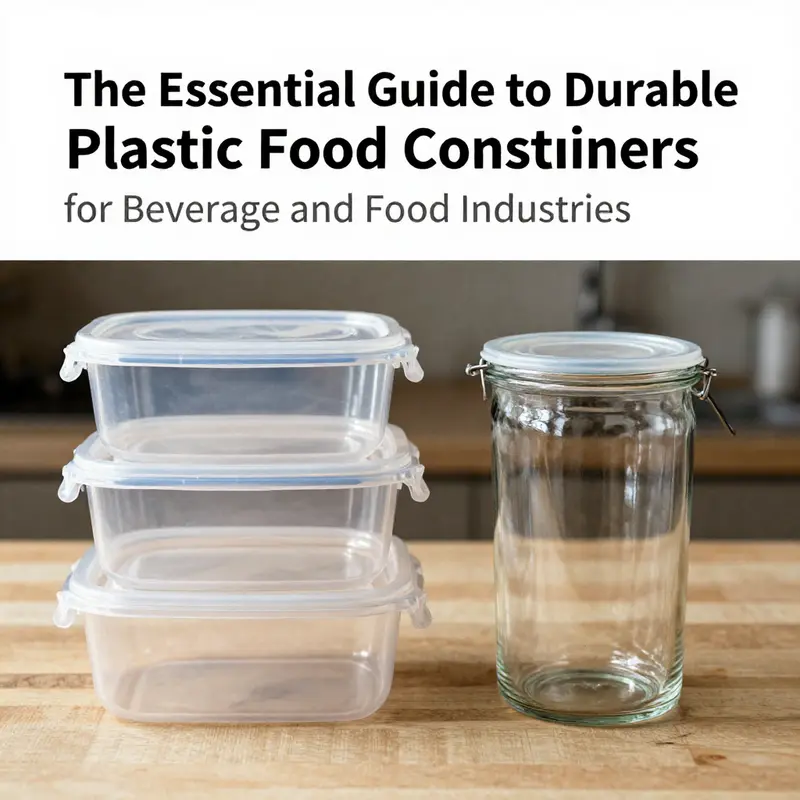
Durable plastic food containers are engineered to earn a spot in daily routines by combining resilience with food safety. The backbone of this resilience is the choice of resin—commonly polypropylene (PP) or polycarbonate (PC)—which offers a balance of toughness, flexibility, and chemical stability. These materials can absorb shocks from a fall, resist brittle cracks, and retain shape even when subjected to routine handling in a busy kitchen, a feature especially valued in lunch boxes and meal-prep systems. The chemistry behind this durability is not merely about stiffness; it’s about how the polymers resist the tiny, ongoing assaults of daily use: micro-scratches from rough spoons, the scuffing of elbows on countertops, and the thermal jerk from moving containers from fridge to microwave and back again.
Usage patterns matter as much as the material itself. The way people use containers—how often they go through heating and cooling cycles, how they seal and reseal, and how they’re cleaned—creates wear that compounds over time. When a container is repeatedly heated in a microwave, or chilled in a freezer, and then washed, the internal stresses accumulate. Over months and years, those cycles can cause subtle warping around the rims or hinges, tiny cracks at stress points, and gradual loosening of the lid seal. A compromised seal is not merely an annoyance; it invites oxygen, moisture, and aromas to mingle with the stored food, hastening spoilage and undermining perceived safety. That is why the iterations of modern containers emphasize tight, silicone-backed gaskets and durable snapping lids. The seal’s integrity is not cosmetic; it’s part of how a container preserves quality and keeps waste at bay.
Cleaning practices play a decisive role in durability. Scrubbing with abrasive pads, or using harsh chemical cleaners, can mar the surface, creating micro-scratches where bacteria can harbor and where residue can cling. Scratches change the way light interacts with the plastic, often leading to clouding that makes it harder to spot stains or odors, which in turn can erode the sense of cleanliness users expect. Likewise, aggressive washing cycles in dishwashers—especially those with high heat or heavy-duty drying settings—can slowly degrade seals and weaken plastic at connection points. The best approach blends easy, non-abrasive cleaning with thoughtful care: wash with a soft sponge, avoid high-temperature direct contact with hot surfaces, and allow containers to air-dry thoroughly before stacking. In this way, the surface keeps its slick, smooth feel that discourages odor retention and staining, which is part of what keeps a container looking and performing well for years.
Care recommendations emerge when one steps back from the day-to-day and looks at longevity as a system. Simple rules, consistently applied, produce meaningful dividends. First, avoid placing plastic containers directly on stovetop surfaces or near burners; heat transfer through the bottom can cause more than heat damage—it can alter the matrix of the plastic, making it more prone to warping under later use. Second, employ gentle cleaning methods and non-abrasive tools. A soft sponge, mild dish soap, and warm water aligned with regular rinsing keep the surface intact and reduce the risk of micro-scratches that accumulate over time. Third, inspect lids and seals regularly. A small crack in a gasket or a slight miss in alignment can create micro-leaks that erode the container’s primary job: to shield contents from air and moisture. By catching wear early, a user can decide whether to retire a particular lid or to replace a gasket without sacrificing overall storage habits.
The longevity of high-grade plastic containers is typically measured in years rather than months. When used as intended and cared for with mindfulness, well-made containers can endure for several growing seasons of family meals, school lunches, and weekend meal-prep sessions. Yet this durability is not a universal guarantee; it is conditional on use, care, and the environmental context. For households that frequently attempt to bake or reheat in the oven, or that push containers into long-term storage in the freezer or dishwasher, the appeal of alternative materials—such as glass—grows stronger. Glass offers admirable resistance to staining and odor retention and often presents superior thermal stability in extended use. The choice between plastic and glass is not a simple binary; it is a calculus of convenience, cost, and risk tolerance. Within plastic, however, the design and labeling systems that accompany modern containers—BPA-free assurances, FDA-compliant food contact material status, and explicit freezer-safe or microwave-safe designations—provide a framework that helps consumers anticipate performance and safety. These certifications are not mere marketing; they reflect standards that help ensure the product behaves predictably across typical kitchen workflows and storage scenarios. They also provide a basis for comparing products so shoppers can select containers that align with their use case, whether that means thawing and steaming leftovers in the microwave or freezing stock for later use.
The practical features that underwrite durability are often invisible at first glance but obvious in use. Airtight seals built into the lids, a reliable snap mechanism, and robust hinges all contribute to a container’s ability to withstand daily life without leaking or warping. Stackable, lightweight designs are not just conveniences; they reduce the chance of accidental drops during storage. Fewer drops and less clutter translate into fewer stress points on the product’s corners and lid lids. In a crowded kitchen, this is not a minor advantage but a functional reason these containers persist in households long after other options have worn out. When cleaning cycles are gentle and storage conditions stable, these containers can remain transparent, resisting yellowing or clouding that often accompanies aging plastics. Yet it is essential to acknowledge that prolonged heat exposure or intense mechanical wear will gradually erode even the best materials, producing a mellow haze or, in worst cases, a structural fault that necessitates replacement.
From a consumer standpoint, durability translates into practical value. A durable plastic container reduces the frequency of replacements, cuts waste, and simplifies meal-prep routines. It becomes a quiet reliability: a lid that seals with a soft click, a container that stacks neatly in the fridge, a surface that cleans without heavy scrubbing, and a resilience that travels well in bags for school and work. It is not merely about resisting breakage; it is about maintaining freshness and preventing the unnecessary exposure of food to air, which can carry odors and accelerate spoilage. Because many households operate on tight schedules and fluctuating budgets, the long-term cost of a durable container depends on how well it withstands these stresses. When a container lasts several years, the cost per year decreases, which reinforces the case for selecting higher-quality options and treating them with care rather than opting for cheaper, disposable-like alternatives that require more frequent replacement.
In balancing durability and safety, the conversation often returns to materials and standards more than to fashion. The most durable plastics used in consumer food storage—PP and PC—offer a mix of resilience and flexibility that suits the rough and tumble of everyday life. They handle minor impacts well and recover from minor deformations, keeping their shape and function intact. They also stand up to the rigors of standard kitchen use when cared for properly. The flip side is clear: repeated heat cycling and abrasive cleaning have cumulative effects that can eventually erode performance. The prudent path is not abstention from heat or dishwashing but adherence to label guidance, the avoidance of direct stovetop contact, and the substitution of gentle care practices. In this light, durability becomes a stewardship practice as much as a technical specification.
For readers who want to translate these ideas into daily routines, it helps to consider a few practical cues. As soon as you notice a lid that no longer seals snugly, or a corner crack that reappears after each wash, it is time to assess replacement. If the container shows persistent clouding that interferes with odor detection or food appearance, that is another signal that its protective function may be waning. These cues do not shout failure; they tell a story about the container’s service life under specific conditions. A well-kept regimen—gentle cleaning, careful handling, appropriate usage—extends that life and preserves the utility of the containers through many meals and many seasons. For instance, a family that uses containers primarily for cold storage, lunches, and reheating within microwave-safe guidelines can expect several years of steady performance from a high-quality set. Those who take on harsher routines—oven use, high-temperature dishwashing, or exposure to direct flame—will naturally see a shorter lifespan and may opt for alternatives in contexts where heat integrity matters most.
As this chapter threads through the fabric of daily kitchen life, it becomes clear that durability and longevity are not isolated traits but a holistic outcome. Material choice, design, care routines, and usage patterns converge to shape how long a container remains a reliable workhorse. Consumers who understand this interplay can make better choices from the outset, selecting containers that align with their heating, cooling, and cleaning habits. They can also set expectations about performance, knowing that even the most resilient plastic will eventually show signs of wear under repeated stress. The resulting picture is not bleak but practical: durable plastic food containers provide a resilient, cost-effective, and convenient storage solution when used thoughtfully, with a clear eye toward the lifecycles that underwrite their value. In that sense, durability is not only a material property; it is a habit that keeps leftovers fresher, kitchens simpler, and families less burdened by waste.
To tie these reflections to the broader landscape of packaging, consider the product-design philosophy that underpins longevity. It emphasizes modularity, ease of seal maintenance, and clear labeling so users can identify appropriate use cases at a glance. The goal is to enable a container to perform well across a spectrum of real-life tasks—transport, portioning, freezing, reheating—without becoming a liability as conditions evolve. When users grasp the realities of heat exposure, seal maintenance, and gentle cleaning, they gain a practical framework for maximizing the life of their containers. They can also set expectations about performance, knowing that even the most resilient plastic will eventually show signs of wear under repeated stress. The practical takeaway is to select containers with robust seals and reliable hinges, and to treat them with care so they can accompany a family through years of meals. For those curious about related packaging choices that support durable, on-the-go use, a useful example is described in the product line for food-grade hot dog takeaway box packaging. food-grade hot dog takeaway box packaging.
Looking forward, developments in polymer science are exploring new copolyester blends and advanced polypropylene formulations designed to push durability further. The aim is to sharpen resistance to scratching and clouding, enhance color stability under light and heat, and extend seal longevity, all while preserving safety certifications. As these materials mature, consumers may see containers that endure longer with even gentler care, reinforcing the idea that durability in plastic storage is a blend of smart design and mindful use.
External resource: For a governing perspective on materials safety and food contact, see the guidance provided by the U.S. Food and Drug Administration on food-contact packaging and materials. https://www.fda.gov/food/packaging-food-contact-materials
Balancing Lightness and Longevity: A Real-World Look at Durable Plastic Food Containers Against Glass and Stainless Steel
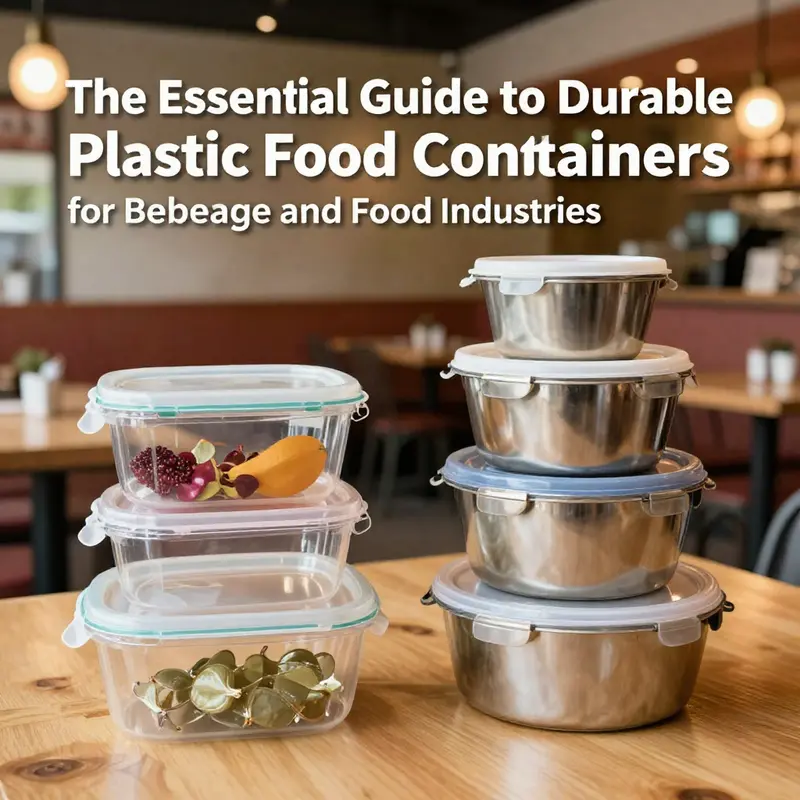
Durable plastic food containers occupy a pragmatic middle ground in modern kitchens. They are built from high-quality resins such as polypropylene and Tritan copolyester, materials selected for their combination of safety, resilience, and versatility. These plastics offer a compelling balance: light enough to slip into a bag, sturdy enough to survive the occasional drop, and chemically stable enough to preserve flavors without imparting off-notes. When they are labeled BPA-free and FDA-compliant, their role in daily meal prep and leftovers becomes even more convincing. The typical features—airtight seals with silicone gaskets, snap-on lids, and stackable layouts—do more than keep contents neat. They reduce oxygen exposure, minimize leaks, and contribute to a sense of order in crowded refrigerators and busy lunch packs. The practical upside is clear: lightweight containers are easier to transport, easier to store, and generally more affordable upfront than other materials. Yet the full story of durability also requires attention to limitations. Repeated high heat, whether in microwaves or dishwashers, can over time cause warping, clouding, or subtle surface cracks. Even high-quality plastics can absorb strong odors from pungent foods or develop faint stains if exposed to certain ingredients. For careful use, avoiding direct contact with hot stovetop surfaces, refraining from abrasive scrubbers, and following labeled care instructions are prudent habits that extend the life of these containers. The durability story, then, rests on a delicate balance between resilience and respect for heat, abrasion, and time.
The comparative strength of plastic on the go is a major design feature. Containers that travel in backpacks, briefcases, or gym bags must resist impact without shattering. In this regard, plastic’s edge over glass and metal becomes evident. Glass, while prized for its purity and non-porous surface, demands caution due to its weight and tendency to chip or break when jostled. Stainless steel boasts exceptional toughness and thermal performance but brings its own set of constraints, including higher weight and a lack of transparent visibility. Plastic, when engineered with the right resin and kept within its rated usage guidelines, can bridge these gaps. It remains possible to take a well-made plastic container from the fridge to the office, into the car, and back home with far less concern about breakage than one would have with glass or ceramic, and with greater ease than most stainless steel options.
A core strength of durable plastic lies in its resistance to impact. Everyday life is full of small, accidental drops and bumps, and a container that survives these incidents preserves both the contents and the user’s confidence. Screens of plastic—clear or tinted—also help in quick content identification, a practical benefit in a busy kitchen. Yet this resilience comes with a caveat. Repeated exposure to high heat, especially when containers are unlabeled or misused, can lead to warping. Warping may alter the seal geometry, compromising airtightness and increasing the risk of spoilage or leaks. Clouding, another common issue, can arise from heat, harsh detergents, or abrasive cleaning tools that scratch the surface. For households aiming to minimize replacement costs, selecting higher-grade plastic with explicit heat-use guidance is a prudent step toward reliability.
Odor absorption and staining present another facet of durability. Food with strong aromas—garlic, curry, or fish—can leave faint residues that linger longer in some plastics than in others. In contrast, borosilicate glass offers a non-porous, odor-resistant surface that rarely harbors smells, but its heavier weight and more brittle nature make it a less forgiving companion for everyday transport. Stainless steel—especially high-grade varieties—tends to resist staining better than many plastics and is highly durable, yet its opaque surface means users cannot visually confirm the contents without opening the lid. The plastic option therefore stands out for those who prioritize quick recognition and easy handling, especially in the confines of a crowded kitchen and in travel scenarios where visual access to contents matters as much as the contents themselves.
Care and maintenance play a decisive role in how long a plastic container remains a dependable workhorse. The use of non-abrasive scrubbers and milder detergents helps preserve surface clarity and seal integrity. Avoiding direct contact with open flames or stovetop burners is a simple rule that can prevent warping far more effectively than any polish or replacement cycle. Regular inspection of lids and gaskets is essential: silicone seals can degrade with time, and replacing worn gaskets is far more economical than tossing a whole set. From a lifecycle perspective, the durability of plastic is enhanced by proper care, cautious heat exposure, and mindful cleaning practices. When these practices are followed, a well-made plastic container can deliver years of service at a fraction of the cost of alternative materials, especially for households that rely on frequent meal prep, portable leftovers, and compact storage.
In a broader materials comparison, glass remains a gold standard for long-term safety and hygiene. It is non-porous, resists staining, and is fully compatible with ovens, microwaves (when appropriately labeled), freezers, and dishwashers. Its transparency invites quick content recognition and reduces the need to unlids for identification. Yet glass’s heavier weight makes it less convenient for daily carry and travel. It also tends to be more expensive upfront and can be more prone to breakage in busy households or active lifestyles. Stainless steel, by contrast, shines in durability and temperature retention and excels in rugged, outdoor contexts. It keeps heat well, endures rough handling, and is highly resistant to corrosion. But it does not provide the visual content check that glass or clear plastic offers, and its higher cost and weight can be deterrents for everyday use.
Against this backdrop, durable plastic containers emerge as a pragmatic default for many households. They offer a ready-made compromise: sufficient heat tolerance for freezing and reheating, reliable sealing to preserve freshness, and the lightness and stackability that support organized kitchens and on-the-go meals. When consumers seek both performance and safety, they can look for certifications such as BPA-free and FDA-compliant labels, along with explicit freezer-safe and microwave-safe indications. These marks signal compliance with stringent food-contact standards and reassure users about material behavior under typical kitchen conditions. In practical terms, this means fewer worries about leaks, reduced exposure to oxygen that accelerates spoilage, and the flexibility to repurpose containers across several roles—from meal prep to school lunches to road trips.
To translate these general advantages into everyday decisions, it helps to tether choices to specific needs. A family that prioritizes portability and budget-friendliness might lean toward BPA-free plastics that can travel with lunches, stack neatly in a cabinet, and tolerate being dropped with minimal consequence. A busy student or professional who wants quick visibility of contents could favor clear plastic designs with reinforced seals that resist leakage during transit. Those who value non-porous surfaces and predictable microwave performance might opt for high-grade plastics with explicit heat-use instructions and well-maintained gaskets. The most satisfying recommendations, however, come from a balanced view: plastic is often the most practical solution for everyday storage and travel, glass is ideal for long-term safety and display, and stainless steel stands out in ruggedness and thermal performance for specialized contexts.
This nuanced view is reinforced by a simple, guiding principle: align material choice with intended use. If the goal is lightweight, cost-effective, and readily reusable storage that travels, high-quality BPA-free plastics offer a compelling match. If the objective is maximum transparency, non-porous hygiene, and oven-safe versatility, glass remains an excellent option. If the aim is rugged durability and steady temperature retention for meals on the go or in challenging environments, stainless steel becomes the preferred tool. Within this framework, plastic containers reveal themselves not as a lesser substitute but as a versatile workhorse that underpins modern meal prep, leftovers management, and everyday organization. They are particularly well-suited for households that value repeatable performance, straightforward care, and predictable budgeting.
To further connect these ideas to practical choices, consider exploring a resource on eco-friendly takeout packaging that emphasizes how material selection shapes usability and sustainability. For convenience and ongoing reference, you can learn more about a specific takeout-box design designed for durability and practical handling at this link: eco-friendly takeout boxes for food packaging.
In sum, durable plastic containers offer a durable, cost-conscious, and highly adaptable option for daily food storage. They pair well with modern meal-prep habits, travel routines, and active lifestyles, while still respecting the realities of heat, cleaning, and time. When used with proper care and clear labeling, these containers deliver sustained value that supports freshness, convenience, and organization for the entire household.
External resource for further specification and context: https://www.amazon.com/Bentgo-Prep-20-Piece-Reusable-Meal-Containers/dp/B0BQKJZ7WY
Final thoughts
Durable plastic food containers encompass a myriad of advantages for businesses in the food and beverage industries, clinching the balance between performance, safety, and cost-effectiveness. By understanding the materials, design features, health and safety standards, and the durability they offer, food service providers are better equipped to enhance their operational efficiency. The comparative analysis further underscores the practical benefits of choosing durable plastic over other materials like glass or metal. Make informed choices today and see how these containers can elevate your service standard and help in maintaining food quality and safety while optimizing costs.