
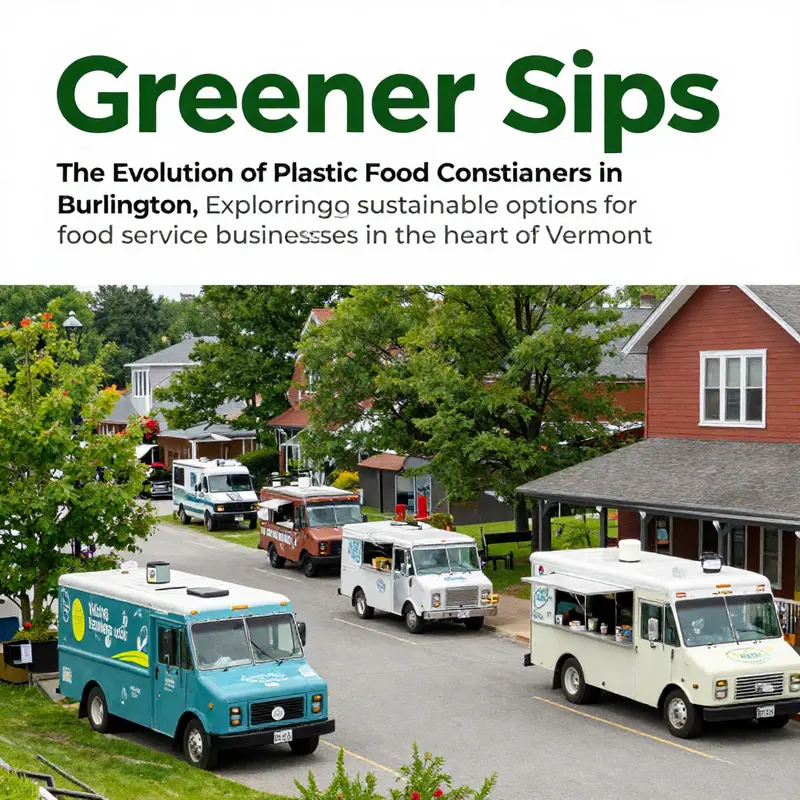
As the demand for convenience in the food and beverage sector rises, so does the concern over environmental impact, especially regarding plastic food containers. In Burlington, VT, businesses are taking significant steps to embrace sustainable practices. This article delves into key practices, community efforts, innovative materials, waste management strategies, and the influence of local businesses on plastic food container trends. By navigating these topics, we hope to provide insights that empower beverage shops, restaurants, food trucks, catering services, and event planners to adopt eco-friendlier alternatives that not only benefit the environment but also enhance their brands.
Beyond the Box: Burlington’s Sustainable Pathways for Plastic Food Containers
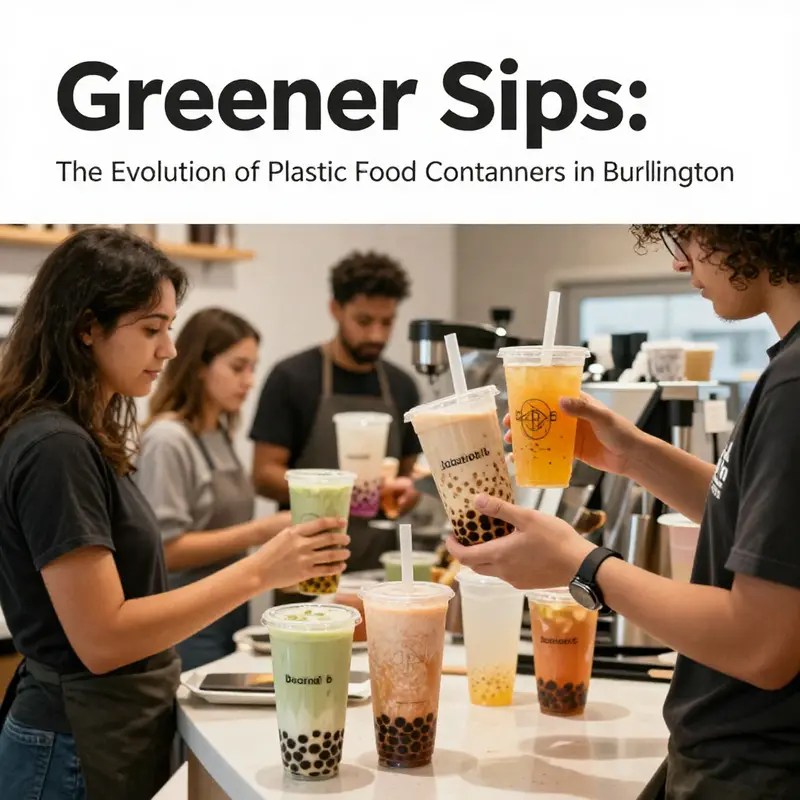
In Burlington, Vermont, the conversation around plastic food containers has shifted from simple bans to a more nuanced rethinking of how packaging sits at the intersection of daily life and ecological responsibility. Neighborhood markets, co-ops, and small eateries have become living laboratories where reuse, local sourcing, and smarter design are tested in real time. The city’s approach reflects a broader regional aspiration: to favor packaging that is legible, recyclable, or compostable, and to couple those materials with systems that keep waste streams clean and usable. The shift is not about one grand policy but about building a network of practices that turn packaging from a waste issue into a resource that can be looped back into the economy.
One notable thread in this local tapestry is the work of a community-run natural foods cooperative. Its operating philosophy emphasizes avoiding excessive synthetic additives and minimizing plastic in everyday packaging. The cooperative’s procurement strategy centers on local sourcing, with a substantial share of products coming from farms within roughly a 150-mile radius. This approach shortens supply chains, reduces transportation emissions, and, importantly, reduces the packaging footprint that would otherwise accompany longer journeys. It also creates opportunities to rethink how goods are presented and stored in-store. Customers are encouraged to bring their own containers, and the cooperative supports a range of reusable container systems that make it easier to shop without generating single-use waste. This combination of local sourcing and container reuse demonstrates how a single retail touchpoint—a trip to the co-op—can evolve into a habit of sustainability that ripples through households, schools, and offices in the region.
The conversation then broadens to materials science and packaging design. Biobased plastics, such as PLA, are part of the current conversation about healthier, more sustainable packaging. These materials are derived from renewable resources like corn starch and are touted for their potential to break down under industrial composting conditions. Yet the real-world outcomes depend on the local waste infrastructure’s capabilities. Industrial compost facilities are not universally available, and home composting rarely achieves complete breakdown. In Burlington’s context, where a robust curbside recycling and composting ecosystem is still evolving, the adoption of such materials demands careful labeling, clear end-of-life instructions, and a parallel investment in collection systems. The goal is practical alignment with the city’s waste stream; packaging that performs well on shelves, during transit, and in customers’ households, while also offering a clear, realistic path to recovery after use. In practice, this means not just choosing the right resin or fiber, but designing for reuse where possible, or for easy, clean separation of materials at the end of their life. The dialogue around materials thus becomes a test case for how a community negotiates trade-offs—between performance, cost, and environmental impact—without sacrificing accessibility or convenience for everyday shoppers.
From the customer’s vantage point, the burden of waste management rests on informed actions as much as on clever design. Local guidance emphasizes practical steps that shoppers can take within familiar routines: rinsing containers, removing greasy residues, and sorting materials according to the city’s accepted streams. When items arrive grease-stained or contaminated, recycling facilities may reject them, turning well-intentioned packaging into a problem for the whole recycling load. The education piece is critical here. It is not enough to tell residents to recycle; communities must help them understand what can be recovered, what must be composted, and what should be returned to the supply chain through reuse programs. In Burlington, this has meant a concerted effort to demystify recycling labels, to promote reusable options in everyday shopping, and to pair consumer choices with small but meaningful shifts in store practices. The result is a shared sense of accountability, where households, retailers, and municipal programs work together to keep material streams clean and valuable.
At the same time, national players with a Burlington imprint have offered a different lens on sustainability. A large retailer with a national footprint has signaled commitments to reducing waste, improving energy efficiency, and increasing recycled content across packaging and products. While these commitments do not spell out container-by-container practices in Burlington’s stores, they illuminate a broader shift toward circularity that local actors can draw on. In other words, Burlington’s national strategy—whatever its precise internal milestones—helps frame the local work as part of a larger pattern where packaging is redesigned, materials are reused, and supply chains are aligned with environmental goals. It is a reminder that the most enduring local solutions often ride on the back of larger, systemic changes that can support replicable, scalable outcomes in small markets.
This regional ecosystem also benefits from a keen eye on supply-chain relationships. Proximity matters: shorter transport routes, traceable origins, and direct collaboration with producers can make it easier to implement packaging that minimizes waste. Shops and farmers markets alike are experimenting with reusable crates, returnable totes, and refillable options that reduce the need for new packaging. These small, incremental changes accumulate into a meaningful reduction in single-use plastics. The city’s climate and seasonal rhythms further shape design choices—for example, packaging that performs well in cold storage, resists moisture, or stacks neatly in compact retail spaces. Importantly, these are not abstract experiments; they are adaptations that fit everyday shopping, picnics, school lunches, and neighborhood events. When a shopper can carry a lunch in a durable, washable container and know it can be reused across multiple stores or markets, plastic waste becomes a collaborative opportunity rather than a solitary threat.
For readers seeking tangible options within the local market, there are approaches that balance practicality with environmental goals. Some retailers have integrated take-back or refill schemes that permit customers to bring personal jars, boxes, or bottles for bulk purchases. Others emphasize durable, reusable packaging that can withstand repeated use, paired with explicit guidelines about cleaning and safe handling. These efforts are not just about adopting a single product—they reflect a broader design philosophy that treats packaging as a system. In practice, shoppers can observe a spectrum of possibilities, from durable takeout containers designed for multiple uses to crates and packing materials used behind the scenes to facilitate efficient, low-waste distribution. An example of the kind of packaging approach gaining traction is the adoption of reusable or easily cleanable takeaway options that reduce the demand for single-use disposables. eco-friendly takeout boxes can serve as a case study in how thoughtful design, durability, and portability converge to make reuse practical in busy, real-world settings. The link is included here not as a commercial endorsement but as a practical illustration of what a functional reuse loop can look like in everyday life.
What emerges from this synthesis is a picture of Burlington not as a city wrestling with a single policy—but as a living, evolving system that integrates local procurement, consumer education, and design innovation into a coherent approach to plastic packaging. The local orientation matters: when producers, retailers, and residents operate within a shared frame of reference—local origin, transparent materials, and clear end-of-life pathways—the chances of meaningful reductions in single-use plastics increase. It is not a matter of abandoning plastic altogether; it is about recasting plastic as a resource that can be captured, reused, and reinjected into the economy. Every container design and every shopping choice becomes a micro-decision with a modest but cumulative impact on waste volumes, energy use, and emissions. In that sense, Burlington’s story reflects a broader truth about sustainable packaging: practical progress depends on aligning material choices with local waste systems, on building consumer habits that support reuse, and on forging partnerships that keep packaging circulating rather than consigning it to the landfill.
For readers who want to anchor themselves in a broader, externally verifiable source of corporate responsibility and environmental commitments that shape the packaging conversation, the corporate responsibility page of a national retailer provides a useful context. It lays out the scale of commitment across the supply chain and highlights the kinds of targets that local communities can look for when assessing how packaging evolves at scale. https://www.burlington.com/corporate-responsibility
Finally, educational initiatives fortify this ecosystem. Local schools embed packaging literacy into science and social studies, inviting students to trace a container’s lifecycle from production through reuse or disposal. Libraries and community centers host workshops on evaluating packaging claims, comparing end-of-life options, and designing practical reuse strategies for families. Public events spotlight refill stations, zero-waste fairs, and collaborative repair days, all aimed at normalizing reuse and reducing curbside waste. Policymakers are increasingly oriented toward practical pilots that test scalable reuse schemes in small businesses, measure the impact of curbside composting on container waste, and document how consumer choices translate into tangible improvements in local air and water quality. The outcome is less chaos in the waste stream and more clarity for residents about how to participate.
In sum, Burlington’s sustainable-pathway narrative is less about a fixed blueprint and more about a living, evolving system that invites continuous learning, adaptation, and shared responsibility. It is a story that honors local producers, educates residents, and aligns with national trends toward circularity. As new materials emerge and technologies evolve, the core principle remains: packaging should respect local capacities, support local economies, and reward public participation. The city’s gain depends on ongoing collaboration among growers, grocers, waste managers, designers, and residents. It requires flexible infrastructure, clear incentives for reuse, and transparent reporting so progress is visible and measurable. Burlington’s chapter on sustainable practices for plastic food containers ends not with a verdict but with momentum—a momentum toward packaging that serves people and planet alike. By sustaining local leadership, Burlington can turn container waste into a community project that educates, engages, and preserves the region’s environmental health for generations.
External resource: For readers who want to anchor themselves in a broader, externally verifiable source of corporate responsibility and environmental commitments that shape the packaging conversation, the corporate responsibility page of a national retailer provides a useful context. It lays out the scale of commitment across the supply chain and highlights the kinds of targets that local communities can look for when assessing how packaging evolves at scale. https://www.burlington.com/corporate-responsibility
Reimagining Everyday Packaging: Burlington’s Community Quest to Reduce Plastic
In Burlington, Vermont, a practical movement toward reuse has grown from neighborhood conversations into citywide habits. The city’s commitment to sustainability has made waste a signal of opportunity for design rather than a problem to manage. This chapter traces how local co-ops, small businesses, and residents collaborated to shift packaging choices toward reuse and local resilience.
At the Natural Foods Co-op, customers are encouraged to bring their own containers, buy in bulk, and choose products sourced from nearby farms. This approach reduces plastic while maintaining quality and affordability. Local sourcing shortens supply chains and lowers packaging volumes, fostering a sense that packaging is a shared responsibility among growers, vendors, and shoppers.
Beyond the store, education campaigns, school programs, and community workshops raise awareness about the lifecycle of packaging and practical steps people can take. The messaging emphasizes experimentation, not guilt, and invites neighbors to test reusable systems, understand compostable options, and learn how recycling works in their city. By translating values into daily routines, Burlington demonstrates that sustainable habits are learnable and repeatable.
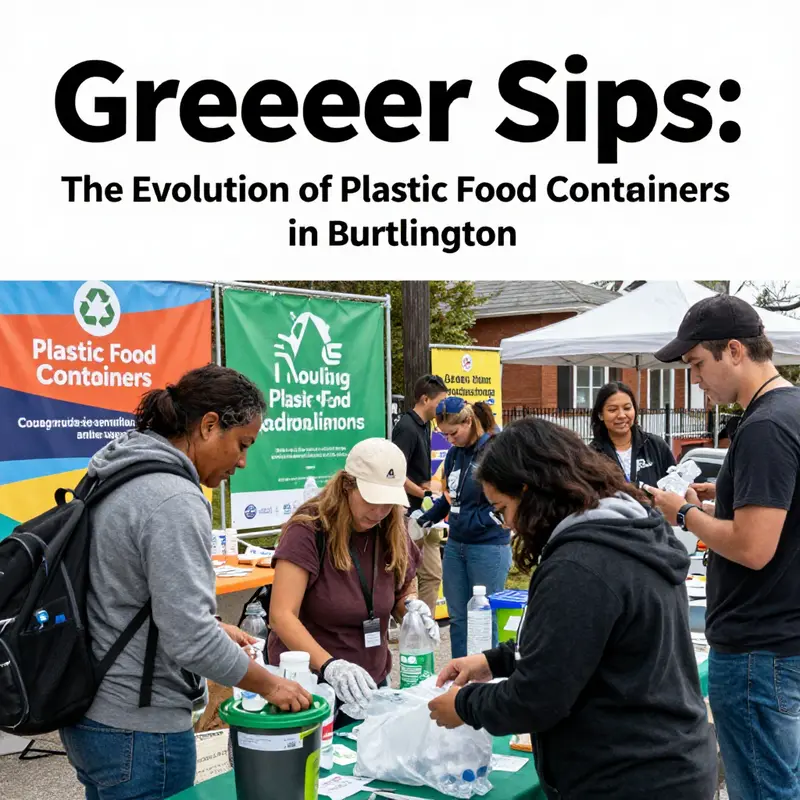
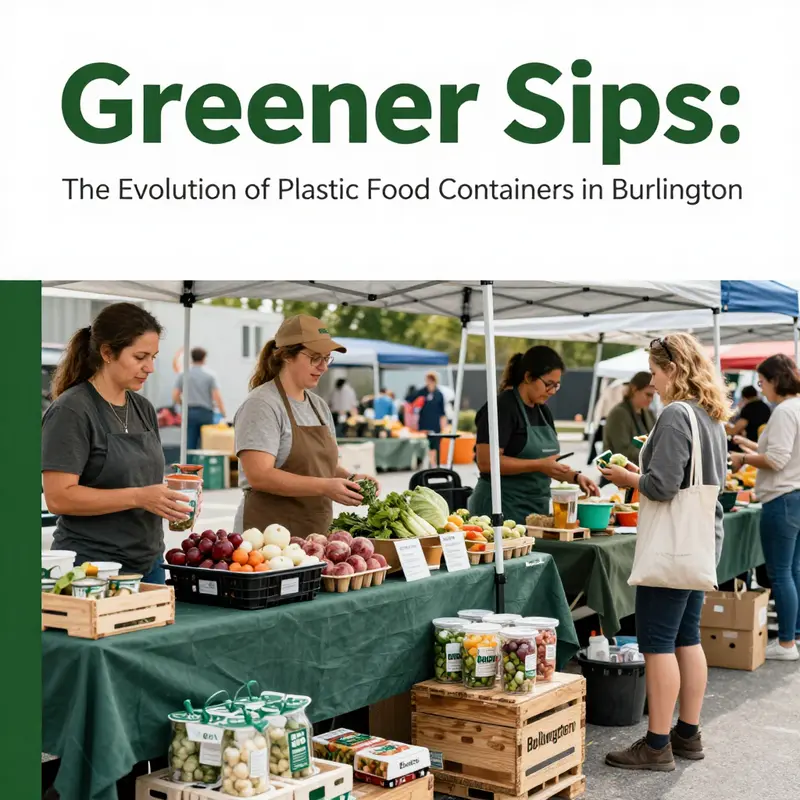
Zero-waste pop-ups and farmers markets have become living labs where residents see reusable and compostable options in action. Vendors demonstrate how to transition away from plastic, while neighbors exchange tips, recipes, and success stories. Those encounters turn intention into practice and practice into habit, accelerating a broader culture of stewardship.
BYOC — Bring Your Own Container — has moved from a slogan to a practical policy in many venues. Restaurants and cafés pilot programs that invite customers to bring containers for takeout, with clear guidelines on cleaning and return. When BYOC becomes routine, it reshapes expectations, reduces waste volumes, and normalizes reuse across the dining landscape.
Looking ahead, Burlington continues to test materials responsibly, balancing innovation with robust waste management. Biobased options are explored where appropriate, accompanied by education on end-of-life handling. The goal remains a practical, scalable model: a city where local institutions, education, and everyday choices align to reduce plastic dependence while strengthening community resilience.
For residents who want to participate, the path is straightforward: bring a reliable container, rinse it, reuse it, and support vendors that prioritize reusable or compostable packaging. Attend a zero-waste event, ask vendors about packaging choices, and share what works at your next community gathering. Small actions, repeated across households and storefronts, accumulate into a system that respects local ecosystems and reduces single-use plastics.
Locally Rooted Innovations: Burlington’s Pathway to Next-Generation Food-Container Materials
Burlington, Vermont sits at a scale where local pride and global ambition meet. The city’s food scene prizes farms within a short drive and a downtown that favors markets, co-ops, and eateries that tell a story about place. In this setting, packaging is not a distant afterthought but a live design constraint that shapes waste streams, logistics, and everyday behavior. The Natural Food Co-op, a cornerstone of Burlington’s sustainable grocery culture, exemplifies this mindset. Its operations emphasize minimal synthetic additives and reduced reliance on plastic packaging, opting instead for reusable or recyclable solutions wherever feasible. Because more than 60 percent of its goods come from farms within 150 miles, the store helps shorten supply chains and shave carbon footprints from packaging miles. Yet the real payoff exists when shoppers participate in container reuse programs, selecting products placed in returnable or compostable packaging and, where possible, bringing their own containers. This is not a marginal experiment; it is a practical framework that ties local sourcing directly to packaging choices and waste outcomes. Burlington’s local procurement habits create a testing ground for the materials that wrap our meals. When the supply chain emphasizes proximity, the differences between biodegradable, compostable, and recyclable packaging become clearer: which options fit the city’s infrastructure, which align with consumer routines, and which actually reduce energy use and emissions. The city thus becomes a living lab where the next generation of packaging materials must prove their worth in real streets, homes, and stores.
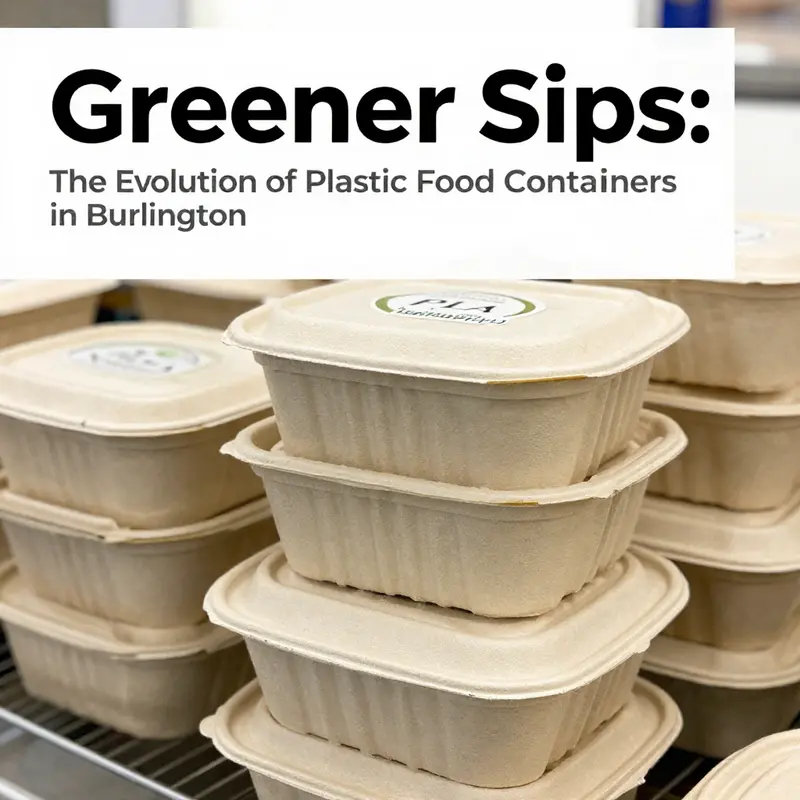
Across the packaging industry, the most discussed innovations revolve around bio-based and biodegradable materials that can step into roles traditionally filled by petrochemical plastics. A leading thread is the development of PBAT and its nano-composites. These materials combine biodegradability with toughness and flexibility, offering barrier properties capable of guarding oil-rich foods and maintaining product integrity during typical transit and display. Because PBAT can be engineered into thin, clear films, producers hope to substitute conventional wraps and clamshells with alternatives that leave behind less persistent waste. In tandem with PBAT, polylactic acid, derived from renewable feedstocks such as corn, is increasingly used for short-term packaging needs. PLA-based trays and containers can align with composting streams in communities that are equipped to treat industrial composting waste. While these substitutes do not erase the life-cycle footprint, they represent a meaningful step toward renewable resources and better end-of-life options. Research syntheses from the past year emphasize that the real value lies in integrating these materials with compatible processing technologies and with recycling and composting systems that can handle them without cross-contaminating streams. They highlight the need for standardized tests to compare barrier performance, heat tolerance, and compatibility with oils and fats—critical factors for a city that hosts a diverse mix of restaurants, markets, and households. Burlington adds another layer: any material introduced here must be compatible with the scale, budget, and waste-handling realities of a mid-sized city with active food culture and a robust community education program.
For fast-casual and takeout applications, the performance envelope matters as much as the ecological story. A container that keeps a salad crisp yet resists oil migration, that can survive a short ride in a backpack without leaking or deforming, and that can tolerate a microwave session without releasing undesirable flavors—these are nontrivial engineering feats. The current wave of innovations aims to deliver that performance with reduced reliance on fossil-based inputs. The dialogue between designers, material scientists, and restaurant operators is essential here. Burlington could benefit from pilots that test PBAT-based films or PLA composites in real-world settings, measuring oil migration, textural retention, and consumer satisfaction after a day’s use. The findings would inform local procurement decisions and help retailers decide when to favor reusable systems versus single-use but compostable options. The safety language also matters: materials intended for contact with food must meet strict criteria for migration, taste, odor, and color stability. In this space, advances in nano-reinforcement and multi-layer structures promise to push the boundaries of barrier properties without sacrificing clarity or heat tolerance. Yet it is important to acknowledge a practical constraint: even the most promising materials require compatible waste-management routes. Unless industrial composting is broadly accessible or recycling streams are updated to prevent contamination, even better materials risk ending up in landfills. Burlington’s path thus intertwines product design with infrastructure development, consumer education, and municipal policy that supports end-of-life options.
Industry observations from the past two years point to one simple truth: innovation travels fastest where procurement aligns with reuse and take-back programs. Local retailers in Burlington are increasingly open to container reuse schemes, labeling systems, and community-based packaging libraries. A pragmatic extension of this ethos is a hybrid approach: blends of renewable bioplastics for certain applications, used where end-of-life systems exist, coupled with durable recycling streams for standard plastics elsewhere. In this frame, a small but high-impact step can be taken in every cafe and market: offering customers the option of bringing a personal container for prepared foods, with staff guidance on cleaning and return. Simple signage and accessible wash stations can remove friction that otherwise keeps customers from engaging. Even distribution logistics can shift; local producers can design packaging for multiple reuse cycles, minimizing the need for heavy, single-use layers. The Burlington case becomes a blueprint for expanding the set of choices without sacrificing convenience. A practical step toward this future is to promote and test reusable packaging options through community partnerships that emphasize cleanliness, accountability, and fair use. The co-op can catalyze this shift by prioritizing packaging systems that are easy to rinse, return, and repurpose in a vibrant, seasonal economy. To illustrate a route forward for communities, consider one packaging concept that emphasizes reuse without compromising food safety. eco-friendly takeout boxes for food packaging.
Yet the path is not without challenges. Cost differentials, supply chain volatility, and the uneven availability of composting and recycling infrastructure can slow adoption. To make a durable impact, Burlington must pursue synchronized action: standards for material selection and labeling; incentives for businesses to participate in reuse pilots; and public education campaigns that explain why certain materials are preferred over others and how households can participate effectively. The city can also facilitate partnerships with regional universities and research centers to adapt PBAT and PLA materials to the local climate and logistical realities. The outcome would be more than new packaging; it would be a blueprint showing how a mid-sized city can shift toward packaging that supports local agriculture and reduces overall environmental footprints. In this configuration, packaging decisions become a lever for resilience, local economy growth, and a shared civic imagination.
From a narrative perspective, the Burlington case demonstrates how a community can steer material choice through everyday practices and cooperative commitments. An important element is the visibility of the life cycle: customers see what happens to a container after it empties, and they understand the choices they make at the point of sale influence a chain of recovery and reuse. The learning accrued here translates to a stronger sense of place, where people experience the connection between farm, factory, and storefront in tangible ways. In practice, this means retailers may begin offering packages made from renewable feedstocks for targeted products, while continuing to invest in durable, recyclable packaging for items with longer shelf lives or heavier oils. The synthesis is not a rejection of plastics but a thoughtful re-balancing—one that recognizes the role of chemistry, logistics, and behavior in shaping outcomes. Burlington thus becomes not just a consumer of new materials but a test bed for the design of supply chains that honor local values without compromising safety or convenience.
Ultimately, the Burlington story points to a larger pattern: cities that pair local procurement with forward-looking material science can move beyond debates about packaging to practical, scalable solutions. The integration of renewably sourced polymers with community reuse programs requires careful planning, but it is possible when the community engages farmers, researchers, waste specialists, and educators in a shared mission. The next steps are clear: map the local waste streams, identify which materials are compatible with existing sorting facilities, and establish pilots that test multi-functional packaging in real markets. Document the outcomes, measure the carbon and energy footprints, and iterate on packaging designs that better align with Burlington’s climate goals and social aspirations. In doing so, Burlington can become a model for similar mid-sized urban centers seeking to reconcile convenience and environmental responsibility in the realm of plastic food containers. External resource: https://www.mdpi.com/journal/polymers
Rethinking the Plastic Plate: Burlington’s Path Toward Sustainable Food-Container Waste Management
Burlington sits at the intersection of appetite for good food, care for the local landscape, and a growing appetite for packaging solutions that don’t weigh down the planet. The story of plastic food containers here is less a tale of single, grand policy than a steady, citywide practice of rethinking how we buy, store, transport, and eventually dispose of what we eat. It begins with people who buy into a simple premise: packaging should serve the food, not trap waste in perpetuity. It moves through retailers who experiment with how far a local supply chain can bend toward reuse, and it ends with residents who learn to separate, rinse, and recycle in ways that keep the recycling stream healthy rather than endangered by contamination. The arc is practical, not purely idealistic, and it tightens around three interlocking questions: how to reduce reliance on disposable plastics, how to accommodate the realities of consumer convenience, and how to keep the waste system itself resilient and transparent for years to come.
At the heart of Burlington’s approach to plastic containers is a network of small, intentional choices. Local retailers, from coops to grocers, have embraced a broader vision of sustainability that extends beyond the moment of purchase. Natural Food Co-op, for example, has built a sourcing philosophy that reduces plastic packaging by leaning on local producers and by encouraging customers to bring their own containers for bulk items. This isn’t simply about eliminating plastic; it’s about redefining value for both shopper and producer. By prioritizing goods from within a modestly tight radius, the co-op shortens the supply chain, reduces the energy embedded in transport, and visually reinforces the idea that a reusable system can be compatible with vibrant local commerce. When customers walk into the store with jars, bags, or bins, they participate in a shared commitment to cut waste at its source. And while the conversation often centers on reducing single-use bags and wrap, it naturally extends to the containers used to hold everything from yogurt and bulk grains to prepared foods and takeout meals. In that sense, the visibility of plastic packaging in Burlington is not simply about aesthetics; it is a live case study in how a city can recalibrate demand toward reuse.
A parallel thread runs through Burlington’s packaging narrative: the exploration of new materials that strand themselves between old habits and fresh expectations. Biobased plastics, such as polylactic acid, have entered the conversation as potential bridges between convenience and environmental responsibility. Derived from renewable resources like corn starch, these alternatives are designed to decompose under controlled industrial conditions. They can be deployed for healthy beauty products, electronic accessories, and certain promotional items, but their deployment in food packaging is still nuanced. They offer a path forward that acknowledges the limits of recycled post-consumer plastics and the need for materials that, in practice, may reduce fossil fuel dependence. Yet they are not a magic wand. PLA and similar materials require composting infrastructure and consumer discipline to avoid confusing the waste stream. Burlington’s experience with these materials reflects a broader truth in sustainable packaging: partial substitutions can move the needle, but they also demand robust education, clear labeling, and compatible disposal pathways to be genuinely effective.
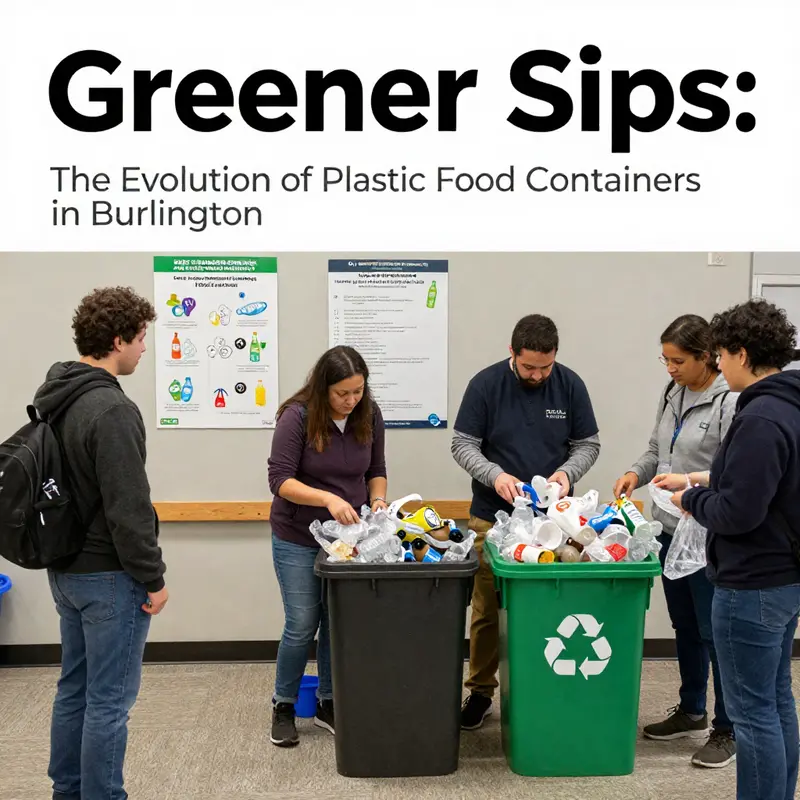
The city’s waste streams illuminate the other side of the equation—the behaviors and systems that determine what actually happens to plastic containers after their useful life. Residents are increasingly urged to take responsibility for cleaning and sorting. Contaminated containers—grease-coated, oil-stained, or mixed-materials with lids that resist separation—pose a real risk to the efficiency and ethics of recycling. A key takeaway from Burlington’s approach is that the value of recycling is not just in the act of recycling itself but in preserving the integrity of the recycling stream. Clean plastics labeled with accepted resin codes are far more likely to re-enter the economy as new products. The practical steps are straightforward: thoroughly rinse containers to remove food residues, remove lids when necessary to separate different plastic types, and avoid placing greasy or soiled packaging in the recycling bin. These habits may seem granular, but in aggregate they determine whether a load is accepted, processed, or rejected at the curbside facility.
Guidance for households, however, cannot be the only pillar. Burlington’s future also rests on how retailers, schools, and service providers collaborate to minimize plastic use in the first place and to channel necessary packaging into reuse or next-best alternatives. Local entrepreneurs and advocates are testing systems that make it easier for customers to adopt reusable containers without sacrificing convenience. For bulk purchases, customers can bring their own jars and bags; for ready-to-eat items, venues experiment with reusable or returnable packaging where a practical, safe, and sanitary system is in place. The goal is not to force a radical shift overnight but to create a culture where reuse becomes the default option, and waste becomes a byproduct that is manageable rather than overwhelming.
In this evolving landscape, Burlington’s decision-makers and residents are increasingly looking at packaging as a shared responsibility rather than a private choice. The goal is to cultivate a customer experience that aligns with environmental aims and practical realities. Businesses are encouraged to consider packaging alternatives that balance durability, safety, and care for the grocery shelf. Consumers gain a clearer sense of what constitutes responsible packaging and how to participate in a system that rewards reuse and careful disposal. The result is a city where the bare minimum of plastic waste is not simply a matter of luck but the outcome of consistent, informed, and collaborative action.
To illustrate how such thinking translates into everyday options, consider the broader market of takeout packaging. A growing segment of options emphasizes materials designed for reuse or compostability, while maintaining the ability to protect food during transport and to withstand typical handling in busy kitchens. For example, there are takeout solutions that offer grease resistance, leak-proof performance, and microwave safety without relying on a single-use plastic paradigm. Local retailers and eateries are increasingly drawn to these options as a way to maintain customer experience while reducing the environmental footprint. When a shopper contemplates whether to opt for a conventional plastic container or a reusable alternative, Burlington’s culture of deliberate choice makes the decision part of a routine rather than a burden. And for those who still need disposable options, there is growing interest in packaging that is clearly labeled as compostable or recyclable, with easy-to-understand disposal guidance that minimizes guesswork at the curb.
Community education remains a crucial facet of the Burlington model. Public education initiatives, workshops hosted by local environmental groups, and school programs help residents understand the lifecycle of plastic containers from production to waste management. The emphasis is on transparency—knowing what can be recycled or composted in the local system and how to reduce contamination. This is not simply about compliance; it is about participation in a shared project to reduce pollution, conserve resources, and create a healthier urban environment for future generations. The city benefits from a feedback loop in which residents report challenges, businesses adapt, and waste managers respond with updated guidelines. Such a loop is essential when policies are iterative and technology advances at speed. It is also a reminder that plastic packaging is not a static problem but a moving target that demands ongoing attention.
For practitioners and policy observers alike, Burlington offers a concrete example of how a city can thread together local procurement, consumer education, and responsible disposal to reduce the net impact of plastic food containers. The emphasis is not merely on replacing one material with another but on creating an ecosystem where reuse is practical, where compostable options are correctly disposed of, and where the baseline is a clean recycling stream that can be reliably recycled. The practical upshot for residents is a cleaner kitchen, a more predictable waste system, and a sense that their daily choices have a measurable, cumulative effect over time. For businesses, the payoff is steadier consumer trust, a clearer narrative about sustainability, and the opportunity to differentiate through responsible packaging choices that still meet the demands of efficiency and safety.
As Burlington continues to refine its approach, the Chapter’s throughline remains clear: plastics in food containers are a solvable problem when the community moves beyond slogans and embraces concrete, repeatable practices. Local leadership, retailer innovation, and household habits can converge to create a resilient system. The city’s next steps will likely involve deeper collaborations with local farms, co-ops, and waste-management professionals to further reduce plastic packaging where possible and to experiment with new materials and reuse networks that keep value within the community. In the meantime, residents can contribute immediately by prioritizing containers that minimize waste, by keeping plastics clean and sorted, and by supporting retailers who commit to reuse and responsible disposal. The cumulative effect of these actions may not be instantly dramatic, but it is precisely the kind of incremental progress that builds a durable path toward a Burlington where plastic food containers are part of a well-ordered, low-waste urban life.
For readers seeking practical options that align with this ethos, exploring lightweight, reusable packaging solutions can be a decisive step. A recent shift in the market toward reusable and durable alternatives is evident in many packaging lines that meet safety and convenience criteria while reducing single-use plastic dependence. When choosing among options, consider not just the material but the system around it—the ability to return, refill, or reuse, and the clarity of disposal guidance. This is where Burlington’s story resonates most: a city that invites both everyday shoppers and local businesses to participate in a shared, evolving experiment with packaging that works for people and for the planet. If you are looking for concrete packaging choices that fit a forward-looking, low-waste framework, you can explore the broader spectrum of greener takeout packaging options, such as the category represented by eco-friendly takeout boxes for food packaging, which aim to balance form, function, and sustainability. eco-friendly takeout boxes for food packaging
External resource for further guidance on proper disposal and contamination prevention: https://www.wmnorthwest.com/burlington-ky-collection-guidelines
A City Rethinking Its Pantry: Burlington’s Local Businesses and the Slow Transformation of Plastic Food Containers
Burlington, Vermont, presents a lucid case study of how a small city can reshape its relationship with plastic food containers without waiting for a single sweeping mandate. The texture of daily life here—cozy sidewalks, farmers’ markets, and a culture of local resilience—lends itself to practical, incremental change. In this setting, plastic packaging is not merely a material problem; it is a social signal about values, responsibility, and opportunity. Local businesses respond to a combination of consumer demand, environmental concern, and a sense that packaging choices matter for the city’s climate goals and for the well being of nearby farmers and neighbors. As a result, the plastic footprint of takeout and prepared foods is gradually narrowing, not through a dramatic reversal, but through a steady reorientation of how products are packaged, transported, and disposed of.
The most visible shifts occur around procurement and sourcing. When a community gains a reputational stake in local production, it becomes natural for retailers and eateries to recalibrate the packaging they use. In Burlington, the emphasis on locally sourced goods—evident in well over half of items coming from regional producers within a short radius—generates a packaging logic that favors minimalism, durability, and end-of-life clarity. This logic is not simply about choosing a different material; it is about choosing a different system. Reuse, refill, and return cycles emerge as practical alternatives where feasible, and the city’s business community begins to see packaging as part of a wider circular economy rather than a disposable afterthought. The Natural Food Co-op, a cornerstone of Burlington’s retail landscape, embodies this mindset. Its operational philosophy actively opposes unnecessary synthetic additives and excessive plastic, and it models a procurement approach that prioritizes local connections and shorter supply chains.
The co-op’s emphasis on local sourcing—more than sixty percent of its products originate from farms within roughly 150 miles—illustrates a broader principle: shorter supply chains can reduce packaging needs by enabling greater transparency about product origin and handling. When customers understand where their food comes from, there is a natural curiosity about how it is wrapped, stored, and transported. The co-op’s promotion of reusable container systems and encouragement for customers to bring their own vessels turn a voluntary practice into a community standard. What seems like a small behavioral nudge—asking shoppers to reuse containers—has a broader ripple effect. It lowers the demand for single-use plastics and creates a market signal that more manufacturers and retailers respond to, particularly in a city that prizes environmental stewardship as part of its identity.
Beyond reuse and local sourcing, Burlington’s packaging conversation is increasingly informed by the promise—and the limits—of new materials. Plant-based bioplastics, specifically those derived from renewable resources such as corn starch, are finding a place in the conversation about sustainable packaging. These materials, designed to decompose under industrial composting conditions, offer a practical route to reducing reliance on fossil-fuel-derived plastics. Yet adopters in Burlington acknowledge that no material is a perfect antidote to the plastic problem. The lifecycle of these alternatives must be considered, including agricultural inputs, processing energy, and whether industrial composting facilities are readily accessible to residents. The city’s discussions so far emphasize a balanced view: explore innovative materials, but couple them with robust waste management infrastructure and consumer education about how to sort streams correctly.
Local eateries, in response to consumer demand and a shared environmental ethic, are progressively moving away from single-use plastics toward compostable or reusable packaging. Some restaurants have begun to substitute traditional petroleum-based containers with plant-based options made from fibers such as bamboo or sugarcane. These choices aim to be biodegradable in appropriate facilities while keeping grease resistance, moisture management, and heat tolerance in mind. The shift is not purely technical; it also signals a cultural alignment with Burlington’s ecological values. When a diner sees a container that clearly communicates its end of life, it reinforces a broader message about responsibility and stewardship. The practical outcome is a packaging ecosystem where reuse, recycling, and composting are not optional add-ons but integrated parts of everyday operations.
Parallel to these shifts, municipal policy and city-supported initiatives provide a scaffold for change. Burlington’s leadership has framed plastic waste reduction as a strategic objective, offering incentives for businesses that experiment with greener packaging solutions. The aim is to create an environment where innovation is rewarded and where small businesses can compete on the basis of sustainability alongside price and convenience. This policy direction resonates with a community that values transparency, accountability, and local resilience. Local government is not merely imposing rules; it is cultivating a knowledge base that helps shops evaluate cost, performance, and lifecycle impacts. In effect, policy becomes a partner in the innovation process, guiding experimentation while ensuring that the public understands what is at stake in every packaging decision.
Community-level energy also drives the packaging story. Grassroots movements and educational campaigns illuminate the long-term benefits of sustainable packaging—lower litter, reduced greenhouse gas emissions, and a more visible commitment to the well-being of local ecosystems. These campaigns cultivate consumer literacy about sorting waste and recognizing the trade-offs of alternative materials. They also reinforce a sense of shared purpose. When residents understand that their choices at a takeout counter influence outcomes far beyond their own plates, a habit of mindful consumption takes root. In Burlington, this is no abstract ideal. It is a lived practice that strengthens relationships among farmers, retailers, waste managers, and households.
The waste management landscape in and around Burlington further shapes the packaging conversation. Boone County Solid Waste Management District provides public education and supports recycling programs that align with community goals. Yet the district also makes clear that not all plastics are recyclable, and contamination such as oil or grease on containers can derail an entire batch of recyclables. This reality underscores the importance of proper cleaning and sorting. It also highlights a practical truth: a city’s ambitions must be matched by clear instructions and accessible facilities. In Burlington, that means a straightforward, well-communicated framework for residents and businesses alike. The result is less confusion at the curb and fewer items ending up in landfills because they were contaminated by grease or leftover food.
Economic and social incentives also shape how plastic containers evolve here. Local procurement networks, shorter supply chains, and the emphasis on regional farming help embed a circular logic into everyday purchases. When a business chooses packaging that reduces waste and supports nearby producers, it reinforces a narrative in which sustainability is not a niche concern but a competitive differentiator. This sense of shared destiny can expand beyond the city’s borders, inviting neighboring communities to explore similar pathways. The economic logic is clear: by curbing the use of single-use plastics and prioritizing reusable or compostable alternatives, local operators can reduce waste disposal costs, improve brand appeal to eco-conscious customers, and demonstrate leadership in a rapidly changing market.
To connect these threads to concrete choices, consider the growing catalog of packaging options that Burlington’s food sector can draw upon. A curated array of plant-based and compostable alternatives offers a practical menu for restaurants seeking to balance performance with environmental responsibility. In practice, the most successful adopters combine durable design with clear end-of-life messaging. They train staff and educate guests about how to dispose of containers correctly, making sustainability part of the dining experience rather than a separate campaign. The result is a city where each takeaway box, each cup, and each sleeve becomes a tangible reminder of local commitment to a healthier planet. For readers seeking a glimpse of practical packaging options that align with this approach, see the broader field of eco-friendly takeout boxes that emphasize safety, microwave compatibility, and grease resistance. The choices are not about declaring a single winner; they are about building a compatible system where materials, facilities, and people work together to minimize waste.
As Burlington continues to refine its approach to plastic food containers, the path forward will likely emphasize collaboration among retailers, farmers, waste managers, and residents. When a corner cafe chooses a fiber-based cup and a bakery adopts compostable boxes, the incremental gains accumulate. The city’s sustainability agenda, publicly documented in its official materials, provides a framework within which businesses can innovate without losing sight of practical constraints, such as storage space, import costs, and consumer habits. The most enduring shifts will be those that integrate seamlessly into daily routines, that demonstrate measurable environmental benefits, and that maintain the intuitive convenience people expect from packaging in a busy urban setting. The Burlington story, in other words, is less about a dramatic pivot and more about a thoughtful, collaborative reframing of what we mean by packaging in a thriving, local economy.
For readers who want to explore more about how local policies and community engagement shape packaging decisions in Burlington, the city’s sustainability resources offer a detailed perspective on goals, programs, and progress. A useful entry point highlights how municipal leadership translates environmental aspirations into practical support for businesses and households alike. This alignment between policy and practice helps ensure that changes in packaging are not isolated experiments but part of a coherent, long-term strategy that reflects the city’s values and aspirations. To learn more about Burlington’s sustainability framework and its ongoing work with businesses and residents, visit the city’s official sustainability page. External links are available through the city’s official channels.
Internal note on how to view practical packaging choices in the local ecosystem: for businesses seeking ready to implement packaging options that align with Burlington’s ecological ethos, a representative catalog of sustainable, microwave safe, grease resistant takeout solutions is available online. This catalog integrates performance with environmental considerations and can serve as a practical reference point for operators aiming to reduce plastic waste while preserving the convenience customers expect. To explore a concrete example of such packaging options, see this representative resource: eco friendly takeout boxes for food packaging.
Final thoughts
As Burlington sets the pace in adopting sustainable practices, it becomes clear that the shift towards responsible plastic food container usage is both necessary and achievable. By prioritizing eco-friendly materials and waste management strategies, local businesses help cultivate an environmentally conscious community. Restaurants, beverage shops, and event planners can significantly benefit from aligning their operations with these sustainable practices, not only enhancing their brand image but also contributing to a healthier planet that future generations can enjoy.