
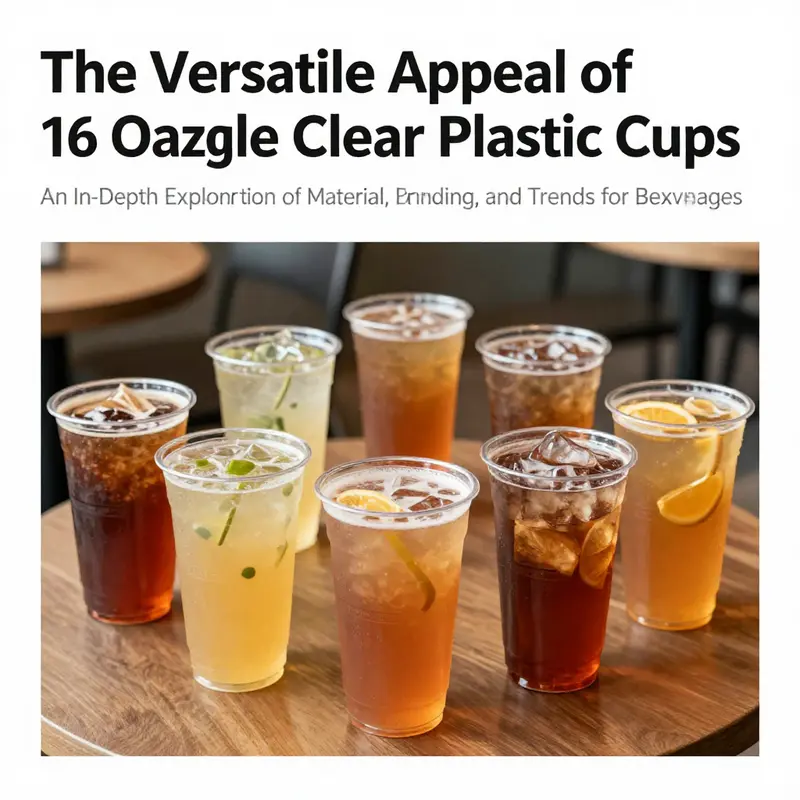
16 ounce clear plastic cups have become an essential asset for various industries, from bubble tea shops to catering services. Their durability, aesthetic appeal, and versatile usage make them ideal for serving a variety of beverages at events and gatherings. This article will delve into the materials and manufacturing techniques that ensure their quality, explore custom branding options for enhancing business visibility, highlight eco-friendly alternatives that align with sustainability goals, examine the wide range of applications across different sectors, and analyze market trends and consumer preferences surrounding these popular cups. The insights gathered will equip businesses with the knowledge they need to make informed decisions about their beverage-serving solutions.
Materials and Manufacturing of 16-Ounce Clear Plastic Cups
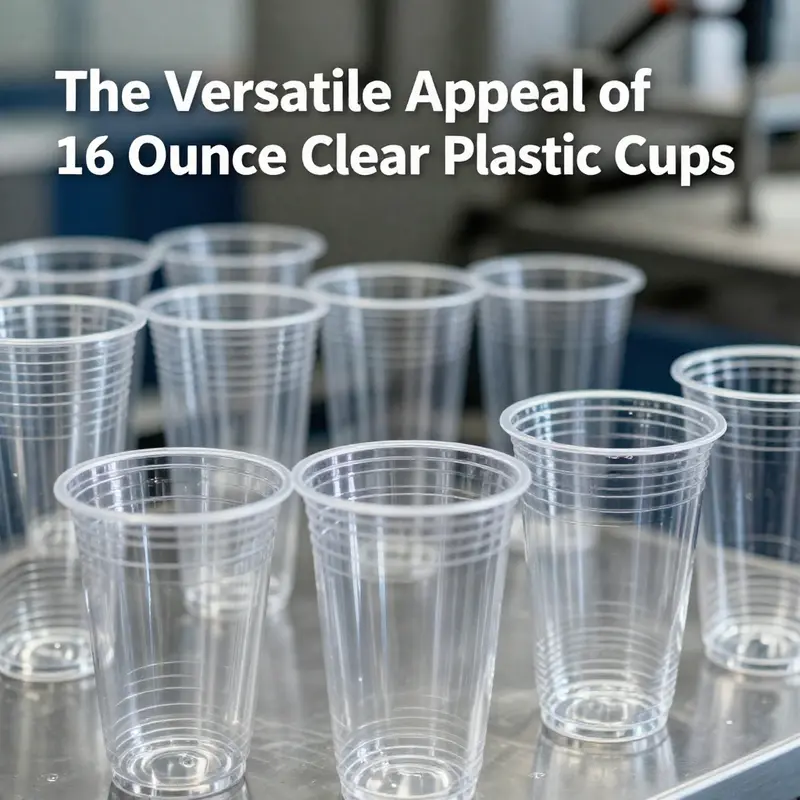
The 16-ounce clear plastic cup is defined by a balance of clarity, strength, and cost. PET dominates because of its optical properties and recyclability, while PLA and other bioplastics offer renewable sourcing and alternative end-of-life paths. Designers choose wall thickness, taper, and surface finish to optimize grip, stacking, and temperature performance.
Injection molding and blow molding are the two main production routes. Injection molding yields precise wall thickness and detailed features, ideal for complex shapes and branding. Blow molding produces lightweight, cylindrical cups with high-volume efficiency, often at lower per-unit costs, though with different surface characteristics. In practice, many producers combine a material choice with a molding method to meet the target balance of performance and price.
End-of-life considerations matter. PET is widely recycled when streams are well managed, while PLA can require industrial composting facilities. Labels, lids, and accessories influence recyclability, so design-for-recycling principles guide product development. The result is not a single recipe but a spectrum of options that align with customer needs, regulatory requirements, and local waste infrastructure.
Brand Clarity on a Clear Canvas: Customization Strategies for 16-Ounce Clear Plastic Cups
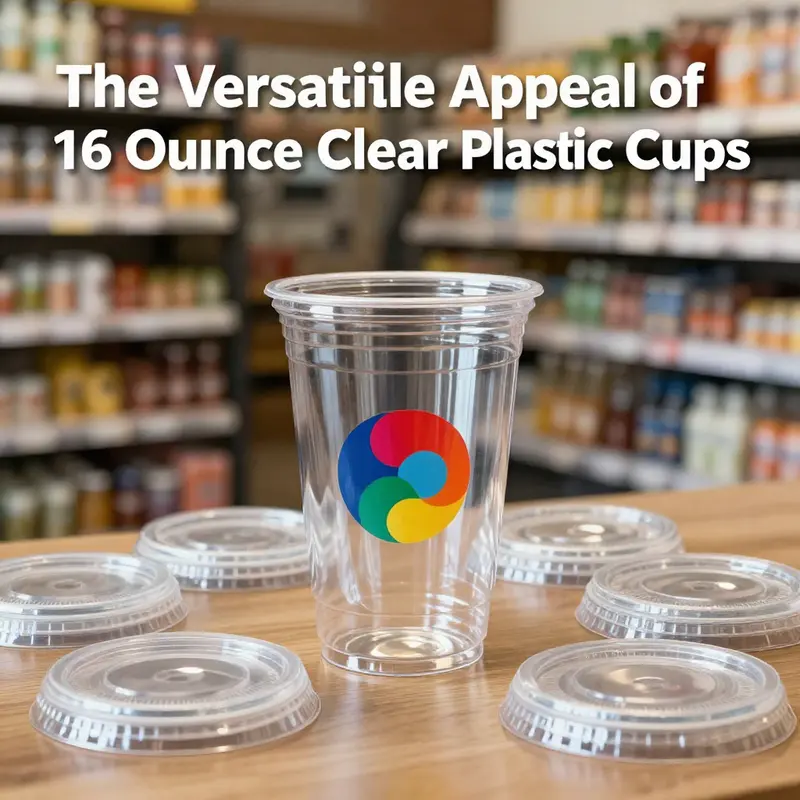
The 16-ounce clear plastic cup stands as a deceptively simple prop in the world of beverage service, yet it is one of the most potent canvases for brand storytelling in both casual settings and professional environments. Its transparency invites the eye to linger on color, texture, and form; its cylindrical simplicity allows a brand message to ride on the surface of a liquid and a lid in a way that few other vessels can match. The opportunity here is not merely to hold a drink but to project identity, mood, and promise with every sip. When a business considers custom branding for these cups, it is less about slapping a logo onto plastic and more about orchestrating a visual narrative that travels from the first glance to the last lick of condensation on the outside. That narrative begins with the material itself, extends through printing and labeling choices, and culminates in packaging and sustainability statements that reassure customers their moment with the cup is aligned with their values as well as their tastes.
The choice of material—often PET, PP, or PLA—frames the branding conversation from the outset. PET, widely used for its clarity and strength, offers a nearly crystal-like transparency that makes a printed design pop and a laser-etched or digitally printed logo feel tactile and exact. PP, with its resilience and chemical stability, can support more aggressive print runs and specialized finishing techniques without compromising safety or aesthetics. PLA cups introduce a compostable or biodegradable option that can resonate with sustainability-minded audiences, though they may require careful logistics to ensure end-of-life processing aligns with regional waste streams. Each material tier presents its own branding implications: print fidelity, color reproduction, heat resistance, and even the perceived premium of the cup itself. A brand might lean into the crisp, high-definition look of PET for a premium beverage line, while a festival or charity event might opt for PLA-based options to emphasize a compostable footprint. The choice is not merely about cost savings or compliance; it is about aligning the cup’s physical properties with the emotional cues the brand wants to send.
Printing on the cup body is where branding becomes tangible. Direct printing, whether through traditional screen processes or modern digital methods, enables a brand to render a logo, a full-bleed graphic, or a statement with color fidelity that can be as bold as the design demands. The scales of production matter here; some suppliers support long-run screen printing that delivers repeatable color and durability for thousands of cups, while others offer digital printing that allows for quick changes in design without the need to retool. This flexibility is especially valuable for events with distinct themes or for limited-edition runs tied to campaigns or seasonal releases. For brands that do not want to risk misalignment between the print and the cup’s curvature, custom labeling offers a complementary path. A labeled cup can carry a company name and logo, event branding, or a promotional message on a separate wrap that preserves the cup’s optical clarity while ensuring high visibility for the branding color palette. Custom labeling can also provide a practical advantage—allowing design iterations without altering the base cup stock or incurring the risk of misprint on the cup itself.
Lid color options further extend the branding play. A lid in a corporate color or a seasonally appropriate hue can knit the entire presentation into a cohesive look. The ability to choose from multiple lid colors—sometimes offered as four-color lid options—enables a brand to reinforce its color story, even when the beverage itself is light, dark, or unexpectedly vivid. For events, lid color can signal different courses, beverage lines, or levels of service, reducing the need for additional labels or signage at point-of-purchase. The lid thus becomes a visible extension of the cup’s branding language, contributing to the overall perception of quality and attention to detail.
Custom labeling and packaging complete the branding package. While the cup and lid convey immediate identity, a carefully designed label space or outer packaging can carry additional information—ingredient lists, allergen notices, or a QR code that directs customers to a brand story or loyalty portal. Custom labeling on PP or PET cups offers flexibility for cafes, events, or takeout services to maintain consistent branding across a fleet of cups while still adapting to small-batch promotions. Likewise, branded packaging—whether a carton, a sleeve, or a secondary wrap—can reinforce the brand during shipping and storage, ensuring that the first touchpoint a customer has with the product is already on-message and on-brand. The packaging itself can echo the color system used on the cup and lid, helping to create a cohesive and memorable unboxing or handoff experience.
OEM and ODM services are a practical bridge between brand ambitions and manufacturing realities. When a business engages directly with a manufacturer for original equipment manufacturing (OEM) or original design manufacturing (ODM), it can influence not only the artwork but also the geometry and features of the cup itself. This might include ergonomic shaping, dome-shaped lids for improved spill resistance, or integrated features such as heat sleeves or embossed textures that catch light and emphasize the brand’s identity. This level of collaboration makes the cup a bespoke product rather than a generic disposable, enabling brands to scale custom designs while preserving control over materials, weights, and finish—critical considerations for ensuring that the branding remains consistent across thousands or millions of cups.
An important dimension of this branding conversation centers on eco-friendly alignment. Certifications such as compostability or recyclability give a brand a platform to communicate responsibility without sacrificing visual impact. A cup made from a compostable PLA material, for instance, can be paired with compostability certifications to signal a strong sustainability story. In other cases, recyclable, BPA-free PET cups provide a more straightforward end-of-life path for customers in regions with robust recycling streams. The branding narrative can weave these environmental claims into the design language itself, perhaps by incorporating a subtle recycling icon, a short sustainability note, or a color cue that signals a compostable versus recyclable option. The goal is not to overwhelm the design with text but to embed a responsible ethos into the cup’s visual identity so that the consumer perceives value beyond the beverage itself. This is where the integration of branding and sustainability can become a powerful differentiator, signaling that the brand is not only mindful of taste but also of the environment in which the product exists.
From a procurement perspective, the branding journey begins with a clear specification packet. Brands define their quantity, preferred materials, desired printing method, and the exact color palette. They outline any required certifications, labeling needs, and packaging configurations. Suppliers respond with quotes, often within 24 hours, and may offer samples—frequently with shipping costs covered or partially reimbursed—to help teams evaluate print fidelity, color accuracy, and overall quality before committing to a bulk order. The process benefits from early alignment on the permissible color gamut, the endurance of the print under typical beverage use, and the durability of the label or lid color under cold or warm conditions. For many teams, a staged approach works best: start with a small run to test branding on a defined event, gather feedback from stakeholders and customers, and then scale to broader campaigns while maintaining the same brand language across all cups.
In this broader branding ecosystem, the role of digital marketplaces and direct-to-manufacturer channels becomes critical. The ability to secure customized 16-ounce clear plastic cups through direct printing or label application, with options for color-matched lids and robust packaging, gives brands a flexible suite of tools. The “where” of sourcing matters as much as the “how.” A responsible supplier must demonstrate compliance with international standards for food contact materials, provide clear documentation on material safety, and be responsive to design changes and printing runs of varying scales. Because branding is inherently a moving target—seasonal campaigns, pop-up events, and evolving color stories—this adaptability is essential.
As brands refine their strategies, they often seek to blend the branding approach with practical considerations of cost, lead times, and logistics. A high-clarity PET cup can showcase vivid brand colors with excellent fidelity, but the cost-per-unit may increase with bespoke printing or premium labeling. A transition to a lighter, more cost-conscious option might involve a combination approach: use direct cup printing for core lines, and supplement with high-impact labeling for temporary promotions where design flexibility and rapid rollouts are crucial. The choice of packaging configuration—bulk cartons, branded boxes, or a combination of both—also influences how a campaign feels from first unboxing to last sip. In all cases, the branding strategy should be conceived not only for the moment of purchase but for every step of the customer journey, including post-purchase engagement such as loyalty programs, social media sharing, and refill or reuse opportunities where feasible.
The internal ecosystem that supports these choices often includes a curated set of reliable links to packaging and takeaway solutions that can align with a brand’s storytelling. For teams exploring theme-based or venue-specific branding, one practical touchpoint is a page dedicated to custom takeaway packaging supplies and disposable tableware for theme parties. This resource can serve as a practical companion, offering design ideas, material options, and practical guidance for implementing a cohesive on-site brand experience. It also underscores the importance of consistency across all disposable assets, from cups to lids to packaging wrappers, so that the event itself feels like a curated brand moment rather than a collection of disparate pieces.
For brands seeking to deepen their narrative through storytelling and practical implementation, the path from concept to cup is as much about relationship with suppliers as it is about design. Engaging with manufacturers who offer both customization capabilities and a transparent approach to sustainability helps ensure the final product aligns with corporate values. Clear communication about order quantity, printing specifications, and desired destination is essential to receiving accurate quotes and feasible timelines. When a brand can articulate its story and its requirements with precision, the supplier can respond with options that balance aesthetic ambitions with functional realities. The culmination of this process is a cup that not only holds a beverage but also embodies the brand’s voice—clean, confident, and consistent across touchpoints.
As we consider the broader landscape, it is worth noting that the modern consumer is increasingly attuned to the interplay between product design and environmental responsibility. The branding on a 16-ounce clear cup can be a signal of a company’s broader commitments, from recyclability programs to take-back schemes for used cups, or from partnerships with sustainability-focused certifications to educational disclosures about end-of-life options. In practice, this means branding decisions should be made not in a vacuum but within a framework that considers life cycle impacts, waste management realities, and consumer expectations. A well-branded cup speaks not only to taste but to trust; it tells a story about who the brand is, what it values, and how it plans to keep showing up for customers in responsible ways.
From a practical standpoint, this is not a one-and-done exercise. Brand teams should plan for iteration, especially given the seasonal nature of many beverage promotions and the rapid pace of design trends. A clear cup that carries a strong logo and a vivid lid color can become a recognizable cue at events, in pop-up venues, or in dine-in takeout settings. The design should be engineered to scale—maintaining color fidelity across thousands of units, resisting smudging or fading after contact with condensation, and remaining legible under the variable lighting of a festival or a busy cafe. The best practices emerge from a combination of robust material selection, precise printing or labeling standards, and a packaging strategy that reinforces the visual language without creating visual clutter at the point of consumption.
In sum, customizing 16-ounce clear plastic cups is less about decoration and more about constructing a coherent brand moment that travels with the drink. It involves choosing materials that reflect the brand’s values, selecting printing and labeling techniques that balance fidelity with production speed, and coordinating lid colors and packaging to deliver a unified visual experience. It requires a willingness to engage with OEM and ODM capabilities so the cup can be tuned to specific ergonomic, functional, and aesthetic goals. And it invites brands to weave sustainability into the branding narrative in ways that feel authentic rather than ornamental. The result is a cup that communicates volume, clarity, and confidence—while reinforcing the brand story sip by sip.
For readers seeking practical steps, a good starting point is to engage with suppliers who offer both customization capabilities and clear certifications. Request samples to evaluate print fidelity, color accuracy, and label durability in typical beverage conditions. Confirm end-of-life options and ensure that your messaging about sustainability aligns with the product’s actual performance in your market. Finally, remember that the branding on a cup should harmonize with the broader packaging ecosystem and brand communications. The cup is a single, portable billboard; ensure it harmonizes with the entire experiential design—from the packaging and signage to the digital touchpoints customers encounter after the moment of purchase.
To explore a related resource on theme-packaging and takeaway materials that can support cohesive branding experiences, see this topic on custom takeaway packaging supplies for theme party. For a deeper dive into supplier capabilities, printing options, and compliance considerations, you can reference established industry market sources that discuss custom logo printing on clear plastic cups and related packaging components. External guidance on scalable customization is available here: https://www.alibaba.com/product-detail/Custom-16-Oz-Clear-Logo-Plastic-Cups_1600198877533.html?spm=a2700.189211.0.0.6a6c4e4f7d4b1e.
Internal link example for contextual example content: you can also look at how theme-based packaging can be integrated into a broader branding strategy through dedicated packaging resources like the one mentioned above, which illustrates how a cohesive design language translates across multiple disposable items used in events and takeout settings. This alignment is what transforms a simple cup into a meaningful brand touchpoint that customers remember as part of the experience, not just as a vessel for a drink.
Toward a Greener Sip: Eco-Friendly Alternatives to 16 Ounce Clear Plastic Cups
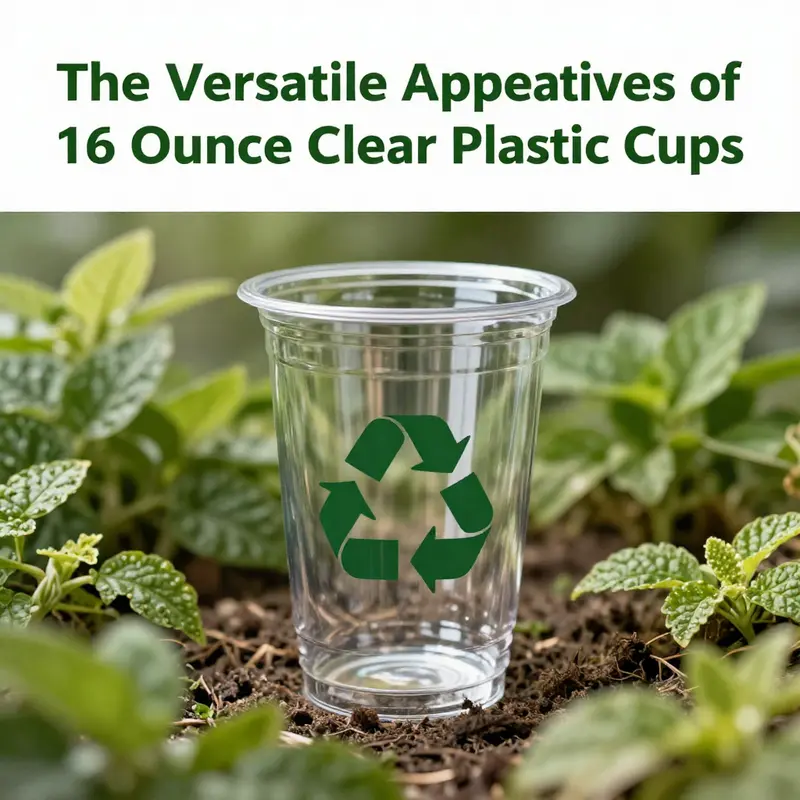
The sight of a cold drink poured into a clear 16 ounce cup is almost universal, whether at casual gatherings, busy cafés, or large events. These vessels are prized for their clarity, lightness, and convenience, yet they sit at the crossroads of convenience and responsibility. In spaces where single-use items once seemed purely practical, awareness of waste, resource use, and the long tail of plastic pollution has urged rethink. The challenge is not merely to identify alternatives but to weave them into rhythms of daily life, events, and commercial operations in a way that preserves service quality while trimming environmental impact. A practical path begins with understanding the spectrum of options available today, from compostable, plant-based cups to reusable glass and metal vessels, and to understand the life cycle implications of each choice. It also means recognizing that the right solution often depends on context—be it the temperature of the beverage, the setting, or the facility’s waste management capabilities. Only with a holistic view can we move beyond a binary substitute and toward a more nuanced, sustainable practice of serving drinks in a world that contends with finite resources.
Compostable plant-based cups represent a prominent category in the shift away from conventional plastics. These cups are crafted from renewable fibers such as sugarcane bagasse or bamboo pulp, materials that come from plants rather than petroleum. The appeal is twofold: a path to end-of-life that reduces persistent waste and the potential alignment with broader circular economy goals. In practice, many of these cups are designed for cold beverages and are intended to break down in industrial composting facilities within a matter of months. The concept of industrial composting matters because it uncouples disposal from landfilling while avoiding the land-intensive accumulation that characterizes many single-use plastics. Yet the reality is nuanced. Industrial facilities are not ubiquitous in every region, and access to appropriate processing can vary widely. For this reason, the viability of plant-based cups often hinges on local infrastructure and the willingness of a business to design takeout or event services around the capabilities of nearby facilities. Within this context, providers commonly offer certified options that meet recognized compostability standards, along with information about whether home composting is feasible. Consumers and organizers increasingly seek assurances that the cups are free from contaminants such as BPA and PFAS, and that the product’s life cycle truly aligns with eco-friendly goals rather than simply substituting one waste stream for another. In practical terms, these cups offer a compelling option for venues and events that already commit to composting programs, or for households equipped with home composters or community facilities that accept plant-based materials. The overall message is that plant-based compostable cups can be a meaningful part of a greener beverage program, particularly when there is a clear plan for end-of-life handling and when the scale of use aligns with local composting capacity.
Another important family of products in the eco-friendly lineup consists of paper cups with PLA linings. These cups use a biodegradable polylactic acid lining derived from renewable resources such as cornstarch. They are engineered to perform in cold drink applications and to be disposed of in facilities that accept compostable packaging. For buyers and operators, a critical step is to look for third-party certifications that verify true compostability rather than merely biodegradability. Certification programs help ensure that cups will break down under appropriate conditions and within a reasonable timeframe, reducing the risk that packaging ends up in landfills where decomposition is impractical. It is also worth noting that PLA-lined cups introduce a different end-of-life consideration: some facilities do not compost the plastic lining with the paper; separation or specialized processing can be required. As a wearer of both caution and opportunity, a responsible approach is to assess local waste streams and to align cup choices with facilities that will accept these materials. When the fit is right, PLA-lined cups can deliver a familiar clear-appearance experience while meeting a higher standard for end-of-life plans and for avoiding some of the contaminants that have become associated with traditional plastics.
Among the most enduring alternatives for those seeking long-term sustainability are reusable glass or stainless steel vessels. Reusables eliminate waste in a literal sense by providing durable, washable options that can be used countless times. They are especially well-suited to venues with a steady flow of patrons, offices that host events, or households that value temperature control and a premium drinking experience. Insulated designs can keep beverages cooler longer and reduce the temptation to reach for a new cup, which in turn lowers the overall footprint of every serving. While reusables require a different logistical approach—dishwashing capacity, sufficient storage, and a return or pickup system—their environmental advantages can be substantial, particularly when high reuse rates are achieved. The visual appeal of clear glass or sleek stainless steel also offers a perceptible alternative to plastic while maintaining a modern, minimalist aesthetic that suits a broad range of settings. In this sense, reusables are not merely a substitute but a long-term commitment to waste reduction that can harmonize with brand values and customer expectations when executed with reliability and clarity.
Bamboo fiber cups represent another plant-based pathway that blends lightweight durability with a practical sense of end-of-life responsibility. Bamboo fibers offer natural strength, antimicrobial tendencies, and a degree of compostability that fits into some circular models. These cups tend to be microwave-safe and dishwasher-safe, which broadens their applicability for both hot and cold beverages in different service environments. As with other plant-based options, success hinges on aligning material choice with local composting capabilities and on clear messaging to customers about how to dispose of used cups. The bamboo pathway showcases how a seemingly minor material shift can yield meaningful environmental benefits, especially when considered alongside the associated lid materials, sealants, and any decorative finishes that could influence recyclability or compostability. Taken together, these plant-based options illustrate a growing toolbox for businesses and households aiming to reduce reliance on conventional plastics while maintaining the clarity and convenience customers expect from a 16 ounce capacity vessel.
A central thread throughout these alternatives is an honest appraisal of life cycle impacts. Plastic cups, even when recycled, often face challenges related to contamination, mixed materials, and limited recycling streams. The end of life for many single-use cups remains messy, with a substantial portion ending up in landfills or the natural environment. By contrast, plant-based and compostable options, when paired with appropriate facilities, can close the loop toward resource recovery. Yet they are not a universal fix. The benefits depend on where and how they are discarded, how much energy and water are required to produce them, and how effectively the waste system can process them. A practical approach to choosing among options is to perform a simple, local assessment: what facilities exist nearby, what percentage of customers are likely to use composting, and what the operational realities are for handling, storing, and transporting cups and lids. It is also worth considering the cultural and logistical dimensions of sustainability: for some venues, the convenience of disposables may be worth narrowing the gap between disposal and composting if a robust program is in place; for others, an investment in reusables or in clearly labeled, easy-to-dispose-of packaging may yield greater long-term dividends.
For organizers and businesses that still rely on disposables but want to reduce their environmental footprint, a well-planned transition can be achieved by layering options rather than adopting a single solution. A possible strategy starts with prioritizing plant-based or PLA-based disposables for cold drinks and for gatherings where a clear end-of-life path exists. Where hot drinks or fragile beverage presentations are common, exploring heat-tolerant reusable vessels or insulated options can bridge the gap between service quality and sustainability. For events and venues that frequently serve beverages with lids, choosing compatible, compostable or recyclable lids is part of the design, not an afterthought. In addition to material choices, communication plays a crucial role. Clear labeling about disposal options, simple recycling or composting instructions, and visible signage can improve participation in sustainable waste streams. Moreover, partnerships with local waste processors or community programs can create a more resilient system that supports higher diversion rates and reduces the risk of contamination.
Another practical dimension concerns branding and consumer perception. The transition to greener options is most successful when it does not sacrifice the look and feel that customers associate with quality. In this sense, the visual experience matters: the transparency and crisp appearance of a cup should be preserved when possible, while the material itself should signal responsible practice. For organizers who wish to advertise sustainability without compromising aesthetics, there are design strategies that emphasize natural textures, matte finishes, or subtle branding that communicates environmental commitment without creating confusion about end-of-life expectations. Custom printing and labeling, when aligned with a clear sustainability story, can reinforce a brand’s values while avoiding the mixed messages that sometimes accompany disposable packaging. The broader takeaway is that meaningful sustainability emerges not from a single choice but from a thoughtful combination of materials, service design, and transparent communication that makes it easy for customers to participate in responsible disposal.
To bridge the gap between disposables and reusables in everyday life, consider the subtle but significant step of integrating an alternative alongside traditional cups rather than replacing it wholesale. For occasions where disposables remain convenient, a practical option is to choose an eco-friendly wooden tableware set for accompanying items such as utensils, dishes, and other serving components. This approach helps reframe the service experience around a cohesive, low-waste package rather than focusing solely on the cup. The idea is to build a coherent packaging and service system in which every element signals a shared commitment to sustainability. For readers exploring the practicalities of this shift, a hands-on path involves trialing a minimal set of eco-friendly tableware alongside a small supply of compostable or reusable drink vessels. This method enables operators to gauge customer response, adjust logistics, and refine messaging without overhauling the entire program at once. If a move toward greener serving feels daunting, starting with a targeted integration—one that preserves the clarity and convenience of a 16 ounce cup while enabling a parallel, waste-reducing option—can illuminate the route forward and demonstrate tangible benefits in a relatively short time frame.
The broader landscape of beverage service is evolving in ways that reward clarity, reliability, and accountability. Consumers are increasingly respectful of where items come from and how they are handled after use. Suppliers and venues that provide transparent information about end-of-life options, certifications, and regional waste capabilities will be better positioned to meet this growing expectation. In practice, this means staying informed about the available options, testing them in real-world settings, and sharing what works with customers and colleagues. It also means recognizing that a single product category cannot solve every challenge; instead, it is the combination of material choices, waste infrastructure, user education, and thoughtful design that creates meaningful progress toward reducing the environmental footprint of beverage service.
In sum, moving away from 16 ounce clear plastic cups toward eco-friendly alternatives involves a careful balance of practicality, environmental responsibility, and customer experience. Plant-based compostable cups, PLA-lined paper cups, reusable glass or stainless steel vessels, and bamboo fiber options each offer distinct advantages and trade-offs. The most successful transitions rely on a local, informed assessment of waste streams, robust end-of-life plans, and an openness to rethinking how drink service is designed and delivered. By weaving together material choices, logistical planning, and clear communication, businesses and households can enjoy the benefits of modern beverage service while contributing to a more sustainable cycle of use and renewal. And for those who still seek disposables as a tool for celebration or convenience, pairing them with a broader, greener strategy—one that includes a simple, well-communicated disposal plan and a lightweight, eco-friendly accompanying serviceware set—can make a meaningful difference without compromising the guest experience.
External resource: https://www.repurpose.com/products/16-oz-compostable-cold-cups
Seeing Through Versatility: The Ubiquitous Role of 16-Ounce Clear Plastic Cups Across Industries
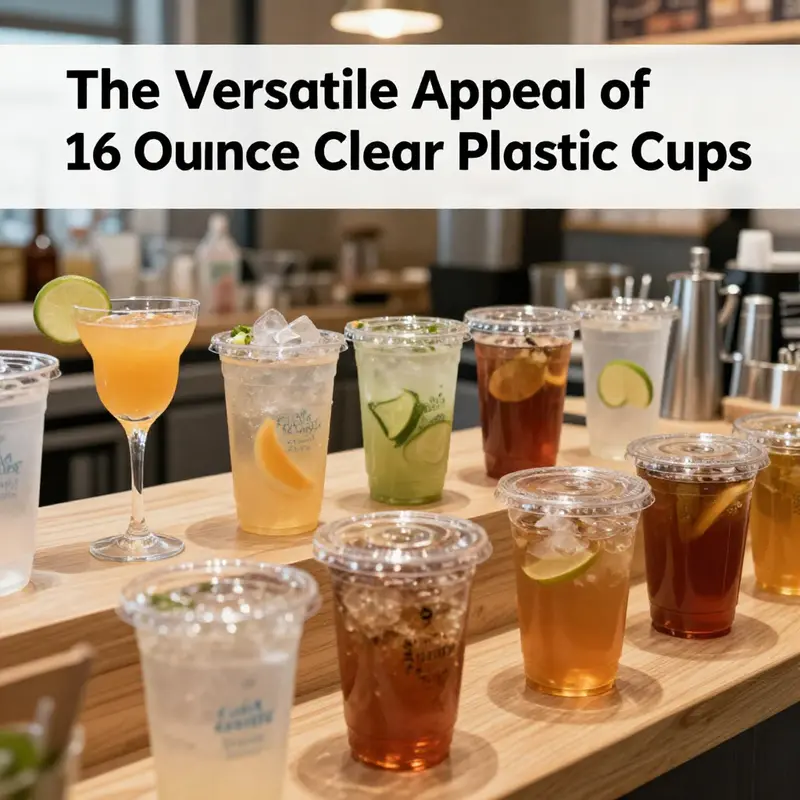
Clear, sturdy, and remarkably versatile, the 16-ounce clear plastic cup has quietly become a staple in environments as varied as bustling cafeterias, wedding receptions, hospital wards, and quiet product-testing laboratories. Its appeal rests not on flash or novelty, but on a practical sophistication: a predictable size that fits a wide range of beverages and desserts, a transparency that invites visual appeal, and a disposable convenience that harmonizes with fast-paced workflows. In one moment you might be serving a chilled juice with citrus glints, in the next a layered iced coffee whose hues rise in a crisp, glass-like glow. In both cases, the cup does more than hold a drink; it frames the consumer experience, guiding expectations of temperature, texture, and even the cleanliness of the environment. This is not mere opportunism; it is the result of thoughtful material choices, design considerations, and the evolving demands of modern service and packaging ecosystems.
The breadth of application becomes clearer when we glide through the different arenas where these reliable vessels appear, and the reasons they fit so naturally in each setting. In the food and beverage sector, the cups find a home wherever cold drinks and quick service reign. They are well suited for iced beverages—whether a refreshing citrus blend, a robust iced coffee, or a chilled tea—where the clarity of the cup allows the color and layering to speak to the consumer before a single sip is taken. They also double as dessert vessels: jelly, pudding, or a scoop of ice cream can be presented with the same ease. The physics of cold liquids work in their favor, as the walls resist fogging and the rims remain comfortable to hold, minimizing spills during hurried handoffs at the counter or in a drive-through line.
In the tempo of events and social gatherings, where scale and speed determine success, these cups offer predictable performance with room for branding and personalization. They serve as single-use containers that streamline service, cleanup, and post-event turnover. The potential for customization—logos, color schemes, or celebratory motifs—turns a simple disposable into a memory cue that attendees carry with them after the last toast. The ability to print or label the cups cheaply and effectively means vendors can reinforce a theme, a sponsor message, or a product launch without compromising the attendee experience. In this context the cup becomes part of the event’s visual language, a small but persistent reminder of the brand or occasion long after guests have left.
Retail and promotional settings also lean on the same transparent simplicity. In product demonstrations, sampling campaigns, and trade-show booths, a clear cup invites scrutiny of the product inside while keeping the focus on the consumer’s hands and eyes. Here the cup’s size supports a comfortable tasting portion, while its disposable nature simplifies inventory management and post-campaign cleanup. The combination of practicality and visible branding potential makes 16-ounce clear cups a quiet but powerful carrier for promotional narratives. They function as portable product showcases, capable of traveling from a crowded exhibition hall to a customer’s home, where the memory of taste and presentation persists longer than any flyer or banner.
Beyond customer-facing roles, medical and laboratory environments rely on the purity and hygiene of disposable containers. In clinics and research settings, a 16-ounce cup can be used to hold liquid samples, prepare reagents in a controlled, single-use context, or assist in medication organization. The disposable aspect is more than convenience; it is a hygiene imperative where cross-contamination must be avoided and cleaning protocols are carefully designed around the day’s workflow. In these settings, the cup’s transparency is not merely aesthetic; it is functional, enabling quick visual checks of liquid level and clarity. The assumption that the cup is clean and ready for use per patient or sample underscores why the 16-ounce format has endured in medical and lab circles, even as other equipment evolves.
In the realm of food processing and sampling, the cups play a supporting yet essential role. They act as small-batch containers for trial runs, taste tests, and display samples. When researchers or product developers need a reliable vessel to hold a portion while signals about viscosity, sugar content, or aroma are gathered, these cups provide a consistent baseline. Their stability on counters and in display cases reduces the need for frequent replenishment, allowing teams to focus on evaluation rather than logistics. For many producers, this is where the value is forged: a simple cup becomes a trusted tool that accelerates decision-making and reduces waste in the early stages of product development.
The conversation around 16-ounce clear cups would be incomplete without addressing materials and sustainability. The typical choices—PET, PP, and PLA—each bring distinct properties to the table. PET offers clarity and strength, a barrier that supports moderate temperature ranges, and compatibility with standard lids and seals. PP contributes a higher heat tolerance and flexibility in stacking, which is valuable for bulk storage and transport within busy kitchens and event operations. PLA introduces an eco-conscious narrative, with the promise of biodegradability under appropriate industrial conditions. The emergence of PLA-based cups from regions with advanced composting infrastructures has broadened the dialogue about responsible disposal. Yet, the ecological story is not one-dimensional. The lifecycle of each cup depends on local recycling or composting capabilities, the presence of contamination, and consumer habits. This means that the appeal of clear cups sits at the intersection of material science, supply-chain logistics, and consumer education.
Design considerations extend beyond the material itself. Clarity remains a central virtue, not only for aesthetics but for marketing and consumer perception. A beverage’s color, foam, or layering is more legible when the walls are transparent and the surface smooth. This is particularly important in beverage categories where visual cues—like a layered coffee or a fruit-forward tea—signal quality or flavor intent. The rim design, lip feel, and grip texture influence the user’s tactile experience as much as the liquid’s temperature or viscosity. In busy service environments, the ease of stacking and compact packaging matters too. A cup that nests neatly saves shelf space, reduces breakage risk during transport, and speeds up replenishment on busy service lines. In a lab or clinical context, clear walls allow straightforward inspection of liquid contents, while a compatible lid system can seal samples or protect prepared medications during handling or transport.
The supply chain behind these cups is a reminder that seemingly small choices ripple through multiple layers of operation. Lead times, minimum order quantities, and the possibility of customization all shape procurement strategies. For businesses evaluating a line of clear cups, the ability to request quotes quickly, assess print or labeling options, and preview samples can tilt a decision toward one supplier or another. The practical questions—volume needs, preferred materials, shipping destinations, and whether the end goal is single-use convenience or a platform for reusable or refillable systems—determine not just cost, but quality, consistency, and long-term supplier partnerships. And while the cups themselves are simple, the opportunities they enable—branding, quick-service throughput, reliable sampling, and hygienic handling—create a cumulative impact that goes beyond price per piece.
Branding and promotions often ride on the visual symmetry these cups offer. When a business seeks to synchronize packaging with an event theme, launch, or seasonal campaign, the cup is a canvas. Custom printing on cups and lids—whether through screen printing or labeling—transforms disposable vessels into portable billboards. In a world where attention can be fleeting, such tangible, on-the-spot branding can lift recall and influence sharing moments in social settings. This is why many organizations view cups not as mere containment but as an extension of their marketing ecosystem—an affordable, high-visibility prop that travels with customers from venue to vehicle to home.
For readers seeking practical pathways to source and test these cups, several avenues exist. Wholesale suppliers can provide an array of sizes and packaging options, with quotes delivered within a day or two after inquiry. The ability to request free samples—where shipping costs are the primary barrier—helps teams evaluate clarity, sturdiness, and lid compatibility before committing to bulk orders. In all cases, the decision to use 16-ounce clear cups intersects with broader considerations about sustainability, recycling infrastructure, and consumer expectations around waste. The industry’s push toward biodegradable materials and recyclable streams is not in opposition to clear cups. Rather, it is a call to align material choice with end-of-life realities, ensuring that the environmental benefits of disposables do not come at the cost of ecological responsibility.
In the grand catalog of disposable tableware, the 16-ounce clear cup stands out as a reliable, adaptable workhorse. Its value emerges not from novelty but from the quiet certainty it offers across contexts: a dependable vessel that frames beverages, supports quick service, enables branding, and upholds hygiene standards. It embodies a philosophy of clarity—literally and figuratively—that recognizes the consumer’s need to see, judge, and enjoy what is before them without friction. This clarity, coupled with a spectrum of materials, sizes, and customization options, explains why these cups appear in so many scenarios and why they will likely remain a constant fixture as service models evolve and sustainability narratives mature.
For further reading on sourcing and to explore related disposable drinkware options, see the external resource on PLA-based clear cups. This reference provides a broader context on material choices and industry options, which can help informed buyers align procurement with both performance needs and environmental aspirations. Additionally, a relevant internal resource discusses the practicalities of using disposable clear plastic cups in event-focused packaging and promotional contexts, illustrating how the cups function as an integral part of event logistics and branding.
External reference: https://www.alibaba.com/product-detail/16oz-PLA-Clear-Plastic-Disposable-ColdD1600528959734.html
Internal link example (for context within the article): disposable-clear-plastic-cup-outdoor-picnic-pet-cup-drinking-cup-for-parties-birthdays-weddings-camping-utensils.
Clear Signals: Market Trends and Consumer Preferences Shaping 16-Ounce Plastic Cups in a Sustainability-Forward Era
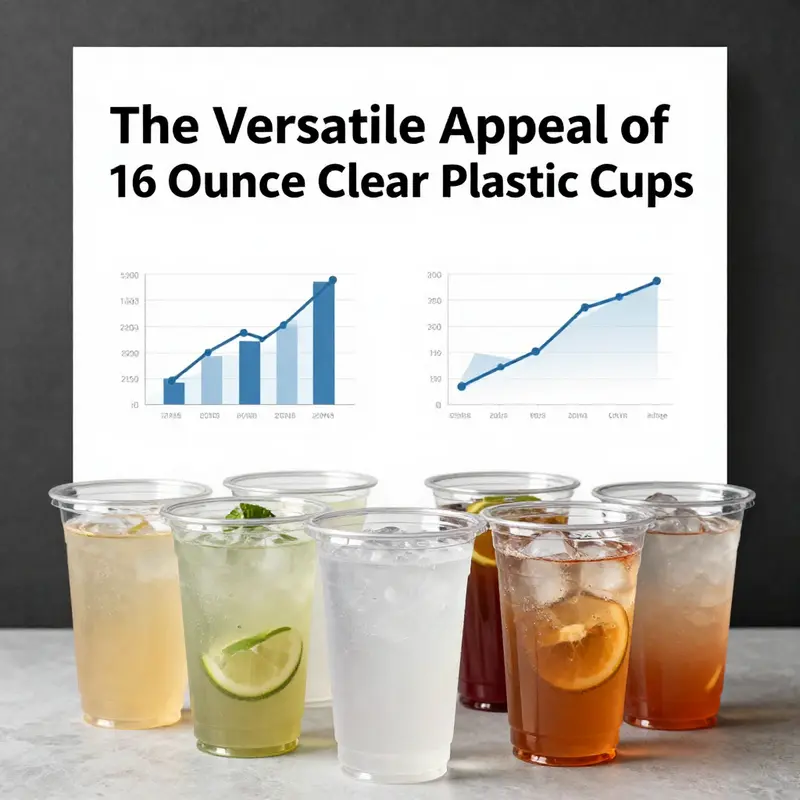
The 16-ounce clear plastic cup sits at a paradox of everyday practicality and evolving consumer expectations. It is a tool built for speed, convenience, and consistency, yet it now operates in a marketplace that prizes sustainability, brand storytelling, and a disciplined approach to supply chains. In this context, the cup is not just a vessel; it is a touchpoint that communicates value, responsibility, and reliability to a diverse audience that spans casual home gatherings to high-volume foodservice operations. To understand where the market is headed, it is essential to trace how consumer preferences for materials, aesthetics, and performance converge with industry moves toward smarter sourcing and responsible manufacturing. The result is a nuanced landscape where clarity of the cup, its environmental footprint, and its potential as a branding vehicle all matter in equal measure.
Sustainability has moved from a niche consideration to a baseline expectation. Consumers expect packaging options that align with broader environmental goals without compromising safety or convenience. In practical terms, this translates to a growing demand for recyclable materials and options that minimize end-of-life waste. PET, polypropylene, and PLA each offer different advantages and trade-offs. Recyclable PET cups are widely available, and their clarity remains one of their strongest selling points. Biodegradable or compostable PLA-based options are increasingly promoted as eco-friendly choices, especially in markets where local infrastructure supports composting or proper separation of materials. In this shifting terrain, suppliers are not only promoting the raw material but also outlining how the cups fit into circular economies. The emphasis is on BPA-free formulations and on ensuring that the cups can be processed by recycling streams without compromising beverage quality or safety. This, in turn, shapes consumer perception—clear cups that look pristine and carry a credible environmental story tend to elevate the perceived value of the drink inside, whether it’s a simple glass of water or a premium iced beverage.
Branding and customization have surged to the forefront as well, particularly in event and hospitality contexts where a single cup can function as a moving billboard. The appetite for customization goes beyond mere logos. It includes color-tinted variants, printed messaging, and even branded lids that reinforce a sponsor or venue identity. The result is a twofold effect: it strengthens brand recall and it simplifies operations by providing a consistent, recognizable tool for servers, bartenders, and guests alike. For venues that host large crowds, these cups also become a practical extension of the user experience, signaling a cohesive aesthetic that travels from the point of service to the table or cart and onward to the attendee’s memory of the event. In this sense, a seemingly simple object helps drive uniformity in presentation, a factor that can influence customer satisfaction and repeat business.
The functional performance and aesthetic appeal of 16-ounce clear cups remain central to their popularity. Clarity is more than mere visibility; it is a statement about cleanliness and quality. A cup with crystal clarity allows consumers to assess the beverage’s color, transparency, and freshness at a glance, which in turn influences their perception of taste and value. Equally important is a uniform rim that stabilizes pouring and stacking, reducing drips and improving throughput in busy environments. A well-executed rim contributes to a seamless workflow for bartenders and servers, which translates into faster service and a more polished overall experience. The visual uniformity also matters on display—stacks of clear cups reflect light in a way that conveys order and professionalism. Operators understand that a small edge in perceived quality can justify premium pricing or higher satisfaction scores, especially in venues that emphasize craft beverages or premium soft drinks.
The market’s appetite for multi-use applications further shapes ongoing development. Cold drinks remain dominant, but hot beverages and more complex mixes are increasingly common in the repertoire of what 16-ounce cups are expected to handle. This trend has driven innovations in heat resistance and insulation properties, pushing designers to explore materials and wall constructions that protect the user from heat while maintaining the cup’s signature transparency. The ability to accommodate both hot and cold beverages broadens the cup’s utility, enabling it to serve across multiple outlets—from quick-service restaurants to juice bars and catering events. Aware of the operational realities, manufacturers are balancing clarity with performance, ensuring that thickness, weight, and rigidity contribute to a stable pour and a comfortable grip, even in high-volume service settings.
Strategic sourcing and supply chain transparency have become indispensable in a market where concerns about environmental impact and reliability are constant. Buyers increasingly seek suppliers with demonstrated performance in bulk production, consistent quality, and clear commitments to sustainable practices. The emphasis on traceability means that buyers want visibility into the manufacturing journey—from raw material sourcing to final packaging. This alignment is not merely about compliance; it is about risk management and reputational integrity. Regions known for eco-conscious manufacturing practices and progressive waste-management approaches are increasingly favored, including operations that highlight responsible emissions, waste reduction, and efficient water use. In practice, this translates into partnerships with groups that offer robust QA benchmarks, transparent reporting, and flexible capacity to meet fluctuating demand. The trend toward smarter sourcing also intersects with branding goals; suppliers that can support customized printing, left- or right-mimicking branding, and consistent color fidelity across large runs are particularly valued by operators who want a uniform look across all service points.
From a consumer perspective, this convergence of sustainability, branding, and performance has reshaped expectations. Today’s beverage consumer is more likely to judge a cup by the care given to its material choice and its presentation. A clear cup that feels sturdy, delivers a crisp view of the beverage, and arrives with a credible environmental narrative is more likely to be perceived as a premium option. In contrast, cups that appear flimsy or opaque due to heavy printing or inconsistent wall thickness undermine perceived beverage quality and can erode trust. The sensory experience—how the cup feels in the hand, how easily it stacks on a tray, and how cleanly it dispenses the drink—becomes part of the product’s overall value proposition. This is not about aesthetic indulgence alone; it is about delivering reliability in crowded service environments where speed, accuracy, and presentation intersect to shape the guest’s impression and the business’s reputation.
The shaping of consumer preferences also feeds back into the design language of the industry. Cup manufacturers are attentive to the balance between eco-conscious materials and cost-efficiency, translating this into options that align with a brand’s sustainability story while remaining affordable at scale. For instance, recycled content or bio-based alternatives are increasingly offered as part of a broader portfolio that can satisfy both price-sensitive segments and those seeking premium, environmentally friendly solutions. The push for clarity is complemented by explorations in wall thickness, rim geometry, and stacking depth, all aimed at reducing waste during handling and increasing process efficiency in kitchens and bars. When a cup’s design reduces breakage during transit and minimizes spillage in mobile service, it contributes to lower waste and higher guest satisfaction—an outcome that resonates across markets, from casual dining to catered events.
In this landscape, it is helpful to anchor expectations to concrete considerations, such as how a cup fits within a service model and how its life cycle aligns with a brand’s environmental commitments. A practical lens reveals that the market favors options that can be easily integrated into existing workflows: reliable supply, predictable lead times, and a printing capability that preserves color fidelity without sacrificing speed. The ability to procure in varied quantities—from small packs for home use to bulk orders for large events—also shapes decisions. For buyers balancing cost with quality, the presence of free samples or trial runs can be decisive in validating the cup’s performance before committing to a bulk purchase. Suppliers frequently accommodate this through sample programs, with shipping costs occasionally offset to help buyers evaluate fit with their beverage program and branding. In other words, the market rewards vendors who combine transparency, consistency, and responsiveness with a clearly articulated sustainability narrative.
To illustrate how current consumer expectations translate into real-world choices, consider a widely available option described as a disposable clear plastic cup designed for outdoor events and picnics. This format exemplifies the blend of portability, visibility, and versatility that many buyers seek. The cup’s clear material showcases the beverage’s color and clarity, while a practical size supports a broad range of service contexts, from casual gatherings to more formal events. Its design emphasizes a clean rim, stable stacking, and straightforward compatibility with lids and accessories that extend usability in outdoor settings. This is not merely a matter of aesthetics; it is a response to the practical realities of service at outdoor venues, where quick turnover, clear branding opportunities, and dependable performance are prerequisites for success. The availability of such formats also signals the market’s interest in offering flexible solutions that can be adapted to seasonal demands and shifting consumer patterns, without sacrificing the core attributes that drive satisfaction and repeat business.
In closing this survey of market forces, the trajectory is clear: 16-ounce clear plastic cups are evolving from simple disposable tools into integrated elements of sustainability, branding, and operational efficiency. The most successful offerings will be those that harmonize a pristine visual presentation with responsible material choices, while also delivering the reliability required by fast-paced service environments. Buyers who prioritize strategic sourcing, supply chain transparency, and a credible environmental footprint will likely see dividends in terms of brand perception, guest satisfaction, and lower operational friction. The cup remains a humble object, yet it has become an expressive medium through which values and efficiency are demonstrated in real time. As the market continues to mature, the opportunity for thoughtful design, responsible manufacturing, and purposeful customization will only grow, reinforcing the cup’s indispensable role in modern foodservice and hospitality.
External resource: https://www.alibaba.com/product-detail/16oz-Disposable-Clear-Colored-Plastic-Cup_1600457931475.html
Final thoughts
The continued popularity of 16 ounce clear plastic cups reflects their importance in service-oriented businesses, meeting both consumer needs and sustainability goals. By understanding the various materials available, exploring custom branding options, and committing to eco-friendly alternatives, beverage chains, restaurants, food trucks, and event planners can enhance their brand presence while catering to modern consumer preferences. Staying informed about market trends further informs purchasing decisions, ensuring that these versatile cups remain a staple in the beverage and catering sectors.