

As disposable plastic cups continue to serve an essential role in the beverage industry—from bubble tea shops serving trendy drinks to catering services accommodating large events—understanding the manufacturing processes behind these cups becomes crucial for businesses. The decision on which cup to use can affect branding, cost, and sustainability. In this exploration, we will delve into the three primary methods of cup production: Injection Molding, Blow Molding, and Thermoforming. Each method offers unique advantages tailored to different business needs, whether you’re a food truck operator prioritizing efficiency or a restaurant aiming for branded quality. By grasping these manufacturing techniques, you can align your cup selection with your service style, enhance customer experience, and support your operational goals.
Melt, Mold, and Minute Details: The Injection Molding Engine Behind Disposable Plastic Cups
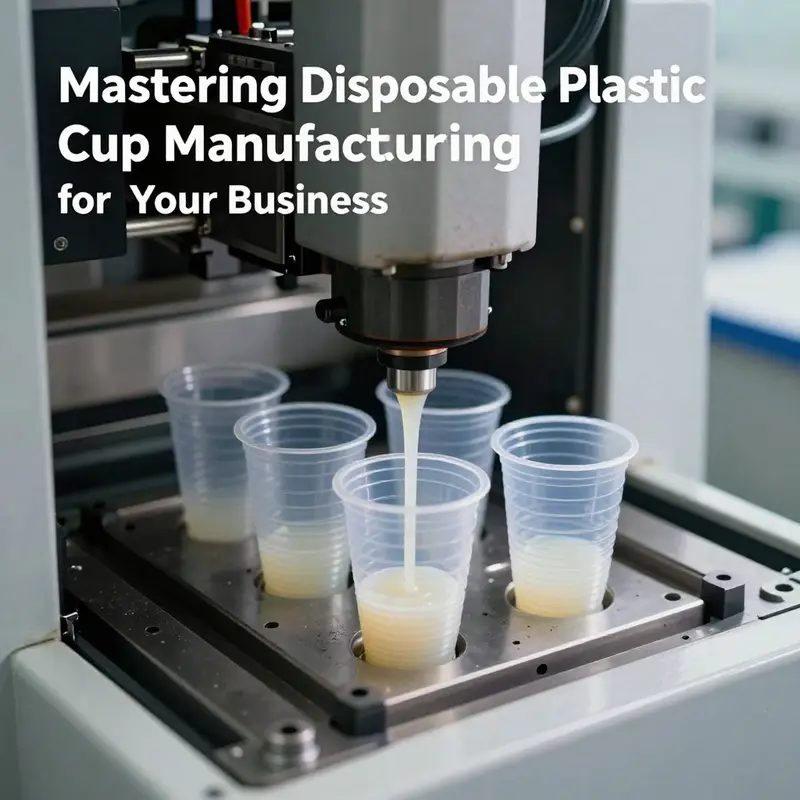
The injection molding process stands as the invisible engine of mass-produced disposable plastic cups. It is a discipline where minute deviations in temperature, pressure, and timing ripple into the geometry, feel, and durability of millions of cups that pass through a consumer’s hands each day. This chapter follows the flow from raw thermoplastics to the final, ready-to-package cup, and it keeps sight of the larger picture: what injection molding enables in terms of consistency, scale, and the ability to support branded, private-label, or export-focused beverage packaging programs. The journey from molten polymer to a finished, stackable cup is a sequence of tightly coordinated steps, each governed by material science, engineering design, and the relentless demands of high-volume production. Understanding this interplay helps illuminate how the simplest cup—clear, rigid, sometimes printed or branded—gets produced with such reliability and at such speed.
At the heart of the process are three actors: material selection, mold design, and the machine that brings them together. The materials chosen for disposable cups—commonly polypropylene, polystyrene, or polyethylene terephthalate—carry properties that drive every decision along the line. Polypropylene offers a balanced mix of rigidity and heat resistance, a hallmark for hot beverages and comfortable handling. Polystyrene contributes clarity and surface finish, which is why many transparent cups rely on it to showcase a beverage. PET adds toughness and a level of clarity that persists through moisture exposure. Each material carries a distinct melt temperature, viscosity, and crystallinity profile. The selection determines not only the strength and stiffness of the cup but also how quickly it can be heated, injected, and cooled without warping or sink marks. From a packaging perspective, this choice can affect barrier properties, odor retention, and recyclability, all of which feed into branding and life-cycle considerations for private-label or export-oriented programs.
Once the material is chosen, preparation begins well before the first shot of molten polymer fills a mold. In the hopper and feeding system, pellets are dried to remove moisture that could cause hydrolysis or hydrolytic degradation during heating. Moisture in the melt can lead to surface defects, gas pockets, or color inconsistencies. The material then enters the extruder barrel, where the screw conveys, melts, and homogenizes the plastic. The temperature profile across the barrel is not uniform; it follows a deliberate gradient designed to minimize thermal degradation while achieving a uniform melt. This is particularly critical for transparent cups, where optical quality matters and surface imperfections become visible. The timing and control of residence time within the barrel influence flash, color consistency, and molecular orientation, all of which contribute to the final cup’s performance in the field.
The injection phase itself is a ballet of precision. Molten polymer is injected under high pressure into a metal mold with cavities shaped to the cup’s exterior, interior, and any integrated features. The gate design—the point at which the polymer enters the mold—plays a pivotal role. A well-chosen gate reduces jetting, minimizes heat loss, and supports uniform filling of the cavity. For cups that incorporate intricate textures or logos on the exterior, the mold must reproduce these features with fidelity, sometimes requiring multi-cavity configurations or side actions to form undercuts without sacrificing ejection reliability. Multi-cavity molds enable thousands of cups to be formed in synchronization, multiplying productivity while maintaining tight tolerances. The high-pressure injection ensures dimensional accuracy and consistent wall thickness, which in turn influences stacking efficiency, overflow resistance, and sealing compatibility with lids or sleeves when those accessories are in play. Yet the same precision demands a robust mold and calibrated injection units. The mold materials, usually hardened steel or alloyed steel with surface coatings, must resist wear from repetitive cycles. Thermal fatigue can alter surface finish and dimensions, impacting the cup’s true circularity, rim thickness, or internal diameter.
A molded cup begins to take on its final shape as the molten polymer cools inside the mold. The cooling phase is not a passive period; it is a critical determinant of dimensional stability and mechanical performance. The mold contains cooling channels through which coolant—typically water or a glycol-water mix—circulates to extract heat rapidly. The design of these channels, the coverage of cooling across the cavity, and the contact quality between the mold and the molten plastic all influence cycle time and the presence of residual stresses. Uneven cooling can spawn distortions like warping or ovality, especially in taller or rim-heavy cups. Achieving uniform wall thickness across a cup is another design and process objective. In practice, engineers simulate and test various cooling strategies to ensure that the shrinkage is predictable and can be compensated in subsequent production runs. Shrinkage compensation is essential, because cups must stack with predictable alignment in boxes and on automated conveyors; a slight deviation can complicate downstream packaging or filling operations.
As cooling completes, the mold opens and the part is ejected. Ejection systems employ pins or plates that push the finished cup from the core and cavity without marring the surface. In high-speed lines, the ejection must be synchronized with the molding cycle to prevent sticking or premature removal that could damage the part. Some designs employ an air-ejection system, while others use mechanical ejectors, depending on the cup geometry. The surface finish of the mold and the presence of any texture influence the ease of release and the need for post-mold handling. A smooth interior surface reduces friction with beverages and makes cleaning and reuse easier, while a textured exterior can enhance grip or brand identity without affecting internal performance.
The post-mold phase transitions quickly from part production to finishing and packaging. Flash—thin excess material that can remain around the cup rim or base—must be trimmed or controlled through mold design so that it does not interfere with sealing, stacking, or consumer handling. Many lines incorporate in-line trimming or flashing removal to minimize handling steps and maximize throughput. After removal, cups may proceed to decoration steps. Printing or hot-stamping is integrated into the production line to apply logos, brand colors, or regulatory marks. The surface characteristics that printing must negotiate—such as gloss level, flatness, and the potential for micro-scratches—drive the choice of substrate finish, pre-treatment, and printing method. Some manufacturers choose to print on preform or pre-molded segments and then heat-form, while others print after molding in dedicated downstream stations. The decision influences cycle time, color fidelity, and the resilience of the print to beverage contact, condensation, and cleaning cycles in food service environments.
From a design perspective, injection molding imposes several constraints that drive final cup geometry. Wall thickness must be carefully controlled to maintain rigidity while limiting material usage. A cup that is too thin risks deformation under heat or pressure, while an overly thick cup increases material costs and slows cooling. The geometry of the cup—ribbing, chamfers, the thickness of the rim, and the diameter of the opening—must balance consumer usability with manufacturability. Features that enable stacking or nestability while maintaining beverage isolation are often implemented in the mold and in the downstream handling equipment. Texturing can be used to differentiate brands, but it also affects surface energy and wettability, which in turn influence how a beverage forms on contact with the cup and how easy it is to remove the cup from the mold during ejection.
Automation is the other half of the equation that makes injection molding so well suited to disposable cups. Modern lines are equipped with programmable logic controllers, robotics for pick-and-place after molding, and inline quality checks. Vision systems can detect cosmetic defects such as flash, sink marks, or surface imperfections. Sensors monitor pressure, temperature, and cycle timing to ensure stability across thousands of cycles. Operators manage color changes and mold maintenance, while engineers analyze data to minimize cycle times and scrap. The integration of robotics and sensors has transformed what used to be a batch-driven process into a continuous, tightly controlled production stream. In this environment, the smallest parameter drift can cascade into the next run, so robust process control, predictive maintenance, and rapid mold-change capabilities become essential components of a competitive production line.
Despite its strengths, injection molding is not without constraints. The upfront costs for molds and high-precision machinery can be substantial. Tooling must be customized for each cup design, which means long lead times and careful project management. Energy consumption is a constant consideration, given the heat required to melt polymers and the need to maintain rapid cycling. Setup times for design changes or color changes are non-trivial, especially for premium or branded cups that require multiple finishing options. These realities push manufacturers to optimize not only the core molding cycle but also the surrounding logistics—mold storage, colorant supply, and automation software that coordinates multiple lines across a factory.
Sustainability and end-of-life considerations increasingly influence how injection molding is practiced in the cup segment. Recyclability of the final cup depends on the resin system and any additives used in color or decoration. Regrind from trimming and sprue can sometimes be reintroduced into the melt stream, but this depends on the polymer type and the cleanliness of the scrap. Energy recovery and more efficient cooling strategies can reduce the carbon footprint of the line. Designs that reduce material while preserving strength not only cut cost but also support broader environmental goals in packaging programs. In some programs, there is demand for materials that can be certified as recyclable or compatible with established recycling streams, which pushes the industry toward standardization of resins and surface finishes that do not hinder separation and processing at recycling facilities. The interplay between design for manufacturability and sustainability is a dynamic space where the injection molding process must continually adapt to evolving regulatory, consumer, and retail expectations.
On the market side, the injection molding approach offers a compelling path to scalable production of branded, standard, or mixed-cup programs. The ability to produce a high volume of uniform cups at a predictable cost profile makes it attractive for large beverage brands and contract manufacturers serving hospitality channels and food service providers. The same technology that yields consistent tolerances also supports elaborate decoration and private-label customization, enabling a single facility to produce many SKUs with limited downtime. In many regions, clusters of equipment suppliers and mold makers exist to support this ecosystem, with a range of capabilities from basic semi-automatic lines to fully automated turnkey systems that integrate mold design, production, and even printing. The result is a supply chain that can respond quickly to changing consumer tastes, seasonal promotions, or regulatory constraints in different markets.
The relationship between the injection molding process and the other primary cup manufacturing technologies—blow molding for clear, hollow PET cups and thermoforming for standardized, cost-effective cups—is one of complementarity rather than competition. Injection molding excels where precision, structural rigidity, and branding precision are paramount, especially for high-volume, premium, or branded cups. Blow molding offers advantages in weight reduction and seamless walls for transparent cups, while thermoforming provides cost efficiency for simple, mass-produced cups and a wide range of shapes using flat sheets. Each method has its own set of design constraints, mold technologies, and capital requirements, and savvy manufacturers often operate a portfolio of lines to meet different customer requirements. The common thread across these approaches is a shared emphasis on process stability, material behavior, and end-use performance, ensuring that every cup can perform as expected in the hands of a consumer, whether it’s a cold soda, a hot coffee, or a filtered tea.
For readers seeking a deeper technical dive into the mechanics and control strategies of injection molding, a detailed overview of the process is available in industry literature. The fundamental principle—the rapid transformation of molten polymer into a high-precision, repeatable part through controlled heating, molding, cooling, and ejection—remains the core driver of performance. As materials science advances and automation becomes more sophisticated, the injection molding line will continue to push the envelope of speed, precision, and material efficiency. The cup, a relatively simple consumer object, becomes a showcase for what meticulous tool design, engineering discipline, and integrated manufacturing systems can achieve when scaled to millions of units.
To connect these ideas to a concrete product example in the market, consider the disposable clear plastic cup. This cup embodies many of the core concepts described above: optical clarity from material choice, consistent thickness and rigidity achieved through precise mold design and cooling, and the potential for branding through in-mold labeling or downstream decoration. The integration of printing or labeling steps with the molding cycle can produce a finished, retail-ready cup in tight timeframes, enabling private-label programs or seasonal promotions for beverage chains and hospitality venues. The synergy between material selection, mold precision, and automation determines the cup’s performance across a spectrum of real-world conditions—from ice-cold beverages on a sunny day to hot drinks served at a crowded event. disposable clear plastic cup
In sum, the injection molding process for disposable cups is a discipline that marries materials science with high-speed mechanical design. It requires careful attention to the thermal profile of the polymer, the geometry and texture of the mold, and the orchestration of automation to achieve predictable, scalable results. The outcome—cups that feel right in the hand, that hold their shape when filled, and that carry branding with fidelity—embodies a synthesis of engineering discipline and practical manufacturing know-how. As markets evolve toward more sustainable and customizable packaging, injection molding will continue to adapt, leveraging advances in materials, mold technology, and process analytics to meet tighter tolerances, reduce waste, and support a broader range of beverage packaging strategies. For those seeking a concise reference to the technical backbone of this process, the broader injection molding literature offers a comprehensive foundation and a pathway to deeper specialization: https://www.sciencedirect.com/topics/engineering/injection-molding-process.
From Parison to Perfection: How Blow Molding Shapes the Disposable Cup Industry

Blow molding sits at a pivotal juncture in the disposable cup manufacturing landscape. It is the technology that translates a molten strand of polymer into thin-walled, lightweight cups that still carry the strength needed for everyday use. In the triad of core forming technologies—injection molding, blow molding, and thermoforming—blow molding specializes in producing clear or translucent, seamless cups with minimal wall thickness while maintaining structural integrity. These cups often become the workhorse of beverage service, takeaway, and institutional kitchens where cost and performance must align with high-volume demand. Understanding blow molding is to understand how nations build scalable, efficient supply chains for one of the most common forms of single-use packaging. It is not merely a process; it is a carefully choreographed sequence of physics and engineering that determines clarity, weight, barrier properties, and the overall economics of a cup that melts into countless routines across the day.
The process begins with the formation of a parison. An extruder pushes molten plastic—typically polypropylene (PP) or polyethylene terephthalate (PET), though other materials such as polystyrene (PS) can appear in different contexts—through an annular die. The result is a cylindrical, hollow tube that will become the body of the cup once it is enclosed and inflated inside a mold. The parison is not just a blob of resin; its thickness profile, surface finish, and even its orientation across the tube are carefully controlled. Those characteristics influence wall thickness uniformity, the potential for optical clarity in PET cups, and the final weight of the cup. Any irregularity can translate into weak spots or visible waviness once the parison takes shape inside the mold. The mold then closes around the parison, sealing the top and bottom ends to form a defined cavity that will become the cup’s outer contour.
Inflation is the defining moment of blow molding. Compressed air is injected through a blow pin or a similar channel, expanding the parison so that it contacts every cooled surface of the mold cavity. The external walls crystallize as they contact the cold metal walls, locking in the shape with a precise combination of wall thickness and surface quality. This stage is where the process earns its reputation for producing seamless cups with uniform wall thickness, a feature that supports both aesthetic clarity and predictable performance in downstream use. The cooling step is not a secondary afterthought; it is the core mechanism that freezes the cup’s geometry before ejection. Proper cooling prevents warping, reduces cycle times, and minimizes internal stresses that could manifest as distortion after packaging or during stacking in a service area.
As the cup solidifies, it is ejected from the mold. A trimming stage may follow to remove excess material—often a few millimeters of flash along the parting line. Those trim scraps are not mere waste; they represent a feedstock that can be recycled or reprocessed, depending on the plant’s capabilities and material compatibility. The quality of the final product hinges on a tightly controlled balance between parison thickness, mold geometry, air pressure, and cooling rate. Small deviations in any of these parameters can alter the cup’s weight, its edge sharpness, or even its optical properties. In high-volume operations, automated sensors monitor wall thickness and surface quality, ensuring consistency across thousands of cups per hour. The result is a family of cups that can be produced rapidly, with predictable performance and a level of clarity that makes PET-based cups especially appealing for cold beverages and display-friendly applications.
Blow molding offers several distinctive process families, each with its own advantages and trade-offs. Continuous extrusion blow molding is the workhorse for standard-shaped cups in high-volume production. In this approach, the parison is formed continuously and fed into successive molds. The cycle times are short, and wall thickness can be tightly controlled through die geometry and extrusion parameters. This method excels when uniformity and throughput are paramount, as it minimizes variation from cup to cup and reduces material waste through consistent parison thickness. Intermittent extrusion blow molding, by contrast, operates more like a batch process. It suits shorter runs or specialized products where mold changes are frequent and the production line must adapt rapidly without sacrificing overall efficiency. Although the mode is less suited to the highest-volume output, it supports flexibility in cup shapes, sizes, and design features when market demands shift quickly.
Injection blow molding is another important variant, though more commonly associated with bottles and containers that require enhanced barrier properties. In this approach, an initial injection step creates the preform, a hollow cylinder that already has the wall thickness and structural topology needed. The preform is then transferred to a blow mold where it is inflated to the final cup shape. This hybrid approach enables tighter tolerances, potentially better barrier properties, and the ability to engineer more complex geometries. For certain premium or specialized disposable cups—where barrier performance against moisture or oxygen is important—injection blow molding offers a compelling combination of strength and design flexibility. Extrusion stretch blow molding takes the concept further by stretching the parison during inflation. This technique can yield stronger, lighter products with improved dimensional stability. It is more technically demanding and often applied in scenarios where precise control over thickness distribution and mechanical properties is essential.
Material choice is inseparably linked to the blow molding equation. PET is favored for its clarity, stiffness, and barrier performance, which makes it a natural fit for transparent cups that showcase beverages while preserving freshness. PP offers excellent heat resistance, chemical compatibility, and a cost-efficient profile for many hot-fill or semi-hot service contexts. The choice between PET and PP—or other polyolefins—influences how the parison is extruded, the type of mold used, cooling strategies, and even the speed at which the line can operate. Clarity, gloss, and edge quality are not merely cosmetic concerns; they signal the product’s perceived quality and play a role in consumer acceptance, brand differentiation, and shelf impact. The interplay of resin melt temperature, die design, and mold cooling becomes a choreography that determines how quickly a cup can be blown, cooled, and ready for the next cycle, all while maintaining a consistent thickness that prevents cracks or stress lines during handling.
Beyond the numbers and the physics, the blow molding process embodies a balance between scale, cost, and material efficiency. The technique is widely applied to mass-produced, lightweight cups that still meet the mechanical needs of ordinary consumption. In many manufacturing ecosystems, it serves as the backbone of private-label and branded disposable cups designed for a range of beverage services, including cold drinks, ready-to-serve beverages, and vending or takeout contexts. The capability to produce clear PET cups or sturdy PP cups at high throughput is what allows manufacturers to meet calendar-driven demand while maintaining margins. The economics of blow molding are tightly bound to mold design and automation. A well-designed mold not only yields uniform wall thickness but also minimizes flash, reduces cycle time, and extends tool life. Modern lines integrate computer-aided design and simulation to optimize parison thickness distribution before a single resin is melted, shortening ramp-up times and enabling more precise control over in-process quality.
From a market perspective, blow molding remains a go-to method for standard-sized drinking cups and straightforward geometries. Its strength lies in reproducibility and adaptability. A plant can adjust wall thickness by slightly altering the parison profile or the blow pressure, enabling a single line to produce a family of cups with modest design changes. This flexibility is especially valuable in regions with dynamic demand for single-use packaging where private-label manufacturers must respond quickly to shifting consumer preferences without sacrificing performance. In practice, many plants blend strategies: PET cups for clear, premium presentation in cold beverages, PP cups for hot or hot-fill contexts, and occasionally blends or recycled content to address sustainability goals without compromising form and function. The result is a supply chain that can respond with speed while preserving the optical and mechanical attributes customers expect.
For professionals seeking practical context, the capability of blow molding to sustain high-volume output while delivering consistent quality is reinforced by the realities of global manufacturing clusters. In many parts of the world, turnkey blow molding lines sit alongside extrusion and thermoforming technologies in dedicated zones where suppliers offer end-to-end capabilities, including mold design, machine integration, and downstream printing. These ecosystems thrive on specialized know-how—precise die geometry, dedicated cooling circuits, and robust air handling systems that maintain stable inflation pressures across cycles. In such settings, an operator can tune a line to achieve uniform cups at, for example, several thousand units per hour, with predictable quality across long production campaigns. The combination of advanced mold making, precise process control, and the right resin choice yields cups that are not only affordable but also reliable enough to withstand the rough handling and stacking common in foodservice environments. The integration of automation, vision systems, and inline measurement further reduces the gap between planned output and actual results, ensuring that scrap rates stay low and that every cup meets the defined weight and dimensional tolerances.
The economic reality of blow molding is closely tied to equipment costs and the scale of operation. In regions where manufacturing clusters are dense, suppliers can offer a spectrum of line configurations—from semi-automatic units suitable for smaller runs to fully automated turnkey systems that deliver continuous operation with minimal human intervention. The price ranges quoted in industry summaries reflect the breadth of options: from entry-level semi-automatic configurations under modest capital outlays to sophisticated, integrated lines that incorporate preventive maintenance, in-line printing, and automated handling that can exceed six or seven figures in total value. This cost spectrum matters because it shapes strategic decisions about whether to produce in-house or to partner with contract manufacturers who already possess the necessary line capacity and process control sophistication. For brands and distributors, the choice influences time-to-market, customization options, and even the ability to switch resin suppliers without sacrificing line stability.
Sustainability and efficiency are also central to the blow molding narrative. The process’s reliance on precise parison control reduces material waste and enables thinner walls without compromising strength. When waste does occur, it can be reintegrated into the resin stream or reprocessed, depending on the plant’s recycling capabilities and the resin’s compatibility with regrind. The energy footprint of blow molding is affected by extrusion temperature, mold cooling efficiency, and the speed of the cycle. Manufacturers continually seek improvements in mold materials, heat transfer, and coolant recovery to lower energy consumption while maintaining cycle times. In markets that demand high clarity and stiffness, PET cups must balance the advantage of optical quality with the need for recyclability and circularity. Advances in resin formulations, barrier-enhanced PET, and post-consumer recycled content all feed back into the blow molding equation, shaping how suppliers design preforms, parison dies, and blow molds to minimize environmental impact while preserving performance.
One practical implication of blow molding’s capabilities is how it shapes packaging design and consumer experience. For cold beverages, clear PET cups can present the beverage with a visual appeal that attracts attention on shelves or in service lines. The absence of visible seams and the smooth interior surface reduce glare and make beverages look more inviting. In hot or sensitive contexts, the robustness of the wall thickness supports handling and reduces the incidence of cracks or deformation when cups are stacked or hurled into waste receptacles after use. The design language—whether the cup features a straight wall, a subtle taper, or a more complex contour—depends on the mold set and the intended use scenario. Designers collaborate with mold makers to ensure that the geometry not only yields the desired aesthetic but also optimizes run length and material usage. This collaboration is essential because even modest design changes can cascade through the process, altering cooling times, parison thickness windows, and inflation pressures. The production line thus becomes a living system in which mechanical design, material science, and consumer expectations converge.
In the broader context of the disposable cup ecosystem, blow molding complements thermoforming and injection molding by filling niches where wall thinness, clarity, and throughput are paramount. Thermoforming excels in mass production of standard sizes from flat sheets, delivering efficient scale and versatility for a broad spectrum of cup shapes, while injection molding offers exceptional rigidity and detail for premium or branded cups that demand high structural integrity. Blow molding, meanwhile, often serves as the most efficient path to clear or lightly colored cups with consistent wall distribution, particularly when the goal is lightweight, cost-effective production for hot or cold beverages. The choice among these technologies is rarely about a single metric but about a synthesis of material properties, geometric requirements, cycle times, capital expenditure, and long-term supply chain strategy. As markets evolve—driven by consumer preference for transparency, sustainability goals, and the pressure to deliver value in a competitive landscape—blow molding retains a central role in enabling scalable, adaptable, and visually appealing cup products.
For practitioners, the practical takeaway is clear: design decisions at the mold level, resin selection, and process parameters are all intertwined with the line’s capability to deliver consistent, high-quality cups at the required throughput. The industry’s best performers continuously refine parison thickness distribution and wall balance to reduce scrap and energy use, while leveraging automation to achieve stable, repeatable cycles. In this sense, blow molding is less a single technique than a family of methods that, when orchestrated well, yield cups that meet stringent technical standards and business objectives. It is a discipline that asks engineers to anticipate how the melt’s flow, the parison’s geometry, and the mold’s cooling profile will interact across hundreds or thousands of cycles in a day. The result is a cup that is not only a vessel for a beverage but also a product of thoughtful engineering, careful material selection, and efficient manufacturing strategy.
From a sourcing perspective, manufacturers frequently partner with a spectrum of suppliers who can provide molds, extrusion equipment, and downstream printing or labeling services. The ability to integrate mold design, resin supply, and downstream finishing into a single procurement package can significantly shorten lead times and reduce integration risk. This integration is especially valuable for private-label producers and exporters who must deliver consistent quality under tight timelines. A well-integrated supply chain can adapt to changes in demand without sacrificing the manufacturing line’s stability, ensuring that cups are produced with uniform thickness, clear surfaces, and reliable performance across batches. In short, blow molding remains a foundational technology for a robust, scalable, and responsive disposable cup industry, one that can meet the evolving demands of modern beverage service while balancing cost, quality, and environmental considerations.
For readers seeking a practical reference to the scope and depth of blow molding as a technology, the literature offers a wealth of technical detail on the process, materials, and applications that underpin this manufacturing path. In particular, ongoing inquiries into the mechanics of parison inflation, heat transfer in cooling channels, and the optimization of mold geometries continue to push the boundaries of what is possible in cup production. Those who study the field will recognize how this technology, once anchored to simple, commodity cups, now sits at the intersection of performance, aesthetics, and sustainability. It is a testament to how a single forming method can influence the entire lifecycle of a disposable cup—from resin choice and energy use to end-of-life considerations and recycling streams. The dialogue between process engineers, materials scientists, and packaging designers remains essential as the industry seeks to balance consumer expectations with resource stewardship, all while maintaining the swift throughput that the market demands.
In sum, blow molding’s role in disposable cup manufacturing is defined by its ability to produce clear, lightweight, and reliable cups at scale. Its multiple process variants offer the flexibility to tailor performance to specific beverage contexts and customer requirements. The inherent strengths—low material thickness with maintained strength, seamless walls, and high production throughput—position blow molding as a cornerstone technology in an industry that constantly balances speed, cost, and quality. As markets continue to evolve, the dialogues around resin choices, mold technologies, and energy-efficient cooling will shape how future lines are designed, upgraded, and integrated with downstream processes. The craft of turning molten polymer into a dependable cup is a continuous pursuit, one that blends engineering precision with an understanding of consumer needs and sustainability imperatives. For those who want to see how the rubber meets the road in real product contexts, a practical example of the disposable cup family can be found here: disposable clear plastic cup for outdoor use. And for those seeking a deeper, technical synthesis of blow molding fundamentals beyond the scope of this chapter, an external reference offers a comprehensive overview of the science and engineering behind blow molding: https://www.sciencedirect.com/topics/engineering/blow-molding.
Shaping the Everyday: How Thermoforming Powers High-Speed Disposable Cup Production
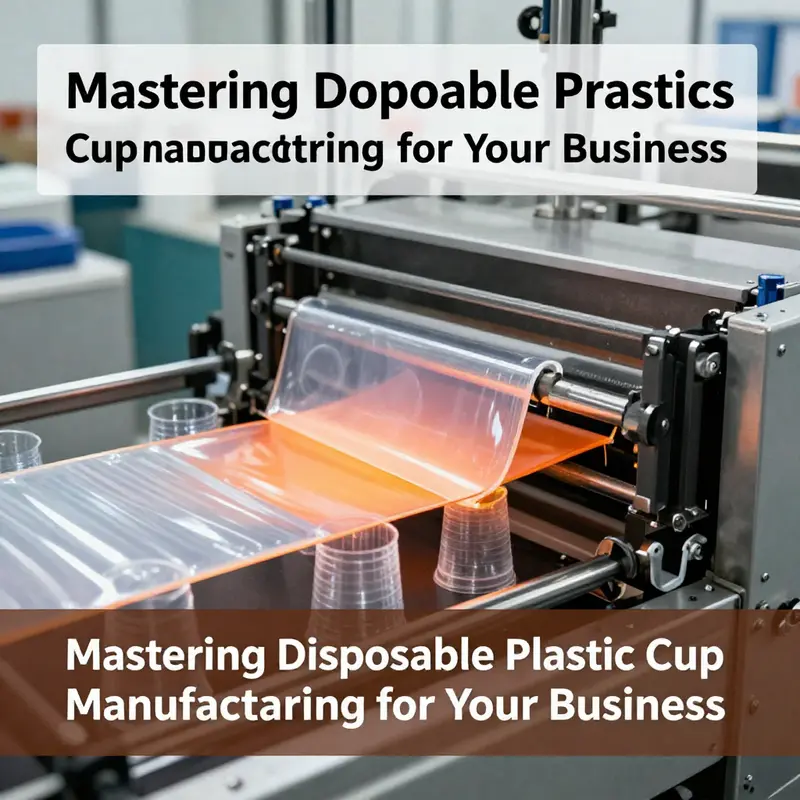
Every day, millions of cups begin as a sheet of plastic and end up in hands ready for a sip, a snack, or a quick spill. The thermoforming process sits at the heart of this transformation, turning flat, pliable sheets into hollow, uniform vessels with speed, efficiency, and cost discipline that other forming methods struggle to match. In the broader landscape of disposable cup manufacturing, thermoforming is the backbone that supports standard sizes, broad material choices, and the fast-paced lines that keep retail, foodservice, and events supplied with bulk quantities. The beauty of thermoforming lies in its balance: the process can be tuned to deliver a dependable, consistent product at scale while preserving enough design flexibility to support branding, varying cup shapes, and evolving consumer expectations around safety, sustainability, and convenience. It is this balance that makes thermoforming not just a technique, but a strategic choice for manufacturers who must align performance with price, hygiene with throughput, and compliance with the demands of a global supply chain.
The core of thermoforming is deceptively simple: a flat sheet of plastic is heated until it becomes pliable, then draped over or into a mold where vacuum or air pressure pulls the sheet into the cavity. Once the plastic cools, the formed cup is ejected, trimmed, and set on a path toward downstream operations such as stacking, branding, or packaging. Yet beneath this straightforward sequence lies a web of decisions that determine product quality, unit cost, and the ability to scale production to meet demand. Material choice, sheet handling, heating profiles, mold design, forming pressure, and post-form processing all interact in a tightly controlled loop. The most common thermoforming materials for disposable cups are polyolefins like polypropylene (PP) and polyethylene terephthalate (PET), with polyvinyl chloride (PVC) also playing a role in certain segments. More recently, polylactic acid (PLA) or other bio-based sheets are explored for compostable or more sustainable offerings, though these come with their own set of processing and regulatory considerations. In practice, PET and PP dominate because they deliver a reliable blend of clarity, stiffness, barrier performance for beverages, and compatibility with food-contact standards. The choice among them is not merely a question of color or gloss; it determines melting behavior, forming temperatures, thickness distribution, and the ability to hold up under heat, cold, or vacuum forces during the forming cycle.
A typical thermoforming line begins with a large roll or stack of sheet material, unwound and fed into conditioning zones where the sheet is heated evenly. The sheet’s temperature is not merely “hot enough to form”; it must reach a precise window where the polymer becomes pliable but not so soft that the sheet flows uncontrollably or sags under gravity. The heating zones are designed to minimize temperature gradients across the sheet, a crucial factor when cups require uniform wall thickness and consistent rim quality. If a sheet is overheated, the wall can thin out in areas, compromising strength and stiffness. If it is underheated, forming becomes incomplete, leading to flash, dimensional shrinkage, or fractured rims. Modern lines use modular heating elements and real-time temperature sensing to maintain stable process windows, enabling repeatability across tens of thousands of cycles.
Forming itself is a conversation between the sheet and the mold. In vacuum forming, the heated sheet sits over a two-part mold and is drawn into the cavity by a controlled vacuum, pulling the sheet into fine details and capturing the shape of the cavity. In pressure forming, compressed air or mechanical pressure pushes the sheet into the mold from the opposite side, which can yield faster cycles or specific wall profiles for certain cup geometries. Some lines blend both principles, using vacuum to pull the sheet into complex features and then applying air pressure for finish and rapid cooling. The mold design is where engineering meets art: the interior geometry must create a smooth, uniform interior surface and a consistent exterior silhouette, with a lip that is comfortable for gripping and suitable for sealing or stacking. The edges of the formed cups—the rims or mouths—are particularly sensitive to process stability. Even tiny deviations in rim ovality can cause leakage, stack misalignment, or issues with lid fit later in the packaging line.
After forming, the cup typically undergoes trimming to remove flash—excess plastic that becomes a waste stream but also a potential source of variability if not handled properly. Trimming must be precise enough to avoid burrs that can cut fingers or snag on downstream equipment, yet efficient enough not to slow the line. The trimmed cups then move to a cooling or quenching stage, which solidifies the material and locks in the formed geometry. Rapid cooling is important; it helps maintain dimensional stability and minimizes warping, particularly for taller or more tapered cup designs. Some lines incorporate in-line annealing or conditioning steps to relieve residual stresses that can cause deformation during stacking or when exposed to hot beverages.
A distinguishing feature of modern thermoforming is the degree of automation and hygienic design. Stainless steel construction, cleanability, and corrosion resistance are not afterthoughts; they are foundational to a machine’s ability to withstand continuous operation in food-contact environments. Many lines feature fully enclosed stations, minimal crevices, and high-integrity seals to prevent dust, debris, and moisture from entering critical zones. Operators interact with a touchscreen control panel that orchestrates dozens of parameters: sheet temperature, mold height, forming pressure, vacuum levels, cycle time, and the timing of downstream actions like trimming and stacking. This level of control is essential for achieving consistent wall thickness and accurate cup dimensions across large production runs. In high-volume facilities, the goal is a near-zero defect rate, with automated vision systems and inline sensors catching anomalies such as misfeeds, incomplete draws, or inconsistent rim quality before a single cup exits the line.
Material choice influences more than just forming behavior. PET, PP, and PLA each carry different implications for barrier properties, heat resistance, and end-of-life considerations. PET offers good clarity and stiffness, making it an attractive option for transparent or semi-transparent cups used for cold beverages or where branding visibility is crucial. PP provides strong resistance to heat and chemical exposure, translating into better performance for hot drinks and longer shelf life. PLA introduces a biodegradable narrative, aligning with sustainability goals but presenting challenges in terms of heat resistance and industrial composting requirements. For many operators, the temptation to switch materials is balanced by supply stability and regulatory conformity. The beverage industry’s preference for clear cups, sometimes accompanied by bright branding and bold colors, is well supported by PET’s clarity, which holds colorants well and tolerates printing and decorations that many vending or event environments demand.
Tray after tray, cup after cup, the forming line must deliver uniform thickness. Thickness distribution is a perennial challenge in thermoforming because the material stretches differently in various parts of the mold, especially around the rim and the base. Engineers counter this with careful mold design, balanced draft angles, and precise control of forming pressure. Some lines employ simultaneous draw strategies, where multiple forming stations work in concert to equalize thickness and minimize thinning at critical locations. When done correctly, the cups emerge with a consistent feel in the hand, a rim that remains comfortable to drink from after repeated handling, and an exterior surface that is ready for either a simple print or full-surface decoration without excessive post-processing.
Downstream operations follow the basic forming step in a tightly choreographed sequence. In many facilities, cups are trimmed, counted, and stacked automatically. Some lines feature in-line printing stations so branding and regulatory information can be applied in a single pass, reducing handling and the risk of damage to the cup after formation. The stacking mechanism relies on precise timing and alignment so that cups stack uniformly and feed smoothly into packaging or palletizing equipment. The goal is to minimize any human intervention, allowing a small number of operators to oversee multiple lines with real-time dashboards that track throughput, waste, and maintenance needs.
From an efficiency perspective, thermoforming lines can deliver impressive throughput. Modern automated lines designed for PET and similar materials routinely reach processing speeds that place cups on conveyers and into pallets at rates that translate to tens of thousands of units per hour per line, depending on mold complexity and automation level. The range commonly cited for large-scale lines is between roughly 4,000 and 12,000 cups per hour, with higher speeds achievable in highly automated facilities that optimize sheet handling, heating uniformity, and cycle timing. This throughput is not merely about speed. It also reflects the line’s ability to minimize waste, a critical consideration given the thin walls and precise rims that thermoforming tolerates. Scrap is typically regrindable and reintroduced into the sheet mix to improve material yield without compromising hygiene or regulatory compliance.
Sustainability considerations shape the design of thermoforming lines as much as they influence material selection. Operators continually seek to reduce resin consumption per cup by controlling wall thickness, improving heat transfer, and optimizing the forming force. Waste management practices are integrated into the process flow, from pre-form trimming to scrap reprocessing, and even the handling of defective or off-cut portions that can be recycled back into the resin stream. When a line is configured to accommodate post-consumer recycled content, the process must accommodate variations in sheet properties and ensure adequate flow during heating, so the final cups still meet the required strength and clarity. The regulatory environment further anchors material choices. For cups intended for direct beverage contact, food-contact approval and migration testing are standard. The compatibility of the material with hot beverages, its resistance to oil-based or flavored contents, and its behavior under repeated microwaving or reheating are all evaluated in the factory design. Modern lines are designed with these constraints in mind, often including dedicated zones for hygiene and cleanliness that facilitate quick changeovers between deployments—whether the cups are destined for cold drinks, hot coffee service, or a combination that expands or changes with seasonal demand.
The global landscape for thermoforming equipment underlines a broader industrial reality: China has become a pivotal hub for machinery that serves the disposable cup market. The geographic concentration of production clusters in provinces known for metalworking, plastics processing, and automation has created a dense ecosystem of suppliers capable of offering everything from semi-automatic test setups to turnkey, fully automated turnkey systems. This ecosystem translates into a spectrum of options for buyers—ranging from economical, semi-automatic lines to high-capacity, fully automated installations that can be integrated with in-line printing and packaging. The market’s openness to private-label or export-oriented configurations also means that manufacturers can tailor the line to specific cup sizes, thickness tolerances, and branding requirements while maintaining a focus on reliability and service support. In such environments, the supply chain becomes a living system, capable of adapting to shifts in material formulations, regulatory standards, and demand spikes that accompany major beverage events or promotional campaigns.
Throughout this landscape, the thermoforming process remains a study in disciplined adaptability. The method offers a design space where cup geometry can be fine-tuned to balance grip comfort, stackability, and lid compatibility, all while maintaining the economical throughput that customers expect. The interplay between forming physics and mold geometry is where engineers spend a great deal of their time, optimizing angles, draft, and draw to achieve uniform thickness and surface quality. In practice, this means that even cups of similar dimensions can demand different mold features to achieve identical performance in the field. The capacity to iterate quickly on mold design, especially when integrated with digital prototyping tools and rapid tooling, has accelerated development cycles. A new cup concept—perhaps a slightly curved wall for improved grip, or a rim designed to better seal with a lid—can move from concept to production in a matter of weeks rather than months if the forming line supports rapid mold changes and quick-set alignment procedures.
Looking ahead, the trajectory of thermoforming in disposable cup manufacturing suggests a continued emphasis on integration and intelligence. Inline sensors can monitor forming temperatures, thickness distribution, and flash formation, feeding data into predictive maintenance systems that reduce unplanned downtime. The fusion of automation with hygienic design will push lines toward even less operator intervention, while sustainable material strategies will push for sheets with higher recycled content, better clarity retention, or improved compostability where feasible. The challenge remains to balance material performance with processing constraints, regulatory compliance, and consumer expectations for both price and environmental responsibility. In this delicate balancing act, thermoforming will continue to anchor the standard cup formats that populate cafeterias, airports, events, and homes—offering a robust, scalable, and adaptable platform that supports the entire disposable cup ecosystem.
To witness the practical breadth of this approach, consider a representative example of the disposable clear plastic cup that demonstrates the type of product typically produced on thermoforming lines. The cup’s transparency, rim integrity, and uniform wall thickness reflect the disciplined control of sheet conditioning, forming pressure, and cooling. For those exploring this space, the following link provides a concrete illustration of the kind of product that embodies these process advantages: disposable-clear-plastic-cup-outdoor-picnic-pet-cup-drinking-cup-for-parties-birthdays-weddings-camping-utensils. The page highlights how a single cup geometry can serve multiple contexts while remaining faithful to the essential performance envelope thermoforming aims to deliver.
Equally important is recognizing how the thermoforming line interacts with other stages of production. Once formed and trimmed, cups may pass through in-line decoration or branding stations. Printing on the exterior, printing on the interior, or even applying color-matched rims can be accomplished with precision when the upstream formation is stable. This integration reduces handling, protects surface quality, and speeds time-to-market for new designs or campaigns. The entire system—from sheet to stack—must be synchronized to ensure no one station becomes a bottleneck. When a line operates at peak efficiency, the combination of high-throughput forming, accurate trimming, and reliable stacking yields a consistent supply of cups ready for filling, labeling, and distribution.
Beyond the factory floor, the choices made in thermoforming ripple outward to product development, packaging design, and sustainability strategies. The ability to produce transparent PET cups allows brands to showcase beverage color and branding with high visibility, while the potential to use PLA or recycled content in PP or PET sheets supports circular economy goals. In markets where composting infrastructure is robust, PLA-based cups may open avenues for more sustainable end-of-life outcomes, provided that the supply chain can verify compostability claims in industrial facilities. On the regulatory side, food-contact compliance remains non-negotiable; suppliers and operators must validate that every material and every additive complies with safety standards governing direct beverage contact. The formability of the chosen sheet, its resistance to heat, and its compatibility with inks and coatings used for branding or barrier properties all feed into a holistic assessment of the cup’s lifecycle from production to disposal.
In the end, thermoforming is not simply a method for making cups. It is a disciplined approach to manufacturing that unites materials science, mechanical design, process control, and supply chain pragmatism. It is about turning a flat sheet into a dependable, hygienic, stackable, and brand-eligible product at scale. It is about engineering lines that hum with precision, about operators who monitor temperatures and pressures as carefully as a conductor guides an orchestra, and about customers who expect consistent performance at a price that makes mass consumption possible. The chapter you have followed through here is only a slice of a broader conversation about how disposable cups are conceived, engineered, and brought to life in factories that push the boundaries of speed, quality, and responsibility. The vacuum that pulls the sheet into a cup is also a metaphor for the careful balance between innovation and practicality that defines modern manufacturing—and thermoforming remains a central instrument in that balancing act.
External resource: https://www.alibaba.com/product-detail/Fuhe-Plastic-Cup-Making-Machine-PVC-PET_1600527949798.html
Final thoughts
In wrapping up this overview of the disposable plastic cup manufacturing process, it’s clear that each technique—Injection Molding, Blow Molding, and Thermoforming—offers its own distinct set of benefits that cater to various needs in the beverage and catering industries. By understanding these processes, beverage chains and event services can make informed decisions about which type of cup will best serve their brand, enhance customer experience, and align with operational efficiencies. As you consider your options for disposable cups, remember that the right manufacturing process can not only impact your budget but also your brand image and environmental considerations.