
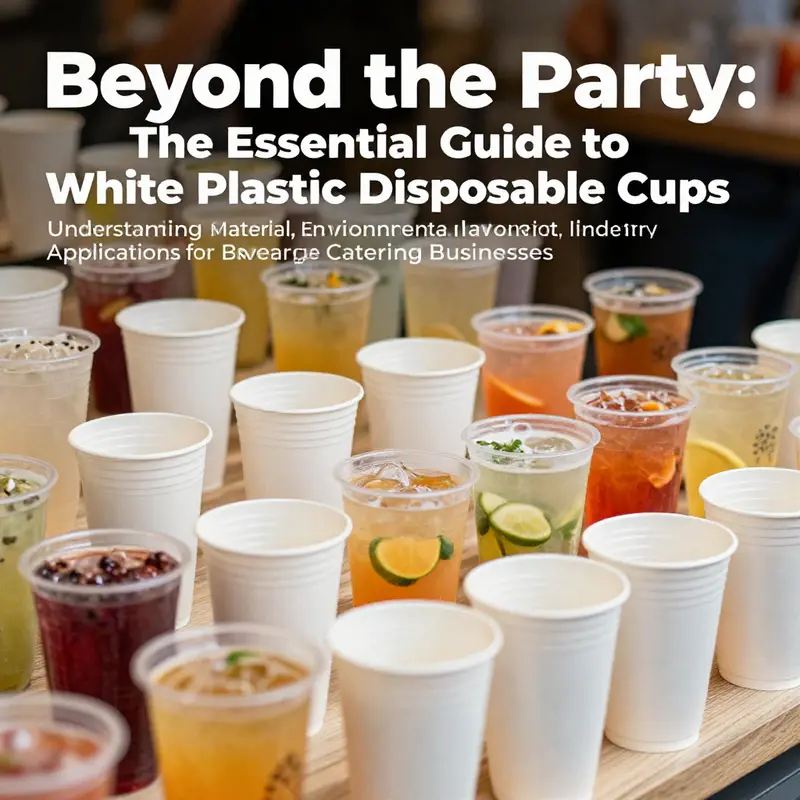
White plastic disposable cups have become a staple in various industries, from bubble tea shops to corporate events. Their durability, versatile use, and cost-effectiveness make them an essential choice for beverage chains, restaurants, food trucks, and catering services. This guide explores the material standards and technical specifications that underpin these cups’ effectiveness, alongside the growing need for environmental sustainability and the applications shaping their use across multiple sectors. By examining these facets, we uncover how white plastic disposable cups strike a balance between practicality and essential environmental considerations.
Under Standards and Pressure: The Material Science Behind White Plastic Disposable Cups

White plastic disposable cups often disappear into the background of events, cafeterias, and daily routines. Yet behind their unassuming exterior lies a careful interplay of polymer science, regulatory expectations, and practical design decisions. The chapter you are reading follows the thread from raw resin choices through to the finished vessel that carries beverages, keeps them at the right temperature, and finally meets a web of safety and environmental requirements. A single cup embodies a set of compromises and protections: it must be rigid enough to resist crushing in transit, clear enough to present a beverage appealing to the eye, and safe enough to touch food without transferring unwanted substances. Each of these demands traces back to material selection, its processing, and the standards that govern every step of production and use. In other words, a white disposable cup is a compact case study in how material science translates into reliable, mass-produced convenience.
Polystyrene, polypropylene, and, in some contexts, PET, form the core material family of these cups. Polystyrene has long been valued for clarity and lightness, attributes that make cold beverages easy to see and carry. It lends itself to crisp edges and a smooth surface that resists staining from drinks such as iced teas or fruit punches. But polystyrene is inherently a brittle resin that loses some of its structural cushion when exposed to heat or repeated mechanical stress. This is why many cold-service cups rely on PS as a primary option for single-use applications in indoor settings, where temperature exposure tends to stay well below the material’s comfort threshold. The trade-offs are clear: a cup that looks transparent and feels lightweight can still crack if dropped on a hard surface or squeezed too hard during transport. From a regulatory perspective, PS cups must be manufactured and labeled with attention to migration into food, a focus that has led to specific testing climates and migration criteria under national standards.
Polypropylene, by contrast, plays a different role in the design space. PP offers substantially higher thermal stability, enabling a broader range of beverage temperatures without compromising the cup’s integrity. The higher melting point of PP contributes to better resilience when a cup might encounter warmer beverages or brief moments of heat exposure. This makes PP a preferred choice for both cold and moderately warm beverages, where a stronger resistance to deformation is advantageous for handling, stacking, and dispensing. In practice, this means a PP cup can withstand more aggressive usage in busy venues, catering operations, and event settings where throughput matters as much as appearance. The trade-off is that PP often carries a different level of clarity and stiffness compared to PS, so the visual and tactile experience can shift slightly in favor of practicality over sheer translucence. From a safety and regulatory angle, PP’s use in disposable cups often aligns with standard migration and physical strength requirements that emphasize resilience alongside food-contact safety.
PET, sometimes encountered in niche applications, brings its own mix of properties. Its clarity can rival PS, and its barrier characteristics can improve resistance to moisture migration. In some contexts, PET is chosen where stacking stability and transparency are prioritized, or where a specific regulatory pathway makes PET more attractive for a given market. However, PET is less common in traditional white disposable cup lines focused on hot beverage compatibility and cost-driven single-use contexts. The selection among PS, PP, and PET is rarely a matter of a single criterion. It is a balancing act that weighs clarity, rigidity, heat tolerance, processing compatibility, and the regulatory milieu that governs food-contact materials in a given jurisdiction. The overall objective remains the same: to deliver a cup that performs consistently from the moment it leaves the supplier’s plant to the moment it is discarded after a beverage is finished.
The regulatory backbone guiding these choices is robust and evolving. In many large and diverse markets, food-contact materials must satisfy migration and safety criteria established by national standards. A central reference point cited in the materials literature is a comprehensive migration framework that limits the movement of hazardous substances from the cup into the drink. Standards like GB 4806.7—2016 in its jurisdictional environment articulate tests and thresholds designed to prevent substances from leaching into food. Alongside migration, physical strength criteria ensure the cup can withstand impact and leakage pressures that arise during normal use, transport, and even casual play in settings where a spill could create a safety or sanitation issue. A parallel set of standards, QB/T 4049—2021, further delineates physical performance and chemical migration expectations, complementing the migration-focused requirements with explicit tests for structural integrity and resistance to cracking, deformation, and leakage. The understanding here is that safety is multi-faceted: it encompasses what the cup can legally and safely contact, how it behaves when faced with real-world handling, and how traceability and labeling communicate that safety to users and regulators.
These regulatory frameworks do more than govern the chemistry of what touches a beverage; they shape the entire lifecycle of the cup. Labeling becomes a tool for safety and traceability, signaling the resin identification code on the cup and providing enough information for an end user, a waste manager, or a quality auditor to determine the material’s identity and the appropriate handling pathway. The resin codes—such as #6 for polystyrene and #5 for polypropylene—are not mere symbols. They are part of a system that influences recycling streams, contamination risk, and the feasibility of diverting single-use cups from landfills toward recycling or recovery options. The goal of these codes is not to trap a cup in a single fate, but to guide practical decisions about sorting and processing within diverse municipal and industrial systems. The interplay of migration testing, physical strength standards, and labeling conventions shows how regulation translates into tangible design constraints and, ultimately, into predictable performance in daily life.
From a technical standpoint, even the physical dimensions and wall characteristics of a typical white disposable cup carry significance beyond aesthetics. A standard size such as 7 oz, which translates to roughly 207 milliliters, is often used as a reference point in both performance testing and consumer expectations. The geometry—top diameter around 68 millimeters, height about 74 millimeters, and a base diameter near 48 millimeters—affects everything from gripping comfort to spill resistance. Wall thickness, commonly around 100 microns, is a careful compromise between strength, weight, and cost. A cup must be thick enough to resist denting and fracture during handling and stacking, yet not so stout that it becomes wasteful or rigid to the point of discomfort for the user. The final combination of these features—dimension, thickness, and weight, typically about 11 grams per cup—directly informs how the cup performs when filled, passed along a line, and subjected to varying environmental conditions. When a beverage is poured, the cup’s thermal profile interacts with its material choice. PS tends to be a poorer insulator than thicker PP options, so heat transfer characteristics influence the drinking experience and the exterior temperature that a user feels as they hold the cup. In applications where a cooler beverage is expected to remain cold for longer, a decision that considers both the material’s thermal properties and the cup’s geometry can be decisive for consumer satisfaction.
A crucial aspect of this discussion lies in the interaction between material properties and real-world use. Cups are tested for impact resistance and seal integrity to minimize failures during transport or service. A leak-proof performance not only prevents messes but also reduces waste and the risk of contamination in more sensitive contexts, such as pediatric or medical settings where spill control has additional safety implications. The standards that drive these tests are designed to capture the variabilities of manufacturing processes, handling, and environmental exposure. For manufacturers, meeting these performance benchmarks means controlling variables from resin quality to injection or thermoforming conditions, as well as the quality of the finished product’s seams and rims. In practice, achieving consistent results requires tight process control and reliable supply chains so that every produced cup mirrors the tested prototype with minimal deviation.
The environmental and policy landscape further pushes innovation in this space. In some regions, regulations aimed at reducing single-use plastics have translated into explicit penalties for non-biodegradable cups made from certain materials in specific zones. A notable example is regulatory activity within particular economic or administrative zones that targets disposable plastic products, nudging the market toward alternatives that either biodegrade under certain conditions or can be reused many times. These shifts are not merely about compliance; they are catalyzing design changes that extend beyond the cup itself. For instance, the push toward compostable coatings, water-based barriers, or alternative fiber-based cups reflects a broader ambition to align convenience with sustainability. In aviation and other travel contexts, policies since the early 2020s have increasingly favored non-degradable single-use plastics being phased out in favor of compostable or reusable solutions. Such environmental considerations do not erase the practical value of white disposable cups; instead, they recalibrate which materials and designs best meet current goals for waste reduction, cleaner disposal streams, and more responsible consumption. In that sense, the cup becomes a microcosm of how policy, science, and industry intersect to shape everyday tools.
In keeping with the practicalities of supply and demand, a subtle but powerful design driver is the call for traceability and compliance documentation. The ability to verify that a cup meets a given set of chemical and physical performance standards is inseparable from consumer safety and brand integrity. This is why transparent labeling, documented test results, and clear supplier declarations are integral features of modern cup production. The regulatory framework thus nudges manufacturers toward not only robust material selection but also standardized testing regimes and reliable recordkeeping that can be audited. Taken together, material choice, regulatory compliance, and performance testing create a lifecycle narrative for white disposable cups that extends from resin procurement to end-of-life handling. The result is a product that is simultaneously economical, practical, and responsibly engineered for a world that increasingly expects safety, consistency, and environmental mindfulness from everyday packaging.
To illustrate how these ideas connect to real-world use, consider how such cups are deployed in settings that demand both hygiene and convenience. In environments where beverages are dispensed to large audiences, the cups must endure rapid handling, multiple serves, and occasional temperature fluctuations without compromising cleanliness or safety. The trade-off among clarity, rigidity, and heat tolerance becomes particularly pronounced when cups must carry beverages at the edge of the temperature tolerance. The material choices determine how long a cup can be stacked without damage, how easily it is transported in bulk, and how well it resists accidental spills during busy service. In parallel, the migration standards and labeling practices ensure that even under fast-paced service, safety remains a non-negotiable attribute of every cup. The interplay between everyday practicality and formal regulation thus anchors the narrative around white plastic disposable cups as not merely consumer objects but calibrated components within a broader system of food safety, packaging efficiency, and environmental stewardship.
For readers seeking a concrete sense of how these cups appear in the marketplace and how their specs translate into everyday choices, a practical reference can be found here: Disposable Clear Plastic Cup for Parties. This resource offers a glimpse of the kind of standard-clear, single-use cup that many venues rely on for casual service, while also hinting at the practical variations that arise from different production lines and regulatory contexts. Its focus on clear, disposable plastic cups highlights how material properties and consumer expectations converge in a setting where ease of use, safety, and cost must align at scale.
In addition to these internal considerations, the market environment for white plastic disposable cups is shaped by external information and data from global suppliers. A widely used reference point for market availability and material specs can be found in industry listings that present the baseline characteristics of polypropylene-based cups and related products. For readers who wish to explore the broader catalog of options and compare material choices across suppliers, such external resources can provide useful context about typical thickness ranges, standard capacities, and the general performance envelope expected in commercial settings. External sources also serve as a reminder that the dialogue around these cups is not limited to the lab or the factory floor; it extends to procurement decisions, logistics, and end-of-life programs that communities implement to manage waste and reuse resources more effectively.
External reference: https://www.alibaba.com/product-detail/White-Plastic-Disposable-Cups-Polypropylene-PP1600444132903.html?spm=a2700.productdetail.click&albtype=productDetailTopSelling&searchclick_id=6589f5c7-3a5a-4d6c-a1e1-7d2f5f5a310d-1741355436199-1741355436199&src=shop&source=detail&isg=VzWJQjUqoGmYX6kZKxRnBp5tM2rP4lN1
For readers who want a tangible sense of how a specific internal source frames these materials in everyday packaging contexts, consider exploring the linked page that focuses on disposable clear cups designed for general-use environments. The content there reflects how a simple cup must negotiate rules about contact with food, surface finish, and user perception, while also acknowledging the constraints of mass production and the costs that drive a product family toward standardization. This constellation of considerations—materials science, regulatory requirements, and practical deployment—defines the core of the discussion about white plastic disposable cups and anchors the ongoing exploration of their role in modern packaging and service ecosystems.
Beyond Convenience: Tracing the Environmental Footprint and Future of White Plastic Disposable Cups
White plastic disposable cups are a staple of modern life, a symbol of immediacy and ease that fits seamlessly into the tempo of events, food service, and everyday errands. They convey a simplicity that many people rely on: a clean, quick way to serve a cold drink, to transport a beverage from a stand to a park bench, or to keep a party flowing without the burden of a return or wash. Yet beneath this surface of convenience lies a chain of consequences that extend far beyond a single moment of use. The environmental footprint of these cups is shaped by how they are made, how they are used, and how they finally leave the system. Understanding that footprint requires looking at three interlocking realities: the material science that underpins their durability, the lifecycle that governs their disposal, and the societal context that determines whether disposal becomes a resource or a problem.
At the material level, white plastic disposable cups are typically formed from polystyrene or other petroleum-based plastics. These materials are chosen for their rigidity, light weight, and resistance to cracking when subjected to incidental knocks or spills. They perform well in both indoor and outdoor settings, which is part of their appeal for events, catering, and large-scale service. The design often emphasizes spill resistance and a sense of reliability; a cup that doesn’t leak or crush easily under a clumsy hand is valued as a practical tool in a busy service environment. But the same attributes that give these cups their utility—strength, impermeability, and a relatively low cost per unit—also contribute to a stubborn end-of-life story. Thermoplastic polymers resist natural degradation, and their persistence becomes a central environmental concern when millions of such cups are discarded after a single use.
The lifecycle of these cups spans production, use, and disposal, with each stage offering opportunities for impact or mitigation. In production, energy consumption and feedstock extraction set the baseline for carbon footprint. The urgency of supplying disposable cups is often matched by advances in manufacturing efficiency, but even with improvements, the raw materials are derived from fossil sources, and the energy inputs are nontrivial. In use, the cups fulfill a social and economic function. They enable beverage service in places where washing facilities, labor, or water resources are limited. The immediate utility is undeniable: a lightweight, portable vessel that reduces the burden of cleanup and allows service to scale with demand. Where these cups fail the most is at disposal. The act of throwing away is not a mere afterthought; it represents the intersection of consumer behavior, waste management infrastructure, and public policy.
The term white pollution captures a particular visual and ecological problem. When non-biodegradable or slow-degrading plastics litter landscapes, waterways, and urban trenches, the contrast of stark white against natural colors becomes a powerful, distressing symbol. This litter not only mars scenery but also interacts with ecosystems in ways that are often unseen: it can entangle wildlife, degrade habitat, and fragment into microplastics that permeate soils and oceans. The health implications—especially the potential for chemical migration from cups into consumables—have become a focus of scientific attention. A 2025 study comparing polypropylene and polylactic acid-based cups illuminates the complexities of material choice. It finds that while some bioplastics may offer a lower carbon footprint, their real-world behavior depends on waste management infrastructure, end-of-life pathways, and the potential for chemicals to migrate into food simulants. The study’s emphasis on chemical risks reinforces the idea that sustainability is not a single metric but a mosaic of considerations spanning safety, environment, and social responsibility.
To imagine a more sustainable trajectory for white plastic disposable cups, one must weigh both alternatives and the systems that enable or impede them. Bioplastics, such as polylactic acid (PLA), have emerged as an option that promises a reduced environmental burden under certain conditions. PLA is derived from renewable resources like corn starch, which can lower fossil fuel dependence and, in some life-cycle assessments, reduce greenhouse gas emissions. The caveats, however, are critical. PLA’s biodegradability is not universal; it generally requires industrial composting facilities to break down in a timeframe that meaningfully mitigates waste, and many natural environments—oceans, landfills, and common household settings—do not provide the conditions needed for effective degradation. In practice, this mismatch can lead to PLA behaving similarly to conventional plastics if sent to the wrong end-of-life stream, undermining its environmental promise. Even when PLA does degrade, its process is not without energy and resource demands, and the benefits hinge on robust waste separation and collection systems that many regions still struggle to achieve.
If the material question is one axis, the other is how societies structure end-of-life outcomes. Curbside recycling, dedicated take-back programs, and policies that optimize sorting can dramatically alter how many cups actually re-enter productive cycles. Yet contamination—where food residues, grease, or mixed materials render streams unrecyclable—poses a persistent barrier. This reality underscores a broader truth: even the best-designed cup will falter if the waste system fails to recognize its value, treat it as a resource, and physically separate it from trash. The policy landscape is responding to this challenge with varied strategies. In some places, pricing mechanisms aim to discourage single-use cup consumption by imposing costs at the point of disposal, while in others, mandates favor reusable systems or require producers to shoulder greater responsibility for end-of-life management. The shift toward reuse is becoming more than a niche concept; it is increasingly framed as a practical pathway supported by infrastructure investments, lifecycle thinking, and consumer education.
Rethinking the role of white plastic disposable cups also invites consideration of design opportunities that can harmonize performance with responsibility. A key lever lies in materials science: developing polymers that exhibit comparable strength and clarity but are easier to recycle, or that offer true compostability in a broader range of facilities. Design for disassembly can enhance recyclability by reducing the complexity of sorting and enabling easier separation of layers or additives. Beyond materials, the logistics of reuse systems offer a compelling model for service ecosystems. Reusable cup programs—where cups are collected, sanitized, and redistributed—present tangible reductions in waste when adoption scales and when there is reliable access to washing infrastructure. Yet the implementation requires careful attention to lifecycle cost, water use, energy for cleaning, and consumer participation. In some settings, low-wriction, high-recovery reuse models can deliver meaningful environmental benefits without imposing prohibitive costs on operators or customers. The conversation thus moves from a binary choice—dispose or reuse—to a spectrum of options that depend on local context, technology, and culture.
In parallel with technological and policy shifts, public awareness and education play a central role. People are often willing to change behavior when the environmental stakes are visible and when alternatives are practical. The notion of white pollution becomes not just a distant problem but a call to action—an invitation to rethink routine habits, such as opting for a reusable cup at a coffee shop, choosing paper-based options with water-based barriers where feasible, or supporting policies that make proper disposal and sorting easier for households and businesses alike. The discussion is not about vilifying single-use cups but about acknowledging the consequences of their omnipresence and the opportunities to transform them from a symbol of convenience into a catalyst for system-wide improvements.
From a design and policy perspective, the most promising pathway combines three elements. First, improved waste management and clearer sorting rules can substantially increase the rate at which cups are diverted from landfills and redirected toward recycling or composting streams. Second, a diversified material portfolio—one that blends performance with recyclability or compostability—can reduce ecological risk without sacrificing service quality. Third, robust public and private investment in reuse and take-back infrastructure can shift the baseline behavior of many users toward gentler, more sustainable practices. None of these elements operates in isolation; the real opportunity arises when they are integrated into a coherent strategy that aligns producer incentives, consumer expectations, and municipal capabilities. In this integrated view, a cup becomes not merely a disposable object but a component of a resilient circular economy, where waste is minimized, resources are tracked, and the social value of responsible consumption is reinforced through clear signals and practical options.
The evidence from contemporary research supports this broader shift. The 2025 Sustainability study highlights that while material choices matter, the ultimate sustainability profile of a cup depends on the end-of-life network available to collect, separate, and process it. In places with strong recycling or industrial composting, even polymer-based cups can participate in circular flows. In places without such infrastructure, the same cups become persistent litter or contribute to microplastic pools. This insight is a reminder that policy, technology, and behavior must advance together. It also underlines the necessity of communicating not just the “is this recyclable?” question, but also the “how and where” of proper disposal, so that individuals and organizations can act with confidence and consistency.
Looking forward, the future of white plastic disposable cups is unlikely to be a simple replacement of one material with another. Instead, it will involve a transformation of the entire service ecology around beverages. It will mean designing cups that are easier to sort, easier to recycle, and—where reusable systems are feasible—integrated into daily practice in ways that minimize water and energy use. It will require governance frameworks that incentivize producers to participate in end-of-life management, that encourage investment in waste processing, and that educate the public about responsible disposal. It will also demand a willingness to experiment with new business models—like deposit-based reuse programs or service-based packaging—that can align cost, convenience, and environmental responsibility. Such a transformation does not erase the value of convenience, but it reframes it within a larger context of stewardship and resilience. In that sense, the humble white cup becomes a focal point for conversations about waste, resource use, and the kinds of communities we want to build where production, consumption, and disposal are connected through transparent, accountable systems.
For readers exploring practical paths forward, one entry point lies in examining the broader spectrum of single-use and reusable options available to hospitality operators and event planners. While this chapter centers on the environmental footprint of white plastic disposable cups, the broader literature and supply-chain discussions emphasize a continuum of choices—from optimized recycling streams to legitimate reuse programs and to carefully designed alternative materials. Each choice carries trade-offs, but the overarching goal remains clear: to reduce pollution, protect ecosystems, and steward resources more effectively without sacrificing the essential services cups provide. Aligning policy instruments, consumer behavior, and technological innovation will determine whether the current practice of single-use convenience evolves into a sustainable norm or remains tethered to a lingering environmental price tag.
Internal link: disposable-clear-plastic-cup-outdoor-picnic-pet-cup-drinking-cup-for-parties-birthdays-weddings-camping-utensils
External resource for deeper context: https://www.mdpi.com/2071-1050/17/8/3654
From Quick Service to Large-Scale Events: The Multifaceted Role of White Plastic Disposable Cups Across Industries
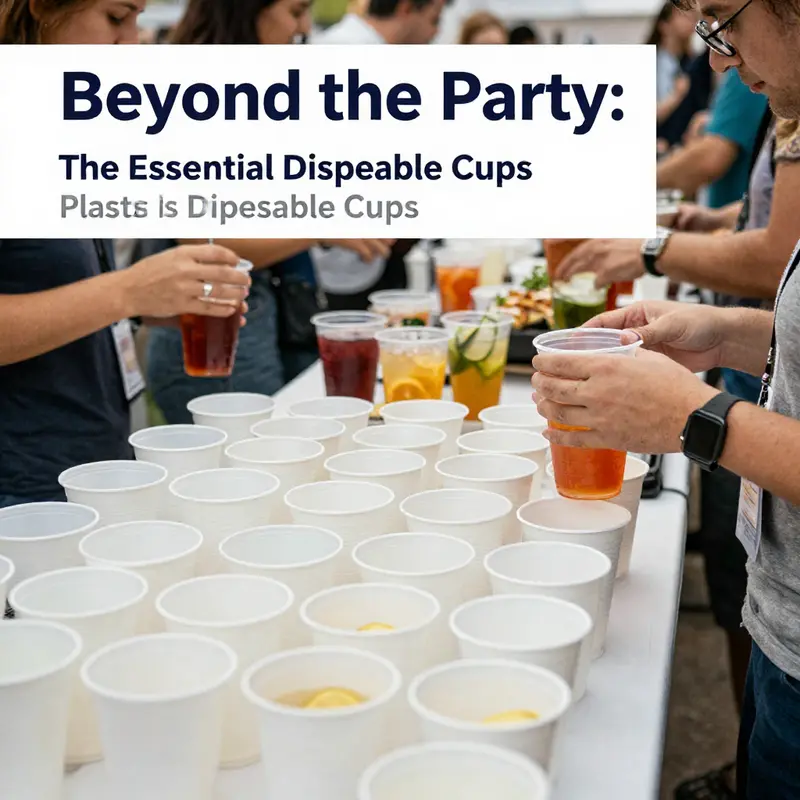
White plastic disposable cups occupy a quiet ubiquity in modern life. They are the unglamorous workhorses of service design, the kind of tool you notice only when it fails. Their resilience, light weight, and effortless production make them a staple from the hush of a hospital cafeteria to the bright bustle of a summer festival. Reading their place across industries reveals a layered story: one of convenience and hygiene, of branding and budgeting, of environmental consequence and evolving practice. This chapter traces that story with attention to how cups are chosen, used, and disposed of, and why they persist even as alternatives press for attention. It is a narrative that moves beyond a simple catalog of uses to show how a single tool can shape logistical decisions, consumer experience, and even policy in subtle but meaningful ways.
At first glance, the material science behind white plastic disposable cups helps explain their broad adoption. These cups are typically molded from polystyrene resins—especially high-impact polystyrene, or HIPS—chosen for a blend of rigidity, impact resistance, and cost-effectiveness. HIPS resists cracking when tumbled in a crowded service line, when stacked during transport, or when carried in a crowded hand by a hurried patron. The white or translucent surface is not merely aesthetic; it offers a clean, bright backdrop that makes beverages look appealing and products stand out in a sea of other packaging. In settings where speed matters, the ability to manufacture large batches rapidly and with predictable performance becomes a cornerstone of operational efficiency. The result is a disposable cup that can be produced at scale, priced for frequent use, and engineered to handle typical cold beverages without deforming under pressure.
Yet the choice of a material is only part of the equation. The cup’s geometry—its lip’s radius, its base stability, and its wall thickness—carries implications for handling comfort, spill resistance, and even the way beverages feel at the moment of consumption. In many service contexts, a spill-resistant or splash-minimizing design is not merely nice to have but essential in busy environments. A sturdy rim helps prevent cracking when a user grips the cup, while a thicker wall contributes to a reassuring heft that suggests reliability. These design features translate into tangible outcomes: fewer customer complaints about leaks, smoother service workflows, and reduced waste from accidental spills. In spaces where coffee and cold drinks circulate rapidly—think airport lounges, hospital cafeterias, or busy campus dining halls—the value of such reliability compounds with every minute saved and every customer kept satisfied.
The hospitality and food service sectors illustrate the most visible application arc. Here, white plastic disposable cups play a central role in the choreography of service. They are deployed in restaurants and cafes for everyday beverages—water, soda, juice, and iced tea—as well as in catering events and office break rooms. The cups’ white or clear appearance helps product visibility: beverages appear crisp and inviting, and promotional elements such as logos or color schemes can be applied through branding strategies that align with event themes or seasonal campaigns. The cost-per-use advantage becomes a practical competitive edge when a caterer or quick-service operator needs to outfit dozens or hundreds of stations for a single event or an ongoing program. In the world of events—ranging from weddings to corporate gatherings and outdoor festivals—theDisposable cups become a canvas for branding and guest experience. They can be customized with branding, color coordination, or messaging that aligns with the event’s theme, turning a simple disposable product into a tactile extension of the program.
Beyond the dining hall, the non-clinical use in healthcare facilities also reveals a careful balancing act between sanitation, convenience, and policy. In hospital cafeterias and staff lounges, the ability to produce sterile-compatible disposable cups, and to maintain high sanitation standards without burdensome washing cycles, is valuable. The cups’ disposability supports hygiene protocols that minimize cross-contamination, especially when large volumes of staff and visitors are served in rapid succession. While these cups are not typically used for direct patient consumption in clinical areas, their presence in non-clinical spaces underscores the broader aim of reducing risk and maintaining clean environments. The combination of sterile manufacturing capabilities and robust material performance under normal handling conditions helps ensure these cups meet expected sanitation standards while remaining economical for large facilities to stock and replenish.
The educational sector, too, benefits from the logistically straightforward nature of disposable cups. In schools and universities, cafeterias, lunchrooms, and during campus events, these cups provide consistent hygiene across large user groups. The capacity to distribute beverages quickly during busy times—such as exam days, student orientations, or campus fairs—relies on reliable supply chains and predictable performance. The cups’ white color and clean lines can also align with school branding or event themes, contributing to a sense of cohesion in a communal setting. When the period of use ends, the ease of cleanup, followed by disposal or recycling, reduces labor costs and helps schools manage budgets that are often under pressure from rising food service costs.
Amid these routine applications, a thread runs through the story of white plastic disposable cups that extends to emergent eco-conscious markets. Consumers and institutions are increasingly aware of environmental footprints, urging manufacturers and suppliers to reexamine materials, production processes, and end-of-life options. While plastic cups are technically recyclable, real-world recycling is frequently impeded by contamination and sorting challenges. In many regions, cups end up in landfills or waste streams despite the existence of recycling streams in theory. This paradox underscores the need for better consumer education, improved collection infrastructure, and design choices that facilitate recycling. The complexity of recycling is not just about the resin; it also involves the shape, color, and any additives that may hinder processing. White cups, when produced with specific pigments or coatings, may complicate recycling streams that prefer uniform resin composition.
Policy responses to these realities vary by region and scale. For instance, some jurisdictions are exploring cup-specific pricing or other strategies aimed at curbing single-use cup consumption. The underlying logic is intuitive: if the cost of disposal or environmental impact becomes more visible in the price a consumer pays, behavior can shift toward reuse or reduced consumption. While such policies are not universal, they illustrate a broader trend toward internalizing environmental costs and nudging behavior through economics rather than through bans alone. Beyond pricing, there is a suite of alternatives that gain traction as sustainable options. Reusable looped systems, where customers can return and reuse containers, address the waste dimension head-on. Transparent, recycled-content options—such as HDPE-based cups with improved clarity and durability—are being explored as a compromise between performance and environmental responsibility. Even as these innovations progress, the classics—white plastic disposable cups—continue to fulfill a critical function in contexts that demand speed, hygiene, and cost efficiency.
The everyday realities of use also shape how these cups are perceived by a broad audience. The consumer experience matters as much as the supply chain. A cup that feels sturdy in the hand, that maintains its form through a frosty beverage and a rigorous shuffle from counter to table, reinforces trust in the service provider. The smooth exterior of these cups lends itself to branding and customization that can deliver a lasting memory of a particular event, brand, or venue. The ephemeral nature of single-use serveware is balanced by the tangible satisfaction of a well-orchestrated beverage service. A well-chosen cup contributes to the perception of quality, helps manage expectations, and supports a seamless flow from order to consumption. In this sense, the humble cup becomes a silent facilitator of experience, a small instrument that enables larger goals—customer satisfaction, operational efficiency, and a coherent brand presence—without drawing attention to itself.
The industrial and non-food applications of white plastic disposable cups illustrate a broader category of specialized containment needs. In some industrial contexts, cups are not only used for serving drinks but also to contain liquids during processes. For example, in automotive refinishing and other paint-related workflows, cups with lids are used to hold solvents, paints, or coatings in controlled amounts during application. These cups must withstand chemical exposure and maintain their integrity under pressure, even as they are moved or jostled during the course of a repair job. The underlying principle is the same as in consumer-facing uses: reliability, containment, and clean handling. The technical specifications that enable these applications—chemical resistance, leak-proof design, and compatibility with lids or lids-and-attachments—reflect a robust engineering approach that extends beyond mere consumer convenience. In this way, a single form factor becomes adaptable to a spectrum of needs, reinforcing the value of standardized components in industrial settings.
The thread of design and function converges most clearly when we consider the trade-offs between disposability and sustainability. The lure of a single-use cup is anchored in its simplicity: a ready-made solution that avoids washing, storage, and breakage concerns. But the environmental costs, including resource consumption and waste management challenges, are real and growing. This tension invites a rational, pragmatic approach to choice. In many cases, the decision is not simply to use disposable cups or not, but to select the right material and design for the context, and to pair that choice with robust waste management practices. Regions with advanced sorting and recycling infrastructure can optimize the end-of-life path for these cups; others may invest in education and collection programs to improve recyclability and reuse where feasible. Producers and buyers can also explore material substitution, such as increasingly common recycled-content resins, or even shielded, barrier-coated papers in some niche applications that seek to preserve performance while improving recyclability.
The macro view of this landscape suggests three guiding considerations for stakeholders across industries. First, performance under typical service conditions matters. A cup must resist cracking, deforming, or leaking through ordinary handling, stacking, and transport. Second, the economics of use drive adoption. The material cost, the ease of manufacturing at scale, and the efficiency of service flows all affect budgeting and profitability. Third, environmental responsibility cannot be sidelined. Even when disposability remains necessary in certain contexts, the opportunity exists to reduce impact through improved recycling, better sorting, and the exploration of alternative materials and reuse models.
In practice, these guiding principles translate into a dynamic choice environment. Service designers, facility managers, event organizers, and educators weigh the same core variables: reliability, cost, and environmental footprint. The decision often hinges on the specific context—whether the setting is a fast-paced dining line, a hospital cafeteria, a campus festival, or an automotive shop’s paint booth. Across these settings, white plastic disposable cups offer a predictable, familiar, and scalable tool that supports efficient operation while also inviting ongoing discussion about sustainability and alternatives. The story is not a single verdict but a landscape of trade-offs, innovations, and evolving norms—a landscape where a simple white cup serves as a lens through which we examine how society balances convenience, hygiene, economy, and responsibility.
For readers seeking a more technical dive into the performance and features of disposable cups used in varied contexts, a detailed guide lays out the performance metrics, material choices, and application-specific considerations in depth. It offers a structured look at how factors like wall thickness, clarity, heat resistance, and chemical compatibility influence suitability for different beverages and environments. This resource helps professionals make informed choices that align with operational constraints and sustainability goals, while also highlighting the ways in which regional policies and market pressures shape product design and lifecycle planning. As the industry continues to evolve, such guides become valuable touchstones for aligning practice with best available knowledge and for informing ongoing improvements in both product design and waste management strategies.
In sum, white plastic disposable cups are more than simple vessels. They are a reflection of how industries manage flow, hygiene, branding, and budget under conditions of speed and scale. They bridge the everyday and the strategic, the immediate needs of a crowded service line and the longer-term questions about resource use and stewardship. The cups’ enduring presence in food service, healthcare-adjacent spaces, events, and educational settings attests to a practical durability that has stood the test of time. At the same time, their story points to a future in which continued innovation—whether through recycled-content materials, barrier-coated papers, or looped reuse systems—seeks to preserve the advantages of single-use convenience while reducing environmental impact. The dialogue between performance and sustainability is ongoing, and the humble white plastic disposable cup remains a focal point where those competing pressures meet, shaping decisions, experiences, and the path forward for multiple industries.
Internal link for further practical context: if you are exploring the practicalities of disposable clear plastic cups for events and gatherings, you can review a product-focused example here: disposable clear plastic cup for parties and events.
External resource for deeper technical understanding: for a comprehensive technical overview of performance, features, and applications in the broader market, see the Disposable Plastic Cups Pakistan Guide. Access it here: https://www.plasticcupsonline.com/disposable-plastic-cups-pakistan-guide-performance-technical-features-and-applications-explained/ .
Final thoughts
White plastic disposable cups are vital in the service industry, combining practicality with evolving sustainability demands. They play an integral role in catering, events, and everyday beverage enjoyment, all while facing a crucial reassessment of their environmental impact. By embracing sustainable practices, businesses can continue to benefit from their utility while contributing positively to our planet. Understanding these cups’ material standards, environmental implications, and wide-ranging applications empowers food service professionals to make informed decisions that benefit their operations and the environment.