
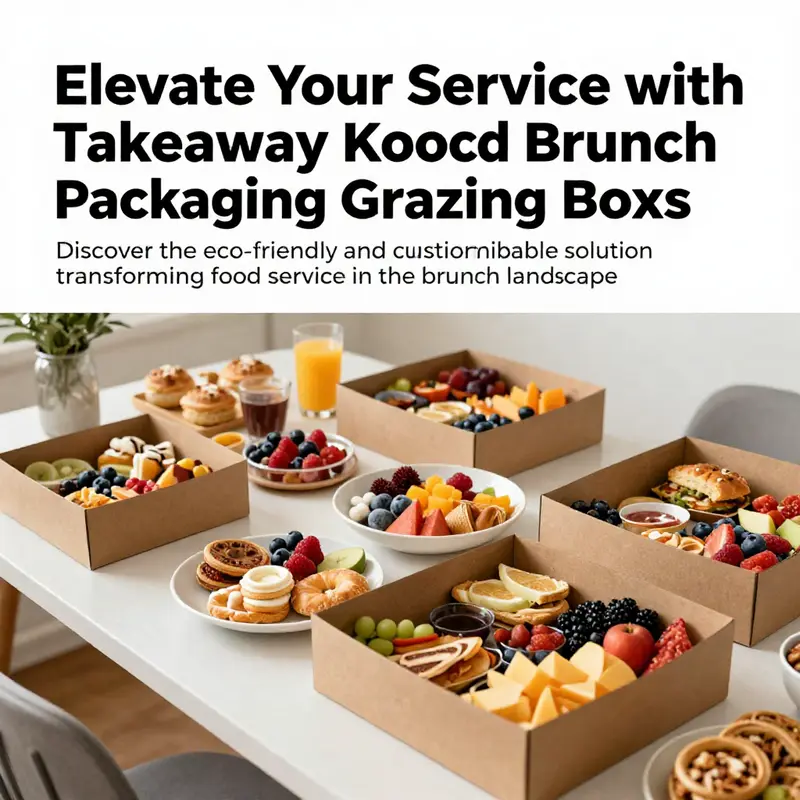
As food service providers look for innovative ways to present their offerings, takeaway kraft food brunch packaging grazing boxes stand out by combining functionality, sustainability, and customization. This article will delve into the innovative designs of these boxes, explore their sustainable attributes, analyze market trends driving their popularity, discuss branding opportunities, and provide insights into sourcing strategies. Each chapter will present a critical aspect of these versatile boxes, equipping restaurants, food trucks, catering services, and event planners with the knowledge they need to elevate their service.
Sustainable Kraft Brunch Grazing Boxes: Redefining Takeout with Style and Substance
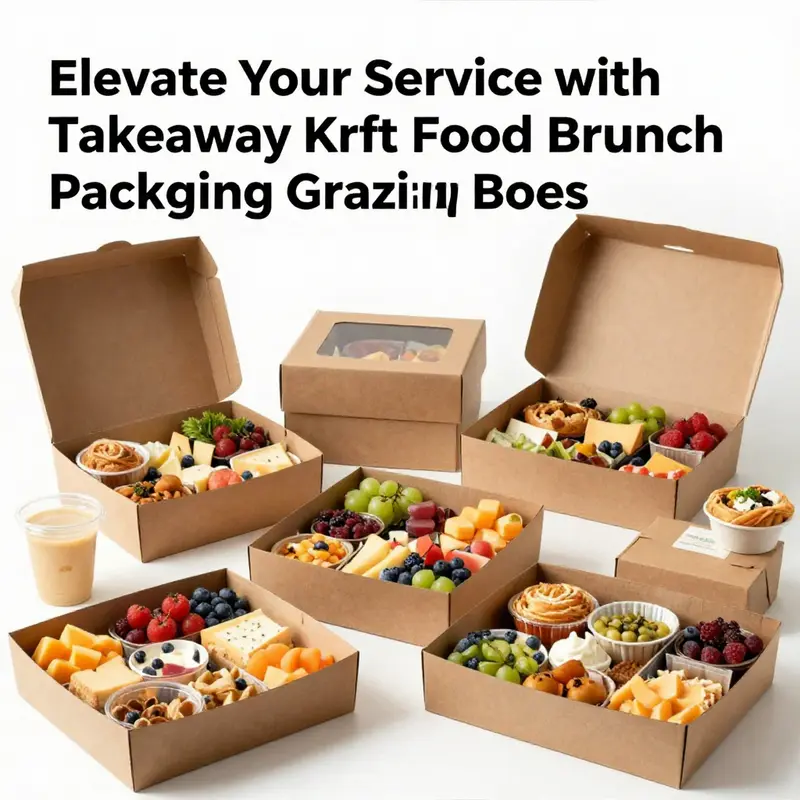
Sustainable chic on the move has become a design ethos for modern takeout. Kraft brunch grazing boxes blend environmental responsibility with practical performance and visual appeal. They’re not just containers; they’re curated experiences designed to preserve freshness, prevent cross‑contamination, and tell a brand story through shape, coating, and finish. At the heart of these innovations is a simple idea: build packaging that performs across a range of foods while staying kind to the planet.
One standout feature is a multi‑compartment grazing box with a clear lid window. This turns a box into a mini gallery where color, texture, and arrangement can shine with minimal effort from the consumer. The window lid does more than reveal the contents; it invites a first glance at the board’s components—fruit, cheeses, pastries, dips, and even delicate items like desserts—while reducing the need for extra platters. The visible presentation becomes part of the brand’s storytelling and a driver of perceived value.
Material choices matter. Designers favor FSC‑certified recycled cardboard and paperboard to ensure rigidity and recyclability. Coatings vary by need: a food‑safe moisture barrier with PE for durability, or a more compostable PLA option when end‑of‑life considerations take priority. These coatings protect contents during transit and enable a broader range of items to travel securely, from crisp vegetables to soft cheeses, while keeping the box strong in handoff and on doorstep delivery.
Capacity and configuration are tuned for real world use. Boxes often arrive in several sizes to accommodate different group sizes, with typical servings aimed at 2–4 people. A multi‑compartment layout keeps dips, breads, fruits, and proteins neatly separated to preserve flavor integrity and simplify unpacking at the table. This modularity also supports a wider menu range without increasing packaging SKUs.
Branding and customization create a competitive edge. Full‑color printing on the outer carton enables logos, taglines, social handles, and seasonal artwork to travel with the product. With food‑safe inks and careful color management, brands can maintain vibrant visuals at scale. Self‑branded solutions allow operators to reflect a restaurant’s personality or bakery’s craftsmanship with ease, helping the box become a recognizable touchpoint on social feeds and at events.
Versatility is another strength. These boxes are engineered to handle a variety of contents, including liquids and heartier components, while maintaining structure. Some designs accommodate warm items, others emphasize stability for cold boards, ensuring reliable performance across delivery scenarios.
From a sustainability perspective, recyclability and compostability are central goals. Many options are designed for circular end‑of‑life with local infrastructure in mind, using recycled content, compatible coatings, and recyclable liners. This helps divert packaging from landfills and into new cycles of use.
For production, manufacturers offer OEM and ODM services with stringent quality controls. ISO 22000 and FDA‑compliant materials provide reassurance for brands seeking scale and global reach. Production capacity can range into the hundreds of thousands of units per day, making these boxes viable for large orders and multi‑site rollout.
The digital marketplace accelerates access to suppliers offering customizable kraft grazing boxes. Buyers can compare options, request samples, and set MOQs to balance cost, lead time, and sustainability goals.
In practice, a design with a clear window, sturdy clasps, and a robust divider system demonstrates how packaging can perform as a brand touchpoint. A well‑executed box arrives pristine, supports a curated arrangement, and reinforces a commitment to responsible packaging with every bite.
Balancing Beauty and Burden: Sustainability in Takeaway Kraft Brunch Grazing Boxes
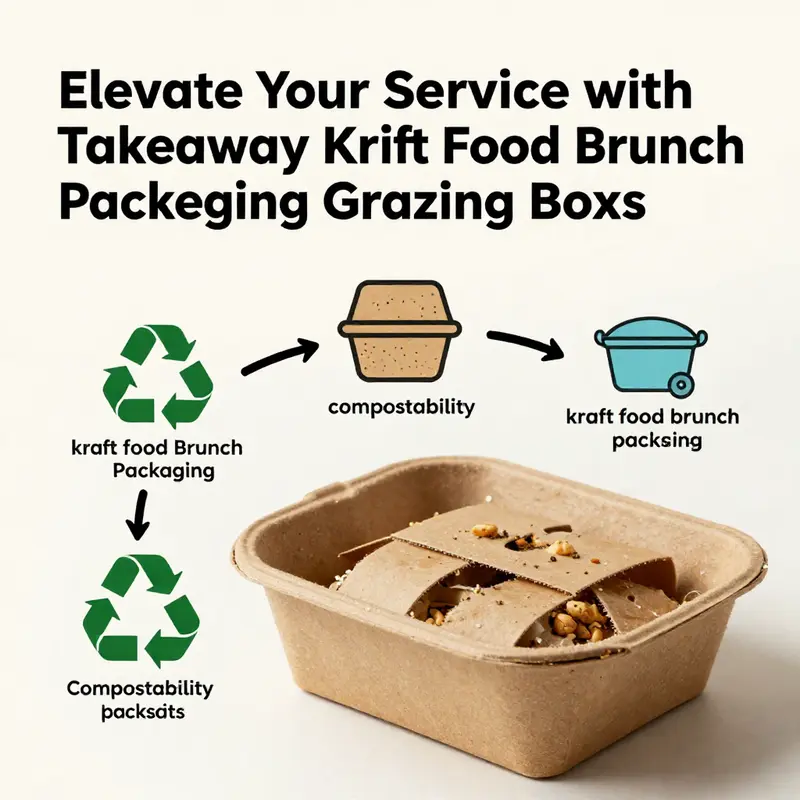
Kraft-based grazing boxes for brunch and takeaway align with a world that values presentation and responsibility. They offer rustic charm and recyclable, renewable materials. Yet sustainability is a moving target shaped by material choices, energy in manufacture, transport, use, and end-of-life behavior. To understand how these boxes perform, we trace a path from forest to table, from design to disposal, and consider how strength and weaknesses shape outcomes for businesses, consumers, and the planet. Kraft paper, from wood pulp, sits at the center of this narrative because it embodies advantages that often align with brunch-oriented foodservice, while presenting trade-offs that require thoughtful design and clear customer communication.
The environmental advantages begin with renewable origin: responsibly sourced pulp from managed forests with credible certification schemes reduce pressure on virgin forests. Kraft paper is highly recyclable and can contain post-consumer recycled content, lowering demand for new fiber and trimming energy use. In many cases, kraft production uses less energy than other virgin papers, translating into lower greenhouse gas emissions across the supply chain. Importantly, kraft is generally free from chemical residues found in some plastics, making it safer for direct food contact when used as intended. These traits support a packaging story that feels authentic to consumers who value natural materials and visible sustainability signals.
But the story is not one-note. Limitations arise where moisture, grease, or weight threaten integrity. Kraft paper is porous and can absorb moisture, weakening when in contact with wet or oily foods. Without an interior barrier, a grazing box holding pastries, fatty cheeses, or greasy items can sag or leak. Many kraft designs pair the outer sheet with a thin, compostable coating or barrier—often PLA-based—that improves moisture resistance while still enabling industrial composting where facilities exist. The same barrier can complicate end-of-life pathways if coatings aren’t accepted by local recycling streams or if composting infrastructure is lacking. In many regions, compostable coatings still require facilities that can process them, and if those facilities are unavailable, packaging may end up in a landfill with slow decomposition and methane emissions. The trade-off between transit performance and post-use outcomes is central to the sustainability calculus of grazing boxes.
Lifecycle use matters: a 2025 life-cycle assessment of takeaway packaging shows kraft-based products often have a lower carbon footprint than plastics due to renewability and recyclability, but the actual impact hinges on local sourcing, logistics, and waste management. Roughly half of the initial carbon footprint in some analyses traced to distribution and end-of-life processing. Practical implications: bakeries, cafes, and caterers can tilt sustainability by choosing local suppliers, optimizing pack sizes, and designing grazing boxes that minimize material use without sacrificing function. The emphasis shifts from single-material choices to a system of decisions where source-to-disposal matters as much as material properties.
Design strategies act as levers: minimize layers and use minimal, uncoated kraft paper for dry items, reserving coatings for moisture or grease threats. When coatings are necessary, certified compostable options help, provided there is adequate composting infrastructure. Clear disposal messaging helps households direct waste to the right streams. Efficient designs that reduce material usage and favor stackable shapes can lower transport emissions. Providing practical disposal instructions and tying packaging to local composting programs boosts credibility and reduces confusion.
From a manufacturing lens, standards like ASTM D6400 set biodegradation criteria for compostable plastics and materials used in packaging. Compostable coatings can help, but they must meet robust criteria to ensure degradation in industrial facilities rather than litter or recycling contamination. The takeaway is not a universal fix, but they can contribute meaningfully when paired with the right infrastructure and transparent consumer guidance.
What does this mean for daily brunch packaging? Think beyond “green” as a surface attribute and treat sustainability as a design philosophy. Choose materials with supply-chain transparency, promote reuse, and communicate disposal options precisely. Acknowledge that even virtuous materials underperform if logistics are inefficient or if customers discard packaging incorrectly. Pragmatic steps include minimizing packaging layers, maximizing product protection with less material, and adding localized disposal guidance on menus, receipts, or QR inserts. For consumers, view the grazing box as part of a broader story about how food is produced, delivered, and treated after the meal.
A practical anchor is providing a linkable resource about eco-friendly takeout containers and evolving standards. This helps frame credible performance expectations and real-world outcomes, grounding the discussion in actionable guidance rather than rhetoric. The approach is to present a spectrum of viable choices—from uncoated kraft for dry items to barrier-coated or compostable variants where needed—paired with responsible disposal plans and ongoing evaluation of local waste infrastructure.
In parallel, the brand story matters. Visual cues and tactile experiences can harmonize with sustainability goals by using kraft’s natural texture as part of the aesthetic while avoiding inflated environmental costs. The grazing box can be a premium yet responsible offering that supports the food’s quality, transit durability, and honest end-of-life messaging. When customers see a box that performs well and clearly guides recycling or composting, trust deepens and can drive repeat business. The environmental story of takeaway kraft brunch packaging is not a simple balance sheet, but a narrative about how materials, design, logistics, and consumer behavior intersect. Kraft offers a credible path toward lower energy use and higher recyclability, but it requires mindful design choices and transparent end-of-life communication. It invites operators to invest in materials suited to context and to engage with local waste ecosystems for broader benefits.
Kraft Brunch Boxes: Trends in Grazing, Sustainability, and Experience
The rise of takeaway and delivery has reshaped how brunch and grazing experiences reach consumers. Kraft paper brunch boxes and grazing containers have become more than utility; they are a core element of brand storytelling. Their natural look and eco-friendly credentials align with consumer expectations for quality and responsibility in a modern dining landscape. These boxes, reinforced with food-grade coatings to manage moisture and temperature, can cradle items from cheeses and fruit to pastries and small hot dishes when designed with care. Across menus, the packaging acts as a first impression, extending the restaurant’s aesthetic into the home or office. In this sense, the kraft brunch box becomes a portable storefront that travels with the meal, with minimal friction and maximum presentation.\n\nThe market is expanding due to ongoing demand for takeout and delivery. More people order meals online, and growing volumes create sustained demand for packaging that is functional, reliable in transit, and visually appealing. The takeaway box market is poised for continued growth as brands adopt multi-item, multi-compartment configurations and clear branding. Packaging is increasingly viewed as a strategic channel for differentiation, conveying freshness, sustainability, and care at scale.\n\nMaterial innovations drive performance. Kraft paper remains cost-effective and lightweight, with coatings that enable leak resistance and humidity control. Hybrid solutions blend paper with bioplastics or compostable barriers to balance end-of-life options with durability. Coatings such as food-grade PE and PLA support safe contact, while some designs move toward compostable, plant-based barriers. Quality systems align with international standards to ensure safety and scalability. These advances translate into boxes that protect textures and flavors during delivery and support delicate components like fresh fruit or soft cheeses.\n\nRegional manufacturing ecosystems enable customization for brands and events. Producers deliver multi-compartment layouts, secure lids, and strong dividers, while inks and coatings support vibrant, food-safe branding. The result is a packaging suite that can be tailored to menus and occasions, from casual cafes to large caterers, helping consumers recreate a brunch experience at home with a premium feel.\n\nFrom the consumer’s perspective, the promise is convenience plus story. Recyclable or compostable kraft solutions align with responsible business practices, adding value beyond the product itself. The design language—natural textures, restrained palettes, modular compartments—helps guests reconstruct a brunch experience at home. For operators, the opportunity lies in customization: brand-printed inks and durable printing methods that maintain impact across many touchpoints. When executed well, packaging reinforces recall, social sharing, and repeat purchases for delivery and takeout concepts.\n\nPractically, typical capacities range from small portions to meals for two to four, with lids that seal against spills and options for microwave reheating where appropriate. Compostable options are growing in prevalence, designed to break down in suitable streams, while still delivering long-lasting barrier properties during transit. The ultimate aim is a cohesive, scalable solution that travels well and presents the brand with clarity and care.
Brand on the Go: How Custom Kraft Brunch Boxes Turn Takeaway into a Moving Canvas
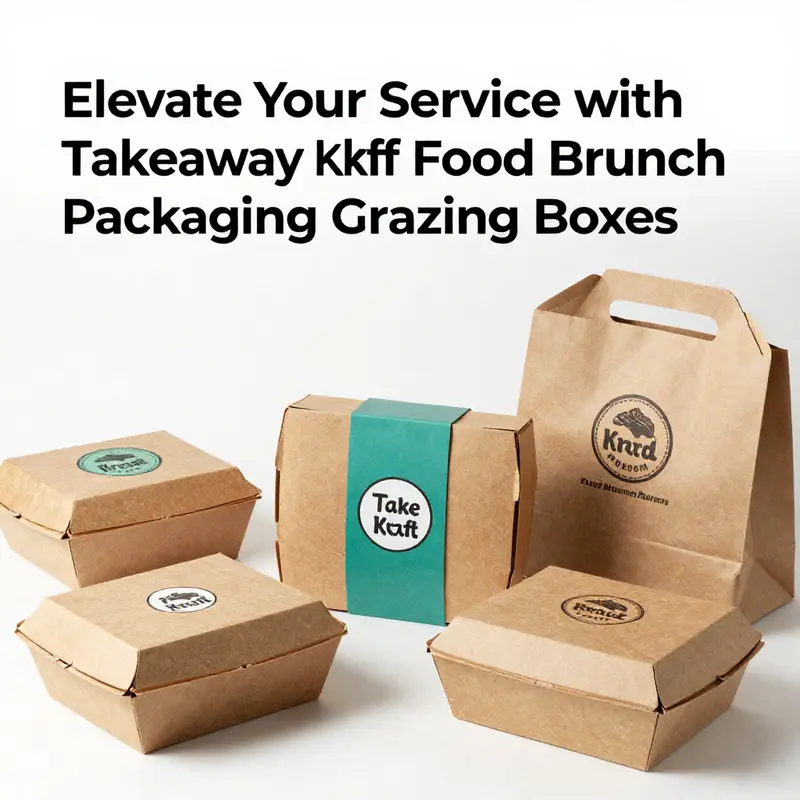
The visual and tactile impact of packaging can be as memorable as the food inside, especially in the growing world of takeaway brunch and grazing boxes. When brands choose a takeaway Kraft box, they don’t just choose a container; they choose a platform for storytelling, a mobile storefront, and a subtle invitation to share the experience. Customization in this space is less about decoration and more about aligning every bite with a brand’s values and personality. The rustic warmth of natural Kraft material naturally signals sustainability and simplicity, yet the real opportunity lies in turning that box into a concise, repeatable brand moment. A grazing box is a package, yes, but it can also become a brand ambassador that travels from kitchen to courier to customer’s doorstep, reinforcing quality, care, and reliability with every touchpoint. In a market where breakfast and brunch are often perceived as routine, careful customization can elevate the entire experience, transforming a functional delivery into a memorable ritual that customers want to repeat and share.
Customization options for takeaway Kraft brunch packaging are both wide and nuanced. At the core, the box offers a blank canvas for logos, names, and graphics, but the impact of customization extends far beyond the surface. Printing options enable brands to reproduce rich color palettes and distinct typography with high fidelity. UV coating can add a subtle gloss that catches the eye while protecting artwork from scuffs during transit. Embossing creates a tactile cue—an incised brand mark that customers can feel as they open the lid. Gold foil accents lend a premium glow to anniversaries, weddings, or corporate events, while a restrained use of foil can elevate a minimalist aesthetic without overwhelming the food inside. Some suppliers offer transparent windows, which fuse form and function: customers preview the contents while maintaining the box’s reinforcing structure, a feature that enhances the social-media shareability of the unboxing moment. The ability to print in multiple colors, often up to nine, gives brands latitude to weave in seasonal campaigns, event branding, or regional motifs, ensuring the box remains legible and visually cohesive even as flavors or fillings change.
The beauty of these capabilities is their scalability. A small bakery can print a simple, emblematic mark that resonates with local customers, while a larger catering operation can deploy a more complex visual identity across various box sizes and configurations. Customization is not merely cosmetic; it is a strategic tool for reinforcing trust. When a customer returns to an event or brand, they should recognize the same typography, color cues, and layout that appeared on the first order. This consistency accelerates recognition and reduces decision fatigue for the consumer, especially during crowded weekend takeouts. Moreover, the packaging becomes a portable advertisement: a customer’s social post featuring a well-branded grazing box extends the marketing reach beyond the storefront, aligning with a growing expectation that brands meet people where they already are—on the move, in their community, and online.
Beyond visuals, the box’s architectural design—the compartments, dividers, and lid—plays a central role in brand storytelling. Multi-compartment configurations keep different categories distinct, preserving flavors and preventing cross-contamination. The internal layout can be tuned to guide the eater’s journey, from light pastries to hearty proteins, or from fresh fruit to artisanal cheeses. By orchestrating the internal experience, brands can echo their culinary philosophy in the way food groups are presented. The enclosure becomes a quiet curator of pace, encouraging customers to savor each section and to linger over the unboxing moment. When a lid closes securely, it conveys reliability; when it opens with a satisfying hinge, it signals care. Each tactile cue, from the stiffness of the kraft paper to the smoothness of the ink, communicates consistency and quality. The packaging thus reinforces the brand’s culinary narrative every time a customer opens the box.
The environmental dimension of customization should not be an afterthought. Today’s consumers increasingly equate aesthetics with ethics. Boxes that carry FSC certification or OK Compost HOME marks offer assurance that the packaging is sourced responsibly and designed to break down in appropriate conditions. Certifications such as CE, BV, and ISO standards further signal adherence to international environmental and safety benchmarks, transforming packaging from a risk-management tool into a credible expression of corporate responsibility. When a brand pairs elegant graphics with clear environmental messaging, it signals to customers that style and stewardship can coexist. This alignment matters most for brunch-focused concepts that thrive on social sharing and word-of-mouth recommendations, as customers often choose brands that reflect their own environmental commitments.
From a practical standpoint, the choice of materials and coatings also communicates a brand’s personality. A food-grade coating such as PE or PLA offers a balance between durability and sustainability, ensuring the box protects its contents during transit and maintains moisture resistance for items like fresh fruit, cheese, or pastries. Some boxes are designed to be microwave-safe for reheating, while others are explicitly compostable or biodegradable, tailoring the consumer experience to different usage scenarios. A company that markets itself around convenience and eco-consciousness can emphasize a dual narrative: a sturdy, reliable box that travels well, paired with a responsible end-of-life story. Even the way the box closes—snap-fit lids, magnetic closures, or simple folds—can be a subtle brand cue: a premium, effortless experience; a playful, interactive moment; or a utilitarian, no-fuss approach. The goal is not to overwhelm with features but to harmonize practicality with personality.
Supply chains for these customized grazing boxes reveal another layer of branding strategy. While some brands might explore direct sourcing, others turn to platforms that connect buyers with manufacturers capable of high-volume customization. In this environment, evaluating a supplier’s capability goes beyond price per unit. It includes print fidelity, color consistency, and the supplier’s track record for meeting deadlines in busy periods. For many operators, the economic calculus is inseparable from branding outcomes. A box that projects a cohesive identity across multiple campaigns can drive incremental value through repeat orders and higher perceived quality, even when the food inside remains constant. The cost of customization—often tied to setup fees, plate runs, or minimum orders—should be weighed against the long-term advantages of brand recall, customer loyalty, and the ability to command a premium through presentation.
To illustrate the breadth of possibilities without turning to specific product names, consider the way a brand might approach a seasonal campaign. A winter brunch concept could weave cool blues and frosted whites with subtle metallic accents on the Kraft surface, using embossing to evoke frost patterns. A spring grazing box could lean into fresh greens and floral motifs, leveraging window panels to reveal vibrant fillings while keeping the box’s footprint clean and uncluttered. A corporate event could adopt a more formal palette—deep midnight tones with restrained gold foil—that communicates professionalism and care. In each case, the box serves as a storytelling conduit, translating the brand’s culinary philosophy into a portable, tangible experience that customers can hold, photograph, and share.
A practical note for teams pursuing customization is the balance between branding and clarity. The box must still perform as a food container first. Legibility of branding, legible product naming, and clear food safety information are essential. The design should avoid overcrowding the surface or cluttering the interior with overly intricate dividers that complicate use. The elegance of a well-branded box lies in its restraint: the most powerful statements are often the simplest ones—the brand mark, a few strategic color accents, and a clean layout that directs attention to the food itself. As audiences increasingly expect packaging to tell a story in a single glance, the right combination of color, texture, and typography can convert a routine brunch pickup into a preferred, repeatable experience. That is the essence of branding on the go: packaging that looks and feels like it was designed with intention, then performs flawlessly in the real world.
For readers seeking a tangible reference to how kraft packaging with visual enhancements can function as a mobile display, explore a real-world example of kraft packaging with clear windows. It demonstrates how a straightforward, transparent feature can elevate perception without compromising practicality. (Internal link: kraft packaging with clear windows)
External resources can provide deeper guidance on supplier options and scale. A comprehensive industry resource outlines how custom catering boxes and pyramid-style to-go packaging can be tailored for events, brands, and campaigns while maintaining food safety and sustainability. It offers insights into material choices, printing methods, and certification considerations that influence both cost and credibility. External resource: https://www.alibaba.com/product-detail/Custom-Catering-Bento-to-Go-Pyramid-Food-Box-Kraft-Paper-Material-Takeaway-Des…
Strategic Sourcing for Takeaway Kraft Brunch Packaging: Efficient Pathways to Grazing Box Excellence
The ascent of the takeaway kraft food brunch packaging grazing box reflects a broader shift in how food businesses meet modern expectations for convenience, sustainability, and visual appeal. These boxes, crafted from natural kraft paper and reinforced with food-grade coatings, are designed to handle a range of items from cold cuts and cheeses to fruits, pastries, and even hot brunch items when the coating or lid allows. The appeal is twofold: first, the rustic, natural look communicates a connection to quality ingredients and responsible sourcing; second, the packaging is engineered to protect, separate, and present, making it easier for customers to assemble attractive grazing boards or streamlined breakfast platters at home or on the go. The challenge for operators, however, lies not in the concept but in turning it into an efficient, scalable sourcing equation that preserves sustainability without compromising speed or cost. This is where a thoughtful, regionally informed procurement strategy becomes central, weaving together region-specific capabilities, supplier reliability, and smart design choices that together yield consistent results in real-world orders.
A practical path begins with understanding where most kraft grazing boxes are made and how regional strengths shape both price and performance. In China, for example, regional clusters have crystallized around particular competencies that, when aligned, reduce lead times and elevate quality. Zhejiang Province stands out for sustainable raw materials and advanced, environmentally conscious production practices. Here, suppliers lean on FSC-certified fibers and water-based coatings that minimize solvent use and improve end-of-life outcomes. The result is a class of kraft packaging that holds up under transit, resists moisture when appropriately coated, and carries a refined aesthetic that can support premium brunch concepts without feeling gimmicky. The emphasis on sustainable materials in Zhejiang does more than check a box; it creates a platform for brands to tell a story through packaging that resonates with customers who value responsible supply chains and traceable materials.
Across the coast in Guangdong Province, the emphasis shifts toward branding precision and rapid iteration. This region is renowned for high-speed digital printing and agile prototyping capabilities. Branded grazing boxes benefit from the ability to experiment with assortments, compartment layouts, and promotional visuals in tight timelines. The synergy between Zhejiang’s material integrity and Guangdong’s print-driven customization creates a pipeline where a single design concept can be translated into multiple SKUs, colors, and finishes with predictable repeatability. For operators looking to scale a brunch program—from weekend pop-ups to daily delivery services—this pairing helps align visual impact with operational reality. The capacity to deliver consistent visuals across batches reduces the risk of inconsistent brand experiences, a critical factor when guests encounter multiple touchpoints or repeat purchases.
Of course, alignment with regional strengths is only the beginning. A robust sourcing strategy must also demand rigorous supplier compliance and capability. Essential certifications such as FDA-compliant films and compostable standards form the baseline, but the best partners extend beyond compliance to provide in-house capabilities that ensure end-to-end control. Printing, lamination, and die-cutting capabilities matter because they determine how closely a supplier can translate a concept into a reliable, ready-to-ship product. A supplier with integrated finishing processes is better equipped to manage quality at every stage—from sheet formation through final packing. This reduces the risk of misfits in the final box, minimises waste, and shortens rework cycles that can otherwise disrupt delivery schedules. The concept of in-house capability is therefore a guardrail for consistency, particularly when a business demands customization, seasonal graphics, or limited-edition grazing configurations.
The procurement discipline, however, must go beyond certifications to emphasize performance metrics that predict long-term success. On-time delivery, consistent lead times, and healthy reorder rates are tangible indicators of a supplier’s reliability and resilience. In practice, a Shanghai-based supplier Benchmarks indicates that a mature, high-volume operation can achieve near-perfect on-time delivery and steady repeat orders, reflecting robust planning and responsive logistics. For a food service program that depends on uninterrupted brunch boxes, those signals translate into real-world advantages: fewer stockouts, fewer emergency schedules, and a smoother relationship between menu planning and packaging availability. The key is to embed these metrics into vendor scorecards and to pursue continuous improvement—not merely as compliance but as a strategic capability that underpins customer satisfaction and operational stability.
Beyond compliance and performance, design innovation plays a central role in reducing waste and enhancing the customer experience. The grazing box increasingly favors compartmentalized layouts with moisture-resistant coatings, enabling a clean separation of items and reducing cross-flavor contamination. Clear lids or transparent inserts further augment shelf appeal, allowing customers to glimpse the color and arrangement of the contents without opening the box. This visibility is especially valuable for retail display or delivery-driven orders, where first impressions can influence purchasing decisions and perceived value. In some configurations, lids are designed to be secure yet easily resealed, a simple feature that preserves freshness during transit and supports repeat use by customers who appreciate a practical, reusable packaging design. When packaging is both functional and visually compelling, it reinforces a brand’s promise of quality, sustainability, and thoughtful service.
For teams seeking to optimize scale without sacrificing the nuance of brand storytelling, the economy of scale must be married to design flexibility. Economies of scale enable lower unit costs and more predictable production schedules, but only if the product development process remains adaptable. Here, the value lies in standardized platform elements—layout templates, coating choices, and compartment modules—that can be adjusted for size variations or event-specific configurations. A common approach involves a base kraft box with a modular divider system and a food-safe, moisture-resistant coating that supports a wide range of contents. The same platform can be tweaked for different markets or seasons, preserving brand continuity while granting local teams the freedom to tailor certain aspects of the presentation. The result is a packaging family that travels well across channels—from in-store displays to takeaway windows and online orders—without forcing brands into costly, one-off molds for every new release.
Within this framework, branding and consumer trust are not afterthoughts but integral components of the procurement journey. The ability to print logos, brand names, or event designs in multiple colors via flexo or offset methods adds a premium layer to the packaging experience. Food-grade inks ensure that the visual elements stay vibrant while remaining safe for contact with food items. Some operators also explore self-branded solutions, which can streamline procurement logic by consolidating vendor relationships and reducing complexity in supply chains. This is particularly valuable for restaurants, bakeries, and event planners who orchestrate multiple touchpoints around brunch occasions. The right combination of sustainable materials, precise branding, and reliable logistics can turn a simple grazing box into a coherent extension of a brand’s hospitality philosophy.
From an operational perspective, the design choices described above interact with sourcing decisions in meaningful ways. The presence of compartments and moisture barriers reduces waste by enabling precise portioning and minimizing cross-contamination. Clear components and lid designs improve inventory turnover by making products easier to identify during packing and delivery. The packaging’s recyclability and compostability further align with growing customer expectations for responsible waste management, boosting the perceived value of the brunch experience. These factors collectively contribute to a more efficient supply chain: fewer remakes, shorter transit times, and lower returns due to damaged packaging. In practice, procurement teams should look for suppliers who can demonstrate end-to-end control—from raw material selection and coating formulation to printing, lamination, and die-cutting—because such suppliers are better positioned to deliver consistent performance under high-volume demand.
To illustrate how a coherent sourcing strategy translates into real-world results, consider the lifecycle of a branded grazing box program designed for weekend delivery and in-store takeaway. Zhejiang-based partners bring sustainable kraft materials with water-based coatings, ensuring that the box remains durable through transit while signaling environmental stewardship. Guangdong-based partners contribute rapid, print-intensive capabilities, enabling quick refreshes of seasonal visuals and promotions. A Shanghai-area supplier might be evaluated on delivery reliability and reorder experience, with attention to actual performance over time rather than mere certifications. Together, these regional strengths create a pipeline capable of producing tens to hundreds of thousands of units per day, with a consistent look and reliable delivery cadence that can scale with demand. In this way, sourcing efficiency becomes not just a cost lever but a strategic differentiator that underpins guest satisfaction and brand trust in the brunch segment.
For teams eager to explore concrete design options that balance aesthetics and practicality, there are multiple pathways to explore. Some options emphasize compartmentalized layouts with moisture-resistant coatings to maintain freshness and flavor separation; others highlight transparent elements that enhance visibility and reduce the need for additional inner packaging. The choice often hinges on the intended delivery channel—curbside pickup, home delivery, or retail display—and on the brand’s storytelling objectives. As part of a broader sourcing strategy, these design choices should be evaluated against long-term goals, including supplier lead times, material availability, and the potential for future expansions into new markets. A thoughtful, regionally informed approach ensures that the grazing box not only protects and presents food but also reinforces a brand’s commitment to sustainability and quality.
Internal link reference: foldable cake boxes with window packaging
For those seeking deeper insights into the marketplace and supplier landscape, external resources can illuminate broader industry dynamics and product options that complement the strategy described above. External resource: https://www.alibaba.com/product-detail/Platter-Brunch-Grazing-Box-Packaging_1600584931332.html?src=shop&spm=a2700.1.wl10000011.12.3e8c4d71jXpKqJ
Final thoughts
In summary, takeaway kraft food brunch packaging grazing boxes offer a compelling solution for catering to modern dining preferences while emphasizing sustainability and brand identity. Their innovative designs accommodate a plethora of food offerings, making them suitable for various dining environments—from restaurants to food trucks and event catering. The growing market trends indicate an increasing demand for these eco-friendly solutions, along with numerous customization options to align with brand values. By employing smart sourcing strategies, businesses can capitalize on this trend while minimizing environmental impact. Elevate your service with these dynamic packaging options and let your food stand out!