
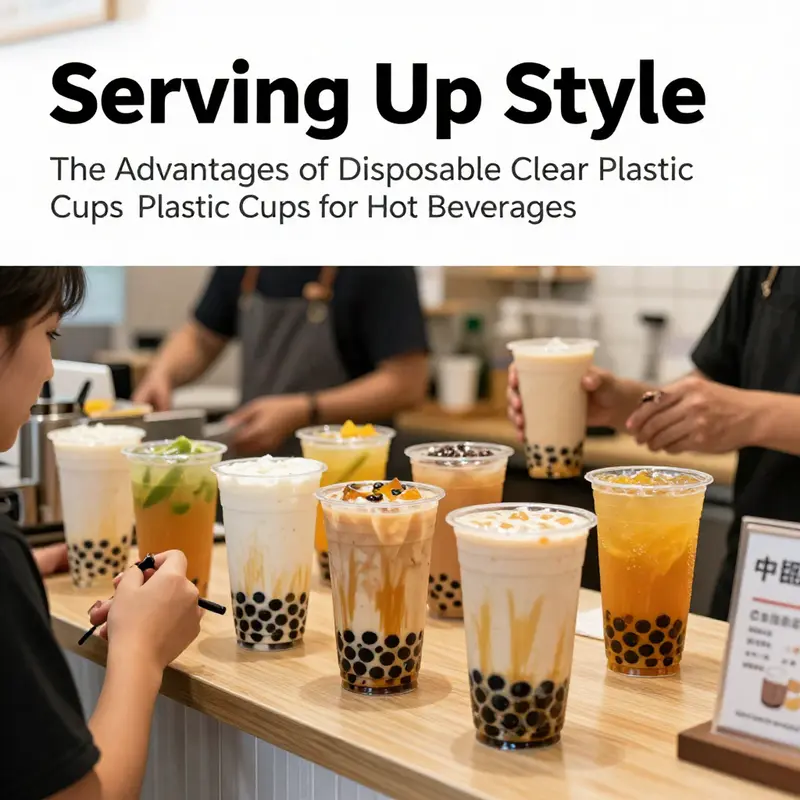
In the realm of food and beverage services, presentation, safety, and efficiency are paramount, especially when it comes to serving hot beverages. As bubble tea shops, beverage chains, restaurants, food trucks, catering services, event planners, and corporate procurement teams navigate the demands of their customers, the choice of disposable clear plastic cups for hot beverages emerges as a strategic solution. These cups offer not only functionality but also innovation in design and materials suited for hot liquids. This article explores their material properties, design innovations, environmental impact, market trends, and relevant safety regulations. Each chapter will highlight how these factors collectively enhance your service delivery and contribute to sustainability initiatives.
Clear Yet Cautious: Material Properties and Safety of Disposable Clear Plastic Cups for Hot Beverages
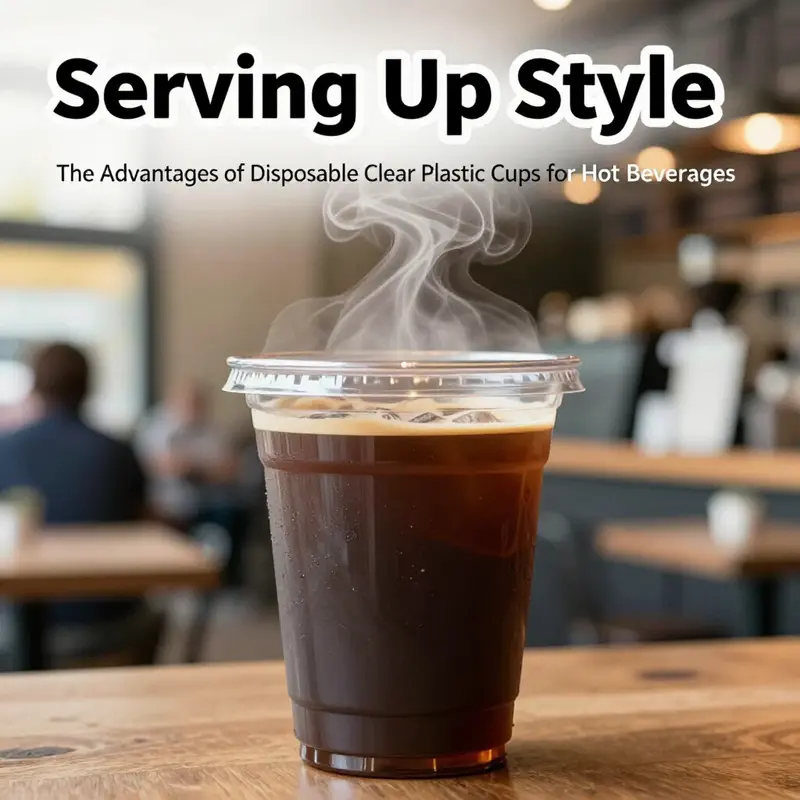
Disposable clear plastic cups for hot beverages occupy a practical niche in both commercial settings and everyday life, combining visual appeal with dependable performance. The material at the heart of this balance is polypropylene (PP), a food-grade plastic chosen for its reliable heat resistance and its safety in direct contact with hot liquids. In practical terms, high-quality PP cups can withstand temperatures up to about 120°C (248°F), which means a steaming cup of coffee or tea can be handled without immediate deformation or the risk of harmful chemicals leaching into the drink. This heat tolerance matters beyond safety: it shapes the user experience by preserving the cup’s form as the beverage remains hot, while the transparent wall allows the drink’s color and aroma to be visually appreciated. Clarity isn’t merely cosmetic here; it reinforces perceptions of freshness and quality, and it can elevate the appearance of layered beverages, from the amber glow of a caramel latte to the bright hue of a fruit tea. The combination of heat resistance and optical clarity is a core reason PP-based cups are so widely favored for hot drinks.
Material choices extend beyond optics alone. While polystyrene (PS) variants exist, the industry consistently gravitates toward PP for its favorable mix of clarity, rigidity, and safety. The rigidity of PP minimizes flexing when a hot liquid is poured, reducing the chance of splashes during service or transport. In practice, many cup designs adopt a standard diameter around 98 millimeters, a size that strikes a balance between secure handling and compatibility with common cup holders, beverage carriers, and serveware. A flared rim design is more than a stylistic detail; it improves grip and drinking comfort, helping to prevent spills as customers sip on the go. Dome-shaped or similarly engineered lids complement these cups by sealing more effectively, contributing to leak reduction during transit and in vehicle cup holders. Together, these design features yield a cup that preserves its structural integrity as the drink cools, supporting efficient service in busy cafes, catering events, or office break rooms while minimizing cleanup time.
Safety and regulatory compliance underpin consumer confidence in disposable cups. When a cup is marketed as food-grade PP, it is intended to meet rigorous standards for direct contact with hot foods and beverages. In practice, this means the material should be inert enough not to impart off-flavors or harmful substances during typical usage. For buyers tasked with large-order procurement, certifications that align with common food-safety frameworks provide reassurance that the cups are appropriate for human use and compliant with local health codes. Transparent PP’s inert surface contributes not only to flavor integrity but also to straightforward cleaning and sanitization in high-volume environments, where even minor contamination risks can have outsized consequences. The clarity of the wall also reduces the chance of surprises in the drinking experience, such as unexpected odors or flavors that might arise from rough or reactive container surfaces.
Yet the conversation around hot-drink cups cannot ignore the microplastic dimension. A study highlighted in a leading materials journal found that when hot beverages around 60°C come into contact with certain plastic cups—particularly those incorporating polyethylene—microplastic release increases by roughly one third compared with cold liquids. The mechanism is straightforward: higher temperatures soften the polymer matrix and can roughen or distort surface textures, creating more opportunities for particle detachment under the mechanical stresses of sipping and handling. Even though PP often demonstrates a more favorable performance relative to some other plastics in this domain, the finding intensifies questions about long-term exposure and cumulative intake, especially for frequent users or venues operating at scale. This is not a blanket indictment of disposable cups; rather, it is a reminder that material choice, surface finish, and how drinks are served all influence the potential for microplastic transfer into hot beverages. In response, many operators are seeking reusable alternatives—stainless steel, ceramic, or glass—where feasible, while recognizing that disposables still fulfill a critical role for speed, hygiene, and logistics in busy service contexts. The takeaway is that temperature, design details, and handling practices matter just as much as material selection when considering safety and environmental impact.
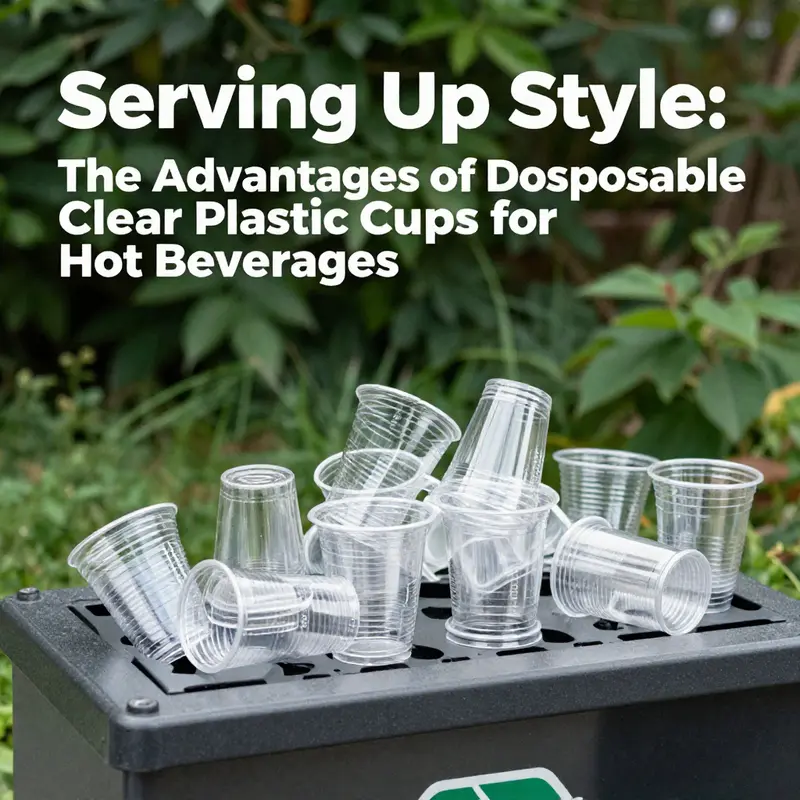
On the environmental and end-of-life front, a shift toward more responsible disposal schemas has gained traction. Modern PP-based cups can be paired with compostability claims under standards that certify disposal as compostable, offering a potential path for waste streams that aligns more closely with sustainable aims than traditional, non-compostable plastics. However, achieving true compostability depends on proper collection and processing infrastructure; without access to appropriate facilities, even compostable claims may not translate into real environmental benefits. Consequently, buyers often balance cost, practicality, and environmental considerations by adopting a mixed approach: certified compostable options for settings with established composting streams, alongside reusable options where repeated use can be achieved. The market also supports customization, and some manufacturers offer OEM services to print logos, slogans, or event branding on cups without compromising material performance. For buyers navigating price and supply dynamics, bulk channels can offer favorable per-unit costs, with price steps influenced by cup size, quantity, and any branding requirements. At its core, the practical design aims remain constant: provide clear visibility of the beverage, maintain heat integrity, and ensure reliable performance through the lifecycle of a hot drink—from pour to sip to disposal.
This material-centered perspective on disposable clear cups for hot beverages highlights a tension between the allure of lightness, clarity, and convenience and the responsibilities that accompany single-use plastics. The features that make these cups so appealing—their transparency, their ability to withstand heat, and their dependable lids—also demand mindful handling, appropriate temperature controls, and thoughtful end-of-life planning. In everyday use, a customer expects a sturdy cup that feels comfortable in the hand, keeps the liquid hot long enough to enjoy, and doesn’t impart an aftertaste. In a foodservice setting, operators rely on reliable materials and consistent manufacturing standards to uphold safety, speed, and customer satisfaction. Yet the science behind microplastics invites a cautious perspective, encouraging both consumers and businesses to weigh the benefits of disposables against the growing demand for sustainable practices and reduced exposure to plastic particulates. The practical implication is not to abandon disposables, but to choose materials with robust heat resistance and inert surfaces, to implement thoughtful handling procedures, and to consider reusable options where appropriate, especially in contexts with higher frequency of use.
For a practical sense of the available clear-cup lineup for events and everyday use, see this option: disposable clear plastic cup for outdoor events and parties.
External resources provide broader context on the microplastics topic and its implications for consumables. For a wider overview of microplastics and their relevance to food contact materials, see: Microplastics Overview.
Clarity in the Heat: Design Innovations in Disposable Clear Plastic Cups for Hot Beverages
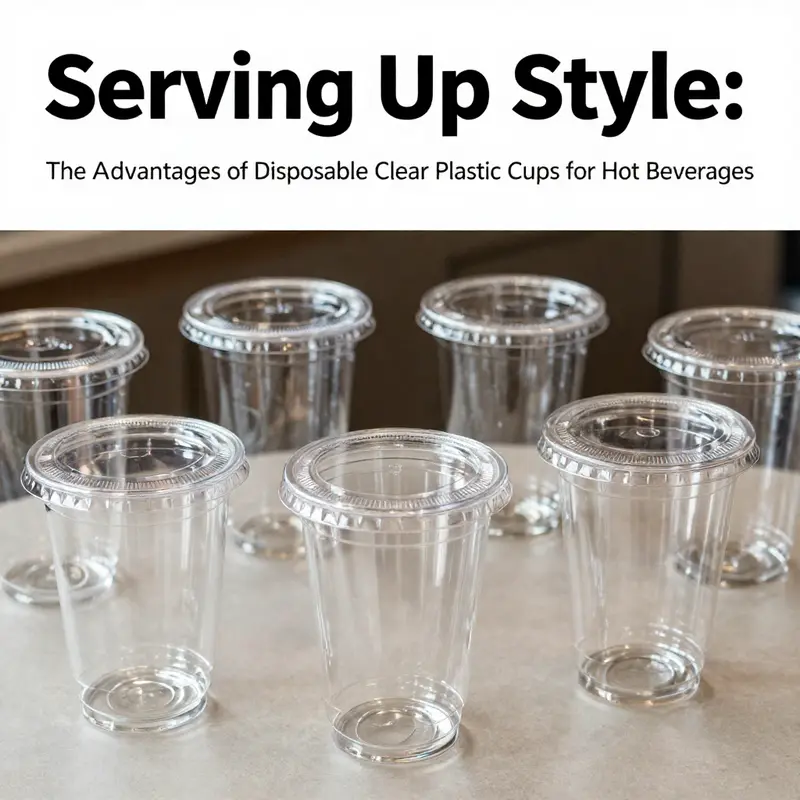
The modern hot-drink experience hinges on more than the quality of the liquid; it depends on the way the container itself communicates temperature, texture, and readiness. Clear disposable cups, once simply a vessel for transport, have evolved into sophisticated design challenges. They must tolerate heat without warping, minimize condensation that can slip from fingers, reveal the drink’s color and crema, and still serve as effective marketing tools. In pursuing these goals, designers and engineers have pursued a set of innovations that merge performance with perception, turning a utilitarian item into a carefully tuned interface between consumer and beverage. At the heart of these advances is a material choice that reconciles safety, clarity, and heat resistance. Food-grade polypropylene has emerged as the workhorse for hot-beverage cups, capable of withstanding temperatures around 120°C (248°F) without compromising structural integrity or releasing harmful substances. This resilience under heat allows cafés and events to use the cups for coffee, tea, soups, and other hot drinks with confidence. The transparency of PP preserves the visual appeal of the drink, allowing the color and layering to be appreciated from first sight. When a barista pours a latte with a delicate gradient or a vibrant herbal tea, the cup becomes a display case as much as a container, inviting customers to observe the drink’s appearance while it travels from counter to nearby table or crowded event space. Innovation has not stopped at material selection; it extends through the geometry of the cup and the nature of its lid. The first wave of practical improvements addressed the handling experience in transit. Double-walled or foam-insulated structures create an air gap between two layers of plastic, a design that dramatically reduces external sweating and seeping heat through the cup wall. This insulation keeps the beverage warmer for longer while keeping the outer surface cooler to touch, a critical feature for customers balancing the urge to sip with the need to avoid burns or burns on cold customers who value comfort during outdoor or long-event service. The insulating layer also fortifies the cup against deformation under heat, lending robustness to a form that must endure repeated handling, stacking, and transport. In practical terms, this translates into a more reliable cup that supports busy service environments, from bustling cafés to outdoor festivals, where quick turnover and minimal spill risk are essential. A second strand of design innovation centers on the interface between the cup and its lid. Spill-proof solutions, including dome-shaped or U-shaped lids, have been refined to seal more securely and accommodate beverages during movement. These lids can reduce leaks by a meaningful margin and minimize accidental spills when passengers on the go shift weight or encounter bumps in transit. The interplay of lid and cup also shapes the user experience by preserving lid integrity during sipping, which in turn supports a calmer, more confident drinking process for customers who are often juggling bags, devices, and conversations. Beyond heat retention and spill safety, a third innovative thread emphasizes branding and customization. The modern disposable cup is a marketing surface as well as a utility. The ability to print logos, slogans, or artwork directly on the cup body or lid elevates the cup from a mere vessel to a portable brand touchpoint. In many settings, this capability is not optional but essential for experiential campaigns, corporate events, or coffee-shop identities that seek to extend their presence beyond the counter. The design language here is deliberate: clarity remains paramount, so branding elements are applied with attention to contrast, legibility, and color fidelity against the clear backdrop of polypropylene. The result is a cohesive visual message that travels with the drink, across tables and buses, into meeting rooms and outdoor venues. For organizations that view the cup as a canvas, this customization can also take the form of themed packaging and event branding. A related development is the empowerment of consumers to participate in the experience through visible beverage cues. Because the cup remains transparent, the drink’s color and layering become an implicit sign of its quality, inviting a moment of appreciation before the first sip. In premium beverages, this visibility matters as much as the aroma and texture, helping to communicate authenticity and craft. The structural design advances are complemented by attention to usability and compatibility. The cups are engineered to fit common cup holders, typically with a 98mm diameter, which makes them suitable for use in cars, on planes, and at event corrals where space is at a premium. This compatibility reduces the friction of service and improves the customer’s journey from vendor to venue. At the same time, the cups are engineered to resist leakage under pressure and during stacking. The effort to balance lightness with strength reflects a broader industry shift: even as single-use consumption remains high, the efficiency of production and the reliability of performance are prioritized to minimize losses in the supply chain and maximize the speed of service. All these innovations sit within a framework of safety and regulatory compliance. Modern PP-based cups often align with international food-safety standards, ensuring non-toxicity and suitability for direct contact with hot beverages. In this way, the aesthetic and functional goals do not come at the expense of consumer health. The conversation around sustainability also informs design choices. While polystyrene and some other plastics have been phased out in many contexts due to environmental concerns, PP-based cups can be certified under compostability standards, bringing a potential end-of-life pathway that reduces long-term environmental impact. In practice, this means that brands can offer a convenient disposal option without compromising safety—an especially relevant consideration for large events, where waste streams are prominent and the environmental footprint is under scrutiny. The lifecycle considerations extend into the supply chain as well. Bulk sourcing, often through global platforms, enables large-volume buyers to access certified products at scale. Prices for these cups can be competitive, with unit costs varying by size, quantity, and customization. Yet even as costs come down, the value proposition extends beyond price: the combined benefits of heat resistance, clarity, branding potential, and reliability translate into faster service and stronger customer impressions. In many operations, the cup’s performance contributes directly to operational efficiency. Double-walled designs reduce the need for secondary insulation vessels, the lid systems minimize spill-related losses during transport, and the beauty of clarity supports upselling by enabling the display of richly colored beverages that entice customers to order more or choose artisanal options. For practitioners considering these innovations, the choice is not simply between one design and another, but between a family of solutions that can be tailored to a storefront’s priorities: speed, branding, comfort, and environmental responsibility. These decisions are shaped by standards and guidelines that govern safe, reliable packaging. As a note of reference, the broader industry recognizes ISO packaging safety guidelines as a resource for understanding how these products should interact with human use and disposal. For standards reference, ISO’s packaging safety guidelines are available at https://www.iso.org. This body of knowledge helps ensure that manufacturing choices align with validated safety profiles while supporting the ongoing evolution of design philosophy in disposable clear cups. The interplay between form and function continues to drive experimentation. Some designers explore ultra-thin but resilient wall constructions to enhance visual clarity while preserving thermal performance. Others test variable wall geometries to optimize grip and minimize finger heat transfer. Yet, at its core, the trajectory remains clear: a disposable cup that honors the drink, the consumer, and the planet through thoughtful design, responsible materials, and practical versatility. The result is not merely a better cup but a more confident consumer experience—one that makes the act of enjoying hot beverages simpler, safer, and more expressive, even within the constraints of single-use convenience. To anyone observing the market, the trend is unmistakable: clarity, warmth, and brand personality now travel together inside the same cup, a trifecta that redefines what a disposable container can accomplish in the ritual of daily life.
null
null
null
null
Clear Standards, Safe Sips: Navigating Regulations for Disposable Cups Used with Hot Beverages
Disposable clear plastic cups designed for hot beverages sit at a practical crossroads where convenience meets consumer safety and environmental responsibility. In a world where a simple cup must withstand heat, showcase a drink’s color, and fit neatly in a car cup holder, the standards that govern their manufacture and use become just as important as their clarity and grip. The safety framework surrounding these cups is not a single rule but an interlocking set of regulations and guidelines that ensure materials intended for direct contact with hot liquids remain stable, non-toxic, and ethically sourced from cradle to disposal. At the heart of this framework are two regional perspectives that shape how producers formulate products, how buyers assess risk, and how the industry communicates safety to customers without sacrificing the qualities that make these cups appealing—their transparent look, heat resistance, and spill-conscious designs.
In the United States, the Food and Drug Administration governs food-contact materials with a precision that mirrors the heat these cups must endure. Polypropylene, the preferred resin for hot beverage cups, is evaluated under FDA 21 CFR Part 177.1500. This regulation sets the chemical and physical requirements that ensure polypropylene can touch hot liquids without releasing harmful substances. It is not merely about warmth; it is about stability under repeated contact with hot beverages, the absence of migratory compounds at the temperatures involved, and the assurance that any additives used to improve performance do not compromise safety. Polystyrene, another common option for single-use hot beverage cups, is also permitted under FDA rules, provided it is manufactured without harmful additives such as bisphenol A (BPA) or phthalates. This alignment with safety-minded practices helps keep a simple, transparent cup from becoming a vehicle for unexpected exposure.
Across the Atlantic, the European Union frames safety through Regulation (EC) No 1935/2004 on materials and articles intended to come into contact with food, followed by Regulation (EU) No 10/2011 that specifies certain migration limits (SMLs) for substances that could pass from packaging into food. Here, the emphasis is on migration behavior: any substance that may migrate from the cup into the hot drink must stay within defined thresholds. These rules are designed not just for immediate safety, but for long-term exposure considerations, recognizing that hot beverages can accelerate diffusion processes. For manufacturers and buyers, this means that a clear cup must be chemically stable enough to resist heat-induced migration, even when the cup contacts a liquid at near-boiling temperatures.
Beyond the core materials and migration rules, the broader regulatory framework includes packaging integrity standards and sterilization validation when cups are used in commercial or medical contexts. ISO 11607, while traditionally associated with sterilizable packaging for medical devices and sterile products, informs the mindset of manufacturers about packaging integrity, tamper-evidence, and reliability under thermal stress. This standard contributes to a culture of quality that seeps into everyday disposable cup production, reinforcing that a simple beverage vessel should not fail during transit or service. The environmental and life-cycle dimensions also matter. Many brands pursue certifiably responsible practices, seeking labels such as the Sustainable Packaging Coalition’s How2Recycle or Cradle to Cradle designations. These certifications signal that a cup’s materials, printing inks, and end-of-life pathways have been considered from sourcing to disposal, a critical factor for buyers who want to align with sustainability goals without compromising safety.
For hot beverage contexts, the interplay of materials, design, and compliance is also visible in product features that address real-world use. The transparent nature of these cups makes color and quality visible to consumers, a factor that influences both perception and safety considerations. A dome-shaped lid or a flared rim can help seal in contents and minimize spills during transport and consumption. When a U-shaped or domed lid is used in combination with properly calibrated wall thickness and heat resistance, spill reduction can be meaningful—reports from industry observations suggest a notable decrease in leaks when premium lid designs are employed. The regulatory story for these features is pragmatic: design enhancements that reduce spillage must not compromise the cup’s ability to withstand heat or introduce additional migration risks. The result is a product that performs well under practical conditions while staying within the safety envelope defined by FDA, EU, and related standards.
An important aspect of this regulatory landscape is the balance between performance, safety, and environmental stewardship. For hot beverages, the materials must remain non-toxic across all expected temperatures and durations of contact, from the moment the drink is poured to the moment the cup is discarded. This is not just about retaining structural integrity; it is about ensuring that any migration is well below thresholds that could present a risk to consumers. In addition, the push toward recyclability and compostable disposal for certain PP-based cups adds another layer of diligence. Certifications like How2Recycle or Cradle to Cradle help communicate to buyers that the cup’s lifecycle has been thoughtfully designed, even as the product serves fast-paced cafés, large events, or office settings where quick service and reliable cleanup matter deeply.
For supply chain buyers, the regulatory narrative translates into practical procurement decisions. The cups’ compatibility with standard cup holders, often around a 98 mm diameter, and their ability to be stocked in large volumes without sacrificing compliance are critical. In commercial settings, the combination of heat resistance, lid compatibility, and clear visibility of the liquid enhances not just customer experience but also operational efficiency. Many suppliers can accommodate OEM or customization services that allow businesses to imprint logos, slogans, or event branding on cups while maintaining food-contact safety and regulatory compliance. The capacity to customize must be harmonized with the need to avoid inks or coatings that could migrate under hot beverage conditions, underscoring why rigorous testing and material selection are essential. The result is a packaging option that serves marketing goals without creating regulatory or safety liabilities.
The regulatory conversation is not static. It evolves with science, consumer expectations, and environmental imperatives. While the core standards remain anchored in FDA and EU guidelines, ongoing research into migration behavior, long-term exposure effects, and the environmental impact of disposable cups continues to inform updates to guidance and industry best practices. For businesses that require a reliable reference point as they navigate supplier choices and design considerations, the regulatory framework offers a roadmap that integrates safety, performance, and responsibility. For those seeking practical, regulation-conscious packaging options that can be customized for events or outlets while preserving safety, a reputable path includes exploring suppliers that emphasize food-contact safety and clear labeling about material composition and disposal guidance. This approach helps ensure that a product as everyday as a disposable clear cup can meet the highest standards without compromising user experience or ecological accountability. To explore options that align with theme-party and takeaway settings while maintaining safety, consider resources that guide packaging decisions in a compliant, design-conscious manner, such as custom take-away packaging supplies—disposable tableware for theme party.
For readers wanting a consolidated regulatory anchor, reference to official guidance is essential. The U.S. FDA’s Food Contact Materials portal provides current, detailed information about the regulatory status of materials used in food-contact applications, including polypropylene and polystyrene. In Europe, the EFSA and the ongoing harmonization efforts around SMLs continue to shape how manufacturers formulate cups and inks, ensuring that hot beverages stay safe from the first pour to disposal. The environmental story also matters, as consumers increasingly expect brands to disclose end-of-life options and to support responsible disposal through recognized labeling schemes. The convergence of safety, performance, and sustainability is what makes disposable clear cups for hot beverages a robust, trusted option in a crowded market.
External resources for deeper regulatory context include the FDA’s guidance on food contact materials, which outlines the rationale for material selection, permissible substances, and testing expectations for hot beverage applications: https://www.fda.gov/food/food-contact-materials
Final thoughts
As we draw this exploration to a close, it’s clear that disposable clear plastic cups for hot beverages present an array of advantages for businesses that prioritize quality and service efficiency. The material properties ensure safety for hot liquids, while innovative designs minimize spills and enhance drink presentation for tantalizing offerings. Embracing environmentally sustainable options and being aware of safety regulations further solidifies their place in the modern beverage industry. Whether you own a bubble tea shop or provide catering services, the right disposable cup can elevate your customer experience, streamline operations, and align with your sustainability goals.