
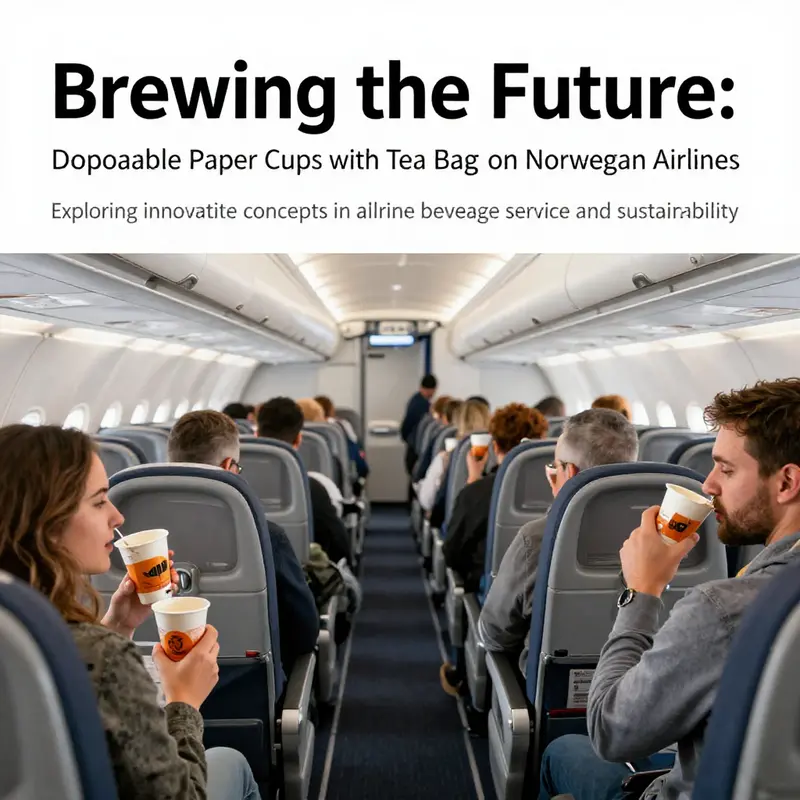
As airlines seek innovative ways to enhance passenger experience, the integration of disposable paper cups with tea bags represents an exciting frontier. This concept, particularly within the context of a major Norwegian airline, opens the door to customized onboard beverage services that cater to a growing customer preference for tea. Each chapter unveils essential insights—from current airline practices and innovations to market trends and sustainability concerns—that collectively underline the significance of these initiatives in modern aviation. Understanding these multifaceted dynamics is crucial for businesses like bubble tea shops, beverage chains, restaurants, and catering services, aiming to align with evolving consumer demands and sustainability objectives.
Steaming Ahead: Envisioning a Tea Bag–Attached Disposable Cup for a Norwegian Airline
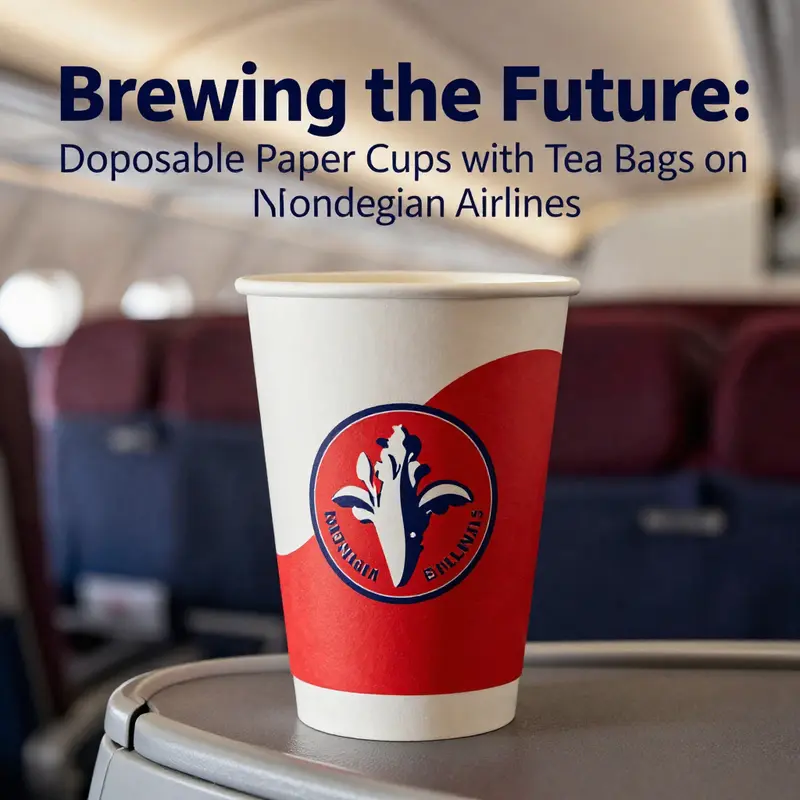
In the evolving arc of in-flight service, the disposable cup has become more than a simple vessel. It is a compact stage where comfort, hygiene, branding, and sustainability intersect at a brisk pace. The idea of a disposable paper cup with a tea bag attached—especially for a Norwegian airline—is less a radical departure from current practice than a thoughtful reimagining of how a passenger’s tea ritual could unfold midflight. It invites us to look beyond the cup as a single-use item and to see it as a carefully engineered touchpoint, capable of conveying brand identity while streamlining service, reducing waste, and improving the overall passenger experience. The concept sits at the intersection of three core trends that already shape airline beverage service: the shift toward heat-resistant, food-grade paper cups; the emphasis on branding that travels with the cup; and a growing commitment to sustainability that pushes carriers to replace plastic-lined alternatives with recyclable materials. In this context, the possibility of a tea bag that remains attached to the cup, ready to steep, becomes a lens through which we can examine practical design, passenger behavior, and the logistics of service in the cabin.
Current industry observations underscore that airlines are increasingly adopting disposable paper cups designed for hot beverages. These cups prioritize 100% food-grade materials and heat resistance, often incorporating sleeve coverage and ergonomic handles to improve the passenger’s grip and comfort during the creases of a long flight. The movement away from plastic liners toward more sustainable, recyclable components aligns with a broader, global push toward responsible waste management. In practice, brands on cups are not merely decorative; they are a strategic extension of the airline’s identity, offering a subtle yet persistent reinforcement of the carrier’s image as passengers move through the cabin and into the airport. A branded cup becomes a portable signifier of care, consistency, and attention to detail, one that passengers may encounter multiple times across their travel journey. The literature on current standards also notes that while many cups feature logos or distinctive color schemes, the explicit integration of a tea bag with the cup has not been widely documented. This absence does not negate the plausibility of the concept; it simply suggests a space ripe for thoughtful design trials, pilot studies, and consumer feedback.
To conceive a tea bag attached to a disposable cup, several practical pathways emerge. One route envisions a tea bag tethered to the rim or lip of the cup in a manner that does not obstruct the pour or require additional handling by the passenger. Another approach places the tea bag on a small, discrete tab or pouch integrated into the lid or sleeve, allowing the user to lift and steep without loosening their grip on the cup. Each option demands careful attention to materials science, hygiene, and ergonomics. The adhesive strategy would need to be robust enough to hold the tea bag in place under heat and pressure, yet easily detachable when the user decides to discard the cup. A non-trivial consideration is the potential for the bag to restrict airflow or alter the cup’s balance, particularly in the cabin’s pressurized environment where turbulence and motion can affect even the most modest per-passenger rituals. The design must also ensure that the tea bag remains sanitary from the moment of production through to service and disposal, with wrappers, strings, and tags that do not create waste or pose choking hazards. These concerns map directly onto the broader supply chain realities of airline catering, where every component—from cup to lid to tea leaf—must meet stringent safety and quality standards while fitting neatly into existing service routines.
From a branding perspective, the tea bag–attached cup invites a richer, more tactile storytelling opportunity. Airlines can align the tea experience with their color palettes, typography, and sensory cues. The cup becomes a miniature, moving billboard that travels from galley to passenger, carrying the airline’s promise of warmth, comfort, and reliability. In Nordic regions, where design often prioritizes minimalism, cleanliness, and functional elegance, the cup could reflect these values through restrained branding, subdued tones, and a focus on the user’s ease of use. The challenge lies in balancing a distinct visual identity with the practical realities of a disposable item that must be produced at scale and disposed of after a brief lifecycle. Here, the attached tea bag can serve as a narrative device—a cue to a thoughtful beverage program—without overwhelming the passenger with excessive packaging or overcomplicating the cup’s form. A well-executed approach would ensure that branding remains legible and consistent across cabin classes, while allowing room for subtle regional motifs that resonate with Scandinavian sensibilities. The result could be a cup that feels premium, not ornate; efficient, not fussy; and, above all, trustworthy in its ability to deliver a satisfying cup of tea without requiring the passenger to improvise a steeping method mid-air.
In examining feasibility, it is important to anchor the discussion in the realities of manufacturing and operations. The cup itself is typically made from heat-resistant paper, with an inner lining that protects against breakage and leakage. Introducing a tea bag attached to the cup adds a dimension of assembly that must be integrated into the production line without compromising speed or safety. One practical pathway is to source cups that accommodate an integrated tea-bag feature as part of the lid or rim design, using a small, food-grade tab to secure the bag. Another approach concentrates on a post-fill attachment, where the tea bag is affixed to the outside of a sealed cup in a way that keeps it sterile until opened by the passenger. Either route would require validation through pilot programs to assess consumer acceptance, heat transfer dynamics, and the potential impact on cabin waste streams. The sustainability angle remains central: any solution must avoid adding bulky, non-recyclable components and should align with the airline’s waste management goals. In this light, a tea bag–attached cup would ideally integrate with recyclable or compostable materials, maintaining a closed-loop narrative where the cup and its components can be processed by standard recycling streams or composting facilities available in many airports and in-flight catering operations. The literature on current standards in the airline sector points toward a broader trend: brands are embracing recyclable materials and reducing reliance on plastics, a shift that would support a tea bag–attached concept if designed with end-of-life in mind. For travelers who are mindful of environmental impact, such a cup could embody a tangible commitment to sustainable practice, turning a daily ritual into a statement of responsible travel.
Operationally, the logistics of service would need to adapt without disrupting the familiar cadence of in-flight beverage service. Flight attendants would require clear guidelines on how to present the cup with the attached tea bag, how to instruct passengers on steeping times, and how to handle disposal in the limited cabin space. Service carts and galley workflows would need to be recalibrated so that the cups arrive at the correct temperature and with the tea ready to steep, minimizing wait times for passengers and ensuring consistency across cabin classes. Training resources would be essential to ensure staff can confidently explain the new experience, answer questions about steeping duration, and manage any variability caused by altitude and temperature. A successful rollout would likely begin with a pilot on select routes, paired with passenger feedback to refine the concept before broader adoption. It would also demand collaboration with suppliers to align packaging, labeling, and quality assurance across the supply chain, ensuring that every cup meets safety standards, holds its heat, and preserves the integrity of the tea bag and its flavor profile.
The Norwegian market provides a nuanced context for such an initiative. Nordic travelers often prize efficiency, understated design, and sustainable choices. A tea bag–attached disposable cup could mirror these values by presenting a streamlined, no-fuss ritual that minimizes handling while maximizing comfort. The concept could also support a broader initiative to unify onboard beverage experiences with environmentally conscious practices, aligning with regional consumer expectations and regulatory trends toward greener aviation solutions. Yet even as the concept holds promise, it remains essential to acknowledge that current published data shows airlines commonly use branded disposable cups without necessarily integrating a tea bag attachment. The idea, then, sits as a potential enhancement—an opportunity to harmonize passenger experience with brand storytelling and sustainability goals—rather than a statement of immediate industry-wide practice.
For designers and procurement teams exploring this space, there is a tangible parallel in the broader world of disposable tableware. A practical example within the same category of products—an insulated, double-layer cup designed for hot beverages—illustrates how performance, branding, and user experience can converge in a single item. This category demonstrates how cups can combine heat protection, ergonomic handling, and visual identity in scalable formats. The concept of a tea bag attached to the cup could be considered a complementary feature, one that adds a new layer of usability without sacrificing the core attributes that make these cups reliable in the cabin. To situate this idea within a tangible product family, consider the broader family of insulated, double-layer cups that support hot beverages and tea service; such designs offer a useful blueprint for how a tea-bag-on-cup concept might be integrated with existing manufacturing practices and sustainability aims.
In closing, while the evidence at hand does not confirm that a Norwegian airline currently deploys a tea bag attached to disposable cups, the architecture of such a solution is plausible and worth exploring. It would require careful attention to material selection, adhesive technology, hygiene safeguards, and disposal pathways, all while preserving the consistency and efficiency that travelers expect from cabin service. The concept also presents a fertile ground for branding strategies that translate a carrier’s identity into a portable, everyday moment of comfort for passengers. The interplay between form, function, and sustainability would define the success of such an initiative, shaping not only the passenger’s tea ritual but the airline’s narrative about responsible, thoughtful travel. For teams considering this pathway, the journey would benefit from testing, passenger input, and a clear alignment with existing standards and environmental commitments that govern airline beverage service across international routes.
Internal resource: for a sense of how insulated, heat-resistant cup designs play into in-flight beverage experiences, see the broader product category of insulated, double-layer cups for hot beverages, which demonstrates how performance and branding can coexist in a scalable, recyclable format. insulated corrugated cup for hot tea.
External resource on standards: industry guidance and best practices surrounding disposable cup standards in airlines. The discussion offers context for how a tea bag–attached cup would need to align with safety, hygiene, and environmental requirements. https://www.airlines.org/industry-insights/disposable-cup-standards
Tea in Transit: Redesigning Disposable Paper Cups for In-Flight Tea Service
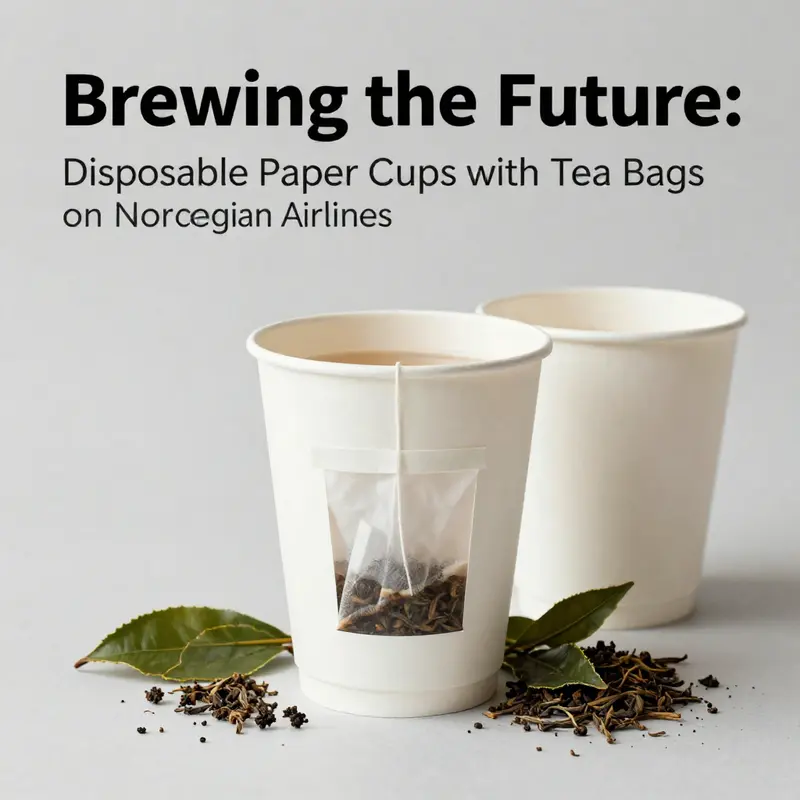
Tea has long traveled with passengers above the clouds, evolving from a simple hot drink to a nuanced part of the in-flight experience. The challenge is not only to deliver a comforting cup but to do so in a way that respects both the passenger’s palate and the planet’s resources. In this chapter, we explore how disposable paper cup designs for tea could be reimagined for air travel, with a focus on sustainability, functionality, and brand differentiation. The aviation environment imposes strict constraints: limited galley space, high turnover, varied climate conditions, and a diverse passenger base. Yet these very constraints spur innovation. If a Nordic airline or any other carrier can offer tea in a cup that is more compostable, better at preserving heat, and subtly branded without creating waste, it would redefine the routine act of sipping tea midflight into a moment of mindful convenience. The path forward hinges on a holistic approach that considers materials, structure, and an integrated user experience, from the moment the cup is touched to the moment it leaves the cabin recycled or composted at journey’s end.
Sustainability forms the backbone of any future cup design. Traditional disposable cups rely on a polyethylene lining to prevent leakage, a layer that complicates recycling within many airline waste streams. The industry is increasingly turning to fully compostable or recyclable alternatives. PLA coatings, derived from renewable resources like cornstarch, offer a potential route to landfill-friendly disposal without compromising leak resistance. Water-based biopolymer linings present another promising option, maintaining functional integrity while reducing the environmental footprint. The overarching aim is to align cup technology with a circular economy, one that minimizes residual waste and seeks to recover materials through industrial composting or efficient recycling streams. In practice, this means rethinking not only the coating but the entire value chain: from raw materials to end-of-life processing, and from supplier standards to in-flight waste sorting protocols. The possibility of a cup that can be recycled in standard airline recycling streams or composted in airport facilities would be a meaningful shift toward sustainability.
Beyond the material choices, the cup’s thermal performance is a critical lever in passenger satisfaction. In-flight tea service often falters when heat dissipates too quickly, leaving the drink tepid before the passenger can finish. Innovations borrowed from insulated cups used in hot beverages could be adapted for single-use formats. A double-wall or ripple-wall design creates an air gap that acts as a natural barrier to heat transfer, keeping tea at a comfortable sipping temperature during dwell times typical of a flight. Lightweight insulating layers, possibly incorporating bio-based foils or thin PCM (phase-change material) layers, could offer a more stable temperature profile. The challenge lies in balancing insulation with weight and cost, two variables tightly controlled in the airline supply chain. Any added weight translates into fuel burn, and any premium on manufacturing must be weighed against the price sensitivity of passengers and the airline’s business model. The most compelling solutions will demonstrate measurable improvements in temperature maintenance without complicating production, disposal, or on-board handling.
Another frontier is the integration of the tea experience itself with the cup’s design. A tea bag attached to the cup might seem like a small, almost trivial detail, yet it can shape perception, reduce mess, and streamline service. Various design concepts can embed a tea bag in a way that remains sterile and convenient. For example, a cup lid or a narrow, perforated sleeve could hold the bag’s tag and string, allowing the consumer to adjust steeping time without risking spills. A detachable, reusable handle made from bamboo or recycled materials could offer added grip for hot tea while reducing single-use waste if the handle is designed to be reused across multiple cups in a single service wave. The ultimate goal is a cohesive system where the cup and tea bag work together seamlessly, delivering a consistent, enjoyable experience with fewer disposal steps for the crew.
The innovation landscape also envisions smart and interactive design elements that enhance value without complicating operations. QR codes or NFC chips printed on the cup exterior could link passengers to brewing tips, the origin story of the tea leaves, or loyalty rewards tied to the airline’s app. This digital layer can elevate the passenger experience, transforming a routine beverage into an opportunity for storytelling and engagement. From an operational standpoint, such features should be lightweight, compliant with onboard safety standards, and easy to sanitize or replace as needed. Eco-friendly plant-based inks could be used for exterior printing, allowing brands to express seasonal themes or cultural motifs without introducing problematic additives. The intersection of design and data presents a path to differentiate in a crowded market, while also providing practical value in terms of branding cohesion and passenger delight.
In terms of modularity, the cup can be conceived as part of a broader system of disposable tableware that supports both convenience and sustainability. Detachable, washable features—such as a collapsible or reusable sleeve that doubles as a coaster—could reduce waste during the duration of a flight or across a travel journey. The sleeve, rather than being discarded with each cup, might be designed to be reused across multiple services or repurposed after landfall, aligning with airline commitments to waste minimization. Such flexibility matters in cabin operations, where space is at a premium and staff must manage a wide range of beverage offerings with efficiency and consistency. The design language should reflect a balance between single-use practicality and reuse-friendly logic, offering a practical path toward lower overall waste while preserving the benefits of disposability.
Branding plays a nuanced role in the cabin. The visual language of the cup—color, typography, and graphics—can convey the airline’s cultural ethos and commitment to sustainability without overwhelming the passenger’s perception of the beverage. A subtle, legible design with durable prints on plant-based inks can withstand the moisture and handling typical of in-flight service. In parallel, the cup’s material and construction must be compatible with the galley equipment, including cup dispensers, hot-water basins, and caddy systems. The integration of branding with functionality should feel natural, not forced. When executed well, branding becomes part of the passenger’s memory of the journey, reinforcing trust in the airline’s environmental stewardship and attention to traveler comfort.
To connect these ideas to practical applications, imagine a flight service where the cup’s coating is fully compostable, the lid and sleeve synergize to maintain heat, and the tea bag sits in a designed cradle that minimizes drips and reduces handling time. Such a configuration would streamline crew workflows and deliver a reliable drinking temperature. It would also create fewer wastestream complications because compostable components could be segregated at the end of service when airport facilities permit. The real test lies in collaborating with suppliers to develop a packaging ecosystem that passes the airline’s quality controls, complies with aviation safety standards, and aligns with regional waste management infrastructure. This means pilots of product development must consider supply chain resilience, the cadence of cabin service, and airport-based recycling or composting capabilities. Only through a holistic approach can a cup become more than a container; it becomes a vehicle for responsible travel.
As these ideas crystallize, collaboration across design, materials science, and airline operations becomes essential. The industry benefits when bold materials choices are paired with pragmatic manufacturing processes. Sustainable coatings must deliver leakage protection without compromising recyclability. Insulation must preserve temperature without adding prohibitive weight. Teabag attachment mechanisms must be intuitive and hygienic, not an obstacle to rapid service. The integration of digital elements should enhance the journey while remaining unobtrusive during security checks and boarding. Importantly, passenger expectations are not static. A growing segment of travelers expects transparent sustainability, clear communications about waste, and a coherent brand story that reflects environmental responsibility. Meeting these expectations requires design that is both thoughtful and adaptable, capable of evolving with advances in materials science, regulatory changes, and changing flight patterns.
In closing, the future of disposable paper cups for tea on flight stems from a convergence of sustainability, thermal performance, modular design, and meaningful branding. The best concepts treat the cup as a system rather than a standalone object. They consider the life cycle of every material, the ease of recycling on arrival, and the passenger’s sensory experience. They also recognize that a simple cup can become a platform for innovation—where the tea bag’s placement, the cup’s coating, and even the sleeve’s reusability cascade into tangible reductions in waste and meaningful improvements in comfort. For travelers, this means more reliable heat, a cleaner in-flight experience, and the satisfaction of knowing their beverage is part of a broader commitment to responsible travel. For the industry, it offers a path to differentiate through design and stewardship, turning a routine moment into a small, Yet significant, contribution to a more sustainable aviation ecosystem. As these ideas move from concept to cabin, collaborations with packaging designers and airport waste programs will be key to translating theory into practice. Passengers may not consciously notice every material choice, but they will feel the difference in a cup that keeps tea warm longer, a lid that seals neatly, and a packaging narrative that aligns with a flight’s overall commitment to care for people and planet. The chapter ahead will build on these foundations, examining how policy, standards, and consumer feedback shape the practical rollout of innovative cup designs in diverse airline contexts.
For those seeking a concrete example of how airlines can explore branded, flexible packaging in collaboration with suppliers, see the concept of modular, theme-oriented disposable tableware at the following internal reference: custom-takeaway-packaging-supplies-disposable-tableware-for-theme-party.
Further reading on the broader scientific and material innovations driving these designs can be found in industry literature, including an external overview of innovations in disposable paper cups that discusses sustainable coatings, insulation technologies, and future packing ecosystems: https://www.sciencedirect.com/science/article/pii/S095671352400087X.
Market Trends in Airline Beverage Service: A Case Study on Norwegian Airlines
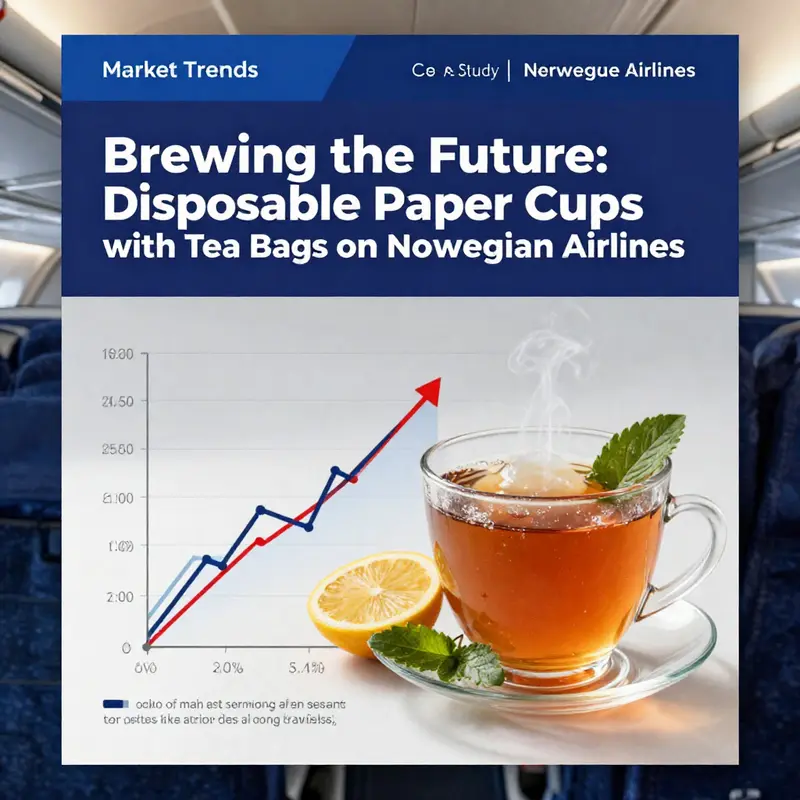
The in-flight beverage service landscape is shifting under the pressure of rising expectations, stricter sustainability norms, and a relentless drive for operational efficiency. In this evolving milieu, Norwegian Airlines stands out as a case study in how a low-cost long-haul carrier can recalibrate its beverage strategy to balance cost discipline with a meaningful passenger experience. The dialogue around what passengers drink, when they drink it, and how it arrives at their seat is no longer purely about the liquid itself. It is a reflection of a broader design philosophy that values choice, transparency, and a lighter environmental footprint. In this sense, the beverage service resembles a carefully choreographed routine that must adapt to shorter turnarounds, tighter budgets, and the need to differentiate on comfort and perception even when ticket prices are kept intentionally lean. The outcome is a model where value is not simply about free or paid drinks, but about the perceived value of the experience—the speed of service, the cleanliness of the cabin, the branding of the service tools, and the way the cabin feels when a drink trolley glides through the cabin in a long-haul stretch of blue-lit hours.
Norwegian’s approach to beverages in economy versus premium cabins exemplifies a broader market trend toward personalization and flexible service options. In economy, beverages are offered as a paid add-on, reflecting a growing consumer preference for paying strictly for what they use. This aligns with a wider industry shift toward cost transparency and the opportunity for passengers to tailor their experience. In premium cabins—whether Business or Premium Economy—the airline continues to provide complimentary drinks as part of a more elevated journey package. Bridging these two paradigms is a service ecosystem designed to optimize throughput and maintain an impression of careful curation, even in a high-volume setting. The consequence is a cabin culture where passengers in different cabins encounter distinct service rhythms, yet all share a common attention to quality, reliability, and a sense of renewed care in the presentation of beverages.
The infrastructure that supports this service has grown more sophisticated. Specialized service carts and workflows are being introduced to handle non-standard offerings, such as cocktail hours or mid-flight refreshment moments, with a focus on ambience as well as efficiency. Branded interiors and lighting components in these carts help to elevate the moment when a passenger reaches for a drink, suggesting a hospitality mindset rather than a transactional one. Yet such carts carry trade-offs. They add weight, complicate maintenance, and can diminish interchangeability with standard galley setups. This is a classic case of the trade-offs airlines weigh as they decide how much to invest in high-end service features versus the practical realities of fleet-wide operations. In markets with intense price competition and rising fuel costs, these decisions matter because every kilogram saved in galley design can compound into meaningful savings over hundreds of flights each week.
Packaging plays a quiet but essential role in shaping the cabin experience. Airlines frequently rely on disposable, branded cups as a visible touchpoint that reinforces the airline’s identity. The presence of logoed, single-use cups on board—an established practice across several carriers—demonstrates the value airlines place on consistent branding in even the most routine moments of travel. The visual language of a cup, its color, font, and the feel of the branding when a passenger reaches for their drink, contributes to a sense of coherence and professionalism. Beyond branding, packaging choices intersect with sustainability goals and weight considerations. Lighter, efficient designs can reduce fuel burn when multiplied across thousands of cups per flight, which in turn aligns with regulatory expectations and consumer demand for greener travel. The discussion around branded cups is not only about aesthetics; it is about how a seemingly small, everyday object can communicate a carrier’s standards and care on a global stage.
In this context, the connection between beverage service strategy and packaging innovation becomes clear. The airline environment invites experimentation with packaging formats that promise better heat retention, easier handling, and a cleaner cabin. Consider the appeal of cups designed for hot beverages in long flights: a double-wall construction can insulate hands from the heat while keeping the inner beverage at its ideal temperature for longer. The practical benefits ripple through the cabin, reducing spills and improving passenger comfort during long, high-mileage journeys. The packaging narrative also touches on the potential for customization, enabling brands to articulate a consistent story across in-flight experiences—from the moment a passenger selects a drink to the moment that vessel is set on the tray in front of them. The strategic value of these packaging decisions is reflected in the broader market dynamics, where inflight catering is projected to grow from billions of dollars to a substantially larger figure by the early 2030s, driven by rising disposable incomes, expanding middle classes, and an appetite for higher quality and more varied beverage offerings on international routes.
Norwegian’s focus on efficiency and value aligns with the latest market intelligence, which points to a healthy growth trajectory for inflight catering. The industry is forecast to expand from approximately USD 18.77 billion in 2026 to about USD 27.7 billion by 2031, a CAGR of around 8.1 percent. This growth is not uniformly distributed across all carriers but reflects a global demand for refined beverage programs that balance price points with memorable service moments. Airlines are investing in specialized service solutions that can elevate the cabin experience while maintaining strict cost controls. The trend toward customization is not simply a marketing slogan; it manifests in how menus are curated, how drinks are offered, and how the physical artifacts of service—the cups, the lids, the sleeves—are designed to support speed and ease of use without compromising cleanliness or safety. In practice, this translates into more deliberate decisions about which categories of beverages receive complimentary status and which are available on a pay-per-use basis, ensuring that premium cabins retain their value proposition while broader cabin segments remain viable and efficient.
The sustainability thread runs parallel to the pursuit of efficiency. Airlines increasingly face regulatory pressures and consumer expectations around environmental stewardship. In response, operators seek to reduce waste, optimize the weight of trolleys and cups, and source materials that can be recycled or composted where feasible. The cabin environment also becomes a testing ground for design innovations that minimize the environmental footprint of everyday items. For example, lighter cup designs not only save fuel but also simplify handling for cabin crew during busy service windows. At the same time, the branding dimension of cups and other single-use items remains relevant because a well-presented setup can still convey a sense of care and quality that stands up to scrutiny in a sustainability-conscious travel culture. The net effect is a beverage service that strives to be greener without sacrificing the operational flexibility needed to satisfy a diverse passenger mix.
This evolving tapestry of strategy, packaging, and sustainability invites a broader question about future packaging concepts—such as a disposable cup with an attached tea bag—that could streamline service even further. The idea of a cup bearing a pre-placed tea bag might seem like a small optimization, but it speaks to a larger willingness among airlines to rethink the choreography of service. Such an approach could reduce handling steps for crew and passengers alike, potentially shortening service times on dense long-haul segments. It could also align with sustainability goals if the cups and tea components are designed to minimize waste or to integrate with recycling or composting streams. However, the practicalities are nontrivial. Hygiene, allergen controls, and cross-contamination concerns would need careful attention, as would compatibility with food safety regulations for in-flight service. The absence of explicit evidence that Norwegian or comparable carriers currently employ a tea-bag-attached cup does not rule out the possibility. Instead, it signals a space where packaging designers, cabin crew strategists, and procurement teams might explore how small format innovations can yield meaningful gains in both experience and efficiency over time. In other words, the cabin becomes a living lab where tradition and experimentation converge, and where even something as ordinary as a cup can reflect a carrier’s aspirations toward simplicity, speed, and sustainable practice.
The narrative around Norwegian’s beverage program is not a solitary one. It resonates with a broader market where beverage service design is increasingly treated as a strategic lever. The ability to tailor beverage delivery to cabin segment, while maintaining a coherent brand story and a sustainable footprint, distinguishes airlines in a crowded field. In practice, this means a careful balance of paid and complimentary offerings, a calibrated menu mix anchored by core beverages such as coffee and tea, and a distribution system that supports rapid service with minimal waste. The future may bring new materials, smarter packaging, and smarter carts that can accommodate more complex service formats without sacrificing the efficiency that low-cost, long-haul models demand. The Norwegian example demonstrates how these elements can be fused into a coherent strategy that preserves the airline’s value proposition while remaining responsive to passenger preferences and market dynamics.
As the inflight catering ecosystem continues to expand, airlines will continue to test, refine, and sometimes retire service ideas based on performance, passenger feedback, and logistical realities. The industry’s growth trajectory, the push for personalization, and the imperatives of sustainability together create fertile ground for innovations in packaging, service flow, and overall cabin experience. The airline beverage service of the near future will likely feel more adaptive and more thoughtful—an interplay of carefully designed cups, menus, service rituals, and digital touchpoints that help passengers feel recognized and cared for, even at twenty-six thousand feet. In this sense, Norwegian’s model—distinct yet representative of broader trends—offers a lens into how the beverage service can evolve while keeping the core values of value, clarity, and practical reliability at the forefront of the passenger experience. The result is a more confident, resilient, and passenger-centric beverage program that can scale across routes and fleets without losing the human touch that defines air travel.
Internal link note: In the context of packaging and service design, the choice of cup technology matters. For example, many operators explore durable, insulated cup designs that support hot beverages while minimizing heat transfer to the passenger’s hands and reducing the risk of spills. A representative option in this space is the double-wall disposable thickened paper cup, which combines heat insulation with a relatively lightweight, recyclable footnote to branding and service efficiency. See more on this category here: Double-wall disposable thickened paper cups.
External resource: The inflight catering market’s size, share, and forecast provide a foundational backdrop for understanding why airlines invest in beverage service innovation. For a detailed industry perspective, see the external resource: https://www.gategroup.com/insights/inflight-catering-market-size-share-forecast/.
Brewing Change in the Skies: Tea, Hygiene, and Sustainable Cup Design on a Norwegian Airline
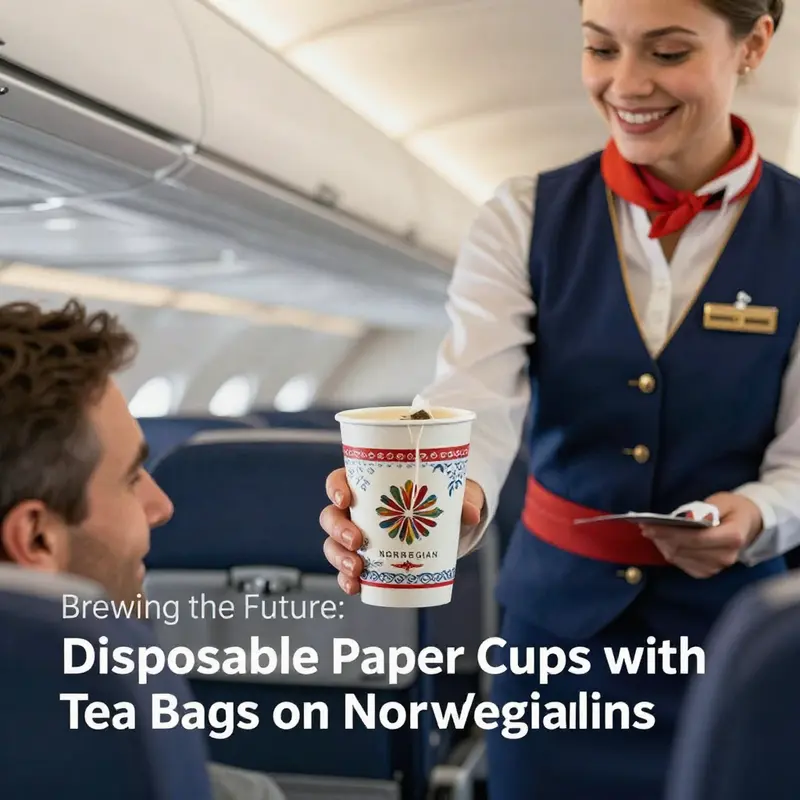
Tea has long held a quiet authority in air travel. It is simple, familiar, and easy to service, even in the cramped confines of a cabin. Yet the ritual of tea is not immune to the larger forces shaping modern aviation: sustainability targets, hygiene expectations, and the need for operational efficiency at altitude. On a Norwegian airline, as in many other carriers around the world, the way tea is prepared, presented, and packaged reveals a story about how flight experiences are evolving. Passengers still want warmth, comfort, and a sense of normalcy when they settle into their seats, but they also want to know that those comforts come with responsibility. The concept of a disposable paper cup with an attached tea bag is more than a quirky design idea; it is a reflection of how design thinking can fuse convenience with environmental mindfulness, without compromising the sensory pleasure of a well-brewed cup.
The shift toward sustainability in onboard beverage service is not happening in a vacuum. It is the result of a broad reassessment of single-use items, waste streams, and the life cycle of materials used in cabin service. Across the aviation sector, airlines have begun phasing out non-degradable plastics in favor of more sustainable alternatives. While many of the concrete implementations remain varied, the underlying logic is clear: passengers appreciate hygienic, easy-to-use solutions that also align with broader environmental commitments. This is especially true in markets where public policy and consumer sentiment push for greener travel options. In Asia, for example, a major carrier announced a comprehensive ESG-driven transformation that replaced non-degradable plastic items with sustainable options onboard, including paper-based brewing and serving solutions. The move signals a future in which every cup, basket, or wrapper on a flight is evaluated not only for cost and practicality but also for its environmental footprint.
The idea of a paper cup with a tea bag attached is a natural outgrowth of that thinking. Such a design promises to deliver a self-contained beverage experience with fewer touchpoints and less handling by cabin crew—an appealing feature during periods of heightened health awareness. The practical advantages are clear. A cup that integrates the tea bag reduces the need for separate napkins, sleeve tissues, or extra packaging associated with loose tea. It can be engineered to control the release of tea into hot water, minimizing the risk of over-brewing or spills. In a cabin where space is tight and turnover is rapid, a one-piece approach can streamline service, helping crew to deliver consistent quality and speed. Yet the concept is not merely about convenience. It ties into a larger conversation about waste reduction and the design of closed-loop or easily recyclable service items. By integrating the tea-brewing step into the cup itself, airlines can precisely quantify material use and waste streams, opening opportunities for better benchmarking and potential certification for recyclable or compostable components.
In reflecting on these shifts, it is important to acknowledge the realities of cabin service. Hygiene remains a paramount concern. The pandemic-era emphasis on contactless and minimized handling has persisted in many travellers’ expectations. A cup with an attached tea bag can address some of these concerns by reducing the number of separate components a passenger touches and by simplifying the handoff process from trolley to tray. At the same time, passengers still expect a clean, pleasant flavor experience, a stable brew temperature, and a cup that holds heat without becoming a nuisance in the hand. The design challenge, therefore, is to balance material science with human factors: heat retention without overheating, filtration or infusion materials that are safe and inert, and a packaging system that supports quick, clean disposal or safe reuse when a recycling stream exists.
The beverage program in the cabin is not isolated from the broader design language of the aircraft. The move away from single-use plastics toward paper-based and compostable options mirrors what many airports and lounges are pursuing in their ground experiences. In this sense, the attached-tea-bag concept mirrors a broader design philosophy: optimize for the most common use case, remove friction, and align the product with environmental goals that resonate with passengers’ values. On long-haul and regional routes alike, a self-contained cup that can deliver a robust cup of tea without extra fiddling between crew and passenger has a clear appeal. It also fits neatly with the seasonal rhythms of travel, where refreshments must be readily available, affordable, and efficient to service on a high-demand flight schedule.
From a consumer perspective, preferences around tea and disposable cup usage in flight are increasingly nuanced. Passengers want the assurance that hygiene is maintained and that packaging waste is managed responsibly. They are more willing to accept a small convenience trade-off if it translates into a tangible environmental benefit. In the context of a Nordic airline, these expectations are often reinforced by a broader cultural emphasis on sustainability, transparency, and design integrity. The result is a flying experience that does not just promise comfort but also communicates a commitment to reducing the footprint of every cup served. That message travels beyond the seat and into the cabin crew’s routines, the ground staff’s procurement decisions, and the airline’s overall fleet strategy.
The sustainability narrative also includes a candid acknowledgment of the hurdles. Even as recycling rates improve and compostable materials become more common, the reality remains that a substantial portion of disposable drinkware still ends up in waste streams that require effective collection and processing. A 2023 urban study highlighted that, despite incentives and awareness campaigns, a minority of consumers bring their own cups, especially in fast-paced settings like travel. This underscores the importance of designing product systems that minimize waste while still delivering convenience and hygiene. It also highlights the potential for targeted programs that appeal to younger travellers, who may be more receptive to reusable solutions when framed as both cost-saving and socially meaningful.
In the discussion of beverage service design, one can see a clear parallel with other eco-conscious innovations in the industry: the development of self-contained brewing and serving mechanisms that reduce steps and waste, and the growing interest in materials that are recyclable, compostable, or otherwise low-impact. For the Norwegian airline passenger, the dream is a cup that feels familiar and comforting yet belongs to a system that acknowledges responsibility without sacrificing the warmth of tea or the ease of service. It is a balancing act that requires attention to materials science, supply chain resilience, and cabin ergonomics. The cup must perform under pressure, retain heat long enough for the passenger to savor the infusion, and present a clean, attractive aesthetic that still respects environmental considerations. Even the smallest design decisions—how the cup’s rim feels in the mouth, how long the tea bag stays securely attached, how the cup breaks down in a recycling stream—can influence the passenger’s perception of value and the airline’s sustainability credibility.
The evolution of this space is not happening in isolation. It is informed by a broader set of design and policy developments that shape how airlines think about onboard service. Across regions, regulators and industry groups are pushing for more responsible packaging, better waste segregation, and clearer labeling about compostability and recyclability. In parallel, consumer advocacy and public opinion are increasingly critical of disposable culture, prompting airlines to explore hybrid solutions that blend reusables with high-clarity disposables, or to pilot return-and-reuse programs on select routes. The aim is not to eliminate disposables overnight but to integrate them into a thoughtful, end-to-end system that minimizes environmental impact while preserving the passenger experience.
To illustrate how design thinking translates into tangible onboard offerings, consider the way brewing and serving can be integrated into a single, self-contained unit. A cup designed to accommodate an infused tea element—whether the tea component is built into the cup itself or attached as a compact infusion—can reduce handling and packaging while preserving hygiene. The concept aligns with a growing interest in cups that support easy, on-the-go brewing in a controlled environment. It also dovetails with existing advances in insulated paper cups and heat-retaining designs that keep drinks warmer for longer without imposing heavy weight or brittle materials. In practice, such a system would be paired with clear, simple disposal or recycling instructions, contributing to a clean cabin environment and a straightforward post-flight waste stream.
For industry observers, the appeal of this model lies in its clarity and replicability. The same principles can be adapted across fleets, route types, and cabin configurations. In high-demand phases, the savings come from streamlined service and reduced inventory complexity. In more deliberate, sustainability-focused programs, the same approach could be scaled with compostable or recyclable materials, allowing airports and airlines to report tangible progress on waste reduction. The broader takeaway is that a seemingly small product choice—the cup and its tea-brewing component—can be a lever for environmental responsibility, passenger satisfaction, and operational efficiency all at once.
To connect this local, passenger-facing narrative to the wider industry, consider how other carriers have experimented with reusable or eco-designed beverage solutions. The trend toward self-contained, low-waste systems echoes efforts elsewhere to replace non-degradable plastics with alternatives that perform well in the demanding cabin environment. The result is a more coherent experience from boarding to deplaning, where sustainability is visible, measurable, and ultimately rewarding for both passengers and operators. The attached-tea-bag cup, in this context, becomes a symbol of how aviation can retain the comforting rituals travelers expect while advancing practical, environmentally responsible solutions.
In closing, the chapter on consumer preferences for tea and disposable cup usage in airlines is not merely a survey of tastes. It is a lens into how design, policy, and passenger expectations converge to shape the future of onboard beverage service. On a Norwegian airline, this convergence is particularly pronounced, where regional values around sustainability, simplicity, and quality inform every cup poured in the cabin. The journey from a traditional tea ritual to a modern, self-contained brewing experience reveals how small innovations—like an integrated tea-bag cup—can carry meaningful implications for waste streams, hygiene, and the overall impression of care that a carrier offers its travelers. As regulations tighten and consumer expectations sharpen, the path forward points toward products that are easy to use, responsibly sourced, and compatible with efficient cabin operations. The aim is a flight experience where tea remains a comforting ritual, but its packaging and delivery reflect the best of contemporary design and environmental stewardship.
For readers who want to explore related product design considerations in the broader packaging ecosystem, the following example highlights an insulated, double-layer approach that supports hot beverages like tea while emphasizing heat retention and user comfort. double-layer paper cups for milk tea. This example demonstrates how a seemingly simple component—cups that keep drinks warmer for longer—can be part of a larger sustainable strategy, especially when paired with compatible, recyclable or compostable materials and clear waste guidance. External references beyond the chapter’s scope provide further context on how major airlines are reimagining service to align with ESG objectives and passenger expectations. For additional background on sustainability initiatives in airline beverage service, see the ESG-oriented reporting from a major carrier: https://finance.sina.com.cn/roll/20250329/183657521.shtml
Sustainability in the Cup: Reimagining Disposable Paper Cups and Tea Moments on Nordic Skies
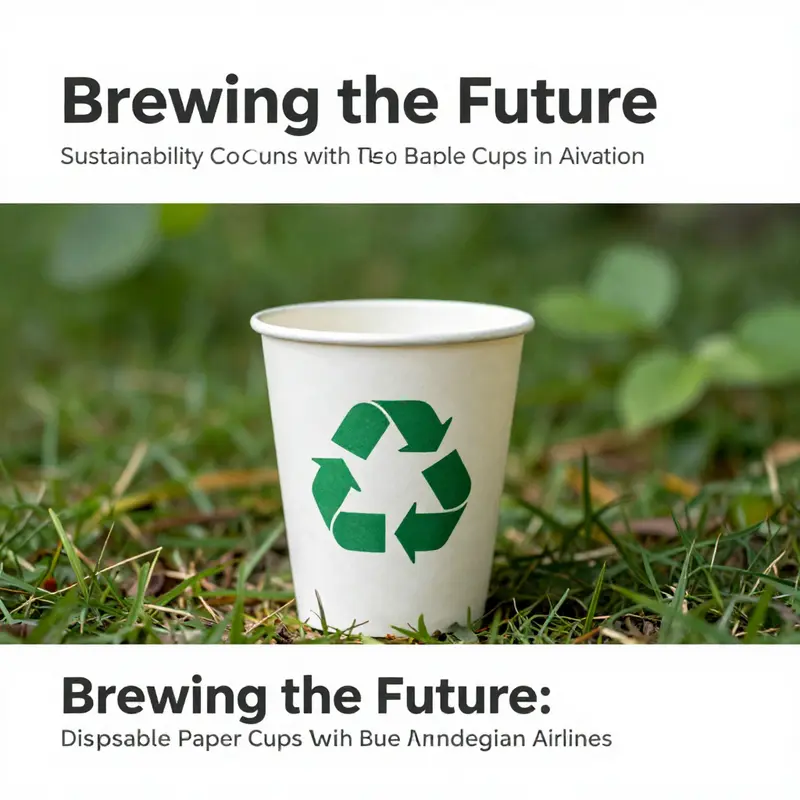
The cabin of a northern European carrier is as much a stage for ritual as it is for transport. The simple act of offering a cup to a passenger—hot tea, a comforting aroma, and the gentle clink of a lid—embeds the experience of travel in memory as surely as any landscape glimpsed through a porthole. Yet behind that ritual lies a wearing paradox. The disposable paper cup has become a fixture of modern aviation, a symbol of speed and convenience that also embodies a sizable environmental footprint. The idea of a cup that carries not just a beverage but a moment of comfort is appealing, but the lifecycle of that cup—from raw materials to end-of-life disposal—creates a chain of impacts that is anything but lightweight. In this chapter, we explore how sustainability concerns surrounding disposable cups intersect with the tea rituals that passengers expect, and how a Nordic carrier, like many others, might reimagine that everyday object in flight without sacrificing the service experience.
From the outset, the most visible challenge is the cup’s material composition. Traditionally, many disposable cups are lined with a polyethylene coating to prevent leaks and to keep liquids from seeping into the cardboard structure. That barrier, while practical for on-the-spot service, complicates recycling in municipal streams. It is not just a matter of putting the cup into a curbside bin; it is a question of whether the local recycling facility can separate the paper from the plastic and manage the adhesive layers and coatings that seal the cup’s integrity under heat. The result is a high probability that even clean, empty cups end up diverted away from true recycling, or worse, consigned to landfills in some jurisdictions where the delicate math of waste streams simply does not pencil out. In the high-traffic environment of an aircraft galley, where hundreds of cups can be used during a single service, those recycling challenges accumulate rapidly into a substantial waste footprint.
The environmental burden of production equally commands attention. Paper cups demand raw fiber, water, and energy, and even when sourced from responsibly managed forests, the process scales with a footprint that may be invisible at the moment of takeoff. The transportation of raw materials, the manufacturing energy, and the emissions associated with maintaining a steady supply chain all contribute to a cumulative impact that aviation sustainability programs increasingly seek to measure and reduce. In practice, the narrative of a green alternative is not simply switching to a different coating or changing the color of the cup. It requires tracing the full lifecycle: the forest stewardship behind the pulp, the energy mix powering factories, the water used in processing, and the ultimate fate of the cup after it serves its fluid purpose. When seen through this lifecycle lens, the cup becomes a proxy for the broader questions that aviation must answer: How can we lower emissions without dampening the passenger experience? How can we design products that fit within a circular economy rather than a linear one that ends in waste?
To address these questions, airlines and their suppliers have experimented with a spectrum of strategies. Some seek to replace conventional materials with compostable alternatives, while others pursue reuse models that enlist onboard washing and dedicated return streams. Each approach has its own set of practicalities. Compostable materials, for instance, promise a cleaner end-of-life outcome but demand industrial composting infrastructure that is not universally available, especially within the tight timelines of air travel. Reusable cup systems, meanwhile, introduce a closed-loop ambition that squares nicely with circular economy principles if the logistics—collection, cleaning, and secure storage—can be scaled to the cabin’s rhythm. In the mid- and long-term horizon, the industry envisions more transformative changes: smarter packaging that uses less material overall, coatings free from non-renewable plastics, and end-of-life pathways that are robust enough to handle peak service loads without compromising safety or efficiency.
A critical driver of this evolution is policy and governance at the level of international aviation. Organizations like the International Civil Aviation Organization have recognized the climate and waste dimensions of air travel and have begun to promote greener operating practices. The ICAO Environmental Report 2023, for example, outlines how member states and airlines can pursue reductions in single-use plastics and advance circular economy concepts in aviation. The report serves as a reference point for formulators of airline waste management policies, supplier contracts, and city-level waste infrastructure planning. Its emphasis on systemic change—across product design, material selection, waste separation, and post-consumer recovery—reflects a shift from ad hoc replacements to deliberate, scalable solutions. This broader context is essential because the choice to attach a tea bag to a cup, or to redesign the entire tea ritual around a reusable vessel, cannot be divorced from the regulatory and industry-wide ambitions that shape every procurement decision and flight operating standard.
The specific notion of a tea bag that accompanies a disposable cup on a flight—an idea that blends the ritual of tea with a simplified packaging approach—sparks both curiosity and caution. Conceptually, it hints at a potential reduction in packaging waste by packaging a single, integrated tea component with the cup itself. In practice, the feasibility of such a design hinges on multiple factors. Hygiene and safety are paramount: a tightly coupled tea bag and cup must avoid contamination and maintain beverage quality across different water temperatures and flight conditions. Temperature management is another dimension; tea requires predictable steeping times and stable water temperatures, which can be at odds with the cooling dynamics inside a pressurized cabin. Passenger acceptance also matters. Some travelers value the utility of a separate tea bag and believe it offers greater control over strength and flavor. Others may prefer either a simplified approach or a more advanced, single-serve tea solution that aligns with airline beverage programs. Designing a system that satisfies both preferences while delivering a net environmental benefit would require careful testing, pilot programs, and a clear measurement framework to verify waste reductions relative to the status quo.
Beyond the tea bag concept, the broader design of cup systems invites reflection on surface materials and coatings. Innovations in barrier technologies—such as plant-based or recycled content coatings—hold promise for reducing reliance on conventional polyethylene layers. If successful, these alternatives could enable more effective recycling or even composting, provided that the end-of-life infrastructure is aligned with the material’s properties. In parallel, research into lighter-weight cup structures could cut raw material use without compromising leak resistance or thermal performance. The interplay between material science and waste infrastructure becomes especially salient in aviation because the pace and density of service demand a reliable product that can withstand the rigors of air travel and still be compatible with onboard sanitation protocols. The ultimate objective is a cup that supports a satisfying passenger experience while bending the environmental curve toward lower resource use and higher recovery rates.
In this landscape, the role of passengers as active participants remains central. Education and clear, accessible information about recycling options can make a tangible difference. If a fleet’s waste management program encourages correct separation of cups and lids, and if cabin crew are empowered with the right guidance and facilities, the abundance of cups can be transformed from a one-way stream into a captured resource. The transition may also entail rethinking what constitutes “single-use” in a flight context. For instance, some operators are experimenting with takeout-style packaging that can be collected and returned in dedicated streams, or with in-cabin systems that valorize residual heat and reduce spillage losses. The goal is a cohesive ecosystem where product design, passenger behavior, and waste infrastructure reinforce one another rather than collide at the moment of disembarkation.
To connect these threads back to the tangible experiences of travelers, consider the everyday moment of tea brewed in a cabin. A well-designed cup can still convey warmth and comfort even as it embodies more sustainable choices. This is not about perfunctory substitutions but about cultivating a richer set of options that respect the passenger’s desire for a reliable beverage service while acknowledging the environmental realities of flight. Designers and operators face the challenge of balancing taste, temperature, convenience, and responsibility. In practice, this means selecting materials with lower life-cycle impacts, enabling more effective recycling streams, and, where feasible, testing reuse models that can scale to the rhythms of air travel. It also means recognizing that the tea ritual on a plane is a cultural act—one that can evolve without erasing the human desire for small comforts in flight.
The discussion is not merely theoretical. A practical pathway emerges when we acknowledge the interconnectedness of product design decisions and the broader waste management system. If a carrier commits to a program that reduces single-use plastics, expands compliant recycling streams, and experiments with compostable or reusable cup solutions, the benefits compound. The impact is amplified when suppliers, airports, and municipalities coordinate around standardized sorting, collection, and processing. In this sense, the cup becomes more than a container; it becomes a node in a network that links forest stewardship, manufacturing efficiency, in-flight service, and end-of-life recovery. This network, in turn, supports the passenger experience by delivering familiar rituals—tea served hot, aroma in the cabin, and a sense of hospitality—without compromising a shared responsibility to the environment.
For readers seeking a concrete example of related packaging approaches outside the cabin that still inform aviation thinking, a visit to this product page can illustrate how disposable paper cups for hot drinks are marketed and utilized in takeout contexts. It serves as a reference point for thinking about how similar products might be adapted for cabin service while meeting sustainability targets. disposable paper cups for hot drinks.
Ultimately, the path forward in aviation’s cup culture rests on a combination of material innovation, waste infrastructure improvement, and a reimagined service philosophy that treats every disposable item as a potential contributor to or a barrier from circularity. Change will not come from a single silver bullet but from a portfolio of solutions implemented in concert across the industry. A Nordic carrier, with its distinct emphasis on efficiency, design, and social responsibility, can model how to integrate these layers into a cohesive program. The journey will require patience and rigorous measurement, but the potential payoffs—reduced waste, lower emissions, and a cabin experience that preserves comfort while aligning with planetary boundaries—are worth the effort. As aviation continues to evolve toward greener operations, the paper cup and its tea companion can become symbols not of excess but of a deliberate, thoughtful, and scalable transition. The evidence and direction from international bodies, including annual environmental reporting, point toward a future where the ritual of tea can be enjoyed with a lighter footprint, and where the cup itself becomes a link in a broader, more resilient cycle of use and renewal.
External resource: ICAO Environmental Report 2023. https://www.icao.int/environmental-protection/Documents/2023/ICAO%20Environmental%20Report%202023.pdf
Final thoughts
The potential introduction of disposable paper cups with attached tea bags by Norwegian Airlines signals a significant shift in the airline beverage service landscape. Not only does this innovation reflect changing consumer preferences towards tea, but it also aligns with broader market trends focusing on convenience and quality. As airlines evolve to meet the needs of their passengers, understanding these dynamics can offer valuable insights for businesses across the food and beverage industry. By leveraging sustainable practices and innovative packaging solutions, they can enhance their service offerings and contribute to a greener aviation sector.