
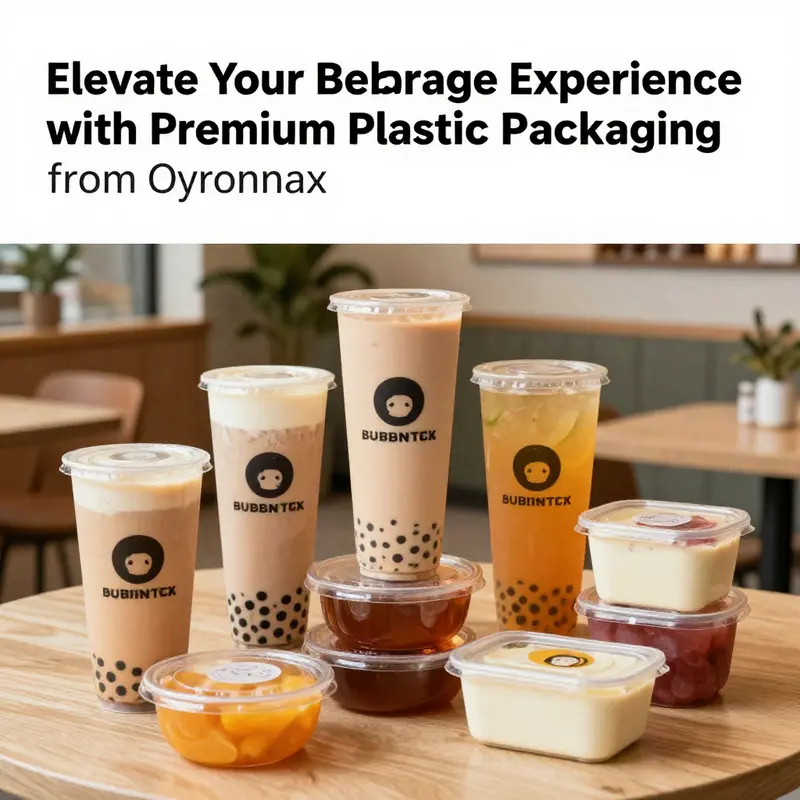
Plastic packaging food containers play a crucial role in the food and beverage industries. In Oyonnax, France, a historic company has been at the forefront of this sector for 47 years, specializing in innovative plastic packaging solutions that cater to the unique needs of businesses such as bubble tea shops, restaurants, food trucks, catering services, and event planners. This article explores the historical significance of the company in the plastic packaging market, highlights recent technological innovations in their product offerings, and discusses the pressing need for sustainability in plastic packaging. Together, these chapters provide a comprehensive understanding of how Oyonnax is shaping the future of food packaging.
Forty-Seven Years in the Making: The History and Market Footprint of Plastic Packaging Food Containers in Oyonnax, France
Oyonnax is not just a town in eastern France; it is a lens on how a regional hub can shape the broader story of plastic packaging for food. In a landscape where small and mid-sized manufacturers often operate with a dual demand for technical prowess and social relevance, a 47-year-old plastic products company in Oyonnax stands as a telling example. From its roots in a region renowned for plastics engineering, the company has built a portfolio that spans the design of packaging with both aesthetic appeal and practical performance. Its location in the commune identified as 01100 anchors a narrative that moves from local craft to national influence, and increasingly toward a European ambition: to offer packaging solutions that satisfy contemporary needs for convenience, safety, and sustainability. In 2021 the company reported a turnover of 12,546,200 euros, a figure that signals more than profitability; it signals a sustained capacity to translate market demands into tangible packaging systems. The emphasis on both standard and customized plastic bottles and closures points to a business model that understands the food supply chain as a continuum—packaging that protects, communicates, and enhances the end-user experience. The firm’s stated mission—to design packaging that matters, to elevate the consumer experience through packaging—frames its activity as a bridge between product integrity and social responsibility. And today, that bridge is being extended by a strategic openness to acquisition as a means to broaden reach in sustainable packaging.
The historical arc of Oyonnax’s packaging industry sits within a larger French and European context where plastics remain essential to modern food logistics, yet are increasingly tempered by new expectations around hygiene, durability, recyclability, and waste reduction. France’s rigid plastic packaging market has shown steady growth, with forecasts pointing toward continued expansion through the late 2020s. This momentum reflects several converging dynamics: the persistent demand for convenient, reliable, and cost-effective packaging across retail and distribution networks; ongoing improvements in materials technology; and a policy environment that nudges producers toward more sustainable pathways. For Oyonnax’s local ecosystem, those dynamics translate into a need to balance legacy expertise with the agility required to compete in a market where consumer preferences are shifting rapidly toward environmentally conscious choices.
In practical terms, the packaging materials most associated with食品 contact in modern French manufacturing—PET and PP—are defined by strict food-contact standards, hygiene requirements, and performance criteria that support both shelf life and safe handling. The emphasis on food-grade compatibility is not incidental; it is a central discipline that intersects with design, extrusion, molding, and assembly processes. The company in Oyonnax has long leveraged such technical competencies to produce plastic containers suitable for ready-to-eat items, fresh-cut goods, and other grocery items that demand reliable containment and easy handling. In effect, the business operates at the intersection of form and function—where a container must faithfully protect contents, present them appealingly, and withstand the rigors of distribution, display, and consumer use.
Within this context, sustainability has emerged as a critical axis around which strategic conversations revolve. The French market, echoing European-wide policy trends, has intensified scrutiny of single-use plastics and is encouraging a transition toward materials and designs that can be recycled, repurposed, or reprocessed with minimal environmental impact. Manufacturers in Oyonnax—and across the broader Auvergne-Rhône-Alpes region—are increasingly exploring recyclable resins, mono-material designs, and lightweighting strategies that preserve barrier properties while reducing overall material usage. This shift is not merely a compliance exercise; it is a value proposition that aligns with the moral and economic expectations of modern consumers who want packaging that respects the planet as much as it protects the product. The Oyonnax company’s commitment to sustainability dovetails with its goal of delivering packaging experiences that are meaningful to end-users — packaging that communicates quality, safety, and responsibility in a tangible way.
The market presence of plastic food containers in Oyonnax reflects a broader supply chain logic. Local manufacturers and regional distributors rely on packaging suppliers to deliver consistent performance—throughout the lifecycle from manufacturing and packaging to transport, retail display, and consumer use. The region’s packaging firms must contend with a landscape of evolving standards, including stricter regulations on material usage, labeling, and end-of-life management. These regulatory currents are neither abstract nor distant; they are directly felt in production lines, procurement choices, and product development cycles. In this sense, Oyonnax’s packaging community resembles a living workshop where regulatory discipline, design capability, and market intelligence interact to shape a shared trajectory toward more responsible practice. The current strategic orientation of the local company—seeking acquisition to extend its footprint in sustainable packaging—reflects an understanding that growth in this space often comes through collaboration, scale, and the ability to align a broader portfolio with the shifting needs of food producers and retailers.
A closer look at the market signals over the past several years helps illuminate how this region’s packaging ecosystem has evolved. France’s rigid plastic packaging market has demonstrated resilience and a capacity for adaptation as consumer behavior increasingly favors convenience—think pre-packaged meals, ready-to-eat options, and quick-service formats that rely on efficient, safe, and attractive packaging. The ongoing expansion from 2025 to 2030 is anticipated to be driven by demand for containers that not only protect products but also deliver a positive user experience, from easy-open features to clear, informative labeling that supports brand storytelling without compromising recyclability. Technological advancements in production have begun to compress cycle times and reduce waste, enabling manufacturers to offer competitive prices in a market where margins can be tight and competition intense. For a regional player in Oyonnax, these shifts translate into opportunities to integrate design aesthetics with durability and recyclability, to partner with food producers who prize packaging that reduces damage, and to collaborate with distributors who demand reliability at scale.
In this light, the role of the local company in Oyonnax extends beyond merely supplying containers. It participates in a wider conversation about how packaging can be a strategic asset in product design. The company has emphasized that packaging should not only preserve and present food but also contribute to the product’s meaning. There is a growing expectation that packaging should convey a brand’s values—quality, safety, convenience, and sustainability—through materials choice, structural design, and the way the container interacts with the consumer. The Oyonnax firm has sought to translate this philosophy into practical offerings, developing packaging concepts that can be standardized for efficiency yet adaptable for customization when a food producer requires a distinctive presentation or a tailored closure solution. The ability to combine engineering rigor with design sensibility constitutes a competitive advantage that resonates with a market increasingly oriented toward experience as a differentiator in crowded retail environments.
The dynamic between tradition and transformation is also visible in the supply chain commitments that accompany packaging innovations. Local manufacturing ecosystems tend to thrive when there is alignment among material suppliers, equipment manufacturers, and end-users. In Oyonnax, this alignment has historically been supported by the region’s specialization in plastic processing, tooling, and precision manufacturing. The current moment—characterized by a rising emphasis on circular economy principles—pushes firms to consider end-of-life scenarios for their products, including recycling streams and compatibility with municipal and regional waste management infrastructures. The prospect of an acquisition to extend sustainable packaging capabilities is, in part, an acknowledgment that no single firm can easily own the full spectrum of circularity across design, production, and post-consumer processing. Instead, it signals a strategic intent to knit together competencies: packaging design that emphasizes modularity and recyclability, advanced molding and assembly processes that minimize waste, and access to networks that enable efficient take-back or recycling pathways. In such a framework, Oyonnax emerges not merely as a manufacturing center but as a node in a larger system aimed at reducing environmental impact while preserving the economic resilience of local industry.
The chapter’s narrative also benefits from a practical glance at how modern packaging professionals in this region communicate value to customers. Beyond technical performance, the packaging experience matters. The company’s emphasis on creating meaningful packaging experiences aligns with a growing trend in which brands recognize packaging as part of the product’s storytelling. A well-designed container can evoke trust, signal compliance with safety standards, and offer convenience features that streamline consumer use. In this sense, packaging becomes a component of the product’s overall value proposition rather than a mere container. As the market evolves, designers and manufacturers in Oyonnax increasingly collaborate with brands to craft packaging solutions that balance form, function, and responsibility. This collaborative ethos is well suited to an acquisition strategy that seeks to pool capabilities—from material science and process optimization to consumer-facing design and sustainability credentials—so that the resulting entity can better serve food producers seeking responsible growth.
Putting these considerations into a broader frame, the French market’s trajectory from 2025 onward points toward a more energy-efficient, waste-conscious, and design-aware packaging paradigm. The converging forces of consumer expectations, regulatory guidance, and technological innovation push packaging providers to re-evaluate their material choices, manufacturing methods, and end-of-life strategies. For Oyonnax, the challenge and opportunity lie in sustaining a legacy of technical competence while embracing the agility that larger scale and more integrated capabilities can provide. The company’s current strategic posture—preparing for acquisition to expand its influence in sustainable packaging—embodies this tension: it is an invitation to scale and to align more closely with the evolving demands of food producers who want packaging that is not only safe and reliable but also responsible and future-oriented.
If one were to trace a throughline from local craft to regional influence, it would be the way packaging design has become a language that communicates quality and care. In Oyonnax, the vocabulary of plastic containers—whether for ready-to-eat meals, snack packs, or grocery staples—now includes words like recyclability, reduced weight, barrier performance, and consumer-friendly closures. The same vocabulary speaks to regulators who push for better waste management and to consumers who expect packaging to respect the planet and align with personal values. In this way, the historical arc of Oyonnax’s plastic packaging industry can be understood not only in terms of manufacturing output or revenue figures, but as a narrative about how a regional ecosystem negotiates the tension between tradition and sustainability, between cost and value, between speed and stewardship. The chapter’s focus on a 47-year-old company, its current scale, and its aspiration to deepen sustainable impact offers a concrete case study of how a local player can contribute meaningfully to a national and European market that increasingly prizes responsible packaging as a core driver of business resilience.
To illustrate the practical reality of current packaging options without losing sight of this larger horizon, consider how a single material choice or closure mechanism can influence an entire product line’s lifecycle. The ongoing interest in recyclable materials and mono-material designs is partly a response to how waste streams are organized in France and across Europe. It is also a reflection of consumer demand for packaging that can be reused or reincarnated into new products rather than ending in landfills. In this sense, the Oyonnax company’s strategic direction resonates with a broader industry movement: the fusion of craftsmanship with sustainability, where engineers and designers collaborate with clients to craft containers that are not only fit for purpose but also aligned with a future in which packaging is part of a circular economy rather than a temporary convenience.
For readers seeking a concrete link to contemporary packaging options that embody these values, one can explore examples of eco-conscious takeout packaging that demonstrates how design, material choice, and end-use practicality can coexist. The example page on eco-friendly takeout boxes illustrates how lightweight, grease-resistant, and microwave-safe designs can be combined with recyclable materials to deliver an appealing product experience. Although the page represents a different brand ecosystem, it captures the spirit of the direction in which Oyonnax’s local industry is moving: packaging that respects both the product and the consumer while remaining mindful of environmental constraints. This spirit is the same one that informs the region’s engagement with standards, certification processes, and collaborations that help ensure packaging solutions meet stringent hygiene and safety expectations while still enabling recyclable end-of-life pathways.
The regional focus on packaging excellence in Oyonnax, then, is not a retreat into a picturesque past but a strategic stance toward a more demanding present and a more regulated future. The company’s track record—nearly half a century of operation, a robust revenue figure in 2021, and a stated mission that binds functional performance to social meaning—positions it to contribute to a market that will be defined by sustainability as much as by efficiency. The anticipated expansion through acquisition reflects a pragmatic approach to growth: rather than competing purely on price or marginal gains in capacity, the firm is seeking to create a collaborative platform capable of delivering end-to-end value—from materials research and process optimization to advanced packaging design and responsible end-of-life outcomes.
Looking ahead, the story of Oyonnax’s plastic packaging sector and its leading players invites a broader reflection on the place of regional manufacturing in a European packaging landscape that prizes both innovation and accountability. The next chapters will further explore how these dynamics unfold in different parts of the country and how regional champions translate local know-how into market-ready solutions that meet the stringent demands of modern food retailers and discerning consumers alike. The chapter thus keeps faith with a central insight: packaging is not merely a protective shell but a strategic instrument in the modern food economy, capable of shaping product perception, supplier relationships, and the sustainability narrative that brands increasingly want to tell. The case of Oyonnax offers a microcosm of this shift—where history, craftsmanship, and market intelligence converge to inform a refreshed vision for plastic packaging that honors both convenience and responsibility.
For readers who want to explore a practical example of the packaging options shaping this shift, a representative resource of eco-friendly takeout packaging demonstrates how modern materials and designs can satisfy contemporary needs without compromising recyclability or user experience. Eco-friendly takeout boxes for food packaging. This kind of reference helps illustrate how design thinking and material science are converging in real-world products, a convergence that firms in Oyonnax are increasingly seeking to harness as they pursue sustainable growth and broader market access.
External perspective from industry forecasting also anchors this chapter in a broader context. For those seeking a wider view of the market trajectory, external analyses point to a France that continues to navigate the demands of durability, safety, and recyclability in packaging. The forecasted expansion of the rigid plastic packaging market into the next decade underscores opportunities for regional players to align with national and European strategies aimed at reducing environmental impact while maintaining product integrity and consumer convenience. External resources offer quantifiable insight into growth rates, regulatory milestones, and technology-driven productivity gains that can inform a regional firm’s strategic choices as it contemplates expansion through acquisitions and partnerships. One such resource provides a detailed forecast of the French rigid plastic packaging market through 2030, highlighting the drivers and constraints that shape the sector’s evolution.
External resource: https://www.marketresearchfuture.com/reports/france-rigid-plastic-packaging-market-1984
From Polymer to Pantry: How Oyonnax Reimagines Plastic Food Containers with Technology and Design
Oyonnax has a long tradition in plastics manufacturing. That history now meets a wave of technical and aesthetic innovation focused on food containers. The story is not just about materials. It is about reducing environmental impact, improving user experience, and aligning packaging with modern circular-economy goals. In this chapter, the evolution of plastic food containers in Oyonnax is described through materials science, user-centered design, and system-level changes that reshape how products reach consumers.
Local manufacturers combine decades of know-how with current research. One family of companies in Oyonnax brings nearly fifty years of experience to plastic packaging. Their teams know injection molding, extrusion, blow-molding, and assembly like few others. They also understand the demands of food safety standards. That combination places them well to refine both standard and bespoke containers. Their design work balances technical performance with attractive form. That means containers that protect food, reduce waste, and present products well on shelves.
At the center of this transformation lies materials development. Advanced polymers such as PET and PP are the backbone of many containers made here. PET offers excellent clarity and barrier performance. It protects against moisture and oxygen while letting consumers see the product. PP is valued for its toughness and heat resistance. It enables durable lids, reusable jars, and containers that survive repeated handling and dishwashing. Both polymers now benefit from improved formulations. Additives and co-polymers enhance barrier properties without sacrificing recyclability. These refinements extend shelf life and cut food loss. Longer shelf life also reduces waste across the supply chain.
Manufacturers in Oyonnax increasingly adopt lighter-weight constructions, without compromising safety. Thinner walls, ribbed geometries, and optimized neck designs reduce material use. At the same time, process improvements ensure strength and dimensional stability. Such changes lower carbon footprint per unit. They also reduce shipping weight and costs. Lightweighting is not pursued at the expense of performance. Engineers test containers for drop resistance, seal integrity, and migration. The result is packaging that uses less plastic but performs to required standards.
Design solutions extend beyond material choices. Ergonomics and interaction design matter. Resealable closures and easy-open lids are now standard features for many food containers. A resealable system preserves freshness after first opening. It also encourages reuse. Easy-open lids reduce food contamination risks by minimizing fumbling. Ergonomic shapes improve grip and handling. Narrow waistlines, textured grips, and balanced proportions make containers easier to hold and pour. These small details matter for elderly consumers, children, and anyone handling multiple items at once.
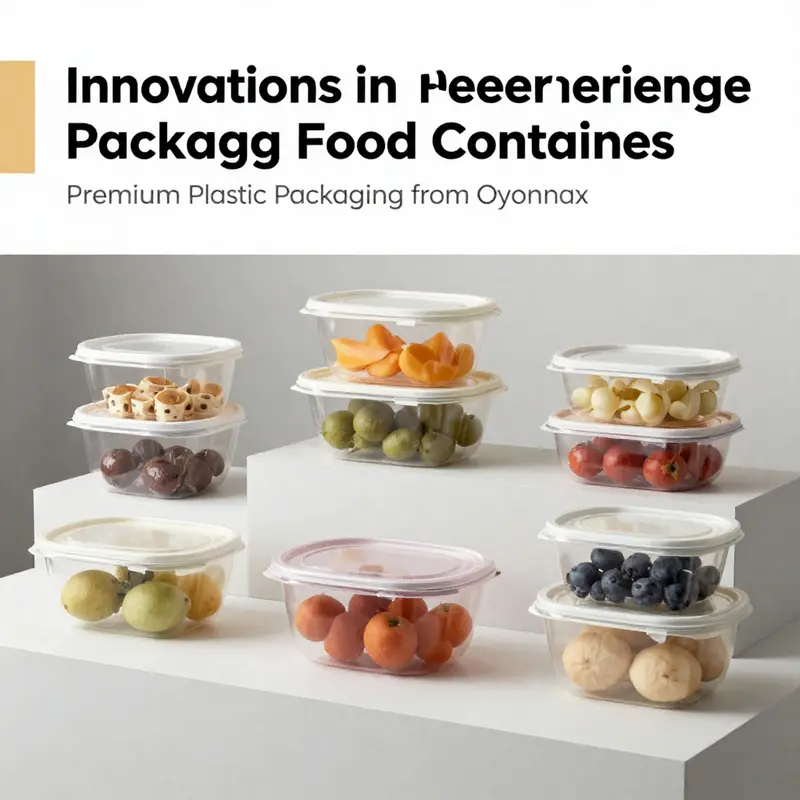
Transparency and minimalism have also shaped aesthetics. Clean, transparent designs allow consumers to inspect contents. That visibility builds trust and supports purchase decisions. Minimalist labeling reduces visual clutter. It allows brand messaging to breathe. When clear walls pair with striking, simple labels, the overall effect is premium and honest. Many designers in Oyonnax use subtle textures and matt finishes to provide tactility while preserving visibility. These aesthetic choices also help products stand out on crowded shelves.
An important design principle now widely applied is design-for-recycling. This shifts how containers are conceived from their inception. Designers select single-polymer constructions where possible. They avoid multi-layer laminates that resist separation. Labels and inks are chosen for easy removal in recycling processes. Closures are designed to remain attached or be readily separated during sorting. Such measures increase compatibility with existing recycling streams and raise the value of recovered material. In the broader European context, this approach aligns with laws that incentivize recyclability and material traceability.
Beyond recyclability, a disruptive trend in Oyonnax is the rise of reusable and returnable packaging systems. These systems present a broader rethinking of supply chains. Instead of one-way single-use packaging, systems now favor durable containers that circulate multiple times. For bulk food items, standardized, returnable jars are gaining traction. These jars are made from rigid plastic engineered for many cycles. They resist scratching and deformation. They also accept strong seals that maintain food safety across returns. A returnable system reduces waste and spreads material impact over many uses. It also creates opportunities for local logistics loops that keep material in regional economies.
The emergence of France’s national deposit system has catalyzed this shift. Introduced in 2025, that policy encourages return schemes and harmonizes deposit mechanisms. Oyonnax manufacturers are responding by developing containers compatible with deposit-and-return logistics. They prioritize durability, stackability, and standardized dimensions to ease handling by automated depots. Design teams collaborate with retailers and logistics providers to ensure containers integrate seamlessly into existing workflows.
Standardization plays a critical role in returnable models. When containers share common neck finishes, stacking geometry, and dimension tolerances, systems scale faster. Standardized jars can be washed and refilled in centralized facilities. They can also be inspected and reconditioned efficiently. Companies in Oyonnax are investing in modular designs that allow lids and seals to be replaced while retaining the jar body. This reduces waste during maintenance and extends service life.
Technology also supports this new packaging ecosystem. Smart packaging elements, while unobtrusive, provide added value. Temperature indicators, tamper-evident features, and freshness sensors are being explored. Some solutions employ simple mechanical features, like visual color strips that change when the seal is broken. Others leverage printed electronics for supply-chain tracking. When applied carefully, smart features enhance consumer confidence without complicating recycling. Engineers favor low-impact technologies that do not contaminate recycling streams.
Production techniques have evolved as well. Advanced molding strategies, such as multi-cavity injection and precision blow-molding, enable consistent, high-volume output. Automation improves repeatability and reduces waste in manufacture. Inline inspection systems identify defects early, cutting rework rates. Process engineers use simulation tools to optimize wall thickness and flow patterns. These optimizations reduce material usage and cycle times. Local manufacturers have also invested in tooling that supports rapid design iterations. Quick-turn tooling shortens development cycles for bespoke containers. That agility makes it easier to deliver tailored packaging for specialty foods and small brands.
Circularity also demands attention to the end-of-life stage. In Oyonnax, producers work with recyclers and local authorities to close loops. They design containers that feed into existing municipal and industrial recycling streams. They also test material recovery processes to ensure high-quality secondary polymers. Some firms pilot take-back programs for returned containers. These programs funnel material back to local recyclers, keeping value within regional markets. Where collection infrastructure is limited, designers propose hybrid solutions. These combine recyclable designs with deposit mechanisms that guarantee return and reuse.
Consumer behavior influences technical choices. Designers study typical use patterns, including storage habits and reheating practices. For example, containers intended for meal prep must resist temperature cycling and microwave exposure. Those intended for sauces or dressings must preserve emulsion stability and prevent migration. Insights from user research shape seal geometry and neck design. They also guide labeling decisions related to microwave or dishwasher instructions. The aim is to reduce misuse and lengthen the container’s usable life.
Material innovation is not limited to virgin polymers. Many manufacturers in Oyonnax incorporate recycled content into their designs. Using PCR (post-consumer recycled) PET and PCR PP reduces reliance on virgin feedstocks. To maintain clarity and barrier performance, recycling streams are carefully managed. Sorting, washing, and reprocessing techniques improve the quality of PCR. Where optical clarity is essential, recycled content is blended carefully with virgin material. For opaque components, higher recycled content is achievable. The design challenge is to balance sustainability targets with performance and aesthetic requirements.
Product safety remains a non-negotiable priority. All containers must meet food-contact regulations. That includes migration limits, material traceability, and hygienic design. Manufacturers employ composite testing regimes to confirm that additives, colorants, and adhesives comply with standards. Packaging experts design sealing surfaces to minimize contamination risks. They also choose adhesives and labels that perform under refrigeration and heat. These practices ensure that food container innovations do not compromise consumer health or product integrity.
Collaboration is a constant theme in Oyonnax. Packaging designers, polymer scientists, and food engineers work alongside retailers and brand teams. This cross-functional approach produces solutions that are practical and scalable. For example, designers consult logistics specialists early. That consultation clarifies pallet patterns and automated sorting constraints. A design that looks elegant on a shelf might be impractical if it jams conveyor systems. Early cross-discipline feedback prevents such pitfalls.
Local research institutions contribute as well. They run material trials and validate barrier technologies. Their facilities offer pilot lines for prototyping. Small manufacturers benefit from access to that infrastructure. It accelerates innovation and spreads technical knowledge across the region. As a result, even small runs can adopt advanced features previously limited to large-scale production.
Sustainability communication is another important design layer. Transparent materials help, but packaging also needs clear labeling about recyclability and reuse. Designers use simple icons and color cues to guide consumers. Clear instructions for emptying, rinsing, and returning containers improve participation in recycling and deposit systems. When consumers know how to act, recycling rates rise. Companies in Oyonnax invest in labeling that reduces confusion and encourages responsible disposal.
Supply-chain resilience is part of the conversation too. Recent global events highlighted vulnerabilities in polymer supply and transport. Oyonnax firms are building redundancy into procurement. They also innovate in material substitution. For example, locally sourced recycled polymers reduce exposure to international disruptions. Local supply chains also shorten lead times and lower emissions tied to transport.
Economic viability is fundamental. Innovations must be cost-effective at scale. Engineers and cost analysts collaborate to align design choices with price targets. Reusable systems require upfront investment in durable containers and logistics. But lifetime cost analyses often favor reuse for high-turnover products. Lightweighting and material optimization reduce per-unit production costs. Standardization reduces variety, which lowers tooling and inventory expenses.
Finally, the cultural context in Oyonnax shapes design sensibilities. The town’s industrial heritage values craft and precision. Designers take pride in making durable, useful objects. That ethos translates into packaging that is not disposable by intent. Even when containers are recyclable, emphasis is placed on perceived longevity. Consumers appreciate packaging that feels robust. That perception supports brand loyalty and reuse.
One practical example of a widespread product type is small sauce and condiment containers. They bridge convenience with sustainability demands. For retailers and food service, clear, sealable sauce pots are essential. In Oyonnax, producers have refined these containers for both reuse and recyclability. Some versions combine a rigid body with a tight-fitting lid. Their design balances easy dispensing with reliable resealing. For those interested in similar formats, a supplier catalog provides useful reference on small clear containers such as plastic sauce jars with lids
(see product sample here: plastic sauce jars with lids).
In sum, the innovations emerging from Oyonnax integrate advanced polymers, human-centered design, and circular thinking. The region’s manufacturers adapt quickly to regulatory changes and market signals. They deliver containers that protect food and reduce environmental costs. Their work shows how technical detail and design empathy combine to reframe plastic food packaging. These developments matter not only for local industry, but for broader European efforts to make packaging more sustainable and user-friendly.
For deeper market context and projections on rigid plastic packaging in France, refer to this external industry analysis: https://www.marketresearchfuture.com/reports/france-rigid-plastic-packaging-market-1467
Durability with Duty: Reimagining Oyonnax’s Plastic Food-Container Packaging for a Circular Future
Oyonnax, a town long linked with the art and industry of plastic, sits at a crossroads where tradition meets transformation. A company with a 47-year history in plastic goods, rooted in the 01100 postal region, has built a reputation not only for durability and reliability but for packaging that seeks to elevate the product experience. In 2021 this enterprise reported a turnover of 12,546,200 euros, a figure that signals both scale and responsibility in a sector often defined by volume. The core of its business—designing plastic containers and closures that blend aesthetic value with technical performance—speaks to a philosophy that packaging is more than a container. It is a conduit for meaning, a tactile interaction that shapes how a product is perceived and used. The company’s stated mission—supporting customers to embed meaning into product design and to enhance user experience through packaging—frames a broader ambition: to steer packaging toward purpose without surrendering the practical advantages that plastics offer. Yet in Oyonnax, as in much of Western Europe, this mission unfolds amid the pressing realities of sustainability, circularity, and responsible resource use. The tension between the material’s usefulness and its environmental footprint is not a theoretical debate here; it is a practical incentive that compels design, process, and strategy to work in concert.
The sustainability challenge facing plastic packaging in the food sector is unusually acute in regions like Oyonnax. Plastics have earned a reputation for durability, light weight, and cost efficiency, attributes that have driven widespread adoption. But these same attributes complicate end-of-life outcomes. Globally, only around 9 percent of plastic ever produced has been recycled; the remaining material—whether discarded, incinerated, or left to accumulate in the environment—poses ecological risks that manifest locally as well as globally. In Western Europe, consumption per person runs high, with estimates around 150 kilograms of plastic used annually per individual. That consumption pattern underscores the dependency on plastics for packaging while also highlighting the scale of the challenge: much of the packaging produced for food is either multi-layered, chemically bonded, or otherwise engineered to protect contents but difficult to separate and reprocess. When food residues contaminate packaging or when layers are glued together in ways that resist separation, recycling streams falter. The infrastructure needed to sort, collect, and process such complex materials remains uneven, and investment in upgrading that infrastructure lags behind the pace of material innovation. These realities are not merely abstract concerns; they influence business decisions, supplier collaborations, and the design choices that shape every new container that leaves a factory floor in Oyonnax or nearby towns.
Policy frameworks at the European and national levels aim to shift the system toward a more circular model. The European Union’s Circular Economy Action Plan and France’s national strategies emphasize the need for packaging that is reusable, recyclable, or compostable, and for systems that can recover value at the end of life. In this policy milieu, projects like UPLIFT, launched in 2021, illustrate a concrete pathway toward transforming how plastics used in food and beverage packaging are collected, sorted, and recycled. UPLIFT seeks to improve recycling rates and to expand the viability of chemical recycling methods that can handle complex packaging. For a region like Oyonnax, these initiatives provide both direction and momentum: they translate broad sustainability goals into tangible opportunities for process improvement, material choice, and partnerships along the supply chain. The potential impact is not merely environmental but economic, offering a chance to differentiate products through lifecycle thinking, create new value streams from post-consumer streams, and align with consumer and regulatory expectations that increasingly favor sustainable packaging narratives.
The immediate challenges, however, are nuanced. Many plastic food containers rely on multi-material constructions precisely because such designs optimize barrier properties, mechanical strength, and food freshness. Multi-layer or contaminated materials complicate separation and recycling. End-of-life management is hindered when streams are fragmented or when local facilities lack the capacity to process heterogeneous streams. Yet these barriers are not immutable. They invite a reexamination of packaging design—an invitation that resonates with the company’s core strengths in aesthetics and technology. Design for recycling, for instance, can be integrated early in the product development phase. Choices about resins, additives, adhesives, and closures can be made with end-of-life pathways in mind, creating packaging that can be more readily sorted and fed back into production cycles. In this regard, Oyonnax’s history becomes an advantage: a deep reservoir of practical knowledge about processing techniques, material performance, and manufacturing tolerances can be marshaled to create containers that satisfy both performance criteria and recycling realities.
The sustainability dialogue in this region is inseparable from the broader market dynamics and the social themes that the company has long prioritized. A packaging supplier with social awareness can move beyond mere compliance to influence product design narratives, engaging with clients around how packaging can communicate environmental commitments while still delivering on safety, convenience, and brand storytelling. The interplay between design and sustainability is not a zero-sum game; it is a design problem with measurable quality and lifecycle indicators. When packaging is optimized for recyclability, it reduces waste, shortens material lifecycles, and potentially lowers total cost of ownership over time. It also creates a more resilient supply chain by reducing reliance on virgin materials and by enabling the reuse or repurposing of containers as part of a closed-loop system. The vision, then, extends beyond a single container or a single factory. It envisions a network of practices—material selection, process engineering, logistics, and consumer education—that collectively advance the circular economy in a region that already understands the value of productive manufacturing.
Viewed through this lens, the company’s pursuit of sustainable packaging strategies can be seen as a strategic differentiator rather than a compliance obligation. The ability to deliver packaging that looks good, protects product integrity, and also aligns with environmental goals is a potent competitive advantage. It opens up opportunities to collaborate with brands seeking to reduce their own footprints while maintaining graphical and functional packaging experiences that resonate with consumers. In this sense, the Oyonnax context is not a constraint but a catalyst: a historic base, a skilled workforce, and a proximity to customers and materials that together enable rapid iteration and responsible scaling. The path forward blends incremental improvements with ambitious leaps. Incremental improvements might include adopting more recyclable materials, simplifying layer structures, and improving barrier performance with fewer additives. Ambitious leaps could involve piloting bio-based or biodegradable options derived from renewable resources, and exploring biorefinery concepts that transform biomass into packaging candidates that fit the circular economy model. Each step requires alignment with both the engineering realities of packaging production and the policy incentives that aim to keep France at the forefront of sustainable packaging innovation.
Material innovation remains central to this evolution, yet it cannot stand alone. The real leverage comes from integrating lifecycle thinking into corporate governance, supplier relationships, and consumer engagement. Lifecycle thinking means understanding and communicating the energy and emissions embedded in manufacturing, transportation, cleaning, and end-of-life processing. It means designing for recyclability without compromising product safety or shelf life. It means collaborating with recyclers to understand how packaging enters and exits the loop, as well as with policymakers to anticipate regulatory shifts and ensure compliance without sacrificing competitiveness. In such a framework, a company with an established track record in Oyonnax can translate its design ethos into a broader strategic program: one that treats packaging not as a disposable afterthought but as a value-generating, sustainability-forward element of the product ecosystem. The potential payoff is not only ecological but economic and reputational. The region’s identity as a plastics hub can evolve from a reputation for volume to a reputation for value—where packaging is a visible symbol of responsible manufacturing and thoughtful design.
Amid these macro trends and local capacities, the question becomes how to scale sustainable packaging solutions in a way that respects the company’s core competencies while expanding its influence. The strategic move under consideration—growth through acquisition—offers a pathway to accelerate capability, widen material options, and deepen recycling channels. Acquisitions could bring new process know-how, access to advanced sorting or recycling technologies, and a broader network of customers who prioritize sustainable packaging. They could also enable more integrated end-to-end solutions: from design and manufacturing to end-of-life recovery, all anchored by a shared commitment to meaningful packaging experiences. In practice, this means investing in people, equipment, and partnerships that allow for a more modular, adaptable packaging platform. It means embracing data-driven design that tracks not only performance metrics in use but outcomes across the packaging’s lifecycle. And it means cultivating a culture where environmental responsibility is not a checkbox but a guiding principle embedded in every design decision.
To illustrate how these ideas translate into tangible opportunities, consider the evolving landscape of material choices and recycling technologies. Bio-based and biodegradable plastics, derived from renewable resources such as corn starch or cellulose, hold promise in reducing the carbon footprint of packaging and in providing compostability under industrial conditions. These materials can be compatible with existing processing ecosystems when designed with appropriate resins and compatibilities in mind. Yet they also raise questions about supply stability, cost, recycling compatibility, and waste management infrastructure. This is where the concept of plastic biorefineries becomes relevant: facilities that convert biomass into a spectrum of products, including packaging materials, enabling a more integrated and circular approach to feedstocks. The notion of a closed-loop system—where packaging materials are returned, reprocessed, and reincorporated into new products—moves from ideal to actionable with the right policy signals, investment in sorting and recycling capacity, and a shared industry commitment to standardized specifications and labeling. In Oyonnax, these ideas intersect with the practical realities of production lines, tooling, and quality assurance, creating a fertile ground for pilot projects, material trials, and collaborative demonstrations with customers and recyclers alike.
The journey toward sustainable plastic packaging in Oyonnax is thus a multifaceted endeavor. It encompasses material science, process engineering, lifecycle analytics, and stakeholder collaboration. It requires a balance between preserving the functional advantages that plastics provide—such as barrier properties, light weight, and formability—and reimagining how these materials are sourced, manufactured, used, and recovered. The region’s industrial ecosystem—with established manufacturers, skilled labor, and proximity to research and policy channels—can accelerate this balancing act. By aligning corporate strategy with circular economy incentives, the company can position itself as a leader not just in aesthetics and performance, but in stewardship. The objective is clear: deliver packaging that performs, delights, and respects the environment at every stage of its life. It is a tall order, but it is also a practical and increasingly essential objective in a market where consumers, brands, and regulators are converging on the same horizon: packaging that adds value while reducing waste and emissions. In this sense, the future directions described here are not speculative fantasies; they are actionable trajectories that connect current capabilities with tomorrow’s requirements, and they invite ongoing dialogue among designers, engineers, policymakers, and end users. The company in Oyonnax embodies this invitation, ready to translate insight into products that help redefine what packaging can be—beautiful, reliable, and responsibly linked to a circular economy.
As the chapter turns toward concrete pathways, it becomes evident that the most effective progress will emerge from integrated actions rather than isolated innovations. The emphasis must be on co-design—drawing in customers, recyclers, policymakers, and researchers from the outset to ensure that new materials and new formats are compatible with real-world waste streams and collection systems. This collaborative approach can help align product specifications with sorting technologies and recycling capacities, reducing contamination and improving recovery rates. It can also guide investments in facilities and equipment that better support efficient, high-purity recycling of complex packaging. In practice, that means standardizing some aspects of packaging that currently differ across products or customers, clarifying labeling to aid automated sorting, and adopting testing regimes that reflect end-of-life performance as much as in-use performance. The benefits extend beyond the environment: clearer end-of-life pathways can reduce variability in recycling outcomes, lower operational risk for waste-management partners, and deliver a more predictable value proposition for customers who want to articulate their sustainability commitments through packaging choices.
In short, sustainability in Oyonnax’s plastic food-container packaging is not a single initiative, but a philosophy that informs design, production, and collaboration. It asks for better materials, smarter processes, and stronger networks that can turn waste streams into resource streams. It requires a long horizon: the development of bio-based materials and biorefineries, the scaling of recycling technologies, and the refinement of end-of-life infrastructure to support closed-loop flows. All of this must be pursued without compromising the user experience—the tactile and visual cues that give packaging its meaning. The company’s legacy positions it uniquely to contribute to this shift: the expertise to engineer packaging that is both technically robust and aesthetically compelling, coupled with a social conscience that recognizes packaging as a cultural artifact as well as a product component. As Oyonnax contemplates acquisition routes to broaden its sustainable packaging platform, the potential to accelerate circular solutions becomes tangible. The city’s manufacturing DNA, reinforced by policy momentum and industry collaboration, could translate into a new standard for plastic food-container packaging—one that demonstrates how durability and design can coexist with duty toward people and the planet.
For readers seeking a broader frame for these developments, the European Union’s UPLIFT project offers a comprehensive overview of ongoing efforts to enhance recycling in the plastics used for food and drink packaging. This external resource provides context for policy-driven and industry-led initiatives that intersect with the local opportunities in Oyonnax and across France. See the EU’s sustainable plastics guidance here: https://ec.europa.eu/growth/sectors/chemicals/sustainable-plastics_en. In addition, the chapter’s narrative acknowledges practical market signals and supply-chain realities that shape how new materials and designs move from concept to consumer, including the potential for internal collaborations and market-driven demonstrations that showcase the value of sustainable packaging choices.
Internal link reference: As markets increasingly demand packaging solutions that marry function with environmental responsibility, many practitioners look to real-world examples of compostable or recyclable configurations that still deliver on performance. A representative example of how eco-conscious packaging can be configured for fast-food and takeaway contexts is explored in product offerings that emphasize multi-compartment and user-friendly designs while maintaining strong barrier properties and clean end-of-life signals. For readers exploring concrete packaging options, the following example provides a snapshot of how sustainability-oriented design can be translated into practical formats: eco-friendly disposable 3-compartment packaging box.
Final thoughts
The journey of plastic packaging food containers in Oyonnax, France, reveals a rich history intertwined with innovation and a commitment to sustainability. As the market continues to evolve, businesses in the food and beverage industry can benefit from understanding these dynamics. The innovations presented by the Oyonnax company not only meet functional needs but also prioritize environmental considerations. For bubble tea shops, restaurants, catering services, and event planners, embracing these advancements in packaging can enhance brand value and customer experience, ensuring that they stay ahead in a competitive market.