
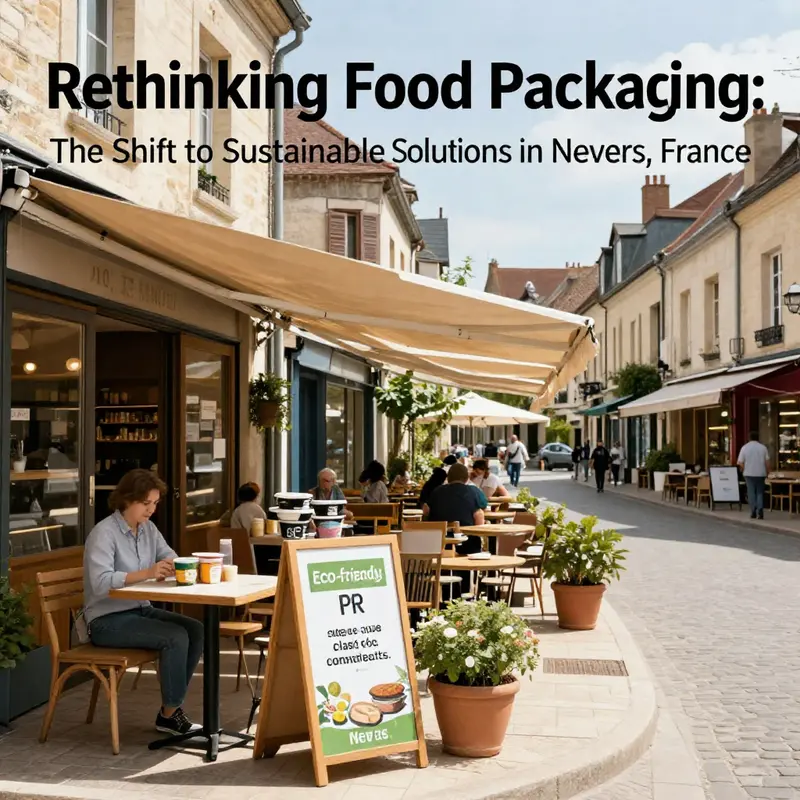
The recent ban on single-use plastic food packaging in Nevers, France, marks a pivotal moment for the food service industry, compelling businesses such as bubble tea shops, restaurants, food trucks, catering services, event planners, and procurement teams to adapt to new regulations and changing consumer behaviors. As establishments transition away from single-use plastics, understanding the environmental, economic, and societal implications of this ban becomes essential. Each chapter of this article will delve into different facets of this significant shift, from its environmental impact to the emerging sustainable packaging solutions that could redefine food service operations in Nevers.
Nevers and the Plastic Packaging Shift: Tracing the Environmental Footprint of Food Containers in a French City
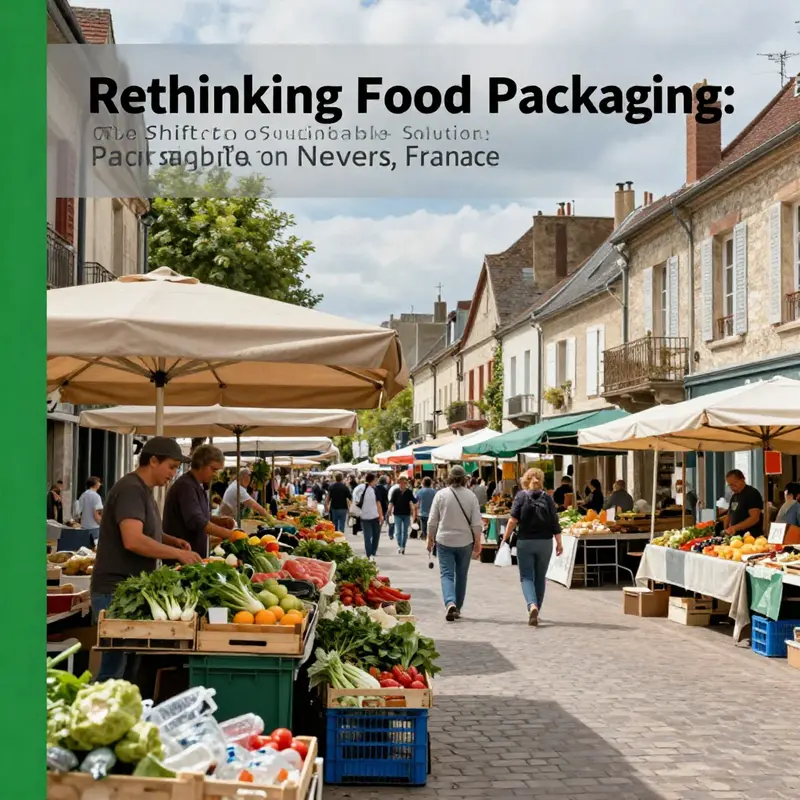
Nevers sits along the Loire’s banks, a city where history folds into modern policy debates about waste, consumption, and the kind of urban life a circular economy demands. In this setting, the environment ceases to be a distant, abstract concern and becomes a daily arithmetic: bags, boxes, cups, plates, and the way people dine indoors at the city’s cafes and bistros. The French government’s 2020 Loi Agec, with its sweeping aim to curb single-use plastics, reframed that arithmetic for Nevers and countless other communities. It prohibits disposable tableware for meals designed for one-time use in restaurants serving indoors at least twenty customers, effectively targeting the fast-food sector where plastic- and paperboard-based packaging has been most visible. Yet the law distinguishes between in-house consumption and takeaway; the thin paper wrapper around a sandwich remains outside the ban, while the broader ecosystem—restaurants and cafes, their logistics, and the waste streams they feed—must pivot toward reusable, durable, or easily recyclable solutions. The objective is clear: reduce the approximately 180,000 tons of packaging waste produced annually by France’s fast-food sector, with more than half of that waste generated during dine-in service. The ambitious horizon is even more demanding: by 2040, single-use plastic packaging across all sectors should be a thing of the past, replaced by systems built around reuse, refurbishment, and circularity. In Nevers, as elsewhere, enforcement has rolled out in phases, initially emphasizing education and guidance, then moving toward fines of up to €1,500 for violations. The shift is not merely regulatory; it requires a rethinking of kitchen workflows, procurement practices, and the city’s capacity to collect, wash, and reuse containers that travel through its restaurants and homes. The practicalities of this transition sit at a challenging intersection of public policy, local business resilience, and citizen awareness, with Nevers acting as a microcosm for how French policy is translated into urban life. The environmental implications of plastic packaging in Nevers, while not captured by a city-specific empirical study, echo broader European and global patterns. ADEME and EU assessments suggest that plastic packaging, across the lifecycle, often contributes only a fraction of total environmental impact in many indicators. Yet the long tail of plastic—its persistence in soils, rivers, and the marine environment—translates into cumulative damage that outlasts fashion trends and municipal budgets. In numbers often cited by European agencies, the total lifecycle emissions associated with plastic packaging may account for less than 10% in many indicators for a broad set of foods; this percentage is not a sign of inconsequence, but a reminder that the cumulative effect across millions of meals is substantial. Nevers, like other cities, faces the reality that recycling rates, waste separation, and public participation determine how much of that plastic becomes a resource rather than a pollutant. The city’s waste streams are shaped by many factors: the efficiency of local collection networks, the availability of facilities to sort and process plastics, and the willingness of consumers to separate streams and bring attention to the handling of packaging waste during heating, storage, and transport. The danger of microplastics—tiny particles released from plastics during aging, heating, or degradation—does not respect municipal boundaries. In France, as in other mature economies, the public health concern centers on how microplastics migrate from containers into food and drink, and how high temperatures—whether from hot foods, microwaving, or simply warm storage—can accelerate the leaching of additives such as BPA and phthalates. The policy impulse in Nevers is to minimize exposure by curbing the most problematic packaging forms and by promoting alternatives with lower or no hazardous additives, while simultaneously reusing containers where feasible. This is not a purely technological problem; it demands new social and economic architectures. Restaurants in Nevers confront a practical calculus: the cost and logistics of acquiring durable serving ware, the infrastructure to wash, dry, and sanitize that ware at scale, and the customer experience that diners expect when they walk into a dining room or opt for a sit-down meal indoors. Reusable systems require reliable workflows, clear data on turnover rates, and robust facilities for cleaning, sanitizing, and transporting items back to kitchens and dining areas. For smaller venues and new entrants, the initial capital investment can be daunting; for larger chains, the operational complexity can be equally intimidating if waste diversion targets are not matched by process redesigns and staff training. Yet there are meaningful transitions underway. Some Nevers establishments are experimenting with durable, recyclable packaging made from paper-based or bio-based materials that align with the city’s environmental objectives while preserving the sensory and functional expectations of customers. The adoption of reusable glassware or metal containers presents additional benefits in terms of durability and potential lifecycle savings, but it also introduces considerations around dishwashing capacity, water usage, and the energy footprint of cleaning cycles. The broader policy frame provides a directional beacon: when the city and its partners invest in collection and washing infrastructure, the economic calculus of reuse becomes more favorable. The social dimension deserves attention too. Public awareness and consumer behavior are pivotal to the success of Nevers’ transition. Citizens who practice proper waste separation and who understand the goals of the law contribute to higher recycling rates and lower contamination in streams of plastics destined for energy recovery or recycling. This cultural shift aligns with a wider French and European movement toward a circular economy, one that values materials for longer lifespans and treats waste as a resource. The environmental footprint of plastic packaging, in Nevers and beyond, is thus best viewed as a mosaic of interlinked elements: material choice, manufacturing energy, transportation emissions, usage patterns, and post-consumption fate. While plastics have relative advantages in light-weighting and shelf-life, their end-of-life pathways are fraught with leakage and degradation. The European context acknowledges that plastic packaging’s share of food-related emissions is often modest on a per-item basis, yet the aggregate impact across millions of servings is non-trivial. In Nevers, this realization translates into policy and practice: a preference for materials that improve recyclability, consumer education to reduce inappropriate disposal, and the development of a local ecosystem capable of supporting a transition from single-use to reusable packaging. The practicalities of such a shift extend beyond the city’s borders. France’s overarching aim to eliminate single-use plastic packaging by 2040 depends on scalable, interoperable systems that enable reuse across sectors. Realizing that vision requires a robust logistical scaffold—collection trucks, wash lines, drying facilities, and standardized containers that can survive numerous reuse cycles without compromising food safety. It also requires a supply chain that embraces transparency about materials, adhesives, and printing inks, so that reusables can be rotated through cycles with minimal risk of contamination. In Nevers, the path forward may be incremental but steady: test small, well-defined reuse loops in selected districts, expand successful models to additional neighborhoods, and connect these efforts to the city’s waste management authority and local businesses. The interplay between public policy and local adaptation matters; a one-size-fits-all approach would neglect the historical and cultural texture of Nevers, where shopfronts and eateries are deeply embedded in daily life. The chapter of Nevers’ environmental journey, thus, is not a standalone narrative about plastic packaging alone. It is a chapter about a city negotiating with history, industry, and citizens as it leans into a future where packaging is designed for reuse, durability, and minimal ecological footprint. It is a story of the everyday—how a box, a cup, or a lid used in a café or at a street market travels from producer to consumer, through the municipal system, and back into another life, rather than lingering in a landfill or in the natural world. For readers seeking a tangible thread to connect policy with practice, consider the broader supply ecosystem that frames Nevers’ choices. The available literature and guidelines from ADEME and European institutions emphasize the balance between lifecycle emissions and long-term waste management outcomes. They remind us that the environmental cost of plastic packaging is not solely a function of what is used for a single meal, but also of how society captures, reuses, and recovers it over decades. In Nevers, the local story is shaping a national narrative about responsibility, innovation, and resilience in the face of a global plastic challenge. The city’s approach—combining education, policy enforcement, and investment in reuse-ready infrastructure—offers a blueprint for other communities wrestling with similar tensions. As Nevers advances, its residents, restaurateurs, and policymakers are asked to weigh convenience against stewardship, immediate expense against long-term savings, and the familiar ease of disposable packaging against the promise of a cleaner, circular economy. The transition will not be seamless, and it will require patience and collaboration across sectors. But the core logic remains straightforward: when packaging is designed for multiple uses, and waste streams are organized to keep materials circulating and out of landfills, Nevers will shoulder less of the burden of plastic leakage, and future generations will reap cleaner streets, healthier soils, and safer waterways. That is the aspiration behind the policy and the daily labor of implementing it. To illustrate how a city like Nevers can connect to the larger ecosystem of solutions, one can look to the growing shelves of durable, reusable, and sometimes biodegradable options that align with local capacities and consumer expectations. In practical terms, restaurants can experiment with long-life, high-clarity containers that withstand repeated washing, while also validating the safety and integrity of heat and food contact. For customers, the shift invites a different rhythm of dining—one that values the lifecycle story of the container as much as the meal it carries. It also invites careful, ongoing evaluation: monitoring contamination rates in recycling streams, measuring the energy and water use of reprocessing facilities, and adjusting procurement practices to optimize material performance and cost. The aim is not to vilify plastics but to reframe their role in consumption. If Nevers, with its distinctive identity, can cultivate a robust reuse culture and a resilient waste-management network, other French cities can read the same signals and scale them in ways that reflect local economies and cultural habits. The long horizon remains daunting, yet the trajectory is clear: fewer single-use plastics, more durable and reversible solutions, and a city that treats waste not as a nuisance but as a resource awaiting a second life. For researchers and policymakers, Nevers offers a living case study of how policy nudges, urban logistics, and consumer behavior intersect at the scale of a city where history continues to inform a more sustainable future. The interplay between micro-level actions and macro-level goals will determine how quickly Nevers reduces its footprint and how effectively it contributes to France’s broader ambition to minimize plastic packaging waste and eventually close the loop. In this sense, the Nevers chapter of the French plastics story is both a local experiment and a reminder that the path toward a circular economy is paved by everyday choices, smart design, and collective will. The city’s next steps will hinge on building shared value: restaurants gain resilience through reuse-ready systems; households experience less litter and cleaner neighborhoods; and the natural environment benefits from reduced plastic leakage. Through these evolving dynamics, Nevers contributes to a Europe-wide movement that seeks to redefine the lifecycle of food packaging—from production to disposal—and ultimately toward a future where packaging is designed with its next life in mind. External resources and ongoing research will continue to illuminate best practices and pitfalls, guiding Nevers and similar communities as policy, business, and citizens walk the tightrope between convenience and stewardship. For those who wish to explore further practical implementations, a range of examples exist in the commercial packaging landscape that emphasize durable, recyclable, and reusable solutions designed for real-world dining contexts. eco-friendly takeout boxes for food packaging. These options illustrate how design and material choice can align with regulatory demands while meeting the expectations of modern diners who care about the environment. They also underscore the need for comprehensive service ecosystems that include cleaning, logistics, and consumer engagement to realize the full potential of reuse-oriented packaging. The dialogue between Nevers’ policy framework and its everyday dining culture will continue to unfold, shaping a city that acts as a bridge between historic streets and a future where packaging serves people and planet, not just convenience. External resource: https://www.ademe.fr/en/food-packaging-environmental-impact
Unearthing Nevers’ Economic Terrain: The Local Cost and Opportunity of France’s Plastic Packaging Ban
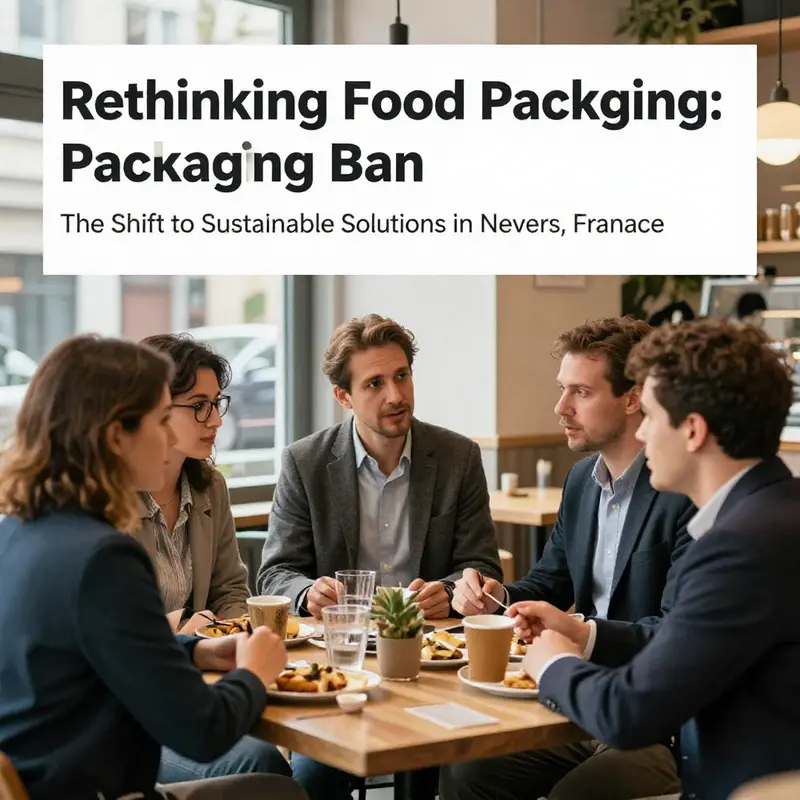
Nevers sits where history and daily life intersect, a city whose café terraces spill onto narrow streets and whose markets cradle the rhythms of a regional economy. In this setting, the national policy push against single-use plastic packaging—most notably the dine-in ban on disposable tableware—unfolds as a concrete test of how a mid-sized city translates law into everyday business practice. France’s Loi Agec, enacted to curb the roughly 180,000 tons of packaging waste generated by fast-food and dine-in services each year, targets plates, cups, lids, and cutlery designed for one use. It applies to restaurants and cafés serving indoors at least twenty customers, and it excludes takeaway wrappers and some sandwich packaging. The policy’s aim is clear: reduce waste, push toward reuse, and set the stage for a circular economy by 2040. But the path from statute to street is paved with local decisions about cost, logistics, and culture. Nevers provides a revealing case study of how a city can balance environmental ambition with the economics that shape daily meals and livelihoods.
The policy context is crucial. A national framework designed to curb pollution and drive reuse reaches into the pocketbooks of small businesses. In Nevers, as elsewhere in France, the immediate business question is not whether to move away from disposable packaging but how rapidly and at what cost. The ban’s design means that dine-in experiences must shift toward reusable systems or alternative packaging options, often biodegradable or compostable, particularly for venues that rely on in-house consumption. Enforcement has started with educational measures, but the penalties—up to 1,500 euros for violations—signal seriousness. The long horizon—by 2040, all single-use plastic packaging is slated for elimination across sectors—implies a gradual but steady retooling of supply chains, infrastructure, and consumer expectations. For Nevers, this translates into a two-sided economic calculus: the upfront and ongoing costs of new packaging and cleaning systems on one side, and potential operational savings, improved waste management, and enhanced civic reputation on the other.
In practical terms, the immediate economics revolve around two interwoven concerns: the cost of alternatives and the operational changes required to implement them. For a café or small restaurant, the switch from disposable to reusable tableware or to sustainable packaging often demands capital outlays. Durable dishware, return-and-wash systems, tracking of inventory, and the logistics of collecting and redistributing used items introduce new overhead. If a venue operates with a modest floor area and a lean staff, the added complexity can be daunting. The city’s existing laundry capacity, water usage, and energy costs will influence the feasibility and cost effectiveness of a full transition. A venue that already collaborates with a local laundry or a shared reuse facility may experience a smoother pivot; others may need to invest in a new network of suppliers, cleaning partners, and perhaps a small on-site dishwasher compatible with reusable service ware. These considerations are not merely technical; they touch pricing, menus, and the cadence of service.
Beyond the microcosm of individual eateries, the broader economic frame matters deeply. National policy signals—paired with EU-level timelines—create a predictable horizon for investors and operators. A collective push to minimize single-use packaging aligns with a wider European ambition to curb plastic waste and cultivate circular business models. The World Economic Forum has highlighted the potential environmental benefit of large-scale bans, noting that France’s 2022 measures could reduce the use of roughly one billion single-use plastic packages annually. Translating that environmental gain into local economic terms is the task before Nevers’ business community. It involves analyzing how much capital is needed to acquire reusable systems, how much could be saved in waste disposal, and what new revenue or savings might emerge from changes in customer behavior and supplier relationships. In the absence of precise Nevers-specific data, business owners must rely on cautious, scenario-driven planning that weighs upfront investments against long-run efficiencies and reputational gains.
The shifts in Nevers will reverberate through the local economy in ways that extend beyond the restaurant sector. For some operators, the cost of alternative packaging or the expense of operating a reusable system will appear as a higher per-unit cost in the near term. In response, a price elasticity question emerges: will customers tolerate slightly higher prices when the dining experience aligns with environmental values? The answer will likely hinge on the perceived value of sustainability and the willingness of diners to support venues that invest in circular practices. Those restaurants that can integrate reuse into their service model—streamlining pickup, wash, and return cycles—could mitigate price concerns and build a loyal clientele drawn to responsible business practices. Conversely, venues with weaker mechanics for reuse may experience a temporary dip in footfall or a need to adjust menus and portion sizes to preserve margins. The local tourism mix also matters; Nevers attracts visitors who may be particularly receptive to a city’s green credentials, but price-sensitive travelers may constrain the pace of change in certain segments.
The policy transition also opens the door to opportunities for a fresh wave of local entrepreneurship. The shift from disposable to durable, returnable systems creates demand for new service models and logistics networks. Local manufacturers of durable tableware or packaging solutions can find a growing market as the city and its surrounds move toward reuse. Service providers—those who can coordinate the collection, washing, and redistribution of reusable items—could establish partnerships with multiple outlets, turning a fragmented approach into a more integrated regional system. Such collaboration can yield economies of scale, reduce per-unit cleaning costs, and improve the reliability of supply chains. In a city like Nevers, where small, independent operators predominate, a cooperative approach—shared crockery pools, jointly managed washing facilities, or a centralized return network—could unlock efficiencies that single businesses cannot achieve on their own. The potential is not merely to substitute one form of packaging for another, but to reimagine the economics of serving meals in a way that emphasizes reuse, shared infrastructure, and data-driven inventory control.
The municipal dimension presents both a challenge and a potential catalyst. Nevers’ city government must align licensing, waste collection policies, and zoning with the new packaging regime, while encouraging collaboration across the hospitality, education, and healthcare sectors that contribute to dine-in waste streams. A well-designed framework could include incentives for venues to participate in reuse schemes, streamlined permitting for shared washing hubs, and clear guidelines for the return and redistribution of used items. The payoff is not only environmental but fiscal: reduced landfill use, potential reductions in long-run disposal fees, and a strengthened municipal narrative that positions Nevers as a model for circular-city practices. Yet the success of such a framework depends on practical logistics—how quickly a reusable system can be scaled, how reliably items cycle back to outlets, and how data on waste- and cost-savings is captured and shared with stakeholders.
This is not merely a tale of compliance; it is a story of adaptation and opportunity. The Nevers experience will inevitably grapple with policy coherence challenges, such as timing windows for various exemptions and the pace at which EU timelines translate into local action. While the central ban targets dine-in waste, other elements—such as takeout packaging regulations and wrappers for certain foods—shape operational choices and supplier networks in subtler, slower ways. The city’s adoption will hinge on whether policymakers can maintain a practical balance between environmental ambition and the realities of small-business finances, customer expectations, and existing infrastructure. The potential payoff is a more resilient local economy, less waste, and a dining culture that views packaging not as a disposable afterthought but as a system to be optimized through reuse and collaboration. In this light, Nevers can become a living experiment in the fundamental rethinking of packaging—from a linear flow that ends in a landfill to a circular loop that returns value to the community.
For those seeking a practical path forward amid uncertainty, the key lies in incremental, data-informed action. Precise Nevers-specific economic analyses will sharpen policy design and investment priorities. In the meantime, venues can begin with small pilots: test reuse loops in a few venues, measure the performance of shared washing facilities, and explore procurement arrangements that prioritize durable, easy-to-clean materials. These steps reduce risk while delivering early environmental benefits and a clearer long-run picture of capital needs, operating costs, and potential savings. The national arc toward 2040 remains a compass, but the map is drawn by local decisions: what infrastructure is built, which partners are engaged, and how residents and visitors perceive the city’s commitment to sustainable dining.
In sum, Nevers stands at a critical junction. The ban on single-use disposable packaging is more than an environmental directive; it is a catalyst for a reimagined local economy where reuse, collaborative procurement, and service innovation become normal. If Nevers can cultivate a supportive ecosystem—coordinating with suppliers, laundries, and neighboring towns—while preserving the vitality and affordability of its café culture, the city could turn a regulatory burden into a competitive advantage. The transition will be staged, data-driven, and collaborative, requiring patience and experimentation. Yet the city’s trajectory could illuminate how mid-sized municipalities across France and Europe translate ambitious waste-reduction policies into tangible improvements for businesses, residents, and the urban environment. A successful local rollout would not erase the challenges, but it would demonstrate how a city can align policy with practice, turning environmental necessity into economic and social value.
For broader context on the policy environment and international timelines, see the European Commission’s overview of plastic waste policy: https://ec.europa.eu/environment/waste/plastic_waste.htm
Internal reference for practical packaging options: eco-friendly takeout boxes for food packaging
From Bans to Bills: Navigating Nevers’ EPR and Recycled Content Rules Shaping Plastic Food Packaging
Nevers sits at the confluence of national ambition and European responsibility when it comes to plastic packaging for food. The city has absorbed a policy shift that began with the 2020 Loi Agec and has intensified as France and the EU push toward a circular economy. What unfolds in Nevers is a coherent, evolving framework that links producers, retailers, and waste managers in a chain of accountability. The most consequential development from January 1, 2026, is the Extended Producer Responsibility (EPR) scheme targeting industrial and commercial packaging. Practically, firms placing plastic packaging on the French market—especially packaging used for food containers—must register with a designated eco-organization, contribute to end-of-life costs, and demonstrate alignment with evolving environmental criteria. For a city focused on local business vitality and environmental stewardship, the EPR represents a new baseline for product design, procurement, and after-use management.
The shift to EPR reframes what counts as responsible packaging: producers are no longer merely responsible for selling a container; they are charged with financing its entire life cycle. This transfer of cost and obligation is deliberate, aligning financial incentives with behavior policymakers seek: materials easier to separate, recycle, and reintegrate into the economy. In Nevers, this translates into a demand for systems that can track packaging materials from production through recycling streams. Companies must register with an eco-organization, a step that formally articulates who bears responsibility for what portion of end-of-life. The administrative aspect shapes supplier selection, contract terms, and product development roadmaps. Small cafés, diners, and mid-sized restaurants will feel the impact most directly, because daily choices around disposable or reusable tableware now intersect with broader cost allocations and reporting requirements.
Alongside EPR, minimum recycled-content requirements set a clear target for material composition. By 2030, packaging for contact with food must contain at least 30% recycled content for PET-based materials; other plastic packaging has a floor of 10%. These benchmarks operate on a staged timeline, encouraging a gradual but steady shift in material sourcing and supplier behavior. Nevers’ suppliers and local producers face a dual challenge: meet the 2030 content thresholds and do so in a way that remains economically viable for takeout and dine-in sectors that define the city’s dining landscape. The implication is a design mandate: packaging must be conceived with end-of-life in mind, reducing post-consumer processing and enabling higher recovery rates.
EU-wide rules governing food-contact materials add another layer. Recycled plastics used in contact with food are scrutinized for safety and migration limits. For Nevers and its supply chains, compliance means testing, third-party verification, and transparent documentation. Restaurants and distributors must demonstrate their packaging meets both recycling-content targets and safety standards. This combination creates a credible, science-based framework that sustains consumer trust while driving packaging innovation. Enforcement is a critical piece: non-compliance can carry penalties and reputational risk, especially for small businesses that rely on municipal markets and tender processes.
To make this system work, Nevers relies on robust quality control across the supply chain. EPR and recycled-content requirements require end-to-end QA, documentation trails, audits, and batch-level certificates. Practically, this means balancing the cost of higher recycled-content packaging with the benefits of reliable waste streams and clear signals to suppliers. The broader effect is a living laboratory where financial mechanisms of EPR interact with consumer expectations and municipal waste realities. For practitioners, the core message is to audit current packaging, identify opportunities to increase recycled content safely, and ensure every supplier can provide credible documentation. Map the packaging lifecycle and establish governance that includes registration status, compliance certificates, and migration testing results. Early engagement with municipal waste-management programs can reveal opportunities to improve sorting and reduce contamination, making high-recycled-content packaging more compatible with existing recycling streams.
The overarching takeaway is that today’s packaging decisions will shape tomorrow’s waste landscape. Local businesses gain clarity about the rules and signals about preferred packaging options. Nevers stands at the edge of a broader transformation where regulatory clarity and environmental responsibility guide everyday choices in kitchens, cafeterias, and storefronts toward packaging that is safer, more recyclable, and aligned with a sustainable European future. For readers seeking a tangible anchor, eco-friendly packaging options that meet recycled-content mandates illustrate how suppliers can support the transition while maintaining user experience.
Nevers as a Mirror: Public Perception and the Slow Transition to Reusable Packaging in France
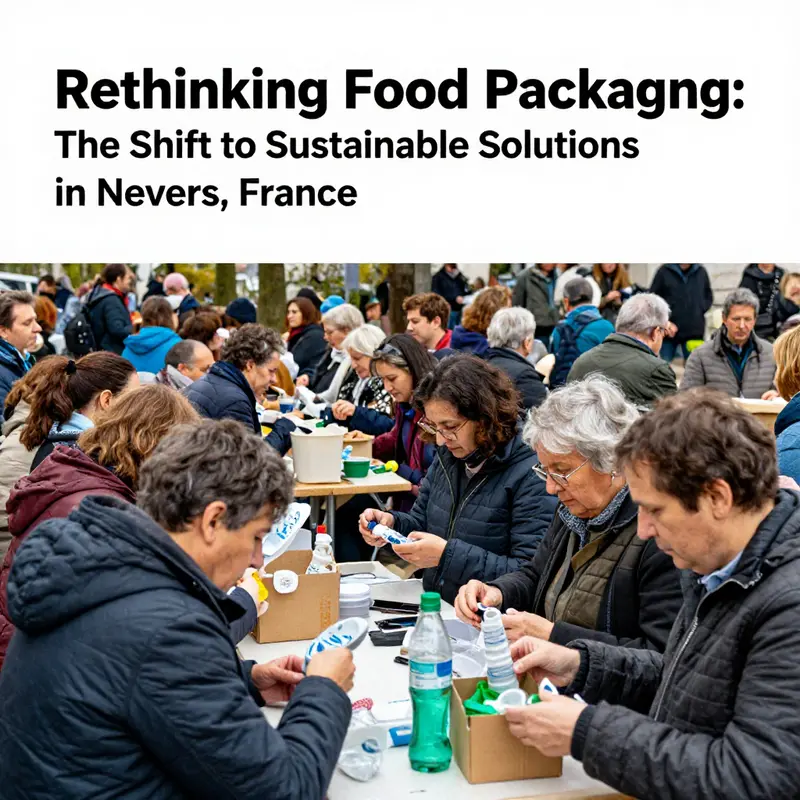
Nevers sits in the heart of France, a mid-sized city where markets, cafes, and schools knit together daily life. It is not a megacity, yet it serves as a useful lens for understanding how ordinary people respond when a sweeping policy moves from rhetoric to practice. The national push to curb single-use plastic and other disposable packaging has moved from policy brief into everyday decision making, and Nevers tests the tempo and texture of that transition. What do residents think about the shift toward reusable tableware and away from one-time wrappers and plates? How do diners, shopkeepers, students, and parents weigh convenience against cleanliness, cost, and the promise of a cleaner neighborhood? These questions matter because public perception in smaller cities often shapes the pace of reform more than top-down directives alone. In the absence of deep local studies focused on Nevers, it helps to widen the view to France as a whole while keeping an eye on local variations that accumulate over time into a culture of change.
The policy framework guiding this change is clear on paper. The 2020 Anti Waste for a Circular Economy Act, known here as the AGEC law, signals the end of disposable tableware in many dining contexts, with exemptions carefully circumscribed. In practice, the law aims to reduce a substantial portion of the packaging waste produced by France’s fast food and dine in sectors. It targets restaurants and cafes serving indoors more than 20 customers, a threshold that aligns with a certain scale of operation where the impact of waste is most tangible. Yet policy is only half the work; the other half unfolds in kitchens, courtyards, and school cafeterias where people negotiate constraints, habits, and possibilities of reuse. In Nevers, as in other communes, the conversation begins with everyday experiences: the feel of a reusable plate on a late lunch service, the reliability of a washing and drying cycle after a busy peak, the logistics of bringing back used vessels from customers to a central cleaning hub, and the financial calculations that accompany any shift away from disposable products.
Public sentiment often travels through two currents at once. On one side runs a shared aspiration for cleaner streets, less litter, and a reduced ecological footprint. On the other side moves a practical concern about convenience, hygiene, and cost. In many French towns, local media coverage has framed the transition as a path toward a more responsible consumer culture, highlighting stories of municipalities piloting deposit systems, schools programming waste reduction weeks, and neighborhood associations coordinating repair and reuse workshops. These narratives can democratize the policy by showing tangible benefits—fewer bags of waste piling up near markets, improved air quality, and a sense of collective achievement when litter dwindles near rivers and parks. Yet the same coverage can amplify unease about the friction points: the friction of carrying reusable cutlery on crowded days, the time spent waiting while a dishwasher runs, the upfront costs to shops for durable serviceware, and the uncertainty that grocery chains and small cafes feel when trying to redesign their supply chains.
In Nevers, residents often anchor their views in personal routines. A parent juggling school drop-offs may appreciate a cafeteria that delivers meals in reusable trays, provided the system is predictable and quick. An elderly neighbor who shops at the market each morning might value the absence of overflowing plastic bags in the evenings and the cleaner sidewalks that result from less litter accumulating along the canal. A student working a part-time shift in a cafe will weigh the impact of reusable wares on tips, the risk of breakage, and the reliability of the cleaning infrastructure. These micro narratives matter. They coalesce into a public mood that can be cautious but receptive, especially when the community sees clear demonstrations of hygiene standards and safe handling. The emphasis on cleanliness is not incidental; it underpins the trust consumers must have to embrace a new set of norms around disposables and reusables alike.
As in many places, skepticism in Nevers tends to cluster around two practical concerns. The first is logistical: can a city with a modest, aging waste management system realistically scale up to collect, wash, and dry reusable serviceware without creating bottlenecks that slow service in peak hours? The second is economic: will the cost of transitioning to reusable systems cascade to customers through higher prices, or will it be absorbed by restaurants and cafes as a capital expense that yields long term savings? The answers are evolving. In some cases, cafés have experimented with smaller, in-house dishwashing cycles, pairing them with staff schedules that minimize disruption. In others, the community has learned to coordinate with school labs and local associations to run shared washing facilities during off-peak times. The adaptability visible in these improvised arrangements is a sign of social ingenuity, a willingness to improvise around new norms when the incentives are clear and the processes well explained.
Education and communication emerge as crucial vehicles for shaping perceptions. When the law arrived with a phase-in period, local authorities often paired it with informational campaigns and practical demonstrations. The aim is not simply to tell people to change, but to show them how to change and why the change matters. In Nevers, as in other cities, schools become forums where children learn to sort waste, design ideas around reuse, and participate in projects that bring residents into contact with the practical benefits of a circular economy. Public workshops at community centers offer hands-on experiences with reusable tableware, including demonstrations of washing routines, drying times, and the long-term life cycles of durable, recyclable materials. These hands-on experiences help demystify the process and turn a policy mandate into a shared project. When families begin to discuss these experiences around supper tables, the policy becomes less abstract and more personal. The social transmission of knowledge here matters as much as the policy text itself.
From a cultural vantage point, the shift also intersects with local identity and pride. France prides itself on a tradition of craft, regional specialties, and careful stewardship of public spaces. The transition away from throwaway packaging can be framed as an extension of that ethos, a modern extension of the same impulse to care for the commons. In Nevers, the canal that threads through town, the market square, and the quiet lanes near the old fabrics district offer vivid reminders that local actions can have wide ripples. When residents see reusable containers becoming a norm in their neighborhood markets and dine in spaces, a sense of shared responsibility can grow. Yet that sense must be nurtured, not assumed. The social contract depends on visible, reliable infrastructure—easy access to clean collection points, predictable washing schedules, and clear communication about any exceptions or temporary disruptions.
Another layer of public perception concerns equity and access. A policy framed as environmental progress can feel distant if it does not acknowledge the realities of households with tight budgets, multi-generational living arrangements, or limited access to convenient washing facilities. In Nevers, there is a real tension between ambitious environmental aims and the daily needs of diverse residents. Policymakers increasingly recognize that the transition must be inclusive. Options such as subsidized or easier-to-clean reusable wares, community laundries, and partnerships with schools to facilitate lunch service in reusable systems help bridge gaps. The most successful examples link environmental benefits to tangible gains for residents: less litter, cleaner streets, more predictable service, and a sense of participating in a national project that also strengthens neighborhood ties.
The role of local businesses in shaping public perception cannot be overstated. Restaurants, cafes, and fast casual eateries often serve as the closest point of contact between policy and daily life. Their choices about what to offer, how to present it, and how to convey the costs of transition influence what customers think is possible. When a cafe steers toward durable, reusables without compromising speed or taste, it becomes a living demonstration that the system can work. When a shop declines to switch because of perceived cost or logistical difficulty, that hesitation can reverberate through the community, slowing momentum. In Nevers, several operators have reported that customers appreciate the clarity of messaging around hygiene and the convenience of clearly labeled reusable options. Others express concern that a rushed rollout could alienate patrons who value speed and predictability above all else. The balance between rigorous safety standards and practical efficiency remains a delicate negotiation, one that requires ongoing feedback loops between customers and service providers.
In contemplating the future, it is useful to consider how the public conversation might evolve as the 2040 horizon imagines a fully transitioned system across sectors. The government’s long-term aim to eliminate single-use plastic packaging by then invites speculation about innovations in product design and service models. Will reusable vessels become lighter, more durable, and easier to clean? Will there be standardized return and washing infrastructures that function across cities, towns, and rural areas alike? The experience in Nevers suggests that the answers will emerge gradually through a combination of pilot projects, cross-sector collaboration, and continued emphasis on education. The social climate that supports experimentation—volunteer groups coordinating pickup and drop-off, schools integrating waste reduction into curricula, and local businesses sharing best practices—will be as important as any regulation. The public mood thus shifts not only because of legal deadlines but because people begin to see themselves as co-creators of a cleaner, more efficient urban ecosystem.
To anchor these reflections in concrete practice, consider the growing interest in durable, easy-to-integrate packaging options that can serve dine-in and takeout contexts alike. A practical pathway for Nevers and similar communities is to explore packaging that combines practicality with minimal environmental footprint. For example, durable, washable containers designed for repeated use can be paired with simple, reliable cleaning cycles and clear labeling. The aim is to keep service fast while reducing waste and preserving the sensory quality of food. In formulating such approaches, communities often look for guidance on what has worked elsewhere and what truly aligns with local rhythms. A practical implementation involves not only the wares themselves but the system around them—collection points, cleaning facilities, staffing adjustments, and customer education that reinforces the value of reuse. When the system is coherent, customers begin to perceive the change as a shared benefit rather than an imposed constraint.
The path forward in Nevers, and across France, is not binary. It is a continuum of adoption shaped by local capacities, cultural momentum, and the daily realities of shoppers and diners. Public perception will continue to evolve as people experience fewer litter hotspots, see improved aesthetics around marketplaces, and notice the steady normalization of reusable tableware in everyday routines. The policy framework provides the compass; social perception and practical logistics supply the feet that carry the journey forward. The balance between aspiration and realism will determine how quickly Nevers embraces a circular economy in its dining culture, and how readily its residents translate national ambition into neighborhood pride.
For readers who want to explore practical packaging options that support this transition, there are durable alternatives designed for safe reuse and easy cleaning. These options, showcased in dedicated product lines, illustrate how reusables can be both functional and affordable. They offer a glimpse of how Nevers might stage its own rollout, aligning product design with local needs and the public’s evolving expectations. The narrative of Nevers thus becomes a microcosm of a national shift, where perception and practice converge to redefine how food is packaged, served, and recycled. As the chapter closes, the thread remains clear: public perception is not a static backdrop but an active force shaping the tempo, equity, and effectiveness of France’s ambitious move away from single-use plastic packaging.
External resource on policy background and the broader national framework can be found here: https://www.ecologie.gouv.fr/loi-anti-gaspillage-economie-circulaire-agec. For practical packaging options that support a shift toward reusable systems, see the available eco-friendly takeout boxes designed to integrate with local washing and collection infrastructures, such as the option highlighted at eco-friendly takeout boxes for food packaging. If you are seeking deeper local context, the Nevers region’s interactions with these national measures may be traced through local government communications and regional environmental programs, which continue to refine how citizens and businesses experience the transition day by day.
null
null
Final thoughts
The ban on single-use plastic food packaging in Nevers represents more than a regulatory change; it signifies a collective commitment to protecting the environment and fostering sustainable practices in the food service sector. As businesses adapt to these new realities, they have the opportunity to lead by example, influencing societal norms and encouraging the adoption of innovative, sustainable alternatives. By embracing these changes, the food industry in Nevers can contribute to a healthier future for both the planet and its communities.