
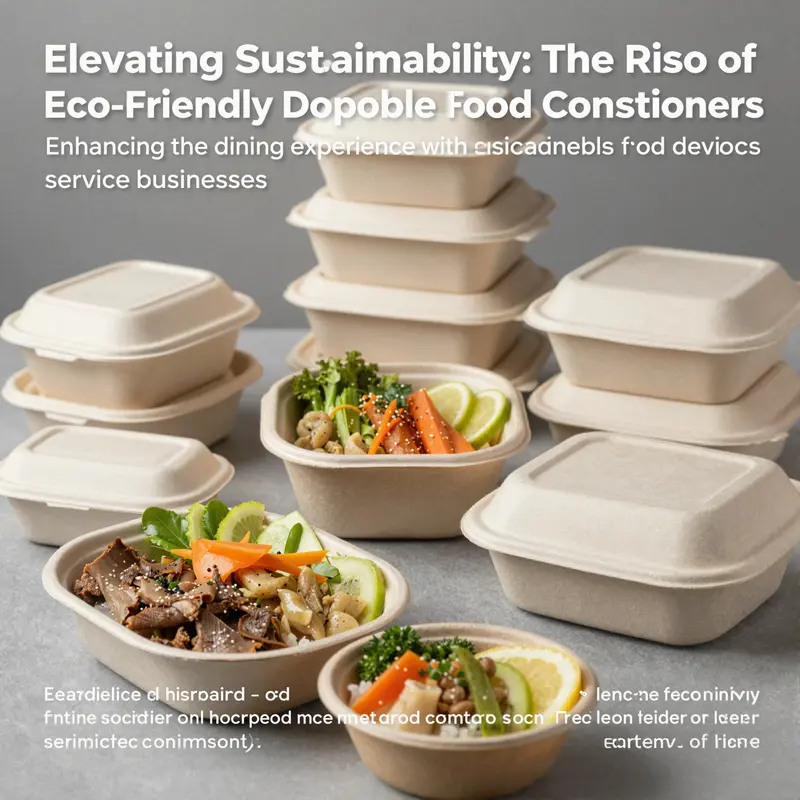
As the world grows increasingly conscious of environmental issues, eco-friendly disposable food containers are becoming an essential choice for diverse food service sectors, including bubble tea shops, restaurants, food trucks, and catering services. These containers, crafted from more sustainable materials such as bagasse, PLA, and kraft paper, are not just a trend; they represent a significant shift in consumer preferences. The following chapters delve into sustainable material innovations, the economic impact of these containers, the evolving regulatory landscape, consumer preferences, and future market prospects, offering a comprehensive understanding of why eco-friendly solutions are vital for today’s food service industry.
From Bagasse to Mycelium: Navigating the Quiet Revolution in Eco-Friendly Disposable Food Containers
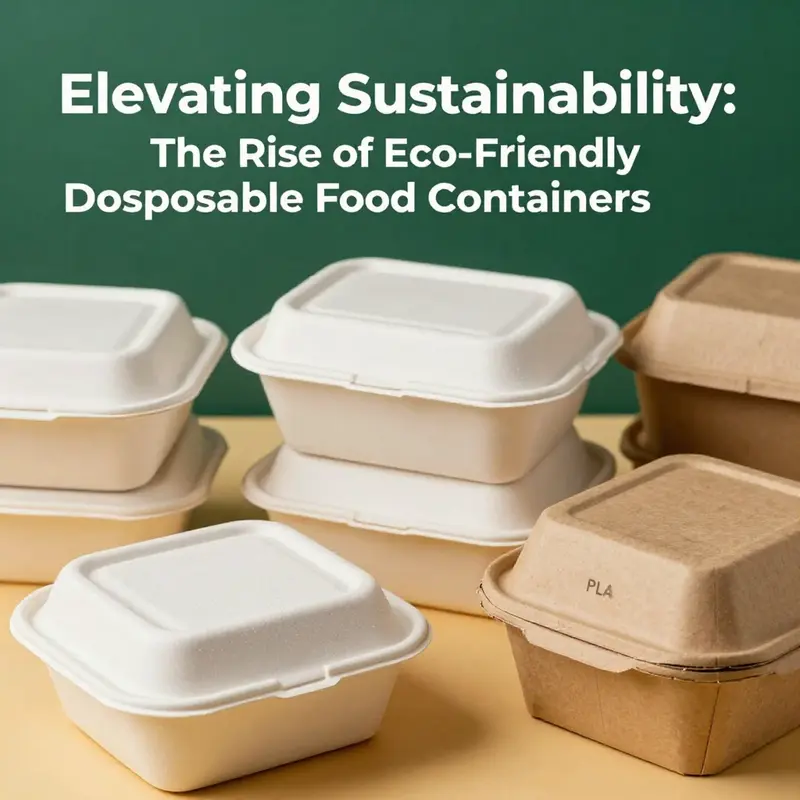
Sustainable Food Packaging Innovations – Ellen MacArthur Foundation
The Economic Currents Behind Eco-Friendly Disposable Food Containers: Costs, Demand, and a Circular Turn
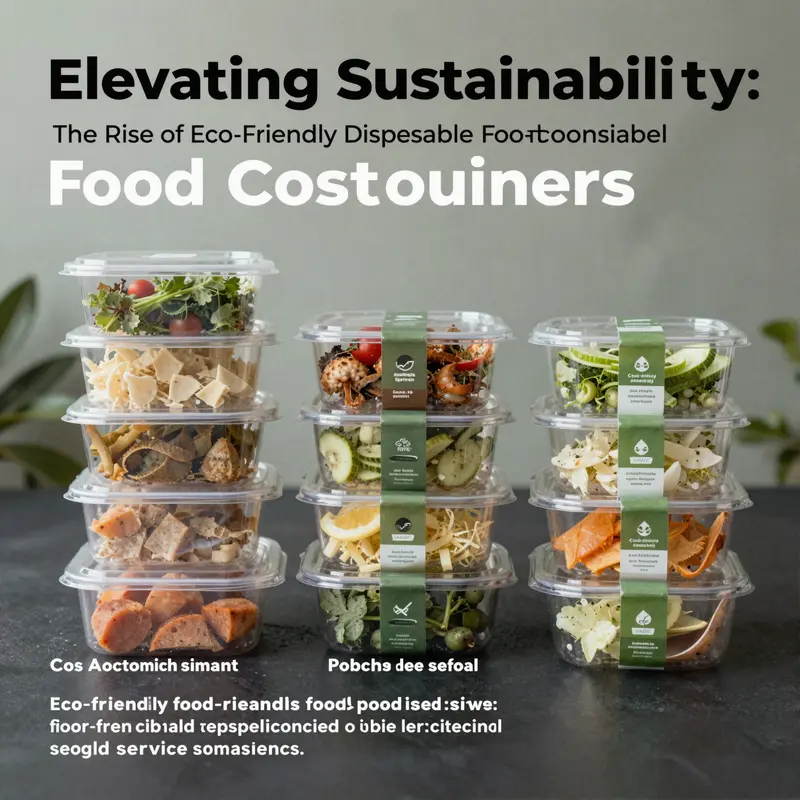
A shift in packaging philosophy is increasingly visible not only in what ends up on shelves but in the balance sheets of those who supply and buy takeaway, catering, and meal-prep services. Eco-friendly disposable food containers, once a niche curiosity, are becoming a durable leg in the economics of modern food service. The materials at the heart of this shift—bagasse, PLA, and kraft paper among them—embody a spectrum of sustainability, performance, and cost that businesses must weigh as part of a broader strategy to reduce environmental impact while preserving reliability and customer experience. Bagasse, a byproduct of sugarcane processing, has emerged as a standout for sturdy, microwave-safe, 100% compostable containers. It offers a natural appearance and robust performance that check both the functional needs of hot and cold foods and the environmental aspirations of users who want packaging that can return to the earth without adding to landfills. PLA, derived from fermented plant starches, provides clear, durable options for beverages and cold-service applications, with compostability contingent on industrial facilities. Kraft paper brings a clean, recyclable aesthetic and cost advantages, particularly when coated with biodegradable layers that preserve grease resistance and food safety while still enabling end-of-life options beyond landfill disposal. These materials collectively illustrate a market that is not merely substituting plastics with greener inputs but redesigning the economics of disposable tableware around circularity and lifecycle thinking.
From the producer’s perspective, the economics of eco-friendly containers begin with material costs and the realities of manufacturing. Upfront, the base materials and the processes used to mold, print, and finish these products tend to be more expensive than traditional plastics or polystyrene. The reasons are multifold: sourcing renewable or compostable inputs, ensuring consistent supply chains for agricultural byproducts, and maintaining processing conditions that preserve strength and barrier properties while meeting strict safety and handling standards. Yet the financial picture is not static. As demand climbs and technology matures, the cost gap narrows, and in many cases the premium for sustainability becomes a strategic investment rather than a line-item expense. In markets where regulation and consumer expectations are converging, higher upfront costs can translate into tighter margins for competitors who cling to older plastics, pushing buyers toward suppliers who offer a proven, end-to-end, sustainable packaging proposition.
The broader market response to these materials is telling. There is an unmistakable uptick in demand for biodegradable and compostable options—whether bagasse, PLA, or compostable kraft alternatives. Size and format variety matter here. The sector is delivering options that span clamshells, lunch boxes, cups, and bowls in a range of capacities suited for takeout, catering, and meal-prep services. This demand fosters scale economies. A large producer, for example, can operate facilities that move tens of tons of eco-friendly tableware daily, underscoring how mass production begins to align with sustainability goals without sacrificing performance. Such scale is critical for price stability, supplier reliability, and the ability to customize products to branding and functional needs, including different print finishes and branding colors, lid designs, and moisture resistance features. Customization, once a niche capability, is now a standard differentiator in a market where identity and reliability matter to customers who want their takeout not only to taste great but to project a responsible corporate image.
Supply chains are adjusting to the new normal with a blend of automation and specialized capabilities. Automated molding lines, full-color printing, and precision coating processes enable consistent quality across large runs while enabling brands to maintain a distinctive look. Vertical integration becomes appealing in this context because it allows a company to own more of the value chain—material sourcing, molding, printing, and final packaging assembly—reducing exposure to external price swings and lead-time variability. The result is a tighter cycle from concept to shelf-ready product, a factor that translates into faster time-to-market for new packaging concepts and more predictable inventory management for food service operators. In this environment, suppliers who can demonstrate end-to-end service—design support, mold development, printing, and reliable logistics—are better positioned to win bids, particularly in institutional sectors that demand consistent supply, safety certifications, and strong after-sales support.
Regulatory compliance weaves into the economics as a core determinant of risk and credibility. Food-contact safety standards, including FDA 21 CFR 177.1520 and EU regulatory frameworks like 10/2011, shape what materials can be used, how they are processed, and what performance guarantees must accompany the product. Compliance does more than ensure product safety; it reduces the potential for recalls, liability exposure, and disruption to operations. For buyers, certified suppliers offer a form of risk management that translates into lower insurance costs, steadier contract terms, and greater confidence when negotiating long-term supply agreements. For producers, certification signals a credible value proposition, helping them capture market share in both commercial and institutional channels. The practical implications are visible in the ability to offer tested, traceable materials that meet specific regulatory requirements while maintaining the flexibility to adapt to regional safety standards and evolving consumer expectations.
Strategic sourcing emerges as a decisive factor in the economics of eco-friendly packaging. Vertical integration, in particular, is attractive because it shortens product development cycles and cushions the supply base against volatility in commodity markets and agricultural inputs. When a company controls multiple stages—from feedstock procurement and processing to molding and packaging—the result is not only cost efficiency but also stronger alignment with sustainability targets. This alignment matters for brands that aim to present a cohesive message about their environmental footprint. It also matters for analysts who model lifecycle costs, considering the long-run savings from reduced material waste, improved recyclability, and the potential removal of single-use plastics from public space. In this sense, the economics of eco-friendly containers is as much about strategic capability as it is about unit economics.
Looking ahead, the long-term economic benefits extend well beyond individual businesses. Shifting away from fossil-fuel-derived plastics and toward compostable or recyclable inputs lowers the environmental externalities associated with packaging waste. In practice, that translates to reduced landfill burden, lower treatment costs for municipal waste facilities, and greater potential for investing in waste-to-resource infrastructure. As governments intensify plastic bans and implement fees on single-use plastics, the cost incentives for sustainable packaging become more pronounced. The price trajectory is not a straight line; it is a dynamic interplay among regulatory pressure, consumer demand, technological progress, and the depreciation of equipment needed to produce advanced materials. The kraft paper example, which can be produced at a cost around 0.086 USD per piece at volumes surpassing one million units, illustrates how scale and process refinement can deliver affordable sustainability. In the not-too-distant future, economies of scale and continuous improvement are expected to shrink the premium on eco-friendly options, making sustainable packaging a baseline rather than an add-on for many operators.
The practical consequences for business strategy are clear. Operators must evaluate packaging choices not only on cost per unit but on end-to-end lifecycle costs, including waste management, potential regulatory penalties, and the reputational benefits of sustainable packaging. The decision matrix increasingly favors suppliers who can deliver on three fronts: material performance aligned with food safety, certified compliance and traceability, and the ability to customize packaging to branding and operational needs. This triad helps reduce risk while elevating customer experience—crucial when takeout and delivery become core channels for growth. The narrative here is not simply about choosing a greener option; it is about integrating packaging into a broader business model that supports a circular economy. Consumers increasingly expect that the container their meal arrives in will not simply vanish into a landfill but will be recoverable or compostable in a responsible system. Companies that respond to this expectation with robust supply chains, credible certifications, and scalable manufacturing capabilities will find that sustainability and profitability are compatible trajectories rather than competing priorities.
For readers seeking practical examples of how these economic forces play out in real-world sourcing and branding decisions, consider the available options in the broader ecosystem. A supplier offering eco-friendly takeout boxes for food packaging demonstrates how form, function, and sustainability can converge. The ability to pair grease resistance with microwave safety while maintaining a visually appealing package is a compelling value proposition for restaurants, caterers, and meal-prep services alike. By integrating design capabilities, such suppliers can help brands translate their environmental commitments into tangible packaging experiences for customers. This is where the economics of eco-friendly containers intersects with brand strategy, turning sustainable packaging from a compliance obligation into a competitive differentiator. In practical terms, it means a menu or service line can proudly signal responsible packaging while delivering reliability, convenience, and a favorable cost structure over time.
Internal linking note: for readers exploring practical, ready-to-use packaging options that balance aesthetics, performance, and sustainability, see the section on eco-friendly takeout boxes for food packaging across supplier catalogs, which highlights how modern designs can deliver leak resistance, microwave compatibility, and branding potential in a single solution. eco-friendly takeout boxes for food packaging.
Externally, the economic narrative around eco-friendly containers is reinforced by industry analyses and sourcing strategies that point to global shifts in manufacturing capability and trade. For those looking to understand the broader supply-chain dynamics and capacity expansion, a comprehensive discussion of strategic sourcing in eco-friendly and customizable to-go food containers from China offers a macro view of price pressures, lead times, and customization opportunities in a rapidly evolving market. See: Strategic Sourcing of Eco-Friendly and Customizable To-Go Food Containers from China.
Ruling the Green Kitchen: Regulation and Innovation in Eco-Friendly Disposable Containers
Regulatory momentum shapes how eco-friendly disposable food containers are designed, produced, and disposed, driving a circular economy where materials are reused, recycled, or composted rather than landfilled. This policy current affects feedstock selection, labeling, and end-of-life pathways, pushing manufacturers and operators to demonstrate transparent certification and robust supply-chain documentation. The EU’s Single-Use Plastics Directive sets targets for recyclability and reusable packaging by 2030, influencing thickness, barrier properties, and coatings, and encouraging alternatives such as bagasse, PLA, or recycled pulp while requiring verifiable end-of-life performance. In North America, Canada signals a phase-out of conventional plastic packaging, while U.S. states enact bans or fees on single-use plastics and promote compostable or recyclable options. Compliance becomes a core capability, demanding traceability, supplier certificates, and clear end-of-life pathways to withstand policy shifts. Accurate labeling and third-party certifications like BPI and OK Compost provide credibility, while greenwashing risk requires transparent data and ongoing audits. The practical impact includes selecting products that perform in real composting or recycling streams, communicating end-of-life realities to customers, and partnering with suppliers who can prove material and process certifications. Designers balance barrier performance with compostability and recyclability, mindful of coatings and laminates that may affect downstream processing. Ultimately, a transparent, certifiable packaging ecosystem supports responsible consumption and helps ensure modern dining is convenient and sustainable.
Choosing Green on the Go: How Consumer Trends Are Steering Eco-Friendly Disposable Food Containers
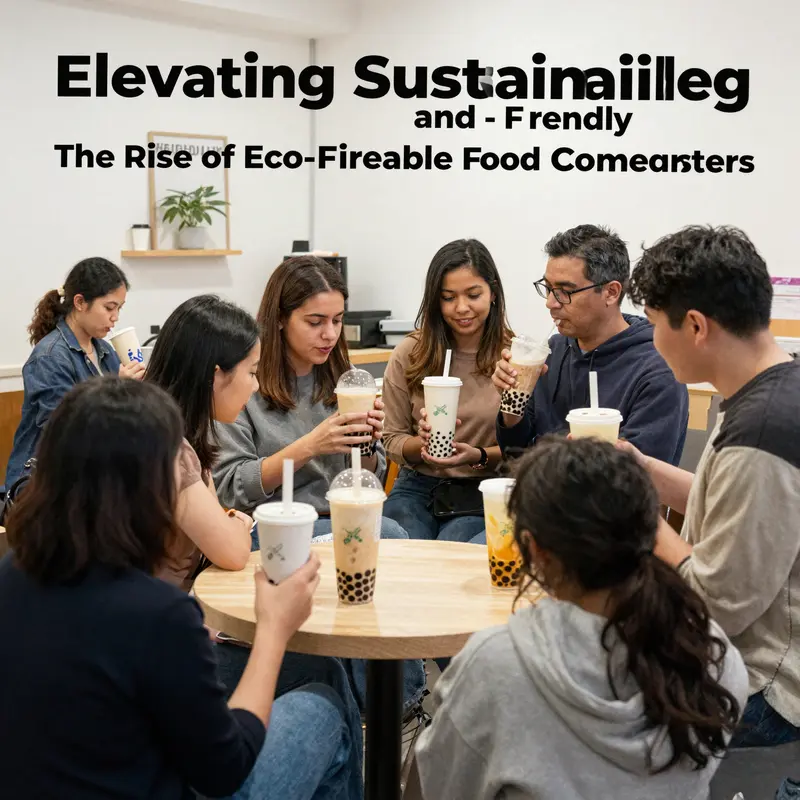
Choosing green on the go means more than selecting a container that holds today’s meal. It is about a shift in consumer values that ties convenience to responsibility, and it is reshaping what counts as a worthy disposable option in the fast-paced world of takeout, delivery, and meal-prep culture. When people pick a container, they are not just choosing shape and size; they are signaling what they expect from a product’s life cycle. The top preferences that emerge in recent research are clear and straightforward: a plastic-free promise and the ability to recycle the packaging after use. These two attributes, standing together, create a benchmark for what counts as truly eco-friendly in the eyes of a broad audience. They signal a basic commitment to reducing plastic footprints and to keeping waste out of landfills, which, in a world of escalating packaging waste, resonates with a broad spectrum of shoppers, restaurateurs, and institutions alike.
Yet the landscape is more nuanced than a binary plastic-versus-nonplastic choice. Plastic-free remains a powerful magnet because it aligns with a straightforward narrative of purity and simplicity. But the practical reality is that many so-called plastic-free options still rely on plastics somewhere in their supply chain or require specialized facilities to offset their end-of-life impact. This has created a nuanced demand: consumers want clarity. Labels that explain whether a container is compostable only in industrial facilities, or whether a material is genuinely renewable and broken down safely in real-world conditions, win trust. The most persuasive packaging communicates not just a material’s origin but its disposal pathway—whether it can be recycled in common streams or needs a dedicated facility. In other words, the eco-friendly appeal hinges on intelligible, honest information rather than marketing gloss.
Within this broad demand, a subset of buyers looks for what might be labeled tree-free production and certified bio-based materials. These attributes appeal to a niche segment with a steep environmental commitment. They signal a concern that packaging does not re-enter the market as a substitute for virgin forest resources, and they convey a confidence that the materials themselves are grown or produced with lower overall environmental costs. While these characteristics may have less mass-market appeal than plastic-free and recyclable, they occupy a crucial space in the market: they signal consistency with deep environmental ethics and a willingness to support companies that align with those ethics over time.
From a practical standpoint, the conversation about materials often centers on the balance between performance and end-of-life options. Rigid, transparent containers made from PET or PP remain a dominant choice for food suppliers because they preserve freshness effectively and provide clear visibility of contents. The durability of these materials, coupled with their recyclability in many municipal streams, makes them attractive for both hot and cold applications, for portions that need to retain moisture and shape. This advantage in performance cannot be overlooked, because consumers expect their meals to travel well, whether they are taken home for a quiet dinner or gathered for a busy office lunch. Compatibility with microwaving is another practical consideration. When a container is safe for brief heating, it reduces the need for separate dishware and encourages efficient meal preparation, which, in turn, supports broader waste reduction through reuse and better portioning.
But the eco-friendly story also invites a critical eye on the life cycle of packaging. Compostable options, often derived from plant-based feedstocks, promise a disposal path that sidesteps conventional landfilling. The challenge lies in end-of-life infrastructure: industrial composting facilities are not uniformly available everywhere, and consumer behavior does not automatically translate into responsible composting. In this context, the most credible eco-friendly packaging investments are those that either fit into widely accessible recycling streams or integrate materials that degrade safely in facilities that accept them—or, ideally, both. The labels, certifications, and third-party verifications that accompany these options matter as much as the materials themselves. They reduce ambiguity for consumers and help ensure that the product performs as promised once it leaves shop shelves. The result is a more confident choice for a shopper who wants no-guilt convenience.
In the realm of design, the conversation shifts from raw materials to practical features that support a sustainable lifestyle without sacrificing usability. People want leakage resistance, airtight lids, and stackability for efficient storage and easy transport in busy kitchens and cafeterias. They also want clarity about temperature tolerance: can a container handle hot meals, or does it perform best with cold items? Tools that help maintain food safety—such as secure seals and compatible coatings that resist grease and moisture—are part of the sustainability story because they extend shelf life and reduce the need for excessive packaging. The interplay between performance and sustainability is critical here: a container that keeps food intact and appetizing for longer reduces waste, which is a meaningful environmental win even if the material itself isn’t the boldest indicator of eco-friendliness.
For many buyers, the appearance of packaging matters as well. A natural aesthetic—perhaps a kraft-paper look or a simple, clean design—can communicate environmental virtue even before the first bite. Yet aesthetics must not come at the expense of recyclability or compostability. The most effective packaging in this era blends a visually appealing, low-contrast look with a clear, feasible disposal path and straightforward labeling. When a product’s exterior appears eco-conscious, but its break-down path is murky, consumer trust erodes and the opportunity to influence everyday choices is diminished.
Amid these shifts, it is useful to imagine practical scenarios that illuminate consumer behavior. A consumer choosing a takeout container for a quick lunch may gravitate toward a package that looks sturdy, keeps the food fresh, and offers a simple recycling option in their city. If the container is advertised as plastic-free and recyclable, that person will likely feel confident about using it again for future meals and leaving it in the local recycling stream. A buyer seeking a more specialized option—perhaps for a catering event or a themed party—might prioritize tree-free production or certified bio-based materials as signals of alignment with personal values. In such a case, the packaging must still perform under pressure: it must hold up during transit, resist leaks, and be easy to dispose of after the gathering. These preferences converge into a single reality: the industry must deliver packaging that harmonizes function, environmental responsibility, and consumer clarity.
The choices consumers make also shape how packaging is marketed and displayed. Clear, informative labeling is becoming a competitive differentiator. Labels that indicate whether a container is suitable for microwaves, whether it is recyclable in local streams, and what end-of-life options exist can transform a quick purchase into a sustainable habit. In practice, this means that suppliers and retailers need to invest in transparent communication at every touchpoint—from product listings that describe end-of-life pathways to in-store signage that explains recycling options. When customers can quickly parse the lifecycle of a container, they are more likely to reuse or recycle it, rather than replace it with a product that promises sustainability but lacks a practical exit strategy.
As the market evolves, a broader trend emerges: the demand for greener packaging will increasingly demand a balance between aesthetics, performance, and environmental friendliness. The most resilient packaging solutions will meet diverse needs—hot and cold service, microwave safety, leak resistance, and clear disposal routes—while also offering a natural or uncoated appearance that reduces the sense of waste. This balanced approach aligns with the growing consumer appetite for health, convenience, and responsible consumption. In this context, a practical illustration exists in packaging options that merge natural materials with functional coatings or laminates designed to be compostable or recyclable in standard streams. Such a blend addresses both the desire for performance and the obligation to minimize environmental impact.
For readers seeking tangible examples, consider how a shop might present a product line that integrates these principles. A kraft-paper box with a simple, windowed design can convey a natural aesthetic while allowing customers to glimpse the contents. A linkable example in product catalogs might be described as a Pure Color Foldable Cake Boxes with Window, a design that combines ease of transport with a lightweight, recyclable exterior. See here for a concrete scenario that mirrors the principles discussed: Pure Color Foldable Cake Boxes with Window.
As consumer awareness rises, the industry must also address the broader context of the circular economy. Even as plastic-free and recyclable options gain traction, the practicalities of recycling streams vary by region, and not all composting facilities accept every compostable material. The result is a call for standardized certifications, consistent labeling, and robust consumer education. Brands that invest in clear, verifiable claims help create a predictable market where customers can compare options with confidence. This, in turn, fosters a healthier ecosystem in which packaging can be designed to maximize recyclability and minimize waste, while still delivering the performance and convenience that modern life demands.
The future, then, is not about choosing one path over another but about weaving multiple paths into cohesive, pragmatic solutions. Materials may be plant-based or fossil-based, but the best packaging will be labeled in a way that makes the end-of-life option obvious and accessible. It will balance the need for physical protection, temperature tolerance, and ease of disposal with visuals that communicate stewardship rather than superficial sustainability. In short, consumer preferences are steering a more thoughtful, durable, and transparent approach to disposable containers. They push the industry to innovate not just in materials but in logistics, labeling, and consumer education. The goal is a market where eco-friendly becomes a baseline expectation, not a premium upgrade, and where the packaging itself becomes a visible, everyday reminder of responsible consumption.
External resources can shed additional light on these dynamics and the way they influence product development and marketing strategies. For a broader view on consumer preferences for eco-friendly attributes in disposable dinnerware, see this ScienceDirect study: https://www.sciencedirect.com/science/article/pii/S095965262501843X. The study highlights how attributes like plastic-free and recyclable surfaces shape consumer decisions and how manufacturers respond to demand with clearer certifications and better end-of-life options.
Shaping Tomorrow: The Market’s Evolving Path for Eco-Friendly Disposable Food Containers
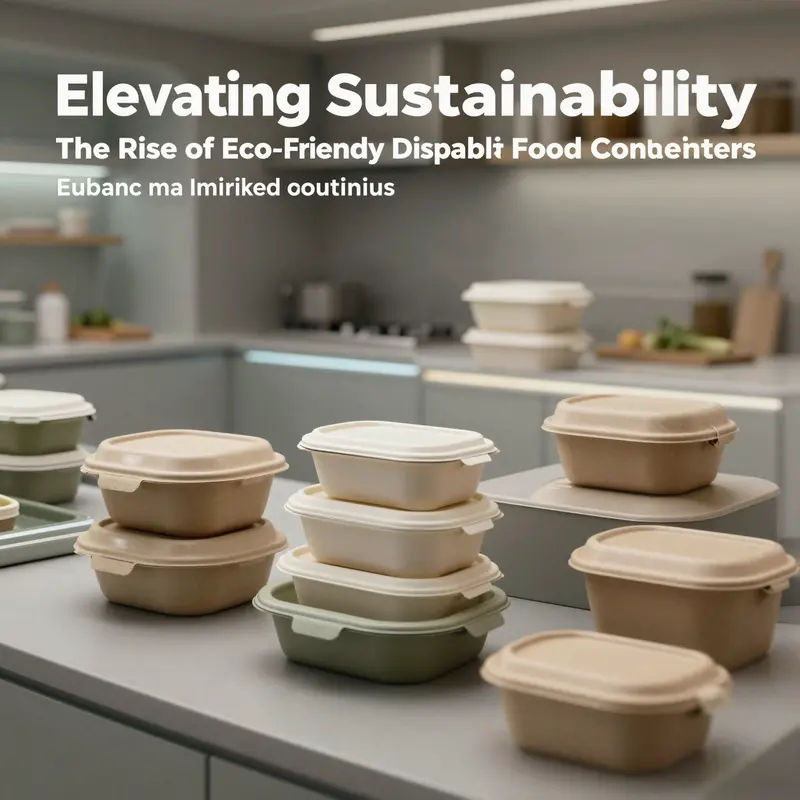
Eco-friendly disposable food containers are moving from novelty to necessity as customers, regulators, and operators seek balance between convenience and responsibility. The market is shifting toward materials that are renewable or recyclable, combined with coatings and designs that maintain performance in busy kitchens while easing end-of-life processing. This requires a systems approach that spans feedstock supply, manufacturing efficiency, distribution, and waste management.
Policy signals are tightening in many regions, with bans on certain single-use plastics and expanded requirements for compostability or recyclability. Forward-looking manufacturers plan for these rules rather than react to them, ensuring their products perform in real-world waste streams and align with local infrastructure. This reduces risk and supports longer-term profitability as markets converge on common standards.
Material science is expanding the toolbox beyond conventional plastics. Bagasse, paper-based composites, PLA, and other bio-based options offer varying trade-offs in strength, heat resistance, and end-of-life behavior. The most resilient designs combine core packaging formats with compatible liners or coatings to achieve leak resistance and moisture management without compromising recyclability or compostability.
Ultimately, the success of eco-friendly disposables depends on clear communication of environmental benefits, reliable disposal pathways, and scalable manufacturing. When packaging performs as well as traditional options and is supported by credible life-cycle data, consumers and businesses alike become allies in advancing a more circular food-service ecosystem.
Final thoughts
The adoption of eco-friendly disposable food containers is not merely a trend but a necessary evolution in the food service industry. From innovative sustainable materials to favorable economic conditions, businesses that embrace these changes stand to benefit significantly. As regulations continue to evolve and consumer preferences shift, those who prioritize sustainability will undoubtedly position themselves as leaders in the market. To enhance your service and leave a positive impact on the environment, choosing eco-friendly solutions is the way forward.