
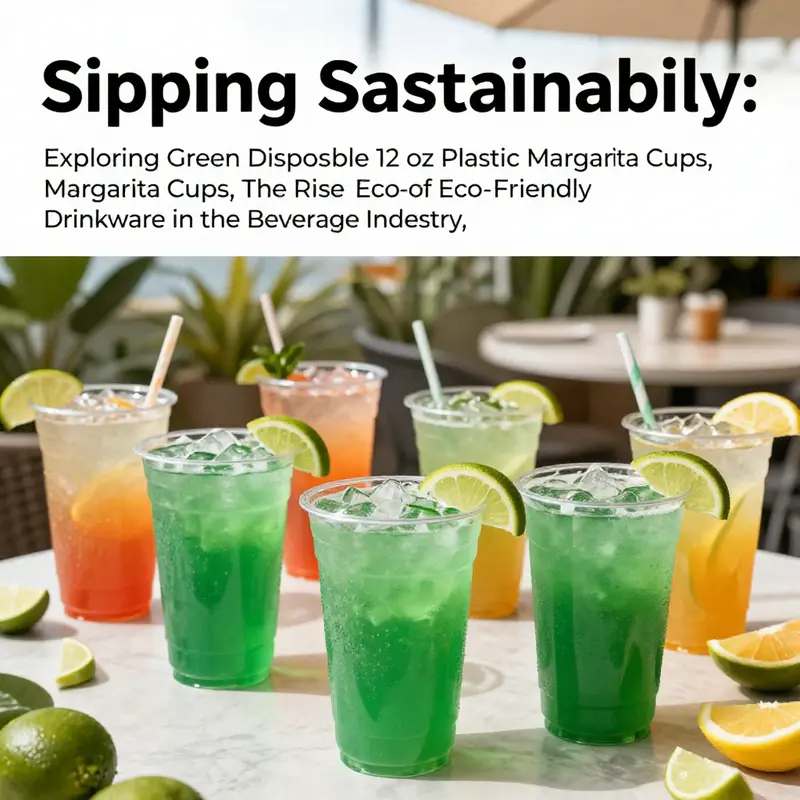
As the demand for sustainable products continues to soar, the market for green disposable 12 oz plastic margarita cups is emerging as a key player in eco-conscious beverage service. From bubble tea shops to event planners, businesses are pivoting towards these green alternatives made from biodegradable materials, like PLA. This article delves into the market trends driving this growth, the environmental impact of using biodegradable cups, the shifting consumer preferences towards green choices, and the intricate manufacturing processes behind these eco-friendly offerings. By understanding these dimensions, businesses can make informed choices that align with their sustainability goals while catering to a growing demographic of environmentally aware consumers.
Green Light, Glass-Like Promise: Market Trends Shaping 12 oz Green Disposable Margarita Cups
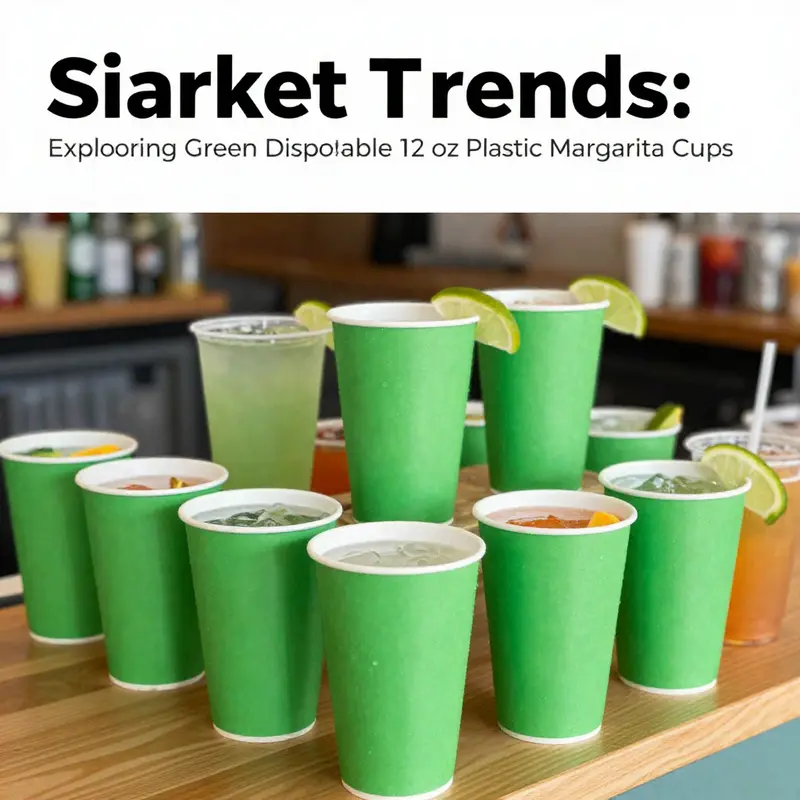
The market for green disposable 12 oz margarita cups is no longer a footnote in a sustainability sidebar. It has become a lens through which regulators, manufacturers, and consumers imagine the future of single-use packaging. Green cups symbolize a broader commitment to reducing plastic pollution while preserving the practical demands of hospitality and event settings. The color itself functions as a signal—an invitation to think about materials, disposal, and lifecycle performance in one cohesive narrative. In practice, the trend blends aesthetics, functionality, and responsibility, requiring a careful balance between transparency about materials and the visual appeal that customers expect when a drink is presented in a cup that looks, behaves, and feels like glass, but ships with the lighter footprint of a disposable item. The narrative around these cups travels beyond color to encompass how products are designed, manufactured, marketed, and ultimately disposed of in a world that increasingly scrutinizes packaging waste.
Regulatory momentum is the most obvious force driving this shift. Across regions, policymakers are stepping up the push to curb single-use plastics. A notable example is a 2026 policy in a major middle-eastern market that bans all single-use plastic products, explicitly including beverage containers such as cups, lids, and stirrers. This dramatic policy creates a hard deadline for brands and producers to pivot away from virgin conventional plastics and toward compliant alternatives. It also accelerates the development of supply chains for bio-based and recycled materials, because the ban effectively closes off a large portion of the traditional plastic cup market. At the same time, the European Union’s Packaging and Packaging Waste Regulation (PPWR) is aligning industry behavior with a longer horizon: by 2030, packaging should contain at least 30 percent recycled content. The implications ripple through every facet of cup design—from resin selection and conversion processes to labeling and end-of-life management. The regulatory landscape thus reframes risk appetite and investment priorities, nudging companies to plan for recycling streams, composting compatibility, and traceability across suppliers.
If policy sets the tempo, material science provides the momentum. The sustained growth of recycled plastics and biodegradable options is widely documented. In the 2026–2028 window, the recycled plastic market in Europe demonstrates a robust CAGR of around 9–10 percent, propelled by stringent regulatory requirements and heightened circular economy ambitions. Biodegradable plastics, led by bio-based polymers like polylactic acid (PLA), are forecast to reach a market size near $100 billion with a double-digit CAGR. These developments illuminate the practical path for green margarita cups: materials that can mimic the look and feel of traditional cups while delivering measurable gains in end-of-life outcomes. PLA, derived from renewable resources such as corn starch or sugarcane, offers excellent transparency and a glass-like appearance, which is essential for maintaining the visual appeal of a margarita’s color and clarity. Yet PLA has limitations. Its heat resistance is generally lower, explained by a practical ceiling around 100°C, which constrains hot beverages and high-temperature handling. More critically, the biodegradability or compostability of bio-based cups depends on dedicated industrial facilities and appropriate waste streams. If a green cup is tossed into a standard landfill or curbside recycling bin without proper processing, it may behave much like traditional plastics, undermining the environmental promise. This caveat underscores a vital point: green cups must be embedded in robust waste-management frameworks that enable true circularity, rather than relying on material claims alone.
The consumer dimension adds another layer of nuance. A growing share of younger consumers—particularly millennials and Gen Z—express a willingness to pay a premium for packaging with verified sustainability credentials. They look for transparency in a brand’s sustainability commitments and respond to packaging that signals a values-driven choice. Beyond the environmental narrative, aesthetics matter. The green hue, sometimes coupled with metallic rims, satisfies a desire for a “glass-like” elegance that elevates experiences in venues and at events. In practice, this means that product developers must address two parallel requirements: the material must perform in real-world conditions—resisting impact, maintaining clarity, and withstanding beverage-related moisture—and the design must preserve a premium look and feel without compromising end-of-life performance.
To balance form and function, producers are pursuing innovations in both material composition and manufacturing processes. Injection molding remains the backbone for cup production, but the inputs have shifted. PLA-based formulations, coupled with controlled processing parameters—temperature, pressure, and cooling time—enable the production of a uniform thickness and minimal bubble formation. Surface treatments, rim coatings, and even metallic finishes add perceived value but complicate recycling. A gold or metallic rim, for example, can enhance visual appeal but may introduce additional plating or spraying steps, which increase processing complexity and can challenge end-of-life separation. Such coatings highlight a broader design challenge: any feature that improves aesthetics must be evaluated for its lifecycle implications. In a circular economy, even seemingly minor details can influence recyclability and compostability, ultimately affecting the environmental footprint of the cup.
A critical design principle guiding today’s green cups is the need for clear signaling of end-of-life options. Consumers should understand whether a cup is suitable for industrial composting, home composting (where applicable), or conventional recycling streams. Clear labeling reduces contamination and helps waste-sorting infrastructure do its job. Yet labeling alone cannot solve the system-level questions. If a compostable cup ends up in a landfill, the intended degradative pathway may be forestalled, and the environmental benefit erodes. This reality reinforces the argument for a holistic approach that couples material choice with robust collection and processing networks. The circular cup concept—an approach that combines reusable cup programs with deposit-return incentives—offers a compelling blueprint for reducing waste with high-usage products like margarita cups. While not the only path, circular systems illustrate how a market can move beyond single-use paradigms without sacrificing consumer convenience or service quality.
The broader packaging ecosystem also reflects a shift toward greener packaging beyond cups alone. The same trends that favor green cups echo in adjacent product formats, including eco-friendly takeout containers and packaging that emphasizes lightweight, durable, and recyclable features. This cross-category alignment is not accidental; it reflects an integrated strategy to minimize overall packaging waste while preserving consumer experience. For readers and practitioners interested in how this shift unfolds across the packaging landscape, an accessible overview of environmentally focused takeout packaging solutions can be found in resources that discuss eco-friendly takeout boxes for food packaging. This material helps illustrate how manufacturers fragment the journey from raw materials to end-of-life recovery, and how each step can reinforce or undermine sustainability claims. eco-friendly takeout boxes for food packaging.
A key takeaway from the current trajectory is that green 12 oz margarita cups will not thrive on color alone. The market demands credible sustainability performance across the entire lifecycle: material origin, manufacturing efficiency, product performance, and end-of-life management. Consumers expect visuals that match values, but they also demand reliability—cups that retain their integrity when ice and citrus interact with the container, cups that resist staining, and cups that deliver a dependable drink presentation. That means ongoing collaboration across suppliers, recyclers, and waste-management providers, along with transparent communication about what constitutes true sustainability in a cup’s lifecycle.
From a business perspective, the immediate implication is clear. Companies positioned to respond quickly to regulatory shifts, to invest in bio-based and recycled content, and to design for end-of-life compatibility will gain a competitive edge. This requires careful supply-chain mapping to secure renewable feedstocks, process innovations to optimize conversion efficiency, and packaging designs that minimize coatings or finishes that hinder recyclability. It also means embracing a broader conversation about product stewardship and the social license to operate within hospitality spaces. As venues increasingly seek to showcase sustainable practices, green cups become both a practical tool and a symbolic gesture—an edible footprint that aligns with guests’ expectations for responsible service.
The market environment will continue to evolve as new materials and waste-management technologies mature. Advances in anaerobic biodegradation, for instance, hold potential for more flexible disposal options in regions lacking robust industrial composting infrastructure. If scalable, such technologies could complement PLA and recycled-content strategies, reducing long-term environmental impact even where traditional composting is not feasible. Yet these opportunities carry caveats. The success of anaerobic processes depends on the availability of appropriate facilities and strict process controls. Without these, the promise of rapid, complete degradation may not be realized, underscoring the necessity of a coordinated policy and industry response that aligns incentives, infrastructure, and education.
In sum, the market trends surrounding green disposable 12 oz margarita cups reflect a broader transformation. They reveal a packaging world that is progressively moving away from a simple “green color” signal toward a robust, lifecycle-driven approach. The cups themselves are a microcosm of how materials, manufacturing, consumer behavior, and policy are converging to create packaging that is both appealing and accountable. The future aura around these cups—green in color, glass-like in appearance, and responsible in impact—will depend on how well the industry leverages material innovations, builds resilient waste-management networks, and communicates end-of-life options with clarity. The trajectory suggests not a single solution, but a suite of interoperable strategies that together advance the circularity of disposable drinkware. External resource: https://ec.europa.eu/environment/packaging-waste/regulation_en
Green Glamour Under Scrutiny: The Environmental Reality Behind 12 oz Green Disposable Margarita Cups
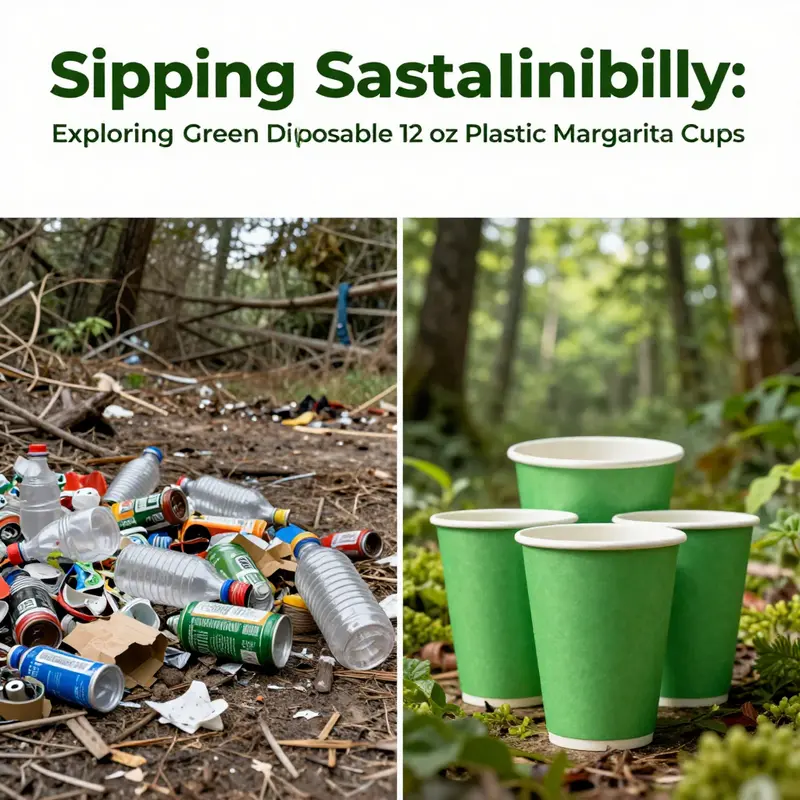
The green margarita cup carries a powerful aura. It signals sustainability, style, and a green conscience all at once, turning a plain party essential into a badge of environmental intent. Yet the story of these cups runs deeper than color and gloss. In the rush to marry convenience with virtue, the green 12 oz disposable margarita cup sits at a crossroads where branding, material science, and waste systems collide. At first glance, the choice seems straightforward: a recyclable or compostable option that reduces harm while preserving the social rituals of gatherings. But the environmental math behind the green label reveals a more nuanced picture. The cups most widely used in single-use service are still built from conventional plastics carved from fossil fuels. These materials deliver the practical benefits of light weight, shatter resistance, and low cost, enabling thousands of events to flourish with minimal logistical friction. The green hue, then, becomes less a guarantee of eco-friendliness and more a signaling device—one that invites consumers to assume virtue without inspecting the full lifecycle of the product.
From a materials perspective, the environmental footprint of these cups is anchored in their core chemistry. In many instances, 12 oz disposable margarita cups are molded from polypropylene (PP) or polystyrene (PS). Both originate in fossil fuel streams and share a stubborn attribute: they do not readily biodegrade in natural environments. Instead, they persist for centuries, gradually fragmenting into microplastics that infiltrate soils, waterways, and wildlife. The consequence is not merely litter; it is a persistent pressure on ecosystems that can translate into public health concerns as microplastics infiltrate the food chain. The broader statistical frame is sobering. Even in high-income economies with advanced recycling infrastructure, the overall recycling rate for plastics remains modest. The Environmental Protection Agency has long tracked a stark reality: only a fraction of plastic produced is successfully recycled, while the vast majority ends up in landfills, incinerators, or the environment. This is the baseline against which any “green” disposable cup must be measured.
Within this framework, a cautious observer might revisit the oft-cited claim that green cups are inherently better for the planet. The branding may emphasize recyclability or compostability, yet real-world outcomes hinge on end-of-life management. Dr. Jane Harper, an environmental scientist at the Global Sustainability Institute, emphasizes the systemic nature of plastic waste: “Plastic waste is not just a litter problem—it’s a systemic issue tied to climate change, biodiversity loss, and public health.” Her remark underscores a critical point: the material choice cannot be divorced from how waste streams are organized, funded, and enforced. Without robust recycling or composting infrastructure, even a seemingly virtuous option can fail to deliver its promised benefits. This is particularly true for bio-based or “green” plastics that rely on industrial composting facilities to degrade in a timely and non-polluting manner. In the absence of properly managed facilities, these materials can mislead consumers into believing they are solving pollution when, in practice, they contribute to the same long-tail problem as conventional plastics. The reality, then, is not that green cups are useless, but that their environmental advantage depends on the surrounding system catching and processing the material correctly.
A related concern concerns the interaction of heat with disposable cups. In party settings, beverages are often chilled or served on ice, but summer events can push temperatures upward. When exposed to heat, plastics are vulnerable to chemical migration. While many cups marketed as BPA-free shield customers from certain adulterants, the broader literature raises caution about the potential for other additives to migrate under heat, or for degradation products to form as temperatures rise. The practical implication is that a green cup cannot be assumed to be risk-free at high temperatures. The safety profile of any single material—whether PP, PS, or a newer bioplastic—depends on its formulation, processing, and the conditions in which it is used. This is not a denouncement of green design but a reminder that consumer safety and environmental integrity require attention to the full context in which cups are produced, used, and disposed.
If the goal is to reduce environmental harm, the path forward increasingly points toward truly biodegradable options crafted from plant-based fibers or polymers. Sugarcane bagasse, bamboo fiber, or other natural fibers can be formed into cups that degrade more readily in composting conditions than conventional plastics. The caveat is clear and critical: these materials must be disposed of in appropriate facilities that support industrial composting or verified home composting, depending on the material’s specification. In practice, this means aligning product design with waste-management ecosystems rather than assuming the consumer will always sort correctly. For consumers who want to minimize ecological impact without sacrificing convenience, there is growing availability of alternatives that are designed to break down more completely within defined composting environments. These options, however, are not universal; their success hinges on access to suitable composting streams and on consistent labeling that communicates the right disposal pathways to users.
The sustainability story also moves beyond chemistry and disposal to aesthetics and function. The color—green—has proven a powerful marketing lever because it visually associates the cup with eco-friendliness and natural imagery. The design language often extends to accents like gold rims or glass-like transparency, features that enhance perceived quality and urban appeal. These design choices can influence consumer willingness to pay a premium for what they perceive as a responsible option. Yet the same design language can also mask the true environmental cost if the accompanying disposal infrastructure is weak or if the cup’s full lifecycle is not transparent. A truly responsible design would couple aesthetic appeal with a demonstrable, verifiable end-of-life pathway, whether through certified compostability or clearly labeled recycling streams that meet local waste-management capabilities. In effect, the green cup should perform not only as a visually compelling party accessory but also as a symbol of accountability across supply chains.
From a manufacturing standpoint, the production of green 12 oz cups often relies on injection molding to shape the cups with precise wall thickness and uniformity. When bioplastics such as polylactic acid (PLA) are used, the manufacturing story shifts in subtle, consequential ways. PLA is derived from renewable resources and can boast excellent clarity that resembles glass, which aligns with consumer expectations for a “premium” beverage presentation. However, PLA has practical limitations, including lower heat resistance and a shorter tolerance for hot beverages. The processing window for PLA must be carefully controlled; temperature, pressure, and cooling rates must be tuned to prevent leading defects such as bubbles, voids, or surface imperfections. If the surface or rim is plated with metallic finishes to achieve a gold-like luster, additional processing steps—plating or spraying—are required. These steps add complexity, cost, and potential environmental trade-offs, as metal coatings can complicate recycling streams. The lifecycle analysis of any green-themed cup thus becomes a balancing act between material choices, manufacturing realities, and end-of-life logistics.
Sustainability in this space is not simply a matter of choosing “green” color or a marketing claim. It is about ensuring that every stage—from raw materials to end-of-life disposal—contributes to a circular economy. The hospitality and events sector have a pivotal role in shaping that trajectory. When planners and operators embrace options with proven compostability or robust recycling pathways, they can reduce pollution, conserve resources, and minimize harm to wildlife and human health. But to achieve this, education and collaboration among manufacturers, waste-management providers, and consumers are essential. Clear labeling, accessible collection streams, and investment in processing infrastructure are as important as the material selection itself. In the absence of such alignment, even the most well-intentioned choice risks becoming a temporary improvement that dissolves in the rinse cycle of a consumer’s awareness.
For readers seeking practical pathways beyond the conventional cup, there is value in exploring packaging options designed with integrated end-of-life solutions. Some manufacturers offer eco-friendly disposable packaging options that are engineered for easier separation and processing in standard waste streams. These designs emphasize compatibility with widely available recycling or composting infrastructure and aim to minimize contamination in mixed waste. By prioritizing products that clearly communicate disposal guidance and align with local facilities, event organizers and consumers can take a tangible step toward reducing the environmental footprint of single-use beverage containers. This approach does not demand perfection, but it does require intentional choices and an honest assessment of local waste-management capabilities. As an engaged consumer or planner, you can look for products whose lifecycle narratives are explicit, verifiable, and matched to the opportunities and constraints of your community.
For further context on how these dynamics play out in real-world settings, consider the broader literature on disposable cups and their environmental and littering impacts. A peer-reviewed study published in Sustainability examines the consequences of using polypropylene and PLA cups in different contexts, providing empirical insight into the nuanced trade-offs between traditional and bio-based materials. This body of work reinforces the idea that what seems like a simple substitution—green for traditional—often carries a cascade of effects that ripple through production, disposal, and ecological healthy-ness. It makes clear why true progress requires more than a green veneer; it requires systemic change across supply chains and municipal waste services. To readers who want a tangible entry into the practicalities described here, an exploration of eco-friendly disposable packaging options can offer concrete pathways to integrate better choices into everyday events. eco-friendly disposable packaging options
In sum, the environmental impact of green disposable 12 oz plastic margarita cups is a layered composition of material science, consumer perception, and waste-system realities. The green branding will continue to hold power as long as it resonates with values of stewardship and responsibility. Yet the genuine environmental payoff rests on three synchronized pillars: robust end-of-life infrastructure, transparent labeling that guides proper disposal, and a willingness to adopt truly compostable or otherwise responsibly managed materials when feasible. This triad transforms the promise of sustainability from a marketing claim into a lived practice that protects ecosystems while preserving the social and sensory pleasures of shared moments. As the chapter closes, the takeaway is clear: color can signal care, but real care requires a chain of choices that begin with the material and end with a properly managed waste stream. A community that aligns these steps—design, production, disposal, and education—moves closer to a future where a green cup serves as a genuine ally to the environment, rather than an emblem that looks good while invisibly shifting responsibility elsewhere.
External resource for further reading: https://www.mdpi.com/2071-1050/13/8/4157
Green Waves of Choice: How Color, Convenience, and Consciousness Shape Preferences for 12 oz Green Disposable Margarita Cups
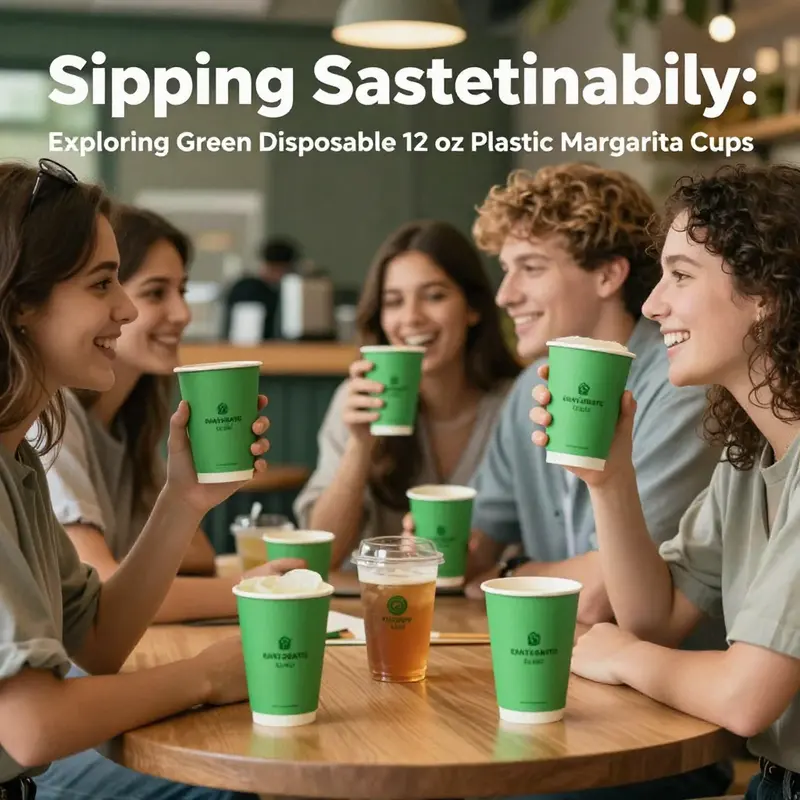
A color can carry as much meaning as a material, and in the realm of green disposable 12 oz margarita cups, color, convenience, and conscience converge to steer consumer choice. The green cup signals freshness and festivity, serving as a visual shorthand at a glance. Across settings from casual backyard gatherings to formal events, it communicates a cohesive theme while remaining practical and disposable.
The color green functions as a design cue and a sustainability hint: a bright, saturated shade that feels clean under sunlit skies. Hosts and venues gravitate toward green to highlight lime-forward drinks and the sense of vitality that margaritas evoke. Rim treatments and translucent finishes can enhance this visual appeal without suggesting fragility.
Size matters: 12 ounces hits a balance between sufficient beverage capacity and responsible use. The format supports easy service, predictable ice volume, and straightforward cleanup, while compatible lids and spill-resistant rims reduce mishaps on the move.
Material choices create trade-offs between strength, cost, and end-of-life options. Traditional polymers deliver durability and recyclability in many streams, while biobased options invite discussions about composting infrastructure and honest labeling. Consumers increasingly expect transparent lifecycle stories rather than marketing color alone.
Marketing and packaging play a crucial role. Decorative touches—such as metallic rims or embossed patterns—can elevate perceived value, but must stay aligned with sustainability promises. For brands, color becomes both a design asset and a pledge that the product helps shape enjoyable experiences while staying mindful of waste.
Practical implications for planners and retailers include stackability, packaging density, and clear product labeling so buyers can identify green cups at a glance and match lids or accessories quickly. As the market evolves, consumers reward cups that look good, perform reliably, and align with broader environmental values.
From Resin to Rim: The Engineering Behind Green 12 oz Margarita Cups
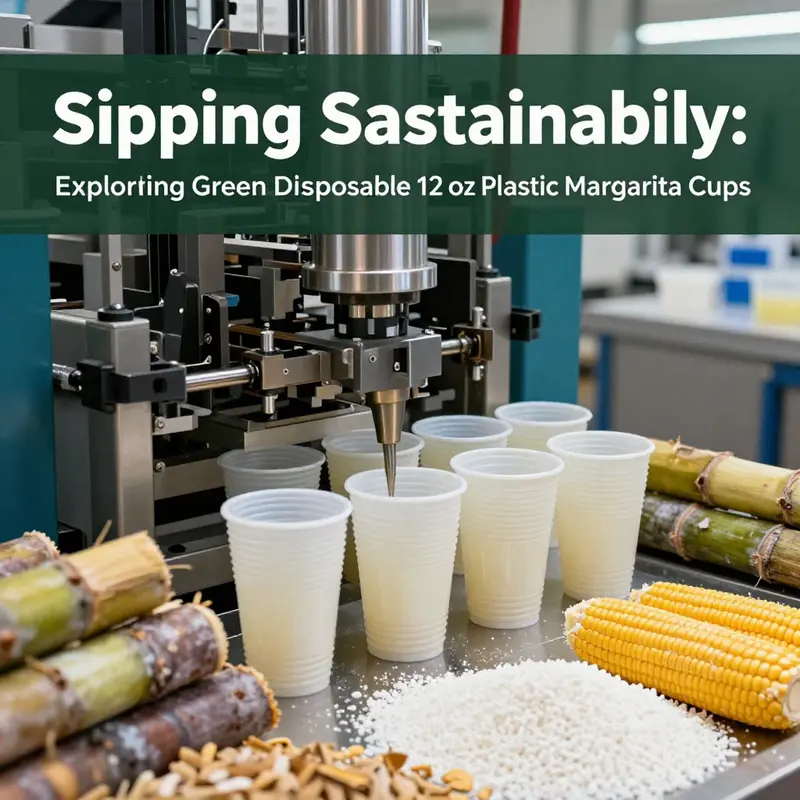
Green disposable 12 oz margarita cups sit at a curious crossroads where design aesthetics meet the physics of plastics and the urgency of environmental stewardship. The chapter you’re about to read traces how those translucent cups become more than vessels for cocktails; they embody a careful orchestration of material science, manufacturing discipline, and waste-management systems. The journey from feedstock to finished cup flows through a cascade of choices—polymer type, processing technique, additive systems, and post-consumer realities—that collectively determine not only performance and appearance but also end-of-life behavior. In this space, color is never merely cosmetic. Green becomes a signal of intention: a hint of nature-inspired optimism wrapped around a drink that begs to be enjoyed without compromising the planet’s future.
The core of green margarita cup manufacturing rests on a balance between form and function. Historically, many disposable cups relied on polystyrene or polypropylene for their lightness and cost. Yet these materials pose persistent environmental challenges, lingering in ecosystems long after their moment of use. The current manufacturing discourse shifts toward materials that can offer comparable clarity and strength while opening pathways to greater recyclability or compostability. Polyethylene terephthalate, or PET, remains a workhorse in the world of reusable and single-use packaging because of its recyclability and clarity. But the ongoing push is toward incorporating recycled content and, where feasible, biodegradable or bio-based alternatives that can still deliver a glass-like appearance and a robust barrier against moisture and oxygen. In the best cases, the production line is a closed loop that minimizes virgin resin input and maximizes post-consumer feedstock, without compromising safety or consumer appeal.
Among the most influential techniques shaping green 12 oz margarita cups is multi-layer co-extrusion. This technology allows manufacturers to build a thin, food-safe sheet that carries several functional layers in concert. One layer provides structural integrity, another serves as a moisture and oxygen barrier, and a third forms the inner surface that touches the beverage. Because the layers are bonded in a single co-extrusion operation, the resulting cup can achieve a barrier performance that would require separate coatings if produced with a single polymer. This integration matters because it means fewer separate coatings, less chemical complexity, and a packaging solution that can potentially be recycled as a unit. When the exterior carries a vivid green hue, the color is typically introduced during the extrusion stage, blending pigments or masterbatches into the resin stream. The result is a uniform color that remains stable under cold or cool beverage temperatures and during short-term handling. A gold rim may accompany some designs as an aesthetic flourish, but achieving that metallic effect often requires an additional plating or spraying step, adding a layer of production complexity that must be weighed against the intended market position of the cup.
A parallel stream in green cup manufacturing looks to the feedstock itself. Recycled PET, or rPET, has become a salient option for many producers who want to lower their carbon footprint and reduce dependence on fossil-derived materials. The process begins with collecting post-consumer PET bottles, followed by thorough cleaning, shredding, and melting into food-grade pellets. In an efficient, intelligent facility—such as those using closed-loop systems—the turnaround from bottle to cup can be streamlined. A notable example from a major urban center demonstrates how waste PET can be transformed into high-quality resin in a matter of hours, enabling rapid reintroduction into the packaging supply chain. The environmental promise here is twofold: reduced virgin resin use and lower overall greenhouse gas emissions, amplified when the facility operates with energy recovered from the process and with clean water loops that prevent cross-contamination.
Beyond mechanical recycling lies chemical recycling, a pathway that seeks to recycle PET back to its original monomers, terephthalic acid and ethylene glycol. In theory, this enables near-infinite recycling without the quality losses that sometimes accompany mechanical methods. In practice, the most advanced chemical recycling systems achieve very high purity, making the resulting material suitable for sensitive applications such as food packaging. The potential payoff is substantial: a circular loop in which bottles become cups and cups become bottles with minimal downgrading in performance. Yet chemical recycling also introduces new energy and infrastructure demands, making it a technology that must be scaled thoughtfully within a broader sustainability strategy.
Those divergent material routes dovetail with evolving design philosophies. A key principle in modern green cup design is to minimize material use while preserving integrity. A well-known design concept—embodied in a patent focused on base structure—illustrates how a cup can gain stability without compromising its compatibility with standard recycling streams. In practice, the base design can reduce edge stresses during handling and stacking, lowering the risk of deformation that would otherwise shorten the cup’s usable life in a busy bar or event setting. The design work also grapples with the trade-off between transparency and color. Consumers often want a cup that showcases the color of the drink, and the green exterior can fold into the perception of a “green choice” while the inner surface remains clear enough to display the beverage’s hue. Material selection supports this dual demand: some blends emphasize clarity, while others emphasize color saturation, with the green pigment integrated in a way that avoids compromising the sheet’s barrier properties.
Manufacturing techniques sit at the heart of how these choices translate into a finished product. Injection molding and blow molding are the two workhorse methods for disposable cups. Injection molding excels when producing thin-walled cups with precise wall thickness and tight tolerances. Blow molding, on the other hand, often yields faster cycle times for cylindrical forms and can accommodate slightly larger diameters and shapes. Both processes demand careful control of temperature, pressure, and cooling rates to ensure uniform thickness and to minimize defects such as bubbles or delamination between layers. When co-extruded sheets are shaped into cups, the joining of layers must withstand the mechanical stresses of filling and stacking while remaining compatible with recycling streams. For green margarita cups that rely on a multi-layer structure, the processing window must allow the layers to fuse without compromising surface quality or clarity.
The sensory and functional expectations of a margarita cup further complicate the manufacturing equation. Beverage presentation matters almost as much as the drink itself. The green color conveys a sense of freshness and eco-consciousness, while a clear interior enables the vivid color of the margarita to be perceived through the cup, heightening visual appeal. A rim coated in metallic gold or a similar accent can enhance perceived value but requires an additional process—often a plating or spray step—that adds cost and potential recycling considerations. In a sustainable production scenario, every extra step is weighed against its impact on recyclability, waste generation, and energy consumption. That is why many manufacturers favor designs that simplify the rim treatment or that employ decorative features within the material matrix rather than as separate coatings. The careful balance of aesthetics and recyclability is what distinguishes responsible green cup production from purely decorative trends.
From a materials-management perspective, the end-of-life reality is inseparable from manufacturing choices. Industrial compostability is a nuanced objective. Some bio-based polymers, like certain PLA formulations, can be designed to decompose under industrial composting conditions. The caveat is essential: these materials typically require high heat and controlled oxygen flow to break down completely. They do not degrade rapidly in home composting or in most natural environments, which underscores the need for reliable waste-stream separation and access to appropriate facilities. If the product is mismanaged and ends up in a landfill or in the marine environment, its degradation profile may be slower than expected, leaving it to behave similarly to conventional plastics in the short term. This reality highlights a critical point: sustainable manufacturing cannot be divorced from responsible disposal systems. Industryers, regulators, and communities must align to ensure that green cups truly realize environmental benefits when used in the wild.
In practice, the manufacturing pipeline is a mosaic of choices aimed at reducing waste and maximizing recyclability. Material selection and processing are designed around a narrative of circularity: use recycled content where feasible, keep energy use in check, and design for disassembly and recycling. Real-world efficiency gains come from optimizing the co-extruded structures so that the finished cup remains compatible with standard recycling streams. This compatibility often means avoiding additives or coatings that would contaminate the resin stream or require special sorting. It also means paying attention to the entire lifecycle—from the plastics’ cradle to the consumer’s hands, and onward to the waste-management infrastructure that can reclaim material into new products.
The consumer dimension remains potent. Younger generations increasingly reward brands that demonstrate environmental accountability through packaging choices. They notice color, form, and the implied story of sustainability behind a cup. The same consumers also demand usability: a cup that feels sturdy, holds its shape when cold margaritas flow, and can be returned to a recycling stream without a second thought. The marketing message, therefore, sits on a delicate edge. It must communicate environmental intent without sacrificing the sensory cues that make a drink feel special in a party setting. The green Margarita cup, with its color and potential metallic rim accents, aims to balance those signals: eco-consciousness and celebration in a single, elegant gesture.
Within the broader landscape of plastics packaging, there is a visible tension between the imperative to minimize environmental impact and the reality of a consumer market hungry for convenience. This tension drives continuous improvement in processing technologies, from more precise co-extrusion to smarter recycling facilities and more robust post-consumer supply chains. It also invites ongoing design innovation that reduces material usage, addresses barrier needs, and preserves the visual appeal that motivates purchase. The result is a family of products where the green 12 oz margarita cup becomes a case study in how modern plastics can blend performance with responsibility, without surrendering the party mood that calls for a good margarita and a good time.
For readers curious about the broader category of disposable plastic cups—especially those meant for outdoor or event use—there is a practical lens to consider. Some suppliers emphasize the availability of clear plastic cups designed for high-clarity presentation and straightforward recycling. For a closer look at disposable clear plastic cups, see the resource on this topic: disposable clear plastic cups. This example helps illustrate how similar manufacturing principles apply across colors and finishes, reinforcing the idea that material choices and processing strategies connect the look of the cup with its end-of-life fate.
Finally, the industry continues to explore how advances in chemical and enzymatic degradation, as well as bio-based polymers, will reshape the green cup landscape in the years ahead. Enzyme-assisted degradation strategies promise to accelerate the breakdown of certain polymers in controlled settings, while bio-based plastics derived from renewable resources can offer comparable performance with a smaller fossil-fuel footprint. Yet these technologies require careful integration with collection, sorting, and composting infrastructures to deliver authentic environmental benefits. As researchers and manufacturers push the boundaries of what is possible, the green disposable 12 oz margarita cup remains a visible, everyday reminder that materials science can be paired with conscientious design to support both celebration and stewardship. For a deeper dive into food-grade quality in recycled plastics, readers can consult an external resource that surveys how PET recycling can reach higher purity and safety standards: https://www.nature.com/articles/s41586-025-00891-x. This external reference helps contextualize how the scientific advances discussed here fit into a broader, globally relevant framework for sustainable packaging.
Final thoughts
The shift towards green disposable 12 oz plastic margarita cups represents more than a mere trend; it’s a fundamental realignment in the beverage industry. As businesses prioritize sustainability, understanding the market trends, environmental impacts, consumer preferences, and manufacturing processes becomes essential. Transitioning to eco-friendly options not only enhances a company’s image but also caters to an ever-evolving consumer landscape that values environmental responsibility. By adopting these green serving solutions, businesses remain not just relevant but are also champions of sustainability in their communities.