

In the ever-evolving landscape of food service and event planning, the demand for disposable tableware, particularly paper bowls, continues to surge. Businesses like bubble tea shops, restaurants, food trucks, catering services, and corporate procurement teams require reliable suppliers that offer quality, sustainability, and customization options. This guide delves into leading disposable paper bowl suppliers from China, such as Xiamen Ebelee Environmental Protection Technology Co., Ltd., HeFei Paka Eco-Tech Co., Ltd., and Xiamen Hongju United Technology Co., Ltd. Each chapter highlights their core advantages and unique product offerings, ensuring that you make an informed choice that aligns with your business needs, while keeping sustainability at the forefront.
Coastwise Innovation: Xiamen Ebelee and the Rising Tide of Eco-Friendly Disposable Paper Bowls for Global B2B Markets

In the global ecosystem of disposable tableware, the door often opens first to a coastal hub where manufacturing excellence meets efficient logistics. Xiamen Ebelee Environmental Protection Technology Co., Ltd. sits at the nexus of that convergence. Situated in Xiamen, Fujian—a region renowned for its deep-rooted paper products industry—the company has carved a niche that goes beyond simple production. It embodies a strategic model for B2B procurement: sustainable materials, scalable processes, and certifications that translate into verifiable reliability for wholesalers and foodservice operators who need to balance cost, compliance, and brand integrity.
From the outset, Ebelee positions itself as more than a supplier of disposable bowls. Its core specialization centers on eco-friendly paperware that aligns with global standards and consumer expectations for responsible packaging. The portfolio spans paper cups, bowls, buckets, boxes, and bags—each designed with an eye toward sustainable performance in food service, retail experiences, and event-driven needs. The emphasis on green design is not just a marketing proposition; it is embedded in the product development and manufacturing ethos. Coatings, fiber selection, and production practices are tailored to ensure that grease resistance, structural durability, and compostability can coexist without compromise. In an era when buyers increasingly insist on traceability, Ebelee’s operations are framed around accountability at every step of the supply chain—from pulp sourcing to final coating formulations.
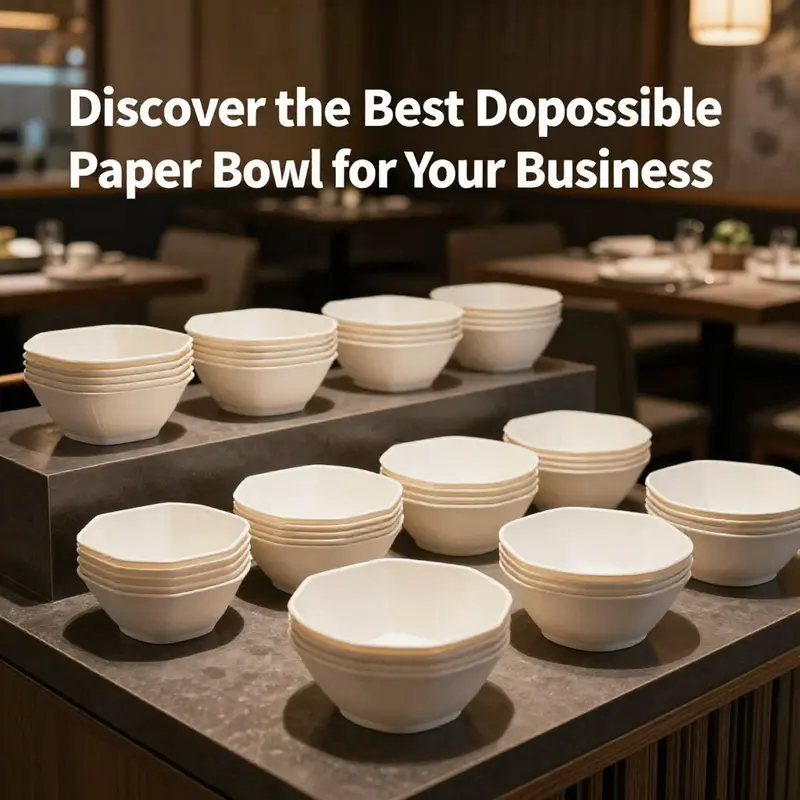
A key dimension of Ebelee’s credibility rests on international certifications that meaningful buyers actively seek. FDA compliance stands as a baseline for food-contact safety in many markets, while ISO 14001 signals a formal environmental management system that guides waste reduction, energy efficiency, and supplier collaborations toward lower ecological footprints. Such certifications do not merely satisfy regulatory checkboxes; they signal to restaurant operators, distributors, and facility managers that the bowls can be integrated into menus and events with confidence. The certification narrative is reinforced by the company’s positioning as a leading player in the market for octagonal paper bowls—a shape that blends branding opportunities with practical handling and presentation. In a sector where design can influence perceived value, the octagonal form has proven attractive to high-end catering, exhibitions, and boutique food-packaging concepts.
Ebelee’s logistics framework further strengthens its appeal to B2B buyers who must harmonize production capacity with import timelines and local distribution. The company’s export readiness leverages Xiamen’s port authority and established shipping lanes, enabling relatively predictable export cycles. This coastal advantage is not merely a matter of speed; it translates into cost efficiency and reduced lead times for partners who operate on quarterly procurement cycles or just-in-time inventory models. In a marketplace where even a few extra days in transit can ripple into stockouts for large events or seasonal promotions, the ability to forecast and meet delivery commitments becomes a competitive differentiator. The organization’s scale is evident in its production capacity, which is designed to meet large-volume orders while retaining flexibility for customization and new product development.
From a product design perspective, Ebelee differentiates itself through a combination of functional versatility and branding potential. The standard offerings cover multiple sizes to accommodate a spectrum of use cases—from light snacks to hot soups and more substantial meals. This versatility is complemented by optional features such as double-wall construction that improves heat retention and handling comfort, which is especially relevant for outdoor events, street-food concepts, and concession stands. Custom printing in CMYK or Pantone allows buyers to integrate brand identity directly onto the disposable tableware, transforming a simple packaging item into a mobile marketing asset. The option to tailor coatings and finishes—balancing grease resistance with compostability—speaks to the evolving demands of customers who want performance without sacrificing environmental responsibility.
Quality assurance weaves through every stage of the Ebelee operation. The company’s status as a diamond member on Alibaba International Station is more than a badge; it reflects sustained engagement with a platform that aggregates verified buyers and suppliers. Factory verification services further reinforce trust, giving customers a lens into factory conditions, production practices, and quality-control regimes. For wholesale buyers, such transparency mitigates supplier risk, helping procurement teams compress supplier audit cycles and allocate resources toward rapid RFQ processing and sample evaluation. Repeat purchase rates provide a practical, experiential validation: customers come back because the bowls meet expectations for performance and consistency, and because the supplier maintains open channels of communication when issues arise.
The environmental dimension, too, shapes procurement decisions. The broader narrative around sustainability in disposable paperware increasingly centers on lifecycle thinking: from renewable fiber sources and compostable coatings to end-of-life options that align with industrial composting or home composting where applicable. Ebelee’s positioning within this discourse is reinforced by its stated orientation toward biodegradable materials and certifications oriented to global markets. The environmental emphasis is not merely about compliance; it is a strategic signal to buyers that the supplier understands ESG expectations in consumer-facing brands and hospitality programs. In practice, this means that wholesalers and foodservice operators can present certified green packaging to their customers, transparently communicate the sustainability attributes of their supply chain, and align with regulatory or retailer-driven sustainability programs that reward responsible sourcing.
Beyond certifications and product features, Ebelee’s capability to support large-scale production while maintaining reliable delivery timelines makes it a compelling option for buyers planning multi-site rollouts or national campaigns. The minimum order quantity (MOQ) framework acknowledges the realities of wholesale logistics and production planning. While 50,000 units may appear substantial, it is a reasonable baseline for establishable economies of scale, particularly when paired with consistent lead times that fit corporate purchasing calendars. A 25- to 30-day window from order to shipment places Ebelee in a mid-range tier in terms of responsiveness—neither a rushed, small-run supplier nor a distant, purely factory-based operation. This timing envelope suits distributors who operate on monthly replenishments and seasonal spikes, offering predictability that helps end-customers plan menus, promotions, and venue arrangements with confidence.
Within the broader market landscape, Ebelee is positioned among other well-regarded suppliers whose strengths span various niches—from large-capacity bowls for events to eco-focused packaging with rigorous traceability. This positioning matters for buyers who require a balance between cost efficiency and sustainability credentials. For cost-sensitive projects, some buyers may lean toward suppliers who emphasize quick shipment and lower MOQs, while others prioritize certifications and environmental storytelling to differentiate their brand. Ebelee’s blend of scalable manufacturing, environmental credentials, and customization options makes it a strong candidate for wholesale agreements, especially when the procurement brief calls for a sustainable, branded, and reliable disposable bowl solution that can scale with demand.
To illustrate how procurement teams might engage with a supplier like Ebelee, consider the practical steps involved in a typical RFQ process. A buyer would first articulate core requirements: size range (for example, 8oz, 16oz, and 24oz variants), whether double-wall construction is needed, coating preferences (grease resistance versus compostability), and branding needs (CMYK or Pantone printing, logo placement, and color fidelity). Given Ebelee’s capabilities, the supplier can accommodate a spectrum of branding needs while ensuring that the product remains compliant with food-safety standards. The next phase would likely involve a sample program to validate material performance, coating behavior, and branding quality under realistic conditions—hot foods, cold foods, and transport stress. Because Ebelee’s platform shows strong repeat purchasing patterns, buyers can expect a responsive support experience, with clear communication about production schedules, lead times, and contingency plans for any delays.
The decision to source from a particular supplier is rarely driven by a single attribute. It is the aggregation of logistics reliability, product performance, and the ability to align with a buyer’s brand narrative and regulatory obligations. In this sense, Xiamen Ebelee exemplifies a holistic supplier archetype: a coastal manufacturing hub with scalable capacity, a track record of meeting international standards, and a design language that supports both practical use and brand storytelling. The octagonal bowl, often highlighted in industry discourse, showcases how shape and packaging form factors can become strategic assets for differentiation in a crowded market. For buyers who seek not just a functional container but a packaging experience that resonates with guests at events, festivals, and hospitality settings, Ebelee’s portfolio provides a compelling starting point for discussion and experimentation.
As buyers navigate the landscape of suppliers, a few guiding considerations emerge. First, align your selection with your logistical realities. Coastal manufacturers with port access can offer advantages in delivery speed and cost stability, especially when trade terms and Incoterms are clearly defined in the contract. Second, prioritize transparency around material composition, certifications, and end-of-life options. Consumers and retailers increasingly demand evidence that packaging aligns with environmental and health-safety commitments. Third, consider the potential for co-development. For brands seeking distinctive packaging experiences, working with a supplier that offers customization and trial runs can accelerate time-to-market for limited-edition lines or themed events. And fourth, ensure your procurement workflow accounts for QA cycles, sample approvals, and a clear escalation path in case of shipping or production hiccups. In this framework, a partner like Xiamen Ebelee can function not merely as a supplier but as a collaborative ally in sustainable packaging programs.
For readers exploring concrete pathways to connect with such capabilities, a practical note is to view supplier profiles and initiate RFQs through trusted B2B platforms. A one-stop approach that combines product versatility, environmental credentials, and reliable logistics is particularly valuable for businesses seeking to scale responsibly while maintaining brand integrity. As markets continue to demand higher standards for eco-friendly packaging, the ability to couple certifications with scalable production will remain a decisive factor in supplier selection. Xiamen Ebelee’s example demonstrates how a company can embed sustainability into every layer of operation—from raw materials and coatings to packaging design and export readiness—without sacrificing the efficiency that wholesale customers depend on.
Internal link reference for further exploration of customization capabilities: custom takeaway packaging and disposable tableware for theme party. This page illustrates how buyers can translate the supplier’s strengths into branded, themed packaging solutions that extend beyond a single product line and into a broader packaging program that complements a retailer or event concept.
External resource for broader context on leading paper bowl suppliers in China: https://www.alibaba.com/showcase/leading-paper-bowl-supplier-china
Trust, Traceability, and Tailored Takeaway: How HeFei Paka Eco-Tech Shapes Eco-Friendly Bowl Sourcing for B2B Buyers

In the crowded landscape of disposable paper bowl suppliers, reliability and environmental responsibility carry equal weight. HeFei Paka Eco-Tech Co., Ltd., based in Hefei, Anhui, has built a reputation as a steady partner for businesses seeking compostable, food-grade packaging solutions. Their focus on composite paper bowls positions them at the intersection of practicality and sustainability, a space that increasingly dominates wholesale procurement. Buyers who plan for large-scale events, restaurant networks, or delivery services know that a supplier’s capacity, certification, and service terms can influence the entire supply chain. HeFei Paka’s profile as a verified supplier on major platforms signals that their operations meet established standards, and their communication with buyers often reflects a readiness to align with strict procurement timelines and brand requirements.
The product range centers on composite paper bowls crafted from biodegradable kraft paper. The span runs from 500 ml up to 1300 ml, a breadth that covers casual soups and salads as well as more generous servings at gatherings. The materials are described as environmentally friendly, emphasizing biodegradability and non-toxicity—critical considerations for hospitality and food service buyers who demand packaging that performs while minimizing consumer risk and environmental impact. The paper stock is designed to be food-grade, with health and safety commitments front and center. In practice, this means bowls that can handle hot liquids without weakening or releasing substances, while remaining compostable in appropriate waste streams. Buyers increasingly expect packaging to be printable and brandable, and HeFei Paka supports customization that helps companies translate their identity onto the container. This includes branding options that travel with the product, a feature that matters as businesses seek to reinforce sustainability messaging across channels and at events.
Customization is a core value proposition for HeFei Paka Eco-Tech. The company’s capability to tailor sizes, designs, and branding means clients can harmonize packaging with campaign aesthetics, menu design, and corporate color palettes. For brands testing new ideas or launching limited-edition menus, the ability to request variations without lengthy lead times reduces risk and accelerates time to market. The flexibility to adjust configurations supports a range of serving concepts, from snack-sized portions to more generous servings requiring extra rigidity and moisture resistance. That adaptability matters in wholesale procurement where buyers must manage forecasting and buffer stock for seasonal peaks, promotional campaigns, or multi-site rollouts. The supplier’s willingness to adapt to sizing beyond standard options mirrors a broader trend in packaging where customization is not a luxury but a baseline expectation for B2B customers who want consistency across SKUs and geographies.
The market presence of HeFei Paka Eco-Tech rests on a foundation of verification and trust. Made-in-China lists the company as a verified supplier, signaling that the platform has performed due diligence. A perfect customer rating of 5.0 over the last six months adds weight, suggesting buyers are not merely sampling but returning with repeat orders, a marker of reliability and satisfaction in a sector where delays and quality deviations carry real costs. This credibility is complemented by the company’s approach to payment and delivery protections. Transactions can be conducted in USD with secure payment methods that include a payment guarantee, and there is refund protection for orders that are undelivered, lost, or damaged. For procurement teams managing risk, such protections are as valuable as the product itself, because they reduce the financial exposure that sometimes accompanies long-haul shipments or complex logistics. The combination of verification, traceable materials, and brand-safe packaging often translates into a more predictable procurement experience—a crucial advantage for wholesale buyers who rely on timely replenishment and consistent quality.
Wholesalers and large buyers often weigh MOQs against unit economics. HeFei Paka’s minimum order quantity sits at 50,000 pieces, aligning with standard wholesale practices for new programs and long-running contracts. The price range—approximately US$0.045 to US$0.055 per unit—positions them as competitive within the eco-friendly packaging landscape, where margins and tender economics matter. Buyers frequently test a supplier with a small batch before committing to broader orders; in this case, samples can be requested for as little as US$0.01 per piece. The affordability of samples enables procurement teams to assess print fidelity, material performance, and packaging integrity before scaling. This approach lowers the barrier to entry for new programs and supports evidence-based supplier onboarding, a practice increasingly adopted by buyers who must demonstrate value during supplier evaluations.
Logistics and service terms further enrich the value proposition. The refund-upon-dispatch policy offers a remedy if a shipment goes astray or arrives damaged, a rare but meaningful risk mitigation tool in cross-border logistics. In addition, the emphasis on food-grade, non-toxic materials and traceable inputs aligns with evolving consumer expectations around transparency and responsibility. The environmental narrative extends beyond recyclability; it encompasses supply chain traceability, responsible sourcing, and compliance with standards that reassure clients and regulatory bodies. Packaging suppliers in this space increasingly highlight eco-friendly credentials not as an add-on but as a core attribute that informs product design, manufacturing choices, and end-of-life outcomes. As wholesalers map suppliers across regions, the ability to maintain quality across multiple continents becomes a competitive differentiator in a market where buyers coordinate large-scale operations, seasonal promotions, and multi-site distribution networks.
For brands seeking to translate sustainability into a cohesive brand story, and for those who want to align takeaway packaging with themed events and marketing campaigns, the option to customize via scalable packaging solutions has proven critical. The practical reality is that a supplier’s flexibility can meet a buyer’s strategic ambitions, enabling a seamless narrative from menu to event to post-consumer waste. This is where the potential of a tailored approach becomes evident. A wealth of resources discusses tailored takeaway packaging and disposable tableware designed for theme parties, underscoring how aligned design and material choice can reinforce a brand’s commitment to the environment while delivering a high-performing product at scale. For readers exploring this fit, consider the broader ecosystem of customization options as a pathway to reduce total cost of ownership—by decreasing change orders, limiting spoilage risk, and ensuring consistency across multiple venues and channels. You can explore related capabilities through resources that discuss tailored takeaway packaging and disposable tableware designed for theme parties, which can complement a green-packaging program while ensuring consistency across touchpoints. custom takeaway packaging and disposable tableware for theme party.
The broader procurement narrative also hinges on how buyers interpret verification and platform credibility. A supplier that maintains a robust profile on reputable B2B platforms, demonstrates a stable track record of repeat orders, and offers clear terms for payments and protections, is better positioned to support long-term sourcing. This matters not just for price negotiations but for the predictability of lead times, quality control processes, and after-sales support. A wholesale buyer contemplating a multiyear agreement will value a partner who can align with a company’s sustainability program, provide consistent branding across products, and scale operations to match seasonal demand without compromising compliance or safety. The HeFei Paka case reinforces that these are not theoretical benefits; they are real-world differentiators that emerge when a supplier commits to transparent pricing, clear MOQs, and a carding of eco-conscious fundamentals throughout the supply chain.
From a logistical perspective, Hefei’s geographic position offers a practical balance for inland manufacturing with reasonable access to port corridors, enabling predictable transit times and manageable replenishment cycles. This geography matters when a buyer needs to coordinate multi-site deployments or regional rollouts across a country or a continent. The procurement team benefits from knowing that the supplier can meet scale demands while preserving product integrity under varied climate conditions and handling environments. In practice, this translates to procurement plans that anticipate weekly or biweekly replenishments for large programs, with lead times that align to tender schedules and event calendars. The value proposition here is not merely the product’s function but the reliability of the entire chain—from raw material sourcing and production to packing, shipping, and final delivery at the client’s dock.
In closing the lens on HeFei Paka Eco-Tech, it is clear that the company embodies a model for B2B sourcing that merges environmental stewardship with scalable capability. The combination of a broad 500 ml–1300 ml range, biodegradable kraft materials, and attention to safety and branding equips buyers to design packaging solutions that support both operational efficiency and reputational objectives. The supplier’s verified status, favorable transaction history, and protective payment terms further reassure wholesale buyers navigating complex procurement landscapes. While price remains a critical factor, the real value lies in the predictability of performance, the ease of customization, and the assurance that sustainability does not come at the cost of reliability. As brands continue to elevate their take-away experiences, the role of a trusted supplier who can deliver at scale—while honoring environmental commitments—will only grow more essential for wholesale buyers seeking to harmonize cost, compliance, and corporate responsibility across every serving and shipment.
External reference: For additional verification and supplier profile details, see the Made-in-China page for this company: https://www.made-in-china.com/company/29868971261/HEFEI-PAKA-ECO-TECH-CO-LTD.html
Design-Driven Innovation in Disposable Paper Bowls: How Xiamen Hongju United Technology Shapes Branding, Sustainability, and Scale
Xiamen Hongju United Technology Co., Ltd. stands as a focal point in the evolving world of disposable paper tableware, not merely because it produces bowls, but because it treats design as a strategic driver of value. In a market saturated with commodity packaging, the company has built a reputation on turning ordinary, single-use vessels into canvases for brands and stories. The core of its proposition rests on design-based customization, a capability that extends beyond simple color prints to encompass complete OEM and ODM partnerships. For buyers seeking to align packaging with their brand identity, this approach offers a rare blend of fidelity and flexibility. The company frames its offerings with a clear emphasis on eco-conscious practices and stringent quality control, signaling a deliberate move to harmonize aesthetic appeal with responsible manufacturing. In this sense, the supplier’s value proposition resonates with a broader shift in the disposable packaging sector: the demand for products that can be branded, tracked for safety, and produced with a minimized environmental footprint, all without sacrificing reliability and cost efficiency. The narrative around Hongju’s innovation begins with its design-centric collaboration model. Rather than treat packaging as a one-size-fits-all finish, the company positions itself as a partner capable of translating a client’s visual language into functional, kitchen-ready solutions. This means that clients can commission custom prints, logos, and even specific color schemes that align with seasonal campaigns or flagship products. It is not merely about making a bowl look different; it is about ensuring the look reinforces a brand promise, communicates quality at a glance, and differentiates a product on crowded shelves or at high-visibility events. In practice, the design work is supported by robust technical feasibility checks, ensuring that brand elements survive practical use—hot liquids, cold foods, varying storage conditions, and shipping stresses—without compromising integrity or print durability. The design narrative is complemented by the company’s commitment to sustainability, a thread woven through every stage of production. The materials are described as eco-friendly and compostable, with an emphasis on non-toxic compositions. This aligns with EU EN13432 biodegradability standards that many buyers now require for European markets, signaling to buyers that the bowls can be integrated into circular packaging strategies rather than contributing to landfill concerns. The ability to trace raw materials further strengthens confidence in safety and quality, a feature increasingly sought after by brands that depend on transparency for consumer trust. Hongju’s emphasis on environmental responsibility is not merely procedural; it is embedded in the product’s lifecycle. The supply chain is designed to minimize waste and optimize end-of-life outcomes, and the company supports carbon footprint tracking, enabling clients to quantify and report the environmental impact of their packaging choices. These elements matter for brands that want to tell a credible sustainability story to consumers and to satisfy corporate procurement requirements that reward responsible sourcing. The design ethos is complemented by practical production capabilities that meet the demands of both domestic and international markets. Xiamen’s strategic geographic position as a port city supports export logistics that are familiar to buyers engaged in cross-border sourcing. The company’s production system incorporates a full materials pipeline—from pulp to coatings—creating a tightly integrated workflow that reduces lead times and increases quality control. For B2B buyers, this integration translates into smoother supplier management, clearer accountability, and a more predictable path from concept to finished goods. The capacity to scale is balanced by an openness to experimentation. Hongju supports original design manufacturing and original equipment manufacturing, enabling brands to test new concepts with lower risk and faster cycles. In practical terms, that means clients can request prototypes and limited runs to evaluate aesthetic and functional performance before committing to full-scale production. The minimum order quantities for such trials are not prohibitive, and the company has built a reputation for responsiveness during product development, a critical factor for events, campaigns, or new product launches that hinge on packaging timing. The pace of experimentation is matched by a seriousness about safety and quality. Certifications in security and protection management systems underline a disciplined approach to process control, product safety, and data handling. These certifications provide reassurance in a market where packaging must perform under stress—hot beverages, long-haul transport, fluctuating temperatures, and diverse handling scenarios. For procurement teams, this layering of design, sustainability, and governance creates a compelling narrative: brands can partner with a supplier that not only helps them stand out at the point of sale but also aligns with corporate standards for safety, environmental responsibility, and ethical operations. An additional dimension of Hongju’s value proposition lies in its capacity for collaborative market adaptation. The company understands that branding approaches vary by region and by sector. For some clients, the emphasis is on premium presentation for corporate events or high-end exhibitions; for others, the priority is everyday reliability for food service and delivery channels. The ability to tailor prints and branding elements to different use cases—without sacrificing performance or quality—addresses both the luxury segment and the mass-market segment within a single operational framework. That capability dovetails with a broader ecosystem of suppliers and platforms that buyers consult during sourcing. In this context, Hongju’s offering resonates with the needs of brands that require a turnkey partnership: the ability to evolve a packaging concept from concept art to in-market execution, while maintaining traceability, safety, and sustainability across the lifecycle of the product. The design-focused model also supports the strategic imperative of rapid RFQ-to-prototype cycles. A client can iterate through visual concepts and structural refinements, confirming feasibility and durability before committing to larger volumes. And because the business maintains direct control over the production process—from pulp sourcing to coatings—the risk of misalignment between design intent and finished goods is reduced. This is particularly valuable for clients that view packaging as a core component of their brand experience, rather than a peripheral logistic item. A practical implication of this approach is the potential for brands to implement branded packaging across multiple markets with consistent quality and governance. Hongju’s export-oriented posture, alongside its domestically rooted expertise, builds confidence that a design-led packaging program can scale globally without eroding brand coherence or compromising safety standards. The company’s history of engaging in OEM and ODM relationships—where client specifications and proprietary branding requirements are honored—also signals to procurement leaders that the partnership is anchored in long-term collaboration rather than a series of one-off transactions. Buyers can, therefore, expect continuity: consistent print fidelity, repeatable performance, and the ability to revisit and refine designs as a brand evolves. In conversations about supplier capability, it is natural to consider how a practice-oriented partner fits within a network of vetted providers that buyers rely on for competitive pricing, logistics reliability, and strategic alignment. Hongju’s profile intersects with a broader verification narrative that includes reputational signals from recognized B2B platforms and on-site assessments. While the specifics of each supplier’s certifications are a matter of record, the overarching lesson is clear: for brands seeking to embed packaging innovation within a robust procurement framework, a partner that commits to design excellence alongside sustainability and governance can shorten the path from creative concept to consumer touchpoints. For readers exploring concrete pathways to leverage such partnerships, a real-world example of the value chain is visible in how a theme-focused packaging program can be scaled without sacrificing visual impact or environmental accountability. A practical step is to examine turnkey options that emphasize customization, with available small-batch testing to validate the creative and functional aspects before large-scale manufacturing. This approach aligns with Hongju’s demonstrated capabilities and the market’s evolving expectations for responsible, design-forward packaging. In this context, it is helpful to consider the broader supplier landscape that informs decision-making in wholesale procurement. Buyers often compare a spectrum of capabilities—from basic stock options to high-end, custom series—to determine which partner most effectively bridges concept, execution, and distribution. Hongju’s narrative contributes a valuable perspective to this spectrum: that design can be a strategic asset, not a cosmetic feature, when integrated with eco-conscious materials, rigorous safety standards, and scalable production. For brands seeking to connect product storytelling with practical packaging performance, the combination of OEM/ODM flexibility, design-driven customization, and verifiable governance offers a compelling blueprint. As buyers navigate the market, the inclination toward partners who can translate creative direction into tangible, branded packaging that travels well and endures use will likely grow stronger. In the broader arc of disposable paper bowl suppliers, Hongju represents a case where design and sustainability converge with operational discipline to deliver a compelling value proposition. The collaboration model invites clients to see packaging not as a disposable afterthought but as a strategic extension of the brand experience, capable of delivering differentiation, trust, and efficiency across markets. For practitioners who manage procurement pipelines, the chapter’s takeaway is clear: when evaluating suppliers, consider not only the structural quality of the bowls but also the depth of design capabilities, the credibility of environmental and safety certifications, and the practicality of the production environment for small and large runs. The synergy of these elements can transform packaging from a cost center into a strategic asset that reinforces brand narratives, supports responsible sourcing, and accelerates time to market. Internal link for further insight into turnkey customization and theme-focused packaging can be explored here: custom-takeaway-packaging-supplies-disposable-tableware-for-theme-party. External resources provide additional context about the certifications landscape and the traceability expectations that major buyers pursue, such as the information available on a leading industry profile: https://www.qichedao.com/company/1032895
null

null
Riding the Wave of Sustainable Convenience: Market Trends and Strategic Sourcing for Disposable Paper Bowl Suppliers
The global landscape for disposable paper bowls has matured into a dynamic blend of scale, speed, and sustainability. Market intelligence released for 2026 places the worldwide disposable tableware market at about 2.13 trillion USD, with a robust 5.62% annual growth rate projected to 2031. This trajectory reflects more than convenience; it signals a shift in consumer expectations for sanitary, single-use solutions that still respect environmental responsibilities. The drivers are consistent across regions: rapid food delivery, high-volume events, and outdoor activities demand reliable, hygienic serving options, while policymakers and brands increasingly insist on materials and processes that minimize ecological footprints. In this context, the push toward compostable or biodegradable packaging—whether PLA-coated papers or bamboo-based pulps—becomes not just a trend but a compliance and brand-differentiation strategy. For procurers in wholesale channels, this means the supplier ecosystem must balance two imperatives: ironclad performance in diverse usages and transparent, verifiable sustainability credentials that satisfy stringent international standards.
The manufacturing tableau for disposable paper bowls is notably concentrated in coastal China, where proximity to global logistics networks reduces lead times and shipping costs. Among the most active zones are the Fujian coast, including the Xiamen corridor, and nearby Zhejiang, which together form an export-centric cluster with integrated supply chains that run from pulping and coating to finished product and packaging. The regional advantages are practical as well as strategic: mills and coating lines are often co-located with downstream converters, enabling tighter quality control, faster iterations, and more predictable mass-production schedules. In these environments, factories increasingly cultivate end-to-end capabilities such as in-house pulp sourcing, coating formulation, and waste-water treatment facilities to align with increasingly rigorous environmental obligations. Buyers benefit from this concentration through more consistent tolerances, broader customization possibilities, and the capacity to scale orders without sacrificing traceability or compliance.
A credible sourcing framework hinges on a disciplined evaluation of supplier qualifications. Industry observers emphasize a few non-negotiable elements that tend to separate dependable partners from the rest. First, certified quality and safety are essential. ISO 9001 systems, forest stewardship certifications such as FSC, and material safety attestations like FDA compliance on food-contact surfaces provide a baseline of reliability. Second, production capability matters. Facilities that can reliably translate a complex mix of sizes, coatings, and print options into secure, on-time deliveries are preferable, especially for wholesale buyers facing seasonal demand peaks. Third, quality control processes at every stage—from raw-material input to the moment of shipment—significantly reduce the risk of recalls or costly logistics delays. Fourth, commercial terms and logistics support cannot be neglected. Flexible incoterms, multiple payment options, and clear refund or contingency policies help buyers manage currency, risk, and transit disruptions. Finally, sustainability commitment stands alongside certifications and capacity as a core selection criterion. Suppliers that demonstrate transparent traceability of raw materials, responsible sourcing practices, and life-cycle considerations for their coatings and fibers tend to align with modern brand narratives and investor expectations.
In practice, these criteria materialize in distinct procurement profiles. When cost efficiency and rapid shipment top a buyer’s agenda, the emphasis lands on factories with lean production lines and scalable output. This often translates into shorter lead times, larger monthly capacity, and favorable pricing for bulk orders. For brands prioritizing environmental certification and image elevation, the focus shifts toward suppliers that can clearly document their supply-chain integrity, use of recycled or certified fibers, and coatings designed to facilitate compostability or recycling. Such suppliers frequently pursue additional accreditations, lifecycle assessments, and carbon-accounting features that help clients report progress to stakeholders and meet regulatory or corporate sustainability targets. For clients seeking novelty or branding impact, the conversation moves toward specialized shapes, textures, or small-batch capabilities. In regions near major exhibitions, these suppliers offer modular run sizes or pilot programs to test new concepts before large-scale commitments. The result is a supplier ecosystem that can accommodate a spectrum of procurement strategies, from mass-market procurement to boutique, design-forward collaborations.
The market’s geography further informs selection. Coastal regions in China combine access to ports with a mature supplier network, enabling more reliable export performance. Proximity to harvesting hubs and recycled-paper mills can also influence cost structures and sustainability footprints. Inland regions, by contrast, often offer raw-material advantages and co-located industrial parks that support low-cost scaling of high-volume orders. For buyers whose distribution networks require agility across multiple regions, a blended sourcing approach—where core volumes come from one region for consistency, and niche runs emanate from another region for customization—can deliver both reliability and differentiation without compromising efficiency. Across these dynamics, the role of formal sourcing platforms remains pivotal. Platforms that perform on-site supplier verifications, publish performance credentials, and enable direct RFQ workflows help wholesale buyers compare options, negotiate terms, and secure samples with greater confidence.
From a practical standpoint, several indicators consistently emerge as practical guardrails for supplier selection. First, look for verifiable process certifications and material-safety attestations. The most robust suppliers publish evidence of ISO 9001 quality management, appropriate forest certification for pulp, and compliance with international food-safety standards. Second, assess the end-to-end supply chain, not just the finished product. A supplier that manages pulp procurement, coating formulation, conversion, and packaging through a single, auditable system offers greater predictability and lower risk exposure. Third, scrutinize the sampling and pre-shipment procedures. A credible partner will provide samples, document acceptance criteria, and perform final inspections before dispatch. Fourth, examine payment terms and logistics options. A supplier who can accommodate different settlement methods and flexible transport arrangements reduces friction in global trade. Finally, weigh sustainability claims against demonstrable actions. Brands increasingly demand transparent disclosures about materials, coatings, and downstream processing, including compostability metrics and carbon tracing.
Within this framework, wholesale buyers often face a practical decision matrix. If the objective is cost efficiency and velocity, a pathway exists with suppliers whose operations emphasize high-volume output and reliable lead times. If the aim is environmental impact and brand differentiation, buyers lean toward partners with credible environmental certifications and robust traceability. When experimentation or niche branding is the goal, engaging a supplier capable of small-batch runs and flexible design support becomes valuable. In each case, the heavy lifting occurs at the RFQ stage, where buyers should request detailed technical data sheets, test reports for migration and safety, coating specifications, and, crucially, lead-time calendars that reflect the realities of production planning and port congestion.
A critical practical note concerns the role of recognized sourcing platforms in guiding these decisions. Platforms that routinely feature supplier verification, factory assessments, and curated product series provide buyers with a structured, comparative perspective. They can also facilitate multiple rounds of sampling, price benchmarking, and supplier audits, which are essential steps for wholesale campaigns that demand consistent quality across seasons. For buyers who require a blend of standard products and customized options, such platforms help identify a spectrum of partners—from those delivering reliable baseline offerings to those capable of bespoke branding and packaging. As part of due diligence, buyers should consider not only the technical fit but also the rhythm of the supplier’s operations in relation to their own demand cycles; a mismatch in lead times, even if the price is appealing, can disrupt a campaign or a product launch.
To illustrate how the field is organized and to provide a concrete entry point for procurement teams, consider a representative supplier directory that lists several verified manufacturers with international reach and robust quality-control programs. You can start by exploring an online listing that highlights an eco-friendly, disposable paper bowl option in a standard capacity range, complete with in-depth product details, factory verification, and the ability to customize labeling or branding. The listing provides a practical gateway to samples, MOQ discussions, and a transparent dialogue about lead times, logistics terms, and post-shipment support. For buyers who want a broader comparative view across the best-known options, this directory is complemented by recommendations on platform usage and an emphasis on the certifications and production capabilities that matter most for wholesale procurement. The goal is to move beyond price alone and toward a sourcing decision anchored in reliability, sustainability, and scalability.
For readers seeking an explicit gateway to one of the most detailed product profiles available in the sector, you can review a representative listing that emphasizes eco-friendly, disposable paper bowls in a 16-ounce size with the option for customization. This page illustrates how suppliers present core data—size ranges, material safety assurances, printing capabilities, and minimum order quantities—and demonstrates how a buyer can quickly move from RFQ to sample requests and, ultimately, to a full-scale order. eco-friendly-disposable-paper-bowls-16oz_1600537969579.html.
From a strategic standpoint, the procurement journey is also about aligning with platforms that vet and compare suppliers across trials, enabling offline negotiation opportunities and long-term partnerships. Platforms of this kind can be especially valuable for brands planning exhibition participation or multi-vendor sourcing programs. They help buyers balance price, lead times, customization options, and sustainability commitments under one umbrella, which reduces the risk that a single supplier’s strengths will be offset by another’s weaknesses. In sum, the market is not simply about finding a cheaper bowl; it is about selecting a partner who can deliver consistent product safety, environmental integrity, and operational dependability at scale.
External context deepens this perspective. For a broader market view, many researchers and industry analysts refer to authoritative data sources that quantify growth across regions and segments. The Statista Disposable Tableware Market Report (2026) offers a macro lens on the distribution of demand by geography and by material, complementing the supplier-focused narratives discussed here. This external resource helps procurement teams calibrate expectations about demand surges tied to major promotions, festival seasons, or new channel strategies, and it underscores the imperative to choose suppliers who can reliably expand with a client’s evolving portfolio.
Final thoughts
Choosing the right disposable paper bowl supplier is crucial for enhancing your business’s service quality and sustainability. With suppliers like Xiamen Ebelee, HeFei Paka, and Xiamen Hongju at your disposal, you can find eco-friendly options that meet both functional and aesthetic demands. Coupled with resources like the HKTDC sourcing platform, your procurement process can be streamlined and effective. Embracing these products not only elevates your offerings but also contributes positively to the environment. As trends shift towards sustainability, aligning with reliable suppliers will not only set your business apart but also resonate with increasingly conscientious consumers.